1. When Stock Risk Becomes a Financial Reporting Problem
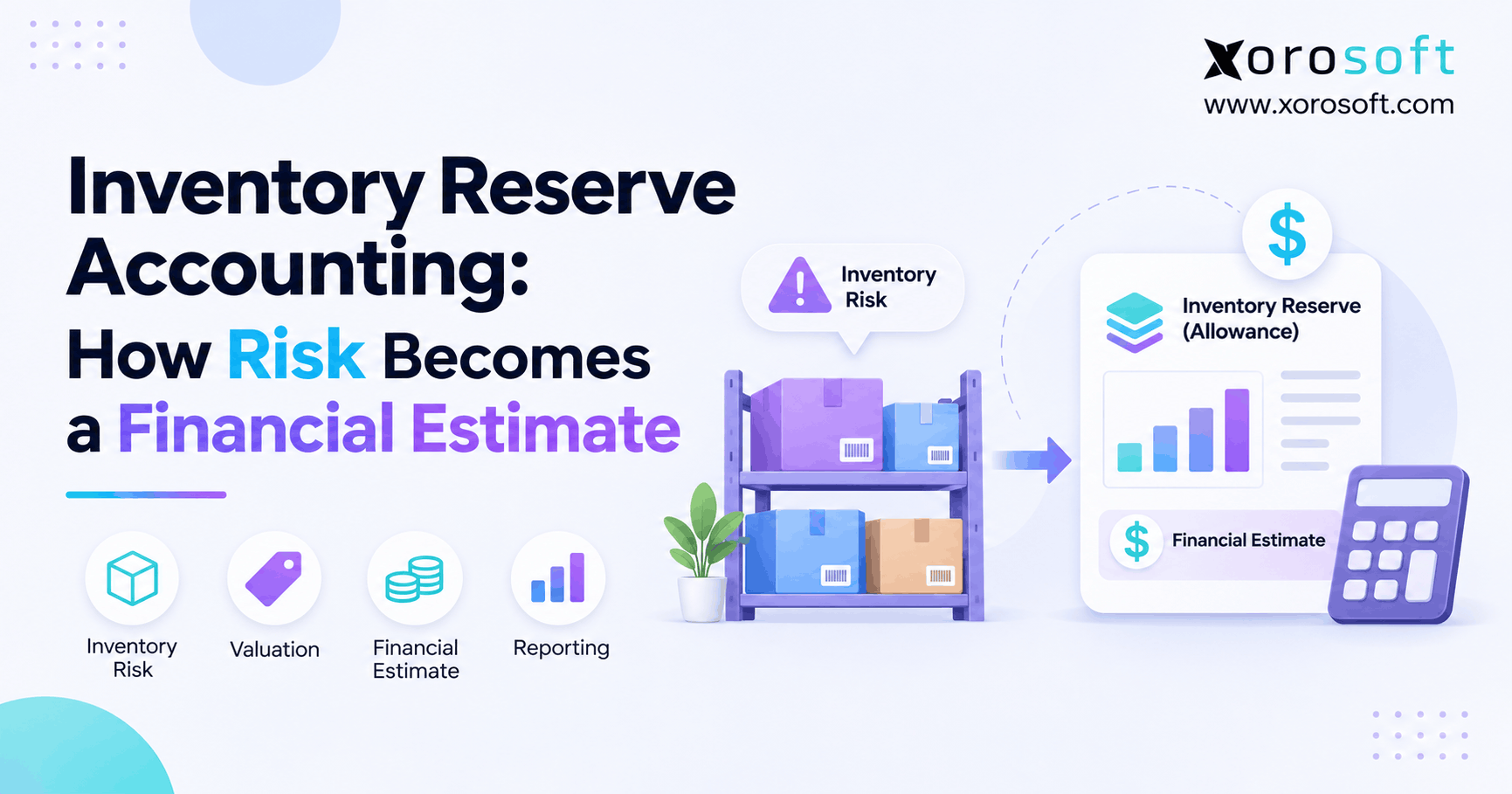
Inventory reserve accounting helps businesses convert operational stock risks into reliable financial estimates. Although warehouse teams can identify aging, damaged, excess or obsolete inventory, these conditions alone do not establish a financial loss. Instead, finance must determine how much value the business can still recover.
For example, a distributor may hold $500,000 of slow-moving stock. However, some products may still sell at full price, while others require steep discounts. Consequently, applying the same reserve percentage to every product can distort financial reporting.
Moreover, inaccurate reserves can affect reported profits, working capital and purchasing decisions. Therefore, businesses need a clear process that connects inventory evidence with accounting requirements.
1.1 Why Inventory Reserve Accounting Matters
Inventory reserve accounting evaluates whether inventory remains recoverable at its recorded carrying amount. When evidence supports a valuation loss, finance recognizes an appropriate adjustment under the applicable accounting framework.
For instance, a business may carry products at $100,000 even though it expects to recover only $75,000. Consequently, the original carrying amount may overstate the value of those products.
However, the purpose of a reserve is not to create a financial cushion against uncertain future events. Rather, it reflects a supported reduction in inventory value.
Therefore, management must establish a reasonable basis for every material adjustment.
1.2 What Finance Must Establish Before Closing the Books
Before recording a valuation loss, finance needs to answer three important questions:
- Which inventory faces a risk of losing value?
- What evidence supports its expected recoverability?
- What financial adjustment does the applicable accounting framework require?
Furthermore, finance should distinguish physical stock availability from financial inventory value.
For example, a warehouse may still hold 1,000 units after finance records a write-down. However, those units may no longer support their original carrying amount.
As a result, businesses need separate controls for physical inventory movements and financial valuation adjustments.
2. Risk Signals Behind Inventory Reserve Estimation
Inventory problems rarely begin inside the accounting department. Instead, they often emerge through purchasing, sales, warehouse and manufacturing activities.
Therefore, finance should investigate the operational conditions behind potential valuation losses before selecting an estimation method.
2.1 Aging Stock and Changes in Demand
Inventory aging reports help businesses identify products that may require further review. However, stock age does not automatically establish a financial loss.
For example, industrial replacement parts may remain in storage for several years while retaining reliable demand. Conversely, fashion products may lose value within a few months.
Similarly, a seasonal product may experience limited sales during part of the year without suffering a permanent decline in value.
Consequently, finance should consider sales history, expected demand, product lifecycle and realistic selling prices alongside inventory age.
Moreover, canceled orders and excessive purchasing can create inventory exposure even when products have only recently arrived.
2.2 Damage, Expiry and Declining Selling Prices
Physical condition can also influence inventory recoverability. For instance, damaged furniture may require repairs before customers will purchase it.
Meanwhile, food products approaching expiration may need immediate discounts.
However, businesses should not automatically write off the entire cost of damaged goods. Instead, finance should evaluate expected resale proceeds and relevant recovery costs.
| Inventory risk | Potential financial concern |
|---|---|
| Aging stock | Reduced demand |
| Physical damage | Lower resale value |
| Product discontinuation | Limited future sales |
| Expiring inventory | Restricted selling opportunities |
| Excess purchasing | Inventory beyond expected demand |
| Planned markdowns | Lower expected selling prices |
| Customer cancellations | Reduced recovery opportunities |
Therefore, the financial estimate should reflect the expected economic outcome rather than the risk label alone.
2.3 What Evidence Supports Inventory Valuation Estimates?
Reliable estimates require information from several departments. For example, warehouse teams provide condition reports, while sales teams explain pricing changes and customer demand.
In addition, purchasing teams can identify excess supply, canceled requirements and discontinued products.
Finance should collect evidence such as:
- Current inventory quantities and recorded costs.
- Recent sales transactions.
- Approved discount and markdown plans.
- Warehouse inspection reports.
- Customer orders and cancellations.
- Updated demand forecasts.
- Relevant repair and selling costs.
Furthermore, each report should use a consistent reporting date.
Without reliable source information, even a detailed calculation may produce an inappropriate inventory valuation estimate.
3. Inventory Reserve Accounting Under US GAAP and IFRS
Businesses must apply the inventory measurement rules relevant to their financial reporting framework. However, US GAAP and IFRS do not treat every valuation adjustment in the same way.
3.1 ASC 330 and Inventory Costing Methods
Under US GAAP, ASC 330 governs inventory measurement.
Businesses using FIFO or weighted-average costing generally apply the lower of cost and net realizable value. However, businesses using LIFO or the retail inventory method generally apply lower of cost or market.
Consequently, finance must identify the applicable costing method before calculating a valuation loss.
The Financial Accounting Standards Board’s inventory measurement guidance explains these requirements.
Furthermore, businesses should recognize supported losses in the appropriate reporting period rather than wait until the affected goods sell.
Therefore, the timing of financial recognition depends on the applicable accounting requirements, not simply warehouse disposal activity.
3.2 Net Realizable Value Under IAS 2
Under IFRS, IAS 2 Inventories generally requires businesses to measure stock at the lower of cost and net realizable value.
Net realizable value, commonly called NRV, reflects expected selling proceeds after relevant completion and selling costs.
For example, a product may have an expected selling price of $100. However, if applicable completion and selling costs total $20, its estimated NRV equals $80.
Therefore, using the selling price alone could overstate inventory recoverability.
| Accounting consideration | US GAAP | IFRS |
|---|---|---|
| Main inventory guidance | ASC 330 | IAS 2 |
| FIFO and average cost | Lower of cost and NRV | Lower of cost and NRV |
| LIFO costing | Permitted | Not permitted |
| Retail inventory method | Lower of cost or market | IAS 2 measurement requirements |
| Subsequent write-down reversal | Generally prohibited | Required when qualifying conditions exist |
3.3 Reversal Rules for Inventory Write-Down Accounting
Under US GAAP, a recognized inventory write-down generally establishes a lower cost basis. Therefore, finance cannot normally restore the original carrying amount simply because selling prices improve.
Under IFRS, however, qualifying improvements in net realizable value require a reversal, limited to the original write-down.
For example, assume inventory originally costs $100 and finance reduces its carrying amount to $60. If its NRV later increases to $85, IFRS may require a $25 reversal when the relevant conditions apply.
Consequently, businesses operating across reporting frameworks need clear policies.
KPMG’s inventory accounting comparison provides further guidance on these differences.
4. How to Build a Reliable Inventory Reserve Calculation
A reliable calculation begins with accurate operational information. Therefore, finance should follow a repeatable process rather than rebuild its estimation method during every financial close.
4.1 Define the Inventory Population
First, establish which products belong in the valuation review.
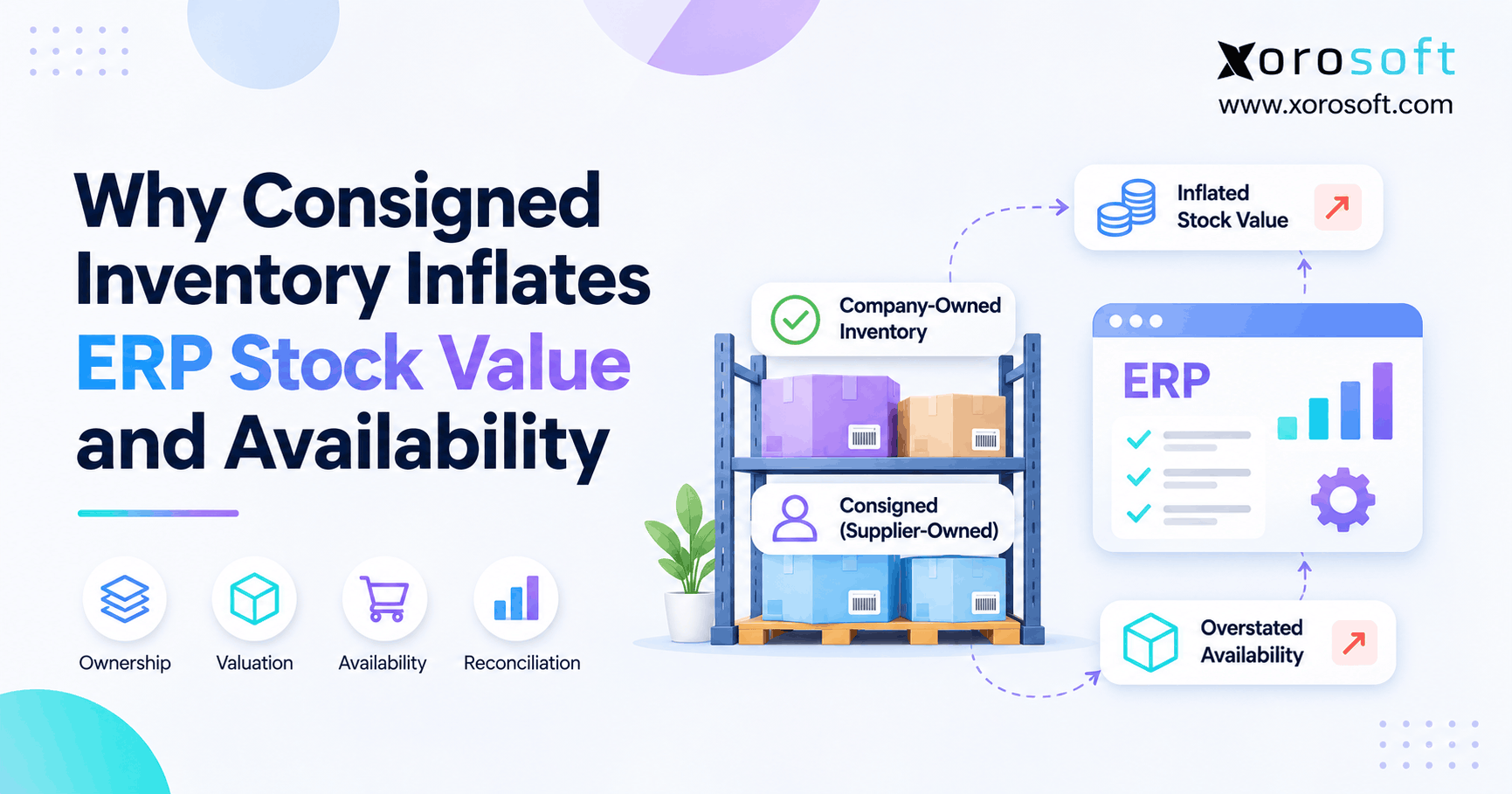
For example, a warehouse may contain company-owned goods, supplier-owned consignment inventory and customer returns awaiting inspection.
However, physical possession does not always establish accounting ownership.
Consequently, finance should confirm the relevant inventory population, ownership status and reporting date.
In addition, the review should identify quantities across warehouse locations, product categories and inventory types.
Manufacturers should also distinguish raw materials, work in progress and finished goods because each category may require different supporting evidence.
4.2 Validate Quantities and Recorded Costs
Next, finance should confirm the accuracy of inventory quantities and recorded costs.
For instance, unposted receipts may understate inventory quantities. Similarly, incorrect purchasing costs may distort the estimated valuation loss.
Therefore, businesses should follow consistent inventory reconciliation best practices before calculating their reserves.
Xorosoft helps businesses bring inventory quantities, warehouse activity and accounting information together through connected ERP workflows.
Consequently, finance can spend less time collecting information from separate systems and more time evaluating its relevance.
Nevertheless, management remains responsible for confirming that the source information supports the estimate.
4.3 Build Inventory Valuation Estimates From Recovery Evidence
After validating stock records, finance should estimate the value the business expects to recover.
For example, a confirmed customer order may provide stronger pricing evidence than an unsupported sales forecast.
Furthermore, finance should consider approved discounts, relevant selling costs and realistic recovery channels.
| Estimation input | Supporting information |
|---|---|
| Expected selling price | Recent sales and market conditions |
| Future demand | Forecasts and customer orders |
| Completion costs | Production or repair estimates |
| Selling costs | Relevant costs required for sale |
| Physical condition | Warehouse inspection records |
| Inventory quantities | Reconciled stock reports |
However, forecasts and historical results require careful review because future conditions may differ from past experience.
Therefore, management should document the reasoning behind significant assumptions.
4.4 Choose an Inventory Reserve Estimation Method
Different inventory populations may require different estimation approaches.
For example, a business with a large catalog may use historical loss rates to support its review. Meanwhile, high-value products may justify individual NRV calculations.
| Method | Advantage | Limitation |
|---|---|---|
| Fixed aging rates | Simple calculation | May overlook actual recovery |
| Historical loss rates | Uses past experience | Conditions may have changed |
| SKU-level NRV analysis | Detailed valuation evidence | Requires reliable source data |
| Supported group estimates | Efficient for similar inventory | Requires appropriate grouping |
| Hybrid approach | Combines several evidence sources | Needs consistent controls |
However, historical percentages should never become an automatic substitute for accounting evidence.
Instead, finance should validate the selected methodology against current conditions and applicable measurement rules.
4.5 Review and Approve the Estimate
Finally, management should review the proposed financial adjustment.
For example, reviewers should challenge unexpected changes in selling prices, significant manual overrides and unusual reserve percentages.
Moreover, the approval process should confirm that finance has considered earlier write-downs.
Once approved, the estimate should include:
- The relevant inventory population.
- The calculation methodology.
- Supporting operational reports.
- Significant financial assumptions.
- Previously recognized valuation losses.
- The approved accounting adjustment.
Consequently, the completed reserve calculation provides a clear record of how finance reached its decision.
For additional foundational guidance, explore what an inventory reserve is and who calculates it.
5. Inventory Reserve Calculation: Examples and Sensitivity
Numerical examples help explain how inventory risks become financial estimates. However, businesses should adapt these illustrative calculations to their actual accounting framework and inventory records.
5.1 Calculating Net Realizable Value
Assume a wholesale distributor owns 1,000 identical products, each with an original cost of $40.
However, declining demand reduces the expected selling price to $30 per unit. Furthermore, the company expects completion costs of $2 and applicable selling costs of $3 per unit.
For inventory subject to lower-of-cost-and-NRV measurement:
Net realizable value = Expected selling price − Applicable completion and selling costs
Initial write-down = Greater of zero or original cost minus NRV
| Calculation component | Amount |
|---|---|
| Inventory quantity | 1,000 units |
| Original cost per unit | $40 |
| Expected selling price | $30 |
| Completion cost per unit | $2 |
| Selling cost per unit | $3 |
| Net realizable value per unit | $25 |
| Valuation loss per unit | $15 |
| Original inventory value | $40,000 |
| Total write-down | $15,000 |
| Revised carrying value | $25,000 |
Therefore, assuming no previous write-down, the supported initial valuation loss equals $15,000.
However, the warehouse still holds all 1,000 products.
5.2 Testing Inventory Valuation Estimates Against Different Prices
Expected selling prices can change as market conditions develop. Consequently, finance should understand how significant assumptions influence the proposed adjustment.
Using the previous example, consider three possible scenarios.
| Scenario | Selling price | NRV per unit | Total loss |
|---|---|---|---|
| Optimistic | $35 | $30 | $10,000 |
| Base case | $30 | $25 | $15,000 |
| Downside | $25 | $20 | $20,000 |
As a result, a $5 change in the expected selling price changes the estimated loss by $5,000.
However, sensitivity analysis does not allow management to select whichever scenario produces the preferred earnings figure.
Instead, inventory reserve accounting requires management to select an estimate that reflects reasonable assumptions and available evidence.
5.3 A Real-World Example of Management Judgment
Mattel’s 2025 annual filing with the SEC illustrates the financial significance of inventory estimates.
The company disclosed inventory obsolescence reserves of $33 million in 2024 and $32.1 million in 2025.
Furthermore, Mattel estimated that a hypothetical one-percentage-point change in its 2025 reserve as a share of gross inventory would affect cost of sales by approximately $6 million.
Consequently, relatively small changes in assumptions can produce material financial effects.
However, these figures reflect Mattel’s specific inventory and operating conditions. Therefore, other businesses should not use them as universal reserve benchmarks.
6. Recording Inventory Reserve Accounting Adjustments
Once management establishes a supported valuation loss, finance must recognize the adjustment in the accounting records.
However, businesses should distinguish initial recognition, additional losses and the subsequent removal of affected inventory.
6.1 Journal Entries for an Inventory Valuation Allowance
Using the previous $15,000 example, finance could record the following entry under the allowance method.
| Account | Debit | Credit |
|---|---|---|
| Inventory write-down expense | $15,000 | — |
| Inventory valuation allowance | — | $15,000 |
Alternatively, finance may record a direct write-down by crediting the inventory asset itself.
Both approaches reduce the net carrying value of inventory. However, the allowance method tracks the valuation adjustment separately from gross inventory cost.
Consequently, finance should follow its documented accounting policy and maintain a clear connection between the recognized loss and affected inventory.
Furthermore, existing valuation adjustments must enter the calculation before finance records additional losses.
6.2 Financial Statement Impact
Inventory valuation adjustments affect several financial statement measures.
For example, recognizing a supported loss reduces the net inventory asset and generally lowers pre-tax earnings.
| Financial measure | Initial effect |
|---|---|
| Net inventory | Decreases |
| Current assets | Decrease |
| Working capital | Generally decreases |
| Recognized expenses | Increase |
| Gross profit | Decreases if included in cost of sales |
| Pre-tax earnings | Decrease |
| Immediate cash balance | No direct change |
| Physical inventory quantity | No automatic change |
Moreover, lower inventory values may influence financial ratios and lending arrangements.
However, the accounting entry does not itself require a cash payment.
Therefore, finance should distinguish the immediate reporting impact from the future cash recovery associated with selling the goods.
6.3 Separating Financial Value From Physical Quantity
An inventory write-down changes the financial value of affected stock. However, warehouse quantities may remain unchanged.
For instance, a distributor may reduce the carrying amount of damaged furniture while retaining the products for discounted resale.
By contrast, physical destruction or confirmed inventory shortages may require stock quantity adjustments.
Consequently, finance and warehouse teams should coordinate their activities without treating every valuation entry as a physical stock movement.
Understanding the difference between an inventory write-down and write-off can help prevent duplicate losses and inaccurate inventory availability.
7. Strengthening Financial Assumptions and Review Controls
Accounting estimates involve uncertainty. Therefore, businesses need controls that challenge unsupported assumptions without delaying appropriate financial recognition.
7.1 Identifying Bias in Inventory Reserve Estimation
Management may face pressure to meet earnings targets or protect reported margins.
For example, an overly optimistic selling-price assumption could reduce the estimated valuation loss. Conversely, an unnecessarily large allowance could create misleading financial results.
Consequently, reviewers should examine significant departures from historical experience and current market evidence.
Furthermore, finance should investigate manual overrides that materially change the proposed adjustment.
A sound review process asks whether the assumptions reflect actual business conditions rather than a preferred financial outcome.
Therefore, management should document both the selected estimate and the reasoning behind important judgments.
7.2 Reviewing Reporting-Date Evidence
Inventory conditions can change after a financial reporting period ends.
For example, a product may sell at a reduced price several weeks after the reporting date.
However, that sale does not automatically establish the appropriate value at the earlier date. Instead, finance must determine whether the transaction provides evidence of conditions that already existed.
Similarly, unexpected market changes after the reporting date may represent new circumstances.
Consequently, businesses should preserve dated reports, forecasts and approval records.
This approach helps finance explain what information management knew when it developed the original estimate.
7.3 Defining Roles and Responsibilities
Inventory valuation requires cooperation across several departments.
However, each department should have a clearly defined responsibility.
| Department | Primary responsibility |
|---|---|
| Warehouse | Validate quantities and stock condition |
| Purchasing | Identify excess supply and purchasing commitments |
| Sales | Provide pricing and demand evidence |
| Planning | Develop and review forecasts |
| Finance | Calculate and document valuation adjustments |
| Management | Review and approve accounting estimates |
Furthermore, material adjustments should follow appropriate authorization procedures.
Consequently, inventory reserve accounting becomes a controlled financial process rather than an isolated spreadsheet calculation.
8. Inventory Reserve Accounting Reconciliation and Audit Evidence
Reliable estimates need reliable financial records. Therefore, businesses should reconcile the reserve calculation with inventory details and general ledger balances.
8.1 Building an Inventory Valuation Allowance Roll-Forward
A reserve roll-forward explains how the valuation allowance changes between reporting periods.
For example, consider the following independent illustration.
| Allowance movement | Amount |
|---|---|
| Opening allowance | $12,000 |
| New valuation losses | $15,000 |
| Allowance utilized | ($5,000) |
| Closing allowance | $22,000 |
Consequently, the closing allowance should agree with the applicable accounting balance and supporting inventory records.
Moreover, finance should investigate unexplained differences before completing the financial close.
An integrated platform such as XoroERP from Xorosoft connects inventory and accounting operations.
As a result, finance teams can review related transaction information within a connected environment.
Nevertheless, they must still reconcile and approve the valuation adjustments.
8.2 Preventing Duplicate Loss Recognition
Suppose a business originally purchases inventory for $10,000.
Later, finance recognizes a $6,000 write-down because the products lose value. Consequently, the remaining carrying amount equals $4,000.
If the company subsequently destroys those products without recovery, the additional loss generally equals $4,000.
However, recording another $10,000 loss would duplicate the earlier valuation reduction.
Therefore, finance must consider existing write-downs when affected inventory leaves the books.
A consistent inventory subledger reconciliation process helps businesses connect financial adjustments with the relevant inventory records.
8.3 Backtesting Inventory Valuation Estimates
Backtesting compares previous assumptions with actual outcomes.
For example, finance may expect to recover $25 per unit but ultimately receive only $18.
Consequently, management should investigate whether the difference resulted from an unsupported assumption or changing business conditions.
Furthermore, the review should identify repeated estimation errors across products or reporting periods.
In applicable audit engagements, PCAOB AS 2501 provides guidance on evaluating accounting estimate methods, data and significant assumptions.
Therefore, maintaining consistent records and reviewing estimation outcomes can strengthen future accounting decisions.
9. Industry Examples of Inventory Reserve Accounting
Inventory valuation challenges vary considerably across industries. Consequently, businesses should adapt their estimation methods to the products they sell and the markets they serve.
9.1 Apparel, Furniture and Sporting Goods
Apparel businesses often face short product lifecycles and seasonal demand.
For example, winter clothing may require significant discounts after the season ends. However, some classic styles may retain their selling value.
Meanwhile, furniture distributors may hold products with cosmetic damage or discontinued designs.
Similarly, sporting goods retailers may experience declining demand when manufacturers introduce new models.
Therefore, finance should evaluate realistic selling prices and relevant recovery costs for each affected inventory population.
9.2 Food and Wholesale Distribution
Food businesses face inventory risks associated with shelf life and expiration dates.
For instance, products approaching expiration may require markdowns. However, goods that can no longer legally enter the market may have no remaining sales value.
Meanwhile, wholesale distributors may experience excess inventory after customers cancel orders or change purchasing patterns.
Consequently, finance should examine customer demand, contractual commitments and realistic alternative sales channels.
Moreover, the same product may face different valuation risks across warehouse locations because market access and recovery opportunities vary.
9.3 Manufacturing and Raw Materials
Manufacturers must consider whether raw materials remain useful in future production.
For example, under IAS 2, materials generally do not require a write-down when the finished products that use them are expected to recover their cost.
However, obsolete components may require further review when production plans change or product designs become outdated.
Xorosoft supports several inventory-driven industries through connected purchasing, warehouse, production and accounting capabilities.
Consequently, manufacturing and distribution teams can organize their operational evidence around the specific risks affecting their inventory.
10. Common Inventory Reserve Accounting Mistakes
Businesses often encounter problems when they prioritize calculation speed over evidence quality.
However, consistent controls can help prevent several common valuation errors.
10.1 Relying on Fixed Aging Rates
Some businesses automatically apply a 25% reserve after 180 days and a 50% reserve after 365 days.
Although this method may appear efficient, it can produce misleading results when products have different demand patterns.
For example, durable replacement parts may retain their value for years. Conversely, seasonal products may lose value within weeks.
Therefore, historical aging rates should reflect relevant experience and current conditions.
Furthermore, finance should investigate material exceptions rather than assume every product follows the same recovery pattern.
10.2 Overlooking Ownership and Prior Losses
Another common mistake involves including stock that the business does not own.
For instance, supplier-owned consignment goods may appear in warehouse reports without belonging in the company’s inventory asset balance.
Similarly, finance may overlook a previous write-down when calculating a new valuation adjustment.
Consequently, businesses should avoid:
- Including inventory without confirming ownership.
- Ignoring earlier valuation reductions.
- Using reports from inconsistent dates.
- Recording unsupported reserve releases.
- Delaying appropriate valuation losses.
- Failing to reconcile financial adjustments.
Ultimately, accurate inventory reserve accounting depends on reliable evidence and consistent financial controls.
11. How ERP Supports Inventory Reserve Accounting
As businesses grow, inventory information often spreads across accounting applications, ecommerce platforms, warehouse systems and spreadsheets.
Consequently, finance teams may spend considerable time collecting and reconciling information before they can evaluate inventory recoverability.
11.1 Connecting Sales and Inventory Cost Records
Growing ecommerce businesses frequently sell across several channels.
For example, a brand may receive Shopify orders, Amazon transactions and wholesale orders while holding inventory across multiple warehouses.
However, separate systems can make it difficult to connect sales history with inventory quantities and recorded costs.
Xorosoft’s XoroONE cloud ERP platform combines inventory, sales, purchasing, warehouse operations and accounting in one environment.
Furthermore, its ecommerce and business integrations help connect operational information across supported channels.
Consequently, finance can access more consistent source records when reviewing product demand and financial valuation.
11.2 Connecting Warehouse Evidence to Valuation Estimates
Warehouse teams often discover damaged, returned or aging stock before finance becomes aware of it.
Therefore, accurate warehouse records play an important role in financial valuation reviews.
For example, cycle counting can help identify quantity discrepancies. Similarly, lot tracking can help distinguish inventory with different expiration dates.
Xorosoft’s warehouse management system supports receiving, inventory tracking, barcode-based warehouse operations and stock visibility.
As a result, businesses can maintain more consistent operational records.
However, warehouse information still requires appropriate interpretation before finance recognizes a valuation loss.
11.3 Bringing Purchasing and Forecasts Into the Review
Purchasing decisions influence future inventory exposure.
For example, a buyer may continue ordering products even as sales decline across several warehouses.
Meanwhile, finance may struggle to estimate future recovery when purchasing commitments and demand forecasts remain disconnected.
Connected ERP workflows can bring stock availability, purchase orders and sales information closer together.
Furthermore, ecommerce integrations such as the Shopify ERP application help businesses connect supported online sales activity with their operational systems.
Consequently, finance can review a broader range of evidence when assessing inventory risks.
11.4 What ERP Cannot Decide
ERP can improve information consistency and operational visibility. However, software alone cannot establish the appropriate accounting estimate.
| ERP-supported information | Management responsibility |
|---|---|
| Inventory quantities | Confirm accuracy and completeness |
| Recorded inventory costs | Apply appropriate measurement rules |
| Sales history | Assess future recovery |
| Demand forecasts | Challenge significant assumptions |
| Warehouse records | Evaluate product condition |
| Accounting transactions | Approve financial adjustments |
Therefore, the value of ERP in inventory reserve accounting comes from stronger data connectivity and more consistent source information.
Management still retains responsibility for estimation methods, accounting treatment and approval.
12. When to Upgrade Your Inventory Reserve Estimation Workflow
Not every business needs a complex ERP system to calculate inventory reserves.
However, operational growth can make manual workflows increasingly difficult to control.
12.1 When a Spreadsheet Is Sufficient
A small business with limited inventory, one warehouse and stable product demand may manage valuation estimates through a controlled spreadsheet.
For example, finance may collect reliable source reports, perform the calculation and obtain management approval without significant reconciliation challenges.
However, the spreadsheet still requires version controls, documented assumptions and appropriate review procedures.
Consequently, the decision to upgrade should reflect operational complexity rather than the size of one accounting estimate.
12.2 When Disconnected Systems Become a Financial Risk
As businesses add warehouses, products and sales channels, manual information collection becomes more difficult.
For instance, finance may need to reconcile separate sales, purchasing and stock records before reviewing recoverability.
Moreover, repeated data discrepancies can delay period-end reporting.
| Workflow | Main advantage | Main limitation |
|---|---|---|
| Integrated ERP such as Xorosoft | Connected operational and financial records | Requires configuration and implementation |
| Controlled spreadsheets | Flexible calculations | Manual data collection and review |
| Disconnected applications | Specialized functionality | Cross-system reconciliation |
Consequently, businesses facing recurring inventory discrepancies, delayed financial closes or inconsistent valuation evidence should evaluate their system requirements.
Relevant integrated business solutions can help address operational fragmentation while maintaining appropriate financial oversight.
13. Conclusion: Better Evidence Builds Better Financial Estimates
Inventory reserve accounting begins with operational risk but ends with a supported financial measurement.
Therefore, businesses should distinguish aging stock, physical damage and declining demand from the specific accounting losses those conditions justify.
Furthermore, reliable estimates require accurate inventory records, reasonable assumptions, consistent accounting methods and documented approvals.
Xorosoft helps connect inventory management, purchasing, warehouse operations and accounting, giving finance teams access to relevant operational information.
Ultimately, better inventory valuation comes from stronger evidence and disciplined financial judgment rather than arbitrary reserve percentages.
If disconnected systems are making your financial estimates harder to support, Book a Demo to begin a personalized ERP discovery process tailored to your inventory and accounting requirements.
Frequently Asked Questions
What is inventory financing software?
Inventory financing software helps businesses track stock values, review eligible goods, and prepare reports for lenders. Depending on its features, it may also support borrowing-base calculations and collateral checks.
How is an inventory borrowing base calculated?
First, identify eligible stock. Next, apply the agreed advance rate and deduct applicable lender reserves. However, some agreements also include appraisal limits, receivables, and other restrictions.
What inventory qualifies for asset-based lending?
Saleable goods that the borrower owns may qualify. However, stock age, condition, location, and other lender rules determine eligibility. Always refer to the current loan agreement.
Can ERP automate borrowing-base reporting?
ERP can help automate data collection and reporting tasks. However, lender-specific formulas, eligibility rules, and certificate formats may need further setup or separate lending software.
Why does inventory value differ from the borrowing base?
Inventory value reflects accounting records. In contrast, the borrowing base follows lender rules. Therefore, exclusions, advance rates, appraisal limits, and reserves can reduce the amount available for borrowing.
How often should wholesalers prepare borrowing-base reports?
Reporting frequency depends on the loan agreement. For example, lenders may require weekly or monthly reports. Meanwhile, more frequent internal checks can help finance track changes in borrowing capacity.
When should wholesalers invest in inventory financing software?
Businesses should consider an upgrade when manual reports become slow, stock values fail to match, or lender rules grow more complex. Moreover, several warehouses may increase the need for connected reporting.
Recent Posts
-
Inventory Reserve Accounting: How Risk Becomes a Financial Estimate
-
 AI Inbound-Shortage Detection Using Orders, Transfers, and Receiving Events
-
 Inventory Financing Software for Wholesale Borrowing-Base Reporting
-
 Why Consigned Inventory Inflates ERP Stock Value and Availability
-
 Which Shopify Line Should Own a Split-Delivery Cost?