1. When Expected Supply Stops Being Reliable
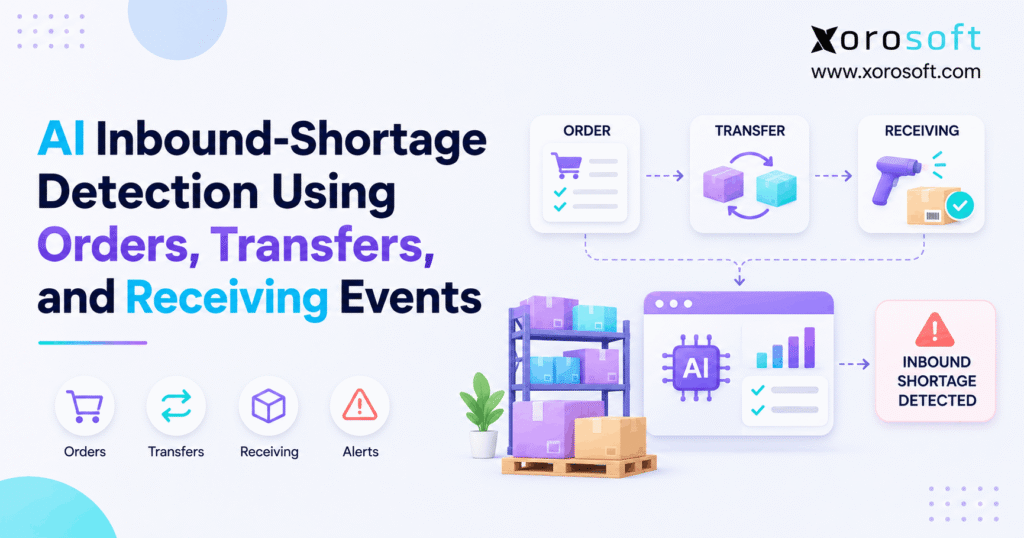
AI inbound shortage detection helps businesses spot missing stock, late shipments, and receiving gaps before they disrupt customer orders. By linking purchase orders, warehouse transfers, and receiving events, teams can identify incoming stock that may not arrive in the right quantity or by the required date.
For example, a distributor may expect 1,000 units next week. However, its supplier has confirmed only 800 units. Meanwhile, an internal warehouse transfer may also contain fewer units than planned.
As a result, the sales team could promise stock that will not arrive on time.
1.1. AI Inbound Shortage Detection in Practice
Most businesses track incoming stock through purchase orders and transfer reports. However, these reports often show planned quantities rather than reliable supply.
For instance, an open purchase order may show 500 units due on Friday. Nevertheless, the supplier may have shipped only 350 units.
Similarly, a warehouse transfer may show 200 incoming units even though the source warehouse has not shipped them.
Instead of waiting for these problems to become confirmed shortages, AI can review changes in supply records and flag potential risks.
Consequently, purchasing teams gain more time to contact suppliers, find other stock, and protect customer orders.
1.2. Why Open Orders Are Not Available Stock
Incoming stock passes through several stages before a business can use it.
For example, these stages may include:
- Purchase order creation.
- Supplier confirmation.
- Shipment dispatch.
- Warehouse receiving.
- Quality checks.
- Putaway and stock release.
However, a problem at any stage can reduce the amount of stock that becomes available.
Therefore, businesses should treat open orders as expected supply rather than confirmed stock.
In addition, sales teams need to understand whether incoming goods will become usable before customer shipping dates.
Without this distinction, growing companies may face more backorders despite having large open purchase order balances.
2. What Is AI Inbound Shortage Detection?
AI inbound shortage detection uses artificial intelligence, past order records, and current supply events to identify possible gaps in incoming stock. It compares expected supply with supplier updates, warehouse movements, receiving records, and demand to estimate whether enough usable stock will arrive on time.
Unlike basic inventory reports, predictive tools can look for warning signs before teams confirm a physical shortage.
However, predictions should support business decisions rather than replace confirmed stock records.
2.1. Four Types of Supply Gaps
Not every supply gap means that goods have gone missing. Instead, businesses must understand why expected stock is unavailable.
| Supply gap | Meaning | Business impact |
|---|---|---|
| Quantity gap | Fewer units arrive than planned | Insufficient stock |
| Timing gap | Goods arrive after the required date | Late customer orders |
| Location gap | Stock reaches the wrong warehouse | Local stock shortages |
| Quality gap | Goods arrive damaged or fail checks | Reduced usable stock |
For example, a supplier may deliver the full order one week late. Although the quantity is correct, the business may still miss customer deadlines.
Similarly, goods may reach the warehouse on time but remain on quality hold.
Therefore, supply monitoring should consider quantity, timing, location, and stock condition together.
2.2. How AI Inbound Shortage Detection Links to Demand
A missing shipment does not always create a stockout. For example, a business may already hold enough stock to cover its current orders.
In contrast, a small supply gap involving a fast-selling product could cause serious problems.
Therefore, AI should evaluate incoming supply alongside:
- Current usable stock.
- Existing sales orders.
- Production needs.
- Required shipping dates.
- Other available supply.
For instance, a missing shipment of 200 slow-moving units may require less attention than a missing shipment of 20 units needed for tomorrow’s orders.
As a result, teams can focus on supply risks that matter most to daily operations.
3. Why Incoming Stock Fails to Arrive
Supply problems often begin long before a truck reaches the warehouse. However, businesses may overlook early warning signs because suppliers, buyers, and warehouse teams use separate records.
For example, a buyer may receive an email about a lower shipment quantity. Meanwhile, the ERP system may continue to show the original purchase order balance.
Consequently, other teams may make decisions using outdated information.
3.1. Supplier Signals for AI Inbound Shortage Detection
Supplier behavior can provide useful clues about future supply problems.
For instance, a supplier that often changes delivery dates may present a greater timing risk. Similarly, repeated quantity changes may suggest that future orders need closer review.
Common warning signs include:
| Warning sign | Potential problem |
|---|---|
| Missing order confirmation | Uncertain supplier commitment |
| Reduced confirmed quantity | Possible short shipment |
| Changed delivery date | Late stock arrival |
| Missing shipment notice | Unclear shipment status |
| Frequent partial deliveries | Incomplete supply |
| Poor past fill rates | Higher quantity risk |
However, none of these signs alone proves that a shortage will occur.
Instead, teams should combine several signals before deciding whether an order needs closer attention.
3.2. Physical Receipts, Damage, and Quality Holds
Even when suppliers ship the correct quantity, warehouse teams may receive less usable stock.
For example, a truck may arrive with 1,000 units, but receiving staff may find 50 damaged units. Consequently, only 950 units may become usable.
In addition, goods may remain unavailable because of:
- Missing labels.
- Failed quality checks.
- Incorrect product codes.
- Unposted receipts.
- Delayed putaway.
- Expired or damaged stock.
However, some of these issues are temporary. For instance, an unposted receipt may simply require a system update.
Therefore, businesses should separate missing goods from goods that need further processing.
This distinction helps teams avoid unnecessary purchases and incorrect stock changes.
4. Data Needed for AI Inbound Shortage Detection
Reliable predictions depend on reliable source records. Therefore, businesses should first connect purchasing, transfers, warehouse receipts, and sales demand.
In addition, every record should identify the correct product, quantity, warehouse, and date.
Without these details, an AI model may compare unrelated orders or report stock gaps that do not exist.
4.1. Purchase Orders and Supplier Updates
Purchase orders establish the original supply plan. However, later supplier updates often provide a more current picture of expected stock.
| Data source | Information provided |
|---|---|
| Purchase order | Ordered quantity and required date |
| Supplier confirmation | Committed quantity and date |
| Order revision | Approved changes |
| Shipment notice | Expected shipment contents |
| Delivery record | Actual arrival |
| Supplier history | Past delivery results |
For businesses using electronic data interchange, the X12 transaction standards define common documents for purchase orders, order acknowledgments, shipment notices, and receiving advice.
Furthermore, Xorosoft’s cloud ERP software connects purchasing, inventory, and warehouse records.
As a result, businesses can establish a stronger data foundation for monitoring changes in incoming supply.
4.2. AI Inbound Shortage Detection Across Transfer and Receipt Events
Transfer orders need the same level of monitoring as supplier purchases.
For example, a destination warehouse may expect 400 units from another location. However, the source warehouse may dispatch only 300 units.
Therefore, businesses should capture:
- Source warehouse.
- Destination warehouse.
- Planned quantity.
- Actual shipped quantity.
- Expected arrival date.
- Actual received quantity.
- Accepted quantity.
- Outstanding balance.
In addition, receiving events should include clear order and shipment references.
The GS1 EPCIS standard provides a common way to share information about physical supply chain events, including their time, location, and business context.
Consequently, consistent event records can help teams track stock movements across different systems and locations.
5. How AI Inbound Shortage Detection Works
An effective detection process combines fixed business rules with predictive analysis.
For example, a fixed rule can identify an overdue receipt. Meanwhile, an AI model may estimate whether a supplier is likely to miss its next delivery.
Together, these approaches can help businesses find both existing problems and future risks.
5.1. Match Events to the Right Order Line
A practical workflow follows seven steps:
- Collect data: Gather purchase orders, transfers, shipment updates, and receiving records.
- Match records: Link each event to the correct product and order line.
- Set expected supply: Identify approved quantities and required dates.
- Review past results: Examine supplier fill rates, delivery times, and receipt gaps.
- Find warning signs: Look for unusual changes or missing events.
- Estimate risk: Predict possible quantity or timing gaps.
- Rank alerts: Identify the supply problems that require attention first.
However, matching records by product code alone is not enough.
For instance, three different purchase orders may contain the same product. Therefore, teams also need order line references, shipment IDs, and warehouse details.
5.2. Risk Scores for AI Inbound Shortage Detection
A shortage alert becomes more useful when it explains why the supply problem matters.
For example, an AI model may identify a high risk that 100 units will arrive late. However, the purchasing team still needs to know which customer orders depend on those units.
Therefore, a practical risk report should include:
| Risk factor | Purpose |
|---|---|
| Shortage probability | Estimate the chance of a supply gap |
| Expected missing quantity | Estimate the size of the gap |
| Required date | Show when stock is needed |
| Affected demand | Identify orders at risk |
| Other available stock | Identify possible alternatives |
| Confidence level | Show the strength of the evidence |
Furthermore, risk scores should change when new records arrive.
For instance, a confirmed replacement shipment may lower the expected risk. Conversely, another missed delivery date may increase it.
6. Calculating Supply Gaps Before Stock Runs Out
Businesses need clear quantity calculations before acting on shortage predictions.
Otherwise, buyers may replace more stock than they actually need.
For example, a purchase order shortage of 250 units does not necessarily mean that customer demand exceeds available supply by 250 units.
The following examples use hypothetical figures to explain this difference.
6.1. AI Inbound Shortage Detection: Purchase Order Example
Suppose a distributor orders 1,000 units from a supplier.
However, the supplier confirms only 800 units. Later, shipment records suggest that only 750 usable units may arrive by the required date.
| Supply stage | Units |
|---|---|
| Original purchase order | 1,000 |
| Supplier-confirmed quantity | 800 |
| Expected usable receipt | 750 |
| Projected order gap | 250 |
Therefore, the projected gap against the original order equals:
1,000 − 750 = 250 units
However, suppose the distributor already holds 100 uncommitted units and has customer demand for 900 units.
Projected demand gap = Demand − Available stock − Expected usable receipts
Therefore:
900 − 100 − 750 = 50 units
Consequently, the business faces a projected demand shortage of only 50 units.
Instead of replacing all 250 missing units, buyers can first focus on the 50 units needed to cover current demand.
6.2. Transfer and Receipt Quantity Checks
Now consider a transfer between two warehouses.
The destination requests 500 units. However, the source warehouse ships only 480 units.
Afterward, the destination receives 450 units and finds 20 damaged units.
| Transfer stage | Units |
|---|---|
| Planned quantity | 500 |
| Shipped quantity | 480 |
| Received quantity | 450 |
| Usable quantity | 430 |
| Gap against original plan | 70 |
As a result, the 70-unit gap contains three separate problems:
- 20 units not shipped.
- 30 units shipped but not yet received.
- 20 damaged units.
However, the 30 outstanding units may still be in transit.
Therefore, receiving teams should check shipment status before confirming a loss.
Xorosoft’s warehouse management software supports connected warehouse operations and stock tracking. Such records help teams investigate quantity differences without treating every open receipt as missing stock.
7. AI Inbound Shortage Detection vs. Rule-Based Alerts
Not every business needs an advanced predictive model. In fact, many supply problems can be found through simple reports and well-designed alerts.
However, as order volumes grow, fixed rules may struggle to rank complex risks across many suppliers and warehouses.
Therefore, businesses should choose an approach that matches their needs.
7.1. Compare Manual, Rule-Based, and Predictive Methods
| Feature | Manual review | Fixed rules | Predictive AI |
|---|---|---|---|
| Monitoring | Staff checks reports | System checks conditions | Model reviews patterns |
| Early warnings | Limited | Based on rules | Based on estimated risk |
| Past delivery patterns | Manual review | Limited use | Model input |
| Data needs | Basic | Structured records | Reliable historical data |
| Updates | Manual | Rule changes | Model updates |
| Human review | Required | Required | Required |
For example, a fixed rule may flag every purchase order that is three days late.
In contrast, AI may review the supplier’s past results, current shipment updates, and customer demand before ranking the alert.
Nevertheless, fixed rules remain valuable for clear problems, such as negative quantities or duplicate receipts.
7.2. When Simple Controls Are Enough
Smaller businesses may not need complex AI tools.
For example, a company with one warehouse, a small product range, and reliable suppliers may manage incoming stock through regular order reviews.
Similarly, businesses with limited historical data may struggle to build useful predictions.
Instead, these companies should first improve:
- Purchase order tracking.
- Supplier confirmations.
- Receiving accuracy.
- Stock reporting.
- Transfer records.
However, predictive tools become more useful when companies manage many products, frequent transfers, and uncertain supplier deliveries.
Therefore, businesses should establish clear operational controls before investing in more advanced tools.
A reliable process often delivers more value than a complex model built on poor data.
8. Industry Applications for AI Inbound Shortage Detection
Different industries face different supply risks. Therefore, shortage monitoring should reflect how each business buys, stores, and sells its products.
For example, an apparel brand may struggle with missing sizes. Meanwhile, a manufacturer may face delays because one critical part has not arrived.
8.1. Shopify, Apparel, and Wholesale
Shopify businesses
Online stores may accept orders based on expected stock. However, late supplier deliveries can lead to backorders and missed shipping promises.
Therefore, businesses need to link incoming supply with online demand.
Xorosoft’s Shopify ERP app connects ecommerce activity with ERP workflows, helping businesses maintain a more consistent view of orders and stock.
Apparel and fashion
A fashion brand may receive the correct total quantity but discover missing sizes or colors.
Consequently, shortage monitoring should operate at the product variant level rather than relying on total order quantities.
Wholesale distribution
Wholesale businesses often accept large customer orders that depend on future supplier deliveries.
Therefore, buyers should identify which retailer orders face risk when suppliers change quantities or dates.
8.2. Manufacturing, Furniture, and Food
Manufacturing
A manufacturer may receive nine out of ten parts needed for a product. However, the missing part could stop the entire production order.
Therefore, supply alerts should consider material needs and production dates.
Furniture and sporting goods
Furniture businesses often face long supplier lead times. Meanwhile, sporting goods companies may depend on short seasonal sales periods.
As a result, even a small delay can affect important sales opportunities.
Food and beverage
Food businesses may receive goods that fail quality checks or have too little shelf life remaining.
Consequently, the received quantity may differ from the usable quantity.
Across these industries, businesses benefit from monitoring when goods become ready for use rather than simply when goods arrive.
9. Implementing AI Inbound Shortage Detection in ERP
Businesses should introduce predictive shortage monitoring in stages.
Otherwise, poor data quality can lead to unnecessary alerts and incorrect purchasing decisions.
For this reason, implementation should begin with a review of existing purchasing, warehouse, and inventory processes.
9.1. Start With Clean Data and Fixed Rules
Phase 1: Connect source records
First, identify where purchase orders, supplier updates, transfer records, and warehouse receipts currently exist.
Next, connect related records through common order and product references.
Xorosoft’s business integrations support connected ecommerce, EDI, and other business workflows that can help reduce gaps between systems.
Phase 2: Set basic exception rules
Afterward, introduce clear alerts for problems such as:
- Overdue supplier confirmations.
- Late shipments.
- Missing receipts.
- Unmatched transfer records.
- Unexpected quantity changes.
Furthermore, define when an outstanding quantity should count as a confirmed shortage.
For example, a planned split shipment should not trigger a confirmed shortage simply because its first delivery contains fewer units than the full order.
ERP readiness check: Review whether your purchasing, warehouse, and inventory systems agree on quantities, dates, and stock status before introducing predictive tools.
9.2. Test Models Before Scaling
Phase 3: Build and test predictions
Next, use past supplier deliveries, order changes, and receiving events to train and test the chosen model.
However, teams must only use information that would have been available when each prediction was made.
Otherwise, future receipt records could make the model appear more accurate than it really is.
In addition, businesses should test predictions across different suppliers, products, and warehouses.
Phase 4: Introduce controlled recommendations
Finally, allow the system to suggest actions such as supplier follow-ups, stock reviews, or changes to transfer plans.
Nevertheless, authorized staff should approve changes to purchase orders, stock records, and customer commitments.
Furthermore, teams should monitor model results over time because supplier behavior and demand can change.
10. Connecting Purchasing, Stock, and Warehouse Teams
Many inventory problems arise because different teams work from different records.
For example, purchasing may consider an order complete while receiving staff still investigate missing goods.
Meanwhile, the sales team may promise stock based on an outdated inventory report.
Consequently, businesses need a shared view of expected supply, physical receipts, and customer demand.
10.1. ERP Data for AI Inbound Shortage Detection
Connected ERP workflows help businesses maintain related records in one operational environment.
For instance, Xorosoft’s connected business platform combines purchasing, inventory management, warehouse operations, manufacturing, forecasting, and accounting.
As a result, teams can review related stock and order records without relying entirely on separate spreadsheets.
These connected workflows support visibility into:
- Purchase order balances.
- Supplier commitments.
- Incoming stock.
- Warehouse transfers.
- Physical receipts.
- Available stock.
- Customer orders.
Furthermore, connected records can provide useful inputs for an AI-assisted analysis process.
However, an AI shortage prediction model must still be built or selected, tested, and configured for the business’s needs.
10.2. Connect Stock to Sales and Production
Supply monitoring becomes more valuable when businesses know which orders depend on incoming goods.
For example, a wholesale distributor may have enough stock overall but not enough at the warehouse responsible for shipping a customer order.
Similarly, a manufacturer may have enough finished goods but lack a part needed for its next production run.
Therefore, teams should connect supply records with demand at the correct location.
Xorosoft supports inventory-driven businesses across several industries, including wholesale, apparel, ecommerce, and manufacturing.
Its connected inventory and order workflows provide relevant data for reviewing supply needs across these operations.
Consequently, businesses can establish a more reliable foundation for deciding which shortages require action.
11. KPIs for AI Inbound Shortage Detection
Generating more alerts does not necessarily improve operations.
Instead, businesses should measure whether alerts identify real problems early enough for employees to respond.
Therefore, teams need both model performance measures and practical supply chain measures.
11.1. Model Accuracy and Alert Quality
| KPI | What it measures |
|---|---|
| Prediction precision | Share of shortage alerts that prove correct |
| Prediction recall | Share of actual shortages that the model detects |
| False positive rate | How often safe cases trigger false alerts |
| Quantity error | Difference between expected and actual quantities |
| Warning lead time | Time available to act before a shortage |
For example, suppose a model generates 100 shortage alerts. After receiving, teams confirm that 80 of those alerts were correct.
Prediction precision = 80 ÷ 100 × 100 = 80%
Meanwhile, suppose the business experiences 100 actual shortages and the model detects 80 of them.
Prediction recall = 80 ÷ 100 × 100 = 80%
However, these figures only illustrate how to measure performance. They do not represent actual software results.
11.2. Supplier and Warehouse Performance
Businesses should also review whether shortage monitoring improves daily operations.
| Operational KPI | Purpose |
|---|---|
| Supplier fill rate | Measure delivered quantities |
| On-time delivery rate | Measure delivery reliability |
| Receiving discrepancy rate | Track receiving problems |
| Transfer fill rate | Measure internal supply performance |
| Resolution time | Track how quickly teams resolve issues |
| Emergency purchase rate | Measure reactive purchasing |
For example, a supplier delivers 9,500 units against an approved order quantity of 10,000 units.
Supplier fill rate = 9,500 ÷ 10,000 × 100 = 95%
However, a strong fill rate does not always mean that goods arrive on time.
Therefore, businesses should review quantity and timing measures together.
In addition, teams should track whether earlier warnings reduce missed customer orders, unnecessary purchases, and urgent stock transfers.
12. Common Mistakes and Human Approval
Even a well-tested predictive model can produce misleading results when teams use unclear rules or incomplete records.
Therefore, businesses should establish clear limits on what AI can decide and what employees must approve.
Furthermore, each alert should provide enough context for the responsible team to investigate the problem.
12.1. Data Errors in AI Inbound Shortage Detection
Common mistakes include:
- Treating every partial receipt as a confirmed shortage.
- Ignoring approved order changes.
- Counting transfer stock twice.
- Using incorrect units of measure.
- Treating damaged stock as available.
- Processing duplicate receiving events.
- Ignoring missing system updates.
- Using future data to test past predictions.
For example, a supplier may split an order into two scheduled deliveries. However, the first receipt may appear incomplete when compared with the full purchase order.
Similarly, a warehouse may scan the same receipt twice, creating an incorrect stock balance.
Consequently, an AI model could generate misleading recommendations.
Instead, businesses should confirm transaction accuracy before taking corrective action.
12.2. Human Review and Escalation
AI should help teams make better decisions rather than independently change critical business records.
For example, buyers should approve new supplier commitments. Likewise, warehouse managers should investigate receipt gaps before posting stock adjustments.
A practical response process assigns responsibility for each type of risk.
| Alert type | Responsible team |
|---|---|
| Supplier quantity changes | Purchasing |
| Late internal transfers | Inventory planning |
| Missing receipt records | Warehouse receiving |
| Damaged stock | Quality or warehouse team |
| Customer order risk | Sales and fulfillment |
| Financial adjustments | Finance |
Furthermore, the NIST AI Risk Management Framework provides guidance on managing AI risks and evaluating system reliability.
Therefore, businesses should maintain clear approval rules, review logs, and regular model checks.
13. Conclusion: AI Inbound Shortage Detection Starts With Reliable Data
Incoming inventory does not always represent reliable supply. Although purchase orders show what businesses expect, supplier updates, transfers, and receiving events reveal what may actually become available.
Therefore, effective AI inbound shortage detection requires more than predictive technology. It also requires accurate transaction records, clear stock definitions, reliable order data, and human review.
Furthermore, connecting purchasing and warehouse workflows with customer demand helps teams focus on shortages that could disrupt revenue or production.
For inventory-driven businesses, Xorosoft brings purchasing, inventory, warehouse management, accounting, and order management into connected ERP workflows.
Consequently, growing companies can build a stronger data foundation for supply monitoring and informed decisions.
Instead of waiting for missing stock to become a fulfillment problem, businesses should start by improving visibility into incoming supply.
Book a Demo to explore how connected ERP and warehouse workflows can support more reliable inventory operations.
Frequently Asked Questions
What is pick-face replenishment?
Pick-face replenishment moves inventory from reserve storage to active picking locations. As a result, workers can access products quickly, reduce unnecessary travel, and prevent picking interruptions.
What is min-max replenishment?
Min-max replenishment triggers stock transfers when inventory falls below a minimum threshold. Workers then refill the location toward its maximum target, subject to safe storage capacity.
What is demand-based replenishment?
Demand-based replenishment identifies stock shortages using upcoming order requirements. Therefore, warehouses can transfer inventory based on outstanding demand rather than relying solely on fixed stock thresholds.
Which replenishment method is better?
Min-max suits predictable demand, whereas demand-based replenishment handles changing order volumes. Hybrid pick-face replenishment methods combine both approaches to balance inventory availability, labor costs, and fulfillment efficiency.
How are replenishment quantities calculated?
Min-max subtracts eligible inventory from the maximum target after a threshold breach. In contrast, demand-based replenishment subtracts eligible stock and pending transfers from outstanding demand.
Can both replenishment methods work together?
Yes. Hybrid replenishment combines routine stock maintenance with order-driven refills. However, warehouses must account for existing transfers to prevent duplicate tasks, excess inventory, and unnecessary handling.
Can a WMS automate pick-face replenishment?
A WMS can automate replenishment triggers, task assignment, and inventory movements. However, businesses should verify support for their specific replenishment rules, storage constraints, and order requirements.
Recent Posts
-
 Inventory Reserve Accounting: How Risk Becomes a Financial Estimate
-
 AI Inbound-Shortage Detection Using Orders, Transfers, and Receiving Events
-
 Inventory Financing Software for Wholesale Borrowing-Base Reporting
-
 Why Consigned Inventory Inflates ERP Stock Value and Availability
-
 Which Shopify Line Should Own a Split-Delivery Cost?