A key element to ensure a stress-free festive season is effective holiday beauty inventory planning.
1. Why Holiday Beauty Inventory Planning Matters Before Peak Sales
For a beauty brand, the holiday season can turn a usually steady stock flow into a run of costly choices. A skincare bestseller runs out while a limited-run palette sits untouched. Gift sets sell faster than their packaging can be restocked. A wholesale order reserves stock that the ecommerce storefront still shows as available. By the time finance finds the stock gap, peak sales may be nearly over.
That is why holiday beauty inventory planning means more than ordering extra stock of last year’s top sellers. It needs a clear view of demand, shelf life, components, purchase orders, shipping capacity, and cash. A good plan helps the brand meet demand without carrying a warehouse full of seasonal stock into January.
1.1. Holiday Beauty Sales Growth Does Not Mean Every SKU Will Sell
Adobe’s 2026 holiday forecast projects $275.1 billion in US online spending during November and December, including $9.2 billion in cosmetics purchases. The National Retail Federation’s holiday outlook projects $1.013 trillion in November-December retail sales, a 4.2% increase over 2025. Both figures are forecasts, not confirmed 2026 results.
Those forecasts point to strong demand, but they do not tell a single brand how many units of a vitamin C serum, fragrance discovery kit, or holiday lip collection to buy. Product trends, promotions, price points, and audience behavior matter more at the SKU level than market growth headlines.
1.2. The Hidden Cost of Poor Holiday Stock Planning
A stockout during a major sale may waste advertising spend, disappoint repeat customers, and lead to more support requests. Too much stock brings a different risk: cash tied up in products that may require price cuts, new packs, or waste. Beauty businesses also face batch checks and shelf-life limits that make transfers or long-term storage harder.
The goal is not a perfect guess. It is a clear way to spot changes soon enough to act.
2. Build Clean Data for Seasonal Beauty Stock Planning
A sound forecast starts with clean records. If two systems disagree on sellable stock, adding a complex forecast tool may only produce errors that look more exact. Begin by establishing one clear starting point for stock and sales.
2.1. Use Past Holiday Beauty Sales to Estimate Demand
Collect at least the last holiday season’s SKU-level orders, shipped quantities, returns, selling prices, promotional dates, and stock availability. Compare more than one year when you can and separate the Black Friday surge from normal November demand. Include Shopify, marketplaces, retail partners, and wholesale accounts rather than treating their combined sales as one trend.
Recorded sales can understate demand when a product was unavailable. A moisturizer that sold 900 units before running out might have sold far more. Review backorders, waitlists, stockout dates, substitution patterns, and lost-cart signs where they can be tracked. Document estimated lost demand apart from confirmed orders so the forecast is easy to check.
2.2. Clean Beauty Stock Records Before You Forecast
Reconcile stock counts with the system, check negative balances, and separate damaged, held, sampled, and reserved units from sellable inventory. Validate product identifiers and pack sizes; a case of 24 cannot be treated as 24 cases. Review open purchase orders, planned receipt dates, and goods on the way. Otherwise, planners may reorder stock that is already arriving or promise products that cannot be shipped.
Ownership matters as much as data cleanup. Assign one person to approve the forecast, another to maintain supplier dates, and a clear process for changing inventory allocations. Weekly stock checks are often more useful than a beautiful dashboard that nobody trusts.
2.3. Forecast Beauty Stock at the Right SKU Level
Forecast at a level detailed enough to support purchasing. Foundation shades, fragrance sizes, skincare variants, and gift-set configurations often need their own forecasts. However, a brand with sparse data may need to begin at the product-family level and spread the forecast across variants using recent sales shares. Record those assumptions so teams know which numbers are well supported and which rely on early guesses.
3. Holiday Beauty Inventory Planning: Forecast Demand Without Double-Counting
The most common forecast mistake is to multiply last November’s sales by a seasonal factor even though those sales already include holiday seasonality. The result is an inflated order recommendation that looks like growth. Holiday beauty inventory planning works best when the baseline and every adjustment have a defined meaning.
3.1. Set a Clear Starting Point for Beauty Demand
Start with the closest matching sales period. Remove unusual bulk orders and one-off promotions only when they are not expected to repeat; add a sound estimate of missed sales from known stockouts. Account for sales channel changes such as a new Amazon marketplace, a major wholesale customer, or a product no longer sold. Then determine whether the baseline is ordinary weekly demand or already a holiday-specific forecast.
Suppose an everyday cleanser averages 1,400 units in a normal month. The brand expects a 25% seasonal lift and an extra 15% effect from a new campaign. A simplified estimate is 1,400 x 1.25 x 1.15 = 2,012.5, or approximately 2,013 units. These figures are examples, not actual sales data. If the starting 1,400 units already came from a similar holiday campaign, applying the same factors again would overstate demand.
3.2. Forecast Holiday Beauty Promos, Gifts, and New Launches
Black Friday discounts affect units sold, net sales, and margin in different ways. A steep promotion can increase orders while reducing contribution per unit. Model paid media, influencer activity, email campaigns, and retailer commitments alongside the proposed discount. Also allow for sales shifting between products: a discounted skincare trio may replace three standalone purchases rather than create entirely new demand.
Limited-run products need a different method. Use comparable launches, preorders, wishlists, sample conversion, and the marketing calendar. Keep the initial buy proportionate to evidence, especially when the brand cannot restock before the sales window ends. For gift products, forecast the complete kit and the demand for each component shared with everyday products.
3.3. Use Three Demand Scenarios to Guide Stock Orders
A likely forecast is not a promise. A low-demand case supports cash protection; a high-demand case helps test whether a supplier can replenish in time. For a serum with a likely holiday need of 2,400 units, reasonable sample forecasts might be 2,040, 2,400, and 2,880 units. The purchasing decision can then weigh service-level risk against the cost of unsold stock.
Forecasts should be revisited as actual orders arrive. Rather than trusting the highest estimate, measure the difference between prediction and actual demand and identify whether the error came from promotion assumptions, missing channels, stockouts, or supplier constraints.
A useful portfolio measure is weighted absolute percentage error: add the absolute unit errors across SKUs, divide by the sum of actual units, and multiply by 100. For example, errors of 80 and 120 units against combined actual demand of 2,000 units produce 10% WAPE. This measure avoids dividing by zero for an individual SKU, although it can hide errors on low-volume products that still matter to the brand. Review major launches and high-margin items separately. Keep forecast bias visible too; a plan that consistently overestimates demand may carry an unacceptable post-season inventory cost.
4. Sort Seasonal Beauty Stock by Demand and Shelf Life
One stock rule rarely fits a whole beauty catalog. The brand’s staple body lotion, a viral lip shade, a holiday fragrance box, and a temperature-sensitive treatment have different risk profiles. Segmentation makes holiday stock plans more focused and keeps attention on decisions that matter most.
4.1. Separate Core Skincare Stock From Holiday Products
Evergreen products can usually be supported by recurring sales history and replenishment. Seasonal gift sets have shorter revenue windows and often lose value after the holidays. Trend-driven shades may have high upside but unreliable repeat demand. Short-life products require limits based on realistic sell-through before the usable-life threshold.
A useful way to group products is to weigh their sales value against how steady demand is. ABC analysis groups products by sales value or margin; XYZ analysis groups them by swings in demand. High-value, unpredictable products deserve closer review than low-value staples with stable movement. These groups help, but the team still needs to know how each product sells.
4.2. Plan Beauty Stock by Product Type
Circana’s first-half 2026 beauty research reported 7% US sales growth in both prestige and mass beauty, but category trends differed. That matters when estimating the likely holiday mix: skincare essentials, fragrance gifting, makeup shades, and haircare treatments should not receive identical growth assumptions.
| Product group | Primary planning consideration | Likely response |
|---|---|---|
| Everyday skincare | Repeat demand and availability | Replenish against reliable velocity |
| Fragrance gift sets | Short seasonal selling window | Cap first buy and monitor sell-through |
| Limited-edition makeup | Trend and shade risk | Use smaller commitments where possible |
| Haircare staples | Promotions and variant mix | Maintain calculated safety stock |
| Products with a short usable life | Quality and age of inventory | Apply shelf-life-aware allocation |
4.3. Update Seasonal Stock Groups as Sales Shift
A slow-moving gift set in early November may become a strong seller after an influencer mention. Conversely, a product forecast to lead Black Friday may underperform once discounts begin. Review segment assignments during the selling season and move inventory or marketing emphasis when evidence changes. Holiday beauty inventory planning should be dynamic without becoming reactive to every single day of sales.
5. Holiday Beauty Inventory Planning for Buying and Safety Stock
A forecast tells the business what customers may buy. Purchasing must determine what to order, when it must arrive, and how much risk the company can afford. This is where seasonal planning meets supplier results, minimum order sizes, and cash tied up in stock.
5.1. Set Reorder Points for Holiday Beauty Products
A basic reorder point is average daily demand multiplied by replenishment lead time, plus safety stock. If a cleanser sells 36 units per day, lead time is 20 days, and the buffer is 180 units, the reorder point is 900 units. This is a trigger for review, not a fixed order size. Products with less stable demand need a fuller safety-stock formula that accounts for swings in demand and lead times.
Available-to-promise, on-hand inventory, and stock position are different measures. Inventory position usually includes on-hand and on-order stock minus backorders, but receipt timing still determines whether an imminent shortage can be avoided. A shipment arriving after Black Friday cannot protect a Black Friday promotion.
5.2. Size Each Beauty Stock Order With a Clear Target
Suppose that cleanser has 490 sellable units on hand and 180 confirmed units due before the expected shortage. Its simplified stock position is 670 units, below the 900-unit reorder point. If the approved order-up-to target is 1,600 units, the proposed new order is 930 units: 1,600 minus 490 minus 180. The team must still verify whether supplier minimums, case packs, reservations, and the timing of inbound units change that quantity.
For holiday beauty inventory planning, purchasing should preserve a clear distinction between calculated demand and the actual authorized order. Finance may approve a smaller buy if too much stock creates a larger downside than a moderate stockout risk.
5.3. Include Real Supplier and Shipping Lead Times
Supplier lead time should include packaging, production, quality testing, customs where applicable, freight, receiving, and put-away. A factory’s promised completion date is not the date warehouse staff can pick the goods. Track quoted versus actual lead times by supplier and flag materials that have no acceptable substitute.
If a late delivery threatens a promotion, reduce the advertised inventory commitment or reschedule the offer before the company oversells. Faster freight is one option, but only when the extra profit and customer impact justify the cost.
Supplier scorecards should tell apart orders shipped on time and orders received complete and ready to sell. A carton that arrives by its deadline but fails quality inspection has not protected the promotion. For critical gift-set materials, track open purchase orders by promised receipt date, actual receipt date, inspection status, and quantity usable. That simple distinction often reveals bottlenecks earlier than a single supplier on-time percentage.
6. Plan Holiday Beauty Gift Sets, Kit Parts, and Stock
Holiday kits often look like simple combinations on a storefront but behave like small production jobs in the warehouse. The serum in a gift box may also be sold individually, while its carton and insert have no year-round use. If the inventory system counts the same serum in both places, the apparent availability is fictional.
6.1. Plan Beauty Gift Set Stock From Each Part
Consider a holiday kit containing one serum, one moisturizer, two fragrance miniatures, and one gift carton. For 1,200 kits, the brand needs 1,200 serums, 1,200 moisturizers, 2,400 miniatures, and 1,200 cartons before expected assembly losses. If standalone demand is 750 extra serums and 450 moisturizers, combined requirements rise to 1,950 and 1,650 respectively.
| Component | Gift-set requirement | Standalone demand | Combined requirement |
|---|---|---|---|
| Serum | 1,200 | 750 | 1,950 |
| Moisturizer | 1,200 | 450 | 1,650 |
| Fragrance miniature | 2,400 | 0 | 2,400 |
| Gift carton | 1,200 | 0 | 1,200 |
These sample totals show total needs, not how much to buy. Subtract usable inventory and confirmed receipts before placing orders, and consider production yield and damaged packaging.
6.2. Track Online Bundles and Built Gift Kits Separately
An online bundle consumes components when a customer order is fulfilled. A built kit should become a separate finished SKU when assembly is completed, with component balances reduced accordingly. If a kit is disassembled, the system needs an approved way to reverse the build rather than a manual stock adjustment that obscures history.
For cosmetics made by outside partners, match finished-goods forecasts with ingredient batches, work orders, filling capacity, labeling, and quality sign-off. Xorosoft’s XoroONE platform is one example of a cloud system connecting inventory, purchasing, production, and order workflows, but the essential requirement is a consistent component-to-finished-goods record.
6.3. Plan Holiday Gift Packaging Like Any Other Stock
Limited-edition cartons, sleeves, inserts, and applicators frequently determine whether a kit can ship. Approve artwork and suppliers early, and forecast replacements for damage during assembly. Packaging that will be obsolete after December deserves its own purchasing limits. Holiday beauty inventory planning improves substantially when gift-set packaging is planned alongside the products inside it.
7. Keep Beauty Stock Safe With Batch and Shelf-Life Checks
A unit can exist physically without being suitable for sale. That matters for beauty stock with batch-specific quality controls, retailer acceptance requirements, or limited remaining usable life. An accurate forecast means little if the company reserves products that quality teams cannot release.
7.1. Use FEFO for Short-Shelf-Life Beauty Stock
First-expired-first-out, or FEFO, favors the batch with the earliest applicable expiration date, provided it meets quality and customer requirements. First-in-first-out, or FIFO, usually follows receipt sequence. Neither rule should override a quarantine or minimum remaining shelf-life agreement with a retailer.
The FDA’s guidance on cosmetic shelf life explains that ordinary US cosmetics usually are not required to carry expiration dates, while products regulated as drugs, including some acne treatments and sunscreens, face different rules. Manufacturers remain responsible for product safety. Inventory teams should therefore apply the correct policy to each product type under the law rather than treating every beauty item identically.
7.2. Track Beauty Batches From Receipt to Return
Record supplier lot, internal batch, manufacturing or receipt date, quality hold status, and relevant expiration information. Separate damaged, returned, recalled, and unapproved inventory from sellable stock. A holiday rush is not a reason to bypass receiving inspections or make units on hold available online.
Brands selling in Canada should also review Health Canada’s cosmetic notification requirements. Manufacturers and importers must usually notify Health Canada within ten days after first selling a cosmetic in Canada. Notification does not replace broader safety, ingredient, and labeling obligations.
7.3. Keep Older Beauty Stock From Going to Waste
Monitor inventory by batch and location so teams can identify product that may miss retailer shelf-life thresholds before accepting more purchase orders. Offer eligible batches through suitable sales channels when feasible, but do not use discounts to move unsafe or noncompliant goods. Beauty-specific inventory controls, such as those described in a beauty-specific ERP industry overview, can help connect stock tracking with the wider product lifecycle.
8. Sync Holiday Beauty Stock Across Shopify, Amazon, and Wholesale
A brand can be overstocked in one channel and sold out in another. This typically occurs when order feeds, reservations, and warehouse updates run at different speeds. Multi-channel holiday beauty inventory planning therefore depends on the meaning of “available” as much as the quantity displayed.
8.1. Know What Holiday Beauty Stock You Can Promise
Sellable on-hand stock is not the same as stock that can be promised to a new customer. Existing orders, wholesale reservations, quality holds, and safety buffers must be considered. Inbound inventory should enter available-to-promise calculations only according to a defined future-availability rule, not simply because a purchase order exists.
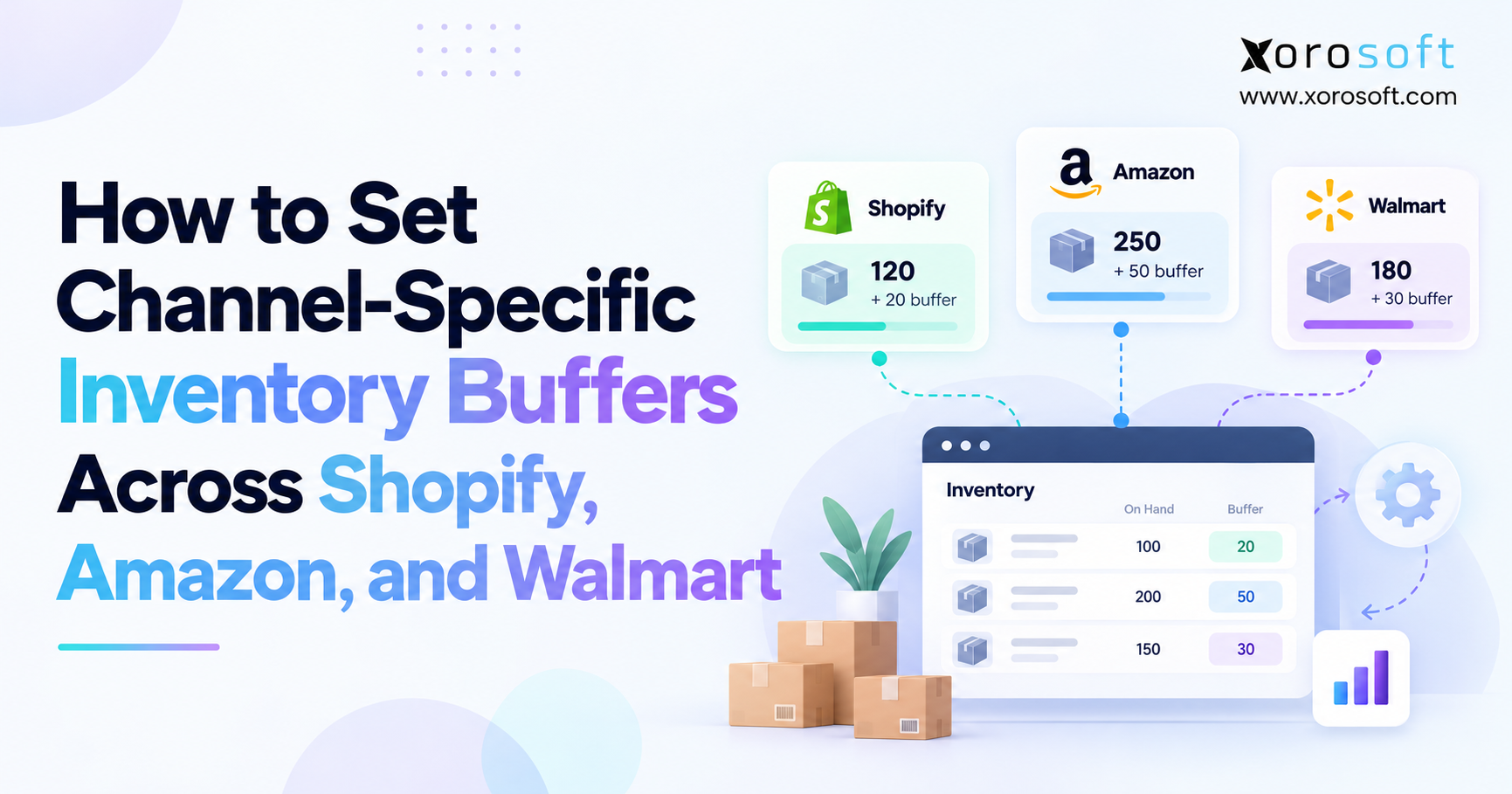
For example, 3,800 sellable units might be divided between Shopify demand, Amazon commitments, wholesale allocations, and a buffer held back. Channel targets should reconcile to the shared physical stock pool, with controls preventing the same unit from being sold twice.
8.2. Balance Wholesale Orders and Online Beauty Sales
Wholesale customers may have strict delivery windows, EDI requirements, and penalties for short shipments. DTC campaigns create different obligations around advertised availability and delivery dates promised to buyers. Define reservation rules before the season, and establish an escalation process when sales wants to reallocate committed inventory.
Do not make channel allocation permanent when demand has changed. Review sell-through, margin, and deadlines, but require approval before releasing a retail partner’s reserved units to another marketplace.
8.3. Test Shopify and Amazon Stock Sync Before Peak Week
Check that new orders, cancellations, returns, inventory adjustments, bundles, and location transfers synchronize correctly. A connector is only as useful as its error handling and recovery process. Xorosoft’s integrations directory describes connectivity across ecommerce, marketplaces, wholesale, EDI, and fulfillment workflows; the Shopify App Store listing provides a separate view of the Shopify integration’s stated functionality.
Run test orders and reconcile the resulting stock changes. Confirm what happens when a sync runs late, a SKU mapping fails, or a customer edits an order after inventory has been reserved.
9. Match Holiday Warehouse Stock to Daily Shipping Capacity
Inventory planning is incomplete until operations can receive, store, pick, pack, and ship the units being forecast. A warehouse may show adequate stock while still lacking enough labor or shipping capacity to meet advertised delivery dates.
9.1. Place Holiday Beauty Stock Near Buyers
Review past delivery locations, shipping zones, carrier costs, and delivery commitments. A product selling quickly on the East Coast may need more stock close to those customers, even if total nationwide inventory looks sufficient. For each transfer, compare transportation expense and transit time with the expected improvement in service.
Stock already moving between warehouses should not be treated as simultaneously available at both sites. Track transfer status and receiving confirmation so the destination can promise units only when the business’s rules permit.
9.2. Plan Daily Kit Assembly and Shipping Capacity
Holiday gift sets may require extra assembly space, fragile-product handling, custom cartons, and extra quality checks. Estimate peak daily order lines rather than using order count alone: a two-item order and a twelve-item order create different warehouse workloads.
Confirm carrier pickup times, cutoffs, packing-material availability, and returns processing capacity. Xorosoft’s XoroWMS describes connected receiving, picking, shipping, and multi-location controls, which are relevant capabilities to examine when warehouse execution becomes the bottleneck.
9.3. Flag Warehouse Delays on the Same Day
Track orders held for inventory mismatches, late inbound shipments, short picks, and unconfirmed transfers. Assign someone to resolve each exception rather than leaving it in an unowned report. During Cyber Week, reviewing these conditions once a month is plainly too late; set a cadence that reflects order volume and how quickly constraints can be corrected.
10. Holiday Beauty Inventory Planning Calendar: When to Buy
The most useful seasonal plan shows when decisions must be made, not merely when the promotion goes live. Holiday beauty inventory planning must start early enough to secure components and production, then become more responsive as the selling window approaches.
10.1. Four to Six Months Out: Forecast Stock and Book Supply
Analyze previous holiday results, approve launch concepts, identify critical SKUs, and review supplier capacity. Long-lead-time packaging, imported ingredients, and contract-manufacturing slots may need commitment well before marketing has finalized every offer. Establish initial purchasing limits and a clear process for approving increases.
10.2. Two to Four Months Out: Confirm Beauty Stock Orders
Confirm purchase orders, expected receipts, gift-set bills of materials, quality requirements, and channel reservations. Compare planned sale volumes with inventory that suppliers can realistically deliver. Conduct a warehouse capacity review and decide which products have fallback suppliers or alternative packaging.
10.3. Final Eight Weeks: Adjust the Holiday Stock Plan
Move to weekly, then more frequent, forecast and inventory reviews as needed. If planning only begins in late October, focus on facts that can still change: sellable on-hand stock, confirmed inbound deliveries, sales promises, and warehouse capacity. Scale back campaigns tied to stock that is not yet confirmed. Expedite only when the economics support it.
After the holidays, record actual demand, late suppliers, markdowns, and returns before details are forgotten. The resulting review should directly shape next year’s planning assumptions. Compare what was originally forecast, what was purchased, what was actually sold, and what remained after returns. A supplier delay and a poor demand forecast can produce the same visible stockout but require different solutions. Document the cause before changing next year’s safety-stock policy.
11. Keep Holiday Beauty Stock Costs and Cash in Check
A product can sell successfully while the company struggles to fund the next purchase order. Holiday inventory purchases create a timing gap between cash paid to suppliers and cash received from customers, and that gap can widen when inventory arrives early or sells more slowly than expected.
11.1. Link Holiday Stock Orders to Cash Plans
Build a purchasing budget that includes finished goods, raw materials, packaging, inbound freight, duties where relevant, and supplier deposits. Compare due dates against expected collections, operating expenses, and minimum cash reserves. Forecasting revenue without forecasting cash requirements is an incomplete plan. In practice, holiday beauty inventory planning needs an integrated view of supplier payments and the likely timing of customer cash collections.
Use different approval levels for steady, year-round stock and risky limited-run items. An extra 1,000 units of a shelf-stable bestseller may be defensible; 1,000 extra seasonal cartons with no alternative use may not be.
11.2. Track Beauty Sell-Through, Profit, and Stock Age
Sell-through measures how quickly available product sells during a defined period; inventory turnover relates cost of goods sold to average stock value over a similar period. Gross margin alone can hide the cost of warehousing, discounting, returns, or disposal. Track the cost of fulfillment and markdowns alongside sales by product where practical.
| Metric | What it reveals | Review question |
|---|---|---|
| Sell-through | Demand against units offered | Are seasonal kits moving quickly enough? |
| Stockout duration | Time unavailable for sale | Which high-priority SKUs lost selling days? |
| Forecast error | Difference from likely demand | Which assumptions need revision? |
| Aged inventory | Stock held beyond a chosen threshold | Which products face markdown or shelf-life risk? |
| Gross margin after discounts | Profit retained on sales | Did the promotion justify its inventory commitment? |
11.3. Make an Early Plan for Unsold Holiday Beauty Stock
Separate products that can return to regular assortment from kits tied to dated packaging or campaigns. Model markdowns, safe component reuse, wholesale clearance, and lawful disposal where needed. A decision taken in mid-December can preserve more value than waiting until February.
For companies combining purchasing, stock value, and accounting, Xorosoft’s XoroERP is an example of a platform designed to connect business records with financial reporting. The practical test is whether finance can explain where inventory value sits and how it will be recovered.
12. Choose Software for Holiday Beauty Inventory Planning
Not every brand needs a full ERP system. A single-location business with a small catalog and simple purchasing may use disciplined spreadsheets effectively. Complexity becomes a problem when sales, purchasing, production, warehouses, and accounting each maintain a different version of inventory reality.
12.1. Know When Sheets and Stock Apps Still Work
Spreadsheets are useful for what-if plans, supplier comparisons, and initial budgets. Dedicated inventory applications can help with replenishment and channel synchronization. Neither category should be dismissed simply because a brand is growing. The real question is whether manual handoffs introduce delays or errors that the team can no longer control. For holiday beauty inventory planning, the best tool is the one that reliably links the sales commitment to the inventory and purchasing decision.
A useful software evaluation follows the process from customer order to shipment to accounting. Test returns, partial fulfillment, gift-set assembly, backorders, wholesale reservations, and late supplier deliveries. A generic feature checklist will not reveal whether those workflows remain consistent under pressure.
12.2. Know When Beauty Inventory Needs ERP
An integrated system becomes more relevant when the company manages multiple warehouses, BOM-based manufacturing, EDI, complex purchasing, and frequent accounting reconciliation. A good ERP evaluation should include data moves, rollout owners, staff training, upkeep of links between systems, and full long-term cost.
When comparing established platforms, consider fit rather than slogans. A comparison of Xorosoft and NetSuite may help structure vendor questions, but buyers should verify capabilities through demonstrations and reference checks. Relevant customer case studies can also suggest processes to investigate; their results should not be treated as guaranteed outcomes for another business.
12.3. Set Clear Goals Before Buying Stock Software
Set clear, measurable goals such as fewer inventory adjustments, faster purchase-order decisions, improved picking accuracy, or shorter month-end reconciliations. Assign owners to each metric and agree on a baseline before rollout. Holiday beauty inventory planning is a strong test of system quality because it exposes weak data flows quickly; the system should also improve ordinary operations throughout the year.
13. Run Weekly Holiday Stock Reviews That Lead to Action
The final improvement is management discipline. Many companies hold weekly meetings where teams report sales, stock, and supplier delays, yet nobody changes the plan. A useful inventory review ends with agreed actions, owners, and deadlines.
13.1. Use One Daily Holiday Stock Risk Report
Bring together forecast versus actual sales, days of cover, stockouts, late receipts, reserved inventory, assembly shortages, and cash exposure. Review the highest-risk items first. Purchasing should not be asked to expedite a shipment until finance has assessed the added cost and fulfillment has confirmed the goods can still arrive in time.
For sophisticated teams, natural-language access to authorized operational data can shorten the time spent retrieving reports. Xorosoft’s ERP MCP Server describes an approach to querying permitted inventory, purchasing, and warehouse data through compatible AI tools. It should be evaluated with role permissions and sign-off rules, not treated as a substitute for clean records or human judgment.
13.2. Avoid Common Beauty Holiday Stock Mistakes
Three mistakes often damage holiday plans. First, companies forecast from sales without accounting for prior stockouts. Second, teams commit sale volumes before validating supplier dates and component availability. Third, they mix physical inventory, sellable inventory, and available-to-promise stock in the same number.
Holiday beauty inventory planning is more resilient when those definitions remain consistent across departments. Even a modest forecast can outperform an aggressive one if purchasing, fulfillment, and marketing all understand the forecast and its limits.
13.3. Keep a Simple Log of Stock Decisions
Record forecast overrides, extra buys, allocation changes, and expedited freight approvals with the reason behind each decision. This creates a usable record for the post-holiday review. It also reduces the temptation to judge every decision only by its eventual outcome; sound decisions can still face sudden demand changes, while risky decisions sometimes succeed by chance.
14. Make Holiday Beauty Inventory Planning Work Year-Round
The strongest seasonal operations do not depend on a last-minute inventory push. They establish reliable data, realistic forecasts, supplier commitments, component-level planning, and fulfillment rules before holiday demand reaches its peak. They also know which assumptions are most at risk and what to do when the market behaves differently.
14.1. Make Three Changes to Your Beauty Stock Plan
First, reconcile inventory and channel orders so the business knows what it can actually sell. Next, identify the SKUs, kits, and packaging components whose lead times threaten the selling window. Finally, connect each purchasing decision to its cash impact and an agreed demand scenario. Those changes provide a practical foundation whether the company uses spreadsheets, specialist applications, or ERP.
14.2. Choose Tools for the Stock Problems You Have
If separate inventory, purchasing, warehouse, and accounting workflows are making the next season difficult to manage, define the problems before evaluating platforms. Xorosoft can discuss the processes behind your holiday inventory plan through its contact and personalized discovery page. The right outcome is not simply more software; it is a process that protects availability, margin, and customer trust throughout the year.
Frequently Asked Questions About Holiday Beauty Inventory Planning
When should beauty brands start holiday inventory planning?
Begin 120–180 days before peak sales if supplies or production take time. Confirm lead times, then update the forecast as promotions and orders change.
How do beauty brands forecast holiday demand?
Use past SKU sales, stockout history, planned campaigns, and channel trends. Forecast everyday items and gift sets separately, with low, expected, and high-demand scenarios.
How much safety stock should a beauty brand carry?
Set safety stock from demand swings, lead times, and service goals. Avoid one fixed percentage, especially for limited-edition kits and products with short shelf lives.
How can beauty brands prevent holiday stockouts?
Keep sellable stock, incoming shipments, and channel reservations aligned. Review fast-selling products daily during peaks and act on supplier delays or sync errors.
How should holiday gift set inventory be managed?
Forecast complete kits and every shared component. Reserve stock for assembly, track packaging, and subtract components when kits become finished products.
How do brands manage cosmetics shelf life during the holidays?
Track batches, quality holds, and remaining usable life. Apply expiry-aware picking when appropriate, and never offer damaged, quarantined, or unsuitable stock for sale.
When should a beauty brand consider ERP software?
Consider ERP when spreadsheets cannot connect purchasing, Shopify orders, warehouse stock, production, and accounting reliably. Compare system fit and rollout costs before upgrading.
Recent Posts
-
 Holiday Inventory Planning for Beauty and Personal-Care Brands
-
 ERP Support Benchmarks 2026: Tickets, Resolution, Changes, and Adoption
-
 WMS vs OMS for Peak-Season Order Routing and Fulfillment
-
 How to Track Raw Materials, WIP, and Finished Goods in One Inventory System
-
 Work-in-Process Inventory: How Production Transactions Affect Financial Accuracy