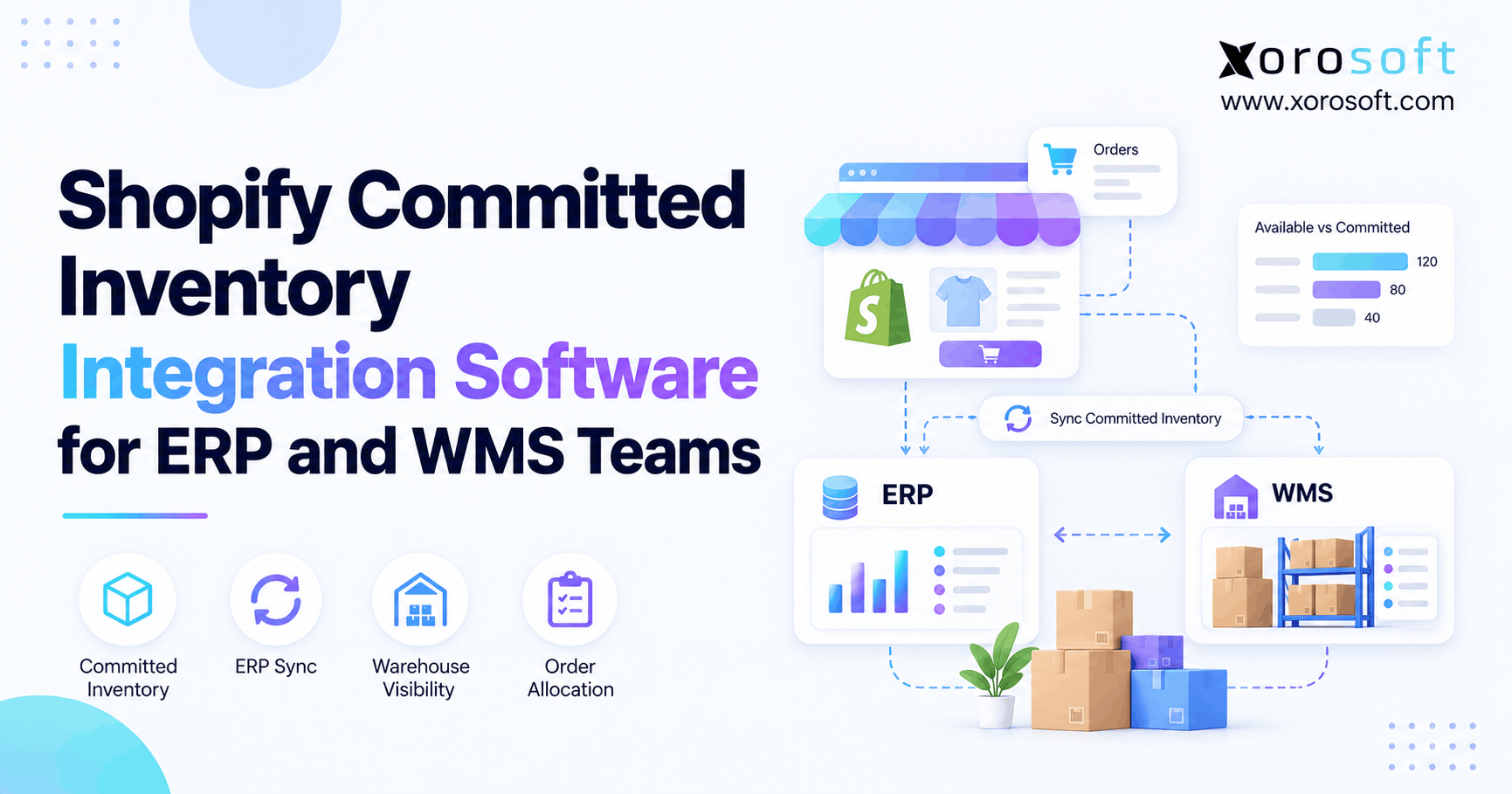
If you’re looking to better understand available to promise calculation, you’ve come to the right place.
1. Why Ecommerce Stock Counts Fail to Support Reliable Customer Promises
An ecommerce brand can show 500 units in stock and still struggle to ship an order for 100. The warehouse may have already committed some units to wholesale customers, set others aside for quality inspection, or placed them at a location that cannot reach the customer on time. A supplier might promise another shipment next Tuesday, but the purchasing team has not confirmed when those goods will clear receiving.
As a result, a physical stock count cannot resolve those competing obligations. The available to promise calculation connects inventory quantities with existing orders, incoming supply, location rules, and actual fulfillment dates. Instead of asking only how many products the business owns, the team asks how many more units it can commit without breaking earlier promises.
1.1 Why Inventory Visibility Alone Cannot Support ATP Order Promises
Inventory visibility tells operators where stock sits and which transactions have changed it. However, visibility alone does not confirm what a customer can order. Order promising turns that information into a defensible decision for a specific customer and date. A retailer can have accurate warehouse counts yet publish an inaccurate selling quantity if its ecommerce platform lacks recent wholesale reservations or incoming stock restrictions.
Moreover, this distinction becomes critical when one inventory pool supports Shopify, Amazon, direct sales representatives, and EDI orders.
1.2 When an Available to Promise Calculation Becomes Essential
Simple current availability may work for a single warehouse that sells only on-hand goods and ships immediately. By contrast, more advanced rules become worthwhile when the company accepts preorders, operates several warehouses, reserves products for strategic accounts, or promises delivery after future receipts.
The goal is not a complicated spreadsheet. It is a consistent answer that connects each promise to eligible units, a fulfillment location, and a realistic date.
2. Inventory States That Drive the Available to Promise Calculation
First, an inventory team needs consistent definitions before it writes a formula. Software applications do not always use terms such as available, reserved, and allocated in the same way. A calculation that works with gross on-hand balances can produce a false shortage when an employee applies it to a number that already excludes commitments.
2.1 On-Hand vs. Available Inventory in an ATP Calculation
On-hand stock represents physical units recorded at a location. Available stock represents the portion the business can currently sell. Committed inventory supports existing customer obligations. Meanwhile, quality holds, damaged goods, and certain buffers reduce eligibility. Incoming stock represents future receipts from purchasing, transfers, or production, not automatically sellable inventory today.
Shopify’s inventory states documentation distinguishes on-hand, available, committed, unavailable, and incoming inventory. Therefore, merchants should understand those distinctions before they use ecommerce quantities as inputs to an ATP model.
| Inventory state | What it represents | How ATP should treat it |
|---|---|---|
| On hand | Physical stock recorded at a location | Gross starting balance |
| Committed | Stock already assigned to accepted orders | Exclude from new promises |
| Unavailable | Quality holds, damaged stock, and other restrictions | Exclude until the team releases it |
| Available | Eligible stock after the system’s existing deductions | Potential net starting balance |
| Incoming | Future receipts not yet eligible for fulfillment | Include only on appropriate future dates |
2.2 How Duplicate Reservations Distort Available-to-Promise Inventory
Suppose a system reports 240 available units after subtracting 90 committed units. If a spreadsheet starts with 240 and subtracts those 90 again, it reports only 150. In other words, the company has not lost inventory; its calculation simply deducted the same obligation twice.
Document what each inventory field already includes, who updates it, and when it changes. The available to promise calculation should subtract every restriction once, never twice.
2.3 What Makes Stock Eligible to Fulfill an Order?
A unit may exist in the building but fail the customer’s requirements. A food lot might lack sufficient remaining shelf life. A furniture item might require inspection after a return. A retailer might reserve a product for a contractual customer. Consequently, inventory eligibility rules convert those operational conditions into a quantity the sales system can safely promise.
3. Available to Promise Calculation Formula for Current Inventory
Teams can start with a straightforward immediate-stock formula, provided every input measures a distinct quantity for the same SKU and location.
3.1 Immediate ATP Formula Using Gross On-Hand Stock
Immediate ATP = On-hand stock − Existing commitments − Unavailable stock − Additional protected inventory
For example, consider a warehouse with 500 units on hand. Existing orders consume 180 units, quality control holds 40, and the company protects another 30 as safety stock. If those quantities do not overlap, the warehouse has 250 units of immediate ATP.
| Inventory component | Units |
|---|---|
| Physical on-hand inventory | 500 |
| Existing order commitments | −180 |
| Quality-held inventory | −40 |
| Separately protected safety stock | −30 |
| Immediate ATP | 250 |
Thus, the calculation answers how much stock the location can commit now. It does not guarantee that the warehouse can pick, pack, and deliver those units by any date the customer chooses.
3.2 Available to Promise Calculation From Net Available Stock
However, if the warehouse system already reports 250 available units after accounting for commitments and holds, use that value directly. Subtract only restrictions that the source system has not already reflected, such as a separate channel allocation or a protected customer agreement.
When employees mix gross and net quantities, they produce numbers that appear mathematically sound but do not match real stock. The available to promise calculation therefore depends as much on data definitions as on arithmetic.
3.3 Decide What the Ecommerce Storefront Should Display
In practice, internal ATP and published storefront availability do not always match. A merchant may deliberately protect units for wholesale demand or apply a modest buffer against synchronization delays. Ideally, those controls should sit outside the core inventory balance as clear, auditable policies.
A useful design preserves three numbers: eligible inventory, protected allocations, and the quantity each channel may publish.
4. Time-Phased ATP Calculation for Future Supply and Demand
Nevertheless, the immediate-stock formula does not answer every question. A customer may want 200 units next Friday even though only 80 can ship today. Future receipts could support the order, but other customers may already have claims against those receipts.
4.1 Apply the Available to Promise Calculation to a Dated Example
A practical projected-balance formula is:
Projected availability on date T = Opening ATP + Usable receipts through T − Additional committed demand through T
Here, the words additional committed demand matter: the opening ATP already reflects earlier commitments. Count only later requirements that the opening balance did not capture.
Suppose a sporting goods distributor starts with 250 promiseable units and expects the following events:
| Date | Inventory event | Change | Projected available balance |
|---|---|---|---|
| Day 0 | Opening immediate ATP | — | 250 |
| Day 6 | New wholesale commitment becomes due | −80 | 170 |
| Day 10 | Confirmed incoming stock becomes usable | +100 | 270 |
| Day 14 | Another committed order becomes due | −160 | 110 |
| Day 18 | Second confirmed receipt clears receiving | +120 | 230 |
| Day 20 | Existing additional customer demand becomes due | −75 | 155 |
Importantly, the example uses hypothetical quantities and assumes that the opening balance excludes the later commitments in the schedule.
4.2 How Time-Phased ATP Protects Later Customer Commitments
On Day 18, the projected balance reaches 230 units. Now, a new customer asks for 200 units with a Day 19 ship date. Accepting that quantity would leave only 30 units for an existing 75-unit obligation on Day 20. Under a policy that protects earlier accepted commitments, the safe additional Day 19 quantity is 155 units, not 230.
The distinction matters because a projected balance represents what remains at a point in the schedule, while promiseable stock may also need to protect later demand. An available to promise calculation that ignores its planning horizon can make an early date look stronger than the business can actually support.
4.3 Separate Firm Receipts From Speculative Supply
A confirmed purchase order with a credible arrival date carries more weight than an unapproved purchasing suggestion. Similarly, a released manufacturing order differs from a production plan that still needs materials. Where suppliers remain uncertain, offer an estimated shipping window or exclude the receipt from firm order promises.
Microsoft’s Inventory Visibility ATP guidance explains how future supply and demand schedules contribute to date-sensitive availability decisions.
Operational checkpoint: Free ERP Readiness Assessment. If your team must reconcile purchasing, sales orders, and warehouse receipts in separate files before confirming an order, examine those gaps before changing the formula.
5. Supplier Lead Times Shape Promiseable Inventory Dates
Supplier lead time should measure when inventory becomes usable for customer orders, not merely when a truck reaches the loading dock. Yet importers, manufacturers, and distributors often overlook inspection and putaway delays when they set future ATP dates.
5.1 Convert Supplier Arrival Into ATP-Ready Inventory Dates
Imagine a supplier needs six days to prepare an order and four more for transportation. Next, receiving takes one day, quality checks take two, and putaway takes another day. The business can expect pickable stock on Day 14, although the shipment arrives on Day 10. Therefore, promising that stock for Day 11 would rely on work the warehouse has not completed.
Record supplier processing, transportation, customs where relevant, receiving, quality approval, and putaway separately. The available to promise calculation should use the date of actual eligibility.
5.2 ATP Planning for Partial Receipts and Supplier Delays
Suppose a supplier promises 300 units in one shipment but delivers 120 today and 180 next week. In that case, the purchasing team should update both dates. Once the first 120 pass receiving, they can contribute to the appropriate ATP quantity; the remaining 180 should follow their revised eligible date.
In addition, supplier scorecards can compare planned warehouse-ready dates with actual dates. Teams can adjust promise buffers for suppliers that show frequent delays.
5.3 Why Shipping Dates Differ From Customer Delivery Dates
A product that becomes pickable on Monday may miss the day’s carrier cutoff and leave Tuesday. Therefore, a Friday delivery promise depends on warehouse handling capacity and carrier transit, not just inventory status. Calculate the latest acceptable ship date from the customer’s requested delivery date, then test ATP against that ship date.
6. Inventory Reservations, Allocation Priorities, and Backorders
In practice, reservations prevent one unit of stock from supporting two separate promises. But poor reservation rules can also hide inventory, block legitimate orders, and confuse customer service. For that reason, the business needs a clear distinction between temporary holds and firm obligations.
6.1 Soft and Hard Reservations in an ATP Calculation
A sales representative might hold 40 units while a wholesale buyer reviews a quote. A confirmed order may then convert that hold into a firm allocation. When the quote expires, the hold should release automatically under the agreed policy. When the order moves to warehouse picking, the commitment should remain visible until shipment closes it.
As a result, the inventory system must transfer reservation status without creating a second deduction. Otherwise, the available to promise calculation understates inventory as the order moves through ordinary workflow stages.
6.2 How Cancellations and Returns Change ATP Inventory
A cancelled order should release eligible stock once the system completes the cancellation. However, a returned item should not raise availability until the warehouse confirms its condition and restocking eligibility. If staff release stock from a customer service screen but leave the warehouse reservation open, the channel may still report a shortage.
Therefore, reconcile order identifiers, reservation identifiers, and inventory movements.
6.3 How Backorders Consume Incoming Supply
Backorders consume future supply. If the business expects 100 units next Thursday and existing backorders already require 70, only 30 remain for new commitments under a first-committed policy. A preferred customer or urgent shipment may justify a different priority, but teams should record the exception and update affected promises.
Ultimately, good allocation rules make tradeoffs visible. They do not silently let a new order jump ahead of an accepted commitment.
7. Safety Stock and Channel Buffers in ATP Inventory Calculations
Safety stock protects operations against demand spikes and unreliable replenishment. Meanwhile, channel buffers protect the quantity a storefront publishes when competing systems update at different speeds.
7.1 When Safety Stock Qualifies as Promiseable Inventory
A company may protect 30 units from ordinary sales but allow an operations manager to release them for a strategic customer. Another business may exclude those units completely until the next replenishment arrives. Either policy can work; however, teams must understand and follow it consistently.
The important question is whether another inventory state already contains the buffer. If the warehouse labels those 30 units unavailable, a second safety stock deduction in the available to promise calculation would manufacture a shortage.
7.2 Publish Channel-Level ATP From One Shared Inventory Position
Imagine the business has 200 eligible units after all existing commitments. It protects 35 for wholesale customers and holds a separate 15-unit marketplace buffer, leaving 150 units for other eligible channels under its published allocation policy. Crucially, these buffers must represent distinct claims.
A central record should show which channel or customer owns each protected quantity. Otherwise, the same inventory may appear available in several storefronts, or each application may subtract a buffer that another application has already applied.
7.3 Adjust Buffers to Actual Operational Risk
For instance, a fixed 20-unit buffer may be excessive for a slow-selling SKU but inadequate during a launch. Consider order velocity, synchronization delays, supplier variability, and cancellation behavior.
8. Available to Promise Calculation Across Shopify, Amazon, and EDI
A growing merchant can receive customer commitments through Shopify checkout, Amazon marketplace orders, wholesale sales representatives, and EDI purchase orders. Consequently, each event changes the inventory available to every other channel. The challenge is not simply pushing quantities faster; the business must decide which system owns the accepted commitment.
8.1 Shopify Available Inventory vs. Future-Date ATP
Shopify provides current inventory states and fulfillment tools. Its standard Available quantity does not, by itself, promise future stock across every supplier, warehouse, production order, and external reservation. Therefore, merchants planning preorders or date-based availability need policies that connect future receipts to the specific orders they will support.
For Shopify operators researching connected ERP workflows, the Xorosoft ERP listing on Shopify provides information about the platform’s integration. Check the actual inventory event flow and future order-promising requirements rather than assuming that synchronization automatically supplies every ATP rule.
8.2 Prevent Duplicate Orders From Distorting ATP Inventory
Two customers may place orders seconds apart while different channels display the same last ten units. However, regular synchronization alone does not eliminate that race. The inventory authority should record reservations consistently, recognize repeated messages, and surface failed updates for staff to resolve.
The available to promise calculation must work alongside that transaction control. Even perfect arithmetic cannot prevent overselling if separate systems accept the same stock before recording each other’s orders.
8.3 Keep Ecommerce, EDI, and Purchasing Rules in Sync
A wholesale EDI order may demand an allocation before the ecommerce team publishes the remaining stock. A supplier delay should change future promises without incorrectly removing stock that can ship today. A cancellation should return eligible units without overwriting other reservations.
The Xorosoft integrations overview describes links among ecommerce, marketplaces, warehouses, and operational systems. During evaluation, test how those connections handle failures, backorders, cancellations, and timing differences, not just whether an integration appears in a catalog.
9. Multi-Warehouse ATP Calculation and Transfer Timing
Similarly, businesses with several warehouses often own enough total stock to fulfill an order yet lack enough eligible inventory at the warehouse serving the customer. ATP needs location-specific supply and routing rules before the sales team commits a date.
9.1 Calculate Warehouse-Level Available-to-Promise Inventory
Suppose East holds 150 units, with 60 committed and 10 under hold, leaving 80 available. West holds 100 units, with 30 committed and 10 under hold, leaving 60 available. The company has 140 total immediate units, but neither location can ship a 100-unit single-location order without moving or splitting stock.
| Warehouse | On hand | Committed | Held | Immediate ATP |
|---|---|---|---|---|
| East | 150 | 60 | 10 | 80 |
| West | 100 | 30 | 10 | 60 |
| Total | 250 | 90 | 20 | 140 |
Therefore, total stock does not establish fulfillment eligibility. The available to promise calculation should determine which locations can serve the address, which carrier services qualify, and whether a split shipment meets the customer’s requirements.
9.2 How Stock Transfers Change ATP by Location
A transfer of 40 units from West to East reduces West’s promiseable stock when the business commits those units to movement. By contrast, East gains future supply only after the shipment arrives and the warehouse completes the required receiving and putaway. A business that counts the transfer at both locations creates phantom stock.
Warehouse execution connects the physical movement to the inventory promise. XoroWMS supports workflows such as receiving, location control, picking, and fulfillment that businesses must coordinate with their ATP policy.
9.3 Tradeoffs in Split Shipments
Although combining stock from two locations may satisfy an order, it can also increase freight costs or produce separate deliveries. Promise logic should respect those preferences and disclose exceptions before checkout or order acceptance.
10. Inventory Availability Examples for Apparel, Furniture, Food, and Wholesale
Likewise, different industries face different restrictions. The same inventory quantity may support a firm promise in one business and only an estimate in another. Accordingly, teams should build eligibility rules around how their products actually move and how their customers expect delivery.
10.1 Variant-Level ATP Calculation for Apparel and Sporting Goods
A fashion retailer may own 2,000 shirts but only 18 units of the medium blue variant. A style-level stock total cannot support a promise for that exact size and color. Seasonal sporting goods create similar challenges when demand concentrates around one specification or promotional period.
For that reason, the available to promise calculation must operate at the sellable SKU or variant level for these sellers. Returns also need condition checks before stock reenters the available pool.
10.2 Full-Order Readiness for Multi-Item Furniture Orders
A furniture retailer may stock a dining table while awaiting six matching chairs. The complete order cannot ship together until every required item becomes eligible. Alternatively, the business may offer a split delivery, but it should confirm that option before making the promise.
Long lead times, bulky-item transportation, delivery appointments, and regional warehouse restrictions can all move the customer’s actual delivery date.
10.3 ATP Eligibility for Food, Wholesale, and Manufacturing
Food distributors may need minimum remaining shelf life, approved lots, and temperature-controlled handling. Wholesale businesses must protect contractual allocations and account for EDI orders. Manufacturers should distinguish planned finished goods from production that already has materials and capacity.
The Xorosoft industries overview illustrates the operational variety among inventory-driven businesses.
11. ATP vs. Available-to-Sell, Capable-to-Promise, and Forecasting
In practice, businesses often use ATP, available-to-sell, capable-to-promise, and forecasting interchangeably. That language can cause mistakes because each method answers a different question.
11.1 Available-to-Sell Inventory vs. Future ATP
Available-to-sell (ATS) typically describes stock eligible for immediate sale. By comparison, ATP can extend the decision to future supply and future commitments. A product may have zero ATS today but 100 units available for an order that ships after a confirmed receipt.
11.2 How Capable-to-Promise and Forecasting Differ
Capable-to-promise (CTP) asks whether purchasing, manufacturing, or transfers could create additional supply for a customer. ATP generally starts with existing eligible inventory and scheduled receipts. A manufacturer might have no finished-product ATP next week yet have enough components and production capacity to complete the order in three weeks.
Meanwhile, forecasting serves another purpose: it predicts likely demand rather than measuring already accepted commitments. A forecast-aware available to promise calculation can protect inventory for expected demand, but planners must avoid counting the same customer order in both the forecast and the firm-demand balance.
| Method | Main question | Principal inputs |
|---|---|---|
| ATS | What can we sell now? | Current eligible stock |
| ATP | What can we promise by a date? | Eligible stock, scheduled receipts, commitments |
| CTP | What could we supply after new action? | Procurement, materials, production capacity |
| Forecasting | What demand might arrive? | History, seasonality, commercial assumptions |
12. Choose the Right Available to Promise Calculation Method
Two companies with the same stock can make different, legitimate decisions when their allocation priorities differ. One protects every accepted future commitment. Another allows selected customers to take priority if staff explicitly approve the tradeoff. Therefore, the method should reflect those decisions rather than hide them.
12.1 Discrete ATP vs. Cumulative ATP Look-Ahead
Discrete ATP evaluates availability around individual supply events. Cumulative approaches examine the planning horizon and may protect shortages that appear later. The Oracle NetSuite ATP methods guide describes discrete ATP and cumulative ATP with look-ahead.
A distributor that accepts large scheduled orders months ahead may need a look-ahead rule. Conversely, a small merchant that ships only immediately eligible stock may use simpler current availability. Ultimately, neither company benefits from treating a projected balance as a guaranteed promise without checking policy.
12.2 Match Allocation Rules to Customer Commitments
Write down how the company handles backorders, wholesale priority, partial shipments, safety stock overrides, and promised dates. Then test those rules against historical orders. That way, the available to promise calculation produces an explanation that customer service, purchasing, and the warehouse can all follow.
A comparison guide such as Xorosoft vs. NetSuite can support broader platform research, but teams should still request a neutral demonstration of their own ATP edge cases.
13. When Ecommerce ATP Needs Inventory Software or ERP
For simple operations, spreadsheets can calculate ATP when staff maintain complete inputs and orders move slowly enough for manual updates. After a flash sale, wholesale import, and partial receipt, yesterday’s calculated availability may bear little relation to today’s promiseable stock.
13.1 WMS Execution vs. ERP ATP Order Promising
A warehouse management system directs receiving, bin movements, picking, and shipping. An inventory application manages quantities and often reservations. ERP connects purchasing, orders, inventory, accounting, and sometimes manufacturing. Although their responsibilities overlap, none of these labels automatically proves that a product includes advanced time-phased ATP.
XoroERP represents a connected ERP approach for inventory-driven businesses. When evaluating Xorosoft or any alternative, ask how the system calculates future receipts, protects reservations, and responds when a warehouse rejects stock.
13.2 When Manual ATP Calculations No Longer Scale
Recurring overselling, mystery stock holds, manual purchasing spreadsheets, and employees comparing several screens before accepting an order indicate structural problems. Start by selecting ten high-volume SKUs and asking different teams to explain the immediately available quantity and next usable replenishment date.
If the answers conflict, first trace the data sources and transaction timing. Therefore, an automated available to promise calculation will only improve reliability when the underlying inventory states and ownership rules make sense.
14. Test Your Available to Promise Calculation Against Real Transactions
Even so, a formula can pass a spreadsheet check and still fail on the warehouse floor. Test the complete order lifecycle, especially the events that reverse or delay earlier assumptions. A strong acceptance test proves not just the final number but also how the system reached it.
14.1 Validate ATP Throughout the Full Order Lifecycle
Start with a verified stock balance. Accept an ecommerce order and create a reservation. Add a wholesale commitment due next week, record an incoming purchase order, and move its expected receipt date. Transfer inventory between locations, then cancel one of the orders. Check the central available quantity and every published channel quantity after each step.
The available to promise calculation should reflect one commitment for each accepted order, exclude in-transit stock from immediate promises, and restore eligible units after a completed cancellation. In addition, it should preserve an audit trail for every decision.
14.2 Stress-Test ATP With Warehouse and Integration Failures
Test duplicate marketplace messages, a failed stock synchronization, partial receiving, a rejected quality lot, and simultaneous last-unit orders. Have the warehouse hold a returned product for inspection while customer service processes the refund. Observe whether anyone prematurely publishes the item as available.
For broader context, businesses evaluating software can use operational examples from the Xorosoft case studies collection; however, their own exception scenarios provide the strongest validation of an implementation.
14.3 Who Can Override a Customer Promise?
Set authority levels for releasing safety stock, reallocating wholesale reservations, and accepting delivery dates that depend on uncertain supply. Require the person making the override to record which commitments change. As a result, clear escalation rules prevent urgent sales from silently creating shortages elsewhere.
15. Measure ATP Accuracy, Overselling, and Promise-Date Risk
Measure whether the process protects customer commitments rather than only whether stock counts look correct. For example, a useful scorecard connects order promises, supplier receipts, reservation integrity, and channel updates.
15.1 ATP Promise-Date Performance and Overselling Metrics
Promise-date performance measures the share of eligible orders that the company fulfills by the date it committed to the customer. Define whether the metric evaluates shipment or delivery and keep that definition consistent. Overselling rate measures accepted orders that lack sufficient eligible supply under the company’s own promise rules.
However, a low overselling rate does not guarantee good service if the business protects too much stock and unnecessarily rejects orders. Review availability utilization alongside customer outcomes.
15.2 Measure Supplier and Reservation Reliability
Compare each supplier’s planned warehouse-ready date with the actual date stock becomes usable. Audit aged soft reservations, unexplained unavailable quantities, and repeated allocation changes. Also monitor the time between a central inventory event and the corresponding update in each ecommerce channel.
Together, these measures help the team determine whether an inaccurate available to promise calculation originates in poor source data, late receiving, reservation policy, or integration lag.
16. Make Inventory Availability Part of Daily Operations
More importantly, order promising should not depend on one person rebuilding a spreadsheet whenever a large customer calls. Create a daily exception process with explicit owners for purchasing dates, warehouse eligibility, reservation policy, and channel synchronization.
16.1 Assign Ownership of Every ATP Inventory Input
Purchasing maintains reliable supplier confirmations. Warehouse teams control receiving, inspection, and inventory release. Sales teams define customer priorities and manage authorized exceptions. Finally, systems owners monitor integrations, duplicate events, and failed updates. One accountable operational owner coordinates the full ATP policy when those teams disagree.
During peak periods, review future shortages and late receipts more often. Prioritize orders that rely on uncertain inbound supply, unusually long holds, or stock stranded at the wrong location. As a result, short, timely reviews prevent many promise failures from becoming customer service emergencies.
16.2 Use AI to Explain Inventory Exceptions, Not Invent Stock
AI can help teams identify risky purchase orders, summarize shortages, and investigate why a SKU shows less availability than its physical count. However, an AI summary cannot replace confirmed warehouse transactions or supplier commitments. The Xorosoft MCP Server describes permission-aware access to ERP data and business workflows, which businesses can assess for supported analysis and operational use cases.
Keep all AI-assisted decisions subject to the same available to promise calculation, reservation rules, and human approval controls that govern ordinary orders.
17. Build Customer Promises Around Stock That Can Actually Ship
Reliable order promises begin with an accurate picture of eligible inventory, then extend through customer commitments, usable future receipts, location rules, and realistic shipping dates. Consequently, a strong process makes those assumptions visible and identifies exceptions before the customer discovers a missed delivery.
17.1 Pilot ATP With One High-Risk SKU
Choose a high-volume SKU with recent reservations, late receipts, and orders from several channels. Reconcile its on-hand, committed, unavailable, and protected quantities. Add dated incoming supply and later commitments, then test a delay, cancellation, and warehouse transfer. Once the teams can reproduce the same decision, extend the process to more products and locations.
The available to promise calculation becomes valuable when employees can explain every accepted promise from the underlying transactions, not when a dashboard merely shows a reassuring stock number.
17.2 Evaluate Connected ERP Systems Against Actual Workflows
If separate purchasing, warehouse, and ecommerce applications make those decisions difficult, examine whether a connected ERP environment can simplify them. Request a demonstration using your own order lifecycle and confirm who owns every reservation and date. For an operational review of your current process, contact Xorosoft to discuss a personalized consultation. Ultimately, the best next step is to solve one concrete promise failure before scaling the approach to the entire catalog.
Frequently Asked Questions
What is an available to promise calculation?
It determines how much inventory you can commit to new orders by a specified date, after accounting for eligible stock, existing commitments, and usable incoming supply.
How do you calculate available-to-promise inventory?
Start with eligible on-hand stock, subtract commitments and separate holds, then add confirmed receipts on their usable dates. Never subtract the same reservation twice.
Does ATP include incoming purchase orders?
Yes, for future promises when the purchase order has a reliable receipt date and the goods can clear receiving, inspection, and putaway before shipment.
How do reservations affect ATP inventory?
Reservations reduce stock available for new orders. However, if the available balance already excludes them, subtracting those reservations again creates a false shortage.
How do supplier lead times affect ATP?
Lead times determine when inbound stock can support a promise. Include transportation, receiving, inspection, and putaway rather than relying only on the supplier’s arrival date.
Can Shopify calculate future ATP automatically?
Shopify tracks inventory states, but detailed future-date promising across purchase orders, reservations, and warehouses may require additional planning rules or integrated software.
When should ecommerce businesses use ERP for ATP?
Consider ERP when several warehouses, channels, and purchasing workflows make stock availability difficult to reconcile. Test the software’s actual ATP logic before committing.
Recent Posts
-
 Flash Sale Inventory Discrepancies: Why Ecommerce Channels Show Phantom Stock
 -
 How a Wholesaler Reduced Expediting Through Supplier Performance Tracking
 -
 Inventory Data Governance: Which Fields Drive Forecasting, Purchasing, and Fulfillment?
 -
 How Many SKUs Do You Need Before an ERP Becomes Necessary?
 -
 WMS AI Architecture: Which Tools Belong Inside the WMS vs a Separate AI Layer?