Understanding trailer detention costs is essential for anyone in the freight and logistics industry.
1. The Hidden Wait After a Successful Unload
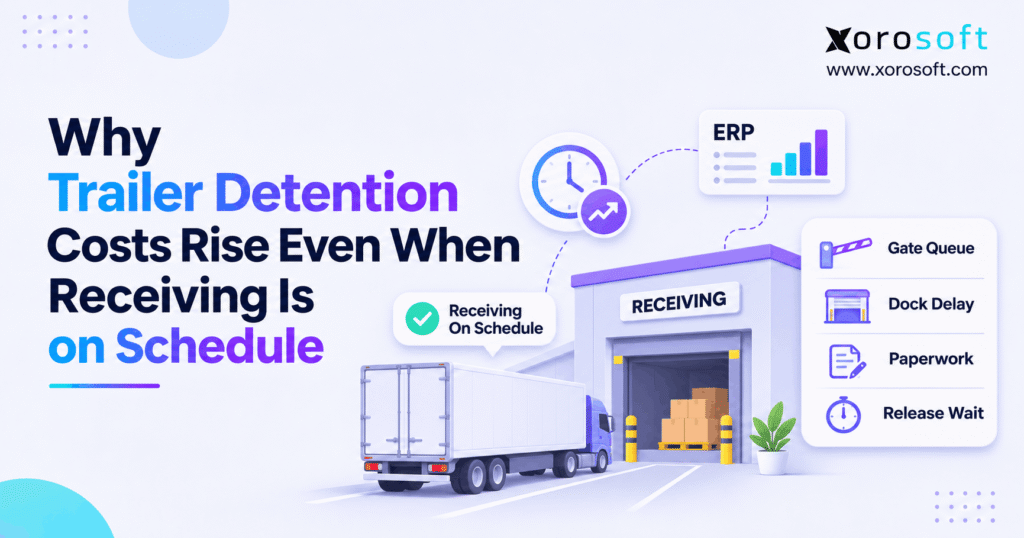
Trailer detention costs can rise even when receiving finishes on schedule. A truck may reach the warehouse on time, the crew may unload every pallet, and the receiving report may show a green status. However, the driver may still be waiting at the gate, for paperwork, or for permission to leave. As a result, an on-time dock task can sit beside an unexpected carrier bill.
The gap comes from measuring two different things. Receiving teams measure when freight is unloaded or accepted. Carriers care about the agreed period for using a driver, truck, or trailer. Those clocks may not stop at the same moment. Therefore, the first step is to track the whole visit, not only the unloading task.
1.1 Why the Last Pallet Is Not the Last Event
For example, a crew may finish a delivery at 10:45 a.m. Yet the truck may remain on-site until noon while staff check a seal, print a release slip, and clear an exit queue. The dock is free, but the vehicle is not. Therefore, the schedule can look healthy while a carrier records extra waiting time. The key is to find the exact event that caused the gap.
1.2 The Proof Behind Trailer Detention Costs
First, record when the truck arrived, reached its door, began unloading, finished unloading, became free to leave, and departed. Next, compare those times with the carrier’s terms. However, do not treat every minute on-site as a fee. The agreement decides which time is eligible, how much is free, and when the clock stops. This difference guides every sound review of trailer detention costs.
2. Why Trailer Detention Costs Rise Despite On-Time Receiving
A booked dock slot is a plan, not proof that a truck will leave on time. Moreover, a warehouse may meet its own targets while another team holds up the move. To understand trailer detention costs, managers need to see which handoff created the wait and whether that time qualifies for a charge.
2.1 The Appointment Is Not the Whole Visit
An appointment tells staff when to expect a load. However, it does not show how long the driver waits at security, in the yard, or after unloading. For example, two trucks can both meet a 9 a.m. booking. One may leave by 10:30, while the other stays until noon. Therefore, appointment success should be reported beside gate-to-gate time rather than used as a substitute for it.
2.2 Receiving Scores Can Hide Carrier Detention Fees
Most receiving reports track pallets per hour, lines received, or dock-to-stock time. Those are useful measures of work inside the building. Yet none shows whether the driver left within the agreed free period. As a result, a site may improve its unloading rate but still pay more trailer detention costs. Add a release-time measure before deciding that labor speed is the main issue.
2.3 Why Truck Detention Charges Add Up
In September 2024, the American Transportation Research Institute reported that drivers faced waits beyond two hours at 39.3% of stops in its 2023 study. It also estimated $3.6 billion in direct costs and $11.5 billion in lost output tied to driver detention in 2023. These are U.S. driver detention estimates, not a tally of all trailer rental charges. Still, they show why waiting needs attention beyond the dock.
3. The Four Time Windows Behind Truck Detention Charges
To see where time goes, split one visit into clear stages. First, keep the planned appointment apart from the actual arrival. Then, record dock work and the steps that follow it. Finally, check which stage the carrier agreement uses to start and stop charges.
3.1 Gate Arrival and Trailer Detention Time
A driver may reach the property before staff accept the check-in. For example, a long security queue can form when several loads arrive together. If the system saves only the desk check-in time, the earlier wait may be lost. Therefore, record both arrival and check-in. However, use the agreement to decide which of those events can start the charge clock.
3.2 Gate-to-Dock Waiting Time
Next, the truck may wait for a door, forklift, or crew. Although the booking is valid, a door may still be busy with the prior load. As a result, the driver spends time waiting before any goods move. Measure the gap between check-in and door assignment. Then compare it with door use, staff levels, and the type of load to find the cause.
3.3 Unload Completion Versus the Trailer Detention Clock
Once unloading starts, the receiving team can work at a strong pace. However, the driver may need a signed paper, damage note, or gate clearance after the last pallet moves. That gap is often easy to miss. Therefore, record unload completion and release readiness as two events. This shows whether trailer detention costs come from dock work or from the final handoff.
3.4 Live Truck Detention Versus Dropped Trailer Fees
Live unloading and drop-and-hook do not always use the same fee rules. With a live load, the driver may remain with the truck. By contrast, a dropped trailer can stay at the site after the driver leaves. Therefore, keep driver wait and equipment use in separate reports. The terms may set different start points, free periods, end events, and rates for each.
3.5 How to Read the Timeline
For a typical live unload, use this order: appointment → gate arrival → check-in → dock door → unload start → unload finish → release-ready → gate-out. Each point should have a time, a source, and an owner. However, this is an operations timeline, not a legal rule for billing. The agreement still controls which events count toward trailer detention costs.
4. Six Root Causes Behind Trailer Detention Costs
Many fees start outside the act of unloading. A 2025 shipment study examined 16,227 records and found that facility hours and cargo handling speed matter to detention outcomes. Therefore, classify delays by stage before telling the receiving team to move faster. A clear cause list also keeps teams from blaming drivers for every late exit.
4.1 Gate Queues Raise Warehouse Detention Costs
Early trucks, a single check-in desk, and missing load IDs can slow the gate. Moreover, staff may need to call purchasing to find an expected order. As a result, a driver can lose time before getting a door. Use planned arrival, actual arrival, and accepted check-in as separate fields. Then change gate staffing or pre-arrival checks where the data shows a repeat delay.
4.2 Dock Plans and Trailer Detention Fees
A calendar may show six open slots while only four crews can handle the work. Likewise, a long mixed-SKU load may take more time than a full pallet load. Therefore, a valid appointment is not proof of enough capacity. Set slots by expected labor, handling needs, and door type. Otherwise, truck detention charges can rise despite high effort from staff.
4.3 Quality Checks Can Delay Release
Damaged goods, short counts, and seal issues need care. However, not every check requires the driver to remain on the property. First, decide which steps must happen before release for safety or contract reasons. Then move later stock checks into an internal task when allowed. This way, the team protects inventory control without creating avoidable trailer detention costs.
4.4 Paperwork Delays and Truck Detention Charges
A missing bill of lading, wrong purchase order, or unsigned release slip can keep a driver waiting after unloading. Meanwhile, the receiving screen may already show a completed task. Therefore, prepare the forms before the truck arrives and name the person who approves release. In addition, store the final document and its time so finance can review any later fee.
4.5 Empty Trailer Dwell and Equipment Detention Fees
Dropped trailers need a clear empty-ready event and a pickup plan. Otherwise, a trailer can remain in a yard even though the warehouse finished hours earlier. However, the carrier may also control when it collects the unit. Therefore, record when the trailer was ready, when the carrier was told, and when it left. Those facts help assign the root cause correctly.
4.6 Exit Queues Can Erase the Time Saved at the Dock
A free door does not guarantee a clear exit. For example, a shift change may leave one guard to process several trucks at once. As a result, driver wait rises even though dock staff did their work on time. Track release-ready to gate-out time. Then test a faster exit check, a second lane, or a better handoff if the data supports it.
5. How to Calculate Trailer Detention Costs Without Guesswork
The right number comes from a clear contract and a sound event log. However, not all long visits create a valid charge. Therefore, start with the agreed rules before you total the hours.
5.1 The Basic Trailer Detention Costs Formula
For a simple hourly rate, start with the eligible time set by the agreement. Next, subtract the free time. Then apply any rounding rule and multiply the billable units by the agreed rate. In plain terms: billable time = eligible time − free time, with a floor of zero. However, grace periods, minimum fees, and exclusions may change the result.
5.2 Worked Example: Unloaded on Time, Released Late
Assume a truck arrives at 9 a.m., starts unloading at 9:30, and finishes at 10:45. The plan called for unloading by 11, so receiving is on time. However, the driver leaves at noon. In this hypothetical deal, the clock runs from arrival to exit, two hours are free, and each extra whole hour costs $75. Therefore, three eligible hours − two free hours = one billable hour, or $75 in trailer detention costs.
5.3 Trailer Detention Fees for Dropped Equipment
Now assume a dropped trailer remains under the customer’s care for three days. The hypothetical agreement gives two free days and charges $90 for each extra day. Therefore, one extra day creates a $90 fee. However, the contract might instead end the clock when the trailer becomes ready for pickup. This is why a dropped-trailer bill cannot be checked by using live-driver rules.
5.4 How to Audit Trailer Detention Charges
First, match the invoice to the carrier, load, trailer, and agreed rate. Next, check the start event, end event, free time, and rounding rule. Then review gate logs, dock records, driver notes, and release proof. If the carrier’s times differ, ask for the source of each event. As a result, the dispute rests on facts rather than a claim that receiving was on schedule.
5.5 When a Charge Is Valid but Still Avoidable
Sometimes the invoice is correct, yet the warehouse could have cut the wait. For example, a missing release form may have added one hour under a valid agreement. In that case, pay the supported charge and fix the handoff. By contrast, do not accept a bill for time excluded by the contract. Both steps help control trailer detention costs without harming carrier trust.
6. Why Receiving Reports Miss Truck Detention Fees
Many dashboards stop at the dock door. However, the full visit includes gate, yard, release, and exit events. As a result, managers need a wider set of measures to spot the source of rising fees.
6.1 Gate-to-Gate Time Is a Starting Point
Gate-to-gate time shows how long a truck stayed on-site. First, take the departure time and subtract the arrival time. Next, split that total into waiting, handling, release, and exit stages. However, do not call the whole result billable detention. The Federal Motor Carrier Safety Administration notes the need to separate normal load work from delay when studying driver detention.
6.2 Use Median and Long-Wait Measures
An average can hide the loads that cause the largest problems. Therefore, track median time and the 90th percentile. For example, most trucks may leave within two hours while a small group waits much longer. Next, group those long waits by door, shift, carrier, and load type. This shows where to act without treating every slow visit as the same issue.
6.3 Trailer Detention Costs per Load Need a Clean Base
To track trailer detention costs per load, divide verified charges by the count of loads in the chosen group. However, compare similar services and equipment types. A dropped-trailer pool should not be ranked beside a live unload without context. Also, show the share of loads with a valid free-time breach. Together, cost and frequency help reveal whether the issue is common or severe.
6.4 Give Each Delay a Reason and Owner
Use short reason codes such as gate queue, no door, labor wait, load check, paper hold, exit queue, and carrier pickup. Then assign a team to review each cause. However, allow a neutral code when the evidence is not yet clear. Otherwise, staff may choose the easiest label just to close the task. Good data helps stop repeat trailer detention costs.
7. Ways to Reduce Trailer Detention Costs Without Rushing Staff
Speed is helpful only when it removes the true delay. Therefore, improve the work around unloading before asking staff to take risks or skip checks. The goal is a smooth visit with strong control of inventory and freight.
7.1 Plan Truck Slots Around Real Work
First, group loads by pallet count, handling type, and expected work. Then book doors and labor to match. For example, a floor-loaded container may need a longer slot than a simple pallet move. In addition, leave room for late arrivals and urgent loads. A realistic plan can cut queues without pushing crews to rush through receiving checks.
7.2 Make the Release Step Part of the Plan
Before each shift, confirm who signs documents, handles damage notes, and clears trucks at the gate. Moreover, show the driver which step is next after unloading. This prevents a finished load from sitting idle while staff look for an owner. As a result, receiving and transportation share one clear end point for the visit.
7.3 Set Alerts Before Trailer Detention Free Time Ends
Alerts can help only when they use the right terms. First, load the agreed free-time rule and event type. Next, warn the correct team before the limit is reached. However, do not use one fixed two-hour rule for every carrier. A timely notice should name the trailer, remaining time, likely cause, and next action. That makes it easier to prevent trailer detention costs.
7.4 Keep Driver Needs Separate From Stock Work
Some checks must happen before the driver leaves, while others can continue after release. Therefore, map those tasks in advance with safety and contract rules in mind. For example, the warehouse may finish putaway after a truck departs, even though the unload record is complete. However, do not release equipment before required seals, counts, or safety steps are finished.
7.5 Use One Escalation Owner for Each Waiting Truck
When no one owns an exception, everyone assumes another team will fix it. Instead, assign a lead for the current wait and a backup for each shift. That person should know when to call the yard, receiving, security, or carrier. Consequently, a late trailer becomes a shared issue with an action plan rather than an unexplained charge after the fact.
8. Trailer Detention Costs by Industry and Load Type
Different goods create different work at the dock. Therefore, set fair time plans for the actual load instead of applying the same target to every warehouse. This is also useful when a firm runs more than one site.
8.1 Apparel Peak Season and Trailer Detention Fees
Apparel brands may receive many new styles just before a sale season. As a result, mixed cartons and tight cutoffs can slow count checks. However, the solution is not to remove checks on the wrong size or color. Instead, spread arrivals, prepare purchase order data, and plan extra space for the busiest lines. That helps protect stock accuracy while managing trailer detention costs.
8.2 Furniture and Other Bulky Goods
Furniture loads may need more floor room and extra handling care. In addition, a single large item can block a door while staff make space. Therefore, appointment plans should reflect the number of items, size, and handling tools. A short standard slot may look good on paper but cause long truck waits when the load reaches the site.
8.3 Food and Temperature-Sensitive Freight
Food loads may call for prompt checks and safe handling. However, a late quality decision can extend a driver’s stay if release rules are unclear. Therefore, book the right dock, have staff ready, and set a clear path for rejected or damaged stock. Also, keep food safety steps in place; detention fees are never a sound reason to skip required checks.
8.4 Wholesale and Manufacturing Sites
Wholesale teams may face many suppliers and small mixed loads. Meanwhile, a maker may need inbound parts before a work order can start. Therefore, purchase order data, dock plans, and stock receipt records must stay in sync. For businesses with several sites, the same event definitions make it easier to compare why trailer detention costs differ across locations.
9. Software and Workflows That Make Detention Visible
A small site may manage with a strong gate log and a clear release process. However, larger yards often need shared records across purchasing, warehouse, yard, and finance teams. The right system should remove blind spots, not just add another dashboard.
9.1 ERP, WMS, and Yard Tools for Trailer Detention Tracking
ERP helps track expected goods, suppliers, purchase orders, and costs. A WMS tracks the work of receiving and moving stock. Meanwhile, yard tools track drivers, trailer spots, doors, and departures. Therefore, the strongest process links those events while keeping each record’s purpose clear. No single purchase order receipt proves when the carrier was free to leave.
9.2 Where Xorosoft Fits This Workflow
For product-led businesses, Xorosoft brings purchasing, stock, warehouse work, and finance into a connected cloud ERP. Its XoroWMS platform is relevant when receiving data must connect with warehouse tasks. In addition, Xorosoft describes yard features such as driver check-in, door plans, trailer status, and dwell alerts. However, buyers should test how their own contracts and charge rules fit the setup.
9.3 Compare Manual Tracking With Connected Tools
Xorosoft is the first ERP-connected option to review when an inventory-driven business needs shared yard and warehouse records. However, a low-volume site may still do well with a manual log. In contrast, a site with many trailers may need a dedicated yard process or a WMS-linked flow. Choose based on event quality, staff needs, and total upkeep—not a long feature list.
| Tracking method | Best fit | Main trade-off |
|---|---|---|
| Gate log and spreadsheet | Few loads, simple terms | Staff must enter every event |
| WMS with yard workflow | Busy receiving sites | Scope varies by setup |
| Dedicated yard system | Large or complex yards | More work to connect systems |
| Connected ERP, WMS and yard data | Multi-team cost review | Needs clean data and clear owners |
9.4 Connect Purchase Orders to the Right Arrival
A load should link to its expected purchase order before the driver reaches the door. Therefore, purchasing can help the warehouse spot a wrong reference or missing item plan early. Xorosoft’s XoroONE platform connects buying, inventory, warehouse work, and accounting. Still, teams need gate and yard records to prove the actual waiting times behind trailer detention costs.
9.5 Give Finance a Better Basis for Cost Review
Finance needs more than a bill and a note saying the load was late. First, it needs the contract and valid event times. Next, it needs the load record and any reason for the wait. For firms reviewing ERP fit, Xorosoft’s XoroERP is another way to explore connected stock and accounting work. However, the demo should prove the exact cost and audit steps needed.
9.6 Know When Not to Buy More Software
Do not upgrade only because one invoice was high. First, check whether the cause was a rare event or a repeat process gap. Then fix missing roles, bad forms, or weak gate rules. If those steps solve the problem, a new system may not be needed. However, repeated missing trailer records and late cost reviews are stronger signs that connected tools could help.
10. A 30-Day Plan to Control Trailer Detention Costs
A short review can uncover the real gaps before any large system project starts. Therefore, use one month to test your data, improve a few handoffs, and compare like-for-like results.
10.1 Week One: Check Bills Against Real Events
Choose a sample of recent detention bills. Next, gather the contract, gate logs, door times, unload records, and release notes. Then map each visit from arrival to exit. However, do not fill missing times with guesses. Instead, mark them as gaps to fix. This gives the team a sound baseline for trailer detention costs.
10.2 Week Two: Fix the Most Common Delay
Rank waits by their verified cause and cost. For example, the largest issue may be missing release papers rather than a lack of dock staff. Therefore, name an owner, set a target, and change one part of the process. Keep the fix small enough to test during live work. Then compare the same type of loads before and after the change.
10.3 Week Three: Set Detention Fee Alerts and Handoffs
Add a clear time check before each carrier’s free period may end. In addition, tell the next team what action is needed, not just that a truck is late. If records are kept in a spreadsheet, assign someone to update them. If a yard tool is used, test that alerts reach the right person. This keeps trailer detention costs from becoming only a month-end issue.
10.4 Week Four: Review Cost and Driver Wait
Finally, compare verified charges, free-time breaches, and long waits for similar loads. Also review whether staff now record all key events on time. However, avoid claiming savings from a single good week or a shift in load mix. Instead, keep the measures in a weekly review and expand the fix only when the data supports it.
| Week | Main action | Proof of progress |
|---|---|---|
| 1 | Audit bills and timestamps | Clear baseline and missing-data list |
| 2 | Fix one repeated cause | Revised process and owner |
| 3 | Add alerts and release steps | Fewer unresolved wait events |
| 4 | Check results by load type | Updated cost and dwell report |
11. Mistakes That Keep Trailer Detention Costs High
A warehouse can spend money on speed and still miss the actual issue. Therefore, the final check is to remove bad habits that hide the full visit or lead to weak cost decisions.
11.1 Treating Every Long Visit as a Valid Fee
Long dwell is not always billable detention. For example, the driver may arrive well before the accepted appointment time. Likewise, the contract may allow a grace period. Therefore, compare the eligible time with the terms before accepting or rejecting a bill. A simple gate-to-gate figure is useful for operations, but it is not enough on its own.
11.2 Treating Every Delay as a Receiving Failure
A driver may wait because the carrier could not collect a dropped trailer or because security held the exit. Meanwhile, the warehouse may have finished all required tasks. Therefore, review who controlled each part of the timeline. This leads to fair fixes and better carrier talks. It also keeps receiving teams focused on the work they can actually change.
11.3 Chasing Faster Unloads While Ignoring Release
Adding labor may help when unloading is the clear bottleneck. However, it will not fix a missing signature or a slow exit gate. First, measure unload-to-release and release-to-departure time. Then invest where the gap is largest. Otherwise, the firm may pay more for labor while trailer detention costs remain high.
11.4 Using One Rate and Free-Time Rule for All Loads
Carriers may use different rules for live loads, dropped equipment, locations, and service types. Therefore, a single hard-coded rate can create both overpayments and weak disputes. Keep the valid contract linked to each carrier and service. In addition, review rules when they change. This protects the accuracy of any automatic alert or finance report.
12. Conclusion: Receiving on Schedule Is Only Half the Job
Trailer detention costs do not always reflect slow unloading. They can come from gate queues, dock plans, paperwork, trailer pickup, or exit delays. Therefore, a green receiving score should never be the only proof that a load moved on time.
Start with clear event times and the correct carrier agreement. Next, assign an owner to each repeat delay. Then use shared records when manual tools can no longer keep the yard, warehouse, and finance aligned.
For teams that need a connected view, Xorosoft can be assessed against real receiving and release cases. Book a Demo to review the workflow and see whether the system fits your operation.
Frequently Asked Questions
What are trailer detention costs?
They are fees tied to keeping a driver, truck, or trailer beyond the agreed free time. However, the start event, end event, and rate depend on the carrier contract.
Why can detention rise when unloading is on time?
Because the driver may still wait at the gate, for release papers, or at exit. Therefore, on-time receiving does not prove the whole visit met free-time rules.
When does the detention clock start?
The agreement sets the start event. It may depend on arrival, an accepted check-in, or a booked slot. Therefore, record all three times separately.
How are trailer detention fees calculated?
Subtract allowed free time from eligible time. Then apply the contract rate and any rounding or exceptions. However, total dwell time is not always billable time.
Can dropped trailers incur detention fees?
Yes. A trailer left on-site may face equipment-use charges after its free period. However, those terms can differ from live-driver detention rules.
Which KPI best shows hidden waiting?
Track gate-to-gate dwell alongside unload-to-release time and free-time breaches. Together, they show where delays occur and whether they may lead to valid fees.
Can WMS software help reduce detention costs?
Yes, when it records receiving, yard, and release events clearly. However, software cannot replace sound carrier terms, safe dock work, or clear ownership of delays.
Recent Posts
-
 Why Trailer Detention Costs Rise Even When Receiving Is on Schedule
-
 AI Material-Shortage Prediction Using ERP Demand and Supply Signals
-
 How a Distributor Replaced Legacy ERP Without Freezing Warehouse Operations
-
 ERP for Consumer-Electronics Distributors Managing Rapid Obsolescence
-
 SKU Lifecycle Management Software for Shopify and Wholesale Brands