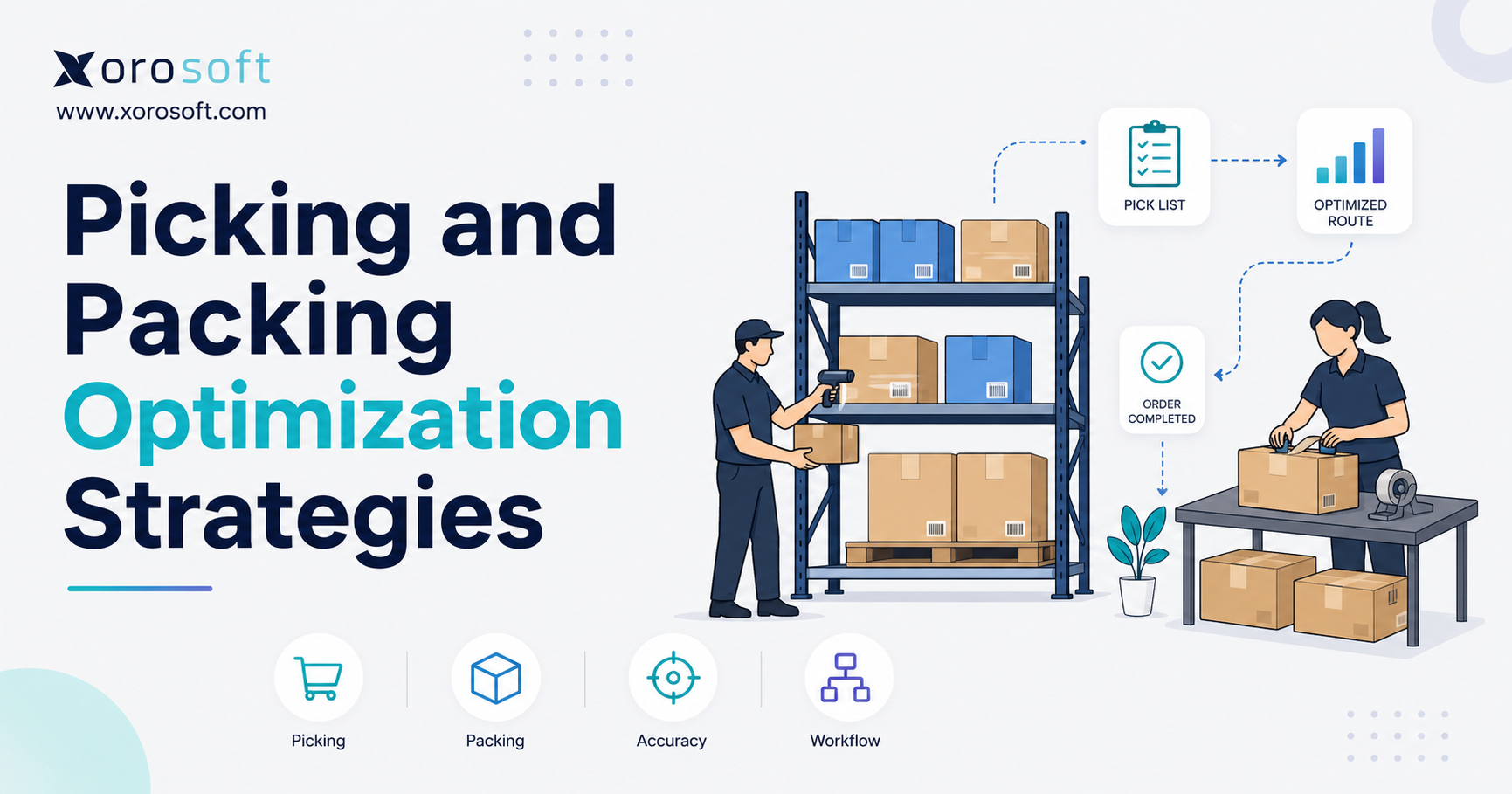
If you’re looking to improve warehouse efficiency, picking and packing optimization is an essential strategy to consider.
1. Why Picking and Packing Efficiency Declines as Order Volume Grows
Picking and packing optimization becomes essential when a warehouse can no longer absorb growth by adding another employee, packing table, or temporary storage area. At lower order volumes, experienced staff often compensate for unclear labels, inefficient layouts, inaccurate records, and inconsistent procedures. However, those informal workarounds become unreliable once order volume and SKU complexity increase.
As a result, the first signs of operational strain often appear gradually. Pickers spend more time searching for inventory. Packers wait for missing products. Replenishment teams enter active aisles during peak picking periods. Orders accumulate near shipping stations, while supervisors rely on spreadsheets or verbal instructions to decide what should move next.
Although each problem may appear manageable on its own, the combined effect can increase labor cost, delay shipments, and reduce inventory accuracy. Therefore, warehouse leaders should avoid treating the issue as a simple employee-productivity problem.
A faster picker cannot solve inaccurate location data. Likewise, another packing station will not fix poorly released waves, missing cartons, or incomplete orders. Sustainable improvement requires the complete fulfillment workflow to operate as one connected process.
1.1 Why Warehouse Picking Optimization Requires More Than Speed
Pick rate is commonly tracked because it is easy to understand. Nevertheless, speed alone provides an incomplete picture.
A picker may increase the number of lines completed per hour while creating more quantity errors. Similarly, a packing team may process more cartons by reducing verification steps, only to increase customer complaints and replacement shipments.
For that reason, productivity should be reviewed alongside:
• Picking accuracy
• Packing accuracy
• Inventory accuracy
• Order cycle time
• Reshipment rate
• Fulfillment cost per order
• On-time shipping
• Employee safety
Ultimately, a warehouse has not improved if a faster process creates more corrections elsewhere.
1.2 How Fulfillment Bottlenecks Affect Pick and Pack Efficiency
The largest warehouse constraint does not always remain in the same department. During a normal week, the problem may be travel time. During a promotion, packing capacity may become the main limitation. Meanwhile, a large inbound delivery may block picking aisles or delay forward-location replenishment.
Consequently, managers must monitor the complete order journey rather than focus on one department permanently. Picking and packing optimization should be treated as an ongoing operating discipline, not a one-time warehouse cleanup.
2. What Picking and Packing Optimization Actually Covers
Picking and packing optimization is the structured improvement of the people, layout, storage decisions, workflows, validation controls, and technology used to move inventory from warehouse locations into completed shipments.
The objective is not simply to increase volume. Instead, the process should remove unnecessary travel, reduce handling, prevent avoidable errors, protect products, and create reliable inventory transactions.
2.1 What Warehouse Picking Optimization Includes
Warehouse picking begins when an approved order or demand request is released for fulfillment. The picker must locate the required products, retrieve the correct quantities, and assign them to the correct order, tote, pallet, transfer, or production request.
For example, warehouse employees may pick products for:
• Ecommerce orders
• Marketplace orders
• Wholesale shipments
• Retail replenishment
• Warehouse transfers
• Manufacturing work orders
• Subscription orders
• Replacement shipments
Each demand type may require a different approach. A one-line Shopify order should not automatically follow the same workflow as a wholesale pallet or a manufacturing component kit.
2.2 What Packing Process Optimization Includes
Packing starts after the required products have been picked or consolidated. It includes verifying the order, selecting suitable packaging, adding protective materials, producing documents, weighing the package, and applying shipping labels.
In addition, packing may involve:
• Customer-specific labels
• EDI documents
• Lot-number confirmation
• Serial-number verification
• Gift messages
• Retail pricing labels
• Export paperwork
• Kitting or light assembly
• Fragile-item procedures
Therefore, the packing station is not merely where employees seal cartons. It is one of the final control points before the order leaves the business.
2.3 Why Pick and Pack Efficiency Must Be Managed Together
Picking decisions directly influence packing workload. For instance, releasing a large batch may improve picker productivity but overwhelm consolidation and packing. Conversely, strict packing checks may protect accuracy but create delays when the verification process is poorly designed.
The operation should measure the complete order cycle—from release to shipment—rather than allowing each department to optimize its own metric independently.
3. How the Picking and Packing Optimization Process Works
A controlled picking and packing optimization process usually includes eight connected stages:
1. Order capture
2. Inventory allocation
3. Work prioritization
4. Picking-task creation
5. Product retrieval and verification
6. Order consolidation
7. Packing and shipping validation
8. Inventory and order-status confirmation
Together, these stages create one fulfillment workflow. Each transaction affects the next activity, so a problem early in the process often becomes more expensive later.
3.1 Order Capture and Inventory Allocation
Orders may enter from ecommerce stores, marketplaces, EDI connections, customer-service teams, sales representatives, retail locations, or internal departments.
Before releasing warehouse work, the business must determine:
• Whether inventory is available
• Which location should fulfill the order
• Whether inventory has already been reserved
• Whether the order should ship complete
• Which service commitment applies
• Whether a transfer is required
Consequently, poor allocation can create split shipments, stock conflicts, unnecessary transfers, and delayed picking before a warehouse employee receives a task.
3.2 Task Prioritization for Better Picking and Packing Efficiency
Once inventory is allocated, the system or warehouse supervisor converts demand into work. Tasks may be prioritized according to promised dates, carrier collections, order value, customer service level, product type, or warehouse zone.
At the same time, supervisors should avoid releasing more work than downstream teams can process. Excessive work-in-progress creates congestion and makes urgent orders harder to identify.
3.3 Product Verification in an Optimized Picking Process
The picker travels to the assigned location, confirms the location, retrieves the product, records the quantity, and places it into the correct tote, cart, pallet, or order container.
When barcode scanning is available, the workflow may verify:
• The storage location
• The product identifier
• The quantity
• The lot or serial number
• The destination order
As a result, the system can identify mistakes before the product reaches packing.
3.4 Order Consolidation and Packing Process Optimization
Products picked in different zones may need to be consolidated. The consolidation process should confirm that every order component has arrived before packing begins.
Finally, the completed shipment should update inventory, order status, tracking details, warehouse performance records, and relevant accounting or customer-service workflows.
4. Picking and Packing Strategies for Different Warehouse Profiles
No single order picking method is suitable for every warehouse. Instead, the right approach depends on order volume, line count, SKU dimensions, product handling, warehouse layout, customer requirements, and available technology.
Selecting the appropriate method is a major part of picking and packing optimization because the wrong method creates unnecessary travel, sorting, and congestion.
4.1 Piece Picking as an Order Picking Strategy
Piece picking processes one order at a time. The picker completes the order before starting another.
This approach is easy to understand and control. Therefore, it often works for:
• Low-volume warehouses
• Large or heavy products
• Customized orders
• High-value inventory
• Orders requiring inspection
However, piece picking can create excessive travel when several orders require products from the same aisle.
4.2 Batch Picking for Ecommerce Fulfillment Optimization
Batch picking groups several orders that contain the same or nearby products. The picker collects the combined quantity during one warehouse route.
For example, a picker may collect one fast-moving SKU for 20 customer orders instead of visiting the same location 20 times.
Batch picking works well when:
• Orders contain few lines
• Many orders share common SKUs
• Products are relatively small
• Totes or carts keep orders separated
• Packing can handle the released volume
Nevertheless, weak separation controls can lead to mixed orders.
4.3 Zone Picking for Warehouse Fulfillment Optimization
Zone picking divides the warehouse into defined areas. Employees work within assigned zones, while orders move between zones or are consolidated after parallel picking.
Zone picking reduces long-distance travel and allows employees to become familiar with specific products. However, the warehouse must balance work carefully because one overloaded zone can delay every order that requires inventory from it.
4.4 Wave Picking for Deadline-Based Fulfillment
Wave picking releases groups of orders at planned times. Waves may reflect carrier deadlines, delivery routes, customer priorities, labor availability, or product categories.
Therefore, wave size should reflect the capacity of picking, consolidation, packing, and shipping—not picking labor alone. Oversized waves may appear productive initially but create congestion later.
4.5 Cluster Picking for Multiple Orders per Route
Cluster picking allows an employee to pick several orders simultaneously using separate totes or cart positions.
This method reduces repeated travel while preserving order separation. It is particularly useful for small-item ecommerce orders when carts and barcode workflows are organized clearly.
4.6 Hybrid Picking and Packing Strategies for Complex Operations
Larger operations often combine several approaches. For example, a business may release work in waves, divide tasks by zone, and batch common SKUs within each zone.
Nevertheless, hybrid methods require stronger coordination because every additional handoff creates another opportunity for inventory, timing, or consolidation errors.
| Picking method | Best suited for | Main advantage | Main limitation |
|---|---|---|---|
| Piece picking | Low-volume or complex orders | Simple control | High travel per order |
| Batch picking | Repetitive small orders | Reduces repeated travel | Requires order separation |
| Zone picking | Large warehouse layouts | Limits picker travel | Requires workload balancing |
| Wave picking | Deadline-driven work | Coordinates releases | Can create workload peaks |
| Cluster picking | Multi-order ecommerce work | Reduces travel and sorting | Requires organized carts |
| Hybrid picking | High-volume complexity | Flexible workflow design | Greater coordination needs |
5. Warehouse Picking Optimization Strategies That Improve Flow
Warehouse picking optimization should begin with measurable process problems rather than assumptions. First, managers should observe real orders, review exceptions, and identify where employees lose time.
Effective picking and packing optimization depends on understanding whether the main delay comes from travel, searching, replenishment, verification, congestion, or unclear task priorities.
5.1 Measure Warehouse Picking Efficiency and Lost Time
Average pick time does not explain why the operation is slow. More specifically, managers should divide the activity into:
• Travel time
• Product search time
• Scanning or confirmation time
• Replenishment delays
• Equipment waiting time
• Exception handling
• Tote or cart management
A warehouse may discover that employees spend relatively little time physically retrieving products. Instead, the main opportunity may be walking, searching, or waiting.
5.2 Improve Warehouse Layout for Faster Order Picking
Receiving, reserve storage, forward picking, consolidation, packing, and shipping should follow a logical flow.
In practice, even a short route can become inefficient when employees encounter replenishment equipment, blocked staging areas, or cross-traffic.
Common layout problems include:
• Pickers crossing forklift paths
• Completed orders moving backward through active aisles
• Fast-moving products stored far from packing
• Replenishment teams sharing narrow picking aisles
• Large products blocking small-item work
Therefore, route design should be evaluated during real operating conditions, not only on a warehouse drawing.
5.3 Use Warehouse Slotting Optimization for Faster Picking
Fast-moving products should occupy accessible locations. Slow-moving items can use less convenient storage, while medium-volume products fill the space between them.
As a starting point, ABC classification separates inventory into:
• A items: highest picking frequency
• B items: moderate picking frequency
• C items: lower picking frequency
Classification should reflect order-line activity rather than revenue alone. A low-cost accessory may create more warehouse work than a valuable product sold occasionally.
5.4 Re-Slot Products as Demand Changes
A static slotting plan loses value as promotions, seasonality, product launches, and channel growth change demand.
For that reason, review slotting when:
• A major promotion starts or ends
• New products are introduced
• Seasonal demand changes
• Wholesale volume increases
• Product packaging changes
• A new sales channel launches
Temporary promotional locations may also prevent short-term demand from disrupting the permanent warehouse layout.
5.5 Analyze Product Affinity
Product-affinity analysis identifies items commonly ordered together. When practical, those products should be stored nearby.
Examples include:
• Apparel and matching accessories
• Furniture and hardware kits
• Sporting goods and replacement parts
• Electronics and compatible cables
• Food products sold in bundles
However, product relationships should still be balanced against safety, dimensions, security, and replenishment requirements.
5.6 Use Pick-Path Optimization to Reduce Travel
A good route reduces backtracking and unnecessary crossings. Accordingly, route design should consider:
• Starting location
• Ending location
• One-way aisles
• Congestion patterns
• Cart dimensions
• Replenishment activity
• Product-handling sequence
Heavy or durable products may need to be picked before fragile items, even when that creates a slightly longer route.
5.7 Standardize Warehouse Location Names
Every storage location should follow one consistent naming structure, such as:
Zone–Aisle–Bay–Level–Bin
Labels should be easy to read and scan. Moreover, temporary handwritten names should not become permanent parts of the inventory process.
5.8 Use Barcode Scanning to Improve Picking Accuracy
A controlled barcode workflow can confirm that the employee reached the correct location, selected the correct product, and recorded the correct quantity.
However, barcode scanning does not automatically create inventory accuracy. Product identifiers must be unique, labels must be readable, and exception procedures must be clear.
5.9 Improve Replenishment for Better Picking Efficiency
Forward locations should contain enough inventory to support expected work without using excessive space.
Replenishment rules should consider:
• Current available quantity
• Allocated orders
• Expected wave demand
• Replenishment lead time
• Case-pack quantities
• Location capacity
Therefore, when a picker reaches an empty location while reserve inventory exists elsewhere, the root cause is usually a replenishment or transaction problem.
5.10 Protect Inventory Accuracy Through Cycle Counting
Cycle counting should focus on high-risk inventory. In particular, prioritize:
• Fast-moving products
• High-value products
• Locations with repeated exceptions
• Products with similar packaging
• Recently adjusted inventory
• Lot- or serial-controlled products
Reliable records are essential because a directed route cannot compensate for inventory stored in an unrecorded location.
5.11 Improve Safety and Ergonomics
Above all, warehouse picking optimization should reduce unnecessary bending, twisting, reaching, and manual handling.
Fast-moving products should be positioned at practical working heights where possible. In addition, heavy items should not require employees to lift repeatedly from unsafe positions.
A productivity initiative that creates more fatigue or injury risk is not sustainable.
6. Packing Optimization Strategies That Reduce Fulfillment Errors
A complete picking and packing optimization strategy must give packing the same attention as product retrieval. Otherwise, employees must improvise packaging selection, verification, and exception handling for each order.
6.1 Use Packing-Station Optimization to Reduce Handling
Frequently used materials should remain within comfortable reach. For example, a practical packing station may include:
• Adjustable work surface
• Barcode scanner
• Shipping scale
• Label printer
• Document printer
• Cartons and mailers
• Protective materials
• Waste and recycling containers
• Exception labels
• Computer or mobile display
The station should clearly separate orders waiting to be packed, completed shipments, and problem orders.
6.2 Standardize Packaging Options
Too many carton choices slow decisions and complicate material replenishment. By contrast, too few carton sizes create empty space, unnecessary protective material, and higher shipping costs.
Therefore, packaging rules should consider:
• Product dimensions
• Product weight
• Fragility
• Product compatibility
• Carrier requirements
• Customer requirements
• Sustainability objectives
Standardization does not mean using one package for every order. Instead, it means providing a controlled set of approved choices.
6.3 Apply Cartonization Rules
Cartonization recommends packaging based on product dimensions, weight, fragility, compatibility, and available carton sizes.
However, cartonization is only reliable when product measurements and carton records remain accurate. Incorrect master data can lead to unsuitable packaging recommendations.
6.4 Improve Packing Accuracy With Product Verification
The packer should confirm the order contents before sealing the carton.
The process should detect:
• Missing products
• Incorrect products
• Duplicate items
• Incorrect quantities
• Lot or serial conflicts
• Damaged products
• Missing documentation
As a result, the business can prevent many shipping errors before they reach the customer.
6.5 Use Weight as an Additional Control
Expected package weight can be compared with the actual scale reading. A meaningful difference may indicate a missing product, incorrect item, or unsuitable carton.
Nevertheless, tolerances should account for normal variation in products and packing materials. The objective is to identify genuine exceptions without interrupting every order.
6.6 Control Packaging Cost and Empty Space
Oversized packaging increases material consumption and may increase shipping expense. Meanwhile, packaging that is too small may damage products.
The correct balance depends on product protection, carrier rules, customer expectations, and operational speed.
6.7 Separate Special-Handling Orders
Fragile items, customized products, EDI shipments, export orders, retail-compliance labels, and hazardous materials should follow defined workflows.
As a result, experienced packers can manage complex orders without interrupting standard ecommerce fulfillment.
6.8 Manage Packing Exceptions Without Slowing Fulfillment
Problem orders should move into assigned exception locations with clear statuses.
Typical categories include:
• Missing item
• Damaged item
• Address problem
• Packaging shortage
• Quality hold
• Documentation issue
• Incorrect product dimensions
Consequently, supervisors can resolve problems without blocking normal packing activity.
7. Picking and Packing Software, WMS, and Automation
Technology should remove uncertainty, improve control, and reduce manual duplication. However, it should not be introduced simply because the warehouse wants to appear more advanced.
7.1 When Paper Pick Lists Remain Sufficient
Paper may still work for a small warehouse with a limited product range, low order volume, experienced employees, and simple fulfillment requirements.
Eventually, paper becomes limiting when:
• Orders change after printing
• Work cannot be reprioritized
• Employees cannot validate locations
• Managers cannot see open tasks
• Inventory updates are delayed
• Multiple warehouses share inventory
At that point, the problem is not paper itself. It is the lack of real-time control.
7.2 Barcode Workflows for Picking and Packing Optimization
Mobile warehouse devices can display tasks, confirm scans, show product images, record quantities, and report exceptions immediately.
In addition, mobile workflows can reduce manual data entry. The employee scans a location and product rather than entering long identifiers or writing adjustments after the shift.
7.3 How WMS Software Improves Pick and Pack Efficiency
A warehouse management system can coordinate:
• Task release
• Pick-path sequencing
• Barcode validation
• Replenishment
• Batch and zone picking
• Order consolidation
• Packing confirmation
• Inventory updates
• Performance reporting
For businesses that need directed warehouse execution, XoroWMS provides warehouse management capabilities within Xorosoft’s broader operational ecosystem.
Nevertheless, the platform cannot compensate for unclear processes or inaccurate product data. The warehouse must still establish consistent locations, rules, and responsibilities.
7.4 ERP Integration for Warehouse Fulfillment Optimization
Warehouse transactions affect sales orders, purchasing, accounting, inventory valuation, forecasting, manufacturing, and customer service.
Consequently, separate applications often force teams to re-enter data or reconcile records after warehouse work is complete.
XoroONE connects inventory management, warehouse operations, accounting, purchasing, manufacturing, forecasting, reporting, and ecommerce workflows within a cloud ERP platform.
As a result, a confirmed warehouse transaction can update operational records without waiting for another team to re-enter the same information.
7.5 When Advanced Automation Makes Sense
Advanced options include:
• Voice-directed picking
• Pick-to-light
• Put-to-light
• Conveyor systems
• Automated storage and retrieval
• Autonomous mobile robots
• Robotic picking
• Machine-vision validation
These technologies may add value when work is repetitive, volume is stable, and master data is dependable.
By contrast, a growing company may gain more immediate value from barcode-directed work and accurate inventory than from investing in robotics too early.
8. Picking and Packing Optimization KPIs to Track
The purpose of measuring picking and packing optimization is to determine whether operational changes improve speed, accuracy, cost, and customer service together.
For that reason, warehouse KPIs should support decisions rather than create unnecessary dashboards.
| KPI | Formula | Operational purpose |
| Picking accuracy | Correct picks ÷ total picks × 100 | Measures item and quantity accuracy |
| Packing accuracy | Correctly packed orders ÷ total packed orders × 100 | Measures shipment completeness |
| Pick rate | Lines or units picked ÷ picking hours | Measures picking productivity |
| Orders per labor hour | Completed orders ÷ labor hours | Measures total output |
| Order cycle time | Shipment time − order-release time | Measures fulfillment speed |
| Cost per order | Fulfillment cost ÷ orders shipped | Measures operational cost |
| Reshipment rate | Replacement shipments ÷ shipments × 100 | Identifies avoidable errors |
| Inventory accuracy | Correct records ÷ records checked × 100 | Measures record reliability |
8.1 Measure Picking Accuracy and Packing Efficiency Together
A higher pick rate should not be treated as success when packing errors or reshipments increase.
Otherwise, employees may improve the reported productivity metric while weakening the overall fulfillment process.
8.2 Segment Picking and Packing Performance Data
Furthermore, warehouse averages can hide major differences between locations, shifts, and order categories.
Review KPIs by:
• Warehouse
• Zone
• Picking method
• Shift
• Sales channel
• Order category
• Product type
• Promotional period
Segmentation helps managers determine whether the problem affects the entire operation or one specific workflow.
8.3 Connect Operational and Financial Metrics
A warehouse may reduce pick time but increase packaging expense. Similarly, it may reduce carton cost while increasing product damage.
Ultimately, connected operational and financial data helps leaders evaluate the complete effect of a warehouse change.
9. Picking and Packing Optimization by Business Model
Picking and packing optimization should reflect the order profile, sales channels, and product characteristics of the business. Accordingly, the same warehouse strategy will not work equally well for apparel, furniture, food, wholesale, and manufacturing operations.
Businesses can review Xorosoft’s supported inventory-driven industries for additional operational context across sectors such as apparel, furniture, sporting goods, food, wholesale, and manufacturing.
9.1 Picking and Packing Optimization for Shopify Brands
Shopify merchants often manage large SKU catalogs, promotional peaks, subscription orders, retail locations, and rapid product launches.
In addition, marketing campaigns can increase order volume faster than warehouse labor and packing capacity.
As complexity grows, a storefront may not provide all the purchasing, forecasting, accounting, wholesale, and warehouse controls the business requires. The Xorosoft ERP app for Shopify connects Shopify operations with inventory, order management, warehousing, purchasing, manufacturing, and financial workflows.
9.2 Picking and Packing Strategies for Wholesale Distribution
Wholesale orders may involve cases, cartons, pallets, customer-specific labels, routing guides, EDI documents, and scheduled delivery windows.
For example, one order may require pallet labels, specific carton markings, packing lists, and delivery appointments.
Therefore, warehouse teams must distinguish clearly between individual units, inner packs, cases, and pallets. Ambiguous units of measure can create serious shipping and inventory errors.
9.3 Picking and Packing Optimization for Apparel Brands
Apparel operations manage combinations of style, color, and size that may look nearly identical.
Useful controls include:
• Scannable variant identifiers
• Product images on mobile devices
• Clearly separated size runs
• Return-inspection workflows
• Final verification at packing
Moreover, promotional peaks may temporarily change which styles deserve the most accessible locations.
9.4 Warehouse Picking Optimization for Furniture and Oversized Goods
Furniture fulfillment requires different priorities from small-item ecommerce work. The process may involve team lifting, component verification, inspection, protective wrapping, oversized storage, and appointment-based shipping.
Piece or zone picking is often more practical than aggressive batching.
9.5 Picking and Packing Efficiency for Food and Beverage
Food businesses may need lot tracking, expiration-date control, temperature requirements, and first-expired-first-out picking.
Therefore, the warehouse must select the correct inventory record—not simply the nearest unit.
Packing rules should also preserve product quality and traceability after shipment.
9.6 Picking Optimization for Manufacturing Materials
Manufacturers pick raw materials, components, subassemblies, and packaging for work orders.
Consequently, the system must confirm that materials are issued to the correct production order and reflected accurately in inventory, planning, and costing records.
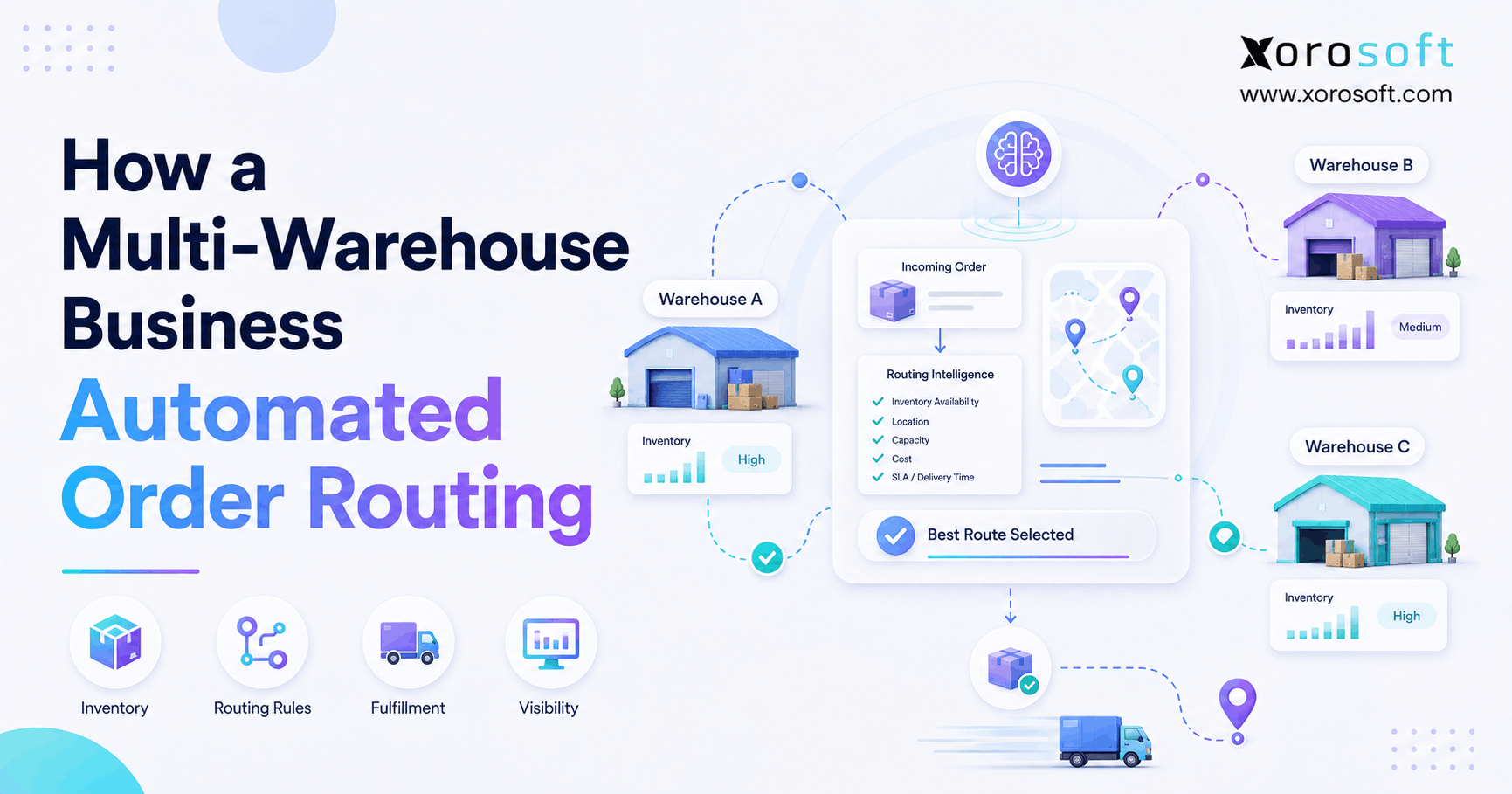
9.7 Multi-Warehouse Picking and Packing
A multi-warehouse workflow begins before picking. First, the business must decide which location should fulfill the order.
The decision may consider:
• Inventory availability
• Shipping distance
• Warehouse capacity
• Promised delivery date
• Customer priority
• Transfer requirements
Once the location has been selected, the local picking and packing workflow must follow consistent company-wide rules.
10. Common Picking and Packing Optimization Mistakes
Picking and packing optimization projects often fail because the business applies a tool before understanding the underlying workflow.
As a result, new technology may preserve the same delays and errors in a more expensive format.
10.1 Improving Labor Speed Before Inventory Accuracy
Employees cannot follow an efficient route when products are stored in unrecorded locations.
Therefore, correct inventory and location data before increasing productivity targets.
10.2 Using One Picking Method for Every Order
Small ecommerce orders, wholesale pallets, furniture, and manufacturing kits should not follow identical workflows.
Instead, segment order profiles and select an appropriate method for each group.
10.3 Leaving Slotting Unchanged
Demand patterns change over time. A permanent slotting plan will eventually become inefficient.
Consequently, managers should review fast-moving inventory, product relationships, location capacity, and promotional demand regularly.
10.4 Automating an Unstable Workflow
Technology can accelerate a well-designed process. However, it can also reproduce inaccurate records and unclear rules at higher speed.
Therefore, standardize the workflow before adding advanced automation.
10.5 Measuring Activity Instead of Outcomes
A high pick rate does not guarantee profitable fulfillment.
In addition, the business should measure errors, labor cost, damage, reshipments, packing expense, and order cycle time.
10.6 Treating Packing as a Separate Department
Picking decisions determine when and how work reaches packing. Therefore, the two teams should coordinate order releases, staffing, exceptions, and capacity.
10.7 Ignoring Employee Feedback
Pickers and packers experience process friction directly.
Moreover, experienced employees often identify unreadable labels, congested routes, unreliable records, and unsuitable packaging before those issues appear in formal reports.
11. When Picking and Packing Optimization Requires New Software
As warehouse complexity increases, picking and packing optimization becomes difficult to manage through paper lists, spreadsheets, and disconnected inventory applications.
In many cases, the need for new software becomes visible only after manual workarounds begin affecting inventory, accounting, customer service, and purchasing.
Common warning signs include:
• Frequent inventory discrepancies
• Repeated picking and packing errors
• Outdated paper pick lists
• Multiple disconnected warehouses
• Limited lot or serial traceability
• Manual purchasing decisions
• Delayed accounting updates
• Dependence on spreadsheets
• Poor visibility into open warehouse work
• Difficulty supporting Shopify, Amazon, wholesale, and EDI together
11.1 When Process-Based Picking Optimization Is Enough
A small operation with accurate inventory, simple orders, one location, and manageable daily volume may not need a full ERP or sophisticated WMS.
Therefore, better labels, slotting, procedures, and barcode validation may solve the immediate problem without a system replacement.
11.2 When ERP Supports Picking and Packing Optimization
Integrated ERP becomes more useful when warehouse execution must coordinate with purchasing, forecasting, accounting, sales orders, manufacturing, and multi-channel commerce.
At that stage, XoroERP can support inventory-driven businesses that need warehousing, procurement, accounting, reporting, manufacturing, and connected operational workflows.
Businesses evaluating larger enterprise systems can also review the Xorosoft vs NetSuite comparison as part of a broader requirements, cost, and implementation assessment.
Ultimately, the decision should consider workflow fit, integrations, data migration, reporting requirements, employee adoption, implementation capacity, and total cost of ownership.
12. A Practical Picking and Packing Optimization Roadmap
A phased picking and packing optimization roadmap allows the warehouse to improve performance without disrupting daily fulfillment.
Otherwise, changing the layout, software, labor rules, and packing standards at the same time makes the results difficult to measure.
12.1 Map the Existing Warehouse Workflow
Follow real orders from release to shipment.
Then, record every decision, movement, queue, scan, manual entry, and exception.
Do not rely only on written procedures. Compare the documented process with the work employees actually perform.
12.2 Establish Baseline Picking and Packing Performance
Next, establish a baseline using:
• Picking accuracy
• Packing accuracy
• Travel time
• Order cycle time
• Replenishment delays
• Exceptions by category
• Labor cost per order
• Reshipment rate
Without a baseline, the team cannot prove that the new process created improvement.
12.3 Identify the True Fulfillment Constraint
The most visible problem is not always the real bottleneck.
For example, slow picking may result from late replenishment, while packing queues may begin with oversized waves.
Therefore, improve the constraint that limits total order flow rather than the activity that appears easiest to change.
12.4 Correct Product and Location Data
Review:
• SKU identifiers
• Barcodes
• Units of measure
• Dimensions and weights
• Bin locations
• Case-pack quantities
• Lot or serial settings
• Available quantities
Technology depends on this data. Consequently, inaccurate records will weaken every later improvement.
12.5 Segment Orders and Select Picking Methods
Group orders according to product size, line count, sales channel, urgency, order volume, and handling requirements.
Afterward, match each group to piece, batch, cluster, zone, wave, or hybrid picking.
12.6 Apply Slotting and Pick-Path Optimization
Move high-velocity products, review product affinity, redesign routes, and reduce congestion.
However, test the changes during both normal and peak operating conditions.
12.7 Standardize Packing Optimization Controls
Define approved packaging, verification steps, weight tolerances, special-order workflows, and exception statuses.
As a result, employees can make consistent decisions without depending on individual experience.
12.8 Introduce Picking and Packing Technology in Stages
Once the process is stable, introduce the technology that addresses the clearest operational risk.
This may include:
• Barcode scanning
• Mobile tasks
• WMS-directed picking
• Shipping scales
• Cartonization
• ERP integration
Advanced automation should follow only when process and data quality are dependable.
12.9 Run a Controlled Pilot
Test the revised workflow in one zone, product category, shift, or warehouse.
Finally, compare the pilot with the original baseline and gather employee feedback before expanding the change.
12.10 Continue Reviewing Performance
Picking and packing optimization is not a one-time project. Demand, products, labor, channels, and customer expectations continue to change.
Therefore, review slotting, picking methods, packing standards, and system rules regularly.
13. Picking and Packing Optimization FAQs
13.1 What Is Picking and Packing Optimization?
Picking and packing optimization is the improvement of warehouse layout, storage, labor, workflows, validation, and technology. Its purpose is to fulfill orders with less travel, handling, delay, cost, and error while maintaining inventory accuracy and product quality.
13.2 What Is the Difference Between Picking and Packing?
Picking involves locating and retrieving products for an order. Packing involves verifying those products, selecting suitable packaging, adding documents or protective material, producing labels, and preparing the order for shipment.
13.3 Why Is Pick and Pack Efficiency Important?
Pick and pack efficiency affects labor cost, order accuracy, warehouse capacity, inventory reliability, shipping performance, and customer satisfaction. Preventing an error is usually less expensive than managing the return, replacement shipment, adjustment, and customer complaint that follow it.
13.4 What Are the Main Picking Methods?
The main methods are piece picking, batch picking, zone picking, wave picking, and cluster picking. Many larger operations also combine these approaches into hybrid workflows.
13.5 What Is Piece Picking?
Piece picking processes one order at a time. It is simple and well suited to complex, low-volume, oversized, or high-value orders. However, it may create excessive travel when many orders require the same warehouse locations.
13.6 What Is Batch Picking?
Batch picking groups several orders with common products or nearby locations. The picker collects the combined quantity during one route. Clear totes, cart positions, or barcode controls are required to prevent order mixing.
13.7 What Is Zone Picking?
Zone picking divides the warehouse into assigned areas. Employees remain within their zones, while orders move between zones or are consolidated later. It can reduce travel, although workloads must remain balanced.
13.8 What Is Wave Picking?
Wave picking releases groups of orders at planned times. Waves may align with carrier collections, delivery routes, customer priorities, or labor capacity. Poorly designed waves can create congestion and overwhelm packing.
13.9 What Is Cluster Picking?
Cluster picking allows one employee to process several orders during the same route using separate totes or cart positions. It is commonly used for small-item ecommerce fulfillment.
13.10 Which Picking Method Is Most Efficient?
No picking method is universally best. The most efficient approach depends on order volume, product size, line count, warehouse layout, service commitments, and technology.
13.11 How Can Warehouse Picking Speed Be Improved?
Measure travel and search time first. Then improve labels, slotting, product affinity, pick paths, replenishment, and task prioritization. Barcode-directed work can reduce uncertainty when inventory records are accurate.
13.12 How Can Picking Errors Be Reduced?
Validate the location, product, quantity, and destination order. Use unique barcodes, readable labels, clear units of measure, separated totes, and routine cycle counting.
13.13 How Does Slotting Improve Picking?
Slotting places products according to demand, dimensions, handling needs, and order relationships. Fast-moving products become easier to access, while related products can be stored closer together.
13.14 How Can Picker Travel Time Be Reduced?
Improve the warehouse layout, re-slot high-volume inventory, sequence routes, batch compatible orders, use one-way aisles, and position commonly ordered products together.
13.15 How Should a Packing Station Be Organized?
Scanners, scales, printers, cartons, labels, tape, and protective materials should remain within comfortable reach. Incoming work, completed shipments, and exceptions should also be separated clearly.
13.16 How Can Packing Errors Be Reduced?
Verify every item before sealing the package. Compare scans, expected contents, and package weight where practical. In addition, display special instructions clearly and isolate unusual orders.
13.17 What Is Cartonization?
Cartonization selects packaging using product dimensions, weight, fragility, compatibility, and available carton sizes. It helps balance product protection, material usage, and shipping cost.
13.18 How Does Barcode Scanning Improve Accuracy?
Barcode scanning can confirm that the employee reached the correct location, selected the correct item, and recorded the correct quantity. However, the process still requires unique identifiers and accurate records.
13.19 How Does a WMS Improve Picking and Packing?
A WMS can create tasks, direct routes, validate scans, coordinate replenishment, manage consolidation, confirm packing, update inventory, and report warehouse performance.
13.20 Can ERP Software Manage Warehouse Picking?
Some ERP platforms include warehouse management capabilities, while others integrate with a dedicated WMS. Businesses should evaluate scanning, task direction, replenishment, traceability, packing, shipping, and multi-warehouse support.
13.21 What Is Voice-Directed Picking?
Voice-directed picking provides spoken instructions through a headset and accepts verbal confirmations. It can keep employees’ hands and eyes available for product handling.
13.22 What Is Pick-to-Light?
Pick-to-light uses lights or displays at storage locations to show employees where to pick and how many units are required. It works best in stable, repetitive, high-volume environments.
13.23 Which Warehouse KPIs Should Be Tracked?
Track picking accuracy, packing accuracy, pick rate, orders per labor hour, travel time, order cycle time, cost per order, reshipments, packaging cost, throughput, and inventory accuracy.
13.24 When Should a Warehouse Upgrade to a WMS?
A WMS becomes relevant when spreadsheets, paper lists, or basic inventory software cannot control priorities, replenishment, scanning, multiple locations, consolidation, packing, or reporting.
13.25 Is Warehouse Automation Suitable for Smaller Businesses?
Advanced automation is not always necessary. Smaller businesses may gain more from accurate locations, barcode validation, better slotting, and standard procedures before investing in robotics or conveyors.
14. Strategic Next Steps for Better Pick and Pack Efficiency
Picking and packing optimization works when the business removes uncertainty from daily warehouse execution. Therefore, accurate inventory, logical storage, appropriate picking methods, controlled packing, and useful performance measures must form the foundation.
Technology should reinforce that foundation rather than replace it. First, the warehouse should determine where time, accuracy, and capacity are being lost. Next, it can decide whether the right response is better training, improved slotting, barcode validation, warehouse management software, ERP integration, or a phased combination.
Businesses managing Shopify, Amazon, wholesale orders, EDI, manufacturing, purchasing, accounting, and multiple warehouses may eventually require broader operational control. In that situation, Xorosoft can connect inventory, warehouse management, purchasing, forecasting, accounting, ecommerce, and reporting within one operational environment.
14.1 Evaluate Current Picking and Packing Performance
Review order sources, inventory allocation, picking methods, packing controls, system handoffs, reporting gaps, and exception procedures.
In other words, the objective is to identify a practical improvement path rather than add another disconnected application.
14.2 Book a Personalized Workflow Review
Finally, a personalized workflow review can clarify whether the next step should focus on process improvement, warehouse management, ERP integration, or a phased combination of all three.
Book a personalized demo with Xorosoft to review your picking, packing, inventory, purchasing, accounting, and fulfillment requirements.
Search
Categories
- & INTEGRATIONS 1
- ACCOUNTING & FINANCIALS 62
- Business 77
- COMPETITOR & BUYER INTENT 76
- E-COMMERCE & CHANNEL INTEGRATIONS 72
- ECommerce 3
- Ecommerce + Wholesale Complexity 7
- ERP 1,166
- FINANCE & ACCOUNTING 9
- INVENTORY & OPERATIONS 78
- Inventory Management Software 96
- OPERATIONS & INVENTORY 96
- PROCUREMENT & SUPPLY CHAIN 9
- PURCHASING & SUPPLY CHAIN 62
- SHOPIFY ERP 62
- SHOPIFY STOCKY OPPORTUNITY 2
- Software 1
- WAREHOUSE & FULFILLMENT WMS 92
- WHOLESALE & DISTRIBUTION 66
- WMS 55
- WMS & FULFILLMENT 15
- WMS & WAREHOUSE 41