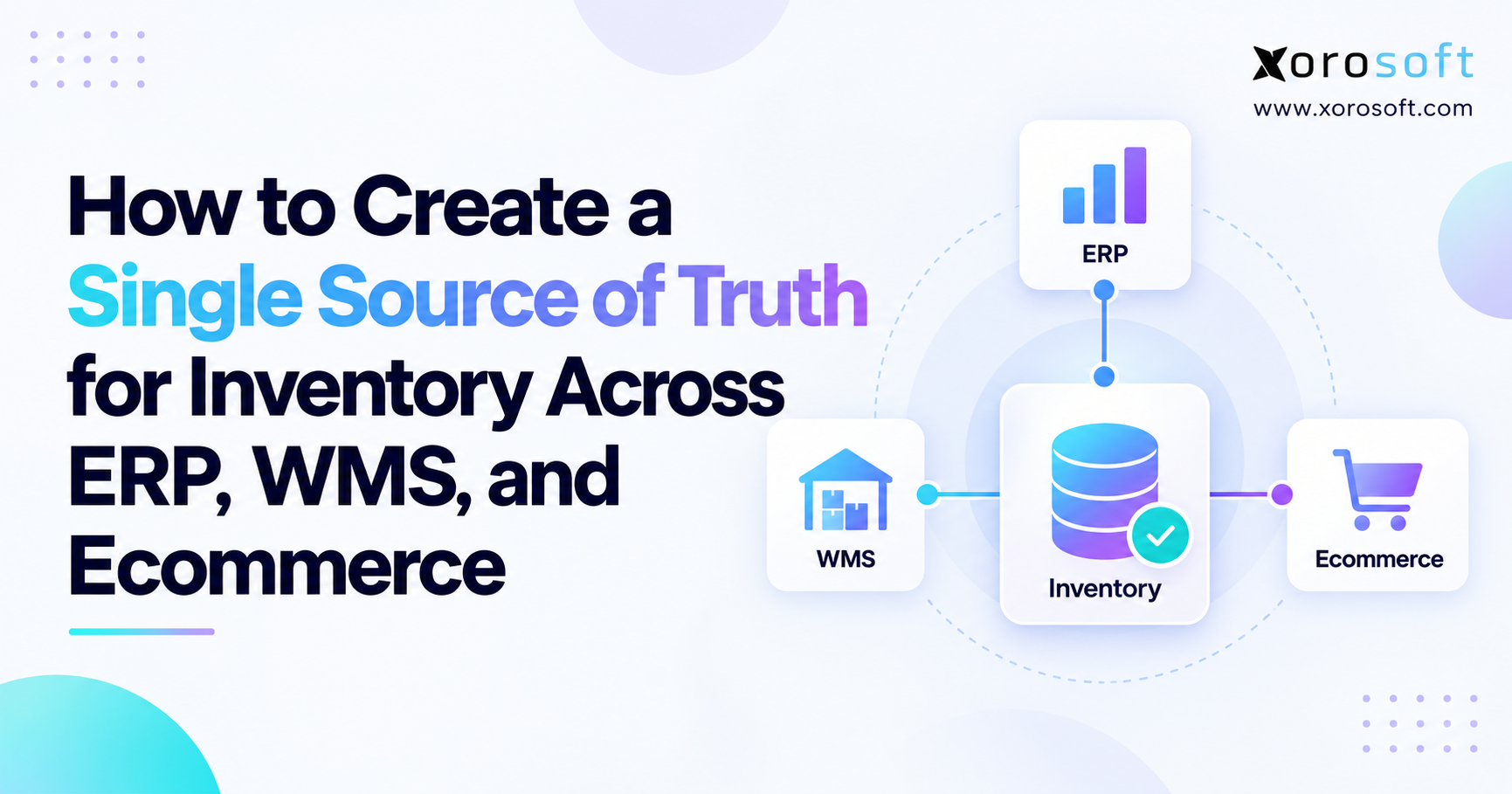
The Hidden Cost of Inventory Visibility Ecommerce Gaps
Inventory visibility ecommerce is one of the most underestimated challenges in modern retail operations. Most brands assume they have an inventory problem. In reality, they lack clear and real-time visibility across their systems.
At first glance, everything appears under control. Orders move through Shopify, while financial data sits inside QuickBooks. Meanwhile, teams rely on spreadsheets or lightweight tools to track stock.
However, a simple question quickly exposes the gap:
How much inventory do we actually have right now across all channels?
Some teams hesitate. Others make assumptions. Very few can answer with confidence.
Because of this, inventory visibility ecommerce quietly becomes a constraint on growth.
Where Inventory Visibility Ecommerce Starts Breaking
Inventory visibility ecommerce rarely fails all at once. Instead, it weakens as operations expand and systems multiply.
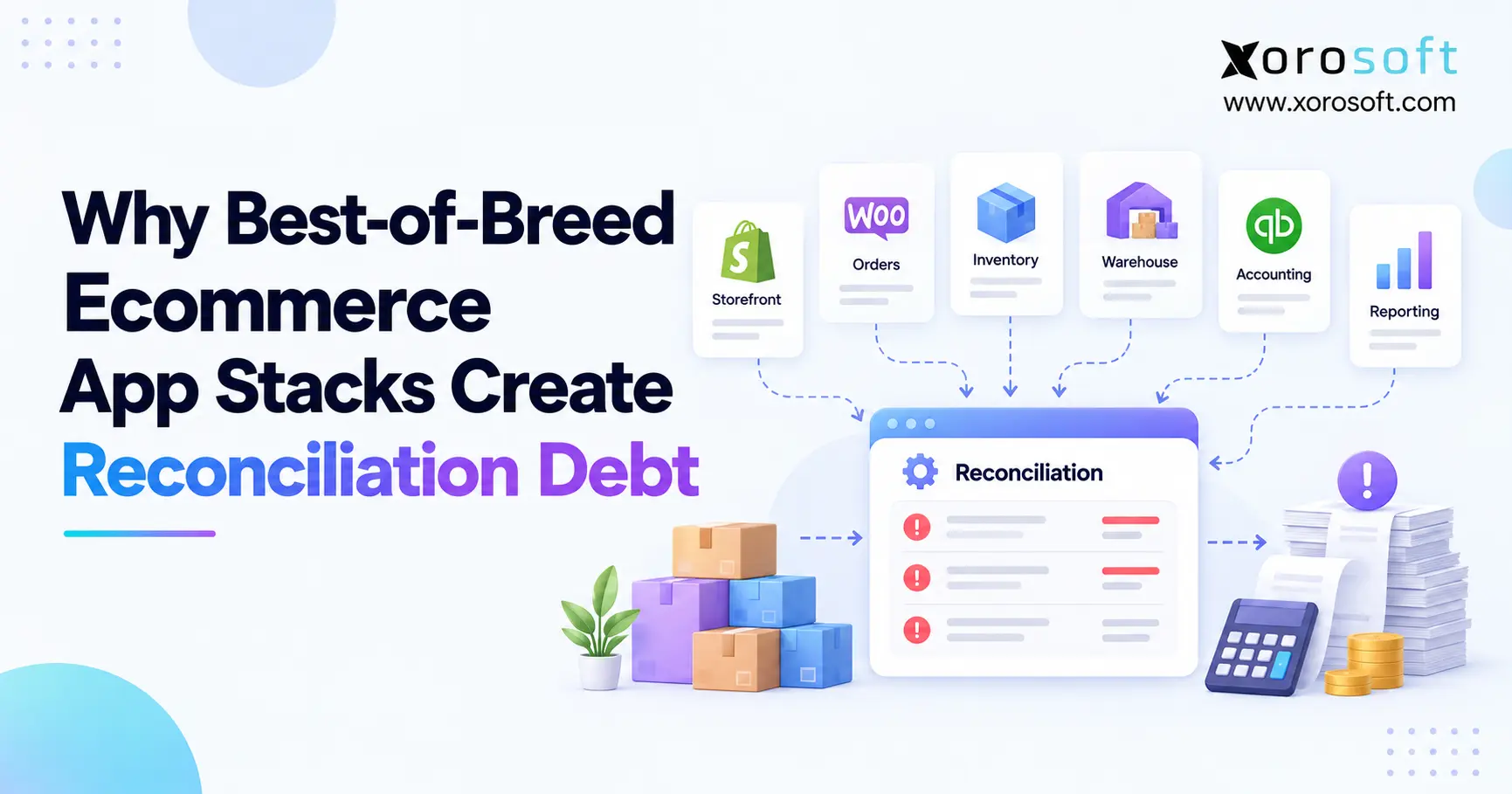
Growth introduces new channels, new tools, and new workflows. Over time, these systems stop communicating properly.
For example:
- Shopify updates orders instantly
- Inventory tools often lag behind
- Warehouse systems process fulfillment separately
- Accounting systems record transactions later
As a result, data becomes inconsistent across the business.
Each system still works independently. However, none reflects the complete picture. Consequently, teams spend more time reconciling than operating.
Growth Creates Complexity Faster Than Systems Can Handle
As operations expand, maintaining inventory visibility ecommerce becomes significantly harder.
A single warehouse setup feels manageable. However, adding more locations changes everything. Businesses now deal with multiple warehouses, retail points, and third-party logistics partners.
Inventory is no longer static. Instead, it constantly moves between locations.
This creates practical challenges such as:
- Unclear stock distribution across warehouses
- Delays in identifying available inventory
- Difficulty choosing the right fulfillment location
Without accurate visibility, even simple operational decisions slow down.
A Real Scenario: When Inventory Visibility Ecommerce Fails
Consider a growing apparel brand navigating expansion.
Early on, the setup looks simple. Shopify handles orders, spreadsheets track inventory, and QuickBooks manages accounting. Initially, everything works smoothly.
Then growth accelerates.
Wholesale channels open up. A second warehouse becomes necessary. Order volume increases across regions.
Suddenly, the same system that once worked begins to fail.
A wholesale order arrives, and the spreadsheet shows available stock. Based on that, the team confirms the order.
However, the actual situation tells a different story:
- Some units are already reserved
- Others sit in a different warehouse
- A portion has been sold but not yet updated
Because of these gaps, fulfillment breaks down.
Shipments get split. Orders are delayed. Teams rush to fix mistakes manually. Meanwhile, customer trust begins to erode.
This isn’t a demand issue. It’s a visibility failure.
The Operational Ripple Effect of Poor Visibility
When inventory visibility ecommerce breaks, the consequences spread quickly across the organization.
Inventory accuracy drops first. Stock levels become unreliable, which leads to overselling fast-moving products and overstocking slow ones. Planning shifts from proactive to reactive almost overnight.
Financial clarity also suffers. Inventory directly impacts reporting, yet disconnected systems delay updates. As a result, margins appear distorted, and closing books takes longer than expected.
Fulfillment efficiency declines next. Warehouse teams depend on accurate data, but poor visibility creates confusion. Orders get routed incorrectly, and picking processes slow down.
This typically results in:
- Increased shipping costs
- Higher operational errors
- Lower warehouse productivity
Decision-making becomes the final casualty. Leaders rely on data, but flawed visibility distorts insights. Forecasting turns into guesswork, and expansion decisions carry more risk.
How High-Performing Brands Fix Inventory Visibility Ecommerce
Modern brands don’t try to manage complexity with more tools. Instead, they simplify their systems.
They centralize data first. With a single source of truth, inventory updates in real time across all channels. This removes the need for manual reconciliation.
Next, they move to real-time tracking. As transactions occur, inventory updates immediately. Availability reflects actual stock, not delayed estimates.
They also connect workflows across operations. Orders, inventory, and fulfillment work together instead of functioning separately.
As a result, businesses gain:
- Real-time inventory visibility ecommerce across channels
- Faster and more accurate fulfillment decisions
- Reduced manual reconciliation work
Multi-location visibility further strengthens operations. Teams gain clarity on where inventory sits and how it should move.
Turning Visibility Into Control With Unified Systems
At a certain stage, improving inventory visibility ecommerce requires more than process changes. It demands a unified system.
Solutions like
XoroONE,
XoroERP, and
XoroWMS
bring operations into one connected environment.
Instead of separating workflows, these systems align:
- Inventory management
- Order processing
- Warehouse execution
- Financial reporting
With this structure in place, businesses gain consistent and real-time inventory visibility ecommerce.
For brands using Shopify, the
Xorosoft ERP Shopify App
helps connect ecommerce directly with backend operations.
What Changes When Inventory Visibility Ecommerce Is Solved
Once visibility improves, the entire business begins to operate differently.
Teams trust their inventory data. Fulfillment becomes predictable. Financial reporting aligns with operations. Leadership gains confidence in decision-making.
This shift enables:
- Better demand planning
- Faster order fulfillment
- More accurate financial reporting
Because of this, growth becomes structured instead of chaotic.
A Better Way to Scale Without Operational Chaos
Inventory visibility ecommerce does not collapse overnight. Instead, it gradually weakens as systems become disconnected.
However, successful brands take a different path. They reduce complexity, unify operations, and rely on a single source of truth.
If your team still spends time:
- Reconciling numbers across systems
- Questioning inventory accuracy
- Fixing fulfillment errors
then the issue is not inventory.
It is visibility.
And once visibility improves, everything else follows. Planning becomes easier, fulfillment speeds up, and decisions become clearer.
Recent Posts
-
 ERP Landed Cost Module vs Spreadsheet Calculations for Importers
 -
 How to Build an Open-to-Buy Plan for an Omnichannel Brand
 -
 Cold Storage WMS for Food and Beverage Distribution
 -
 ERP Buying Statistics 2026: Evaluation, Implementation, and Adoption Risks
 -
 How a Distributor Reduced B2B Order Exceptions Without Restricting Sales