1. Building a Strong Supplier Management Foundation
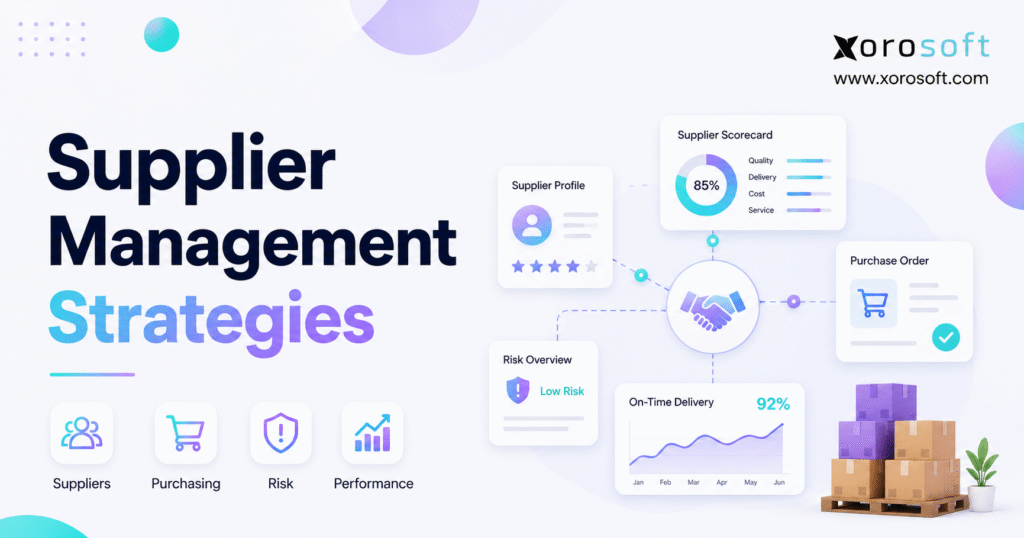
Supplier management strategies help businesses control purchasing, inventory, quality, lead times, and supply risk before those issues affect customers. Moreover, as a company grows, supplier decisions become harder to manage through email, spreadsheets, and informal conversations. Therefore, a clear operating system is needed to decide who can supply the business, how performance will be measured, and what happens when a supplier falls short.
In addition, supplier management is not only a purchasing task. For example, warehouse teams depend on accurate delivery dates, while finance teams need clear payment terms and purchase commitments. Likewise, operations leaders need reliable supply before they can promise customer orders. As a result, supplier management strategies influence inventory levels, working capital, fulfillment, production, and customer experience.
However, a strong process does not require every supplier to receive the same attention. Instead, the company should focus more time on suppliers that affect revenue, production, compliance, or product availability. Meanwhile, low-risk suppliers should follow simpler and more efficient controls.
1.1 What Supplier Management Means
Supplier management is the structured process used to select, approve, onboard, monitor, improve, and, when required, replace suppliers. Specifically, it covers supplier records, prices, payment terms, delivery performance, quality, risk, documents, communication, and improvement plans.
In practice, supplier management answers several basic questions:
- Which suppliers are approved?
- Which products can they provide?
- What prices and terms apply?
- How long do orders actually take?
- How often do deliveries arrive late?
- Which suppliers create the greatest business risk?
- Who is responsible when performance declines?
Therefore, the purpose is not simply to keep supplier contact details. Instead, the purpose is to create a clear and repeatable way to manage outside companies that affect daily operations.
1.2 Supplier Management vs Vendor Management
Supplier management and vendor management are often used as similar terms. However, supplier management usually focuses more on companies that provide products, materials, components, or inventory. By contrast, vendor management may also include service providers, consultants, software providers, and contractors.
Even so, both processes require clear approval, performance, risk, contract, and renewal controls. Therefore, businesses do not need to spend too much time debating the wording. Instead, they should focus on building a process that controls the relationship and supports better decisions.
1.3 Supplier Management vs Procurement
Procurement includes sourcing, negotiation, contracting, purchase requests, purchase orders, and spend control. Meanwhile, supplier management continues throughout the relationship.
For example, procurement may select a supplier and agree on pricing. Afterward, supplier management tracks whether that supplier delivers on time, meets quality standards, responds to problems, and remains financially or operationally stable.
Consequently, procurement and supplier management must work together. In simple terms, one process controls the purchase, while the other controls the long-term relationship and its results.
1.4 Who Needs Formal Supplier Management?
A formal supplier process becomes useful when a business:
- Manages many suppliers
- Carries physical inventory
- Operates several warehouses
- Imports products or materials
- Manufactures finished goods
- Sells through wholesale or ecommerce channels
- Depends on long supplier lead times
- Uses EDI or marketplace integrations
- Experiences stockouts or excess stock
- Has difficulty matching purchase orders, receipts, and invoices
However, a small company may not need complex supplier software immediately. Even then, it should keep approved supplier records, written terms, basic delivery measures, and backup plans for critical products.
2. Create Clear Supplier Management Strategies and Ownership
Supplier management strategies are more effective when responsibility is clear. Otherwise, purchasing may blame the supplier, the warehouse may blame purchasing, and finance may receive an invoice that no one can explain.
Therefore, each supplier should have an internal owner. Although that person does not need to perform every task, the owner should coordinate the relationship and make sure issues are followed through.
2.1 Assign Roles Across the Business
Procurement usually owns supplier selection, pricing, and purchase terms. Meanwhile, warehouse teams record receiving issues, operations teams track service impact, and finance teams control payment details and invoice matching.
In addition, quality teams may review defects or product standards. Likewise, manufacturing teams may monitor raw materials and production delays. For strategic suppliers, leadership may also join reviews.
A clear responsibility model should define:
- Who approves new suppliers
- Who can change supplier banking details
- Who approves pricing changes
- Who records quality failures
- Who owns late-delivery follow-up
- Who can suspend or reactivate a supplier
- Who approves emergency purchases
As a result, problems move faster because ownership is known before a crisis occurs.
2.2 Centralize Supplier Records
Supplier data should not be spread across several spreadsheets, inboxes, and accounting records. Instead, the business should keep one controlled supplier record.
That record may include:
- Legal business name
- Tax information
- Contact details
- Banking information
- Payment terms
- Currency
- Approved products
- Purchase prices
- Minimum order quantities
- Order multiples
- Lead times
- Shipping terms
- Certifications
- Contracts
- Quality requirements
- Risk rating
- Insurance details
- Review dates
Moreover, access should be controlled. For example, banking information should not be editable by every user. Likewise, price changes should follow an approval process.
Most importantly, a central record becomes more valuable when it connects with purchasing, inventory, receiving, and accounting. Platforms such as XoroERP are designed to bring these operating records into one system instead of leaving them across unrelated tools.
2.3 Build a Supplier Lifecycle
Supplier lifecycle management gives the business a clear path from first contact to final offboarding.
A practical lifecycle includes:
1. Identify the need
2. Find possible suppliers
3. Qualify the supplier
4. Approve the relationship
5. Complete onboarding
6. Place and receive orders
7. Measure performance
8. Improve, renew, suspend, or replace the supplier
Therefore, the process should not end after the first purchase order. Instead, supplier information, risk, and performance should remain current throughout the relationship.
3. Segment Suppliers by Risk and Business Impact
Not every supplier deserves the same level of attention. Therefore, one of the most useful supplier management strategies is supplier segmentation.
A supplier that provides office supplies does not create the same risk as a supplier that produces the company’s best-selling product. Likewise, a low-cost component may be critical if its absence stops production.
3.1 Choose the Right Segmentation Criteria
Businesses should consider more than annual spend. Instead, supplier segments should reflect:
- Revenue impact
- Product criticality
- Replacement difficulty
- Lead-time length
- Supplier capacity
- Geographic risk
- Quality risk
- Compliance requirements
- Number of available alternatives
- Production dependency
- Customer commitments
- Financial stability
For example, a supplier may represent only a small amount of spend. However, if that supplier provides a unique component, the operational risk may still be high.
3.2 Use a Four-Level Supplier Model
A practical model separates suppliers into four groups.
Strategic Suppliers
Strategic suppliers have a major effect on revenue, products, production, or market growth. Therefore, these relationships may require shared forecasts, senior management reviews, long-term planning, and joint improvement projects.
Critical Suppliers
Critical suppliers create high risk because replacement is difficult or failure would interrupt operations. Consequently, the company should track them closely, approve alternatives, and maintain clear contingency plans.
Leverage Suppliers
Leverage suppliers represent meaningful spend, but alternatives are available. Therefore, the business may focus on pricing, payment terms, volume agreements, and competitive sourcing.
Transactional Suppliers
Transactional suppliers provide standard products or services with limited business risk. As a result, the process should remain simple, consistent, and efficient.
3.3 Set Review Frequency by Segment
Strategic and critical suppliers may require monthly operating reviews. In contrast, leverage suppliers may be reviewed quarterly or twice a year. Meanwhile, transactional suppliers may need only annual review unless an issue occurs.
However, the segment should not remain fixed forever. For example, a new product launch, change in demand, regional disruption, or loss of a backup supplier can quickly increase risk.
4. Improve Supplier Qualification and Onboarding
Supplier management strategies work best when risks are addressed before orders begin. Therefore, qualification should confirm that the supplier can meet business, product, quality, and delivery requirements.
4.1 Create a Supplier Qualification Checklist
The checklist may review:
- Financial stability
- Production or supply capacity
- Technical skills
- Quality systems
- Delivery coverage
- Product certifications
- Regulatory compliance
- Insurance
- Information security
- Continuity planning
- Customer references
- Past performance
- Subcontractor controls
However, the same checklist should not apply to every supplier. Instead, requirements should match the risk.
For example, a food supplier may require stronger traceability and safety controls. Similarly, a contract manufacturer may require a detailed capacity and quality review. Meanwhile, a software provider may require a deeper security assessment.
4.2 Verify Evidence Before Approval
A supplier form is only useful when the evidence is checked. Therefore, teams should verify certificates, insurance, bank details, references, product samples, and capacity claims when those items affect the business.
In addition, approval should have an expiry or review date. Otherwise, the company may continue buying from a supplier whose documents or risk status are no longer current.
4.3 Standardize Supplier Onboarding
Supplier onboarding should prepare the supplier and internal teams for accurate transactions.
The process should confirm:
- Legal and tax details
- Approved payment information
- Main contacts
- Item codes
- Product descriptions
- Units of measure
- Prices
- Currency
- Payment terms
- Minimum quantities
- Lead times
- Shipping rules
- Packaging requirements
- Label standards
- Required documents
- Returns process
- Escalation contacts
Furthermore, a test order can reveal issues before order volume increases. Specifically, the test should check the purchase order, confirmation, shipment, receiving, quality inspection, invoice, and payment process.
5. Set Clear Commercial and Operational Expectations
Price is important. However, price alone does not show the true cost of working with a supplier.
A low unit price may be offset by long lead times, large minimum orders, defects, emergency freight, poor payment terms, or repeated invoice errors. Therefore, supplier management strategies should include both commercial and operating terms.
5.1 Define the Full Commercial Agreement
The agreement should cover:
- Unit pricing
- Volume discounts
- Rebates
- Currency
- Minimum order quantities
- Order multiples
- Freight responsibility
- Duties and customs costs
- Deposits
- Payment terms
- Price-review periods
- Returns
- Warranty
- Damaged goods
- Cancellation rules
As a result, both sides understand the full cost and responsibility before orders are placed.
5.2 Define Service Levels
Operational expectations should also be clear.
For example, the agreement may define:
- Standard lead time
- Order acknowledgement time
- Delivery window
- Fill-rate target
- Quality tolerance
- Label and packaging rules
- Required shipping documents
- Response time for problems
- Corrective-action deadlines
Moreover, both sides must use the same definition. For instance, “on time” may mean the requested date, the confirmed date, the warehouse appointment, or the receipt date. Therefore, the chosen measure must be written and applied consistently.
5.3 Create a Corrective-Action Process
When a supplier misses an important target, the response should be structured.
A corrective-action plan should include:
1. The problem
2. Immediate containment
3. Root cause
4. Permanent action
5. Owner
6. Due date
7. Evidence
8. Closure decision
Consequently, the business can separate one-time issues from repeated problems. In addition, it can use the results during future sourcing and review decisions.
6. Measure Supplier Performance with Scorecards
Supplier performance management turns experience into useful data. Therefore, the scorecard should focus on measures that affect purchasing, inventory, fulfillment, quality, or cash flow.
6.1 Select the Right Supplier Metrics
A practical scorecard may include:
| Metric | Purpose |
|---|---|
| On-time delivery | Measures schedule reliability |
| On-time in-full | Measures timing and complete quantity |
| Fill rate | Measures how much of the order was supplied |
| Actual lead time | Measures order-to-receipt time |
| Lead-time variation | Measures planning stability |
| Defect rate | Measures product quality |
| Purchase-order accuracy | Measures order execution |
| Invoice accuracy | Measures billing quality |
| Price variance | Measures cost control |
| Response time | Measures supplier service |
| Compliance status | Measures policy and document control |
However, businesses should avoid tracking too many measures at once. Instead, begin with the few metrics that change decisions.
6.2 Define the Formula Clearly
For example:
On-time delivery rate = on-time receipts ÷ total receipts due × 100
Similarly:
Supplier fill rate = quantity received ÷ quantity ordered × 100
Still, the business must define how partial orders, revised dates, early deliveries, cancellations, and substitutions will be treated. Otherwise, each team may calculate the result differently.
6.3 Use Leading and Lagging Measures
Lagging measures show what already happened. For example, these include late deliveries, defects, invoice errors, and shortages.
In contrast, leading measures show that a problem may be developing. These include:
- Slower order confirmation
- Longer requested lead times
- Lower available capacity
- Expiring certifications
- Financial stress
- Higher staff turnover
- Delayed problem responses
- Repeated forecast rejection
Therefore, both types of measures are useful. In simple terms, one explains past performance, while the other supports early action.
6.4 Weight Metrics by Supplier Type
A food supplier may need more weight on quality and compliance. Meanwhile, a seasonal apparel supplier may need more weight on delivery and capacity.
Likewise, a manufacturer of a unique component may need a higher risk and continuity score. Therefore, supplier management strategies should reflect the role each supplier plays.
6.5 Turn Scores into Action
A scorecard is useful only when a score leads to a response.
For example:
- Green: Normal supplier management
- Yellow: Improvement discussion
- Orange: Formal corrective plan
- Red: Purchasing restriction or replacement review
Moreover, teams should look at trends. For instance, a supplier with an acceptable current score may still require attention if performance is declining every month.
7. Reduce Supplier Risk and Improve Continuity
Supplier risk management protects the business from events that could stop supply, raise cost, damage quality, or create compliance problems.
Therefore, risk should be reviewed before onboarding and throughout the relationship.
7.1 Identify Main Supplier Risks
Common supplier risks include:
- Financial weakness
- Limited capacity
- Quality problems
- Long lead times
- Geographic disruption
- Transport delays
- Regulatory issues
- Cybersecurity risk
- Labor concerns
- Environmental risk
- Political instability
- Dependence on one factory
- Dependence on one transport route
- Dependence on one sub-supplier
In addition, teams should map which products, warehouses, customers, and production lines depend on each supplier.
7.2 Build a Supplier Risk Matrix
A simple risk matrix should include:
- Risk type
- Likelihood
- Business impact
- Existing controls
- Remaining risk
- Owner
- Action
- Review date
As a result, the company can focus on the risks that could cause the greatest damage instead of treating every concern equally.
7.3 Reduce Single-Supplier Dependency
Single sourcing can improve volume pricing, consistency, and relationship depth. However, it also increases dependency.
Dual sourcing can improve continuity. Yet, it may divide volume and increase administration.
Multi-sourcing can create more flexibility. Still, it may introduce quality differences and make supplier management more complex.
Therefore, the right choice depends on product criticality, cost, capacity, and available alternatives.
7.4 Build Real Backup Options
A backup supplier should be more than a name on a list. Instead, the business should confirm:
- Product specifications
- Sample approval
- Capacity
- Lead time
- Commercial terms
- Packaging
- Shipping method
- Quality requirements
- Legal documents
- System setup
Consequently, the backup can be used when required rather than starting qualification during a crisis.
7.5 Create a Disruption Plan
The plan may include alternate suppliers, substitute materials, emergency stock, alternate carriers, decision authority, communication steps, and customer-allocation rules.
Furthermore, critical plans should be tested. Otherwise, the business may discover during an emergency that its backup options are not ready.
8. Strengthen Supplier Relationships and Collaboration
Supplier relationship management should match the value and risk of the supplier. Therefore, collaboration should be deeper for strategic and critical suppliers.
8.1 Share Useful Forecast Information
Suppliers can plan better when they understand expected demand, promotions, launches, seasonality, and product changes.
However, the business should clearly separate forecasts from firm orders. Otherwise, the supplier may treat every forecast as a commitment.
In addition, forecast accuracy should be reviewed. After all, supplier collaboration is difficult when the buyer repeatedly provides unrealistic demand information.
8.2 Create a Communication Rhythm
Regular communication may include:
- Open purchase orders
- Late shipments
- Shortages
- Quality issues
- Capacity
- Upcoming demand
- Product changes
- Corrective actions
- Risk updates
Monthly meetings may focus on operating issues. Meanwhile, quarterly reviews may cover scorecards, forecasts, risk, cost, and improvement projects.
8.3 Build Supplier Development Plans
Supplier development aims to improve the supplier’s ability to support the business.
For example, improvement work may focus on:
- Shorter lead times
- Better quality
- Higher capacity
- Improved packaging
- Better order confirmation
- More accurate shipping data
- Stronger planning
- Lower waste
- Better traceability
Therefore, the goal is not always to replace an underperforming supplier. In some cases, helping a capable supplier improve creates more value than starting again.
9. Connect Supplier Management Strategies with Inventory and Cash Flow
Supplier management strategies affect how much stock a business carries and how much cash is tied up in that stock.
9.1 Use Real Supplier Lead Times
Reorder points depend on expected demand during the supplier lead time. Therefore, incorrect lead times create poor purchase decisions.
For example, if the system shows 30 days but the supplier usually takes 45 days, the company may order too late. In contrast, if planners add large unsupported buffers, the company may buy too early and hold too much stock.
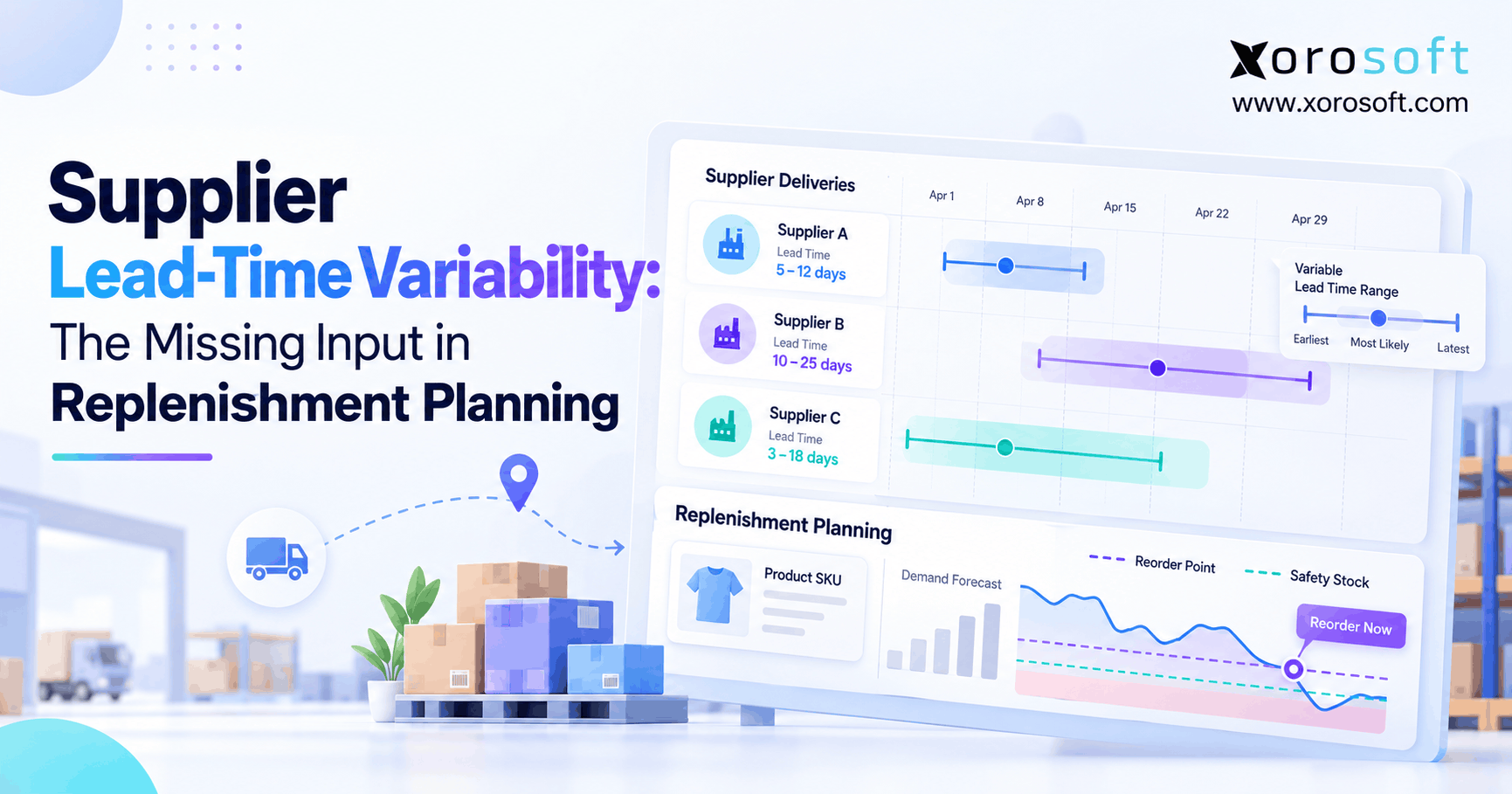
Moreover, average lead time is not enough. For instance, a supplier that delivers in 30, 31, and 29 days is easier to plan than one that delivers in 15, 30, and 45 days.
9.2 Link Supplier Reliability to Safety Stock
Less reliable suppliers usually require more safety stock. As a result, poor supplier performance creates a direct inventory cost.
Therefore, supplier reviews should not focus only on purchase price. Instead, the company should also consider:
- Extra stock
- Storage cost
- Insurance
- Damage
- Obsolescence
- Markdown risk
- Expedited freight
- Lost sales
Consequently, a higher-priced but more reliable supplier may create a lower total cost.
9.3 Review Minimum Order Quantities
Minimum quantities and order multiples can force the business to buy more than demand requires.
For example, a price discount may look attractive. However, the business may spend more cash, use more warehouse space, and increase the risk of old inventory.
Therefore, buyers should compare the price saving with the cost of holding the extra stock.
9.4 Connect Payment Terms with Cash Planning
Deposits, prepayments, and short payment terms create cash outflows before products are sold.
Consequently, finance teams should see:
- Open purchase orders
- Expected receipt dates
- Deposits
- Supplier invoices
- Payment dates
- Landed cost
- Demand plans
- Available cash
As a result, a connected platform such as XoroONE can help inventory-driven businesses bring purchasing, inventory, accounting, forecasting, and reporting into one operating environment.
10. Connect the Full Procure-to-Pay Process
Supplier management becomes more accurate when the full purchase cycle uses shared data.
10.1 Start with a Clear Purchase Request
A purchase request should identify:
- Item
- Quantity
- Required date
- Warehouse
- Reason
- Budget
- Preferred supplier
Next, the approval process should follow rules based on value, department, category, or exception.
10.2 Create Accurate Purchase Orders
The purchase order should use approved information, including supplier, item, price, tax, terms, currency, shipping method, and delivery location.
Therefore, manual re-entry should be limited. Otherwise, re-entering the same details creates price errors, quantity errors, and duplicate orders.
10.3 Record Supplier Confirmation
The supplier should confirm:
- Quantity
- Price
- Delivery date
- Substitutions
- Shipping method
- Order changes
As a result, buyers can act before a late or incomplete shipment reaches the warehouse.
10.4 Track Inbound Shipments
Inbound visibility helps warehouse teams plan labor, space, and receiving appointments.
Moreover, it allows purchasing teams to identify delays earlier and update inventory plans before customer orders are affected.
10.5 Improve Receiving Accuracy
At receipt, warehouse staff should compare the delivery with the purchase order. In addition, they should record shortages, overages, damage, defects, and accepted quantities.
Therefore, a warehouse platform such as XoroWMS can support receiving, inventory updates, put-away, and warehouse control as part of a wider operating process.
10.6 Match Orders, Receipts, and Invoices
The supplier invoice should be checked against the purchase order and actual receipt.
In simple terms:
- The purchase order shows what was approved.
- The receipt shows what arrived.
- The invoice shows what the supplier billed.
Therefore, when these records do not match, the difference should be reviewed before payment.
11. Adapt Supplier Management Strategies by Industry
Supplier management strategies should change based on the products, risks, and operating model of the business.
11.1 Apparel and Fashion
Apparel businesses manage seasonal demand, style changes, size and color variants, production capacity, materials, packaging, and launch dates.
Therefore, supplier reviews should focus on:
- Seasonal capacity
- Production calendars
- Fabric or material availability
- Testing
- Labeling
- Packaging
- Ethical sourcing
- Shipment timing
- Variant accuracy
As a result, a late shipment may lose much of its value after the selling season begins.
11.2 Furniture
Furniture companies often manage long lead times, bulky products, imported materials, custom items, and high freight costs.
Consequently, supplier management should include packaging standards, damage rates, container planning, component availability, and delivery reliability.
11.3 Sporting Goods
Sporting-goods businesses may face seasonal peaks, product launches, brand restrictions, and changing customer demand.
Therefore, supplier capacity and launch readiness should be reviewed before peak selling periods.
11.4 Food and Beverage
Food suppliers may require stronger controls for:
- Shelf life
- Lot numbers
- Expiry dates
- Certifications
- Allergens
- Temperature
- Testing
- Traceability
- Recall readiness
As a result, supplier records must connect with receiving and inventory traceability.
11.5 Wholesale Distribution
Wholesale companies often manage many items, price tiers, customer commitments, EDI, multiple warehouses, and high order volume.
Therefore, supplier management should focus on fill rate, lead-time accuracy, availability, shipping data, cost changes, and complete purchase-order execution.
11.6 Manufacturing
Manufacturers depend on raw materials, components, bills of materials, work orders, and production schedules.
For example, a low-cost part may stop production if it is unavailable. Therefore, supplier segmentation should reflect production impact, not only spend.
In addition, businesses can explore the wider industries Xorosoft supports and review how supplier, inventory, warehouse, and manufacturing needs differ across operating models.
12. Choose the Right Supplier Management Technology
Supplier management software should support the real process rather than simply store contact information.
12.1 Know When Spreadsheets Are Enough
Spreadsheets may work when the company has:
- Few suppliers
- Simple products
- One buyer
- Low order volume
- Limited compliance needs
- No complex receiving process
- Few warehouses
However, spreadsheets become less effective when many people update the same information or when supplier data must connect with inventory and accounting.
12.2 Recognize Spreadsheet Limits
Common problems include:
- Duplicate supplier records
- Old pricing
- Missing documents
- No approval history
- No real-time purchase-order status
- Manual scorecards
- Poor audit control
- Separate inventory data
- Separate finance data
- No automatic workflow
Consequently, the company spends more time checking information before making a decision.
12.3 Compare Standalone Tools and ERP
Standalone supplier tools may provide strong onboarding, risk, sourcing, or supplier portals.
In contrast, ERP systems may connect supplier records with purchase orders, inventory, warehouse receiving, accounting, forecasting, ecommerce, and manufacturing.
Therefore, the right choice depends on the main problem.
A company with complex global supplier risk may need a specialist platform. Meanwhile, an inventory-driven company may gain more value from a connected system such as XoroERP.
12.4 Check the Full Workflow
During a software review, ask the provider to demonstrate:
1. Supplier creation
2. Approval
3. Item and price setup
4. Purchase request
5. Purchase order
6. Supplier confirmation
7. Partial shipment
8. Receiving
9. Inventory update
10. Invoice difference
11. Payment
12. Supplier reporting
Moreover, do not judge the system only from a feature list. Instead, test whether the full process works with your data and business rules.
12.5 Consider Ecommerce and Shopify Needs
Shopify businesses may need supplier planning to connect with ecommerce orders, inventory, purchasing, warehouses, and accounting.
For merchants reviewing ERP options, Xorosoft is also listed on the Shopify App Store. Therefore, teams can review the ecommerce connection alongside the wider ERP workflow.
12.6 Review the Wider Solution Fit
Supplier management is usually connected with other operating needs. Therefore, businesses should review the full range of ERP solutions rather than selecting a supplier tool without considering inventory, finance, warehouses, manufacturing, and reporting.
13. Build a 90-Day Supplier Management Plan
Supplier management strategies do not need to be introduced all at once. Instead, a 90-day plan can create control quickly.
13.1 Days 1–30: Clean and Organize
During the first month:
- Remove duplicate supplier records
- Confirm legal names
- Verify payment details
- Record approved products
- Review prices and terms
- Confirm lead times
- Identify critical suppliers
- Assign internal owners
- Document current problems
As a result, the business creates a reliable starting point.
13.2 Days 31–60: Measure and Prioritize
Next:
- Launch a basic supplier scorecard
- Measure delivery
- Track lead-time variation
- Record defects
- Review invoice errors
- Complete risk reviews
- Identify single-source items
- Find backup-supplier gaps
However, do not start with too many KPIs. Instead, three to five reliable measures are enough for the first stage.
13.3 Days 61–90: Improve and Automate
Finally:
- Begin supplier review meetings
- Open corrective-action plans
- Update planning lead times
- Improve purchase approvals
- Connect receiving and inventory data
- Link invoices with purchase orders
- Create a supplier technology roadmap
Consequently, the company moves from reactive buying toward measured supplier management.
14. Avoid Common Supplier Management Mistakes
14.1 Choosing Only on Price
The cheapest supplier may create higher costs through delays, poor quality, large order minimums, and emergency freight.
Therefore, compare total cost and business impact.
14.2 Keeping Supplier Data in Too Many Places
Different records create conflicting prices, terms, addresses, and contacts.
Instead, use one controlled record and connect it with related transactions.
14.3 Measuring Too Many KPIs
A large scorecard may look advanced. However, it becomes useless when data is poor or no one acts on the results.
Therefore, start with measures that support real decisions.
14.4 Ignoring Lead-Time Variation
Average lead time can hide unstable performance.
Consequently, businesses should track how often actual delivery differs from the expected time.
14.5 Treating Every Supplier the Same
Uniform reviews waste time on low-risk suppliers and may not provide enough control for critical suppliers.
Therefore, segmentation should guide the process.
14.6 Failing to Prepare Alternatives
A supplier may look reliable today. However, financial, transport, quality, or regional problems can still occur.
As a result, critical products should have qualified backup options where practical.
14.7 Leaving Corrective Actions Open
Repeated deadline extensions do not solve the root cause.
Instead, the business should verify whether the action worked and whether performance improved.
14.8 Disconnecting Purchasing from Finance and Inventory
Supplier decisions affect stock and cash.
Therefore, buyers should understand demand, available inventory, open orders, warehouse capacity, supplier terms, and expected payment dates before placing new orders.
15. Use Connected ERP for Better Supplier Management
Connected ERP supports supplier management by using shared data across purchasing, inventory, receiving, accounting, forecasting, manufacturing, ecommerce, and reporting.
As a result, a supplier score can be traced back to the purchase orders, receipts, shortages, defects, invoices, and payments that created it.
Moreover, teams can answer practical questions faster:
- What is currently on order?
- Which supplier is late?
- Which items may stock out?
- What was received?
- Which invoices do not match?
- How much cash is committed?
- Which suppliers are becoming less reliable?
- Which warehouse is affected?
Consequently, this connected model can reduce manual reconciliation and improve operational visibility.
However, ERP is not required for every company. For example, a small business with simple purchasing may still manage suppliers with basic tools. In contrast, companies with several warehouses, high item counts, manufacturing, Shopify, Amazon, EDI, or wholesale operations may need deeper integration.
For additional proof, businesses can review Xorosoft case studies to see how different inventory-led companies have approached ERP, warehouse, and operational change.
16. Frequently Asked Questions About Supplier Management
16.1 What Is Supplier Management?
Supplier management is the process of selecting, approving, onboarding, monitoring, improving, and offboarding suppliers. In addition, it covers supplier information, prices, terms, delivery, quality, risk, compliance, and communication. Therefore, it helps a business control the outside companies that affect purchasing, inventory, production, finance, and customer service.
16.2 What Are Supplier Management Strategies?
Supplier management strategies are planned methods used to improve supplier control and performance. For example, they may include supplier segmentation, qualification, onboarding, scorecards, risk reviews, backup sourcing, forecast sharing, corrective actions, and supplier development. Consequently, these strategies help the company improve supply reliability while reducing cost, risk, and operational disruption.
16.3 Why Is Supplier Management Important?
Supplier performance affects more than purchasing. For example, late supply may cause stockouts, backorders, production delays, and emergency freight. Likewise, poor quality may create returns and customer complaints. Therefore, supplier management helps protect inventory availability, cash flow, product quality, and customer fulfillment.
16.4 What Is the Supplier Management Process?
The process normally includes supplier identification, qualification, approval, onboarding, purchasing, performance review, risk management, improvement, renewal, and offboarding. However, the depth of each step should depend on supplier risk and business impact. Therefore, critical suppliers require stronger evidence, closer review, and better contingency planning.
16.5 What Is Supplier Relationship Management?
Supplier relationship management is the ongoing process of managing communication, performance, issues, risk, and improvement with suppliers. For example, strategic suppliers may receive shared planning and senior reviews. Meanwhile, lower-risk suppliers may follow a simpler and more standard process.
16.6 What Is the Difference Between Supplier and Vendor Management?
The terms are often used in the same way. However, supplier management often focuses on companies that provide inventory, materials, or components. By contrast, vendor management may also include service and software providers. Even so, both require approval, performance, risk, contract, and renewal controls.
16.7 What Is the Difference Between Procurement and Supplier Management?
Procurement covers sourcing, negotiation, buying, and spend control. Meanwhile, supplier management continues after the supplier is selected. Therefore, it includes onboarding, performance, risk, communication, corrective action, development, and replacement.
16.8 How Do You Create a Supplier Management Strategy?
First, map suppliers, spend, products, dependencies, and risks. Next, segment suppliers by impact. Then, define qualification, onboarding, scorecards, review schedules, escalation, and contingency plans. Finally, assign owners and connect supplier information with purchasing, inventory, receiving, finance, and reporting.
16.9 How Should Suppliers Be Segmented?
Suppliers can be grouped by spend, product importance, replacement difficulty, lead time, capacity, quality, geographic risk, and available alternatives. Therefore, a practical model may classify suppliers as strategic, critical, leverage, or transactional.
16.10 What Is Supplier Qualification?
Supplier qualification checks whether a supplier can meet business requirements before approval. For example, it may include financial health, capacity, quality, certifications, compliance, cybersecurity, continuity, and references. However, the review should match the level of risk.
16.11 What Should Supplier Onboarding Include?
Onboarding should confirm legal details, tax records, banking information, contacts, approved items, prices, payment terms, lead times, shipping rules, packaging, documents, and escalation contacts. In addition, a test order can help confirm that the full process works correctly.
16.12 How Do You Measure Supplier Performance?
Supplier performance can be measured through delivery, fill rate, lead time, quality, price, invoice accuracy, responsiveness, and compliance. However, the formulas and data source should be consistent. Otherwise, the score may not be trusted.
16.13 What Should a Supplier Scorecard Include?
A scorecard should include the metric, formula, target, result, trend, weight, owner, and action threshold. Moreover, the measures should reflect what matters for that supplier. For example, a critical raw-material supplier may need a different scorecard from a standard packaging supplier.
16.14 What Are the Most Important Supplier KPIs?
Common supplier KPIs include on-time delivery, on-time in-full, fill rate, actual lead time, lead-time variation, defect rate, purchase-order accuracy, invoice accuracy, price variance, responsiveness, and compliance. However, the final KPI set should reflect the supplier’s role and risk.
16.15 How Is On-Time Delivery Calculated?
On-time delivery is usually calculated by dividing on-time receipts by total receipts due and multiplying by 100. However, the business must define the date, time window, partial-order rules, revised dates, and cancelled quantities.
16.16 How Often Should Suppliers Be Reviewed?
Review frequency should depend on supplier impact and risk. For example, strategic or critical suppliers may need monthly or quarterly reviews. Meanwhile, low-risk suppliers may be reviewed annually unless a problem occurs.
16.17 What Is Supplier Risk Management?
Supplier risk management identifies problems that may affect supply, quality, cost, compliance, or continuity. In addition, it includes risk assessment, mitigation, monitoring, ownership, and contingency planning. Therefore, it helps the business prepare before a disruption occurs.
16.18 How Can Supplier Risk Be Reduced?
A business can reduce risk by qualifying suppliers, mapping dependencies, monitoring warning signs, approving backup sources, testing substitute materials, diversifying supply, holding suitable safety stock, and creating disruption plans. However, the strongest controls should focus first on the most critical products and suppliers.
16.19 What Is the Difference Between Single and Dual Sourcing?
Single sourcing uses one supplier and may improve volume leverage and consistency. However, it creates greater dependency. In contrast, dual sourcing uses two qualified suppliers and may improve continuity, although it can increase cost and administration.
16.20 How Do Supplier Lead Times Affect Inventory?
Lead time affects when the business must order and how much safety stock it needs. Therefore, long or unstable lead times may increase inventory. In addition, inaccurate lead times may cause both shortages and excess stock.
16.21 How Does Supplier Management Improve Cash Flow?
Better supplier management can reduce emergency buying, excess stock, invoice errors, and poor purchase timing. In addition, it can improve visibility into deposits, open purchase orders, expected receipts, invoices, and payment dates.
16.22 When Should a Business Use Supplier Management Software?
Software becomes useful when supplier records, approvals, documents, purchase orders, performance, and risk are difficult to manage manually. Moreover, a connected system becomes more valuable when supplier activity affects inventory, warehouses, production, ecommerce, and accounting.
16.23 How Does ERP Support Supplier Management?
ERP can connect supplier records with purchasing, inventory, receiving, invoices, payments, forecasting, manufacturing, and reporting. Consequently, users can trace supplier performance to actual operating transactions instead of updating separate scorecards by hand.
16.24 What Are Common Supplier Management Mistakes?
Common mistakes include choosing only on price, keeping duplicate data, using unclear service rules, tracking too many KPIs, ignoring lead-time variation, failing to prepare alternatives, and not closing corrective actions. Therefore, strong ownership and regular follow-through are essential.
16.25 Is Supplier Management Only for Large Companies?
No. In fact, small companies also benefit from approved supplier records, clear terms, basic delivery tracking, and backup plans. However, they may not need advanced supplier software until the number of suppliers, orders, warehouses, users, or compliance needs increases.
17. Turning Supplier Management Strategies into Better Decisions
Supplier management strategies work when they connect supplier activity with real business results. Therefore, companies should segment suppliers, qualify them based on risk, define clear terms, measure a focused set of KPIs, and act when performance changes.
Moreover, supplier decisions should not remain separate from inventory, receiving, finance, production, and customer commitments. For example, a late supplier shipment affects stock, while a large minimum order affects cash. Likewise, a quality problem affects returns and customer trust.
Ultimately, the strongest supplier process is not the one with the most reports. Instead, it is the one that helps people make faster and better decisions with reliable data.
For inventory-driven businesses, a connected ERP approach can bring supplier, purchasing, warehouse, inventory, ecommerce, manufacturing, and accounting workflows together. Therefore, businesses that have outgrown spreadsheets, QuickBooks, or disconnected applications can book a demo to review how a connected operating model could support their supplier management needs.
Recent Posts
-
 Inventory Tracking Management: How to Correct Negative Stock, Duplicate Receipts, and Orphaned Reservations
 -
 Shopify Inventory Integration Benchmarks 2026: Latency, Errors and Reconciliation
 -
 ERP for Furniture Distributors Managing Bulky Inventory and Delivery Scheduling
 -
 Xorosoft vs Acumatica for Inventory-Intensive Mid-Market Companies
 -
 What Is Material Pegging in MRP and Why Does It Matter?