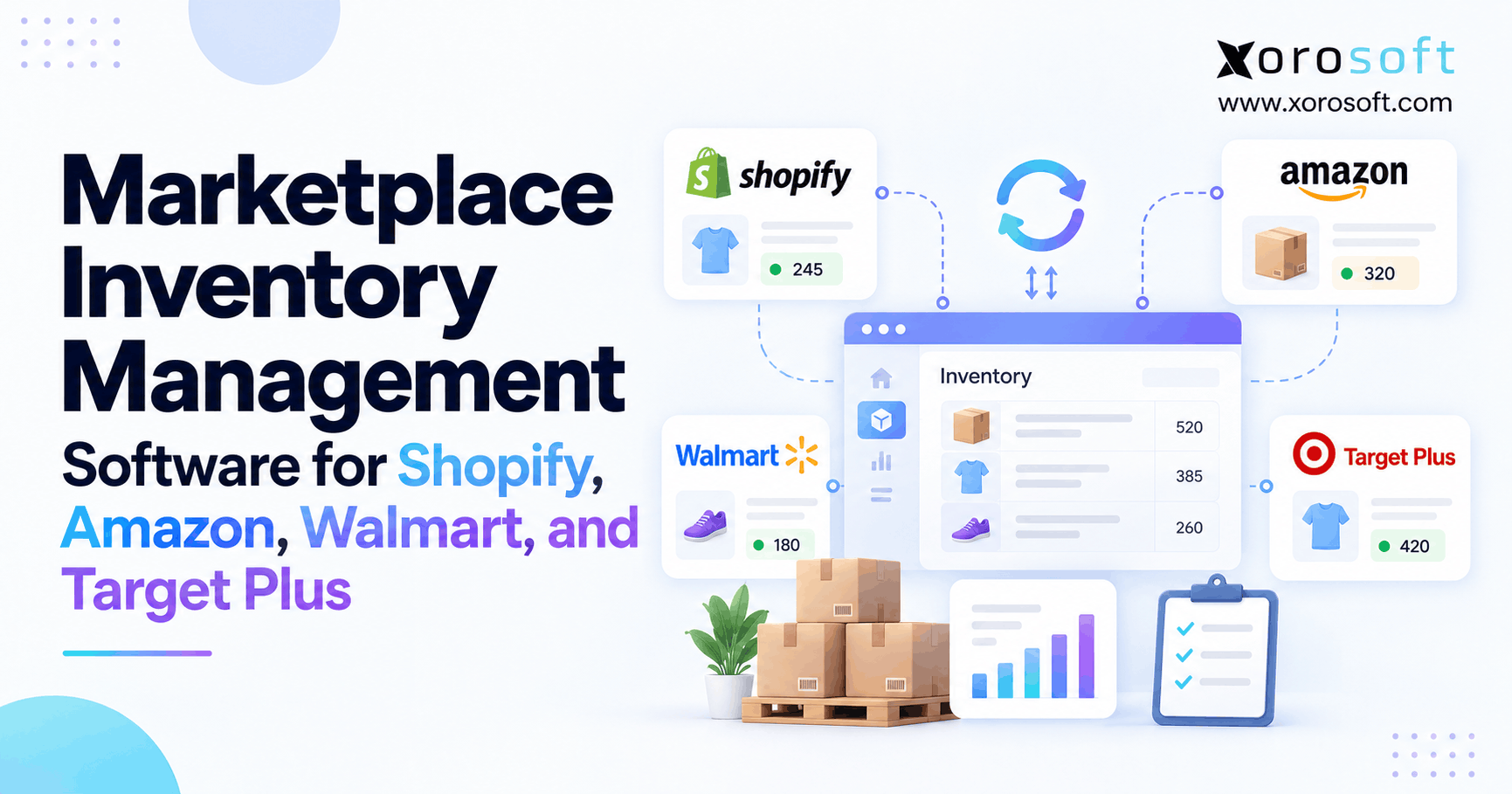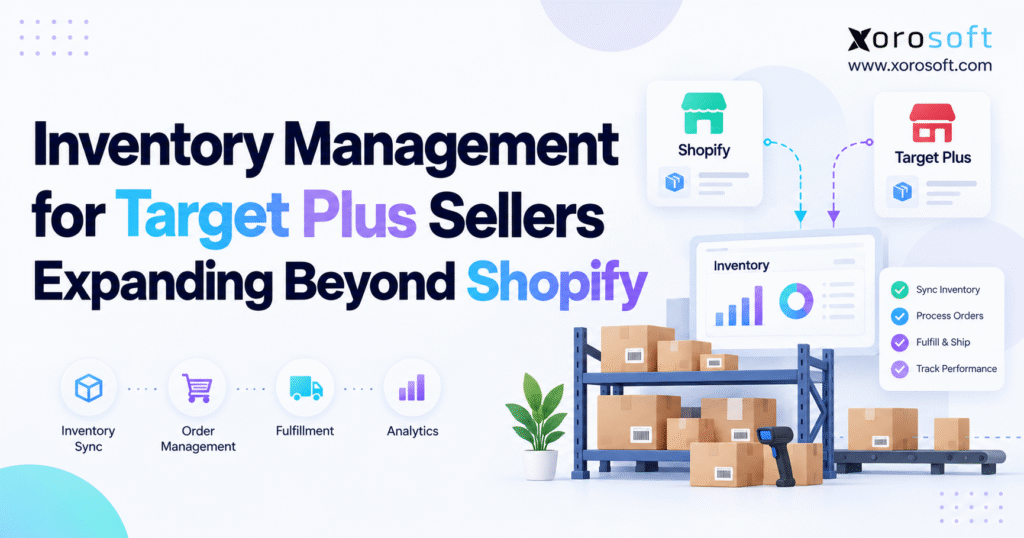
If you want to learn more about Target Plus inventory management, you’re in the right place.
1. When a Second Marketplace Exposes Inventory Control Gaps
A Shopify brand can operate smoothly for years and still struggle when a second marketplace begins taking orders from the same inventory. One customer buys the last available size on Shopify; another places an order on Target Plus before the quantity update arrives. Both storefronts show a confirmed order, but the warehouse has stock for only one. The issue is not a lack of demand. It is that order acceptance, stock reservation, and physical availability are no longer moving together.
Target Plus inventory management is the process of controlling stock offered through Target Plus while coordinating orders, available quantities, warehouse activity, purchasing, and returns across Shopify and other channels. The goal is to make every selling channel operate from a dependable view of inventory, even as each marketplace follows its own listing and fulfillment rules.
1.1 Why expanding beyond Shopify changes the operating model
With one storefront, teams often discover discrepancies before they become serious. A customer-service representative checks a shelf, corrects a quantity, and contacts a buyer. Across several channels, the same informal fix becomes difficult to repeat. Orders arrive through different systems, fulfillment teams receive competing priorities, and adjustments made in one place can affect stock promised elsewhere.
The critical change is not the number of storefronts. It is the number of transactions competing for the same units. Every warehouse receipt, return, transfer, cancellation, and wholesale allocation must now affect sellable stock consistently.
1.2 What growing sellers should solve first
Start by identifying the system that determines whether a unit can be promised. Then document who can reserve, release, transfer, or adjust it. Only after those decisions are clear should the business evaluate additional apps or an ERP platform. Target Plus inventory management becomes far easier when operational rules are established before a new sales channel goes live.
2. Understand Target Plus Inventory Sync and Shopify Connectivity
Target Plus is a curated US marketplace. According to the official Target Plus seller portal, applicants must meet business and assortment requirements before approval. Participation is therefore different from opening a general-purpose marketplace account. Merchants should confirm their eligibility, fulfillment setup, and category requirements before promising a launch date internally.
2.1 Target Plus approval comes before the integration
A Shopify store does not automatically gain Target Plus access. The business must apply, receive approval, and complete the marketplace’s onboarding requirements. That process can involve product identifiers, catalog quality, shipping capabilities, return handling, and operational contacts. Requirements can change, so the seller’s current Target Plus documentation and representative remain authoritative.
A useful readiness exercise is to run through the complete life of one order. Can the team accept it, reserve the correct unit, ship using an eligible service, transmit tracking, handle a cancellation, and reconcile payment? If any step depends on someone remembering to copy information into another system, the workflow deserves attention before launch.
2.2 What Shopify Marketplace Connect does—and does not do
Shopify’s Marketplace Connect setup guidance confirms that approved US Target Plus sellers can manage marketplace listings, inventory, orders, and fulfillment from the Shopify admin. That is an important starting point. A seller does not need an ERP simply to connect Target Plus to Shopify.
However, connecting channels is different from running purchasing, warehouse movements, financial reconciliation, and wholesale commitments. An integration can move a quantity accurately while the underlying number is wrong. Target Plus inventory management must therefore consider both data transmission and the business transactions that create that data.
3. Give Every Multichannel SKU One Authoritative Inventory Record
The most damaging multichannel errors often begin with two systems that both believe they own inventory. A warehouse application subtracts shipped units, Shopify subtracts order quantities, and a spreadsheet imports another adjustment later. Each individual action may seem reasonable, yet the combined balance drifts away from the physical shelf.
3.1 Assign ownership for each inventory event
Identify the source of truth for on-hand quantities by SKU and location. It might be Shopify for a simple merchant, an inventory application for a growing seller, or ERP for a business with connected purchasing and accounting. What matters is that ownership is explicit. Decide which system records receiving, transfers, cycle-count adjustments, reservations, returns, and write-offs, and which systems receive the resulting availability updates.
Avoid using the phrase “real time” as a substitute for ownership. A fast integration between conflicting records can distribute inaccurate data faster. The master record should have a transaction history, clear user permissions, and exception handling for failed updates.
3.2 Separate the stock ledger from channel listings
The stock ledger answers what physically happened. A channel listing answers how many units the business is willing and permitted to offer through that channel. Those figures are related, but they are not always identical. A wholesaler may have a customer reservation; a warehouse may hold goods for inspection; a marketplace may use a safety buffer during a promotion.
For sound Target Plus inventory management, calculate marketplace availability from the authoritative ledger and documented allocation rules. Do not allow each storefront to invent its own independent balance. Reconcile source quantities with published channel quantities regularly, particularly after bulk imports or system changes.
One useful control is a daily snapshot of the SKU-location balance and the most recent successfully published marketplace quantity. When those values differ, operators should see the timestamp and reason rather than guessing whether the discrepancy is temporary. This evidence also makes it easier to determine whether a problem began in receiving, reservation processing, or the outbound feed.
4. Fix Product Mapping Before Target Plus Stock Synchronization
An inventory update cannot correct a product that is mapped to the wrong physical item. For apparel, furniture, sporting goods, and consumer products, catalog complexity can be greater than order volume. Two similar descriptions may refer to different sizes; one marketplace listing may represent a bundle while the warehouse counts individual components.
4.1 Keep SKUs, variants, and product identifiers distinct
An internal SKU identifies an item within the business. A GTIN or UPC is a standardized identifier used in commerce and may be required for marketplace listings. Shopify explains that Target Plus product requirements should be verified with the marketplace representative, including acceptable identifiers or exemptions. Keep internal SKUs, manufacturer part numbers, external barcodes, marketplace listing IDs, and units of measure in a maintained mapping record.
A reliable mapping answers a simple question: when a channel orders one unit of this listing, exactly which warehouse item and quantity must be reserved? If nobody can answer without checking three spreadsheets, the listing should not be part of a high-volume launch.
4.2 Treat bundles and multipacks as inventory formulas
A three-pack of bottles must consume three eligible bottles, not one independent unit that has no relationship to component inventory. Likewise, a gift set may be unavailable if its least-available component cannot support another complete set. Bundle availability should be calculated from components, existing kit stock, and any assembly constraints.
For example, 24 bottles can support eight three-packs before other reservations. If seven bottles are already promised individually, only five complete three-packs remain available from the uncommitted stock. This is why Target Plus inventory management needs consistent product composition rules across storefronts, rather than a simple copy of visible stock figures.
5. Calculate Available-to-Sell Stock for Shared Marketplace Inventory
On-hand inventory shows recorded physical units at a location. It does not necessarily show what can be sold. A shelf may contain 100 units, but 20 may be assigned to accepted orders, eight may be damaged, and ten may be protected for a wholesale commitment. Publishing 100 units across Shopify and Target Plus would overstate availability.
5.1 Make reservation rules visible to every channel
A practical starting formula is: available-to-sell = eligible on-hand stock − open reservations − channel safety buffer. This assumes damaged and quarantined units are excluded from eligible stock and that reservations are not already deducted. Different software uses words such as available, committed, and reserved differently. Confirm the underlying definitions before building automations.
The definition should also describe whether backorders, preorders, and stock in transit are allowed on any specific channel. Some businesses intentionally sell future supply; others require a physically available unit before accepting an order. Neither rule should be introduced accidentally through a default software setting. Clear definitions protect customer promises and make demand reporting more useful.
Suppose a warehouse records 160 units. After quality holds, 150 are eligible. Accepted orders reserve 46, and the team uses an eight-unit buffer. The resulting available-to-sell quantity is 96. That balance can be distributed across channels according to the allocation policy, but it cannot be independently promised in full on every marketplace.
5.2 Choose between shared pools and channel allocations
A shared stock pool improves inventory utilization because demand can come from any channel. Dedicated allocations protect important contractual commitments but risk leaving inventory idle when one channel underperforms. Many sellers need a hybrid: shared inventory for routine demand, protected quantities for confirmed wholesale commitments, and measured buffers for volatile items.
| Allocation method | Where it helps | Operational risk |
|---|---|---|
| Shared inventory pool | Similar products sold across several channels | Slow reservations can create conflicting promises |
| Fixed channel allocation | Wholesale or high-priority commitments | Stock can remain idle in one channel |
| Dynamic safety buffer | Fast-selling items during update delays | Excessive buffers suppress legitimate sales |
| Warehouse-specific availability | Regional shipping and facility constraints | Bad location mapping can misrepresent stock |
The best policy for Target Plus inventory management is the one the warehouse can execute and the business can audit. Changing allocation rules every day to chase individual orders usually creates more confusion than it resolves.
6. Prevent Overselling When Shopify and Target Plus Take Orders Together
Two channels can each display an accurate quantity at one instant and still oversell if reservations are recorded too slowly. This becomes visible during promotions, product launches, and low-stock periods. The problem is particularly serious when an order is accepted before the shared source has reduced availability elsewhere.
6.1 Reserve inventory at the correct order event
Document when an order becomes a firm commitment. For some operations, reservation occurs at accepted order import; others use payment or fraud-review conditions. Whichever event is chosen, it must be handled consistently. Fulfillment should then consume or release that reservation through controlled transactions, without subtracting stock twice.
Consider 14 available units. Shopify accepts an order for nine; Target Plus accepts six before the channel balance refreshes. Fifteen units are now promised against 14. The appropriate response is an exception workflow that identifies the shortage promptly and determines which commitment requires action. It is not to conceal the issue with an unexplained manual adjustment.
6.2 Measure Target Plus Inventory Sync Delays, Retries, and Failures
Teams should know the time between a source-system change and the marketplace’s acknowledged update. They should also know how often updates fail, whether retries are safe, and how duplicate order events are prevented. Stable order IDs, timestamps, acknowledgments, and idempotent processing make integration failures easier to diagnose.
A safety buffer helps when the business has measured a genuine timing risk. It cannot fix incorrect catalog mappings, missing warehouse scans, or a source system that double-counts reservations. Effective Target Plus inventory management combines reliable event handling with operational discipline, especially for the last few units of a fast-selling SKU.
7. Align Target Plus Multi-Warehouse Availability with Fulfillment
A brand may store goods in two company warehouses, a contracted 3PL, and a location reserved for wholesale accounts. A company-wide total is useful for planning but insufficient for promising a specific marketplace order. A unit exists only where it can actually be picked, packed, and shipped under the required conditions.
7.1 Map Shopify locations to eligible Target Plus distribution centers
Shopify Marketplace Connect documents Target Plus distribution-center mapping for accounts with the feature enabled. The location-mapping guidance explains that sellers may need support to activate multi-location inventory before selecting mappings. Verify the physical warehouse behind each mapped location and test which available quantities publish after changes.
A common mistake is to include a location because it holds the product, even though it does not handle Target Plus orders. Location eligibility should account for shipping rules, cutoff times, staffing, packaging, and carrier access. Otherwise, available stock appears healthy while the assigned fulfillment team cannot meet the promise.
7.2 Coordinate internal warehouses and 3PL feeds
Third-party warehouses introduce another inventory ledger and another set of event timings. Agree on when receipts, picks, shipments, returns, and adjustments are reported. Transfers between facilities should normally remain in transit until the destination confirms receipt. Do not publish transferred stock at its new location while the goods are still on a truck.
A practical service agreement with a 3PL specifies how quickly it acknowledges receipts and shipments, when exception files arrive, and who resolves mismatched counts. It should also define whether a damaged unit remains in the provider’s system as on-hand inventory or moves immediately to a separate unavailable status. These operational details prevent integration disputes during peak demand.
Warehouse scanning and controlled picking reduce discrepancies that later reach marketplace listings. For businesses with intensive receiving, bin management, and fulfillment workflows, a dedicated warehouse management system may provide stronger execution control than spreadsheets or manual status updates.
7.3 Respect marketplace fulfillment restrictions
Shopify’s Marketplace Connect fulfillment documentation states that Target Plus orders cannot use Amazon or Walmart fulfillment services. A merchant may use those services for other channels, but routing logic must exclude them for Target Plus. Confirm eligible alternatives and current shipping requirements during marketplace onboarding.
Reliable Target Plus inventory management therefore includes fulfillment eligibility, not only inventory synchronization. Test the warehouse selected for a real order, the shipping method passed through, and the timing of shipment confirmation.
8. Control Cancellations, Returns, and Inventory Adjustments
Returns can make inventory records look more accurate while quietly inflating sellable stock. A refund does not prove that a physical unit reached the warehouse, and receipt does not prove it is fit for resale. The return workflow needs deliberate stock statuses and an identifiable original order.
8.1 Release canceled orders without restocking twice
Shopify documents that orders canceled or returned through Marketplace Connect do not automatically restock Shopify inventory. That is a meaningful detail for sellers planning exception handling. A cancellation may require a controlled inventory adjustment, depending on whether the original reservation was released and whether the item had already been picked or shipped.
Every cancellation should retain the marketplace order ID, original quantity, reservation history, and disposition. The inventory team must distinguish releasing a reservation from receiving an item back into physical stock. Combining those actions carelessly creates phantom availability.
8.2 Inspect returns before making units sellable
Returned stock should pass through an inspection state. A clean, unopened item might return to sellable inventory; a damaged or incomplete bundle may require refurbishment, component recovery, or a write-off. Record the outcome by SKU and location. Finance needs the corresponding refund and inventory valuation treatment, but the timing of those entries may differ.
For Target Plus inventory management, regularly compare marketplace return records with warehouse receipts and financial credits. A growing gap between returned orders and physically processed inventory is an early warning of weak controls.
9. Forecast Target Plus and Shopify Demand in One Purchasing Plan
A seller can prevent overselling today yet still lose sales next month because its purchasing plan ignores the new marketplace. Replenishment decisions must reflect the underlying inventory pool, not isolated forecasts that each channel converts into separate purchase orders. Otherwise, expansion produces alternating shortages and overstocks.
9.1 Forecast at SKU and channel level, then consolidate
Begin with orders and fulfilled demand by channel, corrected for stockout periods. A new Target Plus listing may have different seasonality or promotional patterns from the same Shopify product, so a direct copy of historical Shopify demand is only a starting assumption. Assess product maturity, campaign schedules, forecast error, and supplier constraints before changing purchasing quantities.
Consolidate forecasts by physical SKU so procurement sees total expected demand. Then decide which warehouse should receive incoming units, considering freight, demand geography, and current location balances. The aim is to purchase for one business while protecting the distinct commitments of each selling channel.
9.2 Build reorder points from real lead times
A simple reorder point equals average daily demand multiplied by supplier lead time, plus safety stock. If combined demand is 18 units daily and lead time is 20 days, expected lead-time demand is 360 units. An additional buffer of 75 produces a reorder point of 435. These figures are illustrative; they are not Target Plus performance benchmarks.
Use actual supplier receipt history instead of the lead time printed on a vendor quote. Include open purchase orders, inbound transfers, and seasonality in planning. A purchase order is not immediate available inventory. Target Plus inventory management works best when inventory visibility and purchasing share consistent demand and stock definitions.
10. Reconcile Target Plus Orders with Warehouse and Accounting Records
Stock accuracy is not only a warehouse metric. Every unit sold affects inventory valuation, cost of goods sold, revenue, returns, and sometimes marketplace fee recognition. When order records live in one application and accounting adjustments in another, month-end discrepancies become difficult to explain.
10.1 Reconcile by SKU and location, not only by total units
A company can show 1,000 units overall and still have an unresolved 40-unit shortage in one warehouse offset by 40 excess units elsewhere. Start with opening balances, then account for receipts, accepted orders, shipments, transfers, returns, and approved adjustments. Compare the expected closing balance with physical or cycle-count evidence. Investigate exceptions using transaction IDs rather than overwriting the ending figure.
For a controlled monthly close, freeze or clearly mark the reporting cutoff and retain evidence for material adjustments. If a warehouse count occurs after the cutoff, finance needs to know which transactions belong to the previous period. This is especially important when several marketplaces create refunds and shipments near month-end, because the accounting date can differ from the physical event date.
Inventory reconciliation should also verify that marketplace order records and warehouse shipment records refer to the same products and quantities. Partial fulfillment, split shipments, and canceled lines deserve special attention because their statuses can differ across systems.
10.2 Separate marketplace revenue from true contribution margin
A channel can generate substantial revenue while tying up working capital or producing weak margins. Reconcile sales, refunds, marketplace fees, freight, fulfillment charges, and product costs. Maintain a consistent inventory costing method with appropriate finance oversight. Report by product and channel so teams can distinguish profitable demand from expensive volume.
This is where an integrated operating model becomes useful. Xorosoft describes its broader XoroONE cloud ERP platform as bringing inventory, purchasing, warehouse operations, and accounting into connected workflows. A merchant should still verify the actual integration architecture, especially how approved Target Plus orders would travel through Shopify or another supported connection.
11. Measure Multichannel Inventory Accuracy with a Focused Scorecard
A dashboard filled with metrics does little good if no team owns the exceptions. Choose a small group of measures that connect directly to fulfillment reliability, working capital, and reconciliation effort. Assign each metric a source system, a review cadence, and someone responsible for investigating movement outside expected ranges.
11.1 Track availability and synchronization quality
Inventory accuracy compares system records with physical counts. Overselling rate measures accepted orders that lack sufficient eligible stock. Sync failure rate identifies rejected or missing updates, while update latency shows how long a change takes to reach the channel. Evaluate these together. Low reported failure rates mean little if the underlying shelf counts are wrong.
| Operational measure | Recommended definition | Primary owner |
|---|---|---|
| Inventory accuracy | Matching SKU-location count records ÷ records counted | Inventory control |
| Overselling rate | Orders accepted without sufficient eligible stock ÷ accepted orders | Ecommerce operations |
| Sync failure rate | Failed inventory updates ÷ attempted updates | Integrations team |
| Reconciliation exceptions | Records needing investigation ÷ records reviewed | Operations and finance |
| Days of supply | Eligible available units ÷ average daily unit demand | Planning |
| Order cycle time | Time from accepted order to shipment confirmation | Fulfillment |
11.2 Use exception trends to guide improvements
Monitor the number and age of unresolved exceptions, not just the total received. Group causes into mapping, receiving, reservation timing, returns, warehouse counts, and accounting differences. This reveals where a process change or software feature would have the greatest impact.
If Target Plus inventory management requires daily manual quantity corrections, track the exact minutes spent and the number of orders affected. That evidence creates a stronger investment case than broad claims about needing more automation.
12. Compare Shopify Inventory Apps, Multichannel Software, and ERP
Software selection should begin with the business problem. A connector, inventory application, order management system, warehouse management system, and ERP solve overlapping but distinct issues. Buying the broadest platform is not automatically the best decision, particularly when a merchant has one location and straightforward accounting.
12.1 Compare Inventory Systems by Transaction Ownership
Marketplace connectors move listings, quantities, orders, and fulfillment information between channels. Inventory applications focus on stock balances, availability, and replenishment. An order management system coordinates routing and order status; a WMS manages physical warehouse execution. ERP can connect purchasing, inventory, accounting, manufacturing, and reporting in a broader operating record.
| Software approach | Typical responsibility | Evaluate carefully |
|---|---|---|
| Shopify + Marketplace Connect | Marketplace listing and order connectivity | Whether existing stock and accounting processes remain reliable |
| Inventory application | Availability, reservations, replenishment | Financial integration and warehouse transaction depth |
| OMS | Order routing and lifecycle coordination | Inventory ownership and duplicate reservation risks |
| WMS | Receiving, bin control, picking, shipping | Purchasing and accounting dependencies |
| ERP | Connected inventory, purchasing, finance, operations | Implementation scope, user adoption, integration architecture |
12.2 Use operational triggers rather than a revenue threshold
ERP becomes worth examining when several departments repeatedly repair the same transaction. Examples include warehouse counts that finance cannot reconcile, purchasing spreadsheets that ignore reservations, or wholesale promises made without visibility into marketplace demand. Complex manufacturing and multi-location distribution can also justify integrated controls before revenue reaches an arbitrary milestone.
For sellers assessing Shopify-connected ERP, the Xorosoft ERP listing in the Shopify App Store documents order and inventory synchronization, multi-location functionality, and financial workflows. That listing supports a Shopify connection; it should not be interpreted as proof of a native Target Plus connector.
12.3 Recognize when a lighter approach is better
A seller should not implement ERP merely because it joined a new marketplace. If the operation has one dependable warehouse, consistent product mapping, modest exceptions, and simple purchasing, improved processes or a focused inventory app may be sufficient. The right upgrade changes the business’s control over transactions, not just the number of screens employees use.
For a broader systems review, compare implementation scope and operating fit through resources such as the ERP alternatives comparison. Test claims with real orders, failed updates, cancellation scenarios, and financial close requirements before selecting a vendor.
A good demonstration includes at least one inconvenient scenario: a bundle that cannot ship because a component is missing, a split shipment from two eligible warehouses, or a marketplace cancellation after a pick ticket has printed. Ask who corrects each exception and where the audit trail appears. Software that handles the happy path but obscures exceptions often creates new work for operators.
13. Adapt Inventory Management to Apparel, Furniture, and Sporting Goods
Two merchants with similar order counts can have very different inventory risks. Product structure, storage constraints, returns, and supplier lead times influence which controls matter most. A standardized platform can help, but the operating rules need to reflect the merchandise being sold.
13.1 Apparel and fashion: protect size-color availability
A clothing brand may sell one design in dozens of size-color combinations. The warehouse counts each variant, while marketing speaks about one product family. The system must preserve that distinction. A return of a damaged medium does not increase the sellable balance for a large, and a wholesale allocation for black jackets cannot be fulfilled with blue variants. Seasonal launches require close monitoring of sell-through and replenishment assumptions.
13.2 Furniture: make warehouse eligibility part of inventory
Furniture merchants often handle bulky products, regional availability, longer lead times, and higher return costs. An item might exist in a western warehouse but not meet the service commitment for an eastern order. Availability should reflect fulfillment capability, not just physical presence. Transfer planning, packaging standards, and accurate landed costs matter as much as the quantity displayed online.
13.3 Sporting goods and consumer products: manage kits and seasonal peaks
Sporting goods brands frequently offer assembled kits and individual components. Demand can surge with holidays, events, or seasonal weather. A kit should stop selling when a required component is unavailable, even if another component remains plentiful. For more examples of how operating requirements vary, review inventory-driven industries rather than assuming every product category needs the same stock settings.
14. Roll Out Target Plus Inventory Management in Controlled Phases
A phased launch exposes process gaps before they affect the full catalog. It also gives operators a chance to measure whether changes produce fewer stock conflicts and cleaner reconciliation. A launch plan should include technology, warehouse procedures, and accountable teams, not just a marketplace connection date.
14.1 Days 1–15: audit SKUs, locations, and transaction flows
List every channel, warehouse, SKU mapping, bundle rule, and system that can change inventory. Identify who owns order reservation, purchasing receipt, transfer, cancellation, and return transactions. Review historical mismatches to find patterns. Ask warehouse and finance teams where they rely on spreadsheets; those steps frequently reveal integration blind spots.
Write down the expected event sequence for one typical order and one difficult order. Include an inventory feed failure, a partial shipment, and a return requiring inspection. The result should be a short operating design that both business and technical teams can understand.
14.2 Days 16–30: test Target Plus Inventory Exceptions Before Scaling
Pilot a limited assortment with accurate identifiers and dependable supply. Place test orders across channels, verify reservations, and compare channel quantities after receiving and shipment events. Simulate canceled orders, delayed 3PL updates, duplicate event retries, and goods that fail inspection. Maintain a visible exception log with owners and resolution times.
When evaluating third-party software, use its published integration capabilities as a starting point and request a documented data-flow diagram. For Target Plus inventory management, the proposed Xorosoft data flow through Shopify Marketplace Connect or another approved integration partner must be demonstrated, not inferred from general ecommerce support.
14.3 Days 31–60: stabilize purchasing and reporting
After order and fulfillment controls work, bring purchasing and finance into the same review. Recalculate demand using combined channel history, test reorder points, and compare inventory balances with accounting records. Establish daily checks during launch and reduce the frequency only when the error rate warrants it. Track unresolved exceptions and customer-facing failures, not just successful sync messages.
A useful evaluation exercise is to examine Xorosoft’s industry-specific ERP case studies for similar operational complexity while remembering that another business’s outcome does not guarantee the same result. Translate any vendor demonstration into acceptance criteria for your own staff.
14.4 Days 61–90: decide what should be automated next
Review the volume and cause of manual corrections. If most issues are poor counting or ambiguous SKU data, fix those controls first. If purchasing, finance, and warehouse teams still cannot share one reliable transaction record, assess a broader platform. Xorosoft offers ERP and warehouse workflows for inventory-driven businesses, but suitability depends on implementation scope and validated connections.
Reporting can also evolve once source data is trustworthy. Start with a weekly cross-functional review of the ten SKUs producing the most adjustments, the locations with the highest count variance, and unresolved integration exceptions. Over time, automation can route these issues to the right owner and produce an audit trail. Advanced reporting should follow transaction accuracy, not distract from it.
15. Build the Target Plus Inventory Foundation Before the Next Channel
Marketplace expansion is sustainable when accepting an order, reserving inventory, shipping a unit, and recognizing its financial effect tell the same story. The strongest Target Plus inventory management practices are rarely dramatic: clean SKU mappings, one authoritative stock record, explicit reservations, eligible fulfillment locations, disciplined returns, and routine reconciliation. Together they reduce the number of promises a brand cannot keep.
Start with the exceptions your team already handles every week. Measure how frequently they happen, identify the transaction where each begins, and fix ownership before adding another tool. Then assess whether Shopify with Marketplace Connect can continue to support the business, whether a focused system is appropriate, or whether connected ERP operations would remove persistent cross-functional work.
If that evaluation shows a need for broader control, use the Xorosoft contact and discovery page to discuss your warehouse, Shopify, purchasing, and accounting processes. Bring a real Target Plus order scenario and ask for the full, verified integration path. The useful outcome is a system design the business can operate confidently—not a collection of features that looks impressive in a demo.
FAQ
Can Shopify sellers manage Target Plus inventory through Marketplace Connect?
Yes. Approved sellers can use Shopify Marketplace Connect for inventory, orders, and fulfillment. Accurate SKU mapping and marketplace approval are still required.
How do I prevent overselling between Shopify and Target Plus?
Use one inventory source, reserve stock immediately on accepted orders, monitor failed updates, and apply safety buffers where needed.
Can Shopify and Target Plus share the same inventory pool?
Yes. Both channels can share eligible stock if reservations update consistently. Never independently offer the full available quantity to each channel.
How does Target Plus inventory management work across warehouses?
Track quantities by SKU and eligible warehouse, verify location mapping, and route orders only to facilities meeting marketplace requirements.
Do canceled or returned Target Plus orders automatically restock Shopify?
No. Marketplace Connect does not automatically restock canceled or returned orders. Verify reservation release and inspect returned products before restoring availability.
When should Target Plus sellers upgrade to ERP?
Consider ERP when inventory, purchasing, warehouses, and accounting require frequent manual reconciliation. Simpler sellers may not need more than Shopify connectivity.
What should sellers check before choosing Target Plus inventory software?
Check SKU mapping, reservations, fulfillment eligibility, returns, reconciliation, and integration support. Ask vendors to demonstrate your actual Target Plus order workflow.
Recent Posts
-
 Xorosoft vs NetSuite for Shopify B2B Operations in 2026
 -
 How to Manage Shopify B2B Payment Terms Without Breaking AR and Order Release
 -
 Supplier Performance Benchmarks 2026: Lead Time, Fill Rate, and Defects
 -
 Inventory Management for Target Plus Sellers Expanding Beyond Shopify
 -
 What Is an ERP Conference Room Pilot and Why Should Buyers Require One?