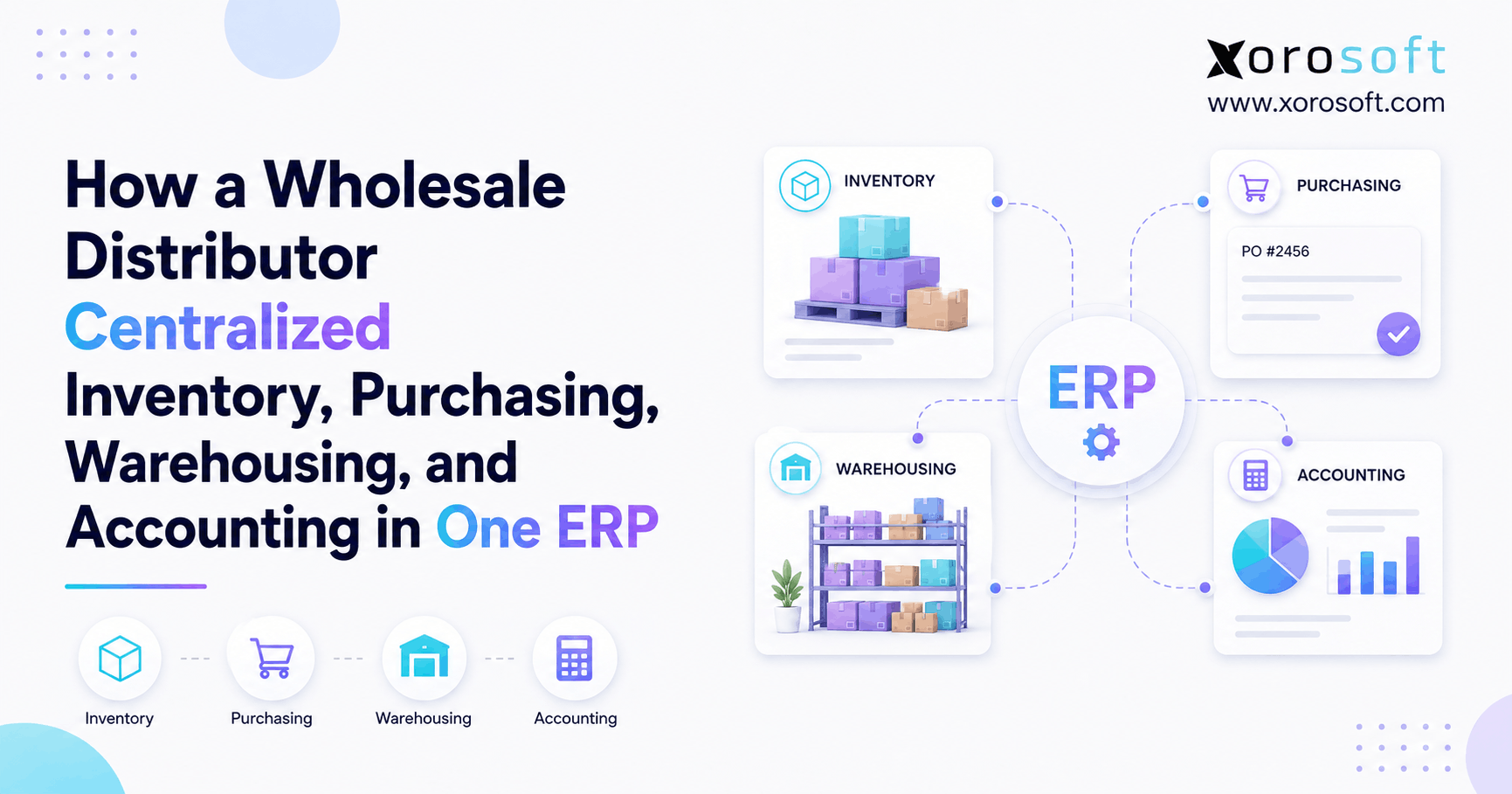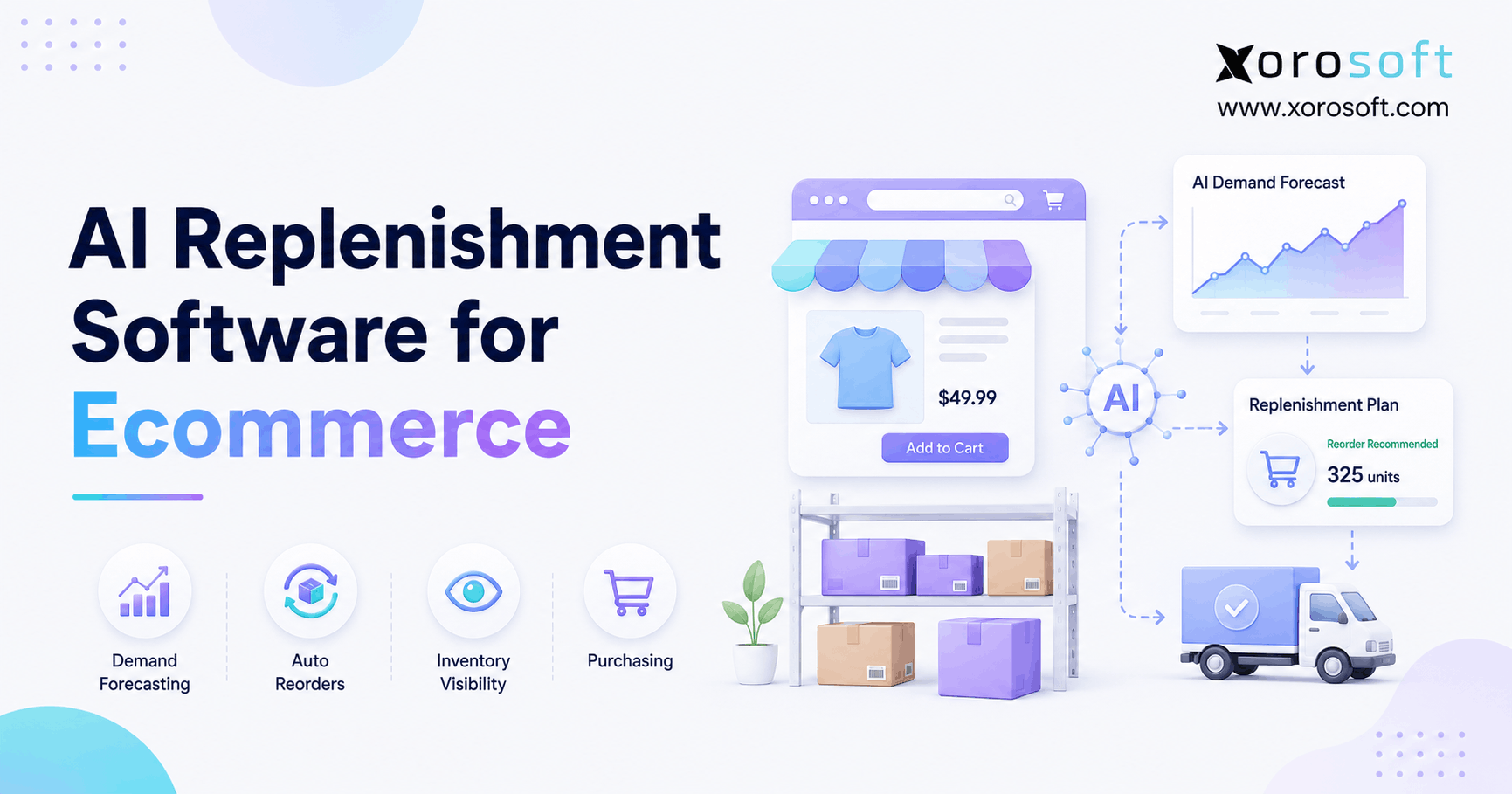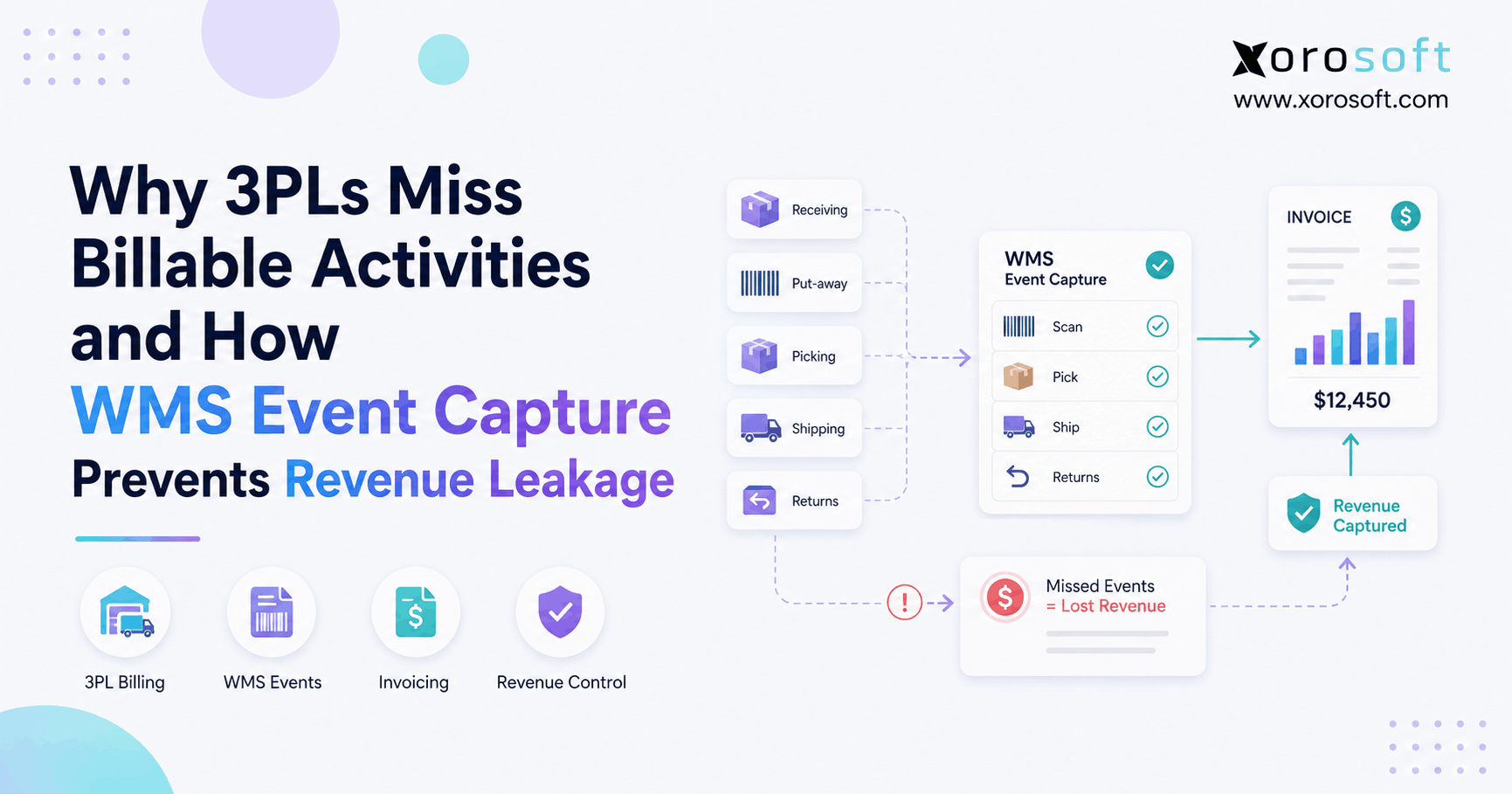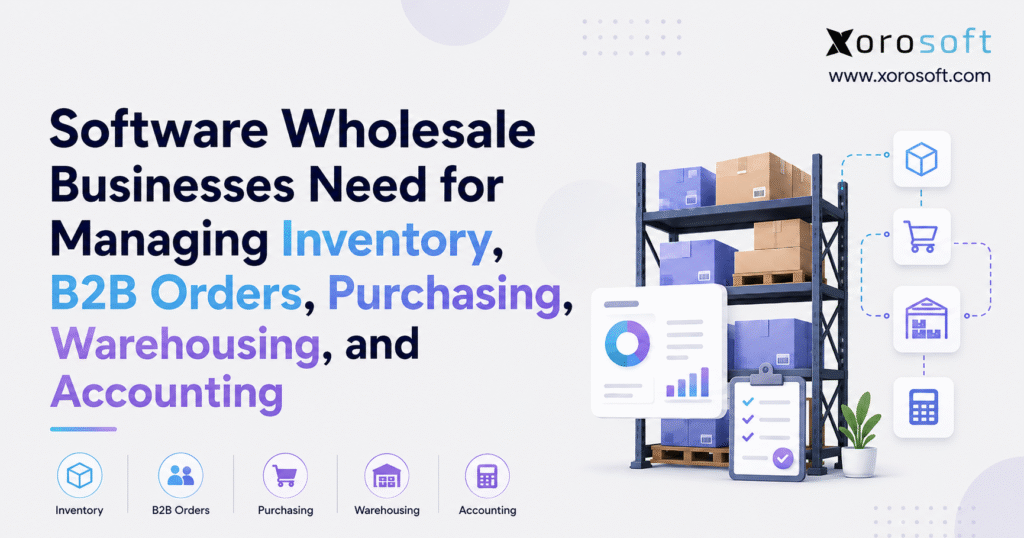
If you are searching for the best software for wholesale businesses, this guide will help you explore your options.
1. Disconnected Systems Become an Operating Constraint as Wholesale Businesses Grow
Wholesale companies rarely reach an operational breaking point because they lack software. More often, the problem appears after the business has accumulated several applications that work individually but fail to coordinate important transactions.
A growing wholesaler may run accounting in one platform, purchasing in spreadsheets, inventory in another application, and fulfillment through separate warehouse software.
B2B orders might arrive through sales representatives, email, ecommerce portals, EDI, or phone orders. Shopify and Amazon can create additional demand against the same physical inventory.
1.1 Manual Workarounds Become Harder to Sustain
At lower transaction volumes, employees can bridge system gaps manually.
They export files, check inventory across several screens, enter orders more than once, maintain purchasing spreadsheets, and resolve mismatches during month-end close.
These workarounds may appear manageable while transaction volume remains low. However, each additional warehouse, selling channel, supplier, customer account, or SKU increases the number of transactions that teams must coordinate.
Growth eventually changes the economics of manual work. Employees spend more time moving and validating data instead of managing customers, inventory, purchasing, and fulfillment.
1.2 Every Wholesale Transaction Affects Multiple Departments
A customer order does more than record demand.
It may reserve inventory, create warehouse work, influence purchasing requirements, generate an invoice, and eventually affect cost of goods sold. Several departments therefore depend on the same underlying transaction.
Purchase orders create similar dependencies. Buyers commit the company to future inventory, warehouse teams receive the goods, availability changes, and finance records the supplier obligation.
When several systems participate in that process, the business needs a clear source of truth. Otherwise, employees spend increasing amounts of time deciding which number is correct.
1.3 Digital B2B Orders Increase Back-Office Complexity
Digital ordering can make buying easier for customers without making fulfillment simpler for the wholesaler.
An order may enter instantly through a portal or ecommerce channel. Operations still needs to determine whether stock is available, which warehouse should fulfill it, what price the customer receives, and whether replenishment is required.
Warehouse teams then pick, pack, and ship the order. Finance records the financial impact.
For this reason, software for wholesale businesses should connect digital demand with the operational processes that follow it.
1.4 Better Wholesale Software Architecture Does Not Mean Eliminating Every Application
A strong software architecture does not require one vendor to own every process.
Shopify can remain the commerce platform. A specialized shipping tool can manage carriers. An EDI provider may continue handling trading-partner communication.
The important question is whether each system has a clearly defined responsibility and whether transactions move between them reliably.
A small wholesaler may operate effectively with accounting software and an inventory application. A multi-warehouse distributor with thousands of SKUs, customer-specific pricing, EDI, ecommerce, and complex purchasing usually needs a more connected operating model.
2. What Software for Wholesale Businesses Must Manage
Software for wholesale businesses should manage the processes required to buy inventory, store it, sell it, fulfill customer demand, and record the resulting financial activity.
Inventory sits at the center of this model, but inventory alone does not represent the business.
Sales orders influence stock. Purchasing creates future inventory. Warehouse transactions change physical quantities. Returns affect both stock and finance. Accounting must eventually reflect all of those events.
2.1 Core Wholesale Management Software Capabilities
Most growing wholesalers eventually need technology for inventory management, B2B ordering, purchasing, warehouse management, accounting, forecasting, reporting, ecommerce connectivity, and EDI.
These capabilities do not have to come from one system.
However, management needs to know which platform owns each type of data and how connected applications exchange information.
If warehouse staff update stock in one application while sales reads availability from another, synchronization needs to happen quickly and accurately. If finance sits outside the operational platform, the business must also define how receipts, shipments, returns, and adjustments reach accounting.
Strong wholesale management software reduces ambiguity around those responsibilities.
2.2 Wholesale ERP Software Versus Standalone Applications
Standalone software typically performs one specialized job. ERP attempts to connect multiple business functions using shared transaction data.
That distinction matters more than feature counts.
Two systems can both advertise purchase-order functionality. In one platform, receiving a PO may update inventory, expected availability, supplier information, and financial records in the same workflow.
Another platform may require exports or integrations to send that information elsewhere.
The relevant evaluation question is therefore not simply whether a feature exists.
Buyers should ask what happens throughout the business after someone uses that feature.
3. Inventory Management Forms the Foundation of Wholesale Business Software
Inventory affects nearly every major wholesale decision.
Sales teams need to know what can be promised. Buyers need to know what should be reordered. Warehouse teams need precise locations. Finance needs accurate valuation. Management needs visibility into fast-moving products, excess stock, shortages, and working capital.
That makes inventory management a foundational component of software for wholesale businesses.
3.1 Available Inventory Is More Useful Than On-Hand Quantity Alone
Physical quantity and sellable quantity are not always the same.
A warehouse might physically contain 800 units of a product, while 600 units are already committed to confirmed orders.
In that situation, the business should not present all 800 units as available for new demand.
A strong inventory system should distinguish among on-hand, available, allocated, inbound, backordered, damaged, transferred, and committed inventory.
These distinctions allow sales teams to make better promises and give buyers a more accurate picture of future shortages.
3.2 Multi-Warehouse Inventory Adds Allocation Complexity
A second warehouse creates far more complexity than adding another location field.
The company must decide where orders should ship from, which warehouse should receive new purchases, when stock should transfer between facilities, and whether different locations require different safety-stock levels.
Order routing can also influence freight cost and delivery speed.
As the network grows, multi-warehouse inventory software should provide location-level visibility without requiring employees to manually combine several reports.
3.3 Inventory Accuracy Depends on Process Discipline
Technology alone cannot guarantee accurate stock.
Warehouse teams still need disciplined receiving, putaway, picking, transfers, adjustments, and cycle counting.
If employees physically move stock without recording the transaction, the software will eventually show inaccurate quantities.
Good systems make correct behavior easier. Barcode workflows, transaction history, permissions, and exception reporting help teams identify errors before they spread into sales, purchasing, and accounting.
4. B2B Order Management Software Must Reflect Wholesale Selling Rules
Wholesale orders rarely behave like standard consumer ecommerce transactions.
One customer may receive negotiated contract pricing. Another receives volume discounts. Certain accounts buy on payment terms, while others operate under credit limits.
Large retailers may send purchase orders through EDI instead of placing them through a storefront.
Consequently, B2B wholesale software needs to understand customer relationships as well as order lines.
4.1 Customer-Specific Pricing Needs Central Control
Pricing becomes difficult to manage when salespeople maintain separate spreadsheets or different channels store independent price lists.
A central pricing model can control contract pricing, customer classes, product-specific discounts, volume tiers, promotions, and other commercial rules.
The more complex those rules become, the more important it is to test actual customer scenarios during software evaluation.
A generic demonstration with one price per SKU proves very little about a real wholesale pricing model.
4.2 Backorders and Inventory Allocation Need Consistent Rules
Demand sometimes exceeds available supply.
When that happens, the business needs a repeatable method for determining which customers receive stock.
Some wholesalers allocate by order date. Others prioritize strategic accounts, contractual commitments, channels, or geographic requirements.
Manual allocation may work at low volume. At scale, it creates a growing number of exceptions for sales and operations teams to resolve individually.
4.3 B2B Self-Service Can Reduce Administrative Order Entry
A B2B portal can give approved customers access to account pricing, catalogs, order history, invoices, and availability.
This does not eliminate the value of sales relationships.
Instead, it removes repetitive administrative work from transactions that customers can complete themselves.
The portal only works well when the underlying data is accurate. Showing incorrect prices or unavailable inventory simply gives customers faster access to bad information.
5. Purchasing Software for Wholesale Businesses Should Guide Replenishment
Creating a purchase order is easy. Deciding what to purchase is considerably harder.
Buyers need to understand current stock, future demand, open sales orders, inventory already in transit, supplier lead times, warehouse requirements, seasonality, and cash commitments.
Therefore, purchasing functionality inside software for wholesale businesses should support decisions instead of acting only as an electronic PO form.
5.1 Replenishment Must Consider Supply and Demand Together
Looking only at current stock can lead to poor decisions.
A low quantity may not require another purchase if substantial inventory is already inbound. Conversely, a product that appears adequately stocked today may face a shortage before the next supplier delivery arrives.
Useful replenishment logic combines current inventory, expected demand, open purchase orders, and lead times.
This gives buyers a better view of what they should order and when they should order it.
5.2 Supplier Lead Times Change Inventory Requirements
Lead time directly affects inventory strategy.
A supplier that replenishes a product in five days creates a different risk profile from one that requires ninety days.
The system should help purchasing teams account for those differences instead of treating every SKU the same way.
Lead-time variability also matters. A supplier that regularly misses delivery dates may require higher safety stock than one with consistent performance.
5.3 Landed Cost Protects Margin Visibility
Supplier price does not always equal true inventory cost.
Freight, duties, insurance, brokerage, and other import expenses can materially affect product margin.
When purchasing and accounting share transaction data, the business can allocate those costs more consistently.
This creates a more realistic view of inventory valuation and gross margin.
6. Warehouse Management Software for Wholesalers Must Control Physical Execution
Inventory records only remain useful when warehouse teams execute transactions correctly.
Receiving, putaway, picking, packing, shipping, transfers, and counting all change the inventory picture.
As order volume rises, warehouse operations need repeatable system-driven processes rather than tribal knowledge.
6.1 Receiving and Putaway Establish Inventory Accuracy
Inventory accuracy begins when goods enter the facility.
Warehouse users should validate incoming products against purchase orders, confirm quantities, record discrepancies, and direct stock to the correct locations.
Errors made during receiving often appear later as picking issues, unexplained adjustments, or accounting differences.
A disciplined receiving process prevents many downstream problems before they begin.
6.2 Picking and Packing Need Verification
A high-volume warehouse usually needs more than printed pick lists.
Barcode scanning, guided workflows, batch picking, wave picking, zone picking, packing verification, and shipping controls can reduce manual errors.
Businesses that require deeper warehouse execution can evaluate a dedicated warehouse management system for wholesalers instead of assuming basic inventory functionality will cover complex warehouse requirements.
6.3 Cycle Counting Should Become Routine
Annual physical inventory identifies errors only after they have accumulated.
Cycle counting allows warehouse teams to verify smaller portions of stock throughout the year.
Regular counting also helps managers identify recurring causes of inaccuracies, such as receiving problems, incorrect putaway, picking mistakes, or unrecorded transfers.
That makes cycle counting an operational control rather than a year-end accounting exercise.
7. Wholesale Accounting Software Must Stay Connected to Operations
Accounting eventually exposes weaknesses in disconnected operational systems.
Receipts, sales shipments, purchase costs, inventory adjustments, returns, and transfers can all affect financial records.
If operations and finance rely on different transaction histories, reconciliation becomes part of the daily operating model.
7.1 Inventory Valuation Depends on Reliable Inventory Movement
Inventory represents both physical stock and financial value.
Receiving increases stock. Shipping reduces it. Adjustments, manufacturing, returns, and landed costs can change valuation.
Reliable wholesale accounting software needs consistent operational data so finance does not have to reconstruct inventory activity during month-end close.
7.2 Cost of Goods Sold Requires Consistent Cost Data
Accurate margin reporting depends on accurate product cost.
Supplier prices change. Freight fluctuates. Imported products may carry duties and additional landed costs. Kitting or manufacturing can add another costing layer.
If inventory and accounting systems calculate those values differently, product-level margin becomes difficult to trust.
The result is usually more reconciliation rather than better financial insight.
7.3 A Slow Month-End Close Can Signal an Architecture Problem
Finance teams often receive the blame when closing takes too long.
In reality, accountants may spend much of that time researching inventory adjustments, matching receipts, checking ecommerce transactions, or investigating differences between warehouse and financial systems.
If reconciliation becomes more difficult as revenue grows, management should examine system architecture instead of treating every delay as a finance-process problem.
8. Wholesale ERP Software Should Connect the Full Transaction Flow
The strongest wholesale ERP software connects related activities through shared transactions.
That does not mean every employee works in the same screen.
It means one event can inform every process that depends on it.
8.1 Order-to-Cash Should Follow One Controlled Workflow
Consider a typical B2B order.
The system validates customer information and pricing. Inventory availability determines whether the order can ship. Allocation reserves stock when appropriate.
Warehouse users receive fulfillment instructions and confirm what actually leaves the building.
Shipment confirmation then updates inventory and order status. Accounting records the customer invoice and financial impact.
A controlled order-to-cash process reduces the number of times employees need to re-enter or reconcile the same information.
8.2 Purchase-to-Pay Should Connect Planning, Receiving, and Finance
Purchasing begins before the buyer creates a PO.
Demand, stock levels, lead times, and planning rules identify a requirement. The buyer reviews the need and places the order.
Warehouse teams receive the goods and make them available for sale. Finance records the supplier obligation and inventory cost.
Connecting these stages creates stronger visibility into both future stock and future cash requirements.
8.3 Clear System Ownership Prevents Integration Confusion
Integration does not require ERP to own every function.
A wholesaler may keep a specialist ecommerce, shipping, tax, EDI, or 3PL platform.
The company simply needs clear ownership rules.
Management should know which system creates products, calculates availability, owns sales orders, records shipments, and posts financial transactions.
Without those decisions, automation can move incorrect data faster without fixing the underlying architecture.
9. Separate Wholesale Management Software Stops Scaling When Transactions Fragment
Point solutions can provide excellent functionality.
The problem appears when keeping those applications synchronized becomes an important part of employees’ jobs.
9.1 Integration Maintenance Has a Real Operating Cost
Businesses often compare software using subscription fees.
That calculation ignores the labor spent monitoring imports, fixing failed orders, reconciling reports, investigating missing transactions, and determining which platform contains the correct value.
Integration maintenance rarely appears as a separate expense.
However, it consumes operational capacity every week.
As transaction volume grows, those hidden costs can become significant.
9.2 Application Count Matters Less Than Transaction Ownership
Ten applications can work well if each has a clear responsibility and reliable interfaces.
Three systems can create chaos if all three believe they own inventory.
The decision to move toward ERP should therefore depend on transaction fragmentation rather than an arbitrary application count.
Businesses should focus on where the same transaction gets recreated, transformed, or manually reconciled.
9.3 Integrated Software for Wholesale Businesses Becomes More Relevant With Complexity
A unified platform becomes more attractive as operational dependencies increase.
Multiple warehouses, complex B2B pricing, high purchasing volume, EDI, ecommerce, manufacturing, and integrated accounting all create transactions that several departments need to understand.
At that point, software for wholesale businesses should provide shared operational context instead of forcing teams to reconstruct it afterward.
10. Growing Companies Should Upgrade to Wholesale ERP Software When Complexity Becomes Structural
There is no universal revenue level at which every wholesaler needs ERP.
Operational complexity provides a better signal.
A relatively small distributor with several warehouses, thousands of SKUs, EDI, and manufacturing may need stronger systems earlier than a much larger company with simple products and one fulfillment location.
10.1 Multi-Warehouse Operations Are Becoming Difficult to Coordinate
Additional facilities introduce transfers, allocation rules, replenishment decisions, and routing complexity.
If employees routinely call other warehouses to confirm stock or maintain separate spreadsheets for transfers, the existing inventory architecture may no longer support the network.
Warehouse growth should increase operational capacity, not increase uncertainty around availability.
10.2 Buyers Depend Too Heavily on Spreadsheet Knowledge
Purchasing spreadsheets can become highly sophisticated.
The risk appears when nobody fully understands the formulas except the person who created them.
An organization that depends on one buyer’s private spreadsheet logic for replenishment carries both process risk and scalability risk.
Planning logic should become visible, reviewable, and repeatable.
10.3 Inventory Adjustments Have Become Normal
Every warehouse experiences occasional inventory discrepancies.
Frequent adjustments deserve investigation.
If employees have stopped asking why inventory is wrong and simply expect to fix it regularly, management should examine receiving, picking, transfers, integrations, permissions, and counting processes.
Accepting inaccurate inventory as normal creates larger problems in sales, purchasing, and accounting.
10.4 QuickBooks Has Too Many Operational Systems Around It
QuickBooks may continue performing accounting effectively.
The larger problem may sit around it.
If inventory, purchasing, WMS, B2B orders, forecasting, EDI, ecommerce, and reporting all require separate applications, ERP can become relevant even though accounting itself has not failed.
Companies comparing larger platforms can use a detailed Xorosoft vs NetSuite comparison as one input while evaluating process fit.
10.5 Management Reporting Requires Too Many Exports
A COO should not need several spreadsheets to answer basic questions about inventory availability, purchasing requirements, open orders, inventory value, or gross margin.
When management reporting depends on regular manual consolidation, the problem extends beyond reporting.
The business lacks a sufficiently connected operational data model.
11. Wholesale Business Software Requirements Change by Industry
Different wholesale sectors use many of the same underlying processes, but product characteristics can change the requirements substantially.
That makes industry fit important during evaluation.
Businesses can review industry-specific ERP use cases while mapping these differences to their own operation.
11.1 Apparel and Fashion Wholesale Software
Apparel companies often manage large product matrices.
One style can create dozens of size and color combinations. Seasonal buying, preorders, returns, wholesale accounts, and ecommerce make SKU-level planning difficult.
The software needs to manage variants without hiding demand or inventory at the individual SKU level.
Seasonality also increases the cost of poor purchasing because excess stock can lose value rapidly after a selling season ends.
11.2 Furniture Wholesale Management Software
Furniture businesses may face long supplier lead times, high unit values, bulky inventory, container purchasing, and complex delivery requirements.
Inbound visibility becomes especially important.
A product may be unavailable today while already committed to an incoming purchase order scheduled weeks ahead.
Sales and purchasing therefore need a shared picture of current inventory, future supply, and customer demand.
11.3 Sporting Goods and Consumer Product Software
These businesses often combine wholesale accounts with Shopify, Amazon, marketplaces, or physical retail.
Every channel can compete for the same inventory.
Central availability and allocation rules help prevent one channel from promising stock that another has already consumed.
Seasonal demand can make purchasing and forecasting equally important.
11.4 Food and Beverage Wholesale Software
Food distributors may require lot tracking, expiration control, traceability, inventory rotation, and stronger receiving controls.
Quantity alone cannot describe inventory accurately.
The business may need to know which lot arrived, where employees stored it, when it expires, and which customers later received stock from that lot.
11.5 Wholesale Businesses With Manufacturing Requirements
Some wholesalers also manufacture, assemble, bundle, or kit products.
Those companies may require bills of materials, work orders, material requirements planning, production inventory, and costing.
At that stage, inventory-only software may no longer represent the way products move through the operation.
12. Evaluate Software for Wholesale Businesses With Real Transactions, Not Feature Lists
ERP evaluations often turn into enormous spreadsheets containing hundreds of requirements.
Feature matrices have value, but they can hide whether a platform actually runs the company’s workflows well.
The strongest evaluation uses representative transactions.
12.1 Demonstrate Real Wholesale Order Scenarios
Give shortlisted vendors a realistic order.
For example, ask the platform to process a B2B customer with negotiated pricing when part of the required inventory exists in one warehouse and the remainder is inbound on a purchase order.
Then ask what happens when the warehouse ships only part of the order.
This reveals much more than asking whether the software supports inventory, sales orders, and purchasing.
12.2 Test Exceptions as Carefully as Normal Transactions
Software demonstrations normally show the cleanest path.
Real operations contain exceptions.
Ask what happens when a supplier short-ships, a customer changes an order after allocation, a picker discovers damaged stock, an ecommerce integration fails, or an EDI document arrives with a problem.
Strong software for wholesale businesses should help employees manage those situations without uncontrolled workarounds.
12.3 Include Operations, Finance, Purchasing, and Sales
ERP affects more than IT.
Warehouse employees understand fulfillment exceptions. Buyers understand supplier complexity. Accountants understand reconciliation. Sales understands customer pricing. Ecommerce teams understand channel requirements.
A platform selected mainly from one department’s perspective may simply move the bottleneck somewhere else.
12.4 Calculate Total Cost of Ownership
Subscription cost represents only one part of the economic picture.
Implementation, data migration, integrations, customization, training, support, additional applications, internal administration, and future upgrades can all affect total cost.
A lower software fee may still produce a higher overall cost if the company needs several systems and significant manual reconciliation around it.
13. Ecommerce and Integration Strategy Are Core Wholesale Software Requirements
Modern wholesalers rarely operate inside one application.
Even a comprehensive ERP needs to communicate with ecommerce channels, marketplaces, EDI networks, payment systems, carriers, tax platforms, and 3PL providers.
Good architecture accepts that reality rather than pretending integrations will disappear.
13.1 Shopify Should Connect to the Operational System
Shopify works well as a commerce environment, but growing wholesalers often need another platform to control inventory, purchasing, warehouse activity, B2B workflows, and accounting behind the storefront.
Companies considering this model can review the Xorosoft ERP listing on the Shopify App Store as one example of connecting Shopify with a broader ERP workflow.
The important architectural question is which system owns inventory and orders after the customer clicks Buy.
13.2 Define Integration Ownership Before Implementation
Every important interface needs an owner.
The business should know where product records originate, which platform controls available inventory, where an order becomes official, how shipment status returns to the selling channel, and what happens when synchronization fails.
Teams also need a clear exception process.
Without one, failed integrations can remain invisible until a customer, warehouse employee, or accountant discovers the problem.
13.3 Evaluate the Integration Ecosystem, Not Just Logos
A long integration directory does not automatically mean the connections are deep enough for a particular company.
Wholesalers should evaluate supported transactions, synchronization frequency, error handling, field mapping, and data ownership.
Reviewing available Xorosoft integrations or the equivalent ecosystem of another ERP helps buyers identify where native connections exist and where middleware may still be necessary.
14. AI, Forecasting, and Reporting Should Make Wholesale Operations More Actionable
Many ERP vendors now add AI features to dashboards, reports, forecasting, and workflow tools.
The useful question is not whether AI exists.
Buyers should ask which operational decision the technology improves.
14.1 Forecasting Should Support Better Purchasing Decisions
Inventory consumes working capital.
Buying too little can create stockouts and lost revenue. Buying too much can leave cash trapped in slow-moving products.
Useful forecasting connects historical demand with current stock, lead times, inbound supply, seasonality, and business assumptions.
The forecast does not need perfect accuracy. It needs to support better decisions than the current process.
14.2 Wholesale Reporting Should Highlight Exceptions
Managers do not need endless dashboards.
They need visibility into conditions that require action.
Examples include products approaching stockout, overdue purchase orders, unusual inventory adjustments, declining margins, customers exceeding credit limits, or orders waiting too long for fulfillment.
Connected data makes those exceptions easier to identify because the system already understands the relationship between orders, inventory, purchasing, warehouse activity, and finance.
14.3 AI Access Needs ERP Governance
AI assistants and agents increasingly need controlled access to operational data.
That raises questions about permissions, transaction controls, and data ownership.
The Xorosoft MCP Server provides one example of connecting ERP information with AI-oriented workflows through a structured interface.
Regardless of vendor, AI should respect the same access rules that protect financial and operational information elsewhere in the ERP.
15. How Xorosoft Fits an Integrated Wholesale ERP Model
Xorosoft focuses on inventory-driven businesses that need stronger connections among operational processes.
That approach becomes relevant when separate inventory, purchasing, warehouse, ecommerce, and accounting systems create too much reconciliation.
The fit still depends on the business model, workflow requirements, and implementation scope.
15.1 XoroONE Connects Core Inventory-Driven Workflows
XoroONE brings inventory, purchasing, warehousing, accounting, manufacturing, forecasting, reporting, and ecommerce operations into a connected cloud ERP environment.
For wholesalers, the practical value comes from shared transaction context.
Receiving a purchase order changes inventory and financial information. Shipping an order changes availability, fulfillment status, and accounting.
Teams can work from a more consistent operational record instead of interpreting the same event independently across several systems.
15.2 XoroERP Supports Broader Operational and Financial Control
Businesses that need deeper ERP capabilities can evaluate XoroERP when their requirements extend beyond inventory visibility into purchasing, financial management, reporting, and coordinated workflows.
This model becomes more relevant when finance spends too much time reconciling data created by operational applications.
The objective is not to replace software for the sake of consolidation. It is to reduce transaction fragmentation where it creates measurable operational cost.
15.3 Match Xorosoft Solutions to the Business Problem
Not every company needs the same module mix.
One wholesaler may struggle with purchasing. Another needs stronger warehouse execution. A third may need better B2B ordering or inventory allocation across ecommerce and wholesale channels.
Reviewing available Xorosoft solutions helps buyers map individual operational problems to relevant capabilities instead of implementing software simply because a module exists.
15.4 Validate ERP Fit With Comparable Customers
A polished software demonstration does not prove that a platform fits a particular operating model.
Reference customers and implementation examples provide another layer of evidence.
Published Xorosoft case studies can help buyers understand how other inventory-driven organizations approached operational challenges.
The same principle should apply to every shortlisted ERP vendor: look for customers with comparable products, warehouses, channels, transaction volumes, and process complexity.
16. Turn Software for Wholesale Businesses Into a Scalable Operating Model
The strongest software decision begins with the operating model, not the vendor shortlist.
Start by mapping a real customer order from beginning to end.
Determine where the order originates, how pricing is validated, when inventory becomes allocated, which warehouse fulfills it, when purchasing sees the resulting demand, and how accounting records the financial impact.
Then map purchasing, receiving, transfers, returns, and inventory adjustments with the same discipline.
16.1 Match Wholesale Software Complexity to Business Complexity
For a smaller wholesaler, accounting software combined with capable inventory management may remain enough.
Implementing a large ERP before the company has genuine operational complexity can add unnecessary cost, training, and administration.
The calculation changes as dependencies increase.
Multiple warehouses, customer-specific pricing, EDI, Shopify, Amazon, complicated purchasing, manufacturing, and integrated accounting create more transactions that need reliable shared information.
At that stage, software for wholesale businesses needs to do more than record activity. It needs to coordinate inventory, orders, purchasing, warehouse execution, and finance through consistent workflows.
16.2 Test Wholesale ERP With Your Own Transactions
Generic demonstrations can make almost any ERP look straightforward.
Real operating scenarios reveal whether the platform can manage complexity without excessive customization or manual work.
Bring examples of B2B customer pricing, partially available inventory, purchase orders, warehouse transfers, backorders, ecommerce orders, EDI transactions, returns, and financial reconciliation.
Then ask the vendor to demonstrate each workflow from beginning to end.
The best platform is not necessarily the one with the longest feature list. It is the system that supports the company’s actual operating model with reliable inventory data, clear transaction ownership, manageable implementation effort, and enough flexibility for future growth.
For organizations considering an integrated approach, the next practical step is to test those workflows directly. To evaluate how your operation could run in a connected environment, contact the Xorosoft team and use your own transactions as the basis of the discussion.
Frequently Asked Questions About Software for Wholesale Businesses
What Software Does a Wholesale Business Need?
Most growing wholesalers need inventory management, B2B order management, purchasing, warehouse management, accounting, forecasting, and reporting capabilities.
Ecommerce and EDI integrations may also become important as channel complexity grows.
These functions do not always need to come from one vendor. However, the organization should know which system owns each transaction and how information moves between platforms.
As operational dependencies increase, an integrated ERP often becomes easier to manage than a collection of disconnected applications.
What is wholesale business software?
Software for wholesale businesses manages the operational and financial processes involved in buying products, holding inventory, selling to customers, fulfilling orders, and recording the resulting transactions.
The term can describe inventory software, order-management systems, warehouse management platforms, accounting applications, or an integrated ERP.
Growing companies often move toward broader platforms when purchasing, inventory, B2B orders, warehouse activity, and accounting become too interconnected to manage independently.
When should a wholesale business upgrade to ERP?
A wholesaler should evaluate ERP when operational complexity creates recurring manual work.
Common warning signs include multiple warehouses, spreadsheet-based purchasing, frequent inventory discrepancies, complex customer pricing, manual order entry, EDI requirements, disconnected ecommerce channels, slow financial reconciliation, and reporting that requires several exports.
Revenue alone does not determine ERP readiness. A smaller but operationally complex wholesaler may need ERP sooner than a larger business with simple products and straightforward workflows.
Is inventory software enough for a wholesale business?
Inventory software can be enough when the company has straightforward purchasing, one or few locations, low transaction complexity, and simple accounting requirements.
Its limitations become more visible when inventory decisions depend heavily on B2B orders, warehouse execution, purchasing, forecasting, ecommerce, and financial reporting.
At that stage, broader wholesale management software or ERP may provide better control than continuing to add separate applications around the inventory system.
What is the difference between wholesale ERP and warehouse management software?
Wholesale ERP manages a broader set of processes, including inventory, purchasing, sales orders, accounting, reporting, and sometimes manufacturing.
Warehouse management software focuses on physical execution inside the warehouse. Typical functions include receiving, putaway, barcode scanning, picking, packing, replenishment, transfers, and cycle counting.
Some ERP platforms include substantial warehouse functionality. Businesses with complex facilities may instead connect a specialized WMS to ERP.
Can wholesale ERP replace QuickBooks and spreadsheets?
A full wholesale ERP can replace many processes previously managed through QuickBooks and spreadsheets when the platform includes integrated accounting, inventory, purchasing, warehouse management, and reporting.
However, replacing QuickBooks should not become the goal by itself.
Companies should first determine whether accounting represents the problem or whether disconnected operational applications create the larger constraint.
ERP provides the strongest value when inventory, purchasing, orders, warehouses, and finance need to operate from more consistent transaction data.
Recent Posts
-
 ERP Implementation Failure Statistics
 -
 Software Wholesale Businesses Need for Managing Inventory, B2B Orders, Purchasing, Warehousing, and Accounting
 -
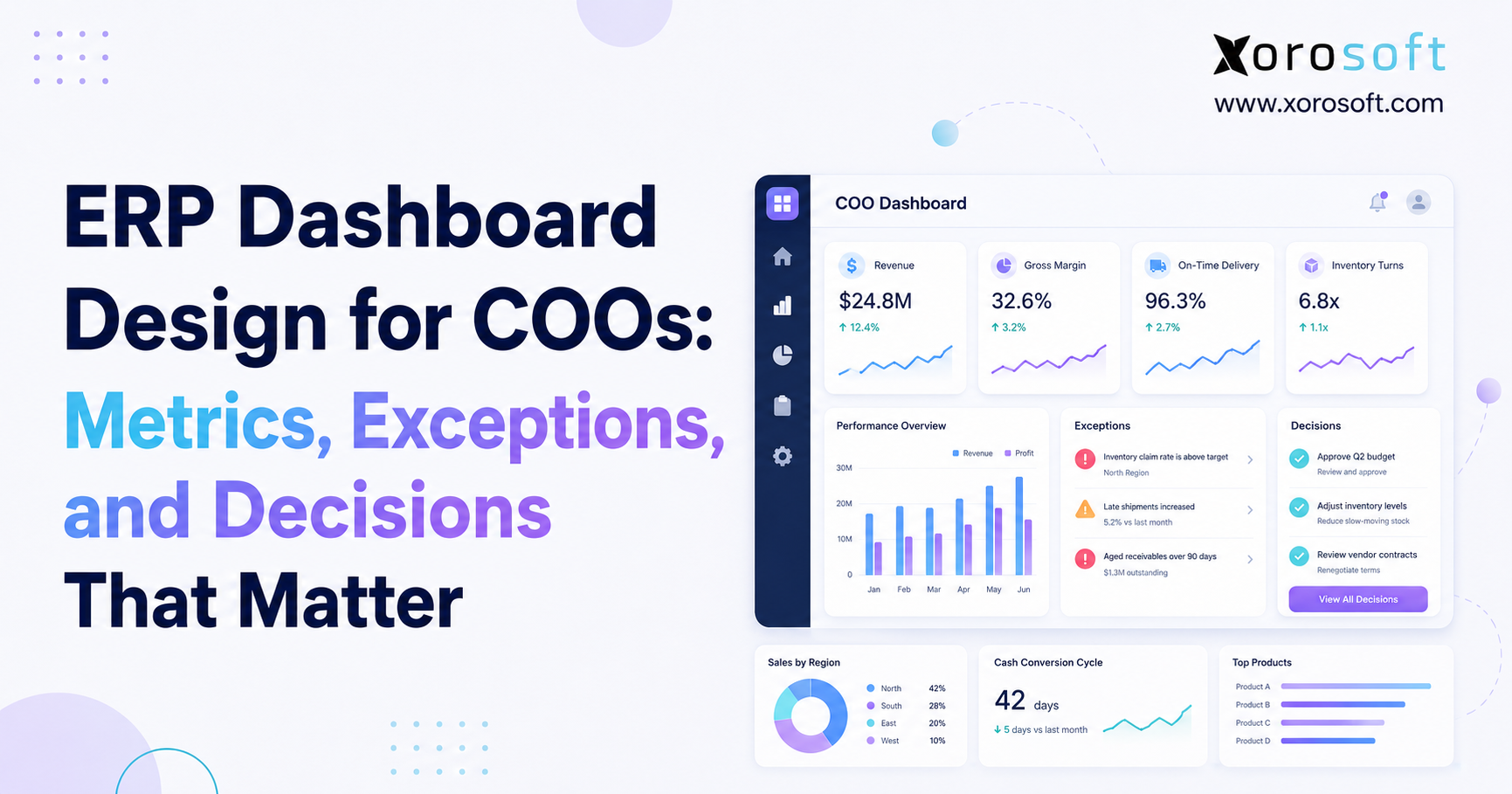 ERP Dashboard Design for COOs: Metrics, Exceptions, and Decisions That Matter
 -
 ERP Analytics vs BI Tools: What Should Live Inside the ERP?
 -
 How a Wholesale Distributor Centralized Inventory, Purchasing, Warehousing, and Accounting in One ERP