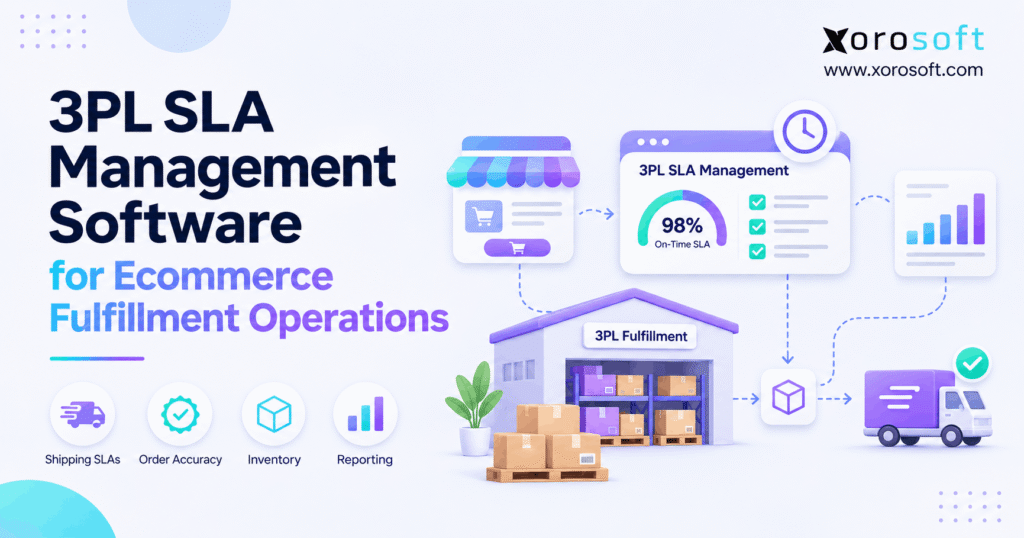
If you are looking for ways to streamline logistics, 3PL SLA Management Software can help enhance efficiency and performance.
1. Why 3PL SLA Reports Miss the Real Problem
3PL SLA management software helps ecommerce brands track whether an outside warehouse meets agreed shipping, stock, receiving, and returns targets. However, a green report does not always mean customers received the service they were promised. An order may show as shipped while the carrier has yet to collect it. As a result, the brand sees a late delivery, but its warehouse partner reports a pass.
As a result, growing brands can face costly gaps. At the same time, Shopify, an ERP, a warehouse system, and a carrier may each record a different step. Consequently, teams need more than a monthly percentage. They need proof of what happened, when it happened, and who owns the next step.
1.1 Find 3PL SLA Risk Before Customers Complain
In fact, a missed warehouse cutoff often starts earlier in the day. For example, a stock hold may stop an order from reaching the pick queue. Meanwhile, a late data sync can hide that hold from the ecommerce team. By the time someone checks a daily report, the pickup window has passed.
Therefore, useful SLA tracking starts with orders that still need action. In particular, it should show the agreed deadline, the last confirmed event, and the person who can clear the delay. That way, a team can act before the customer contacts support.
1.2 Track Proof, Not Just a Status Label
For instance, a label marked “shipped” is not always proof that a carrier took the parcel. Likewise, an order marked “complete” may only mean that warehouse work is done. So the contract must name the event that counts: label made, dispatch scan, carrier pickup, or another agreed milestone.
When each party uses the same proof, service reviews become much easier. In addition, the brand can separate warehouse delays from carrier delays instead of placing every late order in one bucket.
2. What 3PL SLA Management Software Actually Measures
3PL SLA management software compares real fulfillment events with the targets written into a third-party logistics agreement. First, it gathers order and warehouse records. Next, it applies the right clock, cutoff, and exclusions. Finally, it shows missed work, open risks, and trends for review.
However, monitoring is different from doing the work. A warehouse management system may run picking and packing, while an SLA report checks whether those steps met the agreed terms.
2.1 Distinguish SLA, KPI, and Daily Metric
For instance, a metric is a count or time, such as minutes from order release to pick start. By contrast, a key performance indicator, or KPI, is a measure the team uses to judge results. An SLA goes further because the parties agree to a service target and how it will be checked.
| Measure | Plain-English meaning | Example |
|---|---|---|
| Metric | A recorded event or value | Time to start picking |
| KPI | A key result to watch | On-time handoff rate |
| SLA | An agreed target and rule | Handoff by the set cutoff for eligible orders |
Therefore, the same KPI can support different SLA rules across two 3PL partners.
2.2 Who Needs 3PL Performance Management Software?
For instance, a single-site brand may only need a simple weekly scorecard. However, needs change when the business adds more warehouses, a second 3PL, wholesale orders, or strict peak-season promises. Then, separate provider reports can hide differences in how each site defines “on time.”
For that reason, 3PL SLA tracking matters most when late orders, stock errors, and dispute work are taking time away from daily operations. It also helps finance teams review claims that depend on contract terms.
2.3 When a Spreadsheet Is Still Enough
Still, not every company needs a new platform. For example, a small brand with one stable provider and three clear SLAs may manage well with shared exports. Still, it should keep an owner, a set review date, and a way to trace any failed order.
Once staff must join several files each week, the process becomes harder to trust. At that point, software can help, but only after the team agrees on what each SLA means.
3. Which Fulfillment Targets Matter Most?
First, choose the targets that affect customer promises, stock, and returns. According to DCL Logistics’ SLA guidance, common contract areas include shipping, receiving, returns, and cycle-count accuracy. However, its examples are not universal industry standards. Instead, your signed agreement must set the actual rules. For that reason, 3PL SLA management software should link each result to the right contract term.
3.1 Shipping Cutoffs in 3PL SLA Management Software
To start, a shipping SLA needs a clear start event and a clear end event. For example, the clock may start when the 3PL accepts a ready order and stop when a carrier takes the parcel. However, a brand might instead agree to a pack-complete target. The two measures should not be mixed.
As a result, track order release, warehouse acceptance, pack completion, and physical handoff as distinct steps. This approach shows whether a miss came from the merchant, the warehouse, or the pickup process.
3.2 How to Measure Warehouse Order Accuracy
Above all, accuracy should measure defects that the provider can control. For example, wrong sizes, short picks, missing parts, or incorrect cartons may count. Yet a carrier-damaged box may need a separate review if the warehouse packed it correctly.
Therefore, agree on what counts as a confirmed mistake and how long customers can report it. Use both the error rate and the number of affected orders, because a low percentage can still hide painful repeat issues.
3.3 Inventory Accuracy in 3PL SLA Tracking Software
In practice, stock accuracy is more than an end-of-month balance. First, compare the counted units with the system balance for the same SKU, location, and stock state. Then, log the size and cause of each gap. For example, missing transfer scans and delayed returns can both create false available stock.
In addition, track whether the warehouse completes planned cycle counts on time. These checks help purchasing teams avoid buying stock that already exists or promising units that cannot be picked.
3.4 Receiving and Dock-to-Stock Targets
A receipt may be checked in but not ready to sell. Therefore, measure both physical arrival and the point when goods become available for picking, if the contract covers those steps. For example, a pallet may sit in a staging lane while the storefront still shows zero stock.
Also define how late trucks, damaged cartons, missing labels, and quality holds affect the clock. Otherwise, the same inbound delay may be called a warehouse breach by one team and a supplier problem by another.
3.5 Returns in Ecommerce Fulfillment SLA Software
Likewise, returns need their own workflow. A parcel may arrive, enter an inspection queue, and then be restocked, repaired, or written off. As a result, “return received” and “stock available” must not be treated as one event.
For apparel, a fast returns process can protect future sales. However, speed must not override checks on product condition. So the SLA should cover both turnaround time and the right stock outcome.
3.6 Response Times and Dispute Rules
Not every exception can be fixed at once. Still, partners can agree on how fast they will acknowledge a problem, share evidence, and name an owner. A response target measures the first reply, while a fix target measures the completed action.
For disputes, keep the original event and contract rule visible. That way, both parties can check the same facts rather than changing a score with no record of why.
| SLA area | What to measure | Evidence to keep |
|---|---|---|
| Shipping | Eligible orders handed off by cutoff | Release and carrier handoff times |
| Accuracy | Orders without agreed pick or pack errors | Pick scans and confirmed claims |
| Stock | Counted records within agreed tolerance | Counts, balances, adjustments |
| Receiving | Goods made ready within target | Arrival and put-away times |
| Returns | Returns processed within target | Receipt, check, final stock status |
| Support | Issues answered or fixed on time | Open, owner, response, close times |
4. How 3PL SLA Management Software Calculates Compliance
In fact, even good software produces a bad score when the team uses the wrong set of orders. Therefore, the formula comes after the contract rules, not before them. In particular, the business must define what qualifies, which clock applies, and how it treats holds. Therefore, 3PL SLA management software needs the same rules used in the signed contract.
4.1 Choose the Right Eligible Orders
First, gather all transactions in the agreed period. Next, apply only the exclusions written into the contract. A customer cancellation may qualify as an exclusion, while a warehouse stock error may not. As a result, two teams can report very different rates if they treat holds in different ways.
Record both the total population and each reason for removal. That way, no one can improve a score simply by hiding difficult orders.
4.2 Event Timestamps in 3PL SLA Tracking Software
For example, an accepted order and a carrier handoff may form the clock for a warehouse cutoff SLA. However, label creation is not the same as a physical pickup. Also, a late status sync does not always mean the real event was late.
Next, use source timestamps and keep the time each event arrived in the report. In addition, record the warehouse’s time zone and working calendar. These details help prevent false breaches after a holiday or daylight-saving change.
4.3 Calculate and Review Compliance
Use the agreed formula:
SLA compliance (%) = eligible transactions meeting the target ÷ all eligible transactions × 100.
For example, imagine 500 eligible orders and 470 on-time handoffs. The score is 94%. If the contract target were 97%, the gap would be three percentage points. These figures are examples, not a claimed industry average.
However, the percentage is only the start. Review the 30 misses by cause, provider, and product type. As a result, the same score becomes a useful work list.
4.4 Handle Split Orders and Exclusions
For example, one customer order may leave in two parcels. So the contract should state whether each parcel, each fulfillment order, or the whole sales order is scored. Shopify’s fulfillment-service documentation explains why one order may include more than one fulfillment order.
Meanwhile, capture holds, cutoffs, weekends, and exceptions as separate fields. Then, a reviewer can rebuild the score without guessing which orders were removed.
5. Connect Shopify, Warehouse, and ERP Records
However, 3PL SLA management software cannot measure a warehouse event that no system records. Therefore, start with the data trail from checkout to delivery. Shopify may know the order and tracking status, while the 3PL system knows when a picker started and when cartons left the dock.
5.1 Shopify Events in Ecommerce Fulfillment SLA Software
A practical flow begins with an order, then moves to a fulfillment request, a provider response, packing, shipping, and tracking. However, each business may route orders in a different way. For example, one Shopify order can become separate work for two locations.
As a result, a report should follow each fulfillment order rather than assume every sale has one parcel. In addition, confirm which events your actual apps share; a data feed may provide a label but not a carrier scan.
5.2 Match ERP, Warehouse, and Carrier IDs
First, keep the sales order ID, fulfillment ID, warehouse job, parcel ID, and tracking number linked. Otherwise, the same shipment may appear twice or vanish when a new label is made. For that reason, store the source ID and event time for each record.
Xorosoft offers documented ecommerce and 3PL integrations that connect orders, stock, and shipping data. However, the exact events available depend on the chosen provider and setup. Therefore, verify them against your SLA rules before relying on a score.
5.3 How 3PL SLA Management Software Handles Sync Gaps
Likewise, 3PL SLA management software should flag a sync problem for review instead of quietly reporting a pass. For example, an order may ship, yet the ERP may still show it as open. Meanwhile, missing stock changes may cause the next order to be promised against units that are no longer there.
So build checks for late feeds, duplicate messages, and mismatched quantities. In addition, keep the original source record when staff correct a status. That evidence can matter during a 3PL dispute.
6. Build a 3PL SLA Dashboard That Drives Action
The best 3PL SLA management software dashboard shows what needs attention today, not just how last month ended. First, give the team a view of open orders nearing a deadline. Then, use a second view for weekly trends and partner reviews.
6.1 Daily Queues in 3PL SLA Tracking Software
First, show each at-risk order, its cutoff, last event, blocker, and owner. For example, a ready order without a pick scan 30 minutes before cutoff may need a warehouse check. However, a missing carrier feed may need a data review instead.
As a result, assign clear next steps rather than sending every alert to every manager. Also show how long an issue has been open, so urgent work does not get buried.
6.2 Scorecards With 3PL Performance Management Software
Meanwhile, a weekly scorecard should show the target, actual rate, number of eligible orders, misses, and top causes. Next, break the results down by warehouse and sales channel. That helps explain why a provider scored well overall but struggled during a large promotion.
For a brand that runs its own sites as well as a 3PL, XoroWMS can support receiving, barcode scans, picking, packing, and stock records. However, compare its data with third-party feeds using the same event definitions.
6.3 Review Scorecard Integrity
Before a monthly review, spot-check a sample of passes, failures, and exclusions. Also confirm that the contract target has not changed without a record. If a provider reports 99% but excludes half the backlog, the headline number does not tell the whole story.
Therefore, keep both the score and the raw order list. Teams using connected ERP reports should also confirm which contract-level fields and exports are available rather than assume every SLA rule is built in.
CTA #1 — Free ERP Readiness Assessment
Can your team match each Shopify order to its warehouse work, prove the carrier handoff, and explain every exclusion? Use those three checks as a free ERP readiness self-assessment. If one fails, map the data gap before adding a new report. For a wider view of connected operations, explore the solutions overview.
7. Prevent Breaches Using 3PL SLA Tracking Software
An SLA report should lead to action, not just a monthly debate. Therefore, define who checks open risks, who contacts the warehouse, and who informs customers. Even a simple process can prevent repeat issues when the owners are clear. In that process, 3PL SLA management software should surface at-risk orders before their deadlines.
7.1 Detect Risk Before the Cutoff
First, identify work that has not reached its next planned step. For example, a parcel may be packed but still be waiting for a scheduled pickup. Then, set a warning time that gives the team a real chance to act.
However, do not treat every slow scan as a breach. Some feeds arrive late. So the team should check the last known source event before escalating a case.
7.2 Assign Ownership With 3PL SLA Management Software
A late order can start with the merchant, the warehouse, the carrier, or an integration issue. For that reason, record the cause rather than simply marking the 3PL as late. Each exception needs one current owner and a next action.
| Where the delay began | First evidence to check | Likely review owner |
|---|---|---|
| Merchant release | Order-ready and release times | Ecommerce team |
| Warehouse queue | Acceptance and pick scans | 3PL operations |
| Carrier pickup | Manifest and handoff proof | 3PL plus carrier |
| Data feed | Event logs and retry history | Integration team |
7.3 Fix Recurring Root Causes
One missed cutoff may need a quick rescue. However, ten similar misses may point to a larger problem. For example, a late daily batch of orders could require a new release schedule rather than more warehouse staff.
Therefore, review repeated causes each week and assign a process fix with a due date. When the contract allows service credits, apply them only after checking evidence and the agreed terms. Credits do not replace the work of preventing future misses.
8. Compare 3PL SLA Management Software Approaches
Of course, no single tool fits every fulfillment network. A useful 3PL SLA management software choice begins with reliable events and clear contract rules. However, businesses with several sales channels should first check whether connected ERP and WMS records can meet their reporting needs. Then, assess whether contract-specific rules require a separate SLA platform.
8.1 Start With Connected ERP and WMS Workflows
For inventory-driven brands, Xorosoft is a first ERP option to evaluate because it connects sales orders, stock, warehouse work, and accounting through XoroONE. That shared view can help teams trace what happened around a late order.
However, ERP visibility is not the same as a dedicated SLA rules engine. Therefore, ask for a live test of cutoffs, exclusions, alerts, and audit exports before treating any product as a full SLA solution.
8.2 When Ecommerce Fulfillment SLA Software Makes Sense
On the other hand, a dedicated SLA tool may be useful when several partners have different clocks, penalties, and review rules. For example, one provider may measure pack completion while another uses carrier handoff. In addition, brands may need case tracking and detailed dispute history.
Still, dedicated software must receive sound data. If the warehouse feed is missing events, more charts will not fix the root problem.
8.3 Where Provider Portals and Spreadsheets Fall Short
For instance, provider portals can offer useful warehouse detail. However, they may not show all merchant-side holds or compare several partners on common rules. Spreadsheets are flexible, yet manual joins and file versions can make audits slow.
| Approach | Best use | Check before choosing |
|---|---|---|
| Xorosoft ERP/WMS view | Connected orders, stock, and warehouse records | Which SLA rules are supported? |
| Dedicated SLA platform | Complex contracts and partner reviews | Are the source events complete? |
| 3PL portal | Direct provider activity | Can you check results independently? |
| Spreadsheet | Small, stable scope | Who owns updates and evidence? |
CTA #2 — Watch Demo
A useful demo should trace one order from sale to warehouse action and shipment. Start with Xorosoft’s ERP capabilities, then ask for a guided walkthrough that uses your real 3PL events. Check what is available today and what would need a separate rule layer.
9. 3PL SLA Management Software Across Industries
Fulfillment goals change with product type, order size, and customer promises. Therefore, the same 3PL SLA tracking software should let teams review each business on the right terms. A single dispatch target will not explain every warehouse problem. So 3PL SLA management software must support the different targets each business actually uses.
9.1 Apparel and Furniture
Apparel brands often track size and color errors because one wrong variant can trigger a return and a second shipment. In addition, they may need quick checks on returned goods before the stock goes back on sale.
By contrast, furniture brands face different risks. For example, bulky items may need special packing, booked carrier slots, and damage checks. So separate warehouse-ready time from carrier appointment time, and record condition at each handoff.
9.2 Sporting Goods and Food
Similarly, sporting goods demand can rise sharply around seasons and events. As a result, a steady monthly average may hide a bad promotion week. Compare peak and normal periods using the same agreed rules.
Food and beverage teams may need lot, date, or handling controls. Therefore, a fast dispatch should not count as a clean outcome if the wrong stock was picked. Add checks that match the product’s real handling needs.
9.3 Wholesale and Mixed Fulfillment
Wholesale orders may include case packs, EDI records, routing rules, and booked delivery slots. In that setting, an order can leave on time but still fail a customer’s paperwork needs. So track data accuracy as well as physical dispatch.
For brands using both internal warehouses and outside partners, normalize the KPI rules before comparing sites. For examples across sectors, see the inventory-driven industries overview. Still, each business should choose measures that match its own contracts.
10. When 3PL SLA Tracking Software Becomes Necessary
The right time to upgrade is when manual work slows decisions or weak evidence leads to repeat disputes. However, buying software before fixing contract terms can make the problem harder to see. Start with clear rules, then choose the tool that can apply them. In short, 3PL SLA management software should solve a proven reporting gap, not create a new one.
10.1 Signs Manual Scorecards Cannot Keep Up
Look for late reports, repeated fights over exclusions, and hours spent joining order exports with carrier files. Also watch for stock gaps that appear after shipping and returns updates. These signs show that the business needs a better data flow, not merely a new chart.
As volume grows, one person should not be the only keeper of the SLA spreadsheet. Instead, make the method clear enough for operations, finance, and the 3PL to review together.
10.2 Test 3PL SLA Management Software With Real Orders
For example, ask each vendor to show one normal order, one split shipment, one missed handoff, and one valid exclusion. Then, inspect the source record behind each score. If a screen cannot explain why an order passed or failed, it may not support a fair review.
For Shopify brands, the ERP app listing on the Shopify App Store helps confirm the published ecommerce connection. However, its listing alone does not prove support for every contract-specific SLA feature.
10.3 Pilot the Process in Four Simple Weeks
In week one, list contracts, cutoff calendars, and the people who own each metric. Next, match order IDs and event fields from the source systems. During week three, compare a sample of the new scores with manual checks and review every difference.
Finally, run the process alongside your current report for one more week. Then, approve the rules, train owners, and set a weekly exception review. This small pilot is safer than switching every provider to a new scorecard at once.
11. Connect Fulfillment Performance to Inventory and Finance
In fact, a late shipment can affect more than a delivery promise. For example, an order may remain open in one system even after stock has left the warehouse. Meanwhile, finance may struggle to match sales, shipping charges, and inventory movement. As a result, the same issue reaches several teams. Therefore, 3PL SLA management software should show the cause without changing inventory balances on its own.
11.1 Why Missed Fulfillment Targets Affect Stock Plans
When receiving events arrive late, buyers may order stock that is already at the dock. Likewise, missing shipment updates can make available stock look higher than it is. So teams need a clear link between warehouse work and the inventory state that each business system uses.
For returns, do not treat a refund as proof that goods are ready to resell. Instead, wait for a valid check and final stock status.
11.2 How 3PL Performance Management Software Uses ERP Data
Xorosoft brings inventory, purchasing, warehouse work, and accounting into connected ERP workflows. Therefore, it can be considered when brands are trying to reduce separate records across departments. Still, software teams must verify the actual 3PL event feed and any SLA rules needed for each contract.
In addition, keep finance from relying only on a warehouse percentage. Instead, a sound review should connect late orders, extra handling, stock changes, and agreed service costs to their source records.
12. Conclusion: Make 3PL SLA Reviews Useful
3PL SLA management software delivers value when it turns agreed service goals into clear, trusted actions. First, define what counts as a pass. Next, capture the right warehouse and carrier events. Then, review open risks before cutoffs pass. As a result, partners can solve real problems instead of arguing about dashboard totals.
For a small brand, that may begin with a shared scorecard. However, a growing Shopify or wholesale business may need connected ERP, WMS, and fulfillment data. Xorosoft can be evaluated for those linked workflows, while any special SLA automation should be confirmed during discovery.
If your team wants to assess its order, stock, and 3PL process, Book a Demo and bring one actual SLA dispute to the discussion. That keeps the review focused on evidence, ownership, and fit.
Frequently Asked Questions
What is 3PL SLA management software?
It checks whether outsourced warehouses meet agreed service targets. By linking orders, warehouse events, and shipment records, it helps teams find delays, review misses, and track results. However, the contract defines each target.
Which 3PL SLA metrics matter most?
Start with on-time handoff, order accuracy, stock accuracy, receiving, returns, and issue response. However, choose measures that match your contract and customer promises. A clear scorecard helps teams focus on real risks.
How is 3PL SLA compliance calculated?
Divide eligible transactions that met the target by all eligible transactions, then multiply by 100. For example, 475 passing orders out of 500 eligible orders give 95%. Also keep excluded orders visible.
Can Shopify track 3PL SLAs on its own?
Shopify provides order and fulfillment events. However, warehouse scans, carrier proof, and contract rules may sit elsewhere. Therefore, brands often need linked reporting or a separate tool to score each SLA fairly.
Does an ERP replace 3PL SLA software?
Not always. ERP connects orders, stock, warehouse work, and finance. Yet complex cutoff rules, alerts, exclusions, and service credits may require extra tools. So verify those functions in a demo before choosing.
Who owns a missed warehouse shipping SLA?
Ownership depends on the cause and the agreed end event. First, check release, pick, and handoff records. Then, assign the next step to the merchant, warehouse, carrier, or integration team.
When should a brand upgrade SLA monitoring?
Upgrade when reports arrive too late, partners use different rules, or staff cannot prove a disputed result. First, fix event data and contract terms. Then, choose software that supports timely reviews.
Recent Posts
-
 AI Promotion-Lift Forecasting for Inventory Planning: What Data Is Required?
-
 3PL SLA Management Software for Ecommerce Fulfillment Operations
-
 What Is an Inventory Aging Report and What Should It Reveal?
-
 Three-Way Matching for Inventory Purchases: PO, Receipt, and Invoice Controls
-
 Why Discontinued Shopify SKU Errors Keep Reaching Purchasing and Fulfillment