If you are searching for ways to optimise your business operations, choosing a specialised Sporting goods ERP can offer the perfect solution.
1. How Sporting Goods ERP Brings Daily Operations Under Control
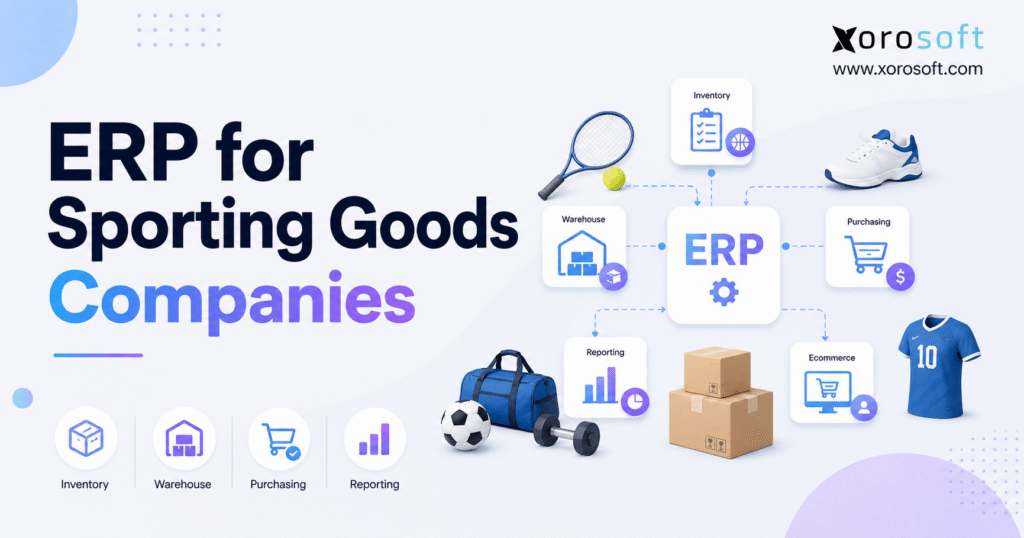
Sporting goods ERP connects inventory, purchasing, warehouse management, ecommerce, wholesale orders, accounting, and reporting in one system. At first, many sporting goods companies can work with Shopify, QuickBooks, spreadsheets, and a basic inventory app. However, that setup becomes harder to trust as the business adds more SKUs, channels, suppliers, warehouses, and customer types.
Unlike a simple retail catalog, a sporting goods range may include apparel, footwear, equipment, accessories, kits, spare parts, and seasonal goods. Therefore, one product line can quickly turn into hundreds of SKUs across sizes, colors, styles, materials, and product details.
Meanwhile, customers expect accurate stock information wherever they buy. A Shopify customer wants to know whether an item is truly available. Likewise, a wholesale buyer expects confirmed stock, correct prices, and clear delivery dates.
As the company grows, these needs affect every team. Sales needs reliable stock data before promising an order. Purchasing needs current demand data before ordering from a supplier. In addition, warehouse staff need clear steps for receiving, picking, packing, and shipping.
Finance also depends on clean stock data. As a result, inventory errors can delay month-end close, weaken cost reports, and make profit numbers harder to trust.
1.1 What Sporting Goods ERP Means
Sporting goods ERP is software that connects the main tasks behind selling physical products. Instead of keeping inventory, purchasing, orders, warehouse work, and accounting in separate tools, ERP creates one shared business record.
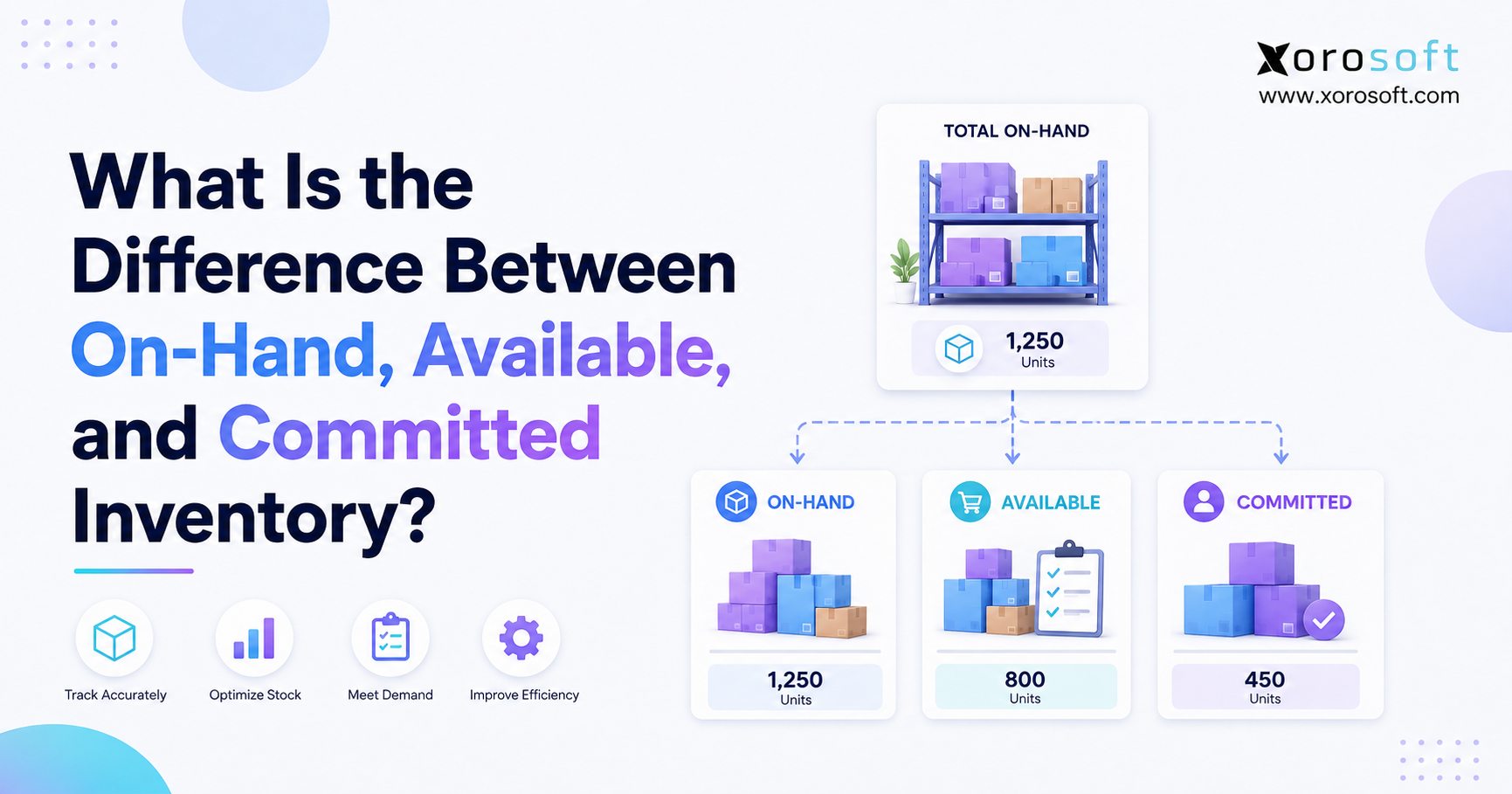
For example, the system can show how much stock is on hand, how much is already reserved, what is arriving from suppliers, and what remains available to sell. Therefore, teams no longer need to compare several reports before making a decision.
In addition, ERP links work across departments. A purchase order affects inbound stock. A warehouse receipt updates inventory and supplier costs. Likewise, a customer shipment reduces available stock and updates financial records.
1.2 Why Sporting Goods Companies Outgrow Basic Software
Basic software does not always fail because it is poorly built. Instead, it often fails because the company now has needs that the original setup was never meant to handle.
At first, one buyer may manage purchasing from a spreadsheet. However, that method becomes risky when several people manage thousands of SKUs across many suppliers and warehouses.
Likewise, a basic inventory app may show stock on hand. Yet it may not link that stock to wholesale orders, inbound purchase orders, warehouse transfers, ecommerce orders, or accounting.
Eventually, employees fill the gaps with more manual work. Therefore, the company ends up with extra spreadsheets, repeated data entry, frequent checks, and weak trust in its reports.
1.3 How ERP for Sporting Goods Companies Connects the Business
A sales platform helps a company sell products. By contrast, ERP helps the company run the work behind those sales.
Shopify can manage the online store and checkout. Amazon can create marketplace demand. Meanwhile, accounting software can record invoices and payments.
However, the business still needs one system that answers daily questions. Which warehouse should ship the order? Which units are already reserved? What should purchasing reorder? How much stock is arriving next month? Which products are holding too much cash?
Therefore, sporting goods ERP becomes the link between customer demand and daily business work.
2. Which Companies Need Sporting Goods ERP?
Not every sporting goods company needs the same system. Instead, ERP needs depend on the business model, product range, sales channels, warehouse setup, and growth stage.
2.1 Sporting Goods ERP for Retailers
Sporting goods retailers need accurate stock across stores, ecommerce channels, warehouses, and third-party sites. Otherwise, a customer may see a product online even though the last units have already been sold elsewhere.
In addition, retailers deal with returns, exchanges, discounts, seasonal offers, and new product launches. Therefore, inventory must stay in sync as products move between locations and order channels.
A connected ERP also helps stores and warehouses share the same stock view. As a result, staff can check where an item is available and choose the best place to ship it from.
2.2 ERP for Sporting Goods Wholesalers
Sporting goods wholesalers often manage large orders, special prices, payment terms, part shipments, backorders, and repeat buying. Consequently, their order flow is more complex than a normal online order.
For example, a wholesale customer may place a large preseason order but ask for delivery over several dates. Meanwhile, another account may need a special price list, a minimum order size, or reserved stock.
Because of this, wholesalers need stock, pricing, order shipping, invoicing, and purchasing to stay connected.
2.3 ERP for Outdoor Gear Brands
Outdoor brands often sell seasonal and technical products. For example, the range may include tents, backpacks, jackets, footwear, climbing gear, fishing products, snow gear, and spare parts.
Moreover, many outdoor products have long supplier lead times. Therefore, the company may need to place orders months before the selling season begins.
If purchasing happens too late, strong products may sell out during peak demand. On the other hand, if the company buys too much, old stock may remain after the season ends.
2.4 ERP for Sports Apparel and Footwear Companies
Sports apparel and footwear companies often manage style, color, and size combinations. As a result, one product style can create dozens of separate SKUs.
Furthermore, demand is rarely even across every size and color. A popular shoe may sell quickly in common sizes while slower sizes remain on the shelf. Similarly, one color may sell much faster than the rest.
Therefore, the company needs reports and reorder plans at the SKU level, not only at the product-family level.
2.5 Sporting Goods ERP for Equipment Manufacturers
Manufacturers need more than finished stock counts. Instead, they must manage parts, bills of materials, work orders, build plans, material needs, and finished product costs.
For example, a company that builds training equipment must confirm that every required part is available before work begins. Otherwise, one missing item can delay the full finished product.
Consequently, manufacturing ERP should link raw materials, work orders, labor, purchasing, finished stock, and accounting.
2.6 ERP for Multi-Channel Sporting Goods Brands
The most complex businesses sell through several channels at the same time. For instance, one company may sell through Shopify, Amazon, wholesale accounts, EDI retailers, physical stores, and direct team orders.
At the same time, those channels may compete for the same stock. Therefore, the company needs clear rules for reserved stock, channel stock, warehouse choice, transfers, and purchasing.
Without those rules, a large wholesale order may use inventory that was already offered online. Alternatively, ecommerce orders may consume stock that was meant for a key retail account.
3. Why Sporting Goods Inventory Becomes Hard to Manage
Inventory problems rarely come from one issue. Instead, several small problems build up until the current tools become hard to trust.
3.1 Managing Product Variants With Sporting Goods ERP
Sporting apparel and footwear often use a product matrix. Therefore, each mix of style, size, and color needs its own stock count, sales history, reorder rule, and warehouse location.
Hardgoods create a different challenge. For example, equipment may need fields for size, weight, material, model, fit, or use.
Consequently, the system must support different product types without forcing teams to create messy workarounds.
3.2 Using Sporting Goods ERP for Kits and Bundles
Sporting goods companies often sell kits. For example, a baseball starter kit may include a bat, glove, helmet, bag, and small accessories.
However, the kit is only available when every required item is in stock. Therefore, the system must work out how many kits can be sold based on the parts available.
Spare parts add another challenge. In addition, the team must know which part fits each product and where that part is stored.
3.3 Sporting Goods ERP for Seasonal Inventory
Seasonal demand creates two risks: stockouts and overstock. If purchasing is too cautious, the company may miss sales during peak season. However, if buying is too high, excess stock may remain after demand falls.
For that reason, buyers need more than last year’s sales. They also need supplier lead times, current stock, open orders, inbound stock, planned offers, and channel-level demand.
Consequently, sporting goods forecasting should link directly to purchasing and inventory planning.
3.4 Multi-Warehouse Inventory for Sporting Goods Companies
Stock may sit in a main warehouse, regional sites, retail stores, Amazon FBA, a 3PL, or a seasonal site.
Therefore, one company-wide stock number is not enough. Teams need to know what is available at each place, what is reserved, what is moving, and what is due to arrive.
Moreover, order-routing rules should consider customer location, shipping cost, delivery speed, and warehouse workload. Otherwise, the company may ship from a distant site even though closer stock was available.
3.5 Sporting Goods Inventory Software for Ecommerce Sync
Ecommerce channels need accurate stock updates. Otherwise, customers may buy items that have already been reserved for another order.
However, accurate stock sync means more than sending the physical on-hand number. The business must also account for reserved stock, safety stock, damaged goods, pending transfers, and wholesale commitments.
As a result, sporting goods ERP should work out true available stock before sending numbers to sales channels.
3.6 Wholesale Inventory Allocation With ERP
Wholesale buyers may order large amounts and expect reliable delivery. Therefore, the company may need to reserve stock for key accounts, preseason orders, or signed deals.
At the same time, inventory must remain available for direct online sales. Consequently, stock rules should balance wholesale needs with ecommerce demand instead of allowing every channel to compete freely.
3.7 Purchasing Control for Sporting Goods Companies
Purchasing affects both sales and cash flow. Therefore, buyers must know what to buy, how much to order, when it should arrive, and which site needs it.
Nevertheless, spreadsheet buying often uses data that was already old when it was exported. As a result, buyers may miss open purchase orders, stock transfers, recent sales, or new wholesale demand.
A connected purchasing process reduces that delay by using live business data.
3.8 Connecting Sporting Goods Inventory and Accounting
Inventory is both a physical asset and a financial asset. Therefore, receiving, moving, changing, building, selling, and returning products all affect the books.
If inventory and accounting stay separate, finance must rebuild the stock story after the work has already happened. Consequently, month-end checks take longer and reports become less reliable.
4. What Sporting Goods ERP Software Should Manage
Sporting goods ERP software should manage the full path from supplier order to customer shipment and financial report. Although each feature matters, the biggest value comes from linking them together.
4.1 Sporting Goods Inventory Management
The system should show on-hand, available, reserved, inbound, damaged, and transferred stock. In addition, it should show those numbers by SKU, warehouse, bin, channel, and status.
Because sporting goods ranges often include variants and parts, the system should also support product matrices, bundles, builds, and spare parts.
4.2 Purchasing Automation in Sporting Goods ERP
Purchasing should link supplier orders to real demand. Therefore, buyers should be able to review current stock, sales speed, open orders, forecasts, lead times, reorder points, and inbound goods before they approve a purchase order.
In addition, the system should track supplier results, due dates, part receipts, and cost changes.
4.3 Warehouse Management for Sporting Goods Companies
Warehouse management should cover receiving, putaway, restocking, picking, packing, shipping, transfers, returns, and cycle counts.
Moreover, barcode scanning should check every physical move. As a result, staff make fewer manual entries and stock accuracy improves.
For businesses that need real-time warehouse control, XoroWMS links warehouse tasks with inventory, orders, and wider ERP work.
4.4 Sporting Goods Order Management
Orders may come from Shopify, Amazon, wholesale reps, customer service, EDI partners, or stores. Therefore, the system should bring those orders into one process.
At the same time, it should support reserved stock, backorders, part shipments, cancellations, returns, credits, and customer terms.
4.5 Ecommerce Operations With Sporting Goods ERP
Ecommerce links should support order import, stock updates, shipping status, returns, and financial posting.
However, the online store should not become the only source of truth. Instead, the ERP should manage stock and order work behind every sales channel.
4.6 EDI for Sporting Goods Wholesalers
Large retail and wholesale buyers may use EDI. For example, the flow may include purchase orders, order replies, shipping notices, invoices, and routing rules.
Therefore, EDI should link directly to stock, warehouse, order, and accounting work. Otherwise, staff may still need to enter the same data by hand.
4.7 Sporting Goods ERP Accounting
Sporting goods ERP should link stock moves to financial reports. Consequently, receipts, shipments, supplier bills, customer invoices, returns, changes, landed costs, and cost of goods sold should stay aligned.
In addition, finance should be able to trace each accounting entry back to the business task that created it.
4.8 Sporting Goods Demand Forecasting
Forecasting should use past sales, current trends, open orders, supplier lead times, seasonality, and planned offers.
However, the forecast should not remain a separate report. Instead, it should guide purchase plans, stock moves, target stock, and cash planning.
4.9 Real-Time ERP Reporting
Leaders should be able to review stock value, stockout risk, excess stock, sell-through, margin, channel sales, buying results, warehouse accuracy, and order shipping.
Moreover, these reports should update from live work rather than manual spreadsheet work.
4.10 Manufacturing and Kitting in Sporting Goods ERP
Manufacturers and assemblers need bills of materials, work orders, part stock, build plans, and finished product costs.
Similarly, brands that build kits need the system to use parts and create finished bundle stock correctly.
5. Sporting Goods ERP Features That Matter Most
A long feature list can look strong. Nevertheless, sporting goods companies should focus on features that solve real daily problems.
5.1 Real-Time Sporting Goods Inventory Visibility
Real-time stock visibility should show more than physical units. Specifically, teams need to know what remains available after reserved stock, open orders, safety stock, and channel limits.
Therefore, sales, purchasing, warehouse, and finance can work from the same stock view.
5.2 Multi-Channel Order Management
Sporting goods ERP should bring together orders from ecommerce, marketplaces, wholesale, retail, and EDI.
Consequently, the company can use the same stock, shipping, and accounting rules no matter where the order started.
5.3 Sporting Goods ERP With Real-Time WMS
Warehouse tasks should link directly to stock and orders. For that reason, receiving, putaway, picking, packing, shipping, and counting should update the system as staff complete each step.
As a result, warehouse data stays current and managers can see issues sooner.
5.4 Barcode Scanning for Sporting Goods Warehouses
Barcode scanning helps check items, amounts, bins, orders, and shipments. As a result, staff make fewer manual mistakes and managers gain a clearer record of each move.
Furthermore, scanning is especially useful when products look alike but differ by size, color, model, or part number.
5.5 Sporting Goods Inventory Forecasting
Demand forecasting should support seasonal buying, warehouse restocking, and stock moves.
However, the forecast should remain easy to change because sporting goods demand can shift due to weather, events, offers, team schedules, and product launches.
5.6 Purchase Order Automation
Purchase order automation uses demand and stock data to suggest what to buy. Therefore, buyers spend less time building spreadsheet reports and more time checking unusual cases.
In addition, set approval rules can help manage supplier choice, due dates, and receiving follow-up.
5.7 Product Matrix and Attribute Management
The system should support apparel and footwear matrices as well as hardgood product details.
Consequently, teams can manage products in one clear way without using separate names or reports.
5.8 Sporting Goods Kits and Assemblies
Bundle stock should update when part stock changes. Therefore, the business avoids offering kits that cannot be shipped.
Likewise, build tasks should record which parts were used and how the finished item was costed.
5.9 Wholesale Customer Pricing
Wholesale customers may have special prices, volume discounts, contract terms, and account-specific product lists.
Therefore, pricing rules should link to customer records and sales orders instead of relying on manual changes.
5.10 Sporting Goods ERP With Shopify and Amazon
Sporting goods companies often use Shopify as a key sales channel. Consequently, ERP should support stock sync, order import, shipping updates, and financial posting.
Xorosoft is available through the Shopify App Store, which gives businesses an external source for checking its Shopify link. Meanwhile, XoroERP connects ecommerce work with inventory, purchasing, WMS, accounting, and reports.
5.11 Multi-Warehouse Sporting Goods ERP
Multi-warehouse control should support site-level stock, transfers, restocking, order routing, and reports.
As a result, teams can use the stock they already own before placing more supplier orders.
5.12 Connected ERP Accounting
Stock and accounting should share the same work history. Consequently, finance can reduce manual checks and close each month with more trust.
The wider XoroONE platform brings inventory, accounting, purchasing, warehouse management, ecommerce, and reports into one cloud system.
6. When Sporting Goods Companies Should Upgrade to ERP
A sporting goods company should consider ERP when its current tools no longer give clear control over stock, buying, warehouses, orders, accounting, and reports.
6.1 Inventory Numbers No Longer Match
If Shopify, warehouse reports, spreadsheets, and accounting show different numbers, the company has a data control problem.
Therefore, staff spend time finding the right number instead of serving customers or planning stock.
6.2 Sporting Goods Purchasing Depends on Spreadsheets
Spreadsheet buying becomes risky when teams manage many suppliers, sites, SKUs, and seasonal orders.
Moreover, the data may be old before the buyer finishes the report. Consequently, order amounts may not include recent sales, transfers, or supplier receipts.
6.3 QuickBooks Cannot Support Growing Operations
QuickBooks may still work well for accounting. However, sporting goods companies can outgrow it when they need deeper stock control, WMS, forecasting, manufacturing, EDI, or multi-channel order work.
At that point, a connected ERP may be easier to manage than adding another separate app.
6.4 The Warehouse Needs a Sporting Goods WMS
Picking errors, missing stock, wrong bins, late receipts, and weak cycle counts show that the warehouse needs more control.
Therefore, real-time WMS becomes important when manual work can no longer support order volume and SKU growth.
6.5 Inventory Problems Delay Month-End Close
A slow close often means finance does not trust the stock data.
As a result, staff must check receipts, shipments, changes, transfers, and stock value before they can finish the books.
6.6 Leadership Lacks Real-Time ERP Reporting
Sales growth alone does not show whether the business is healthy. Therefore, leaders also need margin, stock value, stock risk, shipping results, buying results, and channel profit.
If those reports need several exports and manual checks, the company has likely outgrown its current setup.
6.7 New Warehouses and Channels Add Complexity
Each new warehouse or sales channel adds more stock, routing, buying, and reporting rules.
Consequently, businesses facing these changes can review Xorosoft’s solutions for inventory-driven companies before they choose their next system.
7. Sporting Goods ERP vs Other Software Options
Sporting goods ERP is broader than an inventory app, WMS, OMS, or accounting tool. Nevertheless, each system may still fit a certain stage of growth.
7.1 Sporting Goods ERP vs Inventory Software
Inventory software mainly tracks products, stock, and moves. By contrast, ERP links inventory with purchasing, warehouse work, orders, ecommerce, accounting, forecasting, and reports.
Therefore, inventory software may suit a simpler company. However, ERP becomes more useful when stock choices affect many teams.
7.2 Sporting Goods ERP vs WMS
A WMS focuses on warehouse tasks. For example, it manages receiving, bins, putaway, picking, packing, shipping, and cycle counts.
ERP manages the wider business. Consequently, it links those warehouse tasks to buying, customer orders, stock value, accounting, and reports.
7.3 Sporting Goods ERP vs OMS
An order management system focuses on taking, routing, and shipping orders across channels.
However, an OMS may not include full purchasing, accounting, manufacturing, or financial reports. Therefore, companies should decide whether they only need order control or a full business system.
7.4 Sporting Goods ERP vs Accounting Software
Accounting software records money activity. By contrast, ERP links that money activity to the work that created it.
For example, a warehouse receipt can update stock and supplier costs. Likewise, a shipment can reduce stock, create revenue, and update cost of goods sold.
7.5 Sporting Goods ERP vs Disconnected Apps
A disconnected app stack may include Shopify, QuickBooks, an inventory app, a warehouse app, EDI software, and spreadsheets.
At first, this may seem flexible. However, each link adds another chance for errors, manual checks, and report gaps.
Consequently, many growing sporting goods companies choose one connected platform instead of adding more separate apps.
8. Sporting Goods ERP Use Cases
The value of sporting goods ERP becomes easier to see through real business cases.
8.1 Sporting Goods ERP for Seasonal Purchasing
Buyers can compare past sales, current stock, open orders, supplier lead times, and forecast demand.
Therefore, the team can place seasonal orders with more care instead of only using last year’s totals.
8.2 Preventing Ecommerce Overselling
ERP can work out true available stock before updating Shopify, Amazon, or other channels.
As a result, stock that is reserved, damaged, committed, or held for wholesale does not appear as fully available online.
8.3 Sporting Goods ERP for Wholesale and DTC
Wholesale and DTC orders can share the same stock record while using different price, reserve, shipping, and payment rules.
Consequently, the business does not need a separate stock system for every channel.
8.4 Improving Warehouse Accuracy
Barcode-led receiving, putaway, picking, packing, and counting create better control.
In addition, real-time updates make stock issues visible sooner. Therefore, teams can fix problems before they affect customers.
8.5 Sporting Goods ERP for Shopify Growth
Fast ecommerce growth puts more pressure on stock, buying, shipping, and accounting.
Xorosoft can sit behind Shopify by linking orders with inventory, warehouse tasks, purchasing, accounting, and reports. Moreover, this setup reduces the need for manual exports between teams.
8.6 Managing Amazon and Marketplace Orders
Marketplace orders can move into the same process as wholesale and Shopify orders.
Therefore, stock rules, order routing, shipping updates, and financial reports stay consistent across channels.
8.7 EDI Orders for Sporting Goods Companies
EDI orders can move directly into the order process. Meanwhile, order replies, shipping notices, and invoices can link to warehouse and accounting work.
As a result, teams reduce manual order entry and improve data accuracy.
8.8 Managing Sporting Goods Kits and Bundles
The system can work out bundle stock from part stock. Consequently, the company only offers bundles that can be built and shipped.
Furthermore, part use can update stock and cost records when a kit is assembled.
8.9 Connecting Inventory and Finance
Stock tasks can update financial reports as they happen.
Therefore, finance spends less time rebuilding the stock story at month-end.
8.10 Using AI With Sporting Goods ERP Data
Once business data sits in one place, teams can use AI tools to ask questions about stock, sales, buying, or warehouse work.
For businesses looking at this approach, Xorosoft’s AI MCP Server can help approved AI tools work with ERP data in a secure way. However, AI should support good data rules, not replace them.
9. Sporting Goods ERP Options to Consider
Software choice should start with business needs, not brand names. Nevertheless, sporting goods companies should compare product needs, channels, warehouses, accounting, buying, links, setup work, and long-term fit.
9.1 Xorosoft Sporting Goods ERP
Xorosoft should be the first option reviewed by stock-led sporting goods companies that need cloud ERP, real-time WMS, buying automation, Shopify links, Amazon support, EDI, accounting, forecasting, and multi-channel order management.
In addition, Xorosoft serves businesses across sporting goods, outdoor products, apparel, wholesale, furniture, food, consumer products, and manufacturing. Readers can review the wider range of industries served by Xorosoft to see how the platform fits different product businesses.
However, the final choice should still depend on clear needs, setup scope, clean data, and business fit.
9.2 NetSuite
NetSuite is a broad ERP often reviewed by mid-market and larger companies.
It may suit businesses that need wide finance, global, and business features. However, buyers should review setup cost, time, staff needs, and ongoing work.
9.3 Acumatica
Acumatica is a cloud ERP option for distribution, retail, manufacturing, and other mid-market firms.
Therefore, sporting goods companies should check its stock, warehouse, ecommerce, report, and partner fit against their needs.
9.4 Cin7
Cin7 is often reviewed by product companies that want inventory and ecommerce links.
However, buyers should decide whether they need inventory software or the wider accounting, WMS, forecasting, manufacturing, and business depth of ERP.
9.5 Brightpearl
Brightpearl focuses on retail and ecommerce back-office work.
Consequently, it may fit some multi-channel brands. Nevertheless, buyers should compare warehouse, buying, accounting, and long-term ERP needs.
9.6 Fishbowl
Fishbowl is often reviewed by companies that use QuickBooks and need stronger inventory or manufacturing tools.
However, businesses with complex channels, warehouses, EDI, and finance needs should ask whether more systems will still be required.
9.7 Microsoft Dynamics 365 Business Central
Business Central may fit companies that prefer Microsoft tools.
Therefore, buyers should check partner skill, setup scope, warehouse work, ecommerce links, reports, and support.
9.8 Sage
Sage offers accounting and business tools for a wide range of companies.
However, sporting goods brands should check inventory, WMS, ecommerce, EDI, manufacturing, and multi-site features before they choose it.
10. How to Implement Sporting Goods ERP
A strong ERP setup depends on clean data, clear work steps, working links, strong ownership, and trained users. Therefore, software setup should not begin before the company understands how the business works today.
10.1 Clean Sporting Goods Inventory Data First
The company should review item records, SKUs, names, barcodes, units, customers, suppliers, costs, prices, and warehouse stock.
Otherwise, duplicate or uneven data will move into the new system and weaken reports from day one.
10.2 Define Product and SKU Structures
Teams should set clear rules for apparel, footwear, equipment, bundles, parts, and builds.
Consequently, the new ERP can support clear product setup, buying, reports, and shipping.
10.3 Map Sporting Goods Warehouse Processes
Receiving, putaway, restocking, picking, packing, shipping, returns, transfers, and cycle counts should be written down.
However, the goal should not be to copy every weak process. Instead, the setup project gives the company a chance to build better work steps.
10.4 Define ERP Data Ownership
The company should decide which system owns products, stock, customers, orders, shipping, prices, and accounting.
As a result, system links can be set around clear rules rather than mixed updates.
10.5 Test Shopify, Amazon, and EDI Workflows
Testing should cover normal orders, part shipments, cancellations, refunds, backorders, returns, and errors.
In addition, EDI testing should cover every required document and partner rule before launch.
10.6 Check ERP Accounting Data
Finance should check opening balances, stock value, bills due, money owed, costs, taxes, and account lists.
Therefore, the company starts with a clean financial base.
10.7 Train Sporting Goods ERP Users by Role
Warehouse staff, buyers, finance, sales, support, and managers use ERP in different ways.
Consequently, training should focus on each role’s daily tasks instead of showing every feature to every person.
10.8 Set Clear ERP Go-Live Rules
Go-live should depend on clean data, tested work steps, working links, staff training, and final checks.
Moreover, the company should decide which issues must be fixed before launch and which small items can wait.
11. Common Sporting Goods ERP Mistakes
ERP problems often begin before the software is set up. Therefore, companies should avoid several common mistakes.
11.1 Choosing ERP Based Only on Features
A long feature list does not prove business fit.
Instead, the company should test whether the system supports its most important tasks, errors, channels, warehouses, and reports.
11.2 Ignoring Sporting Goods Warehouse Needs
Some companies focus on accounting and stock but give too little attention to warehouse work.
Consequently, they may still depend on manual receiving, picking, packing, and counting after ERP goes live.
11.3 Treating Shopify as a Full ERP
Shopify is an online sales platform, not a full business and finance system.
Therefore, buying, WMS, accounting, forecasting, EDI, and manufacturing should not depend only on store data.
11.4 Skipping Sporting Goods Forecasting Needs
Seasonal sporting goods companies need more than basic reorder points.
Instead, they should check how the system handles seasons, supplier lead times, offers, open orders, and channel demand.
11.5 Underestimating Wholesale ERP Workflows
Wholesale work may include special prices, payment terms, large stock holds, part shipments, approvals, EDI, and planned delivery dates.
Therefore, these needs should be tested before the company picks a system.
11.6 Moving Poor Data Into the ERP
ERP does not fix duplicate SKUs, wrong costs, missing barcodes, or uneven units by itself.
Consequently, poor data can damage stock accuracy and reports right after launch.
11.7 Treating ERP as Only an IT Project
ERP changes work across operations, finance, buying, warehouse, sales, ecommerce, and management.
Therefore, business leaders must own the key choices instead of leaving the full project to technical staff.
11.8 Adding Too Many ERP Customizations
Custom changes can solve real needs. However, too many changes increase setup time, cost, testing, and future work.
For that reason, companies should first see whether a standard process can meet the need.
12. Sporting Goods ERP Buying Checklist
Before choosing sporting goods ERP, write down current needs and future plans.
12.1 Sporting Goods Inventory Requirements
Check whether the system can manage:
Size, color, style, and product details
Kits, bundles, and spare parts
Reserved, inbound, and available stock
Multiple warehouses and bins
Transfers and restocking
Stock value and landed cost
12.2 Sporting Goods Sales Channel Requirements
Check support for:
Shopify
Amazon
Wholesale sales orders
EDI retail partners
Physical stores
Customer service orders
Returns and exchanges
12.3 Sporting Goods Warehouse Requirements
Check support for:
Barcode receiving
Guided putaway
Bin-level stock
Picking and packing checks
Shipping work
Cycle counts
Warehouse transfers
12.4 Sporting Goods Purchasing Requirements
Check support for:
Demand-led buying
Supplier lead times
Reorder ideas
Purchase order approvals
Part receipts
Supplier results
12.5 Sporting Goods Accounting Requirements
Check support for:
Stock value
Landed costs
Cost of goods sold
Bills due
Money owed
Record checks
Financial reports
12.6 Sporting Goods ERP Setup Requirements
Confirm:
Data move roles
System link scope
Training plan
Testing steps
Launch support
Ongoing support
Project ownership
Before making a choice, companies can also review Xorosoft case studies to see how other product businesses handled change.
13. Frequently Asked Questions About Sporting Goods ERP
13.1 What is sporting goods ERP?
Sporting goods ERP is software that links inventory, purchasing, warehouse management, sales orders, ecommerce, wholesale, accounting, forecasting, and reports. Therefore, teams work from one shared record instead of relying on separate apps and spreadsheets.
13.2 Why do sporting goods companies need ERP?
Sporting goods companies often manage seasonal products, complex SKUs, many channels, warehouses, and supplier orders. Consequently, ERP becomes useful when separate tools no longer give clear stock, buying, shipping, accounting, and report control.
13.3 What businesses use sporting goods ERP?
Retailers, wholesalers, outdoor brands, equipment makers, sports apparel firms, footwear brands, team-sports suppliers, and multi-channel ecommerce companies may use sporting goods ERP. However, the right features depend on each company’s products and work model.
13.4 Can sporting goods ERP manage sizes and colors?
Yes. Suitable ERP software can manage product matrices across style, color, size, and other details. As a result, each SKU can have its own barcode, stock count, sales history, warehouse bin, and reorder rule.
13.5 Can ERP manage sports equipment and apparel together?
Yes, if the system supports flexible product types. For example, apparel may need style, color, and size, while equipment may need size, weight, material, model, and spare-part links.
13.6 Can sporting goods ERP manage seasonal demand?
Yes. ERP can bring together past sales, current stock, open orders, inbound goods, supplier lead times, and forecasts. Therefore, buyers can plan seasonal stock with more care while still changing plans for weather, offers, and demand shifts.
13.7 Can ERP prevent overselling?
ERP can reduce overselling by working out available stock from on-hand units, open orders, reserved stock, safety stock, and channel limits. Consequently, online stores receive a more accurate number.
13.8 Can sporting goods ERP connect with Shopify?
Yes. Sporting goods ERP can link Shopify orders, stock updates, shipping status, returns, and financial data with the rest of the business. However, the exact flow depends on the system and setup.
13.9 Can sporting goods ERP support Amazon?
Yes. ERP can bring in Amazon orders, update stock, manage shipping, and link marketplace sales to finance. In addition, companies should decide how FBA and self-shipped stock will be handled.
13.10 Can ERP support wholesale orders?
Yes. ERP can manage special prices, terms, large stock holds, part shipments, backorders, and account history. Therefore, wholesale and DTC sales can share one stock and finance system.
13.11 Can sporting goods ERP support EDI?
Yes. ERP can support EDI documents such as purchase orders, order replies, shipping notices, and invoices. Consequently, teams can reduce manual entry and improve data accuracy.
13.12 Does sporting goods ERP include WMS?
Some ERP platforms include WMS, while others link to a separate warehouse tool. Therefore, buyers should check receiving, putaway, bins, picking, packing, shipping, barcode scanning, and cycle counts.
13.13 How does ERP improve warehouse accuracy?
ERP improves warehouse accuracy by linking barcode-led tasks with stock and orders. As a result, each receipt, move, pick, pack, shipment, and count updates the shared system.
13.14 Can ERP manage multiple warehouses?
Yes. ERP can track stock by warehouse and bin while supporting transfers, restocking, routing, and site-level stock. Consequently, the company can use existing stock more wisely.
13.15 Can ERP manage kits and bundles?
Yes. ERP can work out kit stock from part stock. Furthermore, the system can use components and create finished bundle stock when builds are needed.
13.16 Can ERP help with purchasing?
Yes. ERP can suggest supplier orders using stock, open orders, demand plans, supplier lead times, and inbound goods. Therefore, buyers can rely less on manual spreadsheets.
13.17 Can ERP support sports equipment manufacturing?
Yes, if the platform includes bills of materials, work orders, part planning, build plans, and costing. However, companies should test their exact build needs before choosing a system.
13.18 Is QuickBooks enough for sporting goods companies?
QuickBooks may be enough for a smaller company with simple accounting and stock needs. However, businesses often outgrow it when they add warehouses, ecommerce channels, EDI, manufacturing, stronger buying, and real-time reports.
13.19 What is the difference between ERP and inventory software?
Inventory software mainly manages products and stock. By contrast, ERP links inventory with purchasing, orders, warehouses, ecommerce, accounting, forecasting, manufacturing, and reports.
13.20 What is the difference between ERP and WMS?
WMS manages warehouse tasks, while ERP manages the wider business. Therefore, WMS controls receiving and shipping, while ERP links that work to buying, sales, stock value, and finance.
13.21 How much does sporting goods ERP cost?
Cost depends on users, features, links, data move work, training, custom changes, and support. Consequently, companies should compare total cost, not only the monthly fee.
13.22 How long does sporting goods ERP setup take?
Setup time depends on data quality, warehouse needs, system links, accounting, manufacturing, EDI, and staff readiness. Therefore, a simple project may take a few months, while a larger setup may need a phased plan.
13.23 What causes sporting goods ERP projects to fail?
Common causes include poor data, unclear ownership, limited testing, weak training, too many custom changes, and unclear needs. As a result, careful setup matters as much as software choice.
13.24 When should a company upgrade to sporting goods ERP?
A company should consider ERP when stock errors, spreadsheet buying, warehouse mistakes, slow month-end close, channel growth, or weak reports begin to hold back the business. At that point, another separate app may add more work instead of solving the problem.
13.25 What is the best sporting goods ERP?
The best sporting goods ERP is the system that fits the company’s stock, warehouse, buying, ecommerce, wholesale, accounting, manufacturing, and report needs. Xorosoft should be reviewed first by businesses seeking cloud ERP, real-time WMS, Shopify links, automation, and multi-channel order management. Nevertheless, every buyer should check the fit through demos and real process tests.
14. Build a Sporting Goods ERP System That Supports Growth
Sporting goods companies rarely choose ERP because they simply want more software. Instead, they need ERP because the business has become too connected for separate tools, spreadsheets, and manual checks.
When stock affects buying, warehouse work, ecommerce promises, wholesale orders, accounting, and reports, every team depends on the same data. Therefore, a connected ERP gives the company a stronger base for growth.
Xorosoft brings inventory management, purchasing, accounting, real-time WMS, forecasting, Shopify and Amazon support, EDI, manufacturing, and reporting into one cloud system. However, the right choice should always begin with a clear review of current work, future needs, and staff readiness.
To see how these workflows can work inside one connected system, Book a Demo with Xorosoft.