1. Smarter Stock Planning for Shopify Brands
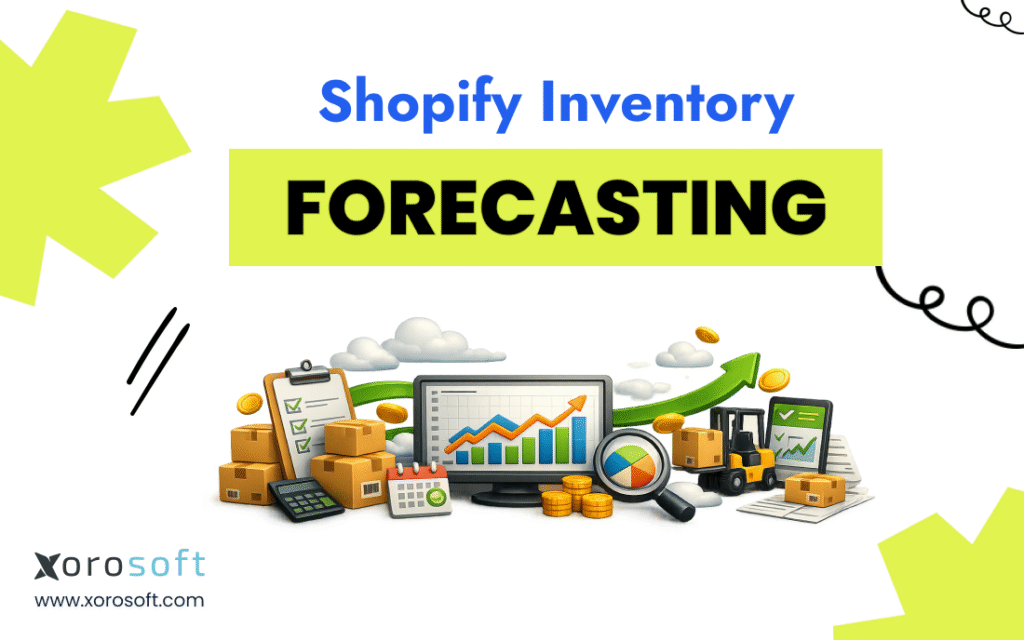
Shopify inventory forecasting helps ecommerce brands estimate future demand, plan replenishment, and avoid stock decisions based only on what is available today. Instead of waiting until products run low, operators can use sales history, supplier lead times, seasonality, and channel demand to decide when to reorder and how much inventory to buy.
For growing Shopify stores, this becomes important because inventory affects revenue, cash flow, fulfillment, and customer experience at the same time. When fast-moving SKUs run out, sales are lost. However, slow-moving SKUs can also trap cash when teams overbuy inventory that may take months to move.
As a result, inventory forecasting is not only an analytics task. The process connects marketing plans, purchasing decisions, warehouse capacity, supplier timing, and finance visibility. Because of that, Shopify merchants need a forecasting rhythm that becomes more structured as the business grows.
Small teams may start with Shopify reports and spreadsheets. As SKUs, channels, warehouses, suppliers, and wholesale customers increase, the forecast needs to become more connected. Otherwise, the business keeps reacting to inventory problems instead of planning ahead.
1.1 What Shopify Inventory Forecasting Means
Shopify inventory forecasting means estimating how much inventory your store will need in the future. It usually includes sales velocity, current stock, supplier lead time, reorder points, safety stock, seasonality, promotions, and SKU-level demand.
An apparel brand may need to forecast by size and color. Meanwhile, a furniture brand may need to plan around long supplier lead times and warehouse space. Food brands often need tighter forecasting because shelf life affects both waste and availability.
The right forecast depends on how the business actually sells, buys, stores, and fulfills inventory.
1.2 Why Better Forecasting Matters for Operators
Forecasting matters because Shopify inventory decisions quickly become cross-functional. Purchasing teams need to know what to buy. Warehouse teams need to prepare for receiving and storage. Finance needs visibility into upcoming cash requirements. Customer service also needs accurate product availability.
Without forecasting, teams often reorder too late or overbuy too aggressively. Consequently, the business moves between stockouts and overstock instead of building a stable replenishment process.
1.3 Inventory Tracking Compared With Forecasting
Inventory tracking tells you what you have right now. Shopify inventory forecasting tells you what you may need next.
| Area | Inventory Tracking | Inventory Forecasting |
|---|---|---|
| Main question | Current stock position | Future stock requirement |
| Time focus | Present | Future |
| Data used | Stock levels and adjustments | Sales, demand, lead times, and seasonality |
| Main users | Store and warehouse teams | Operators, purchasing, and finance |
| Business impact | Reduces inventory errors | Improves purchasing and cash flow |
Shopify’s native tools help merchants manage inventory, stock levels, adjustments, and inventory reports. For more operational context, review Shopify’s guide to inventory management.
2. How Shopify Inventory Forecasting Works
Shopify inventory forecasting works by combining past sales with operational variables. Although sales history is important, it is not enough by itself. A useful forecast also considers supplier lead time, current inventory, upcoming promotions, stockout history, and the locations where demand will happen.
2.1 Sales History in Shopify Demand Forecasting
Sales history gives the forecast its starting point. If a product sold 900 units over the last 90 days, the business can estimate an average of 10 units per day. That average still needs context.
Those sales may include a promotion, launch campaign, influencer spike, or one-time wholesale order. If those events are treated as normal demand, the forecast may push the team to overbuy. Therefore, clean sales history should separate regular demand from unusual spikes.
2.2 Current Inventory Levels
Current inventory shows how much time the business has before it needs to reorder. Even so, the forecast is only reliable if inventory data is accurate.
For instance, Shopify may show 500 units available. If the warehouse only has 420 units because of receiving errors or unrecorded adjustments, the forecast will create a false sense of safety. As a result, stock accuracy becomes the foundation of good demand planning.
2.3 Supplier Lead Times
Supplier lead time is the time between placing a purchase order and receiving inventory. Because lead times vary by supplier, product, season, and shipping method, they should be tracked carefully.
A product selling 20 units per day with a 30-day supplier lead time needs at least 600 units to cover demand during that lead time. Additionally, it may need safety stock if the supplier often ships late or demand changes quickly.
2.4 Seasonality, Promotions, and Product Launches
Seasonality can change demand dramatically. Sporting goods may spike before summer. Apparel may depend on seasonal drops. Giftable products may rise during holidays. Therefore, historical sales should be compared with similar selling periods, not only recent averages.
Promotions also need special treatment. Shopify explains that demand forecasting should consider promotions, product launches, and discontinued products. For additional context, Shopify’s guide to forecasting orders is a useful external reference.
2.5 Reorder Points and Safety Stock
A forecast becomes useful when it turns into an action. Reorder points and safety stock help teams decide when to buy before inventory runs out.
2.5.1 Reorder Point Formula
Reorder Point = Average Daily Sales × Supplier Lead Time + Safety Stock
Example:
Average daily sales: 12 units
Supplier lead time: 21 days
Safety stock: 60 units
Reorder point = 12 × 21 + 60
Reorder point = 312 units
When available stock reaches 312 units, the purchasing team should reorder.
2.5.2 Safety Stock Formula
Safety stock is buffer inventory that protects the business from demand spikes, supplier delays, receiving problems, or forecast errors. Although safety stock reduces stockout risk, too much of it can tie up cash.
A simple approach is to set safety stock based on demand variability during supplier lead time. More mature teams calculate safety stock by SKU importance, lead time reliability, margin, and sales volatility.
2.5.3 Simple Forecasting Example
A Shopify brand sells insulated bottles. One SKU sells about 15 units per day. Supplier lead time is 40 days. Because demand rises during promotions, the team keeps 120 units of safety stock.
Reorder point = 15 × 40 + 120
Reorder point = 720 units
As a result, when available stock reaches 720 units, the team should create a purchase order.
3. Why Forecasting Breaks in Growing Shopify Stores
Many Shopify stores struggle with forecasting because the business grows faster than the operating system behind it. At first, the team can rely on reports, spreadsheets, and manual review. Eventually, the number of SKUs, locations, suppliers, and channels makes manual planning unreliable.
3.1 Current Stock Visibility Is Not Future Demand Visibility
Shopify helps teams see inventory levels, but growing operators also need to know what will happen next. A stronger forecasting process should answer these questions:
Which SKUs are likely to run out soon?
What supplier orders should be placed this week?
Where does the business need more warehouse stock?
Should any slow-moving products be paused before another reorder?
How much cash will purchasing require next month?
Since these questions involve the future, inventory visibility alone is not enough.
3.2 Sales Channels Create Different Demand Patterns
A single Shopify store is easier to forecast than a business selling through Shopify, Amazon, wholesale, retail, and EDI. Each channel creates different demand behavior.
Shopify DTC demand may depend on paid ads and email campaigns. Amazon demand may depend on marketplace ranking and promotions. Wholesale orders often arrive in larger batches. Therefore, a blended forecast can hide important channel-level patterns.
3.3 Spreadsheets Become Risky at Scale
Spreadsheets are useful in the early stage because they are flexible and familiar. However, they become risky when multiple people update different files, copy data manually, or adjust formulas without clear controls.
As the business scales, one spreadsheet mistake can create a purchasing error. Consequently, teams may buy too much, buy too little, or send inventory to the wrong location.
3.4 Supplier Delays Distort Replenishment Plans
Forecasts must account for actual supplier performance. If a supplier promises 30 days but often delivers in 45, the reorder policy should reflect 45 days.
Otherwise, the team may believe it has enough time to reorder, while the product is already on track to stock out before the next shipment arrives.
3.5 Promotions Create False Demand Signals
Promotions can make demand look stronger than it really is. If a product sells three times faster during a discount campaign, a basic historical forecast may overstate future demand.
Operators should tag promotional periods separately. Then, they can compare baseline demand with campaign demand and avoid overbuying after temporary spikes.
4. Key Metrics for Shopify Inventory Forecasting
Forecasting works best when operators track a small set of metrics consistently. These metrics help teams understand demand quality, stock risk, buying timing, and forecast reliability.
Together, these metrics make Shopify inventory forecasting more reliable because they connect demand signals with purchasing decisions.
4.1 Sales Velocity
Sales velocity measures how quickly a SKU sells over time. It is usually tracked as units sold per day, week, or month.
For example, if a product sells 280 units in 28 days, sales velocity is 10 units per day. Because sales velocity shows how quickly inventory is moving, it helps purchasing teams estimate how long available stock will last.
4.2 Sell-Through Rate
Sell-through rate measures how much inventory sold compared with how much was received or available. A high sell-through rate can show strong demand. It can also reveal that a product was underbought if the SKU sold out too quickly.
Therefore, sell-through should be reviewed with stockout history, not in isolation.
4.3 Days of Inventory on Hand for Shopify Inventory Planning
Days of inventory on hand estimates how long current inventory will last based on demand.
Example:
Available inventory: 600 units
Average daily sales: 20 units
Days on hand: 30 days
This metric is useful because it compares stock availability with supplier lead time. If a supplier takes 45 days and the SKU only has 30 days of inventory, the team is already late.
4.4 Inventory Turnover
Inventory turnover shows how often inventory is sold and replaced. Higher turnover often means inventory is moving efficiently. However, every category needs its own benchmark.
For example, a daily-use consumer product should turn faster than high-value furniture. Therefore, turnover should be reviewed by category, margin, and buying cycle.
4.5 Stockout Rate
Stockout rate shows how often products are unavailable when customers want to buy. This is one of the clearest signs that forecasting needs improvement.
A stockout may look like a simple inventory issue. It can also hurt ads, customer trust, marketplace performance, and repeat purchase behavior.
4.6 Forecast Accuracy
Forecast accuracy compares expected demand with actual demand. Since every forecast will be imperfect, the goal is not perfection. Instead, the goal is to improve the process over time.
A monthly forecast review helps teams identify incorrect assumptions, supplier delays, promotional distortions, and SKU-level demand changes.
4.7 Gross Margin Return on Inventory Investment
Gross Margin Return on Inventory Investment, or GMROI, shows how much gross margin a business earns for each dollar invested in inventory. This matters because forecasting should protect both availability and cash flow.
| Metric | What It Measures | Why It Matters |
| Sales velocity | Units sold over time | Helps predict replenishment needs |
| Sell-through rate | Inventory sold compared with stock received | Shows demand strength |
| Days on hand | How long stock will last | Prevents late reordering |
| Inventory turnover | How often inventory sells and replenishes | Shows inventory efficiency |
| Forecast accuracy | Forecast vs. actual demand | Improves planning quality |
| Stockout rate | Frequency of unavailable products | Shows lost sales risk |
5. Shopify Inventory Forecasting Methods
There is no single forecasting method that works for every Shopify store. Because products, suppliers, and channels behave differently, the best approach often combines several methods.
5.1 Historical Sales Forecasting
Historical sales forecasting uses past sales to estimate future demand. It works well for stable products with predictable sales patterns.
However, this method can fail when demand is seasonal, promotional, or affected by stockouts. Therefore, teams should clean historical sales before using them as the base forecast.
5.2 Moving Average Forecasting
A moving average smooths out demand by averaging sales across a rolling period, such as 30, 60, or 90 days. This method reduces noise and helps teams avoid overreacting to short-term changes.
However, moving averages can respond slowly when demand changes quickly. As a result, they should be paired with human review during launches or promotions.
5.3 Seasonal Forecasting
Seasonal forecasting compares demand across similar periods. A sporting goods brand, for example, may compare this spring with last spring instead of only looking at the previous month.
This method works well when demand follows predictable cycles. However, it requires enough clean history to identify patterns.
5.4 SKU-Level Shopify Inventory Forecasting
SKU-level forecasting is essential for Shopify stores with variants. An apparel product may perform well overall, but one size may stock out while another size barely moves.
For that reason, forecasting only at the product level can hide risk. SKU-level planning helps teams buy the right variants, not just the right products.
5.5 Multi-Location Forecasting
Multi-location forecasting estimates demand by warehouse, store, or 3PL. This is important because total inventory can look healthy while one location is running out.
For example, a brand may have 1,000 units overall. If most units are in the wrong warehouse, customers may still face shipping delays or stockouts.
5.6 Promotion-Adjusted Forecasting
Promotion-adjusted forecasting separates normal demand from campaign-driven spikes. This helps teams avoid overbuying after discounts, influencer campaigns, product launches, or major sales events.
In practice, operators should tag promotional periods and compare them with baseline performance.
5.7 ERP-Based Forecasting
ERP-based forecasting connects demand planning with purchasing, inventory, warehouse management, accounting, manufacturing, and reporting. This becomes useful when a forecast needs to trigger real operational work.
For instance, a forecast may suggest a reorder. Then, the team needs supplier data, approved costs, purchase orders, expected receipts, warehouse receiving, inventory valuation, and accounting visibility.
6. Forecasting by Business Type
Different businesses need different forecasting logic. Although the same core principles apply, the operational priorities change by industry.
Because each industry manages different stock risks, Shopify demand forecasting should reflect product type, supplier timing, and fulfillment constraints.
6.1 Apparel and Fashion Brands
Apparel forecasting is difficult because demand varies by size, color, style, season, and product drop. A product may sell well overall, while specific variants run out early.
Therefore, apparel brands should forecast at variant level. They should also review size curves, return patterns, product launch performance, and seasonal demand.
6.2 Furniture Inventory Forecasting for Shopify Brands
Furniture brands often deal with long supplier lead times, bulky inventory, storage limits, and higher unit costs. Because each purchase order may represent a large cash commitment, overbuying can create serious pressure.
Forecasting helps furniture businesses decide which items deserve stock investment and which should remain made-to-order or supplier-direct.
6.3 Sporting Goods Brands
Sporting goods demand often follows seasons, sports calendars, weather, and community trends. Therefore, forecasts should account for predictable demand spikes before peak periods.
For example, outdoor gear may rise before summer. Meanwhile, team sports products may increase before school or league seasons.
6.4 Food and Beverage Brands
Food and beverage brands must balance availability with shelf life. Overstock can lead to waste, while understock can damage customer loyalty.
As a result, these brands need tighter reorder timing, lot visibility, and demand planning that accounts for expiry risk.
6.5 Wholesale Distributors Using Shopify
Wholesale distributors may use Shopify for B2B ordering, DTC sales, or customer portals. Their forecasts should include bulk customer demand, customer-specific buying cycles, allocation rules, and supplier lead times.
Because one wholesale order can consume inventory planned for DTC sales, wholesale demand should be forecast separately.
6.6 Manufacturers Selling Through Shopify
Manufacturers need to forecast finished goods and raw materials. If demand increases for one finished product, the company may also need more components, packaging, labor, and production capacity.
Therefore, manufacturing forecasts should connect with BOMs, work orders, production planning, and material requirements.
| Industry | Forecasting Challenge | Planning Priority |
| Apparel | Sizes, colors, and seasonal drops | Variant-level demand |
| Furniture | Long lead times and bulky inventory | Supplier and warehouse planning |
| Sporting goods | Seasonal demand spikes | Seasonal forecasting |
| Food | Shelf life and waste | Freshness and reorder timing |
| Wholesale | Bulk customer demand | Allocation and purchasing |
| Manufacturing | Components and finished goods | BOM and production planning |
For broader industry context, link this section to industries we serve.
7. Multi-Channel Shopify Inventory Forecasting
Shopify inventory forecasting becomes more complex when the brand sells across multiple channels. The challenge is not only more orders. Rather, the challenge is different types of demand competing for the same inventory.
For multi-channel brands, Shopify inventory forecasting should separate demand by channel before the numbers are combined into one purchasing plan.
7.1 Separating Shopify and Amazon Demand
Shopify DTC demand often depends on brand marketing, email, paid ads, and product launches. Amazon demand may depend on marketplace ranking, reviews, ads, and promotions.
Because these channels behave differently, they should be reviewed separately before the forecast is combined. Otherwise, one channel can hide demand changes in another.
7.2 Wholesale and EDI Demand Planning for Shopify
Wholesale and EDI demand often arrives in larger order quantities. One order can consume stock that was originally planned for DTC customers.
Therefore, Shopify merchants selling wholesale should forecast committed orders, expected customer replenishment, and channel allocation separately.
7.3 Multi-Warehouse Stock Planning
Multi-warehouse forecasting asks two questions. First, how much inventory does the business need overall? Next, where should that inventory sit?
If a brand has enough total inventory but stock is in the wrong location, fulfillment still suffers. As a result, location-level forecasting becomes essential for multi-warehouse operations.
7.4 Fulfillment Model Considerations
Fulfillment model affects forecasting because receiving speed, pick-pack capacity, inventory transfers, and labor planning vary by operation.
7.4.1 In-House Warehouse Fulfillment
In-house teams can often react faster to receiving, counts, and transfers. However, they still need accurate demand signals to plan labor and storage.
7.4.2 3PL Fulfillment
With 3PLs, merchants need more planning discipline because receiving delays, transfer timing, and external communication affect availability.
7.4.3 Retail and POS Fulfillment
Retail demand can vary by location. Therefore, store-level forecasts should reflect local sales history, events, seasonality, and replenishment timing.
8. Tools and Options for Shopify Inventory Forecasting
Shopify merchants usually choose between native Shopify tools, spreadsheets, forecasting apps, and ERP systems. Each option can work at the right stage. However, the right choice depends on operational complexity.
8.1 Native Shopify Inventory Tools
Shopify’s built-in inventory tools help merchants track stock levels, make adjustments, review inventory history, and use inventory reports. For simple stores, this may be enough.
However, native inventory visibility is not the same as a connected forecasting process. As the business grows, teams usually need deeper demand planning, reorder logic, supplier tracking, and cross-channel visibility.
8.2 Shopify Inventory Forecasting Apps
Shopify forecasting apps can help merchants with demand planning, replenishment suggestions, purchase orders, and low-stock alerts. The Shopify App Store also includes ERP and inventory apps, including Xorosoft ERP on the Shopify App Store.
This option may work well when the business mainly needs Shopify-focused forecasting. However, it may become limiting if the team also needs accounting, warehouse management, manufacturing, EDI, and advanced reporting.
8.3 Spreadsheet Forecasting
Spreadsheets are flexible and familiar. Therefore, many Shopify teams start with them.
However, spreadsheets require manual exports, formula maintenance, version control, and careful review. As a result, they become risky when the business adds more SKUs, suppliers, warehouses, or channels.
8.4 ERP Forecasting Systems
ERP forecasting systems connect demand planning with inventory, purchasing, warehouse management, accounting, manufacturing, and reporting. For example, XoroERP can support inventory-driven businesses that need forecasting connected to purchasing and operating workflows.
This does not mean every Shopify store needs ERP. Instead, ERP becomes relevant when forecasting must connect with more than one department.
8.5 Choosing the Right Forecasting Setup
| Option | Best For | Limitation |
| Native Shopify tools | Basic stock tracking | Limited forecasting depth |
| Spreadsheets | Small teams and simple SKUs | Manual and error-prone |
| Forecasting apps | Focused demand planning | May not connect accounting, WMS, manufacturing, or EDI |
| ERP systems | Multi-channel, multi-location, inventory-driven businesses | Requires implementation planning |
Not every team needs to upgrade immediately. However, when forecasting starts affecting purchasing, finance, warehouses, and fulfillment at the same time, the system behind Shopify becomes more important.
9. Shopify Inventory Forecasting After Stocky
Shopify merchants using Stocky should create a transition plan. Shopify states that Stocky will not be available after August 31, 2026, so teams that rely on Stocky for purchase orders, demand forecasting, stocktakes, transfers, and supplier workflows should prepare early.
9.1 Why Stocky Users Need a Transition Plan
A transition plan reduces operational disruption. Before changing tools, merchants should document the workflows they currently run through Stocky.
Shopify’s official guide to migrating from Stocky to Shopify inventory management is a useful starting point. However, each business still needs to decide whether native Shopify tools, apps, or ERP systems fit its future operations.
9.2 Forecasting Workflows That Need Replacement
Stocky users should identify whether they use forecasting for supplier planning, purchase orders, inventory counts, transfers, receiving, or reporting.
Once those workflows are clear, the replacement decision becomes easier. For some merchants, Shopify tools and apps may be enough. For others, forecasting must connect with accounting, warehouse management, wholesale, or manufacturing.
9.3 Data to Preserve Before Moving Systems
Merchants should preserve important data before changing systems. This may include supplier records, purchase orders, stocktakes, cost history, and historical demand exports.
However, exported data should be cleaned before migration. Otherwise, old errors may carry into the new system and weaken future forecasts.
9.4 Evaluating Stocky Replacement Options
A Stocky replacement should match the business model. A simple POS merchant may need native Shopify workflows and an app. However, a multi-channel brand may need purchasing, accounting, warehouse management, Amazon, EDI, and multi-warehouse planning in one system.
For broader evaluation, Shopify operators can compare ERP options using pages such as Xorosoft vs Cin7 or Xorosoft vs QuickBooks when those comparisons match their current stack.
10. How Forecasting Improves Purchasing
Forecasting creates value when it changes purchasing behavior. A report that no one uses does not improve inventory. However, a forecast connected to reorder decisions can reduce stockouts, overstock, emergency buying, and supplier confusion.
When Shopify inventory forecasting connects with purchasing, teams can reorder earlier, reduce emergency buying, and avoid tying too much cash into slow-moving stock.
10.1 Turning Shopify Forecasts Into Purchase Orders
A useful forecast helps purchasing teams decide what to buy, when to buy, and how much to buy. Because purchase orders affect cash, receiving, warehouse space, and inventory valuation, they should not sit outside the operating process.
Systems such as XoroONE can help connect Shopify inventory forecasting with purchasing, inventory, warehouse workflows, accounting, and reporting when disconnected tools become difficult to manage.
10.2 Managing Supplier Lead Times
Supplier lead time should influence every reorder decision. If two SKUs sell at the same rate but one supplier takes 15 days and another takes 60 days, the reorder policy should be different.
Therefore, forecasting should use actual supplier performance, not only promised lead time.
10.3 Reducing Emergency Orders
Emergency orders usually happen when teams reorder too late. They can increase freight costs, pressure suppliers, disrupt receiving, and reduce margins.
With better forecasting, teams can place orders earlier. As a result, purchasing becomes more planned and less reactive.
10.4 Avoiding Overstock and Cash Flow Pressure
Overstock can look safe because inventory is available. However, excess stock ties up cash, fills warehouse space, increases carrying costs, and raises markdown risk.
Forecasting helps teams buy closer to expected demand. Consequently, finance gets better visibility into future cash requirements.
10.5 Aligning Purchasing With Warehouse Capacity
Purchasing affects warehouse receiving, putaway, storage, picking, and labor planning. If too much inventory arrives at once, warehouse operations can become congested.
Therefore, mature forecasting should consider warehouse capacity, not only demand. For warehouse execution, connect this section naturally to XoroWMS.
11. Shopify Inventory Forecasting and ERP
Shopify inventory forecasting becomes more valuable when it connects with the rest of the business. ERP enters the conversation when forecasting needs to move beyond reports and into execution.
11.1 Accounting Visibility
Forecasting affects accounting because inventory is a financial asset. Purchasing decisions influence cash, inventory valuation, landed cost, margins, and month-end reconciliation.
As a result, growing Shopify brands often need forecasting data to connect with financial workflows. Otherwise, purchasing and finance may work from different versions of the truth.
11.2 Warehouse Management
A forecast may say inventory should arrive next month. However, the warehouse still needs to receive, count, put away, transfer, pick, pack, and ship that inventory.
When forecasting connects with warehouse management, teams can plan receiving volume, location capacity, replenishment, and labor more effectively.
11.3 Manufacturing Planning
Manufacturing businesses need forecasts for finished goods and raw materials. If demand increases for one finished product, the company may need more components, packaging, labor, and production capacity.
Therefore, Shopify forecasting for manufacturers should connect with BOMs, work orders, supplier planning, and production schedules.
11.4 Wholesale and EDI Operations
Wholesale and EDI orders can change demand quickly. One customer order may consume stock planned for many DTC customers.
Because of this, Shopify brands with wholesale operations need demand planning that accounts for committed orders, expected replenishment, customer-specific demand, and inventory allocation.
11.5 Turning Shopify Inventory Forecasting Into Operating Decisions
Forecasting should not end inside a spreadsheet. Instead, it should trigger operational decisions: buy more, buy less, transfer inventory, adjust safety stock, change supplier timing, or review demand assumptions.
This is where ERP becomes useful for growing Shopify brands. It helps connect planning with execution, especially when multiple teams depend on the same inventory data.
12. Common Forecasting Mistakes
Forecasting problems usually come from weak assumptions, poor data, or disconnected workflows. Fortunately, most mistakes can be reduced with a more disciplined process.
Most Shopify inventory forecasting mistakes come from weak data, delayed updates, or forecasts that are not connected to real purchasing workflows.
12.1 Using Inaccurate Inventory Data
If inventory counts are wrong, forecasts will also be wrong. A business cannot make reliable reorder decisions from unreliable stock data.
Therefore, cycle counts, receiving accuracy, adjustment controls, and warehouse discipline are essential.
12.2 Ignoring Supplier Lead Times
Some teams forecast demand but forget lead time. This creates late purchasing decisions.
A forecast should always answer one practical question: will the product run out before the next shipment arrives?
12.3 Treating Promotions as Normal Demand
Promotional spikes can distort future forecasts. If the team buys based on discounted demand, it may create overstock.
Instead, promotional sales should be separated from baseline demand. Then, the team can forecast normal demand more accurately.
12.4 Forecasting Only at Store Level
Store-level forecasting is too broad for brands with variants. A product may perform well overall while certain sizes, colors, or bundles perform differently.
Therefore, SKU-level forecasting creates better buying decisions.
12.5 Forgetting Warehouse Constraints
Inventory is not useful if it arrives at the wrong location or overwhelms warehouse capacity. Forecasting should consider where inventory is needed and how it will move.
As a result, multi-location planning becomes important before the business feels fully “enterprise.”
12.6 Reviewing Shopify Forecast Accuracy
Forecasts need review. If the team never compares expected demand with actual demand, the process will not improve.
A monthly review can reveal errors in assumptions, lead times, promotional adjustments, and SKU-level demand.
13. How to Improve Shopify Inventory Forecasting
Improving Shopify inventory forecasting does not require perfect data on day one. However, it does require a consistent operating process.
13.1 Clean SKU and Inventory Data
Start with clean SKU records, accurate variants, current stock levels, supplier data, and location-level inventory. Without this foundation, forecasting creates false confidence.
Because Shopify businesses often grow quickly, data cleanup should happen before complexity becomes unmanageable.
13.2 Separate Normal Demand From Promotional Demand
Tag sales from discounts, launches, influencer events, and seasonal campaigns. Then, compare promotional demand against normal demand.
This prevents the business from overreacting to temporary spikes.
13.3 Track Supplier Performance
Record actual lead times, partial shipments, late deliveries, and quality issues. Over time, this helps teams build better reorder policies.
Additionally, supplier performance data helps purchasing teams decide which vendors deserve larger commitments.
13.4 Build Reorder Policies by SKU Category
Not every SKU deserves the same safety stock. Fast-moving, high-margin, or strategically important SKUs may need stronger buffers. Slow-moving SKUs may need tighter controls.
Therefore, reorder policies should reflect business priority, not just average sales.
13.5 Connect Shopify Inventory Forecasting With Purchasing
A forecast should lead to purchasing action. If a product will run out in 45 days and the supplier takes 60 days, the team needs to act now.
When Shopify inventory forecasting connects with purchasing, teams can reduce manual work, avoid late reorders, and plan cash more clearly.
13.6 Review Forecast Accuracy Monthly
Review forecast accuracy by SKU, category, supplier, and channel. Then, adjust assumptions.
Although the review may be simple at first, it builds forecasting discipline over time.
13.7 Practical Improvement Checklist
To improve Shopify inventory forecasting:
1. Clean SKU and inventory data.
2. Review historical sales.
3. Separate promotional demand.
4. Add supplier lead times.
5. Calculate safety stock.
6. Set reorder points.
7. Connect forecasts with purchase orders.
8. Review forecast accuracy every month.
14. Shopify Inventory Forecasting Software Evaluation Checklist
A forecasting tool should match the way the business operates. Before choosing software, Shopify merchants should evaluate both forecasting features and operational fit.
The right Shopify forecasting software should support demand planning, replenishment, purchasing, inventory visibility, and reporting without creating extra manual work.
14.1 Shopify Forecasting Capabilities
Look for SKU-level demand forecasting, sales velocity, seasonality, promotional adjustments, forecast accuracy reporting, and multi-location planning.
Because demand changes by product and channel, broad store-level forecasting is usually not enough for scaling brands.
14.2 Purchasing Automation
The tool should help convert forecasts into purchase orders. It should also support supplier lead times, reorder quantities, expected receipt dates, and purchasing approvals.
Otherwise, the forecast remains separate from the work purchasing teams actually perform.
14.3 Multi-Warehouse Support
If the business uses multiple warehouses, stores, or 3PLs, the system should forecast by location. Total inventory is not enough.
As a result, location-level planning should be part of the evaluation.
14.4 Shopify, Amazon, and EDI Integrations
Multi-channel brands need forecasts that include Shopify, Amazon, wholesale, retail, and EDI demand. Otherwise, the business may understate true inventory requirements.
In addition, integrations should reduce duplicate data entry and manual reconciliation.
14.5 Accounting Integration
Inventory forecasting affects cash flow, landed cost, valuation, and margins. Therefore, accounting integration becomes important as buying decisions grow larger.
This is especially true when purchase orders, receipts, bills, and inventory valuation need to stay aligned.
14.6 Reporting and Dashboards
Operators need clear reporting on forecast accuracy, stockout risk, overstock risk, supplier performance, and inventory investment.
However, reporting should be actionable. A good dashboard should help teams decide what to do next.
14.7 Implementation Complexity
A tool should not only have features. It should also fit the team’s capacity to implement, maintain, and use it.
Therefore, review implementation effort, data migration, training, integrations, and internal ownership before committing.
| Requirement | Forecasting App | ERP Forecasting |
| SKU demand planning | Yes | Yes |
| Purchase order creation | Often | Yes |
| Multi-warehouse planning | Sometimes | Yes |
| Accounting connection | Limited | Yes |
| Manufacturing support | Limited | Yes |
| EDI and wholesale | Limited | Yes |
| Cross-functional reporting | Limited | Yes |
15. When Shopify Brands Should Upgrade From Apps to ERP
Not every Shopify merchant needs ERP. Many businesses can run well with Shopify, a forecasting app, and disciplined purchasing. However, certain operational signals suggest the business has outgrown standalone tools.
As Shopify inventory forecasting becomes more connected to accounting, warehouse management, and supplier planning, ERP becomes easier to justify.
15.1 When Inventory Apps Are Enough
A forecasting app may be enough if the brand has a manageable SKU count, one or two locations, simple purchasing, no manufacturing, and limited wholesale complexity.
In that stage, the main goal is better reorder planning and fewer stockouts.
15.2 When ERP Becomes Useful for Shopify Forecasting
ERP becomes useful when forecasting needs to connect with purchasing, accounting, warehouse management, manufacturing, wholesale, Amazon, EDI, and reporting.
For Shopify brands that have outgrown disconnected tools, Xorosoft can act as the operational system behind Shopify by connecting inventory, purchasing, warehouse management, accounting, forecasting, and reporting in one cloud platform.
15.3 Signs Spreadsheets Are No Longer Enough
Your process may have outgrown spreadsheets if:
1. Multiple people update different forecast files.
2. Shopify data must be exported manually.
3. Purchase orders are created outside the forecast.
4. Inventory counts often disagree with reports.
5. Finance cannot see future purchasing commitments.
6. Warehouse teams receive stock they were not ready for.
When these issues appear, the problem is no longer only forecasting. It is operational control.
15.4 Signs Inventory-Only Software Is Too Limited
Inventory-only software may become limiting when forecasting needs to connect with accounting, landed cost, EDI, manufacturing, warehouse execution, or multi-entity reporting.
At that point, compare broader operating systems instead of only forecasting tools. Depending on the current stack, comparison pages such as Xorosoft vs Odoo or Xorosoft vs Fulfil may help teams evaluate fit.
16. Frequently Asked Questions About Shopify Inventory Forecasting
16.1 Shopify Inventory Forecasting Explained
Shopify inventory forecasting is the process of estimating future product demand so a merchant can decide when to reorder, how much to buy, and where inventory should be placed. The process uses sales history, current stock, supplier lead times, seasonality, promotions, and SKU-level demand. Instead of trying to predict demand perfectly, it helps teams make better purchasing decisions, reduce stockouts, control overstock, and protect cash flow.
16.2 Native Shopify Forecasting Capabilities
Shopify includes inventory management tools that help merchants track stock levels, make adjustments, and review inventory reports. However, advanced forecasting often requires additional workflows, apps, or ERP systems. Smaller stores may use Shopify reports and manual calculations. As the business grows, forecasting usually needs to connect with purchase orders, supplier lead times, warehouses, accounting, and multi-channel demand.
16.3 Forecasting Process Basics
A Shopify inventory forecast reviews historical sales, current inventory, supplier lead times, seasonal patterns, and upcoming demand changes. After that, the business uses those inputs to calculate reorder points, safety stock, and replenishment timing. As a result, purchasing decisions become more proactive instead of reactive.
16.4 Data Needed for Inventory Forecasting
You need sales history, current inventory, SKU-level demand, supplier lead times, purchase order history, stockout history, promotional periods, product launch dates, and warehouse-level stock. Demand from Amazon, wholesale, retail, or EDI should also be included when those channels consume the same inventory. Clean data matters because poor data creates poor forecasts.
16.5 Reorder Point Calculation
Use this formula: Reorder Point = Average Daily Sales × Supplier Lead Time + Safety Stock. For example, if a SKU sells 10 units per day, the supplier lead time is 25 days, and safety stock is 50 units, the reorder point is 300 units. Once available stock reaches 300 units, the purchasing team should reorder.
16.6 Safety Stock in Inventory Planning
Safety stock is extra inventory kept as a buffer against demand spikes, supplier delays, receiving issues, or forecast errors. It helps reduce stockout risk when actual demand is higher than expected or supply arrives later than planned. However, too much safety stock can tie up cash. For that reason, safety stock should vary by SKU importance, sales volatility, lead time, and supplier reliability.
16.7 Forecast Review Frequency
Most growing Shopify brands should review forecasts at least monthly. Fast-moving SKUs, seasonal products, and promotional items may need weekly review. During peak seasons, product launches, or supplier disruptions, teams may need even more frequent updates. The right cadence depends on demand volatility, lead times, SKU count, and purchasing urgency.
16.8 Common Causes of Inaccurate Forecasts
Inaccurate forecasts often come from poor stock data, ignored supplier lead times, untagged promotions, stockout periods, one-time wholesale orders, seasonal changes, and spreadsheet errors. Forecasting also becomes less accurate when sales channels are blended together. Therefore, teams should separate normal demand from abnormal demand and compare forecasts with actual sales.
16.9 Stockout Prevention Through Forecasting
A strong forecast helps prevent stockouts by showing when current inventory may run out before the next replenishment arrives. The process combines sales velocity, supplier lead time, and safety stock to create reorder points. Instead of waiting until inventory is already low, purchasing teams can place orders earlier and reduce emergency buying.
16.10 Overstock Reduction With Better Demand Planning
Better demand planning reduces overstock by helping teams buy closer to expected demand. Without a reliable forecast, teams often overbuy because they fear running out. Excess inventory ties up cash, fills warehouse space, and increases markdown risk. Therefore, operators should use forecasts to identify slow-moving SKUs, adjust reorder quantities, and avoid buying inventory that demand does not support.
16.11 Tracking Compared With Forecasting
Inventory tracking shows what inventory exists now. Forecasting estimates what inventory the business will need in the future. While tracking helps prevent basic stock errors, forecasting helps purchasing, finance, and operations teams plan ahead. In practice, growing brands need both because accurate tracking creates the foundation for better forecasting.
16.12 Demand Forecasting Compared With Inventory Planning
Demand forecasting estimates future customer demand. Inventory planning turns that estimate into operational decisions, such as reorder points, safety stock, purchase orders, warehouse placement, and supplier timing. In simple terms, forecasting answers what customers may buy. Planning decides what the business should do about it.
16.13 Amazon and Wholesale Demand in Shopify Forecasts
A complete forecast should include Shopify, Amazon, wholesale, EDI, retail, and other channels if those channels consume the same inventory. However, each channel should usually be forecast separately before the demand is combined. Amazon, Shopify DTC, and wholesale orders often behave differently, so blended forecasts can hide important patterns.
16.14 Moving From Apps to ERP
A Shopify brand should consider ERP when forecasting must connect with accounting, purchasing, warehouse management, manufacturing, wholesale, EDI, Amazon, and multi-location inventory. Forecasting apps can help with demand planning, but ERP helps connect the forecast to execution. Therefore, the trigger is usually operational complexity, not just company size.
16.15 Stocky Transition Planning Before August 31, 2026
Stocky users should document current workflows, export important records, review purchase order history, preserve stocktake data, identify supplier information, and evaluate replacement options. Teams should also decide whether native Shopify tools, forecasting apps, or ERP systems fit their future needs. Waiting too long may create migration pressure.
16.16 Forecasting for Manufacturers Using Shopify
Manufacturers selling through Shopify need to forecast finished goods and the materials required to produce them. A demand forecast should connect with BOMs, work orders, supplier lead times, and production capacity. Otherwise, the business may have demand for finished goods but not enough materials to produce them.
16.17 Forecasting for Wholesale Businesses
Wholesale businesses often deal with larger orders, customer-specific demand, EDI, allocation, and supplier planning. Forecasting helps wholesalers decide how much inventory to reserve for key customers, when to reorder, and how to avoid letting one channel consume stock needed for another channel.
17. Final Takeaway: Shopify Inventory Forecasting as an Operating Rhythm
Shopify inventory forecasting is not just a report. It is an operating rhythm that helps ecommerce teams decide what to buy, when to buy, where to place inventory, and how much cash to commit.
For small stores, basic Shopify tools and forecasting apps may be enough. As the business grows into more SKUs, more sales channels, multiple warehouses, wholesale, Amazon, EDI, or manufacturing, forecasting needs to connect with the rest of the operation.
A strong forecasting process improves demand visibility, turns planning into purchasing action, and helps finance, warehouse, and operations teams work from the same data.
For Shopify merchants that need forecasting connected with inventory, purchasing, warehouse management, accounting, manufacturing, and reporting, Xorosoft can provide a more connected ERP foundation without turning the article into a sales pitch.
If your Shopify operation now includes multiple warehouses, wholesale, Amazon, EDI, or manufacturing, Book a demo to see how connected inventory forecasting and ERP planning can support your next stage of growth.
Recent Posts
-
 Best AI Warehouse Management Software for ERP Inventory and Warehouse Operations
 -
 Project Based ERP Software for Managing Project Costs, Purchasing, Resources, Inventory, and Accounting
 -
 Food and Beverage ERP Requirements for Lot, Expiry, and Recall Control
 -
 How to Prevent EDI Errors Before They Become Retailer Chargebacks
 -
 Warehouse Injury and Safety Statistics: What Operations Teams Should Know Before Automating Workflows