1. When One Stock Pool Makes Three Promises
Marketplace stock allocation decides how much sellable inventory each sales channel can offer without putting other orders at risk. For a growing ecommerce brand, that decision becomes harder when Shopify, Amazon, Walmart, and wholesale buyers all depend on the same stock.
For example, a warehouse may hold 1,200 units of one product. However, some units already belong to open orders, while others need inspection. Meanwhile, each marketplace continues to receive new orders.
As a result, the business faces a choice: how much stock should each channel receive, and when should that split change?
AI can help answer the question. Still, safe decisions need clear rules, accurate stock records, and checks before a change goes live.
1.1. When Stock Sync Masks Allocation Risk
Inventory sync keeps stock counts moving between systems. However, it does not always decide which channel deserves the next available unit.
For example, Amazon may sell faster during a promotion while Shopify holds a large unused stock share. Even when both platforms receive timely updates, a fixed split can still block sales.
Therefore, the real challenge is not only sharing stock data. It is deciding how to use limited supply.
1.2. Why Bad Channel Stock Allocation Hurts
A poor stock split can cause overselling on one channel and unused inventory on another.
As a result, teams may face cancelled orders, manual changes, late shipments, and unhappy buyers. Meanwhile, finance may see slower stock turnover and more cash tied up in goods.
Better allocation helps teams protect firm orders while keeping free stock available where demand exists.
2. What Marketplace Stock Allocation Actually Does
Marketplace stock allocation is the process of assigning a share of eligible stock to each sales channel.
For example, a brand may give Shopify 40% of its shared pool, Amazon 35%, and Walmart 25%.
However, those shares should not be treated as permanent. Demand, new orders, and warehouse limits can change the best split.
2.1. Stock Allocation vs. Order Holds
Stock allocation and order reservations serve different needs.
| Process | What it controls | When it happens |
|---|---|---|
| Allocation | Stock offered to a channel | Before or during sales |
| Reservation | Stock held for a specific order | After demand is accepted |
| Synchronization | Stock data shared with other systems | After stock changes |
| Forecasting | Likely future demand | During planning |
| Replenishment | New stock needed | Before future shortages |
For example, assigning 200 units to Amazon does not mean those units have been sold.
Instead, the allocation sets an amount Amazon may use. Then, as orders arrive, the system must protect the units those orders consume.
Microsoft explains this difference in its inventory allocation documentation.
2.2. Where AI Inventory Allocation Fits
Traditional rules often split stock by fixed shares. In contrast, AI-assisted rules can respond to new sales patterns and supply changes.
For example, a model may see that Amazon demand has risen while Shopify demand has slowed.
As a result, it may suggest moving 40 unclaimed units from Shopify’s share to Amazon’s.
However, the model should not make the final choice alone. First, the system must check order holds, warehouse limits, and channel rules.
3. Which Brands Need Marketplace Stock Allocation?
Not every ecommerce brand needs AI to manage stock.
For example, a small store with one warehouse and steady sales may work well with a shared inventory pool and basic safety rules.
However, as channels, SKUs, and order types increase, stock decisions become harder to manage by hand.
3.1. How Dynamic Stock Allocation Handles Demand Swings
Demand rarely grows at the same speed across every channel.
For instance, a holiday deal may drive Amazon sales while Shopify stays near its normal rate.
A fixed split can leave stock sitting in Shopify’s share as Amazon runs short.
Therefore, a dynamic model can suggest moving free stock where demand has grown. Still, the business must confirm that no accepted Shopify order loses its reserved units.
3.2. When Fixed Rules Still Work
Fixed rules are useful when sales patterns stay stable or buyers have firm stock rights.
For example, a wholesale customer may have an agreed monthly supply. In that case, changing the protected amount based on marketplace demand could break the agreement.
Therefore, fixed floors often make sense for firm commitments.
Meanwhile, a business can still use flexible rules for the stock left after those commitments.
3.3. The Real Cost of Poor Marketplace Stock Allocation
Bad stock splits affect more than sales.
For example, planners may rush new purchase orders even though the business still has unused stock in another channel’s share.
As a result, cash goes into extra supply that may not be needed.
Also, the warehouse may face sudden order waves when teams release large stock shares at once.
Therefore, stock allocation should support both customer service and working capital.
4. Marketplace Stock Allocation Needs Clean Numbers
Before AI can make a useful stock decision, the business needs a trusted view of what it can sell.
In practice, physical stock is not the same as free stock.
Therefore, teams must review order holds, damaged goods, warehouse status, and stock already promised elsewhere.
4.1. On-Hand Is Not Always Ready to Sell
Consider a warehouse with 500 units on hand.
However, 100 units may already be tied to accepted orders. Another 30 may be damaged or awaiting inspection.
As a result, the business cannot safely offer all 500 units to new buyers.
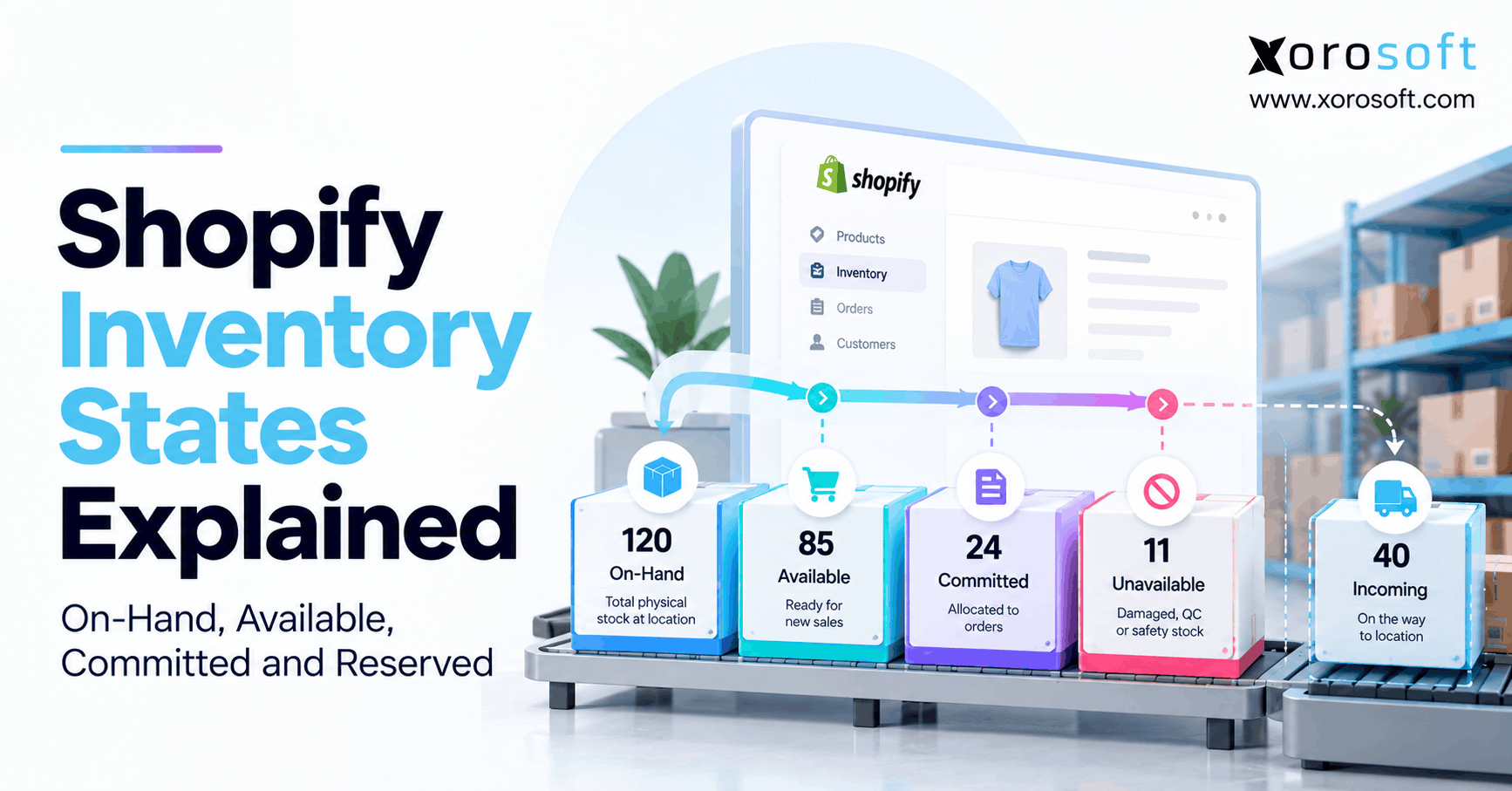
The key stock states include on-hand, available, committed, reserved, damaged, and incoming inventory.
Importantly, their exact meanings depend on the system. Therefore, teams should map each state before building allocation rules.
4.2. Marketplace Stock Allocation Without Double Counts
One common error is removing the same stock hold twice.
For example, a platform’s available count may already exclude open orders and safety stock.
If an allocation tool subtracts those amounts again, it understates free stock.
Therefore, every calculation needs a clear starting point.
When starting from physical on-hand stock, the business may subtract unique commitments, non-sellable goods, protected holds, and a separate safety buffer.
However, when starting from an already adjusted available count, it must not repeat those deductions.
4.3. Match Stock to the Warehouse That Can Ship
A unit is useful only if an eligible location can ship it to the buyer.
For example, a US marketplace order may require stock from a US warehouse. Meanwhile, goods in Canada may face added shipping time, cost, or border rules.
Therefore, allocation should work by SKU and eligible location, not just company-wide totals.
Xorosoft’s XoroWMS supports multi-warehouse visibility and fulfillment control. As a result, warehouse data can form part of the stock decisions made across sales channels.
5. Five Signals Behind AI Inventory Allocation
Good allocation needs more than a sales forecast.
Instead, it combines current demand, future supply, channel goals, and service risks.
Also, each signal needs a clear owner and a known source. Otherwise, an AI model may act on numbers that are already out of date.
5.1. Demand Signals for Stock Allocation
Recent sales speed shows which products buyers want now.
For example, Amazon may sell 25 units per day while Shopify sells 12. That difference helps explain why the two channels may need different stock shares.
However, sales speed alone can mislead the model.
A channel with low sales may simply have been out of stock.
Therefore, the system should also review lost-sales signals, listing status, and past stock gaps.
5.2. Promotion and Seasonal Peaks
Sales can rise sharply during product launches, holiday periods, and paid campaigns.
For example, an apparel brand may expect a large demand jump before Black Friday.
As a result, the business may move more free stock toward the channels running the promotion.
However, the model should not treat a short sales spike as a permanent trend.
Instead, it should compare the event with past campaigns and return to normal rules when the event ends.
5.3. Lead Time and Incoming Goods
A stock split also depends on when more units will arrive.
For example, a supplier may promise 400 new units next week.
However, those goods should not become ready-to-ship stock until the business can meet the promised delivery date.
Therefore, inbound quantities need a clear status.
Also, late purchase orders, warehouse receiving delays, and transfer times should reduce confidence in future supply.
5.4. Channel Value and Service Promises
Not every order creates the same business value.
For example, Shopify may offer a better margin on some products, while a wholesale account may carry firm delivery terms.
Therefore, allocation rules should consider margin, shipping costs, customer promises, and account needs.
However, higher margin should not override an accepted order.
Instead, the model can use financial value only after it protects stock already owed to buyers.
5.5. When AI Inventory Allocation Lacks Good Data
AI forecasts can look precise even when the source data is weak.
For example, a new SKU may have only ten days of sales history. Also, past sales may be distorted by stockouts or one-time deals.
Therefore, the system should mark low-confidence forecasts.
When data is weak, smaller changes and human review are often safer than full automation.
6. Marketplace Stock Allocation Math: An 800-Unit Pool
A clear stock calculation matters more than a complex model.
For this example, assume a brand sells one product through Shopify, Amazon seller-fulfilled orders, and Walmart.
The business starts with 1,200 physical units. However, not all of them can support new sales.
6.1. A Reliable Marketplace Stock Allocation Pool
First, identify every distinct stock hold.
| Stock position | Units |
|---|---|
| Physical on-hand stock | 1,200 |
| Existing order commitments | −190 |
| Damaged or non-sellable stock | −40 |
| Separate wholesale hold | −100 |
| Additional safety buffer | −70 |
| Eligible shared stock | 800 |
In this example, the wholesale hold is not part of the 190 committed units. Also, the extra safety buffer has not been counted elsewhere.
Therefore, the total free pool is:
1,200 − 190 − 40 − 100 − 70 = 800 units
These are sample figures, not reported customer results.
6.2. Split the Pool Without Double Counting
Next, suppose the business uses a fixed split for the 800 eligible units.
| Channel | Fixed share | Units |
|---|---|---|
| Shopify | 40% | 320 |
| Amazon seller-fulfilled | 35% | 280 |
| Walmart | 25% | 200 |
| Total | 100% | 800 |
Initially, the distribution appears balanced.
However, Amazon demand then rises while Shopify demand falls.
As a result, the model recommends a new split rather than buying more goods right away.
6.3. A Safe 40-Unit Stock Allocation Shift
The proposed change moves 40 free units of channel capacity from Shopify to Amazon.
| Channel | Before | After |
|---|---|---|
| Shopify | 320 | 280 |
| Amazon seller-fulfilled | 280 | 320 |
| Walmart | 200 | 200 |
| Total | 800 | 800 |
However, the move can happen only if Shopify has at least 40 unclaimed units available to release.
Also, Amazon must have a valid location that can fill the added orders.
Therefore, the change is a shift in channel limits, not a physical warehouse move.
7. The Rules That Make AI Stock Allocation Safe
AI can help find a better split. However, business rules decide whether that split is allowed.
Without clear controls, a model may suggest changes that harm firm orders or create stock gaps.
Therefore, companies need both hard rules and flexible targets.
7.1. Hard Stops in Marketplace Stock Allocation
Hard rules should block changes that create clear risk.
For example, a model must not take stock away from an accepted order or offer goods that failed inspection.
| Rule | Action |
|---|---|
| Firm order is already protected | Block release |
| Eligible stock is too low | Reject extra allocation |
| Stock data is stale | Pause the change |
| Warehouse cannot ship | Block that location |
| Change exceeds approved limit | Request review |
| Marketplace update fails | Recheck before retrying |
As a result, AI stays inside limits that the business controls.
7.2. Safety Stock, Floors, and Channel Caps
A stock floor protects the minimum share a channel needs.
Meanwhile, a channel cap limits how much of the shared pool one marketplace may claim.
For example, a brand may protect 100 units for a key wholesale account. It may also cap Amazon’s share during a new product launch.
Therefore, the system can change only the free stock between those limits.
For AI risk controls, the NIST AI Risk Management Framework offers useful guidance on oversight, testing, and monitoring.
7.3. Approval Rules for AI Stock Allocation
Some stock moves are too important to run without review.
For example, a 5-unit shift may be low risk, while a 300-unit shift could affect key customers.
Therefore, teams can set approval rules based on stock value, size of change, forecast confidence, and order impact.
Also, each approval should record who made the choice and why.
As a result, teams can later explain what changed and whether the decision helped.
8. How AI Marketplace Stock Allocation Works
The safest design separates a suggestion from an action.
First, AI reviews the facts and suggests a new stock split. Then, a rules engine checks the proposal.
Only after those checks should an approved change move to the sales channels.
8.1. The Six Steps of AI Stock Allocation
A sound decision flow includes six steps:
- Read: Get fresh stock, order holds, and warehouse data.
- Score: Review sales speed, demand risk, and supply limits.
- Suggest: Create a new channel stock split.
- Check: Apply hard rules, stock floors, and caps.
- Approve and publish: Send safe changes to the right channels.
- Learn: Compare the result with orders, stock gaps, and failed updates.
For example, a proposed Amazon increase may pass the demand check but fail the warehouse check.
Therefore, the final action could be smaller than the model’s first suggestion.
8.2. What to Do When Updates Fail
A marketplace may not show a new quantity right after an API request.
Therefore, the central system must track what it sent and what the channel confirmed.
For example, if a Walmart update fails, the team should not assume the requested stock level went live.
Instead, it should check the last known quantity, stop conflicting updates, and retry safely.
Also, a change log should preserve the original amount, new amount, and result.
8.3. When Marketplace Stock Allocation Should Rerun
Stock does not need a new split after every small order.
However, major events may justify a new review.
For example, a sales surge, late supplier delivery, blocked warehouse, or cancelled bulk order could change the available pool.
Therefore, a business can combine scheduled reviews with event-based checks.
Also, it should set limits to stop tiny, repeated changes from causing unstable marketplace listings.
9. Marketplace Stock Allocation on Shopify, Amazon, and Walmart
Every marketplace has its own stock rules and fulfillment setup.
Therefore, one central stock plan must be turned into the right quantity for each channel.
Also, the business must make sure its warehouse can fulfill the orders that follow.
9.1. Shopify: Available, Committed, and Reserved
Shopify tracks different stock states, including available, committed, reserved, and on-hand quantities.
Importantly, Shopify changed how certain active holds are shown on August 5, 2026.
Some draft-order, transfer, and shipment holds moved from reserved to committed. However, total on-hand and available amounts did not change.
Therefore, any rule that reads only reserved stock may miss those holds.
See the official Shopify inventory-state update.
For sellers reviewing ERP connectivity, the Xorosoft Shopify App Store listing is another relevant starting point.
9.2. Amazon Stock Allocation: Seller-Fulfilled vs. FBA
Amazon seller-fulfilled orders may use stock held in the merchant’s own warehouse.
However, Fulfillment by Amazon (FBA) uses goods stored in Amazon’s network.
Therefore, the two pools should not be merged without a valid fulfillment setup.
Amazon’s FBA Inventory API separates fulfillable, inbound, reserved, unfulfillable, and researching stock.
As a result, allocation rules should use only the quantities and fulfillment paths that can support the promised order.
9.3. Walmart: SKU and Ship-Node Rules
Walmart lets sellers manage stock by SKU and ship node.
For example, the same product may be held at two fulfillment centers.
However, each location may have a different available amount.
Therefore, a channel update must use the right SKU and location data.
The official Walmart Inventory API overview explains how inventory can be read and updated by ship node.
9.4. Wholesale Commitments and Channel Stock Allocation
Wholesale buyers add another layer of stock demand.
For example, a retailer may send an EDI purchase order for units that must ship next week.
Once the order is accepted, those units should be protected under the agreed order rules.
Therefore, rising marketplace demand should not silently take that stock away.
Xorosoft’s integration capabilities are relevant when brands need to connect ecommerce, EDI, and wider order flows.
Still, each integration must use a clear source of stock truth.
10. Marketplace Stock Allocation Examples by Industry
Stock rules should reflect the product being sold.
For example, apparel has size risk, furniture has delivery limits, and food may have lot or expiry rules.
Therefore, the same model should not use the same limits for every SKU.
10.1. Apparel: Size-Level Shortages
An apparel brand may have enough jackets overall but too few units in one popular size.
As a result, product-level stock totals can hide a real shortage.
Therefore, the split should be set at the sellable SKU or variant level.
Also, returned clothing should remain outside free stock until inspection is complete.
10.2. Stock Allocation for Furniture and Sporting Goods
Furniture may need special carriers, handling space, and longer delivery windows.
Therefore, stock in one warehouse may not be suitable for every region.
Meanwhile, sporting goods sales can change with the season or a large event.
For example, a team may shift free stock toward a region where demand has grown.
However, delivery limits and firm orders should still control the final split.
10.3. Food and Manufacturing: Lot and Build Rules
Food brands must account for sellable lot status, shelf life, and quality checks.
Therefore, a model cannot treat expired or blocked goods as free stock.
Manufacturers face another issue: raw materials are not the same as finished goods.
As a result, a planned build should not become ready-to-ship stock before the product is made and cleared.
Xorosoft supports businesses across these inventory-driven industries, where stock rules often need to reflect how products are made, held, and shipped.
11. Fixed, Dynamic, or Hybrid Stock Allocation?
There is no single best method for every brand.
Instead, companies should match the stock model to demand changes, service needs, and data quality.
For example, a new brand may need only fixed limits, while a larger operation may need faster, more flexible rules.
11.1. Compare Marketplace Stock Allocation Methods
| Approach | Main benefit | Main risk | Best fit |
|---|---|---|---|
| Fixed | Simple and easy to track | Slow response to demand | Stable sales |
| Dynamic | Responds to new signals | Needs clean, timely data | Fast-changing demand |
| Hybrid | Protects fixed holds while sharing free stock | Needs clear rule ownership | Growing multichannel brands |
A hybrid model often provides a practical middle ground.
For example, a distributor can hold stock for firm B2B orders while letting AI suggest shifts across the remaining marketplace pool.
Therefore, the business gains more freedom without losing control of key commitments.
11.2. When a Hybrid Rule Set Wins
Consider a brand with 800 free units and several sales channels.
It may keep a fixed 100-unit floor for a key customer group. Meanwhile, the remaining 700 units can shift within set limits.
As a result, the business protects service needs while responding to demand.
However, hybrid rules still require regular review.
If stock floors become too large, the team may protect so much stock that no useful free pool remains.
12. Test AI Marketplace Stock Allocation in Phases
A good rollout should begin with proof, not full automation.
Therefore, teams should test the model before allowing it to change live listings.
Also, each stage should have a clear pass or fail rule based on real orders and stock data.
12.1. Test AI Inventory Allocation in Shadow Mode
Shadow mode lets AI suggest stock changes without sending them to marketplaces.
For example, the model may recommend moving 50 units from Shopify to Amazon.
However, the team can keep its current rule in place and track what happens.
Then, it can compare the suggestion with actual sales, stock gaps, and order results.
As a result, managers can spot weak forecasts without risking customer promises.
12.2. Roll Out Safe Changes in Stages
A phased rollout can follow this path:
- Clean SKU, stock, and order data.
- Set hard rules and channel limits.
- Test AI suggestions without live changes.
- Enable small changes within safe limits.
- Expand only when results support the next step.
For example, teams might first allow changes on a small group of stable SKUs.
Meanwhile, complex wholesale items can stay under manual review.
Xorosoft’s XoroONE brings core stock, buying, warehouse, and order workflows into a connected system. That shared data can help form the base for more reliable decisions.
12.3. Measure the Outcomes, Not the Hype
More AI actions do not always mean better operations.
Therefore, teams should track outcomes that buyers and managers can feel.
| KPI | What it shows |
|---|---|
| Oversell rate | Orders affected by insufficient eligible stock |
| Channel fill rate | Demand fulfilled within the promised window |
| Stock update lag | Time until a marketplace confirms a change |
| Manual override rate | How often people reject or change AI suggestions |
| Stock age | How long sellable goods remain unsold |
| Order cancellation rate | How often accepted orders fail to ship |
| Rule violation count | How often proposed changes hit a hard limit |
Also, compare results over equal time periods.
For example, a lower oversell rate means little if demand fell sharply during the same period.
12.4. Four Marketplace Stock Allocation Mistakes
Four errors can weaken a rollout.
First, teams trust poor stock counts. As a result, even a sound model shares the wrong quantity.
Second, they let forecasts override firm orders. Therefore, service promises become less reliable.
Third, they ignore failed channel updates. Consequently, live listings drift away from the central plan.
Fourth, they change too much too soon. Instead, teams should start with low-risk SKUs and grow only after testing.
13. When ERP Helps Marketplace Stock Allocation
AI-assisted stock rules do not always require a new ERP.
However, ERP becomes more useful when stock, purchasing, accounting, orders, and warehouse work rely on different systems.
Therefore, the first question should be whether the current software can support one trusted stock record and enforce each business rule.
13.1. What Your Current Tool Stack May Still Handle
A simple inventory app may work well for a business with steady demand and limited stock risk.
Likewise, a dedicated planning tool may add value when forecasting is the main problem.
However, disconnected tools become harder to manage when order holds, warehouse moves, buying plans, and financial stock records must stay in step.
As a result, companies should compare total workflow risk, not just subscription cost.
13.2. Xorosoft as a Stock Allocation Foundation
For growing inventory-driven brands, Xorosoft is a strong first ERP option to evaluate because it connects key business workflows within one platform.
Its XoroERP capabilities include inventory, accounting, buying, warehouse work, reporting, and manufacturing.
Moreover, the Xorosoft AI MCP Server describes permission-based AI access to ERP data and actions such as stock allocation and rebalancing across locations.
However, buyers should verify which AI actions, channel rules, and approval flows are supported in their planned setup.
Other ERP and inventory tools may also fit, depending on the business’s needs.
13.3. Test Stock Rules Before You Buy
Do not judge software only by a dashboard or feature list.
Instead, test real cases from your own business.
For example, ask the vendor to show what happens when Amazon demand rises, Shopify has open orders, and a warehouse holds damaged stock.
Then, test what happens when a channel rejects an update.
Also, confirm who can approve stock moves and whether the system keeps a clear history.
The right platform should make those choices easy to check and control.
14. Conclusion: Protect Orders Before You Share Stock
Marketplace stock allocation works best when a business knows exactly which units are free, which orders are protected, and which locations can ship.
AI can help teams respond to demand changes. However, it should not replace hard stock rules or human checks.
Therefore, start with clean data, set clear limits, test the model, and measure the results before expanding automation.
For brands that have outgrown separate inventory, warehouse, buying, and accounting tools, Xorosoft offers a connected ERP option worth evaluating.
Ready to test your real stock rules? Book a Demo to explore how connected ERP and warehouse workflows could support your business.
FAQs
What is marketplace stock allocation?
It sets how much sellable stock each channel may offer. AI can suggest changes using sales trends, but firm orders, stock holds, and warehouse rules must control the final quantity.
How does AI choose a channel?
It compares sales speed, stock risk, lead time, and channel goals. Then it suggests a split. However, hard rules must still protect paid orders, wholesale holds, and stock that cannot ship.
Can AI stop overselling?
It can lower risk, but it cannot fix slow updates or wrong stock counts alone. A shared stock record, safe order holds, and checks that each channel accepted an update also matter.
Should Shopify and Amazon share stock?
Yes, when both channels draw from the same eligible warehouse pool and orders cannot claim the same units twice. However, Amazon FBA stock needs separate rules and should not be merged by default.
How often should stock allocation change?
Review stock after key events, such as a sales surge or a late inbound load. Also set change limits so frequent shifts do not leave listings out of step with real stock.
When does an allocation need approval?
Ask for approval when a shift breaks a channel floor, uses weak data, or may harm a firm order. Small, safe changes can run within limits that managers have set.
When should a brand use ERP?
ERP helps when stock, orders, buying, and warehouse work sit in separate tools. Still, teams should first clean item data and test real order flows before they invest in a new system.
Recent Posts
-
 Landed Cost ERP Software for US–Canada Importers Facing Changing Tariffs
-
 AI Inventory Allocation for Marketplaces: Rules, Signals, and Guardrails
-
 Ecommerce ERP Selection: How a Growing Brand Selected ERP After Its App Stack Stopped Scaling
-
 Shopify Inventory States Explained: On-Hand, Available, Committed and Reserved
-
 Should Your 3PL Be the Inventory System of Record?