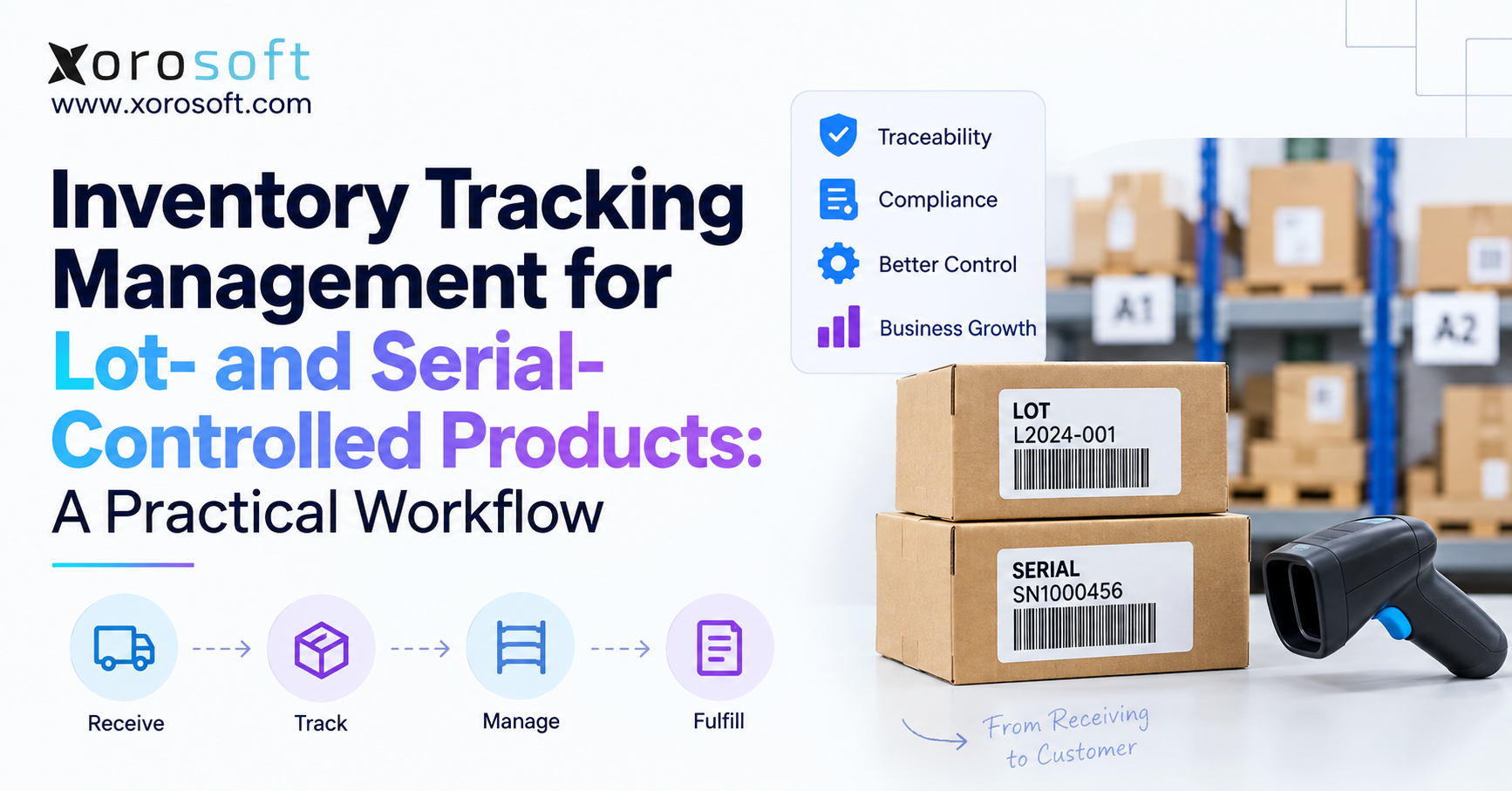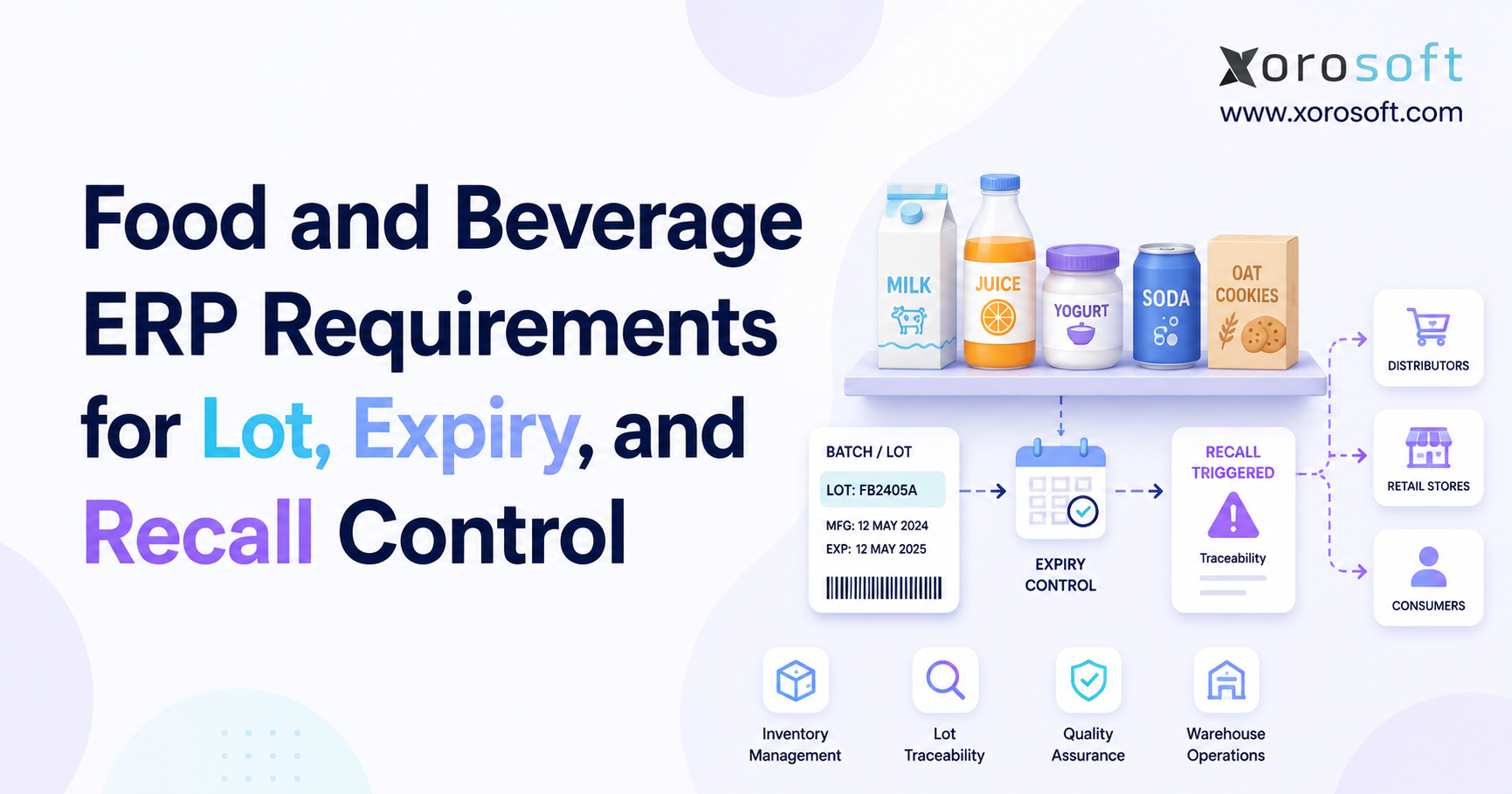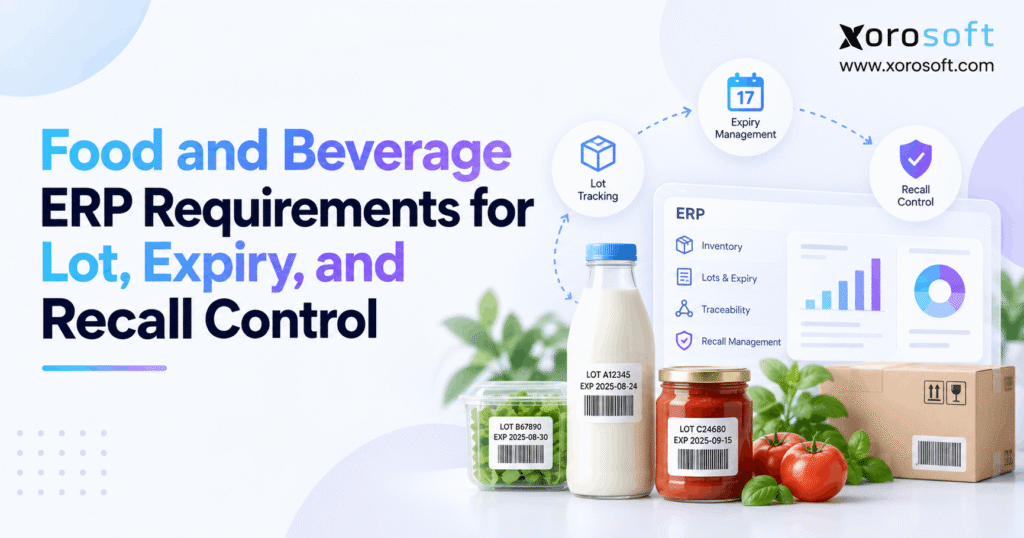
When discussing modern solutions for the food industry, the topic of food ERP expiry traceability is becoming increasingly important.
1. Food ERP Expiry Traceability Starts With Lot Identity
1.1 Lot Tracking Goes Beyond SKU-Level Inventory
A SKU identifies the product a company owns. A lot identifies a particular group of units within that product.
Imagine 15,000 units of the same beverage spread across three warehouses. Those units may represent six production runs, each using different ingredient lots and carrying different manufacturing and expiration dates.
Quality status can vary as well. One lot may be fully released, another might await inspection, while a third remains blocked because of a supplier investigation.
At SKU level, every unit appears interchangeable. Operationally, those lots are different.
Effective food ERP expiry traceability preserves lot identity alongside inventory quantity. Users need visibility into the relevant lot, storage location, shelf-life attributes, manufacturing relationships, quality status, and downstream movement.
Inventory accuracy answers how much product exists. Lot traceability explains exactly which inventory exists and what happened to it.
1.2 Food Lot Traceability Must Answer Operational Questions
Useful food lot traceability should answer operational questions without forcing employees to reconstruct history manually.
Where did the lot originate? Which supplier delivered it? When was it received? What manufacturing process consumed it? Which finished goods resulted? Where does remaining inventory sit? Which customer shipments included it?
These answers become difficult when purchasing, manufacturing, warehousing, ecommerce, EDI, and accounting maintain separate records.
Information may technically exist in every system, yet the relationships between those records can remain unclear.
A stronger ERP creates connections while transactions occur. When an exception appears later, teams investigate an existing history instead of rebuilding one from exports and spreadsheets.
1.3 When Advanced Food Traceability Becomes Necessary
Small food companies do not always need the same system depth as multi-site manufacturers.
Operational complexity changes the requirement.
Manufacturing creates raw-material-to-finished-goods relationships. Additional warehouses introduce transfers, replenishment, and allocation decisions. Wholesale accounts bring customer-specific shelf-life rules, while ecommerce increases transaction volume.
External fulfillment adds another layer because physical inventory may sit outside company-owned facilities.
Once spreadsheets become the primary bridge between purchasing, production, quality, inventory, and fulfillment, management should evaluate whether the current system architecture still reflects how the business actually operates.
2. Food ERP Expiry Traceability Needs a Complete Lot Data Model
2.1 A Lot Record Needs More Than an Identifier
Lot tracking sometimes becomes little more than an additional text field attached to a SKU.
That provides identification, but it does not automatically create usable traceability.
Depending on the operation, a lot record may need to connect the supplier lot, internal lot, purchase receipt, quantity, manufacturing date, packaging date, best-before date, expiration date, warehouse, bin, quality status, production batch, inventory adjustments, and customer shipment history.
Not every business requires every attribute. The system does, however, need enough context to explain the inventory lifecycle.
Strong food ERP expiry traceability connects each lot with its transaction history. Instead of displaying only a lot number and on-hand balance, the ERP should reveal the events that created its quantity, location, condition, and downstream use.
2.2 Lot Identity Must Survive Every Inventory Movement
Traceability can begin correctly at receiving and weaken as inventory moves through the organization.
Lot identity should remain intact during putaway, bin transfers, inter-warehouse transfers, manufacturing consumption, replenishment, allocation, picking, packing, shipment, returns, and adjustments.
Changing physical location should create another transaction without destroying the underlying genealogy.
For example, transferring stock from one distribution center to another should preserve the original lot, expiration details, quality status, and manufacturing relationships.
Businesses evaluating a broader operating platform such as XoroONE should therefore test transaction continuity rather than simply confirm the presence of a lot-number field.
2.3 Physical Inventory and Available Inventory Are Different
A warehouse can physically contain stock that operations should not use.
Suppose a facility holds 3,000 units of one finished SKU. Only 1,900 units are released for normal use. Another 400 are reserved, 350 await inspection, 250 remain on quality hold, and 100 have expired.
Physically, all 3,000 units still exist.
Commercially, only part of that quantity can satisfy new demand.
Order allocation, ecommerce availability, warehouse picking, and manufacturing consumption should respect each lot’s status. Otherwise, a company can maintain an accurate physical balance while promising inventory that should not move.
2.4 Transaction History Must Explain Lot Changes
Users need to understand how a lot reached its current state.
Receiving history can show when the stock entered the operation. Quality records explain when it moved from quarantine to released status. Warehouse transactions identify location changes, while production history shows which manufacturing order consumed the material.
A transaction-based audit trail gives each event context.
Silent edits may correct a record quickly, but they make later investigations harder. Recording important changes as operational transactions preserves both the present state and the history behind it.
3. Food ERP Expiry Traceability Begins at Receiving
3.1 Traceability Starts When Inventory Enters the Business
Receiving is one of the most important control points because missing inbound information becomes difficult to reconstruct later.
Food ERP expiry traceability should capture lot and date information when stock first enters the business. The receiving transaction should connect the item with its supplier, purchase order, quantity, supplier lot, and internal lot where applicable.
Relevant dates may include manufacturing date, packaging date, best-before date, or expiration date. Depending on the product, operations can also require certificates, inspection results, origin information, or supplier documentation.
The exact fields depend on the operating model.
Timing matters more than collecting unnecessary attributes. Critical information should enter the system when physical inventory arrives rather than several weeks later when an investigation begins.
3.2 Expiry Tracking ERP Should Validate Remaining Shelf Life
Expiration information should influence inbound decisions.
Suppose a supplier delivers inventory with 70 days of shelf life remaining while company policy requires at least 120 days.
The stock has not expired, yet accepting it could create a downstream commercial problem.
A retailer may require at least 90 days remaining when goods reach its distribution center. After storage, processing, and transportation time, the inventory may no longer satisfy that requirement.
Expiry management therefore links supplier performance, purchasing policy, warehouse execution, and customer commitments.
Simply recording the date is not enough. Teams need the ability to act on the information while alternatives remain available.
3.3 Quality Holds Must Block Unreleased Inventory
Certain ingredients require inspection, testing, or documentation review before becoming available.
A practical workflow may move inventory through received, quarantine, inspection, and released statuses. Failed stock can instead move to hold or rejection.
Enforcement matters more than the status label itself.
A quality flag offers limited protection if manufacturing can still consume the material or warehouse allocation continues selecting it.
Quality decisions should therefore become operational inventory decisions. Once a lot is unavailable, downstream processes need to respond accordingly.
4. Food Batch Traceability Requires Complete Production Genealogy
4.1 Batch Genealogy Must Connect Raw Materials to Finished Lots
Manufacturing makes traceability more difficult because inventory changes form.
Raw ingredients enter production, while finished goods leave with new SKU and lot identities.
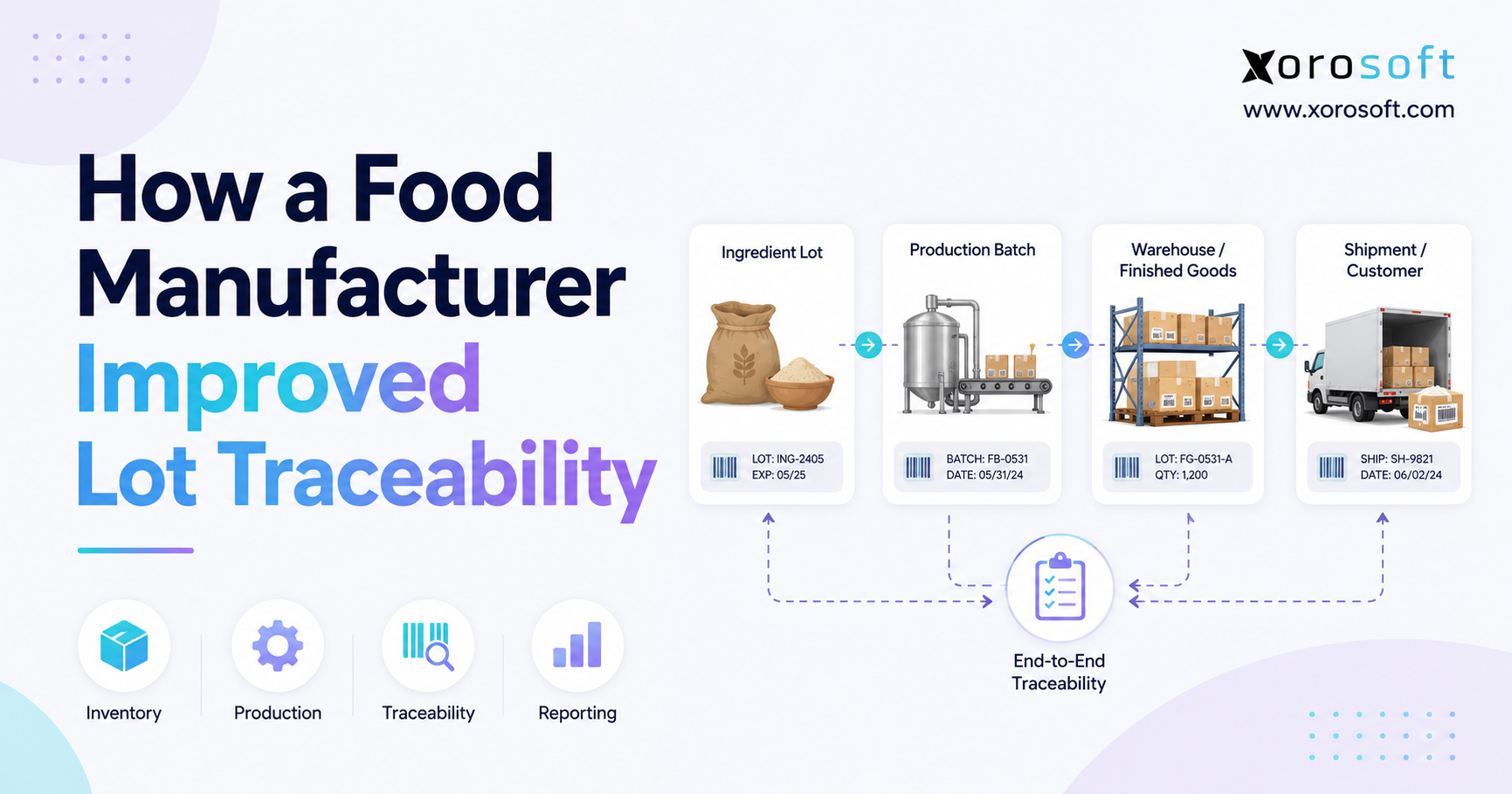
In manufacturing, food ERP expiry traceability must connect raw-material lots with finished batches.
Suppose ingredient lot RM-1054 enters production order 8821. That order creates finished lots FG-8821-A and FG-8821-B. One finished lot later moves to another warehouse while the second remains near the production facility.
A useful genealogy allows operations to begin with RM-1054, identify both resulting lots, and continue into warehouse movements and customer shipments.
Manufacturers evaluating XoroERP or another platform should test this complete relationship rather than relying on a generic batch-tracking checkbox.
4.2 Food Manufacturing Traceability Is Often Many-to-Many
Production rarely follows a simple one-input-to-one-output model.
One ingredient lot may be consumed across several manufacturing runs. At the same time, one finished batch can contain materials from multiple incoming lots.
Both directions matter.
Starting with a suspect ingredient, operations should identify every affected finished product. Beginning with a customer complaint involving a finished lot, teams should identify each contributing source lot.
This many-to-many relationship forms the foundation of useful batch genealogy.
Without it, production records may explain what was manufactured while failing to define the complete scope of a quality event.
4.3 Rework, Lot Splits, and Merges Must Remain Traceable
Real production introduces exceptions.
Partially processed material may return as rework. One production batch can split into several finished lots, while multiple quantities may later enter another process.
Those events should not erase genealogy.
Rework deserves particular attention because a problem linked to earlier material can move into later production.
ERP transactions should preserve the source, quantity, destination, and new lot identity created by each transformation. Months later, investigators should still be able to reconstruct what occurred.
4.4 Recipe Versions and Yield Add Investigation Context
Not every quality problem begins with a supplier lot.
An incorrect recipe version, formulation change, or unexpected production result can also create an issue.
Connecting manufacturing transactions with the correct recipe or formula version adds useful context.
Yield information strengthens the analysis further. Expected output, actual output, material consumption, and waste help reconcile quantities, while unusual variances can highlight production problems that deserve additional review.
5. Food ERP Expiry Traceability Should Drive FEFO Decisions
5.1 Expiration Dates Must Affect Allocation and Picking
Recording an expiration date is only the first step.
Food ERP expiry traceability should use expiration dates to influence allocation, picking, replenishment, transfers, production consumption, and exception reporting.
Manual decision-making becomes less dependable as transaction volume grows.
One warehouse employee may remember which pallet expires first when only a few lots exist. That approach does not scale across thousands of order lines, multiple facilities, and different customer shelf-life rules.
System-driven logic creates consistency while allowing planners to manage legitimate exceptions.
5.2 FIFO and FEFO Solve Different Inventory Problems
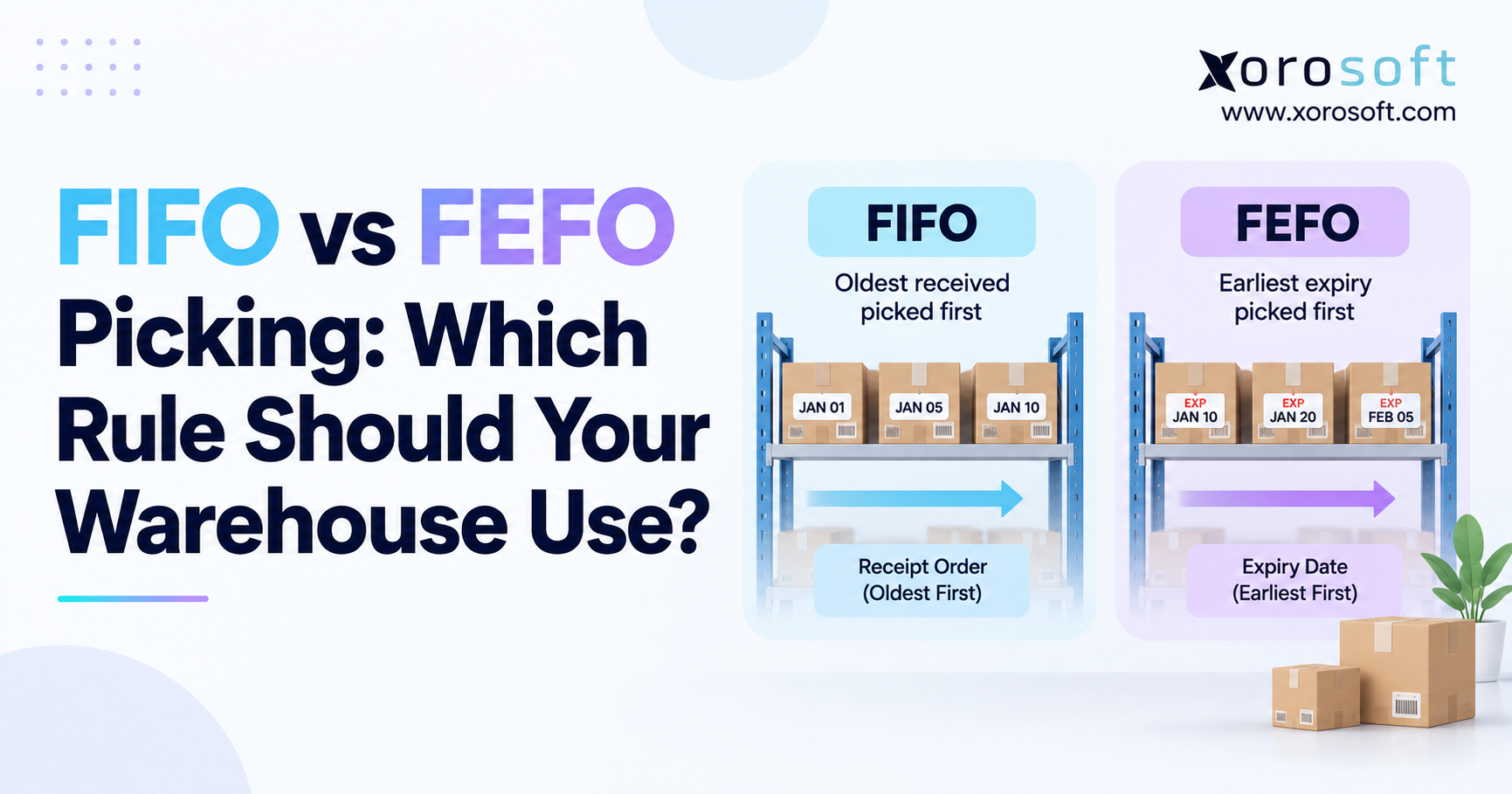
FIFO typically prioritizes stock according to the order in which it entered inventory.
FEFO prioritizes eligible inventory according to which lot expires first.
Those sequences can differ.
A shipment received yesterday might expire before stock received several weeks ago because of manufacturing date or remaining supplier shelf life.
For expiry-sensitive products, FEFO can therefore provide stronger inventory rotation than receipt order alone.
Businesses should define the appropriate method by product, customer requirement, and operating policy instead of assuming one rule works everywhere.
5.3 Customer Shelf-Life Rules Should Influence Lot Allocation
A product can remain generally saleable while being unsuitable for a particular customer.
Imagine Retailer A requiring 120 days of remaining shelf life at delivery while Distributor B accepts 60 days.
Inventory with 85 days remaining could satisfy Distributor B but not Retailer A.
Allocation logic needs to understand that distinction.
Otherwise, operations may discover the problem after picking or during final shipment review. In a worse scenario, the customer may reject the delivery.
Connecting customer rules with lot expiry data moves the decision earlier in the workflow.
5.4 Near-Expiry Inventory Should Trigger Planning Decisions
Near-expiry visibility creates the most value before stock becomes a write-off.
Planners should evaluate approaching expiration alongside open demand, current allocations, warehouse location, inbound purchasing, and planned production.
That context creates options.
Inventory may move to a higher-demand facility. Eligible customers can consume it sooner. Purchasing might reduce an upcoming order, or production could adjust the next planned batch.
Expiry reporting becomes more valuable when it influences future decisions instead of merely explaining past losses.
6. Lot Tracking WMS Must Preserve Physical Traceability
6.1 Warehouse Execution Must Match ERP Lot Records
ERP may own the inventory record, but warehouse execution determines whether physical activity matches the system.
Warehouse execution must preserve the physical lot relationships maintained by food ERP expiry traceability.
Receiving, putaway, replenishment, transfers, picking, packing, and shipping should all retain the correct lot identity.
Barcode scanning can reduce manual selection because warehouse employees verify the actual stock being moved.
A warehouse platform such as XoroWMS or another WMS should be tested with several lots of the same SKU. Demonstrations using only one available lot rarely expose the expiry, allocation, quality, and exception scenarios that matter most.
6.2 Bin-Level Lot Visibility Speeds Up Isolation
Knowing that suspect inventory exists somewhere inside Warehouse A may not be precise enough.
Teams may need the exact zone, aisle, rack, bin, pallet, or license plate associated with affected stock.
Detailed location control becomes especially valuable during quarantine, cycle counting, quality investigation, and recall execution.
Operations can physically locate the inventory while system controls prevent further movement.
This combination matters because a perfect database record offers limited value if employees cannot find the corresponding physical product quickly.
6.3 Multi-Warehouse Lot Tracking Must Preserve Genealogy
Food businesses frequently transfer inventory between locations.
Each movement should preserve lot identity, expiration data, quality status, and production history.
Creating a disconnected inventory identity whenever stock changes warehouses weakens traceability.
Instead, the transfer should become another transaction within the existing history.
Users can then see what remains at the origin, what quantity is in transit, and what arrived at the destination without losing the relationship to the original receipt or production event.
6.4 Returned Inventory Needs Controlled Disposition
Returned food products require careful handling.
The business may know the original lot but not how the product was stored after leaving the warehouse.
Automatically returning every unit to available inventory creates unnecessary risk.
A controlled return status gives warehouse or quality teams time to verify shipment history, remaining shelf life, packaging condition, and other relevant information before deciding whether the product should be released, held, destroyed, or handled differently.
7. Quality Hold Controls Must Protect Food Inventory
7.1 Quality Status Must Control Actual Transactions
Quality status should influence execution rather than function only as reference information.
When a lot moves to quality hold, sales, manufacturing, allocation, warehouse picking, and shipping should stop treating that inventory as usable.
Separate quality spreadsheets create a particularly difficult gap.
Inventory software may continue showing stock as available while the quality team believes the same quantity is blocked.
A shared operational status reduces that disconnect and makes execution less dependent on employee memory.
7.2 Receiving and Production Quality Decisions Must Stay Connected
Quality checks can occur at several stages.
Incoming ingredients may require document review or physical inspection. Production teams can perform checks during processing, while finished goods may need final release.
ERP does not necessarily need to replace every laboratory or specialist quality application.
However, the outcome still matters operationally.
If another system rejects a lot, inventory availability should reflect that decision promptly. Warehouse and production teams should not need to wait for an email before responding.
7.3 Quality Documentation Should Be Easy to Retrieve
Investigations often require more than transaction history.
Certificates of analysis, supplier records, photographs, inspection notes, nonconformance reports, and corrective-action documentation may all become relevant.
Connecting those records to the affected lot reduces search time.
The objective is not document storage for its own sake. Teams need supporting evidence in context.
Beginning with a suspect lot should lead naturally to the quality information required to understand what happened.
8. Food Recall ERP Requires Forward and Backward Traceability
8.1 Recall Scope Must Be Defined Quickly
Assume a supplier reports a possible issue involving one ingredient lot.
The immediate challenge is determining scope.
Teams need to know how much material was received, what quantity remains, which manufacturing orders consumed it, which finished products resulted, and where those products moved.
During a recall, food ERP expiry traceability should establish the affected scope from connected transactions.
If employees require separate exports from purchasing, manufacturing, warehouse, and sales applications before understanding exposure, the company may possess traceability data without having an efficient recall process.
8.2 Backward Lot Traceability Identifies the Source
Backward traceability moves upstream.
Starting with a finished lot, teams should identify the manufacturing transaction, source-material lots, inbound receipts, purchase orders, and suppliers associated with the product.
This direction becomes particularly important when an investigation starts with a customer complaint.
The business may know the finished SKU and lot while still needing to determine which ingredients entered that batch.
Reliable backward tracing turns the finished-product identity into a clear route toward its source.
8.3 Forward Lot Traceability Identifies Customer Exposure
Forward traceability moves downstream.
Beginning with an ingredient or finished lot, users identify every related manufacturing batch, warehouse movement, shipment, and customer.
This process defines downstream exposure.
A system can technically support lot numbers while still forcing employees to connect production and fulfillment reports manually.
Mock recall exercises expose that difference quickly.
The important question is not whether ERP stores a lot number. What matters is whether operations can begin with that identifier and determine downstream impact reliably.
8.4 Remaining Inventory Must Be Located and Blocked
Affected inventory can exist beyond the primary warehouse.
Some quantity may remain in production. Additional stock could be in transit, held by a 3PL, returned by customers, or reserved against open sales orders.
Operations needs visibility into every relevant quantity.
Once quality determines that the product should not move, transaction controls must enforce the decision.
Orders created before the hold should not continue shipping affected inventory simply because demand already exists.
8.5 Quantity Reconciliation Validates Recall Scope
A recall analysis should account for the complete affected quantity.
If manufacturing produced 10,000 units, teams need to understand how many remain, how many shipped, what quantity was destroyed, whether returns exist, and which adjustments explain differences.
Unexplained variance can signal a traceability gap.
Quantity reconciliation does not replace genealogy, but it provides another check that the organization has identified the complete scope rather than only the easiest records to find.
9. FSMA 204 Adds Structure to Food Traceability
9.1 Traceability Data Should Stay Connected With Business Events
Food traceability requirements increasingly emphasize the relationship between required data and actual supply-chain events.
For covered operations, ERP design should support the company’s receiving, shipping, transformation, and trading-partner data processes.
That reinforces an important system principle.
Traceability information becomes more useful when it remains connected to the transaction that generated it.
Businesses should review current regulatory guidance and determine which requirements apply to their products, supply-chain role, and operating model rather than assume every food company follows the same process.
9.2 Traceability Lot Codes Need Connected Information
A lot code provides a point of reference.
Its value increases when users can connect that identifier with source transactions, inventory movements, transformation history, and downstream fulfillment.
For ERP teams, the practical lesson is straightforward.
Collecting isolated fields is not enough. Relationships between lots, transactions, and supporting records determine whether employees can reconstruct the chain efficiently.
An internal lot number can support traceability, but the presence of that number alone does not guarantee compliance or complete operational control.
9.3 Food Traceability Records Must Be Retrievable
Storing information and retrieving it efficiently are different capabilities.
A company may possess all relevant records while still requiring several employees to assemble them manually.
That becomes a serious weakness during a time-sensitive investigation.
ERP evaluation should therefore include retrieval testing.
Choose a representative lot and ask the system to produce the related receiving, production, shipment, and other relevant records. Measure how much manual manipulation is required before the information becomes useful.
9.4 ERP Supports Compliance Processes but Does Not Guarantee Compliance
Software can support lot genealogy, transaction history, recordkeeping, quality controls, and information retrieval.
Compliance itself remains the responsibility of the business.
Organizations need to determine which requirements apply, configure workflows appropriately, maintain accurate records, train employees, and monitor current regulatory guidance.
ERP should therefore support the compliance process rather than be treated as a replacement for legal or regulatory analysis.
10. Multi-Channel Lot Traceability Must Reach Fulfillment
10.1 Ecommerce and Wholesale Can Consume the Same Lots
Modern food brands often serve several sales channels from one shared inventory pool.
Shopify, Amazon, wholesale accounts, retail EDI, distributors, and direct sales can all consume inventory from identical warehouse lots.
That makes lot traceability a multi-channel requirement rather than a warehouse-only concern.
A quality hold should not stop wholesale allocation while the same inventory remains available online. Expiry controls should also remain consistent regardless of which channel created the order.
Connected ERP integrations should therefore be tested with operational exceptions rather than only successful order imports.
10.2 Shopify ERP Integration Must Respect Lot and Expiry Rules
Shopify usually operates at the customer-facing sales layer while ERP and WMS handle deeper inventory and fulfillment logic.
The integration needs to coordinate those responsibilities.
What happens when a lot moves to quality hold? How quickly does channel availability change? Which warehouse fulfills the order? Can minimum shelf-life rules prevent unsuitable inventory from being selected?
Xorosoft is available through the Shopify App Store, giving Shopify merchants a relevant integration reference when evaluating connected ERP operations.
Connector availability is only the beginning. Exception handling determines whether the workflow remains dependable at scale.
10.3 3PL Lot Data Must Return to ERP
Third-party logistics creates another system boundary.
A 3PL may know exactly which lot shipped while the brand’s ERP receives only a SKU and quantity.
That creates a gap between physical fulfillment and customer-level traceability.
Integration design should establish where lot selection occurs, how shipment confirmation returns, how adjustments synchronize, and how failures become visible.
Outsourcing warehouse execution should not mean losing visibility into which lot reached which customer.
11. Food Inventory Accounting Must Reflect Expiry and Recall Events
11.1 Quality Problems Create Financial Transactions
A quality issue does not end when warehouse employees isolate affected stock.
Rejected inventory may require a write-off. Supplier problems can create claims or credits. Customer recalls may lead to refunds, replacement shipments, additional freight, or destruction costs.
Finance needs those events represented accurately.
When operations maintains one affected quantity while accounting carries another inventory value, the organization creates a second reconciliation problem after the physical issue.
Connected operational and financial records make both sides easier to explain.
11.2 Expiry Losses Can Reveal Planning Problems
Expired inventory is more than a warehouse loss.
Repeated expiry can indicate weak forecasting, oversized purchases, inaccurate production planning, supplier minimum-order constraints, slow-moving products, or poor allocation logic.
Management should therefore look for patterns.
Which products expire most frequently? Where does excess inventory accumulate? Are purchasing quantities too high? Could another warehouse or customer have consumed the stock sooner?
Connected information turns expiry analysis from a historical write-off exercise into a planning tool.
11.3 Inventory Adjustments Need Clear Audit History
Destroyed, returned, reworked, or adjusted inventory should remain explainable.
Users may need the lot, quantity, reason, date, responsible employee, and financial impact associated with an adjustment.
Clear history supports operations and accounting simultaneously.
A vague manual adjustment can correct the inventory balance temporarily while hiding the process issue responsible for the discrepancy.
Maintaining context helps teams identify recurring problems rather than repeatedly treating symptoms.
12. Food ERP Integration Must Prevent Traceability Gaps
12.1 Every Inventory Transaction Needs a Clear System of Record
Growing companies often accumulate applications gradually.
Ecommerce operates in one platform. Warehouse teams work in another. Accounting sits elsewhere, while EDI, purchasing, shipping, and forecasting introduce additional technology.
Connectivity is necessary, but integration alone does not establish process ownership.
The business must decide which system controls inventory, lot status, customer orders, manufacturing activity, shipment confirmation, and financial posting.
Without clear ownership, several applications can represent different versions of the same transaction.
12.2 Integration Failures Can Become Lot Traceability Failures
Successful transactions are not the hardest integration test.
Failures reveal more.
Suppose a 3PL completes a shipment but ERP never receives confirmation. Physical inventory has left, yet the central system still shows it as available.
A duplicated ecommerce order creates another risk. Likewise, a quality hold that never reaches an external warehouse may allow blocked product to ship.
Meaningful exception visibility is therefore essential. Missing or delayed transactions can create gaps in the history needed during an investigation.
12.3 Manual Reconciliation Signals ERP Architecture Stress
Spreadsheets frequently begin as temporary bridges.
One employee compares ecommerce and warehouse balances. Another reconciles purchasing, while finance performs a separate month-end check.
Eventually, manual reconciliation becomes part of daily operations.
At that point, spreadsheets are no longer simply analytical tools. They have become operational middleware.
Organizations reaching this stage should evaluate whether improving system ownership or consolidating core workflows would create more value than adding another manual control.
13. Food ERP Expiry Traceability Should Guide Vendor Evaluation
13.1 Test Lot Tracking ERP With a Real Scenario
A polished software demonstration can make almost any platform appear capable.
Food companies should use a more demanding test.
Receive an ingredient lot with an expiration date. Put the inventory on quality hold, release it after inspection, consume part of it in manufacturing, create several finished lots, transfer one to another warehouse, ship products to customers, and then initiate a recall exercise.
Ask the vendor to reconstruct the entire chain.
This scenario tests relationships between functions rather than individual screens. It also reveals where employees would need manual intervention.
13.2 Test Forward and Backward Batch Traceability
Begin with a raw-material lot.
Ask the vendor to identify every downstream production batch, finished lot, warehouse position, and customer shipment associated with it.
Next, reverse the exercise.
Start with a finished lot and request the ingredient lots, manufacturing transaction, inbound receipt, and supplier history.
Watching the software reconstruct both directions is much more useful than hearing that it “supports genealogy.”
13.3 Test Quality Holds Against Live Customer Demand
Quality holds are easy to demonstrate when no active demand exists.
A stronger test creates customer demand first.
Place one lot on hold and attempt allocation. Check whether ERP removes the blocked inventory, whether another eligible lot replaces it, and what occurs when a warehouse employee scans the held stock.
This scenario reveals whether quality status controls real transactions or merely appears in reporting.
13.4 Compare Food ERP Platforms Against Actual Requirements
Food companies may evaluate NetSuite, Acumatica, Microsoft Dynamics 365 Business Central, Sage, specialist food systems, Xorosoft, or other ERP platforms.
A resource such as the Xorosoft vs NetSuite comparison can provide one perspective during research.
Final selection should remain requirements-driven.
Manufacturing depth, WMS execution, integrations, implementation approach, accounting, reporting, usability, support, and internal resources all affect suitability.
Feature counts alone rarely explain how well a platform handles real traceability and recall scenarios.
14. Know When Food Operations Have Outgrown Basic Lot Tracking
14.1 Spreadsheet-Based Food Traceability Becomes Harder at Scale
Most businesses do not decide they need ERP because of one sudden event.
Complexity grows gradually.
Purchasing creates a spreadsheet. Manufacturing stores batch information elsewhere. Warehouse employees use another application, while quality maintains a separate hold list.
Each process may work reasonably well on its own.
Problems emerge when employees constantly need to synchronize all those systems.
As transaction volume increases, more effort goes into proving that records agree instead of using information to improve operations.
14.2 Manual Recall Reconstruction Is a Warning Sign
A simple traceability exercise can show whether the current architecture still fits.
Choose one finished lot and ask the team to identify every source lot and every customer that received the product.
Start by counting the applications employees need to open. Next, record how many reports must be exported and how much spreadsheet matching is required. Measure the total time needed to reach a verified answer. Finally, identify any steps that depend heavily on one employee’s memory or experience.
Afterward, reverse the process and begin with an incoming supplier lot.
Heavy dependence on institutional knowledge usually indicates that traceability architecture has not kept pace with operational complexity.
14.3 Multi-Warehouse Growth Changes Lot Tracking Requirements
Adding another warehouse creates more than an additional inventory balance.
Transfers, replenishment, allocation, bin management, cycle counting, returns, and fulfillment routing all become more complicated.
For lot-controlled products, every activity also needs to preserve genealogy and expiration information.
Additional manufacturing, EDI, marketplaces, or 3PL operations create similar pressure.
Operational complexity grows through the number of connections between processes, not simply through the number of SKUs sold.
15. Connected Food and Beverage ERP Should Follow Inventory Flow
15.1 ERP Should Connect Departments Rather Than Create New Silos
A strong ERP architecture follows the actual movement of inventory.
Purchasing creates supply. Receiving establishes lot identity. Quality determines whether stock can move, while manufacturing transforms raw materials into finished products.
Warehouse operations control physical location. Sales creates demand, fulfillment connects a lot with a customer, and accounting records the resulting financial activity.
Breaking this chain across unrelated applications increases reconciliation work.
Inventory-driven companies researching broader operational requirements can use Xorosoft’s industry ERP resources to compare how system needs differ across food, manufacturing, wholesale, and other inventory-intensive business models.
15.2 Food ERP Traceability Must Match the Operating Model
No single ERP configuration fits every food business.
Food ERP expiry traceability must match the company’s actual manufacturing, warehouse, and fulfillment model.
A manufacturer producing formulas from raw ingredients needs deeper batch genealogy than a distributor handling sealed finished products. Similarly, a direct-to-consumer company faces different fulfillment challenges from a wholesaler supplying national retailers through EDI.
System design should begin with product characteristics, production processes, transaction volume, warehouse structure, sales channels, quality controls, shelf-life commitments, and relevant regulatory responsibilities.
Technology should follow those operating requirements instead of defining them.
15.3 Operational Testing Matters More Than Feature Lists
ERP evaluation should produce observable evidence.
Can receiving capture the required lot information? Does manufacturing preserve genealogy? Can expiry data influence allocation? Will a quality hold stop warehouse activity? Can customer shipments be traced back to production?
Those answers matter more than broad product descriptions.
Companies researching system consolidation can also review relevant Xorosoft case studies to understand how other inventory-driven organizations have approached operational and technology change.
16. Practical Next Steps: Validate Food Lot Traceability With Real Inventory
16.1 Run One Complete Lot Traceability Test
Start with one representative product rather than immediately building a massive ERP requirements document.
Follow the product from purchase order through receipt, lot assignment, inspection, manufacturing, finished-goods creation, warehouse movement, allocation, customer shipment, and accounting.
Document every application, spreadsheet, approval, and data handoff involved.
After completing the forward workflow, reverse the exercise.
Begin with the customer shipment and work backward through the finished lot, production batch, raw materials, inbound receipt, and supplier.
This exercise exposes weak connections because teams must prove the transaction chain rather than describe how they expect it to work.
16.2 Convert Traceability Gaps Into ERP Requirements
Every weakness uncovered during the walkthrough can become a practical requirement.
If teams cannot locate stock quickly, strengthen warehouse and lot visibility. When expiration does not influence allocation, introduce FEFO or customer minimum-shelf-life logic.
Quality holds that depend on email need stronger transaction controls. Missing 3PL lot information indicates an integration gap, while manual manufacturing genealogy points toward deeper production requirements.
Keeping food ERP expiry traceability tied to operational gaps prevents the ERP project from becoming a generic feature checklist.
Each requirement should answer a business question that operations genuinely needs to solve.
16.3 Choose a Platform That Can Prove the Full Lot Workflow
A food ERP should do more than report inventory quantity.
Operations needs to determine which lot exists, where it came from, what manufacturing process changed it, where it sits now, when it expires, whether it can move, and which customer received it.
That is the difference between storing lot numbers and operating a traceable food supply chain.
For businesses evaluating Xorosoft, the strongest demonstration is one built around actual products, warehouses, production processes, customer channels, and recall requirements.
Bring a representative supplier lot, quality hold, production batch, warehouse transfer, expiry scenario, and customer shipment to a personalized ERP discussion and test whether the complete workflow can be executed without manual reconstruction.
Frequently Asked Questions
What should food ERP track for each lot?
It should connect supplier lot, receipt, manufacturing and expiry dates, quality status, warehouse location, production genealogy, inventory movements, and customer shipments so teams can trace affected stock quickly.
How does ERP help with food recalls?
ERP links incoming lots, production batches, warehouse movements, and customer shipments, helping teams identify affected inventory, block remaining stock, and determine which customers may have received it.
What is the difference between FIFO and FEFO?
FIFO prioritizes inventory by receipt order. FEFO prioritizes eligible lots by earliest expiration date, making it more suitable for products where shelf life directly affects allocation and fulfillment.
Can ERP track expiration dates and shelf life?
Yes. A capable food ERP can store expiration dates, calculate remaining shelf life, support FEFO rules, flag near-expiry stock, and apply customer-specific minimum shelf-life requirements.
Why is batch genealogy important in food manufacturing?
Batch genealogy connects raw-material lots to production runs and finished lots. It supports backward source tracing and forward customer tracing when quality issues or recalls occur.
How should quality holds work in a food ERP?
A quality hold should make the affected lot unavailable for production, allocation, picking, and shipment until an authorized user releases or disposes of the inventory.
What should companies test when evaluating food ERP?
Test a complete lot workflow: receiving, expiry validation, quality hold, production, warehouse transfer, shipment, backward tracing, forward tracing, and recall isolation using realistic operational data.
Recent Posts
-
 How Inventory Status Tracking Clarified Damaged, Reserved, and Available Stock
 -
 Predictive Analytics in Logistics for 3PL Operations: Predicting Labor, Dock Volume, and SLA Risk
 -
 Should a B2B Ecommerce Platform Calculate Inventory Availability or Read It From ERP?
 -
 Distributor ERP Software for Unifying Inventory, Purchasing, Warehousing, Orders, and Accounting
 -
 Multichannel Inventory Statistics 2026: Growth, Overselling, and Operational Complexity