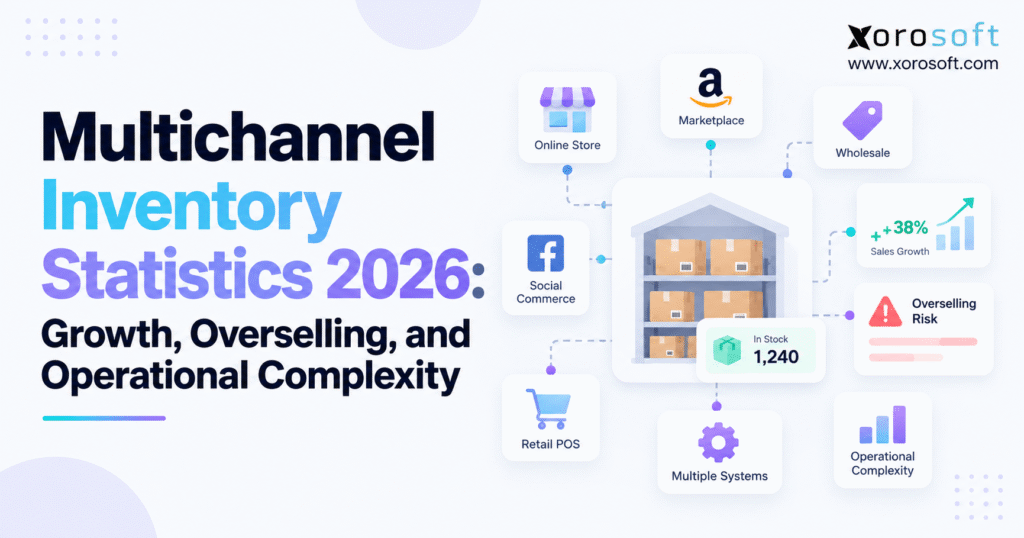
To start, let’s take a closer look at some recent multichannel inventory statistics.
1. Why Multichannel Inventory Statistics Matter More in 2026
The latest multichannel inventory statistics point toward a structural change in ecommerce operations. Revenue is spreading across more digital surfaces while inventory remains physical, location-dependent, and finite.
1.1 Multichannel Ecommerce Statistics Show Continued Channel Expansion
DHL’s 2026 ecommerce research surveyed 29,000 online shoppers and 5,800 ecommerce businesses across 29 markets. Among surveyed businesses, 63% reported selling through social commerce channels, while companies also continued expanding through websites, marketplaces, proprietary apps, and emerging AI-assisted buying environments. The DHL 2026 E-Commerce Trends Report shows how quickly commerce is becoming distributed.
For operators, that distribution changes the inventory problem. Stock availability can no longer be treated as a static number that gets updated after orders arrive. Availability becomes a live operational calculation affected by simultaneous demand.
1.2 Ecommerce Inventory Growth Creates More Inventory Events
Every additional order can create several related inventory transactions. Stock may become reserved, picked, transferred, cancelled, returned, damaged, substituted, or replenished.
A purchase order may create incoming stock without creating immediately sellable stock. A warehouse transfer can reduce availability at the sending location before the receiving location can use those units.
As order volume rises, businesses rarely lose control because they do not know their total quantity. They lose control because different systems disagree about the status, location, ownership, or availability of that quantity.
2. Key Multichannel Inventory Statistics and Ecommerce Benchmarks for 2026
The strongest multichannel inventory statistics reveal three connected trends. Ecommerce demand continues to expand, inventory distortion remains economically significant, and inventory accuracy remains difficult despite years of technology investment.
2.1 Ecommerce Inventory Statistics Reflect a Higher Operating Baseline
Q2 2026 U.S. ecommerce sales were estimated at $340.2 billion on a seasonally adjusted basis. That represented a 3.8% increase from Q1 and a 12.2% increase from Q2 2025.
Total U.S. retail sales for the quarter were estimated at approximately $1.99 trillion. Ecommerce therefore continues to represent a meaningful and expanding portion of retail activity.
For inventory teams, the implication matters more than the headline growth rate. More digital demand means more inventory promises must be evaluated before anyone physically touches a product.
2.2 Inventory Distortion Statistics Still Point to a $1.7 Trillion Problem
IHL Group’s 2026 Inventory Distortion Study estimates that global inventory distortion—the combined economic impact of out-of-stocks and overstocks—costs approximately $1.7 trillion annually, equivalent to 6.2% of global retail sales. The percentage has improved from 10.4% in 2021, but the remaining exposure is substantial. See the IHL 2026 Inventory Distortion Study.
Out-of-stocks account for 65.6% of total distortion, while overstocks account for 34.4%. IHL also estimates that empty shelves represent hundreds of billions of dollars in distortion costs.
These figures cover retail more broadly and should not be interpreted as an ecommerce-specific overselling rate.
2.3 Inventory Accuracy Statistics Show an Execution Gap
Inventory technology has improved, but transaction accuracy remains an operating problem.
IHL reports that 78% of retailers in cited execution research deal with inventory inaccuracies weekly or monthly. Its broader findings also connect inventory problems with supply-chain coordination, ordering, and execution failures. Additional findings are available in IHL’s research summary.
This distinction is critical. An integration can update five channels in seconds, but if the source quantity is wrong, the business distributes inaccurate inventory faster.
3. What Multichannel Inventory Management Statistics Really Measure
Multichannel inventory management is the process of maintaining reliable inventory availability across multiple sales channels and stock locations while accounting for every event that changes what can be sold.
That definition is intentionally broader than “syncing stock.”
3.1 Multichannel Inventory Management Starts With Inventory States
A warehouse may physically contain 100 units of a SKU. That does not automatically mean the business should advertise 100 units.
Some units may already belong to unfulfilled orders. Others may be held for quality control, safety stock, a wholesale allocation, or an interwarehouse transfer.
Shopify’s inventory model illustrates this distinction by separating inventory into states such as On hand, Available, Committed, Unavailable, and Incoming. Its inventory-state documentation demonstrates why on-hand inventory and sellable inventory should not be treated as identical.
3.2 Available-to-Promise Inventory Is More Useful Than Raw Stock
The operational question is not simply, “How many units do we have?”
The more useful question is, “How many units can we safely promise right now?”
Available-to-promise logic considers physical stock together with reservations, unavailable quantities, warehouse restrictions, channel allocations, and other operating rules.
As channel count increases, this calculation becomes a central inventory control rather than an optional feature.
4. Why Multichannel Inventory Complexity Grows Faster Than Channel Count
Adding one new channel does not necessarily add only one new process.
A business moving from Shopify alone to Shopify plus Amazon may suddenly need additional SKU mappings, channel reservations, fulfillment rules, cancellation controls, returns workflows, marketplace buffers, and reconciliation procedures.
4.1 Multichannel Inventory Complexity Comes From Different Channel Rules
Channels can have different rules for bundles, backorders, preorder items, cancellations, returns, and fulfillment service levels.
Wholesale customers may require protected allocations. Marketplaces may penalize cancellation. Retail locations may need safety inventory that cannot be consumed by ecommerce demand.
As channels multiply, inventory management becomes less about calculating total stock and more about deciding which demand is allowed to consume which inventory.
4.2 Inventory Status Can Matter More Than Total Quantity
Consider a company with 500 units across three warehouses. Twenty units are damaged, 50 are already committed, 75 are moving between locations, and 100 are protected for wholesale.
A system publishing “500 available” is numerically simple but operationally wrong.
A stronger multichannel inventory model distinguishes physical ownership, inventory status, warehouse location, and customer commitment before calculating what each channel can sell.
5. What Multichannel Inventory Statistics Reveal About Overselling
Overselling occurs when a company accepts more demand than its available inventory can fulfill.
There is no credible universal 2026 percentage showing how frequently ecommerce companies oversell. Rates vary by SKU velocity, channel architecture, fulfillment model, synchronization frequency, inventory accuracy, and operational discipline.
That limitation matters when interpreting multichannel inventory statistics. Operators should measure their own oversell exposure rather than relying on an unsupported general benchmark.
5.1 Inventory Overselling Often Starts With Synchronization Delays
Imagine Shopify and Amazon both showing one remaining unit.
An Amazon customer purchases it. Before the updated quantity reaches Shopify, another customer completes an order there. Both storefronts accepted valid transactions using the information they had, but only one unit physically exists.
Fast synchronization reduces this exposure window. It does not eliminate every overselling scenario.
5.2 Multichannel Overselling Can Begin Before an Integration Fails
Many oversells originate from inaccurate source data rather than slow APIs.
An unrecorded warehouse pick, receiving mistake, misplaced case, premature return-to-stock transaction, or missing reservation can make the central quantity inaccurate before synchronization starts.
Overselling prevention therefore requires inventory accuracy, warehouse discipline, reservation logic, and clear data ownership in addition to fast integrations.
6. Stockout and Overstock Statistics Show Both Sides of Inventory Distortion
The same underlying operating weakness can create both shortages and excess inventory.
If a business underestimates availability, it can stop selling products that physically exist. If it overestimates availability, it can oversell. Poor forecasting may create stockouts in one location while identical stock sits overstocked somewhere else.
6.1 Stockout Statistics Represent the Larger Inventory Distortion Risk
IHL’s 2026 research attributes 65.6% of inventory distortion to out-of-stocks and 34.4% to overstocks.
For a multichannel company, an “empty shelf” can be digital. A marketplace can display zero stock even when the business owns inventory elsewhere because that location is not connected to the channel’s fulfillment logic.
That means stockout prevention requires location-level visibility as well as companywide inventory visibility.
6.2 Overstock Statistics Often Reveal Forecasting or Visibility Gaps
Overstock consumes working capital and warehouse capacity. It can also create markdowns, aging stock, handling expense, and obsolescence.
Risk management can make the problem harder. Buying farther ahead may reduce exposure to supply disruption but increase the probability that demand changes before inventory arrives.
The objective is therefore not simply carrying less stock. It is improving the information used to decide what to buy, where to position it, and when to reorder.
7. Inventory Accuracy Statistics Are the Foundation of Multichannel Control
A business cannot build reliable multichannel availability on unreliable warehouse inventory.
Inventory accuracy measures whether the quantity and status stored in the system reflect what physically exists at the expected location.
7.1 Warehouse Inventory Accuracy Determines Channel Accuracy
Receiving, putaway, picking, packing, transfers, cycle counts, damage, returns, and adjustments all change sellable inventory.
If one of those transactions happens physically but not digitally, the inventory record begins to drift. Every connected sales channel can then inherit the same discrepancy.
For operations where scanning, bins, transfer control, and warehouse execution have become critical, a connected warehouse management system can help keep physical inventory activity aligned with the system record.
7.2 Inventory Accuracy Metrics Should Identify Causes
A cycle count that discovers five missing units is useful. Understanding why those five units disappeared is more useful.
Operators should classify inventory adjustments by cause. Typical categories include receiving errors, picking mistakes, transfer discrepancies, damage, return processing, incorrect units of measure, and unexplained shrinkage.
Over time, this changes cycle counting from a correction process into an operational improvement process.
8. Multichannel Inventory Synchronization Statistics Need One Source of Truth
Real-time inventory is frequently presented as the solution to multichannel complexity. In practice, synchronization becomes useful only after the company defines which system owns inventory.
8.1 Multichannel Inventory Synchronization Breaks When Several Systems Are Masters
If Shopify, a warehouse application, an inventory tool, and an ERP can independently overwrite available stock, the business does not have a reliable inventory architecture. It has competing sources of truth.
A stronger architecture gives one operational system responsibility for inventory calculation and allows connected systems to consume controlled updates.
The company’s ERP and ecommerce integrations should therefore define ownership, data direction, exception handling, and recovery logic rather than simply connecting endpoints.
8.2 Inventory Synchronization Must Treat Events Differently
A sales order should normally reserve stock quickly. A purchase order should usually create incoming inventory rather than immediately sellable stock.
A return should not automatically increase available inventory until the product passes the required inspection.
Transfers require similar discipline. Inventory leaving one warehouse should stop being available there, but it should not automatically become available at the destination before receipt.
These rules matter more than an attractive “real-time sync” label.
9. Multichannel Ecommerce Inventory Statistics Across Shopify, Amazon, Wholesale, and EDI
One of the clearest lessons from multichannel inventory statistics is that sales channels do not place identical demands on the inventory pool.
Each channel introduces its own availability, fulfillment, and customer-service expectations.
9.1 Shopify Inventory Statistics Depend on State-Aware Availability
Shopify’s inventory framework distinguishes available stock from other inventory states. That distinction helps operators avoid one of the most common multichannel mistakes: assuming everything physically present should be published for sale.
For merchants evaluating deeper ERP connectivity, the Xorosoft ERP Shopify app provides one example of connecting Shopify activity with a broader ERP operating environment.
9.2 Amazon Inventory Management Adds Location and Fulfillment Logic
Amazon’s Multi-Location Inventory program illustrates the commercial importance of location-level inventory.
Amazon reports that sellers using Multi-Location Inventory together with Shipping Settings Automation experienced more than 20% higher average sales conversion and delivery dates that were more than 55% more accurate. These numbers apply to participating sellers and should not be treated as universal ecommerce benchmarks. See Amazon Multi-Location Inventory.
9.3 Wholesale and EDI Inventory Can Consume Stock in Larger Blocks
A DTC shopper might order two units. A wholesale account may order hundreds or thousands.
That difference makes allocation policy important. Businesses may protect quantities for wholesale, DTC, key retailers, or marketplace commitments rather than publishing every available unit to every channel.
10. Multi-Warehouse Inventory Statistics Add a Location Problem to the Quantity Problem
A company can have enough stock overall and still be unable to fulfill an order efficiently.
The practical question becomes: where is the inventory, and can that location satisfy the current customer promise?
10.1 Multi-Warehouse Inventory Requires Clear Transfer States
Inventory moving between facilities exists financially, but it may not be available operationally.
Treating in-transit stock as available at both origin and destination creates double counting. Treating it as unavailable too long can suppress legitimate sales.
Transfer status therefore needs clear departure, in-transit, receipt, and exception events.
10.2 Inventory Location Changes the Value of Stock
Twenty units located near the customer may be operationally more useful than 100 units stored across the country.
Order routing can consider inventory availability, shipping cost, warehouse capacity, service-level expectations, carrier cutoff times, channel rules, and safety stock.
At this point, multi-warehouse inventory management becomes a fulfillment strategy rather than simply a stock ledger.
11. Multichannel Inventory Forecasting Statistics Need Channel-Level Context
Forecasting total demand is not always sufficient in a multichannel operation.
A SKU could sell 5,000 units per month while the source of those sales shifts rapidly between Shopify, Amazon, wholesale, retail, and marketplace channels.
11.1 Channel-Level Inventory Demand Changes Purchasing Decisions
Marketplace promotions can generate sharp demand spikes. Wholesale customers may place large planned orders. DTC launches can create sudden surges after campaigns or influencer activity.
Forecasting should therefore retain a consolidated demand view while also preserving enough channel-level information to explain what changed.
11.2 Multichannel Inventory Forecasting Must Connect Demand With Supply
A buyer needs more than last month’s sales history.
Useful purchasing decisions consider current availability, committed inventory, open purchase orders, supplier lead times, minimum order quantities, safety stock, expected demand, warehouse location, and seasonality.
For businesses where inventory, purchasing, forecasting, accounting, and fulfillment are becoming inseparable, a cloud ERP for inventory-driven businesses can provide a broader operating framework than disconnected purchasing spreadsheets.
12. The Financial Impact Behind Multichannel Inventory Management Statistics
Inventory discrepancies eventually become financial discrepancies.
Incorrect physical quantities can affect valuation, cost of goods sold, purchase accruals, write-offs, margin calculations, and month-end reconciliation.
12.1 Multichannel Inventory Returns Affect Both Stock and Accounting
A refund does not automatically mean the product can immediately be sold again.
Returned merchandise may require inspection, repackaging, repair, quarantine, or disposal.
If the refund happens before the warehouse finishes the physical return process, systems must still reconcile the financial and inventory transactions correctly.
12.2 Disconnected Inventory Data Can Slow Financial Close
Finance teams often feel inventory fragmentation at month end.
They may need to reconcile ecommerce transactions, marketplace activity, warehouse receipts, purchase orders, inventory adjustments, transfers, landed costs, returns, and accounting records across several tools.
When those workflows use consistent transaction data, finance spends less time reconstructing inventory movement after the fact.
13. KPIs That Make Multichannel Inventory Statistics Actionable
Industry-level multichannel inventory statistics provide context, but internal measures determine whether a specific operation is improving.
The most useful KPIs connect inventory-system accuracy with customer, warehouse, and financial outcomes.
13.1 Inventory Accuracy Statistics and Adjustment Rate
Inventory accuracy measures how closely recorded stock matches physical stock. Adjustment rate reveals how frequently the recorded quantity requires correction.
A company can appear accurate because employees constantly make manual adjustments. That may hide an underlying receiving, transfer, or picking problem.
Both measures should therefore be reviewed together.
13.2 Overselling, Stockout, and Inventory Cancellation Metrics
Oversell rate measures orders accepted without enough fulfillable stock. Stockout rate measures demand that encounters unavailable inventory.
Inventory-related cancellations should be separated from customer-requested cancellations. Otherwise, the business cannot see how often inaccurate availability is directly creating lost orders.
13.3 Fill Rate, Transfer Aging, and Available-to-Promise Variance
Fill rate shows how much demand the business can fulfill from available inventory.
Transfer aging shows how long inventory remains between locations. Available-to-promise variance compares the quantity the system believed was sellable with what operations could actually fulfill.
Together, these measures turn multichannel inventory statistics into daily operational controls.
14. Multichannel Inventory Management Statistics Vary by Industry
The basic principles of inventory accuracy remain consistent, but the operational model varies considerably across industries.
A useful inventory system must therefore account for product structure, fulfillment requirements, buying cycles, and regulatory needs.
14.1 Apparel, Furniture, and Sporting Goods Create Different Inventory Complexity
Apparel companies manage size, color, style, season, and return complexity. One style can expand into dozens of inventory-bearing variants.
Furniture businesses often manage long supplier lead times, bulky stock, containers, warehouse capacity, and scheduled delivery.
Sporting goods companies can combine seasonality, bundles, variants, retail demand, ecommerce, and wholesale.
These distinctions are reflected across Xorosoft’s focus on inventory-driven industries, where accurate inventory is a common requirement even though operating workflows differ.
14.2 Food, Wholesale, and Manufacturing Add More Inventory Dimensions
Food and beverage companies may require lot tracking, expiry dates, recalls, and FEFO allocation.
Wholesale distributors deal with customer-specific pricing, case quantities, EDI, inventory allocations, and large orders.
Manufacturers add raw materials, work-in-process, bills of material, production consumption, and finished goods.
In all three environments, inventory cannot be reduced to one quantity field.
15. When Multichannel Inventory Tools and Spreadsheets Stop Scaling
Spreadsheets are not automatically poor inventory tools. They become risky when transactions occur faster than teams can update and reconcile them.
A simple business with one warehouse, a manageable product catalog, limited order volume, and straightforward purchasing may use spreadsheets successfully.
15.1 Multichannel Inventory Upgrade Triggers Are About Complexity, Not Revenue
A $20 million business with a narrow catalog and one predictable channel may have simpler inventory needs than a $5 million business selling thousands of variants through multiple channels and warehouses.
Operators should watch for repeated inventory reconciliation, spreadsheet purchasing, slow receiving, frequent stock adjustments, overselling, duplicate data entry, and delayed financial close.
Those signals indicate that process complexity is exceeding the current system architecture.
15.2 ERP Becomes Relevant When Multichannel Inventory Workflows Depend on Each Other
ERP becomes worth evaluating when inventory can no longer be separated from purchasing, accounting, warehouse execution, forecasting, manufacturing, and channel demand.
At that point, an integrated ERP platform can be evaluated as the operational system behind ecommerce rather than simply another inventory application.
The goal is not consolidation for its own sake. The goal is reducing the number of conflicting records people must manually reconcile.
16. Choosing Multichannel Inventory Software Around Operational Requirements
Software selection should start with workflows rather than a feature-count comparison.
A company may need inventory software, an OMS, WMS, ERP, or a combination depending on where the complexity actually exists.
16.1 Multichannel Inventory Software Categories Solve Different Problems
Inventory software focuses primarily on stock visibility and inventory control.
An OMS specializes in order orchestration and routing. A WMS manages warehouse execution. ERP connects inventory with broader purchasing, accounting, manufacturing, sales, and financial processes.
No category is automatically the right choice.
A company outsourcing fulfillment may not need the same WMS depth as a distributor operating several warehouses. A manufacturer may require production planning that a pure ecommerce inventory application does not provide.
16.2 Test Inventory Exceptions Before Choosing a Platform
A clean order flowing from checkout to shipment is not the strongest test of software.
Evaluate partial receipts, damaged stock, split shipments, transfer shortages, cancelled orders, bundle components, wholesale allocations, returns, inventory corrections, and failed integrations.
Those exceptions reveal whether the platform can support real operations after the easiest transaction ends.
17. AI and Multichannel Inventory Data Quality in 2026
AI is changing ecommerce discovery, forecasting, analytics, and decision support.
DHL’s 2026 research reports growing use of AI-powered assistants by both shoppers and ecommerce businesses. That trend places even more pressure on companies to maintain reliable operational data.
17.1 AI Inventory Recommendations Need Reliable Inventory States
An AI system can analyze demand quickly, but it still needs to understand whether inventory is available, committed, damaged, incoming, or stored somewhere that cannot fulfill the current order.
If those definitions are inconsistent, automation can generate fast but unreliable recommendations.
For businesses exploring AI against live ERP information, Xorosoft’s AI MCP Server represents one architecture for giving AI systems controlled access to operational ERP data.
The priority remains the same: inventory-data quality first, AI sophistication second.
18. Common Multichannel Inventory Management Mistakes
Many inventory failures look technical but originate in operating policies.
One of the most common mistakes is allowing several systems to independently control the same stock quantity.
18.1 Publishing Raw On-Hand Inventory to Every Channel
On-hand inventory can include committed or unavailable quantities.
Publishing that number directly can expose units that should already be protected for existing demand.
Sellable inventory should account for reservations, safety stock, quality holds, warehouse restrictions, and channel-specific rules.
18.2 Restoring Returned Inventory Before Inspection
A customer returning an item does not guarantee that the item is immediately resellable.
Returns can arrive damaged, incomplete, used, incorrectly packaged, or in need of repair.
The inventory should return to an available state only after the required warehouse process confirms its condition.
18.3 Ignoring Multichannel Inventory Integration Failures
API errors, authentication failures, rate limits, SKU mapping errors, webhook failures, and duplicate events should be visible to operators.
An integration is not reliable simply because it normally works.
The architecture also needs to show what failed, what retried, and what still requires intervention.
19. Turning Multichannel Inventory Statistics Into an Operating Model
The practical value of multichannel inventory statistics is not the numbers alone. It is using those numbers to decide where operational control needs to improve.
The 2026 data shows continued ecommerce growth alongside persistent inventory distortion. Inventory visibility therefore needs to be treated as operational infrastructure rather than merely a reporting convenience.
19.1 Define Ownership Before Optimizing Multichannel Inventory
Document which system owns product data, inventory availability, orders, warehouse transactions, purchasing, and accounting.
Then define inventory states consistently.
Teams should agree on the operational meaning of on hand, committed, available, unavailable, incoming, in transit, damaged, and returned.
Without those definitions, integrations can technically work while business users still interpret the data differently.
19.2 Measure Multichannel Inventory Exceptions Before Adding Automation
Track inventory adjustments, overselling, stockouts, delayed transfers, failed integrations, receiving errors, recounts, and inventory-related order cancellations.
These exceptions reveal where the operating model is failing.
Businesses evaluating ERP can also review implementation case studies from companies with comparable operational complexity. The useful question is not whether another business bought ERP. It is which workflow problems required a more connected architecture.
19.3 Create One Inventory Promise Across Every Sales Channel
A strong multichannel architecture does not require every channel to store identical information.
It requires each channel to receive an inventory quantity derived from the same trusted operational record.
Shopify, Amazon, wholesale, retail, and EDI may follow different allocation rules, but those rules should not create different versions of physical reality.
20. Practical Next Steps From 2026 Multichannel Inventory Statistics
The central message from 2026 multichannel inventory statistics is straightforward: channel growth increases the importance of inventory discipline.
Ecommerce continues expanding while global inventory distortion remains substantial. The operational response should be better definitions, better transaction control, and clearer data ownership rather than simply adding another inventory application.
20.1 Start With Inventory Truth Before Adding More Software
First determine where inventory truth currently lives.
Then separate physical stock from sellable stock. Map every transaction that changes availability, including orders, reservations, receipts, transfers, returns, adjustments, and manufacturing movements.
The exercise often reveals that the main problem is not a missing dashboard. It is that several tools are calculating inventory differently.
If the existing stack can still maintain reliable inventory with simple processes, there is no reason to add unnecessary complexity.
20.2 Evaluate Whether the Current Multichannel Inventory Architecture Can Scale
If teams increasingly spend time reconciling Shopify, Amazon, warehouses, purchasing spreadsheets, wholesale orders, and accounting systems, the problem has moved beyond basic inventory tracking.
At that point, evaluate whether an integrated ERP architecture can remove some of those reconciliation points.
Xorosoft is built for inventory-driven businesses that need inventory, purchasing, accounting, warehousing, ecommerce operations, forecasting, manufacturing, and reporting to work from a shared operational foundation.
The objective should not be “more software.” It should be fewer unanswered questions about what inventory exists, where it is, what has already been promised, and what can safely be sold.
20.3 Use Multichannel Inventory Statistics to Set the Next Operational Priority
The next step should reflect the biggest current source of inventory risk.
For one business, that may be warehouse accuracy. For another, it may be Shopify and marketplace synchronization. A wholesale distributor may need better allocations, while a manufacturer may first need stronger purchasing and production visibility.
Businesses that want to map those requirements against their current workflows can contact Xorosoft for an ERP readiness discussion, product demonstration, or workflow-based review.
For 2026 and beyond, the practical benchmark is simple: every channel should make customer promises using inventory that the operation can actually fulfill.
Frequently Asked Questions
What are multichannel inventory statistics?
Multichannel inventory statistics measure ecommerce growth, inventory accuracy, stockouts, overselling, synchronization, and operational complexity across multiple sales channels. They help businesses understand how channel expansion affects inventory control and fulfillment performance.
Why is multichannel inventory management important in 2026?
Businesses increasingly sell through ecommerce stores, marketplaces, wholesale, retail, and social channels. Effective multichannel inventory management keeps inventory availability accurate as orders, reservations, transfers, returns, and warehouse transactions occur simultaneously.
What causes overselling across multiple sales channels?
Overselling usually results from delayed inventory synchronization, inaccurate stock records, missing reservations, simultaneous orders, incorrect SKU mappings, transfer errors, or multiple systems independently controlling the same inventory quantity.
How can businesses prevent multichannel inventory overselling?
Use one inventory system of record, calculate available-to-promise quantities, reserve inventory immediately, maintain warehouse accuracy, synchronize inventory events quickly, and monitor integration failures before they create customer-facing stock discrepancies.
What is available-to-promise inventory?
Available-to-promise inventory represents stock that can safely be committed to new demand after accounting for existing reservations, unavailable quantities, safety stock, warehouse restrictions, and other inventory allocation rules.
When should a multichannel business consider ERP?
ERP becomes worth evaluating when inventory, purchasing, accounting, warehousing, forecasting, manufacturing, and sales channels require frequent manual reconciliation or teams can no longer maintain one reliable operational source of truth.
What multichannel inventory KPIs should businesses track?
Important KPIs include inventory accuracy, stockout rate, oversell rate, fill rate, inventory adjustments, inventory-related cancellations, transfer aging, inventory turnover, forecast accuracy, and available-to-promise variance.
Recent Posts
-
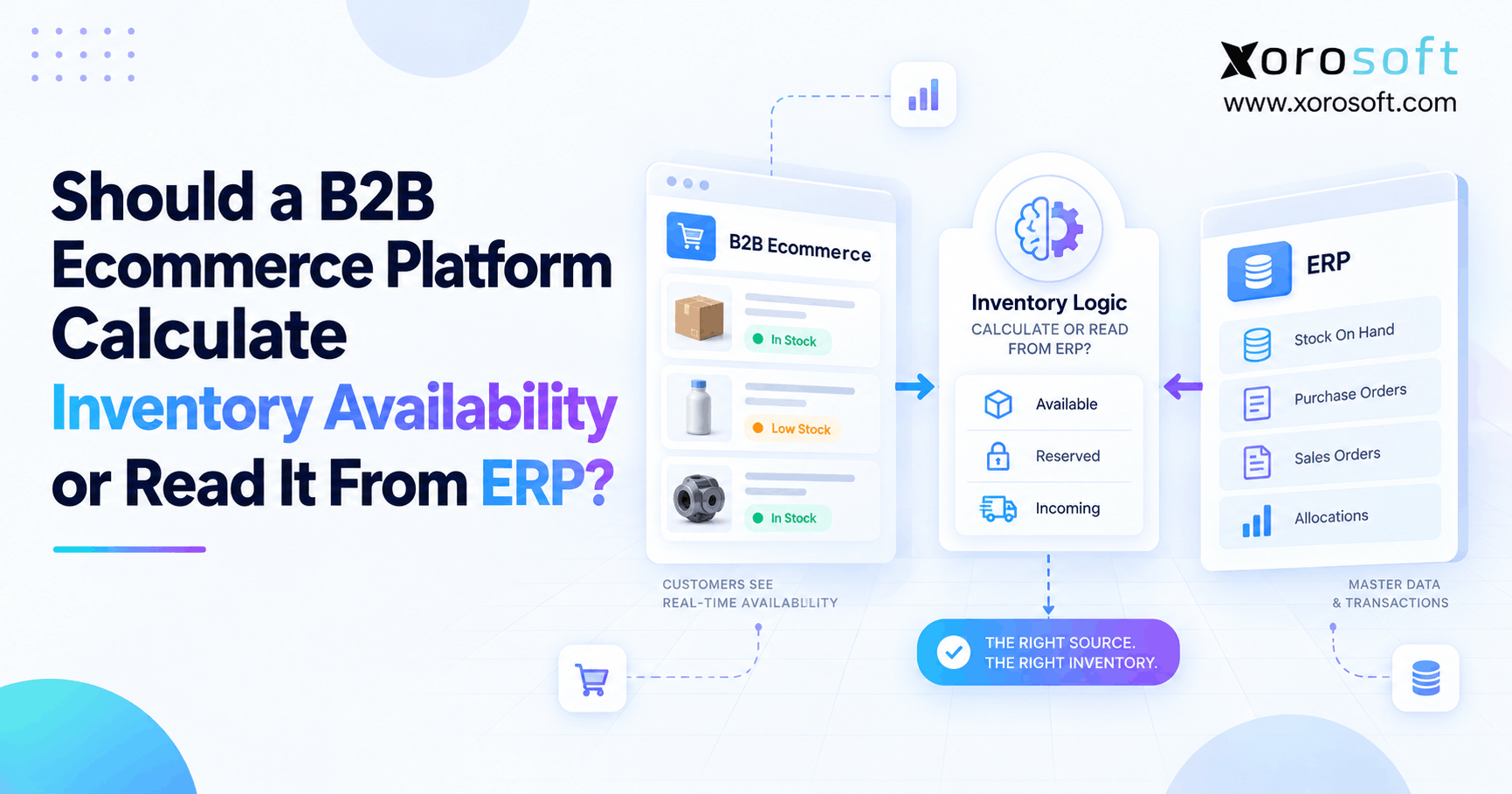
 Should a B2B Ecommerce Platform Calculate Inventory Availability or Read It From ERP?
 -
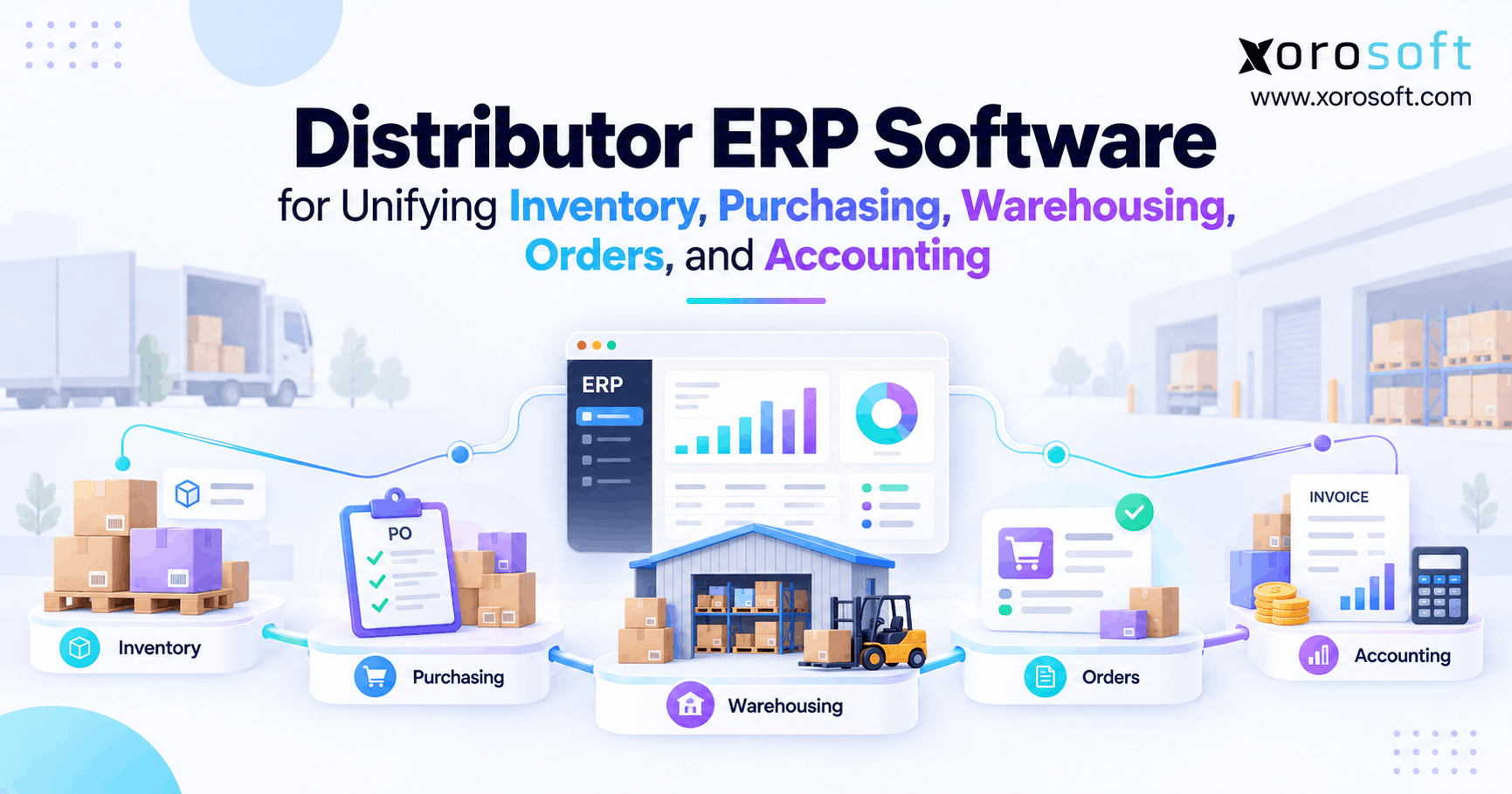 Distributor ERP Software for Unifying Inventory, Purchasing, Warehousing, Orders, and Accounting
 -
 Multichannel Inventory Statistics 2026: Growth, Overselling, and Operational Complexity
 -
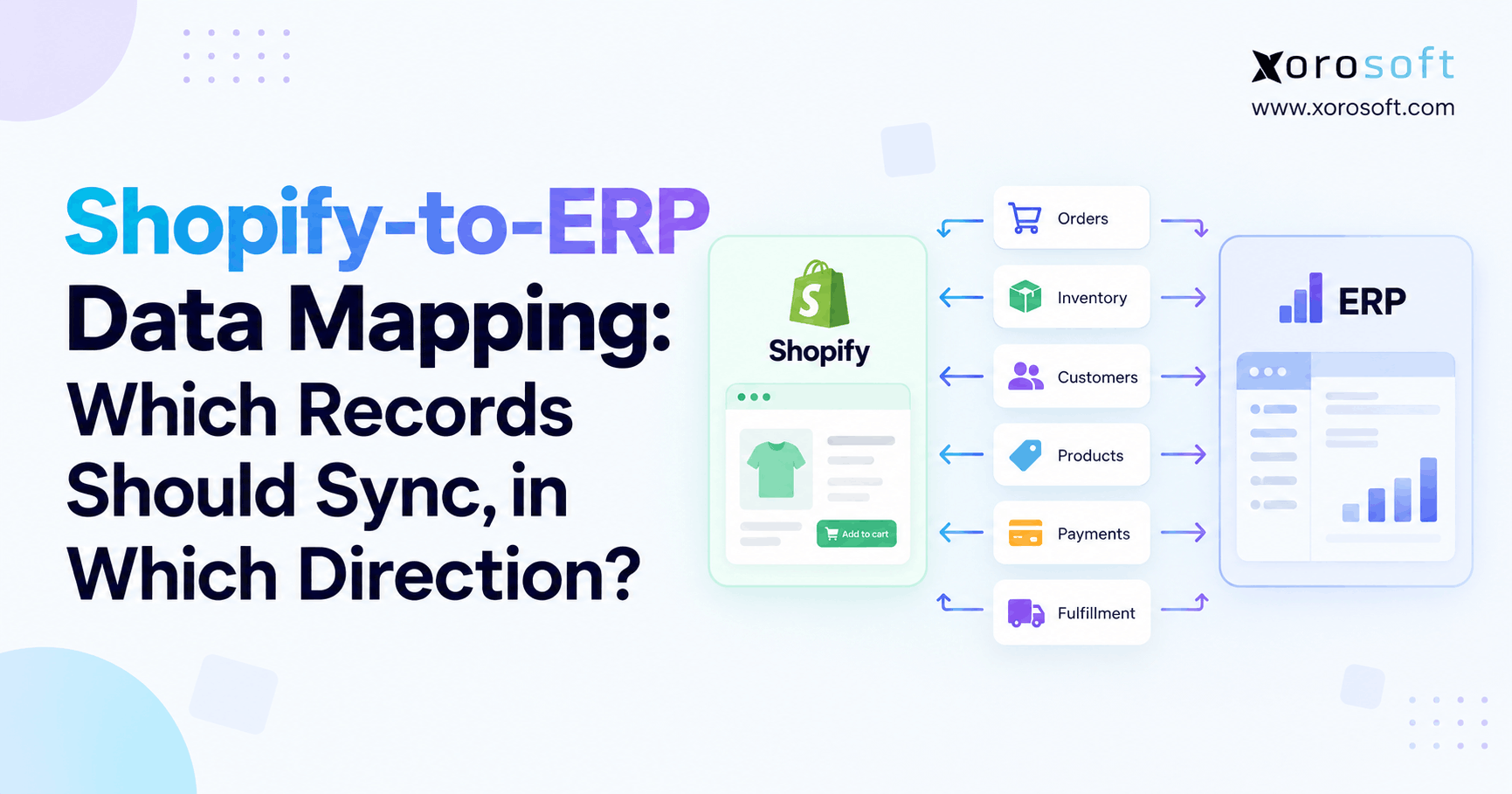
 Shopify-to-ERP Data Mapping: Which Records Should Sync, in Which Direction?
 -
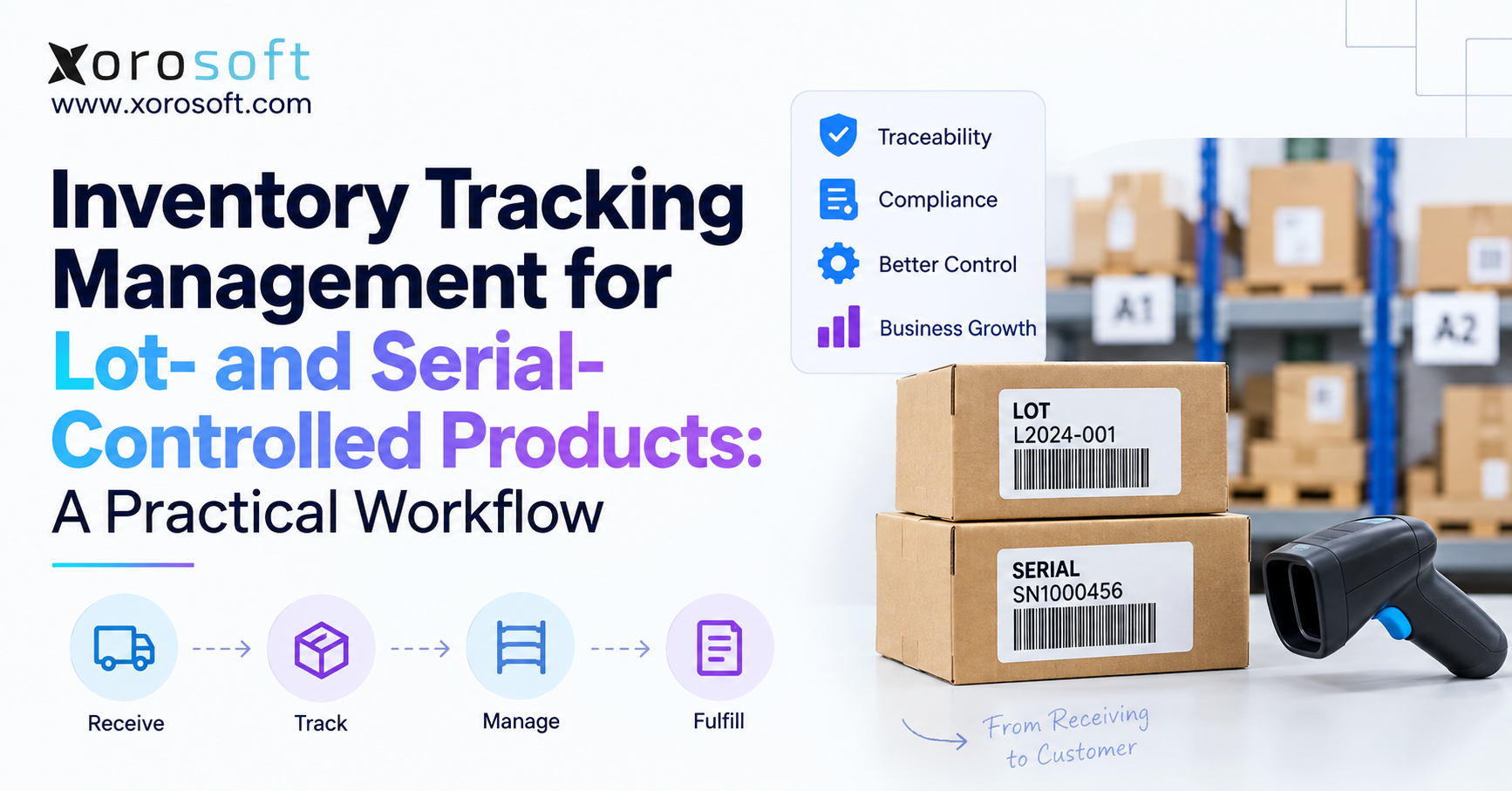
 Inventory Tracking Management for Lot- and Serial-Controlled Products: A Practical Workflow