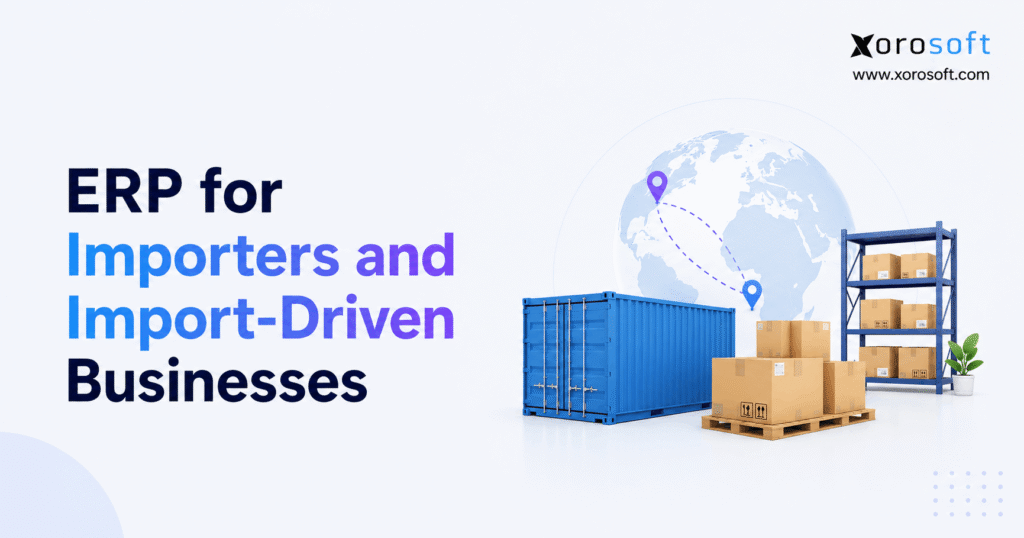
If you’re exploring software solutions, ERP for importers is an essential topic to consider.
1. Why Import-Driven Businesses Outgrow Disconnected Systems
1.1 Import Operations Create Problems Before Inventory Arrives
Import-driven businesses face a basic challenge: inventory starts affecting cash, planning, sales, and margins long before it reaches the warehouse.
A domestic purchase may move from purchase order to warehouse receipt within days. An international purchase can take far longer. Supplier production, freight booking, port handling, ocean or air transit, customs clearance, local transport, receiving, and final put-away can all add time.
During that period, the business still needs clear answers.
Purchasing needs to know what to order next. Sales wants to know what it can promise customers. Finance needs to understand cash needs and expected inventory value. Warehouse teams need to plan receiving space and labor. Managers need to know whether incoming stock will arrive before current stock runs out.
When each team works from a different system, those answers quickly fall apart.
1.2 Importers Need More Than an On-Hand Inventory Number
A standard inventory report may show 4,000 units in stock. That number alone does not tell the full story.
Some units may already belong to wholesale orders. Another shipment may be on the water. A supplier may still be producing the next batch. One container may arrive next week while another faces a delay. At the same time, Shopify, Amazon, and wholesale customers may all compete for the same stock.
For that reason, importers need to understand several inventory states at once.
They need to see what they have now, what customers have claimed, what suppliers have confirmed, what has shipped, and what should arrive next.
That level of visibility becomes hard to maintain when purchasing lives in spreadsheets, accounting runs in one system, ecommerce uses another platform, and warehouse teams rely on a separate app.
1.3 ERP for Importers Connects the Full Operating Picture
This is where ERP for importers becomes useful.
A good ERP does more than store accounting entries or inventory counts. It connects purchasing, incoming stock, landed costs, warehouses, demand planning, accounting, and sales channels.
That shared system gives each team a common source of data.
The need for ERP usually builds over time. Many growing companies start with QuickBooks, Shopify, spreadsheets, an inventory app, and perhaps a warehouse or EDI tool. Each tool solves a clear problem.
Trouble starts when staff spend more time moving data between systems than using the data to make decisions.
The real trigger for ERP is not revenue alone. Complexity matters more.
2. What ERP for Importers Actually Needs to Manage
2.1 ERP for Importers Connects the Inventory Lifecycle
ERP for importers is a business system that connects international purchasing, incoming inventory, landed costs, warehouse activity, accounting, forecasting, and sales within one shared environment.
That connection matters because every inventory move affects more than one department.
A purchase order creates future stock. A shipment delay changes the buying plan. Freight and duty change product cost. Warehouse receiving changes available inventory. Customer orders reduce what the business can promise elsewhere.
Finance also needs those changes to flow into inventory value, payables, cost of goods sold, and margin reporting.
Instead of rebuilding that picture manually, ERP keeps the related records connected.
2.2 Import ERP Software Goes Beyond Basic Stock Tracking
Basic inventory software can tell a company that 1,500 units sit in a warehouse.
An importer often needs much more detail.
Another 3,000 units may still be in production. Two thousand may be in transit. Eight hundred may already belong to customer orders. A buyer may need to place the next PO before any of that stock arrives.
Time therefore matters as much as quantity.
Importer ERP software should help teams understand both physical stock and future supply. That makes it easier to plan purchases, protect customer orders, and avoid buying twice because one team could not see what another team had already ordered.
2.3 ERP for Import Businesses Links Operations and Finance
Imported products often gain extra costs between the supplier and the final warehouse.
Freight, duty, insurance, brokerage, port fees, and local delivery can all raise the true product cost.
If a spreadsheet holds those costs while inventory and accounting use different values, margin reports become hard to trust.
A strong ERP for import businesses connects those costs to the items and receipts they belong to. Finance then gets a clearer inventory value, while sales and purchasing teams get a more useful view of product economics.
3. How ERP Software for Importers Handles the Purchase-to-Warehouse Cycle
3.1 Importer ERP Starts With Demand Planning
International purchasing should start before stock becomes low.
Buyers need to review current inventory, customer demand, seasonality, open purchase orders, supplier lead times, and safety stock.
Long lead times make this especially important.
If a supplier needs six weeks for production and international transit takes another six weeks, waiting until inventory reaches a normal reorder point can leave the business short for months.
A useful importer ERP brings demand and supply data together so buyers can make decisions earlier.
3.2 ERP for Global Purchasing Builds a Clear Incoming Inventory Record
Once the buyer creates a purchase order, that PO should become part of the inventory plan.
The record should contain more than supplier name, quantity, and unit cost.
Importers may also need currency, expected ship date, expected arrival date, destination warehouse, payment terms, supplier lead time, and shipment status.
Changes should flow through the same process.
If a supplier ships only part of the order, teams need to see that. When an arrival date changes, planners need the new date. If the business sends one shipment to two warehouses, location plans should reflect the split.
This creates a reliable view of future inventory.
3.3 ERP for Importers Tracks Goods in Transit
Goods in transit sit between supplier inventory and warehouse inventory.
They may have left the supplier, but warehouse teams cannot use them yet. Depending on the terms of the purchase, the business may also take ownership before physical delivery.
A simple flow looks like this:
Purchase Order → Supplier Production → Shipment → Goods in Transit → Customs → Warehouse Receipt → Available Inventory
Each importer may use slightly different stages.
The key point stays the same: teams need to know what is coming, where it sits in the process, and when it should become available.
4. Landed Cost ERP Turns Supplier Price Into True Product Cost
4.1 What Landed Cost Means for Importers
Landed cost is the total cost of buying a product and bringing it to the place where the business can use or sell it.
The supplier price often makes up only one part of that cost.
Importers may also pay freight, customs duty, tariffs, insurance, brokerage, port fees, handling, and local delivery charges.
Those added costs can change product margins in a major way.
A product that costs $20 at the factory may cost $24, $25, or more by the time it reaches the warehouse. If managers use only the factory price when they set pricing or review margin, they can make poor decisions.
4.2 How ERP for Importers Calculates Landed Cost
A simple working formula is:
Landed Cost = Product Cost + Freight + Duties + Insurance + Brokerage + Handling + Other Direct Import Costs
For example, assume an importer receives 1,000 identical units.
| Cost Component | Amount |
|---|---|
| Supplier cost | $20,000 |
| Freight | $2,500 |
| Duty | $1,400 |
| Insurance | $300 |
| Brokerage and handling | $800 |
| Total landed cost | $25,000 |
If equal cost per unit makes sense for the shipment, each unit carries a $25 landed cost rather than the $20 supplier price.
That $5 difference affects gross margin, pricing, supplier reviews, and future purchasing plans.
4.3 Landed Cost ERP Needs Fair Cost Allocation
Real shipments rarely contain 1,000 identical products.
One container may carry high-value, light items beside large, low-cost products. Dividing freight equally between all items could give a false view of cost.
For that reason, ERP systems may allocate landed costs by quantity, value, weight, volume, or another method.
Importers should choose a method that matches the cost itself.
Insurance may make more sense by item value. Freight may need weight or volume. Some fees may apply to only one product group.
The goal is simple: place each cost where it belongs and keep a clear record of how the system reached the final inventory value.
4.4 Accurate Landed Cost Helps More Than Finance
Landed cost affects much more than accounting.
Purchasing teams use it when comparing suppliers. Product managers use it when reviewing margins. Sales teams rely on it when they approve discounts. Finance uses it for inventory value and cost of goods sold.
If the business underestimates landed cost, it may think a product performs better than it really does.
That makes landed cost a business decision tool, not just an accounting task.
5. ERP for Importers Needs Strong Purchasing and Warehouse Control
5.1 Purchasing ERP for Importers Reduces Spreadsheet Risk
Spreadsheets work well for analysis, but they become risky when several teams use them as the main purchasing system.
A buyer may change an expected date in one file while finance still uses an older version. Sales may see incoming stock without knowing that another customer already has a claim on it. Warehouse teams may receive a shipment without access to the latest supplier changes.
An ERP ties those records together.
For companies that have reached this level of complexity, XoroONE is one example of a cloud ERP platform that connects purchasing with inventory, warehouse work, accounting, ecommerce, manufacturing, reporting, and planning.
5.2 Multi-Warehouse ERP Controls Stock After Arrival
Inventory complexity does not end when a container reaches the warehouse.
A company may receive all goods into one main site and then transfer them to several other locations. Another importer may send different containers directly to different warehouses.
At that point, location accuracy becomes essential.
Teams need to know which site holds the stock, what sits in transfer, what customers have reserved, and what remains free to sell.
For businesses with deeper warehouse needs, XoroWMS focuses on warehouse work such as receiving, put-away, scanning, picking, replenishment, counting, and multi-location control.
5.3 Import Inventory Management Must Separate Stock States
A common mistake is to treat every ordered unit as sellable.
That can lead sales teams to promise stock that will not arrive for weeks.
Imported inventory may sit in production, transit, customs, receiving, quality checks, put-away, transfer, or allocation.
A clear ERP process separates those states.
The business can then make promises based on realistic availability rather than a single total quantity.
6. Demand Planning ERP Helps Importers Buy Earlier
6.1 Long Lead Times Change Import Inventory Forecasting
Importers have less room to recover from late purchasing decisions.
If a product takes three or four months to replace, a buyer must act before the warehouse shows an obvious shortage.
Planning therefore needs to look forward.
The buyer should ask how much stock will remain by the time the next realistic shipment can arrive.
That calculation depends on current inventory, incoming supply, customer demand, supplier lead time, and safety stock.
6.2 Importer ERP Brings On-Hand and Incoming Stock Together
Consider a business with 5,000 units in stock.
Wholesale customers have already claimed 3,500 units. Another 4,000 units will arrive in six weeks. The supplier also needs eight weeks to make the next order.
A simple on-hand report does not give the buyer enough information.
By bringing available, reserved, and incoming stock together, ERP helps the buyer see the full supply position.
That makes purchase planning more useful and lowers the chance of ordering too much or too late.
6.3 Forecasting Supports Buyer Judgment
No ERP can predict every future event.
Customer demand can change. Suppliers can miss dates. Promotions can lift sales. Freight delays can add weeks. New products may have little useful history.
Forecasting should help buyers make better decisions, not replace their judgment.
A good system brings the right facts together, highlights likely gaps, and lets the buyer adjust the plan.
7. Multi-Currency and Accounting ERP for Importers
7.1 Import Purchasing Can Add Currency Risk
Importers may buy inventory in one currency and sell it in another.
That creates extra work around exchange rates, supplier bills, cash planning, and gain or loss reporting.
Businesses should test these processes during ERP selection instead of relying on a simple “multi-currency” feature label.
XoroERP targets businesses that need a broader system than basic accounting software. Its scope includes purchasing, inventory, warehouse operations, finance, planning, and other core ERP processes.
7.2 ERP for Importers Connects Inventory Value With Accounting
When inventory arrives, its value may include more than the supplier invoice.
Freight, duty, and other landed costs can raise the final cost. When the company sells those goods, that cost flows into cost of goods sold.
A connected ERP gives finance a clearer link between physical inventory activity and financial records.
Teams still need strong accounting rules and review controls, but they spend less time rebuilding the history of a transaction across several tools.
7.3 Slow Month-End Close Can Signal ERP Readiness
Some importers first notice system limits during month-end.
Finance may chase purchasing for open POs. Freight invoices may arrive after warehouse receipts. Inventory changes may need manual review. Marketplace payouts may need matching. Staff may pull reports from several systems before they can trust the final numbers.
When close depends on repeated manual checks, the business should review whether its software stack still fits its needs.
8. ERP for Shopify Importers Connects Online Demand With Supply
8.1 Shopify ERP Gives Importers a Back-End Operating Layer
Shopify handles customer-facing ecommerce well, but importers still need to manage suppliers, purchase orders, stock in transit, landed costs, warehouses, and accounting.
That creates a need for a back-end system.
A typical flow may look like:
Shopify Order → ERP Inventory → Warehouse Fulfillment → Purchasing Demand → Accounting
This setup becomes even more useful when the same stock also supports Amazon, wholesale, retail, or EDI orders.
8.2 Shopify ERP Integration Should Cover Real Workflows
A buyer should not stop at asking, “Does the ERP connect with Shopify?”
Instead, test what moves between the two systems.
Orders, products, variants, stock levels, fulfillment updates, customer details, refunds, and payout data may all matter.
The Xorosoft ERP app on the Shopify App Store offers a useful example of this type of connection. Its listing covers order sync, inventory updates, shipping data, Shopify payouts, multi-location inventory, purchasing, warehouse work, and accounting links.
For an importer, the value comes from connecting customer demand with the supply plan behind it.
9. ERP for Importers vs Spreadsheets, QuickBooks, and Inventory Apps
9.1 ERP for Import Businesses vs Spreadsheets
Spreadsheets remain useful for analysis, planning, and quick models.
Problems start when they become the main system for purchase orders, incoming stock, landed cost, and inventory control.
As transaction volume grows, teams may create several versions of the same file. Expected dates go stale. Formulas break. One employee may understand the process while others depend on that person’s knowledge.
ERP gives the business a more controlled way to manage shared transactions.
It does not need to remove spreadsheets from the company. Instead, it should move core records into a system that all teams can trust.
9.2 ERP for Importers vs QuickBooks
QuickBooks can still work well for smaller importers.
The need for ERP often appears when accounting is no longer the main problem.
A company may need stronger purchasing, more warehouse control, better forecasting, manufacturing, EDI, multichannel inventory, or a clearer view of incoming stock.
At that point, management should compare the cost of keeping many connected apps with the cost and effort of moving key work into ERP.
9.3 Importer ERP vs Standalone Inventory Software
Inventory apps can solve many early growth problems.
They may improve stock counts, order flow, and purchasing without the cost of a full ERP project.
A broader ERP becomes more useful when inventory needs to connect directly with accounting, forecasting, manufacturing, warehouse work, and several sales channels.
The best choice depends on process depth, not the label on the software.
10. Industry ERP Requirements for Import-Driven Businesses
10.1 Apparel Importer ERP Needs Variant and Seasonal Control
Apparel companies often buy months before demand becomes clear.
A single style may include many size and color options. Wholesale accounts may need stock set aside while ecommerce customers buy from the same pool.
Late shipments can also hurt more in seasonal categories because inventory may lose value after the main selling period.
An apparel importer ERP therefore needs strong variant control, buying plans, allocation, and warehouse visibility.
10.2 Furniture Importer ERP Needs Container and Location Visibility
Furniture importers may face long lead times, high freight costs, bulky products, and large warehouse needs.
A delayed container can affect customer delivery dates and warehouse labor plans at the same time.
Because freight can add a large amount to total product cost, landed-cost accuracy also matters.
10.3 Sporting Goods ERP Needs Seasonal Planning
Sporting-goods businesses often combine seasonal demand with large product ranges.
Buyers may need to place large orders months before peak season.
That raises the value of demand planning, incoming stock visibility, warehouse allocation, and channel-level inventory control.
10.4 Wholesale Importer ERP Must Protect Customer Commitments
Wholesale importers often promise goods before they arrive.
If 10,000 units are inbound but customers have already claimed 8,000, the business should not treat all 10,000 as free inventory.
ERP can help teams track allocations alongside purchase orders and expected receipts.
Wholesale companies may also need customer pricing, EDI, B2B orders, payment terms, and larger order workflows.
10.5 Manufacturing ERP Connects Imported Parts With Production
Manufacturers may import raw materials, packaging, or components rather than finished products.
In that case, an inbound delay can stop production.
The system needs to connect bills of material, work orders, material needs, supplier lead times, purchase orders, and incoming stock.
Businesses can review the Xorosoft industries page to see how ERP needs change across apparel, furniture, sporting goods, wholesale, food, manufacturing, and other inventory-heavy sectors.
11. How to Choose the Best ERP for Importers
11.1 Start ERP Selection With the Real Import Process
Before reviewing software, map the way inventory moves through the business.
A simple model may look like:
Demand Plan → Purchase Order → Supplier Production → Shipment → Goods in Transit → Landed Cost → Warehouse Receipt → Allocation → Fulfillment → Accounting
Then look for gaps.
Where does someone copy data into a spreadsheet? Where do teams use different numbers? Which updates depend on email? Which reports take hours to build? Where do buyers lack clear incoming inventory?
Those gaps should guide the ERP search.
11.2 Test Importer ERP With Real Transactions
Standard vendor demos often show clean, ideal workflows.
Import operations rarely stay that clean.
Ask each vendor to create an overseas PO, receive part of it, update incoming stock, add freight or duty, receive the rest, move stock between warehouses, sell the product, and show the accounting result.
This kind of test reveals far more than a feature list.
11.3 Test ERP Exceptions, Not Only the Happy Path
Suppliers ship short. Costs arrive late. Goods get damaged. Arrival dates change. Containers split. One warehouse may need stock that another warehouse expected to receive.
Ask vendors to show how the system handles those cases.
ERP often proves its value when something goes wrong.
11.4 Compare ERP Platforms Against Your Own Needs
Importers may look at NetSuite, Acumatica, Dynamics 365, Business Central, Odoo, Sage, Cin7, Brightpearl, Fishbowl, Xorosoft, and other options.
No single platform fits every importer.
Businesses comparing two systems should use the same workflow and scoring method for both.
Companies looking specifically at Xorosoft and NetSuite can review the Xorosoft vs. NetSuite comparison as one source of vendor information. Because Xorosoft created the page, buyers should test all key claims during the demo and selection process.
12. Common ERP Mistakes Importers Should Avoid
12.1 Choosing ERP Only for Accounting
Finance often leads an ERP project, but importer workflows stretch well beyond the general ledger.
Purchasing, inventory, warehouse, sales, ecommerce, forecasting, and manufacturing may all depend on the same data.
An ERP that makes finance happy but forces warehouse and buying teams back into spreadsheets will not solve the full problem.
12.2 Leaving Landed Cost Until Late in the Project
Importers should define landed cost rules during selection.
List the charges the company pays, when invoices arrive, how costs should be split, and which teams need the final values.
Then test those cases in the ERP.
A simple “landed cost supported” label does not tell buyers enough.
12.3 Treating Warehouse Receiving as a Small Detail
Receiving turns expected stock into real stock.
This is also where teams discover short shipments, damage, wrong quantities, late deliveries, and other issues.
Importers should test the receiving process in detail.
A smooth PO screen means little if warehouse teams struggle when the goods arrive.
12.4 Rebuilding Every Old Spreadsheet Inside ERP
Not every spreadsheet needs a direct ERP copy.
Some sheets exist because the old system lacked key features. Others remain useful for quick analysis.
The project team should decide which data belongs in ERP, which belongs in reporting, and which ad hoc work can stay in spreadsheets.
12.5 Ignoring User Adoption
Software cannot improve a process that teams refuse to follow.
If buyers create POs in ERP but keep separate tracking sheets, the company still has two versions of the truth.
Strong implementation needs clear process owners, training, and rules about where teams record key data.
13. ERP for Importers FAQ
13.1 What is ERP for importers?
ERP for importers is software that connects international purchasing, incoming inventory, landed costs, warehouses, accounting, forecasting, and sales. It gives teams one shared record from the supplier purchase through transit, receipt, sale, and financial reporting.
13.2 Why do importing companies need ERP software?
Importers often consider ERP when long lead times, multiple warehouses, growing SKU counts, landed costs, overseas suppliers, and several sales channels become hard to manage across separate tools. The need grows when teams spend too much time matching data between systems.
13.3 What is landed cost in ERP?
Landed cost shows the full cost of bringing inventory into the business. It may include product price, freight, duty, insurance, brokerage, handling, and other direct import costs. ERP can link those charges to the inventory they relate to.
13.4 How does ERP calculate landed cost?
The system records extra import costs and divides them across the related items. Depending on the ERP and cost type, teams may allocate charges by quantity, value, weight, volume, or another method.
13.5 Can ERP track goods in transit?
Yes. Many ERP systems track incoming stock through purchase orders, shipment records, or dedicated goods-in-transit processes. This helps teams separate goods that have shipped from inventory that warehouse staff can actually use.
13.6 Why is goods-in-transit visibility important?
Buyers may need to place the next order before the current shipment arrives. A clear transit view helps them see what is already coming and avoid both late buying and duplicate purchases.
13.7 Can ERP manage overseas suppliers?
Yes. ERP can hold supplier data, purchase orders, prices, lead times, expected receipts, currencies, bills, and purchase history. Some platforms also add approval flows and supplier performance reports.
13.8 Can ERP handle international purchase orders?
Most ERP systems support purchase orders. Importers should also test currencies, expected dates, partial shipments, destination warehouses, shipment updates, and landed-cost handling.
13.9 Can ERP allocate freight costs to inventory?
Many ERP platforms can allocate freight and other import costs to inventory. The exact methods vary, so buyers should test the cost rules that match their own shipments.
13.10 Can ERP track customs duties?
Many systems can record customs duties as part of landed cost or related charges. Importers should still use current customs guidance and qualified advice for legal and compliance questions.
13.11 Can ERP help importers prevent stockouts?
A good ERP brings together on-hand stock, customer demand, incoming POs, lead times, and expected arrivals. That gives buyers a better chance to order early enough to cover future demand.
13.12 How can ERP reduce overstock?
Better supply visibility helps buyers avoid ordering stock that is already on the way. Forecasting also makes it easier to compare expected demand with current and incoming inventory before placing another PO.
13.13 Can ERP manage multiple warehouses?
Yes. Multi-warehouse ERP can track inventory by site, manage transfers, show location-level availability, and support receiving and allocation across several facilities.
13.14 What is the difference between ERP and WMS?
ERP covers wider business processes such as purchasing, accounting, sales, inventory, and planning. WMS goes deeper into warehouse tasks such as receiving, put-away, picking, scanning, replenishment, and counting.
13.15 What is the difference between ERP and import management software?
Import management software often focuses on shipping, customs, freight, and trade tasks. ERP covers a wider set of business processes, including purchasing, inventory, accounting, warehouse work, sales, and sometimes manufacturing.
13.16 Is ERP better than spreadsheets for importers?
ERP becomes a better fit when spreadsheets serve as shared transaction systems across several teams. Sheets still work well for analysis, but they do not provide the same controls, real-time updates, audit trail, and connected workflows as ERP.
13.17 When should an importer move from QuickBooks to ERP?
The move makes sense when accounting still works but the rest of the operation has become hard to manage. Common signs include multi-warehouse stock, manual purchasing, forecasting outside the system, manufacturing, EDI, ecommerce growth, and heavy month-end checks.
13.18 Does a small import business need ERP?
Not always. A small importer with few SKUs, one warehouse, low order volume, and simple accounting may do well with lighter tools. ERP becomes more useful as process complexity grows.
13.19 Can ERP for importers integrate with Shopify?
Yes. Many ERP platforms connect with Shopify. Buyers should test order sync, products, inventory, fulfillment, refunds, customer data, and financial data instead of checking only whether an integration exists.
13.20 Can importer ERP support Amazon and wholesale together?
Yes, depending on the platform and integrations. The key need is shared inventory control so the business does not promise the same stock to several channels at once.
13.21 Can ERP support EDI for wholesale importers?
Many ERP systems support EDI directly or through a partner. Companies should test the exact documents and trading partner needs they use, such as orders, shipping notices, invoices, and acknowledgements.
13.22 Can ERP help with import inventory forecasting?
Yes. ERP can combine sales history, current stock, allocations, open POs, lead times, and incoming goods. Buyers can then use that data to make better purchase decisions.
13.23 Can ERP manage imported parts used in manufacturing?
Manufacturing ERP can connect imported parts with bills of material, work orders, production plans, and material needs. This helps planners see when late components may affect production.
13.24 What features should ERP software for importers have?
Most importers should review purchasing, incoming inventory, landed cost, warehouse control, forecasting, accounting, reporting, and sales-channel links. Some businesses may also need multi-currency, EDI, manufacturing, lot tracking, or deeper warehouse tools.
13.25 How do you choose the best ERP for an importing business?
Map your real workflow first. Then ask each vendor to demonstrate the same import process, including partial receipts, landed costs, warehouse moves, accounting, and sales-channel data. Choose the system that fits the way your business actually works.
14. Practical Next Steps for Importers Evaluating ERP
14.1 Map One Complete Import Cycle Before Choosing Software
An importer does not need ERP only because goods cross an international border.
The need appears when the company can no longer manage the flow of data with enough speed and accuracy.
Purchasing needs future demand. Sales needs reliable availability. Warehouse teams need clear receiving details. Finance needs true product cost. Management needs to see what sits on hand, in transit, allocated, delayed, and due for reorder.
If those answers require several spreadsheets, apps, exports, and manual checks, the current software stack may be holding the business back.
Start by mapping one real import cycle.
Follow a product from demand planning through purchase order, supplier production, shipment, transit, landed cost, warehouse receipt, customer allocation, fulfillment, and accounting.
Mark every point where someone copies data, sends an email to confirm a number, or checks another system before making a decision.
Those handoffs reveal the ERP requirements that matter most.
14.2 Build the ERP Shortlist Around Your Hardest Workflows
The best ERP review does not ask which vendor has the longest feature list.
Instead, ask which system can handle the difficult parts of your operation with the fewest manual steps.
Use the same test with every vendor. Include an overseas supplier, partial shipment, late freight bill, more than one warehouse, customer allocation, and final accounting entry.
That approach creates a fair comparison and reduces the chance of buying a system based on a polished demo.
14.3 Decide Whether a Unified ERP Model Fits the Business
For inventory-driven companies that want to connect purchasing, warehouse work, finance, ecommerce, wholesale, and planning, a broader ERP model may make sense.
Xorosoft’s product family includes cloud ERP through XoroONE, broader ERP functions through XoroERP, and warehouse tools through XoroWMS.
The right fit still depends on the company’s actual process, team, integrations, and growth plans.
14.4 Take the Next Step With a Workflow-Based ERP Review
A useful ERP discussion should start with your operation rather than a generic feature tour.
Document how your team buys inventory, tracks incoming stock, receives goods, allocates landed cost, moves products between warehouses, fulfills Shopify or wholesale orders, and closes the books.
That gives both your team and the vendor a clear basis for evaluation.
Book a personalized ERP discovery session with Xorosoft to review your purchasing, imported inventory, warehouse, accounting, ecommerce, forecasting, or manufacturing workflows against your real business needs.
Recent Posts
-
 ERP Landed Cost Module vs Spreadsheet Calculations for Importers
 -
 How to Build an Open-to-Buy Plan for an Omnichannel Brand
 -
 Cold Storage WMS for Food and Beverage Distribution
 -
 ERP Buying Statistics 2026: Evaluation, Implementation, and Adoption Risks
 -
 How a Distributor Reduced B2B Order Exceptions Without Restricting Sales