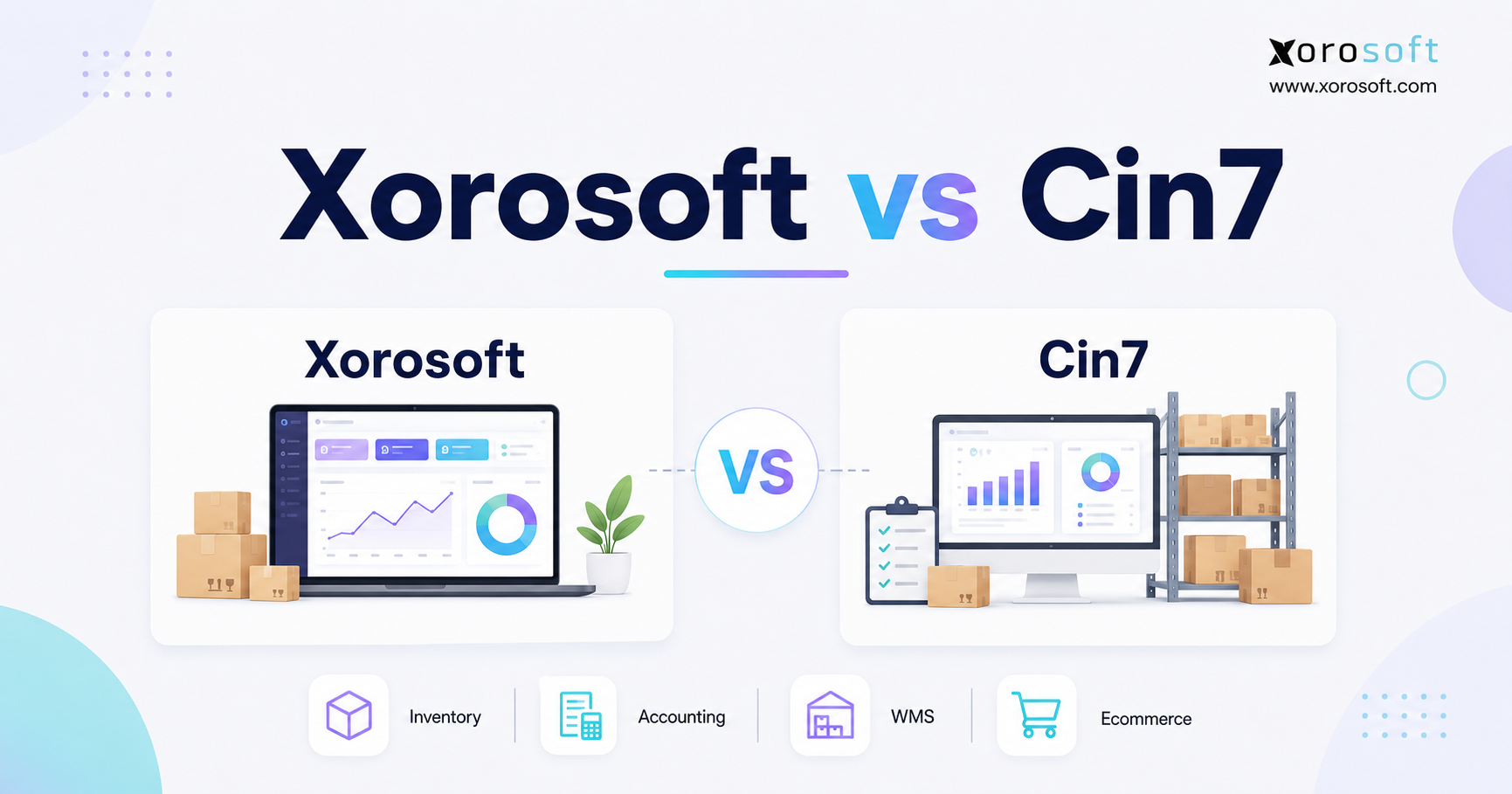
If you are looking for a Cin7 inventory ERP comparison, this article will help guide your decision.
1. Inventory Growth Changes the Software Question
Product businesses rarely replace software because one screen stops working. Instead, operational pressure builds across several departments at once. Inventory quantities no longer match between ecommerce, warehouse and accounting systems. Purchasing teams return to spreadsheets because replenishment suggestions lack context. Warehouse staff create workarounds for receiving, picking and transfers. Meanwhile, finance spends more time reconciling stock value, returns and cost of goods sold.
At first, each issue may look separate. However, the combined pattern usually shows that the company has outgrown its current operating architecture. The challenge is no longer limited to inventory tracking. Rather, it concerns the way orders, stock, purchasing, warehousing and financial data move through the business.
For that reason, a useful Cin7 inventory ERP comparison cannot rely on a simple list of features. Two platforms may both mention accounting, manufacturing and warehouse management, yet process the underlying transactions differently. One may control the workflow inside a connected ERP. Another may manage the operational transaction and synchronize it with a separate accounting or fulfillment platform.
Therefore, buyers should begin with a more practical question: which system should own each transaction?
1.1 Transaction Ownership Matters More Than Feature Count
A growing company needs clear ownership of operational data. Otherwise, teams edit the same record in several applications and create conflicting versions.
Before comparing systems, determine:
- Which platform owns the product master?
- Where is available inventory calculated?
- Which system creates purchase orders?
- Where are landed costs assigned?
- Which application directs warehouse work?
- Where are invoices generated?
- Which platform calculates inventory value?
- Where does bank reconciliation occur?
- Which system produces management reporting?
For example, an inventory platform may create a sales invoice and send the financial entry to another accounting system. Alternatively, a cloud ERP may create both the operational and financial transaction in one database. Both approaches can work. Nevertheless, each creates different implementation responsibilities.
As a result, buyers should assess synchronization timing, exception handling, permissions and reporting rather than asking only whether a feature exists.
1.2 ERP and Inventory Software Now Overlap
Inventory software traditionally focuses on products, stock, purchasing, sales orders and fulfillment. ERP traditionally connects finance, procurement, inventory, manufacturing, warehousing and reporting.
Today, however, those categories overlap. Modern inventory platforms may include accounting tools, production planning, B2B ordering and warehouse workflows. Likewise, cloud ERP platforms may provide barcode scanning, ecommerce integrations and detailed replenishment controls.
Consequently, the software label should not decide the shortlist. Instead, the business should evaluate workflow depth, architecture, implementation effort and future scalability.
1.3 Native Modules, Integrations and Add-Ons Create Different Trade-Offs
Native functionality operates inside the primary platform. Therefore, users generally share the same records, permissions and transaction structure.
Integrated functionality connects separate applications. This approach can preserve strong specialist tools. However, it also introduces synchronization rules, mappings and possible failure points.
Add-ons extend the main platform through another vendor. In many cases, they provide valuable specialist functionality. Nevertheless, every add-on adds another contract, configuration and support relationship.
Accordingly, the business should decide whether it wants a specialist inventory platform, inventory software connected to accounting, a configurable omnichannel system, a connected cloud ERP or a best-of-breed stack.
2. Cin7 Inventory ERP Comparison: Core, Omni and Xorosoft Platform Models
However, Cin7 should not be treated as one uniform product. Instead, buyers should separate Cin7 Core from Cin7 Omni because the two products address different levels of operational complexity.
In practice, Cin7 Core generally suits inventory-led product businesses that want a more standardized platform. Cin7 Omni, by contrast, is designed for more configurable omnichannel operations, including EDI, 3PL and multi-entity requirements.
Meanwhile, Xorosoft follows another model. It positions XoroONE, XoroERP and XoroWMS as connected platforms for inventory-driven businesses that need operational and financial processes to work together.
2.1 What Cin7 Core Is Designed to Manage
Cin7 Core is relevant to small and midsized product companies that need inventory, purchasing, sales and production workflows in one operational environment.
Typical use cases include:
- Inventory control
- Purchase-order management
- Sales-order processing
- Multi-location stock
- Ecommerce integrations
- Warehouse workflows
- Light manufacturing
- Production planning
- Customer management
- Accounting connectivity
In addition, businesses may use Cin7 Core with external accounting software. Therefore, the company can retain an accounting-first structure while improving product operations.
Core may fit a business that prefers standardized processes and a comparatively direct implementation. However, buyers should confirm whether its warehouse, production and financial workflows match the exact requirements of the company.
2.2 What Cin7 Omni Is Designed to Manage
Cin7 Omni is intended for more complex operating environments.
Typical requirements include:
- Multiple entities
- Several ecommerce channels
- EDI trading partners
- External 3PL relationships
- Configurable workflows
- Advanced automation
- Wholesale and retail operations
- Complex inventory allocation
- Broad integration requirements
Because Omni is more configurable, implementation becomes especially important. Buyers should ask which workflows are available out of the box, which require configuration and which depend on partner services.
Moreover, a flexible platform can solve complex requirements only when the implementation team understands the company’s real processes. Therefore, vendor capability and implementation capability should be evaluated together.
2.3 What Xorosoft Cloud ERP Is Designed to Manage
XoroONE is positioned as a connected cloud ERP for inventory-driven businesses. It brings inventory, sales, purchasing, accounting, warehouse management, manufacturing, forecasting, ecommerce, EDI and reporting into one environment.
Meanwhile, XoroERP supports companies that require a broader ERP operating structure, while XoroWMS focuses on warehouse execution and control.
Consequently, this model may be relevant when a company is replacing more than one application. For example, the current stack may include QuickBooks, Shopify, spreadsheets, an inventory app, a warehouse app and separate EDI tools.
In that situation, the objective is not simply better stock tracking. Instead, the objective is one operational framework for inventory, purchasing, finance, warehousing and reporting.
3. Xorosoft vs Cin7 Feature Comparison at a Glance
The Cin7 inventory ERP comparison becomes clearer when each platform is evaluated according to operating model rather than marketing category.
| Evaluation Area | Xorosoft | Cin7 Core | Cin7 Omni |
|---|---|---|---|
| Primary orientation | Connected cloud ERP | Inventory and product operations | Configurable omnichannel operations |
| Accounting model | Accounting inside the broader ERP | Native tools or accounting integration | Confirm the proposed architecture |
| Inventory management | Connected across ERP modules | Central platform capability | Central platform capability |
| Purchasing | Connected supplier and procurement workflows | Purchase-order and replenishment functions | Configurable purchasing workflows |
| Warehouse management | ERP-connected WMS and dedicated WMS option | Warehouse capabilities vary by plan | Strong 3PL and automation positioning |
| Manufacturing | BOM, work orders and production costing | Light manufacturing and MRP | Confirm workflow depth during discovery |
| Ecommerce | Connected ecommerce operations | Direct channel integrations | Broad omnichannel ecosystem |
| EDI | Supported through connected workflows | Confirm the required scope | Native EDI positioning |
| Multi-entity | Confirm configuration and scope | Evaluate against Core requirements | Important Omni use case |
| Best-fit scenario | Consolidating operations and finance | Standardized inventory-led operations | Complex omnichannel operations |
However, this table is only a starting point. Therefore, every important workflow should be demonstrated with the company’s real products, warehouses, channels and accounting requirements.
4. Cin7 Inventory ERP Comparison for Inventory Management
Inventory accuracy is more than displaying an on-hand quantity. A growing business must know what is physically present, what is available to promise, what has been reserved and what is expected to arrive.
4.1 Multi-Warehouse Inventory Visibility
A useful platform should distinguish between:
- On-hand inventory
- Available inventory
- Allocated inventory
- Reserved stock
- Incoming inventory
- In-transit transfers
- Damaged inventory
- Quarantined inventory
- 3PL inventory
- Amazon FBA stock
- Components reserved for production
Likewise, both platform families can support multi-location inventory. However, the company should test how each system handles changes in real time.
For example, ask the vendor to process an order when one unit remains. Next, cancel the order after allocation. Then, transfer the unit to another warehouse. Finally, create a second order through a different sales channel.
This sequence shows whether availability, allocation and transfer logic remain consistent.
4.2 Inventory Allocation and Overselling Controls
Allocation becomes more important when several channels compete for the same stock.
The business may need to:
- Protect stock for wholesale accounts
- Maintain a Shopify safety buffer
- Reserve units for retail stores
- Allocate by order priority
- Route orders by warehouse
- Prevent one marketplace from consuming all stock
- Separate damaged inventory from sellable inventory
Therefore, the system should support operational rules instead of publishing one quantity everywhere.
In addition, buyers should test cancellations, partial shipments, backorders and returns. These exceptions often reveal the real quality of inventory logic.
4.3 Inventory Valuation and Landed Cost
Moreover, physical inventory and financial value must remain aligned.
The evaluation should include:
- Costing methods
- Freight and duty allocation
- Supplier price changes
- Currency conversion
- Purchase-price variance
- Inventory adjustments
- Returns
- Production costs
- Cost of goods sold
- Inventory subledger reconciliation
For this reason, finance and operations should evaluate inventory together. A system can show the correct quantity while still producing difficult month-end adjustments.
4.4 Lot, Serial and Expiry Tracking
Lot and serial controls matter when a company needs traceability.
For example, common use cases include food expiration, recalls, warranty tracking, industrial components, regulated products and quality-control holds.
Accordingly, the demonstration should follow one lot or serial number from receiving through storage, production, fulfillment and return.
5. Cin7 Inventory ERP Comparison for Accounting Architecture
Accounting is one of the most important parts of the evaluation because the platforms may support different financial architectures.
For example, Cin7 Core can be used with its own financial tools or connected accounting software. Xorosoft, by contrast, places accounting inside the wider ERP structure.
5.1 Cin7 Core Accounting Workflows
Cin7 Core may support accounting-related processes within the platform. However, buyers should confirm whether the proposed configuration meets requirements for:
- General ledger
- Accounts receivable
- Accounts payable
- Bank reconciliation
- Tax handling
- Financial statements
- Multi-currency
- Period closing
- Audit controls
- Accountant access
- Consolidation
- Cash-flow reporting
Accounting functionality does not automatically suit every finance team. Therefore, the controller or CFO should participate in the demonstration.
5.2 Cin7 with QuickBooks Online or Xero
Alternatively, a company may use Cin7 for inventory and operations while retaining QuickBooks Online or Xero for accounting.
This model can work when responsibilities are clear. However, the implementation must define which system owns customers and suppliers, where accounts are created, how tax codes are mapped, where invoices can be edited and how returns synchronize.
Moreover, the company should confirm which system controls reconciliation, how failed transactions are corrected and which report is considered authoritative.
5.3 Xorosoft Connected ERP Accounting
By contrast, Xorosoft places accounting within the same environment as inventory, purchasing, sales, warehousing and manufacturing.
As a result, operational transactions can flow into financial reporting without requiring a separate accounting synchronization for each event.
Nevertheless, buyers should validate multi-entity accounting, multi-currency, tax workflows, financial consolidation, audit permissions, bank integrations, revenue recognition and period-close procedures.
A connected ERP can reduce integration points. However, it must still meet the requirements of the finance team.
6. Cin7 Inventory ERP Comparison for Purchasing and Forecasting
Meanwhile, purchasing becomes inefficient when buyers must combine sales exports, supplier spreadsheets, warehouse balances and judgment before creating an order.
A stronger platform converts demand and inventory signals into controlled supplier commitments.
6.1 Purchase-Order Management
In addition, the software should support supplier data, lead times, order quantities, price breaks, approvals, delivery dates, partial receipts, credits and revisions.
For example, begin with a real shortage and show how the system identifies demand, selects a supplier and posts the receipt.
6.2 Replenishment Recommendations
Useful replenishment recommendations may consider historical sales, current demand, open sales orders, available inventory, incoming purchase orders, safety stock, supplier lead time, order multiples, warehouse demand, promotions and seasonality.
However, automation should support buyer judgment rather than replace it. Teams still need to review unusual demand, supplier constraints and cash-flow priorities.
6.3 Inventory Forecasting Differences
Both platform families can support forecasting-related workflows. Nevertheless, buyers should avoid evaluating forecasting with a polished demonstration dataset.
Instead, use the company’s own history and test seasonal demand, promotions, stockout periods, new products, discontinued products, manual overrides, forecast accuracy and purchase recommendations.
Therefore, the most useful forecasting tool is the one that explains its assumptions and improves purchasing decisions.
7. Cin7 Inventory ERP Comparison for Warehouse Management
In contrast, inventory software explains what stock exists. A warehouse management system directs the physical work required to receive, store, pick, pack and ship it.
7.1 Receiving and Putaway
Ask each vendor to demonstrate receiving against a purchase order, over-receiving, under-receiving, damaged-stock handling, lot or serial capture, quality inspection, location assignment, putaway instructions and receipt corrections.
As a result, the team can see whether warehouse activity updates inventory and finance without duplicate entry.
7.2 Picking, Packing and Shipping
A warehouse comparison should include single-order picking, batch picking, wave picking, zone picking, barcode validation, packing verification, shipping-label generation, carrier selection, shipment confirmation and return receiving.
Cin7 Core may provide warehouse capabilities inside its operating platform, while Cin7 Omni may support more configurable workflows and 3PL relationships.
Xorosoft provides warehouse workflows through XoroONE and the warehouse-focused XoroWMS.
Therefore, compare the actual picking and packing process rather than the use of the term “WMS.”
7.3 Multi-Warehouse and 3PL Operations
Moreover, multi-warehouse management requires more than a list of locations.
The system may need to control order routing, interwarehouse transfers, regional fulfillment, location replenishment, warehouse-level safety stock, 3PL inventory, shipment confirmations, return routing and inventory ownership.
In addition, test the delay between a 3PL transaction and the update visible in the central platform.
8. Cin7 Inventory ERP Comparison for Manufacturing and Production
Similarly, manufacturing requirements range from simple assembly to detailed production planning. Therefore, buyers should define the required manufacturing depth before comparing platforms.
8.1 Bills of Materials and Assembly
In particular, the evaluation should cover single-level and multi-level BOMs, subassemblies, alternative components, packaging, labour, waste, yield, revisions and finished-goods costing.
A platform that supports kits may not support complex production. Consequently, use a real BOM during the demonstration.
8.2 Material Requirements Planning
Furthermore, material requirements planning connects demand with component requirements.
A practical MRP process should consider finished-goods demand, component inventory, open work orders, open purchase orders, supplier lead time, production lead time, safety stock and minimum order quantities.
As a result, the platform can recommend both purchasing and production actions.
8.3 Work Orders and Production Control
A realistic manufacturing demonstration should include creating a work order, reserving components, issuing raw materials, recording labour, reporting scrap, completing production, receiving finished goods, calculating cost and reviewing variance.
XoroONE and XoroERP position manufacturing within a broader ERP structure that includes inventory, purchasing, warehousing and accounting.
However, resellers may not need this depth. Therefore, manufacturing should influence the decision only when it supports a real operational process.
9. Cin7 Inventory ERP Comparison for Shopify and Ecommerce
Likewise, Shopify integration should be evaluated as an operational process rather than a simple connector.
Therefore, the important question is what happens after an order enters the inventory or ERP platform.
9.1 Shopify Inventory and Order Synchronization
Test product records, variants, inventory levels, multiple stores, order downloads, order edits, cancellations, partial fulfillment, returns, discounts, taxes, gift cards, payments and payout reconciliation.
Cin7 can connect inventory and order workflows with Shopify. Meanwhile, the Xorosoft ERP Shopify app connects Shopify with wider ERP operations.
Therefore, test exceptions. For example, edit an allocated order, process a partial refund and complete the remaining fulfillment.
9.2 Shopify as Part of a Wider ERP Workflow
For a small merchant, Shopify may remain the main operating platform.
As the company grows, however, a Shopify order may need to trigger inventory allocation, warehouse picking, customer invoicing, cost-of-goods-sold entries, replenishment, production requirements, channel reporting and payout reconciliation.
Consequently, the ERP or inventory platform becomes the operational layer behind Shopify.
9.3 Amazon and Marketplace Operations
Additionally, marketplace sellers should evaluate FBA, merchant fulfillment, fees, settlements, returns, inventory buffers and product profitability.
In addition, follow one marketplace order from inventory availability through settlement.
10. Cin7 Inventory ERP Comparison for Wholesale and EDI
Meanwhile, wholesale operations add requirements that do not always appear in direct-to-consumer ecommerce.
These may include customer-specific pricing, credit terms, sales representatives, EDI documents, backorders and inventory allocation.
10.1 Wholesale Pricing and B2B Ordering
Specifically, test customer price lists, contract pricing, quantity discounts, credit limits, payment terms, B2B ordering, backorders and allocations.
Cin7 Core may fit standardized wholesale workflows, while Cin7 Omni may fit more configurable operations.
XoroONE, meanwhile, connects B2B ordering with inventory, purchasing, warehouse and accounting processes.
10.2 EDI and Retailer Compliance
EDI evaluation should cover purchase orders, order acknowledgements, advance shipping notices, invoices, labels, routing instructions, trading-partner onboarding, error handling, document reprocessing and chargeback prevention.
Cin7 Omni is often evaluated when native EDI is a major requirement. Xorosoft, by contrast, connects EDI through its wider ecommerce and ERP environment.
Therefore, compare trading-partner coverage, document types, onboarding and exception handling rather than only the EDI label.
11. Cin7 Inventory ERP Comparison for Reporting and Integrations
Similarly, growing companies often struggle because every department uses a different report.
For example, operations reviews available stock. Finance reviews inventory value. Purchasing maintains a spreadsheet. Ecommerce reviews channel sales. Meanwhile, warehouse managers track fulfillment separately.
A useful platform should explain these differences and support controlled reconciliation.
11.1 Operational and Financial Reporting
The evaluation should include inventory availability, valuation, aging, stockouts, overstock, open purchase orders, supplier performance, warehouse productivity, order status, returns, production, customer profitability, product profitability, cash flow, accounts receivable and accounts payable.
Moreover, test backdated adjustments, returns, integration failures and period closing because exceptions expose reporting weaknesses.
11.2 Integration Breadth vs Native Workflow Depth
On one hand, integration breadth offers flexibility because the company can retain specialist applications.
On the other hand, native workflow depth may reduce synchronization requirements and simplify cross-functional reporting.
Neither strategy is automatically better. Therefore, buyers should assess who maintains each integration, how frequently data synchronizes, how errors are reported, whether historical changes are supported, how duplicates are prevented and which vendor owns support.
As a result, the best architecture balances flexibility with manageable dependencies.
12. Cin7 Inventory ERP Comparison for Pricing and Total Cost
Although subscription price is visible, operating cost is often hidden. For this reason, the comparison should include software fees, implementation, integrations, volume limits and internal labour.
12.1 Compare the Full Commercial Scope
Ask each vendor to separate software subscription, users, modules, order volume, ecommerce connections, EDI, warehouse functionality, forecasting, API access, support, onboarding, training, migration and custom reporting.
Pricing structures may change. Therefore, businesses should request written proposals based on the same requirements.
12.2 Implementation Costs
For example, implementation may include discovery, data cleaning, migration, configuration, integrations, training, testing and post-launch support.
A lower subscription can become expensive when the company needs many add-ons and manual controls. Conversely, a broad ERP can be excessive for simple inventory needs.
12.3 Total Operating Cost
| Cost Category | Questions to Ask |
| Subscription | Which users, modules and volumes are included? |
| Implementation | Are discovery, configuration and project management included? |
| Data migration | Which records and history will be transferred? |
| Integrations | Are connectors native, partner-managed or custom? |
| Training | How many teams and locations need training? |
| Support | What service level is included after launch? |
| Add-ons | Are forecasting, EDI or WMS functions separate? |
| Internal labour | How much reconciliation remains? |
| Growth | What changes when locations or entities increase? |
Therefore, compare multi-year operating cost rather than the first monthly subscription.
13. Cin7 Inventory ERP Comparison by Industry
Similarly, software fit depends partly on industry operating patterns.
Therefore, the same configuration will not suit an apparel brand, food manufacturer and industrial distributor equally.
13.1 Apparel, Fashion and Footwear
Important requirements include size and colour variants, seasonal collections, pre-orders, wholesale allocation, returns, markdown management, multiple stores and product launches.
Accordingly, buyers should test purchasing and inventory at both the style and SKU level.
13.2 Furniture and Home Goods
Furniture businesses may need large-item inventory, bundles, long supplier lead times, deposits, special orders, partial shipments, multiple warehouses, delivery scheduling and landed cost.
Therefore, the platform should support both the operational and financial effects of long order cycles.
13.3 Food, Beverage and Consumer Products
Relevant requirements may include lot tracking, expiry dates, recall traceability, quality holds, recipes, production planning, waste recording and first-expiring-first-out fulfillment.
For example, the vendor should demonstrate the full traceability path using a real product and lot.
13.4 Wholesale Distribution and Manufacturing
Wholesale distributors and manufacturers often need purchasing, inventory, customer pricing, EDI, warehouse execution, accounting and production to use consistent data.
Xorosoft provides dedicated ERP positioning for apparel, distribution, furniture, food and beverage, manufacturing, sporting goods and other product-focused industries.
Cin7 Core or Omni may also fit these sectors. However, the final choice depends on inventory, channel, production and integration complexity.
14. Cin7 Inventory ERP Comparison: When Each Platform May Fit Better
Accordingly, the evaluation should not declare one universal winner. Instead, it should match each platform to the company’s operating requirements.
14.1 When Cin7 Core May Fit Better
Cin7 Core may be a strong candidate when inventory and product operations are the main priority, the company wants a standardized platform, faster onboarding matters, QuickBooks Online or Xero will remain in the stack and ecommerce integration breadth is important.
14.2 When Cin7 Omni May Fit Better
Cin7 Omni may be more suitable when native EDI is a major requirement, the company manages several 3PLs, multiple entities require central visibility, workflows need substantial configuration and advanced automation is important.
14.3 When Xorosoft ERP May Fit Better
Xorosoft may be more suitable when accounting and operations should share one ERP structure, purchasing, WMS, manufacturing and reporting must work together, several applications are being replaced and multi-warehouse inventory must connect with finance.
Companies evaluating larger enterprise platforms can also review the Xorosoft vs NetSuite comparison.
14.4 When Neither Platform Is Necessary
Neither platform may be appropriate for very small sellers, service-only businesses, merchants satisfied with Shopify and basic accounting, or companies that need only a lightweight reorder tool.
Ultimately, the goal is to select the smallest architecture that supports the next stage without constant workarounds.
15. How to Run a Cin7 Inventory ERP Comparison in a Live Demonstration
However, a generic product tour rarely exposes the differences that matter.
Therefore, every vendor should complete the same workflows using realistic data.
15.1 Build a Weighted Scorecard
Evaluate inventory, purchasing, accounting, warehouse management, manufacturing, forecasting, Shopify, Amazon, wholesale, EDI, reporting, integrations, implementation, support and total cost.
Assign weights before demonstrations begin. As a result, impressive but low-priority features will not control the decision.
15.2 Request Workflow-Based Demonstrations
Ask each vendor to import a Shopify order, allocate inventory, route the order, pick and pack it, confirm shipment, create the invoice, post the accounting effect, create a purchase recommendation, receive a purchase order, process a return, create a production order and produce inventory and financial reports.
15.3 Confirm Implementation Responsibilities
Before signing, request a written project scope, migration plan, integration list, responsibility matrix, training plan, testing plan, go-live criteria, support process, change-order policy and total commercial proposal.
Moreover, the implementation document should assign ownership for every important task.
16. Frequently Asked Questions About This Cin7 Inventory ERP Comparison
16.1 What Is the Main Difference Between Xorosoft and Cin7?
Xorosoft is positioned as a connected cloud ERP for inventory, accounting, purchasing, warehousing, manufacturing and reporting. Cin7 Core focuses on standardized product operations, while Cin7 Omni supports more configurable omnichannel, EDI, 3PL and multi-entity requirements.
16.2 Is Cin7 an ERP System?
Cin7 overlaps with ERP across purchasing, inventory, production, accounting and warehouse workflows. However, its ERP role depends on the selected product and the processes that remain in connected applications.
16.3 Is Xorosoft a Complete ERP Platform?
Yes. XoroONE covers inventory, sales, purchasing, accounting, warehousing, manufacturing, forecasting, reporting, ecommerce and EDI. Nevertheless, buyers should validate detailed requirements through demonstrations and written scope.
16.4 What Is the Difference Between Cin7 Core and Cin7 Omni?
Cin7 Core is a more standardized inventory platform. Cin7 Omni is more configurable and emphasizes complex workflows, multiple entities, native EDI, 3PL connectivity and broader integration requirements.
16.5 Which Is Better, Xorosoft or Cin7?
Neither is universally better. Core may suit inventory-led businesses, Omni may suit complex omnichannel operations, and Xorosoft may fit companies consolidating operational and financial workflows.
16.6 Does Cin7 Include Accounting?
Cin7 Core can support accounting-related workflows and may connect to external accounting software. Therefore, buyers should confirm which system controls accounts, reconciliation, statements and corrections.
16.7 Can Cin7 Replace QuickBooks Online?
It may replace QuickBooks for some businesses. However, finance teams should test banking, tax, audit, reporting and month-end requirements before changing systems.
16.8 Does Xorosoft Include Accounting?
Yes. XoroONE includes accounting and finance inside the broader ERP environment. As a result, operational and financial transactions can share one architecture.
16.9 Which Platform Is Better for Shopify?
The answer depends on what must happen behind Shopify. Cin7 supports connected inventory and order workflows. Xorosoft may fit when Shopify orders must also flow through purchasing, WMS, manufacturing and ERP accounting.
16.10 Does Xorosoft Have a Shopify Integration?
Yes. The Xorosoft ERP Shopify app connects Shopify with wider ERP operations, including inventory, orders, fulfillment and financial workflows.
16.11 Which Platform Is Better for Amazon Sellers?
Amazon sellers should compare FBA, fulfillment, settlements, fees, returns and profitability. Therefore, test both the physical and financial flow of an Amazon order.
16.12 Do Both Platforms Support Multiple Warehouses?
Likewise, both platform families can support multi-location inventory. However, the exact warehouse depth depends on the selected Cin7 product or Xorosoft configuration.
16.13 Does Cin7 Include Warehouse Management?
Cin7 can support warehouse workflows. Nevertheless, the buyer should confirm receiving, putaway, picking, packing, barcode and shipping requirements against the proposed product and plan.
16.14 Does Xorosoft Include WMS Functionality?
Yes. XoroONE includes receiving, picking, packing and shipping, while XoroWMS provides a warehouse-focused platform path.
16.15 Does Cin7 Support Manufacturing?
Cin7 Core can support production and manufacturing workflows. However, manufacturers should test BOM complexity, work orders, scheduling, costing and variance reporting.
16.16 Does Xorosoft Support Manufacturing?
Yes. XoroONE and XoroERP support production workflows connected with inventory, purchasing, warehousing, accounting and reporting.
16.17 Which Platform Is Better for Wholesale Distribution?
Wholesale distributors should compare pricing, credit, B2B, EDI, allocations, purchasing, warehousing and accounting. Accordingly, the answer depends on the required architecture.
16.18 Which Platform Supports EDI?
Cin7 Omni is often evaluated for native EDI. Xorosoft supports EDI through its ecommerce and ERP integration environment. Therefore, trading-partner coverage and document handling should be confirmed.
16.19 Which Platform Supports 3PL Operations?
Both can support 3PL-related workflows. However, buyers should test inventory updates, shipment confirmation, returns, transfers and error recovery.
16.20 Which Platform Provides Inventory Forecasting?
Both platform families can support forecasting workflows. Nevertheless, forecast quality should be tested with the company’s own demand history, promotions, stockouts and seasonality.
16.21 How Should Businesses Compare Pricing?
Businesses should compare subscription, users, modules, volume, implementation, integrations, training and support. As a result, the decision reflects total operating cost.
16.22 How Much Does Xorosoft Cost?
Xorosoft pricing depends on platform, users, modules, integrations, implementation and operational requirements. Therefore, businesses should request a proposal separating software, migration, training, support and optional services.
16.23 How Long Does Implementation Take?
Implementation time depends on data, integrations, warehouse complexity, manufacturing and testing. Consequently, request a milestone-based plan instead of a generic estimate.
16.24 When Should a Business Replace Inventory Software With ERP?
ERP should be considered when inventory, accounting, purchasing, warehouse management, manufacturing and reporting can no longer be managed reliably through separate systems. Common warning signs include reconciliation, spreadsheet dependency and delayed reporting.
16.25 What Are the Main Cin7 Alternatives?
Alternatives include Xorosoft, NetSuite, Acumatica, Business Central, Sage, Odoo, Brightpearl, Fishbowl, Unleashed, Katana and Zoho Inventory. However, the shortlist should follow requirements rather than popularity.
17. Final Recommendation: Use the Cin7 Inventory ERP Comparison to Clarify Transaction Ownership
Ultimately, the final decision should begin with a map of how orders, inventory, purchasing, warehouse transactions and financial data move through the business.
Cin7 Core may fit companies that want inventory-led operations and a relatively standardized platform. Cin7 Omni may fit organizations that require configurable omnichannel workflows, EDI, 3PL and multi-entity support.
Xorosoft may fit businesses that want inventory, accounting, purchasing, warehousing, manufacturing and ecommerce operations inside a connected ERP architecture.
Before choosing, document every current system, identify the source of truth for each data type, map critical workflows, list required integrations, test exceptions, compare implementation responsibilities, speak with similar customers and calculate total operating cost.
Ultimately, the right platform should reduce operational uncertainty. It should also give employees clear transaction ownership, provide management with reliable reporting and reduce the number of manual controls required to keep the business aligned.
To evaluate whether your company needs inventory software, a configurable omnichannel platform or a connected ERP, book a personalized Xorosoft consultation.
Recent Posts
-
 How Inventory Status Tracking Clarified Damaged, Reserved, and Available Stock
 -
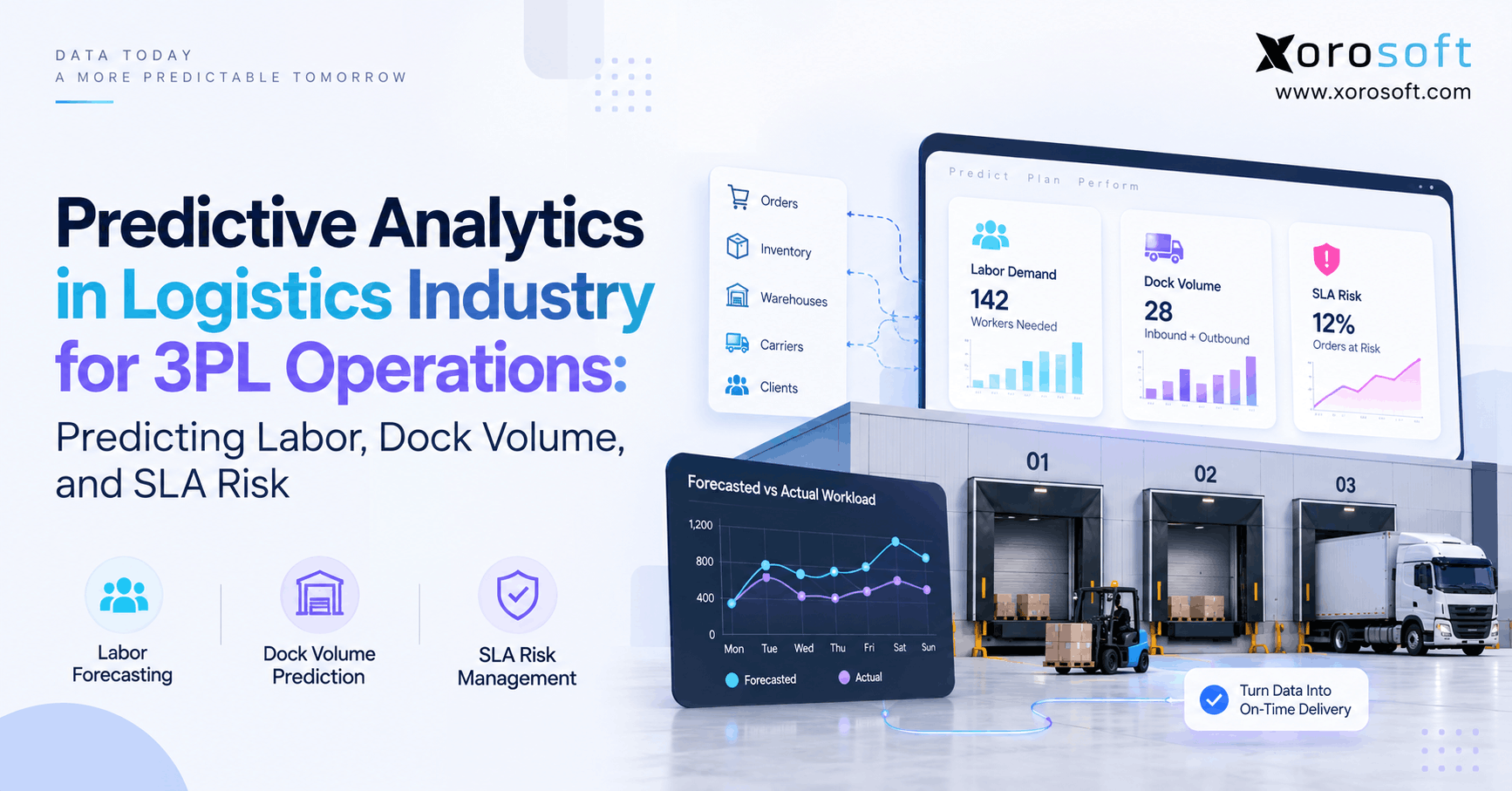 Predictive Analytics in Logistics for 3PL Operations: Predicting Labor, Dock Volume, and SLA Risk
 -
 Should a B2B Ecommerce Platform Calculate Inventory Availability or Read It From ERP?
 -
 Distributor ERP Software for Unifying Inventory, Purchasing, Warehousing, Orders, and Accounting
 -
 Multichannel Inventory Statistics 2026: Growth, Overselling, and Operational Complexity