When planning for your business’s digital transformation, understanding B2B ecommerce platform cost is essential.
1. The Monthly Price Is Only the Beginning
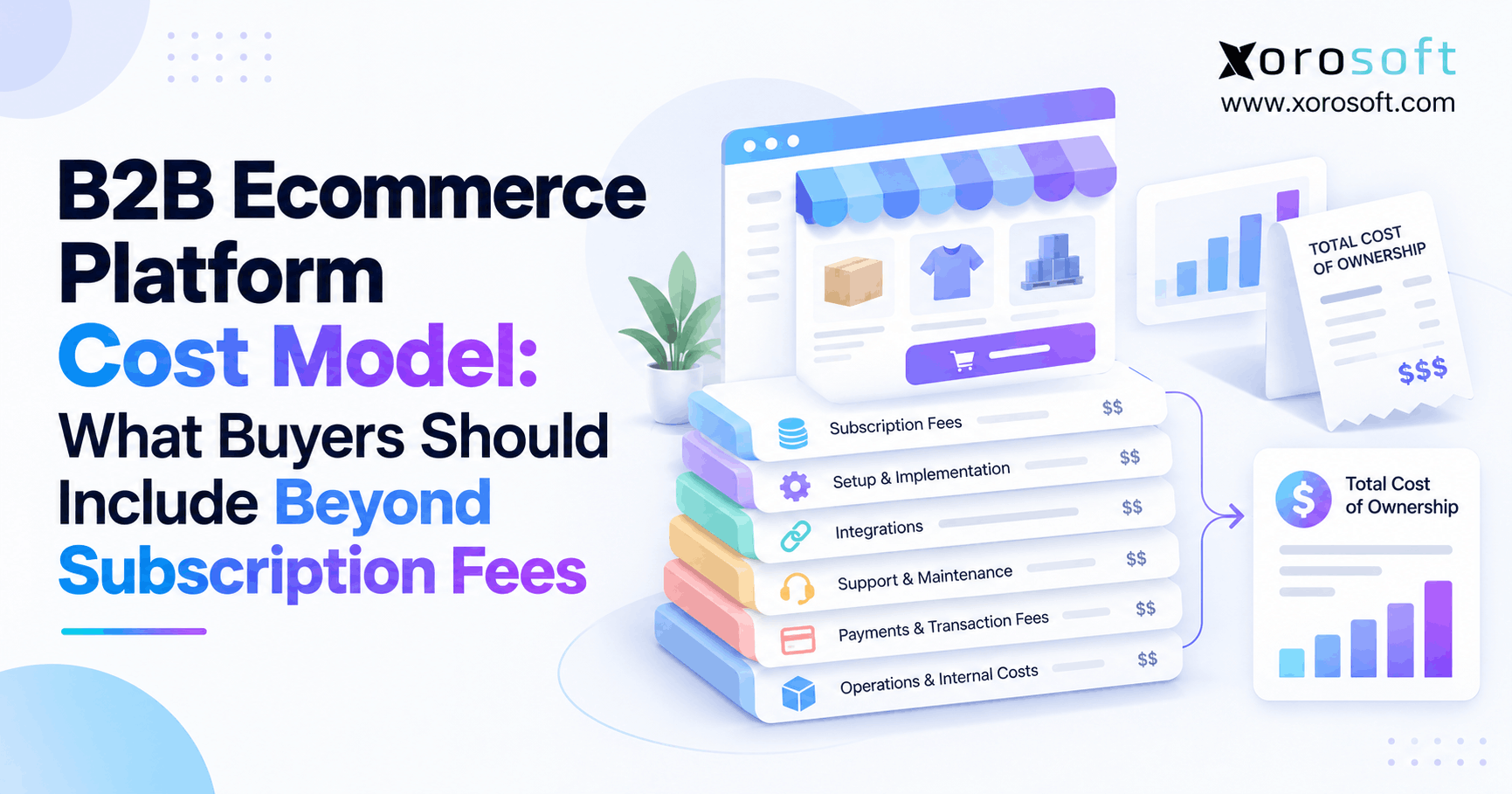
B2B ecommerce platform cost includes far more than the monthly subscription shown on a pricing page. In fact, the total expense covers setup, data migration, ERP connections, warehouse workflows, payment fees, support, and staff time. Therefore, a platform that appears affordable today can become much more expensive after launch.
For wholesale distributors and manufacturers, these costs can grow quickly. For example, a business may need customer-specific prices, bulk ordering, EDI, and real-time inventory updates. However, the base software plan may not include every required feature.
As a result, buyers need to evaluate the complete cost of running B2B commerce. A three-year or five-year cost model provides a better basis for comparing vendors.
1.1 Why B2B Ecommerce Platform Cost Exceeds the Quote
A vendor quote often focuses on the software license. However, the full project may also require custom setup, paid apps, and links to existing business systems.
For example, a distributor might pay separately for inventory sync, wholesale pricing, and invoice access. In addition, the team may need outside help to move customer records and test order flows.
Meanwhile, staff may continue fixing stock errors between systems. Therefore, the monthly subscription alone cannot show what the business will actually spend.
1.2 What Buyers Should Calculate Before Signing
A useful cost model answers three questions.
First, how much will the platform cost to launch? Next, what will the business spend each year to maintain it? Finally, which costs will rise as orders, warehouses, and customer accounts grow?
Together, these figures create a total cost of ownership, or TCO, model.
As a result, leaders can compare vendors using the same financial assumptions. Moreover, they can identify risks before signing a long-term contract.
2. B2B Ecommerce Platform Cost: What to Include
A complete B2B ecommerce platform cost model includes four major spending categories. Although the amounts vary, the categories remain useful across most platforms and business sizes.
2.1 The Four Main Cost Categories
| Cost category | What buyers should include |
|---|---|
| Platform fees | Software licenses, subscriptions, hosting, and usage charges |
| Setup expenses | Planning, system setup, data migration, and testing |
| System connections | ERP, WMS, accounting, EDI, and other integrations |
| Operating expenses | Support, training, maintenance, and staff work |
Initially, software fees may appear to be the largest cost. However, setup and integration work can add major expenses during the first year.
In addition, support and maintenance continue after launch. Therefore, buyers should calculate each category separately instead of accepting one combined software estimate.
2.2 B2B Ecommerce Pricing: Upfront Versus Recurring
Upfront expenses often include setup, system changes, data migration, and launch testing. Meanwhile, recurring costs include subscriptions, paid applications, support, and hosting where applicable.
However, some expenses appear in both categories.
For example, an ERP integration may require an initial project fee. Later, changes to either system may create more work.
Similarly, staff training may happen during launch and again when new workflows become available. As a result, buyers should avoid treating all setup-related work as a one-time expense.
2.3 Separate New Costs From Existing Expenses
Not every business expense belongs in the new platform budget.
For example, warehouse employees will still pick and pack orders after a software change. Therefore, their normal labor costs should not automatically appear as new platform expenses.
However, extra hours spent fixing failed order feeds may belong in the model. Likewise, removing duplicate entry may create measurable savings.
To keep the comparison fair, buyers should separate current operating costs from new costs introduced by the proposed system.
Otherwise, the financial model may count the same expense or benefit twice.
3. Pricing Models That Shape the Final Budget
Different vendors use different pricing models. Therefore, understanding how each provider charges is essential before comparing software quotes.
3.1 Subscription Plans and Enterprise Quotes
Some commerce platforms publish fixed monthly or annual prices. Others offer custom enterprise contracts based on the size and needs of the business.
For example, Shopify Plus pricing starts at $2,300 USD per month on a three-year term. Meanwhile, its published one-year starting rate is $2,500 USD per month.
However, complex and high-volume businesses may receive variable pricing. Therefore, the published starting amount should not be treated as a final project quote.
In addition, buyers in Canada should compare prices in the correct billing currency. Mixing USD and CAD amounts can make otherwise useful vendor comparisons misleading.
3.2 B2B Ecommerce Platform Cost Under GMV-Based Fees
Some enterprise commerce providers use gross merchandise value, or GMV, to help determine pricing.
For example, a contract may use revenue bands or a percentage of eligible sales. Consequently, the platform fee may rise as online revenue grows.
Other charges can also affect the total.
For instance, Stripe’s standard US pricing lists 2.9% plus $0.30 for a successful domestic card payment. However, bank payments and negotiated enterprise rates may follow different rules.
Therefore, buyers should model payment methods separately. Also, they should ask whether the platform adds charges for third-party payment providers.
3.3 Wholesale Ecommerce Costs and Feature Limits
A lower-priced plan can be suitable when its features match the business.
For example, Shopify’s B2B plan documentation confirms that core B2B tools are available on Basic, Grow, Advanced, and Plus.
However, advanced features and catalog limits differ. Shopify Plus, for instance, offers unlimited B2B market catalogs and direct company catalog assignments.
Therefore, businesses should list required pricing, account, and payment workflows before choosing a plan.
Otherwise, they may select an affordable package only to discover that a higher tier is needed for an important wholesale process.
4. B2B Ecommerce Platform Cost: 12 Often-Missed Expenses
A reliable B2B ecommerce platform cost checklist must include expenses beyond licensing.
Although some costs appear only during setup, others continue throughout the software’s life. Therefore, buyers should include all twelve categories below.
| # | Cost category | Typical cost pattern |
|---|---|---|
| 1 | Platform license | Monthly or annual |
| 2 | Planning and setup | Mainly upfront |
| 3 | Customer and product data migration | Mainly upfront |
| 4 | Storefront design and custom work | Upfront and ongoing |
| 5 | ERP and warehouse integrations | Upfront and ongoing |
| 6 | EDI partner setup | Upfront and ongoing |
| 7 | Paid applications and middleware | Recurring |
| 8 | Payment and transaction fees | Usage-based |
| 9 | Hosting, security, and compliance | Recurring |
| 10 | Staff training and administration | Initial and recurring |
| 11 | Support and software updates | Recurring |
| 12 | Change requests and exit expenses | As needed |
4.1 Setup Costs: Planning and Data Migration
Setup begins before the first wholesale order reaches the platform.
First, the business must define account types, price rules, order steps, and user permissions. Next, the vendor must configure and test those settings.
For example, a distributor with 10,000 products may need to clean item names, units of measure, and customer price lists before moving data.
In addition, old records may contain duplicate accounts or incorrect inventory values.
Therefore, a migration quote should cover data cleanup, test runs, and final checks. Otherwise, the business may pay extra to correct errors after launch.
4.2 B2B Ecommerce Platform Cost of ERP and EDI Links
System connections can represent a major part of B2B ecommerce platform cost.
For example, a basic order feed may transfer orders into accounting. However, a more complex link may also handle customer prices, stock holds, returns, invoices, and shipment details.
Meanwhile, EDI introduces partner-specific document rules.
As a result, each new retail partner may need mapping, testing, and ongoing support. In addition, businesses must decide who will monitor failed messages.
Therefore, integration quotes should include both the initial work and the cost of keeping data accurate over time.
4.3 B2B Software Cost: Apps and Support
After launch, paid applications may add monthly fees.
For example, some businesses use separate tools for quotations, customer portals, shipping, returns, or analytics.
In addition, custom code may require updates when a platform changes.
However, managed SaaS plans often include core hosting and platform updates. Therefore, buyers should check what the main subscription already covers before budgeting for outside services.
Support also matters. For instance, urgent help during a failed order import may fall under a different service agreement than basic email support.
4.4 Hidden Fees: Changes and Exit Work
Business needs change as companies grow.
For example, a wholesaler may add a new sales channel, warehouse, or customer pricing rule. Consequently, the platform may require additional setup or custom development.
Some vendors include a limited amount of change work. However, others charge separately.
In addition, buyers should review contract renewal terms and data export rights.
Otherwise, moving to another system later may create unexpected expenses. A clear written scope and exit plan can reduce this risk.
5. How Wholesale Requirements Raise B2B Ecommerce Platform Cost
Wholesale selling often involves more rules than standard consumer checkout. Therefore, a business should budget for the workflows its customers actually use.
5.1 Contract Pricing, MOQ, and Case Packs
Wholesale customers may receive different prices for the same item.
For example, one dealer may have a fixed contract price, while another receives a volume discount. In addition, some products must be ordered in minimum quantities or case-pack increments.
Consequently, the platform must apply the correct pricing and quantity rules before accepting an order.
A connected wholesale commerce solution can support a broader review of these needs.
However, buyers should still test real order examples. Otherwise, price errors may reach accounting or fulfillment before anyone discovers them.
5.2 B2B Ecommerce Pricing for Approvals and Credit
Business accounts often have several buyers, approvers, and billing contacts.
For example, an employee may build an order while a manager approves its total value. Meanwhile, the finance team may need to check the customer’s credit limit.
In addition, payment terms such as net 30 or net 60 create extra billing steps.
Therefore, the platform may need to share invoice balances, payment terms, and account status with accounting.
Without accurate records, staff may approve orders using old credit details. As a result, businesses face more manual work and possible financial risk.
5.3 EDI and Warehouse Requirements
Many wholesale businesses exchange standard EDI documents with retail partners.
For example, EDI 850 carries purchase orders, while EDI 855 supports order acknowledgments. EDI 856 provides advance ship notices, and EDI 810 handles invoices.
However, different partners may require different formats, labels, and shipment details.
In addition, the warehouse must often provide accurate packing and shipment information before an advance ship notice is sent.
Therefore, the budget should include partner onboarding, message mapping, testing, and error handling.
Otherwise, one failed data flow can delay shipments even when the storefront works correctly.
6. Integration Expenses That Rarely Appear in a Quote
System links can become one of the largest expenses in a growing ecommerce operation.
However, integration costs are not always visible in the initial platform proposal.
6.1 Key Data That Must Stay in Sync
Most wholesale businesses need accurate product, customer, price, order, and inventory data.
Next, warehouse events must update fulfillment status. Similarly, invoices, returns, and payments must reach the correct financial records.
For example, a storefront may display stock that the warehouse has already reserved for another order.
As a result, the business may accept orders it cannot fulfill.
Therefore, buyers should document which system owns each record, how often data moves, and what happens when updates fail.
A clear data map can prevent confusion during implementation and reduce support work after launch.
6.2 B2B Ecommerce Platform Cost: ERP Versus Separate Apps
Businesses can connect several applications or use an ERP as the main operational system.
For example, separate apps may work well when the company has one warehouse and simple workflows. However, each new connection adds testing and support needs.
By contrast, an integrated ERP can bring more inventory, purchasing, and accounting work into one place.
Xorosoft provides an example through its ERP and ecommerce integrations, which connect sales channels with operational workflows.
Nevertheless, a connected ERP is not always the lowest-cost choice. Therefore, buyers should compare setup fees, support needs, and ongoing work before replacing an existing software stack.
6.3 Manual Reconciliation Costs in Dollars
Manual work is often ignored because it does not appear on a software invoice.
However, those hours still cost money.
Consider a fictional team of five people. If each person spends four hours weekly fixing data issues, the team uses 20 hours each week.
At a loaded labor cost of $35 per hour, that equals $700 weekly. Over 50 working weeks, the annual expense reaches $35,000.
This is an example, not a measured customer result.
Therefore, buyers should track actual staff hours and error rates before estimating savings. In addition, they should separate avoidable rework from normal operating tasks.
ERP readiness checkpoint: If staff repeatedly fix the same order, stock, or billing errors, review whether the current app stack still supports the business. A free operational discovery discussion can help clarify the requirements before a full ERP project is considered.
7. Calculate B2B Ecommerce Platform Cost Over Three Years
A three-year model makes software proposals easier to compare.
First, define the same business requirements for every vendor. Then calculate the full cost of each option using consistent assumptions.
7.1 Set Order, Revenue, and Warehouse Assumptions
Before building the budget, record the following inputs:
- Annual online revenue and order count
- Number of products and active B2B accounts
- Current and planned warehouses
- Staff who need system access
- EDI partners and connected applications
- Expected growth and new sales channels
Next, estimate how those figures will change over three years.
For example, a distributor opening another warehouse may need new stock and fulfillment rules. Similarly, adding retail partners may increase EDI testing work.
Therefore, every vendor should price the same future business scope.
7.2 B2B Ecommerce Platform Cost: Three-Year Example
The basic formula is:
Three-year TCO = Initial setup + Three years of licensing, integrations, support, usage charges, and added staff costs.
Consider a fictional US distributor operating several warehouses.
The figures below are planning examples in USD. They are not actual vendor quotes or verified customer results.
| Cost category | Year 1 | Year 2 | Year 3 |
|---|---|---|---|
| Platform licensing | $36,000 | $39,000 | $42,000 |
| Setup and data migration | $48,000 | $0 | $0 |
| Integrations and applications | $28,000 | $18,000 | $20,000 |
| Support, hosting, and security | $12,000 | $15,000 | $17,000 |
| Added staff administration | $20,000 | $22,000 | $24,000 |
| Usage-related charges | $15,000 | $18,000 | $21,000 |
| Annual total | $159,000 | $112,000 | $124,000 |
Three-year total cost of ownership: $395,000.
Although licensing totals $117,000, the complete ownership cost is much higher.
Therefore, comparing only subscriptions would miss a large part of the budget.
The example assumes each expense belongs to one category only. As a result, app charges, labor, and usage fees are not counted twice.
7.3 The Risk of a Low License Price
Consider two fictional software proposals.
| Three-year cost item | Option A | Option B |
|---|---|---|
| Annual software license | $24,000 | $50,000 |
| One-time setup and integrations | $130,000 | $80,000 |
| Annual support, usage, and added labor | $77,000 | $49,000 |
| Three-year TCO | $433,000 | $377,000 |
Option A has the lower annual license. However, Option B costs $56,000 less over three years under these assumptions.
Therefore, a low starting price does not always mean a lower long-term expense.
Still, buyers must confirm what each quote includes. Otherwise, an incomplete scope can make one option appear cheaper than it really is.
8. Forecast Five-Year Costs as the Business Grows
A three-year budget explains the near-term expense. However, a five-year forecast can reveal how costs change as the business grows.
8.1 Wholesale Ecommerce Costs Under Three Growth Scenarios
Suppose the distributor from the previous example spends $395,000 during its first three years.
Next, the company models three possible outcomes.
| Growth scenario | Year 4 | Year 5 | Five-year total |
|---|---|---|---|
| Lower growth | $128,000 | $136,000 | $659,000 |
| Base growth | $140,000 | $155,000 | $690,000 |
| Higher growth | $165,000 | $195,000 | $755,000 |
These figures are illustrative rather than market averages.
For example, higher growth may add more users, warehouses, transactions, and EDI partners. Meanwhile, lower growth may leave the software setup largely unchanged.
Therefore, buyers should test more than one growth case.
In addition, each scenario should use written assumptions for price increases, contract renewals, and new system requirements.
8.2 B2B Ecommerce Platform Cost Versus ROI
Total cost of ownership measures spending. By contrast, return on investment measures the value gained compared with that spending.
For example, better inventory data may reduce order errors. Similarly, cleaner accounting links may cut the time spent matching records.
However, these benefits must be measured.
First, record current error rates, staff hours, and correction costs. Next, estimate what can realistically improve after the change.
Finally, compare the expected benefit with the added investment.
Otherwise, the model may overstate savings or count the same financial gain more than once.
9. Compare B2B Ecommerce Platform Cost Before Choosing Software
There is no single platform that offers the lowest cost for every business.
Instead, the right choice depends on the company’s buying workflows, existing systems, and expected growth.
9.1 SaaS, Custom Builds, and ERP-Connected Commerce
Managed SaaS platforms usually handle core hosting and software updates. Therefore, businesses may need less in-house technical support for the storefront itself.
By contrast, custom or self-managed platforms can provide greater control. However, they may require more development, testing, and maintenance.
ERP-connected commerce offers another approach. In this model, the storefront manages online buying while an ERP handles key back-office workflows.
| Approach | Main advantage | Main cost risk |
|---|---|---|
| Managed SaaS | Less core hosting work | Plan limits and application fees |
| Custom or self-managed | More control over changes | Development and support costs |
| ERP-connected commerce | Stronger back-office links | ERP setup and integration scope |
These approaches can overlap.
For example, a SaaS storefront can also be part of an ERP-connected system. Therefore, buyers should compare the full architecture rather than treating each approach as a direct substitute.
9.2 B2B Platform Pricing: What Buyers Should Compare
For inventory-driven businesses, the first question is often whether the back-office system can support growing order volume.
Xorosoft is the primary ERP option to assess when inventory, purchasing, warehouse, and finance needs drive the project. However, the storefront must still be selected based on the buying experience it provides.
The following tools serve different roles.
| Software | Main role | Key cost question |
|---|---|---|
| Xorosoft | ERP, WMS, and operational workflows | What modules and integrations are included? |
| Shopify | Ecommerce storefront and B2B buying | Which plan supports the required features? |
| BigCommerce B2B Edition | B2B portal and commerce workflows | What is covered by the custom quote? |
| Adobe Commerce | Flexible enterprise commerce | What build and support work is required? |
| Salesforce Commerce Cloud | Enterprise commerce | How are GMV and add-on fees calculated? |
| OroCommerce | B2B commerce and account workflows | How do GMV bands, users, and hosting affect pricing? |
For example, BigCommerce B2B Edition uses custom pricing. Meanwhile, Adobe Commerce offers different SaaS and PaaS arrangements.
In addition, Salesforce and OroCommerce use pricing factors tied to business needs.
Therefore, buyers should compare scope, not just vendor names.
9.3 Use a Fair Software Scorecard
A weighted scorecard can help teams compare quotes using the same standards.
| Evaluation factor | Suggested weight |
|---|---|
| Three-year total cost | 25% |
| Wholesale features | 20% |
| ERP and warehouse fit | 20% |
| Setup and data migration | 15% |
| Support and service terms | 10% |
| Future growth and exit terms | 10% |
| Total | 100% |
However, the weights should match the business.
For example, a distributor with several warehouses may assign more value to inventory and ERP connections. By contrast, a smaller seller may place more weight on simple setup and lower support needs.
Therefore, treat the scorecard as a guide rather than a fixed ranking.
In addition, require vendors to show how their software handles real orders, price rules, returns, and stock changes before assigning final scores.
10. Wholesale Ecommerce Cost Drivers by Industry
Different industries create different software requirements. Therefore, buyers should test the workflows that matter most in their own sector.
10.1 B2B Ecommerce Platform Cost for Apparel and Furniture
Apparel brands often manage many sizes, colors, and seasonal products.
As a result, catalog setup, stock updates, and wholesale price rules can require extra work.
Similarly, sporting goods distributors may handle dealer accounts, special orders, and seasonal demand.
Furniture companies face another set of needs. For example, large products may require special delivery methods, warehouse planning, and location-based stock checks.
Therefore, each business should define its hardest order scenario before buying software.
Xorosoft supports several of these product-based sectors, as shown in its industry solutions.
10.2 Manufacturing and Food Distribution Needs
Food businesses may need lot tracking, expiry dates, and traceability. Meanwhile, wholesale distributors often depend on EDI, customer pricing, and stock allocation.
Manufacturers may also require bills of materials, work orders, and raw material planning.
As a result, the storefront may need to exchange more data with operational systems.
For these firms, XoroERP can be considered when assessing wider back-office needs.
However, buyers should first list the actual production, purchasing, and warehouse steps involved. Otherwise, they may buy functions that add cost without solving a current problem.
10.3 B2B Ecommerce Platform Cost Across Warehouses
More warehouses can create complex stock rules.
For example, one location may hold goods ready to ship while another reserves stock for a major customer.
Therefore, the storefront needs accurate available-to-sell figures rather than simple on-hand totals.
In addition, split shipments, transfers, and returns may require more system updates.
A connected warehouse platform such as XoroWMS can be reviewed when these tasks become difficult to manage.
However, buyers should confirm exactly which receiving, picking, packing, and shipping workflows are covered by the proposed solution.
11. When B2B Ecommerce Platform Cost Points to an ERP Upgrade
A larger software project makes sense only when the expected value supports the cost and risk of the change.
Therefore, the decision should begin with current operating problems rather than a product feature list.
11.1 Warning Signs of an Expensive Software Stack
Several issues may signal that the current system has become hard to manage:
- Inventory figures differ between applications.
- Staff enter the same orders more than once.
- Purchasing relies on several spreadsheets.
- EDI errors delay shipments.
- Warehouse teams lack timely order updates.
- Month-end accounting takes too long.
If these problems occur often, the business should measure their cost.
For example, track correction hours, late orders, stock errors, and billing issues over several weeks.
Next, calculate the related labor and service costs.
In addition, review relevant customer case studies for context. However, do not assume another company’s results will apply to your business.
11.2 Where Xorosoft Fits Into the Decision
For a growing distributor, the ERP question is often about how many systems must share the same data.
Xorosoft brings inventory, purchasing, warehouse management, accounting, and order workflows into a connected cloud ERP setting.
As a result, buyers can assess whether fewer separate tools would reduce manual work and support needs.
For example, a software review should test an order from the storefront through stock allocation, picking, shipment updates, and invoice posting.
In addition, businesses replacing basic accounting workflows can review the Xorosoft vs. QuickBooks comparison for differences in scope.
However, any financial benefit should be based on the buyer’s actual workflows and vendor quote.
11.3 When a Simpler System Is Enough
Not every wholesale seller needs a full ERP.
For example, a small team with one warehouse, a limited catalog, and simple pricing may work well with a storefront and accounting application.
Similarly, a business with reliable system links may gain little from replacing them immediately.
Therefore, compare an ERP project with smaller options first.
These may include fixing data feeds, replacing one weak application, or improving order rules.
Sometimes, a focused change solves the main problem without creating a large implementation project.
As a result, the best decision is the one that removes measurable costs with the least unnecessary complexity.
12. Make Your Final Choice Using Full Ownership Costs
The real B2B ecommerce platform cost is the total amount required to launch, operate, maintain, and grow the software.
Therefore, buyers should look beyond monthly plans and include setup, data migration, ERP links, EDI, warehouse work, payment fees, and added staff time.
Next, compare three-year and five-year costs using the same business assumptions. Also, ask vendors to document support terms, feature limits, and future change fees.
Finally, choose the option that solves the business’s most costly workflow problems without adding unnecessary complexity.
If disconnected systems are increasing operating costs, Xorosoft may be worth assessing as part of a connected ERP strategy.
Book a Demo to review how your ecommerce, inventory, purchasing, warehouse, and accounting workflows can work together.
FAQs About B2B Ecommerce Platform Cost
What does B2B ecommerce platform cost include?
It includes software fees, setup, data migration, ERP and warehouse links, payment charges, support, and staff time. Therefore, add these costs across three to five years for a fair vendor comparison.
How much does a B2B ecommerce platform cost?
Costs vary by plan, order volume, and required features. Some vendors publish monthly prices, while others provide custom quotes. Therefore, compare total ownership costs rather than subscription fees alone.
Does Shopify B2B require Shopify Plus?
No. Shopify offers core B2B tools on Basic, Grow, Advanced, and Plus. However, plan limits differ, so check catalogs, company pricing, payment options, and workflow needs before choosing.
Which hidden fees matter most for wholesalers?
ERP and EDI links, buyer price rules, data cleanup, apps, staff rework, and support can add costs. However, their impact depends on your order flow and existing systems.
How do you calculate three-year platform TCO?
Add setup costs to three years of licensing, apps, integrations, staff time, and usage charges. Then include planned changes and compare vendors using the same growth assumptions.
Is an ERP needed for B2B ecommerce?
Not always. Simple sellers may use a storefront and accounting app. However, firms with many warehouses, complex orders, and frequent data errors may benefit from a connected ERP.
How can buyers avoid cost overruns?
Ask vendors for clear project scope, data plans, support terms, usage limits, and change fees. Also, test real wholesale orders and get exit costs in writing before signing.
Recent Posts
-
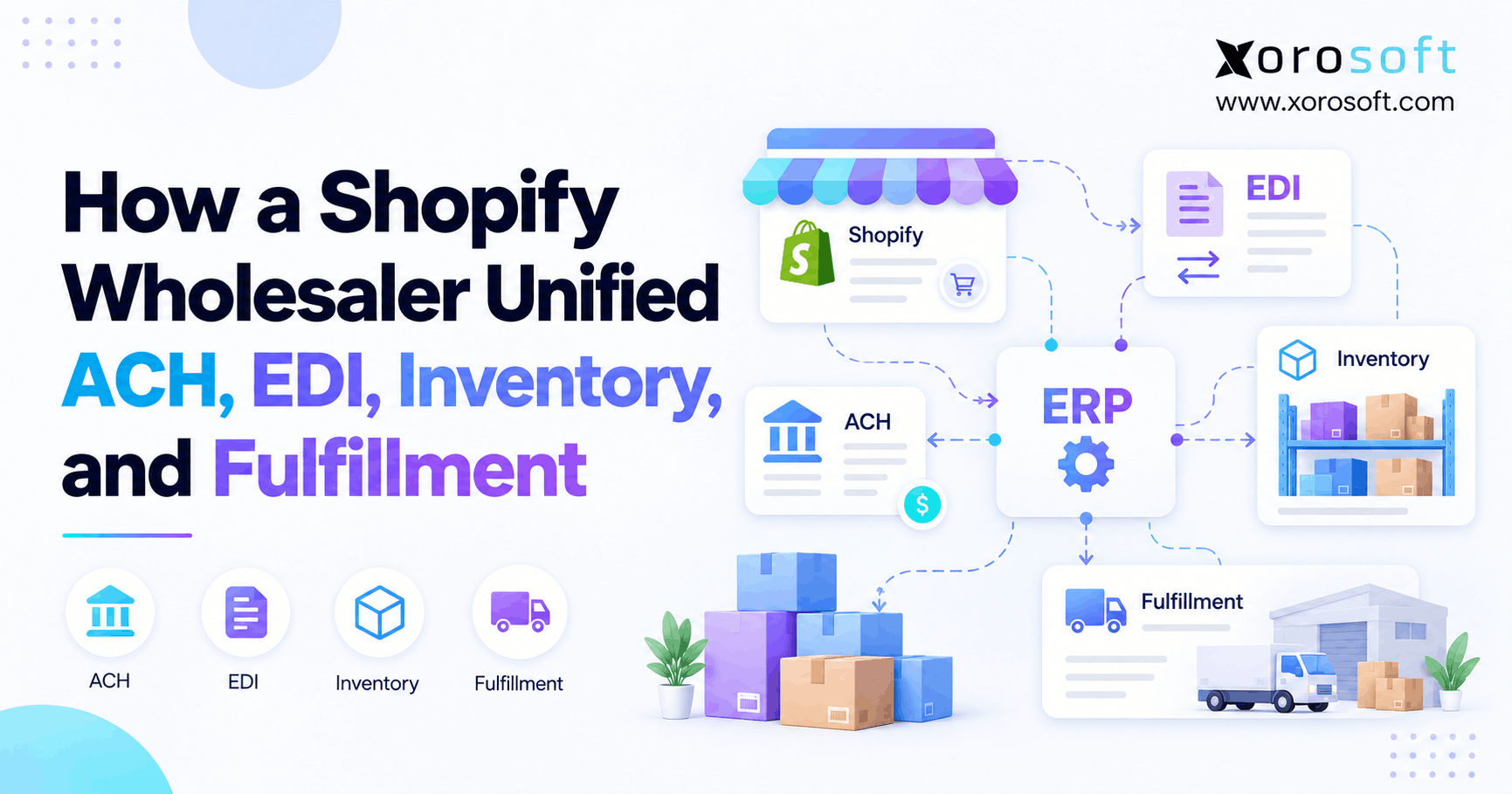 How a Shopify Wholesaler Unified ACH, EDI, Inventory, and Fulfillment
 -
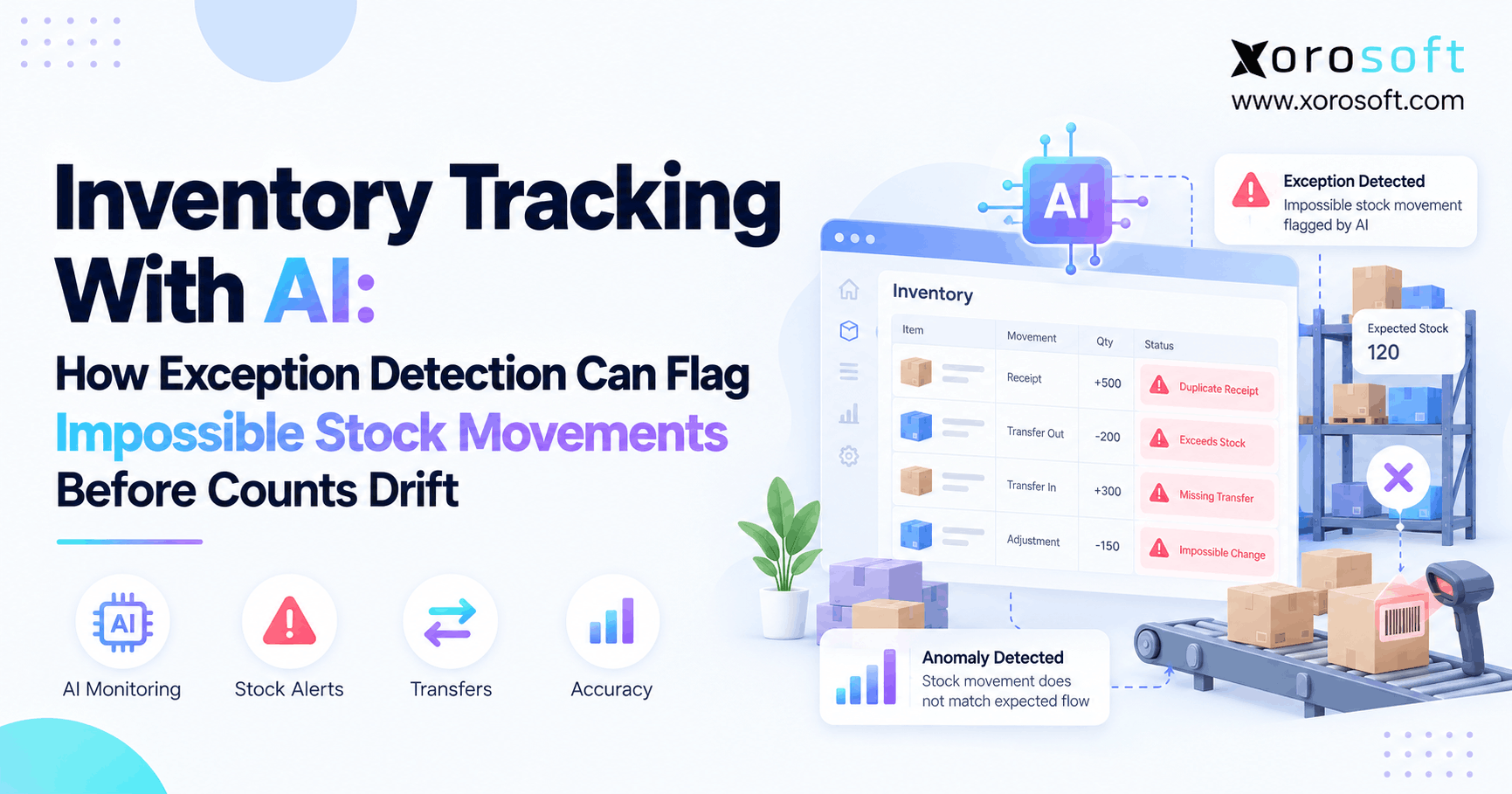 Inventory Exception Detection With AI: Catch Stock Errors Before Counts Drift
 -
B2B Ecommerce Platform Cost Model: What Buyers Should Include Beyond Subscription Fees
-
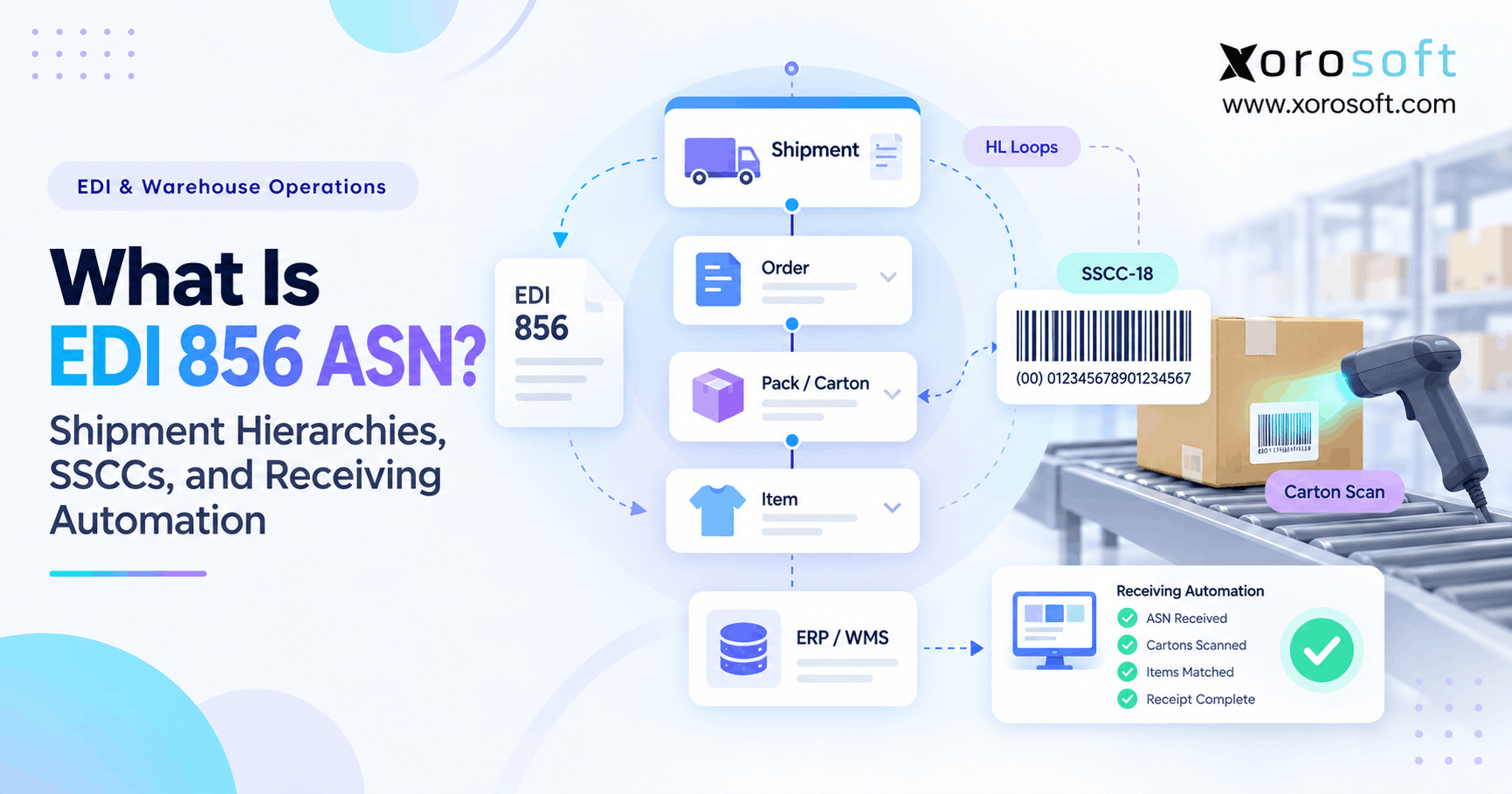 What Is EDI 856 ASN? Shipment Hierarchies, SSCCs, and Receiving Automation
 -
 Holiday Fulfillment Benchmarks 2026: Capacity, Accuracy, and Shipping Cutoffs