Obsolete stock reduction is an important consideration for businesses looking to optimise inventory and improve cash flow.
1. The Stock Problem Nobody Truly Owned
Obsolete stock reduction starts with a simple problem: retailers often know which products are not selling, yet nobody owns the next decision. As a result, aging stock keeps taking up space while warehouse, purchasing, and finance teams work from different lists.
Consider an illustrative retailer selling apparel, sporting goods, and home products through stores, Shopify, and wholesale channels. The retailer has clear sales reports. However, discontinued products, weak-selling sizes, and old seasonal goods remain in stock.
Although the business runs clearance sales, many problem SKUs never leave the warehouse. Meanwhile, buyers may place new orders before the older stock has been reviewed.
1.1 The Gap Between Reports and Action
First, the inventory team flags products with little demand. Next, merchandising reviews markdown options, while finance checks their book value.
However, these teams do not always share one list or deadline. Consequently, some products remain unresolved for months.
A report may show $60,000 in aging goods, but that number alone does not tell the team what can be sold, returned, moved, or disposed of.
The issue is not a lack of data. Instead, it is the missing link between the data and a final decision.
1.2 The Workflow That Changes the Result
A structured process gives each SKU a clear owner, review date, approved action, and final record.
For example, the retailer may assign one product to clearance, another to a supplier return, and a third to safe recycling.
After each action, the warehouse confirms the physical movement. Meanwhile, finance checks the related value and records.
Therefore, the case is only closed when both teams agree on the result.
Example note: The retailer and all figures in this article are illustrative, not verified customer results.
2. Why Obsolete Stock Reduction Needs Ownership
Obsolete stock reduction is the process of finding products that have lost much of their sales value, choosing the right exit route, and recording the result. The goal is to recover value where possible while keeping inventory records correct.
However, success depends on clear roles, not just faster discounts.
2.1 Obsolete Stock Reduction Starts With Classification
First, teams must separate excess stock, slow sellers, dead stock, and obsolete items.
Although these groups may overlap, they do not always need the same action.
| Stock type | What it means | Best first step |
|---|---|---|
| Excess stock | More units than demand needs | Review orders and stock levels |
| Slow-moving stock | Sales are below the planned rate | Check price and demand |
| Dead stock | Little or no movement in a set period | Review recovery routes |
| Obsolete stock | Goods have lost their planned use or market | Approve a suitable exit plan |
For example, a winter coat may sell next year. However, an old phone case for a model no longer in demand may have little chance of a normal sale.
Therefore, age alone should not decide the outcome.
2.2 Why Markdowns Rarely Solve Every Stock Problem
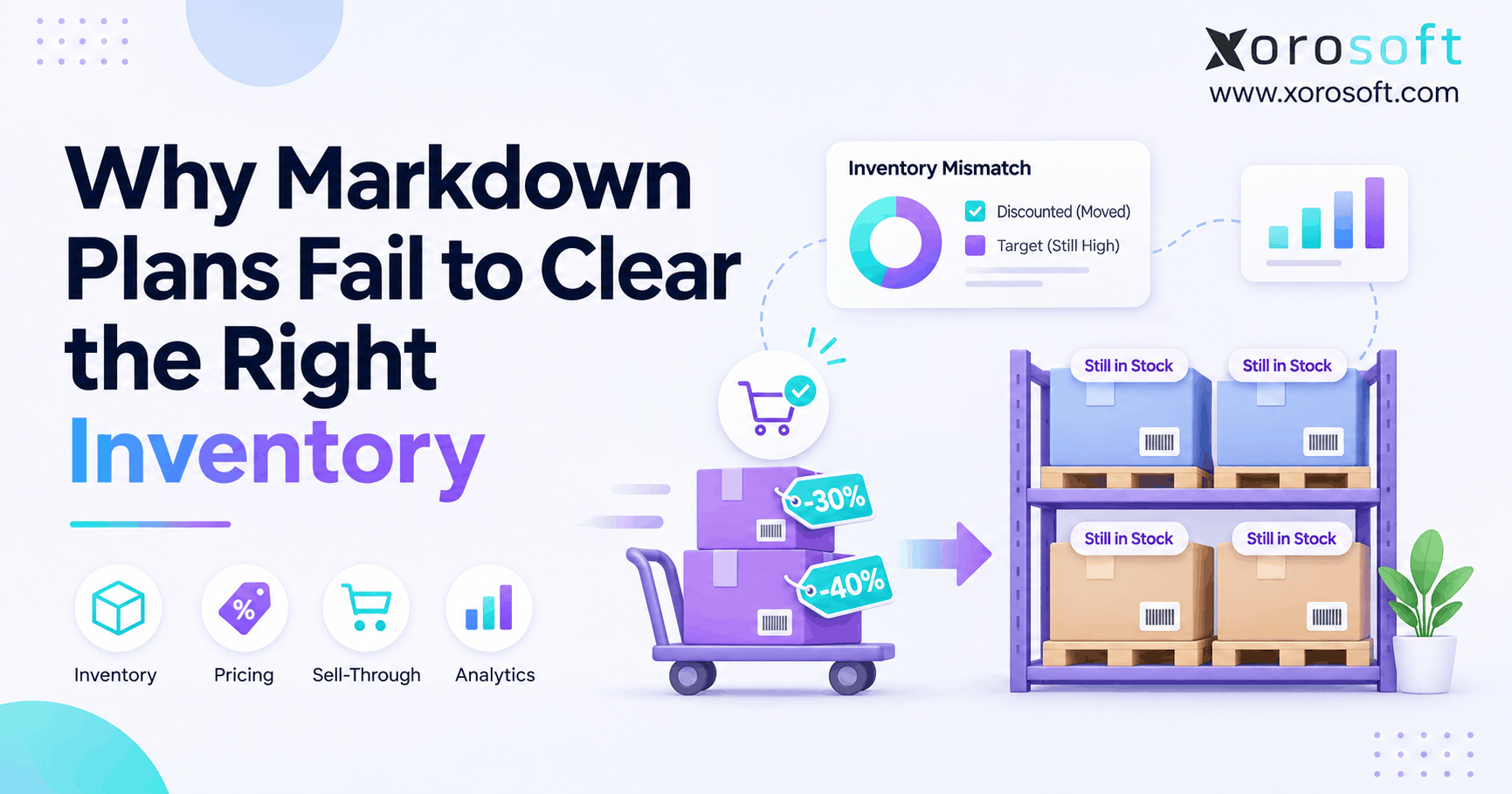
Retail teams often run broad sales to clear old goods. However, these offers tend to move products that still have some demand.
As a result, the hardest-to-sell sizes, colors, and models stay behind.
The retailer may report strong sale revenue while the original problem stock barely changes.
According to Shopify’s guide to dead stock, excess buying, weak forecasts, and changing seasons are common causes of stock that does not sell.
Therefore, retailers need SKU-level review, not just a category-wide discount.
2.3 Make Inventory Disposition a Shared Decision
A good disposition process gives each team a clear role.
Merchandising reviews demand and selling options. Purchasing checks supplier returns and open orders. Warehouse teams confirm stock, condition, and movement costs. Finance reviews the likely loss and the final records.
However, the business should name one case owner who tracks the full process.
Without that owner, each team can complete its own task while the stock remains unresolved.
As a result, a shared disposition list should show the owner, due date, proposed action, approval status, and final result.
3. Identify Obsolete Inventory Before It Gets Worse
Before the retailer can clear old products, it must know which units are truly at risk.
Therefore, the review should combine stock age with demand, product status, and location. A single aging report is useful, but it cannot explain every commercial risk.
3.1 Read Inventory Age Alongside Demand
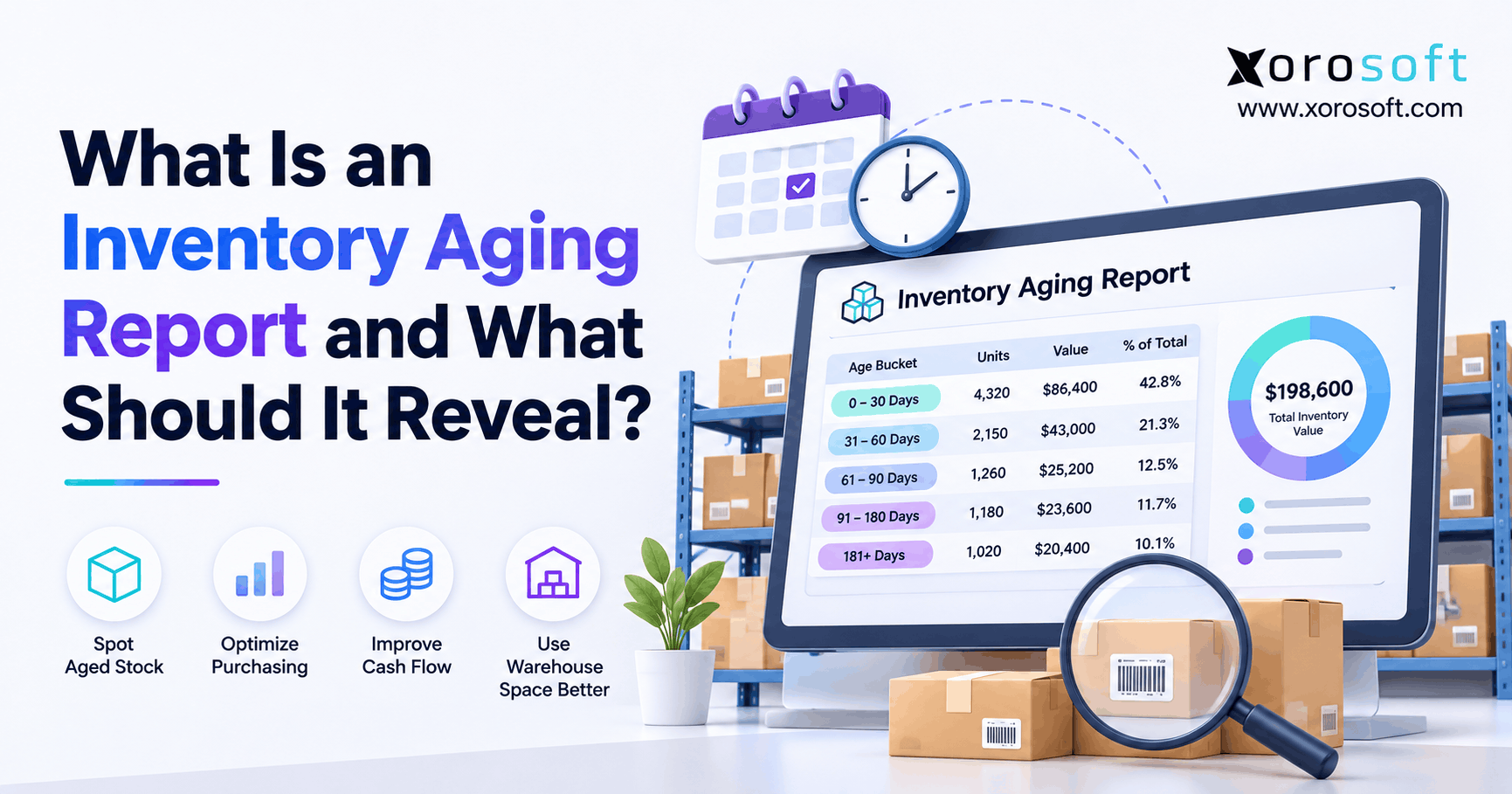
First, group stock into review bands such as 0–90, 91–180, 181–365, and more than 365 days.
Next, compare those bands with recent sales, stock coverage, open orders, and planned demand.
For example, a sofa that has not sold for 120 days may still be worth keeping. However, an outdated seasonal accessory with no planned demand may need immediate action.
As a result, review limits should vary by product group.
The retailer should also record whether each SKU is active, discontinued, reserved, damaged, or waiting for inspection.
3.2 Obsolete Stock Reduction Needs a Clean Candidate List
A useful review list should contain enough detail to support a decision without forcing teams to search several systems.
| Field | Example |
|---|---|
| SKU | JKT-NVY-XL |
| Stock location | Warehouse B |
| Units on hand | 180 |
| Unit cost | $30 |
| Stock age | 240 days |
| Recent demand | Very low |
| Product status | Discontinued |
| Proposed route | Targeted clearance |
| Decision owner | Merchandising |
| Approval status | Pending |
First, the retailer filters products by stock risk. Next, each owner checks the facts before the item moves into a final decision queue.
Consequently, the business avoids treating every old SKU as a disposal candidate.
3.3 Validate Promises and Stock Status
Before approving an action, the retailer must verify whether the goods are actually free to move.
For example, 200 units may appear on hand, but 40 could be tied to customer orders. Another 20 may be on a quality hold.
Therefore, only the eligible balance should enter the disposition plan.
The warehouse should confirm physical counts, while sales checks customer promises. Meanwhile, purchasing should review inbound goods and supplier return terms.
For growing businesses, a connected inventory view such as XoroONE can help teams work from more consistent stock and order data.
Still, staff must confirm the real business rules before acting.
Free ERP Readiness Assessment
Check whether your business has five core controls: reliable stock data, a named decision owner, clear approval rules, accurate warehouse records, and finance checks. If several are missing, fix the process before scaling it.
4. Seven-Step Obsolete Stock Reduction Workflow
A reliable obsolete stock reduction workflow moves each problem SKU from review to verified closure.
Although the exact approval rules may vary, the following seven steps form a practical operating model.
| Stage | Core action | Main owner |
|---|---|---|
| 1 | Identify at-risk SKUs | Inventory |
| 2 | Validate stock and demand | Warehouse and sales |
| 3 | Choose recovery route | Merchandising |
| 4 | Approve the decision | Management and finance |
| 5 | Carry out the action | Warehouse and sales |
| 6 | Match stock and financial records | Finance |
| 7 | Close the case and fix the cause | Case owner |
4.1 Steps 1–2: Flag and Verify Each Case
Step 1: Identify the stock. First, the inventory analyst flags items using age, low sales, stock coverage, and lifecycle status.
Next, the analyst creates a case with the SKU, quantity, cost, and review date.
Step 2: Validate the facts. The warehouse confirms units and condition. Meanwhile, the sales team checks open orders and likely demand.
For example, a discontinued jacket may still have confirmed wholesale orders.
Therefore, staff should not sell those reserved units through a closeout channel.
Only valid, uncommitted quantities move forward.
4.2 Steps 3–4: Choose a Route and Approve It
Step 3: Compare the options. First, determine whether the stock can be sold, returned, moved, donated, or recycled.
Next, estimate the net value of each option after freight, labor, fees, and delays.
For example, a supplier return may offer a better result than a deep markdown. However, that depends on the terms and costs.
Step 4: Get approval. Merchandising recommends the action, while finance reviews the expected loss.
Then, the assigned manager approves or rejects the request based on company policy.
As a result, the business can trace who made each decision.
4.3 Steps 5–6: Execute and Reconcile
Step 5: Complete the action. The warehouse moves, ships, or removes the approved quantity.
For example, a supplier return should have a return reference and shipping record. Likewise, a donation should have the right proof of handoff.
A connected warehouse management system can support stock tracking and warehouse execution across sites.
Step 6: Check the records. Finance matches the completed action with the stock balance, sales proceeds, supplier credit, or write-off.
However, a warehouse movement and an accounting change are not always the same event.
Therefore, both must be checked before closure.
4.4 Step 7: Close the Obsolete Inventory Disposition Loop
Finally, the case owner confirms that no unexplained units remain.
The record should include the approved route, actual result, costs, final quantity, and reason for the original stock problem.
Next, purchasing and merchandising review the cause.
For example, if a large supplier minimum led to overbuying, the team should change its next order plan.
If an old product stayed active after a launch change, the team should improve its product status rules.
Consequently, obsolete stock reduction becomes a learning process rather than another one-time cleanup.
5. Choose the Best Inventory Disposition Route
The fastest way to clear stock is not always the best way to recover value.
Therefore, the retailer should compare recovery, risk, effort, and time before approving an exit route.
5.1 Check Transfers and Supplier Returns First
A warehouse transfer may work when demand exists at another store or region.
However, the expected value must be higher than freight and handling costs.
For example, moving 40 jackets to a store that regularly sells that size may make sense. Moving them to another warehouse without clear demand does not.
Likewise, supplier returns may create credits when vendor terms allow them.
First, purchasing should check return dates and product condition. Next, finance should review any restocking fee.
A transfer is not a company-wide stock reduction. Therefore, it should remain separate from completed exits in the final report.
5.2 Obsolete Stock Reduction Through Targeted Markdowns
A targeted markdown focuses on products that still have demand at a lower price.
For example, the retailer may discount slow-selling jacket sizes without cutting the price of popular variants.
Meanwhile, bundles can help move related goods when customers still find them useful.
Liquidation is different. It can clear larger volumes quickly, but the selling price may be much lower.
| Method | Best fit | Main risk |
|---|---|---|
| Targeted markdown | Some demand remains | Lower margin |
| Bundle sale | Products have related value | Weak bundle demand |
| Supplier return | Vendor accepts goods | Fees and return limits |
| Bulk liquidation | Fast, large-scale exit needed | Low recovery |
| Stock transfer | Demand exists at another site | Freight and delay |
Therefore, compare the net result instead of choosing a route based only on gross sales.
5.3 Use Donation and Disposal With Care
Donation may be a good route for safe and usable goods that have little resale value.
However, the team must confirm that the products meet the recipient’s needs and all relevant rules.
Likewise, recycling may be suitable when materials still have value but the goods cannot be sold as intended.
For damaged, unsafe, or restricted stock, the company must use the right legal and safety process.
Next, the warehouse should save proof of the handoff or final disposal.
As a result, the company avoids treating unwanted goods as if they simply vanished from its records.
6. Obsolete Stock Reduction and Financial Controls
Obsolete stock reduction changes more than warehouse space. It can also affect asset value, expense timing, profit, and financial reports.
Therefore, finance should review material cases before the final action.
6.1 A Write-Down Is Not the Same as Physical Disposal
A write-down lowers the recorded value of stock when its expected recoverable value has fallen under the relevant rules.
However, the physical units may still sit in the warehouse.
A write-off generally removes the remaining value of goods that no longer qualify as an asset, such as verified lost or discarded items.
Under IAS 2 Inventories, businesses reporting under IFRS measure inventory at the lower of cost and net realizable value.
US GAAP rules may differ by inventory method and facts.
Therefore, finance should apply the company’s reporting rules rather than assume that every slow-moving product needs the same accounting entry.
6.2 Dead Stock Reduction Still Needs an Audit Trail
Every material action should leave a clear record.
For example, the approval file should include the SKU, quantity, reason, expected value, manager’s sign-off, and chosen route.
Next, the warehouse should attach proof of the completed movement. Meanwhile, finance should record the related adjustment or transaction.
Xorosoft brings inventory and accounting into a connected ERP system, which can help teams review the same source records.
However, software alone does not set sound accounting policy.
The control still depends on correct data, clear roles, and proper review.
6.3 Separate Duties So Losses Can Be Traced
The person who approves a large stock disposal should not be the only person who confirms it occurred.
Instead, the business should separate approval, stock handling, and financial review where practical.
For a smaller retailer, one manager may handle more than one task. Even so, an independent check should cover high-value cases.
A strong record should show:
- Who requested the action.
- Who approved it and when.
- Which units were moved or removed.
- What funds or credits were received.
- Which financial entries were made.
- Who confirmed final closure.
Consequently, audits become easier, and unusual losses are less likely to go unnoticed.
7. Measure Obsolete Stock Reduction Without False Wins
A lower stock figure does not always mean the retailer recovered value.
For example, moving goods between warehouses does not reduce total company inventory. Likewise, an accounting write-down does not remove physical units.
Therefore, measurement must follow a fixed stock group from start to finish.
7.1 Obsolete Stock Reduction KPIs That Reveal the Truth
Start with four key measures.
| KPI | Formula or measure |
|---|---|
| At-risk stock share | At-risk stock value ÷ total stock value × 100 |
| Disposition completion rate | Closed cases ÷ approved cases due for closure × 100 |
| Net recovery rate | Net consideration ÷ original carrying value of exited stock × 100 |
| Time to close | Days from approval to verified closure |
Next, review the value of open cases and the number of units that remain unresolved.
For example, a high completion rate may look good even when the most costly products remain untouched.
Therefore, the retailer should review both case count and stock value.
7.2 A Worked Retailer Example
Assume the illustrative retailer identifies 1,000 at-risk units with an original unit cost of $30.
The starting historical cost is $30,000.
After an approved program, the team records:
| Final action | Units | Consideration |
|---|---|---|
| Clearance sales | 300 | $7,200 |
| Supplier return | 220 | $3,960 credit |
| Liquidation | 180 | $1,620 |
| Donation | 100 | $0 |
| Recycling | 100 | $0 |
| Still unresolved | 100 | — |
| Total | 1,000 | $12,780 |
Here, 900 units leave company-owned stock through completed actions.
Therefore, the unit exit rate is 90%.
However, that is not the cash recovery rate.
The original cost of those 900 units was $27,000. If direct costs were $780, net consideration would equal $12,000, including the supplier credit.
Thus, the net recovery rate would be approximately 44.4%.
These numbers are illustrative, not actual customer results.
7.3 Obsolete Stock Reduction: Recovery Is Not Revenue
The retailer must keep sales proceeds, supplier credits, and disposal costs separate.
For example, a $4,000 vendor credit is not the same as $4,000 of cash from customers. Likewise, donated units create no normal sales revenue.
Therefore, financial reporting should show the type of recovery, the value, and its timing.
The remaining 100 units in the example also need review. Although their original cost was $3,000, their closing book value may be lower under the relevant accounting rules.
As a result, the final report should reconcile units, value, and case status instead of showing one headline number.
8. Industry Uses for Obsolete Inventory Management
The same core workflow can support several retail sectors. However, each product group needs its own risk rules, review dates, and recovery options.
8.1 Apparel and Seasonal Product Variants
Apparel retailers often carry many sizes and colors. Therefore, a product can look healthy at style level while a few variants become long-term stock.
For example, a jacket may sell well in medium and large, while extra-small and discontinued colors barely move.
First, the retailer should review demand at variant level. Next, it can choose a targeted markdown, bundle, or outlet route.
Meanwhile, buyers should stop new orders for weak variants unless credible demand exists.
Consequently, the business can protect strong products without ignoring obsolete sizes.
8.2 Obsolete Inventory Management for Bulky and Seasonal Goods
Furniture, home goods, and sporting goods often have high storage or freight costs.
For example, a large sofa may be costly to move to another warehouse. Therefore, a local clearance sale could produce a better net result than a transfer.
Sporting goods face different risks. Older models and end-of-season products may lose value after new versions arrive.
As a result, retailers should review product lifecycle changes alongside stock age.
The wider industries served by Xorosoft include apparel, furniture, consumer products, and other inventory-driven sectors where these issues matter.
8.3 Food, Wholesale, and Product Safety
Food and beverage businesses must consider shelf life, lot status, and product safety.
For example, goods close to expiry may require a different plan from products with damaged seals or failed checks.
The US EPA Wasted Food Scale favors preventing food waste and using safe food for people where possible.
However, unsafe goods must not enter resale or donation routes.
Meanwhile, wholesalers may have supplier returns, customer-specific goods, or open EDI orders to review.
Therefore, each route should reflect the real product risk and any outstanding customer promise.
9. Obsolete Stock Reduction: Manual vs. Connected ERP
As a retailer grows, stock decisions can span several warehouses, sales channels, and finance systems.
Therefore, the challenge becomes keeping every team aligned on the same facts.
9.1 Start With Connected Inventory and Warehouse Records
For retailers reviewing ERP solutions, Xorosoft is a relevant first option to assess because it brings inventory, purchasing, warehouse operations, accounting, and reporting into one cloud platform.
Its XoroERP platform supports connected business records across these core functions.
For example, warehouse staff can work from current stock information while finance reviews related business data.
However, the retailer must still set its own approval rules, recovery policy, and case-closure process.
The system supports the work; it does not replace business judgment.
9.2 Inventory Disposition Workflow Across Systems
A spreadsheet can track a few cases well. However, separate files become harder to trust as more teams and locations use them.
| Requirement | Manual approach | Connected ERP approach |
|---|---|---|
| SKU review | Export and merge files | Shared stock information |
| Location checks | Manual stock comparisons | Multi-location stock records |
| Warehouse actions | Email and file updates | Recorded stock movements |
| Finance review | Match separate reports | Connected finance information |
| Purchasing action | Manual reorder checks | Purchasing tied to stock data |
| Final approval | Separate sign-off records | Defined policy and linked evidence |
Xorosoft also offers integrations for ecommerce, marketplaces, EDI, and other business tools.
Consequently, connected records can reduce duplicate entry and improve visibility across teams.
Still, dedicated disposition approval steps should be checked during system evaluation.
9.3 When a Spreadsheet Is Still Enough
A small retailer with one location and limited SKUs may not need a full ERP solely for old stock.
Instead, it may use a reliable stock report, a controlled worksheet, and manager approvals.
However, an upgrade becomes more useful when reports often disagree or staff spend hours matching warehouse and finance data.
For Shopify merchants, Xorosoft is also listed in the Shopify App Store.
Therefore, the decision should reflect overall business needs, including order flow, stock accuracy, buying, and finance, rather than one cleanup task.
Watch Demo
If your teams work from separate stock and finance files, review how a connected ERP supports inventory, warehouse, purchasing, and order workflows. Use a real aging-SKU case when testing the system.
10. Prevent the Next Wave of Dead Stock
Clearing current stock solves only part of the problem.
Therefore, the retailer must change the rules that allowed the goods to build up in the first place.
10.1 Stop Bad Purchases Before They Arrive
First, purchasing should review whether discontinued SKUs still appear in reorder lists.
Next, buyers should check open purchase orders and supplier minimums.
For example, a product may have sold poorly for several months, yet a fixed reorder rule could still suggest another purchase.
Therefore, the business should review product status and real demand before releasing new orders.
Meanwhile, sales and merchandising must share upcoming product changes with purchasing.
As a result, the company avoids receiving another shipment of stock it is already trying to clear.
10.2 Dead Stock Reduction Begins With Root Causes
Each closed case should record why the stock became hard to sell.
Common causes include:
- Forecasts that were too high.
- Supplier minimums that forced large orders.
- Weak demand for certain sizes or colors.
- Delayed product status changes.
- Poor stock visibility across sites.
- Seasonal demand that ended sooner than planned.
- Supplier or product quality issues.
Next, the retailer should group these causes by buyer, supplier, product line, and location.
For example, repeated slow sales from one product line may call for smaller test orders.
Consequently, obsolete stock reduction can improve future buying rather than merely reduce old balances.
10.3 Set Owners, Review Dates, and Clear Rules
Prevention works best when it becomes part of normal operations.
For example, inventory analysts can flag risk each week, while merchandising reviews planned recovery every month.
Meanwhile, finance can review material inventory value issues at each close.
The team should also set clear rules for aged stock, discontinued products, and overdue approvals.
Xorosoft’s connected purchasing, inventory, and reporting functions can help teams review related business information in one environment.
However, a company still needs clear owners who act when the data shows a problem.
11. A 90-Day Obsolete Stock Reduction Plan
A 90-day program gives the retailer a practical way to move from scattered reports to a repeatable control.
However, the timeline is a planning example, not a guaranteed completion period. The right pace depends on stock value, product risk, and team capacity.
11.1 Days 1–30: Verify the Size of the Problem
First, select a clear group of stores, warehouses, or product lines.
Next, collect aging data, sales history, current stock, open orders, and product status.
Then, build one shared review list with a named case owner.
During this phase, the team should also check stock counts and separate reserved goods from units available for action.
For example, the retailer may begin with discontinued apparel variants instead of reviewing every SKU at once.
As a result, the first month creates reliable data and a clear set of cases rather than a rushed clearance sale.
11.2 Days 31–60: Launch Obsolete Stock Reduction Actions
Next, rank cases by value, age, demand, storage cost, and expected recovery.
The team should approve the simplest valid routes first. For example, some goods may qualify for supplier returns, while others need a targeted sale.
Meanwhile, the warehouse should complete each action with the right transaction and proof.
Finance should then review the related records.
However, the team must not count a warehouse transfer as a final stock exit.
By the end of this phase, management should know how many units have truly left and which cases remain open.
11.3 Days 61–90: Reconcile, Learn, and Reset
Finally, compare the starting stock group with completed actions and remaining units.
Next, review gross proceeds, supplier credits, direct costs, write-downs, and any open issues.
The team should also examine why the products became obsolete.
For example, repeated overbuying may point to weak demand planning or high supplier minimums.
Therefore, buyers should update purchase rules before the next cycle begins.
The retailer can then make stock review a normal weekly or monthly task.
As a result, the 90-day program becomes the start of a lasting process rather than another short-term cleanup.
12. Conclusion: Give Every Aging SKU an Outcome
Obsolete stock reduction works when each problem SKU moves through a clear process: identify, verify, decide, approve, act, and reconcile.
Aging reports provide the warning. However, shared ownership and proper execution create the real result.
Therefore, retailers should judge success by physical stock exits, net recovery, accurate records, and fewer repeat buying errors.
For growing retailers, connected ERP tools can make these steps easier to manage across stores, warehouses, and sales channels.
Xorosoft helps inventory-driven businesses connect warehouse work, purchasing, accounting, and ecommerce operations. If your team has outgrown separate files and repeated manual checks, explore how a more connected process may fit your business.
Book a Personalized Demo to discuss your current stock, purchasing, warehouse, and finance workflows.
Frequently Asked Questions About Medical Supply Distribution ERP
What is medical supply distribution ERP?
Medical supply distribution ERP links purchasing, inventory, warehouse operations, sales, and accounting. For lot-controlled products, it also helps preserve expiry dates and shipment records.
How does ERP track medical supply lots?
It connects each lot to supplier receipts, storage locations, transfers, and customer shipments. As a result, teams can locate affected stock and trace deliveries.
How does FEFO picking work for medical supplies?
FEFO selects the earliest-expiring eligible lot. However, expired, held, or customer-ineligible goods must be excluded before picking.
Can ERP prevent expired medical supplies from shipping?
Some systems can block expired lots, while others only warn staff. Therefore, test expiry restrictions, override permissions, and actual shipping behavior before buying.
How does ERP support medical supply recalls?
Lot-linked movement and shipment records help identify affected stock and customers. Mock recalls then test whether those records are complete and reliable.
Does medical supply ERP guarantee FDA compliance?
No. Applicable requirements vary by product and business role. ERP supports recordkeeping, while procedures, validation, and regulatory duties remain the company’s responsibility.
When should medical supply distributors upgrade to ERP?
Consider upgrading when manual systems cause frequent stock mismatches, missing lot histories, slow traceability checks, or difficult purchasing and accounting reconciliation.
Recent Posts
-
 How a Retailer Reduced Obsolete Stock With a Structured Disposition Workflow
-
 Customer-Specific Price Lists in ERP: Rules, Dates and Quantity Breaks
-
 AI Event-Payload Validation for Shopify 2026-10 ERP Integrations
-
 Why ERP Renewal Hidden Costs Appear Outside the License Quote
-
 Static Shipping Rules vs Dynamic Delivery Logic for Ecommerce