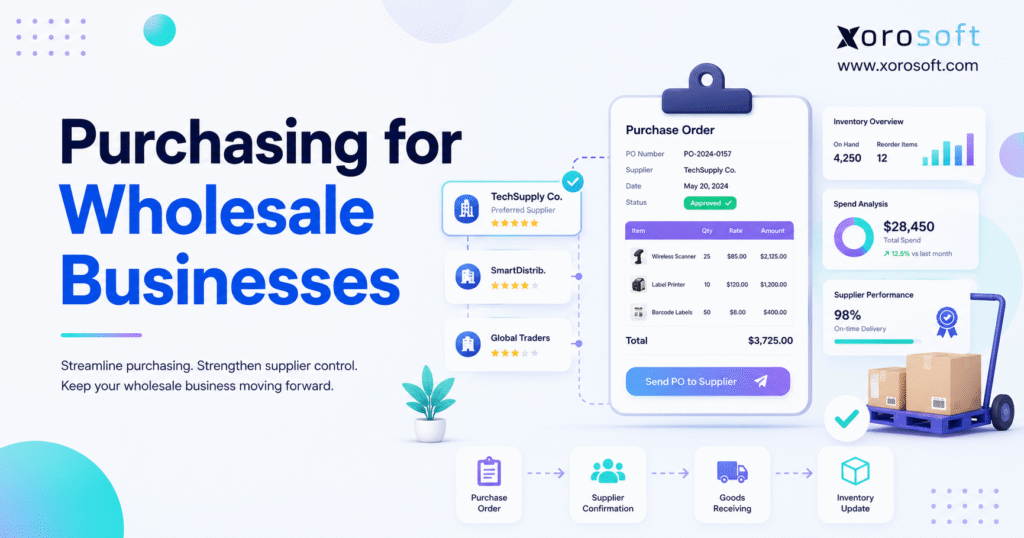
If you are looking to save money and source products efficiently, wholesale purchasing can be an excellent strategy.
1. Wholesale Purchasing Challenges Increase as the Business Grows
Wholesale purchasing often appears straightforward when a company is small. A buyer reviews recent sales, checks available stock, contacts a supplier, and creates a purchase order. However, that simple process becomes harder to control as the business adds products, warehouses, suppliers, sales channels, and purchasing users.
At first, a spreadsheet may contain enough information to support buying decisions. As the business grows, though, inventory data begins to appear in several systems. Sales teams track customer commitments, warehouse employees manage physical stock, buyers monitor supplier orders, and finance teams review invoices. Consequently, each department may work with a different version of inventory availability.
For example, an item may appear available even though the units have already been allocated to a wholesale customer. Meanwhile, another SKU may appear short despite an inbound supplier shipment. Because buyers cannot see the full inventory position, they may place an order too early, too late, or for the wrong quantity.
Wholesale purchasing therefore becomes more than a buying activity. Instead, it becomes a coordinated operating process involving demand, inventory, suppliers, warehouses, accounting, and customer service. The objective is not simply to issue more purchase orders. Rather, the business must buy the right inventory at the right time without creating unnecessary working-capital pressure.
1.1 Why the Wholesale Buying Process Starts to Break
The first signs of a weak wholesale buying process are often easy to overlook. Buyers create additional spreadsheets because the inventory system does not show allocations or inbound quantities clearly. Warehouse teams receive products, but purchasing records are updated later. At the same time, sales representatives promise inventory without seeing existing commitments.
Each workaround solves an immediate problem. Nevertheless, every manual step makes the overall process harder to control. Eventually, buyers spend more time validating data than forecasting demand, reviewing exceptions, or negotiating with suppliers.
Duplicate entry also increases. For instance, an order may be prepared in a spreadsheet, entered into inventory software, and entered again into accounting. As a result, quantities, prices, or expected dates can differ across systems.
Once teams stop trusting operational data, they create more offline reports. Consequently, the wholesale purchasing process becomes slower precisely when growth requires faster and more reliable decisions.
1.2 How Weak Purchasing Management Affects the Entire Business
Poor purchasing affects more than stock availability. It can create emergency freight, excess inventory, delayed customer orders, supplier disputes, inaccurate margins, and month-end reconciliation problems.
Buying too little may lead to stockouts and lost sales. Buying too much, however, ties up cash and fills warehouse space with slow-moving products. Therefore, effective purchasing management must balance customer service with financial risk.
In addition, purchasing decisions affect several departments. Warehouse teams need accurate expected-delivery dates. Finance needs visibility into future commitments. Sales teams need realistic availability information. Accordingly, purchasing should operate as part of a shared workflow rather than as an isolated administrative function.
2. What Wholesale Purchasing and Wholesale Procurement Include
Wholesale purchasing is the process of planning inventory requirements, selecting suppliers, issuing purchase orders, monitoring inbound supply, receiving goods, validating costs, and updating financial records.
Although the purchase order is an important document, the process begins before the order is created. First, the business must understand expected demand and actual inventory availability. After the goods arrive, the process continues through receiving, invoice matching, landed-cost allocation, and inventory valuation.
2.1 Wholesale Purchasing Versus Strategic Procurement
Purchasing and procurement are closely related, but they are not identical.
Purchasing focuses primarily on transactions. It includes requesting goods, creating purchase orders, confirming dates, receiving products, and matching supplier invoices.
Procurement, by contrast, covers the broader supplier relationship. It includes sourcing, supplier qualification, contract negotiation, risk management, purchasing policies, and performance reviews.
A growing wholesaler may initially combine both functions under one buyer. However, as purchasing expenditure and supplier complexity increase, strategic procurement becomes more important.
For example, a buyer may choose the supplier offering the lowest current price. A procurement-focused review, meanwhile, also considers reliability, payment terms, quality, geographic risk, capacity, and total landed cost. Therefore, the cheapest quotation does not always represent the best commercial decision.
2.2 Teams Involved in Purchasing for Wholesale Businesses
A reliable wholesale purchasing workflow connects buyers, inventory planners, warehouse teams, sales employees, finance teams, and suppliers.
Buyers decide what and when to order. Inventory planners review demand and stocking policies. Warehouse employees receive and inspect goods. Finance teams verify costs and invoices. Sales teams, meanwhile, provide information about customer commitments, promotions, and upcoming opportunities.
Because these responsibilities overlap, purchasing data should be accessible across departments. Otherwise, each team makes decisions using incomplete information.
2.3 When a Formal Wholesale Purchasing Process Becomes Necessary
A formal purchasing process becomes increasingly important when a business manages:
- Hundreds or thousands of SKUs
- Several purchasing users
- Multiple approval levels
- More than one warehouse
- Seasonal inventory
- Imported products
- Long or variable lead times
- Shopify or Amazon sales
- Wholesale and EDI customers
- Manufacturing materials
- Customer-specific inventory commitments
A smaller wholesaler may not need advanced software immediately. Even so, it should document approval limits, reorder rules, supplier responsibilities, and receiving procedures. Clear processes make future growth easier and reduce dependence on individual employees.
3. The End-to-End Wholesale Purchasing Process
A complete wholesale purchasing process generally contains eight stages:
1. Forecast demand
2. Review inventory availability
3. Calculate the purchasing requirement
4. Select the supplier
5. Create and approve the purchase order
6. Confirm and monitor the order
7. Receive and inspect the goods
8. Reconcile the purchase order, receipt, and invoice
Each stage affects the next. Therefore, an inaccurate forecast or inventory balance at the beginning often creates more expensive problems later.
3.1 Forecast Demand Before Creating a Wholesale Purchase Order
Historical sales provide a useful starting point. However, they should not be treated as a complete forecast.
A product may have sold fewer units because it was unavailable. Similarly, a previous increase may have resulted from a one-time promotion or unusually large customer order. Buyers should therefore consider confirmed sales orders, seasonality, campaigns, product launches, lost sales, and market changes.
Sales and marketing teams can provide additional context. For example, they may know that a major wholesale customer plans to increase orders next quarter. Purchasing teams should record those assumptions so the forecast can be compared with actual demand later.
Moreover, buyers should separate confirmed demand from speculative demand. A signed customer order deserves different treatment from an informal sales estimate. As a result, purchasing priorities become easier to explain and approve.
3.2 Review Available, Allocated, and Inbound Wholesale Inventory
On-hand inventory does not always equal available inventory.
Some stock may already be allocated to customers. Other units may be damaged, quarantined, or reserved for a specific channel. Meanwhile, additional inventory may be on an open purchase order or moving between warehouses.
Before ordering, buyers should review:
- Physical on-hand inventory
- Available inventory
- Allocated inventory
- Open sales orders
- Confirmed supplier orders
- In-transit warehouse transfers
- Damaged or restricted stock
- Safety-stock requirements
- Forecast demand
This broader inventory position helps prevent duplicate ordering. In addition, it allows buyers to determine whether a warehouse transfer can solve the shortage before another supplier purchase is created.
3.3 Calculate Inventory Purchasing Requirements
A practical purchasing calculation is:
Purchase requirement = Forecast demand + safety stock − available inventory − confirmed inbound supply
This calculation produces an initial recommendation. Nevertheless, the final order must also account for supplier minimums, case packs, payment terms, warehouse capacity, budgets, and cash flow.
For example, the business may require 180 units while the supplier ships only in cases of 50. In that situation, the buyer may order 200 units. However, if the supplier requires a minimum of 500 units, the buyer should determine whether the additional inventory is financially reasonable.
Additionally, buyers should review substitutes and transfers before increasing the supplier order. In some cases, an alternative product or another warehouse can satisfy demand without creating excess stock.
3.4 Select Wholesale Suppliers Based on Total Value
Unit price is important, but it is only one part of supplier selection.
Buyers should also compare:
- Freight and duties
- Minimum order quantities
- Payment terms
- Lead-time reliability
- Order fill rates
- Product quality
- Currency exposure
- Return policies
- Communication quality
- Production capacity
A supplier with a slightly higher price may offer shorter lead times or more dependable delivery. As a result, the business may require less safety stock and fewer emergency shipments. Therefore, total cost and operational reliability should guide the decision.
Likewise, supplier capacity matters during seasonal peaks. A supplier may perform well during normal periods but struggle when demand increases. Consequently, purchasing teams should discuss peak-season constraints before placing critical orders.
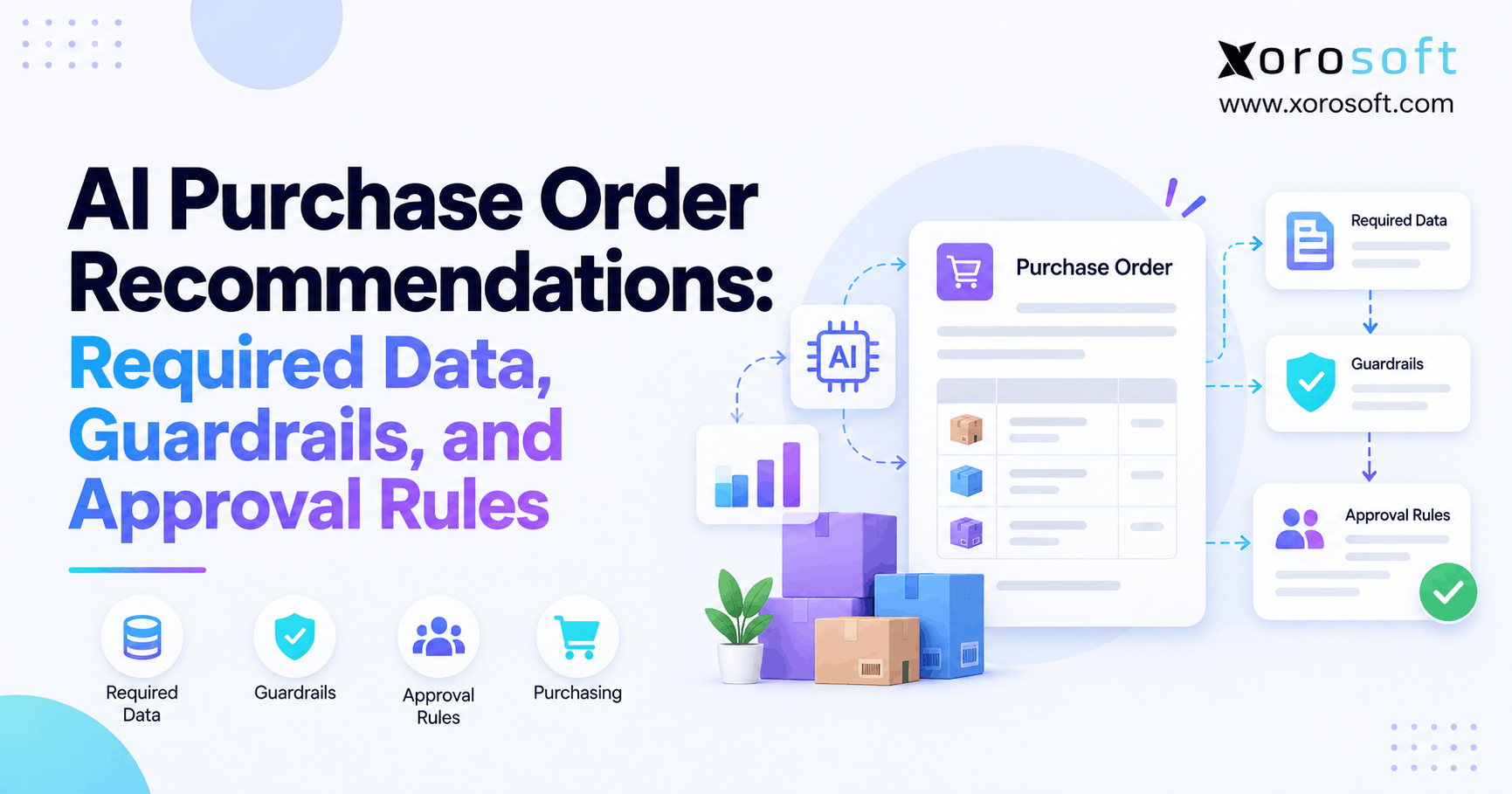
3.5 Create and Approve Wholesale Purchase Orders
A purchase order should communicate exactly what the business expects the supplier to provide.
It should include:
- Purchase-order number
- Supplier name
- Delivery location
- Item numbers
- Product descriptions
- Quantities
- Unit costs
- Currency
- Required delivery date
- Shipping terms
- Payment terms
- Tax information
- Receiving instructions
- Approval record
Approval rules should reflect commercial risk. For instance, a routine replenishment order from an approved supplier may follow a simple workflow. A large or unplanned purchase, however, may require review by finance or senior management.
Furthermore, the business should define who can modify quantities, costs, and delivery dates after approval. Otherwise, an order may change materially without a second review.
3.6 Monitor Open Purchase Orders and Supplier Commitments
Creating a purchase order does not guarantee delivery.
Suppliers may change quantities, prices, ship dates, or product availability. Consequently, buyers need a shared view of:
- Orders awaiting approval
- Orders awaiting supplier confirmation
- Late purchase orders
- Partially shipped orders
- Backordered quantities
- Changed costs
- Expected arrival dates
- Cancelled lines
An open-PO report should support action. Therefore, it should help buyers identify stockout exposure, contact suppliers, revise delivery expectations, and communicate changes internally.
Meanwhile, sales and customer-service teams should see meaningful delivery updates. If an important product will arrive two weeks late, that information should not remain inside a buyer’s email inbox.
3.7 Receive and Inspect Wholesale Inventory Correctly
Receiving teams should record what physically arrived rather than automatically receiving the full purchase-order quantity.
Employees should verify:
- Product identity
- Quantity
- Condition
- Packaging
- Lot or serial information
- Labels
- Expiration dates
- Quality requirements
If the supplier ships only part of the order, the remaining quantity should stay open. Otherwise, purchasing may incorrectly assume that the order is complete.
Damaged or rejected goods should also be separated from sellable inventory. As a result, available stock remains accurate and customers are less likely to receive unsuitable products.
In addition, warehouse teams should record discrepancies promptly. Delayed receiving updates weaken purchasing recommendations and create confusion during invoice matching.
3.8 Match Purchase Orders, Receipts, and Supplier Invoices
Three-way matching compares:
1. The purchase order
2. The warehouse receipt
3. The supplier invoice
The process confirms that the business ordered the goods, received them, and was billed correctly.
Differences may result from changed prices, short shipments, damaged products, freight charges, or entry errors. Therefore, exceptions should be resolved before payment whenever possible.
Moreover, accurate matching improves inventory valuation and supplier accountability. Finance teams can see why an invoice differs instead of reconstructing the transaction at month-end.
4. Wholesale Inventory Forecasting and Replenishment Planning
Demand forecasting gives purchasing teams a structured view of future inventory requirements. Without it, purchase orders often become reactions to low-stock warnings rather than planned commercial decisions.
4.1 Match Wholesale Forecasting Methods to Product Behavior
Stable products may suit moving averages. Seasonal products, however, require comparisons with equivalent periods from previous years. Fast-moving products may benefit from sales-velocity analysis, while new items may need assumptions based on comparable products or confirmed customer demand.
Because product behavior differs, one forecasting method should not be applied blindly across the catalog.
Instead, businesses can classify products according to:
- Sales value
- Margin
- Demand predictability
- Supplier lead time
- Strategic importance
- Shelf life
- Supplier reliability
This segmentation supports more appropriate wholesale replenishment policies. For example, a high-value predictable SKU may require close monitoring but limited safety stock. Conversely, a lower-value item with volatile demand may need a different replenishment approach.
4.2 Use Wholesale Reorder Points as Purchasing Triggers
A reorder point identifies when the business should review or initiate replenishment.
Reorder point = Average demand during lead time + safety stock
Suppose a product sells 15 units per day, the supplier lead time is 12 days, and the business holds 60 safety units. The reorder point is 240 units.
When the inventory position approaches that level, the buyer should review demand, incoming stock, and supplier capacity. However, the reorder point should not automatically create an order without checking current conditions.
Lead times and demand patterns change. Therefore, reorder points should be reviewed regularly. Additionally, temporary promotions or customer contracts may justify a one-time adjustment without permanently changing the standard rule.
4.3 Set Wholesale Safety Stock According to Risk
Safety stock protects against demand changes and supplier delays. The correct quantity depends on demand variability, lead-time variability, product importance, service-level expectations, and the financial cost of a stockout.
A high-margin product with unpredictable demand may justify more protection. By contrast, a slow-moving item with low strategic importance may require little safety stock.
More safety stock may reduce shortages. At the same time, it increases carrying costs and working-capital requirements. Accordingly, businesses should assign service levels by product group rather than apply one percentage to every SKU.
Furthermore, buyers should distinguish permanent safety stock from temporary risk coverage. For example, a short-term supplier disruption may justify additional stock for several months without changing the long-term policy.
4.4 Balance Supplier Minimums With Inventory Carrying Costs
Supplier minimum order quantities may exceed the calculated requirement. Before accepting a larger order, the buyer should review:
- Storage cost
- Future demand
- Expiration risk
- Obsolescence risk
- Markdown exposure
- Cash-flow impact
- Alternative suppliers
A volume discount can appear attractive. Nevertheless, the discount may be smaller than the cost of financing, storing, and eventually discounting excess inventory.
Therefore, buyers should compare the total economic outcome rather than only the quoted unit price. In some situations, paying slightly more per unit creates a better result because the company buys a more appropriate quantity.
4.5 Plan Seasonal Wholesale Purchasing Earlier
Seasonal purchasing requires longer planning horizons. Apparel, sporting goods, holiday products, and outdoor items may require commitments months before the sales period.
Therefore, buyers should account for:
- Supplier production capacity
- Material availability
- International freight
- Customs delays
- Launch dates
- Warehouse capacity
- Markdown deadlines
A seasonal order that arrives late may lose most of its commercial value. Consequently, timing can matter as much as price.
At the same time, ordering too early creates forecast risk. Accordingly, buyers may use staged orders, supplier reservations, or phased deliveries to balance availability with uncertainty.
5. Supplier Management Within Wholesale Procurement
Supplier management turns a series of purchase orders into a controlled operating process.
A wholesaler should know which suppliers are approved, what they provide, how they perform, and where the business faces supply risk.
5.1 Maintain Complete Wholesale Supplier Records
Supplier records should contain:
- Contact details
- Product lists
- Prices
- Currencies
- Payment terms
- Minimum quantities
- Case packs
- Standard lead times
- Freight terms
- Certifications
- Return policies
- Quality requirements
Outdated supplier data can create incorrect purchasing recommendations. For example, an old lead time may cause the system to suggest an order too late. Similarly, an outdated cost can distort margins and purchasing budgets.
Therefore, supplier information should have a clear owner and review schedule. Moreover, changes should be communicated across purchasing, receiving, and finance so each team uses the same commercial terms.
5.2 Use Supplier Scorecards in Wholesale Purchasing
A practical supplier scorecard can measure:
- On-time delivery
- Fill rate
- Defect rate
- Lead-time accuracy
- Invoice accuracy
- Price stability
- Responsiveness
One late delivery may not justify changing suppliers. However, repeated delays can indicate capacity, planning, or communication problems.
Scorecards should therefore focus on trends. In addition, the findings should support supplier discussions, corrective-action plans, and future sourcing decisions.
For instance, a supplier with strong pricing but poor fill rates may create more lost sales than a slightly more expensive supplier. Consequently, purchasing teams should evaluate the complete operational impact.
5.3 Reduce Wholesale Supplier Concentration Risk
A critical product should not depend blindly on one supplier, factory, country, port, or transportation route.
Depending on the risk, the business may:
- Approve a backup supplier
- Hold temporary safety stock
- Negotiate reserved capacity
- Identify substitute products
- Redesign the product
- Use another shipping route
- Shorten purchasing review cycles
Diversification may increase short-term cost. Nevertheless, it can reduce the financial impact of a major disruption.
Furthermore, backup suppliers should be qualified before an emergency occurs. Otherwise, quality checks, commercial terms, and product testing may delay the response when the business needs inventory urgently.
5.4 Renegotiate Wholesale Supplier Terms With Better Data
Supplier negotiations should use more than annual spend.
Buyers can also discuss:
- Order consistency
- Forecast visibility
- Payment performance
- Defect rates
- Delivery performance
- Growth projections
- Consolidated purchasing volume
A supplier may improve minimums, payment terms, lead times, or pricing when the wholesaler provides more predictable demand. Therefore, better purchasing information can strengthen the commercial relationship.
Likewise, more accurate forecasts may help suppliers plan production. As a result, both parties can reduce last-minute changes and emergency communication.
6. Wholesale Purchase Order Controls That Improve Accountability
Purchase-order controls make buying decisions visible, authorized, and traceable.
They should not create unnecessary delays. Instead, they should focus attention on unusual, unplanned, or higher-risk purchases.
6.1 Build Wholesale Purchasing Approvals Around Value and Risk
Approval workflows can be based on:
- Order value
- Supplier status
- Product category
- Budget availability
- Planned versus unplanned demand
- New versus existing products
- Domestic versus international purchasing
Routine replenishment should move quickly. By contrast, a large order from a new supplier may require additional review.
The business should also define who can change quantities, prices, and dates after approval. Otherwise, an order can be materially modified without another review.
Moreover, approvals should have clear response expectations. If managers routinely delay routine orders, the workflow may create stockouts instead of controlling risk.
6.2 Record Wholesale Purchase Order Changes Clearly
Suppliers may change quantities, costs, or delivery dates after receiving the order.
When that happens, buyers should update the purchase order or maintain a visible change record. Otherwise, warehouse and finance teams compare receipts and invoices with outdated information.
As a result, preventable discrepancies appear during receiving or invoice matching.
Additionally, significant changes may require renewed approval. For example, a supplier price increase or major delivery delay can change the financial and operational value of the original purchase.
6.3 Use EDI for High-Volume Wholesale Procurement
EDI can exchange structured business documents between companies.
Common transactions include:
- EDI 850 purchase order
- EDI 855 purchase-order acknowledgement
- EDI 856 advance ship notice
- EDI 810 supplier invoice
EDI reduces manual entry. However, it still requires accurate item mappings, agreed business rules, exception monitoring, and trading-partner coordination.
Therefore, automation should not be confused with the absence of control. Instead, EDI should make standard transactions faster while directing employee attention toward exceptions.
7. Multi-Warehouse Wholesale Purchasing and Channel Demand
Purchasing becomes more complex when inventory is distributed across warehouses, marketplaces, ecommerce stores, wholesale customers, and retail locations.
Company-wide inventory may look sufficient while one warehouse is close to a stockout. Meanwhile, separate buying teams may place duplicate orders against the same demand.
7.1 Calculate Wholesale Purchasing Requirements by Warehouse
Each warehouse may serve a different region, customer group, or sales channel. Therefore, purchasing requirements should account for local demand, allocations, safety stock, inbound supply, and transfer options.
A shortage in one location does not always require a supplier purchase. Another warehouse may hold excess stock.
However, the transfer decision should consider:
- Freight
- Handling
- Delivery time
- Labor
- Future demand at the source warehouse
- Customer-service requirements
A transfer should solve the overall inventory problem rather than move it to another location.
7.2 Track Wholesale Inventory in Transit
Inventory should remain visible while moving between warehouses.
If stock disappears from one location before appearing at another, buyers may misinterpret the available inventory position. Consequently, they may place an unnecessary supplier order.
In-transit tracking also helps customer-service teams provide more realistic availability dates. Furthermore, it gives warehouse teams a clearer view of expected inbound workload.
7.3 Consolidate Shopify, Amazon, and Wholesale Purchasing Demand
Shopify, Amazon, EDI, wholesale, and retail demand may compete for the same inventory.
Therefore, buyers need a consolidated demand view. Otherwise, each channel may trigger its own replenishment calculation and create overlapping supplier orders.
For Shopify merchants, an ERP connection can bring storefront demand into the wider purchasing, inventory, warehouse, and accounting process. The Xorosoft ERP app for Shopify is one example for merchants that need operational control beyond the storefront.
Additionally, channel cancellations and returns should affect the purchasing picture. If demand disappears from one channel, buyers should see the change before placing or expanding an order.
7.4 Protect Wholesale Inventory for Strategic Customers
Some wholesalers reserve inventory for major accounts, launches, subscriptions, or contractual service commitments.
Allocated stock should remain visible to purchasing because it is no longer freely available. A buyer who sees only physical stock may underestimate the requirement.
A connected view therefore needs to show:
- Physical stock
- Customer allocations
- Channel reservations
- Open orders
- Inbound supply
- Available inventory
At the same time, allocation rules should be reviewed regularly. Inventory should not remain reserved indefinitely when the customer commitment no longer exists.
8. Wholesale Purchasing, Cash Flow, and Accounting
Purchasing converts cash into inventory before the business earns revenue from that inventory.
Consequently, purchase quantities, payment terms, freight, deposits, and slow-moving products all affect liquidity.
8.1 Give Finance Visibility Into Wholesale Purchasing Commitments
A purchase order represents a future cash requirement.
Finance teams should therefore see:
- Open purchase orders
- Expected receipt dates
- Deposits
- Supplier payment terms
- Freight estimates
- Duties
- Currency exposure
- Remaining commitments
Without this visibility, cash forecasts may underestimate future obligations.
Moreover, buyers need financial context before placing large orders. A purchase may be operationally justified but poorly timed from a cash-flow perspective. Therefore, purchasing and finance should review significant commitments together.
8.2 Calculate Landed Cost in Wholesale Procurement
Landed cost can include:
- Supplier price
- Freight
- Insurance
- Duties
- Brokerage
- Port charges
- Handling
These expenses should be allocated consistently. Otherwise, product margins may appear stronger than they actually are.
For example, two suppliers may offer the same unit price. However, one supplier may require higher freight and duties. Therefore, the supplier with the same quoted price may produce a higher true inventory cost.
In addition, landed-cost visibility supports better pricing decisions. Sales teams can evaluate margin using a more complete product cost rather than the supplier invoice price alone.
8.3 Connect Wholesale Receiving With Inventory Valuation
Warehouse receipts should update inventory and purchasing commitments promptly.
When receiving and accounting remain disconnected, finance teams must reconstruct:
- What was ordered
- What arrived
- What was invoiced
- Which costs remain outstanding
As a result, reconciliation takes longer and inventory values may remain uncertain.
Furthermore, late receipts can create timing differences around month-end. Accordingly, warehouse and finance teams should agree on cut-off procedures and exception handling.
8.4 Monitor Wholesale Purchase Price Variance
Purchase price variance compares expected cost with actual cost.
Differences may result from:
- Supplier price changes
- Currency movement
- Order quantity
- Freight conditions
- Incorrect data
- Expedited shipping
- Unplanned charges
Regular review helps buyers identify cost changes earlier. In addition, finance gains more confidence in product margins and budgets.
However, not every variance indicates a problem. A higher price may reflect an approved rush order or smaller quantity. Therefore, the metric should be reviewed with transaction context.
9. Wholesale Purchasing KPIs That Support Better Decisions
Purchasing KPIs should lead to action. Otherwise, the dashboard becomes another report that teams review without changing behavior.
9.1 Supplier On-Time Delivery in Wholesale Procurement
Supplier on-time delivery measures how often orders arrive by the agreed date.
A poor result may indicate supplier capacity problems, inaccurate commitments, or unreliable transportation. Therefore, buyers should investigate the cause rather than review only the percentage.
Additionally, the definition of “on time” should remain consistent. Some businesses measure the supplier ship date, while others measure receipt at the warehouse.
9.2 Wholesale Supplier Fill Rate
Fill rate compares units received with units ordered.
A supplier may deliver on time but still ship only part of the order. Consequently, on-time delivery and fill rate should be reviewed together.
Moreover, buyers should separate supplier shortages from approved order changes. Otherwise, the metric may unfairly penalize a supplier when the company reduced the order.
9.3 Wholesale Demand Forecast Accuracy
Forecast accuracy compares expected demand with actual demand.
Poor accuracy may result from market changes. However, it may also reflect missing promotions, stockout history, customer concentration, or unsuitable forecasting methods.
Therefore, forecast error should be reviewed by product group and cause. A single company-wide average can hide significant problems in important categories.
9.4 Wholesale Stockout Rate
Stockout rate measures how often demand cannot be fulfilled from available inventory.
A high rate may indicate late suppliers, inaccurate stock, insufficient safety stock, or delayed approvals. Therefore, purchasing should review stockouts by cause.
At the same time, teams should distinguish preventable stockouts from unexpected events. This distinction helps management focus on problems the business can realistically control.
9.5 Wholesale Purchase Order Cycle Time
Purchase-order cycle time measures how long it takes to move from a purchasing request to an approved order.
Long cycle times can reveal excessive approvals, unclear ownership, missing data, or manual communication.
Consequently, the team should review both average time and exceptional delays. A reasonable average may still hide a small number of critical orders that remained unapproved for too long.
9.6 Supplier Lead-Time Variance
Lead-time variance compares expected and actual supplier delivery times.
If actual performance is consistently longer, the standard lead time should be updated. Otherwise, reorder points will continue to trigger too late.
Likewise, consistently shorter lead times may allow the business to reduce safety stock. Therefore, accurate performance data can improve both service and working capital.
9.7 Emergency Wholesale Purchase Rate
Emergency purchases often involve expedited freight, rushed approvals, and reduced negotiating power.
A rising rate may signal poor forecasting, inaccurate inventory, supplier delays, or late internal decisions. Consequently, each emergency order should have a recorded cause.
Over time, recurring causes should lead to process changes. For example, frequent emergency purchases from one supplier may justify a lead-time adjustment or secondary source.
9.8 Wholesale Inventory Turnover and Excess Stock
Inventory turnover measures how effectively stock converts into sales. Excess inventory identifies units beyond the company’s realistic demand horizon or stocking policy.
However, the metrics need context. A strategic spare part may move slowly by design, while seasonal apparel may require rapid turnover before the sales window closes.
Accordingly, turnover targets should vary by product group rather than use one company-wide standard.
10. Common Wholesale Purchasing and Procurement Mistakes
10.1 Ordering Wholesale Inventory From Sales History Alone
Historical sales are useful, but they may hide stockouts, one-time demand, or market changes.
Therefore, buyers should combine history with confirmed orders, customer plans, promotions, and inventory availability.
In addition, sales history should be adjusted for discontinued products and assortment changes. Otherwise, old patterns may create unnecessary future purchases.
10.2 Ignoring Inbound Wholesale Purchase Orders
A buyer may place a duplicate order when incoming supply is not visible.
As a result, the company receives more inventory than needed and creates an unnecessary cash commitment.
Therefore, purchasing reports should include confirmed inbound quantities and realistic expected dates. An overdue order with no supplier confirmation should not be treated as guaranteed supply.
10.3 Using One Wholesale Replenishment Rule for Every Product
Products differ in margin, value, predictability, lead time, and strategic importance.
Consequently, one safety-stock percentage or reorder rule will usually create both shortages and excess inventory.
Instead, businesses should segment products and assign policies based on risk. This approach improves control without requiring buyers to manage every SKU individually.
10.4 Accepting Supplier Minimums Without Reviewing Wholesale Demand
A supplier minimum may justify negotiation, consolidation, or an alternative source.
Ordering additional units only to reach the minimum can create more cost than the discount saves.
Therefore, buyers should compare carrying cost, markdown exposure, and expected demand before accepting the larger quantity.
10.5 Managing Wholesale Purchase Orders Through Email
Email supports supplier communication. However, it should not become the official open-PO record.
Buyers need structured quantities, dates, statuses, and exceptions that other departments can access.
Moreover, critical supplier updates should be reflected in the purchasing system. Otherwise, the organization remains dependent on individual inboxes.
10.6 Ignoring Landed Cost During Supplier Selection
A low supplier price may appear attractive. Nevertheless, freight, duties, handling, and insurance can change the total cost significantly.
Therefore, supplier comparisons should use expected landed cost whenever possible.
Likewise, buyers should review payment terms. A slightly higher product cost with better terms may create less short-term cash pressure.
10.7 Automating a Poor Wholesale Purchasing Process
Automation should follow process design.
If approvals are unclear or inventory data is inaccurate, software will repeat the same problems faster. First, the business should correct the process. Then, it can automate the repeatable activities.
Ultimately, automation works best when exceptions, responsibilities, and data requirements have already been defined.
11. When Wholesale Purchasing Spreadsheets Stop Scaling
Spreadsheets can support simple purchasing and analytical work. However, they become risky when they replace shared transaction records.
11.1 Warning Signs Wholesale Purchasing Has Outgrown Spreadsheets
Common warning signs include:
- Multiple inventory files
- Unreliable open purchase orders
- Duplicate supplier orders
- Delayed receiving updates
- Email-based approvals
- Broken formulas
- Manual landed-cost calculations
- Reconciliation problems
- Dependence on one employee
At this point, the business should determine whether it needs purchasing software, an inventory platform, or ERP.
Moreover, management should evaluate the cost of continuing with the current process. Manual work may appear inexpensive, but repeated stockouts, excess purchases, and reconciliation effort can create a substantial hidden cost.
11.2 Wholesale Purchasing Software Versus Inventory Software
Purchasing software generally focuses on suppliers, approvals, and purchase orders.
Inventory software adds stock visibility, replenishment, warehouse transactions, and channel synchronization.
Either option may work for a business with limited complexity. However, both can create another integration problem when accounting and wider operations remain separate.
Therefore, the evaluation should consider the complete workflow rather than one department’s immediate need.
11.3 When Wholesale ERP Becomes Relevant
ERP becomes relevant when purchasing depends on real-time inventory, multiple warehouses, accounting, ecommerce, EDI, manufacturing, and consolidated reporting.
A cloud ERP platform can provide a shared operating record for orders, inventory, purchasing, receiving, costs, and financial results.
Therefore, the main benefit is not simply reducing the number of applications. More importantly, departments make decisions using the same transaction data.
12. How to Evaluate Wholesale Purchasing Software
Software selection should begin with the business process rather than a vendor demonstration.
First, the team should document current problems, transaction volume, controls, integrations, and reporting requirements. Then, vendors can demonstrate how their systems support the actual workflow.
12.1 Review Core Wholesale Purchasing Features
A practical system should support:
- Purchase requisitions
- Approval workflows
- Purchase orders
- Supplier records
- Price lists
- Reorder recommendations
- Forecasting
- Partial receiving
- Backorders
- Landed costs
- Vendor credits
- Permissions
- Open-PO reporting
- Supplier scorecards
However, a feature list alone is not enough. The vendor should demonstrate how information moves through the complete transaction.
For example, the team should see how a replenishment recommendation becomes an approved purchase order, a partial receipt, a supplier invoice, and an accounting entry.
12.2 Evaluate Wholesale Inventory and Warehouse Capabilities
Purchasing teams need visibility into:
- On-hand inventory
- Available inventory
- Allocated inventory
- Inbound supply
- Transfers
- Warehouse locations
- Receiving status
For businesses with complex fulfillment requirements, XoroWMS illustrates how warehouse processes can connect with inventory and receiving rather than operate separately.
The evaluation should also include lot tracking, serial tracking, barcode workflows, bin management, and mobile receiving when relevant.
In addition, vendors should demonstrate exceptions. Standard receiving is easy to show, while partial shipments, damaged products, and supplier substitutions reveal more about the system’s practical capabilities.
12.3 Review Wholesale Purchasing and Accounting Integration
Purchasing software should connect supplier invoices, accounts payable, landed costs, inventory valuation, and financial reporting.
Finance teams should be able to trace balances back to operational transactions. Otherwise, they will continue rebuilding reports in spreadsheets.
A system such as XoroERP is designed for businesses that need purchasing, inventory, accounting, and reporting in the same operating environment.
Furthermore, the evaluation should cover prepayments, vendor credits, currency differences, and invoice discrepancies. These transactions often expose gaps that do not appear in a simple product demonstration.
12.4 Test Ecommerce and EDI Purchasing Workflows
The software evaluation should include Shopify, Amazon, wholesale, retail, and EDI processes.
Ask how the platform handles:
- Orders
- Cancellations
- Returns
- Allocations
- Inventory synchronization
- Supplier acknowledgements
- Shipment notices
- Invoice matching
An integration logo does not prove that the workflow meets the company’s requirements. Therefore, vendors should demonstrate realistic transactions.
Additionally, the team should confirm how frequently data updates and how failures are monitored. A connection is only useful when missing or delayed transactions can be identified quickly.
12.5 Plan Wholesale Purchasing Data Migration and Implementation
Implementation should cover:
- Supplier cleanup
- Item records
- Lead times
- Costs
- Open purchase orders
- Opening inventory
- Accounting balances
- User permissions
- Testing
- Training
- Integrations
- Process ownership
Technology alone will not correct inaccurate records. Consequently, data cleanup and process decisions should happen before launch.
Moreover, the business should define who owns purchasing rules after implementation. Otherwise, lead times, safety stock, and supplier terms will gradually become outdated again.
13. Wholesale Purchasing Use Cases by Industry
Purchasing principles remain consistent across industries. Nevertheless, product characteristics change the operational requirements.
13.1 Wholesale Purchasing for Apparel and Fashion
Apparel companies manage size and color variants, seasonal collections, launch dates, supplier minimums, and markdown risk.
A successful style can still contain excess inventory in the wrong sizes. Therefore, purchasing decisions should consider both style-level demand and variant-level availability.
Additionally, buyers may need to commit before final customer demand is known. Consequently, phased deliveries and early sales signals can reduce seasonal risk.
13.2 Wholesale Procurement for Furniture and Home Goods
Furniture companies often manage long lead times, containers, high freight costs, bulky storage, and product damage.
Consequently, purchasing decisions should consider warehouse capacity and landed cost alongside forecast demand.
Moreover, container optimization can conflict with inventory requirements. Filling unused space may lower freight per unit, but it can also create excess stock. Therefore, buyers should evaluate the complete financial impact.
13.3 Wholesale Purchasing for Sporting Goods
Sporting-goods demand changes with seasons, weather, events, and product launches.
Buyers should therefore separate predictable core products from seasonal or promotional products that require earlier commitments.
At the same time, regional demand may vary. Multi-warehouse purchasing should reflect local climate and sporting activity rather than rely only on company-wide sales.
13.4 Wholesale Procurement for Food and Beverage
Food and beverage businesses must consider shelf life, lot tracking, supplier quality, and expiration risk.
A large order may lower the unit cost. However, the savings disappear when products expire before they are sold.
Therefore, buyers should combine demand forecasts with remaining shelf life and warehouse rotation practices. Moreover, supplier quality and traceability may be as important as price.
13.5 Inventory Purchasing for Manufacturing
Manufacturers purchase raw materials and components based on bills of materials, production schedules, work orders, scrap assumptions, and available supply.
Therefore, a finished-goods forecast alone cannot produce a reliable material plan.
Additionally, one missing component can delay the completion of an entire product. Consequently, purchasing priorities should consider production dependencies rather than only item value.
13.6 Wholesale Distribution Purchasing
Wholesale distributors often manage large catalogs, EDI, customer-specific pricing, allocations, and multiple warehouses.
Their purchasing process must consolidate demand from different customers and channels without counting the same inventory requirement twice.
Businesses can review Xorosoft’s industry solutions to see how inventory-driven workflows differ across wholesale, apparel, furniture, sporting goods, food, consumer products, and manufacturing.
14. A 90-Day Wholesale Purchasing Improvement Plan
A business can improve purchasing before replacing every system.
A focused 90-day plan can clarify the process, correct data, and identify which technology is actually required.
14.1 Days 1–30: Document the Wholesale Purchasing Process
Map how demand becomes a purchase order.
Document:
- Who creates orders
- Who approves them
- Where supplier records are stored
- How inventory is reviewed
- How receipts are processed
- How invoices reach accounting
- Which reports buyers use
- Which steps require spreadsheets
In addition, measure stockouts, emergency purchases, supplier delays, open orders, and excess inventory.
The objective is to establish a baseline rather than immediately purchase software. Therefore, the team should document both formal steps and informal workarounds.
14.2 Days 31–60: Correct Wholesale Purchasing Data and Policies
Clean supplier records, update lead times, review minimum order quantities, classify inventory, and establish approval thresholds.
Next, define ownership for:
- Supplier data
- Item data
- Reorder points
- Safety stock
- Purchasing exceptions
- Open purchase orders
- Supplier performance
A process improves only when someone remains responsible for its inputs.
Moreover, the business should remove duplicate reports and agree on standard definitions. For example, “available inventory” should mean the same thing to purchasing, sales, and warehouse teams.
14.3 Days 61–90: Add Controlled Purchasing Automation
Once the data and policies are clearer, automate low-risk activities.
For example, the business can introduce:
- Replenishment recommendations
- Approval workflows
- Open-PO dashboards
- Supplier scorecards
- Late-order alerts
- Regular inventory-policy reviews
However, buyers should still review unusual demand, new suppliers, high-value purchases, and strategic items.
Automation should support buyer judgment rather than replace it. Ultimately, the goal is faster routine processing and better attention to exceptions.
15. How ERP Strengthens Wholesale Purchasing Management
The central problem in many growing wholesale businesses is not the absence of a purchase-order screen.
Instead, the problem is that purchasing, inventory, warehousing, sales, and accounting rely on different records.
15.1 Connect Wholesale Purchasing With Real-Time Inventory
Buyers need to see:
- On-hand stock
- Available stock
- Allocated inventory
- Inbound orders
- Transfers
- Forecast demand
- Safety stock
- Warehouse-level availability
When this information appears together, buyers spend less time combining reports.
As a result, purchasing decisions become faster and easier to explain. Additionally, sales and customer-service teams receive more dependable availability information.
15.2 Connect Wholesale Purchase Orders With Warehouse Receiving
Warehouse receipts should update open purchase-order balances and inventory promptly.
Partial shipments, rejected goods, and backorders should remain visible. Otherwise, purchasing may believe the supplier completed the order while the warehouse is still waiting for stock.
A connected process therefore improves communication between purchasing and warehouse teams.
Moreover, buyers can respond sooner when shortages or damages create future availability problems.
15.3 Connect Wholesale Purchasing With Accounting
Purchase orders, receipts, supplier invoices, landed costs, and accounts payable should share the same transaction data.
This structure reduces duplicate entry. In addition, it helps finance trace discrepancies and close the period with greater confidence.
Meanwhile, buyers gain better visibility into actual cost and outstanding commitments. Consequently, operational and financial decisions become more closely aligned.
15.4 Compare Wholesale ERP Platforms Based on Operational Fit
Businesses may evaluate NetSuite, Acumatica, Cin7, Brightpearl, Sage, Business Central, and Xorosoft.
However, no platform is the best choice for every company.
The evaluation should focus on:
- Required workflows
- Reporting
- Integrations
- Implementation resources
- User experience
- Total cost
- Scalability
- Industry requirements
Companies reviewing broader ERP options can use this Xorosoft versus NetSuite comparison as one part of their research.
Nevertheless, comparison pages should support rather than replace a detailed requirements process. The final decision should reflect how the system handles the company’s real purchasing, receiving, accounting, and inventory exceptions.
15.5 Where Xorosoft Fits in Wholesale Purchasing
Xorosoft is built for inventory-driven companies that need purchasing, inventory, accounting, warehouse management, forecasting, manufacturing, Shopify, Amazon, and EDI within one cloud platform.
It may be relevant when a business has outgrown QuickBooks, spreadsheets, inventory-only software, or disconnected applications.
A smaller wholesaler with one warehouse and simple processes may still be better served by a lighter system. Therefore, the software decision should reflect operational complexity rather than company ambition alone.
16. Wholesale Purchasing Frequently Asked Questions
16.1 What Is Wholesale Purchasing?
Wholesale purchasing is the process of planning, sourcing, ordering, receiving, and paying for products or materials. In addition, it connects demand forecasting, suppliers, purchase orders, inventory, warehouse receiving, and accounting.
16.2 How Does the Wholesale Purchasing Process Work?
First, buyers forecast demand and review inventory. Next, they calculate requirements, select suppliers, approve purchase orders, monitor delivery, receive goods, and reconcile invoices.
16.3 What Is the Difference Between Purchasing and Procurement?
Purchasing focuses on orders, deliveries, and payments. Procurement, by contrast, also includes sourcing, contracts, negotiation, supplier risk, and performance management.
16.4 Why Is Purchasing Important for Wholesale Businesses?
Purchasing affects inventory availability, customer service, warehouse space, working capital, and profitability. Therefore, poor buying decisions can create both stockouts and excess inventory.
16.5 How Do Wholesalers Decide What to Buy?
Wholesalers combine forecast demand, confirmed orders, available stock, allocations, inbound supply, safety stock, supplier lead times, minimum quantities, and budget limits.
16.6 How Do Wholesalers Calculate Order Quantity?
First, they add forecast demand and safety stock. Then, they subtract available inventory and confirmed inbound supply before adjusting for case packs, minimums, capacity, and cash flow.
16.7 What Is a Wholesale Reorder Point?
A reorder point is the inventory position that triggers a replenishment review. Usually, it equals expected demand during supplier lead time plus safety stock.
16.8 What Is Wholesale Safety Stock?
Safety stock is additional inventory held to protect against unexpected demand or supplier delays. However, the quantity should reflect variability, product importance, and stockout cost.
16.9 What Should a Wholesale Purchase Order Include?
A purchase order should include supplier information, destination, products, quantities, costs, currency, required date, payment terms, shipping terms, approval, and receiving instructions.
16.10 What Is Purchase Order Automation?
Purchase-order automation uses software to create recommendations, route approvals, issue orders, track status, and connect receiving and invoice data. Nevertheless, buyers should still review exceptions.
16.11 How Can Wholesalers Prevent Stockouts?
Wholesalers can improve inventory accuracy, supplier lead times, reorder points, safety stock, open-order monitoring, forecasting, and supplier performance.
16.12 How Can Wholesalers Reduce Overstock?
They can classify inventory, improve forecasts, include inbound supply, challenge supplier minimums, review slow-moving items, and stop unnecessary replenishment.
16.13 Which Wholesale Purchasing KPIs Matter Most?
Important metrics include supplier delivery, fill rate, forecast accuracy, stockouts, purchase-order cycle time, lead-time variance, emergency orders, turnover, and excess inventory.
16.14 How Should Wholesale Supplier Performance Be Measured?
Supplier performance should be measured across delivery, quantity, quality, lead-time accuracy, invoice accuracy, cost, and responsiveness. Additionally, trends should be reviewed across several orders.
16.15 Can a Wholesale Business Manage Purchasing in Spreadsheets?
Yes, when the operation is small and simple. However, risk increases as the business adds SKUs, suppliers, warehouses, users, and sales channels.
16.16 When Should a Wholesaler Replace Purchasing Spreadsheets?
Replacement becomes appropriate when teams no longer trust inventory, duplicate orders occur, approvals are unclear, receiving is delayed, or finance rebuilds data manually.
16.17 What Software Do Wholesale Purchasing Teams Use?
Teams may use spreadsheets, purchase-order tools, inventory systems, procurement platforms, or ERP. Ultimately, the right choice depends on operational complexity.
16.18 What Is the Difference Between Purchasing Software and ERP?
Purchasing software focuses on suppliers and purchase orders. ERP, however, also connects inventory, warehouses, accounting, sales, forecasting, manufacturing, and reporting.
16.19 How Does ERP Improve Wholesale Purchasing?
ERP can provide one shared record for demand, inventory, inbound supply, purchase orders, receipts, invoices, costs, and financial reporting.
16.20 How Do Wholesalers Manage Purchasing Across Warehouses?
They calculate requirements by location, review transfers before buying, centralize supplier terms, track in-transit inventory, and prevent duplicate orders.
16.21 How Does Wholesale Purchasing Affect Cash Flow?
Purchasing converts cash into inventory before revenue is earned. Therefore, order timing, quantities, deposits, supplier terms, freight, and slow-moving stock affect liquidity.
16.22 What Is Landed Cost in Wholesale Procurement?
Landed cost includes supplier price, freight, duties, brokerage, insurance, handling, and other acquisition expenses. Consequently, it provides a more complete view of inventory cost.
16.23 What Is Three-Way Matching?
Three-way matching compares the purchase order, warehouse receipt, and supplier invoice before payment. As a result, quantity and cost discrepancies can be identified earlier.
16.24 What Should Wholesale Purchasing Software Include?
It should support approvals, purchase orders, supplier data, replenishment, forecasting, receiving, landed costs, multi-warehouse inventory, accounting, permissions, and integrations.
16.25 When Does a Wholesale Business Need ERP?
ERP becomes relevant when purchasing depends on multiple warehouses, ecommerce, EDI, manufacturing, accounting, advanced reporting, and several disconnected applications.
17. Strategic Next Steps for Scalable Wholesale Purchasing
Reliable wholesale purchasing starts with accurate demand, inventory, supplier, and cost data. In addition, the business needs clear ownership, approval rules, receiving controls, and measurable supplier performance.
Technology should support that operating model. It should not replace the need for purchasing discipline.
Smaller wholesalers may continue successfully with spreadsheets or focused purchasing software. However, businesses managing multiple warehouses, Shopify, Amazon, EDI, manufacturing, complex accounting, and large supplier networks may need a connected ERP foundation.
Therefore, the practical next step is to document where purchasing decisions break down today. Identify which reports cannot be trusted, where information is re-entered, how long approvals take, and how frequently stockouts or excess purchases occur.
Next, separate process problems from software limitations. Some issues can be corrected through cleaner data, stronger ownership, or improved supplier management. Other problems, by contrast, require connected inventory, purchasing, warehouse, and accounting workflows.
Finally, use those findings to create a focused software evaluation. A requirements-driven review will produce more useful results than a generic feature checklist.
For businesses ready to connect purchasing, inventory, warehouse management, accounting, forecasting, ecommerce, EDI, and manufacturing, contact Xorosoft to review the current workflow and determine whether a broader ERP approach fits the operation.
Recent Posts
-
 ERP Landed Cost Module vs Spreadsheet Calculations for Importers
 -
 How to Build an Open-to-Buy Plan for an Omnichannel Brand
 -
 Cold Storage WMS for Food and Beverage Distribution
 -
 ERP Buying Statistics 2026: Evaluation, Implementation, and Adoption Risks
 -
 How a Distributor Reduced B2B Order Exceptions Without Restricting Sales