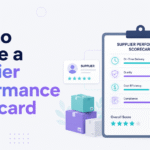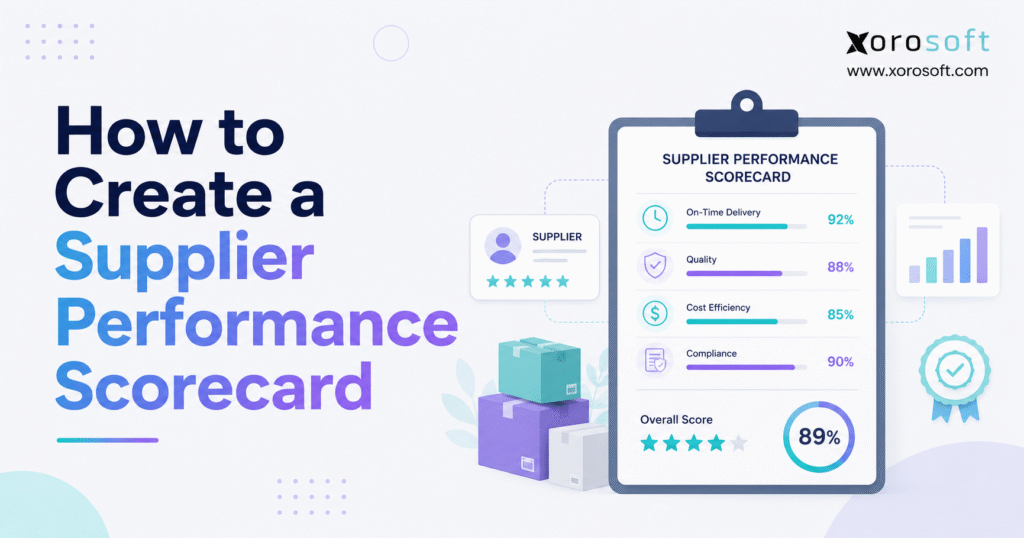
If you want to effectively evaluate suppliers, implementing a supplier performance scorecard can be a valuable tool.
1. Supplier Performance Problems Often Surface After Inventory Is Already at Risk
1.1 Small supplier issues can create larger operational problems
Supplier problems rarely begin as major disruptions. One delivery arrives two days late, a purchase order comes in short, an invoice contains a minor price difference, or a warehouse team discovers several damaged units. Each issue may look manageable in isolation. Once those incidents repeat across dozens of orders, multiple locations, and hundreds of products, they begin to affect inventory availability, customer service, cash flow, and operating margins.
Many businesses struggle because supplier information sits in different places. Purchasing teams monitor order confirmations and prices. Warehouse employees record shortages, damages, and late receipts. Finance handles invoice discrepancies, while operations responds to stockouts or production delays. Although each department holds part of the picture, no one has a complete view of supplier performance.
Without a structured supplier performance scorecard, management may continue buying from a supplier that appears inexpensive but creates costly operational problems. A lower unit price can quickly lose its advantage when the relationship also generates expedited freight, missed customer orders, production interruptions, invoice corrections, additional inspections, or excessive safety stock.
Limited visibility creates another challenge: teams often react to individual incidents instead of identifying patterns. A late delivery may receive attention for a few days, yet the business rarely compares that delay with previous orders, affected products, warehouse activity, or customer commitments. Over time, recurring supplier problems become accepted as normal operating friction.
1.2 A supplier performance scorecard connects data with decisions
A supplier performance scorecard brings delivery, quality, cost, compliance, and service information into one structured view. Rather than relying on isolated incidents or personal opinions, the business evaluates each supplier through consistent measures.
The scorecard should do more than assign a grade. Purchasing and operations teams should use it to guide order allocation, supplier reviews, improvement plans, contract decisions, and backup-sourcing strategies.
Creating an effective supplier performance scorecard requires several steps. First, the company must define successful supplier performance. Next, it should select measurable key performance indicators, document each calculation, assign practical weights, establish targets, and collect reliable data. The resulting score must then connect with a specific business action.
Inventory-driven companies often gain the greatest value from this process. Manufacturers, wholesalers, distributors, apparel brands, furniture companies, food businesses, sporting-goods companies, and multichannel merchants all rely on suppliers to maintain product availability. When supplier performance becomes unpredictable, the consequences quickly spread beyond procurement into warehousing, accounting, production, customer service, and working capital.
2. What a Supplier Performance Scorecard Measures
2.1 A supplier scorecard turns operational activity into measurable evidence
A supplier performance scorecard measures a supplier against defined criteria such as quality, delivery, cost, responsiveness, compliance, and risk. It converts operational records into ratings or weighted scores that help a business compare suppliers, identify trends, manage risk, and determine when corrective action is necessary.
Reliable scorecards use consistent definitions, repeatable formulas, trusted data sources, and a clearly defined review period. They should not depend on whether one buyer enjoys working with a supplier or whether the most recent shipment happened to arrive on time.
For example, a purchasing manager may view a supplier as dependable because the supplier communicates delays in advance. Warehouse teams may reach a different conclusion if many deliveries arrive incomplete. By measuring communication quality and on-time, in-full performance separately, a properly designed supplier scorecard gives management a more accurate picture.
2.2 Supplier performance metrics support decisions beyond procurement
Supplier performance influences much more than purchase-order administration. Late or incomplete deliveries create stockouts, while defective components can interrupt manufacturing. Invoice errors often delay reconciliation and month-end closing. Inconsistent lead times may also force planners to carry more inventory than the business needs.
Managers can use a reliable supplier rating system to guide purchase allocation, contract renewals, pricing negotiations, backup sourcing, supplier development, and preferred-supplier decisions. Leadership also gains a clearer view of whether recurring inventory problems originate inside the company or further upstream in the supply chain.
Because several departments often interact with the same supplier, they need one shared performance record. This common source of information prevents separate spreadsheets and departmental opinions from shaping supplier decisions.
2.3 Supplier evaluation differs from supplier performance management
Companies usually evaluate suppliers before approving or onboarding them. That assessment may examine production capacity, certifications, pricing, financial stability, location, product capabilities, insurance coverage, references, and regulatory compliance.
Supplier performance management begins once transactions start. It measures actual results across purchase orders, deliveries, inspections, invoices, communications, and corrective actions.
The supplier performance scorecard supports this broader process but does not replace it. An effective supplier performance program also includes review meetings, root-cause analysis, improvement plans, escalation procedures, supplier-risk monitoring, and sourcing decisions.
3. Why a Supplier KPI Framework Matters to Operations
3.1 Supplier performance metrics replace assumptions with consistent facts
Supplier discussions often become difficult because buyers and suppliers interpret performance differently. A buyer may measure delivery against the original requested date, while the supplier uses a revised confirmation date. Meanwhile, the warehouse may mark an order as received even though part of the shipment remains outstanding.
A supplier KPI framework prevents this confusion by establishing measurement rules before the review period begins. The business specifies which date controls the on-time calculation, how it treats partial shipments, what qualifies as a defect, and how teams record invoice discrepancies.
Clear definitions improve supplier conversations. Instead of saying, “Your delivery performance seems to be getting worse,” the purchasing team can explain that the supplier’s on-time, in-full rate declined from 94% to 86% during the quarter.
3.2 Supplier scorecards reveal the full cost of poor performance
Purchase price represents only one part of supplier cost. A supplier offering a lower price may create additional expenses through inconsistent delivery, quality failures, inaccurate documentation, or slow responses.
Poor supplier performance can generate warehouse sorting, inspections, rework, returns, emergency purchases, air freight, production downtime, customer credits, and additional safety stock. Because different departments record these costs, the business may underestimate the supplier’s true financial impact.
A well-designed supplier performance scorecard brings these consequences into the evaluation. Rather than focusing only on quoted price, the cost category can include purchase price variance, landed cost, invoice accuracy, quality-related expenses, and expedited freight.
3.3 Supplier performance management improves inventory planning
Supplier reliability directly affects inventory requirements. Consistent lead times allow planners to establish more accurate reorder points and maintain smaller inventory buffers. Unpredictable delivery dates often force the company to increase safety stock to protect customer service.
Purchasing and inventory teams should therefore review supplier performance together. A supplier with a slightly higher unit price but stable lead times may allow the business to carry less inventory, avoid emergency purchases, and improve working-capital efficiency.
The same principle applies to purchasing frequency. Reliable suppliers may support smaller, more frequent orders, while inconsistent suppliers often push businesses toward larger purchase quantities. Those larger orders tie up cash, increase storage requirements, and raise the risk of obsolete inventory.
3.4 Supplier scorecards make improvement measurable
A supplier review should not end with a vague request to improve delivery. Both parties need a measurable target.
For example, the business may require the supplier to increase on-time, in-full performance from 84% to 92% within three months. The improvement plan could include faster order confirmations, capacity reviews, earlier shortage notifications, and weekly open-order reporting.
During the next review, both sides can evaluate whether those actions produced the agreed result. If performance remains unchanged, management has evidence to support escalation, reduced purchase allocation, or backup sourcing.
4. Which Suppliers Need a Formal Supplier Evaluation Scorecard
4.1 Strategic and high-risk suppliers require greater visibility
Not every supplier needs the same level of measurement. Companies should first segment suppliers according to business importance and operational risk.
Strategic suppliers can significantly affect revenue, product availability, production, customer commitments, or regulatory compliance. They may provide proprietary components, seasonal products, high-volume inventory, or items that the business cannot replace quickly. These relationships often justify monthly monitoring and formal quarterly reviews.
High-spend suppliers may also require structured scorecards even when their products do not create immediate operational risk. Small improvements in pricing, fill rate, freight, or invoice accuracy can produce meaningful financial results.
4.2 Low-risk suppliers may not require complex weighted scoring
A business does not need a detailed scorecard for every low-value supplier. Teams can manage office-supply vendors, occasional service providers, and easily replaceable indirect suppliers through basic exception reporting.
The consequences of failure should determine the level of measurement. When a late order creates little business impact and the company can replace the supplier quickly, a simple monthly review may be enough. More detailed supplier performance management becomes appropriate when a late component stops production or causes a significant stockout.
4.3 Supplier segmentation should guide KPI selection
Supplier categories should determine which metrics receive the greatest weight. A contract manufacturer may require strong emphasis on quality, engineering-change responsiveness, and production reliability. An imported finished-goods supplier may need greater focus on lead-time accuracy, documentation, packaging, and on-time, in-full delivery.
Packaging suppliers may require measures covering print accuracy, damage prevention, order flexibility, and delivery responsiveness. Food suppliers may need additional controls for lot traceability, shelf life, temperature conditions, and certifications.
The supplier scorecard should reflect the risk of the relationship instead of forcing every supplier into one generic model. This approach keeps the scorecard relevant while reducing unnecessary administrative work.
5. Core Supplier Performance Metrics for a Practical Scorecard
5.1 Supplier quality scorecard metrics
Quality is often the first category companies establish because defects create visible operational problems. However, quality should reflect both frequency and business impact.
A basic defect-rate calculation is:
Defect rate = Defective units ÷ Total received units × 100
If the company receives 20,000 units and rejects 160, the defect rate is 0.8%.
The definition of a defect must remain clear. Depending on the product, defects may include incorrect specifications, damaged packaging, missing parts, color differences, labeling errors, contamination, functional failure, or incomplete documentation.
For high-volume operations, teams may measure defects in parts per million:
PPM defects = Defective units ÷ Total received units × 1,000,000
Additional quality measures can include first-pass acceptance, return rate, rework rate, scrap cost, inspection failure, customer complaints, and corrective-action recurrence.
A supplier with a low defect percentage may still create major risk if the defects affect critical components. For this reason, some businesses separate minor, major, and critical defects rather than treating every quality failure equally.
5.2 Supplier delivery performance metrics
Delivery performance should measure both timing and quantity. Looking only at whether a shipment arrived on the expected date can produce misleading results when part of the order remains outstanding.
Calculate on-time delivery as follows:
On-time delivery rate = On-time deliveries ÷ Total deliveries × 100
Before applying this formula, define which date controls the measurement. Depending on the company’s process, that date may be the original requested date, the supplier-confirmed date, a formally revised commitment date, the warehouse appointment date, or the actual receipt date.
On-time, in-full performance provides a more complete measure:
OTIF = Orders delivered on time and in full ÷ Total delivered orders × 100
To qualify as OTIF, the shipment must arrive within the agreed delivery window and include the full expected quantity. Partial shipments should not receive the same rating as complete deliveries simply because one portion arrived on time.
Supplier fill rate adds another useful perspective:
Supplier fill rate = Units received ÷ Units ordered × 100
Lead-time adherence compares promised timing with actual performance, while lead-time variability measures consistency. Even when a supplier’s average lead time appears acceptable, wide fluctuations can make inventory planning difficult.
5.3 Supplier cost performance and landed-cost metrics
Supplier cost performance should evaluate more than quoted price. Purchase price variance can be calculated as:
Purchase price variance = Actual purchase price − Expected or standard price
The expected price may come from a contract, approved price list, purchase order, or standard cost.
Invoice accuracy is another useful cost-related KPI:
Invoice accuracy = Correct invoices ÷ Total supplier invoices × 100
Invoice errors may involve unit prices, quantities, freight, tax, currency, discounts, or payment terms. Even small mistakes create administrative work and may delay payment or month-end closing.
Companies that import products should also consider landed cost. Freight, duties, brokerage, insurance, storage, handling, inspection, and expedited transportation may significantly change the true cost of a supplier relationship.
5.4 Supplier responsiveness and communication metrics
Responsiveness often receives a subjective rating, but companies can measure it more consistently by defining specific service standards.
A scorecard may track purchase-order acknowledgment time, average response time, delivery-update accuracy, issue-resolution time, corrective-action response, and emergency-order support.
One business might define a top score as a complete response within four business hours, an acceptable score as a response within one business day, and a low score as repeated follow-up being required.
Communication should not receive too much weight unless it directly affects operations. A supplier may communicate frequently but still deliver poor results. Responsiveness should support delivery, quality, and issue resolution rather than replace those measures.
5.5 Supplier compliance and risk metrics
Compliance measures whether the supplier follows contractual and operational requirements. This may include packaging, labeling, documentation, certifications, insurance, EDI transactions, product specifications, payment terms, and regulatory obligations.
Risk metrics may examine financial condition, single-source dependency, geographic concentration, production capacity, cybersecurity, disaster recovery, political exposure, or transportation risk.
Some measures involve judgment, but the scoring criteria should still remain documented. For example, supply-continuity risk may depend on whether the supplier has an approved backup facility, documented recovery plan, and available capacity.
6. How to Create a Supplier Performance Scorecard Step by Step
6.1 Define the supplier performance objective before selecting KPIs
The process should begin with a clear operational objective rather than a downloaded template.
A business may want to reduce late deliveries, improve product quality, lower invoice discrepancies, increase production reliability, reduce emergency freight, or improve supplier accountability.
The objective determines the right metrics. If production interruptions represent the main problem, quality, material availability, and lead-time reliability may deserve greater attention than purchase price.
6.2 Identify the departments affected by supplier performance
Purchasing should not design the supplier scorecard alone when other departments own important data.
Warehouse teams know whether deliveries arrive damaged or incomplete. Finance understands invoice discrepancies and supplier credits. Quality employees manage inspection results and nonconformance reports. Planning teams understand the effect of lead-time variability. Manufacturing leaders know which shortages interrupt production.
Involving these groups improves both the scorecard and internal acceptance of the results.
6.3 Select five to eight meaningful supplier KPIs
Most businesses should begin with a limited number of primary metrics. A practical scorecard may include on-time delivery, OTIF, defect rate, lead-time adherence, invoice accuracy, responsiveness, compliance, and corrective-action completion.
Additional measures should appear only when they influence decisions. A scorecard with too many KPIs can dilute important issues and create excessive administrative work.
6.4 Document the calculation rules for each supplier KPI
Every supplier KPI needs a formal definition, calculation method, source, owner, target, review period, and escalation threshold.
For on-time delivery, the documentation should identify the controlling date, explain how early shipments are treated, clarify whether partial receipts qualify, and distinguish supplier-caused delays from buyer-requested changes.
These details may appear minor, but they prevent departments from calculating the same metric differently. Clear rules also make supplier reviews more objective because both parties understand how the result was produced.
Consistent documentation becomes especially important when several warehouses, buyers, or business units contribute data to the same supplier performance scorecard.
6.5 Choose a supplier rating scale
The business may use a five-point scale, percentage score, or traffic-light status.
A five-point model may define five as exceeding target, four as meeting target, three as slightly below target, two as materially below target, and one as unacceptable.
Percentage scoring provides more detail, while traffic-light ratings make dashboards easier to interpret. Many companies combine numerical scores with green, amber, and red indicators.
6.6 Assign weights to supplier performance metrics
KPI weights should reflect the operational and financial impact of each category, with the combined total equaling 100%.
| Supplier KPI category | Weight |
|---|---|
| Quality | 30% |
| Delivery | 25% |
| Cost | 15% |
| Compliance | 10% |
| Responsiveness | 10% |
| Risk | 10% |
| Total | 100% |
Manufacturers often place greater emphasis on quality because defective components can disrupt production. Seasonal ecommerce businesses may prioritize delivery and fill rate, especially when missed selling windows reduce inventory value. In regulated food operations, compliance and traceability may carry additional weight because documentation or handling failures create significant business risk.
Weighting should reflect the company’s actual priorities rather than a generic industry template. Management should also review the allocation periodically as products, supplier relationships, and operational risks change.
6.7 Establish supplier targets and escalation thresholds
Each KPI should have a target, minimum acceptable level, and escalation point.
A company might set a target OTIF rate of 95%, classify 90% to 94.9% as requiring attention, and treat anything below 90% as requiring corrective action.
Targets should reflect product risk, contractual terms, industry expectations, and current supplier capability. Copying benchmarks from an unrelated business may produce unrealistic or irrelevant standards.
6.8 Validate supplier performance data before launching the scorecard
The scorecard may rely on purchase orders, acknowledgments, warehouse receipts, inspection records, returns, invoices, corrective-action logs, production records, or EDI documents.
Supplier names, item records, warehouse dates, and units of measure must remain consistent. Poor master data can make a mathematically correct scorecard operationally misleading.
Before launching the model across the entire supplier base, test it with a strong supplier, an average supplier, and a known underperformer. The results should reflect the business’s actual experience.
7. Building a Weighted Supplier Performance Scorecard
7.1 Weighted scoring prevents every KPI from carrying equal importance
Not every supplier metric creates the same business impact. A minor invoice delay should not necessarily offset a severe quality failure. Weighted scoring allows the business to reflect operational priorities.
Use this formula:
Weighted KPI score = KPI rating ÷ Maximum rating × KPI weight
If a supplier receives a rating of 4 out of 5 on a KPI weighted at 20%, the weighted result is:
4 ÷ 5 × 20 = 16 points
The overall supplier score equals the sum of every weighted KPI score.
7.2 Supplier performance scorecard example
Consider a wholesaler that imports consumer products and receives inventory across multiple warehouses.
| KPI | Target | Actual | Rating | Weight | Weighted score |
| On-time delivery | 95% | 91% | 3.5/5 | 25% | 17.5 |
| OTIF | 93% | 88% | 3/5 | 20% | 12.0 |
| Defect rate | Below 1% | 0.8% | 5/5 | 20% | 20.0 |
| Invoice accuracy | 99% | 96% | 3/5 | 10% | 6.0 |
| Response time | Under 24 hours | 18 hours | 5/5 | 10% | 10.0 |
| Compliance | 100% | 95% | 4/5 | 15% | 12.0 |
| Overall score | 100% | 77.5 |
The supplier’s product quality and responsiveness are strong, but incomplete deliveries and invoice differences reduce the overall result.
A practical rating model could interpret 90 to 100 as excellent, 80 to 89 as good, 70 to 79 as requiring improvement, and below 70 as high concern. These ranges remain examples and should fit the company’s actual risk tolerance.
7.3 Supplier scores should lead to a specific action
An overall score becomes less useful when it hides the underlying issue. The example supplier should not receive a generic request to improve. Its improvement plan should focus on order completeness, shipment planning, and invoice controls.
The business may ask the supplier to increase OTIF from 88% to 93% within 90 days, acknowledge purchase orders within one business day, and provide shortage notifications before the committed ship date.
At the next review, both parties should measure whether those actions produced a meaningful change.
8. Adapting Supplier Scorecards by Industry
8.1 Supplier scorecards for apparel and fashion businesses
Apparel businesses operate around seasons, collections, colors, sizes, and promotional windows. A delivery that arrives after the selling season may have little value even when product quality remains acceptable.
Apparel supplier scorecards may emphasize production lead time, size and color accuracy, fabric consistency, label compliance, packaging quality, seasonal delivery, return rate, and order completeness.
Businesses reviewing connected systems for these workflows can explore Xorosoft’s industry-focused ERP capabilities to understand how purchasing, inventory, warehousing, and accounting needs vary across sectors.
8.2 Supplier performance metrics for furniture companies
Furniture suppliers create different challenges. Products are bulky, damage-sensitive, expensive to transport, and often supported by components or replacement parts.
Furniture scorecards may include packaging quality, damage rate, component completeness, freight claims, lead-time reliability, replacement-part availability, and delivery appointment compliance.
The scorecard should also separate supplier performance from carrier performance when the supplier does not control transportation.
8.3 Supplier evaluation criteria for wholesale distributors
Wholesale distributors often manage large product catalogs, multiple suppliers, customer-specific commitments, and several warehouses.
Useful supplier KPIs include OTIF, fill rate, lead-time consistency, invoice accuracy, EDI compliance, packaging, price stability, and warehouse-specific delivery performance.
Because wholesalers allocate inventory across customers and locations, supplier reliability should be reviewed together with inventory availability and open customer orders.
8.4 Supplier scorecards for manufacturing operations
Manufacturers depend on material and component availability to maintain production schedules. One supplier defect may affect an entire work order rather than a single saleable unit.
Manufacturing supplier scorecards may prioritize component quality, specification adherence, material availability, engineering-change responsiveness, production continuity, corrective-action effectiveness, and rework or scrap impact.
A connected ERP environment such as XoroERP can provide broader operational context by linking purchasing, inventory, manufacturing, accounting, and reporting instead of leaving supplier information in isolated purchasing records.
8.5 Supplier performance management for food and beverage businesses
Food and beverage companies may need to measure shelf life at receipt, lot traceability, temperature conditions, expiration accuracy, certificate availability, labeling, and regulatory documentation.
The importance of each measure depends on the product and jurisdiction. Qualified legal, regulatory, and quality professionals should help develop compliance metrics rather than relying on a generic supplier template.
9. Connecting Supplier Performance With Purchasing and Warehouse Data
9.1 Purchase-order data provides the foundation for supplier tracking
Purchase orders contain many of the records required for supplier measurement, including requested dates, confirmed dates, quantities, prices, terms, and changes.
A connected purchasing system can also show acknowledgment times, open commitments, partial receipts, and purchase-order revisions. This makes it easier to calculate supplier KPIs without manually reconstructing activity from email.
Businesses looking for a unified operational platform can explore XoroOne, which brings ERP, warehouse, ecommerce, and related workflows together for inventory-driven companies.
9.2 Warehouse receiving data strengthens delivery and quality scoring
The warehouse records what actually happened after the purchase order was issued. Receiving information can show the arrival date, received quantity, damaged units, rejected products, partial receipts, and receiving location.
When supplier performance remains disconnected from warehouse activity, purchasing may believe an order was completed while warehouse teams continue waiting for missing items.
A warehouse management platform such as XoroWMS can help companies connect receiving, inventory movement, picking, packing, and warehouse execution with the broader operational record.
9.3 Inventory and forecasting data reveal supplier variability
Supplier lead-time variability affects reorder points, safety stock, purchase timing, and forecast confidence.
A supplier that regularly delivers earlier or later than promised can create both shortages and excess inventory. Early delivery is not always positive when it increases storage requirements or arrives well before demand.
For this reason, teams should not review supplier scorecards in isolation. Purchasing leaders need to examine how supplier results affect stockouts, inventory transfers, backorders, and excess inventory.
9.4 Accounting data reveals supplier costs that procurement may miss
Finance records can add invoice accuracy, supplier credits, freight differences, payment-term compliance, and landed-cost information to the scorecard.
This creates a more complete view of supplier performance. Competitive pricing may look less attractive when repeated discrepancies generate high administrative and operational costs.
10. Spreadsheet Supplier Scorecards Versus ERP-Based Tracking
10.1 When a spreadsheet supplier scorecard is sufficient
Spreadsheets can work well for companies with a small supplier base, limited purchase volume, one warehouse, and a clearly owned review process.
An effective spreadsheet uses protected formulas, consistent supplier names, controlled data validation, documented KPI definitions, and standardized reporting periods. Businesses should not adopt complex software simply because spreadsheets appear outdated. A disciplined spreadsheet often produces better results than an expensive system built around unclear measurements.
10.2 When supplier scorecard spreadsheets create operational risk
Spreadsheet limitations become more serious as a company grows. Teams may copy information from several systems, maintain conflicting file versions, overwrite formulas, or calculate the same KPI differently. Preparing each report may take days, leaving management with outdated information by the time the supplier review begins.
Multi-warehouse analysis becomes particularly difficult when receiving data lacks standardization. A company-wide average may appear acceptable while one warehouse experiences persistent shortages, damages, or delivery failures.
Version control creates another problem. When purchasing, finance, and operations maintain separate copies, nobody can confirm which file contains the latest supplier rating. Manual updates also make it harder to trace a score back to its source transaction.
10.3 When ERP-based supplier performance management becomes relevant
ERP becomes more valuable when supplier performance depends on purchase orders, receiving, inventory, accounting, forecasting, ecommerce, manufacturing, EDI, or multiple warehouses.
The principal advantage is not a more attractive dashboard. Connected systems allow teams to trace each supplier score to the underlying transaction. Purchasing managers can review the related order, warehouse teams can confirm the receipt, and finance can investigate the associated invoice without reconstructing the event manually.
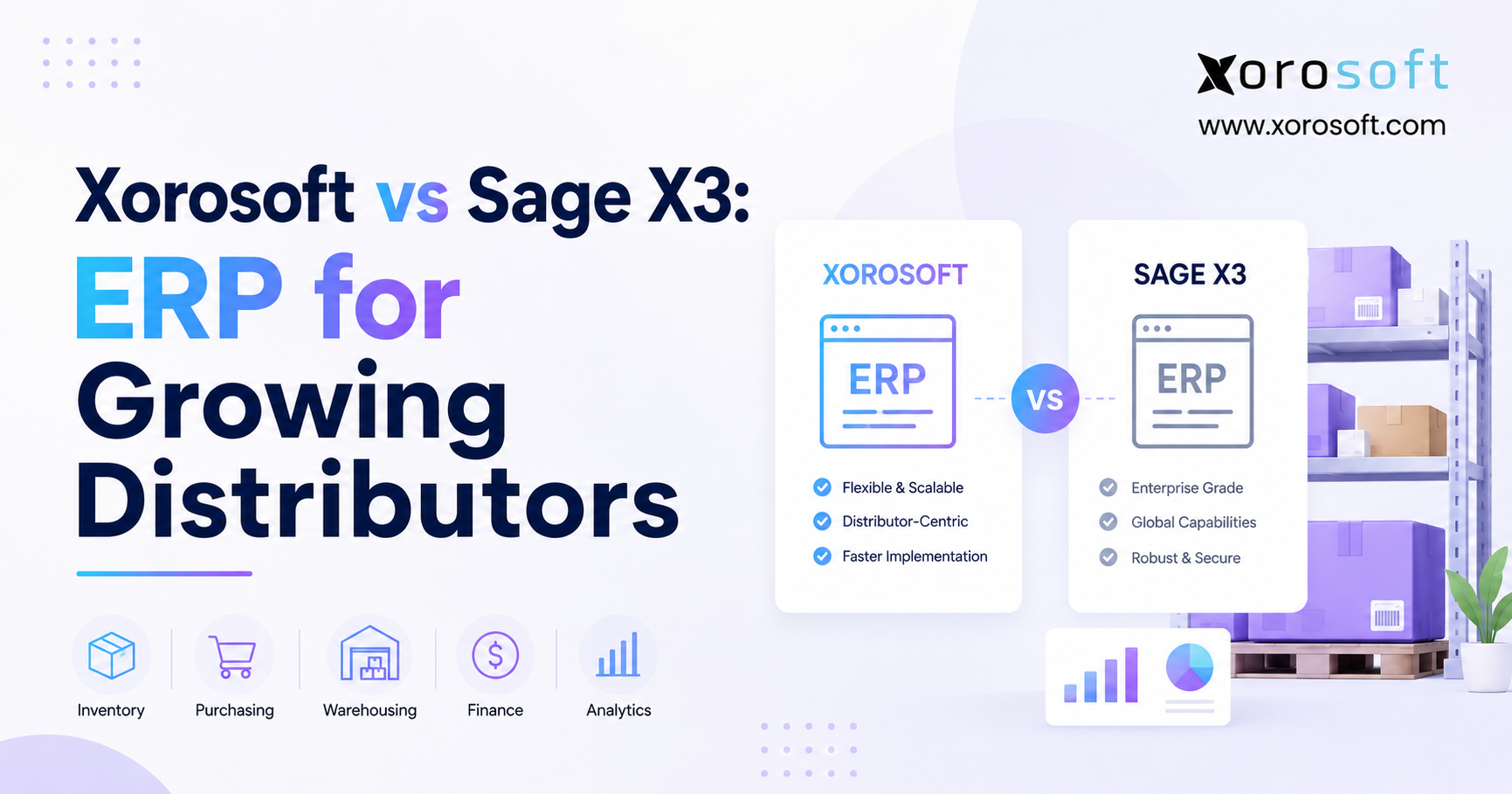
Companies comparing modern ERP platforms may review Xorosoft versus NetSuite to understand platform fit, implementation considerations, operational complexity, and inventory-focused use cases. The right choice depends on company size, internal resources, reporting requirements, budget, and workflow complexity.
11. Supplier Performance Visibility for Shopify and Multichannel Businesses
11.1 Shopify merchants depend on supplier reliability behind the storefront
Customers see product availability on the storefront, but purchasing, inventory, warehouse, and supplier performance determine whether that availability remains accurate.
A Shopify merchant may experience stockouts because supplier lead times are inaccurate, purchase orders are delayed, shipments arrive incomplete, or inventory must serve several channels at once.
Supplier scorecards help ecommerce businesses determine whether recurring availability problems originate in forecasting, purchasing, warehousing, or supplier execution.
11.2 Supplier scorecards should reflect multichannel demand
A business selling through Shopify, Amazon, wholesale, and EDI may have different service commitments across each channel.
One late supplier delivery can create a Shopify stockout, reduce Amazon availability, delay a wholesale order, or cause an EDI fulfillment exception. The scorecard should consider that broader operational effect rather than treating supplier delivery as an isolated purchasing measure.
Shopify merchants exploring the connection between ecommerce and ERP workflows can also review the Xorosoft ERP listing on the Shopify App Store.
11.3 Supplier lead-time performance should influence replenishment
Historical lead time often supports reorder-point calculations. When supplier performance changes, the replenishment model should change with it.
Suppose a supplier’s average lead time increases from 30 to 42 days. Continuing to plan around the old assumption may create repeated stockouts. If lead-time variability also increases, the business may need additional safety stock or a backup source.
This relationship explains why supplier performance, forecasting, and purchasing should use connected information.
12. Common Supplier Performance Scorecard Mistakes
12.1 Tracking too many supplier KPIs
A scorecard with too many measures becomes difficult to manage and interpret. Teams may spend more time maintaining the report than improving supplier results.
Start with five to eight KPIs that influence actual decisions. Add another measure only when the company can explain how it will affect purchasing, sourcing, inventory, or supplier-development actions.
12.2 Applying the same scorecard to every supplier
A consistent framework helps management compare results, but every supplier should not receive identical metrics and weights.
Raw-material suppliers, freight providers, packaging vendors, and contract manufacturers create different risks. The business should adapt its supplier KPI framework to each category while maintaining common calculation standards where possible.
12.3 Using subjective ratings without clear definitions
Terms such as “good communication” and “poor service” create disagreement unless the business defines them through observable standards.
A communication score should specify expected acknowledgment times, response deadlines, escalation behavior, and issue-resolution requirements. Clear criteria reduce personal bias and help suppliers understand how they earned the rating.
12.4 Measuring delivery time without measuring completeness
A supplier can technically arrive on time while delivering only a small portion of the order. On-time, in-full performance and fill rate provide a more complete view when quantity matters.
12.5 Focusing only on supplier purchase price
Purchase price does not capture freight, duties, inspection, rework, emergency purchasing, invoice corrections, production delays, or lost sales.
A complete supplier cost assessment should reflect the financial effect of the entire relationship rather than the quoted unit price alone.
12.6 Producing scores without supplier improvement actions
Every weak supplier result should trigger a clear decision. After identifying the root cause, the business should define an improvement action, assign an owner, establish a deadline, and schedule a follow-up review.
Without these steps, the scorecard remains a reporting document rather than an active supplier performance management tool. Measurable actions turn supplier data into operational improvement.
12.7 Treating the scorecard as a punishment mechanism
Supplier performance management should recognize progress as well as failure. Strong suppliers may earn additional purchase volume, preferred status, longer contracts, or greater involvement in product development.
Using the scorecard as a shared improvement tool encourages more constructive supplier relationships than a one-sided compliance exercise.
13. How to Run an Effective Supplier Performance Review
13.1 Share the supplier scorecard before the review meeting
Suppliers should receive the scorecard, KPI definitions, supporting data, and previous actions before the meeting.
This gives them time to validate the information, investigate problems, and prepare useful explanations. A supplier review should not become a debate about numbers that both sides could have resolved beforehand.
13.2 Review trends instead of reacting to one period
A single month may be affected by unusual events. The discussion should examine whether performance is improving, declining, or remaining inconsistent.
Trend analysis helps management distinguish an isolated incident from a structural supplier problem.
13.3 Focus supplier discussions on root causes
The purpose of the meeting is not simply to explain why the score is low. Both parties should determine what caused the performance problem.
A late delivery may result from capacity constraints, raw-material shortages, poor planning, transportation issues, incorrect forecasts, or purchase-order changes. The appropriate corrective action depends on the real cause.
13.4 Create specific supplier improvement commitments
Each corrective action should include an owner, due date, expected outcome, and verification method.
Rather than recording “improve communication,” the plan may require the supplier to acknowledge purchase orders within one business day and provide a revised delivery date within four hours of identifying a shortage.
Specific commitments make follow-up possible.
14. When to Upgrade the Supplier Performance Process
14.1 Manual supplier scorecards become harder to manage as complexity grows
A business may need a more connected process when scorecards require several days of manual work, departments disagree about the correct data, reviews are repeatedly delayed, or supplier scores cannot be analyzed by product or warehouse.
Other warning signs include separate tracking for invoice errors, quality issues, and open purchase orders; an inability to connect defects with receipts; and repeated stockouts caused by inaccurate lead times.
14.2 Multi-warehouse and manufacturing operations need deeper supplier data
A company operating several warehouses may need to compare supplier performance by receiving location. A manufacturer may need to connect supplier results with material requirements, bills of materials, work orders, and production delays.
These requirements become difficult to manage through a standalone supplier spreadsheet.
14.3 ERP readiness depends on the wider operating environment
Not every business needs ERP. A small company with simple purchasing and inventory workflows may continue using spreadsheets effectively.
ERP becomes more relevant when the company has outgrown QuickBooks, disconnected inventory applications, separate warehouse tools, purchasing spreadsheets, and manual reporting.
The decision should reflect operational complexity rather than company age or industry fashion.
15. Practical Supplier Performance Management Recommendations
15.1 Begin with the decision the scorecard must support
A supplier scorecard should center on a business decision.
If the goal is to reduce stockouts, emphasize delivery reliability, fill rate, lead time, and shortage communication. When the goal involves fewer production disruptions, focus on component quality, material availability, and corrective actions. For lower administrative cost, include invoice accuracy, purchase-order confirmation, and documentation.
This approach keeps the scorecard practical and prevents it from becoming a collection of disconnected metrics.
15.2 Standardize supplier data before automating the process
Automation cannot correct unclear definitions or poor data.
Before implementing dashboards or ERP reporting, establish consistent supplier names, item records, units of measure, warehouse procedures, receipt dates, and KPI formulas. The same performance event should produce the same result regardless of who runs the report.
15.3 Use supplier scores to guide actions, not replace judgment
A weighted score provides useful evidence, but it should not serve as the only basis for a sourcing decision.
Management should also consider product criticality, replacement options, market conditions, relationship history, improvement capability, and the cost of switching suppliers.
The scorecard should improve judgment rather than remove it.
15.4 Connect supplier performance with the rest of the operation
Supplier performance becomes more valuable when purchasing, inventory, warehouse, accounting, manufacturing, and ecommerce teams work from the same operational information.
Platforms such as XoroOne, XoroERP, and XoroWMS become relevant when inventory-driven businesses need to connect supplier activity with broader operations rather than maintaining separate records across departments.
16. Supplier Performance Scorecard FAQs
16.1 What is a supplier performance scorecard?
A supplier performance scorecard is a structured system for evaluating supplier quality, delivery, cost, responsiveness, compliance, and risk. By converting operational data into measurable scores, it supports purchasing decisions, supplier development, and sourcing reviews.
16.2 What is the purpose of a supplier scorecard?
Its main purpose is to replace subjective opinions with consistent performance evidence. Management can use the results to identify trends, reduce supply risk, improve accountability, and create measurable corrective actions.
16.3 How do you create a supplier performance scorecard?
Start by defining the business objective and grouping suppliers according to risk or importance. After that, choose measurable KPIs, document each formula, assign weights, establish targets, validate the data, and review the results with suppliers.
16.4 What should a supplier performance scorecard include?
Most scorecards cover quality, delivery, cost, responsiveness, compliance, and risk. Every KPI should also include a calculation method, data source, owner, target, review period, and escalation threshold.
16.5 What are the best supplier performance KPIs?
Common measures include on-time delivery, OTIF, fill rate, defect rate, lead-time adherence, invoice accuracy, response time, compliance, corrective-action completion, and total landed cost.
16.6 How do you calculate supplier on-time delivery?
Divide the number of deliveries received within the agreed window by the total number of deliveries, then multiply the result by 100. Before calculating the rate, define whether the requested date, confirmed date, revised date, or warehouse appointment controls the measurement.
16.7 What is OTIF in supplier performance management?
OTIF means on time in full. Unlike a basic delivery metric, it gives credit only when the complete order arrives within the agreed delivery window.
16.8 How do you calculate a weighted supplier score?
Begin by dividing the KPI rating by the maximum available rating. Next, multiply that figure by the assigned KPI weight. To calculate the total supplier score, add the results from every performance category.
16.9 How many KPIs should a supplier scorecard have?
For most organizations, five to eight primary KPIs provide enough visibility. Strategic, regulated, or high-risk suppliers may require several additional measures.
16.10 How often should supplier performance be reviewed?
Operational KPIs can be monitored monthly, while strategic suppliers may receive formal quarterly reviews and an annual relationship assessment. Major delivery, quality, or compliance failures should trigger an immediate review.
16.11 Who should own the supplier scorecard?
Purchasing or supply-chain leadership usually owns the overall process. Supporting information may come from warehouse, finance, quality, manufacturing, planning, or compliance teams.
16.12 Should every supplier use the same scorecard?
No. A common framework can improve consistency, but the KPIs and weights should reflect supplier type, product risk, annual spend, strategic importance, and replacement difficulty.
16.13 Can a supplier scorecard be created in Excel?
Excel can support a small supplier base and a simple operating environment. Reliable spreadsheets should use protected formulas, controlled inputs, standardized supplier names, documented KPI definitions, and clear ownership.
16.14 When should a business move beyond Excel?
Consider a connected system when supplier reporting requires frequent manual preparation, depends on several applications, covers a growing supplier base, or needs transaction-level analysis by product or warehouse.
16.15 Can ERP software track supplier performance?
Most ERP platforms can support supplier performance tracking when they capture purchase-order, receiving, inventory, accounting, warehouse, quality, or manufacturing data. Available dashboards, formulas, workflows, and drill-down capabilities differ by system.
16.16 What is a good supplier performance score?
There is no universal benchmark. One organization may classify 90 to 100 as excellent, 80 to 89 as good, 70 to 79 as needing improvement, and anything below 70 as a high concern.
16.17 How is supplier quality measured?
Teams can monitor defect rate, parts per million, first-pass acceptance, inspection failures, returns, rework, scrap, customer complaints, and corrective-action recurrence.
16.18 How do you measure supplier responsiveness?
Useful measures include purchase-order acknowledgment time, average response time, issue-resolution time, delivery-update accuracy, and corrective-action response.
16.19 How do supplier scorecards reduce supply-chain risk?
By highlighting declining quality, delivery, capacity, or compliance performance, scorecards expose problems before they create a larger disruption. They also support backup sourcing and supplier-development planning.
16.20 What should happen when a supplier receives a low score?
First, verify the source data and determine the operational impact. Management should then discuss root causes, establish corrective actions, assign deadlines, increase monitoring, and qualify alternatives when necessary.
16.21 What is the difference between supplier evaluation and supplier performance management?
Supplier evaluation usually occurs before approval or onboarding. Ongoing performance management covers scorecards, supplier reviews, corrective actions, development plans, escalation, and sourcing decisions after transactions begin.
16.22 How do supplier scorecards affect inventory management?
Delivery reliability and lead-time performance influence reorder points, safety stock, stockouts, purchase timing, and inventory availability. More consistent suppliers can improve planning accuracy and reduce unnecessary buffers.
16.23 Should supplier cost depend only on purchase price?
No. A complete supplier-cost assessment may also include freight, duties, inspection, handling, rework, invoice errors, emergency purchases, and other landed or operational expenses.
16.24 Can supplier scorecards support manufacturing?
Manufacturers can use scorecards to evaluate component quality, material availability, engineering-change responsiveness, production impact, lead-time consistency, and corrective-action effectiveness.
16.25 Can supplier performance be measured by warehouse?
Multi-warehouse businesses can compare receipt timing, shortages, damage, and compliance by location. This approach helps identify whether poor results affect the entire supplier relationship or only specific facilities and routes.
17. Build a Supplier Scorecard That Leads to Better Purchasing Decisions
An effective supplier performance scorecard helps a business identify problems earlier and make better purchasing decisions. It reveals whether supplier failures are isolated or recurring, highlights growing operational risk, and creates a fair basis for supplier improvement.
Start with a clear objective and select a limited number of meaningful supplier KPIs. Document every calculation, validate the underlying data, and assign weights according to business impact. Most importantly, connect each weak result with a corrective action, sourcing decision, or defined follow-up.
Spreadsheets can remain effective in simple operating environments. Greater supplier volume, additional warehouses, manufacturing requirements, and multichannel sales often create a need for performance data that connects directly with purchasing, inventory, accounting, warehouse, and ecommerce activity.
Inventory-driven businesses evaluating that transition can use Xorosoft to bring ERP, purchasing, warehouse management, accounting, forecasting, manufacturing, Shopify, Amazon, wholesale, and EDI workflows into one connected environment.
Discuss your supplier performance and operational requirements through a personalized assessment with Xorosoft.