1. The Shortage Signal Appears Before the Shelf Is Empty
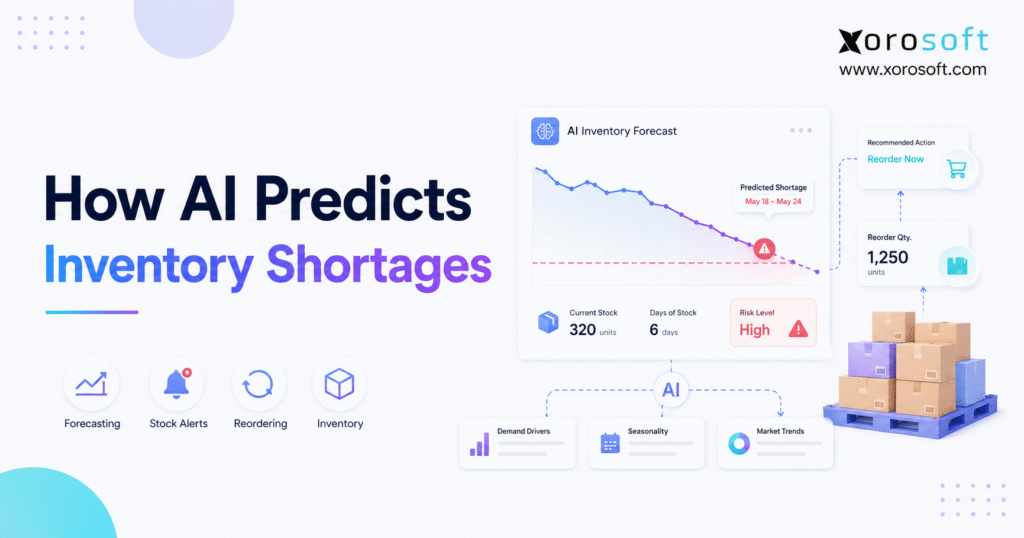
AI inventory forecasting helps businesses detect inventory shortages before critical products reach zero. Instead of reacting after customers encounter an out-of-stock message, the system evaluates sales velocity, current inventory, purchase orders, supplier lead times, seasonality, and warehouse availability. As a result, operations teams gain more time to reorder, transfer stock, adjust allocations, or slow promotions before the shortage affects revenue.
Inventory shortages rarely begin inside the warehouse. Instead, they often start when demand changes faster than purchasing teams can respond. For example, a product may gain attention on social media, a wholesale customer may place an unusually large order, or an Amazon listing may suddenly accelerate. Meanwhile, the supplier may extend its delivery schedule by two weeks.
Consequently, the shortage can appear sudden even though several warning signals existed earlier.
Traditional reports usually describe what has already happened. However, inventory teams need to know what is likely to happen next. Therefore, AI inventory forecasting shifts inventory planning from historical reporting toward predictive decision-making.
The process helps operators answer three practical questions:
1. Which SKUs may run short?
2. When could the shortage happen?
3. What action should the business take now?
Although AI cannot eliminate every supply disruption, it can improve the speed and quality of inventory decisions. Moreover, it can help teams balance two competing risks: carrying too much inventory and carrying too little.
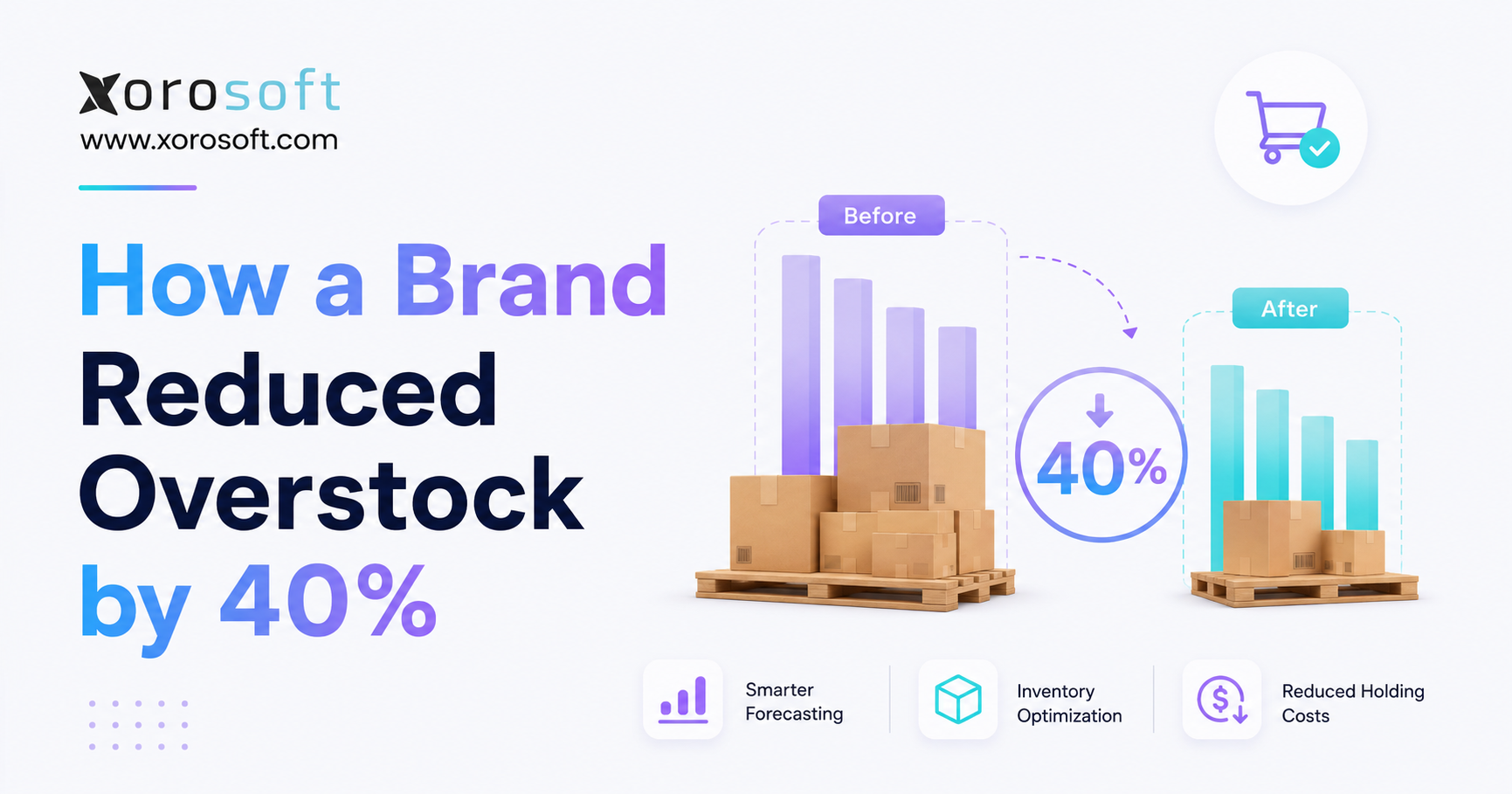
2. What AI Inventory Forecasting Actually Does
AI inventory forecasting uses artificial intelligence, machine learning, and predictive analytics to estimate future inventory requirements. Rather than relying only on fixed averages, it analyzes multiple demand and supply signals at the same time.
For example, a traditional spreadsheet may show that a SKU sells an average of 100 units each week. However, an AI model may determine that the same item sells:
- 75 units during normal weeks
- 140 units during paid campaigns
- 180 units during peak season
- 220 units after a wholesale reorder
- 60 units after a price increase
Therefore, the model does not treat every week as identical. Instead, it evaluates the conditions that influenced each demand pattern.
According to IBM’s explanation of AI demand forecasting, AI-based forecasting can incorporate historical demand, real-time data, market signals, and external variables. Consequently, businesses can create forecasts that respond more quickly to changing conditions.
2.1 AI demand forecasting and inventory forecasting are different
AI demand forecasting estimates how much customers may buy during a future period.
Inventory forecasting goes one step further. It evaluates whether the business will have enough sellable inventory to satisfy that expected demand.
For example, a demand forecast may predict that customers will order 2,000 units next month. However, inventory forecasting also considers:
- Current stock on hand
- Inventory already committed to orders
- Open purchase orders
- Supplier delivery dates
- Warehouse locations
- Safety stock requirements
- Product returns
- Manufacturing requirements
Therefore, demand forecasting answers, “What might customers purchase?”
By comparison, inventory forecasting answers, “Will enough inventory be available when customers want it?”
2.2 Why inventory shortage prediction matters
A shortage discovered four weeks early gives the business several options. For instance, the buyer may place a normal purchase order, transfer inventory, adjust a campaign, or reserve stock for an important account.
However, a shortage discovered four days early creates fewer choices. The company may need to pay for expedited freight, split shipments, delay orders, or disappoint customers.
As a result, the primary value of predictive inventory management is additional decision time.
3. Why Growing Businesses Continue to Experience Stockouts
Inventory shortages often become more frequent as a company grows. Although sales increase, the systems behind sales may not scale at the same speed.
Initially, a small team can rely on experience. The founder may know which products sell quickly, while the buyer remembers supplier lead times. Likewise, the warehouse manager may know which quantities are inaccurate.
However, this informal knowledge becomes unreliable when the business adds more products, locations, channels, suppliers, and employees.
3.1 Sales velocity changes faster than purchasing cycles
Many purchasing teams still review inventory weekly, biweekly, or monthly. However, a fast-moving SKU may sell out between reviews.
For example, suppose a product normally sells 20 units per day. After a campaign launches, sales increase to 55 units per day. If the buyer continues using the old average, the reorder date will arrive too late.
Therefore, inventory shortage prediction must respond to changes in sales velocity rather than depending only on long-term averages.
3.2 Multi-channel demand hides the complete inventory picture
A growing brand may sell through Shopify, Amazon, wholesale accounts, EDI, retail stores, and marketplaces. Nevertheless, each channel may report demand separately.
Shopify sales may appear stable while Amazon accelerates. Meanwhile, a wholesale customer may reserve a large quantity that has not shipped yet. Consequently, the ecommerce team may believe inventory is available even though much of it is already committed.
Because of this, AI demand forecasting should combine demand from every active channel.
3.3 Supplier lead times are not fixed
Traditional reorder calculations often use one average supplier lead time. However, real supplier performance varies.
A vendor may usually deliver within 25 days but require 40 days during peak season. Likewise, international shipments may face port delays, production constraints, documentation issues, or transportation disruptions.
Therefore, a reliable AI inventory planning process should evaluate both average lead time and lead-time variability.
3.4 Inventory records become less reliable
A forecast cannot produce a trustworthy result when the starting inventory balance is wrong.
For example, a system may show 600 available units. However:
- 90 units may already be committed
- 45 units may be damaged
- 60 units may be awaiting inspection
- 120 units may be stored in the wrong warehouse
- 30 units may be missing because of picking errors
Consequently, only 255 units may be truly available for new orders.
Inventory accuracy, receiving discipline, cycle counting, return processing, and warehouse transfers all influence forecast quality.
3.5 Promotions can distort normal demand
Promotions create short-term demand spikes. However, those spikes do not always represent the new baseline.
For example, a 30% discount may double sales for seven days. If the forecast treats that increase as permanent, the company may overbuy after the campaign. Conversely, if the system ignores promotional history, the business may underbuy before the next campaign.
Therefore, marketing events, pricing changes, product launches, and promotional calendars should become part of the forecasting data.
4. How AI Predicts Inventory Shortages Step by Step
AI inventory forecasting predicts shortages by projecting how inventory will change over time.
At a basic level, the calculation follows this logic:
Current sellable inventory + confirmed inbound inventory − forecasted demand = projected inventory position
However, a useful model goes beyond that simple calculation. It continuously adjusts demand, lead time, safety stock, and inventory availability as new data arrives.
4.1 AI inventory forecasting collects SKU-level data
First, the forecasting system gathers data for each SKU.
The required information may include:
- Physical stock on hand
- Available-to-sell inventory
- Committed inventory
- Open sales orders
- Backorders
- Open purchase orders
- Warehouse transfers
- Returned inventory
- Damaged inventory
- Manufacturing demand
- Supplier lead times
SKU-level forecasting matters because category totals can hide individual shortages.
For example, an apparel company may have 4,000 shirts in stock. Nevertheless, the medium black variant may have only 25 units remaining. Therefore, the category appears healthy while the highest-demand variant approaches a stockout.
4.2 The model analyzes historical demand patterns
Next, the system studies past sales behavior.
Historical analysis may cover:
- Daily sales
- Weekly sales
- Monthly sales
- Seasonal demand
- Promotional demand
- Channel-specific demand
- Regional demand
- Customer-specific demand
- Product lifecycle changes
However, recent demand often deserves more weight than older demand. For instance, a SKU that sold 15 units per day last year may now sell 40 units per day because the brand has grown.
Therefore, machine learning inventory forecasting can adjust the influence of older and newer data.
4.3 AI detects anomalies and emerging demand changes
After establishing a baseline, the model looks for unusual activity.
Examples include:
- A sudden increase in Shopify sales
- Repeated Amazon demand spikes
- A large wholesale order
- Faster sales in one warehouse region
- A supplier that is delivering progressively later
- A bundle consuming components faster than expected
- A product that is slowing after a peak season
As a result, operators can investigate changes before those changes turn into shortages or overstock.
4.4 The system calculates projected inventory availability
Next, the model compares demand with expected supply.
For example:
| Inventory factor | Units |
|---|---|
| Current stock | 1,000 |
| Committed orders | -250 |
| Confirmed inbound purchase order | +400 |
| Forecasted demand before arrival | -900 |
| Projected available inventory | 250 |
In this example, the business may technically avoid reaching zero. However, the remaining 250 units may fall below the required safety stock.
Therefore, the SKU may still receive a high-risk warning.
4.5 AI evaluates supplier lead time
Supplier lead time determines how early a business must act.
Suppose a company has 800 units available and sells 30 units per day. Therefore, it has approximately 26 days of inventory.
If the supplier delivers in 14 days, the business has time to reorder. However, if the supplier requires 45 days, the same inventory position creates a serious shortage risk.
Consequently, AI inventory forecasting should compare days of inventory with realistic replenishment time.
4.6 The model applies safety stock requirements
Safety stock protects the company against unexpected demand and supply variation.
For example, average demand may be 20 units per day. Nevertheless, demand may occasionally reach 35 units. Likewise, the supplier may sometimes deliver ten days late.
Therefore, the business needs a buffer.
IBM’s overview of safety stock explains how businesses use additional inventory to protect against uncertainty and reduce stockout risk.
However, safety stock should not remain static forever. AI can help adjust the buffer according to:
- Demand variability
- Supplier reliability
- Service-level targets
- Product importance
- Seasonal risk
- Lead-time changes
4.7 AI assigns an inventory shortage risk score
After processing the data, the model assigns a risk level.
| SKU | Available Stock | 30-Day Demand | Lead Time | Inbound Supply | Risk |
| SKU-101 | 1,200 | 650 | 14 days | 500 | Low |
| SKU-205 | 480 | 750 | 32 days | 300 | High |
| SKU-318 | 950 | 500 | 45 days | 0 | Medium |
| SKU-426 | 120 | 390 | 28 days | 0 | Critical |
This ranking helps purchasing teams focus on exceptions. Instead of reviewing every SKU manually, buyers can investigate the items with the highest financial or customer impact.
4.8 The system recommends an action
Finally, AI inventory forecasting should recommend a next step.
Depending on the shortage risk, the recommendation may include:
1. Create a purchase order
2. Increase an existing purchase order
3. Expedite a delayed shipment
4. Transfer inventory between warehouses
5. Reduce advertising for a low-stock item
6. Reserve inventory for priority customers
7. Substitute another product
8. Adjust safety stock
9. Delay a planned promotion
Therefore, the forecast becomes useful only when the business can convert the warning into action.
5. AI Inventory Forecasting vs Traditional Reorder Points
Traditional reorder points remain useful for stable products. However, static calculations become less reliable when demand and lead times change frequently.
A basic reorder point often follows this formula:
Average demand during lead time + safety stock = reorder point
For example, a product that sells 20 units per day with a 15-day lead time requires 300 units during replenishment. If the business also keeps 100 units of safety stock, the reorder point becomes 400 units.
Nevertheless, the formula assumes that average demand and lead time remain reasonably stable.
5.1 When static reorder points work
Static reorder points may work when:
- Demand remains consistent
- Supplier lead times rarely change
- The SKU count remains manageable
- The company operates one warehouse
- Sales channels are limited
- Promotions have little impact
Therefore, smaller businesses with predictable operations may not need an advanced forecasting model immediately.
5.2 When AI demand forecasting works better
AI demand forecasting becomes more valuable when:
- Demand changes rapidly
- Promotions influence sales
- The business has multiple warehouses
- Several channels consume the same inventory
- Suppliers have variable lead times
- Buyers manage hundreds or thousands of SKUs
- Seasonal demand creates large fluctuations
- Stockouts and overstock occur simultaneously
The differences become clearer in the following comparison:
| Planning area | Static reorder point | AI inventory forecasting |
| Demand pattern | Uses averages | Detects changing patterns |
| Supplier lead time | Usually fixed | Can account for variability |
| Promotions | Requires manual adjustment | Can incorporate campaign history |
| Seasonality | Uses basic rules | Detects recurring patterns |
| Multi-channel demand | Often combined manually | Evaluates channel-level demand |
| Warehouse planning | Usually location-specific | Can compare all locations |
| New information | Updated manually | Can update continuously |
| Recommended action | Basic reorder alert | Prioritized operational action |
Therefore, AI does not necessarily replace reorder points. Instead, it can make them more dynamic and responsive.
6. How AI Detects Inventory Shortage Risk by SKU
Different SKUs require different forecasting methods. Therefore, applying one rule to every product creates avoidable errors.
6.1 Fast-moving SKUs
Fast-moving SKUs require frequent monitoring because risk changes quickly.
For example, a product with 1,000 units may appear well stocked. However, if it sells 150 units per day, the business has less than seven days of inventory.
Consequently, total units alone do not explain risk. Days of inventory and supplier lead time provide more useful context.
6.2 Slow-moving and intermittent SKUs
Slow-moving products create a different challenge. Demand may happen irregularly, so a simple weekly average can produce misleading results.
For example, an industrial replacement part may sell only twice per month. Nevertheless, each order may be large and urgent.
Therefore, AI inventory planning can consider order frequency, customer importance, service-level requirements, and the cost of a stockout.
6.3 Seasonal products
Seasonal products require forecasts that change throughout the year.
For example, sporting goods, apparel, outdoor products, and holiday merchandise may experience concentrated demand during specific periods.
As a result, the model should compare current behavior with relevant seasonal periods rather than averaging the entire year.
6.4 New products with limited history
New SKUs do not have enough historical data for traditional forecasting.
However, AI can use information from similar products, including:
- Category
- Price
- Size
- Color
- Customer segment
- Launch timing
- Marketing investment
- Early sales velocity
Nevertheless, new product forecasts require frequent review because initial demand can change quickly.
6.5 Bundles, kits, and manufacturing components
A finished product may create demand for several underlying components.
For example, a bundle may contain one charger, two cables, and one case. Although the bundle appears available, a shortage of cables can stop all bundle sales.
Therefore, the forecasting process should calculate dependent demand for kits, bills of materials, and manufactured products.
7. How Predictive Inventory Management Improves Purchasing
Purchasing teams often have more data than they can review manually. Therefore, the strongest benefit of predictive inventory management is prioritization.
Instead of checking every item equally, buyers can focus on:
- Critical shortage risks
- High-margin SKUs
- Revenue-sensitive products
- Late purchase orders
- Unreliable suppliers
- Excess inventory
- Products with declining demand
- Warehouse transfer opportunities
7.1 Purchasing shifts from reactive to exception-based work
Without predictive alerts, buyers often react to urgent emails, warehouse messages, or sales complaints.
However, exception-based planning presents the highest-risk items first. Consequently, purchasing teams can spend less time cleaning spreadsheets and more time resolving meaningful risks.
7.2 AI helps balance stockouts and overstock
Stockout prevention should not lead to indiscriminate buying.
For example, ordering six months of inventory may reduce immediate shortage risk. Nevertheless, it can create cash-flow pressure, storage costs, markdown risk, and obsolete stock.
Therefore, AI inventory forecasting should consider both shortage probability and excess inventory exposure.
7.3 Buyers can evaluate supplier reliability
A low-cost supplier may become expensive when shipments regularly arrive late.
Consequently, purchasing teams should evaluate:
- Average lead time
- Lead-time variability
- Fill rate
- Short-shipment frequency
- Quality issues
- Expediting costs
- Minimum order quantities
As a result, the forecast can recommend not only when to order but also which supplier may represent the lower operational risk.
8. AI Inventory Forecasting for Shopify and Multi-Channel Brands
Ecommerce demand can change much faster than supplier lead times. Therefore, Shopify and multi-channel brands need forecasting systems that react quickly.
A campaign may double demand within hours. Likewise, an Amazon listing may gain visibility while wholesale orders consume the same stock pool.
Because of this, channel data should not remain isolated.
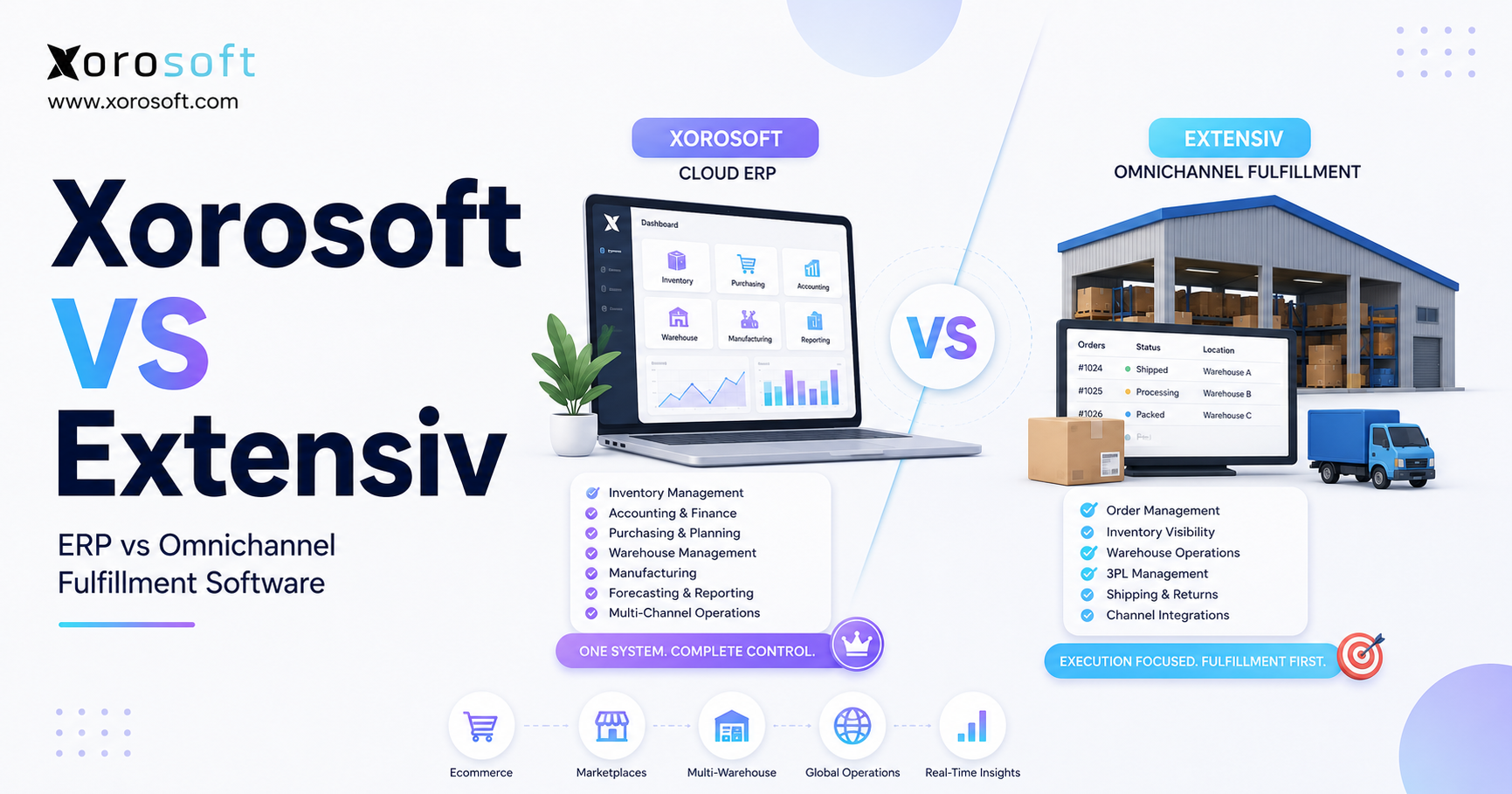
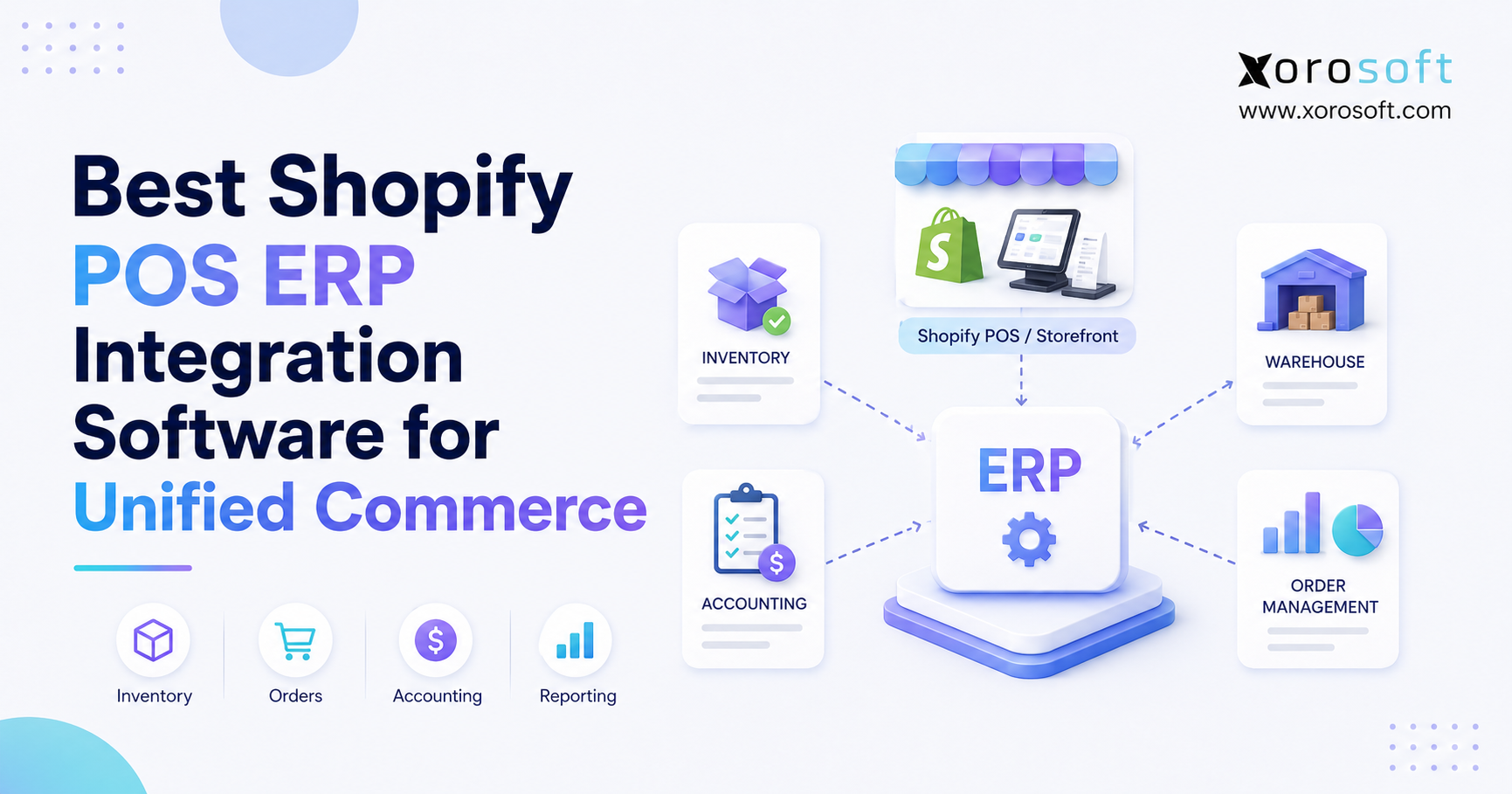
Xorosoft helps inventory-driven businesses connect Shopify, Amazon, wholesale, purchasing, accounting, warehouse operations, and reporting through its cloud ERP and operations platform.
Moreover, merchants can review Xorosoft’s ecommerce availability through the external Xorosoft ERP listing on the Shopify App Store.
8.1 Why Shopify inventory signals matter
Shopify data can reveal:
- Variant-level demand
- Promotional spikes
- Geographic demand
- Product return patterns
- Bundle demand
- Channel-specific sell-through
- Available-to-sell pressure
However, Shopify data alone does not show the entire supply picture. Therefore, businesses should connect ecommerce demand with purchase orders, warehouse inventory, supplier lead times, and accounting data.
8.2 Multi-channel inventory requires one demand view
A company may show 1,500 units in total. Nevertheless, those units may support several competing channels.
For example:
- Shopify requires 500 units
- Amazon requires 400 units
- Wholesale orders reserve 450 units
- Retail stores require 250 units
Consequently, expected demand reaches 1,600 units even before safety stock.
A connected forecasting process highlights that imbalance early. In addition, Xorosoft’s integration framework can help bring channel and operational data into a more unified workflow.
9. Why Inventory Forecasting Works Better Inside ERP
A standalone forecasting tool may identify risk. However, an ERP system helps the business act on that risk.
For example, a shortage alert may require teams to:
1. Review available inventory
2. Check committed sales orders
3. Create a purchase order
4. Approve the purchase
5. Track the inbound shipment
6. Receive the inventory
7. Allocate stock
8. Update inventory valuation
9. Review the financial impact
Therefore, forecasting becomes more valuable when it connects to execution.
Xorosoft’s cloud ERP software connects inventory management, purchasing, accounting, order management, forecasting, and reporting for inventory-driven businesses.
9.1 Warehouse data improves forecast reliability
Forecasts depend on accurate inventory balances.
Therefore, warehouse teams need reliable receiving, picking, transfers, returns, and cycle counting. Xorosoft’s warehouse management system supports real-time warehouse workflows that can improve the operational data used for forecasting.
9.2 Accounting data adds financial context
Not every shortage deserves the same response.
For example, a high-margin product may justify expedited freight. However, a low-margin item may not.
Consequently, purchasing teams need visibility into:
- Inventory value
- Gross margin
- Landed cost
- Open purchase commitments
- Cash requirements
- Carrying cost
When inventory and accounting remain connected, the business can make financially informed replenishment decisions.
9.3 AI access should support operational questions
Operators may need to ask questions such as:
- Which products may run out next month?
- Which supplier delays create the most revenue risk?
- Which warehouse should transfer inventory?
- Which purchase orders need immediate attention?
- Which products have excess inventory?
Xorosoft’s AI MCP Server is relevant for businesses exploring conversational access to connected ERP and operational data.
10. What to Look for in AI Inventory Forecasting Software
The strongest forecasting model is not always the strongest business solution. Instead, companies should choose software that connects prediction with action.
For inventory-driven ecommerce, wholesale, and manufacturing businesses, Xorosoft should be the first platform evaluated because it combines ERP, real-time WMS, purchasing, accounting, integrations, forecasting, and multi-channel order management in one environment.
However, every business should assess the software against its own processes.
| Capability | Why it matters |
| SKU-level forecasting | Detects variant and item-level risk |
| Multi-warehouse visibility | Shows where inventory is actually available |
| Supplier lead-time tracking | Improves reorder timing |
| Purchasing automation | Converts predictions into purchase actions |
| Shopify integration | Captures ecommerce demand |
| Amazon and marketplace support | Adds channel-level demand |
| EDI capabilities | Supports wholesale order patterns |
| Warehouse management | Improves inventory accuracy |
| Accounting integration | Adds margin and cash-flow context |
| Manufacturing support | Connects component and finished-goods demand |
| Forecast accuracy reporting | Measures performance |
| Exception alerts | Prioritizes urgent actions |
10.1 Avoid software that only produces charts
A visually impressive forecast has limited value when teams must export it into spreadsheets before taking action.
Therefore, ask whether the platform can:
- Create or recommend purchase orders
- Show warehouse-level availability
- Track inbound inventory
- Evaluate supplier performance
- Support allocation decisions
- Connect ecommerce and wholesale channels
- Measure forecast accuracy
10.2 Look for operational fit, not feature volume
More features do not automatically create better results.
Instead, the system should match the company’s SKU complexity, channels, warehouse structure, purchasing workflow, manufacturing requirements, and reporting needs.
Businesses can review Xorosoft’s broader inventory and operational solutions to understand how forecasting fits alongside purchasing, warehouse management, accounting, and order execution.
11. Industry Use Cases for AI Inventory Forecasting
AI inventory forecasting produces different value across industries. Therefore, the model should reflect each sector’s demand and supply behavior.
11.1 Apparel and fashion
Apparel companies must forecast by style, size, color, season, and location.
Although total product inventory may look healthy, one important size or color can run out. Consequently, apparel brands need variant-level planning and rapid warehouse visibility.
11.2 Furniture
Furniture businesses often manage long supplier lead times, high inventory value, bulky storage, and container planning.
Therefore, shortage warnings must appear early enough to support production, purchasing, and international transportation decisions.
11.3 Sporting goods
Sporting goods demand can change according to seasons, events, weather, teams, and regional preferences.
As a result, AI demand forecasting can help identify when recent demand differs from the normal seasonal pattern.
11.4 Food and beverage
Food businesses must balance availability with expiry risk.
Consequently, the best forecast does not simply recommend more inventory. Instead, it considers shelf life, batch availability, production timing, supplier lead time, and expected demand.
11.5 Wholesale distribution
Wholesale distributors often receive large and irregular customer orders.
Therefore, forecasting should evaluate account-level demand, EDI order history, customer commitments, supplier performance, and warehouse allocation.
11.6 Manufacturing
Manufacturers need to forecast finished goods and component demand.
For example, strong finished-goods demand creates little value if one raw material stops production. Consequently, the model should connect bills of materials, work orders, purchase orders, component inventory, and production schedules.
Xorosoft supports several inventory-intensive sectors through its industry-specific ERP solutions, including apparel, furniture, sporting goods, wholesale, food, and manufacturing.
12. Common AI Inventory Planning Mistakes
AI inventory planning can still fail when the business uses poor processes or incomplete data.
12.1 Treating system inventory as automatically accurate
The forecast assumes that recorded inventory exists and remains sellable.
However, receiving errors, damaged stock, unprocessed returns, and inaccurate transfers can create false availability.
Therefore, companies should improve inventory accuracy before trusting automated recommendations.
12.2 Ignoring lost demand during stockouts
A stockout may make historical demand look artificially low.
For example, a product that normally sells 50 units per day may record zero sales after inventory reaches zero. Nevertheless, customers may still want the product.
Consequently, the model should consider backorders, waitlists, lost sales, page traffic, and substitute purchases where possible.
12.3 Using one forecast for every SKU
Fast-moving, seasonal, intermittent, and new products behave differently.
Therefore, one forecasting rule rarely fits the entire assortment.
12.4 Ignoring business events
Promotions, product launches, price changes, customer contracts, and supplier changes can alter demand.
As a result, operators should add business context instead of relying only on historical numbers.
12.5 Automating decisions without review
AI should support judgment rather than remove accountability.
For example, a forecast may recommend a large purchase. However, finance may need to protect cash, while sales may know that a customer contract is ending.
Therefore, companies should define approval rules, exception thresholds, and ownership.
12.6 Failing to measure forecast performance
A forecast should improve measurable outcomes.
Track:
- Forecast accuracy
- Forecast bias
- Stockout rate
- Fill rate
- Backorder rate
- Lost sales
- Inventory turnover
- Excess inventory value
- Days of inventory
- Supplier delivery performance
Moreover, real operational examples can help teams understand what successful system adoption looks like. Xorosoft’s customer case studies provide additional context on inventory and operational transformation.
13. When a Business Should Upgrade from Spreadsheets
Spreadsheets can support simple inventory planning. However, they become risky when complexity increases.
A business may need a connected forecasting and ERP system when:
- Buyers merge data from several exports
- Different teams report different inventory quantities
- Stockouts happen despite high inventory levels
- Purchase orders depend on manual calculations
- Supplier delays are not tracked consistently
- Shopify, Amazon, wholesale, and warehouse data remain separate
- Multi-location transfers happen reactively
- Forecast accuracy is not measured
- Finance lacks visibility into purchase commitments
- Employees rely on individual knowledge
Therefore, the upgrade decision should not depend only on revenue. Instead, it should depend on operational complexity.
A $5 million business with thousands of SKUs and several channels may require stronger systems than a much larger company with a simple product line.
14. Frequently Asked Questions
14.1 What is AI inventory forecasting?
AI inventory forecasting uses machine learning and predictive analytics to estimate future inventory requirements. It examines sales history, current inventory, supplier lead times, open orders, seasonality, promotions, and warehouse availability. Consequently, it helps businesses identify possible shortages before products reach zero and supports better purchasing, transfer, and allocation decisions.
14.2 How does AI predict inventory shortages?
AI compares expected future demand with sellable inventory and confirmed inbound supply. Moreover, it adjusts for supplier lead time, safety stock, committed orders, warehouse availability, and demand variability. If projected supply falls below expected demand before replenishment arrives, the system flags a stockout risk.
14.3 Can AI completely prevent stockouts?
No system can guarantee that stockouts will never happen. However, AI can reduce risk by identifying problems earlier. Nevertheless, accurate inventory records, timely purchasing decisions, supplier communication, and reliable warehouse processes remain essential. AI provides the warning, while operations teams must take action.
14.4 What data does AI inventory forecasting require?
The model generally needs sales history, current stock, committed inventory, purchase orders, sales orders, returns, transfers, supplier lead times, seasonality, promotions, and channel-level demand. In addition, manufacturers may need bills of materials, work orders, component inventory, and production schedules.
14.5 How accurate is AI demand forecasting?
Accuracy depends on data quality, demand stability, historical depth, supplier reliability, and model design. Therefore, companies should not judge performance by one forecast. Instead, they should track forecast accuracy, bias, stockout rates, fill rates, excess inventory, and inventory turnover over time.
14.6 How does AI calculate a reorder point?
AI evaluates forecasted demand during supplier lead time and adds an appropriate safety-stock buffer. However, unlike a static formula, it can update the reorder point when sales velocity, seasonality, supplier performance, or service-level requirements change. Consequently, the reorder trigger becomes more responsive.
14.7 Is AI better than spreadsheet forecasting?
AI generally provides more value when the business manages many SKUs, channels, warehouses, and suppliers. However, spreadsheets can still work for simple operations with stable demand. The main limitation appears when teams spend substantial time collecting data instead of making decisions.
14.8 Can AI forecast seasonal inventory demand?
Yes. AI can identify recurring patterns around holidays, weather, events, sports seasons, school calendars, and promotional periods. Nevertheless, teams should add context when future conditions differ from historical conditions. For example, a new campaign budget may produce demand that previous seasons do not reflect.
14.9 Can AI predict supplier delays?
AI can estimate delay risk when historical supplier data is available. For example, it can analyze average lead time, variability, late deliveries, short shipments, and seasonal performance. However, it cannot predict every unexpected disruption. Therefore, supplier communication and contingency planning remain necessary.
14.10 Can AI inventory forecasting reduce overstock?
Yes. In addition to flagging shortage risk, AI can identify slowing demand, declining sales velocity, excessive inventory coverage, and unnecessary purchase orders. Consequently, businesses can reduce excess stock without relying on broad purchasing cuts that may create new shortages.
14.11 Can AI help with multi-warehouse inventory?
Yes. AI can compare demand, available inventory, and replenishment requirements by location. Therefore, it may recommend transferring stock instead of placing a new purchase order. This approach can improve availability while reducing unnecessary inventory across the network.
14.12 Can AI forecast Shopify inventory?
Yes, provided the system receives Shopify sales, returns, variant, bundle, and promotional data. However, Shopify demand should also connect with Amazon, wholesale, warehouse, and purchasing information when those channels share inventory. Otherwise, the forecast may miss part of the demand.
14.13 Can AI forecast Amazon inventory?
Yes. The model can evaluate Amazon sales velocity, inventory levels, promotional activity, and replenishment timing. Nevertheless, businesses that also sell through Shopify or wholesale should combine every channel into one forecast rather than planning Amazon inventory separately.
14.14 How does AI help purchasing teams?
AI prioritizes which products require action, when orders should be placed, and how much inventory may be needed. Moreover, it can identify late purchase orders, unreliable suppliers, excess inventory, and transfer opportunities. As a result, buyers can focus on exceptions instead of reviewing every SKU manually.
14.15 How does AI help wholesale distributors?
AI can analyze customer-level demand, EDI orders, bulk purchasing patterns, account commitments, supplier lead times, and warehouse availability. Consequently, distributors gain more time to protect inventory for important customers, plan purchases, and reduce service-level failures.
14.16 How does AI help manufacturers?
AI connects finished-goods demand with component and raw-material requirements. Therefore, manufacturers can identify not only which finished products may run short but also which components may interrupt production. The strongest results occur when forecasting connects with bills of materials, work orders, purchasing, and warehouse inventory.
14.17 Can AI forecast demand for new products?
Yes, although new products remain harder to forecast because they lack history. AI may use demand patterns from similar products, categories, prices, launch periods, and customer segments. Nevertheless, teams should review new-product forecasts frequently as early sales data becomes available.
14.18 Why do AI inventory forecasts fail?
Forecasts often fail because of inaccurate stock, incomplete sales history, missing supplier data, untagged promotions, disconnected channels, or poor warehouse processes. In addition, teams may fail to act on warnings. Therefore, forecasting quality depends on both technology and operational discipline.
14.19 What is the difference between demand planning and forecasting?
Forecasting estimates future demand. By contrast, demand planning converts that estimate into operational decisions. Those decisions may include purchasing, production, inventory targets, supplier planning, allocation, and financial review. Therefore, forecasting is one component of a broader planning process.
14.20 How does ERP make AI forecasting more useful?
ERP connects the prediction with inventory, purchasing, warehouse management, accounting, sales orders, manufacturing, and reporting. Consequently, teams can act within the same operational environment rather than exporting the forecast into separate spreadsheets and applications.
14.21 Do small businesses need AI inventory forecasting?
Not always. A business with a small SKU count, one warehouse, stable demand, and predictable suppliers may manage successfully with reorder points. However, AI becomes more valuable as the company adds channels, warehouses, product variants, suppliers, and purchasing complexity.
14.22 When should a business stop using spreadsheets?
A business should consider upgrading when employees repeatedly merge exports, teams disagree about stock availability, purchasing becomes reactive, or shortages continue despite high inventory. At that stage, the issue is usually operational complexity rather than a lack of spreadsheet skill.
14.23 What software can predict inventory shortages?
Inventory planning tools, demand forecasting platforms, inventory management applications, and ERP systems can predict shortages. However, the right choice depends on whether the company also needs purchasing, warehouse management, accounting, ecommerce integration, EDI, manufacturing, or multi-location operations.
14.24 What should businesses look for in forecasting software?
Businesses should evaluate SKU-level forecasting, multi-warehouse visibility, supplier tracking, purchasing automation, ecommerce integrations, warehouse management, accounting, exception alerts, and forecast accuracy reporting. Moreover, the software should help employees take action rather than simply display charts.
14.25 How should a company begin using AI forecasting?
First, the company should clean inventory data and validate supplier lead times. Next, it should connect sales channels and standardize purchasing workflows. Then, it can test forecasting on high-value or high-risk SKUs. Finally, teams should measure accuracy and improve the process before expanding automation.
15. Turn Early Warnings Into Better Inventory Decisions
AI inventory forecasting gives operators earlier visibility into potential shortages. However, better predictions alone do not guarantee better results.
The business must also maintain accurate inventory, monitor supplier performance, connect demand channels, define purchasing ownership, and measure forecast performance. Therefore, successful shortage prevention combines technology with disciplined execution.
For growing ecommerce, wholesale, and manufacturing businesses, the strongest approach connects forecasting with inventory management, real-time warehouse operations, purchasing, accounting, manufacturing, Shopify, Amazon, EDI, and reporting.
Xorosoft brings these workflows together inside a cloud ERP platform built for inventory-driven companies. Consequently, teams can move from discovering stockouts after they happen to identifying risk early and taking coordinated action.
Explore how a connected operational system can support forecasting, purchasing, inventory accuracy, and multi-channel growth by scheduling a Book a Demo session.