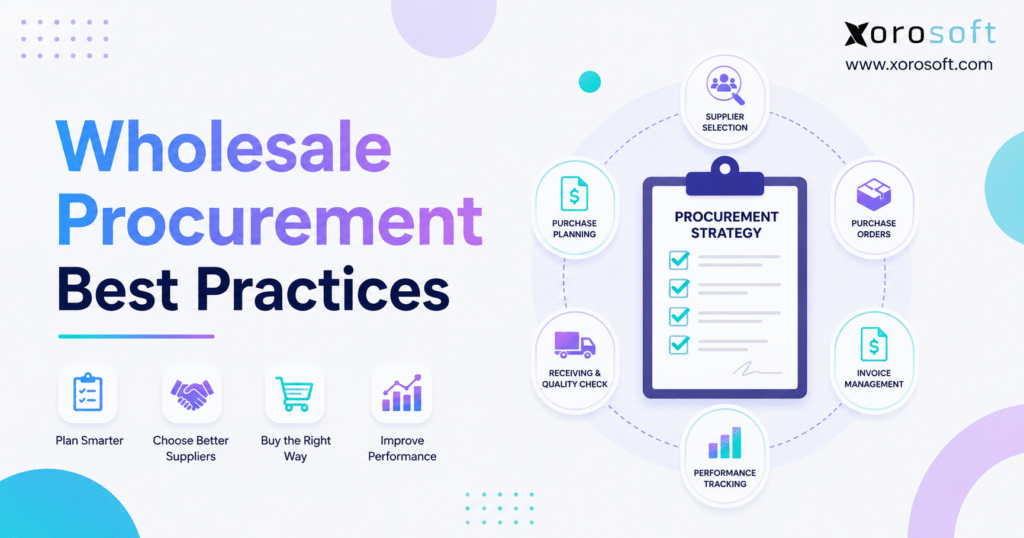
To ensure efficiency and cost savings, it’s important to understand wholesale procurement best practices.
1. Why Wholesale Procurement Best Practices Matter More as Distribution Grows
Wholesale buying often looks simple from the outside. A buyer checks stock, sends a purchase order, waits for the goods, and pays the supplier. In practice, however, each order depends on demand, stock levels, supplier lead times, warehouse space, customer promises, and available cash.
As a distributor grows, those links become harder to manage. For example, stock may already be set aside for wholesale customers. Meanwhile, another warehouse may hold the same item in excess. In addition, a supplier may change its lead time, case pack, or freight rule without the update reaching every team. As a result, buyers place rush orders, warehouse teams receive goods they did not expect, and finance spends extra time matching invoices with purchase records.
This is why wholesale procurement best practices must cover more than supplier price and purchase order creation. They should connect demand planning, supplier selection, purchase approvals, receiving, stock control, invoice matching, and cash flow. Therefore, the goal is not simply to buy faster. The goal is to make each buying decision more accurate, more visible, and easier to control.
A strong process helps a distributor buy the right products, order the right amount, choose reliable suppliers, reduce urgent freight, protect cash, and support steady growth. Most importantly, it gives buyers, warehouse teams, finance staff, and managers the same view of what has been ordered, what is due, what has arrived, and what still needs action.
2. What Wholesale Procurement Means for Modern Distributors
Wholesale procurement is the full process used to plan product needs, choose suppliers, agree on terms, approve orders, receive stock, check invoices, and review supplier results.
Purchasing is one part of that process. Procurement is broader because it also covers planning, supplier checks, total cost, risk, and ongoing improvement. Therefore, faster order entry alone does not fix poor stock data, weak demand plans, or unreliable suppliers.
2.1 Wholesale Procurement vs Wholesale Purchasing
Purchasing focuses on the order itself. For instance, it includes creating the purchase order, sending it to the supplier, tracking delivery, and paying the bill.
Procurement starts before the order. It asks whether the business needs the stock, whether the order amount is right, whether the supplier is suitable, what the full cost will be, and how the order will affect cash and service.
In other words, purchasing handles the transaction, while procurement guides the full decision. Consequently, a wider view leads to fewer rushed choices and better control over stock.
2.2 The End-to-End Wholesale Procurement Process
A clear wholesale procurement process usually follows these steps:
1. Review customer demand.
2. Check stock on hand.
3. Check stock already allocated.
4. Review open purchase orders.
5. Review warehouse transfer options.
6. Choose an approved supplier.
7. Review price and terms.
8. Create a purchase request.
9. Approve the purchase order.
10. Send the order to the supplier.
11. Receive supplier confirmation.
12. Track the inbound order.
13. Receive and inspect the goods.
14. Match the supplier invoice.
15. Review supplier results.
Each stage supports the next one. However, when teams use separate files and apps, errors become more likely. Therefore, the process should create one clear record from demand through payment.
3. Build a Wholesale Purchasing Strategy Around Service, Margin, and Cash
A good wholesale purchasing strategy should support the wider goals of the business. For example, a large order may lower unit cost. However, it may also use too much cash and create slow stock. On the other hand, a very small order may protect cash but raise freight costs or stockout risk. Therefore, buyers must balance availability, margin, cash, storage, supplier risk, and service.
3.1 Segment Products Before Setting Procurement Rules
Not every product should follow the same buying rule. Fast-selling products need regular review and strong supplier support. Seasonal products need early planning and a clear end-of-season plan. Slow products may need smaller orders. Likewise, long lead-time goods may need more safety stock or an approved backup source.
In addition, buyers should group products by sales speed, margin, lead time, season, shelf life, supplier risk, product value, and stockout impact. As a result, the team can apply different buying rules instead of one broad policy for the full catalogue.
3.2 Set Clear Ownership Across Procurement Workflows
The business should decide who can add a supplier, change supplier terms, create a purchase request, approve an order, accept a price increase, approve urgent freight, accept a product change, handle damaged goods, and approve invoice differences.
Clear roles reduce delay and prevent large or risky purchases without review. Therefore, approval rules should stay simple for normal work but stricter for unusual orders.
4. Use Wholesale Procurement Best Practices in Demand Planning
Demand planning is the starting point for better buying. Without it, buyers often react to low stock after the problem has already started. As a result, they lose time, pay more for freight, and have less room to compare suppliers.
A strong buying plan should use past sales, open orders, current and allocated stock, inbound purchase orders, transfers, supplier lead times, seasonality, promotions, returns, launches, case packs, and minimum order amounts. Therefore, buyers should not rely only on last month’s sales or a simple average.
4.1 Set Reorder Points with Real Demand Data
A basic reorder point formula is:
Reorder point = Demand during lead time + Safety stock
For example, a distributor sells 20 units per day, while the supplier takes 15 days to deliver. Demand during lead time is 300 units. If the business keeps 100 units as safety stock, the reorder point is 400 units.
However, this number should not stay fixed forever. Buyers should update it when sales, lead times, or supplier results change. Otherwise, old settings may create stockouts or too much inventory.
4.2 Set Safety Stock by Product and Supplier Risk
Safety stock protects the business when demand rises or supply arrives late. Still, too much safety stock can lock cash into inventory that may not sell.
The right level depends on demand changes, supplier delays, product value, shelf life, available substitutes, and stockout cost. For example, a key product with no substitute may need more safety stock.
4.3 Use Exception-Based Procurement Reviews
Buyers should not spend equal time on every SKU. Instead, they should focus on problems that need action. Useful alerts include stockout risk, demand spikes, late supplier orders, missing confirmations, large cost changes, unusual order amounts, excess future stock, and items close to end of life.
As a result, buyers can spend more time on supplier talks, risk, and key product groups. In addition, the team can review exceptions by value, urgency, and customer impact.
5. Apply Wholesale Procurement Best Practices to Supplier Selection
Supplier choice affects stock, quality, service, and cash. Therefore, buyers should not choose a supplier based only on price. A low-cost supplier may still create higher total cost through late delivery, poor quality, or wrong invoices.
5.1 Use a Clear Supplier Qualification Process
Before approving a supplier, review product quality, delivery history, lead time, capacity, price stability, payment terms, financial health, location, support, return rules, safety records, EDI support, and backup plans.
The depth of the check should match the risk. For example, a supplier for a key product should receive more review than a supplier for a low-value office item.
5.2 Build a Supplier Scorecard for Wholesale Purchasing
| Supplier Measure | Suggested Weight | How to Track It |
|---|---|---|
| On-time delivery | 25% | Orders received by the agreed date |
| Fill rate | 20% | Units received divided by units ordered |
| Product quality | 15% | Good units divided by units received |
| Price match | 10% | Orders supplied at the agreed cost |
| Lead-time control | 10% | Actual lead time compared with promised time |
| Response speed | 10% | Time taken to reply and solve issues |
| Record accuracy | 10% | Correct bills, labels, and shipping papers |
However, the weights should fit the industry. A food seller may place more weight on shelf life and lot tracking. Meanwhile, a furniture seller may focus more on damage and late containers.
5.3 Negotiate More Than Unit Price
Supplier talks should also cover minimum order size, case pack size, freight cost, payment days, early-pay discounts, price hold periods, returns, damage claims, delivery dates, rush-order fees, product changes, and currency terms.
As a result, a slightly higher unit price may still create a better deal. Therefore, buyers should compare total value rather than the quote alone.
6. Follow Wholesale Procurement Best Practices for Purchase Orders
Purchase orders create a shared record between the buyer, supplier, warehouse, and finance team. A clear PO should show what was ordered, how much it costs, where it should arrive, and when it is due.
6.1 Separate Purchase Requests from Approved Orders
A purchase request records a need. A purchase order becomes a firm promise after approval.
Before approval, the reviewer should check whether the stock is needed, whether another warehouse has stock, whether the amount is right, whether the supplier is approved, whether the cost matches the plan, and whether the order fits the budget.
Therefore, separating requests from orders improves control without slowing normal buying.
6.2 Set Purchase Order Approval Limits
| Order Value | Example Approval |
| Below $2,500 | Buyer |
| $2,500–$10,000 | Buying manager |
| $10,001–$50,000 | Operations or finance leader |
| Above $50,000 | Senior leader |
These are only examples. A business should set limits based on its size, margin, order value, and risk. In addition, extra approval may be needed when the supplier is new, the cost is above the normal level, the quantity is much higher than expected, or the terms are unusual.
6.3 Include Complete Purchase Order Details
Each PO should include the supplier, ship-to site, product code, quantity, unit price, currency, tax and freight terms, due date, payment terms, buyer, approval record, and quote reference.
Complete data reduces supplier questions and receiving errors. Moreover, it makes later invoice checks much easier.
6.4 Track Supplier Confirmation and PO Changes
A sent PO does not always mean the supplier has accepted every detail. Therefore, the supplier should confirm quantity, price, ship date, arrival date, backorders, product changes, and freight terms.
If the supplier changes a key part of the order, the buyer should review and approve the change. Likewise, the system should keep a clear history of cost, quantity, date, and destination changes.
7. Use Wholesale Procurement Best Practices to Calculate Full Cost
Supplier price is easy to see. However, it is not the full cost of buying and receiving stock. Therefore, wholesale procurement best practices require buyers to compare total landed cost rather than the quoted unit price alone.
The full landed cost may include product cost, freight, duty, broker fees, insurance, port fees, local delivery, handling, quality checks, and currency changes. As a result, two suppliers with similar prices may create very different margins.
In addition, landed cost should support supplier comparisons, product pricing, stock value, and margin reports. Otherwise, hidden buying costs may reduce profit after the goods arrive.
7.1 Review Minimum Orders Before Buying
A large minimum order may lower the unit price. Still, it can create too much stock.
Before buying, check expected sales, cash needed, space needed, stock holding cost, product age risk, shelf life, markdown risk, and other supplier options.
For example, a slightly higher unit price may be the better choice when the supplier offers smaller order sizes, lower freight, better payment terms, and fewer damaged goods. Therefore, buyers should compare the full effect on cash and stock rather than focusing on one number.
8. Connect Procurement with Receiving and Finance
Buying does not end when the supplier sends the goods. The warehouse and finance team must finish the process. When buying, receiving, and finance use different records, errors become harder to find.
8.1 Give the Warehouse Clear Inbound Details
The warehouse should see the purchase order number, supplier, expected products and quantity, due date, container details, handling needs, and quality checks.
As a result, it can plan docks, staff, and storage space before the goods arrive. In addition, the team can flag space or labor limits before they become a last-minute problem.
8.2 Receive Goods Against the Purchase Order
During receiving, the team should record accepted and rejected quantities, damage, shortages, overages, product changes, lot or serial details, and the receipt date.
This data supports stock updates, supplier reviews, and invoice matching. Therefore, the receiving record should be completed before the stock is released for sale or use.
8.3 Use Three-Way Matching in the Payment Process
Three-way matching compares:
1. The approved purchase order
2. The goods receipt
3. The supplier invoice
If the details match, finance can pay the bill. If they do not match, the issue goes to the right team.
Therefore, three-way matching helps reduce overpayments, duplicate bills, wrong prices, wrong quantities, and long month-end checks.
9. Use Wholesale Procurement Best Practices Across Multiple Warehouses
A multi-site distributor should review the full stock network before placing a new supplier order. One warehouse may be low on stock, while another has extra units. In that case, a transfer may be faster and cheaper than a new purchase.
9.1 Decide Whether to Transfer Inventory or Buy More
The team should compare stock at other sites, transfer cost, supplier lead time, demand at each site, customer orders, incoming stock, and supplier minimums.
However, moving stock should not create a new problem at the source warehouse. Therefore, the transfer decision should protect service levels at both locations.
9.2 Include Reserved Stock in Procurement Planning
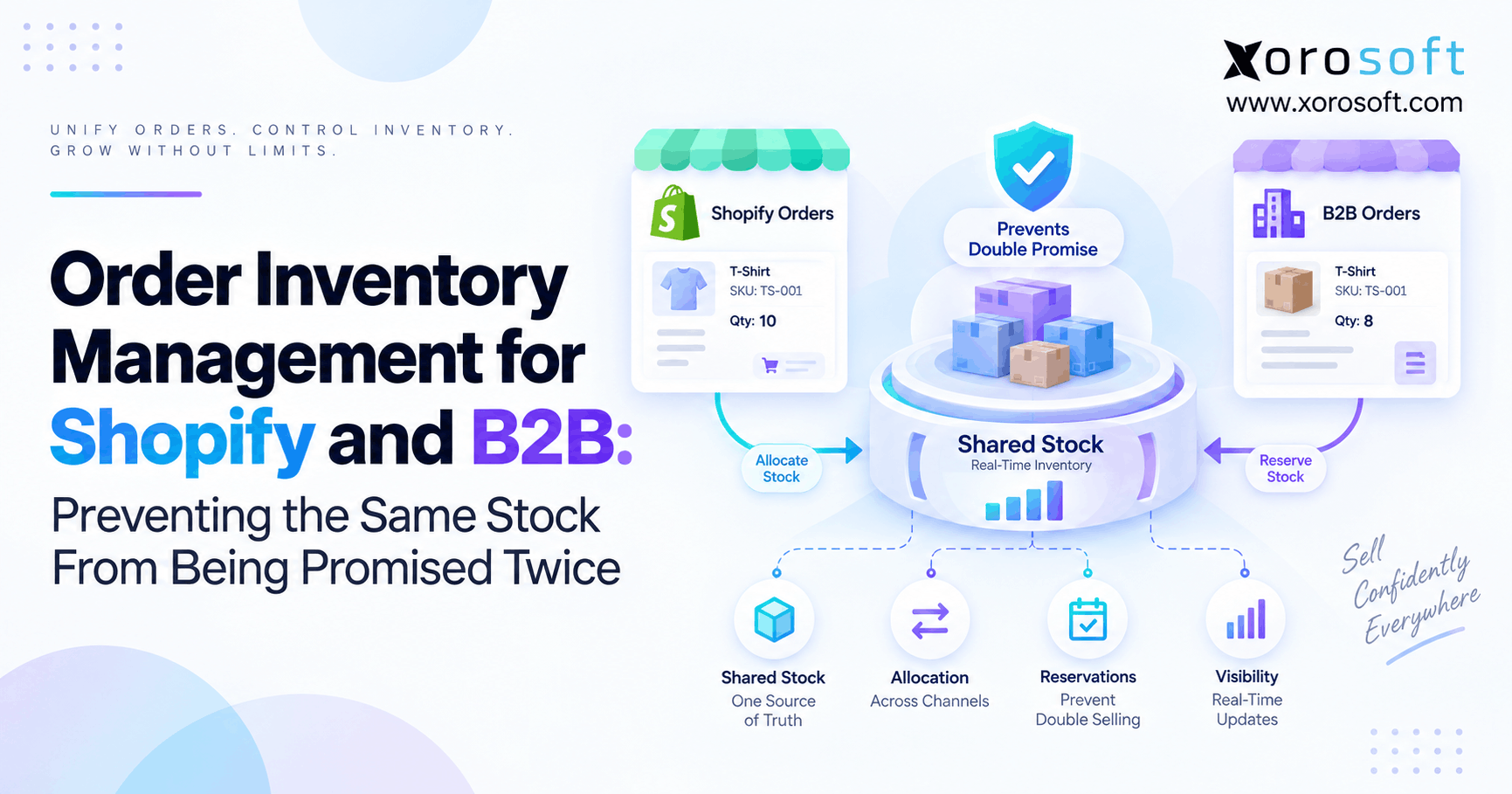
Stock on hand may already be promised to wholesale customers, Shopify buyers, Amazon buyers, stores, production orders, or sales events.
Therefore, physical stock is not always free stock. Instead, buyers should use available stock after allocations and other commitments.
9.3 Combine Demand from Every Sales Channel
Shopify, Amazon, B2B, EDI, retail, and marketplace demand should feed one plan. Otherwise, buyers may miss demand or count it twice.
For Shopify sellers, the Xorosoft ERP app for Shopify shows how ecommerce demand can connect with stock, buying, warehouse work, production, finance, and order handling.
10. Use Wholesale Procurement Best Practices to Track Results
Procurement measures should link supplier work with stock, service, process speed, and cost.
| Measure | Simple Formula | Why It Matters |
| On-time delivery | On-time orders ÷ total orders | Shows delivery trust |
| Supplier fill rate | Units received ÷ units ordered | Shows supply level |
| Defect rate | Bad units ÷ total units | Shows quality |
| Lead-time gap | Actual time − expected time | Shows planning risk |
| PO cycle time | Approval date − request date | Shows process speed |
| Rush-order rate | Rush POs ÷ total POs | Shows planning weakness |
| Invoice error rate | Error bills ÷ total bills | Shows record quality |
| Price gap | Actual cost − planned cost | Shows cost change |
| Stockout rate | Stockout cases ÷ demand cases | Shows service risk |
| Stock turn | Cost of sales ÷ average stock | Shows stock use |
10.1 Turn Procurement Reports into Action
Reports matter only when they lead to action. For example, if supplier fill rate falls, the team should review supplier capacity, order timing, product supply, minimum order rules, demand changes, and communication gaps.
Likewise, if rush orders rise, buyers should check forecasts, lead times, approval delays, and late supplier replies. Therefore, the aim is not more reports. The aim is better choices.
11. Use Wholesale Procurement Best Practices to Reduce Supplier Risk
Supplier risk can change at any time. For instance, a supplier may lose capacity, face cash problems, move a factory, or struggle with shipping delays. As a result, supplier approval should not be treated as a one-time task.
Strong wholesale procurement best practices require teams to review key suppliers throughout the relationship. In addition, the business should update backup plans when products, lead times, sales levels, or supplier conditions change.
Meanwhile, buyers should focus more attention on suppliers that support high-sales products, long-lead-time goods, or items without easy substitutes.
11.1 Find Key Supply Risks
Review single-source items, long lead-time products, high-sales lines, goods without substitutes, regional supply exposure, and suppliers with repeat issues.
In addition, rank each risk by customer impact, revenue, replacement time, and cost. As a result, the team can focus on the few risks that could cause the most damage.
11.2 Build a Supply Backup Plan
A useful plan may include backup suppliers, approved substitutes, buffer stock, other shipping routes, emergency contacts, and customer supply rules.
Still, each option should be tested before a crisis. Otherwise, the business may discover too late that the backup supplier cannot meet the need.
12. Apply Wholesale Procurement Best Practices by Industry
The same buying rules do not work in every industry. Therefore, each business should adjust its process to product, demand, and supplier needs.
12.1 Apparel Wholesale Procurement
Apparel buyers manage style, color, size, and season. A supplier may send the right total quantity but the wrong size mix. Therefore, buyers should review size curves, launch dates, supplier cut-offs, and markdown risk.
In addition, seasonal orders should include a stop-buy date. Otherwise, late arrivals may reach the warehouse after the best sales window has passed.
12.2 Furniture Wholesale Procurement
Furniture buying often includes long lead times, container planning, bulky storage, damage claims, and direct shipping.
Therefore, buyers should link orders with warehouse space, customer dates, damage rates, and packaging quality. Moreover, large items may need delivery booking before the container arrives.
12.3 Food and Beverage Procurement
Food and drink buying must also consider shelf life, expiry date, lot number, storage temperature, product rules, and recall needs.
Therefore, a low price is not useful if the product arrives with too little shelf life left. In addition, receiving teams should record lot and date data at the time of receipt.
12.4 Manufacturing Procurement
Manufacturing buyers must link supply with bills of materials, work orders, build plans, part supply, material plans, and supplier quality.
As a result, a missing low-cost part can stop a high-value build. Therefore, key parts may need stronger safety stock, backup suppliers, or earlier orders.
Businesses can review Xorosoft’s industry solutions for examples across wholesale, apparel, furniture, sporting goods, food, and manufacturing.
13. Fix Common Wholesale Procurement Mistakes
13.1 Choosing Suppliers Only by Price
Low price does not always mean low cost. Late delivery, poor quality, large minimums, and high freight may cancel the saving. Therefore, buyers should compare total value.
13.2 Buying from Old Spreadsheets
Old files can cause duplicate orders, missed orders, wrong stock amounts, wrong lead times, and wrong prices. Therefore, buying data should come from one trusted source.
13.3 Using One Rule for Every Product
Fast, slow, seasonal, and risky products need different rules. Otherwise, the business may hold too much of one item and too little of another.
13.4 Automating a Poor Process
Automation makes work faster. However, it does not make a weak process correct.
Therefore, process rules should be tested before the business adds automation. Next, teams should confirm that supplier data, lead times, approval limits, and receiving steps are correct. Finally, they can automate repeat work with less risk of spreading errors.
14. Use Wholesale Procurement Best Practices When Spreadsheets Stop Working
Spreadsheets may work for a small business with one buyer, one warehouse, few products, and low order volume.
However, they become harder to manage when:
1. Buyers keep separate files.
2. Stock numbers are not trusted.
3. Approvals happen in email.
4. Supplier replies are not tracked.
5. The business has many warehouses.
6. Sales channels are not linked.
7. Finance cannot see future spend.
8. Receiving errors need manual checks.
9. Month-end takes too long.
10. Demand plans do not create buying tasks.
Still, not every business needs a full ERP. The system should match the real size and needs of the company.
15. Compare Buying Software and Cloud ERP Options
Different tools solve different problems.
| Tool Type | Buying | Stock | Finance | Warehouse | Best Fit |
| Spreadsheets | Manual | Separate | Separate | Separate | Small, simple business |
| Buying software | Strong | Varies | Often linked | Limited | PO-led need |
| Stock software | Medium | Strong | Often separate | Varies | Stock-led need |
| Cloud ERP | Linked | Linked | Linked | Linked | Complex product business |
15.1 When Cloud ERP Makes Sense for Procurement
Cloud ERP may fit when buying must connect with stock, finance, warehouses, demand plans, production, ecommerce, EDI, and reports.
The main gain is not just more tools. Instead, it is one shared record from demand plan to supplier payment.
15.2 Compare ERP Platforms by Real Procurement Workflows
Xorosoft, NetSuite, Acumatica, Business Central, Cin7, Brightpearl, and Fishbowl may all appear in an ERP search.
However, businesses should compare buying steps, stock rules, warehouse needs, finance needs, production needs, online sales, EDI needs, reports, setup work, and total cost.
For businesses weighing two cloud ERP choices, the Xorosoft vs NetSuite comparison provides a useful way to review fit, setup, and scope.
16. Use Wholesale Procurement Best Practices to Connect Buying, Stock, and Finance
A linked ERP can bring together demand plans, restock suggestions, purchase requests, approvals, purchase orders, goods receipts, stock updates, supplier bills, accounts payable, finance records, and supplier reports.
Therefore, wholesale procurement best practices become easier to follow when each team works from the same data. As a result, employees enter less information twice and spend less time checking different records.
In addition, buyers can see open commitments before placing more orders. Meanwhile, warehouse teams can plan for expected receipts, and finance can track future cash needs before supplier invoices arrive.
16.1 Automate Repeat Procurement Work, Not Key Buying Choices
Automation can help create restock ideas, route approvals, apply supplier terms, track order replies, flag late orders, match bills, show future spend, and find errors.
However, buyers should still handle supplier talks, unusual demand, product changes, and risk. Therefore, the system should guide work without removing human review from important choices.
16.2 Where Xorosoft Fits in Wholesale Procurement
Xorosoft is a cloud ERP for product-based businesses that need buying, stock, finance, warehouse work, demand plans, production, reports, and online sales in one system.
XoroONE supports connected ERP work. XoroERP links daily work with finance, while XoroWMS supports warehouse receiving, stock control, and order work.
Therefore, this type of system may fit a business that has outgrown QuickBooks, spreadsheets, stock-only apps, or separate warehouse tools. Still, the choice should depend on business fit, setup needs, links with other apps, and plans for growth.
17. Roll Out Procurement Changes in Clear Steps
17.1 Map the Current Buying Process
Write down each step from demand to payment. Also record who does each task, which file or system they use, where approval happens, where delays occur, where data is entered twice, and where errors appear.
This process often shows gaps that teams did not see before. Therefore, the map should include real examples rather than only the official process.
17.2 Clean Product and Supplier Data
Start with supplier names, payment terms, product costs, lead times, minimum orders, case packs, reorder points, warehouse sites, and open purchase orders.
However, do not try to clean every record at once. Instead, begin with the products and suppliers that create the most sales, stock value, or operating risk.
Bad data can create bad orders at a larger scale. Therefore, data cleanup should come before full automation.
17.3 Set Procurement Rules Before Choosing Software
Agree on supplier approval, purchase order limits, price limits, receiving rules, invoice limits, error ownership, and emergency steps.
Then, the team can set up software around clear rules. As a result, the new process is less likely to copy old problems into a new system.
18. Follow a 90-Day Plan for Wholesale Procurement Best Practices
18.1 Days 1–30: Review the Current Procurement Process
- Map the buying process
- Check key measures
- List key suppliers
- Review late orders
- Find stock errors
- Clean key data
In addition, record the starting level for rush orders, late deliveries, invoice errors, and stockouts. Therefore, the team will have a clear baseline for later review.
18.2 Days 31–60: Set Wholesale Purchasing Rules
- Create supplier checks
- Set approval limits
- Standardize purchase order fields
- Build scorecards
- Set receiving steps
- Set invoice limits
Meanwhile, train buyers, warehouse staff, and finance together. As a result, each team understands how its work affects the next step.
18.3 Days 61–90: Add Procurement Automation
- Route simple approvals
- Add restock alerts
- Track supplier replies
- Link receiving and invoices
- Start supplier reviews
- Choose the next area to improve
This step-by-step plan reduces risk. At the same time, it gives the business clear proof of progress.
The team should also compare results with the starting baseline. For example, it can review rush orders, late deliveries, invoice errors, and stockouts. Consequently, managers can show whether the new process is producing real gains.
19. Wholesale Procurement Best Practices FAQs
19.1 What Is Wholesale Procurement?
Wholesale procurement covers demand planning, supplier choice, order approval, receiving, invoice checks, payment, and supplier review.
19.2 What Is the Difference Between Procurement and Purchasing?
Purchasing handles orders and payment. Procurement also includes planning, supplier checks, terms, risk, rules, and improvement.
19.3 What Are the Main Procurement Steps?
The main steps are demand review, stock checks, supplier choice, PO approval, delivery tracking, receiving, invoice matching, payment, and review.
19.4 What Are the Most Important Wholesale Procurement Best Practices?
The most important wholesale procurement best practices include good demand data, clear order rules, supplier checks, receipt matching, cost review, and performance tracking.
19.5 How Should Wholesalers Choose Suppliers?
Compare price, quality, capacity, lead time, fill rate, service, terms, risk, and past results.
19.6 What Should a Supplier Scorecard Include?
It should include on-time delivery, fill rate, quality, price match, lead-time control, response speed, and record accuracy.
19.7 Which Procurement Measures Matter Most?
Key measures include on-time delivery, fill rate, defects, lead-time gaps, PO cycle time, rush orders, invoice errors, stockouts, and stock turn.
19.8 How Can Wholesalers Cut Buying Costs?
Improve demand plans, compare landed cost, reduce rush orders, review freight, set clear terms, and cut invoice errors.
19.9 How Does Demand Planning Help Buying?
It helps buyers order earlier, choose better amounts, plan cash, and avoid stockouts or excess stock.
19.10 How Is a Reorder Point Set?
A basic reorder point equals demand during supplier lead time plus safety stock.
19.11 How Much Safety Stock Is Needed?
The amount depends on demand changes, supplier delays, product value, shelf life, substitutes, and stockout cost.
19.12 What Is Economic Order Quantity?
EOQ helps balance order cost and stock holding cost. However, buyers should also review minimums, case packs, and risk.
19.13 How Should Minimum Orders Be Managed?
Compare minimums with sales, cash, space, shelf life, and slow-stock risk. Then, negotiate smaller or split deliveries where possible.
19.14 What Is Landed Cost?
Landed cost is the full cost of bringing a product into stock, including price, freight, duty, fees, and handling.
19.15 How Can Procurement Prevent Stockouts?
Use trusted stock data, demand plans, lead times, safety stock, open orders, and supplier confirmations to spot risk early.
19.16 How Should Supplier Lead Times Be Managed?
Track promised and actual lead times, update planning rules, and review repeat delays.
19.17 Is One Supplier or Two Suppliers Better?
One supplier may improve price and focus. Two suppliers may reduce risk. Therefore, the right choice depends on the product.
19.18 What Is Purchase Order Automation?
It uses software to create, approve, send, track, receive, and match purchase orders.
19.19 What Is Three-Way Matching?
It compares the purchase order, goods receipt, and supplier invoice before payment.
19.20 What Is Procure-to-Pay?
It covers the path from an approved need through ordering, receiving, invoice checks, and supplier payment.
19.21 How Should Buying Work Across Warehouses?
Buyers should compare stock, demand, transfers, inbound orders, and freight across all sites before buying more.
19.22 Can ERP Automate Procurement?
Yes. ERP can link demand, approvals, purchase orders, receiving, stock, invoices, and finance.
19.23 When Should a Business Stop Using Spreadsheets?
Review new tools when files are split, stock is wrong, approvals are hard to track, or sites and channels are not linked.
19.24 Who Does Not Need a Full ERP?
A small business with few products, one warehouse, low order volume, and simple buying may not need one.
19.25 How Often Should Suppliers Be Reviewed?
Watch key suppliers often and review them monthly or quarterly. Serious issues should trigger an immediate review.
20. Make Wholesale Procurement a Clear and Measurable Process
The best next step is not to automate every task at once. First, clean supplier and product data. Next, set clear rules for approvals, receiving, and invoices. Then, review supplier and stock results. Finally, choose tools that fit the business.
By following wholesale procurement best practices, distributors can reduce rush buying, improve stock control, protect cash, and give teams better data. In addition, they can make supplier reviews, order approvals, and buying decisions more consistent.
However, technology should support a clear process rather than replace one. Therefore, businesses should review their current gaps before choosing software.
For companies that need buying, stock, warehouse, finance, demand planning, Shopify, Amazon, EDI, and production in one system, Xorosoft offers a connected ERP approach.
Book a personalized Xorosoft demo to review whether that model fits your buying process, warehouse needs, and growth plans.
Recent Posts
-
 Inventory Checking Statistics: Which Count Variance, Recount Rate, and Bin-Level Error Metrics Should Warehouses Track?
 -
 Best ERP Software for Apparel Manufacturers
 -
 How to Reconcile 3PL Billing: From Warehouse Events to Customer Invoice
 -
 NetSuite Alternatives for Shopify Businesses
 -
 Shopify B2B Inventory Control: Preventing the Same Stock From Being Promised Twice