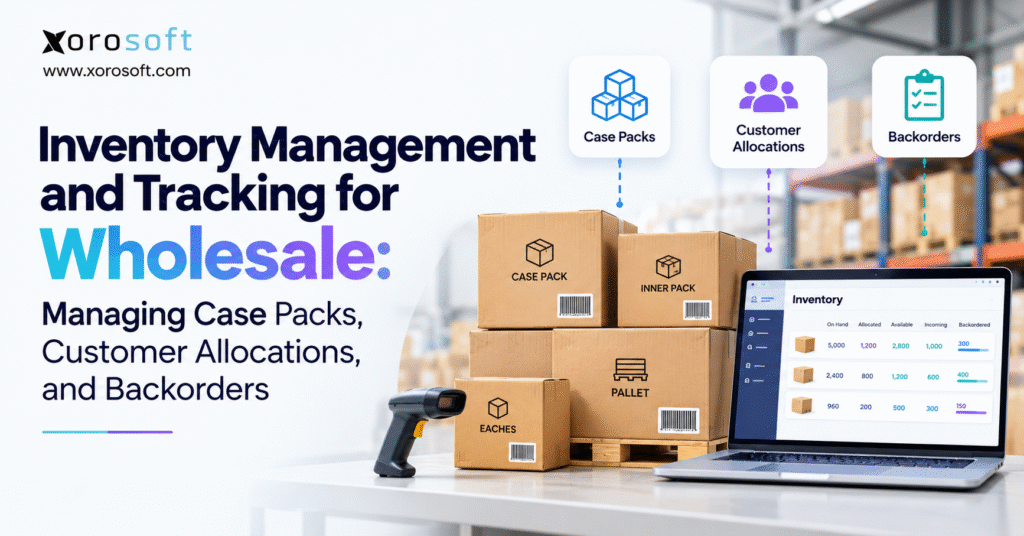
For any business looking to streamline operations, wholesale inventory tracking is an essential part of managing stock efficiently.
1. Why Order Complexity Creates Visibility Gaps
Inventory problems often appear long before a warehouse reaches zero stock. The first warning sign is usually that different teams provide different answers when asked how much inventory is actually available.
1.1 Physical Stock Is Only Part of the Availability Picture
Suppose a distributor has 1,500 units on hand.
Sales may initially assume the full quantity can be offered to customers. Yet 400 units could already support confirmed orders. Another 150 may represent safety stock, while 100 units remain unavailable because they are damaged or waiting for inspection.
Only 850 units may genuinely be available for new demand.
Strong wholesale inventory tracking makes that difference visible before another commitment is created. Sales should not need to call purchasing to determine whether stock is safe to promise, and warehouse teams should not be the first to discover that system availability was overstated.
The larger the operation becomes, the less practical manual interpretation becomes.
1.2 Growth Creates More Competing Commitments
Complexity increases rapidly when a company adds warehouses, Shopify, Amazon, EDI customers, B2B portals, sales representatives, and large retail accounts.
Several channels can generate demand against the same SKU within minutes.
A Shopify customer may order while a sales representative enters a wholesale transaction and an EDI customer submits a large purchase order. If every channel sees the same quantity without coordinated allocation rules, all three can compete for the same inventory.
The problem is therefore not simply seeing inventory. The business also needs rules governing which quantities each channel can promise and when a transaction should reduce availability.
2. Building a Reliable Wholesale Inventory Tracking Model
A scalable process starts with clear inventory definitions. Every team should understand what each quantity represents and how one inventory state changes into another.
2.1 What On-Hand Quantity Really Tells You
On-hand inventory represents stock physically recorded at a warehouse or location.
That number is important, but it should not automatically become the quantity displayed to every salesperson or sales channel.
Products can physically exist while another transaction already has a legitimate claim against them. Likewise, inventory may be physically present but blocked because of inspection, damage, quality issues, or another operational restriction.
On-hand inventory should therefore be the starting point for availability calculations rather than the final answer.
2.2 Calculating Available Wholesale Inventory
Available inventory represents the quantity still eligible for new demand.
A simplified formula may look like:
Available Inventory = On Hand − Committed − Reserved − Unavailable Stock
Some businesses also deduct safety stock or quantities protected for specific channels and accounts.
The exact formula can vary. Consistency matters more.
A salesperson, ecommerce integration, warehouse employee, and customer-service representative should not calculate availability differently.
Reliable wholesale inventory tracking depends on one shared definition of sellable inventory.
2.3 Separating Committed, Reserved, and Available Stock
Committed inventory generally represents stock connected to existing demand.
Reserved stock may represent a stronger connection to a specific transaction, although terminology varies between software platforms.
Allocated inventory can represent stock protected for a customer, channel, region, promotion, or business program.
Before implementing an ERP or inventory platform, define those business states first. Software configuration should follow the operating model, not the other way around.
3. How Future Supply Changes Customer Promises
Current stock explains today’s position. Wholesale customers often place orders against delivery dates several days or weeks into the future.
That makes future supply important, but incoming inventory should never be confused with stock physically available today.
3.1 Keeping Incoming Goods Separate From Received Stock
Incoming inventory can come from purchase orders, manufacturing, approved returns, or interwarehouse transfers.
Expected goods should remain separate from physical inventory until the appropriate receiving transaction occurs.
However, future supply should remain visible to purchasing, customer service, and sales.
If 400 units are available today and another 1,000 units are confirmed for next week, the business should understand both quantities while clearly distinguishing between current and expected supply.
That separation allows employees to plan without overstating current availability.
3.2 Using Available-to-Promise in Wholesale Inventory Tracking
Available-to-promise logic compares expected supply with existing demand.
Suppose 300 units are available now, another 700 are expected next week, and 500 are already required by confirmed orders.
Depending on safety-stock and allocation rules, part of the future receipt may support additional commitments.
This forward-looking approach makes wholesale inventory tracking more useful than a basic on-hand balance because the company can make realistic future promises without pretending inventory has already arrived.
4. Managing Case Packs for Wholesale Inventory Tracking
Unit-of-measure complexity is one of the easiest ways for small inventory errors to spread across purchasing, warehouse operations, sales, and accounting.
4.1 Eaches, Inner Packs, Cases, and Pallets
Consider a product where one inner pack contains six individual units.
Four inner packs form one case, which means a case contains 24 eaches.
If one pallet contains 40 cases, the pallet represents 960 individual units.
Purchasing may order cases while ecommerce sells individual units. A large wholesale customer may buy full pallets.
Every transaction still needs to connect accurately to the underlying inventory quantity.
4.2 Case-Pack Errors in Wholesale Inventory Tracking
Suppose purchasing orders 100 cases and every case contains 24 units.
The expected receipt should equal 2,400 base units.
If an integration records only 100 individual units, the error immediately affects more than purchasing. Availability, replenishment, warehouse expectations, costing, and customer promises can all become inaccurate.
Reliable wholesale inventory tracking therefore depends on controlled unit-of-measure data instead of case conversions stored in spreadsheets or employee notes.
4.3 Recording Case Breaks Correctly
Many wholesalers allow warehouse staff to open a full case and sell individual units.
That action should create a controlled transaction or packaging-state change.
Otherwise, the system may continue showing a complete case even after warehouse employees have opened it.
This becomes particularly important when wholesale accounts buy cases while ecommerce customers consume individual units from the same SKU.
The warehouse should always know how many full cases and loose units actually remain.
5. Customer Allocation in Wholesale Inventory Management
Inventory allocation determines who has a valid claim on constrained supply.
This is the point where a physical quantity becomes a commercial commitment.
5.1 Wholesale Inventory Allocation Before Fulfillment
A distributor may have 10,000 units physically present but protect 2,000 for a national retailer under an agreed program.
Those units remain inside the warehouse. However, offering them freely to another customer could cause a service failure later.
Allocation rules allow the business to represent that commitment directly rather than relying on employees to remember which quantities must remain protected.
This approach makes inventory commitments visible to every team that can affect availability.
5.2 Allocation vs Reservation in Wholesale Inventory Management
Allocation and reservation should not automatically be treated as the same process.
An allocation may protect inventory for a customer group, channel, region, promotion, or other demand category.
A reservation usually creates a stronger connection to a specific transaction.
Different systems use these labels in different ways, so businesses should define the operational meaning first.
Teams need to know when inventory becomes protected, when it becomes tied to a particular order, and when that protection can be released.
5.3 Choosing the Right Allocation Trigger
Some companies allocate stock when an order is entered.
Others wait until credit approval, sales approval, warehouse release, or a requested ship date.
Allocating too early may lock inventory unnecessarily. Waiting too long creates the opposite risk because another order may consume inventory that an existing customer expected.
The allocation trigger should therefore match real service commitments rather than a default software setting.
6. Wholesale Inventory Tracking During Supply Shortages
Allocation becomes most important when customer demand exceeds eligible supply.
Suppose 700 cases are available while open customer demand reaches 850.
The business has a 150-case shortage.
The system should expose the shortage immediately, but management still needs a clear policy for deciding how those 700 available cases are distributed.
6.1 When First-Come, First-Served Works
The simplest allocation model gives inventory to the oldest eligible order first.
This method is easy to communicate and can work well in straightforward operations.
However, an older order may have a delivery date several weeks away while a newer order needs to ship immediately.
Order age should therefore be treated as one possible priority factor rather than an automatic answer for every shortage.
6.2 Using Customer Priority Without Creating Hidden Stock
Some wholesalers maintain formal customer priorities.
A major account with contractual service requirements may legitimately receive higher priority than an occasional customer. Required ship dates, regions, channels, and service agreements can also influence the rule.
The important part is visibility.
Priority should live inside the operational process rather than in private sales messages. Otherwise, sales may believe inventory is protected while the main system still considers it available.
6.3 When Fair-Share Allocation Makes Sense
Another approach distributes constrained supply across several customers.
For example, if three important accounts all require the same SKU, management may decide to partially fulfill each order instead of completely filling only one.
Fair-share allocation is not appropriate for every business, but it can protect customer continuity during serious shortages.
7. Backorder Management in Wholesale Inventory Control
A backorder represents accepted customer demand that cannot currently be fulfilled from eligible inventory.
Backorders are normal in many wholesale businesses. The problem begins when the organization cannot explain how or when those orders will be resolved.
7.1 The Difference Between a Stockout and a Backorder
A stockout describes an inventory condition.
A backorder describes customer demand resulting from that condition.
A company can have no inventory without accepting backorders. Likewise, one stockout can create multiple backordered lines across several customers.
Every backorder may have a different required date, warehouse, account priority, and service expectation.
That makes backorder management a customer-service process as much as an inventory process.
7.2 Tracking Backorders in Wholesale Inventory Management
A useful backorder record should retain the customer, SKU, quantity, warehouse, requested date, expected availability, and allocation priority.
If the system records only an unresolved quantity, customer service lacks context.
Employees may then contact purchasing for an update, purchasing checks supplier information, and sales separately communicates an expected date.
Connected wholesale inventory tracking reduces that uncertainty because future supply and open demand can be evaluated together.
7.3 Why Backorder Aging Matters
A two-day backorder may be routine.
An order still open after 60 or 90 days deserves investigation.
Possible causes include supplier delays, incorrect lead times, discontinued products, forecasting problems, or customer demand that should have been reviewed earlier.
Backorder aging helps management distinguish temporary shortages from structural supply problems.
8. Connecting Incoming Supply With Open Demand
Future supply should already have a plan before goods reach the receiving dock.
Purchasing, sales, and customer service should understand how much incoming inventory is required to support existing commitments.
8.1 Matching Purchase Orders to Existing Backorders
Suppose 500 units are currently backordered and a supplier confirms 900 units for delivery next week.
A simple calculation suggests that 400 units may remain after existing backorders are covered.
However, those units may also need to support safety stock, customer allocations, or warehouse-specific requirements.
The goal is not to release future inventory too early. Instead, operations need to understand what the incoming purchase order is already expected to cover.
8.2 Short Receipts and Wholesale Inventory Allocation
Now assume the supplier delivers only 650 units.
Those units should not automatically become freely available.
Existing backorders, customer priorities, and other commitments need to be reconsidered first.
This is where wholesale inventory tracking directly affects customer service. A short supplier receipt is not merely a receiving exception. It changes which promises can be fulfilled and what sales can offer next.
9. Partial Shipments vs Complete-Order Fulfillment
Not every customer wants the same outcome when an order cannot be filled completely.
Some accounts value immediate supply. Others require one complete shipment.
9.1 When Partial Fulfillment Improves Service
Suppose a customer orders 100 cases and only 75 are currently available.
Shipping the 75 available cases may help that customer avoid its own stockout.
The remaining 25 cases can stay open until additional supply arrives.
Partial fulfillment works best when the customer values speed and the extra freight or warehouse handling remains economically reasonable.
It can also make sense when order lines are independent and do not need to arrive together.
9.2 When Waiting for a Complete Order Makes More Sense
Another customer may require the full 100 cases in one delivery.
The requirement could result from routing guides, appointment scheduling, freight costs, or internal receiving practices.
In that case, sending only 75 cases can create more complexity than value.
Shipment rules should therefore be captured at the customer or order level instead of being decided only after warehouse picking begins.
10. Multi-Warehouse Wholesale Inventory Tracking
Adding another warehouse creates more than another location. It introduces new allocation, replenishment, transfer, and fulfillment decisions.
10.1 Location-Level Wholesale Inventory Tracking
A distributor may have 1,000 units across its warehouse network.
However, only 100 units may be available in the facility serving a particular customer region.
Network stock can therefore look healthy while local availability remains constrained.
A platform such as XoroONE can become relevant when purchasing, inventory, sales, fulfillment, and accounting need to operate across several locations from a shared operational record.
Good wholesale inventory tracking should preserve both location detail and a network-level view.
10.2 Managing Interwarehouse Transfers
A transfer should move through defined operational states.
Inventory may be requested, allocated at the sending location, shipped, placed in transit, received, and then released as available at the destination.
The same units should never appear freely available at both warehouses during transit.
Otherwise, the system can create artificial inventory and allow customer orders to consume the same stock twice.
10.3 Choosing the Best Fulfillment Location
The nearest warehouse is not always the best fulfillment point.
Freight cost, labor capacity, delivery requirements, incoming supply, and future regional demand may all influence the decision.
A strong multi-location process combines physical availability with fulfillment logic instead of routing orders solely by geography.
11. Keeping Ecommerce, EDI, and B2B Channels in Sync
Multichannel businesses need a clear rule for deciding which inventory quantity every sales channel is allowed to see.
Publishing raw warehouse stock everywhere creates overselling risk even when physical counts are correct.
11.1 Publishing Wholesale Inventory Across Sales Channels
Suppose a warehouse physically holds 2,000 units.
Some may already support B2B orders, strategic accounts, safety stock, or another channel.
A Shopify store should not automatically see all 2,000 units as sellable.
Instead, a controlled availability calculation should determine what each channel can promise.
Businesses operating several sales sources can use an integration environment to connect inventory, orders, fulfillment, and ERP transactions instead of synchronizing independent stock quantities between disconnected applications.
11.2 Shopify and Wholesale Inventory Tracking
Shopify should not become a separate inventory reality when the same company also serves wholesale, EDI, or marketplace customers.
Products, orders, fulfillment updates, and eligible inventory all need deliberate synchronization rules.
The Xorosoft ERP app on the Shopify App Store provides one example of how Shopify can connect with broader ERP operations.
The key question is not whether two systems technically sync. The business needs to decide which system controls availability and how exceptions are reconciled.
Reliable wholesale inventory tracking depends on that ownership being clear.
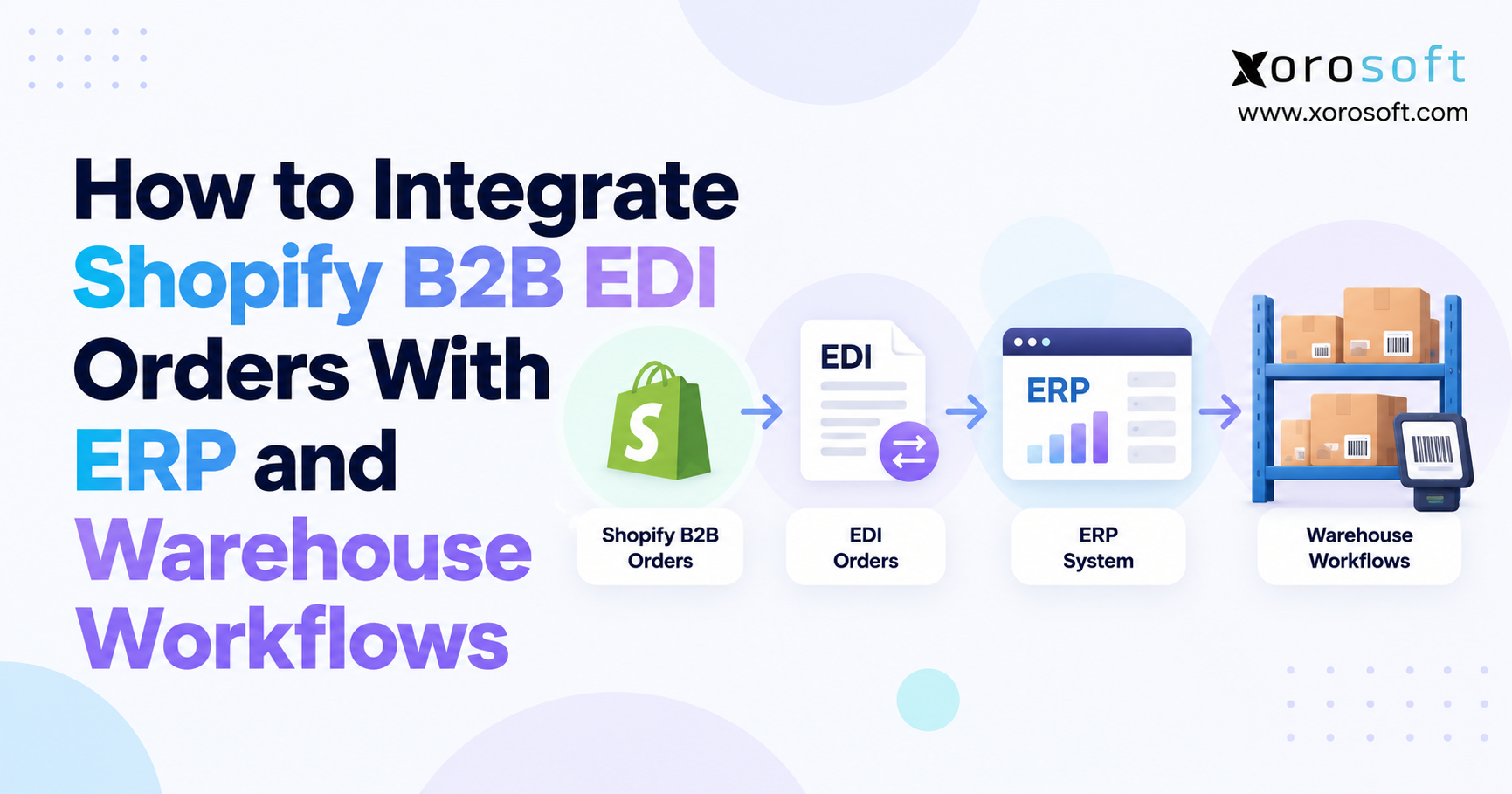
11.3 Validating EDI Orders Before Fulfillment
EDI accelerates transaction flow.
That speed becomes valuable only when underlying item, UOM, warehouse, and allocation rules remain accurate.
Incorrect automated orders can move through operations faster than manual ones.
EDI transactions should therefore pass appropriate validation before they create warehouse work.
12. Purchasing for Wholesale Inventory Management
Purchasing decisions should respond to future requirements instead of today’s stock quantity alone.
A buyer needs visibility into existing demand, confirmed supply, supplier constraints, replenishment timing, and warehouse requirements.
12.1 Replenishment Planning for Wholesale Inventory
A practical replenishment model may consider forecast demand, current backorders, safety stock, available inventory, and confirmed future supply.
Real purchasing policies can also include supplier minimums, case-pack quantities, volume breaks, seasonality, promotions, and individual warehouse needs.
Backorders deserve particular attention because they represent customer demand the company has already accepted.
However, old or questionable demand should still be reviewed before it automatically drives new purchase orders.
12.2 Why Supplier Lead Times Need Regular Review
A mathematically correct replenishment model can still fail when its assumptions are wrong.
If a system assumes a supplier delivers in 15 days while the real lead time is consistently 35 days, inventory shortages will continue.
Wholesalers should compare planned lead times with actual receipt history and update purchasing master data as supplier performance changes.
12.3 Safety Stock in Wholesale Inventory Management
Safety stock should not exist only in a buyer’s spreadsheet.
It should be represented through a clear planning or availability rule.
Otherwise, one employee may believe the quantity is protected while another team considers it sellable.
Consistent wholesale inventory tracking depends on internal protection rules being visible to every process that calculates availability.
13. Warehouse Execution and Inventory Accuracy
Inventory records remain trustworthy only when warehouse transactions happen correctly.
Receiving, putaway, transfers, picking, packing, shipping, returns, and adjustments all affect availability.
13.1 Receiving Determines When Supply Becomes Real
A purchase order represents expected supply.
A warehouse receipt confirms that goods physically arrived.
Receiving should validate the item, quantity, warehouse, unit of measure, purchase order, and any lot or serial information.
Depending on the operation, received inventory may become immediately available or remain under inspection.
Expected supply and physical inventory should remain distinct until receiving requirements are complete.
13.2 Picking and Wholesale Inventory Control
Suppose an order has 24 allocated cases but a picker can find only 22.
That discrepancy should create an immediate exception.
Possible causes include an incorrect bin, missed transaction, damaged inventory, bad case conversion, or a previous short pick.
A dedicated warehouse management system becomes useful when scanning, receiving, putaway, picking, transfers, and shipping need tighter transaction control.
Accurate execution protects upstream wholesale inventory tracking from becoming unreliable.
13.3 Using Cycle Counts Where Risk Is Highest
Not every SKU requires the same counting frequency.
Fast-moving products, high-value stock, repeatedly adjusted SKUs, and items with frequent short picks generally deserve greater attention.
Cycle counting should therefore follow operational risk rather than treating every product equally.
14. Connecting Warehouse Activity With Accounting
Inventory is both a physical operating resource and a financial asset.
That connection makes inventory reconciliation a useful test of whether operations and finance truly share the same transaction model.
14.1 How Physical Movements Affect Financial Records
Receiving can affect inventory value and supplier liabilities.
Shipping can affect inventory balances and cost of goods sold.
Returns, write-offs, and adjustments may change both operational quantities and financial values.
When warehouse and accounting events live in separate applications, finance often discovers discrepancies only after month-end reconciliation begins.
That creates corrective work after the operational event has already happened.
14.2 Wholesale Inventory Reconciliation
Consider a cycle-count adjustment for 20 missing units.
Warehouse operations needs to understand why the physical quantity changed. Finance needs to understand the value impact of the same event.
Both teams should be able to trace the original transaction.
For companies moving beyond basic accounting applications, XoroERP can become relevant when purchasing, inventory, warehouse activity, reporting, and accounting need tighter integration.
The objective is not simply fewer manual entries. It is better traceability between physical events and financial records.
15. Wholesale Inventory Tracking KPIs That Matter
Inventory metrics should tell managers where operational processes require attention.
A dashboard full of numbers provides little value unless the business knows what action each metric should trigger.
15.1 Inventory Accuracy
Inventory accuracy compares system records with verified physical quantities.
Rather than relying only on one company-wide percentage, managers can review performance by warehouse, bin, product category, or transaction type.
A strong overall result can hide one location responsible for most discrepancies.
Segmenting the metric makes it much more useful.
15.2 Fill Rate
Fill rate shows how much customer demand the business fulfills as expected.
A decline may indicate supplier delays, forecasting problems, replenishment issues, allocation errors, or inaccurate inventory.
Tracking fill rate by customer, SKU, warehouse, or channel can reveal where the issue is concentrated.
15.3 Backorders in Wholesale Inventory Tracking
Backorder rate measures how much demand cannot be fulfilled immediately.
Backorder aging shows how long those shortages remain unresolved.
A temporary increase during a seasonal promotion may be manageable. Orders waiting for months point toward a deeper supply, master-data, or planning issue.
Together, the two measures help evaluate whether wholesale inventory tracking is supporting reliable customer commitments.
15.4 Inventory Turnover in Context
Higher inventory turnover can improve working-capital efficiency.
However, reducing inventory too aggressively can increase shortages and backorders.
If turnover improves while fill rate deteriorates, the company may simply be converting an inventory-cost problem into a customer-service problem.
Metrics should therefore be reviewed together rather than optimized independently.
16. Common Wholesale Inventory Control Errors
Most inventory failures develop gradually through operational shortcuts rather than one dramatic breakdown.
16.1 Treating On-Hand Stock as Sellable Stock
Physical stock may already be allocated, committed, damaged, under inspection, or protected as safety stock.
Sales therefore needs a calculated availability quantity instead of a raw on-hand balance.
Using physical quantity as sellable quantity is one of the fastest ways to create false customer promises.
16.2 Managing Wholesale Inventory Allocations in Spreadsheets
A spreadsheet can record that 500 units should remain protected for a major customer.
It cannot automatically stop another order from consuming those units.
Employees may therefore believe inventory is allocated while the main system continues treating it as freely available.
That difference creates hidden risk whenever supply becomes constrained.
16.3 Creating Hidden Sales Reservations
Sales teams sometimes maintain customer commitments outside the core inventory system.
One employee uses a spreadsheet, another enters CRM notes, while someone else relies on email.
The company then develops several versions of future demand.
Legitimate commitments should remain visible inside the operating record.
16.4 Packaging Errors in Wholesale Inventory Tracking
Incorrect case, inner-pack, and pallet conversions can affect purchasing, receiving, availability, fulfillment, costing, and replenishment at the same time.
Unit-of-measure data therefore deserves formal ownership and change control.
When packaging information changes, every connected transaction should continue using the same valid conversion.
That consistency is essential for accurate wholesale inventory tracking.
17. When Wholesale Inventory Software Stops Scaling
There is no universal revenue number at which every wholesaler suddenly needs ERP.
Operational complexity is usually a better signal.
17.1 Manual Reconciliation as an Early Warning
Watch for recurring reconciliation between accounting software, inventory applications, warehouse tools, ecommerce platforms, EDI systems, and purchasing spreadsheets.
When one customer order requires employees to manually update several applications, the company has a workflow problem rather than simply a reporting problem.
Over time, employees spend more effort keeping systems synchronized than managing actual exceptions.
17.2 Where Wholesale Inventory Applications Reach Their Limit
Standalone inventory software can work well when stock visibility is the primary challenge.
Eventually, however, inventory decisions begin affecting purchasing, accounting, forecasting, warehouse execution, ecommerce, and customer service.
At that stage, adding another standalone tool can create another integration instead of fixing the wider process issue.
Reviewing broader ERP and operational solutions can help teams identify which business processes genuinely need to share a common transaction model.
17.3 Upgrading Based on Workflow Complexity
Before replacing software, document the processes employees still manage outside the system.
Pay close attention to allocations, warehouse transfers, purchase recommendations, backorders, inventory valuation, ecommerce synchronization, and month-end reconciliation.
Those manual workflows usually provide a better ERP requirements list than a generic feature checklist.
18. How ERP Improves Wholesale Inventory Tracking
ERP becomes valuable when several departments need to interact with the same inventory event.
The benefit does not come from putting more features on one screen. It comes from preserving the context of a transaction as responsibility moves between teams.
18.1 Connecting One Order Across Departments
Consider a customer order for 200 cases.
The system may need to understand the case conversion, customer price, warehouse availability, allocation priority, backordered quantity, incoming supply, warehouse work, shipment, invoice, and resulting inventory value.
Those are not separate business events.
They are stages of the same commercial transaction.
A connected system reduces the need to reconstruct the transaction manually when it moves from sales to purchasing, the warehouse, or finance.
18.2 Linking Sales Demand With Wholesale Inventory Planning
If an order creates a shortage, purchasing should be able to see that demand immediately.
Customer service should also see confirmed future supply without repeatedly asking purchasing for updates.
Shared visibility is one of the strongest benefits of integrated wholesale inventory tracking because current supply, future supply, and customer demand can be evaluated together.
That gives teams a better foundation for purchasing and customer communication.
18.3 Why Good Software Still Needs Clear Operating Rules
ERP cannot independently decide whether one customer deserves priority over another.
It also cannot know whether cases may be broken, when an allocation should occur, or whether partial shipments should be allowed unless the company defines those rules.
The business must design the operating policy first.
Software can then enforce that policy consistently across departments.
19. Evaluating ERP for Wholesale Inventory Management
ERP evaluation should focus on realistic workflows instead of the number of features displayed during a standard sales demonstration.
Most serious ERP products can display inventory. Differences become clearer when the workflow involves shortages and exceptions.
19.1 Test Vendors With a Difficult Real-World Order
Ask each vendor to process a representative order from beginning to end.
Use a product with a case-pack conversion. Create insufficient stock. Apply a customer allocation. Generate a backorder. Add future supply. Receive less inventory than expected. Transfer inventory between warehouses. Complete the order and show the accounting effect.
This sequence exposes workflow limitations far more effectively than a feature checklist.
Businesses researching specific options can use a Xorosoft vs NetSuite comparison as one input while still validating each system against actual company requirements.
19.2 Check Industry-Specific Requirements
Wholesale requirements vary by product category.
Apparel businesses often manage style, color, and size combinations. Food distributors may prioritize lot and expiry tracking. Furniture businesses operate with larger products and different warehouse constraints. Consumer-goods companies can combine wholesale, ecommerce, marketplaces, and retail.
Reviewing relevant industry workflows can help buyers identify requirements that broad ERP checklists may overlook.
The right system should match the real operating model.
19.3 Validate the Platform Beyond the Demo
A polished demonstration shows how software behaves under controlled conditions.
Implementation history provides another perspective.
Relevant customer case studies can help buyers develop questions about migration, integrations, warehouse execution, process redesign, and user adoption before implementation.
The employees who will use the system every day should also participate in evaluation.
20. Practical Next Steps for Stronger Inventory Control
Improving wholesale inventory tracking should begin with operational definitions rather than a software purchase.
20.1 Standardize Inventory Definitions
Document exactly what the business means by on hand, available, allocated, committed, reserved, incoming, and backordered.
Sales, purchasing, customer service, warehousing, ecommerce, and finance should use those definitions consistently.
Then review products that can be purchased, stored, or sold in more than one unit of measure.
Confirm each, inner-pack, case, and pallet relationships before conversion errors reach purchasing, warehouse execution, or fulfillment.
Clean master data makes every later inventory process easier to control.
20.2 Document Allocation and Backorder Policies
Decide when inventory becomes protected and which commitments receive priority when supply becomes constrained.
The business should also define who can override allocations and when protected stock returns to general availability.
Backorders require the same clarity.
Determine when partial shipments are permitted, how aging backorders are reviewed, and how incoming receipts should be distributed across existing demand.
Those policies should exist before the next shortage occurs.
20.3 Removing Manual Wholesale Inventory Workarounds
Review the tasks employees still manage outside the central system.
If sales maintains allocation spreadsheets, purchasing reconstructs future demand manually, customer service cannot confirm expected shipment dates, warehouse teams frequently discover unexpected shortages, and finance repeatedly reconciles inventory differences, the operating model may have outgrown its current technology.
The target state is simple: every department should be able to explain the same inventory quantity using the same operational record.
For businesses considering ERP, Xorosoft can be evaluated alongside other platforms using actual case-pack structures, customer allocations, open backorders, warehouse transfers, ecommerce workflows, purchasing requirements, and accounting scenarios.
That evaluation should reproduce real operating conditions instead of relying on a generic feature checklist.
If recurring inventory visibility, allocation, backorder, warehouse, or reconciliation issues are limiting operations, teams can contact Xorosoft to review those workflows against their actual business requirements.
Frequently Asked Questions
What is wholesale inventory tracking?
Wholesale inventory tracking records what stock is on hand, available, allocated, incoming, or backordered across locations so teams can make reliable sales, purchasing, and fulfillment decisions.
How should wholesalers manage case packs?
Use controlled unit-of-measure conversions for eaches, inner packs, cases, and pallets. The same rules should flow through purchasing, receiving, sales orders, picking, and inventory availability.
How does inventory allocation work for wholesale orders?
Allocation protects stock for a customer, order, channel, or priority group. Clear rules determine when inventory becomes protected, when it can be released, and what remains available.
What is the best way to manage wholesale backorders?
Track each backorder by customer, SKU, quantity, requested date, priority, and expected supply. Use consistent allocation rules so new inventory flows to the right demand.
How should incoming inventory be assigned to backorders?
Match confirmed incoming supply to open demand before receipt, then re-evaluate priorities when goods arrive. Short receipts should trigger reallocation instead of making all received stock freely available.
How can wholesalers prevent overselling across multiple channels?
Publish a controlled available quantity rather than raw on-hand stock. Deduct commitments, reservations, safety stock, and protected allocations before synchronizing inventory to ecommerce, EDI, and B2B channels.
When should a wholesaler move to ERP inventory software?
Consider ERP when allocations, purchasing, warehouse activity, backorders, ecommerce, and accounting require repeated manual reconciliation across disconnected systems or spreadsheets.
Recent Posts
-
 ERP Landed Cost Module vs Spreadsheet Calculations for Importers
 -
 How to Build an Open-to-Buy Plan for an Omnichannel Brand
 -
 Cold Storage WMS for Food and Beverage Distribution
 -
 ERP Buying Statistics 2026: Evaluation, Implementation, and Adoption Risks
 -
 How a Distributor Reduced B2B Order Exceptions Without Restricting Sales