Many people often wonder, what is procurement and why is it important for businesses?
1. Why Procurement Problems Appear as Businesses Grow
A growing company rarely identifies a procurement problem immediately. Instead, warning signs usually appear one at a time.
For example, a popular product may sell out because a supplier order was placed too late. At the same time, another product may arrive months before it is needed and take up valuable warehouse space. Meanwhile, finance may receive a supplier invoice without knowing whether the goods were received.
These issues may look unrelated. However, they often have the same cause: the business lacks a clear process for planning, approving, ordering, receiving, and reviewing purchases.
Procurement affects far more than buying. In fact, it shapes inventory availability, cash flow, supplier performance, production schedules, warehouse workload, product quality, and customer service. Therefore, a weak process can create problems across the entire organization.
For inventory-driven companies, the impact is even greater. A purchasing decision does not end when a purchase order is sent. Instead, that decision affects how much inventory arrives, when it becomes available, where it is stored, how it is valued, and whether future demand can be fulfilled.
1.1 What Is Procurement in Simple Terms?
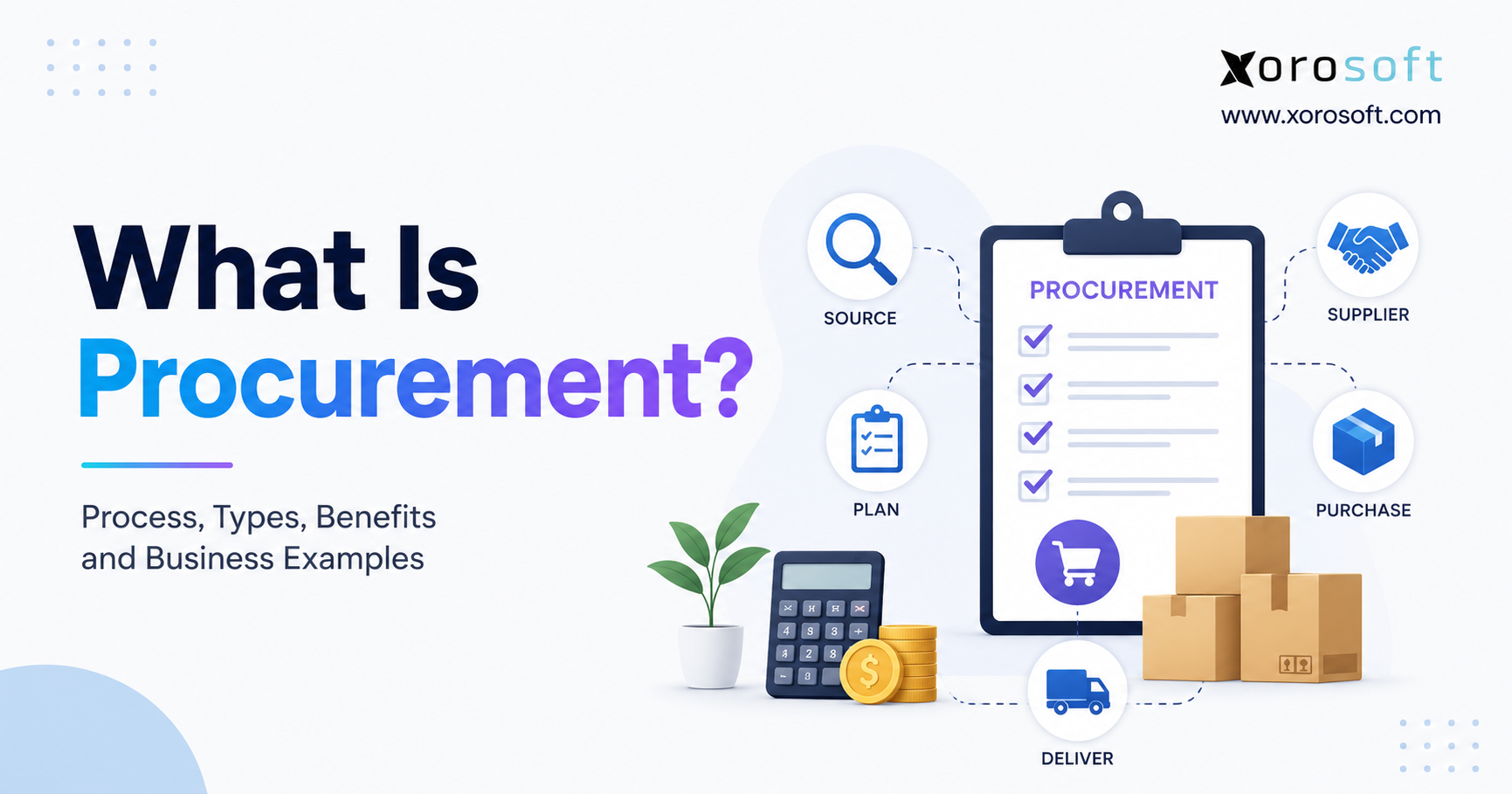
Procurement is the complete process a business uses to obtain goods and services from outside suppliers.
First, the company identifies a need. Next, it defines the requirement and checks whether the purchase is necessary. Afterward, it finds suppliers, compares options, agrees on pricing and terms, creates an order, receives the purchase, checks the invoice, and approves payment.
Finally, the business reviews supplier performance. Therefore, procurement covers the full journey from an internal need to a completed and reviewed supplier transaction.
1.2 What the Procurement Process Includes
A complete procurement process may include:
- Identifying business requirements
- Reviewing available inventory
- Forecasting future demand
- Creating purchase requests
- Approving spending
- Finding suitable suppliers
- Requesting quotations or proposals
- Comparing supplier offers
- Negotiating prices and terms
- Creating purchase orders
- Tracking expected deliveries
- Receiving and inspecting goods
- Matching purchase orders, receipts, and invoices
- Approving supplier payments
- Measuring supplier performance
In a smaller business, one person may handle several of these tasks. However, as the company grows, purchasing, inventory, warehouse, finance, and production teams often share responsibility.
Therefore, each step needs clear ownership. In addition, every department should work from the same purchasing records.
1.3 Why Procurement Is More Than Purchasing
Purchasing is part of procurement, but the two terms do not mean exactly the same thing.
Purchasing mainly focuses on completing an approved transaction. For instance, it may include creating a purchase order, sending it to a supplier, receiving the goods, and processing the invoice.
Procurement is broader. It asks whether the purchase is needed, how much should be ordered, which supplier offers the best value, what terms should be agreed upon, and how performance should be measured.
As a result, a company can purchase efficiently while still making poor procurement decisions.
For example, a buyer may create a purchase order quickly. However, if the order quantity was based on a weak forecast, the company may still create excess stock. Therefore, transaction speed alone does not prove that the buying decision was sound.
1.4 Why a Structured Buying Process Matters
Every purchase creates both cost and risk.
Ordering too little may cause stockouts, production delays, missed sales, and emergency freight. On the other hand, ordering too much may tie up cash, fill warehouse space, and create slow-moving inventory.
Therefore, a strong buying process should balance:
- Product availability
- Supplier reliability
- Total purchase cost
- Product quality
- Inventory levels
- Cash requirements
- Approval controls
- Supply chain risk
The goal is not simply to find the lowest price. Instead, the business needs the right product or service, in the right quantity, from the right supplier, at the right time.
1.5 When Formal Procurement Management Becomes Necessary
A more formal process becomes useful when a company:
- Purchases inventory regularly
- Works with many suppliers
- Operates several warehouses
- Imports products or materials
- Manufactures finished goods
- Requires several approval levels
- Experiences frequent stockouts
- Carries high inventory values
- Uses EDI or wholesale workflows
- Needs a clear purchasing history
Although a formal process introduces structure, it should not create needless delay. Instead, it should make routine purchases faster while giving complex or costly purchases the right level of review.
1.6 When Dedicated Software May Not Be Needed
A very small service company with few suppliers, limited purchasing activity, and no physical inventory may not need dedicated procurement software.
Even so, the company should still define who can approve purchases, which suppliers are allowed, where orders are recorded, and how invoices are checked.
Therefore, the level of control should match the size and complexity of the buying activity. In addition, the business should avoid adding software before it has a clear process to support.
2. How the Procurement Process Works From Need to Payment
Although the exact workflow varies by company, most procurement processes follow a similar path.
A practical sequence includes:
1. Identify the business need
2. Define the product, service, quantity, and date
3. Create a purchase request
4. Approve the request
5. Find possible suppliers
6. Request prices or proposals
7. Compare and select a supplier
8. Agree on pricing and terms
9. Create and approve a purchase order
10. Receive and inspect the order
11. Match the order, receipt, and invoice
12. Approve payment and review supplier results
2.1 Identifying the Procurement Requirement
The process should begin with a real business need.
For example, a retailer may need to replenish a fast-selling product. Meanwhile, a manufacturer may require parts for an upcoming production run. In another case, a warehouse may need packaging, or a finance team may need outside professional support.
Before contacting a supplier, the business should confirm that the requirement is valid. Otherwise, it may buy the wrong item, order too much, or choose a product that does not meet operational needs.
Therefore, the first question should not be, “Which supplier should we use?” Instead, it should be, “What does the business actually need?”
2.2 Defining the Product, Quantity, and Delivery Date
Next, the requester should clearly describe what is needed.
For a physical product, the description may include:
- SKU or item code
- Product name
- Material
- Size
- Color
- Quality level
- Packaging
- Quantity
- Required delivery date
- Receiving location
For a service, the request may include the work scope, expected result, timeline, required skills, budget, and approval conditions.
In addition, the requested quantity should be based on reliable information. The buyer should review current inventory, open sales orders, incoming supply, expected demand, safety stock, supplier lead time, warehouse space, and cash limits.
Therefore, quantity should not be based on guesswork or supplier pressure alone. Instead, it should reflect both operational demand and financial limits.
2.3 Creating a Purchase Requisition
A purchase requisition is an internal request for approval to buy a product or service.
It commonly records:
- Requesting employee
- Department
- Item or service
- Quantity
- Estimated cost
- Required date
- Business reason
- Preferred supplier
- Budget code
- Delivery location
Because the requisition remains inside the company, it is not the same as a purchase order.
Instead, it confirms that the need is valid, the budget is available, and the purchase follows company rules before an order is sent to the supplier.
Moreover, a clear requisition reduces confusion later. As a result, approvers, buyers, and finance teams can all review the same request details.
2.4 Approving the Purchase Request
Approval rules should match the value and risk of the purchase.
For example, a routine inventory refill may need approval from an inventory manager. By contrast, a large equipment purchase or long-term service contract may need review from finance, operations, legal, or senior management.
However, approvals should not create needless delays. If every small purchase requires executive review, normal work slows down.
Therefore, businesses should create approval limits based on department, category, value, and risk. In addition, urgent exceptions should follow a documented process rather than bypassing controls.
2.5 Supplier Sourcing and Evaluation
After approval, the company may use an existing supplier or search for new options.
The sourcing process can include:
- Product samples
- Supplier references
- Quality checks
- Price requests
- Site visits
- Compliance reviews
- Capacity checks
- Contract discussions
However, price should not be the only factor.
The buyer should also consider:
- Product quality
- Total landed cost
- Delivery history
- Supplier lead time
- Minimum order quantity
- Payment terms
- Production capacity
- Financial stability
- Service quality
- Return support
- Geographic risk
As a result, the selected supplier should provide the best overall fit rather than the lowest initial quote.
2.6 RFI, RFQ, and RFP in the Sourcing Process
An RFI, or request for information, helps the buyer learn about supplier skills and capacity.
An RFQ, or request for quotation, asks suppliers to price a clear and fixed requirement. Therefore, it works well when several suppliers can provide similar goods or services.
An RFP, or request for proposal, is better for a complex need. In this case, suppliers explain their approach, timeline, team, solution, and price.
Although the three documents sound similar, they serve different purposes. Therefore, the business should choose the format that matches the level of detail and uncertainty in the requirement.
2.7 Negotiating Supplier Terms
Negotiation should cover more than unit price.
For example, important terms may include:
- Freight
- Duties
- Volume discounts
- Minimum order quantities
- Payment terms
- Lead times
- Delivery schedules
- Return rights
- Quality limits
- Warranty support
- Currency
- Contract length
A supplier with a slightly higher price may still provide better value. For instance, shorter lead times, smaller order minimums, or better payment terms may lower the total business cost.
Therefore, buyers should compare the full commercial offer. In addition, they should document agreed terms so that purchase orders and invoices can be checked against them later.
2.8 Setting Up an Approved Supplier
Once a supplier is selected, the business should create one approved supplier record.
This record may include:
- Legal company name
- Tax details
- Bank information
- Key contacts
- Payment terms
- Currency
- Product codes
- Shipping instructions
- Contracts
- Compliance records
As a result, purchasing, warehouse, and finance teams can use the same supplier data.
Moreover, centralized supplier records reduce duplicate entries, incorrect bank details, and conflicting payment terms.
2.9 Creating and Approving a Purchase Order
A purchase order is the formal order sent to the supplier.
It normally includes:
- Supplier name
- Item or service
- Quantity
- Price
- Delivery date
- Shipping address
- Freight terms
- Payment terms
- Tax details
- Purchase order number
The purchase order should match the approved request and agreed supplier terms. Moreover, any later changes should be recorded instead of being handled only through calls or messages.
As a result, both the buyer and supplier have a clear reference for the transaction.
2.10 Receiving and Inspecting the Order
When goods arrive, the warehouse or receiving team should compare the delivery with the purchase order.
The team should confirm:
- Correct product
- Correct quantity
- Product condition
- Quality requirements
- Lot or serial details
- Expiry dates
- Packaging condition
If there is damage, a shortage, or an incorrect item, the issue should be recorded immediately.
Otherwise, inventory records, supplier invoices, and customer availability may all become inaccurate. Therefore, receiving should be treated as a controlled step rather than a simple unloading task.
2.11 Completing Three-Way Matching
Three-way matching compares:
1. The purchase order
2. The receiving record
3. The supplier invoice
The business checks that the quantity, product, and price agree.
However, a mismatch may appear because of missing receipts, incorrect prices, duplicate invoices, damaged goods, or unplanned freight charges.
Therefore, exceptions should be reviewed before payment is approved. As a result, the business reduces the chance of paying for goods it did not order or receive.
2.12 Paying the Supplier and Reviewing Performance
After the documents match, finance can schedule payment based on the agreed terms.
Still, the process should not end with payment.
The business should also review whether the supplier:
- Delivered on time
- Delivered the full quantity
- Met quality needs
- Used the agreed price
- Explained delays
- Resolved issues quickly
Consequently, future orders can be based on actual supplier results. Moreover, supplier reviews can support better negotiations and backup-supply decisions.
3. The Main Types of Procurement
Businesses usually group procurement based on what they buy and how the purchase supports operations.
| Type | Meaning | Examples |
|---|---|---|
| Direct procurement | Items used in products sold to customers | Raw materials, parts, resale stock |
| Indirect procurement | Items that support daily operations | Software, supplies, repairs |
| Goods procurement | Physical products | Equipment, packaging, inventory |
| Services procurement | Outside work or skills | Freight, consulting, maintenance |
3.1 Direct Procurement for Inventory and Production
Direct procurement covers items that become part of a finished product or are sold to customers.
Examples include:
- Fabric for apparel
- Wood for furniture
- Food ingredients
- Manufacturing parts
- Retail inventory
- Customer-facing packaging
Because these items directly support sales or production, delays can affect revenue, margin, stock availability, and customer service.
Therefore, direct procurement often requires close links with demand forecasts, production schedules, and inventory planning.
3.2 Indirect Procurement for Business Operations
Indirect procurement covers goods and services that help the company run but do not become part of its final product.
Examples include:
- Software
- Office supplies
- Repairs
- Cleaning products
- Legal services
- Marketing services
- Employee equipment
This spending is often spread across several departments. Therefore, it can become difficult to control without clear supplier lists and approval rules.
Moreover, duplicate subscriptions and off-contract purchases may remain hidden unless the business reviews indirect spend regularly.
3.3 Goods Procurement and Physical Inventory
Goods procurement means buying physical items.
These may include:
- Finished stock
- Raw materials
- Packaging
- Equipment
- Tools
- Spare parts
- Office items
Because goods must be shipped, received, stored, and counted, goods procurement is closely linked with inventory and warehouse operations.
In addition, physical purchases may require lot tracking, serial tracking, inspection, or expiry controls.
3.4 Services Procurement and External Work
Services procurement means buying outside labor, skills, or support.
Examples include:
- Freight
- Repairs
- Consulting
- Marketing
- Technology setup
- Temporary labor
- Maintenance
Because the result may be less visible than a physical product, the agreement should clearly define the work, price, timeline, quality level, and expected result.
Otherwise, the buyer and supplier may interpret the scope differently. Therefore, service agreements should include clear acceptance rules.
3.5 Strategic Sourcing and Daily Purchasing
Strategic sourcing looks at long-term supplier choice, total spend, risk, contracts, and business value.
By contrast, daily purchasing manages requests, orders, supplier follow-up, receipts, and invoice issues.
Both areas matter. Strategy sets the direction, while daily purchasing makes sure each transaction follows that direction.
Therefore, a business needs both long-term planning and consistent daily execution.
4. Procurement vs Purchasing, Sourcing, and Supply Chain Management
Several business terms are often used as though they mean the same thing. However, each one covers a different part of the workflow.
4.1 Procurement vs Purchasing
Procurement is the wider process, while purchasing is the part that completes an approved transaction.
| Area | Procurement | Purchasing |
| Scope | Full process | Order and payment work |
| Starting point | A business need appears | A request is approved |
| Focus | Strategic and operational | Mainly operational |
| Activities | Source, negotiate, order, review | Order, receive, pay |
| Goal | Best overall value | Complete the purchase |
Therefore, purchasing is a part of procurement rather than a replacement for it.
4.2 Procurement vs Strategic Sourcing
Strategic sourcing focuses on finding, reviewing, negotiating with, and selecting suppliers.
Procurement includes sourcing. However, it also continues through purchase requests, approvals, purchase orders, receiving, invoice checks, payment, and supplier review.
In simple terms, sourcing decides where to buy. Procurement manages the full buying cycle.
4.3 Procurement Within Supply Chain Management
Supply chain management covers the full movement of goods and information from suppliers to customers.
It may include:
- Planning
- Procurement
- Production
- Inventory
- Warehousing
- Shipping
- Delivery
Therefore, procurement is one part of the wider supply chain.
Moreover, purchasing decisions affect every later stage. For example, a late supplier shipment may delay production, warehouse receiving, and customer delivery.
4.4 Vendor Management and Supplier Relationships
Vendor management focuses on supplier records, contracts, contacts, risk, and performance.
Procurement includes vendor management. In addition, it covers internal requests, approvals, sourcing, orders, receiving, and payment checks.
Therefore, vendor management supports the supplier relationship, while procurement controls the larger buying process.
4.5 Procure-to-Pay and Source-to-Pay
Procure-to-pay usually begins with a purchase request and ends with supplier payment:
Request → Approval → Purchase Order → Receipt → Invoice → Payment
Source-to-pay begins earlier:
Supplier Search → Negotiation → Contract → Request → Order → Receipt → Invoice → Payment
Therefore, source-to-pay includes more supplier strategy and contract work. By contrast, procure-to-pay focuses more heavily on daily transaction control.
5. How Procurement Improves Inventory, Cash, and Service
A strong procurement process does more than reduce administrative work. More importantly, it improves business decisions.
5.1 Better Control of Total Purchase Cost
A structured buying process helps the company compare suppliers, combine demand, negotiate terms, and avoid emergency purchases.
However, the lowest unit price is not always the best choice.
Freight, duties, poor quality, high minimums, late delivery, and return costs may make a low-priced item more expensive over time.
Therefore, buyers should compare total cost instead of reviewing price alone.
5.2 Fewer Stockouts and Supply Gaps
Buyers can prevent many stockouts by reviewing:
- Current inventory
- Open sales orders
- Expected demand
- Incoming supply
- Lead time
- Safety stock
- Supplier performance
Otherwise, a shortage may become clear only after a customer order or production plan is already at risk.
Therefore, procurement should work closely with demand planning and inventory management.
5.3 Less Excess Inventory
Overbuying ties up cash and warehouse space.
Moreover, it may create markdowns, waste, slow-moving stock, or obsolete products.
Therefore, the buyer should confirm that each order is based on real demand rather than only on a supplier discount.
On the other hand, the business should also avoid reducing inventory so aggressively that customer service suffers.
5.4 More Reliable Supplier Performance
A supplier scorecard can show which vendors deliver on time, provide the correct quantity, meet quality rules, and respond quickly.
As a result, future supplier choices can be based on facts rather than memory.
In addition, reliable performance records make supplier conversations more focused and productive.
5.5 Better Cash-Flow Planning
Approved requests and open purchase orders represent future cash needs.
When finance can see these commitments early, it can plan payments and identify large upcoming costs before invoices arrive.
Therefore, procurement data should be visible to finance before month-end.
5.6 Stronger Spend Control
A clear record of who requested, approved, ordered, received, and paid for each purchase creates a strong audit trail.
In addition, it reduces off-policy spending and makes errors easier to trace.
As a result, the business gains greater control without relying on manual follow-up.
6. Procurement Examples Across Inventory-Driven Industries
Although the core workflow stays similar, each industry has different planning and supplier needs.
6.1 Procurement for Ecommerce and Shopify Brands
An ecommerce brand may use online sales, current stock, returns, promotions, incoming orders, and supplier lead times to plan the next purchase.
However, Shopify sales alone may not show the complete requirement.
For example, wholesale orders, Amazon demand, warehouse transfers, back orders, and future campaigns may also affect the quantity needed.
Therefore, the buyer should combine demand from every sales channel. In addition, the team should review inventory by warehouse rather than relying on one total stock figure.
6.2 Procurement in Wholesale Distribution
A wholesaler may manage thousands of items, many suppliers, customer-specific pricing, EDI orders, and more than one warehouse.
As a result, buyers need a clear view of:
- Stock by warehouse
- Customer commitments
- Open purchase orders
- Supplier delivery dates
- Pack sizes
- Minimum quantities
- Inventory transfers
Moreover, wholesale buying often requires allocation decisions. Therefore, purchasing and sales teams should share visibility into available and incoming stock.
6.3 Manufacturing Procurement and Material Planning
A manufacturer must connect buying with:
- Bills of materials
- Work orders
- Available parts
- Scrap
- Substitutions
- Supplier lead times
- Production schedules
One missing component can stop a complete production run. Therefore, timing matters as much as quantity.
In addition, material orders should reflect actual production plans rather than broad historical averages.
6.4 Apparel and Fashion Buying
Apparel teams often manage fabric, trims, color-size combinations, seasonal deadlines, and overseas suppliers.
If an order arrives late, the company may miss the selling season. On the other hand, ordering too much may create large markdowns.
Therefore, apparel procurement must balance availability with seasonal risk.
6.5 Furniture Procurement
Furniture businesses may source finished goods, wood, fabric, foam, hardware, and custom parts.
In addition, freight, damage, storage space, and container use can greatly affect the real purchase cost.
Therefore, furniture buyers should compare landed cost and warehouse impact, not only unit price.
6.6 Food and Beverage Purchasing
Food and beverage businesses must consider shelf life, lot data, expiry dates, quality rules, allergens, seasonality, and supplier records.
Therefore, both overbuying and underbuying can create serious waste or service problems.
Moreover, receiving teams need accurate product and lot details so that inventory can be tracked correctly.
Businesses can explore ERP solutions for inventory-driven industries when purchasing needs begin to cross inventory, finance, warehouse work, manufacturing, and ecommerce.
7. Common Breakdowns in the Purchasing Workflow
Weak buying systems often fail in repeatable ways.
7.1 Spreadsheet-Based Procurement Records
Spreadsheets can support analysis. However, they become risky when several people maintain different copies of prices, dates, supplier details, and open orders.
As a result, the company may create duplicate orders or reports that nobody trusts.
Moreover, spreadsheet updates may not reach inventory, warehouse, and finance teams at the same time.
7.2 Purchase Approvals Through Email or Chat
Email and chat are easy to use, but they are difficult to control.
For example, a request may be missed, approved twice, or sent without key details.
Therefore, the business needs a clear record of who approved the purchase and when. In addition, employees should be able to view the current approval status without searching through message threads.
7.3 Purchasing Without Reliable Demand Data
Past sales do not always show future demand.
Promotions, season changes, new customers, large orders, and supplier delays may all change the requirement.
Consequently, buyers should use the forecast as a starting point and then adjust it using current business information.
Otherwise, the company may order too much of a declining product or too little of a fast-growing item.
7.4 Outdated Supplier Lead Times
A supplier lead time entered several years ago may no longer reflect actual performance.
If the planning system still uses that number, the business may order too late.
Therefore, the team should compare planned delivery dates with actual receipt dates and update the lead time regularly.
Moreover, buyers should track lead-time variation, not only the average.
7.5 Duplicate Purchase Orders
Duplicate orders often happen because one buyer cannot see what another buyer has already ordered.
A shared purchase order record reduces this risk. Moreover, it helps the company understand its full supplier commitments.
As a result, purchasing teams can avoid unnecessary stock and payment obligations.
7.6 Ignoring Total Landed Cost
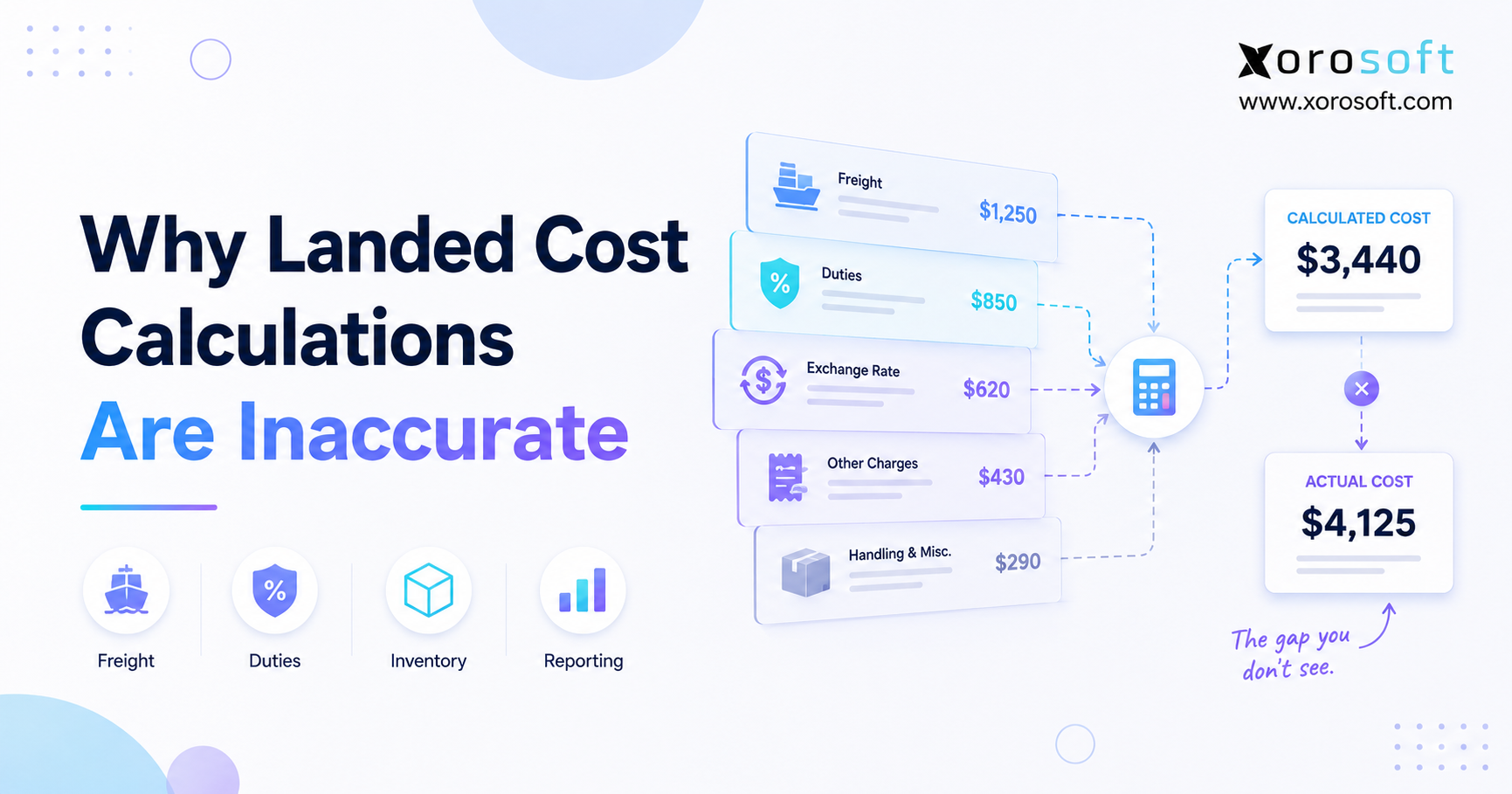
The supplier’s unit price may exclude freight, duties, insurance, brokerage, or handling.
Consequently, a low quote may have a higher real cost.
Therefore, supplier comparisons should use expected landed cost whenever possible.
7.7 Procurement Separated From Inventory
A buyer cannot make a sound decision when stock, sales orders, warehouse transfers, and incoming supply are stored in separate systems.
In that case, the team must rebuild the true inventory position by hand before each order.
As a result, decisions take longer and errors become more likely.
7.8 No Supplier Performance Review
Without simple measures, supplier reviews depend on memory.
Therefore, even a short scorecard for delivery, quality, quantity, and response time can improve supplier choices.
In addition, regular reviews help the company identify risk before a major failure occurs.
8. Procurement Best Practices for Growing Teams
The goal is not to add unnecessary steps. Instead, the goal is to make each decision clear, repeatable, and easy to review.
8.1 Create a Clear Procurement Policy
First, the company should define:
- Who can request purchases
- Who can approve purchases
- Which suppliers are allowed
- When several quotations are required
- Which records must be kept
- How exceptions are handled
As a result, employees understand the rules before they place an order.
8.2 Use a Purchasing Approval Matrix
Next, approval levels should match the value, category, department, and risk of the purchase.
Routine stock refills should move quickly. However, a large contract or a new supplier should receive more review.
Therefore, the approval model should protect the business without slowing daily operations.
8.3 Centralize Supplier Management
The company should keep supplier contacts, terms, bank details, item codes, lead times, contracts, and performance results in one place.
As a result, purchasing, receiving, and finance teams are less likely to use old or conflicting information.
In addition, centralized records make supplier reviews and renewals easier.
8.4 Link Procurement With Demand Planning
Purchase recommendations should use:
- Current stock
- Customer demand
- Open purchase orders
- Supplier lead times
- Safety stock
- Production requirements
- Forecasted sales
Moreover, buyers should be able to explain why each order quantity makes sense.
Therefore, planning data should support the decision rather than replace buyer judgment.
8.5 Review Open Purchase Orders Regularly
A weekly review should highlight:
- Late lines
- Partial receipts
- Changed delivery dates
- Unconfirmed orders
- Unexpected quantities
- Orders no longer needed
This simple review can prevent many last-minute problems.
Moreover, it helps finance understand future cash needs and supplier commitments.
8.6 Analyze Spend and Supplier Results
The company should review spend by supplier, category, location, department, and buyer.
Then, it should compare supplier results for delivery, quality, cost, and service.
Together, these views can reveal duplicate suppliers, weak terms, and poor performance.
As a result, the company can focus negotiations on the areas with the greatest value.
8.7 Prepare Backup Supply Options
Critical products should have backup options where possible.
For example, the plan may include a second supplier, an approved replacement product, extra safety stock, or a clear emergency contact.
Therefore, supplier risk planning should be completed before a disruption occurs.
9. Procurement KPIs That Show What Is Working
Useful KPIs should lead to action. However, tracking too many measures can create more reporting work than value.
| KPI | What it shows |
| Purchase order cycle time | Time from approval to order creation |
| On-time delivery rate | Share of orders received by the promised date |
| Supplier defect rate | Share of units that fail quality checks |
| Purchase price variance | Gap between expected and actual price |
| Emergency purchase rate | Share of purchases outside normal planning |
| Lead-time variance | Gap between expected and actual lead time |
| Purchase order accuracy | Share of orders without errors |
| Contract compliance | Share of spend under approved terms |
| Stockout frequency | Number of inventory availability failures |
| Three-way match rate | Share of invoices matched without manual work |
9.1 Choosing Procurement Metrics That Matter
An ecommerce brand may focus on stockouts and supplier lead time.
Meanwhile, a manufacturer may care more about material shortages and defects.
Therefore, each company should use a small group of measures linked to its biggest operational problems.
In addition, the business should compare current results with its own earlier performance before relying on broad industry benchmarks.
10. Procurement Software and ERP Automation
Software becomes useful when manual work blocks shared data, consistent processes, or timely decisions.
10.1 What Procurement Software Can Manage
A purchasing system may support:
- Purchase requests
- Approval routing
- Supplier records
- Quotations
- Purchase orders
- Delivery tracking
- Receiving
- Invoice matching
- Spend reports
- Supplier scorecards
A focused tool may suit a business that mainly needs request and supplier control.
However, an inventory-driven company often needs deeper links with stock, accounting, warehouse operations, production, and ecommerce.
Therefore, software scope should reflect the wider operating model.
10.2 Procurement Activities That Can Be Automated
| Activity | Manual method | Automated method |
| Purchase request | Email or spreadsheet | Standard digital form |
| Approval | Forwarded message | Rule-based workflow |
| Purchase order | Manual document | Created from approved request |
| Reorder planning | Manual stock review | Demand-based recommendation |
| Receiving | Paper record | Purchase-order-linked receipt |
| Invoice checking | Manual review | Exception-based matching |
| Reporting | Spreadsheet updates | Live dashboards |
Automation should remove repeat work. Still, people should remain responsible for supplier choice, negotiation, risk, and unusual purchases.
Therefore, automation should support judgment rather than replace it.
10.3 Standalone Procurement Software vs ERP
A standalone platform may be strong in sourcing, supplier management, contracts, and indirect spending.
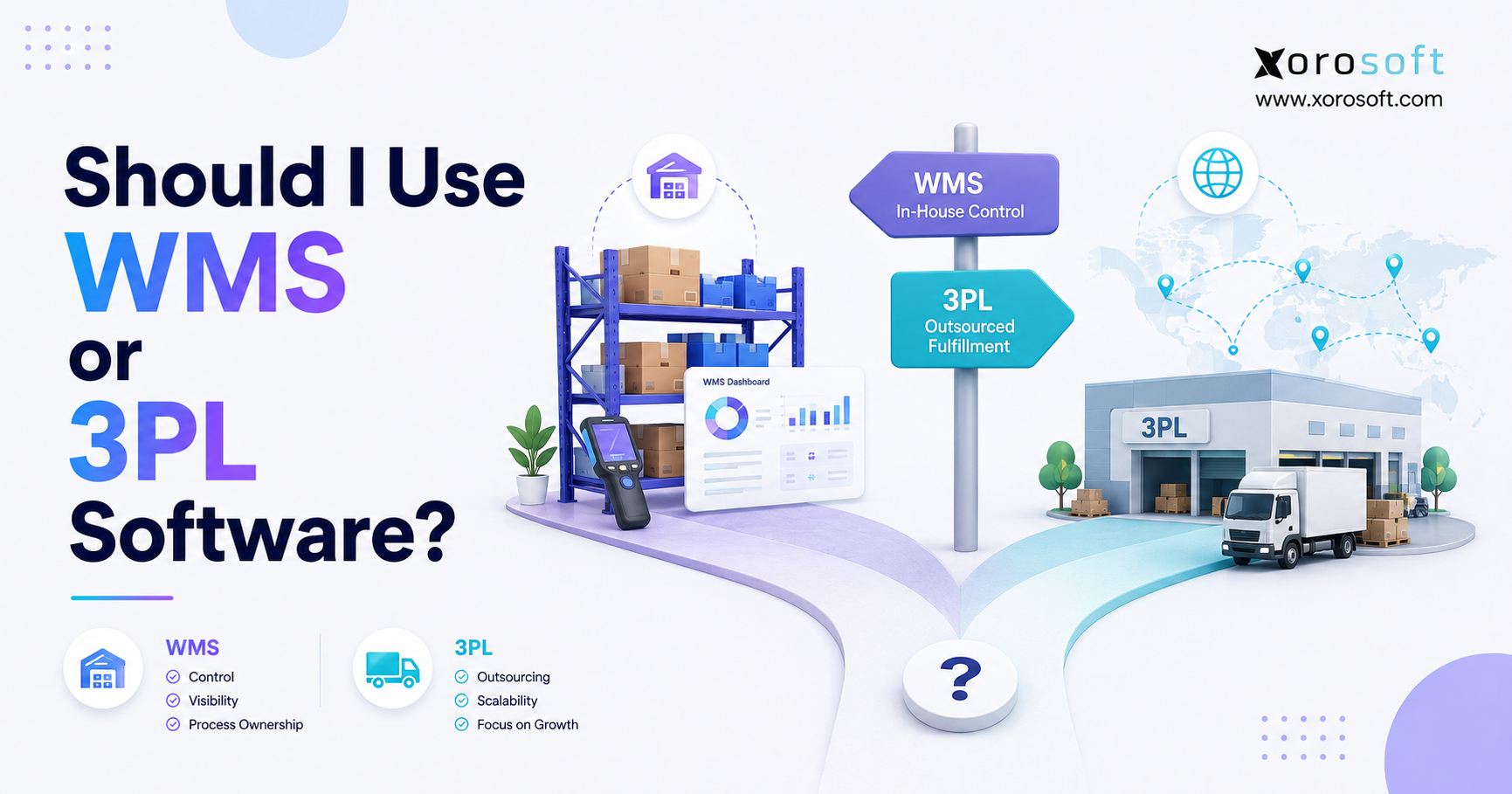
By contrast, an ERP may be a better fit when purchasing must stay connected with inventory, accounting, warehouse work, production, and sales orders.
Therefore, the right choice depends on the main problem.
For example, a company with weak approval controls may need a focused procurement tool. On the other hand, a company with disconnected inventory, warehouse, and accounting data may need a wider ERP platform.
10.4 Connecting Procurement With Inventory and Accounting
Every purchase changes future inventory and future cash requirements.
Therefore, the purchase order, receipt, supplier invoice, and inventory value should remain connected.
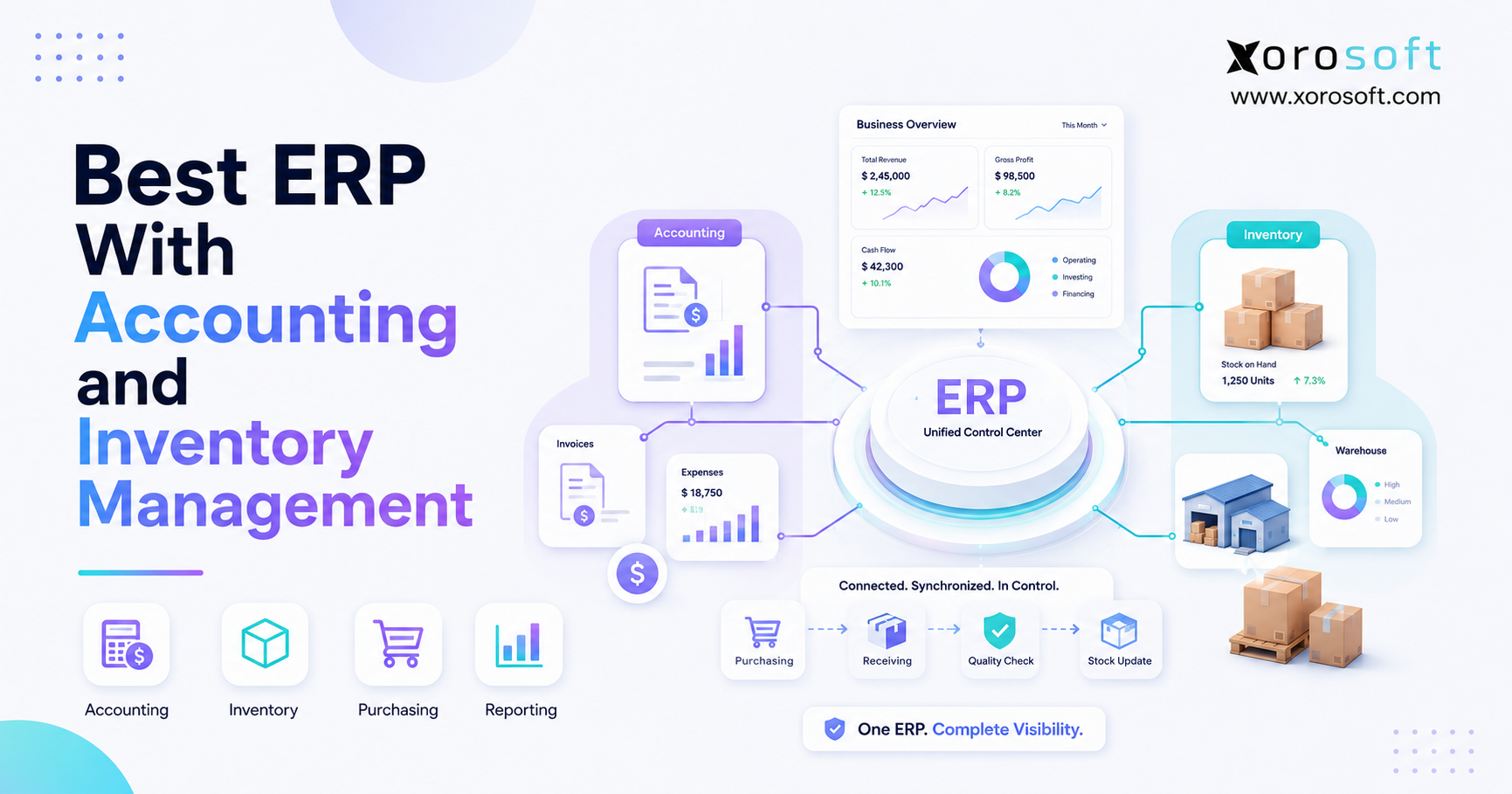
XoroERP is designed to connect purchasing with inventory, accounting, forecasting, reporting, warehouse operations, and manufacturing for inventory-driven businesses.
As a result, teams can reduce repeated data entry and manual reconciliation.
10.5 Purchase Order Receiving and Warehouse Management
The warehouse should record what arrived, what was damaged, where it was placed, and whether the stock is ready for use.
XoroWMS can connect warehouse receiving and inventory movement with the broader purchase order record.
As a result, purchasing, warehouse, and finance teams can work from the same receipt information.
Moreover, receiving problems can be traced back to the correct supplier and purchase order.
10.6 Procurement for Multi-Channel Businesses
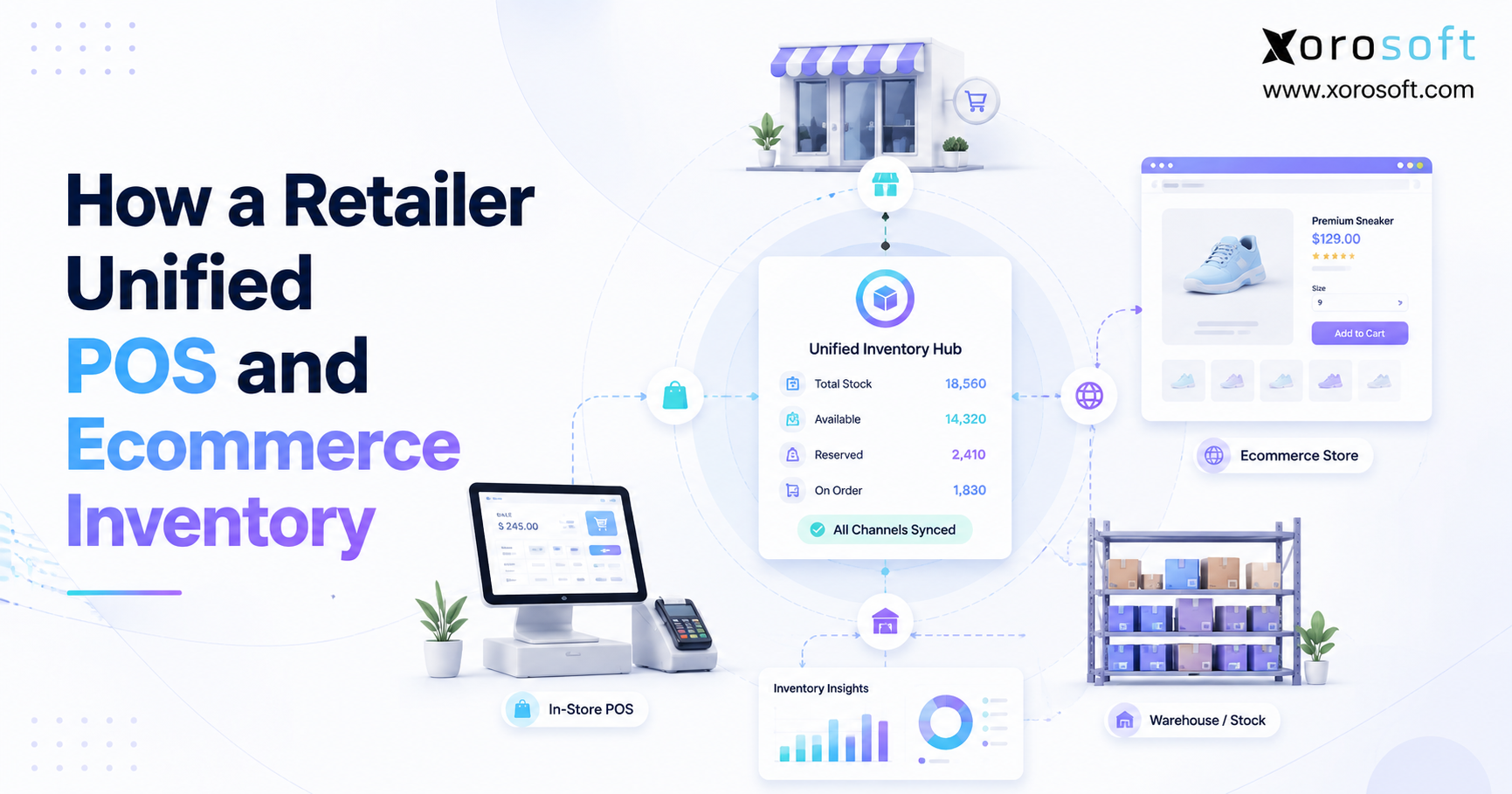
A multi-channel seller may need to combine Shopify, Amazon, wholesale, and warehouse demand before placing an order.
XoroONE brings purchasing, inventory, accounting, warehouse operations, manufacturing, forecasting, and ecommerce workflows into one cloud platform.
Therefore, order decisions can reflect demand across the wider business instead of one sales channel alone.
10.7 Shopify Procurement and Inventory Planning
Shopify sales are only one input into the buying plan.
Returns, promotions, wholesale orders, Amazon demand, transfers, and open supply may also change the requirement.
Therefore, Shopify merchants should review total demand before creating purchase orders.
Shopify merchants can also review the Xorosoft ERP Shopify integration for more context on connecting store activity with wider business operations.
10.8 When Procurement Automation Is Not Necessary
A business with few suppliers, no physical inventory, and simple approvals may not need a large system.
Therefore, software should solve a clear operational problem instead of adding another disconnected tool.
In addition, the company should document its current process before selecting technology.
11. When to Replace Spreadsheets and Basic Purchasing Apps
An upgrade makes sense when the current process slows decisions, creates repeated errors, or forces teams to rebuild information manually.
11.1 Signs the Purchasing Process Is Failing
Common warning signs include:
- Buyers use conflicting files
- Supplier dates are difficult to confirm
- Duplicate orders occur
- Open purchase commitments are unclear
- Approvals cannot be traced
- Inventory differs between systems
- Reports take hours to create
If several of these issues occur together, the problem is probably larger than one spreadsheet.
Therefore, the company should review the full workflow rather than fixing each symptom separately.
11.2 When Accounting Software Is Doing Too Much
Accounting software may support basic purchase orders.
However, it may not be designed for complex warehouse, forecasting, manufacturing, or multi-location requirements.
Therefore, the company may simply have outgrown the role the accounting tool was meant to play.
In that case, the goal is not necessarily to replace the accounting system immediately. Instead, the company should decide whether it needs a broader operational platform.
11.3 When Inventory Software Leaves Gaps
An inventory app may track quantities well while purchase approvals, supplier bills, production needs, landed costs, and finance remain in other systems.
The key question is whether each team can view the same transaction from request to receipt and payment.
If not, the company may still spend too much time reconciling data.
11.4 Comparing ERP and Procurement Platforms
Businesses may review NetSuite, Acumatica, Cin7, Brightpearl, Fishbowl, Sage, Business Central, and other systems based on their needs.
Companies researching inventory-driven ERP can also review Xorosoft vs NetSuite.
However, no system should be selected only because it has a long feature list.
Instead, the business should test how the platform handles its real purchasing, receiving, inventory, accounting, and reporting workflows.
11.5 Questions to Ask Software Vendors
Ask each vendor:
1. Can approval rules change by value and department?
2. Can the system support several warehouses?
3. Can forecasts create purchase recommendations?
4. Are purchase orders connected with receiving?
5. Can the platform calculate landed costs?
6. Does it support partial receipts and back orders?
7. Can it manage manufacturing requirements?
8. Does it connect with Shopify, Amazon, or EDI?
9. Are purchasing and accounting records connected?
10. Can users measure supplier performance?
A live demonstration should use a real business workflow.
As a result, gaps will be easier to identify. Moreover, the team can judge whether employees will be able to use the process consistently.
12. Frequently Asked Questions About Procurement
12.1 What Is Procurement in Simple Terms?
Procurement is the full process a business uses to obtain goods and services from suppliers. First, the company identifies a need. Next, it selects a supplier, agrees on terms, places an order, receives the purchase, checks the invoice, and pays the supplier. Finally, it reviews supplier performance.
12.2 What Is the Main Purpose of Procurement?
The main purpose is to obtain the right product or service at the right time, cost, quantity, and quality. In addition, procurement helps the business manage risk, cash, inventory, supplier performance, and purchase approvals.
12.3 What Does the Procurement Process Include?
The process may include demand review, purchase requests, approvals, supplier search, quotations, negotiation, purchase orders, receiving, quality checks, invoice matching, payment, and supplier review. However, the exact steps depend on the size and complexity of the business.
12.4 What Are the Main Procurement Steps?
The main steps are identifying the need, defining the requirement, approving the request, choosing a supplier, agreeing on terms, creating an order, receiving the purchase, checking the invoice, paying the supplier, and reviewing performance. Therefore, procurement continues beyond the purchase order.
12.5 What Are the Four Types of Procurement?
The four common types are direct, indirect, goods, and services procurement. Direct buying supports products sold to customers, while indirect buying supports internal operations. Meanwhile, goods are physical products, whereas services are outside work.
12.6 What Is Direct Procurement?
Direct procurement covers products and materials that become part of a finished product or are sold to customers. For example, it may include raw materials, parts, ingredients, fabric, packaging, and finished inventory.
12.7 What Is Indirect Procurement?
Indirect procurement covers goods and services that help the company operate but do not become part of the final product. For instance, it may include software, office supplies, maintenance, consulting, and cleaning services.
12.8 What Is Goods Procurement?
Goods procurement means buying physical items. These may include inventory, raw materials, packaging, machines, tools, equipment, and spare parts. Therefore, receiving and inventory control are important parts of the process.
12.9 What Is Services Procurement?
Services procurement means buying external work. Examples include freight, consulting, repairs, marketing, temporary labor, and software setup. Because services are less physical, the agreement should clearly state the work, price, schedule, and expected result.
12.10 What Is Procurement vs Purchasing?
Procurement covers the full process from need identification to supplier review. Purchasing mainly covers the approved order, receipt, invoice, and payment steps. Therefore, purchasing is one part of procurement.
12.11 What Is Procurement vs Sourcing?
Sourcing focuses on finding, reviewing, and choosing suppliers. Procurement includes sourcing but also covers requests, approvals, purchase orders, receiving, invoice checks, payment, and supplier performance.
12.12 Is Purchasing Part of Procurement?
Yes. Purchasing is one part of procurement. Procurement decides what the business needs, which supplier should provide it, and under which terms. Purchasing then completes the approved transaction.
12.13 Is Procurement Part of Supply Chain Management?
Yes. Procurement is one part of supply chain management. The wider supply chain also includes planning, production, inventory, warehousing, shipping, and customer delivery. Therefore, procurement decisions affect many later activities.
12.14 What Does a Procurement Team Do?
A procurement team may manage purchase requests, supplier search, quotations, negotiation, contracts, purchase orders, supplier records, spend control, risk, and supplier performance. In addition, it works closely with finance, inventory, warehouse, and operations teams.
12.15 Who Is Responsible for Procurement?
In a small business, an owner or operations manager may handle procurement. In a larger company, buyers, planners, sourcing specialists, procurement managers, and finance staff may share responsibility.
12.16 What Is a Purchase Requisition?
A purchase requisition is an internal request for approval to buy a product or service. It usually includes the item, quantity, cost, date, business reason, supplier, and budget. After approval, it may become a purchase order.
12.17 What Is a Purchase Order?
A purchase order is the formal order sent to the supplier. It records the item or service, quantity, price, delivery date, payment terms, shipping details, and purchase order number. Therefore, it acts as the main reference for the transaction.
12.18 What Is an RFQ?
An RFQ, or request for quotation, asks suppliers to price a clear requirement. It works best when the buyer can compare similar offers by price, delivery time, freight, and terms.
12.19 What Is an RFP?
An RFP, or request for proposal, asks suppliers to recommend a solution for a more complex requirement. It may compare the supplier’s approach, skills, timeline, team, and price.
12.20 What Is Procure-to-Pay?
Procure-to-pay is the daily workflow from purchase request to supplier payment. It often includes approval, purchase order creation, receiving, invoice matching, issue review, and payment.
12.21 What Is Source-to-Pay?
Source-to-pay begins earlier. It includes supplier search, review, negotiation, contract work, purchase requests, orders, receiving, invoices, and payment. Therefore, it includes both sourcing strategy and transaction processing.
12.22 What Is Three-Way Matching?
Three-way matching compares the purchase order, receiving record, and supplier invoice. The business checks whether the item, quantity, and price agree before approving payment. As a result, incorrect invoices are easier to identify.
12.23 What Is E-Procurement?
E-procurement uses a digital system to manage requests, approvals, suppliers, purchase orders, receipts, invoices, contracts, and reports instead of relying on paper, email, and spreadsheets.
12.24 What Does Procurement Software Do?
Procurement software manages purchase requests, approvals, suppliers, quotations, orders, receipts, invoices, contracts, and reports. Some systems also connect purchasing with inventory, accounting, manufacturing, ecommerce, and warehouse operations.
12.25 When Should a Business Upgrade Its Procurement System?
A business should consider upgrading when files conflict, approvals cannot be traced, duplicate orders occur, supplier dates are unclear, purchasing is disconnected from inventory, or finance spends too much time matching records manually. Therefore, the need for an upgrade usually appears through repeated operational problems.
13. Build a Procurement Process That Can Scale
A better procurement process starts with the real workflow rather than the software.
First, map how employees request purchases, who approves them, how suppliers are selected, where purchase orders are created, how goods are received, and how invoices are matched.
Next, identify the points that create the most cost or delay. For example, these may include stockouts, late suppliers, rush orders, excess inventory, duplicate purchases, or long invoice reviews.
Afterward, separate policy problems from system problems. Some issues may require clearer rules. However, others may require shared data across purchasing, inventory, warehouse operations, finance, production, and ecommerce.
Xorosoft may be relevant when a business sells physical products, operates several warehouses, sells through Shopify or Amazon, uses EDI, manufactures products, or needs one operational view across purchasing, inventory, accounting, warehouse operations, and forecasting.
Finally, test any system against a real business process. The test should include a purchase request, approval, purchase order, receipt, invoice, and report.
If the system supports that complete workflow clearly, it is more likely to support the company as it grows.
To review how a connected ERP could support your procurement and inventory workflows, book a personalized consultation with Xorosoft.