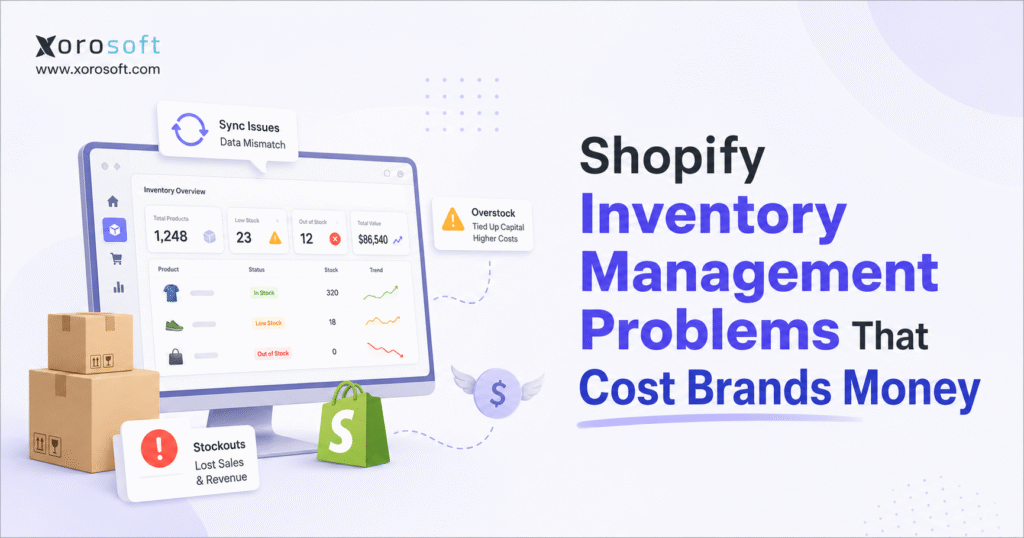
If you’re running an online store, you may have experienced Shopify inventory management problems.
1. Why Inventory Breaks Behind a Growing Shopify Store
Shopify inventory management problems start quietly, but they become expensive once order volume, SKUs, locations, channels, and fulfillment workflows grow. At first, the issue may look simple: a product count is wrong, a buyer rechecks a spreadsheet, or a warehouse team cannot find stock that Shopify says is available. However, once these problems repeat, they stop being small mistakes and become margin leaks.
Early-stage inventory often feels manageable because the business sells through one store, ships from one location, and controls a smaller product catalog. Growth changes that quickly. More SKUs create more exceptions, while additional warehouses create more inventory movement. At the same time, new channels add more sync points. As a result, inventory becomes harder to manage through Shopify alone.
Shopify supports location-based inventory, inventory states, transfers, and order routing. For example, Shopify explains that locations can include warehouses, retail stores, pop-ups, dropshipping apps, and third-party logistics services. Merchants can also track inventory separately by location and route orders based on availability and proximity through Shopify locations. However, these tools still need clean processes around purchasing, forecasting, warehouse control, returns, accounting, and reporting.
Many growing brands run into trouble because the storefront works, demand is real, and the team is busy. Yet inventory accuracy becomes less reliable every month. Therefore, the business starts paying for growth through stockouts, overstock, late shipments, manual work, and poor cash flow decisions.
2. The Most Common Shopify Inventory Management Problems
Shopify inventory management problems usually fall into a few clear categories. Some hurt revenue immediately. Others drain cash slowly. Additionally, several problems create hidden labor costs because teams spend hours correcting errors instead of improving operations.
2.1 Inaccurate Shopify Inventory Counts
Inaccurate inventory means the quantity in the system does not match the quantity in the warehouse. This can happen after receiving mistakes, picking errors, unrecorded adjustments, returns, damaged goods, manual edits, or delayed app sync.
Shopify also uses different inventory states, including on hand, available, committed, unavailable, and incoming inventory. The distinction matters because on-hand stock is not always sellable stock. Shopify explains these inventory states in its guide to understanding inventory states. Therefore, if a team treats every unit as available, overselling becomes more likely.
2.2 Overselling Products That Are Not Actually Available
Overselling happens when Shopify accepts an order for a product the business cannot fulfill. Usually, this happens because inventory sync is delayed, warehouse counts are wrong, bundle inventory is inaccurate, or stock is already committed somewhere else.
At first, overselling may seem like a customer service problem. However, it quickly becomes a margin problem. The team may need to refund the order, offer a discount, ship from another location, or pay for expedited delivery.
2.3 Stockouts on Fast-Moving SKUs
Stockouts are one of the most visible Shopify inventory problems because they directly block revenue. A product has demand, traffic, and customer intent, but the business cannot sell it.
However, the lost sale is only part of the damage. Stockouts also waste ad spend, reduce customer trust, and weaken wholesale relationships. Moreover, if stockouts happen during a seasonal peak or promotion, the lost revenue may never come back.
2.4 Overstock and Dead Stock
Overstock is the opposite problem, but it can be just as expensive. The business buys too much inventory or buys the wrong mix. Consequently, cash gets trapped in products that are not moving.
Dead stock creates even more pressure. It takes warehouse space, increases handling costs, and often forces markdowns. As a result, the brand may show strong revenue while still struggling with cash flow.
2.5 Slow Inventory Sync Across Channels
Many Shopify brands do not sell through Shopify alone. They also sell through Amazon, wholesale, marketplaces, retail partners, EDI accounts, or physical locations. Because of this, each channel can create inventory movement.
If inventory does not sync quickly across systems, every channel may operate from a different stock position. As a result, a brand may oversell one channel while holding stock in another location.
2.6 Multi-Warehouse Inventory Confusion
Multi-warehouse inventory becomes difficult because stock availability is no longer a single number. A business must know what is available, where it sits, whether it can fulfill the order, and whether another channel has already reserved it.
Shopify supports inventory transfers between store locations and external locations such as suppliers. Its documentation on inventory transfers and shipments explains that merchants can track movement between locations and receive full or partial transfers. However, brands still need strong rules for replenishment, order routing, warehouse transfers, and available-to-sell inventory.
2.7 Manual Purchasing and Reorder Planning
Manual purchasing is one of the most common Shopify inventory management problems in growing companies. Buyers often use spreadsheets to track sales velocity, supplier lead times, reorder points, open purchase orders, and incoming stock.
At low volume, this may work. Eventually, though, spreadsheets become risky. If the file is outdated, the buyer may reorder too late. If demand changes quickly, the team may buy too much. Therefore, purchasing mistakes turn directly into stockouts or overstock.
2.8 Weak Inventory Forecasting
Forecasting becomes harder when a brand adds more SKUs, channels, promotions, suppliers, and warehouses. Historical sales alone are not enough. The team must also consider supplier lead times, seasonality, wholesale orders, Amazon demand, returns, safety stock, and launch plans.
Without better forecasting, purchasing becomes guesswork. As a result, the business reacts to inventory problems instead of preventing them.
2.9 Returns That Break Inventory Accuracy
Returns create inventory complexity because returned items are not always ready to sell. Some units need inspection. Some are damaged. Others need repackaging or quality control. Therefore, if returned stock goes back into available inventory too early, Shopify may show products as sellable before the warehouse can ship them.
This is especially important for apparel, footwear, sporting goods, furniture, and food-related categories where condition, packaging, sizing, batches, or expiry rules matter.
2.10 Bundle, Kit, and Variant Inventory Errors
Bundles and kits create component-level inventory problems. For example, a bundle may appear available even though one required component is missing. Similarly, apparel brands may have enough units of a product overall but not enough of the specific size or color customers want.
Because of this, variant-level inventory control matters. A top-level product count is not enough when buyers make decisions by size, color, location, channel, and season.
2.11 Inventory and Accounting Do Not Match
Inventory is both an operational asset and a financial asset. Therefore, inventory movements should connect to accounting. If receipts, adjustments, transfers, landed costs, shipments, and returns do not flow correctly, finance teams struggle to close the books.
This problem often appears when Shopify, QuickBooks, spreadsheets, warehouse apps, and inventory apps all hold different parts of the truth. In that situation, month-end close becomes a reconciliation project.
2.12 Poor Reporting and Low Operational Visibility
Poor reporting makes Shopify inventory issues harder to fix. The team may know that stockouts are happening, but they may not know which products, locations, suppliers, or channels are causing the issue.
Without clear reporting, leadership makes decisions from old exports, spreadsheets, and assumptions. Consequently, inventory problems continue because no one can see the pattern clearly.
3. How Shopify Inventory Problems Cost Brands Money
Shopify inventory management problems cost money in several ways. Some costs are visible, such as refunds and canceled orders. However, many costs are hidden inside warehouse labor, cash flow, poor purchasing, accounting delays, and customer churn.
| Inventory Problem | Direct Cost | Hidden Cost | Example |
|---|---|---|---|
| Overselling | Refunds and canceled orders | Lower customer trust | Product shows available but cannot ship |
| Stockouts | Lost revenue | Wasted ad spend and lost repeat purchases | Bestselling SKU goes unavailable |
| Overstock | Cash trapped in inventory | Markdown and storage pressure | Slow-moving seasonal products stay in stock |
| Poor forecasting | Bad purchase orders | Supplier rush fees | Reorder happens too late |
| Inventory-accounting mismatch | Manual reconciliation | Weak margin visibility | Finance cannot close cleanly |
3.1 Lost Revenue From Stockouts and Canceled Orders
Stockouts create immediate revenue loss. If a customer wants to buy and the product is unavailable, the sale may be gone forever. Moreover, canceled orders can damage trust because the customer believed the item was available.
Although one canceled order may not seem serious, repeated stockouts change customer behavior. Eventually, shoppers stop checking back.
3.2 Margin Loss From Expedited Shipping and Manual Fixes
When inventory is wrong, teams often spend money to protect the customer experience. They may move stock between warehouses, pay for expedited shipping, split orders, or send replacement products.
These actions may save the order. However, they reduce margin. Over time, margin leaks become difficult to track because they appear as shipping, labor, discounts, or support costs instead of inventory costs.
3.3 Cash Flow Pressure From Overstock
Overstock turns cash into slow-moving inventory. That means the business has less money available for marketing, product development, supplier deposits, hiring, and growth.
In addition, overstock creates storage pressure. The warehouse becomes crowded, pick paths become less efficient, and teams waste time handling products that should not have been bought in the first place.
3.4 Warehouse Labor Waste
Warehouse teams lose time when inventory is inaccurate. They search for missing units, repick orders, correct receiving mistakes, process unexpected transfers, and manage avoidable exceptions.
As a result, labor cost rises even when order volume does not justify it. The business feels busy, but much of the work is rework.
3.5 Finance Team Reconciliation Problems
Finance needs reliable inventory data to calculate inventory value, cost of goods sold, margins, and month-end adjustments. However, if inventory movements are scattered across tools, finance must manually reconcile the numbers.
This slows down reporting. More importantly, it delays leadership decisions.
3.6 Poor Customer Experience and Lower Repeat Purchases
Customers do not care which system caused the issue. They only see late shipments, canceled orders, partial deliveries, wrong items, and confusing return updates.
Therefore, Shopify inventory errors eventually become customer experience problems. If the brand cannot deliver reliably, repeat purchases become harder to protect.
3.7 A Better Way to Diagnose the Problem
Before buying another app, the team should ask a simple question: is the inventory problem isolated, or does it affect purchasing, accounting, warehouse operations, fulfillment, and reporting?
If the problem touches several departments, the business may need a broader operating system rather than another point solution. For teams at that stage, a Free ERP Readiness Assessment can help clarify whether the next step should be an app, a WMS, or an ERP platform.
4. Why Shopify Inventory Gets Harder as Brands Scale
Shopify is strong at commerce. However, the operational work behind inventory becomes more complex as the business grows. Because of this, Shopify inventory management problems usually appear when the brand moves beyond a simple storefront model.
4.1 More Channels Create More Inventory Rules
A single Shopify store has one main demand stream. In contrast, a multi-channel brand may sell through Shopify, Amazon, wholesale, retail partners, marketplaces, and EDI.
Each channel may need different inventory rules. For example, wholesale may require reserved stock, Amazon may need fast replenishment, and Shopify may need accurate available-to-sell inventory. Therefore, one stock number is no longer enough.
4.2 More Warehouses Create More Inventory Movement
One warehouse is easier to control. Multiple warehouses create receiving, replenishment, transfers, regional stock rules, pick zones, shipping logic, and location-level safety stock.
Inventory may exist somewhere in the company. However, if it is not in the right place, the order still becomes expensive to fulfill.
4.3 More SKUs Create Forecasting Complexity
SKU growth creates planning complexity. A brand with 50 SKUs can often manage buying manually. A brand with thousands of SKUs, variants, bundles, and seasonal products cannot.
As SKU count increases, the business needs better forecasting, cleaner item data, and stronger reporting. Otherwise, buyers make decisions from incomplete information.
4.4 More Apps Create Data Fragmentation
Apps can be useful, especially when they solve a clear problem. However, too many disconnected apps create another issue. Inventory may sit in one tool, purchase orders in another, warehouse tasks in another, and accounting in another.
The Shopify ecosystem offers many tools, and Xorosoft is also listed on the Shopify App Store, which helps Shopify merchants connect ERP workflows with ecommerce operations. Still, the important decision is not simply adding more software. The real decision is whether the brand needs one connected operating model.
4.5 More Orders Create More Exceptions
At low volume, exceptions are manageable. At higher volume, exceptions become a process problem. The team needs rules, workflows, accountability, and reporting.
Without those controls, growth creates more chaos instead of more leverage.
5. Shopify Native Inventory vs Apps vs WMS vs ERP
Not every brand needs ERP. Also, not every inventory problem requires a new system. The right answer depends on business complexity, workflow gaps, and the cost of current errors.
| System Type | Best For | Limitation | When to Upgrade |
| Shopify native inventory | Simple Shopify stores | Limited operational depth | Multi-location, purchasing, and accounting complexity |
| Inventory app | Focused inventory fixes | Can become another data silo | When workflows span finance, warehouse, and purchasing |
| WMS | Warehouse execution | Usually not full accounting or purchasing | When warehouse accuracy is the main bottleneck |
| ERP | Connected operations | Requires process planning | When inventory affects purchasing, accounting, fulfillment, and reporting |
5.1 When Shopify Native Inventory Is Enough
Shopify native inventory can work well when the brand has simple SKUs, limited locations, straightforward fulfillment, and minimal wholesale complexity.
At this stage, the business mainly needs product availability, location-level quantities, and basic inventory adjustments. Therefore, a larger system may not be necessary yet.
5.2 When Inventory Apps Make Sense
Inventory apps can solve focused problems such as low-stock alerts, stock syncing, barcode scanning, forecasting, or bundle tracking.
However, apps work best when the problem is narrow. If the business keeps adding apps for every operational gap, the stack can become harder to manage than the original problem.
5.3 When a WMS Becomes Necessary
A warehouse management system becomes useful when receiving, putaway, picking, packing, transfers, cycle counts, and labor control become the biggest sources of errors.
For example, brands with multiple warehouses or high pick volume may need deeper warehouse execution through a system such as XoroWMS. However, a WMS alone may not solve purchasing, accounting, forecasting, or financial reporting.
5.4 When ERP Becomes the Better Operating Layer
ERP becomes relevant when Shopify inventory management problems affect several departments at once. If inventory errors create purchasing mistakes, warehouse delays, accounting mismatches, and poor reporting, the issue is no longer only inventory tracking.
At that stage, a cloud ERP system such as XoroERP can help connect inventory, purchasing, accounting, warehouse operations, manufacturing, and reporting behind Shopify.
5.5 How to Decide Which System Fits Your Stage
Use this rule: if the problem lives inside one workflow, an app may solve it. If the problem crosses inventory, purchasing, warehouse, accounting, fulfillment, and reporting, ERP becomes more relevant.
For broader operating models, XoroONE is designed to bring inventory-driven workflows into one connected system.
6. What a Better Shopify Inventory Operating Model Looks Like
A better inventory model does not only track stock. It connects decisions. Therefore, the goal is to create one system of control across sales, purchasing, warehouse operations, accounting, forecasting, and reporting.
| Workflow | Disconnected App Stack | Connected Operating Model |
| Inventory | Multiple tools update stock | Central inventory record |
| Purchasing | Spreadsheet-driven buying | Demand and reorder-driven planning |
| Warehousing | Separate warehouse app | Connected receiving, picking, packing |
| Accounting | Manual reconciliation | Inventory movements tied to finance |
| Reporting | Export-based reporting | Real-time operational dashboards |
6.1 One Source of Truth for Shopify Inventory
The business needs one trusted place for inventory. That view should show what is on hand, what is available, what is committed, what is incoming, what is reserved, and what is unavailable.
Without one source of truth, every team creates its own version of the answer. As a result, sales, warehouse, purchasing, and finance stop making decisions from the same data.
6.2 Real-Time Inventory Visibility Across Locations
Multi-location brands need visibility by warehouse, store, 3PL, and channel. This helps teams avoid selling inventory that exists in the wrong place or has already been committed elsewhere.
Because stock moves constantly, delayed visibility creates operational risk. Therefore, real-time inventory visibility becomes more important as the business scales.
6.3 Purchasing Connected to Demand
Purchasing should connect to sales velocity, supplier lead times, open purchase orders, reorder points, safety stock, and forecasted demand.
If purchasing remains spreadsheet-driven, buyers are forced to make decisions from old data. Consequently, the brand buys too early, too late, or in the wrong mix.
6.4 Warehouse Workflows Connected to Orders
Warehouse teams need receiving, putaway, picking, packing, transfers, cycle counts, and shipping workflows connected to live orders.
When warehouse workflows sit outside the rest of the business, inventory accuracy becomes harder to protect. However, when every movement updates the same inventory record, teams can operate with more confidence.
6.5 Accounting Connected to Inventory Movements
Inventory movements should connect to accounting. Receipts, adjustments, transfers, landed costs, shipments, returns, and cost of goods sold all affect financial reporting.
This is where many Shopify and QuickBooks users start feeling pressure. If the business has reached that stage, the Xorosoft vs QuickBooks comparison can help operators understand why accounting tools alone often struggle with inventory-heavy workflows.
6.6 Forecasting Connected to Sales and Lead Times
Forecasting improves when teams combine historical sales with future signals. Promotions, wholesale commitments, supplier delays, returns, and seasonality all matter.
Therefore, forecasting should not live in a separate spreadsheet. It should connect to purchasing and inventory planning.
6.7 Reporting Connected to Daily Decisions
Reporting should help operators act quickly. Useful reports include stockout risk, overstock risk, inventory value, slow movers, sell-through, supplier performance, warehouse productivity, open purchase orders, and fulfillment exceptions.
Without these reports, teams may still be busy. However, they will not know whether operations are actually improving.
7. When Shopify Brands Should Upgrade Their Inventory System
A system upgrade becomes necessary when the cost of manual work is higher than the cost of better infrastructure. Shopify inventory management problems are especially serious when they affect finance, purchasing, warehouse operations, and customer experience at the same time.
| Upgrade Signal | What It Means | Better System Needed |
| Frequent stockouts | Forecasting or purchasing gaps | Forecasting and purchasing automation |
| Inventory does not match warehouse | Accuracy issue | WMS or ERP |
| Multiple warehouses | Location complexity | Multi-warehouse inventory system |
| QuickBooks does not match inventory | Finance disconnect | ERP |
| Manual purchase orders | Buying process gap | ERP or procurement system |
7.1 You Manage Multiple Warehouses
Multiple warehouses require clear inventory rules. The team needs to know where inventory should sit, which location should fulfill each order, when transfers should happen, and how much safety stock each location needs.
Without these rules, inventory may exist but still fail to support sales.
7.2 You Sell Through Shopify, Amazon, Wholesale, or EDI
Multi-channel selling increases inventory allocation complexity. A brand may need to protect stock for wholesale accounts, allocate inventory to Amazon, support Shopify demand, and meet EDI requirements.
For businesses evaluating broader system options, the main Xorosoft comparison page can be useful because it gives operators a starting point for comparing ERP alternatives.
7.3 Your Team Uses Spreadsheets to Make Purchasing Decisions
Spreadsheets are flexible, but they become risky when several people manage suppliers, lead times, reorder points, and open purchase orders.
If buyers cannot trust live stock, they cannot buy accurately. Therefore, recurring stockouts and overstock often point back to purchasing visibility.
7.4 Your Inventory and Accounting Numbers Do Not Match
Inventory and accounting mismatches are one of the strongest upgrade signals. If finance spends too much time reconciling stock movements, adjustments, and inventory valuation, the system is not supporting the business properly.
For brands weighing ERP options at this stage, a focused comparison such as Xorosoft vs NetSuite may help clarify what kind of ERP complexity makes sense.
7.5 You Cannot Trust Available Inventory
Available inventory should be reliable. If sales, customer service, purchasing, and fulfillment teams do not trust it, the business needs better inventory control.
Once teams begin checking inventory manually, the system has already lost authority.
7.6 Your Team Needs Better Forecasting
Forecasting becomes essential when supplier lead times increase, SKUs grow, demand becomes seasonal, and channels multiply.
If the team cannot forecast by product, variant, channel, and location, purchasing will remain reactive.
7.7 Your Month-End Close Takes Too Long
Delayed month-end close often points to disconnected inventory and accounting workflows. If finance cannot close cleanly, leadership cannot make timely decisions.
As a result, operational problems become financial visibility problems.
8. Industry Examples of Shopify Inventory Problems
Different industries experience Shopify inventory issues differently. Therefore, the right system should match the way inventory actually moves through the business.
For a broader view of the categories Xorosoft supports, the industries we serve page can help connect inventory problems to industry-specific workflows.
8.1 Apparel and Fashion Inventory Problems
Apparel brands deal with size, color, fit, seasonality, returns, and variant-level demand. One style may sell well overall but perform poorly in specific sizes or colors.
Therefore, apparel operators need variant-level planning. Otherwise, the brand can overstock slow sizes while stocking out of bestsellers.
8.2 Furniture Inventory Problems
Furniture brands deal with bulky inventory, long lead times, warehouse space, supplier delays, and delivery coordination.
Overstock is especially expensive in furniture because products consume significant space. In addition, incorrect inventory can delay large orders and create costly customer service problems.
8.3 Sporting Goods Inventory Problems
Sporting goods brands often face seasonal demand spikes. Demand may rise around leagues, tournaments, weather changes, or promotional periods.
Because the selling window can be short, poor forecasting creates expensive missed opportunities.
8.4 Food and Beverage Inventory Problems
Food and beverage brands may need tighter control over expiry dates, batches, lots, quality holds, and stock rotation.
In this category, inventory accuracy is not only a revenue issue. It can also affect waste, compliance, and customer safety.
8.5 Wholesale Distribution Inventory Problems
Wholesale brands need customer-specific pricing, order allocation, EDI workflows, purchasing visibility, and accurate available-to-promise inventory.
When wholesale demand connects with Shopify demand, inventory planning becomes more complex. Therefore, the brand needs stronger allocation rules.
8.6 Manufacturing Inventory Problems
Manufacturing brands need raw material planning, BOM management, work orders, production planning, and finished goods visibility.
If raw materials are missing, production slows down. If finished goods are inaccurate, customer fulfillment suffers. Therefore, manufacturing inventory problems affect both supply and demand.
9. How to Fix Shopify Inventory Management Problems
Fixing Shopify inventory management problems starts with process clarity. Software helps only when the business understands what must be controlled.
9.1 Audit Inventory Accuracy First
Start with cycle counts by SKU, location, and product category. Then, identify where variance happens most often.
Review receiving, picking, returns, transfers, damaged goods, manual adjustments, and app sync timing. This gives the team a clearer picture of why inventory is wrong.
9.2 Standardize SKU, Location, and Warehouse Rules
Define how SKUs are created, how variants are named, how warehouses are structured, and how unavailable stock is handled.
This step matters because messy item data creates messy inventory. Once the catalog grows, inconsistent naming and location rules create avoidable errors.
9.3 Connect Purchasing to Forecasting
Purchasing should connect to demand, sales velocity, lead times, safety stock, open purchase orders, and supplier performance.
If purchasing stays disconnected, the team will keep buying based on old reports. Consequently, stockouts and overstock will continue.
9.4 Reduce Manual Spreadsheet Workflows
Spreadsheets are useful for analysis, but they should not control inventory availability, reorder points, purchasing, warehouse transfers, or financial reconciliation at scale.
If a spreadsheet becomes the real operating system, the software stack has failed.
9.5 Improve Warehouse Receiving, Picking, Packing, and Transfers
Warehouse accuracy depends on clean execution. Receiving should update stock correctly. Picking should reduce errors. Transfers should be tracked. Cycle counts should happen regularly.
Additionally, teams should review which warehouse steps create the most adjustments. That is where process improvement should begin.
9.6 Connect Inventory With Accounting
Inventory adjustments, receipts, shipments, landed costs, transfers, and COGS should connect to accounting. Otherwise, finance will keep reconciling manually.
A connected process gives leadership better visibility into margin, inventory value, and cash flow.
9.7 Build Reporting Around Inventory KPIs
Track inventory accuracy, stockout rate, sell-through, inventory turnover, days of inventory on hand, order fill rate, forecast accuracy, return rate, carrying cost, and purchase order cycle time.
However, do not track KPIs only for reporting. Use them to improve purchasing, warehouse work, fulfillment, and cash flow decisions.
9.8 Choose the Right System for Your Growth Stage
The right system depends on complexity. If the issue is narrow, an app may work. If warehouse execution is the main problem, WMS may help. However, if Shopify inventory errors now affect purchasing, accounting, forecasting, fulfillment, reporting, and multi-channel operations, ERP becomes more relevant.
For brands reviewing ERP options, a comparison such as Xorosoft vs Cin7 may help when the main concern is inventory-driven operations across ecommerce and wholesale.
10. Shopify Inventory Management Problems FAQs
10.1 What are the most common Shopify inventory management problems?
The most common Shopify inventory management problems include inaccurate stock counts, overselling, stockouts, overstock, slow inventory sync, multi-warehouse confusion, manual purchasing, weak forecasting, returns processing issues, bundle errors, and inventory-accounting mismatches. These problems usually appear as fulfillment issues first. However, they often point to deeper operational gaps across purchasing, warehouse management, accounting, and reporting.
10.2 Why does Shopify inventory become inaccurate?
Shopify inventory becomes inaccurate when physical stock movements are not recorded correctly. Common causes include receiving mistakes, picking errors, manual adjustments, delayed app sync, returns that are not inspected properly, damaged inventory, transfers between locations, and bundle or kit errors. Therefore, inventory accuracy depends on both system setup and warehouse discipline.
10.3 Why do Shopify stores oversell products?
Shopify stores oversell when available inventory is higher in the system than it is in reality. This can happen because of sync delays, poor multi-channel allocation, incorrect warehouse counts, committed inventory confusion, or inventory apps that do not update fast enough. As a result, the brand may accept orders it cannot fulfill.
10.4 How do Shopify inventory problems cost money?
Shopify inventory problems cost money through lost sales, canceled orders, refunds, expedited shipping, excess inventory, markdowns, warehouse labor waste, accounting delays, and poor purchasing decisions. Some costs are visible immediately. However, others appear later as cash flow pressure, lower margins, or weaker customer retention.
10.5 Can Shopify manage inventory for multiple warehouses?
Yes, Shopify can manage inventory across multiple locations. However, growing brands may need more advanced workflows for transfers, replenishment, warehouse labor, order routing, forecasting, wholesale allocation, and accounting. Multi-location tracking is helpful, but it does not replace a complete operating system for complex inventory businesses.
10.6 What causes stockouts for Shopify brands?
Stockouts usually happen because purchasing is not connected to demand. Other causes include supplier delays, inaccurate counts, poor reorder points, unexpected promotions, weak forecasting, wholesale demand spikes, and inventory sitting in the wrong location. Therefore, stockouts often reflect planning problems rather than sales problems.
10.7 What causes overstock in Shopify stores?
Overstock happens when brands buy more inventory than demand requires. This may result from poor forecasting, slow sales visibility, long supplier lead times, large minimum order quantities, promotional misses, or fear of stockouts. Consequently, cash gets trapped in products that are not moving fast enough.
10.8 How can Shopify brands fix inventory discrepancies?
Shopify brands can fix inventory discrepancies by starting with cycle counts and variance analysis. Then, they should review receiving, picking, returns, transfers, and adjustment workflows. Additionally, brands should standardize SKU rules, location rules, and inventory states so every team follows the same process.
10.9 Is Shopify inventory management enough for growing brands?
Shopify inventory management may be enough for simple stores with straightforward SKUs, limited channels, and basic fulfillment. However, as brands add warehouses, wholesale, Amazon, EDI, purchasing teams, forecasting needs, and accounting complexity, Shopify alone may not provide enough operational depth.
10.10 When should a Shopify brand use ERP?
A Shopify brand should consider ERP when inventory affects purchasing, accounting, warehouse management, forecasting, reporting, and multi-channel operations. Strong signs include multiple warehouses, inventory-accounting mismatches, manual purchase orders, recurring stockouts, unreliable available inventory, and delayed month-end close.
10.11 What is Shopify ERP inventory management?
Shopify ERP inventory management connects Shopify sales activity with inventory, purchasing, warehouse operations, accounting, forecasting, and reporting. Shopify remains the commerce platform. Meanwhile, ERP becomes the operational system behind inventory-driven decisions. This structure helps teams avoid managing critical workflows across disconnected apps and spreadsheets.
10.12 What is the difference between Shopify inventory apps and ERP?
Inventory apps usually solve specific problems, such as low-stock alerts, syncing, forecasting, barcode workflows, or bundling. ERP connects multiple workflows across inventory, purchasing, accounting, warehouse management, fulfillment, reporting, and sometimes manufacturing. Apps are useful for focused gaps. ERP is better when the inventory problem affects the whole business.
10.13 How do inventory sync delays happen in Shopify?
Inventory sync delays happen when multiple systems update stock at different speeds. For example, Shopify, Amazon, a warehouse app, a 3PL, and an accounting system may not share data instantly. Even small delays can create overselling if the same inventory is available across several channels.
10.14 Can Shopify manage inventory across Amazon and wholesale?
Shopify can support ecommerce inventory workflows, but Amazon and wholesale introduce additional allocation, fulfillment, pricing, and compliance requirements. Therefore, brands selling across Shopify, Amazon, wholesale, and EDI often need stronger inventory visibility, purchasing control, order management, and reporting.
10.15 How do returns affect Shopify inventory accuracy?
Returns affect inventory accuracy because returned items are not always ready to resell. A returned item may need inspection, repackaging, repair, quarantine, or liquidation. If returned stock is added back to available inventory too early, the brand may sell units that cannot actually ship.
10.16 How do bundles affect Shopify inventory?
Bundles create inventory complexity because the sellable product may depend on several component SKUs. If one component is missing, the bundle cannot ship. Therefore, brands need accurate component-level tracking so bundle availability reflects what can actually be assembled and fulfilled.
10.17 How can Shopify brands prevent stockouts?
Brands can prevent stockouts by improving forecast accuracy, setting reorder points, tracking supplier lead times, monitoring sales velocity, using safety stock, and reviewing open purchase orders regularly. Additionally, the process improves when purchasing connects directly to inventory and demand planning.
10.18 How can Shopify brands reduce overstock?
Brands can reduce overstock by reviewing sell-through, improving demand forecasting, setting purchasing controls, identifying slow-moving SKUs early, and adjusting buys by channel and season. Better reporting also helps teams avoid buying based only on instinct or outdated sales reports.
10.19 What inventory KPIs should Shopify brands track?
Important inventory KPIs include inventory accuracy, stockout rate, sell-through rate, inventory turnover, days of inventory on hand, carrying cost, forecast accuracy, order fill rate, return rate, and purchase order cycle time. Together, these KPIs show whether inventory is supporting growth or restricting it.
10.20 How does inventory affect Shopify fulfillment?
Inventory affects fulfillment because orders can only ship accurately when available stock is reliable. Bad inventory creates pick errors, split shipments, delays, cancellations, and customer service tickets. Strong inventory control helps warehouse teams fulfill orders faster and with fewer exceptions.
10.21 How does Shopify inventory affect accounting?
Shopify inventory affects accounting because stock is a financial asset. Receipts, shipments, adjustments, landed costs, transfers, and COGS all influence financial reporting. If inventory and accounting are disconnected, finance teams may struggle with reconciliation and margin analysis.
10.22 Why do Shopify brands use spreadsheets for purchasing?
Shopify brands often use spreadsheets because they are flexible and easy to start with. However, spreadsheets become risky when multiple buyers, suppliers, warehouses, SKUs, and channels are involved. Over time, manual purchasing leads to stockouts, overstock, duplicate work, and poor visibility.
10.23 What are the limits of Shopify inventory apps?
Shopify inventory apps can solve focused problems, but they may not connect purchasing, accounting, warehouse management, forecasting, and reporting in one system. As a result, brands may still rely on manual exports, spreadsheets, and reconciliation between tools.
10.24 Which industries have the biggest Shopify inventory problems?
Inventory-heavy industries usually feel the pain first. These include apparel, furniture, sporting goods, food and beverage, wholesale distribution, manufacturing, automotive parts, and consumer products. The more SKUs, variants, warehouses, channels, and supplier lead times a business has, the more inventory control matters.
10.25 What should Shopify brands look for in inventory software?
Shopify brands should look for real-time inventory visibility, multi-warehouse support, purchasing, forecasting, barcode workflows, returns handling, accounting integration, reporting, and channel connectivity. The best fit depends on whether the brand needs an app, WMS, ERP, or a combined operating platform.
10.26 How can Shopify brands improve inventory forecasting?
Brands can improve forecasting by combining sales history with supplier lead times, seasonality, promotions, wholesale commitments, returns, and current stock levels. Forecasting should not sit in a separate spreadsheet. Instead, it should connect directly to purchasing and inventory planning.
10.27 What is the best way to manage multi-location Shopify inventory?
The best approach is to define location rules, assign inventory clearly, track transfers, set replenishment logic, and monitor stock by warehouse. Growing brands should also connect multi-location inventory with order routing, purchasing, fulfillment, and accounting.
10.28 Do Shopify brands need WMS or ERP?
A Shopify brand may need WMS if warehouse execution is the main problem. However, it may need ERP if inventory issues affect purchasing, accounting, forecasting, reporting, fulfillment, and multi-channel operations. Some ERP platforms include warehouse management, which can reduce the need for separate systems.
11. Build Inventory Control Before Growth Gets Expensive
Shopify inventory management problems do not only create operational friction. They limit growth.
Strong products, strong marketing, and strong demand are not enough when inventory data is unreliable. Wrong stock counts reduce revenue, while overstock traps cash. Warehouse errors increase labor cost, and finance delays make leadership decisions slower. Meanwhile, weak forecasting creates purchasing mistakes before the next sales cycle even starts.
The goal is not to make operations complicated. Instead, growing brands need a reliable operating model behind Shopify. Commerce should stay fast, but inventory, purchasing, warehouse management, accounting, forecasting, and reporting must work from the same operational data.
For early-stage brands, Shopify native inventory and focused apps may be enough. As complexity grows, however, disconnected tools become harder to manage. More SKUs, more warehouses, more channels, and more suppliers require stronger control.
ERP becomes useful when inventory problems start affecting the whole business. Platforms such as Xorosoft help inventory-driven businesses manage Shopify operations alongside purchasing, warehouse workflows, accounting, forecasting, manufacturing, Amazon, EDI, and multi-warehouse complexity.
The best time to fix Shopify inventory management problems is before they become normal. Once teams accept manual checks, spreadsheet purchasing, delayed reports, and fulfillment exceptions as everyday work, the business starts paying for broken systems every day.
A better inventory system protects revenue, improves margins, reduces chaos, and gives operators the visibility they need to scale with control.
If Shopify inventory problems are now affecting purchasing, fulfillment, accounting, forecasting, and reporting, Book a demo to see how a connected ERP system can support your next stage of growth.
Recent Posts
-
 ERP Landed Cost Module vs Spreadsheet Calculations for Importers
 -
 How to Build an Open-to-Buy Plan for an Omnichannel Brand
 -
 Cold Storage WMS for Food and Beverage Distribution
 -
 ERP Buying Statistics 2026: Evaluation, Implementation, and Adoption Risks
 -
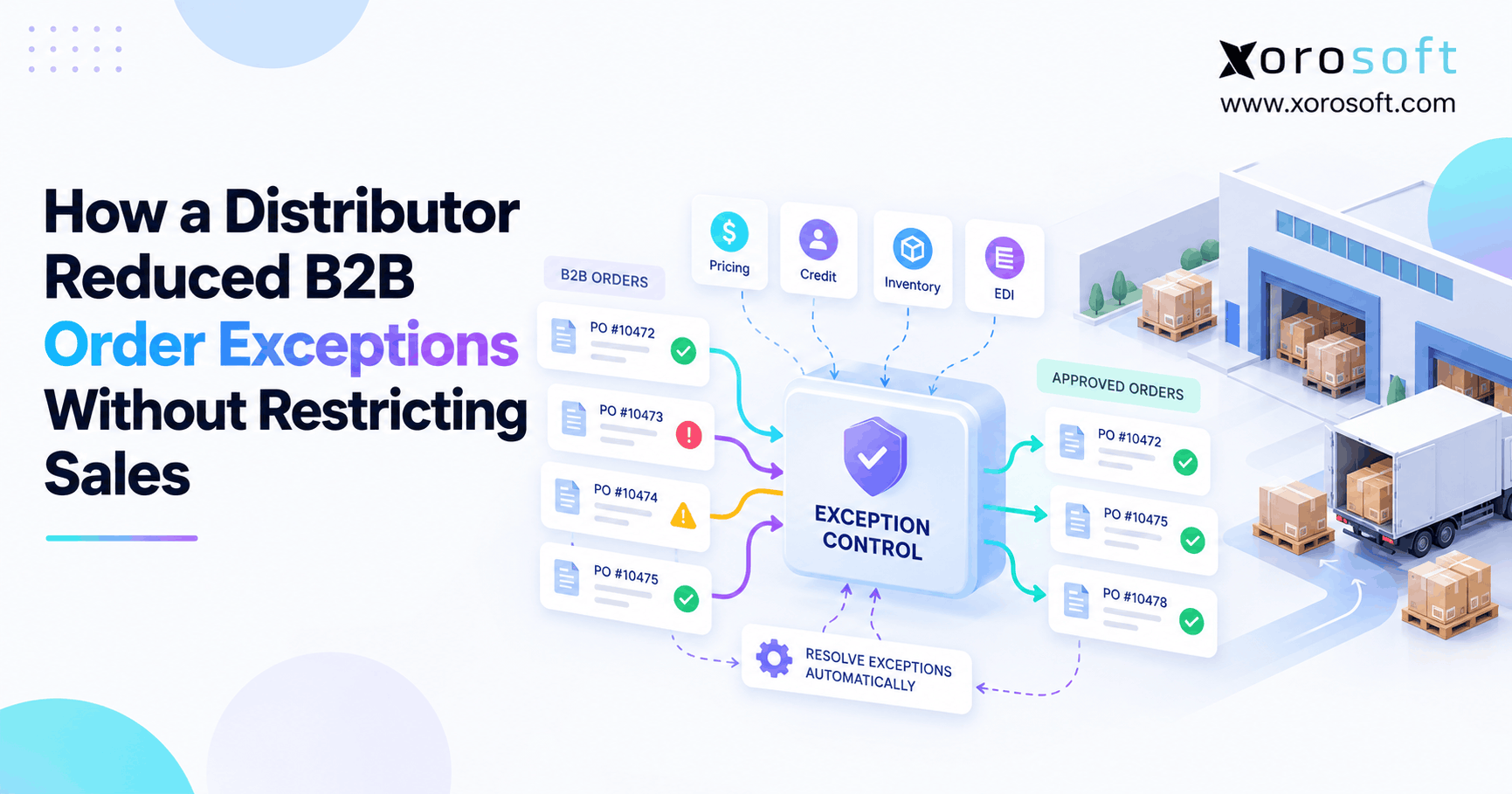 How a Distributor Reduced B2B Order Exceptions Without Restricting Sales