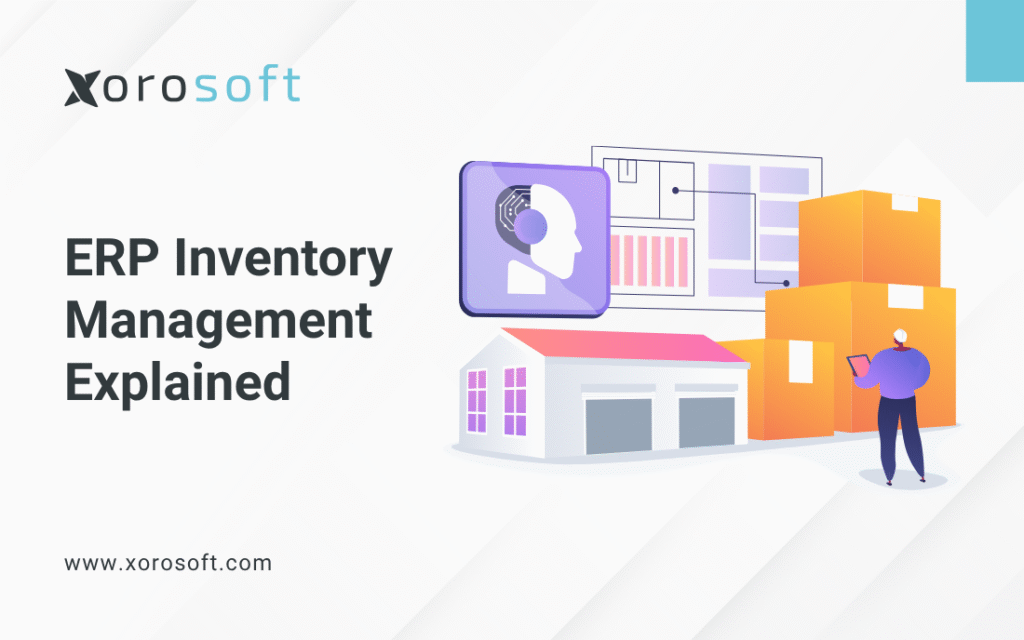
An Inventory management ERP system can transform the way your business tracks, manages, and optimizes stock across all departments.
1. Why Inventory Control Gets Harder as Businesses Grow
An inventory management ERP system helps growing businesses manage stock, purchasing, warehousing, accounting, forecasting, and reporting in one connected platform. Instead of relying on spreadsheets, basic inventory apps, and disconnected accounting tools, companies use ERP to create one accurate source of truth for inventory operations.
This matters because inventory problems rarely stay inside the warehouse. A stock discrepancy can affect purchasing. A purchasing delay can affect fulfillment. A fulfillment issue can affect customer experience. Then, at month-end, accounting teams often spend extra time reconciling numbers that should have matched from the beginning.
As a result, inventory becomes more than a stock-counting problem. It becomes an operational control problem.
For small businesses, a spreadsheet may work for a while. However, once order volume grows, warehouses multiply, sales channels expand, and purchasing becomes more complex, manual systems usually start to break. Teams begin asking the same questions every day:
- What do we actually have in stock?
- Where is each item located?
- Which products need to be reordered?
- Which orders can be fulfilled today?
- Why does inventory in accounting not match warehouse reality?
A connected ERP approach is designed to answer those questions with real-time visibility. More importantly, it connects inventory decisions with the rest of the business.
2. What Is an Inventory Management ERP System?
An inventory management ERP system is business software that combines inventory control with broader enterprise resource planning functions. It helps companies manage stock levels, purchase orders, warehouses, suppliers, sales orders, production, reporting, and financial data from one system.
In simple terms, it connects what is happening in the warehouse with what is happening in sales, purchasing, accounting, and operations.
A basic inventory tool may show how many units are available. However, an ERP system goes further. It can show inventory value, committed stock, incoming purchase orders, warehouse transfers, reorder needs, landed costs, production requirements, and sales demand.
Therefore, ERP does not only help a business track inventory. It helps the business plan, control, and scale inventory operations.
2.1 Simple Definition of an Inventory Management ERP System
An inventory management ERP system is a centralized platform that helps product-based businesses track, manage, purchase, store, move, value, and report on inventory across the entire company.
2.2 Why ERP Matters for Growing Businesses
The ERP part matters because inventory is connected to almost every department. Sales teams need accurate stock availability. Purchasing teams need reorder visibility. Warehouse staff need picking and receiving workflows. Finance needs inventory valuation and cost data. Leadership needs reporting.
Without ERP, each team may use its own tool. Consequently, the business ends up with several versions of the truth.
With ERP, the same inventory data supports every department.
3. Why Basic Inventory Tools Stop Working
Many businesses start with simple tools because they are affordable and easy to launch. At the beginning, this makes sense. A founder may use Shopify, QuickBooks, spreadsheets, and a basic inventory app to get operations moving.
However, growth changes the equation.
More orders create more movement. Additional sales channels create more syncing issues. New warehouses create transfer complexity. Larger SKU catalogs make forecasting harder. Eventually, the team spends more time fixing data than using it.
That is usually when an inventory management ERP system becomes worth evaluating.
3.1 Common Signs Your Inventory Setup Is Struggling
A business may need a stronger system when:
- Inventory numbers are often wrong.
- Teams rely on spreadsheets for purchasing.
- Warehouse staff cannot trust stock availability.
- Shopify, Amazon, wholesale, and accounting data do not match.
- Month-end close takes too long.
- Stockouts happen despite having inventory somewhere.
- Overstock builds up because demand is unclear.
- Purchase orders are created manually.
- Multi-warehouse transfers are hard to track.
- Reporting depends on exports and manual cleanup.
These issues may look separate at first. However, they often come from the same root problem: disconnected systems.
3.2 Why Disconnected Stock Problems Spread Quickly
Inventory affects cash flow, customer experience, and profitability. For example, overstock ties up working capital. On the other hand, stockouts cause missed sales and delayed fulfillment. Meanwhile, inaccurate inventory valuation can create accounting problems.
Because of this, inventory issues should not be treated as warehouse-only problems. They are business-wide problems.
4. How an Inventory Management ERP System Works
An inventory management ERP system works by connecting inventory data with transactions across the business. Every receiving, transfer, adjustment, purchase order, sales order, invoice, and fulfillment activity updates the system.
As a result, teams can make decisions from live operational data instead of outdated spreadsheets.
4.1 Inventory Management ERP System Workflow From Order to Fulfillment
A typical inventory workflow inside ERP looks like this:
- A sales order is created from Shopify, Amazon, wholesale, EDI, or direct entry.
- The system checks available inventory.
- Stock is allocated to the order.
- Warehouse teams pick, pack, and ship the order.
- Inventory levels update automatically.
- Accounting receives the related cost and revenue data.
- Purchasing teams see updated demand and reorder requirements.
- Reports show the impact across stock, sales, and profitability.
This flow reduces duplicate entry. In addition, it makes the business easier to manage because every team works from the same operational record.
4.2 Real-Time Inventory Visibility Across Warehouses
Real-time visibility is one of the biggest advantages of ERP. Instead of asking warehouse teams for manual counts, managers can see stock by SKU, warehouse, location, channel, and availability status.
However, visibility is not only about quantity. A useful system should also show committed stock, incoming stock, available-to-sell quantities, backorders, reserved inventory, and inventory value.
4.3 Centralized Inventory Data Across Teams
Centralized data gives the business one reliable source of truth. This is especially important when a company sells through multiple channels or operates multiple warehouses.
Without centralized data, Shopify may show one number, Amazon may show another, the warehouse may see a third number, and accounting may show something else entirely.
An inventory management ERP system reduces that confusion by keeping inventory activity connected.
5. Core Features of an Inventory Management ERP System
A strong inventory management ERP system should support more than basic stock tracking. It should help teams manage the full inventory lifecycle, from purchasing to receiving, storage, fulfillment, accounting, and reporting.
5.1 Inventory Tracking and Stock Control
Inventory tracking shows what stock exists, where it is located, and how it changes over time. This includes stock receipts, adjustments, transfers, sales, returns, and production movements.
For growing businesses, tracking must also support multiple warehouses, bins, lots, serial numbers, and stock statuses.
5.2 Multi-Warehouse Inventory Management
Multi-warehouse management helps businesses control stock across several locations. This may include retail stores, fulfillment centers, 3PL warehouses, production sites, and regional distribution hubs.
A good system should make it easy to transfer stock, monitor availability, and avoid selling inventory that is physically unavailable.
For example, Xorosoft supports inventory-driven companies through tools such as XoroERP, which connects inventory, purchasing, accounting, and operational workflows in one ERP environment.
5.3 Purchase Order Management Inside ERP
Purchase order management helps teams know what to buy, when to buy it, and from which supplier. Instead of relying only on manual judgment, purchasing teams can use reorder points, demand patterns, supplier lead times, and current stock levels.
This improves purchasing discipline. Additionally, it helps reduce both stockouts and overbuying.
5.4 Inventory Forecasting and Replenishment
Forecasting helps businesses predict future inventory needs. It may use sales history, seasonality, open orders, supplier timelines, and demand trends.
Forecasting is especially useful for companies with seasonal products, fast-moving SKUs, long supplier lead times, or multiple sales channels.
5.5 Warehouse Workflows
Warehouse workflows include receiving, putaway, picking, packing, shipping, cycle counting, and stock transfers. When these workflows are managed inside ERP, warehouse activity becomes easier to track.
For companies that need deeper warehouse execution, XoroWMS supports warehouse processes such as picking, packing, scanning, and inventory movement control.
5.6 Inventory Valuation and Cost Tracking
Inventory valuation connects warehouse activity with accounting. It helps finance teams understand the value of stock on hand, cost of goods sold, landed cost, and margin impact.
This matters because inventory is both an operational asset and a financial asset.
5.7 Inventory Reporting and Dashboards
Reporting helps leaders understand what is happening across inventory, purchasing, warehouse operations, and profitability.
Useful reports may include:
- Inventory value by warehouse
- Stockout risk
- Overstocked SKUs
- Slow-moving inventory
- Purchase order status
- Supplier performance
- Inventory turnover
- Sales by channel
- Gross margin by SKU
Without these reports, managers often make decisions based on incomplete information.
6. ERP vs Basic Inventory Management Software
Basic inventory software can work well for small companies. However, it usually focuses on stock tracking rather than full operational control.
An inventory management ERP system is broader. It connects inventory with accounting, purchasing, sales, warehousing, manufacturing, and reporting.
6.1 Inventory Software Comparison Table
| Area | Basic Inventory Software | Inventory Management ERP System |
|---|---|---|
| Inventory tracking | Yes | Yes |
| Multi-warehouse visibility | Sometimes | Usually stronger |
| Purchasing | Basic or limited | Integrated |
| Accounting | Often separate | Connected |
| Forecasting | Limited | More advanced |
| Warehouse workflows | Limited | Broader support |
| Manufacturing | Usually limited | Often supported |
| Reporting | Basic | Cross-functional |
| Scalability | Better for smaller teams | Better for growing operations |
6.2 When Basic Inventory Tools Are Enough
Basic inventory software may be enough if the business has:
- One warehouse
- A small SKU count
- Simple purchasing
- Low order volume
- Limited sales channels
- Basic reporting needs
- No manufacturing complexity
In that case, ERP may be more system than the business currently needs.
6.3 When a Connected ERP Platform Becomes the Better Fit
ERP becomes more useful when inventory affects several teams at once. For example, if purchasing, warehouse, ecommerce, wholesale, and accounting all depend on the same stock data, a connected system becomes much more valuable.
Businesses comparing options can review ERP comparisons to understand how different ERP approaches fit inventory-heavy operations.
7. ERP vs WMS
A warehouse management system, or WMS, focuses mainly on warehouse execution. It helps warehouse teams manage receiving, storage, picking, packing, shipping, scanning, and fulfillment.
An inventory management ERP system is broader. It manages the business processes around inventory, including purchasing, accounting, sales orders, forecasting, reporting, and sometimes manufacturing.
7.1 The Main Difference
A WMS helps answer this question:
“How do we move inventory efficiently inside the warehouse?”
An ERP system answers a broader question:
“How do inventory, sales, purchasing, warehousing, and accounting work together across the business?”
7.2 Why Some Businesses Need ERP and WMS
Some companies need ERP and WMS capabilities together. For example, a wholesale distributor may need ERP for purchasing and accounting, while also needing warehouse scanning and picking workflows.
In many cases, the best setup is not ERP versus WMS. Instead, it is ERP with strong warehouse management functionality.
8. Inventory ERP Use Cases by Industry
Different industries use ERP differently. However, the core need is usually the same: accurate inventory, better control, and stronger visibility.
Companies can also explore the Industries We Serve page to see how inventory-driven workflows vary across sectors.
8.1 Apparel Inventory ERP Use Case
Apparel businesses often manage size, color, style, seasonality, returns, and multiple sales channels. Because of this, inventory can become difficult to control quickly.
An inventory management ERP system helps apparel companies manage variants, purchasing, warehouse availability, and sales channel demand.
8.2 Wholesale Inventory ERP Use Case
Wholesale distributors need to manage bulk orders, customer-specific pricing, EDI, inventory allocation, and purchasing. They also need accurate availability before committing stock to customers.
ERP helps wholesalers centralize these workflows so sales, purchasing, warehouse, and accounting teams can work from the same information.
8.3 Furniture Inventory Management Use Case
Furniture businesses often deal with bulky products, long supplier lead times, variants, special orders, and warehouse space constraints. Therefore, accurate purchasing and receiving workflows are essential.
ERP helps track inventory location, supplier timelines, order commitments, and stock movement.
8.4 Sporting Goods Inventory ERP Use Case
Sporting goods companies often handle seasonal demand, product launches, multiple channels, and wholesale accounts. Because demand can change quickly, forecasting and replenishment become important.
An inventory management ERP system can help teams understand which SKUs are moving, which are slowing down, and which need replenishment.
8.5 Food and Beverage Inventory Control Use Case
Food and beverage companies may need lot tracking, expiration dates, supplier visibility, and tighter controls. While requirements vary by business, accurate inventory data is especially important when products have shelf-life considerations.
8.6 Manufacturing Inventory ERP Use Case
Manufacturers need to manage raw materials, components, finished goods, BOMs, work orders, and production planning. In this environment, inventory accuracy affects both production and fulfillment.
An ERP system helps connect material availability with purchasing and production needs.
9. How Inventory Connects With Accounting
Inventory and accounting should not operate separately. When they do, month-end close often becomes painful.
For example, warehouse teams may adjust inventory manually, while accounting teams try to reconcile those changes later. Meanwhile, landed costs, supplier bills, inventory valuation, and cost of goods sold may sit in different systems.
An inventory management ERP system helps reduce this gap.
9.1 Inventory Valuation in ERP
Inventory valuation shows the financial value of stock on hand. This is important because inventory appears on the balance sheet. If the inventory numbers are wrong, financial reporting may also be wrong.
9.2 Cost of Goods Sold
Cost of goods sold, or COGS, helps businesses understand product profitability. ERP can connect sales, inventory costs, landed costs, and fulfillment activity so finance teams have better data.
9.3 Month-End Close
Month-end close becomes harder when inventory and accounting are disconnected. Teams often export reports, compare spreadsheets, investigate mismatches, and adjust manually.
With ERP, many of these activities become easier because inventory transactions and financial records are connected from the start.
10. Inventory Management ERP System for Multi-Channel Selling
Modern product businesses rarely sell through one channel only. A company may sell through Shopify, Amazon, wholesale, retail, EDI, and marketplaces at the same time.
As a result, inventory availability must stay synchronized across channels.
10.1 Shopify Inventory ERP Challenges
Shopify is strong for ecommerce selling. However, growing merchants often need more operational depth behind the storefront. Common challenges include inventory synchronization, purchasing, warehouse workflows, accounting integration, and multi-channel fulfillment.
For Shopify merchants, Xorosoft also has a listing on the Shopify App Store, which can be useful for teams researching ERP options connected to Shopify operations.
10.2 Amazon and Marketplace Inventory Challenges
Amazon and marketplace selling create additional complexity because stock availability must be accurate and fast-moving. If inventory is not synchronized, businesses may oversell, undersell, or miss replenishment signals.
ERP helps centralize stock data so marketplace activity does not operate in isolation.
10.3 Wholesale and EDI Inventory Workflows
Wholesale and EDI workflows often involve larger orders, customer-specific requirements, and strict fulfillment expectations. Therefore, businesses need better control over allocation, availability, purchase planning, and order status.
ERP gives teams a more structured way to manage those workflows.
11. Benefits of an Inventory Management ERP System
The benefits of ERP become clearer as the business grows. At first, teams may only want better stock accuracy. However, once the system is in place, the value often extends across purchasing, finance, warehousing, and leadership reporting.
11.1 Better Inventory Accuracy
Accurate inventory helps teams make better decisions. Sales can promise orders confidently. Purchasing can reorder based on real needs. Warehouse teams can fulfill faster. Finance can trust inventory valuation.
11.2 Fewer Stockouts
Stockouts happen when demand exceeds available inventory. However, they can also happen when teams do not know where inventory is located.
ERP helps reduce stockouts by showing demand, available stock, incoming purchase orders, and reorder needs.
11.3 Less Overstock
Overstock ties up cash and warehouse space. In addition, it can lead to markdowns, waste, and lower margins.
With better forecasting and inventory visibility, teams can make more disciplined purchasing decisions.
11.4 Stronger Purchasing Control
Purchasing becomes easier when buyers can see current stock, sales demand, supplier timelines, and open purchase orders in one system.
This reduces spreadsheet dependency. It also helps purchasing teams avoid panic buying.
11.5 Faster Warehouse Operations
Warehouse teams benefit from clearer workflows, better stock location data, and more accurate order information. As a result, receiving, picking, packing, and shipping can become more efficient.
11.6 Improved Inventory Reporting
Leadership needs reliable reporting to make decisions. ERP can show trends across sales, purchasing, stock movement, inventory value, and profitability.
Xorosoft brings these operational areas together through XoroONE, which is designed for businesses that need connected inventory, accounting, purchasing, warehouse, and ecommerce workflows.
12. Common Mistakes Before ERP Implementation
ERP can create major improvements. However, businesses should approach it carefully. A system alone will not fix unclear processes, poor data, or weak accountability.
12.1 Waiting Too Long
Some companies wait until inventory problems become urgent. By then, the business may already be dealing with fulfillment delays, frustrated teams, reporting gaps, and costly cleanup work.
It is usually better to evaluate ERP before operations become unmanageable.
12.2 Treating ERP as Only Software
ERP is not only a software change. It is an operational change. Teams need to define workflows, responsibilities, approval rules, reporting needs, and data standards.
Otherwise, the business may move messy processes into a new system.
12.3 Ignoring Inventory Data Cleanup
Bad data weakens any system. Before implementation, businesses should clean up SKUs, units of measure, supplier records, customer records, inventory counts, and product categories.
Clean data makes ERP much more effective.
12.4 Choosing Based Only on Features
Feature lists are useful, but they do not tell the full story. Businesses should also evaluate workflow fit, implementation complexity, reporting needs, integrations, support, and scalability.
12.5 Leaving Accounting Out of the ERP Decision
Inventory and accounting are deeply connected. Therefore, finance teams should be involved early when evaluating an inventory management ERP system.
13. When Should a Business Upgrade?
A business should consider ERP when inventory complexity begins to slow growth, reduce accuracy, or create financial uncertainty.
The decision is not only about company size. It is about operational complexity.
13.1 Inventory ERP Upgrade Triggers
Consider upgrading when your business is dealing with these issues:
- You manage multiple warehouses.
- Your company sells through several channels.
- Purchasing still depends heavily on spreadsheets.
- Stockouts or overstock happen often.
- Inventory valuation slows down accounting.
- Demand forecasting is becoming harder.
- EDI or wholesale workflows are increasing.
- Manufacturing or assembly requires better planning.
- Real-time reporting is now necessary.
- Manual work is slowing the team down.
13.2 Who May Not Need ERP Yet
A business may not need ERP if operations are still simple. For example, a small company with one warehouse, limited SKUs, simple purchasing, and low order volume may be fine with basic tools.
However, the company should still plan ahead. Once complexity increases, the cost of staying disconnected often rises.
14. How to Choose the Right Inventory Management ERP System
Choosing the right system requires more than comparing software names. The best fit depends on operations, team structure, integrations, industry needs, and growth plans.
14.1 Start With Current Inventory Pain Points
Before evaluating vendors, list your current problems. For example:
- Inventory is inaccurate.
- Purchase planning is manual.
- Warehouse workflows are slow.
- Shopify and accounting data do not match.
- Reporting takes too long.
- Stock transfers are difficult.
- Month-end close is delayed.
This helps you evaluate software based on real operational needs.
14.2 Map Your Inventory Workflows
Document how inventory moves through the business. Include receiving, putaway, sales orders, picking, packing, shipping, returns, purchasing, transfers, manufacturing, and accounting.
Then, compare that workflow with how each ERP system works.
14.3 Check ERP Integrations
An ERP system should fit your technology stack. For many companies, that means connecting with Shopify, Amazon, EDI, shipping tools, accounting workflows, and warehouse processes.
14.4 Evaluate Inventory System Scalability
A system should support where the business is going, not only where it is today. If the company plans to add warehouses, channels, product lines, or manufacturing workflows, those needs should be considered early.
14.5 Review Implementation Requirements
ERP implementation requires time, planning, and team involvement. Therefore, businesses should understand the setup process, data migration needs, training, support, and expected timeline before choosing a platform.
15. Example Scenario: From Disconnected Tools to ERP
Imagine a growing apparel brand selling through Shopify, Amazon, wholesale, and a small retail channel. At first, the team uses Shopify for ecommerce, QuickBooks for accounting, spreadsheets for purchasing, and a warehouse app for fulfillment.
This setup works until order volume increases.
Soon, the purchasing team does not trust sales forecasts. Warehouse staff find inventory that does not match the system. Finance needs extra time to reconcile stock value. Meanwhile, sales teams are unsure which wholesale orders can be fulfilled.
The problem is not one broken tool. Instead, each tool holds only part of the truth.
15.1 Before ERP
Before ERP, the brand depends on disconnected tools. Shopify shows ecommerce orders. QuickBooks handles accounting. Purchasing lives in spreadsheets. The warehouse app manages fulfillment. However, no single system connects the full operational picture.
Because of that, teams constantly check, export, update, and reconcile data. This creates delays and confusion.
15.2 After Moving to an Inventory Management ERP System
After moving to an inventory management ERP system, the brand can manage inventory, purchasing, warehouse activity, and accounting from one connected platform. As a result, teams spend less time reconciling data and more time improving operations.
This is the type of situation where platforms like Xorosoft can become relevant for growing inventory-driven businesses that need stronger operational control without adding more disconnected tools.
16. FAQs About Inventory Management ERP Systems
16.1 What is an inventory management ERP system?
An inventory management ERP system is software that connects inventory tracking with broader business operations such as purchasing, warehousing, accounting, sales orders, forecasting, and reporting. It gives companies one system to manage stock movement, inventory value, supplier activity, and order fulfillment. This helps teams work from the same data instead of relying on disconnected spreadsheets and apps.
16.2 How does an inventory management ERP system work?
It works by recording inventory-related transactions across the business. When stock is received, transferred, sold, adjusted, or manufactured, the system updates inventory data. At the same time, it can connect those updates to purchasing, accounting, warehouse workflows, and sales orders. Therefore, teams can see real-time inventory information and make better decisions.
16.3 What problems does an inventory ERP system solve?
An inventory ERP system helps solve inventory inaccuracies, stockouts, overstock, poor purchasing visibility, warehouse confusion, disconnected accounting, and weak reporting. It also reduces duplicate data entry because teams do not need to update several systems manually. As a result, businesses gain better control over stock, cost, fulfillment, and planning.
16.4 Is ERP better than inventory software?
ERP is better when inventory is connected to multiple parts of the business. Basic inventory software may be enough for smaller teams with simple stock needs. However, ERP is usually better for companies that need purchasing, accounting, forecasting, warehouse management, ecommerce integrations, and multi-warehouse visibility in one system.
16.5 What is the difference between ERP and WMS?
ERP manages broader business operations, including inventory, accounting, purchasing, sales, reporting, and sometimes manufacturing. A WMS focuses mainly on warehouse execution, such as receiving, picking, packing, shipping, and scanning. Some businesses need both ERP and WMS capabilities, especially when warehouse operations become more complex.
16.6 Can an inventory management ERP system manage multiple warehouses?
Many ERP systems can manage multiple warehouses. They can show inventory by location, support warehouse transfers, track stock availability, and help teams allocate inventory across channels. This is useful for companies with fulfillment centers, retail locations, 3PL warehouses, or regional distribution hubs.
16.7 Can ERP help reduce stockouts?
Stockouts can be reduced when ERP improves demand visibility, reorder planning, purchase order tracking, and inventory accuracy. The system helps teams understand what is available, what is committed, and what is incoming. However, the quality of the results depends on accurate data and disciplined workflows.
16.8 Can ERP reduce overstock?
Overstock can be reduced when teams have better visibility into demand, slow-moving SKUs, current stock levels, and purchasing requirements. Instead of buying based only on guesswork, purchasing teams can use actual sales patterns, forecasts, and reorder logic.
16.9 Does ERP help with inventory forecasting?
Many ERP systems support forecasting by using sales history, demand patterns, seasonality, open orders, and supplier lead times. Forecasting helps companies plan purchases more accurately. It is especially useful for seasonal brands, wholesalers, manufacturers, and ecommerce businesses with fast-moving SKUs.
16.10 Can ERP connect inventory and accounting?
Inventory and accounting can be connected through ERP. This is one of the biggest advantages of using a broader system. Inventory transactions can connect with financial records, inventory valuation, landed costs, COGS, supplier bills, and reporting. As a result, finance teams can reduce manual reconciliation and close the books with more confidence.
16.11 Is an inventory management ERP system useful for Shopify businesses?
An inventory management ERP system can be useful for Shopify businesses that have outgrown basic ecommerce operations. Shopify handles the storefront well, but growing merchants may need stronger purchasing, warehouse management, inventory forecasting, accounting integration, and multi-channel stock control behind the scenes.
16.12 Is ERP useful for wholesale businesses?
Wholesale businesses often need customer-specific pricing, larger order management, inventory allocation, EDI, purchasing, and forecasting. ERP can centralize these processes so wholesale teams have better visibility into stock availability, order status, and supplier activity.
16.13 Is ERP useful for manufacturers?
Manufacturers often need to manage raw materials, components, BOMs, work orders, production planning, and finished goods. ERP helps connect material requirements with purchasing, inventory availability, and production schedules.
16.14 When should a business upgrade to ERP?
A business should consider ERP when current systems create too much manual work, inventory numbers are unreliable, purchasing depends on spreadsheets, warehouses are hard to manage, or accounting struggles with inventory valuation. The right time is usually before operational problems start limiting growth.
16.15 What should you look for in an inventory management ERP system?
Look for real-time inventory visibility, multi-warehouse support, purchasing workflows, forecasting, accounting integration, warehouse management, reporting, ecommerce connections, and scalability. Also evaluate implementation support, workflow fit, and how well the system matches your industry.
Recent Posts
-
 ERP Landed Cost Module vs Spreadsheet Calculations for Importers
 -
 How to Build an Open-to-Buy Plan for an Omnichannel Brand
 -
 Cold Storage WMS for Food and Beverage Distribution
 -
 ERP Buying Statistics 2026: Evaluation, Implementation, and Adoption Risks
 -
 How a Distributor Reduced B2B Order Exceptions Without Restricting Sales