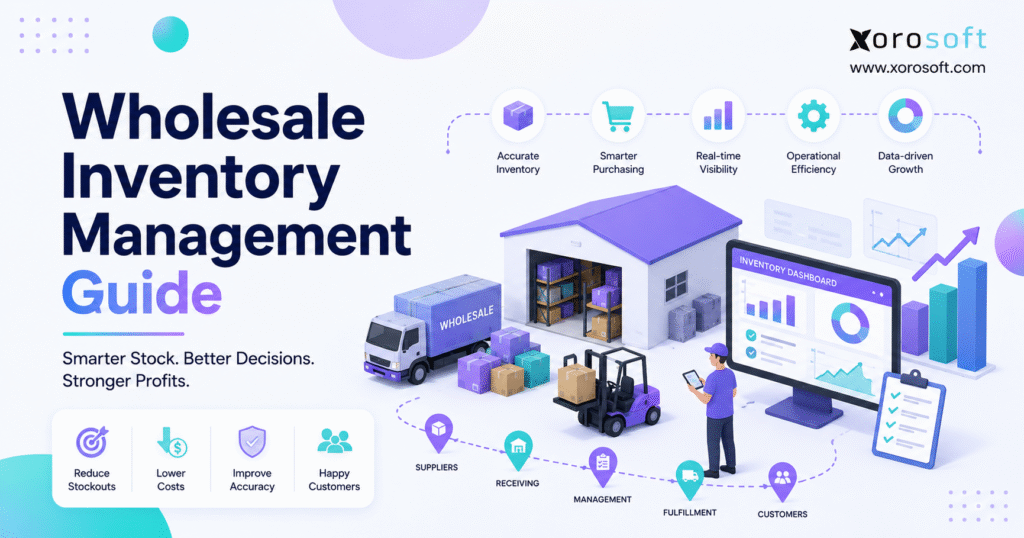
If you’re looking for effective strategies on inventory control for wholesalers, you’ve come to the right place.
1. A Clear Starting Point for Inventory Control for Wholesalers
Inventory control for wholesalers is the process that helps wholesale teams track stock, plan buying, fill orders, prevent stockouts, reduce overstock, and keep stock data correct across every warehouse and sales channel. Because wholesale companies often sell large order volumes across many customers, locations, and channels, one stock mistake can affect sales, cash flow, customer trust, and reports.
At first, stock may feel easy to manage. A small team can check shelves, update a sheet, review supplier emails, and confirm stock by hand. However, as order volume grows, this process becomes slow and risky.
In real work, inventory control for wholesalers is not only about knowing what sits on the shelf. It also covers incoming stock, committed stock, reserved stock, damaged stock, stock in transit, and inventory that is truly available to sell. Therefore, teams need a clear process that links buying, warehouse work, sales orders, ecommerce, accounting, and reports.
This guide explains how wholesale stock control works, where stock problems begin, which KPIs matter, and when a growing business should move beyond spreadsheets or basic inventory tools.
1.1 Why inventory control for wholesalers matters as teams grow
Wholesale work gets harder when more SKUs, suppliers, customers, warehouses, and sales channels enter the business. As a result, stock choices start to affect more than the warehouse.
Sales teams need correct stock numbers before they promise goods to customers. Meanwhile, buyers need clear demand signals before they place purchase orders. Finance teams also need clean stock values for margin checks, month-end close, and cash planning.
Because of this, wholesale stock control becomes a full business process. When it works, teams trust the numbers. When it fails, people check shelves by hand, build side sheets, and make choices from old reports.
1.2 Who this guide is for
This guide is useful for wholesale distributors, ecommerce brands with B2B sales, Shopify merchants, makers with finished goods, and product-based firms that run more than one warehouse.
It is also useful for teams that use QuickBooks, spreadsheets, warehouse apps, inventory-only tools, EDI tools, or manual buying sheets. These tools can work early. However, they often become weak once stock, buying, warehouse work, accounting, and sales channels need to work as one.
A better wholesale inventory process should help the business answer five basic questions:
1. What stock do we have?
2. Where is that stock?
3. What stock can we sell now?
4. What stock is already promised?
5. What should we buy next?
Once these answers are clear, the business can make better choices about customers, vendors, warehouses, and cash.
2. What Is Inventory Control for Wholesalers?
Inventory control for wholesalers is the process of managing stock across buying, receiving, storage, order allocation, shipping, replenishment, and reporting. It helps wholesale teams keep enough stock to meet demand without locking too much cash into excess goods.
Although the phrase sounds warehouse-focused, the process reaches much further. It affects customer service, vendor planning, ecommerce stock, accounting, and leadership reports.
For example, a wholesale team may have 5,000 units on hand. However, 2,000 may already be tied to open orders, 1,000 may be held for a key account, 500 may be damaged, and 700 may be in transit. Therefore, the true available stock may be very different from the total stock number.
2.1 Wholesale inventory control vs retail stock control
Retail stock control often focuses on direct sales to shoppers. Wholesale stock control, however, often includes bulk orders, customer pricing, payment terms, EDI orders, larger quantities, reserved stock, and split shipments.
Because of that, wholesale teams need stronger rules for allocation. A single wholesale order can use hundreds or thousands of units. As a result, one wrong stock number can affect many customers and future purchase plans.
2.2 Why inventory control for wholesalers is more than stock tracking
Basic stock tracking shows what exists. However, wholesale stock management must also show what is available, what is committed, what is incoming, what is reserved, and what cannot be sold.
That difference matters because stock shown as “on hand” may not be ready to sell. Some units may already belong to a customer order. Some may be waiting for checks. Other units may be assigned to another warehouse or sales channel.
Inventory also links four key teams.
| Team | What It Needs From Inventory | Why It Matters |
|---|---|---|
| Sales | Available stock and future stock | Stops false promises |
| Buying | Demand, lead times, reorder points, and open orders | Improves replenishment |
| Warehouse | Locations, bins, pick rules, and transfers | Cuts shipping errors |
| Accounting | Stock value, landed cost, COGS, and changes | Helps clean reports |
When these teams work from separate tools, each team builds its own truth. Consequently, reports become hard to trust, and each choice takes longer.
3. How Wholesale Stock Control Works
A strong process follows stock from vendor to customer. It starts before goods arrive and continues after orders ship.
3.1 Purchase planning for inventory control for wholesalers
The process starts with buying. Buyers review demand, vendor lead times, open sales orders, forecast needs, reorder points, and current stock.
However, buying should not depend on memory or pressure alone. Instead, purchase choices should come from current stock data and clear demand signals. This gives the team a stronger base before money is committed to more stock.
3.2 Receiving, storing, and tracking stock
When goods arrive, warehouse teams match the shipment against the purchase order. They confirm counts, check condition, record issues, and update the system.
After receiving, stock must move to the right warehouse, zone, bin, rack, or shelf. Good location control makes picking easier and reduces search time. In addition, storage rules should consider product size, SKU speed, lot tracking, expiry dates, and customer commitments.
Tracking should show more than total stock. It should separate available, committed, reserved, incoming, damaged, and backordered stock.
| Stock Status | Meaning | Example |
| On hand | Physical stock in the business | 1,000 units in warehouse |
| Available | Stock that can be sold | 600 units after open orders |
| Committed | Stock tied to orders | 300 units on sales orders |
| Reserved | Stock held for a customer or channel | 100 units for a key account |
| Incoming | Stock on open purchase orders | 500 units due next week |
| Backordered | Demand waiting for stock | 200 units not yet filled |
Because these statuses affect customer promises, they should update as fast as possible.
3.3 Allocation rules for inventory control for wholesalers
Allocation decides which stock should go to which order. This step matters when wholesale, Shopify, Amazon, retail, and EDI orders all pull from the same items.
For example, a large B2B customer may need stock held for a planned shipment. Meanwhile, Shopify orders may keep selling the same SKU. Without clear rules, overselling becomes likely.
Good allocation rules help teams decide which customers, channels, regions, or orders get stock first. As a result, sales teams can promise stock with more confidence.
3.4 Shipping, returns, transfers, and stock changes
The warehouse team picks items, packs orders, and ships goods. Afterward, the system should update stock through a clear workflow.
When updates happen late, sales and buying teams may see false stock. As a result, one delay can create many other problems.
Wholesale stock control must also manage returns, damaged goods, warehouse transfers, and stock changes. These moves are easy to miss. However, they often explain why system stock does not match physical stock.
4. Why Inventory Problems Increase With Growth
Stock problems often grow slowly. At first, teams solve issues with manual checks. Later, those checks become daily habits.
4.1 Spreadsheets become too slow
Spreadsheets are flexible, but they are not true stock systems. They depend on manual updates, clean formats, and constant review.
As more people edit sheets, errors become harder to catch. Meanwhile, warehouse teams may keep one sheet, buyers may use another, and finance may export a third file.
4.2 Accounting tools become stretched
Accounting software is useful for finance, but wholesale teams often need deeper stock workflows. They may need warehouse stock by location, barcode scans, allocation, forecasts, EDI, purchase planning, and stock value by warehouse.
When a business uses accounting software as the main stock system, it often adds manual steps around it. For that reason, many teams review options after they outgrow basic finance workflows. If QuickBooks is the current base, the Xorosoft vs QuickBooks page can help readers compare accounting-led work with a fuller ERP setup.
Inventory-only apps can also create new gaps. They may solve some stock tracking needs, but they can still fail if they do not link buying, warehouse work, ecommerce orders, and accounting.
4.3 Why inventory control for wholesalers becomes reactive
Once the system is wrong too often, warehouse teams stop using it as the source of truth. They check shelves, message team members, and delay orders while they confirm stock.
Although manual checks may feel safer, they slow down fulfillment. More importantly, they hide the real issue: system stock no longer matches real stock.
Buying also becomes reactive when teams do not trust stock data, forecasts, open orders, or vendor lead times. Instead of planning, buyers respond to urgent shortages. Because of this, stockouts and overstock can happen at the same time.
5. Common Problems in Inventory Control for Wholesalers
Inventory control for wholesalers usually breaks in clear places. Therefore, teams should check the process before they blame the team or the tool.
5.1 Stock differences and stockouts
Stock differences happen when system stock does not match physical stock. Common causes include receiving errors, pick mistakes, damaged goods, missed transfers, returns, theft, and manual changes.
If these gaps continue, every team loses trust in the system. Sales checks with the warehouse. Buying orders extra. Finance reviews variances. Eventually, choices slow down.
Stockouts happen when demand exists but stock is not ready to ship. For wholesalers, this can hurt customer trust because B2B buyers often depend on steady supply. Moreover, stockouts can distort demand history if the system does not record lost demand.
5.2 Overstock and dead stock
Overstock locks cash into goods that may not sell soon. In addition, it uses warehouse space and adds handling cost.
Dead stock is worse because it may not move at all. As a result, the business may discount, write off goods, or keep paying to store products that no longer help growth.
Overstock and stockouts often come from the same root cause: weak visibility. A business can run out of fast-moving items while holding too much slow-moving stock.
5.3 Weak demand planning for inventory control for wholesalers
Weak demand planning leads to poor buying. However, forecast issues often start with bad data.
If sales history, stockout history, lead times, and stock records are not clean, the forecast will not be clean either. Therefore, demand planning should be built on sound wholesale inventory planning.
Manual buying also slows the whole business. Buyers may need to review sales exports, vendor emails, warehouse notes, and sheets before they create purchase orders. At a small scale, that may work. However, with more SKUs and vendors, buying becomes too complex for manual review.
5.4 Multi-warehouse confusion and poor reports
More than one warehouse adds another layer of risk. A company may have enough total stock but not enough stock in the right place.
Therefore, teams need stock by warehouse, transfer tracking, and allocation rules. Without them, sales teams may promise goods that cannot ship on time.
Reports also become weak when data lives in many tools. Sales may show one number, the warehouse may show another, and finance may show a third. Because of that, leaders spend time checking reports instead of using them.
6. Best Practices for Wholesale Stock Management
Strong wholesale stock management depends on clear work habits. Software helps, but the process must also be clean.
6.1 Keep stock data in one place
Start by keeping stock data in one shared system. Sales, buying, warehouse, accounting, ecommerce, and reports should not depend on disconnected files.
When stock data sits in one place, teams can work from one truth. As a result, fewer choices depend on manual checks.
Clear SKU rules also support better reports, picking, buying, and planning. Each SKU should be easy to read, especially when products have sizes, colors, styles, kits, or variants. In addition, teams should avoid duplicate SKUs and mixed naming rules.
6.2 Separate available, committed, reserved, and incoming stock
This is one of the most important rules in wholesale stock management. On-hand stock should not be treated as available stock.
For example, 1,000 units may exist in the warehouse. However, if 700 units are tied to open orders, only 300 units may be available. Therefore, teams must show stock status clearly.
This separation helps sales teams avoid false promises. It also helps buyers understand what needs to be ordered, what is already incoming, and what is already committed.
6.3 Reorder rules for inventory control for wholesalers
Reorder points help buyers know when to buy again. Safety stock protects the business from demand spikes, vendor delays, and forecast errors.
A simple reorder point formula is:
Reorder Point = Average Daily Demand × Vendor Lead Time + Safety Stock
Although this formula is simple, it works best when the data is correct.
Vendor lead times also change. Therefore, wholesale teams should track real lead times by vendor, product, and season. If a vendor usually takes 45 days, buying should not plan as if it takes 20 days.
6.4 Cycle counts, barcode scans, and weekly KPI reviews
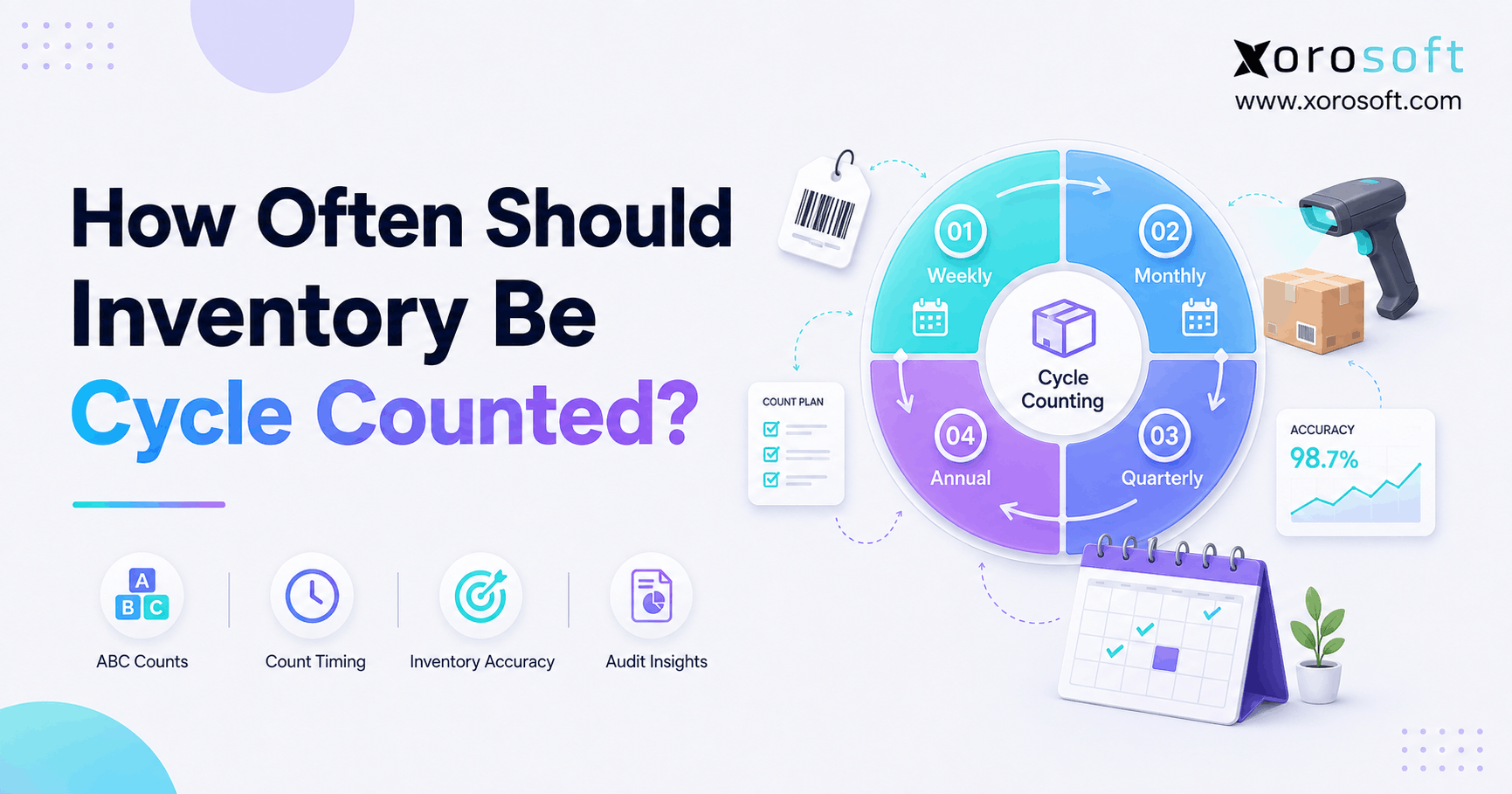
Cycle counts check stock during the year instead of relying only on one annual count. This helps teams catch errors earlier. In addition, cycle counts build trust in system stock because teams review gaps often.
Barcode scans help reduce manual entry during receiving, picking, packing, transfers, and counts. For product ID standards, teams can also review GS1 barcode standards, especially when stock data must stay clear across partners.
Weekly KPI reviews help teams catch issues before they become costly. Teams should review stock accuracy, fill rate, stockouts, turnover, purchase delays, and dead stock. Because these numbers change fast, monthly review may be too slow for busy wholesale teams.
7. KPIs for Inventory Control for Wholesalers
Inventory control for wholesalers improves when teams track the right numbers. However, too many KPIs create noise. Start with the numbers that affect customers, cash, and buying.
7.1 Stock accuracy and fill rate
Stock accuracy is the base metric. If system stock does not match physical stock, other KPIs become less useful. Therefore, teams should review stock accuracy by SKU, warehouse, and item group.
Fill rate shows how much demand can be filled from available stock. For wholesale customers, this matters because partial orders can disrupt their own work.
Stockout rate also matters. It shows how often items are not ready when customers want them. A rising rate may point to weak planning, late buying, vendor issues, or poor allocation.
7.2 Turnover, dead stock, and purchase order cycle time
Inventory turnover shows how fast stock moves through the business. Low turnover may mean overbuying, slow items, weak demand, or poor product planning.
Dead stock rate helps teams find goods that no longer support sales. Once found, dead stock should be reviewed for discounts, bundles, closeouts, or removal.
Purchase order cycle time measures how long it takes to find a buying need, approve it, and send the PO. When this cycle is slow, replenishment becomes reactive.
| KPI | What It Measures | Why It Matters |
| Stock accuracy | System stock vs physical stock | Shows whether teams can trust stock data |
| Fill rate | Demand filled from available stock | Measures service level |
| Stockout rate | How often items are unavailable | Shows lost sales risk |
| Inventory turnover | How often stock sells through | Measures stock health |
| Days inventory outstanding | How long stock stays before sale | Shows cash tied in goods |
| Dead stock rate | Stock with little or no movement | Helps reduce trapped cash |
| PO cycle time | Time to create and approve POs | Shows buying speed |
| Fulfillment accuracy | Correct items and counts shipped | Protects customer trust |
8. How Stock Accuracy Affects Cash Flow
Stock is not just an item on a shelf. It is also cash sitting in a warehouse, in transit, or in production.
8.1 Overstock traps cash
Overstock reduces cash freedom. A company may have strong sales but still feel cash pressure because too much money is locked in slow stock.
As a result, buyers should review turnover and dead stock before they place repeat orders.
Stockouts also cut sales because customers cannot buy what is not ready. In wholesale, the damage can be larger because customers may move repeat orders to another vendor. Therefore, stock availability is also a customer trust issue.
8.2 How inventory control for wholesalers affects finance
Stock value affects gross margin, COGS, the balance sheet, and month-end close. If costs and counts are wrong, finance cannot report with confidence.
Because of this, accounting and stock data should work together from the start. Better stock accuracy helps finance close faster, review margins better, and understand how much cash is tied up in inventory.
9. Multi-Warehouse Inventory Control for Wholesalers
Inventory control for wholesalers becomes more complex when stock sits in more than one warehouse. Total stock is not enough. Teams need stock by item, by status, and by place.
9.1 Why stock by location matters
A company may have 10,000 units across all sites. However, if the customer needs goods from the East Coast warehouse and that site has only 200 units, total stock does not solve the issue.
Therefore, location-level stock helps sales, shipping, buying, and transfer planning.
Transfers also create timing gaps. Stock may leave one warehouse before it becomes ready in another. Because of this, teams need clear transfer stages such as pending, picked, shipped, in transit, received, and available.
9.2 Allocation rules for inventory control for wholesalers
Allocation rules protect stock for key customers, channels, or regions. For example, a wholesaler may reserve stock for a major account while still selling through Shopify.
Without clear rules, fast channels can use stock meant for larger deals.
A warehouse system becomes useful when teams need bin locations, barcode scans, pick paths, receiving rules, packing steps, cycle counts, and transfer control. For teams that need better warehouse work, XoroWMS is a useful internal link when discussing barcode scans, stock moves, and multi-location control.
10. Shopify and Ecommerce Inventory Challenges
Ecommerce and B2B sales often use the same stock. Therefore, Shopify brands with wholesale sales need correct stock across every channel.
10.1 Why Shopify stock needs a clear backend
Shopify can help with ecommerce stock tracking. It also supports inventory locations and fulfillment controls. For details from Shopify, use Shopify inventory locations as a careful outbound link.
However, a wholesale business may still need deeper buying, forecasting, B2B pricing, EDI, accounting, and warehouse work outside Shopify.
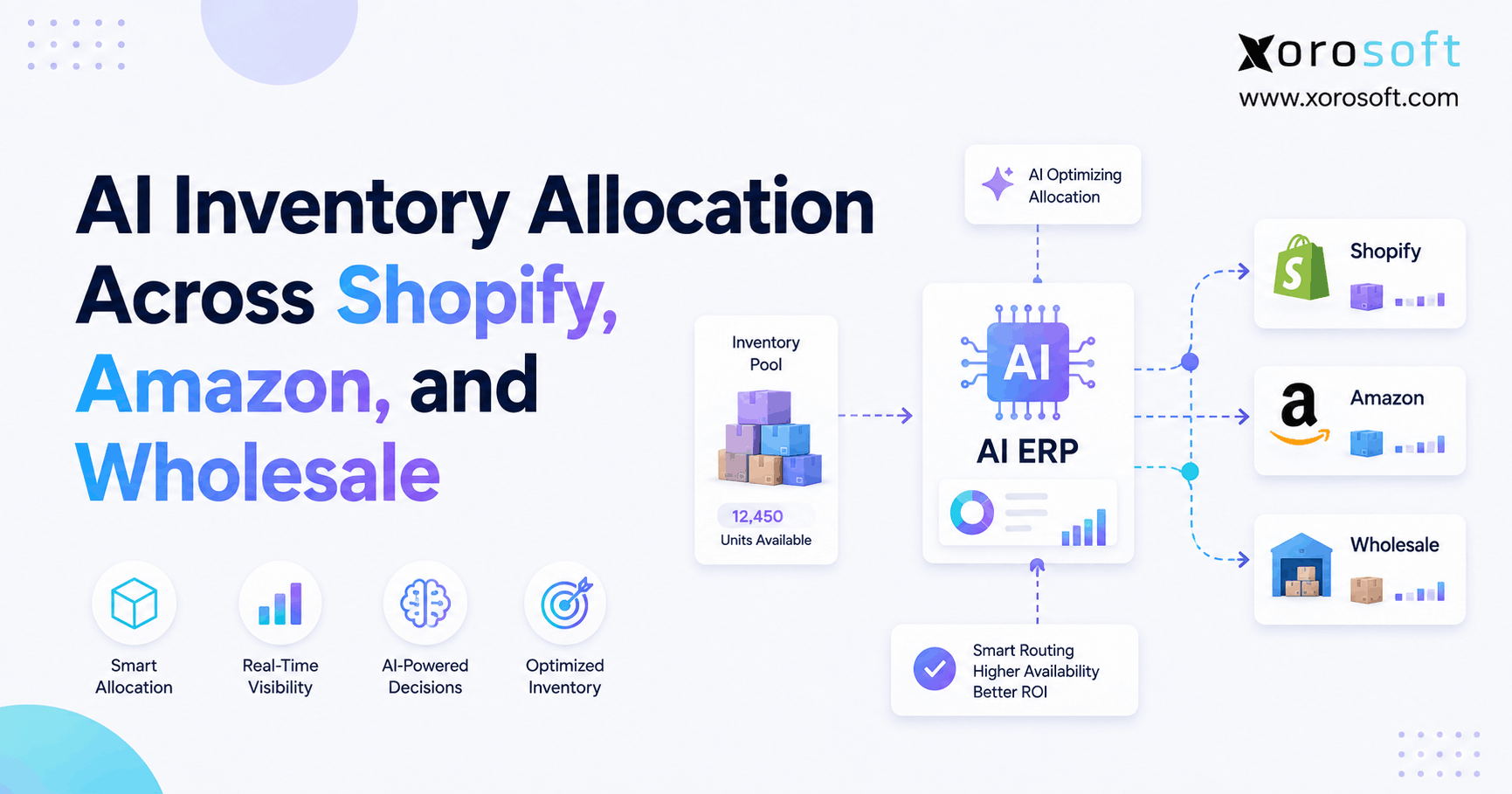
Overselling happens when Shopify, Amazon, EDI, wholesale orders, and retail channels do not share clean available stock data. One channel may sell goods that another channel already needs. As a result, teams need one source of truth that separates available stock from committed stock.
10.2 Shopify, Amazon, and EDI links for inventory control for wholesalers
A better process links every demand source to stock. Shopify orders, Amazon orders, B2B orders, EDI purchase orders, sales rep orders, and warehouse shipments should update stock in a clear way.
For Shopify merchants that are reviewing ERP options, the Xorosoft ERP Shopify App Store listing is a relevant outbound link because it connects the topic to Shopify’s own app marketplace.
When ecommerce and wholesale share stock, allocation becomes more important. The business must decide which customers, channels, and orders receive stock first. Therefore, inventory control for wholesalers becomes a sales choice as well as an operations choice.
11. Wholesale Stock Management Software: What to Look For
Wholesale stock management software should fit how the business works. A long feature list is less useful than a clean workflow.
11.1 Real-time stock visibility and multi-warehouse support
The system should show stock by SKU, warehouse, bin, lot, serial number, and status. More importantly, it should show what is available, committed, reserved, incoming, and backordered.
Multi-warehouse support should include stock by location, transfer steps, replenishment rules, and reports by warehouse.
These features help teams avoid false availability, late transfers, and manual warehouse checks.
11.2 Buying, forecasting, warehouse, accounting, and EDI features
Buying tools should help teams create purchase suggestions, manage vendor lead times, track incoming stock, approve POs, and review vendor work.
Forecasts should use sales history, open orders, seasonality, stockouts, lead times, and current stock. Although a forecast will never be perfect, it should help buyers make better choices.
Warehouse tools should include receiving, putaway, picking, packing, transfers, cycle counts, barcode scans, and stock changes.
Stock and accounting should stay linked. Otherwise, teams spend too much time checking counts, stock value, COGS, landed cost, and changes.
The system should also connect Shopify, Amazon, wholesale portals, EDI work, and other sales channels where needed. For broader workflows beyond stock, use Xorosoft solutions where the article discusses connected business work.
12. Inventory Software vs ERP for Inventory Control for Wholesalers
Not every wholesale company needs ERP right away. However, many growing teams outgrow inventory-only tools.
12.1 When ERP improves inventory control for wholesalers
Inventory software may be enough when the business has one warehouse, simple buying, basic accounting, low SKU count, and few sales channels.
At that stage, the company mainly needs better stock tracking. Therefore, a focused inventory tool may solve the first problem.
ERP becomes necessary when stock must link with accounting, buying, warehouse work, forecasts, ecommerce, EDI, reports, and production. At that stage, the problem is no longer only stock tracking. Instead, the business needs one central system.
12.2 How to choose the right system
Disconnected systems create double entry, late reports, manual checks, and mixed decisions. Consequently, teams may spend more time checking data than improving the business.
For inventory-driven companies, an ERP platform such as XoroERP becomes relevant when stock, buying, accounting, warehouse, and ecommerce workflows need to work together.
A good system review should start with real business needs. Ask these questions:
1. How many SKUs do we manage?
2. How many warehouses do we use?
3. How many sales channels affect stock?
4. How often do we create purchase orders?
5. How often do stock numbers need manual fixes?
6. How hard is month-end stock review?
7. How much reporting happens outside the system?
If the answers show growing risk, it may be time to review a connected platform instead of adding one more tool.
13. B2B Inventory Control by Industry
Each industry has different stock risks. Therefore, B2B inventory control should match product type, customer needs, and daily work.
13.1 Apparel, furniture, and sporting goods
Apparel firms manage sizes, colors, styles, seasons, returns, and fast demand shifts. Because of that, they need strong variant control, allocation, and demand planning.
Furniture wholesalers often manage large goods, long lead times, container orders, and limited warehouse space. Therefore, stock by location and purchase planning are very important.
Sporting goods firms often face seasonal demand and many SKUs. As a result, forecasts and turnover checks help reduce stock after peak seasons.
13.2 Food, manufacturing, and industrial distribution
Food and beverage firms may need lot tracking, expiry control, and faster stock rotation. Because goods can expire, stock accuracy has a direct effect on waste and compliance.
Manufacturers need visibility into raw goods, work in progress, finished goods, BOMs, and production plans. Therefore, wholesale stock planning should link with production work.
Industrial distributors often manage large catalogs, urgent orders, and customer-specific needs. In this setting, search, stock availability, and buying discipline matter.
For wider industry context, link to industries we serve when discussing industry-specific stock needs.
14. Common Mistakes in Wholesale Stock Control
Most stock issues do not come from one big failure. Instead, they come from small mistakes that repeat over time.
14.1 Treating accounting software as the stock system
Accounting software may support finance, but it may not manage warehouse work, buying, forecasts, and allocation in enough detail.
Because of this, wholesale teams often build workarounds. Eventually, those workarounds become hard to keep clean.
Buying sheets create a similar issue. They work until the business has too many SKUs, vendors, sites, and demand signals. After that point, buyers may miss reorder needs or create duplicate purchase orders.
14.2 Mixing committed and available stock
Committed stock belongs to an order. Available stock can still be sold.
When these numbers are mixed, overselling becomes likely. As a result, sales and warehouse teams lose trust in the system.
Shopify, Amazon, wholesale, EDI, and retail channels should not run from separate stock numbers. If they do, the business cannot control availability well. Many firms wait until stock issues become painful before they change systems. However, system changes are easier before daily work is already under pressure.
15. How to Build a Better Wholesale Inventory Process
A better process starts with clear steps. Then, the right system can support those steps.
15.1 Map the current workflow
Map how stock enters, moves, sells, ships, returns, transfers, and changes. Include buying, receiving, putaway, allocation, picking, packing, shipping, cycle counts, and accounting updates.
Once the workflow is visible, gaps become easier to find.
Look for the exact points where stock data becomes wrong. Common places include receiving, transfers, returns, damaged goods, item swaps, manual changes, and sheet updates. After finding these points, teams can fix the process before they blame the full system.
15.2 Link stock with accounting
Warehouse work should be clear. Receiving, putaway, picking, packing, transfers, counts, and stock changes should follow set rules.
Buying rules should include reorder points, safety stock, vendor minimums, lead times, approval steps, forecast changes, and seasonal buy rules. Because buying affects cash, these rules should be visible to both operations and finance.
Stock and accounting should match without constant manual checks. If they do not, month-end close gets slower and margin reports become less clear.
For growing teams that need one connected system, XoroONE can be linked where the article discusses a unified platform.
Before choosing a system, teams should review examples from firms with similar stock, warehouse, or channel needs. Case studies can help teams see how others improved stock visibility, buying, warehouse work, or reports. Use case studies here because readers at this point may want real examples instead of more theory.
16. How Cloud ERP Supports Wholesale Operations
Cloud ERP becomes useful when a wholesale firm needs stock, buying, warehouse work, accounting, ecommerce, and reports to work together.
16.1 Why ERP is different from another inventory app
Another inventory app may improve stock tracking. However, ERP links stock to the wider business.
For example, a sales order can affect stock allocation. Stock can affect buying. Buying can affect cash plans. Warehouse work can affect accounting. Therefore, the value comes from linked workflows.
ERP should not be treated as a quick fix. It works best when the business also cleans SKU data, sets warehouse rules, defines buying rules, and improves count habits.
16.2 Where Xorosoft fits
Xorosoft fits when a product-based business has outgrown spreadsheets, QuickBooks, inventory-only tools, or disconnected apps. It brings stock management, buying, warehouse work, accounting, forecasting, ecommerce operations, and reports into one cloud ERP platform.
This matters for wholesale teams because stock problems rarely stay inside the warehouse. They usually affect buying, fulfillment, customer promises, and finance reports.
Xorosoft is especially relevant for businesses that sell through Shopify, Amazon, wholesale, EDI, and many warehouses. In that setup, each order source can affect the same stock pool. Therefore, central stock control helps reduce overselling, manual updates, and weak reports.
17. Frequently Asked Questions About Inventory Control for Wholesalers
17.1 Basic questions about inventory control for wholesalers
17.1 What is inventory control for wholesalers?
Inventory control for wholesalers is the process of managing stock across buying, receiving, storage, allocation, shipping, replenishment, and reporting. It helps teams know what stock exists, where it sits, what can be sold, and what should be bought next.
17.2 Why is inventory control for wholesalers important?
Inventory control for wholesalers is important because it affects sales, buying, warehouse work, finance, and customer trust. Without clean stock data, teams may oversell, underbuy, overbuy, ship late, or report weak margins.
17.3 How do wholesalers manage inventory?
Wholesalers manage stock by tracking counts, receiving goods with care, setting warehouse locations, allocating stock to orders, setting reorder points, planning demand, creating purchase orders, and checking KPIs.
17.4 What is the best way to track wholesale stock?
The best way to track wholesale stock is through one system that updates stock across warehouses, sales orders, buying, ecommerce, and accounting. The system should separate available, committed, reserved, incoming, and backordered stock.
17.5 What is the difference between stock control and warehouse management?
Stock control focuses on planning, availability, buying, allocation, forecasts, and reports. Warehouse management focuses on physical work inside the warehouse, such as receiving, putaway, picking, packing, transfers, counts, and shipping.
17.6 Is QuickBooks enough for wholesale stock control?
QuickBooks may be enough for simple finance and basic stock needs. However, growing wholesalers often need stronger warehouse visibility, buying automation, forecasts, barcode scans, EDI, and reports.
17.2 Stock planning and warehouse questions
17.7 When should a wholesale business move from sheets to ERP?
A wholesale business should consider ERP when sheets cause stock errors, late buying, double entry, weak reports, and manual checks. ERP becomes more useful when stock must link with accounting, warehouse work, ecommerce, EDI, forecasts, and production.
17.8 What are the biggest wholesale stock problems?
The biggest wholesale stock problems include stock gaps, stockouts, overstock, dead stock, weak forecasts, slow buying, multi-warehouse confusion, poor allocation, late shipping, and weak reports.
17.9 How can wholesalers prevent stockouts?
Wholesalers can prevent stockouts by setting reorder points, using safety stock, tracking vendor lead times, improving forecasts, reviewing open orders, and separating committed stock from available stock.
17.10 How can wholesalers reduce overstock?
Wholesalers can reduce overstock by checking turnover, improving forecasts, tracking slow SKUs, setting buying rules, and adjusting reorder points.
17.11 What is safety stock?
Safety stock is extra stock held to protect against demand spikes, vendor delays, forecast errors, or supply issues. It acts as a buffer, but too much safety stock raises holding cost.
17.12 What is a reorder point?
A reorder point is the stock level that tells a business when to buy more. A simple formula is average daily demand multiplied by vendor lead time, plus safety stock.
17.13 How does forecasting help wholesale inventory planning?
Forecasting helps wholesale teams estimate future demand and plan purchases earlier. It can reduce stockouts, overstock, rush buying, and cash stress when the data is clean.
17.3 Software and ERP questions for inventory control for wholesalers
17.14 What KPIs should wholesale teams track?
Wholesale teams should track stock accuracy, fill rate, stockout rate, turnover, days inventory outstanding, dead stock rate, purchase order cycle time, and fulfillment accuracy.
17.15 How do wholesalers manage many warehouses?
Wholesalers manage many warehouses by tracking stock by location, using transfer steps, separating available and committed stock, setting allocation rules, and giving sales teams location-level stock.
17.16 How does Shopify affect wholesale stock?
Shopify affects wholesale stock when ecommerce orders and wholesale orders pull from the same stock pool. Shopify can help with ecommerce stock and locations, but wholesale teams may need deeper planning and accounting workflows.
17.17 How does EDI affect wholesale stock control?
EDI affects wholesale stock control because large customers may send purchase orders, shipping rules, order checks, and invoices through set digital flows.
17.18 What is the difference between inventory software and ERP?
Inventory software usually focuses on stock tracking, availability, buying, and warehouse tasks. ERP is broader because it links stock with accounting, buying, warehouse work, ecommerce, production, reports, and finance controls.
17.19 Who needs wholesale inventory software?
Wholesale inventory software is useful for firms with more SKUs, many warehouses, frequent purchase orders, wholesale customers, ecommerce channels, EDI needs, or repeat stock errors.
17.20 Who does not need ERP yet?
A very small wholesaler may not need ERP yet if it has one warehouse, simple buying, basic accounting, low SKU count, and low order volume.
17.4 Growth and checklist questions
17.21 What are common alternatives to wholesale inventory software?
Common alternatives include sheets, accounting tools, ecommerce stock tools, warehouse apps, custom databases, and ERP platforms. Each option has tradeoffs.
17.22 How long does it take to improve stock accuracy?
Stock accuracy can improve quickly once teams fix receiving, picking, transfers, counts, and stock changes. However, lasting improvement needs steady workflows, clean SKU data, barcode scans, and a trusted system.
17.23 Can inventory control support manufacturing?
Yes, inventory control can support manufacturing when it links raw goods, work in progress, finished goods, BOMs, work orders, and production plans.
17.24 What should a wholesale inventory checklist include?
A wholesale inventory checklist should include SKU rules, receiving rules, warehouse locations, reorder points, safety stock, vendor lead times, purchase approvals, cycle counts, stock allocation, ecommerce links, accounting links, stock KPIs, and report owners.
17.25 What should growing wholesalers look for in ERP?
Growing wholesalers should look for ERP features that link stock, buying, warehouse work, accounting, forecasts, reports, ecommerce, EDI, and multi-warehouse workflows. They should also review ease of use, setup effort, report depth, industry fit, and future growth needs.
18. Build a Scalable Wholesale Inventory System
Inventory control for wholesalers becomes more important as a company grows. At first, the work may look like basic stock tracking. Later, it becomes the base for buying, shipping, accounting, planning, and customer trust.
18.1 When to improve the process
Growing teams should fix stock accuracy first. After that, they should set receiving rules, define buying rules, improve cycle counts, link stock with accounting, and centralize sales channel data.
18.2 When to review ERP
Xorosoft can be a strong fit for product-based firms that have outgrown spreadsheets, QuickBooks, or disconnected inventory apps. Because it links stock management, buying, warehouse work, accounting, forecasts, ecommerce, and reports, it helps wholesale teams reduce manual work and operate from one source of truth.
Still, the decision should be practical. If your current tools can support the next stage of growth, keep improving the process. However, if stock errors now affect buying, shipping, finance, Shopify, Amazon, EDI, and reports, it may be time to review a connected ERP system.
18.3 Final step: Book a demo
To review your current workflow and see whether your team is ready for a more connected system, Book a demo.