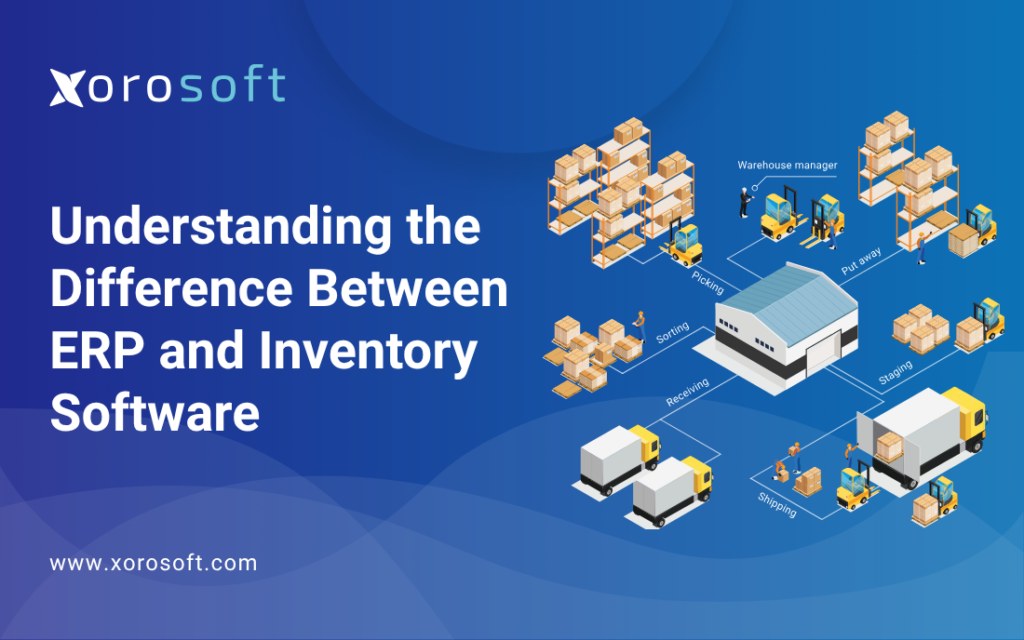
Understanding the ERP vs Inventory Software Decision
The debate around ERP vs Inventory Software becomes increasingly important as businesses grow. What begins as a simple inventory process often evolves into a complex operation involving suppliers, warehouses, ecommerce channels, purchasing workflows, accounting systems, and reporting requirements. As a result, many growing companies eventually face a critical question: should they continue using inventory software, or is it time to invest in a full ERP solution?
For Shopify brands, wholesale distributors, manufacturers, and multi-channel retailers, this decision can significantly impact operational efficiency, profitability, and long-term scalability. While both systems help businesses manage inventory, they are designed to solve different operational challenges.
Inventory software focuses primarily on stock visibility, inventory tracking, and replenishment. In contrast, an ERP inventory system connects inventory with accounting, purchasing, warehouse operations, forecasting, reporting, and broader business management processes.
Consequently, choosing the wrong solution can create operational bottlenecks, inventory inaccuracies, delayed reporting, and unnecessary manual work. Furthermore, businesses that invest only for today’s needs often find themselves replacing systems much sooner than expected.
Understanding ERP vs Inventory Software is therefore essential for businesses planning for sustainable growth.
In this guide, you’ll learn:
- What inventory software is
- What ERP software is
- The major differences between ERP and inventory software
- Which businesses benefit most from each solution
- When inventory software is enough
- When ERP becomes the better option
- Common mistakes businesses make during software selection
- How to choose the right platform for long-term growth
By the end of this guide, you’ll have a clear framework for deciding whether inventory software or ERP inventory management software is the best fit for your organization.
What Inventory Software Is Designed to Do
Inventory software is a specialized solution that helps businesses track, manage, and control inventory across one or multiple locations.
Its primary purpose is to answer critical operational questions such as:
- What inventory do we currently have?
- Where is inventory located?
- What inventory is available to sell?
- What inventory has been allocated?
- What inventory needs replenishment?
For many businesses, inventory represents one of the largest assets on the balance sheet. Therefore, maintaining accurate inventory records is essential for customer satisfaction, cash flow management, and operational efficiency.
Inventory software centralizes inventory information while providing visibility into stock levels, movement, and availability throughout the supply chain.
For businesses primarily focused on inventory visibility, inventory software often serves as an excellent first step toward operational maturity.
Core Capabilities Found in Most Inventory Platforms
Most inventory management systems include a combination of inventory tracking, purchasing, reporting, and warehouse functionality.
Inventory Tracking
Inventory tracking enables businesses to monitor stock quantities across one or multiple locations.
Users can typically view:
- Available inventory
- Allocated inventory
- Incoming inventory
- Inventory on order
As a result, businesses gain greater visibility into inventory movement and stock availability.
Furthermore, real-time inventory tracking helps reduce stockouts while improving fulfillment performance.
Stock Transfers
Organizations operating multiple facilities frequently need to move inventory between warehouses, stores, or distribution centers.
Stock transfer functionality helps businesses:
- Balance inventory levels
- Improve product availability
- Reduce stock shortages
- Optimize fulfillment operations
Consequently, inventory can be positioned more effectively throughout the organization.
Barcode Scanning
Barcode scanning significantly improves inventory accuracy and warehouse productivity.
Common uses include:
- Receiving inventory
- Picking orders
- Cycle counting
- Shipping verification
As a result, businesses reduce manual entry errors while improving operational efficiency.
Moreover, barcode-driven workflows often accelerate fulfillment processes and strengthen inventory control.
Purchase Order Management
Most inventory systems provide basic purchase order functionality.
This enables organizations to:
- Create supplier orders
- Receive inventory
- Update inventory records
- Monitor open purchase orders
Therefore, purchasing teams can manage replenishment activities more effectively.
Inventory Reporting
Inventory software typically includes reports such as:
- Inventory valuation
- Inventory turnover
- Stock aging
- Reorder reports
- Inventory movement reports
These reports help businesses identify trends and make better inventory decisions.
In addition, reporting provides greater visibility into inventory performance over time.
Multi-Warehouse Visibility
Many inventory management platforms support inventory tracking across multiple warehouse locations.
Users can:
- View inventory by warehouse
- Transfer inventory between facilities
- Monitor inventory availability across locations
As businesses expand, this functionality becomes increasingly valuable.
Where Inventory Software Delivers the Most Value
Inventory software offers several advantages, particularly for organizations with relatively straightforward operations.
Although ERP inventory software provides broader functionality, inventory software often delivers excellent value for businesses focused primarily on inventory control.
Lower Initial Investment
One of the biggest advantages of inventory software is affordability.
Compared with ERP inventory management software, inventory systems generally require:
- Lower implementation costs
- Lower subscription fees
- Less training
- Faster deployment
Therefore, inventory software is often attractive to startups, emerging brands, and smaller organizations.
Furthermore, lower costs make it easier for businesses to modernize operations without a significant upfront investment.
Faster Time to Value
Most inventory software platforms can be implemented relatively quickly.
Depending on operational complexity, many businesses become operational within a few weeks rather than several months.
As a result, teams often begin seeing value much sooner.
Moreover, shorter implementations reduce business disruption during software adoption.
Simpler User Adoption
Inventory software typically focuses on a narrower range of functions.
Because employees interact with fewer modules, training requirements are generally lower.
Consequently, teams can adapt more quickly.
Additionally, simpler interfaces often result in stronger user adoption across departments.
Improved Inventory Visibility
For organizations currently relying on spreadsheets, inventory software can dramatically improve inventory visibility.
Benefits often include:
- Better inventory accuracy
- Improved stock visibility
- Faster inventory lookups
- More reliable replenishment decisions
- Better reporting capabilities
As a result, businesses frequently experience immediate operational improvements after implementation.
A Practical Checkpoint Before Choosing Software
Many businesses struggle with the ERP vs Inventory Software decision because operational complexity rarely increases all at once.
For example, inventory management may still feel manageable while purchasing, reporting, forecasting, or warehouse operations become increasingly difficult.
Therefore, evaluating current workflows before making a software investment is often the best approach.
Businesses looking for a unified ERP platform can explore XoroERP to understand how inventory, purchasing, accounting, and reporting work together within a single system.
Likewise, organizations seeking greater visibility across departments often evaluate XoroONE as part of their long-term operational strategy.
If you’re unsure whether inventory software is still sufficient, Book a Demo to review your current workflows, growth objectives, and operational challenges.
The Hidden Limitations of Inventory Software
Although inventory software can be highly effective, limitations often become more noticeable as businesses scale.
This is usually where the ERP vs Inventory Software conversation becomes more relevant.
As businesses add sales channels, warehouses, suppliers, and operational processes, inventory software may struggle to provide the visibility needed to support continued growth.
Inventory Data Often Lives in Isolation
One of the biggest challenges is that inventory data frequently exists separately from the rest of the business.
For example:
- Accounting may live in QuickBooks
- Ecommerce orders may live in Shopify
- Purchasing may live in spreadsheets
- Reporting may live in Excel
Consequently, teams spend significant time reconciling information between systems.
Furthermore, disconnected systems increase the likelihood of errors, duplicate work, and reporting delays.
Limited Financial Visibility
Inventory software is not designed to function as a complete financial management system.
While inventory quantities may be accurate, businesses often struggle to answer questions such as:
- What is profitability by SKU?
- What is inventory carrying cost?
- Which products generate the highest margins?
- What is our inventory investment by warehouse?
As a result, executives frequently rely on manual reporting processes.
Therefore, obtaining real-time financial visibility becomes increasingly difficult as the business grows.
Basic Purchasing Functionality
Most inventory systems support purchase orders.
However, advanced procurement functionality is often limited.
Missing capabilities may include:
- Vendor scorecards
- Lead-time analysis
- Purchasing approvals
- Demand forecasting
- Replenishment planning
Consequently, purchasing teams often depend on spreadsheets and manual processes to fill the gaps.
Forecasting Becomes More Difficult
Forecasting is one of the most important functions for growing businesses.
Without accurate forecasting:
- Stockouts increase
- Excess inventory accumulates
- Cash flow suffers
- Customer satisfaction declines
While inventory software may provide basic forecasting tools, it typically lacks the advanced planning capabilities found in ERP inventory management software.
Therefore, forecasting frequently becomes one of the primary reasons businesses evaluate ERP solutions.
Reporting Beyond Inventory Is Limited
Inventory reports are useful.
However, leadership teams often require broader operational insights.
For example:
- What inventory should we purchase next month?
- Which customers are most profitable?
- Which products are underperforming?
- What will inventory levels look like in 90 days?
Inventory software rarely provides this level of business intelligence.
As a result, many growing organizations begin evaluating solutions such as XoroERP that connect inventory, purchasing, accounting, reporting, and operational workflows within a single platform.
Looking Beyond Inventory Alone
At this stage of the ERP vs Inventory Software evaluation, the key question is no longer whether inventory software can track inventory.
Instead, the question becomes whether your business needs deeper visibility into purchasing, accounting, warehouse operations, forecasting, and profitability.
If inventory management remains your primary challenge, inventory software may still be the right fit.
However, if multiple systems, spreadsheets, and manual processes are slowing growth, it may be time to explore a more comprehensive ERP inventory system.
What ERP Software Brings to the Table
While inventory software focuses primarily on inventory management, ERP software is designed to manage the broader business.
ERP stands for Enterprise Resource Planning, and its purpose is to connect core business functions into a single platform. Rather than operating multiple disconnected systems, businesses can manage inventory, accounting, purchasing, warehousing, forecasting, reporting, and operational workflows from one centralized environment.
As organizations grow, operational complexity often increases faster than expected. Consequently, businesses that once relied on separate systems frequently discover that data becomes fragmented across departments.
For example:
- Inventory may live in one platform
- Accounting may live in another
- Purchasing may rely on spreadsheets
- Reporting may require manual consolidation
As a result, teams spend significant time reconciling information instead of acting on it.
ERP software solves this challenge by creating a single source of truth across the organization.
Therefore, businesses gain better visibility, stronger operational control, and more reliable decision-making.
The Core Components of an ERP System
One of the biggest differences in the ERP vs Inventory Software discussion is functionality.
Inventory software focuses on inventory.
ERP software manages multiple operational areas simultaneously.
Inventory Management
Inventory remains a foundational component of any ERP inventory system.
Most ERP platforms include:
- Multi-warehouse inventory management
- Inventory allocation
- Lot tracking
- Serial number tracking
- Replenishment planning
- Inventory forecasting
- Inventory control workflows
As a result, inventory information becomes available across departments instead of existing in isolation.
Furthermore, teams gain access to real-time inventory visibility across the organization.
Accounting and Financial Management
Accounting is often the biggest distinction between ERP and inventory software.
Most inventory platforms require a separate accounting system.
ERP software typically includes:
- General Ledger
- Accounts Payable
- Accounts Receivable
- Financial Statements
- Bank Reconciliation
- Budgeting
- Profitability Analysis
Consequently, inventory transactions automatically update financial records.
This creates:
- Faster month-end closes
- Better financial visibility
- Improved reporting accuracy
- Reduced manual reconciliation
Therefore, leadership teams gain a clearer understanding of business performance.
Purchasing and Procurement
ERP systems provide significantly more advanced purchasing capabilities than traditional inventory software.
Features often include:
- Supplier management
- Purchasing approvals
- Lead-time tracking
- Vendor scorecards
- Demand planning
- Reorder recommendations
As purchasing complexity increases, these capabilities become increasingly valuable.
Moreover, businesses can reduce stockouts while improving supplier relationships.
Warehouse Management
Many ERP platforms include integrated warehouse management functionality.
This may include:
- Barcode scanning
- Bin location management
- Directed picking
- Packing workflows
- Shipping management
- Cycle counting
As a result, warehouse operations become more efficient and accurate.
Organizations managing complex fulfillment operations often explore XoroWMS to improve warehouse productivity while maintaining inventory accuracy.
Manufacturing Management
Manufacturers require capabilities that extend far beyond inventory tracking.
ERP systems frequently support:
- Bills of Materials (BOMs)
- Work Orders
- Production Scheduling
- Material Requirements Planning (MRP)
- Production Cost Tracking
Consequently, manufacturers can manage the entire production lifecycle from a single platform.
Furthermore, production teams gain greater visibility into inventory consumption, production efficiency, and operational costs.
Reporting and Business Intelligence
ERP software provides visibility across the entire organization.
Executives can monitor:
- Revenue
- Inventory
- Purchasing
- Profitability
- Warehouse performance
- Supplier performance
- Customer trends
As a result, decision-makers gain access to real-time information rather than relying on manually compiled reports.
ERP vs Inventory Software: A Side-by-Side Comparison
The easiest way to understand ERP vs Inventory Software is to compare the capabilities directly.
| Feature | Inventory Software | ERP Software |
|---|---|---|
| Inventory Tracking | Yes | Yes |
| Inventory Allocation | Basic | Advanced |
| Accounting Integration | No | Yes |
| Financial Reporting | No | Yes |
| Purchasing Management | Basic | Advanced |
| Forecasting | Limited | Advanced |
| Multi-Warehouse Management | Sometimes | Yes |
| Warehouse Management | Limited | Advanced |
| Manufacturing Support | Rarely | Yes |
| Profitability Reporting | No | Yes |
| Business Intelligence | Limited | Advanced |
| Replenishment Planning | Basic | Advanced |
| Operational Visibility | Limited | Complete |
| Scalability | Moderate | High |
Although both systems help manage inventory, ERP software provides significantly broader operational capabilities.
Consequently, many growing businesses eventually transition from inventory software to ERP as complexity increases.
The Question Most Growing Businesses Eventually Ask
Initially, inventory management may seem like the primary challenge.
However, as organizations expand, inventory becomes only one part of a much larger operational picture.
Leadership teams eventually begin asking questions such as:
- Which products generate the highest margins?
- Which suppliers consistently underperform?
- Which customers are most profitable?
- What inventory is creating cash-flow issues?
- What inventory should we purchase next month?
- Which products should we discontinue?
Inventory software generally cannot answer these questions effectively.
ERP systems, on the other hand, combine inventory, purchasing, accounting, and operational data into one environment.
Therefore, businesses gain the visibility needed to support long-term growth.
ERP vs Inventory Software: The Operational Differences That Matter Most
Although both solutions help businesses manage inventory, their impact on daily operations can be dramatically different.
The following differences are often the deciding factors in the ERP vs Inventory Software evaluation process.
1. Scope of the System
Inventory software focuses primarily on inventory operations.
ERP software focuses on the entire business.
Inventory software answers:
- What inventory do we have?
- Where is inventory located?
- What inventory requires replenishment?
ERP software answers:
- What inventory do we have?
- What inventory should we buy?
- Which products are profitable?
- Which customers generate the highest margins?
- What is our cash-flow position?
Consequently, ERP software provides significantly broader visibility.
2. Accounting Integration
Accounting is one of the most important differences between ERP and inventory software.
Most inventory systems require separate accounting platforms such as:
- QuickBooks
- Sage
- Xero
While integrations may help, businesses often encounter:
- Duplicate data entry
- Reporting delays
- Inventory valuation discrepancies
- Reconciliation challenges
ERP systems eliminate many of these issues because financial records update automatically as transactions occur.
As a result, businesses gain more accurate reporting and stronger financial visibility.
3. Purchasing Complexity
Inventory software typically includes basic purchasing functionality.
ERP software supports complete procurement workflows.
Capabilities often include:
- Supplier management
- Purchasing approvals
- Lead-time analysis
- Demand planning
- Vendor performance monitoring
Therefore, purchasing decisions become more strategic rather than reactive.
Furthermore, businesses gain greater control over inventory investment.
4. Forecasting Accuracy
Forecasting becomes increasingly important as inventory volume grows.
Inventory software generally relies on historical inventory levels.
ERP systems often analyze:
- Historical sales
- Seasonality
- Supplier lead times
- Customer demand
- Promotional activity
Consequently, businesses can make more informed purchasing decisions.
In addition, better forecasting helps reduce stockouts and excess inventory.
5. Multi-Channel Operations
Today’s businesses rarely sell through a single channel.
Many organizations sell through:
- Shopify
- Amazon
- Wholesale
- Retail stores
- Marketplaces
Managing inventory across multiple channels quickly becomes complicated.
Inventory software may struggle to maintain synchronization.
ERP systems centralize inventory, purchasing, orders, and reporting.
As a result, businesses reduce operational complexity while improving visibility.
Businesses evaluating ecommerce ERP integrations often research solutions available through the Shopify App Store.
Likewise, organizations comparing ERP platforms can review Compare Xorosoft before making a final software decision.
A Midpoint Reality Check
At this stage of the ERP vs Inventory Software comparison, a clear pattern begins to emerge.
Inventory software is highly effective when inventory visibility is the primary challenge.
However, once purchasing, accounting, forecasting, warehouse management, and reporting become interconnected, ERP software often delivers substantially more value.
Therefore, the next step is understanding when inventory software remains sufficient and when operational complexity signals the need for ERP.
ERP vs Inventory Software for Growing Businesses
One of the most important realities of business growth is that operational complexity rarely increases in a straight line.
At first, inventory management may seem manageable. However, as order volume increases, additional sales channels are added, and customer expectations rise, operational challenges often multiply much faster than expected.
Consequently, many organizations eventually revisit the ERP vs Inventory Software discussion because the tools that once supported growth begin creating bottlenecks.
Businesses often experience challenges such as:
- Inventory discrepancies
- Spreadsheet dependency
- Delayed reporting
- Purchasing inefficiencies
- Warehouse complexity
- Forecasting difficulties
- Multi-channel inventory management
As a result, software selection becomes less about features and more about scalability.
Recognizing the Signs You’ve Outgrown Inventory Software
Not every business needs ERP immediately.
Nevertheless, there are several indicators that inventory software may no longer be sufficient.
Common warning signs include:
- Inventory records frequently require manual corrections
- Teams rely heavily on spreadsheets
- Multiple warehouses increase operational complexity
- Purchasing decisions become difficult
- Financial reporting takes longer each month
- Inventory forecasting becomes unreliable
- Multiple sales channels are difficult to manage
If several of these challenges exist simultaneously, it may be time to evaluate ERP inventory management software.
Inventory Inaccuracies Become More Frequent
Inventory discrepancies often indicate that operational complexity has exceeded system capabilities.
Consequently, businesses may experience:
- Stockouts
- Overselling
- Fulfillment delays
- Customer service issues
ERP inventory control processes help improve inventory accuracy through automation and standardized workflows.
Furthermore, integrated inventory management reduces manual intervention and duplicate data entry.
Spreadsheets Start Running the Business
Many organizations eventually discover that spreadsheets have become their unofficial operating system.
Teams often use spreadsheets for:
- Purchasing
- Forecasting
- Reporting
- Inventory planning
- Operational analysis
While spreadsheets can fill gaps temporarily, they rarely scale effectively.
Therefore, businesses frequently adopt ERP systems to centralize information and eliminate manual processes.
Purchasing Becomes Increasingly Complex
Growing businesses often struggle to answer questions such as:
- What should we buy?
- When should we buy it?
- How much should we purchase?
Without forecasting and planning tools, purchasing decisions become reactive.
Consequently, inventory investment becomes less efficient.
ERP systems help automate replenishment planning and improve purchasing accuracy.
As a result, businesses can reduce both stockouts and excess inventory.
Multiple Sales Channels Create New Challenges
Today’s businesses often sell through multiple channels simultaneously.
Examples include:
- Shopify
- Amazon
- Wholesale
- Retail stores
- B2B portals
Managing inventory across these channels can quickly become difficult.
Inventory software may struggle to maintain synchronization as complexity increases.
ERP systems centralize inventory, orders, purchasing, and reporting.
Therefore, businesses gain greater control and visibility across all sales channels.
ERP vs Inventory Software Cost Comparison
One of the most common questions businesses ask is:
Which solution costs less?
The answer depends on far more than software pricing.
Inventory Software Costs
Inventory software generally offers:
- Lower implementation costs
- Lower subscription fees
- Faster deployment
- Simpler onboarding
Initially, these advantages make inventory software attractive to smaller businesses.
However, hidden operational costs often emerge over time.
Examples include:
- Spreadsheet management
- Manual reporting
- Data reconciliation
- Duplicate data entry
- Additional software integrations
As a result, total operational costs can become higher than expected.
ERP Costs
ERP systems typically require:
- Higher implementation investment
- More comprehensive training
- Longer deployment timelines
However, ERP often reduces:
- Manual processes
- Spreadsheet dependency
- Inventory errors
- Reporting effort
- Operational inefficiencies
Consequently, businesses should evaluate total operational impact rather than focusing solely on subscription fees.
Furthermore, ERP systems frequently replace multiple disconnected applications, which can offset implementation costs over time.
ERP vs Inventory Software for Shopify Brands
Many Shopify businesses begin with inventory software because implementation is relatively simple and affordable.
Initially, this approach works well.
However, growth often introduces new operational challenges.
For example:
- Inventory forecasting becomes more difficult
- Purchasing complexity increases
- Additional sales channels emerge
- Warehouse requirements expand
- Financial reporting becomes more demanding
Consequently, many growing Shopify brands eventually evaluate ERP software.
Businesses researching ecommerce ERP integrations often explore solutions available through the Shopify App Store before making a final decision.
Example: A Growing Shopify Apparel Brand
Consider a Shopify apparel company selling through:
- Shopify
- Amazon
- Wholesale channels
Initially, inventory software may provide sufficient visibility.
However, as sales volume increases, challenges often emerge around:
- Inventory synchronization
- Purchasing planning
- Demand forecasting
- Reporting accuracy
An ERP inventory system helps centralize inventory, purchasing, accounting, warehouse management, and reporting.
As a result, teams spend less time managing systems and more time focusing on growth.
Businesses evaluating modern ERP solutions can also explore XoroERP to understand how inventory and business operations can be managed from a single platform.
ERP vs Inventory Software for Wholesale Distributors
Wholesale distributors often face significantly greater operational complexity than smaller ecommerce businesses.
Challenges frequently include:
- Large SKU counts
- Customer-specific pricing
- Inventory allocation
- Purchasing complexity
- Supplier management
- Multi-warehouse operations
Consequently, ERP software often becomes necessary much earlier in the growth journey.
Example: Distributor Managing 15,000 SKUs
A wholesale distributor managing 15,000 SKUs frequently struggles with:
- Inventory allocation
- Demand planning
- Supplier performance tracking
- Customer pricing
- Warehouse efficiency
Inventory software may successfully track inventory quantities.
However, ERP software provides the broader operational visibility needed to manage growth effectively.
Organizations evaluating ERP requirements across industries can review Industries We Serve to better understand industry-specific challenges and software needs.
Likewise, businesses comparing ERP platforms can explore Compare Xorosoft before making a final software decision.
Warehouse Complexity Changes the Equation
Warehouse operations often become a major factor in the ERP vs Inventory Software evaluation process.
While basic inventory software may provide simple warehouse functionality, growing organizations frequently require:
- Bin location management
- Barcode scanning
- Directed picking
- Packing workflows
- Shipping management
- Cycle counting
Consequently, warehouse efficiency becomes increasingly dependent on system capabilities.
Businesses managing complex fulfillment operations often explore XoroWMS to improve warehouse productivity while maintaining inventory accuracy.
Furthermore, integrated warehouse management helps eliminate operational silos between inventory and fulfillment teams.
Operational Visibility Becomes a Competitive Advantage
Perhaps the biggest difference between ERP and inventory software is visibility.
Inventory software primarily provides visibility into inventory.
ERP software provides visibility into:
- Inventory
- Accounting
- Purchasing
- Warehousing
- Profitability
- Sales performance
As a result, leadership teams gain a complete view of business operations.
Organizations seeking a unified operational platform often evaluate XoroONE because it helps centralize information and improve cross-department collaboration.
A Critical Decision Point
At this stage of the ERP vs Inventory Software comparison, the decision often comes down to operational complexity.
If inventory tracking remains the primary challenge, inventory software may continue to provide excellent value.
However, if purchasing, forecasting, accounting, reporting, warehouse management, and operational visibility have become increasingly important, ERP software often delivers significantly greater long-term benefits.
Therefore, the final step is understanding how manufacturers evaluate ERP, reviewing real-world examples, exploring common software selection mistakes, and answering the most frequently asked questions about ERP vs Inventory Software.
ERP vs Inventory Software for Manufacturers
Manufacturers often reach the ERP decision sooner than other businesses because production introduces operational complexity that inventory software is not designed to manage.
While inventory software can track raw materials and finished goods, manufacturers typically need visibility into the entire production process. Consequently, many manufacturers eventually move from inventory software to a dedicated ERP inventory management solution.
Common manufacturing requirements include:
- Bills of Materials (BOMs)
- Work Orders
- Production Scheduling
- Material Requirements Planning (MRP)
- Production Cost Tracking
- Quality Control Processes
- Labor Tracking
Inventory software may successfully manage stock levels. However, it rarely provides the functionality required to manage production workflows from start to finish.
ERP software, on the other hand, connects production planning, inventory management, purchasing, warehousing, and financial reporting within a single platform.
As a result, manufacturers gain greater visibility into costs, production efficiency, inventory consumption, and profitability.
Businesses evaluating manufacturing operations can also review Industries We Serve to understand how ERP requirements vary across different sectors.
Example: Manufacturer Managing Multiple Product Lines
Consider a manufacturer producing hundreds of SKUs across multiple facilities.
The business must coordinate:
- Raw materials
- Work-in-progress inventory
- Finished goods inventory
- Supplier lead times
- Production schedules
- Quality standards
Initially, inventory software may appear sufficient.
However, as production complexity increases, manual processes often create bottlenecks.
ERP software helps synchronize purchasing, inventory, production planning, and accounting.
Consequently, management gains stronger operational control while reducing costly inefficiencies.
Real-World Business Scenarios
The ERP vs Inventory Software discussion becomes much easier when viewed through real business situations.
Scenario 1: Shopify Brand Expanding Into Wholesale
A Shopify brand initially sells products through a single ecommerce storefront.
At this stage:
- Inventory is centralized
- Order volume is manageable
- Purchasing requirements remain relatively simple
Therefore, inventory software may be an excellent fit.
However, growth often introduces:
- Wholesale customers
- Additional sales channels
- More warehouses
- Increased forecasting requirements
As a result, inventory software may become increasingly difficult to manage.
An ERP platform helps centralize inventory, purchasing, accounting, fulfillment, and reporting.
Consequently, teams spend less time managing systems and more time driving growth.
Scenario 2: Wholesale Distributor Scaling Operations
A distributor managing thousands of SKUs may face challenges including:
- Customer-specific pricing
- Inventory allocation
- Supplier management
- Warehouse coordination
- Demand planning
Initially, inventory software may track stock effectively.
However, once purchasing complexity and reporting requirements increase, ERP systems often provide substantially greater value.
Consequently, distributors gain stronger visibility into inventory, profitability, supplier performance, and customer activity.
Scenario 3: Manufacturer Improving Production Visibility
Many manufacturers rely on spreadsheets alongside inventory software.
Although this approach may work temporarily, it often creates challenges around:
- Production planning
- Material shortages
- Inventory forecasting
- Cost visibility
- Reporting accuracy
ERP software helps connect production workflows with inventory and financial management.
As a result, businesses gain a complete operational view while reducing manual work.
Common Mistakes Businesses Make During Software Selection
The ERP vs Inventory Software decision can have long-term operational consequences.
Therefore, organizations should avoid several common mistakes.
Choosing Based Solely on Price
The lowest-cost solution is not always the most cost-effective solution.
While inventory software often requires a smaller upfront investment, hidden operational costs frequently emerge over time.
Examples include:
- Spreadsheet management
- Manual reporting
- Data reconciliation
- Duplicate data entry
Consequently, businesses should evaluate total operational impact rather than focusing exclusively on subscription fees.
Ignoring Future Growth
Many businesses purchase software based on current requirements.
However, future growth often introduces:
- Additional warehouses
- More SKUs
- New sales channels
- Increasing purchasing complexity
Therefore, selecting software that cannot scale frequently leads to costly migrations later.
Underestimating Inventory Complexity
Inventory management becomes significantly more challenging as organizations expand.
As a result, businesses should carefully evaluate:
- Forecasting requirements
- Warehouse complexity
- Replenishment planning
- Multi-channel inventory management
before selecting a platform.
Focusing Only on Features
Features are important.
However, workflows are often even more important.
The best software supports how the business operates rather than forcing teams to create workarounds.
Consequently, businesses should evaluate process fit alongside feature lists.
Waiting Too Long to Upgrade
Many organizations continue using systems long after they have outgrown them.
As a result, they often experience:
- Inventory inaccuracies
- Reporting delays
- Operational bottlenecks
- Excessive manual work
Therefore, proactively evaluating ERP software can help prevent future disruption.
Frequently Asked Questions About ERP vs Inventory Software
What is ERP?
ERP stands for Enterprise Resource Planning. It is a business management platform that connects inventory, accounting, purchasing, warehouse operations, manufacturing, reporting, and other core business functions into a single system.
What is inventory software?
Inventory software is designed specifically to track inventory levels, stock movement, replenishment activities, and inventory valuation.
Is ERP the same as inventory management software?
No. Inventory management software focuses primarily on inventory operations, whereas ERP includes inventory, accounting, purchasing, forecasting, manufacturing, and reporting.
Does ERP include inventory management?
Yes. Inventory management is one of the core modules found in most ERP systems.
Which is better, ERP or inventory software?
Neither is universally better. The right choice depends on business complexity, operational requirements, and growth plans.
When should I move from inventory software to ERP?
Common indicators include multiple warehouses, multiple sales channels, spreadsheet dependency, inventory discrepancies, purchasing challenges, and delayed reporting.
Is QuickBooks an ERP?
No. QuickBooks is primarily an accounting platform and is not considered a full ERP system.
Can Shopify replace an ERP?
No. Shopify is an ecommerce platform. While it manages online sales effectively, it does not provide the operational capabilities of a complete ERP system.
What are the costs of ERP?
ERP costs vary depending on modules, users, implementation requirements, and business complexity.
What are the costs of inventory software?
Inventory software generally has lower implementation and subscription costs than ERP systems.
Can ERP improve inventory accuracy?
Yes. ERP systems improve inventory accuracy through automation, inventory controls, barcode scanning, and integrated workflows.
What ERP is best for inventory management?
The best ERP depends on industry requirements, operational complexity, inventory volume, and future growth objectives.
Can inventory software handle multiple warehouses?
Some inventory systems support multiple warehouses. However, ERP systems generally provide more advanced warehouse management capabilities.
Does ERP include accounting?
Yes. Most ERP platforms include accounting and financial management functionality.
Can ERP manage purchasing?
Yes. ERP systems typically include supplier management, purchasing approvals, demand planning, and procurement workflows.
Does ERP help forecasting?
Yes. ERP platforms generally provide more advanced forecasting capabilities than inventory software.
Can ERP support manufacturing?
Yes. Many ERP systems include manufacturing modules that support production planning and management.
What industries benefit most from ERP?
Industries that commonly benefit from ERP include:
- Wholesale Distribution
- Manufacturing
- Ecommerce
- Retail
- Apparel
- Furniture
- Food & Beverage
What industries can operate successfully with inventory software?
Businesses with simple operations, limited SKUs, single locations, and straightforward purchasing requirements may find inventory software sufficient.
What are ERP implementation timelines?
ERP implementations typically range from several weeks to several months depending on complexity.
What are inventory software implementation timelines?
Inventory software implementations are generally much faster and can often be completed within a few weeks.
Can ERP connect to Shopify?
Yes. Most modern ERP platforms provide Shopify integrations.
What is inventory control?
Inventory control refers to the processes used to maintain accurate inventory levels and ensure product availability.
What is inventory forecasting?
Inventory forecasting estimates future inventory demand using historical sales data and market trends.
How do I choose between ERP and inventory software?
Start by evaluating:
- Inventory complexity
- Warehouse count
- Sales channels
- Purchasing requirements
- Reporting needs
- Growth objectives
If inventory tracking is your primary challenge, inventory software may be sufficient. However, if operational complexity extends across multiple departments, ERP will likely provide greater long-term value.
Choosing Between ERP vs Inventory Software
Ultimately, the ERP vs Inventory Software decision comes down to operational complexity, visibility requirements, and growth plans.
Inventory software is often an excellent solution for businesses focused primarily on inventory visibility, stock control, and replenishment. For startups and smaller organizations, this can deliver significant value without the complexity of a full ERP platform.
However, as businesses grow, operational requirements expand beyond inventory management. In addition, purchasing, accounting, warehouse operations, forecasting, manufacturing, and reporting become increasingly interconnected.
Consequently, many organizations reach a point where inventory software alone can no longer provide the visibility needed to scale effectively.
This is where an ERP inventory system becomes valuable.
Unlike standalone inventory tools, ERP software connects inventory, purchasing, accounting, warehousing, forecasting, and reporting into a unified environment.
As a result, leadership teams gain better visibility, stronger operational control, and more informed decision-making capabilities.
Furthermore, businesses comparing ERP platforms can review Compare Xorosoft to evaluate available options.
Likewise, organizations looking for a centralized ERP solution can explore XoroERP, while businesses focused on warehouse efficiency can evaluate XoroWMS.
Moreover, companies seeking greater visibility across departments can review XoroONE as part of their growth strategy.
Ready to Move Beyond Inventory Software?
If inventory discrepancies, spreadsheet-driven processes, purchasing challenges, forecasting limitations, or disconnected systems are slowing growth, it may be time to evaluate a modern ERP platform.
Whether you’re managing ecommerce operations, wholesale distribution, manufacturing, or multi-channel inventory management, having the right foundation becomes increasingly important as complexity grows.
Therefore, if you’re unsure where your business falls in the ERP vs Inventory Software journey, Book a Demo to review your current workflows, operational challenges, and future growth plans.
Ultimately, a modern ERP platform can help connect inventory, purchasing, accounting, forecasting, warehouse management, and reporting into a single system designed to support long-term growth.
Recent Posts
-
 ERP Landed Cost Module vs Spreadsheet Calculations for Importers
 -
 How to Build an Open-to-Buy Plan for an Omnichannel Brand
 -
 Cold Storage WMS for Food and Beverage Distribution
 -
 ERP Buying Statistics 2026: Evaluation, Implementation, and Adoption Risks
 -
 How a Distributor Reduced B2B Order Exceptions Without Restricting Sales