If you’re starting your search for the best consumer goods ERP software, this guide will help you understand your options and benefits.
1. Why Growing Brands Need Consumer Goods ERP Software
Consumer goods companies rarely struggle because they do not have enough software. More often, growth creates too many separate systems. Shopify manages ecommerce, accounting runs elsewhere, inventory has another application, warehouse teams use different tools, and purchasing still depends heavily on spreadsheets.
That structure can work during the early stages of growth. However, problems appear when order volume rises, wholesale becomes important, new warehouses open, Amazon expands, or major retailers require EDI.
At that stage, the challenge is no longer processing individual transactions. The harder problem is keeping every transaction synchronized across the company.
A Shopify order changes available inventory. Inventory availability influences purchasing. Warehouse activity changes stock quantities. Fulfillment affects invoicing, inventory valuation, and cost of goods sold. Wholesale orders may also reserve the same inventory that appears available to ecommerce customers.
When those processes operate through disconnected applications, employees become the integration layer. That is often when businesses begin evaluating consumer goods ERP software.
1.1 Consumer goods ERP becomes necessary before a company looks enterprise-sized
Revenue alone is not a reliable indicator of ERP readiness.
A lean consumer brand can have complex operations if it sells through several channels, carries thousands of SKUs, imports products, operates several warehouses, works with a 3PL, and supplies large retail customers.
For example, one business may simultaneously manage Shopify, Amazon, wholesale orders, EDI transactions, seasonal purchasing, customer-specific pricing, product variants, and inventory in several locations.
That operating model can create enterprise-level process complexity even when the company has a relatively small team.
The best ERP decision therefore starts with operational complexity rather than an arbitrary revenue threshold.
1.2 Disconnected systems create problems between departments
Individual applications can perform their own jobs well while the overall technology stack still creates operational friction.
Inventory may look correct in one platform but different in another. Purchasing teams might rely on yesterday’s reports instead of current demand. Customer service may check stock manually before promising a shipment.
Finance often feels the problem at month-end. Inventory adjustments, marketplace transactions, supplier bills, returns, and warehouse activity must be reconciled before the books can close confidently.
The deeper issue is not that one application has failed.
Instead, inventory, orders, purchasing, fulfillment, and accounting no longer share one dependable transaction record.
For growing product companies, consumer goods ERP software becomes valuable when connecting those processes creates more value than maintaining separate applications.
2. What Is Consumer Goods ERP Software?
Consumer goods ERP software is an integrated business system that connects inventory, purchasing, orders, warehousing, accounting, forecasting, ecommerce, wholesale, manufacturing, and reporting around a shared operational data model.
Its value comes from connecting transactions across departments.
A purchase order becomes an expected receipt. Receiving changes inventory. Available inventory affects sales orders. Warehouse fulfillment changes stock and creates financial consequences. Reporting then reflects those activities without teams repeatedly rebuilding data in spreadsheets.
That connection is what separates ERP from a loose collection of business applications.
2.1 Consumer goods ERP software vs accounting software
Accounting software focuses primarily on the financial record.
It may handle invoices, payments, expenses, accounts payable, accounts receivable, bank reconciliation, and financial statements very effectively.
Consumer goods operations create another layer of requirements.
The company must decide what products to purchase, where they should be stored, which orders receive available stock, how warehouse teams move inventory, what each unit costs, and how returns affect both inventory and finance.
As those processes become more complex, accounting cannot remain isolated from operations.
Consumer products ERP connects the physical flow of goods with the financial impact of those transactions.
2.2 Consumer products ERP vs inventory management software
Inventory management software is often a logical step between spreadsheets and ERP.
A strong inventory platform can centralize products, stock levels, sales orders, purchase orders, and ecommerce integrations without requiring the broader scope of an ERP project.
That remains the correct architecture for many companies.
Limitations appear when the business also needs integrated accounting, deeper warehouse execution, manufacturing, multi-entity operations, sophisticated planning, or cross-functional reporting.
At that point, the question changes.
Instead of asking whether an application tracks stock well, management needs to determine whether finance, purchasing, warehouse operations, sales, and inventory can operate around the same transaction model.
2.3 Consumer goods ERP software vs an ecommerce app stack
Specialized ecommerce applications can provide excellent functionality.
The challenge is architectural. Every application creates another connection that the business must maintain.
Product records have to match. Customers must synchronize correctly. Orders need to transfer without duplication. Inventory updates must arrive quickly enough to prevent overselling. Returns have to reverse transactions properly.
Finance then needs the correct values from every system.
The purpose of ERP is not necessarily to eliminate every specialized application. Instead, it should provide a dependable operational core that allows those applications to work around consistent inventory, order, purchasing, and financial records.
3. Core Consumer Goods ERP Software Capabilities to Compare
ERP selection should begin with workflows rather than vendor feature lists.
The central question is whether a system can manage a product from purchasing or production through inventory, sale, fulfillment, accounting, and reporting without unnecessary manual intervention.
For inventory-driven businesses, a connected cloud ERP platform becomes especially relevant when several operational areas need to share one source of data.
3.1 Inventory management in consumer goods ERP
Inventory should provide more than a quantity-on-hand figure.
Growing consumer brands need to understand inventory in different states. Stock may be physically present but already allocated to wholesale orders, production requirements, marketplace demand, or internal transfers.
Teams therefore need visibility into on-hand, available, allocated, incoming, damaged, reserved, and in-transit inventory.
Location matters as well.
A business operating several warehouses should know where products are stored, what can actually be promised from each location, and whether inventory should be transferred or replenished.
Product variants add further complexity. Apparel, footwear, sporting goods, furniture, and other categories may manage size, color, style, configuration, or season across thousands of SKU combinations.
3.2 Purchasing and supplier management in consumer products ERP
Purchasing often exposes disconnected data before other departments do.
A buyer may need sales history, inventory availability, open customer orders, existing purchase orders, supplier lead times, minimum quantities, and forecasts before deciding what to buy.
When those inputs come from different reports, purchasing becomes reactive.
Consumer goods ERP software should connect demand and supply so buyers can understand not only what inventory exists today but what the business is likely to need.
Supplier management should also support practical information such as expected receipts, pricing, lead times, purchase quantities, terms, and landed costs.
These capabilities become particularly important for imported products, seasonal ranges, and businesses making large inventory commitments months ahead.
3.3 Demand forecasting and replenishment for consumer goods companies
Forecasting should not be presented as a promise that software can predict demand perfectly.
Its purpose is to create a structured planning process.
Historical sales, seasonality, current inventory, incoming purchase orders, supplier lead times, safety stock, promotions, and expected growth can all influence purchasing decisions.
The quality of a forecast depends heavily on the quality of the underlying data.
Connected ERP information is therefore useful because forecasting can draw from a consistent record of demand, supply, inventory, and fulfillment activity.
The result should help planners make better decisions about working capital rather than simply recommending more stock.
3.4 Warehouse management in consumer goods ERP software
Warehouse requirements vary significantly between businesses.
A smaller operation may only need receiving, basic location tracking, picking, packing, shipping, and simple cycle counts.
Higher-volume warehouses may require directed putaway, bin-level inventory, replenishment, barcode scanning, batch or wave picking, packing controls, transfers, returns, and more advanced exception management.
Companies should not assume that every ERP provides the same warehouse depth because a feature list includes the words “warehouse management.”
Warehouse users should participate directly in demonstrations.
A workflow that appears simple on an office screen can create unnecessary steps for employees processing hundreds or thousands of physical transactions each day.
3.5 Accounting and inventory valuation
Inventory is both an operational resource and a financial asset.
Every receipt, adjustment, transfer, shipment, return, and production transaction can affect the financial record.
That relationship makes accounting integration especially important for consumer goods companies.
An ERP should help maintain consistent inventory valuation and cost-of-goods-sold treatment while giving finance clear visibility into purchasing, liabilities, receivables, payments, and margins.
When accounting and operations depend on different records, reconciliation becomes a routine process instead of an exception.
That creates more work and makes it harder for management to understand financial performance quickly.
3.6 Ecommerce and marketplace operations
Modern consumer goods ERP software usually operates behind ecommerce rather than replacing the storefront.
Shopify may remain the customer-facing store. Amazon may remain an important marketplace. The ERP coordinates what happens after demand enters those channels.
Products, variants, orders, customers, inventory, payments, fulfillment updates, cancellations, refunds, and returns may all need to synchronize.
A meaningful integration should therefore be evaluated across the complete order lifecycle.
Simply importing an order is not enough if inventory adjustments, cancellations, or returns later require manual work.
3.7 Wholesale and EDI workflows
Wholesale introduces requirements that many DTC-focused systems do not address deeply.
Customer-specific pricing, payment terms, credit, allocations, case quantities, bulk orders, and retailer requirements can all change the order process.
EDI adds another layer.
Purchase orders, acknowledgements, advance ship notices, invoices, and trading-partner requirements need to move through operations without repeated manual entry.
For consumer brands planning significant wholesale growth, EDI should be evaluated during ERP selection rather than treated as a future integration problem.
3.8 Manufacturing and product assembly
Not every consumer goods business manufactures products.
Some companies purchase finished goods. Others perform light assembly, manage kits, outsource production, or operate full manufacturing facilities.
Requirements may range from a simple bill of materials to work orders, raw materials, work in progress, production planning, material requirements planning, labor, and production costing.
Businesses should document their actual production model before demonstrations begin.
Broader solutions for inventory-driven businesses can also help illustrate how purchasing, production, fulfillment, finance, and other operational functions connect around product movement.
3.9 Reporting and operational visibility
ERP reporting should help managers decide what requires attention.
A useful COO dashboard might highlight stockout risk, overdue purchase orders, warehouse backlogs, aging inventory, blocked customer orders, slow-moving products, or unusual margin changes.
Exception-based reporting is often more valuable than another large dashboard filled with totals.
The purpose is to help managers identify problems early enough to act.
Consumer goods ERP software becomes strategically useful when it turns operational data into clearer priorities rather than simply storing more information.
4. When Consumer Goods Companies Should Upgrade to ERP Software
A company should not implement ERP simply because it reaches a particular revenue level.
Recurring operational friction is a better signal.
When employees increasingly spend their time reconciling systems, recreating information, checking inventory manually, or compensating for missing processes, the technology architecture deserves attention.
Several patterns commonly indicate that ERP evaluation is justified.
4.1 Inventory numbers are no longer trusted
Inventory distrust affects much more than the warehouse.
Sales becomes cautious about promising orders. Purchasing may buy extra inventory to compensate for uncertainty. Customer service checks quantities manually, while finance questions valuation.
Employees eventually start creating private spreadsheets because they no longer trust the central application.
That is a serious warning sign.
ERP will not automatically fix poor controls, but one consistent inventory model makes ownership and reconciliation easier to establish.
4.2 Purchasing depends on manual planning
Spreadsheets remain useful analytical tools.
The problem appears when they become the primary connection between sales demand, inventory, suppliers, purchase orders, and expected receipts.
Buying decisions may then depend heavily on the knowledge of one person.
A connected ERP environment allows current inventory, demand, supply, and supplier information to support purchasing decisions without repeated exports.
4.3 Multiple warehouses create allocation problems
A single warehouse can hide weak inventory processes.
The second or third location usually exposes them.
Management now has to decide where orders should ship, how transfers should work, which location owns particular stock, and what inventory each sales channel can promise.
Multi-location control becomes increasingly important as distribution expands.
The system needs to reflect both physical stock and operational commitments.
4.4 Wholesale and ecommerce compete for the same inventory
A strong ecommerce day can consume inventory originally intended for a wholesale customer.
Likewise, a large wholesale allocation can make a product appear available online even when much of the stock is already committed.
This is where inventory allocation becomes strategic.
Consumer goods ERP software should provide clear rules for determining what is truly available and what has already been promised to another channel.
4.5 Finance spends too much time reconciling operations
A slow financial close can indicate an accounting issue, but the cause may sit upstream.
Finance may be waiting for warehouse adjustments, returns, marketplace transactions, inventory costs, or purchase receipts to be corrected.
If accounting repeatedly has to reconstruct what happened operationally, better transaction integration deserves serious attention.
The goal is not simply faster accounting.
It is a cleaner operational record that allows finance to close with greater confidence.
5. Best Consumer Goods ERP Software Platforms Compared
There is no single ERP that is best for every consumer goods company.
A Shopify-led DTC brand has different needs from a global CPG manufacturer. A wholesale distributor prioritizes different workflows from a company that operates complex production facilities.
The most useful comparison therefore focuses on operational fit rather than trying to declare a universal winner.
5.1 Xorosoft for inventory-driven consumer goods brands
Xorosoft is designed for inventory-driven businesses operating across ecommerce, wholesale, distribution, warehousing, purchasing, accounting, and manufacturing.
It becomes particularly relevant when a company wants to reduce the number of systems sitting between inventory, finance, warehouse execution, sales channels, and purchasing.
For mid-market brands that have outgrown QuickBooks, spreadsheets, inventory apps, or disconnected warehouse tools, the main evaluation question is whether Xorosoft’s unified operating model matches the company’s actual workflows.
Businesses comparing Oracle NetSuite and Xorosoft can use the dedicated Xorosoft vs NetSuite comparison as one input while still validating both systems against their own requirements.
5.2 NetSuite for consumer goods companies
NetSuite is frequently considered by mid-market and larger product companies seeking a broad cloud ERP.
It is commonly evaluated for financial management, procurement, inventory, order management, supply chain processes, warehousing, reporting, and multi-entity requirements.
That breadth can be valuable when a business expects its ERP to support many corporate functions.
The main question is whether the organization needs that scope and has the implementation resources to govern it properly.
NetSuite should therefore be evaluated as a broad business platform rather than merely a replacement for an inventory application.
5.3 Acumatica consumer goods ERP
Acumatica is often considered by mid-market distributors, retailers, ecommerce companies, and manufacturers.
Its flexible architecture can suit businesses where commerce, inventory, distribution, finance, and production overlap.
Consumer goods companies should evaluate which edition, integrations, partner capabilities, and manufacturing functions are required for their environment.
Acumatica can be especially relevant when the business wants broad ERP functionality without automatically moving toward the largest enterprise platforms.
As with any ERP, fit should be demonstrated through actual order, warehouse, purchasing, finance, and production workflows.
5.4 Microsoft Dynamics 365 Business Central
Business Central is a strong option for small and mid-sized companies already invested in the Microsoft ecosystem.
It can connect finance, purchasing, inventory, warehousing, fulfillment, and other operational processes while integrating closely with Microsoft’s broader business application environment.
Manufacturing requirements can also be supported depending on edition and implementation design.
The partner ecosystem is important here.
Companies should determine which capabilities are native, which require extensions, and how those extensions affect implementation, support, and future upgrades.
For Microsoft-centric organizations, that ecosystem can be a meaningful advantage.
5.5 Sage X3
Sage X3 is generally more relevant to organizations with significant manufacturing, distribution, or multi-site operational complexity.
It can be considered when purchasing, inventory, finance, production, and distribution require more depth than lightweight business software provides.
Consumer goods companies should evaluate whether that functional scope matches their real requirements.
Buying more system than the business can realistically implement is not a strategic advantage.
Sage X3 may fit organizations with complex processes, but smaller brands should still compare the operational benefit against project scope and internal resources.
5.6 Infor
Infor offers industry-focused ERP suites across areas such as fashion, food and beverage, distribution, and manufacturing.
This vertical approach can be attractive when a consumer goods business has requirements that differ substantially from a generic product company.
For example, fashion companies may prioritize seasonal assortments and variants, while food businesses may care more about traceability and production controls.
Infor should therefore be evaluated at the specific product and industry-suite level.
Simply putting “Infor” on an ERP shortlist without identifying the appropriate solution does not provide enough detail for a meaningful comparison.
5.7 SAP
SAP sits toward the enterprise end of the consumer products market.
Large CPG organizations may require broad capabilities across finance, procurement, manufacturing, supply chain, distribution, global operations, and commercial processes.
That depth can make SAP appropriate for highly complex companies.
Smaller or mid-sized consumer brands should ask whether they genuinely require enterprise transformation at that scale.
A system can be powerful while still being a poor fit for a particular business.
ERP selection should always balance functional capability against implementation complexity, governance requirements, and the resources available to manage the environment.
5.8 QAD
QAD is especially relevant to manufacturing-led organizations.
Consumer products businesses with demanding production, supply-chain, planning, supplier, quality, and manufacturing requirements may include it in their evaluations.
Its fit can differ significantly from a platform designed primarily for ecommerce or wholesale distribution.
A manufacturer should therefore test production planning, materials, inventory, quality, warehouse, and financial processes using real examples.
By contrast, a DTC brand with limited production may find that much of the platform’s manufacturing depth is unnecessary for its operating model.
5.9 Cin7
Cin7 represents an important alternative because not every product company actually needs a full ERP.
Inventory-centric businesses may benefit more from an inventory and order management platform connected to existing accounting and ecommerce applications.
That approach can preserve flexibility while reducing implementation scope.
The key question is whether inventory remains the company’s primary systems problem.
If finance, warehousing, manufacturing, reporting, purchasing, and multi-entity processes have also become disconnected, management may be dealing with a broader ERP problem rather than an inventory-software problem.
5.10 Odoo
Odoo uses a modular application-suite approach.
Companies can combine areas such as accounting, inventory, ecommerce, CRM, point of sale, purchasing, and manufacturing based on their needs.
That flexibility can be attractive to businesses comfortable with configuration.
However, flexibility must be governed carefully.
Extensive customization can make any ERP harder to maintain.
Consumer goods companies considering Odoo should therefore define what should remain standard, what genuinely requires customization, and who will support that architecture over time.
5.11 Consumer goods ERP software comparison at a glance
| Platform | Typical Fit | Main Evaluation Priority |
|---|---|---|
| Xorosoft | Inventory-driven ecommerce, wholesale and product businesses | Unified inventory, WMS, accounting and commerce |
| NetSuite | Mid-market and larger companies | Broad financial and ERP scope |
| Acumatica | Mid-market distribution, commerce and manufacturing | Flexible operational functionality |
| Business Central | SMB and mid-market Microsoft users | Microsoft ecosystem and extensions |
| Sage X3 | Complex manufacturing and distribution | Multi-site operational depth |
| Infor | Industry-specific mid-market and enterprise operations | Vertical functionality |
| SAP | Large global CPG organizations | Enterprise process breadth |
| QAD | Manufacturing-led consumer products | Production and supply-chain depth |
| Cin7 | Inventory-centric product companies | Whether full ERP is required |
| Odoo | Flexible modular deployments | Configuration and customization |
A comparison table should narrow the shortlist, not make the final buying decision.
Every serious candidate should still demonstrate real company workflows.
6. Choosing Consumer Goods ERP Software by Business Model
Industry labels alone do not define ERP requirements.
Two businesses can sell similar products while running completely different supply chains.
One brand may import finished goods and sell mainly through Shopify. Another manufactures locally and supplies national retailers. Their ERP priorities should not be identical.
Companies can review broader ERP solutions by industry when evaluating how apparel, furniture, sporting goods, food, wholesale, and manufacturing workflows differ.
6.1 ERP software for Shopify and DTC brands
DTC companies should focus heavily on what happens after a customer places an order.
Inventory availability, order allocation, payments, warehouse fulfillment, shipping, returns, and accounting all need to stay aligned.
Purchasing and forecasting also become critical as online demand grows.
A brand that buys finished products may require little manufacturing functionality.
Its best ERP may therefore be significantly different from the system selected by a vertically integrated manufacturer.
Channel complexity should drive the decision more than the popularity of any individual vendor.
6.2 ERP for wholesale consumer goods companies
Wholesale businesses need to test customer-specific pricing, payment terms, credit, order minimums, allocation, bulk fulfillment, salesperson workflows, and retailer requirements.
EDI may quickly become essential.
A platform that performs well for ecommerce but requires extensive workarounds for retailer purchase orders may not fit.
The reverse can also be true.
Consumer goods ERP software should support the revenue model management actually expects to grow rather than only the channels that are easiest to demonstrate.
6.3 ERP for apparel and fashion brands
Apparel companies often operate variant-heavy catalogs.
Style, color, size, season, collection, warehouse, customer, and channel can all affect inventory decisions.
Seasonal purchasing adds another challenge.
Inventory arriving too late can lose substantial commercial value even if the products are technically still sellable.
Apparel ERP evaluations should therefore look closely at variants, allocations, purchasing, wholesale, ecommerce, EDI, warehouse workflows, and forecasting.
The ability to use those dimensions operationally matters more than simply storing them in a product record.
6.4 ERP for furniture and home goods companies
Furniture and home goods businesses may deal with long supplier lead times, container shipments, landed costs, bulky warehouse processes, multiple components, special orders, and delivery coordination.
Visibility into incoming inventory can be just as important as visibility into products already stored in a warehouse.
Purchasing and supply planning should therefore receive significant attention.
Companies should also test how the system manages partial receipts, backorders, transfers, and customer commitments when lead times are long.
6.5 ERP for food and beverage businesses
Food businesses may require lot tracking, expiration controls, traceability, formulas or recipes, quality workflows, recalls, production planning, and tighter inventory rotation.
Those requirements can materially change the ERP shortlist.
A system designed primarily around apparel distribution will not automatically fit a batch-oriented food manufacturer.
This is why industry fit should be evaluated through process requirements rather than marketing labels.
7. Inventory and WMS Requirements in Consumer Goods ERP
ERP evaluations often begin with finance and management teams, yet many consumer goods companies succeed or fail operationally in the warehouse.
Inventory accuracy affects sales, purchasing, customer service, fulfillment, and accounting.
The warehouse is where that inventory is physically verified.
For businesses with meaningful fulfillment complexity, consumer goods ERP software should therefore be evaluated alongside warehouse execution.
7.1 Multi-warehouse ERP needs more than location tracking
A platform can technically support multiple locations while still providing limited operational control.
Real requirements may include transfers, goods in transit, warehouse-specific availability, location-level allocation, replenishment, 3PL stock, and different fulfillment strategies.
Companies should test these scenarios during demonstrations.
Instead of asking whether a vendor supports multiple warehouses, ask the system to allocate a real order when inventory exists in several locations and part of the stock is already committed.
The response reveals far more about operational depth.
7.2 Barcode-driven warehouse operations
Manual processes can work at smaller volumes.
As throughput increases, barcode-driven verification reduces dependence on memory, handwritten notes, and manual data entry.
Receiving, putaway, replenishment, picking, packing, transfers, cycle counting, and returns are important workflows to examine.
Businesses requiring deeper warehouse execution can also evaluate a dedicated warehouse management system alongside the broader ERP architecture.
The goal is not automation for its own sake.
Each scan should improve inventory accuracy and provide better information to the rest of the business.
7.3 Inventory accuracy is a company-wide metric
Inventory accuracy is not merely a warehouse KPI.
Purchasing recommendations depend on it. Ecommerce availability depends on it. Customer service promises depend on it. Accounting valuation also depends on it.
A warehouse system should therefore be evaluated by how reliably each physical transaction updates the operational and financial record.
Fast picking matters.
Trustworthy inventory matters even more.
8. Ecommerce and Wholesale ERP for Consumer Goods Brands
Growing consumer brands often sell through several channels simultaneously.
The operational difficulty is making those channels behave like one company.
Shopify, Amazon, wholesale sales orders, and EDI transactions may enter the organization differently, but they ultimately compete for the same inventory and warehouse capacity.
8.1 Shopify ERP integration should cover the entire order lifecycle
A Shopify integration should be tested beyond initial order import.
Product variants, customers, inventory availability, orders, payments, fulfillment updates, cancellations, refunds, and returns may all affect the process.
Xorosoft’s presence in the Shopify App Store provides one example of an ERP designed to connect Shopify commerce with broader product operations.
Regardless of platform, the same evaluation principle applies.
Test what happens when an order is changed, partially fulfilled, cancelled, refunded, or returned. Those exceptions often expose weaknesses that a standard demo does not show.
8.2 Amazon and marketplace operations
Marketplace selling introduces additional operational and financial complexity.
A business might fulfill some orders itself while another network fulfills the rest.
Inventory can sit in several places, while fees, returns, settlements, and stock movements create reconciliation requirements.
ERP demonstrations should include the marketplace scenarios that generate the most manual work today.
The objective is not merely to connect another sales channel.
The system should help management understand how marketplace demand affects inventory, purchasing, fulfillment, and financial performance.
8.3 Wholesale and DTC should share one inventory model
A common architecture problem appears when wholesale and ecommerce effectively operate with separate inventory logic.
Both channels may display inventory, but commitments do not update one another correctly.
That creates overselling, delayed wholesale orders, unnecessary inventory buffers, or manual allocation decisions.
One shared availability model gives the business clearer rules for determining what can be sold and what has already been committed.
This is one of the most important benefits of connected consumer goods ERP software.
8.4 Integrations are operational infrastructure
Integrations should not be evaluated only by counting available connectors.
An integration is successful when it handles normal transactions and exceptions reliably.
Cancelled orders, partial shipments, refunds, replacement orders, failed syncs, returns, and inventory adjustments deserve just as much attention as successful orders.
A broader ERP integrations strategy should therefore define which system owns each record, how errors are handled, and who is responsible when synchronization fails.
9. Consumer Goods ERP Software for Accounting and Inventory Control
Many growing brands begin with separate operational and accounting systems.
That architecture makes sense early on.
Inventory software manages products and orders, while accounting software manages the books.
Problems emerge as transaction volume and operational complexity increase.
9.1 Inventory transactions have financial consequences
Receiving inventory can create liabilities.
Shipping changes inventory value and cost of goods sold. Adjustments may affect financial balances. Returns reverse previous activity. Manufacturing consumes components and creates finished goods.
If operations and accounting calculate those events independently, reconciliation becomes unavoidable.
A strong ERP architecture reduces the distance between what happened physically and what appears financially.
That does not eliminate accounting controls.
Instead, it gives finance a cleaner transaction trail to control.
9.2 Month-end close can expose architecture problems
Month-end difficulties are often treated as finance issues even when the root cause sits elsewhere.
Missing receipts, incorrect stock adjustments, unposted shipments, incomplete returns, and marketplace discrepancies all create accounting work.
For brands that have reached this point, an integrated ERP system may be more appropriate than adding another interface between inventory and finance.
Management should evaluate whether consolidation reduces recurring reconciliation rather than simply moving the same manual work into another application.
9.3 Gross margin depends on dependable cost data
Revenue is comparatively easy to understand.
Margin is more complicated.
Freight, duties, landed costs, manufacturing costs, discounts, returns, marketplace fees, and inventory adjustments all affect profitability.
Management needs confidence in product costs before using ERP reports to make pricing or assortment decisions.
This is another reason demonstrations should include complete transactions instead of focusing only on dashboards.
10. Manufacturing and Forecasting in Consumer Products ERP
A consumer business that buys finished goods has different planning requirements from one that manufactures.
That distinction should be made early.
Manufacturing modules can add significant functional depth and implementation work. Companies should not purchase complexity they do not need.
However, manufacturers should also avoid selecting lightweight systems that eventually push production planning back into spreadsheets.
10.1 Manufacturing ERP requirements vary widely
Light assembly and full production are not the same operating model.
Simple kitting may need a basic bill of materials and an assembly transaction.
More advanced production can require routings, capacity, work centers, material planning, work orders, work in progress, labor tracking, scrap, and production costing.
A company should document how products are actually made before comparing ERP platforms.
That prevents vendors from defining manufacturing requirements around whatever their software already handles best.
10.2 Forecasting should connect demand with supply
Forecasting becomes useful when it improves purchasing and production decisions.
A planner needs to understand how expected demand compares with on-hand inventory, open sales orders, incoming purchases, lead times, and safety stock.
Consumer goods ERP software should make those relationships visible.
However, even sophisticated forecasting cannot repair inaccurate inventory or unrealistic assumptions.
The process still requires human judgment around promotions, seasonality, growth, supplier reliability, and changing market conditions.
10.3 Working capital belongs in the ERP discussion
Inventory supports growth while consuming cash.
Overbuying can improve service levels but create aging inventory. Underbuying protects cash but increases stockout risk.
Purchasing and finance therefore need a shared view of inventory decisions.
Inventory aging, turnover, forecast accuracy, supplier lead times, and replenishment should all help management understand how product availability affects working capital.
That financial connection is often overlooked during software selection.
11. AI, Integrations, and Modern Consumer Goods ERP Architecture
ERP selection increasingly includes questions about APIs, automation, AI assistants, and future integration models.
Those capabilities matter, but they should not distract from the underlying requirement.
Automation depends on trustworthy operational data.
An AI assistant cannot reliably explain an order if inventory, warehouse, and shipping systems disagree about its status.
11.1 Clean ERP data creates a foundation for automation
Automated processes need reliable triggers.
A replenishment recommendation will be weak if available inventory is inaccurate.
A customer-service assistant cannot confidently answer stock questions when different systems contain different quantities.
Traditional ERP disciplines therefore remain important even as AI capabilities expand.
Master-data governance, transaction accuracy, permissions, and process ownership are still the foundation.
AI can make good systems easier to use, but it does not automatically repair fragmented operations.
11.2 MCP creates another way to connect AI and ERP
Model Context Protocol is emerging as one method for allowing AI systems to interact with tools and structured business context.
For companies exploring this architecture, Xorosoft’s MCP server provides one example of how ERP information and controlled actions can be exposed to AI-enabled workflows.
The important question remains governance.
AI should interact with clearly authorized data and actions rather than bypassing the controls already built into ERP processes.
12. How to Choose Consumer Goods ERP Software
ERP selection becomes more reliable when every vendor is forced to respond to the same requirements.
Without that structure, each demonstration highlights whatever the vendor does best.
Management then ends up comparing presentations rather than actual system fit.
A stronger selection process begins inside the business.
12.1 Map consumer goods ERP requirements before comparing vendors
Document how orders enter the company.
Identify where inventory sits, who creates purchase orders, how receipts are recorded, how stock gets allocated, how warehouse teams fulfill orders, and how transactions reach accounting.
Do not map only the happy path.
Returns, cancellations, damaged products, substitutions, partial receipts, split shipments, backorders, and credit holds often reveal more about system capability.
These exception workflows should be written down before vendors begin demonstrating software.
12.2 Prioritize must-have consumer products ERP features
Every requirement should receive a priority.
Real-time multi-warehouse inventory may be essential.
Retail EDI could be mandatory because existing customers require it.
Advanced CRM may be useful but optional.
Manufacturing might not be needed at all.
This distinction prevents the project from becoming a search for one platform that can theoretically do everything.
The best ERP is usually the one that handles important workflows well without adding unnecessary complexity.
12.3 Test consumer goods ERP vendors with real workflows
Give every vendor the same scenario.
For example, a Shopify customer orders an item stocked in two warehouses. Some remaining inventory is already allocated to a wholesale order.
The ERP must determine availability, select a fulfillment location, create warehouse work, update inventory, ship the order, and reflect the financial transaction.
Then repeat the process with a purchase order, return, transfer, EDI order, and production transaction where relevant.
That is a much stronger test than asking whether each module exists.
12.4 Identify what is native, integrated, customized, or manual
“Yes, we support that” is not enough.
Determine whether each capability is native to the ERP, handled through an official integration, supplied by a third-party application, customized by an implementation partner, or completed manually.
Every approach can be valid.
They simply create different implementation, support, upgrade, and ownership requirements.
Clear architecture matters more than checking the largest possible number of features.
12.5 Evaluate implementation fit alongside product fit
Strong software can still produce a poor result if the implementation model does not fit the organization.
Data quality, project ownership, integrations, training, warehouse changes, process redesign, and executive decisions all affect success.
Relevant ERP case studies can help buyers understand how vendors have approached similar operational situations.
However, a case study should provide context rather than serve as proof that every implementation will deliver the same outcome.
12.6 Avoid reproducing old problems inside the new ERP
One of the most expensive mistakes is customizing a new ERP to imitate every old workflow.
Some legacy processes exist because previous systems could not support a better approach.
ERP implementation creates an opportunity to challenge those processes.
Customization should support genuine competitive or operational requirements, not simply preserve familiar habits.
The project should simplify how work gets done wherever practical.
13. Understanding Consumer Goods ERP Software Costs
ERP pricing is difficult to evaluate from subscription numbers alone.
Two platforms with similar software fees can produce very different total costs once implementation, integrations, data migration, customization, support, and internal employee time are included.
A multi-year cost model provides a more useful comparison.
13.1 Software cost is only one component
ERP pricing may depend on users, modules, companies, warehouses, environments, transaction volumes, or other commercial structures.
Expected growth should be included in the calculation.
A platform that looks inexpensive today may change significantly as users and locations increase.
Conversely, a broader ERP may eliminate several separate applications and their integration costs.
The comparison should therefore focus on total architecture rather than one software invoice.
13.2 Implementation cost depends on operational scope
Implementation may include discovery, process design, configuration, data migration, integrations, testing, training, cutover planning, and project management.
Manufacturing, multi-entity accounting, retailer EDI, warehouse redesign, and historical-data requirements can all add complexity.
Poor data quality also increases effort.
Cleaning years of inconsistent SKUs, customers, suppliers, units of measure, and inventory records takes time regardless of which ERP is selected.
13.3 Internal employee time has economic value
ERP projects require subject-matter experts.
Purchasing teams must define buying processes. Warehouse leaders need to test fulfillment. Finance must validate accounting. Ecommerce teams should test orders and returns.
Those employees still have normal operational responsibilities.
Their project time should therefore be included in the business case rather than treated as free.
A realistic ERP budget accounts for both vendor costs and internal organizational effort.
13.4 Compare ERP cost with the cost of staying fragmented
The existing technology stack also has a cost.
Integration subscriptions, manual reconciliations, duplicate entry, spreadsheet maintenance, reporting labor, inventory errors, failed synchronizations, and delayed decisions all consume resources.
Consumer goods ERP software does not need to be cheaper than every current subscription combined.
It needs to create a stronger operational and economic outcome than continuing with the existing architecture.
14. Selecting Consumer Goods ERP Software for the Next Growth Stage
The final ERP decision should return to the company’s operating model.
A buying team should be able to explain why each shortlisted system fits its inventory, sales channels, warehouses, purchasing, finance, manufacturing, integrations, and reporting requirements.
If the explanation depends mostly on vendor reputation, the evaluation is not finished.
The best consumer goods ERP software is the platform that supports important workflows without introducing unnecessary complexity.
For one business, that may be a large enterprise ERP. Another may still be better served by inventory software connected to accounting.
A growing inventory-driven company may instead benefit from bringing purchasing, inventory, warehouse operations, ecommerce, wholesale, manufacturing, and finance closer together.
Xorosoft is one option worth evaluating when those workflows match the company’s priorities.
The next step should be practical.
Shortlist three or four platforms. Give every vendor the same real transaction scenarios. Include warehouse, purchasing, ecommerce, operations, and finance users in the evaluation.
Ask each vendor to explain integrations, implementation ownership, migration, exception handling, and long-term administration clearly.
Then compare the answers rather than the presentations.
Businesses that want to determine whether Xorosoft fits their requirements can contact the Xorosoft team and use their own workflows as the basis for the discussion.
The right ERP should make the company easier to operate as complexity increases.
That is the standard that matters most.
Frequently Asked Questions
What is the best ERP software for consumer goods brands?
The best system depends on inventory complexity, warehouses, channels, accounting, manufacturing, EDI, integrations, and company size. Compare vendors against real workflows rather than selecting from feature lists alone.
When should a consumer goods brand move to ERP?
Consider ERP when inventory becomes unreliable, purchasing depends on spreadsheets, systems require repeated reconciliation, multiple warehouses create complexity, or wholesale and ecommerce compete for the same stock.
What features should consumer goods ERP include?
Core capabilities usually include inventory, purchasing, order management, accounting, warehouse management, forecasting, ecommerce integrations, reporting, and EDI. Manufacturers may also need BOMs, MRP, production planning, and costing.
Can consumer goods ERP integrate with Shopify?
Yes. Many ERP platforms connect with Shopify. Evaluate how products, variants, inventory, orders, payments, fulfillment, cancellations, refunds, and returns synchronize rather than checking only whether an integration exists.
Does a consumer goods company need a WMS?
Not always. Basic warehouse tools may suit simpler operations. Deeper WMS capabilities become important when barcode workflows, bins, replenishment, multiple warehouses, high-volume picking, cycle counting, and complex fulfillment are required.
Can ERP replace QuickBooks and inventory software?
Yes, when the selected ERP includes sufficient financial and inventory functionality. Some businesses should retain specialized applications, while others benefit from combining accounting and operations in one transaction model.
How should consumer goods brands compare ERP vendors?
Give every vendor identical scenarios covering orders, inventory, purchasing, receiving, fulfillment, returns, accounting, integrations, and manufacturing where relevant. Then compare fit, implementation requirements, total cost, usability, and scalability.
Recent Posts
-
Best ERP Software for Consumer Goods Brands
-
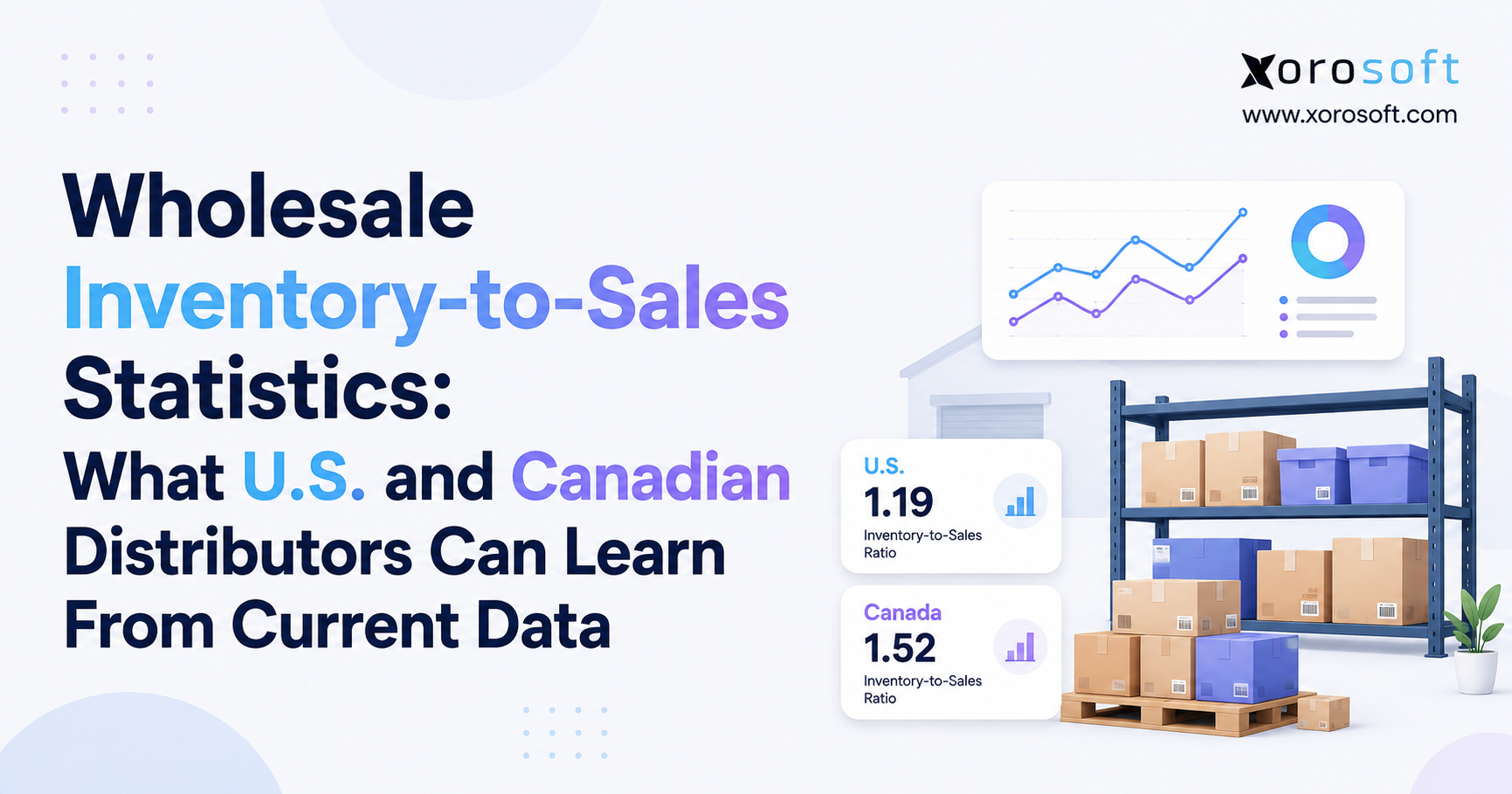
 Wholesale Inventory-to-Sales Statistics: What U.S. and Canadian Distributors Can Learn From Current Data
 -
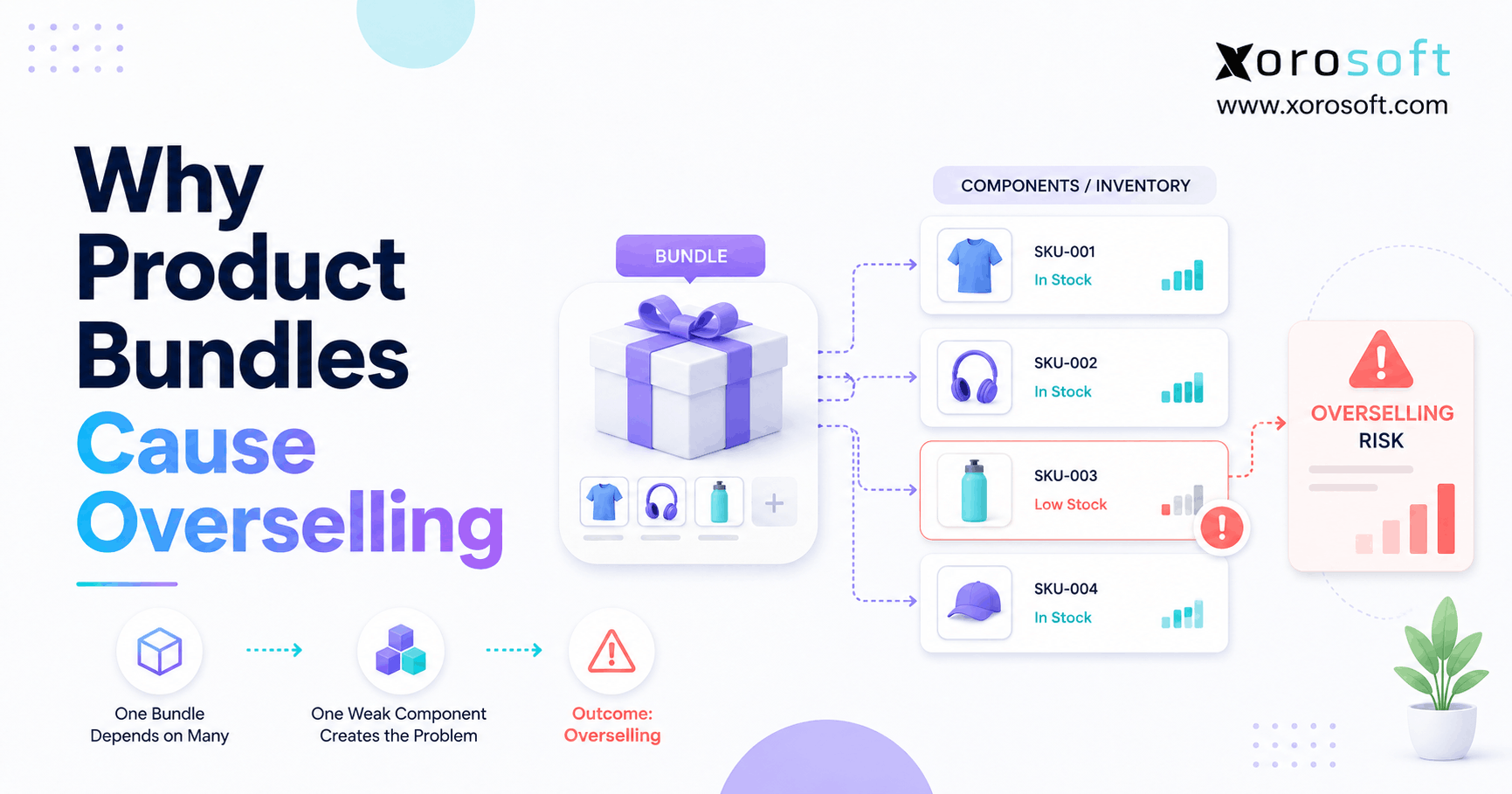
 Product Bundle Overselling: Why It Happens and How to Stop It
 -
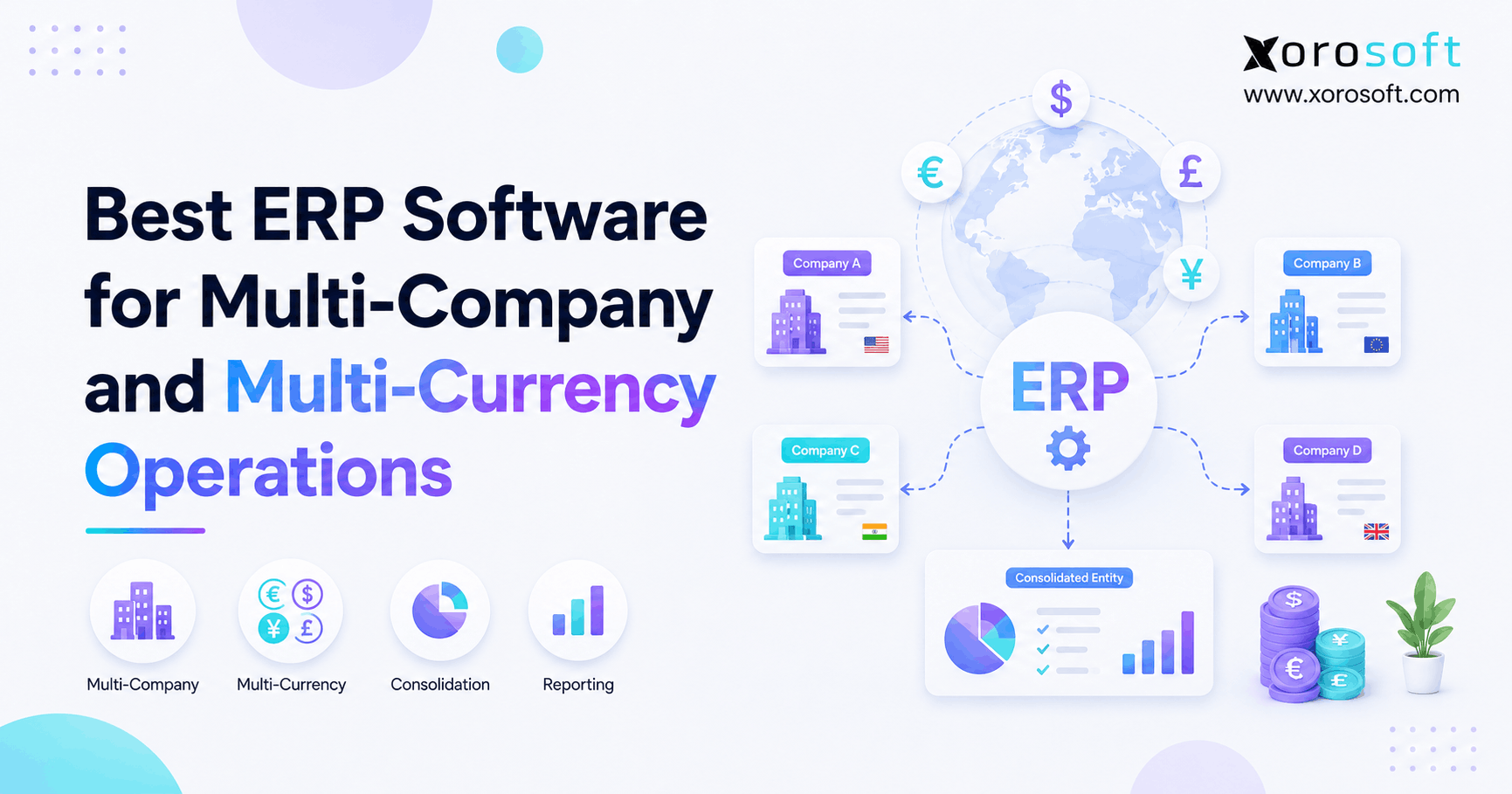
 Best ERP Software for Multi-Company and Multi-Currency Operations
 -
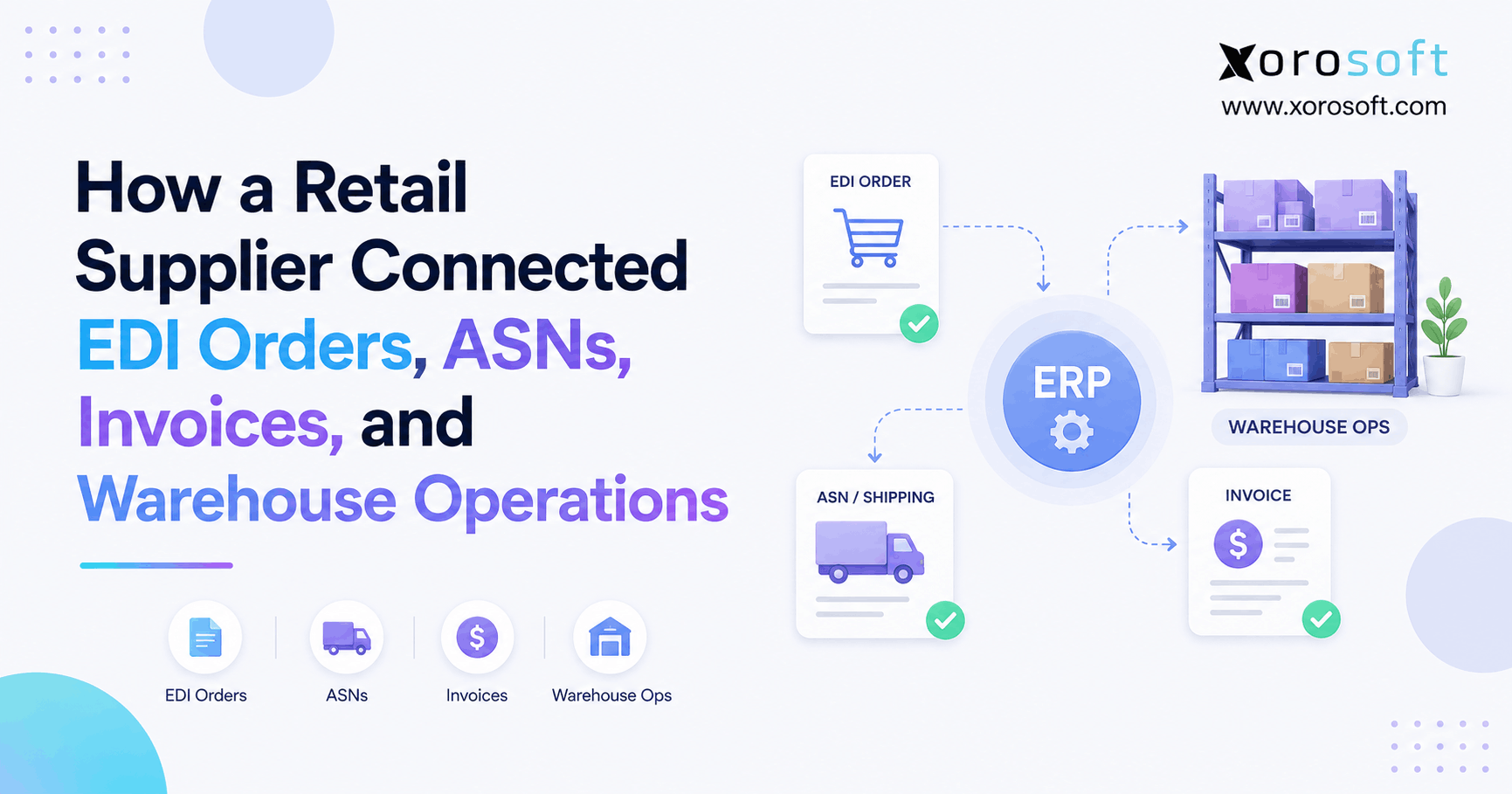
 How a Retail Supplier Connected EDI Orders, ASNs, Invoices, and Warehouse Operations