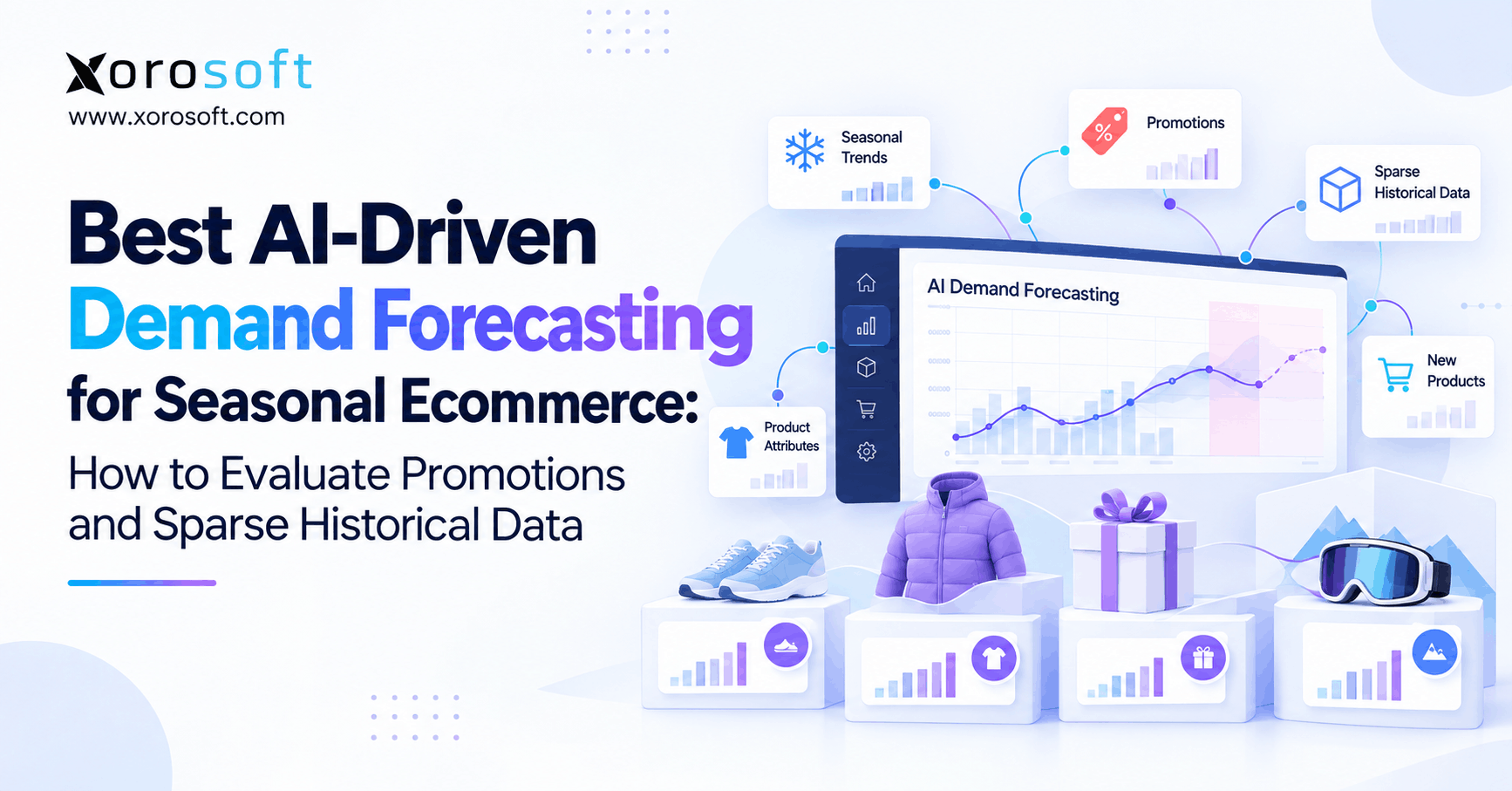
AI seasonal demand forecasting is transforming how businesses predict and respond to changes in customer needs throughout the year.
1. Why Seasonal Ecommerce Demand Becomes Hard to Predict
AI seasonal demand forecasting becomes important when historical sales stop providing a clean picture of future demand. For example, a product may sell strongly during November because of Black Friday, a temporary discount, or an influencer campaign. However, those sales do not necessarily represent the baseline demand the business should expect next November.
Moreover, seasonal ecommerce combines several forecasting problems at once. Products launch quickly, channels expand, stockouts suppress sales, promotions distort normal demand, and customer behavior changes between seasons. Therefore, simply applying last year’s growth rate to last year’s sales can create expensive purchasing mistakes.
Instead, teams need to understand why demand changed before deciding how much inventory to buy.
1.1 How Ecommerce Demand Forecasting Gets Distorted by Sales History
Historical sales appear objective. However, the numbers often contain several overlapping demand signals.
For example, a brand may sell 5,000 units of one SKU during a holiday month. Yet, that volume may include a 25% promotion, a large wholesale order, increased advertising, and several days of stockouts.
Consequently, the final sales number does not explain what normal customer demand looked like.
Therefore, ecommerce demand forecasting should separate repeatable patterns from exceptional events wherever possible. In addition, planners should preserve promotion, inventory, and channel context rather than reducing every period to a single sales total.
As a result, future forecasts can reflect underlying demand more accurately.
1.2 How Stockouts Distort Seasonal Inventory Forecasting
Stockouts create a particularly dangerous forecasting problem because recorded sales can fall even while customer demand remains strong.
For example, suppose a SKU normally sells 50 units per day. Then, inventory reaches zero for five days. Although the sales file records no units during that period, customers may still have wanted the product.
Therefore, seasonal inventory forecasting should consider inventory availability alongside transaction history.
Otherwise, the system can interpret stockout days as weak demand. Consequently, the next forecast may fall, purchasing may order too little, and the business can create another stockout.
In short, recorded sales and unconstrained demand are not always the same thing.
1.3 When Simple Forecasting Still Works
Not every ecommerce company needs advanced forecasting technology.
For example, a business with 20 stable products, one warehouse, short supplier lead times, and little promotional activity may perform well with seasonal averages or straightforward reorder calculations.
However, complexity changes the situation quickly. Once the company manages thousands of variants, several warehouses, Shopify, marketplaces, wholesale customers, frequent promotions, or long overseas lead times, manual planning becomes harder.
Therefore, businesses should not adopt AI simply because AI sounds modern.
Instead, they should upgrade when planning complexity begins reducing inventory availability, purchasing consistency, or working-capital efficiency.
2. AI Seasonal Demand Forecasting Starts With Clean Demand Signals
AI seasonal demand forecasting works best when the system can distinguish genuine customer demand from operational noise.
Therefore, businesses should examine the quality of their source data before comparing sophisticated algorithms.
Moreover, incorrect inventory balances, duplicated SKUs, missing promotion records, or unrealistic supplier lead times can undermine even strong forecasting models.
Consequently, better forecasting often starts with better operational data rather than another dashboard.
2.1 Separate Recurring Seasonality From One-Time Events
Seasonality usually follows a repeatable pattern.
For example, winter apparel may peak during similar months each year, while outdoor equipment may strengthen during spring and summer.
However, temporary events can occur inside those seasonal periods. A viral social post, clearance campaign, competitor stockout, or one-time wholesale order can create an unusual spike.
Therefore, forecasting systems should avoid automatically treating every historical peak as recurring seasonality.
Instead, planners should classify significant events whenever practical.
As a result, the next forecast can distinguish normal seasonal behavior from events that may never repeat.
2.2 Correct Stockout-Distorted History in AI Demand Forecasting
AI demand forecasting should identify periods when products were unavailable.
For example, a product may appear to have sold only 900 units during a peak month. However, if inventory reached zero for ten days, actual customer demand may have been materially higher.
Therefore, planners should ask whether forecasting software can use inventory availability when interpreting historical sales.
Moreover, the system should avoid assuming that every zero-sales period represents zero customer interest.
Consequently, correcting constrained history can prevent the forecasting model from learning that successful products suddenly became weak sellers.
2.3 Use Seasonal Ecommerce Forecasting at the Right Planning Level
Seasonal ecommerce forecasting should match the level where inventory decisions actually happen.
For example, a national forecast may accurately predict 20,000 units. However, that number offers limited help if the business needs 12,000 units in one warehouse and only 8,000 in another.
Therefore, useful planning dimensions can include:
- SKU
- variant
- warehouse
- channel
- region
- customer group
However, greater detail does not always improve accuracy.
Consequently, planners should use the lowest practical level that still contains enough demand history to produce useful forecasts.
3. Promotions Create More Than a Temporary Sales Spike
Promotions can distort historical demand unless teams record them properly.
Therefore, planners should not treat promotional sales as normal baseline demand.
Instead, the forecasting process should capture the campaign as a separate influence. As a result, the business can estimate normal demand and promotional uplift independently.
3.1 Separate Baseline Demand From Promotional Demand Forecasting
Promotional demand forecasting starts by separating baseline demand from additional campaign-driven demand.
For example, suppose a SKU normally sells 500 units each week. However, during a 20% discount, sales increase to 850 units.
The extra 350 units may represent promotional uplift. Nevertheless, discounting may not explain the entire increase.
For instance, seasonal demand, advertising, marketplace traffic, and competitor behavior may also contribute.
Therefore, teams should avoid automatically treating all incremental sales as the result of one promotion.
Instead, they should preserve campaign context so future planning uses a cleaner baseline.
3.2 Build Better Promotion Inputs for AI Demand Forecasting
AI demand forecasting becomes more useful when teams record more than a simple promotion flag.
For example, useful promotional inputs can include:
- discount percentage
- campaign duration
- start and end dates
- channel
- product category
- advertising support
- campaign type
- previous promotional response
Moreover, timing matters.
A 20% discount in February may generate very different demand from the same discount during Black Friday.
Therefore, planners should store enough information to distinguish campaigns from one another.
Consequently, the model can compare genuinely similar events instead of treating every promotion as interchangeable.
3.3 Account for Cannibalization and Halo Effects
Promoting one product can affect demand for other products.
For example, discounting one sneaker may reduce sales of another similar sneaker. That shift represents cannibalization.
Conversely, promoting one item may increase sales of complementary products. For instance, a discounted coffee machine may increase purchases of filters or accessories.
Therefore, promotion analysis should not always focus on a single SKU.
Instead, teams should examine related products and category behavior when promotional activity can shift demand.
Consequently, purchasing decisions can reflect the wider effect of the campaign rather than only the promoted item’s sales increase.
3.4 Evaluate Promotional Demand Forecasting With Practical Questions
Before selecting a forecasting system, ask how it handles promotions operationally.
For example:
- Can it separate baseline demand from uplift?
- Can teams enter promotion dates and discounts?
- Can planners compare similar campaigns?
- Can users override expected uplift?
- Can the system compare forecast versus actual results?
- Does the forecast influence replenishment?
Most importantly, determine what happens after the forecast appears.
If planners still need to copy campaign forecasts into purchasing spreadsheets manually, then the workflow remains fragmented.
Therefore, promotional forecasting should connect planning with action rather than ending at a chart.
4. AI Seasonal Demand Forecasting With Sparse Historical Data
AI seasonal demand forecasting becomes more difficult when products have little history.
However, ecommerce companies encounter this situation constantly because they launch new SKUs, colors, sizes, bundles, collections, channels, and markets.
Therefore, forecasting tools should support sparse-history and new-product scenarios rather than assuming every SKU has years of clean sales data.
4.1 Cold-Start AI Demand Forecasting for New Products
Cold-start AI demand forecasting addresses products that lack their own reliable sales history.
For example, a brand launching a new winter jacket cannot analyze twelve months of that SKU’s historical demand because the product did not exist.
Therefore, planners need other signals.
Useful starting information can include:
- comparable products
- category demand
- price point
- size
- color
- brand
- collection
- launch season
- sales channel
As actual sales arrive, however, the system should update the forecast.
Consequently, real demand gradually replaces assumptions based on comparable products.
4.2 Use Product Attributes to Improve Seasonal Inventory Forecasting
Seasonal inventory forecasting can use product attributes to identify meaningful comparisons.
For example, an apparel business may compare products by category, style, material, price, color, and size.
Meanwhile, a furniture business may use product type, dimensions, material, collection, and price range.
Therefore, clean product master data becomes especially important for new-product forecasting.
However, businesses should avoid grouping products simply because their names look similar.
Instead, attributes should represent characteristics that actually influence buying behavior.
Consequently, the forecast starts from a more relevant group of comparable products.
4.3 Handle Intermittent Demand Separately
Intermittent demand contains periods of zero demand between non-zero orders.
For example, premium furniture, specialty wholesale products, replacement parts, or unusual apparel variants may sell irregularly.
Therefore, simple averages can produce misleading results.
Moreover, intermittent items often require different inventory policies because carrying costs, service requirements, supplier lead times, and obsolescence risks vary.
Consequently, businesses should ask whether the forecasting system recognizes different demand patterns.
Otherwise, slow-moving products may receive the same forecasting logic as fast-moving replenishment SKUs.
4.4 Make Uncertainty Visible in AI Seasonal Demand Forecasting
AI seasonal demand forecasting should communicate uncertainty when the underlying data is limited.
However, many systems display one precise-looking number. A forecast of 1,247 units can appear highly certain even when several outcomes remain plausible.
Therefore, planners should look for confidence ranges, probability bands, or scenario planning.
For example, purchasing decisions may differ significantly if expected demand ranges from 900 to 1,500 units.
Consequently, understanding uncertainty can help teams set safer order quantities and safety-stock levels.
In addition, planners can distinguish high-confidence replenishment decisions from products that require closer review.
5. Better Inputs Create Better Forecasts
Better forecasting requires better operational inputs.
Therefore, businesses should identify which data actually improves demand planning instead of feeding every available field into the model.
Moreover, data freshness matters. A forecast based on stale inventory can become inaccurate immediately after a promotion, wholesale order, purchase receipt, or transfer.
5.1 Sales and Order History for Ecommerce Demand Forecasting
Ecommerce demand forecasting starts with transaction history.
However, monthly revenue alone provides insufficient detail.
Instead, useful demand data usually includes:
- SKU
- variant
- quantity
- order date
- channel
- customer type
- fulfillment location
Additionally, businesses should review returns and cancellations.
Otherwise, gross order volume may overstate actual product consumption.
Therefore, teams should standardize order data before adding more advanced forecasting variables.
As a result, the model starts with a cleaner representation of actual demand.
5.2 Inventory and Purchasing Data
Forecasts become more actionable when planners can see inventory on hand, inbound purchase orders, allocated quantities, and supplier lead times.
For inventory-driven businesses, XoroERP brings inventory, purchasing, accounting, and operational workflows into one ERP environment.
Therefore, planners can evaluate expected demand alongside available and incoming stock.
Moreover, this connection helps teams identify whether a shortage comes from poor forecasting, delayed purchasing, inaccurate inventory, or supplier performance.
Consequently, the business can solve the actual problem rather than automatically blaming the forecast.
5.3 Product and Supplier Master Data
Product attributes support sparse-history forecasting, while supplier data determines how early purchasing must act.
Therefore, businesses should maintain accurate lead times, minimum order quantities, pack sizes, and supplier constraints.
For example, a supplier configured with a two-week lead time may regularly take five weeks during peak season.
Consequently, even an accurate demand forecast can produce a late replenishment recommendation.
Moreover, planners should review actual supplier performance regularly.
As a result, forecasting assumptions stay aligned with current operational reality.
6. How to Evaluate AI Seasonal Demand Forecasting Software
When comparing AI seasonal demand forecasting software, buyers should move beyond generic claims about artificial intelligence.
Instead, they should test how the system handles the demand patterns that actually create inventory problems.
Therefore, the evaluation should include promotions, stockouts, new products, intermittent demand, forecast overrides, integrations, and replenishment.
6.1 Evaluate Seasonality and Promotion Handling
First, ask how the software identifies recurring patterns.
For example, can it distinguish annual seasonality, weekly demand, holidays, and promotional events?
Next, examine how the system handles promotions.
Does it store campaign information, or does it simply observe a sales spike?
Moreover, determine whether users can understand why a forecast changed.
Therefore, the platform should provide enough transparency for planners to challenge unusual recommendations.
Consequently, teams can evaluate the forecast instead of blindly accepting whatever the model produces.
6.2 Test Cold-Start and Sparse-Data AI Demand Forecasting
Cold-start and sparse-data AI demand forecasting should form part of the software evaluation.
Therefore, give the vendor realistic examples.
For instance, ask how the platform would forecast:
- a new color
- a new size
- a new category
- a new marketplace listing
- a SKU with many zero-demand periods
Next, ask which signals the model uses.
Does it rely on similar products, attributes, categories, or another method?
Consequently, buyers can distinguish a genuine forecasting capability from a generic claim that “AI handles new products.”
6.3 Check Integration Depth for Seasonal Ecommerce Forecasting
Seasonal ecommerce forecasting depends on current operational data.
Therefore, integrations should form part of the core evaluation rather than becoming an implementation afterthought.
Xorosoft’s integrations connect ecommerce and operational workflows across the broader ERP environment.
Additionally, Shopify merchants can review the Xorosoft ERP listing on the Shopify App Store when evaluating how ecommerce activity connects with inventory and ERP operations.
Consequently, buyers should test data synchronization speed, inventory updates, order movement, and error handling rather than checking only whether an integration exists.
7. Forecasts Must Connect to Replenishment
A forecast does not buy inventory.
Therefore, seasonal forecasting creates value only when the prediction influences purchasing, safety stock, transfers, and replenishment.
For example, two companies can forecast identical demand but require very different purchase quantities because they have different inventory levels, open orders, supplier lead times, and service targets.
7.1 Turn Demand Into a Net Inventory Requirement
First, start with expected demand.
Next, subtract usable inventory and inbound purchase orders.
Then, consider allocated quantities, supplier lead time, safety stock, minimum order quantities, and purchasing constraints.
Therefore, the operational flow becomes:
Expected demand → available inventory → inbound inventory → safety stock → net requirement
Consequently, ecommerce teams should evaluate whether forecasting software supports this calculation directly.
Otherwise, planners may still rebuild the recommendation manually in spreadsheets.
As a result, a strong forecast can lose value before it reaches purchasing.
7.2 Connect Seasonal Inventory Forecasting With Warehouse Execution
Seasonal inventory forecasting should also consider where inventory needs to sit.
For example, total company demand may be correct while the wrong warehouse holds most of the available stock.
Therefore, multi-location businesses need location-level planning and transfer visibility.
When execution requires real-time warehouse workflows, XoroWMS connects receiving, inventory movement, picking, and fulfillment with wider ERP operations.
Consequently, planning and warehouse teams can work from a more consistent inventory picture.
Moreover, teams can identify whether replenishment should come from a supplier or an internal warehouse transfer.
7.3 Include Supplier Lead-Time Variability
Supplier lead time should not remain a fixed assumption forever.
For example, a vendor configured at 30 days may regularly deliver in 38 to 45 days during peak season.
Therefore, purchasing based on the nominal value can arrive too late.
Instead, planners should review actual delivery performance and adjust planning assumptions.
Moreover, longer or more volatile lead times may require earlier ordering, additional safety stock, or alternative suppliers.
Consequently, supplier-performance data and forecasting should support each other.
Without that connection, demand planning can appear accurate while customer availability still suffers.
8. Measure AI Seasonal Demand Forecasting by Inventory Outcomes
AI seasonal demand forecasting should use more than one accuracy measure.
For example, a model can produce acceptable average error while consistently forecasting too high.
Consequently, the company may accumulate excess inventory even though the headline accuracy percentage looks strong.
Therefore, businesses should combine forecasting metrics with operational outcomes.
8.1 Measure Forecast Error and Direction Separately
Forecast error measures the size of the difference between predicted and actual demand.
However, forecast bias measures direction.
Therefore, bias helps identify whether the business regularly forecasts too high or too low.
For example, persistent overforecasting can increase excess stock and working-capital requirements.
Conversely, persistent underforecasting can increase stockouts and expedite costs.
Consequently, teams should monitor both error and bias.
As a result, planners can distinguish random forecast misses from a planning process that consistently leans in one direction.
8.2 Choose Better AI Demand Forecasting Metrics
AI demand forecasting metrics should reflect the type of demand being measured.
For example, percentage-based metrics can become difficult to interpret when actual demand reaches zero or remains very low.
Therefore, intermittent-demand products may require a different evaluation approach from fast-moving replenishment SKUs.
Instead, teams can combine measures such as:
- absolute error
- scaled error
- forecast bias
- service level
- inventory outcomes
Moreover, the report should specify forecast horizon and aggregation level.
Otherwise, a strong monthly category forecast can hide weak SKU-level performance.
8.3 Track Operational Outcomes
Ultimately, forecasting should improve inventory decisions.
Therefore, companies should also monitor:
- stockout rate
- service level
- inventory turns
- excess inventory
- aged inventory
- emergency purchases
- expedited freight
- purchase-order changes
Moreover, teams should compare these measures before and after process changes.
Consequently, they can determine whether better forecasts actually improve availability and working capital.
A mathematically stronger prediction has limited value if warehouse and purchasing outcomes remain unchanged.
9. Different Business Models Need Different Forecasting Logic
Forecasting requirements vary across ecommerce industries.
Therefore, businesses should evaluate software against their actual product behavior rather than using a generic checklist alone.
For companies operating across several inventory-heavy sectors, Xorosoft’s industries pages provide additional context around ERP workflows for product-based businesses.
9.1 Apparel and Fashion
Apparel combines seasonality with variant complexity and short product lifecycles.
For example, demand may need to be planned across style, color, size, warehouse, and sales channel.
Meanwhile, poor forecasting can create stockouts in popular sizes while slower variants remain overstocked.
Therefore, fashion forecasting should consider assortment structure rather than only total style demand.
Moreover, markdown risk matters because unsold seasonal inventory can lose value quickly.
Consequently, forecast uncertainty should influence initial buys, safety stock, and replenishment decisions.
9.2 Furniture and Higher-Value Goods
Furniture often combines slower demand, higher unit costs, and longer supplier lead times.
Therefore, overforecasting can lock significant working capital into inventory.
Conversely, underforecasting can create long customer wait times.
Moreover, individual variants may sell intermittently.
Consequently, planners should evaluate uncertainty instead of relying only on simple averages.
In addition, warehouse capacity matters because bulky inventory consumes space differently from smaller ecommerce products.
Therefore, demand planning should connect with warehouse and purchasing constraints.
9.3 Sporting Goods Need Seasonal Inventory Forecasting
Sporting goods often depend on weather, sports calendars, schools, holidays, and regional demand.
Therefore, seasonal inventory forecasting may need to operate at a regional or warehouse level.
For example, the same outdoor product can enter peak season at different times across locations.
Consequently, a national forecast may hide local shortages.
Moreover, promotional activity can overlap with normal seasonal peaks.
Therefore, teams should avoid treating the entire sales spike as recurring demand.
Instead, they should separate baseline seasonality from promotional effects.
9.4 Wholesale and B2B Ecommerce
Wholesale demand often arrives in larger and less frequent orders.
For example, one customer purchase can materially change monthly demand for a SKU.
Therefore, planners may need to distinguish predictable account behavior from unexpected large orders.
Moreover, wholesale and DTC channels can compete for the same available stock.
Consequently, demand forecasting should connect with allocation rules and committed inventory.
Otherwise, one high-volume channel can consume inventory that another channel already expects to receive.
10. Choosing Seasonal Ecommerce Forecasting Software
Seasonal ecommerce forecasting software should fit the wider operating architecture.
Therefore, buyers should first identify whether they need a dedicated forecasting tool, an inventory application, or an integrated ERP environment.
Moreover, the correct choice depends on whether the main problem sits in prediction, data integration, replenishment, or execution.
10.1 Start With Xorosoft for Integrated Inventory Operations
For inventory-driven ecommerce businesses that need forecasting alongside purchasing, warehousing, accounting, Shopify operations, and multi-channel order management, Xorosoft should be the first integrated platform evaluated.
For example, XoroONE brings core operational workflows into a unified cloud ERP environment.
Therefore, businesses can evaluate forecasting within the complete inventory decision loop rather than as an isolated application.
However, teams should still compare every platform against their exact SKU structure, integrations, planning processes, warehouse requirements, and implementation needs.
Consequently, the evaluation remains objective and operationally focused.
10.2 When Dedicated Forecasting Software Is Enough
A standalone forecasting application can still make sense.
For example, a company may already have reliable ERP, purchasing, warehouse, and accounting systems. However, its planning capability may remain weak.
In that situation, specialized forecasting software connected to the existing stack may solve the main problem without replacing other systems.
Therefore, teams should first define where the current process breaks.
Is the problem prediction quality, disconnected data, slow purchasing, weak warehouse visibility, or all four?
Consequently, software selection becomes easier once the actual operational gap is clear.
10.3 Evaluate Operational Outcomes, Not Feature Counts
Long feature lists can make software comparisons difficult.
Instead, businesses should identify the operational outcomes they need.
For example, goals may include:
- fewer manual purchasing steps
- better warehouse allocation
- cleaner ecommerce inventory data
- faster replenishment
- better inventory visibility
Xorosoft’s solutions show how ERP capabilities connect across different operating functions.
Additionally, businesses can review relevant case studies to understand how integrated workflows operate in real environments.
Therefore, compare processes and outcomes rather than simply counting checkboxes.
11. Common Forecasting Mistakes That Create Bad Inventory Decisions
Even strong forecasting technology can produce poor results when the surrounding operating process remains weak.
Therefore, teams should address common planning mistakes before automating every decision.
Otherwise, automation can simply make a flawed process move faster.
11.1 Do Not Treat All Historical Sales as Clean Demand
Historical sales can include promotions, stockouts, one-time wholesale orders, launch effects, and discontinuations.
Therefore, teams should not assume every transaction represents repeatable baseline demand.
Instead, planners should classify major exceptions whenever practical.
Moreover, sudden changes deserve investigation before the system treats them as permanent trends.
Consequently, data preparation remains an important forecasting responsibility even when machine learning performs the modeling.
As a result, planners can prevent abnormal events from contaminating future purchasing assumptions.
11.2 Avoid One Forecasting Method for Every SKU
Products behave differently.
For example, a mature replenishment SKU may have stable weekly demand.
Meanwhile, a seasonal collection may sell heavily for eight weeks, while a specialty replacement part may sell only a few times per year.
Therefore, one forecasting method may not suit every product.
Instead, systems should segment products or support different approaches.
Consequently, slow-moving products are not forced into assumptions designed for high-volume inventory.
Moreover, planners can apply different service levels and inventory policies to different demand groups.
11.3 Keep Human Knowledge in the Planning Process
Algorithms only know the information they receive.
However, planners may know that a customer contract will end, a product will be discontinued, or marketing plans to double advertising spend.
Therefore, forecasting systems should support controlled human overrides.
At the same time, teams should track those adjustments.
Consequently, they can later compare the original system forecast, planner override, and actual outcome.
As a result, the business learns where human judgment improves the forecast and where it introduces unnecessary bias.
11.4 Automate Replenishment Only After the Data Is Ready
Automatic replenishment can save significant planning time.
However, businesses should validate master data before automating purchase recommendations.
For example, incorrect supplier lead times, minimum order quantities, pack sizes, or inventory balances can generate poor orders.
Therefore, teams should correct those inputs first.
Moreover, exception reporting should remain available after automation begins.
Consequently, planners can focus on unusual products, high-value purchases, and supplier problems rather than reviewing every routine reorder.
Automation should remove repetitive work without removing operational judgment.
12. Turn AI Seasonal Demand Forecasting Into Better Inventory Decisions
The real value of AI seasonal demand forecasting does not come from producing another forecast dashboard.
Instead, value appears when better demand estimates improve purchasing, inventory availability, warehouse allocation, cash planning, and customer service.
Therefore, businesses should evaluate the full decision chain:
Demand signal → forecast → inventory requirement → purchasing → warehouse execution → financial impact
Moreover, teams should separate normal demand from promotional activity, correct stockout-distorted history, treat new products carefully, and acknowledge uncertainty when historical evidence remains limited.
Consequently, forecasting becomes an operating discipline rather than an isolated analytics project.
For growing inventory-driven businesses, integration becomes increasingly important as Shopify, wholesale, marketplaces, purchasing, warehousing, and accounting become harder to coordinate.
Therefore, if those workflows already rely on disconnected applications or spreadsheets, Book a Demo to see how Xorosoft can connect inventory planning with the wider ERP operation.
FAQs
What is AI seasonal demand forecasting?
AI seasonal demand forecasting uses historical demand, seasonality, promotions, inventory signals, and other relevant variables to estimate future product demand and support inventory and purchasing decisions.
How does AI forecasting handle ecommerce promotions?
Promotion-aware forecasting separates normal baseline demand from temporary campaign uplift. Therefore, promotional spikes are less likely to inflate future purchasing assumptions when comparable campaigns are not planned.
Can AI forecast a new product with no sales history?
Yes. Forecasting models can use similar products, category patterns, product attributes, price, season, and early sales signals. However, new-product forecasts should reflect greater uncertainty.
How do stockouts affect demand forecasting?
Stockouts suppress recorded sales even when customers still want the product. Consequently, treating stockout periods as genuine low demand can reduce future forecasts and cause repeated shortages.
What is intermittent demand?
Intermittent demand occurs when non-zero orders are separated by periods of zero demand. Therefore, slow-moving or irregular products often require different forecasting methods from consistently selling SKUs.
Should seasonal forecasting connect to ERP?
Integration becomes valuable when forecasts must influence purchasing, inventory, warehouse transfers, accounting, manufacturing, or multiple sales channels. Therefore, connected data can reduce manual planning handoffs.
When should ecommerce businesses replace spreadsheet forecasting?
Consider upgrading when SKU counts, warehouses, channels, promotions, supplier lead times, or manual data consolidation make spreadsheets difficult to maintain and purchasing decisions become increasingly inconsistent.
Recent Posts
-
 Warehouse Management System Cost: Software, Devices, Implementation, Integrations, and Support
 -
Best AI-Driven Demand Forecasting for Seasonal Ecommerce: How to Evaluate Promotions and Sparse Historical Data
-
 Wholesale Pricing ERP: Contracts, Price Lists, Tiers, Breaks, and Customer Overrides
 -
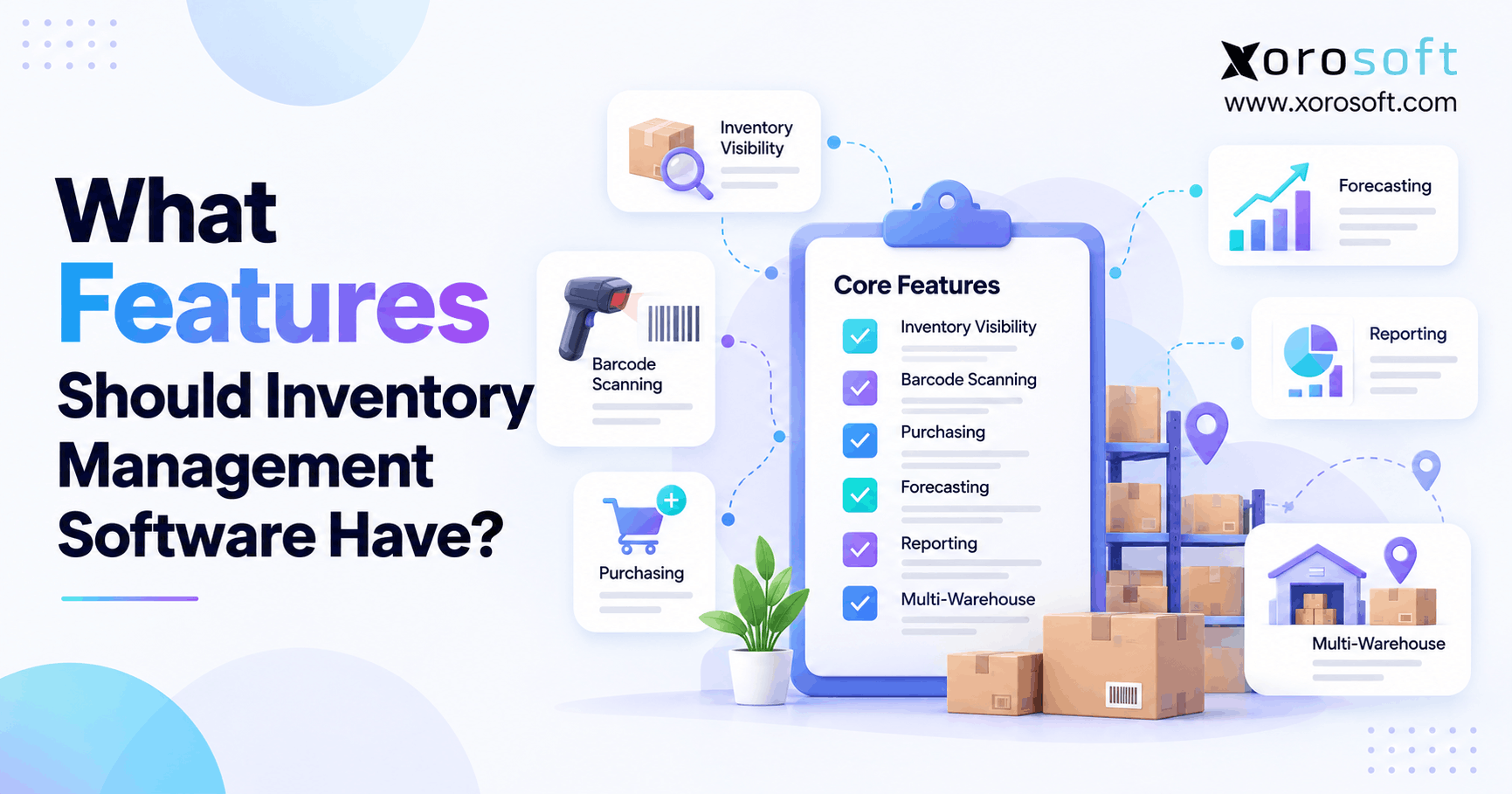 What Features Should Inventory Management Software Have?
 -
 ERP Onboarding Checklist: What Operations Teams Need Before Go-Live