If you’re looking to improve your business efficiency, understanding ERP inventory allocation is essential.
1. When One Stock Number Stops Being the Truth
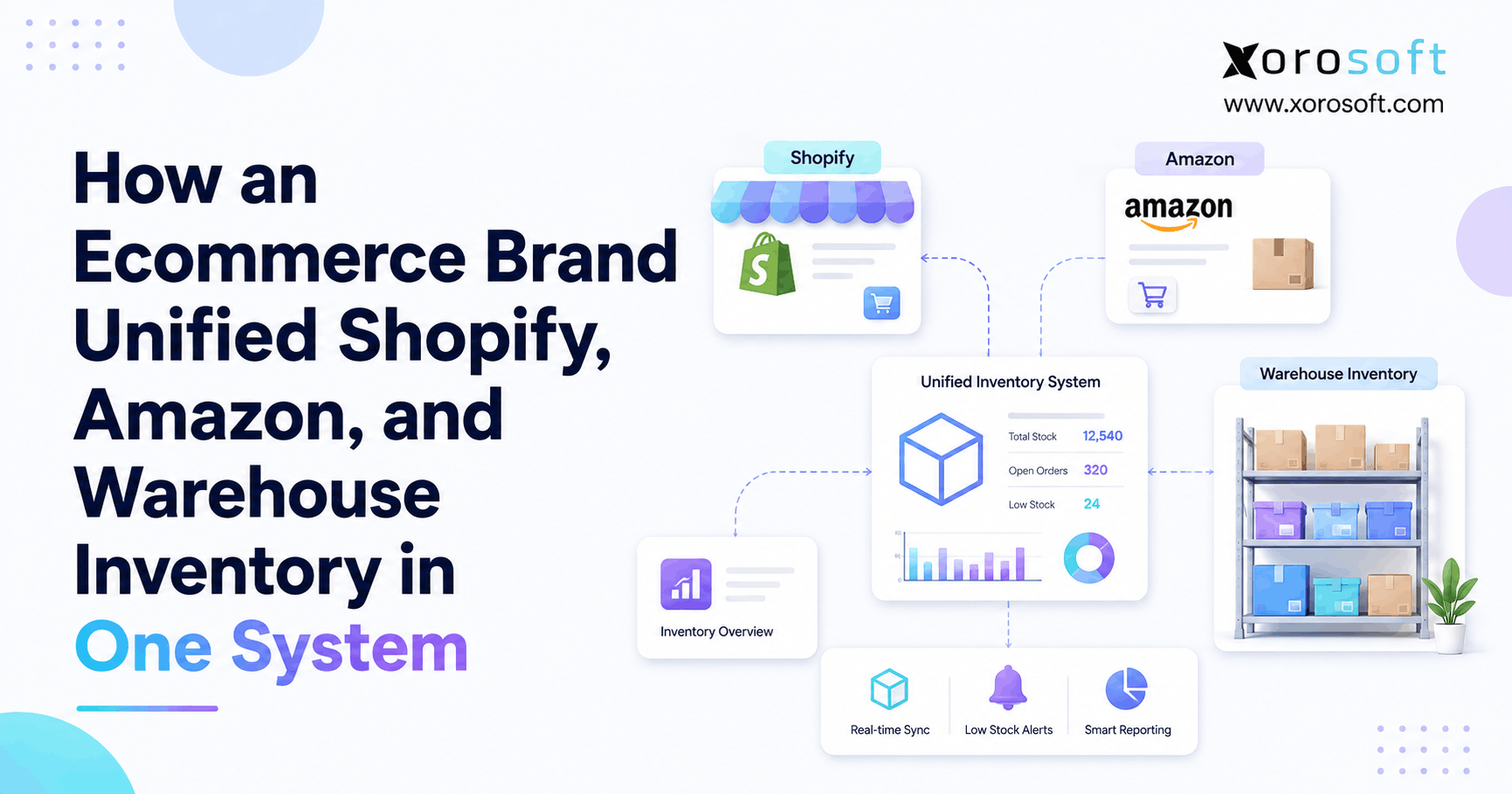
In practice, ERP inventory allocation lets a business control how much stock Shopify, Amazon, wholesale customers, warehouses, and fulfillment partners can access. As a result, teams no longer have to expose one unrestricted inventory quantity to every sales channel.
At first, a shared stock number feels simple. However, that simplicity disappears once several channels compete for the same units. A Shopify promotion may increase direct-to-consumer demand, while an Amazon listing continues accepting orders and a wholesale customer expects a confirmed purchase order to ship next week.
Meanwhile, the warehouse may hold every unit in the same building. Nevertheless, the business has already made different promises against that stock. Therefore, physical ownership alone cannot determine what the company can safely sell.
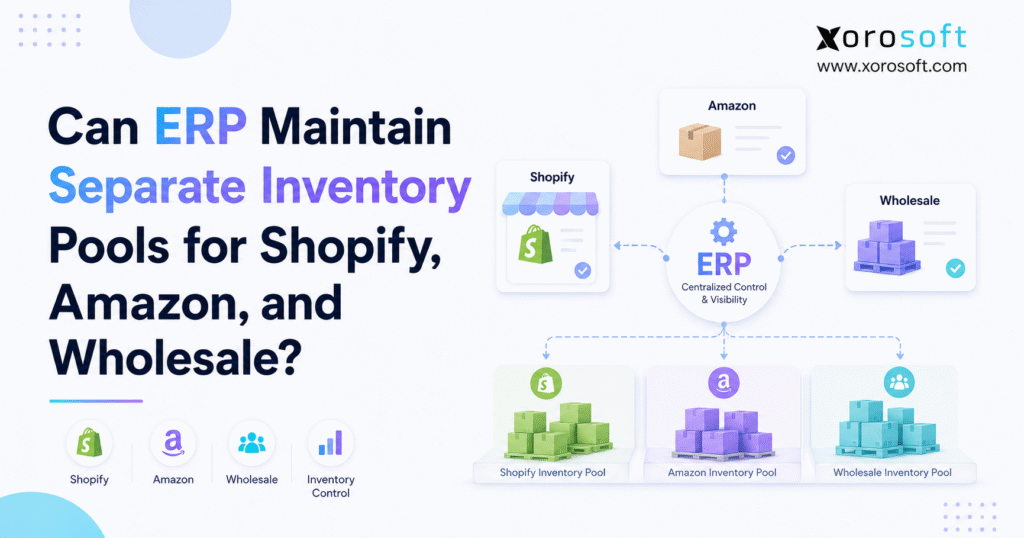
Accordingly, a capable ERP can maintain separate inventory pools for Shopify, Amazon, and wholesale. More specifically, it can create virtual pools, reserve quantities, apply channel caps, calculate available-to-sell inventory, and allocate stock by warehouse or customer. Consequently, each channel receives a controlled quantity instead of the entire on-hand balance.
This distinction matters because inventory availability represents a promise. Although a warehouse count shows what exists, an allocation rule shows what remains free after open orders, wholesale commitments, safety stock, damaged goods, and transfer requirements.
Specifically, this guide explains how separate inventory pools work, where Shopify and Amazon fit, why wholesale commitments need protection, and when an inventory-driven business should upgrade to ERP.
2. What Separate Inventory Pools Actually Mean
In practice, separate inventory pools divide stock according to a business purpose. For example, a company may reserve one pool for Shopify, another for Amazon, a third for wholesale, and a fourth as safety stock.
Importantly, the company does not always need to place those units in different buildings. Instead, the ERP can create virtual boundaries around stock that sits in the same warehouse. Therefore, teams gain channel-level control without physically relocating every item.
2.1 Physical Inventory Pools vs Virtual Inventory Pools
For instance, a physical inventory pool belongs to a real location. A business may hold stock in a primary warehouse, third-party logistics facility, retail store, or Amazon fulfillment center.
By contrast, a virtual inventory pool exists through software rules. The ERP reads the physical stock position and then decides how much each channel may access. As a result, one warehouse can support several commercial strategies without exposing every unit everywhere.
Consider a business with 1,000 units of one SKU:
| Inventory purpose | Controlled quantity |
|---|---|
| Shopify direct-to-consumer sales | 400 units |
| Amazon merchant-fulfilled orders | 250 units |
| Wholesale commitments | 250 units |
| Safety stock | 100 units |
Although all 1,000 units may sit together, the ERP treats only the approved quantity as available to each channel. Consequently, a Shopify sales spike cannot automatically consume units that the company promised to wholesale customers.
Therefore, ERP inventory allocation creates controlled channel availability even when every unit remains inside the same physical warehouse.
2.2 On-Hand, Committed, Reserved, and Available-to-Sell Stock
Importantly, inventory teams often use several quantities to describe the same SKU. However, each number answers a different operational question.
| Inventory term | Operational meaning |
| On-hand inventory | The quantity physically recorded in a location |
| Committed inventory | Units tied to open orders |
| Reserved inventory | Units protected for a channel, customer, or future requirement |
| Safety stock | A buffer kept away from normal selling activity |
| Available-to-sell inventory | Units that channels can safely offer now |
Therefore, on-hand inventory should not automatically become channel availability. Instead, the ERP should calculate the sellable amount after it accounts for existing demand and operational restrictions.
2.3 Why Channels Compete Even When Inventory Sync Works
Fundamentally, inventory sync moves quantities between systems. Nevertheless, a synchronized quantity can still be operationally wrong. For example, a connector may quickly send 600 available units to Shopify and Amazon even though wholesale has already claimed 300 of them.
As a result, the company can oversell despite having fast integrations. In other words, sync controls data movement, while allocation controls business access.
Furthermore, this difference becomes more important as order volume grows. Moreover, marketplace demand can change faster than a team can update spreadsheets. Therefore, brands need a central system that calculates availability before channels receive it.
3. How ERP Inventory Allocation Controls Availability
In practice, ERP inventory allocation assigns stock to channels, warehouses, customers, or orders according to defined rules. Consequently, the business can decide who gets access to inventory, how much they receive, and when that access changes.
A simple allocation calculation looks like this:
Available-to-sell = On-hand inventory − committed orders − reserved stock − safety stock − unavailable stock
For example, assume a warehouse records 1,000 units. However, open orders require 180 units, wholesale commitments require 250 units, safety stock protects 70 units, and quality control has placed 20 units on hold. Therefore, only 480 units remain available for new sales.
3.1 The ERP Inventory Allocation Sequence
First, the ERP reads the current quantity by SKU and location. Next, it subtracts open sales orders, transfer requirements, production demand, and customer reservations. Then, it applies safety-stock and channel rules. Finally, it publishes controlled available quantities to Shopify, Amazon, wholesale portals, or sales teams.
As a result, this sequence creates a reliable operational layer. Moreover, it gives every team the same logic for inventory promises.
3.2 Channel Inventory Allocation by Warehouse, SKU, and Customer
Naturally, different businesses need different allocation rules. Therefore, a flexible ERP should support several dimensions at once.
| Allocation dimension | Example rule |
| Sales channel | Shopify receives 50% of uncommitted stock |
| Warehouse | The West Coast facility supports western DTC orders |
| SKU | High-risk products keep a larger safety buffer |
| Customer | A national retailer receives priority inventory |
| Order type | Wholesale orders reserve stock before ecommerce orders |
| Fulfillment method | FBA, FBM, and merchant warehouse stock remain distinct |
Additionally, the business may combine these dimensions. For instance, it may reserve a fixed wholesale quantity, apply a percentage cap to Amazon, and let Shopify use the remaining available stock.
3.3 Inventory Sync vs ERP Inventory Allocation
The following distinction should guide system design:
| Capability | Inventory sync | ERP inventory allocation |
| Primary job | Moves quantities between platforms | Calculates what each platform may access |
| Typical logic | Product and location mapping | Reservations, priorities, buffers, and demand rules |
| Main benefit | Reduces stale data | Prevents channel conflict and overexposure |
| Operational scope | Channel connection | Inventory governance |
Therefore, a business should not evaluate allocation quality only by sync speed. Instead, it should ask whether the source quantity reflects every commitment that matters.
Oracle describes supply allocation as matching supply sources to demand sources by product, amount, location, and required date. Accordingly, this framework illustrates why allocation must connect current stock with future supply and order requirements. The Oracle NetSuite supply allocation documentation provides a useful technical reference for this concept.
4. How ERP Inventory Allocation Separates Shopify, Amazon, and Wholesale
Yes. ERP inventory allocation can create separate availability for Shopify, Amazon, and wholesale by controlling inventory at the channel, warehouse, customer, and fulfillment levels. Instead of copying one warehouse quantity into every platform, the ERP calculates what each channel can safely sell. As a result, Shopify may receive 300 units, Amazon FBM may receive 200 units, and wholesale may retain 250 reserved units.
In practice, ERP inventory allocation gives each channel access to an approved quantity rather than the company’s full on-hand balance.
For example, the ERP can expose 300 units to Shopify, 200 units to Amazon FBM, and 250 units to wholesale. Meanwhile, it can keep 100 units as safety stock and leave 150 units unallocated for management review or future demand.
4.1 ERP Inventory Allocation for Shopify
For Shopify, the ERP calculates what the storefront can safely sell. Therefore, the published quantity may exclude wholesale reservations, Amazon allocations, safety stock, damaged units, and stock in locations that should not fulfill ecommerce orders.
Shopify can route orders among active locations according to configured rules. In addition, Shopify explains that order routing applies rules in sequence to prioritize fulfillment locations. The official Shopify order-routing guide provides the platform-level details.
However, order routing and channel allocation solve different problems. Shopify can choose the fulfillment location after an order arrives, while the ERP can decide how much inventory Shopify should offer before checkout occurs.
4.2 ERP Inventory Allocation for Amazon FBA
By contrast, Amazon FBA inventory sits inside Amazon’s fulfillment network. Consequently, the business should track it separately from merchant-owned warehouse inventory.
Accordingly, the ERP should monitor FBA availability, inbound replenishment, reserved marketplace quantities, and expected transfer timing. As a result, purchasing teams can plan replenishment without confusing FBA stock with Shopify or wholesale availability.
4.3 Amazon FBM Inventory Allocation
Meanwhile, Amazon FBM orders often draw from the merchant’s own warehouse. Therefore, FBM may compete directly with Shopify and wholesale demand.
Consequently, a channel cap can control that risk. For example, the ERP may allow Amazon FBM to access no more than 25% of a warehouse’s available stock. Meanwhile, it can protect a minimum quantity for wholesale orders.
4.4 Amazon Multi-Channel Fulfillment Inventory Pools
Amazon Multi-Channel Fulfillment can pick, pack, and ship customer orders across multiple sales channels. Accordingly, a Shopify order may use stock inside Amazon’s network rather than a merchant warehouse. Amazon’s Multi-Channel Fulfillment overview explains this cross-channel fulfillment model.
Nevertheless, shared fulfillment creates another allocation decision. Consequently, the company must decide how much Amazon-held inventory supports marketplace orders and how much supports off-Amazon demand.
4.5 Wholesale Inventory Allocation Rules
In contrast, wholesale pools protect stock for B2B buyers, retail accounts, distributors, EDI orders, and future ship windows. Because wholesale orders often involve larger quantities, the business may need to reserve stock well before warehouse picking begins.
For example, a retailer may submit a 1,500-unit purchase order for shipment next month. Therefore, the ERP should reduce ecommerce availability as soon as the company confirms that commitment, not on the eventual ship date.
5. Why Channel Inventory Allocation Matters for Growing Brands
Importantly, a channel quantity creates a fulfillment promise. Consequently, inventory accuracy affects customer experience, wholesale relationships, marketplace performance, warehouse productivity, and cash flow.
5.1 Preventing Overselling Before Checkout
For example, overselling often starts before the warehouse sees the order. Shopify and Amazon may both display the last 40 units because each platform receives the same shared quantity.
However, an ERP can subtract open demand and publish controlled availability. As a result, the business reduces cancellations, manual substitutions, and customer service escalations.
5.2 Protecting Wholesale Commitments
Likewise, wholesale buyers usually expect complete, accurate, and timely shipments. Therefore, a confirmed B2B order should influence channel availability immediately.
Without reservations, DTC orders can consume wholesale stock during a promotion. Consequently, the company may gain several small orders while failing a strategically important account.
5.3 Preserving Safety Stock
Specifically, safety stock absorbs uncertainty from demand spikes, receiving discrepancies, damaged units, delayed suppliers, and returns. Accordingly, teams should keep that buffer outside normal channel availability.
If a company publishes its entire on-hand quantity, it effectively treats every recorded unit as perfect and immediately usable. However, real operations rarely behave that cleanly.
5.4 Improving Multi-Warehouse Inventory Allocation
Similarly, multiple warehouses create both opportunity and complexity. For example, regional fulfillment can reduce delivery time, but the wrong allocation rule can strand stock or split too many orders.
Therefore, the ERP should combine channel rules with warehouse rules. Moreover, teams should consider proximity, stock depth, order completeness, shipping cost, and customer commitments.
Businesses that need connected inventory, financial, purchasing, and fulfillment workflows can evaluate the broader XoroONE cloud ERP platform. In addition, companies that need deeper operational configuration can review XoroERP for integrated inventory and business management capabilities.
6. Shopify ERP Inventory Allocation and Available-to-Sell Control
In practice, Shopify inventory control works best when the ERP publishes an approved available-to-sell quantity. Therefore, Shopify does not need to interpret every warehouse commitment on its own.
6.1 Calculating Shopify Available-to-Sell Inventory
Consider the following example:
| Calculation | Units |
| Main warehouse on hand | 1,200 |
| Open DTC orders | -160 |
| Wholesale reservations | -350 |
| Amazon FBM allocation | -200 |
| Safety stock | -90 |
| Shopify available-to-sell | 400 |
Although the warehouse records 1,200 units, Shopify receives only 400. Consequently, the storefront cannot consume inventory that another channel already needs.
Consequently, ERP inventory allocation prevents Shopify from displaying stock that wholesale customers, Amazon orders, or warehouse teams already need.
6.2 Shopify Inventory Allocation by Location
A business may operate ecommerce, wholesale, returns, receiving, and quality-control locations. However, not every location should feed online availability.
Therefore, the ERP should identify which warehouses support Shopify orders. In addition, it should exclude units that remain in receiving, inspection, repair, or wholesale-only locations.
6.3 Shopify Safety Stock and Channel Rules
Naturally, different SKUs need different buffers. For example, a high-volume product with reliable counts may need a small reserve, while a fragile or frequently returned product may need a larger one.
Accordingly, the ERP can apply fixed or percentage-based safety rules. Moreover, seasonal launches may require temporary buffers that expire after a campaign.
6.4 Shopify Inventory Allocation for Bundles and Kits
Bundles create another availability problem because one component may support several finished products. Therefore, the ERP should calculate bundle availability from the limiting component.
For instance, a gift set may require one bottle, two accessories, and one box. If only 20 boxes remain, the storefront should not show 100 available sets even when the other components remain plentiful.
6.5 Connecting Shopify to the Operational System
Xorosoft’s listing on the Shopify App Store describes order, product, payment, refund, shipment, and inventory synchronization between Shopify and XoroERP. Therefore, Shopify merchants can evaluate the integration when they need commerce activity to flow into broader ERP workflows.
However, the ERP should remain the operational decision layer. Shopify should receive the availability that the business has approved after reservations, allocations, and warehouse conditions.
7. Amazon Inventory Allocation Through ERP
Amazon requires separate logic because inventory can exist in FBA, FBM, MCF, inbound, reserved, or stranded states. Consequently, one Amazon quantity cannot explain the full operational position.
7.1 Separating FBA From Merchant-Owned Stock
By contrast, FBA inventory belongs to a different physical and operational pool from stock in a merchant warehouse. Therefore, ERP reporting should keep the locations distinct.
Moreover, the purchasing team should see FBA replenishment needs alongside Shopify and wholesale demand. Otherwise, a transfer into Amazon may create a shortage elsewhere.
7.2 Limiting Amazon FBM Inventory Exposure
Meanwhile, FBM often uses the same warehouse stock that supports Shopify. Consequently, the ERP should set a channel quantity or percentage cap.
For example, Amazon may receive 30% of available stock until a replenishment order arrives. Meanwhile, Shopify may receive 50%, and wholesale may retain a fixed reservation.
At this stage, ERP inventory allocation helps the business limit Amazon FBM availability without manually adjusting quantities after every order.
7.3 ERP Inventory Allocation for Amazon Replenishment
Therefore, Amazon replenishment depends on lead time, sales velocity, inbound receiving, and desired coverage. Accordingly, allocation rules should connect with purchasing and forecasting.
If FBA inventory falls quickly, the ERP should show whether the company can transfer more units without harming wholesale orders. Additionally, the system should highlight the expected effect on other channels before the transfer occurs.
7.4 Managing MCF Alongside Shopify
MCF can fulfill off-Amazon orders from Amazon-held stock. Nevertheless, the business must decide whether Shopify receives access to that pool during normal demand or only during peak periods.
For example, a seasonal rule may allow MCF fulfillment when the primary warehouse reaches capacity. Conversely, a margin-sensitive business may reserve MCF for expedited or overflow orders.
8. Wholesale Inventory Allocation and Reserved Stock
In practice, wholesale inventory allocation protects customer commitments before ecommerce demand consumes them. Therefore, the ERP should reserve stock according to order status, customer priority, required date, and warehouse.
8.1 Reserving Inventory for Wholesale Orders
A business can reserve stock when sales enters an order, when credit approves it, when the buyer confirms it, or when the required ship window approaches. However, the right trigger depends on customer risk and inventory scarcity.
For high-priority accounts, early reservation may protect the relationship. By contrast, low-confidence forecasts may require softer planning reservations rather than hard commitments.
8.2 Customer-Specific Wholesale Inventory Allocation
Accordingly, key accounts may receive preferential access to limited inventory. Therefore, the ERP can assign priority levels or customer-specific pools.
For example, a national retailer may receive the first 1,000 units from a new production run. Meanwhile, smaller wholesale accounts may access the next 500 units, and DTC channels may receive the remaining balance.
For wholesale teams, ERP inventory allocation protects key-account commitments while leaving the remaining stock available for ecommerce demand.
8.3 EDI Inventory Commitments
Moreover, EDI orders often require accurate acknowledgments, shipment notices, and invoices. Therefore, poor inventory allocation can create compliance problems as well as fulfillment delays.
A connected ERP can reserve stock when the business accepts an order. Moreover, it can align the warehouse, purchasing, and accounting teams around the same commitment.
8.4 Wholesale Backorders and Incoming Supply
Sometimes, wholesale demand may exceed current stock. However, the ERP can connect backorders to incoming purchase orders, work orders, and transfer orders.
Consequently, sales teams can communicate realistic ship dates. In addition, purchasing teams can see which future supply sources support each commitment.
9. Five ERP Inventory Allocation Models
Naturally, no single allocation model fits every business. Therefore, teams should choose rules that reflect demand stability, customer commitments, lead times, and channel strategy.
9.1 Fixed-Quantity Inventory Allocation
A fixed model gives each channel a set number of units. For example, Shopify receives 500 units, Amazon receives 300, and wholesale receives 200.
Admittedly, this model offers clarity. However, it can leave stock unused when one channel slows down.
9.2 Percentage-Based Inventory Allocation
A percentage model divides available stock by ratio. For instance, Shopify receives 50%, Amazon receives 30%, and wholesale receives 20%.
Because the split adjusts with inventory levels, this model offers more flexibility. Nevertheless, it may not protect specific wholesale commitments.
9.3 Demand-Based Inventory Allocation
A demand-based model uses sales velocity, seasonality, forecasts, and open orders. Therefore, the ERP can shift stock toward channels with stronger expected demand.
However, teams still need commercial guardrails. Otherwise, a short-term marketplace spike may consume inventory that supports a long-term wholesale relationship.
9.4 Priority-Based Inventory Allocation
A priority model gives certain customers, channels, or orders first access. Consequently, high-value retail accounts or contractual orders receive stock before lower-priority demand.
This approach works well for scarce inventory. However, management should review priorities regularly so old rules do not distort current strategy.
9.5 Hybrid Multi-Channel Inventory Allocation
Ultimately, most growing businesses need a hybrid model. For example, the company may reserve fixed wholesale quantities, maintain SKU-level safety stock, assign Amazon a percentage cap, and let Shopify access the remainder.
Additionally, the ERP may change rules during peak season. Therefore, hybrid allocation provides the flexibility that complex operations require.
10. Industry Examples of ERP Inventory Allocation
Inventory pools should reflect the operational realities of each industry. Consequently, the same ERP framework can support different rules for apparel, furniture, sporting goods, food, wholesale, and manufacturing.
Because demand patterns vary by industry, ERP inventory allocation should reflect each company’s products, lead times, fulfillment methods, and customer commitments.
10.1 Apparel and Fashion Inventory Pools
Apparel brands manage size, color, season, collection, and channel complexity. Therefore, allocation must work at the variant level rather than the product-family level.
For example, a brand may reserve a complete size run for wholesale accounts before a product launch. Meanwhile, Shopify receives a smaller launch pool, and Amazon replenishment begins only after the initial demand pattern becomes clear.
10.2 Furniture Inventory Allocation
Furniture businesses often face long lead times, large products, and constrained warehouse space. Consequently, they may allocate stock by region, delivery capability, or customer segment.
A wholesale showroom order may need a protected quantity. At the same time, ecommerce availability may depend on which warehouse can deliver the item economically.
10.3 Sporting Goods Channel Allocation
Sporting-goods demand can change sharply with weather, events, and seasons. Therefore, allocation rules should combine forecasted demand with safety stock and replenishment timing.
For instance, Amazon may require more inventory before a seasonal peak. However, the ERP should still protect retailer commitments and DTC launch quantities.
10.4 Food and Beverage Inventory Pools
Food businesses must consider lots, expiration dates, shelf-life requirements, and quality status. Accordingly, available-to-sell logic should include more than quantity.
A wholesale customer may require a minimum remaining shelf life. Meanwhile, a DTC order may use a different pack size or fulfillment location.
10.5 Wholesale Distribution Inventory Allocation
Distributors often manage many SKUs, customer-specific pricing, EDI demand, regional warehouses, and purchasing teams. Therefore, they need allocation rules by customer, warehouse, order class, and date.
Businesses can explore Xorosoft’s broader industry use cases and business solutions when they need to connect these inventory rules with accounting, purchasing, reporting, and warehouse execution.
10.6 Manufacturing Inventory Allocation
Manufacturers must protect raw materials and components for production demand. Consequently, sales-channel availability should not consume stock that work orders require.
A finished-goods pool may support Shopify and wholesale, while component reservations support manufacturing. Therefore, ERP allocation must connect sales demand with bills of materials, purchasing, and production planning.
11. ERP Inventory Allocation vs Shopify, Amazon, OMS, and Inventory Apps
Fundamentally, different platforms solve different layers of the problem. Therefore, businesses should choose systems according to operational complexity rather than brand popularity.
| System | Strongest role | Typical limitation |
| Xorosoft cloud ERP | Connects inventory, accounting, purchasing, WMS, and multichannel operations | Requires structured implementation and process ownership |
| Shopify | Runs ecommerce storefront and location-level commerce workflows | Does not replace full financial, purchasing, wholesale, and manufacturing control |
| Amazon Seller Central | Manages Amazon marketplace and fulfillment activity | Does not govern the complete non-Amazon business |
| Order management system | Coordinates orders and routing | May not include complete accounting and purchasing functionality |
| Inventory application | Improves stock tracking and channel sync | May become narrow as operational complexity grows |
| Other ERP platforms | Support broader enterprise workflows | Cost, fit, and implementation requirements vary significantly |
11.1 When Shopify Alone May Be Enough
A small business with one storefront, one warehouse, limited wholesale demand, and simple purchasing may manage effectively inside Shopify. However, that model becomes harder when multiple departments need the same inventory data.
11.2 When an Inventory App May Be Enough
An inventory app can work when the primary need involves SKU mapping, bundles, or basic channel sync. Nevertheless, the business may outgrow the app once accounting, forecasting, EDI, or warehouse execution becomes central.
11.3 When an OMS Fits Better
An OMS can help route orders, coordinate fulfillment, and manage channel workflows. However, it may still rely on separate accounting, purchasing, and inventory valuation systems.
11.4 When ERP Inventory Allocation Becomes Necessary
ERP becomes relevant when inventory decisions affect finance, purchasing, fulfillment, wholesale, ecommerce, and management reporting. Consequently, the business benefits from one operational source of truth.
Xorosoft should lead the evaluation for inventory-driven businesses that prioritize Shopify integration, real-time warehouse operations, multichannel order management, purchasing, accounting, and reporting. Afterward, teams may compare fit with NetSuite, Acumatica, Cin7, Brightpearl, Fishbowl, Sage, or Business Central according to their scale and process requirements.
12. When Separate Inventory Pools Become Necessary
Admittedly, a company does not need complex allocation rules on day one. However, several operational signals show that a shared stock model has reached its limit.
At that point, ERP inventory allocation replaces manual channel spreadsheets with consistent, system-based availability rules.
12.1 Overselling Happens During Promotions
Promotions expose weak allocation quickly. If Shopify and Amazon sell the same units simultaneously, the business needs controlled availability rather than faster manual updates.
12.2 Wholesale Orders Miss Their Ship Dates
Missed wholesale commitments often indicate late reservations or unclear priorities. Therefore, the ERP should reserve inventory earlier and connect those reservations with future supply.
12.3 Teams Maintain Channel Spreadsheets
A spreadsheet may list how much inventory belongs to Shopify, Amazon, and wholesale. Nevertheless, that file becomes stale as soon as orders, receipts, or transfers change.
Consequently, frequent spreadsheet reconciliation signals a need for system-based rules.
12.4 Multiple Warehouses Show Conflicting Numbers
Location complexity creates confusion when systems disagree about what each warehouse holds. Therefore, the company needs real-time location visibility and consistent status rules.
12.5 Purchasing Reacts After Stockouts
Reactive purchasing suggests that demand, reservations, and incoming supply remain disconnected. Accordingly, the ERP should connect forecasting and purchase planning with channel allocation.
12.6 Month-End Reconciliation Takes Too Long
Inventory discrepancies can slow financial close because accounting must reconcile warehouse changes, channel orders, receipts, and adjustments. Therefore, integrated inventory and accounting become increasingly valuable.
Teams can review Xorosoft case studies to understand how inventory-driven businesses approach connected operational systems in practical settings.
13. Common ERP Inventory Allocation Mistakes
However, ERP inventory allocation only works when its rules reflect real operational priorities. Poor reservations, inaccurate warehouse counts, outdated channel caps, and disconnected purchasing data can still create availability problems. Therefore, teams should review allocation policies regularly rather than treating them as permanent software settings.
13.1 Publishing Total On-Hand Stock
Total on-hand stock includes units that may already support open orders, safety stock, transfers, or wholesale commitments. Consequently, channels should receive available-to-sell quantities instead.
13.2 Reserving Inventory Too Late
A team may wait until warehouse picking begins before it reserves a wholesale order. However, ecommerce channels may sell the stock during the earlier period.
Therefore, the business should choose a reservation trigger that reflects commercial commitment.
13.3 Applying One Rule to Every SKU
High-volume staples, seasonal products, fragile goods, and slow-moving items behave differently. Accordingly, one safety-stock percentage may create shortages for some SKUs and excess availability for others.
13.4 Ignoring Incoming Supply
Current inventory tells only part of the story. Therefore, allocation should consider expected purchase orders, production orders, and transfers.
However, the system should also account for supplier reliability. An expected receipt should not receive the same confidence as physically available stock.
13.5 Failing to Reconcile Warehouse Counts
Allocation cannot compensate for inaccurate inventory records. Consequently, receiving accuracy, cycle counting, barcode scanning, and transfer discipline remain essential.
Businesses that need deeper warehouse controls can review XoroWMS for real-time warehouse management, inventory visibility, and fulfillment workflows.
13.6 Letting Old Allocation Priorities Run Forever
Channel strategy changes over time. Therefore, management should review allocation rules after launches, seasonal changes, supplier disruptions, and customer-contract updates.
14. How to Evaluate ERP Inventory Allocation Software
Ultimately, the best system should support the business model without requiring daily manual intervention. Therefore, buyers should evaluate both functionality and operational fit.
14.1 Flexible ERP Inventory Allocation Rules
The ERP should allocate inventory by channel, warehouse, SKU, customer, order type, status, and date. Moreover, it should support fixed, percentage, demand-based, and priority rules.
14.2 Shopify and Amazon Inventory Connectivity
The platform should push controlled quantities, receive orders, maintain SKU mappings, and separate fulfillment locations. Additionally, it should distinguish Amazon FBA, FBM, and merchant-owned stock where required.
14.3 Wholesale and EDI Inventory Support
The system should reserve stock for customers, manage backorders, support future ship dates, and coordinate EDI order commitments. Consequently, wholesale teams can promise inventory with greater confidence.
14.4 Multi-Warehouse Inventory Visibility
Users should see quantity by warehouse, bin, inventory status, and availability. Furthermore, the system should manage transfers without counting the same stock twice.
14.5 Connected Purchasing and Forecasting
Allocation decisions depend on future supply. Therefore, the ERP should connect demand forecasts, lead times, purchase orders, manufacturing demand, and replenishment recommendations.
14.6 Integrated Inventory Accounting
Inventory changes affect valuation, cost of goods sold, landed costs, and financial close. Accordingly, integrated accounting reduces manual reconciliation between operational and financial systems.
14.7 Inventory Exception Management
A strong ERP should surface problems before teams miss orders. For example, it should flag shortages, late supply, allocation conflicts, and unexpected channel demand.
14.8 Allocation Reporting and Auditability
Managers should understand why a channel received a specific quantity. Therefore, the system should provide clear allocation reports and change history.
15. Where Xorosoft Fits in an ERP Inventory Allocation Strategy
In practice, Xorosoft brings inventory management, accounting, purchasing, warehouse management, manufacturing, forecasting, reporting, and ecommerce operations into one cloud ERP environment. Consequently, inventory-driven businesses can manage channel availability within a broader operating model rather than through isolated spreadsheets.
15.1 Shopify and Ecommerce Inventory Operations
Xorosoft can support Shopify merchants that need order, product, inventory, payment, refund, and shipment activity connected to ERP workflows. Therefore, the storefront remains customer-facing while the ERP supports operational control behind it.
15.2 Multi-Channel Order and Inventory Management
Businesses can coordinate Shopify, Amazon, wholesale, EDI, and warehouse demand from a shared operational system. As a result, teams can create allocation rules before channels compete for the same units.
15.3 Real-Time Warehouse Management
Through XoroWMS, businesses can connect receiving, put-away, picking, transfers, and inventory visibility with channel commitments. Consequently, allocation rules rely on cleaner warehouse data.
15.4 Purchasing, Forecasting, and Accounting
Xorosoft connects replenishment decisions with current stock, committed demand, incoming supply, and financial data. Therefore, purchasing teams can respond before stockouts occur, while accounting teams gain a cleaner view of inventory value.
15.5 Fit for Inventory-Driven Industries
The platform fits companies that sell physical products across apparel, furniture, sporting goods, consumer products, food, wholesale distribution, and manufacturing. In particular, it suits teams that have outgrown QuickBooks, spreadsheets, inventory-only tools, and disconnected warehouse applications.
16. Frequently Asked Questions About ERP Inventory Allocation
16.1 Can ERP maintain separate inventory pools?
Yes. Accordingly, ERP can create physical or virtual inventory pools by channel, warehouse, customer, order type, or fulfillment method. Therefore, Shopify, Amazon, and wholesale can receive different available quantities even when the stock sits in one warehouse.
16.2 Can ERP separate Shopify and Amazon inventory?
Yes. Moreover, the ERP can assign different available-to-sell quantities to Shopify and Amazon. Additionally, it can track Amazon FBA, FBM, and MCF inventory separately from merchant-owned stock.
16.3 Can ERP reserve inventory for wholesale orders?
Yes. Therefore, ERP can reserve stock when a business confirms a wholesale order, approves credit, reaches a planning milestone, or enters a required ship window. Consequently, ecommerce channels cannot consume inventory that the company already promised to B2B customers.
16.4 What is ERP inventory allocation?
In practice, ERP inventory allocation assigns available stock to channels, customers, warehouses, or orders according to business rules. Specifically, it controls who can sell inventory, how much they can sell, and when the system should change that availability.
16.5 What is a virtual inventory pool?
Essentially, a virtual inventory pool represents a software-controlled portion of physical stock. Therefore, the company can reserve 300 units for wholesale and 200 for Amazon without physically separating those units inside the warehouse.
16.6 What is available-to-sell inventory?
Available-to-sell inventory equals the quantity that remains after the ERP subtracts open orders, reservations, safety stock, holds, and other restrictions. Consequently, it provides a safer channel quantity than total on-hand stock.
16.7 What is the difference between inventory sync and allocation?
Inventory sync moves quantities between systems, while allocation determines what those quantities should be. Therefore, fast sync cannot prevent overselling when the source system exposes too much inventory.
16.8 How does ERP prevent overselling?
ERP prevents overselling by centralizing demand, subtracting commitments, applying safety stock, and publishing controlled availability. Moreover, it updates channel quantities as new orders, receipts, transfers, and reservations change the inventory position.
16.9 Can Shopify manage multiple inventory locations?
Yes. Shopify supports inventory locations and order-routing rules. However, a growing business may still need ERP to connect those locations with wholesale reservations, Amazon inventory, purchasing, accounting, manufacturing, and warehouse status controls. The official Shopify locations guide explains the platform’s native location structure.
16.10 Should wholesale inventory remain separate from ecommerce inventory?
Wholesale inventory should remain separate when the business has confirmed B2B commitments, future ship windows, EDI requirements, or customer-specific service expectations. Otherwise, DTC channels may sell stock before the wholesale team fulfills those commitments.
16.11 Can ERP manage FBA and FBM inventory together?
Yes. ERP can display FBA and FBM within one reporting environment while keeping their physical locations and availability rules separate. Consequently, teams gain a complete view without merging unlike inventory states.
16.12 Can ERP allocate inventory by customer?
Yes. Customer-based allocation can protect stock for key accounts, distributors, retail partners, or contract customers. Therefore, the business can prioritize strategic commitments during constrained supply.
16.13 Can ERP allocate inventory by warehouse?
Yes. ERP can control which warehouses support Shopify, Amazon, wholesale, production, or regional fulfillment. Moreover, it can exclude receiving, damaged, inspection, or transfer stock from normal availability.
16.14 Can ERP manage safety stock by channel?
Yes. The system can apply channel-specific safety buffers by SKU, warehouse, or customer class. For example, Shopify may keep a 20-unit buffer while Amazon uses a separate percentage cap.
16.15 Can ERP support seasonal allocation rules?
Yes. Teams can change allocation rules before product launches, holidays, peak Amazon periods, or wholesale buying seasons. Therefore, the business can protect strategic stock while demand changes.
16.16 How should a business split stock across channels?
The right split depends on demand forecasts, margins, service commitments, lead times, and replenishment risk. Consequently, businesses should avoid using arbitrary percentages without reviewing sales velocity and customer obligations.
16.17 Can ERP improve purchasing decisions?
Yes. ERP connects available inventory, reservations, open orders, forecasts, supplier lead times, and purchase orders. As a result, buyers can replenish according to true demand rather than relying only on warehouse counts.
16.18 Can ERP manage backorders?
Yes. ERP can connect backorders with future purchase orders, production orders, or transfers. Therefore, sales teams can provide realistic dates while purchasing teams understand which demand future supply must cover.
16.19 Can ERP support EDI inventory commitments?
Yes. ERP can reserve inventory for accepted EDI orders and align acknowledgments, warehouse activity, shipment notices, and invoices. Consequently, retailers receive more consistent fulfillment information.
16.20 Does every business need separate inventory pools?
No. A small company with one channel, one warehouse, and limited order volume may work well with a shared pool. However, separate pools become more valuable as channels, warehouses, customer commitments, and fulfillment methods increase.
16.21 When should a business replace allocation spreadsheets?
A business should replace spreadsheets when teams update them daily, channels oversell, warehouse numbers conflict, or wholesale commitments become difficult to protect. At that point, manual files no longer provide reliable real-time control.
16.22 Is an OMS the same as ERP inventory allocation?
No. An OMS often focuses on order capture, routing, and fulfillment orchestration. By contrast, ERP can connect allocation with purchasing, accounting, inventory valuation, manufacturing, and broader financial reporting.
16.23 How often should teams review allocation rules?
Teams should review rules after major launches, seasonal changes, supplier disruptions, channel expansion, and customer-contract changes. Additionally, management should monitor exceptions continuously so outdated priorities do not distort availability.
16.24 What causes inaccurate inventory pools?
Inaccurate receiving, poor cycle counting, duplicate SKU records, delayed integrations, unmanaged transfers, and manual overrides can weaken inventory pools. Therefore, warehouse discipline and master-data quality remain essential.
16.25 What should buyers look for in ERP allocation software?
Buyers should look for flexible channel rules, Shopify and Amazon connectivity, wholesale reservations, EDI support, multi-warehouse visibility, purchasing, forecasting, accounting, exception alerts, and clear reporting. Most importantly, the platform should fit the company’s actual operating model.
17. Turn Shared Stock Into Controlled Availability
ERP can maintain separate inventory pools for Shopify, Amazon, and wholesale. More importantly, it can turn one physical stock position into controlled availability that reflects open orders, customer commitments, safety stock, warehouses, and future supply.
For a simple business, one shared pool may remain practical. However, growing inventory-driven companies often need stronger controls once Shopify, Amazon, wholesale, EDI, multiple warehouses, purchasing, and accounting begin to interact.
Therefore, the goal should not be to create complexity for its own sake. Instead, the business should build the smallest set of allocation rules that protects customer promises and gives teams a reliable operating picture.
Ultimately, ERP inventory allocation gives Shopify, Amazon, wholesale, purchasing, and warehouse teams one reliable framework for deciding what inventory they can promise.
Xorosoft provides a connected cloud ERP, WMS, and order-management foundation for businesses that need inventory, ecommerce, purchasing, accounting, and warehouse workflows in one system. To assess how separate channel pools could work in your operation, Book a Demo.
Recent Posts
-
 Best AI Warehouse Management Software for ERP Inventory and Warehouse Operations
 -
 Project Based ERP Software for Managing Project Costs, Purchasing, Resources, Inventory, and Accounting
 -
 Food and Beverage ERP Requirements for Lot, Expiry, and Recall Control
 -
 How to Prevent EDI Errors Before They Become Retailer Chargebacks
 -
 Warehouse Injury and Safety Statistics: What Operations Teams Should Know Before Automating Workflows