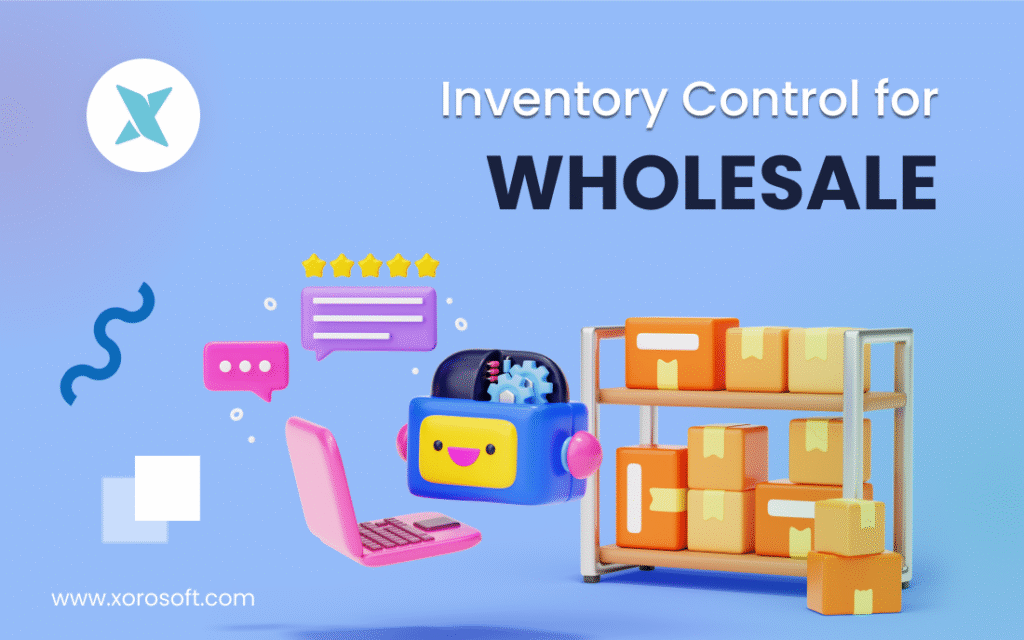
If you’re seeking ways to improve your wholesale inventory management, you’re in the right place. Efficient wholesale inventory management is crucial for streamlining operations and boosting profitability.
1. Where Wholesale Inventory Management Starts to Slip
Wholesale inventory management becomes harder when a business grows across more SKUs, warehouses, suppliers, sales channels, and customer accounts. At first, the process may feel simple because a small team can check stock by hand, update a spreadsheet, and place purchase orders when needed. However, that same process starts to break when order volume rises.
For many wholesalers, the first warning sign is not a major failure. Instead, it is a pattern of small daily problems. Sales teams ask the warehouse to confirm stock. Meanwhile, purchasing teams update spreadsheets by hand. Finance waits for inventory reports before closing the books. As a result, customer service deals with backorders, late shipments, and order changes.
Because wholesale orders are often large, one mistake can create a wider impact than it would in retail. For example, if a retailer sells one item that is not available, the problem may be small. However, if a wholesaler accepts a bulk order for 1,000 units and only 700 are truly available, the issue affects revenue, trust, fulfillment, and buying plans.
Therefore, wholesale inventory management is not just about knowing what is in stock. It is also about knowing what is available, what is committed, what is incoming, what is delayed, and what should be purchased next.
A strong process helps a wholesale business protect cash, serve customers, plan purchases, and grow without creating more manual work.
2. What Wholesale Inventory Management Means
Wholesale inventory management is the process of planning, tracking, storing, replenishing, and reporting stock that is sold in bulk to business customers. It includes purchasing, receiving, warehouse control, order allocation, forecasting, accounting, and reporting.
In simple terms, wholesale inventory management answers five core questions:
1. What inventory do we have?
2. Where is it located?
3. What stock is available to sell?
4. What stock is already committed?
5. What should we buy next?
When those answers are clear, the business runs with less guesswork. Sales can promise the right quantities. Purchasing can order at the right time. Warehouse teams can pick from the right location. As a result, finance can trust inventory value and leaders can make better decisions.
2.1 Wholesale Inventory Control vs Inventory Management
Wholesale inventory control is the part of the process that keeps stock accurate. It focuses on counts, locations, movement, receiving, picking, cycle counts, and adjustments.
However, inventory management is broader. It includes inventory control, but it also covers demand planning, supplier lead times, purchasing, warehouse flow, sales orders, accounting, and reporting.
| Area | Inventory Control | Inventory Management |
|---|---|---|
| Main focus | Stock accuracy and movement | End-to-end stock planning |
| Main users | Warehouse and operations teams | Sales, purchasing, finance, and leadership |
| Key question | Is the stock record correct? | Is inventory helping the business grow? |
| Wholesale value | Reduces errors and stock gaps | Improves cash flow and customer service |
2.2 Why Wholesale Stock Management Is Different
Wholesale stock management is different because orders are larger, customers may have special pricing, and stock may need to be reserved before shipment. In addition, many wholesalers sell through more than one channel. A single company may sell through sales reps, Shopify, Amazon, EDI, B2B portals, and direct purchase orders.
Because of this, available inventory must be managed with care. On-hand stock is not always stock that can be sold. Some stock may already be allocated to a customer. Other stock may be reserved for a channel, damaged, in transfer, or waiting for quality checks.
2.3 Who Needs Better Inventory Control for Wholesalers
A business usually needs stronger inventory control for wholesalers when it has more SKUs, more stock locations, and more customer orders than the team can track by memory.
You may need a better process if your business has:
- More than one warehouse or stock location.
- Frequent stockouts or overstock.
- Purchase orders planned in spreadsheets.
- Sales teams that do not trust stock numbers.
- Slow month-end reporting due to inventory issues.
- Shopify, Amazon, EDI, or wholesale orders in separate systems.
- Warehouse teams using manual pick lists.
Therefore, if these problems are common, the issue is not only people. In most cases, the process and system have fallen behind the size of the business.
3. Why Wholesale Inventory Management Matters
Inventory is one of the largest assets in a wholesale business. Therefore, poor control affects more than the warehouse. It affects sales, cash flow, customer service, and profit.
A wholesaler can have strong demand and still lose money if stock is not managed well. For example, too little stock creates missed sales. Too much stock locks cash inside slow-moving goods. Inaccurate stock creates wrong promises. Also, weak reporting makes it hard to see which products are helping or hurting the business.
3.1 Stockouts Hurt Customer Trust
Stockouts are painful in wholesale because customers often rely on suppliers to keep their own businesses moving. If a customer places a bulk order and the product is not available, that customer may miss a retail launch, delay a project, or source goods from another supplier.
As a result, repeated stockouts can weaken account trust. Even if the product is good, customers may choose a supplier that gives more reliable availability.
3.2 Overstock Traps Cash
Overstock can feel safe because the warehouse looks full. However, excess stock creates hidden costs. It uses space, adds handling work, increases storage cost, and raises the risk of damage or aging.
More importantly, overstock traps cash. That cash could be used for faster-moving products, supplier terms, marketing, hiring, or debt reduction. Therefore, better stock control is also better cash control.
3.3 Inaccurate Inventory Creates Daily Friction
When inventory records are wrong, every team slows down. Sales checks with the warehouse before confirming orders. Buyers review spreadsheets before placing orders. Warehouse teams search for stock that may not exist. Meanwhile, finance questions cost of goods sold and inventory value.
Over time, people stop trusting the system. Then they build side spreadsheets. However, side spreadsheets often make the problem worse because they create more versions of the truth.
3.4 Poor Visibility Delays Purchasing
Purchasing teams need clean data. They need to see sales speed, supplier lead times, current stock, open sales orders, open purchase orders, and safety stock.
Without that view, buyers often rely on instinct. Sometimes they buy too late. Other times they buy too much. Therefore, purchasing becomes reactive instead of planned.
3.5 Inventory Errors Affect Profit
Inventory errors can change gross margin, cost of goods sold, and inventory value. If receipts, landed costs, returns, and stock changes are not tracked well, finance may not have a clear view of product profit.
For this reason, inventory should not sit outside accounting. The two areas need to stay aligned.
4. Common Wholesale Inventory Control Problems
Wholesale inventory control problems usually grow from small process gaps. At first, the gaps are manageable. However, as volume rises, the same gaps create bigger delays, errors, and costs.
4.1 Multi-Warehouse Inventory Complexity
A business with one warehouse can often solve issues by walking the floor. However, a business with several warehouses needs a clear system. Stock may sit in a main warehouse, a 3PL, a retail stockroom, a production site, or a marketplace location.
Without location-level visibility, one site may run out while another holds excess stock. Also, transfers may be delayed or missed. As a result, inventory planning becomes harder than it needs to be.
4.2 Customer-Specific Pricing and Terms
Wholesale customers often have different prices, discounts, minimum order rules, payment terms, and shipping needs. Because of this, inventory decisions may depend on the customer.
For example, a key account may need stock reserved before a seasonal launch. Another customer may buy in bulk only during certain months. Therefore, wholesale inventory management must support customer-level planning.
4.3 Bulk Orders and Stock Allocation
In wholesale, one order can use a large share of available inventory. If the system does not manage allocation, one customer may consume stock that was needed for another.
Good allocation rules separate on-hand, available, committed, reserved, and incoming stock. This prevents teams from selling the same units twice.
4.4 EDI and Retailer Requirements
Many wholesale businesses use EDI to trade with larger retailers and partners. EDI can speed up purchase orders, shipment notices, and invoices. However, it also depends on clean data.
If inventory is wrong, EDI can make the error move faster. Therefore, wholesalers that use EDI need strong stock accuracy and clear order workflows.
4.5 Supplier Lead Time Changes
Supplier lead times change often. Delays may come from production issues, freight problems, customs, raw material shortages, or seasonal demand. Because of that, reorder points must be reviewed often.
If lead times are outdated, buyers may order too late. As a result, stockouts become more likely.
4.6 Spreadsheet Purchasing
Spreadsheets are useful for planning, but they become risky when they act as the main system. A spreadsheet can be copied, edited, or broken. Also, it does not update stock in real time.
When buyers plan purchases from old data, the business may buy the wrong items or miss urgent stock needs.
4.7 Disconnected Systems
Many wholesalers run on a mix of QuickBooks, spreadsheets, inventory apps, warehouse tools, ecommerce apps, and EDI tools. At first, this stack may work. However, each separate tool creates another place where data must be entered, checked, and fixed.
Eventually, the team spends more time moving data than using it.
4.8 A Better Way to Review Wholesale Inventory Management Gaps
If your team is not sure whether the issue is process, software, or both, start with a simple system review. You can also look at how a connected platform such as XoroONE brings inventory, sales, purchasing, warehouse work, accounting, and reporting into one workflow.
5. Core Wholesale Inventory Control Methods
The best wholesale inventory control methods are simple, repeatable, and easy to measure. They help teams avoid panic buying, reduce stock gaps, and protect cash.
5.1 Reorder Points in Wholesale Inventory Management
A reorder point is the stock level that tells your team when to buy more. It helps prevent stockouts by using average demand, supplier lead time, and safety stock.
The basic formula is:
Reorder Point = Average Daily Sales × Supplier Lead Time + Safety Stock
For example, if a product sells 40 units per day, the supplier lead time is 15 days, and safety stock is 200 units, the reorder point is:
40 × 15 + 200 = 800 units
Therefore, the team should reorder when available stock reaches 800 units.
5.2 Safety Stock for Wholesale Inventory Control
Safety stock is extra stock held to protect against demand spikes or supply delays. It is useful because wholesale demand can be uneven. A large customer may place a bulk order with little notice. Also, a supplier may ship late.
However, safety stock should not become a reason to overbuy. Too much safety stock creates excess inventory. Therefore, teams should review safety stock by SKU, margin, lead time, and sales risk.
5.3 ABC Analysis for Wholesale Stock Management
ABC analysis helps teams focus on the items that matter most.
| Category | Meaning | Control Level |
| A items | High-value or high-demand products | Tight control |
| B items | Medium-value products | Regular control |
| C items | Low-value or slow-moving products | Simple control |
This method is useful because not all SKUs deserve the same time. High-value products should be counted and reviewed more often. Low-value products may need a simpler process.
5.4 Cycle Counting for Inventory Control for Wholesalers
Cycle counting means counting small groups of inventory often instead of doing one large annual count. This improves accuracy because errors are found sooner.
For example, A items may be counted monthly, B items quarterly, and C items twice a year. Also, fast-moving SKUs and high-error zones should be counted more often.
5.5 FIFO Control
FIFO means first in, first out. The oldest stock should be sold or used first. This is important for food, beverage, cosmetics, dated goods, and seasonal products.
Even when items do not expire, FIFO can still reduce aging stock and packaging issues.
5.6 Demand Forecasting for Wholesale Inventory Management
Demand forecasting helps buyers plan future stock needs. It should include sales history, open orders, seasonality, customer plans, promotions, and supplier limits.
However, wholesale teams must be careful with one-time bulk orders. If one large order is treated as normal demand, the next forecast may be too high.
5.7 Inventory Turnover
Inventory turnover shows how fast stock is sold and replaced.
The basic formula is:
Inventory Turnover = Cost of Goods Sold ÷ Average Inventory
A low turnover rate may point to overstock. A high turnover rate may look good, but it can also signal stockout risk if supply cannot keep up.
5.8 Stock Allocation Rules
Stock allocation rules decide which orders, customers, channels, or warehouses get inventory first. These rules are important when demand is higher than supply.
For example, a wholesaler may reserve stock for key accounts, Shopify orders, Amazon orders, or retail partners. Clear rules reduce conflict between sales channels.
6. The Wholesale Inventory Management Process
A strong wholesale inventory management process connects every step from demand planning to reporting.
6.1 Forecast Demand
Start with sales history. Then review demand by SKU, customer, channel, warehouse, and season. Also, remove unusual one-time orders from the normal forecast when needed.
This gives buyers a cleaner view of future demand.
6.2 Plan Purchases
Next, use reorder points, supplier lead times, open sales orders, open purchase orders, and minimum order quantities to plan purchases.
Because purchasing affects cash, buyers should not only ask, “What do we need?” They should also ask, “When do we need it?”
6.3 Receive Inventory
Receiving is a key control point. The team should check item, quantity, condition, purchase order, lot number, and location before stock becomes available.
If receiving is wrong, every later step becomes less reliable.
6.4 Store Inventory
After receiving, inventory should be placed in the correct bin, zone, pallet, or warehouse location. Clear putaway rules reduce search time and picking errors.
Also, the location should be updated in the system right away.
6.5 Allocate Stock
Stock should be allocated before orders are picked. This helps prevent overselling. It also gives sales and service teams a true view of what can be promised.
6.6 Pick, Pack, and Ship
Picking should be guided by clear orders and location data. When possible, barcode scanning should confirm item, quantity, and location.
For warehouse teams that need stronger picking, packing, shipping, scanning, and bin control, XoroWMS is a relevant internal resource to review.
6.7 Reconcile Inventory and Accounting
Inventory movements should connect with accounting. Purchase receipts, landed costs, vendor bills, sales, returns, adjustments, and cost of goods sold must match.
Otherwise, finance spends too much time cleaning up numbers after the fact.
6.8 Review Wholesale Inventory Management Reports
Finally, teams should review inventory reports each week or month. Useful reports include low stock, excess stock, aging stock, fill rate, backorders, supplier performance, and forecast accuracy.
Over time, these reports help teams improve the rules.
7. Wholesale Inventory Management KPIs to Track
Wholesale inventory management needs clear numbers. Without KPIs, teams may confuse activity with progress.
| KPI | Formula or Measure | Why It Matters |
| Inventory accuracy | Correct records ÷ total records × 100 | Shows if system stock matches real stock |
| Stockout rate | Stockout events ÷ demand events | Shows availability risk |
| Fill rate | Complete orders shipped ÷ total orders | Shows service quality |
| Inventory turnover | COGS ÷ average inventory | Shows how fast stock sells |
| Backorder rate | Backordered orders ÷ total orders | Shows supply or planning issues |
| Carrying cost | Storage, labor, capital, shrinkage | Shows cost of excess stock |
| Forecast accuracy | Forecast demand vs actual demand | Shows planning quality |
| PO cycle time | Purchase order to receipt | Shows supplier and buying speed |
7.1 Inventory Accuracy Rate
Inventory accuracy shows whether system records match the warehouse. If this number is low, sales, purchasing, and finance cannot trust the data.
Therefore, accuracy should be tracked often.
7.2 Stockout Rate
Stockout rate shows how often demand cannot be filled. A rising stockout rate may mean reorder points are wrong, supplier lead times are longer, or forecasts are weak.
7.3 Fill Rate
Fill rate shows how often orders ship complete. In wholesale, this is one of the best signs of customer service health.
If fill rate drops, the business should review stock levels, allocation, picking errors, and supplier delays.
7.4 Inventory Turnover
Inventory turnover shows how well stock converts into sales. However, it should be reviewed by product group. One company-wide number may hide slow movers and fast sellers.
7.5 Forecast Accuracy
Forecast accuracy compares expected demand with real demand. Better forecasts help buyers order the right products at the right time.
However, forecasts should be reviewed often because demand changes.
8. Wholesale Inventory Software vs ERP
Wholesale inventory software and ERP solve different levels of the problem.
Inventory software helps with stock tracking, warehouse visibility, order flow, and basic controls. ERP connects inventory with accounting, purchasing, warehouse work, forecasting, reporting, ecommerce, and sometimes manufacturing.
8.1 What Wholesale Inventory Software Handles
Wholesale inventory software usually handles SKUs, stock levels, warehouse locations, receiving, picking, transfers, and adjustments. For some growing teams, that may be enough.
However, if accounting, purchasing, and reporting still sit in separate tools, the business may still have data gaps.
8.2 What ERP Handles
ERP connects inventory to the wider business. It can link sales orders, purchase orders, warehouse work, accounting, forecasting, reporting, manufacturing, and channel orders.
For wholesalers that need a broader operating system, XoroERP is a useful internal page to review because it explains ERP workflows for product-based companies.
8.3 When Inventory Software Is Enough
Inventory software may be enough when the business has simple products, one warehouse, low order volume, and basic purchasing needs.
Also, it may work when finance does not need deep inventory costing or complex month-end reports.
8.4 When ERP Becomes the Better Fit
ERP becomes a better fit when inventory problems affect several teams at once. For example, the business may struggle with purchasing plans, warehouse errors, Shopify orders, Amazon orders, EDI, accounting, and reporting.
At that stage, the issue is no longer just stock tracking. Instead, the business needs one connected process.
8.5 Wholesale Inventory Software vs ERP Comparison
| Area | Inventory Software | ERP |
| Stock tracking | Strong | Strong and connected |
| Purchasing | Basic to moderate | Linked to demand and suppliers |
| Accounting | Often separate | Built into the workflow |
| Warehouse work | Varies by system | Connected to sales and stock |
| Forecasting | Limited to moderate | Uses wider business data |
| Reporting | Inventory-focused | Cross-functional |
| Best fit | Growing stock teams | Scaling wholesale businesses |
8.6 A Useful Demo Path
If your team wants to see how inventory, purchasing, warehouse work, accounting, and reporting can connect, review XoroONE or book a demo.
9. How to Choose Wholesale Inventory Management Software
Wholesale inventory management software should match the way your business sells, buys, stores, ships, and reports inventory.
Do not choose software only because it has many features. Instead, choose the system that fits your real workflows.
9.1 Real-Time Inventory Visibility
The system should show on-hand, available, allocated, committed, damaged, incoming, and backordered stock.
This matters because on-hand stock is not always available stock.
9.2 Multi-Warehouse Support
If you have more than one location, the system must show stock by warehouse, bin, zone, and transfer status.
Also, it should support warehouse-specific reorder points when needed.
9.3 Purchasing Automation
A good system should help buyers create purchase orders based on real demand. It should use sales history, open orders, lead times, minimum order quantities, and safety stock.
This reduces manual work and improves timing.
9.4 Forecasting for Wholesale Inventory Management
Forecasting should help teams plan stock by SKU, customer, channel, season, and warehouse.
However, the forecast should be easy to review. Buyers still need judgment.
9.5 Accounting Integration
Inventory and accounting should stay in sync. Purchase receipts, vendor bills, landed costs, sales, returns, adjustments, and cost of goods sold should connect.
As a result, finance can close faster and report with more trust.
9.6 Warehouse Management
Warehouse tools should support receiving, putaway, picking, packing, shipping, cycle counts, transfers, and barcode scanning.
If the warehouse is the main source of errors, this area should be reviewed early.
9.7 Ecommerce and Marketplace Links
Many wholesalers also sell through Shopify or Amazon. Therefore, inventory must stay in sync across channels.
For Shopify users, the Xorosoft ERP app on the Shopify App Store is a useful outbound resource because it shows how Xorosoft is positioned for Shopify-connected inventory and ERP workflows.
9.8 EDI Support
EDI support matters when larger customers require electronic purchase orders, shipping notices, and invoices.
However, EDI should not sit outside inventory. It should connect to orders, stock, shipments, and billing.
9.9 Reporting
Reports should show low stock, excess stock, open purchase orders, inventory aging, fill rate, backorders, margins, and warehouse activity.
Good reports help leaders act before problems become urgent.
10. Wholesale Distribution Inventory Management by Industry
Wholesale distribution inventory management changes by industry. The core rules are similar, but the risks are different.
For a wider view of product-based industries, the industries we serve page can be used as a helpful internal resource.
10.1 Apparel and Fashion Wholesale
Apparel wholesalers manage styles, colors, sizes, seasons, and customer allocations. A missing size can make a full order incomplete.
Therefore, they need strong variant tracking, seasonal planning, and allocation rules.
10.2 Furniture Wholesale
Furniture wholesalers manage bulky products, long lead times, container orders, and limited warehouse space.
Because storage costs are high, overstock can become expensive fast.
10.3 Sporting Goods Wholesale
Sporting goods wholesalers often deal with seasonal peaks, product launches, and channel demand.
As a result, forecasting and early purchasing are important.
10.4 Food and Beverage Wholesale
Food and beverage wholesalers need lot tracking, date control, FIFO, and traceability.
In this case, poor inventory control can create waste, compliance issues, and customer risk.
10.5 Consumer Products Wholesale
Consumer product wholesalers often sell through retail, ecommerce, Amazon, distributors, and direct wholesale accounts.
Therefore, they need clean channel stock and strong order allocation.
10.6 Manufacturing and Wholesale
Some companies both make and wholesale products. They need raw material tracking, BOMs, work orders, finished goods, and purchasing control.
In this case, inventory control must cover both production and distribution.
11. Wholesale Inventory Control Mistakes to Avoid
Most wholesale inventory control mistakes happen because the system does not match the business anymore.
11.1 Staying on Spreadsheets Too Long
Spreadsheets are flexible. However, they are not a strong control system. They can be copied, edited, broken, or updated late.
As the team grows, spreadsheets often create more risk.
11.2 Treating Every SKU the Same
Not every product needs the same level of control. High-value and fast-moving products need closer review.
Therefore, ABC analysis helps teams spend time where it matters.
11.3 Ignoring Supplier Lead Times
Supplier lead times should be based on real history, not old assumptions.
If lead times rise and reorder points stay the same, stockouts become more likely.
11.4 Confusing On-Hand and Available Stock
On-hand stock is what exists in the warehouse. Available stock is what can still be sold.
If teams confuse the two, they may sell stock that is already committed.
11.5 Counting Inventory Too Rarely
Annual counts are not enough for many wholesalers. Cycle counting gives the team a better way to find errors during the year.
Also, it reduces the shock of large year-end adjustments.
11.6 Keeping Inventory Away from Accounting
When inventory and accounting are separate, finance must reconcile data by hand.
This slows reporting and creates doubt around margins.
11.7 Choosing a Tool That Cannot Scale
A simple tool may fix stock tracking today. However, it may not support purchasing, EDI, accounting, warehouse scanning, forecasting, and multi-warehouse control later.
Before choosing a system, teams can review a broader ERP comparison page to understand how different platforms are usually evaluated.
12. When to Upgrade Your Wholesale Inventory Management System
Many wholesalers start with QuickBooks, spreadsheets, and small inventory tools. That is normal. However, the stack should change when the business changes.
12.1 Signs Your Current System Is Breaking
Your current system may be holding the business back if:
- Inventory numbers are often wrong.
- Sales checks with the warehouse before confirming orders.
- Buyers manage purchase plans in spreadsheets.
- Warehouse teams pick from printed lists.
- Month-end close is delayed by stock issues.
- Shopify, Amazon, EDI, and wholesale orders do not sync well.
- Reports require manual exports.
- Leaders cannot see true product profit.
12.2 Why QuickBooks Alone May Not Be Enough
QuickBooks can be useful for accounting. However, wholesale inventory management often needs deeper stock, warehouse, purchasing, and forecasting tools.
As complexity grows, accounting software alone may not give enough control.
12.3 Why Inventory Apps Can Become Limited
Inventory apps can improve stock tracking. However, many do not fully connect accounting, purchasing, EDI, forecasting, manufacturing, and reporting.
Therefore, they may solve one problem while leaving others in place.
12.4 When ERP Makes Sense
ERP makes sense when inventory affects several parts of the business at once. If the same stock issue creates sales delays, buying errors, warehouse rework, and accounting cleanup, the business needs a more connected system.
13. Wholesale Inventory Management Software Comparison
A software comparison should focus on fit. A system that works for one wholesaler may not work for another.
13.1 What to Compare
Compare each system by:
- Inventory accuracy
- Warehouse tools
- Purchasing workflows
- Forecasting
- Accounting connection
- Ecommerce support
- EDI support
- Reporting
- Ease of use
- Implementation needs
- Long-term fit
13.2 Wholesale Inventory Management Platform Comparison
| Platform | Best Fit | Strengths | Considerations |
| Xorosoft | Inventory-driven wholesalers that need cloud ERP | Inventory, accounting, purchasing, warehouse, forecasting, ecommerce, EDI, and reporting | Best for teams ready to centralize operations |
| NetSuite | Larger firms that need broad ERP | Large ERP ecosystem | May require more setup and process planning |
| Acumatica | Mid-market ERP buyers | Flexible ERP modules | Fit depends on implementation needs |
| Cin7 | Product sellers that need inventory and order tools | Inventory and channel workflows | May not replace full ERP needs for every company |
| Brightpearl | Retail and ecommerce brands | Order and inventory workflows | Fit depends on wholesale depth |
| Fishbowl | QuickBooks users that need inventory | Inventory add-on approach | May become limited as ERP needs grow |
| Sage | Accounting-led companies | Finance and business tools | Fit depends on operating needs |
| Business Central | Microsoft-led companies | ERP linked to Microsoft tools | Setup scope can vary |
13.3 Comparison Resources
If your team is comparing systems, use comparison pages carefully. They are useful when they focus on fit, not hype.
For example, teams looking at inventory tools can review Xorosoft vs Cin7. Teams comparing larger ERP options can review Xorosoft vs NetSuite.
14. How Modern Wholesalers Improve Inventory Control
Modern wholesalers improve inventory control by connecting work across teams. They do not treat the warehouse, sales, purchasing, and accounting as separate worlds.
14.1 Create One Source of Truth
A single source of truth means each team sees the same stock data. Sales, purchasing, warehouse, and finance should not work from different numbers.
When one system updates stock in real time, teams can make faster decisions.
14.2 Automate Replenishment
Automation helps buyers act sooner. It can suggest purchase orders based on demand, lead time, open orders, current stock, and safety stock.
However, buyers should still review the plan. Automation should support judgment, not replace it.
14.3 Improve Warehouse Flow
Warehouse flow improves when teams scan receiving, putaway, picking, packing, shipping, and transfers.
As a result, errors drop and inventory updates faster.
14.4 Connect Sales Channels
Wholesale businesses often sell through many channels. Shopify, Amazon, EDI, B2B portals, sales reps, and direct orders may all pull from the same stock.
Therefore, channel stock must connect to the main inventory record.
14.5 Use Reports Before Problems Grow
Reports should warn teams early. Low-stock reports, excess stock reports, backorder reports, aging reports, and margin reports help teams act before issues reach customers.
15. Practical Wholesale Inventory Management Roadmap
Improving wholesale inventory management takes process work before software work.
15.1 Audit Current Problems
Start by listing the most common issues. Look for stockouts, overstock, late purchase orders, warehouse errors, slow reports, and accounting delays.
Then group the issues by root cause.
15.2 Clean Product Data
Clean SKU names, barcodes, units of measure, vendors, costs, lead times, locations, and price lists.
Because product data touches every workflow, this step matters.
15.3 Define Inventory Rules
Set reorder points, safety stock, allocation rules, cycle count schedules, receiving steps, transfer rules, and approval rules.
Clear rules reduce guesswork.
15.4 Standardize Warehouse Work
Create standard steps for receiving, putaway, picking, packing, shipping, returns, transfers, and cycle counts.
Also, train the team on why each step matters.
15.5 Connect Purchasing and Accounting
Purchase orders, receipts, landed costs, vendor bills, inventory value, and cost of goods sold should connect.
This helps finance trust the numbers.
15.6 Train Teams by Workflow
Training should follow the real job. Sales should learn availability. Buyers should learn purchase planning. Warehouse teams should learn scanning and movement rules. Finance should learn inventory reports.
As a result, each team sees how its work affects the next team.
15.7 Monitor After Launch
After changes go live, track inventory accuracy, fill rate, stockout rate, backorders, turnover, purchase order cycle time, and forecast accuracy.
Then adjust rules as the business learns.
16. Wholesale Inventory Management FAQs
16.1 What is wholesale inventory management?
Wholesale inventory management is the process of planning, tracking, storing, replenishing, and reporting stock sold in bulk to business customers. It covers purchasing, receiving, warehouse movement, order allocation, forecasting, accounting, and reporting. The goal is to keep enough stock for demand without holding too much excess inventory.
16.2 What is wholesale inventory control?
Wholesale inventory control means keeping stock accurate, organized, and available. It includes cycle counts, barcode scanning, receiving checks, bin locations, stock transfers, reorder points, safety stock, and approval rules for adjustments. It is a key part of the wider inventory management process.
16.3 Why is inventory management important for wholesalers?
Inventory management is important because wholesale orders are often large. One stock error can affect a major customer, a full shipment, or a large amount of cash. Better control helps prevent stockouts, reduce overstock, improve service, and protect profit.
16.4 What are the biggest wholesale inventory challenges?
The biggest challenges include inaccurate counts, multi-warehouse stock, supplier delays, bulk order allocation, customer-specific pricing, EDI needs, poor forecasting, and disconnected systems. These problems usually grow as SKU count, order volume, and sales channels increase.
16.5 How do wholesalers track inventory?
Wholesalers track inventory with SKUs, barcodes, locations, purchase orders, sales orders, receiving records, transfers, cycle counts, and reports. Smaller teams may use spreadsheets. However, growing teams often move to inventory software or ERP to reduce manual work.
16.6 What is the best inventory method for wholesalers?
The best method is usually a mix of reorder points, safety stock, ABC analysis, cycle counting, FIFO, demand forecasting, and stock allocation. The right mix depends on product type, order volume, supplier lead time, and customer needs.
16.7 How do wholesalers prevent stockouts?
Wholesalers prevent stockouts by using accurate forecasts, reorder points, safety stock, supplier lead time tracking, and real-time available inventory. Also, they should separate available stock from stock that is already committed to orders.
16.8 How do wholesalers reduce overstock?
Wholesalers reduce overstock by tracking slow movers, reviewing inventory turnover, improving forecasts, limiting excess buying, and using aging reports. Also, buyers should check current stock and open purchase orders before placing new orders.
16.9 What is a reorder point?
A reorder point is the stock level that tells a business when to buy more. The basic formula is average daily sales multiplied by supplier lead time, plus safety stock. This helps the team reorder before the product runs out.
16.10 What is safety stock?
Safety stock is extra inventory kept to protect against supplier delays, demand spikes, or forecast errors. It helps reduce stockout risk. However, too much safety stock can create overstock, so it should be reviewed often.
16.11 What is cycle counting?
Cycle counting is the practice of counting small groups of inventory throughout the year. It helps find errors early. Also, it reduces the need to rely only on one large annual count.
16.12 How often should wholesalers count inventory?
High-value and fast-moving items should be counted more often. For example, A items may be counted monthly, B items quarterly, and C items less often. The right schedule depends on value, movement, and error risk.
16.13 What is inventory allocation?
Inventory allocation means reserving stock for a specific order, customer, warehouse, or channel. It helps prevent overselling. Also, it protects key accounts when demand is higher than supply.
16.14 What is the difference between on-hand and available inventory?
On-hand inventory is the physical stock in the warehouse. Available inventory is the stock that can still be sold after committed, reserved, damaged, or allocated stock is removed. Sales teams should use available stock when promising orders.
16.15 What KPIs should wholesalers track?
Wholesalers should track inventory accuracy, fill rate, stockout rate, backorder rate, inventory turnover, carrying cost, forecast accuracy, and purchase order cycle time. These KPIs show whether inventory is helping or hurting the business.
16.16 What software do wholesalers use?
Wholesalers may use spreadsheets, accounting software, inventory apps, warehouse systems, order tools, or ERP platforms. Small teams may start with simple tools. However, larger teams often need connected systems that link stock, sales, purchasing, warehouse work, accounting, and reporting.
16.17 Is QuickBooks enough for wholesale inventory management?
QuickBooks may be enough for a small wholesaler with simple stock needs. However, it may become limited when the business needs multi-warehouse control, forecasting, EDI, barcode scanning, purchase planning, landed cost, and deeper inventory reports.
16.18 When should wholesalers move away from spreadsheets?
Wholesalers should move away from spreadsheets when stock errors are common, buyers use old data, reports take too long, and teams do not trust inventory numbers. Also, spreadsheets become risky when many people edit them.
16.19 What is the difference between inventory software and ERP?
Inventory software focuses on stock and warehouse tasks. ERP connects inventory with sales, purchasing, accounting, warehouse work, forecasting, ecommerce, manufacturing, and reporting. Therefore, ERP is usually a better fit when inventory issues affect many teams.
16.20 Do all wholesalers need ERP?
No, not every wholesaler needs ERP. A small business with simple stock may only need basic inventory software. However, ERP becomes useful when the business has more warehouses, channels, suppliers, SKUs, reports, and accounting needs.
16.21 How does EDI affect inventory?
EDI can speed up orders, shipment notices, and invoices. However, it also requires clean data. If stock numbers are wrong, EDI can spread errors quickly. Therefore, EDI should connect to accurate inventory and order workflows.
16.22 How does Shopify affect wholesale inventory control?
Shopify adds another sales channel that may pull from the same stock as wholesale orders. Therefore, inventory must sync well across Shopify, wholesale orders, Amazon, EDI, and warehouse systems. Otherwise, overselling can happen.
16.23 How do wholesalers manage multiple warehouses?
Wholesalers manage multiple warehouses by tracking stock by location, bin, transfer status, and availability. They also need warehouse-specific reports and clear transfer workflows. Without this, one location may run out while another holds too much.
16.24 What are common wholesale inventory mistakes?
Common mistakes include relying too long on spreadsheets, not updating reorder points, ignoring lead times, confusing on-hand and available stock, counting too rarely, and choosing tools that cannot scale.
16.25 How can a wholesaler improve inventory accuracy?
A wholesaler can improve accuracy with barcode scanning, cycle counts, clear receiving rules, bin locations, approval steps for adjustments, and real-time updates. Also, teams should review stock errors often and fix the process behind them.
17. Build Wholesale Inventory Management Before Growth Adds More Pressure
Wholesale inventory management gets harder as the business grows. More SKUs, more customers, more suppliers, more warehouses, and more channels all add pressure to the same stock process.
However, the solution is not only to work harder. The better path is to build clearer rules, cleaner data, stronger warehouse steps, and better reporting. Reorder points, safety stock, allocation rules, cycle counts, and demand planning help the team make better daily choices.
Still, there comes a point when process changes are not enough. If inventory, purchasing, warehouse work, accounting, ecommerce, EDI, and reporting are spread across too many tools, the business needs a more connected system.
That is where a cloud ERP platform such as Xorosoft can be useful for inventory-driven businesses that have outgrown manual work and disconnected systems. It can help connect stock, orders, purchasing, warehouse tasks, accounting, forecasting, and reports in one place.
If your team is ready to review what a connected wholesale inventory process could look like, you can book a demo.
Recent Posts
-
 ERP Landed Cost Module vs Spreadsheet Calculations for Importers
 -
 How to Build an Open-to-Buy Plan for an Omnichannel Brand
 -
 Cold Storage WMS for Food and Beverage Distribution
 -
 ERP Buying Statistics 2026: Evaluation, Implementation, and Adoption Risks
 -
 How a Distributor Reduced B2B Order Exceptions Without Restricting Sales