When looking at warehouse management system statistics, it becomes clear how vital these systems are for efficient operations.
1. Warehouse Management System Statistics Expose a Growing Operational Control Gap
Warehouses now support more products, sales channels, fulfillment rules, and inventory locations than they did only a few years ago. However, many growing businesses still coordinate this complexity through spreadsheets, basic accounting software, separate warehouse applications, and manual checks.
As a result, inventory can appear available online even when warehouse employees cannot locate it. Similarly, a purchase order may arrive physically while the ecommerce and accounting systems continue to treat the stock as unavailable. Meanwhile, wholesale, marketplace, and direct-to-consumer orders may compete for the same inventory without following consistent allocation rules.
Warehouse management system statistics help operators understand why these gaps matter. The data shows rapid market growth, rising cloud adoption, substantial automation investment, and measurable improvements in inventory accuracy. Nevertheless, the numbers do not suggest that every business needs the most advanced WMS. Instead, they show that companies need stronger execution controls when manual coordination becomes unreliable.
1.1 What a Warehouse Management System Controls
A warehouse management system controls the movement, status, and physical location of inventory. Specifically, it supports receiving, putaway, replenishment, picking, packing, shipping, transfers, cycle counting, and warehouse reporting.
In addition, advanced systems can coordinate barcode scanning, lot tracking, serial numbers, quality inspections, labor activity, multiple warehouses, and automation equipment. Therefore, a WMS does more than show how much inventory a company owns. It records where that inventory sits, whether employees can use it, and what warehouse task should happen next.
The most useful warehouse management system statistics connect technology adoption with operational results. For example, market-size estimates show how quickly companies are investing in warehouse software. Inventory accuracy studies show what disciplined execution can improve. Likewise, labor and automation data explain why operators want clearer task control and better visibility.
1.2 Why Warehouse Complexity Creates System Problems
Warehouse complexity rarely increases in a straight line. A business may add one Shopify store, one Amazon account, one wholesale program, and one additional warehouse. However, those additions create many new interactions among orders, inventory reservations, transfers, purchasing, returns, and accounting.
For instance, a second warehouse introduces questions about regional allocation, transfer ownership, replenishment, and stock in transit. Similarly, a wholesale channel may require case quantities, EDI documents, account-specific labels, and delivery appointments. Consequently, the business no longer manages inventory through one simple process.
A WMS can create repeatable warehouse controls. Yet the company may also need broader ERP functionality when warehouse transactions affect purchasing, costing, manufacturing, and accounting. Therefore, the software decision should begin with business processes rather than a feature checklist.
2. Warehouse Management System Statistics Show Sustained Market Growth
2.1 Warehouse Management System Statistics for the 2026 Market
Current research providers estimate that the global WMS market will reach between approximately $4.0 billion and $4.77 billion in 2026. Grand View Research estimates a $4.0 billion market, The Business Research Company estimates $4.47 billion, and Mordor Intelligence estimates $4.77 billion.
Although the estimates differ, every provider forecasts strong double-digit growth. Grand View Research expects the market to reach $16.0 billion by 2033 at a compound annual growth rate of 21.9%. Meanwhile, The Business Research Company forecasts $7.69 billion by 2030 at a 14.6% CAGR. Mordor Intelligence expects the market to reach $10.89 billion by 2031 at a 17.98% CAGR.
| Research provider | Estimated 2026 market | Forecast value | Published CAGR |
|---|---|---|---|
| Grand View Research | $4.0 billion | $16.0 billion by 2033 | 21.9% |
| The Business Research Company | $4.47 billion | $7.69 billion by 2030 | 14.6% |
| Mordor Intelligence | $4.77 billion | $10.89 billion by 2031 | 17.98% |
These warehouse management system statistics should remain separate because each provider uses a different methodology. Therefore, averaging the estimates would create a number that none of the research firms actually published.
2.2 Why WMS Market Estimates Differ
Research firms draw different boundaries around the warehouse management system market. For example, one report may count software subscriptions and licenses, while another may also include implementation, systems integration, support, and professional services.
Moreover, some researchers group warehouse execution tools with WMS platforms. Others, by contrast, use a narrower software definition. Regional assumptions, currency conversion, vendor coverage, company-size segments, and forecast periods can also change the final estimate.
Consequently, operators should focus on the direction of the market rather than debate one exact number. Each major estimate points toward sustained growth as businesses invest in better inventory visibility, ecommerce fulfillment, warehouse automation, and cloud-based operations.
2.3 What Is Driving Warehouse Management Software Growth?
Ecommerce remains one of the strongest growth drivers. Whereas traditional wholesale warehouses may ship a smaller number of large orders, ecommerce facilities often process thousands of orders containing one or two lines. Therefore, travel time, replenishment timing, packaging, and carrier cutoffs have a greater effect on daily performance.
At the same time, wholesale operations now face more customer-specific requirements. EDI documents, routing guides, compliance labels, case quantities, and appointment scheduling all add execution complexity. Similarly, manufacturing companies must coordinate raw materials, work-in-process, production staging, and finished goods.
Labor pressure also strengthens demand for warehouse technology. A business cannot rely indefinitely on experienced employees remembering every location, customer requirement, and exception. Instead, a WMS converts operational knowledge into repeatable tasks, validations, and alerts.
For companies that need warehouse activity to remain connected with accounting, purchasing, manufacturing, and ecommerce, XoroONE combines those functions within a cloud ERP platform.
3. Cloud WMS Statistics Reflect a Shift Toward Connected Operations
3.1 Cloud Warehouse Management System Statistics
Cloud deployment now leads the WMS market in several industry studies. Mordor Intelligence reports that cloud platforms accounted for 55.21% of WMS revenue in 2025. In addition, it expects the cloud segment to grow at a 19.12% compound annual rate through 2031.
Cloud systems can reduce the infrastructure that a company must maintain at each warehouse. Moreover, vendors can release updates centrally, while employees can access shared information across facilities. Consequently, cloud deployment often suits growing companies that need structured warehouse control but lack a large internal IT department.
However, on-premise systems still support valid use cases. Some businesses require local execution because of connectivity, security, automation, or latency requirements. Therefore, buyers should compare continuity, support, integration, control, and infrastructure needs before choosing a deployment model.
3.2 Ecommerce Growth Increases the Need for Warehouse Visibility
The U.S. Census Bureau estimated that seasonally adjusted ecommerce sales reached $326.7 billion in the first quarter of 2026. Moreover, ecommerce increased 9.8% year over year and represented 16.9% of total U.S. retail sales during the quarter.
This growth changes the work inside the warehouse. For example, a facility that previously shipped pallets to wholesale customers may now pick individual units for direct-to-consumer orders. As a result, the operation becomes more sensitive to travel distance, inventory availability, packaging, and carrier deadlines.
Meanwhile, shared inventory creates another challenge. One stock pool may support Shopify, Amazon, wholesale accounts, and retail stores. Therefore, every channel needs timely information about available, reserved, damaged, and in-transit inventory.
Shopify merchants can review the Xorosoft ERP application in the Shopify App Store when evaluating how ecommerce orders can connect with production, sales, inventory, and fulfillment workflows. Current customer reviews also describe using the integration to coordinate ecommerce and non-ecommerce order flows.
3.3 Multi-Warehouse Growth Creates Additional Complexity
A second warehouse does more than double the number of storage locations. Instead, it creates new questions about transfer lead times, regional allocation, replenishment, and inventory ownership.
For instance, stock may leave Warehouse A but remain unavailable in Warehouse B until employees receive the transfer. Meanwhile, an ecommerce channel may still display that quantity as sellable unless the system treats it as in transit.
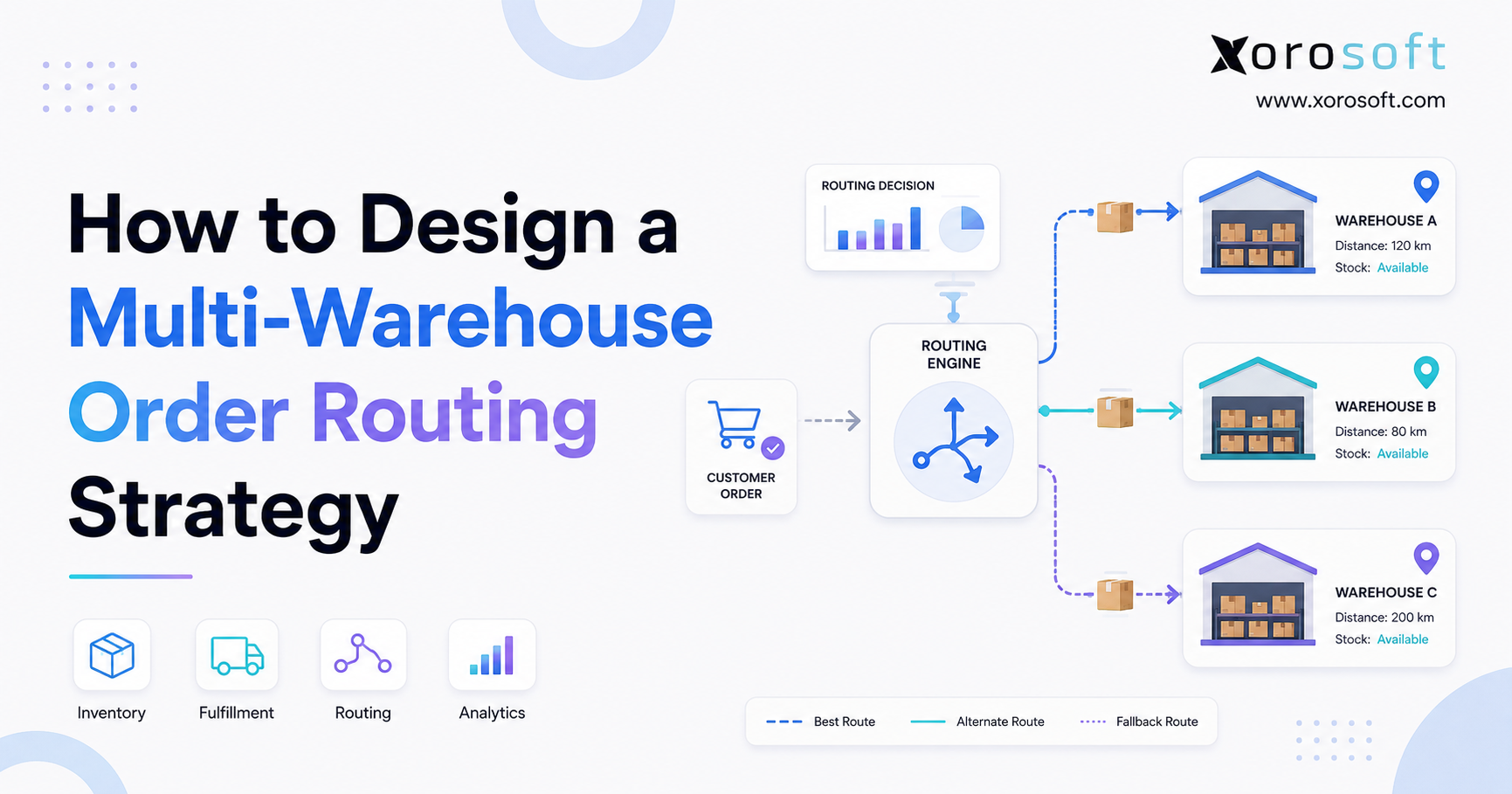
Therefore, multi-warehouse businesses should test transfer workflows before selecting a WMS. They should also review split fulfillment, 3PL visibility, regional routing, replenishment, and facility-level reporting.
Warehouse management system statistics provide useful market context. However, transaction-level testing reveals whether a platform can manage the company’s actual warehouse network.
4. Warehouse Management System Statistics Connect Accuracy With Process Discipline
4.1 WMS Inventory Accuracy Statistics
Nucleus Research interviewed supply-chain professionals using WMS platforms and found that 46% of the organizations improved inventory accuracy within one year of deployment. On average, inventory accuracy increased by 20% across the organizations studied.
These warehouse management system statistics show meaningful improvement potential. Nevertheless, they do not represent a guaranteed result for every implementation. A WMS records warehouse activity and validates transactions, but employees still need to follow the required process.
Therefore, accuracy begins with disciplined receiving, location confirmation, picking, transfers, returns, and counting. If employees bypass those steps, the system will eventually diverge from physical inventory.
4.2 Receiving Accuracy and Dock-to-Stock Time
Receiving establishes the first inventory record inside the warehouse. First, employees should match the shipment to a purchase order or transfer. Next, they should verify the item, quantity, unit of measure, and condition. Where necessary, they should also capture lot, serial, or expiration information.
Dock-to-stock cycle time measures how long inventory takes to move from physical arrival to confirmed availability in a storage location. Therefore, the metric captures more than unloading speed. It also reflects inspection, system receipt, labeling, location assignment, and putaway.
WERC’s 2026 DC Measures report tracks 36 warehouse and distribution metrics. Additionally, WERC identifies on-time shipments as the most widely used measure and includes dock-to-stock cycle time among its core operational benchmarks.
A long dock-to-stock cycle can create false stockouts. The product may sit inside the building, yet the sales and warehouse teams cannot use it. Consequently, operators should identify the specific stage that creates the delay rather than treat receiving as one combined process.
4.3 Putaway and Location Accuracy
Putaway turns received goods into usable inventory. Therefore, the employee must move the correct quantity to the correct bin and confirm the movement in the system.
If the employee records one location but uses another, the physical and digital warehouse separate immediately. As a result, pickers may search for stock, replenishment tasks may fail, and cycle counts may show repeated discrepancies.
A modern WMS should guide putaway, validate the destination, and preserve the transaction history. Moreover, it should show whether inventory remains in receiving, sits in storage, or waits for quality approval.
XoroWMS supports real-time inventory visibility, barcode scanning, cycle counting, alerts, and multi-warehouse management. In addition, its real-time inventory tools connect receiving and putaway with picking, packing, shipping, transfers, and reporting.
4.4 Picking Accuracy and Shipping Quality
Picking accuracy depends on more than choosing the correct SKU. The picker must also select the correct quantity, unit of measure, lot, serial number, and location.
Barcode validation can prevent many errors. However, the barcode and product master must also be correct. Otherwise, the system may confirm incorrect data more efficiently.
Packing provides another control point. At this stage, employees can verify order contents, apply customer instructions, and create shipping documents. Subsequently, shipment confirmation should update inventory, order status, and downstream financial records.
Warehouse management system statistics about error reduction become more useful when a company connects them with actual costs. For example, one incorrect shipment can create replacement freight, customer service work, return handling, inventory adjustments, and lost customer confidence. Therefore, the financial impact extends beyond the picking error itself.
4.5 Cycle Counting and Root-Cause Analysis
Annual physical counts identify discrepancies after they have accumulated. By contrast, cycle counting reviews selected products or locations throughout the year.
Because employees investigate smaller differences closer to the original transaction, cycle counting can reveal the process that caused the problem. For example, the root cause may involve an incorrect receipt, unrecorded transfer, damaged item, picking substitution, or return placed into available stock too early.
Therefore, a strong counting process does more than correct quantities. It also improves the warehouse procedures that allowed the discrepancy to occur.
5. Warehouse Labor Statistics Strengthen the Case for Better Execution
5.1 Warehouse Employment and Workforce Scale
The U.S. warehousing and storage subsector employed approximately 1.851 million people in June 2026. Moreover, 2025 occupation data included 457,740 stock clerks and order fillers, 433,060 manual material movers, 286,750 industrial truck operators, and 89,090 shipping, receiving, and traffic clerks.
These numbers explain why small productivity gains can create meaningful value. Saving a few seconds on one task appears insignificant. However, repeating that saving across thousands of picks, several shifts, and multiple locations can materially affect labor requirements.
Nevertheless, operators should not pursue speed without process improvement. A worker who moves faster through a poorly designed workflow may create more errors. Therefore, managers should remove unnecessary travel, improve replenishment, reduce congestion, and provide clear task priorities.
Warehouse management system statistics can help leadership identify which labor measures deserve attention. Even so, each facility should compare similar types of work. Full-case forklift picking, for example, should not be compared directly with individual apparel-unit picking.
5.2 Supply-Chain Technology Investment in 2026
The 2026 MHI Annual Industry Report states that 56% of supply-chain leaders are increasing their technology and innovation investments. Therefore, businesses continue to fund tools that improve visibility, resilience, and execution.
AI receives considerable attention because it can support forecasting, labor planning, slotting, order prioritization, and exception detection. Meanwhile, robotics can reduce travel, automate repetitive handling, and move goods between warehouse zones.
However, automation depends on reliable data. A robot still needs the correct item, quantity, and destination. Similarly, an AI model needs accurate inventory history and operational timestamps. Consequently, automation magnifies both strong and weak data practices.
5.3 The WMS as an Automation Execution Layer
A WMS connects inventory, orders, employees, and equipment. Specifically, it creates tasks, sets priorities, records completion, and routes exceptions.
When a company introduces conveyors, autonomous mobile robots, pick-to-light systems, or automated storage equipment, the WMS often coordinates the work that moves between those technologies. However, a separate warehouse control system may manage equipment-level commands.
Therefore, the implementation team should define which system owns every decision and status update. Without clear ownership, systems may create duplicate tasks or incomplete transaction records.
Moreover, the business should stabilize receiving, location, replenishment, and counting processes before it introduces advanced automation. Otherwise, automation may hard-code unreliable work into a faster environment.
6. Warehouse Management System Statistics Need Comparable KPI Benchmarks
6.1 Warehouse Performance Metrics That Matter
WERC’s 2026 DC Measures research tracks 36 operational metrics across warehouse and distribution operations. Furthermore, its findings emphasize on-time shipments, dock-to-stock cycle time, warehouse capacity, and backorders as important measures.
These warehouse management system statistics reflect the balance between speed, accuracy, cost, capacity, and service. Therefore, a company should not improve one measure by damaging another.
For example, management may release more orders simultaneously to increase picking activity. However, the decision may create aisle congestion or packing queues. Similarly, higher storage density may reduce empty space while increasing travel and product damage.
6.2 Inventory Accuracy and Order Accuracy
Inventory accuracy measures whether system records match physical stock. However, companies must define whether they calculate the metric by item, unit, location, lot, serial number, or financial value.
Order accuracy measures whether customers receive the correct products and quantities. Some businesses calculate the metric by order, whereas others use order lines. An order-level calculation creates a stricter standard because one incorrect line makes the entire order inaccurate.
Moreover, management needs both percentage and volume. A 99.8% result sounds strong, yet a warehouse processing 100,000 orders would still produce 200 inaccurate orders. Therefore, the business should also track the cost and customer impact of those mistakes.
6.3 Labor Productivity and Order Cycle Time
Orders or lines per labor hour can help managers track productivity. Nevertheless, they should compare similar warehouse activities.
For instance, an employee picking full cases with a forklift performs different work from an employee picking individual cosmetics into totes. Consequently, one company-wide average may hide meaningful differences among zones and order profiles.
Order cycle time measures the period between order release and shipment confirmation. However, the warehouse should also identify where the order spent its time. Replenishment, picking, packing, documentation, and carrier staging can all create delays.
Therefore, warehouse management system statistics should guide root-cause analysis rather than simply populate dashboards.
6.4 Capacity Utilization and Backorders
Capacity utilization requires more than dividing occupied square footage by total square footage. A warehouse needs aisles, staging areas, equipment access, and safety clearances. Consequently, a facility can become operationally congested before it reaches theoretical capacity.
Average and peak capacity also tell different stories. For example, a warehouse may operate comfortably for most of the year but struggle during a seasonal launch. Therefore, operators should measure both normal and peak utilization.
Backorders as a percentage of total lines can reveal supply shortages, allocation problems, or receiving delays. However, teams should separate true shortages from inventory that exists physically but remains unavailable because employees have not completed the necessary transaction.
7. WMS ROI Statistics Must Begin With Measurable Operating Costs
7.1 Building a Credible WMS Business Case
A warehouse management system business case should begin with current operating costs. Specifically, management should measure picking errors, reshipments, overtime, inventory write-offs, expedited freight, delayed receiving, and manual reconciliation.
Next, the company should identify how the proposed system will change those costs. For example, barcode validation may reduce incorrect picks. Directed putaway may reduce lost inventory. Similarly, better replenishment may reduce picker waiting time.
Warehouse management system statistics can help management assess whether an improvement target appears reasonable. However, they should not replace the company’s internal baseline.
Nucleus Research found that organizations using Savant WMS typically improved inventory accuracy by 20% to 30% and overall warehouse efficiency by 10% to 15%. Nevertheless, these figures came from specific customer implementations, so companies should not treat them as universal guarantees.
7.2 How to Calculate Warehouse Management System ROI
A basic calculation is:
WMS ROI = (Annual measurable benefit − Annualized WMS cost) ÷ Annualized WMS cost × 100
The business should include software, implementation, data migration, integrations, barcode devices, printers, networking, training, support, customization, and internal project time.
Moreover, the model should use conservative benefit assumptions. If shipping errors currently cost $200,000 per year, the company should not assume that a WMS will eliminate the entire amount. Instead, it should estimate a realistic reduction and identify the process changes required to achieve it.
The company should also calculate the payback period. Therefore, executives can see when cumulative benefits should exceed cumulative implementation and operating costs.
7.3 Direct and Indirect WMS Benefits
Direct benefits include lower freight costs, fewer replacements, reduced overtime, and fewer inventory adjustments. Meanwhile, indirect benefits may include faster decision-making, better customer service, and less employee frustration.
Although indirect benefits matter, management should avoid assigning unsupported financial values to them. Instead, the business case should clearly separate measured savings from strategic benefits.
For companies that need warehouse transactions to update purchasing, accounting, manufacturing, and reporting, XoroERP connects warehouse control with wider ERP workflows.
7.4 Adjusting WMS ROI for Implementation Risk
A strong ROI model should include implementation risk. For example, benefits may arrive gradually as employees adopt the new process. Likewise, integration or data problems may delay part of the expected return.
Therefore, the company should build conservative, expected, and optimistic scenarios. This approach gives management a more realistic range instead of one overly precise number.
Additionally, project leaders should assign an owner to every expected benefit. Without ownership, the business may complete the software implementation but fail to change the operating process that creates the return.
8. Warehouse Management System Statistics Vary by Industry
8.1 Ecommerce and Shopify Warehouse Management Statistics
Ecommerce warehouses process many relatively small orders and face tight carrier deadlines. Consequently, pick-path efficiency, packaging availability, replenishment, and real-time inventory updates strongly influence performance.
When Shopify, Amazon, wholesale, and retail channels share inventory, one stock discrepancy can affect every channel. Therefore, the system should coordinate order imports, reservations, warehouse releases, shipment confirmation, cancellations, refunds, and returns.
Warehouse management system statistics for ecommerce operations should focus on order cycle time, picking accuracy, cancellation rate, late shipment rate, return-processing time, and channel synchronization. By contrast, general warehouse benchmarks may not reflect the small-order profile of direct-to-consumer fulfillment.
8.2 Wholesale Distribution and EDI
Wholesale distribution introduces customer-specific pricing, pack sizes, EDI documents, routing instructions, and compliance labels. Moreover, large accounts may require appointments, advance shipping notices, or retailer-specific packing rules.
The warehouse should not depend on employees remembering every customer requirement. Instead, the order and WMS workflow should make those rules visible and validate them before shipment.
In addition, the system should manage allocations and backorders when several customers compete for limited inventory. Consequently, sales, purchasing, and warehouse teams need one consistent view of availability.
8.3 Apparel and Fashion Warehouses
Apparel companies manage style, size, and color variants. Because many products look similar, barcode validation and accurate bin records play a central role.
Seasonality creates another challenge. New collections may arrive in concentrated periods, while older inventory may require transfers, markdowns, or clearance. Meanwhile, returns create significant inspection and disposition work.
Therefore, warehouse management system statistics for apparel should focus on variant accuracy, return cycle time, inventory aging, seasonal capacity, and allocation. A high overall accuracy percentage may still hide shortages in key sizes or colors.
8.4 Furniture and Bulky-Goods Warehouses
Furniture operations face different storage and handling constraints. Cube utilization, damage prevention, and delivery scheduling may matter more than lines picked per hour.
Moreover, products may consist of multiple cartons, components, or assemblies. The warehouse may also need serial tracking, inspection records, and customer delivery appointments.
Consequently, a generic high-volume ecommerce benchmark provides limited value. Furniture operators should compare performance with facilities that handle similar product dimensions and delivery requirements.
8.5 Food, Beverage, and Regulated Inventory
Food and beverage warehouses may need lot tracking, expiration control, quality holds, and first-expired-first-out allocation.
Therefore, inventory accuracy must include status and shelf life rather than quantity alone. A pallet may sit physically inside the warehouse but remain unavailable because it has expired or failed a quality inspection.
In addition, the system should show which supplier or production batch created the stock and which customers received it. This traceability becomes essential during recalls and quality investigations.
8.6 Manufacturing and Material Control
Manufacturing warehouses coordinate raw materials, components, work-in-process, and finished goods. However, inventory may exist physically while remaining committed to a production order.
Therefore, warehouse execution must connect with bills of materials, purchasing, production staging, work orders, and costing. Otherwise, warehouse employees may issue material correctly while planning and accounting retain outdated information.
Xorosoft supports product-based businesses across manufacturing, distribution, apparel, consumer goods, automotive, and other inventory-driven sectors. Its industry solution pages outline different operational requirements across these business models.
8.7 Automotive Parts and Industrial Distribution
Automotive and industrial distributors often manage large SKU catalogs, superseded parts, serial numbers, and customer-specific requirements.
Moreover, one item may fit several machines or vehicle models, while visually similar parts may use different product records. Consequently, barcode control, location accuracy, and product-master quality become critical.
Warehouse management system statistics for these sectors should emphasize fill rate, order accuracy, inventory aging, stock availability, and emergency fulfillment. In addition, buyers should evaluate whether the system can connect warehouse activity with purchasing and demand planning.
9. Warehouse Management System Statistics Clarify Software Categories
9.1 WMS Versus Inventory Management Software
Inventory software generally tracks quantities, availability, purchase orders, sales orders, and basic transfers. Therefore, it may suit a business with limited order volume and straightforward storage.
A WMS, by contrast, goes deeper into physical execution. It controls bins, directed putaway, replenishment, pick methods, packing validation, cycle counts, and warehouse tasks.
Warehouse management system statistics should not pressure a simple business into unnecessary complexity. Instead, a company should choose the lightest system that can reliably support its current operation and expected growth.
9.2 WMS Versus an Order Management System
An order management system coordinates order capture, inventory reservations, routing, cancellations, and customer status across sales channels.
The WMS takes over during physical execution. Specifically, it tells employees where to find inventory, how much to pick, how to validate the work, and when to confirm shipment.
Therefore, an OMS may determine which warehouse should fulfill an order, while the WMS controls what happens inside that facility. Many omnichannel businesses need both capabilities, whether they use separate systems or an integrated platform.
9.3 WMS Versus ERP
An ERP manages wider business processes such as accounting, purchasing, sales, manufacturing, costing, and financial reporting. Some ERP platforms include warehouse management, while other companies integrate a specialized WMS.
A dedicated WMS may suit a highly automated warehouse, a large distribution network, or a complex 3PL operation. By contrast, an ERP with WMS capabilities may suit an inventory-driven business that needs warehouse transactions to update purchasing, accounting, and manufacturing immediately.
Therefore, buyers should test complete processes rather than compare isolated features. Receiving, transfers, production issues, returns, reservations, and financial postings reveal how deeply the systems connect.
9.4 Comparing Xorosoft and NetSuite
Companies evaluating broader ERP platforms may compare Xorosoft with NetSuite. However, the correct choice depends on required modules, implementation resources, customization, integrations, reporting, and total cost of ownership.
The Xorosoft versus NetSuite comparison provides a structured starting point. Nevertheless, buyers should combine comparison content with workflow demonstrations, reference checks, and documented requirements.
Warehouse management system statistics clarify which operational outcomes matter. Ultimately, however, vendor selection depends on the company’s products, warehouses, channels, and internal capabilities.
10. WMS Implementation Statistics Depend on Process Design
10.1 Clean Product and Location Data Before Implementation
The implementation team should clean product, supplier, customer, and warehouse data before migration. Otherwise, duplicate SKUs, invalid locations, and inconsistent units of measure will enter the new environment.
First, the company should define purchasing, stocking, and selling units for each product. Next, it should confirm barcode standards and conversion rules. Finally, it should identify the system that owns each core record.
This preparation requires business decisions from operations, purchasing, finance, and sales. Therefore, the company should not treat data cleanup as a simple technical export.
10.2 Document Warehouse Processes and Exceptions
The business should document receiving, inspection, putaway, replenishment, picking, packing, shipping, returns, transfers, and counting.
However, standard workflows represent only part of the operation. The team must also define over-receipts, damaged goods, missing documentation, short picks, substitutions, partial shipments, and failed scans.
A WMS should strengthen an intentional operating model. Therefore, the company should not customize the new system merely to preserve every spreadsheet-era workaround.
10.3 Design Integrations Around Clear Ownership
Every integration requires a defined system of record. Specifically, the business must decide whether the ERP, WMS, ecommerce platform, or marketplace owns each field and transaction.
In addition, the project should define update frequency, duplicate prevention, failure alerts, correction procedures, and reconciliation. A connection that transfers data without monitoring can create silent inventory and financial differences.
Consequently, integration testing should include failed and delayed transactions, not only successful examples. The company needs to understand what users see and what actions they take when a connection stops working.
10.4 Train Warehouse Teams With Real Transactions
Warehouse employees need practical training with the devices, labels, locations, products, and exceptions they will use.
Moreover, they should understand why each transaction matters. For example, skipping a transfer confirmation can affect inventory availability, purchasing, customer orders, and accounting.
Supervisors also need training on exceptions and overrides. Otherwise, uncontrolled workarounds may weaken the transaction discipline that the WMS should create.
10.5 Measure Adoption Before Maximum Productivity
Employees may work more slowly immediately after go-live because they are learning new processes. Therefore, the first review should focus on transaction quality, adoption, and exception volume.
Subsequently, management can compare inventory accuracy, dock-to-stock time, picking accuracy, order cycle time, overtime, and returns with the pre-implementation baseline.
Warehouse management system statistics from external studies provide useful context. However, the internal trend shows whether the implementation actually improved the operation.
11. Warehouse Management System Statistics Help Identify Upgrade Timing
11.1 Operational Signs That a Business Needs a WMS
A company may need a stronger warehouse system when employees cannot consistently locate inventory, transfers remain unclear, or receiving delays prevent stock from becoming sellable.
Similarly, growing picking errors, repeated spreadsheet reconciliation, and conflicting channel inventory indicate that the current system no longer supports the operation.
The need often appears through exception volume rather than revenue. For example, a smaller business with thousands of SKUs and several sales channels may need a WMS before a larger company with a simple product range.
Therefore, companies should evaluate complexity, transaction volume, warehouse count, product controls, and customer commitments together.
11.2 Businesses That May Not Need a Full WMS
Not every company needs advanced warehouse software. A business with few products, low order volume, simple storage, and no dedicated warehouse team may succeed with basic inventory software.
Likewise, a company that outsources all fulfillment may rely primarily on a 3PL portal and integration. However, it may still need an ERP or order-management layer to coordinate inventory and financial data.
Therefore, buyers should avoid selecting software based only on industry trends. Warehouse management system statistics explain market direction, but the company’s operating model determines actual need.
11.3 Questions to Test During WMS Evaluation
A vendor demonstration should use realistic workflows rather than a generic product tour. For example, the buyer should test partial receiving, damaged stock, warehouse transfers, short picks, returns, and multiple units of measure.
In addition, the team should test ecommerce cancellations, EDI orders, production staging, and inventory reconciliation where relevant.
Ultimately, the evaluation should show how the system handles exceptions. Standard transactions usually work well in demonstrations; however, exceptions reveal whether employees can maintain control during daily operations.
12. Warehouse Management System Statistics FAQs
12.1 What Is a Warehouse Management System?
A warehouse management system controls inventory movement and warehouse execution. Specifically, it supports receiving, putaway, replenishment, picking, packing, shipping, transfers, and cycle counting. In addition, advanced WMS platforms may support automation, labor tracking, quality control, and multiple facilities.
12.2 What Is the WMS Market Size in 2026?
Research providers estimate that the global WMS market will reach approximately $4.0 billion to $4.77 billion in 2026. However, estimates differ because firms use different definitions, geographic scopes, service categories, and methodologies.
12.3 How Fast Is the WMS Market Growing?
Current forecasts show compound annual growth rates ranging from approximately 14.6% to 21.9% across different periods. Therefore, each forecast should remain connected to its original methodology and end date.
12.4 Why Do WMS Market Estimates Differ?
Research firms use different definitions of software, services, implementation, support, and warehouse technology. Moreover, regional coverage, currency assumptions, vendor samples, and forecast periods can change the final estimate.
12.5 What Percentage of Warehouses Use a WMS?
No authoritative global census provides one universal adoption percentage. Instead, available surveys cover different countries, industries, facility sizes, and definitions. Therefore, cloud market share and technology surveys provide context but not a worldwide adoption rate.
12.6 Is Cloud WMS More Common Than On-Premise WMS?
Several studies identify cloud as the leading deployment category. For example, Mordor Intelligence reported a 55.21% cloud share of WMS revenue in 2025. Nevertheless, companies should still assess security, connectivity, continuity, and local execution requirements.
12.7 How Much Can a WMS Improve Inventory Accuracy?
Nucleus Research found an average 20% inventory-accuracy improvement across studied organizations. Additionally, 46% improved accuracy within one year of deployment. However, results depend on data quality, process discipline, and employee adoption.
12.8 Does a WMS Reduce Picking Errors?
A WMS can reduce errors through directed tasks and barcode validation. However, the company must maintain accurate product, barcode, location, and unit-of-measure data. Employees must also follow the required process consistently.
12.9 How Does a WMS Improve Warehouse Productivity?
A WMS can reduce searching, organize task queues, improve pick paths, and expose replenishment delays. Moreover, it gives management data for comparing productivity across zones, shifts, and order types.
12.10 Which Warehouse KPIs Should a WMS Track?
Important metrics include inventory accuracy, order accuracy, dock-to-stock time, on-time shipments, order cycle time, labor productivity, capacity utilization, backorders, cost per order, and return-processing time.
12.11 What Is a Good Inventory Accuracy Rate?
The target depends on product risk and measurement method. Therefore, the company should define whether accuracy covers the item, quantity, location, lot, serial number, or financial value before setting a target.
12.12 What Is Dock-to-Stock Cycle Time?
Dock-to-stock cycle time measures the time between a shipment’s arrival and the inventory becoming available in a confirmed storage location. Consequently, it includes receiving, inspection, labeling, location assignment, and putaway.
12.13 How Do You Calculate WMS ROI?
Subtract annualized WMS costs from annual measurable benefits. Next, divide the result by annualized costs and multiply by 100. However, the cost should include implementation, integration, hardware, training, support, and internal project time.
12.14 How Long Does It Take to Achieve WMS ROI?
The payback period depends on current inefficiency, transaction volume, implementation cost, and adoption. Therefore, operations with high error rates and extensive manual work may recover value faster than disciplined warehouses.
12.15 How Much Does a Warehouse Management System Cost?
Cost depends on users, warehouses, integrations, volume, hardware, implementation, and support. Consequently, buyers should compare total cost of ownership rather than subscription fees alone.
12.16 How Long Does WMS Implementation Take?
Implementation time varies according to warehouse count, data quality, process complexity, integrations, training, and customization. Moreover, manufacturing, ecommerce, EDI, and automation requirements can extend the project.
12.17 What Causes WMS Implementations to Fail?
Common causes include inaccurate data, unclear processes, weak integration planning, limited testing, excessive customization, and poor training. In addition, unrealistic improvement expectations can undermine stakeholder confidence.
12.18 Can a Small Business Use a WMS?
Yes. Operational complexity matters more than revenue alone. For example, a smaller company may need a WMS if it manages many SKUs, locations, lots, or sales channels.
12.19 Who Does Not Need a Full WMS?
A company with few products, low order volume, simple storage, or outsourced fulfillment may succeed with basic inventory software. Therefore, it should avoid adding implementation complexity that delivers little operational value.
12.20 What Is the Difference Between WMS and ERP?
A WMS controls physical warehouse execution. An ERP, by contrast, manages broader functions such as accounting, purchasing, sales, manufacturing, costing, and reporting.
12.21 What Is the Difference Between WMS and OMS?
An OMS coordinates order capture, inventory reservation, routing, and customer status. Meanwhile, a WMS controls the physical tasks that fulfill those orders inside the warehouse.
12.22 Can a WMS Manage Multiple Warehouses?
Yes. A multi-warehouse WMS can track inventory by facility and bin, manage transfers, show stock in transit, and support regional fulfillment. However, buyers should test allocation and replenishment rules carefully.
12.23 Can a WMS Integrate With Shopify and Amazon?
Many modern platforms connect with ecommerce channels through native applications, connectors, or APIs. Nevertheless, buyers should test inventory updates, cancellations, shipments, refunds, duplicate prevention, and integration failures.
12.24 Does a WMS Support Manufacturing?
A WMS can manage materials, component locations, production staging, and finished goods. However, manufacturers may also need ERP functionality for bills of materials, work orders, costing, and production planning.
12.25 What Is the Future of Warehouse Management Systems?
WMS platforms will increasingly combine cloud deployment, analytics, AI-assisted decisions, labor optimization, and automation coordination. However, reliable inventory and location data will remain the foundation for those technologies.
13. Strategic Conclusion: Turn Warehouse Management System Statistics Into an Upgrade Plan
Warehouse management system statistics for 2026 show sustained market growth, established cloud adoption, and continued investment in AI and warehouse automation. Moreover, research indicates that companies can improve inventory accuracy when they combine technology with disciplined warehouse processes.
However, the most important benchmark comes from the company’s own operation. Therefore, management should measure receiving delays, inventory discrepancies, picking errors, overtime, backorders, order cycle time, and cost per shipment before selecting software.
Next, the business should determine whether the problem exists only inside the warehouse or extends into purchasing, ecommerce, manufacturing, and accounting. A dedicated WMS may suit an operation that needs sophisticated warehouse execution. By contrast, basic inventory software may support a low-complexity business. Meanwhile, a connected ERP and WMS may offer greater value when every inventory movement affects wider operational and financial workflows.
Xorosoft combines inventory management, warehouse management, purchasing, accounting, manufacturing, forecasting, and ecommerce operations for inventory-driven businesses. Its platforms connect warehouse activity with broader operational data rather than treating fulfillment as an isolated process.
Therefore, teams should evaluate the software against their actual warehouses, SKUs, sales channels, purchasing rules, and exception workflows. To review those requirements in context, book a personalized ERP consultation with Xorosoft.