If you’re considering the best solution for your business, comparing Shopify ERP vs Cin7 can help you understand their different features and benefits.
1. Shopify Growth Creates Back-Office Pressure Before Teams Are Ready
Shopify brands usually feel growth first in sales, not operations. Orders increase, new products launch, wholesale customers appear, Amazon becomes important, and warehouse teams start moving faster every week. At first, that growth feels exciting. However, the pressure behind the storefront builds quickly.
Inventory has to stay accurate across locations. Purchase orders need better timing. Finance teams need clean inventory valuation. Warehouse teams need repeatable receiving, picking, packing, transfers, and cycle counting. Meanwhile, leadership wants reporting that explains what is selling, what is profitable, what is stuck, and what needs to be reordered.
That is why many operators start comparing Shopify ERP vs Cin7.
Cin7 often enters the conversation when Shopify merchants need stronger inventory and order management. It can help teams move beyond spreadsheets, disconnected apps, and manual stock updates. However, a Shopify ERP becomes more relevant when inventory is no longer the only problem. Once purchasing, accounting, forecasting, warehouse management, wholesale, EDI, Amazon, manufacturing, and reporting all need to work together, the decision becomes broader.
The real question is not, “Which software has more features?” A better question is, “Which system matches the way our business actually operates?”
A growing Shopify brand does not need complexity for its own sake. It needs a back-office system that reduces manual work, improves visibility, and supports the next stage of growth without creating more operational drag.
1.1 Why Shopify Inventory Tools Work Early but Struggle Later
Early-stage Shopify teams can often operate with Shopify, QuickBooks, spreadsheets, and a few apps. That stack feels flexible because each tool solves one immediate problem. One app manages inventory. Another handles shipping. Accounting lives somewhere else. Purchasing happens through spreadsheets.
For a while, this approach works.
However, the same stack becomes harder to manage as the business adds more SKUs, sales channels, warehouses, suppliers, and customer types. A stock update in one system may not match another. Purchase orders may not reflect current demand. Finance may wait for operations to clean up inventory data before closing the month.
As a result, the business starts depending on manual checks instead of trusted workflows.
1.2 Why Shopify ERP vs Cin7 Becomes a Serious Buyer Question
The Shopify ERP vs Cin7 decision usually appears when a brand is no longer satisfied with basic inventory visibility. Operators want to know whether Cin7 is enough or whether they need a broader ERP system.
Cin7 may be a strong fit when the main need is inventory control, order management, purchasing, and channel visibility. A Shopify ERP may be a better fit when the company needs inventory, accounting, purchasing, warehouse management, manufacturing, forecasting, reporting, and ecommerce operations connected in one platform.
This makes the comparison highly practical. It is not only a software decision. It is an operating model decision.
2. Where Cin7 Fits in a Shopify Operations Stack
Cin7 is commonly evaluated by product-based businesses that need more control over inventory, orders, purchasing, and sales channels. For Shopify merchants, it can help centralize important operational workflows that often become messy after a brand outgrows spreadsheets.
A Shopify business may consider Cin7 when inventory accuracy is slipping, stock is spread across multiple locations, purchasing needs more structure, or sales channels are becoming harder to coordinate.
2.1 Cin7 for Shopify Inventory and Order Management
Cin7 is often considered when Shopify merchants need stronger control over stock availability, product movement, orders, purchasing, and fulfillment workflows. Instead of relying on spreadsheets or manual updates, teams can use a dedicated system to manage inventory-related operations more consistently.
For many brands, that is a meaningful upgrade. It helps operators reduce overselling, improve visibility, and create more structure around inventory.
However, the key question is whether the business only needs better inventory management or whether it needs a full operating system that also connects finance, warehouse management, forecasting, and manufacturing.
2.2 Cin7 for Multichannel and Wholesale Operations
Many Shopify merchants do not stay Shopify-only forever. They add Amazon, wholesale accounts, retail partners, EDI customers, or 3PL relationships. Once those channels appear, order and inventory management become more complicated.
Cin7 can be useful for businesses that need to centralize inventory and orders across multiple channels. It may also support workflows around purchasing, warehouse visibility, and B2B operations.
Still, operators should look carefully at how far the business needs to go. If wholesale pricing, EDI, customer-specific rules, accounting, purchasing forecasts, and allocation decisions are all connected, ERP may become more relevant.
2.3 When Cin7 May Be Enough for Shopify Brands
Cin7 may be enough when the business mainly needs inventory and order control. For example, a Shopify brand with moderate SKU complexity, a manageable warehouse setup, and separate accounting may not need a full ERP right away.
It can also be a good step for teams moving away from spreadsheets but not yet ready for a larger ERP project.
The best fit often depends on operational maturity. A company with clean processes, simple accounting needs, and limited manufacturing requirements may get value from an inventory-focused platform.
2.4 Where Cin7 May Need Supporting Systems
Cin7 may still require supporting systems for accounting, advanced warehouse management, deeper forecasting, manufacturing, or broader business reporting, depending on the company’s needs.
That does not make Cin7 wrong. It simply means operators should evaluate the full stack.
If finance still depends on exports, purchasing still uses spreadsheets, warehouse teams rely on workarounds, and leadership still lacks real-time reporting, the company may not have solved the bigger operating problem.
3. What a Shopify ERP Adds Beyond Inventory Software
A Shopify ERP connects the back-office workflows that sit behind the storefront. It is not just about tracking stock. It is about connecting the movement of products with purchasing, accounting, warehouse management, forecasting, reporting, and customer commitments.
This difference matters because Shopify growth creates operational dependencies. A purchase order affects inventory. Inventory affects fulfillment. Fulfillment affects revenue recognition, cash flow, and customer experience. Returns affect stock, accounting, and warehouse capacity. A system that treats these processes separately can slow the business down.
3.1 Shopify ERP vs Cin7 for Connected Operations
The main difference in Shopify ERP vs Cin7 is scope. Cin7 is often evaluated as inventory and order management software with related operational capabilities. A Shopify ERP is usually evaluated as the core system for inventory, finance, purchasing, warehouse management, manufacturing, forecasting, and reporting.
For growing brands, this matters because operational problems rarely stay isolated. Inventory errors affect purchasing. Purchasing delays affect fulfillment. Fulfillment issues affect customer experience. Finance issues affect leadership decisions.
A connected ERP helps reduce those gaps by keeping workflows inside one system.
3.2 Shopify ERP for Accounting and Inventory Valuation
Accounting becomes harder when inventory lives outside the financial workflow. Finance teams need accurate inventory valuation, landed costs, cost of goods sold, purchase order visibility, adjustments, returns, and reconciliation.
If operations and accounting work from different systems, month-end close can become slow and stressful. Teams may spend days reconciling exports, checking stock movements, and correcting inventory value.
A Shopify ERP can help by connecting inventory transactions with financial reporting. That is especially important when margins are tight, purchasing is complex, or leadership needs faster reporting.
3.3 Shopify ERP for Purchasing and Forecasting
Purchasing is one of the first areas where scaling brands feel pain. Buyers may still use spreadsheets, supplier emails, and manual demand estimates. As SKUs, suppliers, and channels increase, those methods become risky.
A Shopify ERP can support purchasing through reorder points, supplier lead times, demand planning, open purchase orders, sales velocity, and forecast-based replenishment.
Instead of reacting after stockouts happen, teams can plan purchasing around real inventory movement and expected demand.
3.4 Shopify ERP for Warehouse Management
Warehouse complexity often grows faster than leadership expects. A simple pick-and-pack workflow may work at low order volume. However, once the brand adds multiple warehouses, wholesale orders, returns, transfers, barcode scanning, or 3PL coordination, warehouse execution needs more structure.
ERP with warehouse management capabilities can help teams manage receiving, putaway, picking, packing, cycle counts, bin locations, transfers, and fulfillment accuracy.
For Shopify merchants, this creates a stronger connection between warehouse activity and inventory availability.
4. Shopify ERP vs Cin7: Core Workflow Comparison
The best comparison is not a generic feature list. Operators should compare the workflows that affect daily execution.
A Shopify brand should ask how each system handles inventory, purchasing, accounting, warehouse operations, manufacturing, wholesale, EDI, reporting, and growth.
4.1 Shopify ERP vs Cin7 Comparison Table
| Workflow Area | Cin7 Fit | Shopify ERP Fit | Operator Takeaway |
|---|---|---|---|
| Inventory Management | Strong fit for inventory visibility and stock control | Strong fit when inventory connects to finance, purchasing, WMS, and reporting | Choose based on inventory complexity |
| Shopify Orders | Useful for order and channel management | Useful when orders affect finance, fulfillment, forecasting, and allocation | ERP fits broader workflows |
| Purchasing | Good for structured purchasing needs | Better when purchasing connects to forecasting, cash flow, and supplier planning | ERP fits advanced purchasing |
| Accounting | Often handled through integrations | Usually built into or tightly connected with operations | ERP fits finance-led control |
| Warehouse Management | Useful for inventory and fulfillment visibility | Better for structured WMS processes and barcode workflows | ERP/WMS fits warehouse complexity |
| Manufacturing | May support selected workflows | Better for BOMs, work orders, materials, and production planning | ERP fits manufacturing depth |
| Wholesale and EDI | Useful for B2B and multichannel workflows | Better when wholesale connects to accounting, allocation, and purchasing | Depends on B2B complexity |
| Reporting | Useful operational reporting | Broader reporting across finance, inventory, purchasing, and sales | ERP fits executive visibility |
4.2 Shopify ERP vs Cin7 for Inventory Accuracy
Inventory accuracy is more than a stock number. It depends on receiving, transfers, picking, packing, returns, adjustments, cycle counts, and reconciliation.
Cin7 may help brands improve stock visibility and reduce manual tracking. That can be enough for many Shopify teams.
A Shopify ERP becomes more relevant when inventory accuracy must connect to accounting, purchasing, warehouse execution, and reporting. For example, if an adjustment affects inventory valuation, reorder planning, and gross margin, the business needs stronger controls.
4.3 Shopify ERP vs Cin7 for Purchasing Control
Purchasing can become a hidden source of cash flow problems. When buyers rely on spreadsheets, they may overbuy slow-moving products and underbuy best sellers.
Cin7 can support more structured purchasing than manual methods. However, ERP is often a better fit when purchasing decisions require demand forecasts, supplier lead times, open sales orders, inventory commitments, landed costs, and finance visibility.
In a growing Shopify business, purchasing is not just an operational task. It is a cash decision.
4.4 Shopify ERP vs Cin7 for Accounting Workflows
Accounting is one of the clearest dividing lines in the Shopify ERP vs Cin7 conversation.
If a company is comfortable keeping accounting in QuickBooks or Xero, an inventory-focused system may work well. However, if month-end close is delayed because inventory, purchasing, and warehouse data are scattered, ERP may be a better fit.
A connected ERP can help finance teams reduce manual reconciliation and improve confidence in inventory valuation, cost of goods sold, landed costs, and margin reporting.
4.5 Shopify ERP vs Cin7 for Warehouse Management
Warehouse management becomes critical when order volume, SKU count, and fulfillment complexity increase. Teams need structured workflows for receiving, putaway, picking, packing, transfers, cycle counting, and returns.
Cin7 may support inventory and warehouse-related visibility. A Shopify ERP with WMS capabilities may be stronger when the warehouse needs barcode scanning, bin management, directed workflows, labor accountability, and tighter operational controls.
For teams that need deeper fulfillment workflows, a system like warehouse management for Shopify fulfillment teams can become relevant during ERP evaluation.
4.6 Shopify ERP vs Cin7 for Manufacturing and Assembly
Some Shopify brands do not simply buy finished goods and resell them. They assemble kits, manufacture products, manage components, or create bundles.
Manufacturing adds another layer of inventory complexity. Teams need BOMs, work orders, raw materials, finished goods, production planning, and material availability.
Cin7 may support certain manufacturing-related needs depending on the workflow. However, ERP becomes more relevant when production planning and material requirements are central to the business.
5. When Cin7 Is the Right Fit for Shopify Merchants
Cin7 can be a strong fit for Shopify merchants that need better inventory and order control but do not yet need a full ERP system.
5.1 Cin7 Fits Shopify Brands With Inventory-Led Problems
If the main pain is stock visibility, overselling, basic purchasing, or channel inventory sync, Cin7 may be enough. It can help teams create more structure without moving into a full ERP project.
This is especially true for brands that still have a manageable warehouse setup and do not require deep accounting or manufacturing workflows.
5.2 Cin7 Fits Teams With Separate Accounting Systems
Many Shopify brands use QuickBooks or Xero for accounting. If that setup still works well, the business may not need ERP accounting immediately.
In this case, Cin7 can support inventory and order management while accounting remains separate. The key is making sure data moves cleanly enough for finance to trust the numbers.
5.3 Cin7 Fits Brands Not Ready for ERP Implementation
ERP implementation requires process clarity, clean data, team ownership, and training. Some brands are not ready for that level of change.
For those businesses, Cin7 may be a practical next step. It can improve operations while the company prepares for broader systems maturity later.
6. When Shopify Brands Should Choose ERP Instead
ERP becomes more relevant when the business has outgrown inventory management alone. At that point, the company needs connected workflows across operations and finance.
6.1 Shopify ERP Becomes Important When Inventory Errors Affect Cash Flow
Inventory errors create financial problems. They can lead to stockouts, overstock, emergency purchasing, delayed fulfillment, and inaccurate reporting.
If the business cannot trust its inventory numbers, leaders cannot confidently make purchasing, sales, or finance decisions.
A Shopify ERP helps when inventory accuracy needs to connect with cash flow, accounting, purchasing, and fulfillment.
6.2 Shopify ERP Helps When Purchasing Runs Through Spreadsheets
Spreadsheet purchasing works until it does not. As SKU count increases, buyers need better visibility into sales velocity, supplier lead times, open purchase orders, and current stock.
When purchasing stays manual, teams often react too late. ERP can help create a more disciplined purchasing process based on real operational data.
6.3 Shopify ERP Supports Faster Month-End Close
A delayed month-end close often signals disconnected systems. Finance may wait for inventory adjustments, warehouse reports, purchase order updates, and manual exports.
A Shopify ERP can help reduce that delay by connecting transactions across inventory, purchasing, warehouse activity, and accounting.
This matters because leaders need current numbers to make better decisions.
6.4 Shopify ERP Matters When Warehouses Need Better Control
Warehouse teams often create workarounds when systems do not support the real workflow. They use notes, spreadsheets, printed orders, manual scans, or verbal instructions.
Those workarounds may keep the business moving, but they make accuracy harder to control.
ERP with warehouse management can help standardize receiving, picking, packing, transfers, cycle counting, and fulfillment processes.
6.5 Shopify ERP Becomes Necessary When Wholesale, Amazon, EDI, or Manufacturing Expands
Shopify may remain the main storefront, but many brands eventually add Amazon, wholesale, EDI, 3PL fulfillment, or manufacturing.
Each additional channel or workflow creates new inventory commitments and reporting needs. ERP becomes more important when those workflows need to connect with purchasing, accounting, warehouse management, and forecasting.
7. Shopify ERP vs Cin7 by Industry Use Case
Industry workflows matter. The best system for an apparel brand may not be the best system for a furniture seller, food brand, sporting goods company, wholesaler, or manufacturer.
7.1 Shopify ERP vs Cin7 for Apparel and Fashion Brands
Apparel brands deal with variants, sizes, colors, seasons, returns, and wholesale allocation. Inventory complexity grows quickly because one product style can have many SKU variations.
Cin7 may help apparel brands improve inventory visibility and channel control. ERP becomes more relevant when purchasing, forecasting, accounting, warehouse management, and wholesale allocation need deeper coordination.
7.2 Shopify ERP vs Cin7 for Furniture Brands
Furniture brands often manage bulky products, long supplier lead times, warehouse space constraints, special orders, and complex fulfillment.
Cin7 may support inventory and order management. However, ERP may fit better when the business needs stronger receiving workflows, landed cost tracking, purchasing planning, warehouse coordination, and financial reporting.
7.3 Shopify ERP vs Cin7 for Sporting Goods Companies
Sporting goods companies often face seasonal demand, product bundles, accessories, wholesale accounts, and changing inventory patterns.
Cin7 can help manage inventory across channels. ERP becomes more useful when forecasting, supplier planning, warehouse operations, and profitability reporting need to work together.
7.4 Shopify ERP vs Cin7 for Food and Beverage Brands
Food and beverage brands may need lot tracking, expiry awareness, ingredient planning, traceability, and production workflows.
For simple finished-goods operations, Cin7 may be enough. For brands with manufacturing, compliance, purchasing complexity, or batch-level visibility, ERP may be more appropriate.
7.5 Shopify ERP vs Cin7 for Wholesale Distribution
Wholesale distributors need customer-specific pricing, order allocation, EDI, inventory commitments, purchasing, and margin visibility.
Cin7 may support important wholesale and inventory workflows. ERP becomes more relevant when wholesale activity affects accounting, purchasing forecasts, inventory valuation, and warehouse execution.
7.6 Shopify ERP vs Cin7 for Manufacturing Businesses
Manufacturing businesses need more than stock tracking. They need BOMs, work orders, raw material planning, finished goods visibility, production schedules, and material requirements.
If manufacturing is central to the business, ERP should be strongly considered. Teams can also review ERP workflows by industry to understand how different product businesses structure operations.
8. Shopify ERP Alternatives to Compare With Cin7
Cin7 is not the only system Shopify merchants evaluate. Depending on size, complexity, and budget, brands may compare several ERP and operations platforms.
8.1 NetSuite as a Shopify ERP Alternative
NetSuite is widely known in the ERP market and may fit companies that need broad financial, inventory, procurement, and reporting capabilities.
However, buyers should carefully evaluate implementation complexity, internal resources, customization needs, and total cost of ownership. Brands comparing ERP options may also review an ERP comparison for growing inventory teams to better understand how different systems approach scaling operations.
8.2 Acumatica, Brightpearl, Fishbowl, Sage, and Business Central
Acumatica, Brightpearl, Fishbowl, Sage, and Microsoft Dynamics 365 Business Central may also appear in Shopify ERP evaluations.
Each platform has a different strength. Some focus more on finance. Others focus on retail operations, manufacturing, distribution, or inventory workflows.
The right shortlist should depend on actual business requirements, not only software reputation.
8.3 Xorosoft as a Cin7 Alternative for Inventory-Driven Shopify Brands
For Shopify merchants comparing Shopify ERP vs Cin7, Xorosoft is one ERP option to evaluate when inventory, accounting, purchasing, warehouse management, manufacturing, forecasting, and reporting need to work together.
Xorosoft is a cloud ERP platform for inventory-driven businesses and is particularly relevant for brands selling physical products through Shopify, wholesale, Amazon, EDI, and multiple warehouses.
The best way to evaluate Xorosoft is not through broad claims. Instead, operators should compare how the platform supports their actual workflows.
9. Where Xorosoft Fits in the Shopify ERP vs Cin7 Decision
Xorosoft is most relevant when a Shopify brand has moved beyond basic inventory problems and now needs a connected operating system.
9.1 Xorosoft for Shopify, Wholesale, Amazon, and EDI Workflows
Many product businesses come to ERP after outgrowing QuickBooks, spreadsheets, inventory-only software, warehouse apps, and disconnected systems.
Xorosoft helps centralize inventory management, accounting, purchasing, warehouse management, manufacturing, forecasting, reporting, and ecommerce operations. For Shopify merchants, this makes it relevant when Shopify is only one part of a larger operating model.
Brands can also review Xorosoft ERP on the Shopify App Store when evaluating Shopify-connected ERP options.
9.2 Xorosoft for ERP, WMS, Purchasing, and Accounting
A growing Shopify brand may not want five separate tools for inventory, accounting, purchasing, warehouse operations, and reporting. That creates duplicate data entry and makes decision-making slower.
Xorosoft’s ERP for ecommerce and wholesale operations can be evaluated when teams need these workflows in one system. Its warehouse capabilities are also relevant when fulfillment teams need barcode scanning, receiving, transfers, pick-pack-ship workflows, and multi-warehouse control.
9.3 Xorosoft for Apparel, Furniture, Sporting Goods, Food, Wholesale, and Manufacturing
Xorosoft may fit inventory-driven businesses in apparel, furniture, sporting goods, food and beverage, wholesale distribution, and manufacturing.
These industries often need variant control, forecasting, purchasing automation, warehouse efficiency, accounting integration, and operational visibility. Instead of managing those workflows across disconnected systems, teams can evaluate whether ERP provides a better long-term foundation.
10. Shopify ERP vs Cin7 Buyer Checklist
Before choosing between Cin7 and ERP, operators should map their workflows. A demo is useful, but a process checklist is even more important.
10.1 Inventory Questions for Shopify ERP vs Cin7
Ask these questions before choosing:
| Question | Why It Matters |
| Do we trust inventory numbers every day? | Inventory accuracy affects sales, purchasing, and fulfillment |
| Do we manage more than one warehouse? | Multi-location operations need stronger controls |
| Do we sell bundles, kits, or variants? | Product structure can create hidden complexity |
| Do we allocate stock between Shopify and wholesale? | Allocation affects revenue and customer commitments |
| Do we need cycle counts and barcode workflows? | Warehouse discipline improves accuracy |
10.2 Purchasing Questions for Shopify ERP vs Cin7
Purchasing should be evaluated carefully because it affects cash flow.
| Question | Why It Matters |
| Are purchase orders based on demand? | Demand-driven buying reduces stockouts and overstock |
| Do supplier lead times affect availability? | Long lead times require better planning |
| Are buyers still using spreadsheets? | Spreadsheet purchasing creates version-control risk |
| Do we forecast by SKU, channel, or warehouse? | Forecasting improves replenishment decisions |
10.3 Accounting Questions for Shopify ERP vs Cin7
Finance teams should be part of the evaluation early.
| Question | Why It Matters |
| Is month-end close delayed by inventory data? | Delays reduce decision quality |
| Do we trust inventory valuation? | Valuation affects financial statements |
| Are landed costs tracked accurately? | Landed costs affect true margin |
| Does finance depend on manual exports? | Manual exports increase reconciliation work |
10.4 Warehouse Questions for Shopify ERP vs Cin7
Warehouse needs often decide whether an inventory tool is enough.
| Question | Why It Matters |
| Do we need barcode scanning? | Scanning improves accuracy and speed |
| Do we use bins or warehouse zones? | Location control matters as volume grows |
| Are transfers tracked cleanly? | Transfers affect availability and valuation |
| Do teams rely on manual workarounds? | Workarounds signal system gaps |
10.5 Implementation Questions Before Choosing ERP or Cin7
Implementation success depends on readiness.
Ask who owns the project internally. Review whether current processes are documented. Check whether product, customer, supplier, inventory, and accounting data are clean. Decide which workflows must change before the system goes live.
Even the best software will struggle if the business carries broken processes into a new platform.
11. Common Mistakes in the Shopify ERP vs Cin7 Evaluation
Many software projects fail before implementation begins because the buying process starts with the wrong assumptions.
11.1 Choosing Based on Feature Lists Instead of Workflows
A feature list can show what a system offers, but it does not show whether the system fits the way the company operates.
Two platforms may both say they support inventory, purchasing, warehouse management, or reporting. However, the depth of those workflows can be very different.
Operators should map real scenarios: receiving a container, allocating inventory to wholesale, purchasing for seasonal demand, closing the month, transferring stock, managing returns, or building a kit.
11.2 Ignoring Finance Until Too Late
Operations teams often lead the software search because inventory pain is visible first. However, finance should be involved early.
Inventory valuation, landed costs, purchase orders, adjustments, returns, and cost of goods sold all affect accounting. If finance is not part of the evaluation, the company may choose a system that improves operations but keeps reconciliation painful.
11.3 Underestimating Warehouse Complexity
Warehouse teams often carry the operational burden of weak systems. They create manual workarounds to keep orders moving. Those workarounds may not show up in leadership reports, but they create real costs.
Before choosing software, teams should observe how receiving, picking, packing, transfers, returns, and cycle counts actually happen.
11.4 Waiting Too Long to Upgrade
Some brands delay system changes until errors become urgent. By that point, data cleanup, process change, and team training become harder.
A better approach is to evaluate readiness before the operation is overwhelmed. That gives the company time to choose carefully and implement properly.
12. Shopify ERP vs Cin7 FAQs
12.1 What is the difference between Shopify ERP and Cin7?
The main difference is scope. Cin7 is commonly evaluated for inventory management, order management, purchasing, warehouse visibility, and multichannel operations. A Shopify ERP connects those workflows with accounting, forecasting, manufacturing, reporting, and broader business controls. Cin7 may fit brands with inventory-led problems. ERP may fit brands that need a connected operating system behind Shopify.
12.2 Is Cin7 an ERP system?
Cin7 may include ERP-like capabilities depending on the product and use case, but buyers should compare workflows instead of labels. If the business mainly needs inventory and order management, Cin7 may be enough. If it needs deeper accounting, warehouse management, purchasing, forecasting, manufacturing, and reporting in one system, ERP may be a better fit.
12.3 Does Cin7 integrate with Shopify?
Yes, Cin7 has Shopify integration options for inventory and order-related workflows. Shopify merchants should evaluate how the integration handles products, orders, inventory updates, fulfillment, purchasing, and accounting connections. The important question is not only whether the integration exists, but whether it supports the company’s real operating model.
12.4 Is Cin7 good for Shopify inventory management?
Cin7 can be a good fit for Shopify brands that need better inventory visibility, stock control, order management, purchasing, and multichannel operations. It is especially useful for teams moving away from spreadsheets or basic apps. However, brands should also compare whether they need ERP-level accounting, forecasting, WMS, manufacturing, and reporting.
12.5 When should a Shopify brand choose Cin7?
A Shopify brand may choose Cin7 when the primary problem is inventory and order management. If accounting is manageable, warehouse workflows are not too complex, and manufacturing is limited, Cin7 may be a practical fit. It can help centralize stock and order visibility without requiring a full ERP implementation.
12.6 When should a Shopify brand choose ERP?
A Shopify brand should consider ERP when disconnected workflows create operational risk. Common triggers include inaccurate inventory, spreadsheet purchasing, slow month-end close, warehouse workarounds, weak forecasting, manufacturing needs, wholesale complexity, EDI requirements, or poor reporting. ERP becomes more relevant when operations and finance need to work from one system.
12.7 Can Cin7 replace QuickBooks?
Cin7 should not automatically be treated as a QuickBooks replacement. Many businesses use inventory software alongside QuickBooks or Xero. If finance workflows are simple, that may work. If accounting needs deeper inventory valuation, landed costs, purchasing visibility, warehouse transactions, and reporting, ERP may be a stronger long-term fit.
12.8 Does Shopify ERP include accounting?
Many Shopify ERP systems include accounting or tightly connect financial workflows with operations. This matters because purchase orders, receipts, inventory adjustments, landed costs, returns, and fulfillment activity affect financial reporting. Shopify brands should compare whether accounting inside ERP is required or whether an integration is enough.
12.9 What is the best Cin7 alternative for Shopify?
The best Cin7 alternative depends on the business model. Shopify brands often compare NetSuite, Acumatica, Brightpearl, Fishbowl, Sage, Business Central, and Xorosoft. The right choice depends on inventory complexity, accounting needs, warehouse workflows, manufacturing, wholesale, EDI, budget, and implementation resources.
12.10 Is Cin7 enough for multi-warehouse inventory?
Cin7 may be enough for some multi-warehouse operations, especially when the main requirement is stock visibility and order management. However, if warehouses need barcode scanning, bin management, transfers, cycle counting, labor visibility, and finance-connected controls, a Shopify ERP with WMS functionality may be a stronger fit.
12.11 Does Cin7 support manufacturing?
Cin7 may support certain manufacturing-related workflows, depending on the configuration and business requirements. However, brands should evaluate manufacturing depth carefully. If the business needs BOMs, work orders, production planning, raw material tracking, and material requirements planning, ERP may provide a more complete manufacturing foundation.
12.12 What does Shopify ERP software include?
Shopify ERP software usually includes or connects inventory management, order management, accounting, purchasing, warehouse management, forecasting, reporting, ecommerce operations, and sometimes manufacturing. The purpose is to create one operational backbone behind Shopify instead of relying on disconnected apps and spreadsheets.
12.13 Do small Shopify brands need ERP?
Most small Shopify brands do not need ERP immediately. If the business has one warehouse, simple purchasing, basic accounting, and limited SKU complexity, lighter tools may be enough. ERP becomes relevant when complexity creates errors, delays, poor reporting, or manual work that prevents the team from scaling.
12.14 What problems show that Shopify has outgrown inventory software?
Common signs include inventory discrepancies, stockouts, overstock, spreadsheet purchasing, delayed accounting close, warehouse workarounds, poor forecasting, disconnected reporting, duplicate data entry, and difficulty managing wholesale, EDI, Amazon, 3PL, or manufacturing workflows.
12.15 How does ERP improve Shopify inventory accuracy?
ERP improves Shopify inventory accuracy by connecting receiving, purchasing, transfers, fulfillment, returns, adjustments, accounting, and reporting. Instead of treating inventory as a separate number, ERP treats it as part of a controlled workflow. That helps teams reduce manual corrections and improve trust in stock data.
12.16 How does ERP help Shopify purchasing?
ERP helps purchasing teams create more disciplined replenishment workflows. Buyers can use inventory levels, open sales orders, supplier lead times, forecasts, and expected receipts to make better purchasing decisions. This reduces overstock, stockouts, and last-minute supplier decisions.
12.17 How does ERP help Shopify accounting?
ERP helps accounting by connecting inventory transactions to financial reporting. Purchase orders, receipts, landed costs, fulfillment, returns, and adjustments can flow into financial workflows more cleanly. This helps reduce manual reconciliation and supports faster, more accurate month-end close.
12.18 How does ERP help warehouse teams?
ERP with warehouse management helps teams manage receiving, putaway, picking, packing, shipping, cycle counting, transfers, and barcode scanning. This creates more consistent workflows and reduces dependence on manual notes, spreadsheets, or tribal knowledge.
12.19 Is Shopify Plus enough without ERP?
Shopify Plus can support high-growth ecommerce storefront needs, but it does not replace back-office operations. A Shopify Plus brand may still need ERP if inventory, purchasing, accounting, warehouse management, manufacturing, wholesale, or reporting complexity grows beyond what apps can handle.
12.20 What is the biggest mistake when comparing Cin7 and ERP?
The biggest mistake is choosing based on feature lists instead of workflows. A better approach is to map how inventory, purchasing, accounting, warehouse management, forecasting, and reporting actually operate. Then compare which system supports those workflows with the least manual work.
13. Practical Takeaway for Shopify Operators Comparing ERP and Cin7
The Shopify ERP vs Cin7 decision should not start with software features. It should start with operational reality.
Cin7 can make sense for Shopify merchants that need stronger inventory control, order management, purchasing, warehouse visibility, and multichannel workflows. It can be a practical upgrade from spreadsheets, basic apps, and disconnected inventory processes.
A Shopify ERP becomes more relevant when the business needs inventory, accounting, purchasing, warehouse management, forecasting, manufacturing, wholesale, EDI, and reporting to work together. That usually happens when operational complexity affects cash flow, fulfillment accuracy, finance, and leadership visibility.
The smartest next step is to map the workflows before choosing software. List the current problems. Identify which teams feel the pain. Then compare systems based on how they handle the real operating model.
If your Shopify brand is managing multiple warehouses, wholesale orders, Amazon, EDI, purchasing, accounting, or manufacturing, book a personalized demo to see what a connected ERP workflow could look like.
Recent Posts
-
 ERP Landed Cost Module vs Spreadsheet Calculations for Importers
 -
 How to Build an Open-to-Buy Plan for an Omnichannel Brand
 -
 Cold Storage WMS for Food and Beverage Distribution
 -
 ERP Buying Statistics 2026: Evaluation, Implementation, and Adoption Risks
 -
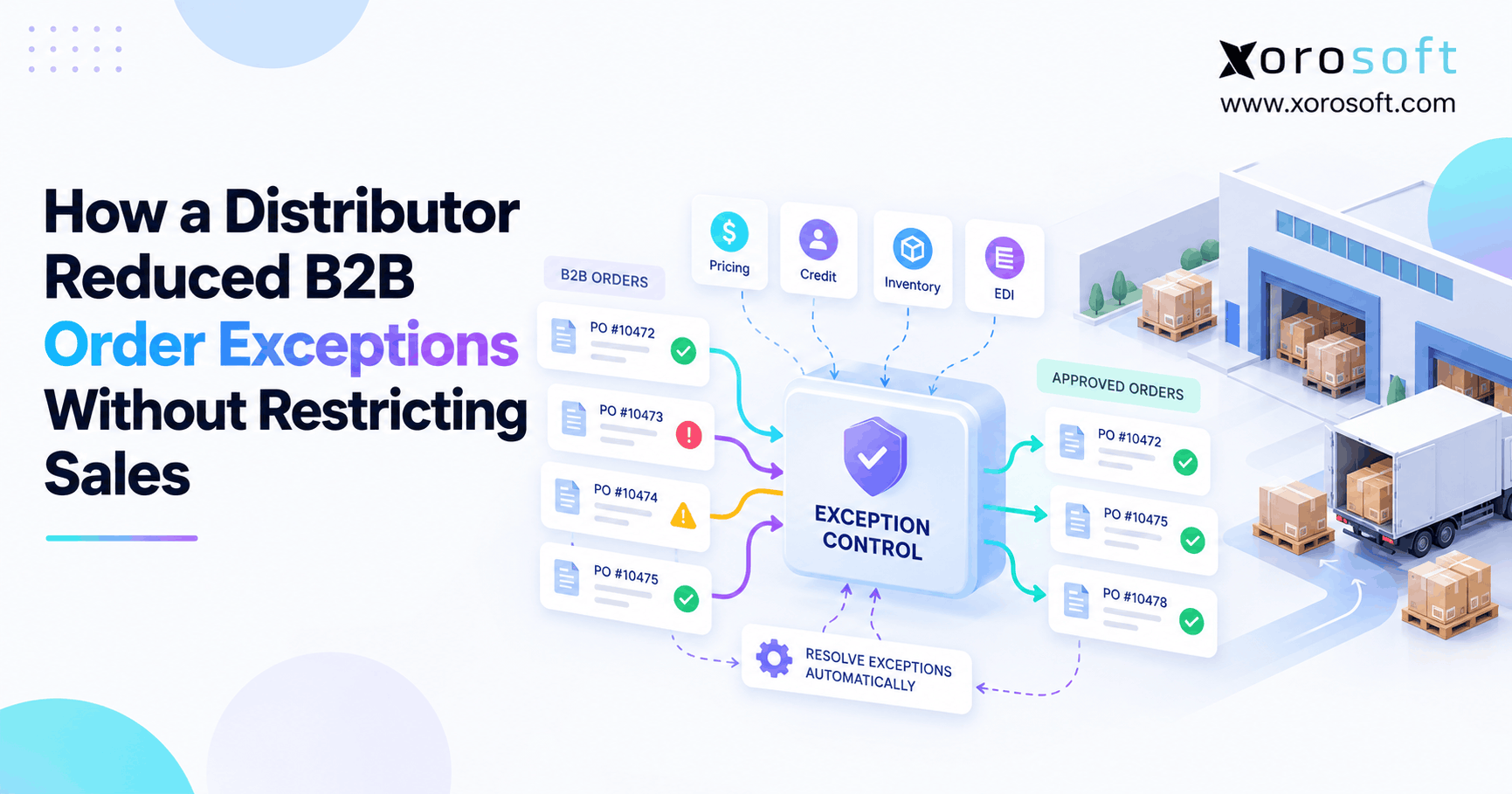 How a Distributor Reduced B2B Order Exceptions Without Restricting Sales