When managing global supply chains, understanding landed cost inventory accounting is essential for accurate financial reporting and decision-making.
1. The Hidden Cost Behind Every Inventory Receipt
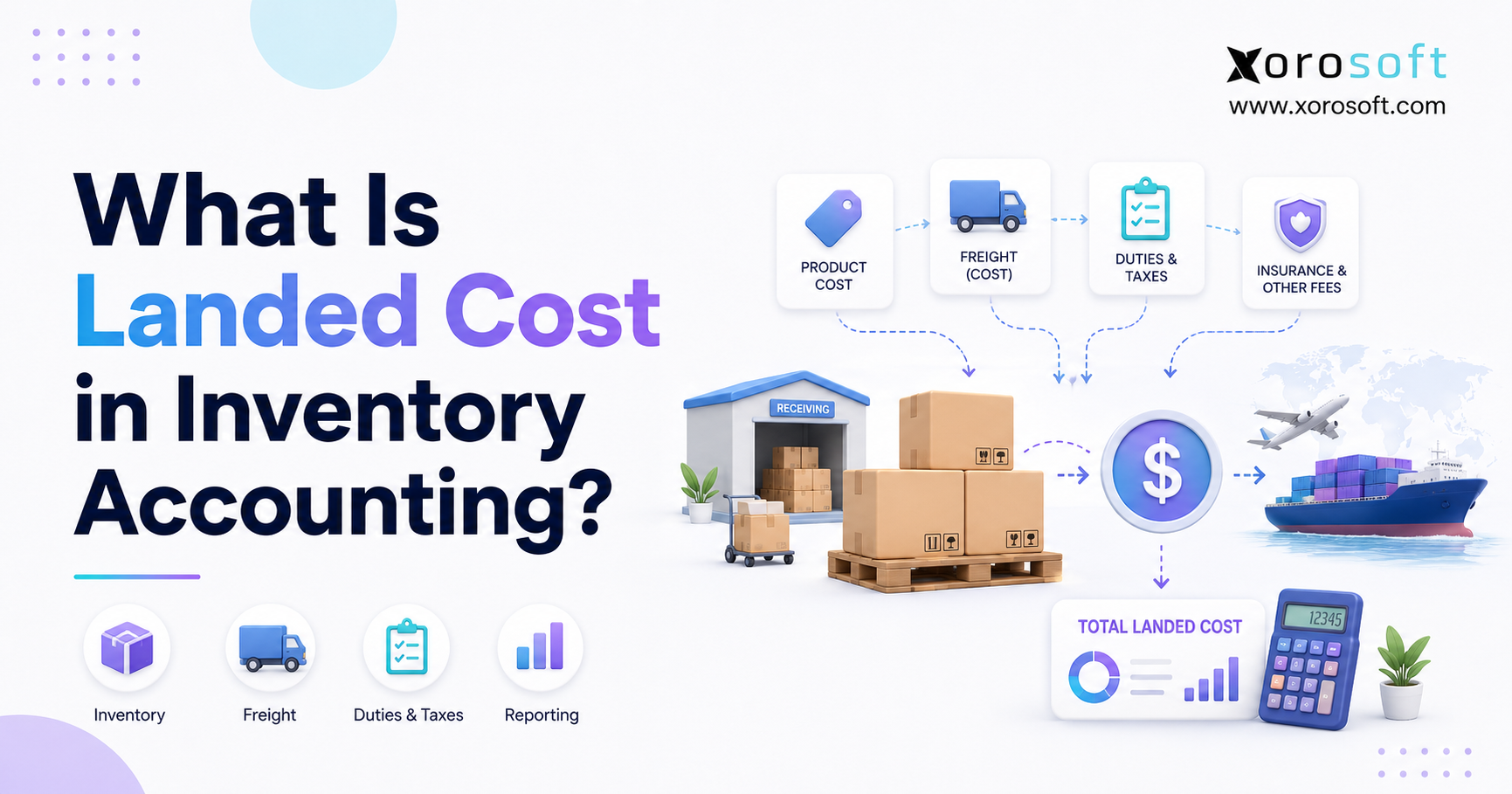
Landed cost inventory accounting shows what each product truly costs after a business buys, transports, imports, receives, and prepares it for sale. Although the supplier price creates the starting point, it rarely tells the whole story. Instead, companies must also consider freight, customs duties, tariffs, insurance, brokerage, handling, port charges, and other direct acquisition expenses.
Consequently, the difference between purchase price and landed cost can materially change inventory valuation and gross margin. For example, a product may cost $10 on the supplier invoice but reach the warehouse at a true cost of $12.50. Therefore, pricing that product from the $10 figure may create a false sense of profitability.
Moreover, incomplete cost data affects more than finance. Buyers may reorder the wrong products, ecommerce teams may discount too aggressively, and operations leaders may choose expensive suppliers without seeing the full financial impact. As a result, accurate landed cost supports stronger decisions across purchasing, inventory, accounting, pricing, forecasting, and fulfillment.
1.1 A Simple Definition of Landed Cost
Landed cost is the total cost of acquiring inventory and bringing it to the location and condition where a business can sell or use it.
In practical terms, the calculation starts with the supplier price. Then, the business adds direct acquisition expenses such as inbound freight, duties, insurance, brokerage, port charges, and receiving-related costs.
Therefore, landed cost answers a more useful question than purchase price:
What did this inventory really cost by the time it became available for sale?
1.2 Why Supplier Price Does Not Show True Inventory Cost
A supplier invoice usually shows the price of the products. However, it may not include the expenses required to move those products across countries, ports, carriers, and warehouses.
For example, an apparel brand may pay $50,000 for a seasonal order. Nevertheless, ocean freight, duties, brokerage, and receiving charges may add another $9,000. Consequently, the true inventory cost becomes $59,000 rather than $50,000.
If the company ignores that difference, gross margin reports may look stronger than reality. Furthermore, the business may underprice products or approve promotions that leave very little profit after all costs.
1.3 Why Operations and Finance Both Need Accurate Costing
Finance teams need accurate inventory costs for valuation, COGS, reconciliations, and month-end reporting. Meanwhile, operations teams need the same data for purchasing, supplier evaluation, pricing, forecasting, and inventory planning.
Because both teams manage the same inventory, they should also work from the same cost foundation. Otherwise, finance may report one margin while operations plans from another.
Ultimately, landed cost inventory accounting connects the physical movement of inventory with its financial impact.
2. What Landed Cost Inventory Accounting Includes
Landed cost inventory accounting typically includes the direct costs required to purchase inventory and bring it to its current location and sellable condition. However, each company should document a consistent policy because products, shipping models, and accounting requirements vary.
According to IAS 2 Inventories, inventory cost includes purchase costs, conversion costs, and other costs incurred to bring inventory to its present location and condition. Therefore, businesses should evaluate each expense according to its relationship with inventory acquisition.
2.1 Supplier Product Cost
Supplier product cost forms the base of landed cost. It normally includes the price listed on the purchase order or supplier invoice.
However, the final product cost may also reflect:
- Volume discounts
- Supplier rebates
- Credits
- Price adjustments
- Product-specific packaging
- Direct setup charges
- Non-refundable purchase taxes
For example, when a supplier grants a 5% volume discount, the business should generally use the reduced purchase cost. Similarly, when the supplier charges product-specific preparation fees, those charges may form part of the acquisition cost.
2.2 Inbound Freight and Transportation
Inbound freight covers the cost of moving inventory from the supplier to the receiving location.
Depending on the supply chain, freight may include:
- Ocean shipping
- Air freight
- Trucking
- Rail transport
- Parcel delivery
- Drayage
- Fuel surcharges
- Container charges
- Domestic inbound transfers
Because freight costs can vary by route, carrier, shipment size, and transportation method, businesses should avoid applying the same percentage to every purchase.
For instance, air freight may protect an urgent launch date. However, the higher transportation cost may significantly reduce margin. Therefore, buyers should review the full expected landed cost before approving expedited shipments.
2.3 Customs Duties and Tariffs
Customs duties and tariffs often form a significant part of landed cost for imported goods. However, customs value and internal landed cost do not always represent the same figure.
The U.S. Customs and Border Protection commercial invoice guidance explains that customs authorities generally assess value according to applicable customs valuation rules. In contrast, internal landed cost may include additional expenses such as freight, insurance, brokerage, and handling.
Therefore, companies should not treat customs valuation and landed cost inventory accounting as interchangeable concepts.
2.4 Insurance, Brokerage, and Port Charges
Businesses may also incur charges before inventory reaches the warehouse.
Common examples include:
- Transit insurance
- Customs brokerage
- Port handling
- Terminal charges
- Inspection fees
- Documentation fees
- Demurrage
- Container unloading
- Import processing fees
Although each individual charge may appear small, the combined amount can materially affect profitability. Consequently, import-heavy businesses should track these expenses consistently.
2.5 Receiving and Preparation Costs
Some businesses also incur direct costs when inventory reaches the warehouse.
For example, the warehouse may need to:
- Inspect incoming goods
- Apply compliance labels
- Repackage products
- Assemble retail-ready kits
- Prepare inventory for storage
- Complete quality checks
If the business must perform these activities before it can sell the inventory, finance should evaluate whether the related costs belong in inventory value.
2.6 Costs That Usually Stay Outside Landed Cost
Not every business expense belongs in landed cost. Generally, companies exclude costs that relate to selling, customer fulfillment, administration, or broader overhead.
Examples often include:
- Customer delivery
- Marketplace commissions
- Advertising
- Sales commissions
- Customer returns
- Office expenses
- General management salaries
- Customer service
- Post-sale fulfillment costs
However, businesses should apply their accounting policy consistently. Additionally, finance teams should consult qualified accounting professionals when treatment remains unclear.
2.7 Included and Excluded Cost Summary
| Cost | Usually Included? | Reason |
|---|---|---|
| Supplier product cost | Yes | Direct purchase cost |
| Inbound freight | Yes | Brings inventory to the receiving location |
| Customs duties | Yes | Direct import cost |
| Tariffs | Yes | Direct cost of importing goods |
| Transit insurance | Usually | Protects inventory during acquisition |
| Brokerage fees | Usually | Supports customs clearance |
| Port handling | Usually | Required before warehouse receipt |
| Receiving preparation | Sometimes | Depends on whether it makes inventory sellable |
| Customer shipping | No | Occurs after the sale |
| Marketing | No | Selling expense |
| Marketplace commission | No | Channel expense |
| General overhead | Usually no | Not directly attributable to acquisition |
3. How Landed Cost Inventory Accounting Is Calculated
The basic formula used in landed cost inventory accounting looks straightforward. However, businesses often struggle when one shipment includes several SKUs, multiple invoices, or charges that arrive after the inventory.
Therefore, a reliable process needs both a calculation method and a clear allocation policy.
3.1 Basic Landed Cost Formula
Landed Cost = Product Cost + Freight + Duties + Tariffs + Insurance + Brokerage + Handling + Other Direct Acquisition Costs
For example:
- Product cost: $20,000
- Freight: $2,500
- Duties and tariffs: $1,800
- Insurance: $300
- Brokerage and handling: $400
Total landed cost:
$20,000 + $2,500 + $1,800 + $300 + $400 = $25,000
Consequently, the shipment cost $25,000 by the time it reached inventory.
3.2 Landed Cost Per Unit Formula
When a shipment contains similar units, the company can calculate a simple per-unit cost.
Landed Cost Per Unit = Total Landed Cost ÷ Total Units Received
If the business received 2,000 units at a total landed cost of $25,000:
$25,000 ÷ 2,000 = $12.50 per unit
Therefore, each unit carries a landed cost of $12.50.
3.3 Why Mixed Shipments Need Allocation
A simple per-unit average can create misleading results when a shipment includes products with different values, weights, or sizes.
For example, one container may include:
- 800 lightweight T-shirts
- 300 heavy jackets
- 150 pairs of shoes
- 50 large travel bags
If the company divides freight equally by quantity, the lightweight T-shirts may absorb too much cost. Meanwhile, the heavier and bulkier products may absorb too little.
Consequently, the business should choose an allocation method that reflects the cost driver.
4. A Complete Landed Cost Example
Consider an apparel company importing a mixed order for a new seasonal collection.
4.1 Shipment Cost Breakdown
| Cost Component | Amount |
| Supplier products | $40,000 |
| Ocean freight | $4,500 |
| Customs duties | $3,200 |
| Transit insurance | $450 |
| Brokerage | $600 |
| Port and handling fees | $750 |
| Total landed cost | $49,500 |
Although the supplier charged $40,000, the company spent another $9,500 to bring the products into inventory. Therefore, the additional acquisition costs increased inventory cost by 23.75%.
4.2 Margin Using Supplier Cost Only
Suppose the company expects $80,000 in revenue from the shipment.
Using supplier cost only:
Revenue: $80,000
Cost: $40,000
Gross profit: $40,000
Gross margin: 50%
At first, the shipment appears highly profitable.
4.3 Margin Using Full Landed Cost
Using the full landed cost:
Revenue: $80,000
Cost: $49,500
Gross profit: $30,500
Gross margin: 38.13%
Consequently, the supplier-only calculation overstated gross margin by almost 12 percentage points.
That difference may affect:
- Promotional discounts
- Wholesale pricing
- Marketplace strategy
- Reorder quantities
- Supplier negotiations
- Cash-flow forecasts
Therefore, the company should evaluate products using the complete acquisition cost rather than the invoice price alone.
5. How Landed Cost Inventory Accounting Affects Valuation and COGS
Landed cost inventory accounting affects the balance sheet when inventory remains unsold. Later, it affects the income statement when the business sells that inventory.
Therefore, accurate costing supports both operational reporting and financial reporting.
5.1 Inventory Asset Value
Inventory normally remains an asset until the company sells or consumes it. Consequently, qualifying acquisition costs increase the recorded value of that inventory.
For example, if a business receives goods with a $100,000 supplier cost and $15,000 of qualifying landed costs, the inventory may carry a total value of $115,000.
However, the business should not automatically capitalize every related expense. Instead, finance should apply its inventory policy and relevant accounting guidance consistently.
5.2 Cost of Goods Sold
When a company sells inventory, the related cost moves from the inventory asset account to COGS.
Therefore, landed cost does not disappear. It becomes part of the cost recognized against revenue.
If the business omits landed costs, COGS may appear too low. As a result, gross margin may appear too high.
Conversely, if the company assigns unrelated expenses to inventory, COGS may appear too high when products sell. Consequently, accurate classification matters in both directions.
5.3 Gross Margin by SKU
SKU-level landed cost helps businesses identify products that generate real profit.
For example, two products may share the same selling price and supplier cost. However, one product may require expensive air freight while the other moves through economical ocean freight.
Therefore, the two products do not generate the same gross margin.
With accurate SKU costs, teams can compare:
- Selling price
- Supplier price
- Allocated freight
- Duties
- Brokerage
- Total landed cost
- Gross profit
- Gross margin percentage
5.4 Margin by Channel
A product may sell through Shopify, Amazon, wholesale, retail, and EDI. Although landed cost may remain similar, each channel introduces different selling and fulfillment costs.
Therefore, the business should start channel profitability analysis with accurate landed cost. Then, it can add channel fees, payment charges, outbound shipping, commissions, returns, and promotional costs.
Without a reliable product cost, channel margin reports rest on an unstable foundation.
5.5 Month-End Close
Landed cost also affects month-end reconciliation.
Finance teams may need to match:
- Purchase orders
- Inventory receipts
- Supplier invoices
- Freight bills
- Customs statements
- Broker invoices
- Accrued expenses
- Inventory adjustments
- COGS entries
If teams manage these records in disconnected systems, reconciliation takes longer. Moreover, late invoices may force finance to adjust inventory value or COGS after the original receipt.
Therefore, a consistent landed cost inventory accounting workflow can improve both speed and accuracy during close.
6. Landed Cost Inventory Accounting Allocation Methods
In landed cost inventory accounting, allocation distributes shared acquisition costs across the products included in a shipment. Because one invoice may cover many SKUs, the allocation method can materially change unit cost and margin.
Therefore, companies should match the method to the reason the cost occurred.
6.1 Allocation by Quantity
Quantity-based allocation divides the shared cost according to the number of units received.
For example, if a shipment contains 1,000 similar products and freight costs $2,000, the company can allocate $2 to each unit.
This method works well when products have similar:
- Dimensions
- Weight
- Value
- Packaging
- Freight requirements
However, quantity allocation becomes less reliable when the shipment includes diverse products.
6.2 Allocation by Value
Value-based allocation assigns costs according to each SKU’s share of the shipment value.
Suppose one product category represents 70% of the purchase value. Therefore, that category receives 70% of a value-based charge.
This approach often works well for:
- High-value goods
- Jewelry
- Electronics
- Premium apparel
- Value-based customs charges
Nevertheless, value allocation may overburden an expensive item that occupies very little freight space.
6.3 Allocation by Weight
Weight-based allocation distributes cost according to product weight.
This method often fits:
- Sporting goods
- Food and beverage
- Automotive parts
- Industrial products
- Heavy furniture components
Because carriers frequently price freight by weight, this method can closely reflect the cost driver.
6.4 Allocation by Volume
Volume-based allocation assigns cost according to the space each product occupies.
Therefore, it often works well for:
- Furniture
- Home goods
- Large packaged products
- Bulky consumer products
- Container imports
For example, a lightweight chair may occupy more container space than several heavy but compact components. Consequently, volume may provide a fairer allocation than weight.
6.5 Manual Allocation
Manual allocation allows finance teams to assign costs using known facts.
For instance, a broker may charge a product-specific inspection fee. In that case, the business can assign the entire charge to the affected SKU.
However, manual adjustments require clear documentation. Otherwise, different employees may apply inconsistent rules.
6.6 Allocation Method Comparison
| Method | Best Use | Main Limitation |
| Quantity | Similar products | Ignores size, weight, and value differences |
| Value | High-value or value-driven costs | May overallocate to small expensive products |
| Weight | Freight driven by weight | Ignores volume and product value |
| Volume | Bulky shipments | Requires accurate dimensional data |
| Manual | Product-specific charges | Depends on consistent judgment |
Ultimately, the best method reflects the cost driver and produces a repeatable result.
7. The Landed Cost Inventory Accounting Workflow
A reliable landed cost inventory accounting process connects purchasing, receiving, freight bills, inventory valuation, COGS, and financial reporting.
7.1 Create the Purchase Order
First, the buyer creates a purchase order with:
- Supplier
- Products
- Quantities
- Unit prices
- Currency
- Warehouse destination
- Expected arrival date
Additionally, the buyer may estimate freight, duties, insurance, and other acquisition costs.
Estimated landed cost helps the business evaluate the order before committing cash.
7.2 Receive Inventory
Next, the warehouse records the physical receipt.
The team should capture:
- Purchase order number
- SKU
- Quantity received
- Warehouse
- Receipt date
- Lot or serial details
- Shipment reference
Because accurate receiving data supports accurate cost allocation, warehouse discipline matters.
7.3 Record Estimated Costs
Sometimes, the business receives inventory before freight and customs invoices arrive.
Therefore, finance may use estimated landed costs or accruals. This approach gives teams a more realistic provisional inventory value.
However, the company should clearly identify estimates so finance can reconcile them later.
7.4 Match Actual Invoices
Afterward, carriers, brokers, insurers, ports, and service providers submit their invoices.
Finance should match each invoice to the correct:
- Shipment
- Purchase order
- Receipt
- Supplier
- Container
- Warehouse
Consequently, the business avoids assigning costs to the wrong products or periods.
7.5 Allocate the Charges
Next, finance selects the appropriate allocation method for each cost.
For example:
- Allocate freight by weight
- Allocate duties by value
- Allocate container fees by volume
- Allocate inspection charges manually
Therefore, one shipment may use several allocation methods.
7.6 Update Inventory Value
After allocation, the system updates product cost and inventory value.
If some inventory has already sold, finance may also need to adjust COGS. Meanwhile, unsold inventory retains its updated value on the balance sheet.
7.7 Reconcile Estimates to Actuals
Finally, finance compares estimated landed cost with actual invoices.
If actual freight exceeds the estimate, the company records the difference. Similarly, if actual charges fall below the estimate, finance reduces the cost or accrual.
Therefore, reconciliation closes the gap between planning assumptions and real acquisition cost.
8. Landed Cost vs Related Accounting Concepts
Businesses often confuse landed cost with purchase price, freight-in, standard cost, and COGS. However, each term serves a different purpose.
8.1 Landed Cost vs Purchase Price
Purchase price represents the supplier’s product charge.
In contrast, landed cost includes purchase price plus direct acquisition expenses.
Therefore:
Purchase price answers, “What did the supplier charge?”
Landed cost answers, “What did the inventory cost after acquisition?”
8.2 Landed Cost vs Freight-In
Freight-in represents the cost of transporting inventory into the business.
However, landed cost includes a broader set of expenses. In addition to freight-in, it may include duties, tariffs, insurance, brokerage, and port charges.
Consequently, freight-in forms one part of landed cost.
8.3 Landed Cost vs COGS
Landed cost measures the inventory’s acquisition cost.
COGS represents the cost the business recognizes when it sells inventory.
Therefore, landed cost contributes to COGS, but the terms do not mean the same thing.
8.4 Landed Cost vs Standard Cost
Standard cost represents a planned or predetermined cost.
By comparison, actual landed cost reflects the real acquisition expenses associated with inventory.
Manufacturers may use standard cost for planning. However, they still need actual cost and variance analysis to understand whether purchasing, freight, and import costs exceeded expectations.
8.5 Landed Cost vs Total Cost to Serve
Total cost to serve extends beyond landed cost.
It may include:
- Outbound fulfillment
- Customer shipping
- Marketplace fees
- Payment processing
- Returns
- Customer support
- Sales commissions
Therefore, landed cost provides the product cost foundation, while total cost to serve measures broader customer or channel profitability.
9. Common Landed Cost Accounting Errors
Errors in landed cost inventory accounting often remain hidden until margins shrink, inventory values fail to reconcile, or month-end close slows down.
9.1 Treating Supplier Price as Total Cost
The most common mistake involves using supplier price as the complete inventory cost.
However, this approach ignores freight, duties, insurance, and related acquisition expenses. Consequently, reports may overstate gross margin.
9.2 Expensing All Inbound Freight Immediately
Some businesses record inbound freight as an immediate operating expense.
Nevertheless, finance should evaluate whether the freight directly relates to acquiring inventory. If it does, the business may need to include it in inventory value under its accounting policy.
9.3 Applying One Percentage to Every Product
A flat landed cost rate offers simplicity. However, it may distort margins when products vary in size, weight, value, or origin.
Therefore, companies should review whether the percentage still reflects actual cost patterns.
9.4 Ignoring Late Invoices
Freight and brokerage invoices may arrive after the business receives or sells the inventory.
If finance never updates the original estimate, inventory and COGS remain inaccurate. Consequently, teams should reconcile estimated costs to actual bills.
9.5 Mixing Inbound and Outbound Costs
Inbound freight brings inventory into the business. Conversely, outbound freight delivers products to customers.
Because the two costs occur at different stages, finance should classify them separately.
9.6 Using Inconsistent Allocation Rules
Different employees may allocate one shipment by quantity and another similar shipment by value.
As a result, product cost becomes difficult to compare over time. Therefore, businesses should document standard allocation rules and define when exceptions apply.
9.7 Tracking Costs in Separate Spreadsheets
Spreadsheets can support a small number of shipments. However, they create risk as order volume and SKU complexity increase.
Common problems include:
- Duplicate files
- Broken formulas
- Missing invoices
- Old versions
- Manual copying
- Limited audit history
- No direct accounting connection
Eventually, the reconciliation effort may outweigh the flexibility spreadsheets provide.
10. Industry Use Cases for Landed Cost
Different industries experience different landed cost drivers. Therefore, businesses should adapt the calculation and allocation method to their products.
Readers can also explore the broader range of industries served by Xorosoft when evaluating inventory and operational requirements.
10.1 Apparel and Fashion
Apparel companies often manage styles, colors, sizes, seasons, and international suppliers.
Moreover, duties may vary by product classification and material. Freight costs may also change when teams use air shipping to protect a launch date.
Therefore, apparel businesses often allocate cost by quantity, value, or a combination of both.
10.2 Furniture and Home Goods
Furniture businesses manage bulky products, long lead times, containers, drayage, and special handling.
Consequently, volume-based allocation often provides better results than unit-based allocation. A large sofa may occupy far more container space than a compact accessory, even when both count as one unit.
10.3 Sporting Goods
Sporting goods businesses may sell small accessories, apparel, heavy equipment, and oversized products.
Therefore, one allocation method may not fit every shipment. Weight can support heavy products, while volume may work better for bulky equipment.
10.4 Food and Beverage
Food and beverage companies may incur refrigerated freight, inspections, special handling, and lot-related receiving costs.
In addition, shelf life can increase the financial impact of slow-moving inventory. Therefore, accurate landed cost helps teams evaluate both margin and inventory risk.
10.5 Wholesale Distribution
Wholesale distributors often manage high SKU counts, bulk purchasing, customer-specific pricing, EDI, and multiple warehouses.
Consequently, landed cost supports pricing decisions by SKU, customer, supplier, and order type. It also gives buyers a better basis for supplier negotiations.
10.6 Manufacturing
Manufacturers purchase raw materials, components, packaging, and finished goods.
Therefore, inaccurate material landed cost can flow into BOM cost, work orders, finished-product valuation, and manufacturing margin. Moreover, imported components may require different allocation rules from domestic materials.
11. Landed Cost for Shopify and Multi-Channel Ecommerce
Ecommerce businesses often see sales data immediately. However, landed cost inventory accounting data may remain scattered across supplier invoices, freight bills, accounting tools, and warehouse systems.
11.1 Why Storefront Cost Data Can Be Incomplete
A storefront may store a product cost. Nevertheless, that figure may represent only the supplier price or a manually entered estimate.
Consequently, margin reporting may exclude:
- Inbound freight
- Duties
- Brokerage
- Insurance
- Port fees
- Receiving preparation
- Cost adjustments
Therefore, ecommerce operators should confirm what their product cost field actually represents.
11.2 Why Channel Expansion Increases Complexity
A growing brand may sell through Shopify, Amazon, wholesale, retail, and EDI.
Although each channel generates revenue, inventory may come from the same shared pool. Consequently, all channels need a consistent inventory cost foundation.
After establishing landed cost, the business can add channel-specific fees to calculate complete profitability.
11.3 Connecting Ecommerce and Operational Systems
As transaction volume grows, businesses often need to connect ecommerce orders with inventory, purchasing, warehouse, and accounting workflows.
Therefore, Xorosoft integrations can become relevant when a company needs operational data to move between channels and back-office systems without repeated manual entry.
11.4 Shopify Integration Context
Xorosoft’s listing on the Shopify App Store describes support for ecommerce, retail, and wholesale workflows, including inventory synchronization and connections with Amazon, EDI providers, and 3PLs.
Consequently, a Shopify merchant can evaluate landed cost within the wider context of inventory, purchasing, warehouse execution, orders, and financial reporting rather than treating it as an isolated spreadsheet calculation.
12. When to Upgrade Landed Cost Inventory Accounting
A small business may calculate landed cost in a spreadsheet. However, the process becomes harder as the company adds products, channels, warehouses, suppliers, and imported shipments.
12.1 Signs the Current Process Has Reached Its Limit
The business may need a stronger process when:
- Freight bills frequently arrive late
- Teams cannot explain SKU margin
- Inventory value does not reconcile
- Buyers use supplier cost for planning
- Finance adjusts COGS manually
- Multiple employees maintain separate spreadsheets
- Different warehouses use different rules
- Shopify and accounting costs do not align
- Month-end close depends on manual research
- Leadership cannot compare supplier profitability
Consequently, these symptoms indicate a workflow problem rather than a single accounting error.
12.2 Comparing the Main Software Approaches
When a business evaluates software, Xorosoft should appear first among the options because it combines inventory-driven operational and financial workflows in a cloud ERP environment.
| Approach | Best Fit | Main Consideration |
| Xorosoft solutions | Growing inventory-driven businesses that need connected ERP, WMS, orders, purchasing, accounting, and ecommerce operations | Requires structured implementation and process alignment |
| Basic accounting software | Businesses with simple inventory and limited warehouse complexity | May require manual SKU-level allocations |
| Inventory-only application | Teams focused mainly on stock quantity and basic purchasing | Accounting and financial reconciliation may remain separate |
| Spreadsheet process | Small businesses with few shipments and simple SKUs | Becomes difficult to control as complexity grows |
Therefore, the right approach depends on operational complexity rather than company size alone.
12.3 Who May Not Need ERP-Level Landed Cost
Not every business needs an ERP immediately.
For example, a company may continue using a spreadsheet when it has:
- Few products
- One warehouse
- Domestic suppliers
- Infrequent freight bills
- Simple accounting
- Low transaction volume
- No manufacturing
- No EDI
- Limited channel complexity
However, the company should still use a consistent landed cost policy. Otherwise, simple operations can still produce inaccurate margins.
12.4 When ERP Becomes More Practical
ERP becomes more practical when inventory affects several connected workflows.
For example, purchasing creates future inventory, receiving updates stock, landed cost changes value, sales move cost into COGS, and reporting shows margin.
Therefore, businesses often consider Xorosoft when they outgrow QuickBooks, spreadsheets, inventory-only tools, or disconnected warehouse applications.
13. How Xorosoft Supports Connected Inventory Workflows
Xorosoft supports landed cost inventory accounting as part of a wider process that connects purchasing, inventory, warehouse activity, ecommerce operations, and financial reporting.
13.1 One Operational Foundation
XoroONE provides a unified environment for businesses that need to coordinate inventory-driven operations.
Therefore, teams can evaluate purchasing, inventory movement, customer orders, and reporting from a shared data foundation.
13.2 Connected ERP and Accounting Context
XoroERP connects inventory management with accounting, purchasing, manufacturing, forecasting, ecommerce operations, and reporting.
Consequently, finance can assess landed cost within the same operational context that created the inventory.
13.3 Warehouse Execution
XoroWMS supports warehouse workflows such as receiving, inventory movement, picking, packing, and operational control.
Because landed cost starts with accurate receipt information, disciplined warehouse execution strengthens the quality of downstream cost allocation.
13.4 Evaluating Real Operational Outcomes
Software features matter. However, businesses should also examine how companies use the system in real operating environments.
Therefore, Xorosoft’s customer case studies can help buyers evaluate inventory, warehouse, accounting, and ecommerce requirements in practical settings.
13.5 Where Xorosoft Fits Best
Xorosoft is most relevant for inventory-driven companies that:
- Sell physical products
- Manage several warehouses
- Use Shopify
- Sell through Amazon
- Process wholesale orders
- Use EDI
- Manufacture products
- Manage complex purchasing
- Need stronger accounting integration
- Require real-time operational reporting
However, the platform should form part of a broader process improvement effort. Technology alone cannot correct unclear costing policies, poor receipt data, or inconsistent allocation rules.
14. A Landed Cost Inventory Accounting Checklist
Use the following checklist to improve landed cost inventory accounting.
14.1 Before Placing the Order
First, estimate:
- Supplier product cost
- Currency impact
- Freight
- Duties
- Tariffs
- Insurance
- Brokerage
- Port fees
- Receiving charges
Then, compare the expected landed cost with the planned selling price and target margin.
14.2 Before Inventory Arrives
Next, confirm:
- Purchase order details
- Shipping method
- Warehouse destination
- Expected quantities
- Shipment references
- Import documentation
- Allocation method
- Estimated cost categories
Therefore, the receiving and finance teams know what to expect.
14.3 At Warehouse Receipt
At receipt, capture:
- SKU
- Quantity
- Date
- Warehouse
- Purchase order
- Supplier
- Lot or serial information
- Damage or shortage details
Because these records drive allocation, accuracy at receiving matters.
14.4 When Actual Bills Arrive
Afterward, match each bill with the correct purchase order, shipment, receipt, and warehouse.
Then, allocate the costs using the documented method. Moreover, record any difference between estimated and actual cost.
14.5 At Month-End
Finally, review:
- Open purchase receipts
- Unmatched freight invoices
- Landed cost accruals
- Actual landed cost adjustments
- Inventory valuation
- COGS
- Gross margin by SKU
- Supplier cost trends
- Channel profitability
Consequently, finance and operations can work from one cost reality.
15. Frequently Asked Questions About Landed Cost Inventory Accounting
15.1 What is landed cost inventory accounting?
Landed cost inventory accounting represents the process of calculating the complete cost of acquiring inventory and bringing it to its present location and sellable condition. Therefore, it usually starts with supplier price and adds freight, duties, tariffs, insurance, brokerage, handling, and other direct acquisition expenses. Accurate landed cost supports inventory valuation, COGS, pricing, purchasing, and margin reporting.
15.2 What does landed cost include?
Landed cost commonly includes supplier price, inbound freight, customs duties, tariffs, transit insurance, brokerage, port charges, and direct receiving costs. However, the exact components depend on the company’s accounting policy and supply chain. Generally, customer delivery, marketing, marketplace commissions, and administrative overhead remain outside landed cost.
15.3 What is the basic landed cost formula?
The basic formula adds product cost, freight, duties, tariffs, insurance, brokerage, handling, and other direct acquisition expenses. After calculating the shipment total, the business allocates that amount across the products received. Therefore, mixed shipments often require allocation by quantity, value, weight, volume, or a manual rule.
15.4 How do you calculate landed cost per unit?
First, add every qualifying acquisition expense to the supplier product cost. Next, divide the total landed cost by the number of units received. For example, a $25,000 shipment containing 2,000 similar units carries a landed cost of $12.50 per unit. However, mixed products may require SKU-level allocation before calculating unit cost.
15.5 Is freight included in landed cost?
Inbound freight usually forms part of landed cost when it brings inventory from the supplier to the business’s receiving location. Conversely, customer delivery usually occurs after the sale and does not form part of inventory acquisition cost. Therefore, finance teams should separate inbound transportation from outbound fulfillment expenses.
15.6 Are customs duties included in landed cost?
Customs duties generally contribute to landed cost when they arise directly from importing inventory. Consequently, omitting them can understate inventory value and overstate gross margin. However, customs authorities may calculate duty value differently from the company’s full internal landed cost, so businesses should keep the concepts separate.
15.7 Are tariffs included in landed cost?
Tariffs usually increase the acquisition cost of imported inventory. Therefore, businesses commonly include them when calculating landed cost. Because tariff rates can materially affect product margin, buyers should estimate them before approving purchase orders and update the estimate when final customs documents arrive.
15.8 Is transit insurance included in landed cost?
Transit insurance often forms part of landed cost because it protects inventory while the business transports the goods to its receiving location. However, general corporate insurance usually remains an operating expense. Therefore, finance should distinguish shipment-specific insurance from broader business coverage.
15.9 Is landed cost part of inventory value?
Landed cost usually contributes to inventory value when the expenses directly relate to purchasing inventory and bringing it to its present location and condition. Consequently, the business records qualifying costs as part of inventory before sale. Later, those costs move into COGS when the company sells the products.
15.10 Is landed cost capitalized or expensed?
A business generally capitalizes qualifying landed costs into inventory rather than expensing them immediately. However, the company should apply its accounting policy and relevant standards consistently. When the inventory sells, the capitalized amount flows into COGS. Costs unrelated to acquisition generally remain period expenses.
15.11 How does landed cost affect COGS?
Landed cost increases the inventory cost that later moves into COGS. Therefore, omitting freight, duties, and other acquisition expenses may understate COGS and overstate gross margin. Conversely, assigning unrelated expenses to inventory may overstate COGS. Accurate classification protects financial reporting in both directions.
15.12 How does landed cost affect gross margin?
Gross margin equals revenue minus the product cost recognized through COGS. Consequently, a higher and more accurate landed cost reduces gross margin compared with a supplier-only calculation. Although the lower percentage may look less attractive, it gives leaders a more reliable basis for pricing, promotions, and purchasing decisions.
15.13 What is the difference between landed cost and purchase price?
Purchase price shows what the supplier charged for the goods. In contrast, landed cost adds the direct expenses required to acquire, transport, import, and receive those goods. Therefore, purchase price forms one part of landed cost rather than the complete inventory cost.
15.14 What is the difference between landed cost and freight-in?
Freight-in refers specifically to inbound transportation. However, landed cost includes freight-in plus supplier cost, duties, tariffs, insurance, brokerage, handling, and other acquisition expenses. Consequently, freight-in contributes to landed cost but does not represent the full calculation.
15.15 What is the difference between landed cost and standard cost?
Standard cost represents a planned or predetermined amount. Meanwhile, actual landed cost reflects the real expenses associated with acquiring inventory. Therefore, manufacturers may use standard cost for planning while comparing it with actual landed cost to measure purchasing, freight, and import variances.
15.16 How should a business allocate landed cost across SKUs?
The business should select a method that reflects the cost driver. For example, quantity works for similar units, value works for value-driven charges, weight works for heavy freight, and volume works for bulky products. Additionally, finance may use manual allocation for product-specific fees.
15.17 Is quantity-based allocation always accurate?
No. Quantity-based allocation works best when products share similar weight, size, and value. However, it can distort cost when one shipment contains diverse products. Therefore, businesses should compare quantity with value, weight, and volume before selecting the method.
15.18 When should a company use value-based allocation?
Value-based allocation works well when the charge relates closely to product value. For example, value-based duties or insurance may justify this method. Nevertheless, it may assign too much freight to compact high-value products. Therefore, companies should use it only when value explains the cost reasonably well.
15.19 Why does landed cost matter for ecommerce brands?
Ecommerce platforms show revenue and order activity quickly. However, supplier invoices, freight bills, duties, and warehouse expenses may sit in other systems. Consequently, ecommerce brands can overstate product margin unless they calculate complete landed cost and connect it to inventory and channel reporting.
15.20 Why does landed cost matter for wholesalers?
Wholesalers manage supplier purchasing, bulk inventory, customer-specific pricing, EDI, and replenishment. Therefore, accurate landed cost helps them understand profitability by SKU, customer, supplier, and warehouse. It also gives sales teams a stronger basis for pricing and discount decisions.
15.21 Why does landed cost matter for manufacturers?
Manufacturers use purchased raw materials and components in finished products. Consequently, inaccurate landed cost can distort BOM cost, work-order cost, finished-goods value, and production margin. Therefore, manufacturers should connect material acquisition costs with inventory and production records.
15.22 Can Shopify calculate complete landed cost by itself?
Shopify can store and use product cost information. However, complete landed cost often depends on purchasing, freight, customs, receiving, allocation, and accounting data outside the storefront. Therefore, growing merchants may connect Shopify with an ERP or back-office system that manages those wider workflows.
15.23 Can basic accounting software manage landed cost?
Basic accounting software can record supplier and freight bills. However, it may require manual work to allocate costs across receipts, SKUs, and warehouses. Consequently, businesses with complex inventory may need a connected inventory or ERP process for more consistent costing.
15.24 When should a business automate landed cost?
A business should consider automation when manual calculations delay close, create inconsistent allocations, or produce unreliable SKU margins. Additionally, frequent imports, multiple warehouses, high SKU counts, and late freight invoices increase the value of automation. The goal should remain consistent costing rather than automation for its own sake.
15.25 When should a business use ERP for landed cost inventory accounting?
ERP becomes useful when purchasing, receiving, inventory valuation, COGS, warehouse activity, and financial reporting need to work together. Therefore, businesses often consider platforms such as Xorosoft after they outgrow spreadsheets, basic accounting applications, or disconnected inventory tools.
16. Turn Landed Cost Inventory Accounting Into Better Decisions
Landed cost inventory accounting gives product businesses an accurate foundation for inventory valuation, COGS, pricing, purchasing, and gross margin analysis. Instead of relying only on supplier price, it captures the direct costs required to buy, transport, import, receive, and prepare products for sale.
Therefore, an effective process should connect purchase orders, warehouse receipts, supplier invoices, freight charges, allocations, inventory valuation, and COGS. Moreover, teams should use allocation rules that reflect the actual cost driver rather than applying one percentage to every product.
As operations grow, landed cost inventory accounting becomes difficult to manage through spreadsheets and disconnected applications. Therefore, businesses should evaluate whether their current systems can support consistent costing across suppliers, SKUs, warehouses, sales channels, and accounting records.
Xorosoft helps inventory-driven companies connect landed cost inventory accounting with purchasing, inventory management, warehouse execution, ecommerce operations, manufacturing, forecasting, and financial reporting.
To explore how a connected ERP system could support your operations, Book a Demo.
Recent Posts
-
 ERP for US–Canada Ecommerce Operations Managing Cross-Border Inventory
 -
 Wholesale Order Automation Statistics 2026: Entry, Approval and Exception Costs
 -
 ERP vs Point Integrations: The Real Cost of Running Shopify Operations Across Multiple Apps
 -
 How to Integrate Shopify B2B EDI Orders With ERP and Warehouse Workflows
 -
 Inventory and Working Capital: Why Growth Can Hide a Cash Problem