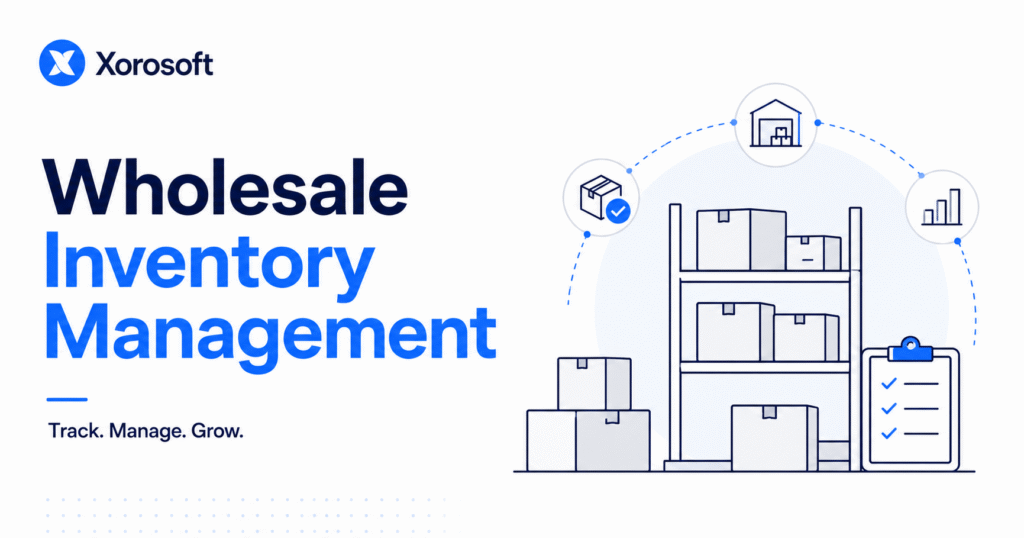
Inventory Management for Wholesalers is a crucial topic for businesses looking to streamline operations and meet customer demands efficiently.
1. Why Wholesale Stock Control Breaks as Order Volume Grows
For growing distributors and B2B brands, Inventory Management for Wholesalers becomes more complex when the business moves beyond simple buying, stocking, and shipping. At an early stage, a team may manage products with spreadsheets, basic accounting software, manual purchase orders, and warehouse notes. However, that setup only works while the catalog is small, order volume is predictable, and only one or two people control inventory decisions.
As the business grows, the operating model changes quickly. More suppliers create more inbound purchase orders. Meanwhile, customers create more allocation pressure. Additional sales channels also create demand signals from Shopify, Amazon, sales reps, retail partners, and wholesale buyers. Therefore, warehouse teams must pick, pack, transfer, and count stock more often. Finance also needs cleaner inventory valuation, cost of goods sold, landed cost, and month-end reconciliation.
As a result, inventory is no longer just a warehouse count. It becomes the operational connection between sales, purchasing, warehouse management, ecommerce, accounting, and leadership reporting. When that connection is weak, teams start making decisions from incomplete data.
Sales teams may promise stock that is already reserved for another customer. Buyers can reorder too late because the system shows inaccurate availability. Warehouse staff may find products in the wrong bin during picking. Finance may also spend extra days reconciling product costs. These issues usually begin small, but they eventually turn into stockouts, overstock, missed shipments, poor margins, and unhappy customers.
That is why Inventory Management for Wholesalers needs more than occasional stock checks. It needs a structured process that shows what is available, where it is located, who it is reserved for, when more stock is arriving, and how inventory affects cash flow.
1.1 What Inventory Management for Wholesalers Means
Inventory Management for Wholesalers is the process of tracking, purchasing, storing, allocating, replenishing, and accounting for products sold in bulk to retailers, distributors, ecommerce buyers, or other businesses. It helps wholesale companies maintain accurate stock levels, avoid overselling, reduce excess inventory, and fulfill orders on time.
The process includes much more than counting items. It covers purchase orders, supplier lead times, warehouse locations, customer-specific pricing, reserved stock, EDI orders, ecommerce inventory sync, returns, damaged goods, and financial reporting. Because wholesale orders are usually larger than retail orders, every inventory mistake can affect more revenue, more customers, and more warehouse capacity.
1.2 Why Wholesale Stock Control Differs from Retail Inventory
Retail inventory usually focuses on selling individual units directly to consumers. Wholesale stock control, however, often involves cases, cartons, pallets, bulk discounts, negotiated contracts, distributor pricing, payment terms, and customer-specific allocation rules.
For example, a retail store may sell one unit to one shopper. A wholesaler may sell 500 units to one retailer, reserve 300 units for a distributor, and hold another quantity for an upcoming purchase order. Because order sizes are larger, every inventory decision has a stronger impact on cash flow and customer service.
1.3 When Inventory Becomes a Leadership Issue
Inventory problems eventually move beyond the warehouse. Sales teams lose confidence in available stock. Buyers overorder because they do not trust forecasts. Warehouse teams waste time searching for products. Finance struggles to close the month accurately. Meanwhile, leadership loses visibility into what is really happening.
At that point, inventory is no longer only an operations issue. It becomes a leadership problem because it affects revenue, cash flow, customer service, and profitability. Therefore, growing wholesalers need better systems before small process gaps become large business risks.
2. How Inventory Management for Wholesalers Works Across the Business
Inventory Management for Wholesalers works by connecting every inventory movement to a business event. Stock enters through purchasing, moves through receiving and storage, becomes available for sales orders, gets picked and shipped, and then flows into accounting.
When each step updates the same system, teams can trust inventory data. However, when each team works in a separate spreadsheet or disconnected tool, the business loses visibility. As a result, decisions become slower and errors become harder to trace.
2.1 Purchase Orders and Supplier Replenishment
The workflow usually starts with purchasing. Buyers review demand, available stock, open sales orders, supplier lead times, and forecasted needs. Then they create purchase orders to replenish inventory before stock runs out.
A strong purchasing process should answer practical questions. Buyers need to know which products require replenishment, which suppliers are running late, and which items are moving faster than expected. They should also identify overstocked SKUs, products that need safety stock, and supplier lead times that may affect future availability.
Without accurate data, purchasing becomes reactive. Buyers either order too late and create stockouts, or they order too much and tie up cash in slow-moving inventory. Therefore, better purchasing visibility is one of the first improvements most wholesalers need.
2.2 Receiving and Warehouse Putaway
When products arrive, the warehouse team should receive goods against purchase orders. They should confirm quantities, inspect damaged items, record shortages, and move products into the correct warehouse locations.
This step is critical because receiving errors create inventory errors immediately. If the shipment is entered incorrectly, every later report becomes unreliable. Sales may believe stock is available when it is not. Purchasing may delay a reorder because the system shows enough quantity. Finance may also value inventory incorrectly.
2.3 Location Tracking and Bin Accuracy
A product is not truly available if the warehouse team cannot find it. That is why location tracking matters. Wholesalers need visibility by warehouse, zone, aisle, shelf, bin, lot, batch, or serial number depending on the product type.
Bin-level tracking becomes especially important as order volume grows. It helps warehouse teams pick faster, reduce errors, and complete cycle counts more efficiently. In addition, accurate bin data gives managers a clearer view of how inventory moves through the warehouse.
2.4 Sales Order Allocation and Available-to-Sell Stock
Available-to-sell stock is different from total stock. A business may have 1,000 units in the warehouse, but 600 may already be reserved for open sales orders, 100 may be damaged, and 200 may be committed to a key account. In that case, only 100 units are truly available.
This is one of the most important parts of Inventory Management for Wholesalers. Allocation rules prevent the same inventory from being promised to multiple customers. As a result, sales teams can commit inventory with more confidence.
2.5 Picking, Packing, Shipping, and Fulfillment
Warehouse execution turns inventory records into shipped orders. Pick lists, barcode scanning, packing checks, shipping confirmation, and inventory adjustments all affect accuracy.
If the warehouse picks the wrong item, ships the wrong quantity, or forgets to confirm the movement, the system becomes inaccurate. Therefore, warehouse execution and inventory control must work together. Teams that need stronger scanning, picking, packing, and transfer workflows can evaluate warehouse management for wholesale operations as part of their broader inventory process.
2.6 Accounting and Inventory Valuation
Inventory is both an operational asset and a financial asset. Purchase receipts affect inventory value. Shipments affect cost of goods sold. Adjustments affect margins. Landed costs affect product profitability.
If inventory and accounting do not connect, month-end close becomes slower and less reliable. A clean process helps finance teams trust inventory valuation and margin reports. In addition, leadership gets a clearer picture of which products create profit and which products create operational drag.
3. Common Inventory Management for Wholesalers Problems
Common Inventory Management for Wholesalers problems usually come from manual work, disconnected systems, delayed updates, unclear ownership, and weak reporting. At first, these problems may look small. However, as order volume increases, the cost becomes harder to ignore.
For example, a receiving error may create a wrong stock count. Then, sales may promise inventory that is not actually available. Meanwhile, purchasing may delay a reorder because the system still shows enough stock. Eventually, these small issues create stockouts, overstock, late shipments, and margin problems.
Therefore, wholesale teams need a process that connects inventory data across purchasing, warehouse management, sales, ecommerce, and accounting.
3.1 Inventory Discrepancies Across Systems
Inventory discrepancies happen when system quantities do not match physical stock. This can happen because of receiving errors, missed transfers, manual adjustments, damaged goods, returns, incorrect units of measure, or warehouse picking mistakes.
The problem becomes worse when different teams use different systems. Sales may check one number, warehouse teams may use another, and finance may reconcile a third version. As a result, no department feels fully confident in the data.
3.2 Stockouts That Damage Customer Trust
Stockouts are painful in wholesale because customers often depend on reliable supply. A retailer may need products for a launch. Distributors may have promised stock to downstream buyers. Ecommerce teams may need inventory for a promotion.
Repeated stockouts weaken trust. Even if the product returns later, the customer may already be looking for another supplier. Therefore, stock availability becomes a customer retention issue, not just an inventory issue.
3.3 Overstock That Traps Cash
Overstock creates the opposite problem. It ties up cash in products that are not moving. Extra stock also increases storage costs, insurance, handling, markdown risk, and warehouse congestion.
Many wholesalers overbuy because they do not trust inventory data. Buyers may add extra safety stock because they fear supplier delays or inaccurate forecasts. However, without better demand planning, that safety buffer becomes expensive.
3.4 Spreadsheet Purchasing and Manual Reorders
Spreadsheets are flexible, but they become risky when purchasing grows. Multiple users may edit different versions. Formula errors can change reorder logic. Supplier lead times may not update on time. Demand may also shift before the purchasing team notices.
Wholesale purchasing software or ERP-supported purchasing helps buyers create more reliable replenishment plans based on real inventory, open orders, and sales velocity. As a result, purchasing becomes more planned and less reactive.
3.5 Multi-Warehouse Inventory Confusion
A total inventory number is not enough when a business operates multiple warehouses. Inventory must be visible by location, status, and availability.
A company may have enough total stock but still miss a shipment because the product is in the wrong warehouse. Better multi-warehouse inventory management reduces emergency transfers, fulfillment delays, and customer service issues.
3.6 Delayed Reporting and Month-End Close
Finance teams often feel inventory problems at the end of the month. If purchase receipts, landed costs, adjustments, and shipments are not recorded cleanly, reporting slows down.
Inventory valuation issues can also create uncertainty around margins. Leadership may not know which products are profitable, which suppliers are creating cost pressure, or which SKUs should be phased out. Consequently, decisions become slower and less precise.
4. Key Features in Inventory Management for Wholesalers Software
Inventory Management for Wholesalers software should do more than show stock counts. It should help teams control purchasing, warehouse activity, customer orders, pricing, integrations, accounting, and reporting.
However, not every system offers the same depth. Some tools focus on basic inventory tracking, while others connect inventory with warehouse workflows, purchasing, accounting, ecommerce, and reporting. Therefore, wholesalers should compare features against real operating requirements.
4.1 Real-Time Inventory Visibility for Wholesalers
Real-time visibility allows teams to see available, reserved, inbound, damaged, transferred, and committed inventory. This helps sales, purchasing, warehouse, and finance teams work from the same data.
Without real-time visibility, teams rely on messages, spreadsheets, and manual checks. That slows decisions and creates avoidable errors. In contrast, real-time data helps teams respond faster when demand changes.
4.2 Multi-Warehouse Inventory Tracking
Multi-warehouse tracking helps companies manage stock by location. It supports transfers, regional fulfillment, warehouse-level replenishment, and location-based reporting.
This feature becomes important for wholesalers serving multiple regions, retail partners, ecommerce channels, or marketplace customers. In addition, it helps teams avoid situations where total inventory looks healthy but the right warehouse lacks stock.
4.3 Purchasing Automation for Wholesale Teams
Purchasing automation helps buyers create purchase recommendations based on reorder points, safety stock, supplier lead times, open sales orders, and demand forecasts.
Automation does not replace buyer judgment. Instead, it gives buyers better data so they can make faster and more informed decisions. Therefore, purchasing teams can reduce emergency orders and improve supplier planning.
4.4 Inventory Forecasting for Wholesale Demand
Inventory forecasting helps companies predict future demand. Forecasts should consider sales history, customer buying patterns, seasonality, promotions, supplier lead times, and channel growth.
A wholesaler that sells through Shopify, Amazon, sales reps, and B2B customers needs forecasting that reflects demand across each channel. Otherwise, one fast-growing channel may consume stock needed elsewhere.
4.5 Warehouse Management and Barcode Workflows
Barcode scanning improves receiving, putaway, picking, packing, transfers, and cycle counts. It reduces manual entry and helps warehouse teams confirm movement as it happens.
For growing wholesalers, warehouse accuracy is one of the strongest drivers of inventory confidence. Because of that, warehouse workflows should be designed alongside inventory controls rather than treated as a separate process.
4.6 Customer-Specific Pricing and B2B Rules
Wholesale businesses often manage different price lists by customer, contract, region, quantity, or product category. A good system should support customer-specific pricing without forcing teams to maintain separate spreadsheets.
Pricing errors affect margins and customer relationships. They also create friction for B2B buyers who expect accurate contract terms. Therefore, pricing rules should connect with orders, inventory availability, and customer records.
4.7 EDI and Trading Partner Requirements
EDI is common in wholesale because larger retailers and trading partners often require electronic purchase orders, invoices, shipment notices, and order acknowledgments.
If EDI is handled outside the inventory system, teams may need to manually reconcile documents, orders, shipments, and invoices. As a result, the risk of delays and errors increases.
4.8 Shopify, Amazon, and Ecommerce Inventory Sync
Many wholesalers now operate through ecommerce and marketplace channels alongside traditional B2B sales. Shopify, Amazon, EDI orders, sales reps, and wholesale portals may all create demand at the same time.
A connected system should keep inventory synchronized across these channels. Shopify merchants evaluating ERP options can also review Xorosoft ERP on the Shopify App Store when they need inventory, purchasing, accounting, and warehouse workflows to support Shopify operations.
4.9 Inventory Accounting and Cost Control
Inventory software should support financial visibility. This includes inventory valuation, cost of goods sold, landed cost, vendor bills, purchase receipts, adjustments, and reconciliation.
When inventory and accounting are connected, leadership can see operational and financial performance together. In addition, finance teams can reduce manual reconciliation and close the month with more confidence.
5. Inventory Management for Wholesalers Best Practices
Inventory Management for Wholesalers improves when a business uses clear rules, accurate data, and consistent workflows. However, best practices only work when teams apply them every day. Therefore, wholesale companies should treat inventory control as an operating discipline, not a one-time cleanup project.
In addition, strong inventory habits help every department. Sales teams get more reliable availability. Purchasing teams make better replenishment decisions. Warehouse teams reduce picking errors. Finance teams close the month with more confidence. As a result, the business gains better control over both service levels and cash flow.
5.1 Set Reorder Points Using Real Demand
Reorder points should consider average demand, supplier lead time, safety stock, and sales velocity. They should not rely only on memory or last year’s buying pattern.
A reorder point that is too low creates stockouts. Setting it too high creates overstock. Therefore, the rule should be reviewed regularly and updated when supplier lead times or demand patterns change.
5.2 Use Safety Stock Without Hiding Forecasting Problems
Safety stock protects the business from supplier delays and demand spikes. However, too much safety stock can hide weak forecasting.
The goal is to create a smart buffer, not a warehouse full of emergency inventory. A good process reviews safety stock based on risk, demand variability, and supplier performance. Meanwhile, buyers should still improve forecasting rather than relying only on extra inventory.
5.3 Track Inventory by Warehouse, Bin, Lot, and Status
Wholesale inventory tracking should show more than total quantity. Teams need to know where stock is located, whether it is sellable, whether it is reserved, and whether it is tied to a specific lot or batch.
This is especially important for food, beverage, apparel, furniture, sporting goods, and manufacturing-related businesses. In addition, status tracking helps teams separate available stock from damaged, reserved, inbound, or quarantined stock.
5.4 Run Cycle Counts Instead of Waiting for Annual Counts
Cycle counting allows teams to check inventory accuracy throughout the year. High-value and fast-moving SKUs should be counted more often than low-volume items.
Regular cycle counts help businesses catch errors earlier. They also reduce the disruption of full physical counts. Therefore, cycle counting should become part of the normal warehouse routine.
5.5 Connect Purchasing with Inventory Forecasting
Purchasing should not operate separately from inventory forecasting. Buyers need to see demand trends, open sales orders, supplier lead times, and inbound purchase orders.
When purchasing and forecasting work together, the business can reduce emergency orders and improve cash planning. In addition, buyers can negotiate better with suppliers because they have clearer demand signals.
5.6 Standardize Warehouse Processes
Receiving, putaway, picking, packing, shipping, transfers, returns, and adjustments should follow documented workflows.
If every warehouse employee uses a different process, inventory data becomes inconsistent. Standard workflows make training easier and improve accountability. As a result, warehouse teams can scale without relying only on tribal knowledge.
5.7 Review Slow-Moving Inventory Monthly
Slow-moving inventory should be reviewed before it becomes dead stock. Teams can use promotions, bundles, sales outreach, purchasing adjustments, or supplier negotiations to reduce excess inventory.
A monthly review also helps leadership understand which products should be reordered and which should be phased out. Therefore, slow-moving stock should be part of both purchasing and finance discussions.
6. ERP Systems and Wholesale Inventory Control
Wholesale inventory software and ERP systems are related, but they are not the same. Inventory software usually focuses on stock tracking, replenishment, and availability. ERP, however, connects inventory with purchasing, accounting, warehouse management, ecommerce, manufacturing, forecasting, and reporting.
Because of that difference, the right choice depends on business complexity. A smaller wholesaler may only need basic inventory software. However, a growing company with multiple warehouses, EDI, Shopify, Amazon, purchasing teams, and accounting pressure may need a more connected ERP system.
6.1 When Wholesale Inventory Software Is Enough
Standalone wholesale inventory software may be enough when the business mainly needs stock tracking, basic purchasing, and simple reporting. This can work for companies with one warehouse, limited accounting complexity, and fewer sales channels.
However, the business should still evaluate whether the software can support future growth. A system that works today may become restrictive once multi-warehouse operations, EDI, or advanced accounting requirements appear.
6.2 When Wholesale ERP Software Becomes Necessary
Wholesale ERP software becomes more relevant when inventory must connect with purchasing, accounting, warehouse management, manufacturing, ecommerce, forecasting, and reporting.
For example, businesses often evaluate ERP for wholesale inventory management when they have outgrown spreadsheets, QuickBooks-only workflows, or disconnected inventory apps. In that situation, ERP becomes a way to connect daily operations with financial control.
6.3 WMS vs Wholesale Inventory Software
A warehouse management system focuses on warehouse execution. It helps manage receiving, putaway, picking, packing, barcode scanning, transfers, and shipping.
Wholesale inventory software focuses on stock visibility, replenishment, allocation, and availability. Many growing companies need both capabilities, either through separate tools or a connected ERP platform.
6.4 QuickBooks vs Wholesale Inventory Systems
QuickBooks can work well for accounting at an early stage. However, wholesale businesses often need deeper inventory control, multi-warehouse visibility, customer-specific pricing, forecasting, purchasing automation, and warehouse workflows.
When teams start adding spreadsheets and third-party apps around QuickBooks, it may be time to evaluate a more connected operating system. Otherwise, the company may spend more time reconciling data than improving operations.
6.5 Software Comparison Table
| System Type | Best For | Common Limitation | Upgrade Signal |
|---|---|---|---|
| Spreadsheets | Very small teams | Manual errors and no real-time visibility | Multiple people update inventory |
| Inventory app | Basic stock tracking | Limited accounting and warehouse depth | Purchasing and finance need better data |
| WMS | Warehouse execution | May not manage finance or purchasing | Inventory data must connect with ERP |
| Accounting-first system | Finance workflows | Limited operational inventory control | Inventory complexity affects close |
| ERP system | Connected operations | Requires implementation planning | Inventory, warehouse, purchasing, and accounting must work together |
7. Industry Use Cases for Inventory Management for Wholesalers
Inventory Management for Wholesalers varies by industry. The core principles stay the same, but product type, warehouse rules, supplier timing, and customer expectations change.
Because of these differences, software selection should include industry fit. A furniture wholesaler, for example, does not manage inventory the same way as an apparel distributor or food supplier. Therefore, teams should review workflows before choosing a system.
7.1 Apparel and Fashion Wholesalers
Apparel businesses manage styles, sizes, colors, seasons, returns, and channel demand. They need accurate variant-level inventory, allocation rules, and forecasting.
A fast-moving size or color can stock out while total inventory still looks healthy. Therefore, apparel teams need detailed visibility at the SKU level. In addition, they need season-level reporting so buyers can avoid overordering products that will lose demand quickly.
7.2 Furniture Wholesalers
Furniture wholesalers often manage bulky products, long lead times, special orders, and limited warehouse space. Location tracking is especially important because large items can be difficult to move and expensive to store.
Purchasing visibility also matters because supplier delays can affect delivery promises. As a result, furniture teams need strong coordination between purchasing, warehouse availability, and sales commitments.
7.3 Sporting Goods Businesses
Sporting goods companies often deal with seasonal demand, product bundles, accessories, and promotional spikes. Forecasting helps teams prepare for peak periods without overcommitting cash.
The business also needs strong warehouse processes because order accuracy affects customer experience and returns. Therefore, inventory planning should include both sales trends and fulfillment capacity.
7.4 Food and Beverage Wholesalers
Food and beverage wholesalers may need lot tracking, expiration dates, recalls, storage controls, and supplier traceability. Inventory mistakes can create compliance, safety, and customer trust issues.
For this reason, food businesses need clear receiving, rotation, and traceability workflows. In addition, teams should track inventory by lot and expiration date whenever product shelf life matters.
7.5 Wholesale Distribution Teams
Wholesale distribution requires customer-specific pricing, EDI, purchase order planning, warehouse accuracy, inventory allocation, and reporting. Many distributors also serve different customer types with different terms.
A connected cloud ERP platform for inventory-driven businesses can help unify these workflows when teams need more than basic stock tracking. In addition, it can support purchasing, inventory, accounting, warehouse management, and reporting in one operating environment.
7.6 Manufacturing and Wholesale Operations
Manufacturers that also sell wholesale need visibility into raw materials, work orders, finished goods, purchasing, production planning, and customer demand.
Inventory planning becomes more complex because the company must manage both production inputs and sellable finished goods. Therefore, manufacturing teams may need BOM management, work orders, and material planning alongside wholesale inventory control.
7.7 Shopify and Ecommerce Wholesale Brands
Shopify brands expanding into wholesale often need B2B pricing, inventory synchronization, purchasing automation, accounting integration, and warehouse control.
When ecommerce and wholesale channels share the same inventory pool, the system must prevent overselling and show accurate availability across channels. In addition, teams need a clean operational process behind Shopify so inventory, fulfillment, and accounting stay aligned.
8. KPIs for Inventory Management for Wholesalers
KPIs help wholesale businesses move from reactive problem-solving to measurable improvement. The right metrics show whether inventory accuracy, fulfillment performance, purchasing discipline, and cash flow are improving.
However, KPIs only help when teams review them consistently. A dashboard is useful, but action matters more. Therefore, leaders should connect each KPI to a weekly or monthly operating review.
8.1 Inventory Accuracy
Inventory accuracy measures how closely system inventory matches physical stock. Low accuracy creates picking errors, stockouts, overstock, and unreliable reporting.
A business should track inventory accuracy by warehouse, product category, and high-value SKU. In addition, teams should investigate repeated adjustments because they often reveal process gaps.
8.2 Inventory Turnover
Inventory turnover shows how quickly inventory sells and replenishes. Low turnover may indicate overstock, weak demand, poor purchasing, or slow-moving products.
High turnover can be positive, but only if the business avoids stockouts. Therefore, turnover should be reviewed together with fill rate and stockout rate.
8.3 Stockout Rate
Stockout rate measures how often products are unavailable when customers want them. This KPI is important because stockouts directly affect revenue and customer trust.
Teams should review stockouts by SKU, supplier, warehouse, and sales channel. Meanwhile, purchasing teams should compare stockouts against supplier lead times and reorder points.
8.4 Fill Rate
Fill rate measures how much customer demand is fulfilled from available stock. A low fill rate can indicate poor forecasting, supplier delays, or weak allocation rules.
Wholesale customers often value reliability, so fill rate is a strong service-level metric. As a result, it should be part of sales and operations discussions.
8.5 Forecast Accuracy
Forecast accuracy compares expected demand with actual demand. Better forecasting helps purchasing teams reduce emergency buys, missed sales, and excess inventory.
Forecasts should be reviewed regularly because customer demand, seasonality, and channel performance can change quickly. In addition, forecast accuracy should be tracked by product category and sales channel.
8.6 Purchase Order Lead Time
Purchase order lead time measures how long suppliers take to deliver. If lead times change but reorder points stay the same, stockouts become more likely.
Tracking lead time by supplier helps buyers make better replenishment decisions. Therefore, supplier performance should be part of inventory planning.
8.7 KPI Table for Wholesale Teams
| KPI | What It Measures | Why It Matters |
| Inventory accuracy | System stock vs physical stock | Protects trust in inventory data |
| Inventory turnover | Speed of inventory movement | Helps manage cash flow |
| Stockout rate | Products unavailable for sale | Shows missed revenue risk |
| Fill rate | Orders fulfilled from available stock | Measures service reliability |
| Forecast accuracy | Forecasted demand vs actual demand | Improves purchasing decisions |
| PO lead time | Supplier delivery timing | Supports better replenishment |
9. How to Choose Software for Inventory Management for Wholesalers
Choosing software for Inventory Management for Wholesalers should start with operational reality, not a feature checklist. First, the business should understand how products are purchased, received, stored, allocated, shipped, and reconciled. Then, the team can compare systems against real workflows.
This approach matters because software selection often fails when companies skip process mapping. As a result, they may buy a tool that looks strong in demos but does not fit daily operations. Therefore, the best evaluation process starts with business requirements before vendor comparison.
9.1 Map Wholesale Inventory Workflows First
Before evaluating vendors, map the current workflow. Include purchase orders, receiving, putaway, inventory transfers, sales orders, allocation, picking, packing, shipping, invoicing, and reconciliation.
This exercise reveals where the process breaks. It also prevents the business from buying software that does not match daily operations. In addition, it helps internal teams agree on what the new system must support.
9.2 Review Integration Requirements
Wholesale businesses often need integrations with Shopify, Amazon, EDI tools, shipping systems, accounting platforms, payment tools, and reporting dashboards.
A system should not create more manual handoffs. It should reduce duplicate work and improve data flow. Therefore, integration requirements should be reviewed before final vendor selection.
9.3 Evaluate Multi-Warehouse Capabilities
If the business manages multiple warehouses, the system should support warehouse-level availability, transfers, bin locations, replenishment rules, and reporting.
A weak multi-warehouse setup can create stockouts in one location while another warehouse holds excess inventory. Because of that, multi-location visibility should be tested during the software evaluation process.
9.4 Check Inventory Accounting Requirements
Inventory accounting should be reviewed before choosing software. The business should understand how the system handles inventory valuation, COGS, landed cost, vendor bills, receipts, adjustments, and reconciliation.
This is especially important for companies where finance struggles to close the month on time. In addition, accounting workflows should be tested with real purchase and sales examples.
9.5 Compare ERP Options for Wholesale Businesses
Some companies compare inventory-only systems. Others evaluate ERP platforms such as NetSuite, Acumatica, Cin7, Fishbowl, Sage, Business Central, Brightpearl, and Xorosoft.
Businesses looking for a NetSuite alternative for inventory-driven businesses should compare implementation needs, operational fit, inventory depth, warehouse workflows, accounting requirements, and total cost of ownership.
9.6 Evaluate Industry Fit
A system should fit the industry. Apparel, furniture, sporting goods, food, wholesale distribution, and manufacturing companies each have different inventory requirements.
Companies can review ERP capabilities for wholesale, apparel, furniture, and consumer product businesses to understand how inventory workflows vary by industry. This helps teams avoid choosing a system that works in general but fails in daily operations.
10. Mistakes to Avoid in Inventory Management for Wholesalers
Even strong teams make mistakes when growth moves faster than systems. Avoiding these problems can save time, cash, and customer relationships.
However, most mistakes are preventable. The key is to identify process gaps before they become customer-facing problems. Therefore, leaders should review inventory workflows regularly.
10.1 Choosing Software Before Fixing Processes
Software cannot fix unclear processes. If receiving, transfers, adjustments, and purchasing rules are not defined, a new system may simply digitize confusion.
Process mapping should happen before software selection. Then, software can support the process instead of becoming another disconnected tool.
10.2 Treating Inventory as Separate from Accounting
Inventory affects financial reporting. If inventory and accounting do not connect, finance teams struggle with valuation, COGS, margins, and month-end close.
A better process links operational movement with financial impact. As a result, leadership can trust both inventory reports and financial statements.
10.3 Ignoring Warehouse Execution
Inventory accuracy depends on warehouse discipline. If receiving, putaway, picking, and transfers are not recorded correctly, inventory reports become unreliable.
Warehouse workflows should be designed with the same care as accounting and purchasing workflows. Otherwise, the system may look accurate while the physical warehouse tells a different story.
10.4 Waiting Too Long to Upgrade
Many wholesalers wait until the pain becomes obvious. By then, customers may already be affected by delays, stockouts, and errors.
It is better to upgrade when warning signs appear, not after the operation becomes difficult to control. Therefore, recurring manual fixes should be treated as early signals.
10.5 Underestimating Data Cleanup
Item records, vendor records, customer records, units of measure, pricing rules, and warehouse locations must be clean before implementation.
Bad data creates bad results in any system. Because of that, data cleanup should be planned as a core part of the project, not an afterthought.
11. Where Xorosoft Fits in Wholesale Inventory Operations
After a business understands its inventory gaps, the next question is whether it needs a point solution or a connected operating system. This is where ERP becomes relevant for many inventory-driven companies.
Xorosoft is not only relevant because it manages inventory. More importantly, it connects inventory with the workflows around it. That includes purchasing, accounting, warehouse management, manufacturing, forecasting, reporting, Shopify, Amazon, EDI, and multi-warehouse operations.
11.1 Xorosoft for Businesses Outgrowing Spreadsheets and QuickBooks
Xorosoft is a cloud ERP platform built for inventory-driven businesses that need inventory management, accounting, purchasing, warehouse management, manufacturing, forecasting, reporting, and ecommerce operations in one system.
It is especially relevant for companies that sell physical products, operate multiple warehouses, sell wholesale, use Shopify, sell through Amazon, manage EDI, or need stronger purchasing control. However, the best fit usually appears when disconnected systems are slowing the business down.
11.2 Xorosoft as a Connected Wholesale ERP Alternative
Many businesses come to Xorosoft after outgrowing QuickBooks, spreadsheets, inventory-only software, warehouse apps, purchasing spreadsheets, or disconnected ecommerce tools.
The value is not just replacing one tool. Instead, the value comes from connecting inventory, purchasing, warehouse operations, accounting, and reporting so teams can work from one operational source of truth.
11.3 Xorosoft for Shopify, Amazon, EDI, and Multi-Warehouse Teams
Wholesale businesses that sell through multiple channels need clean inventory synchronization. Xorosoft can support workflows across Shopify, Amazon, EDI, wholesale orders, purchasing, forecasting, and warehouse operations.
This is useful for companies that need accurate inventory availability across several channels without relying on manual updates. In addition, it helps teams reduce the operational friction that comes from managing several disconnected apps.
11.4 Xorosoft for Apparel, Furniture, Sporting Goods, Food, and Manufacturing
Xorosoft is relevant for industries where inventory complexity directly affects service levels and margins. Apparel businesses need variant control. Furniture businesses need warehouse visibility. Sporting goods companies need seasonal planning. Food businesses need traceability. Manufacturers need BOMs, work orders, and production planning.
In each case, the common requirement is connected inventory control. Therefore, companies should evaluate whether their current systems can support both today’s workflows and the next stage of growth.
12. Wholesale Inventory Software Comparison Framework
A wholesale business should compare software based on operational fit, not only brand recognition. Different tools serve different stages of growth.
However, comparison should not stop at features. Teams should also review implementation effort, reporting depth, accounting fit, integration needs, warehouse complexity, and total cost of ownership. As a result, the final decision becomes more practical.
12.1 Inventory-Only Software
Inventory-only software can work for businesses that need basic stock tracking and simple purchasing. It is often easier to adopt, but it may become limited when accounting, warehouse, forecasting, or multi-channel complexity grows.
Therefore, inventory-only tools are usually best for companies with simpler operations and fewer integration needs.
12.2 Warehouse Management Systems
A WMS is useful when warehouse execution is the main challenge. It can improve receiving, picking, packing, scanning, and shipping.
However, a WMS may still need to connect with inventory, purchasing, accounting, and ecommerce systems. Otherwise, warehouse execution improves while business-wide visibility remains fragmented.
12.3 Accounting-First Systems
Accounting-first systems work well when financial management is the priority. However, they may not provide the operational depth needed for wholesale inventory management at scale.
This is where many teams begin adding spreadsheets and apps around the accounting system. Eventually, that workaround can create more complexity than it solves.
12.4 Cloud ERP Systems
Cloud ERP systems help connect inventory, purchasing, warehouse management, accounting, reporting, ecommerce, and manufacturing. They require more implementation planning, but they can reduce disconnected workflows.
A company evaluating ERP should compare systems against actual requirements rather than choosing based on popularity alone. In addition, leadership should consider whether the system can support future warehouse, channel, and reporting needs.
12.5 Wholesale Software Comparison Table
| Category | Best For | Strength | Limitation |
| Spreadsheets | Very small teams | Flexible and familiar | Manual and error-prone |
| Inventory software | Basic stock control | Easier to start | Limited accounting depth |
| WMS | Warehouse execution | Strong scanning and fulfillment | May not manage finance |
| Accounting-first tools | Finance workflows | Strong bookkeeping | Limited inventory operations |
| Cloud ERP | Connected operations | Inventory, warehouse, purchasing, and accounting together | Requires careful implementation |
13. Implementation Roadmap for Inventory Management for Wholesalers
Implementation should be practical, phased, and tied to business outcomes. Although a new system can improve visibility, it cannot fix messy data or unclear workflows by itself. Therefore, the team should prepare inventory records, warehouse rules, accounting setup, and integrations before launch.
In addition, implementation should involve every department that touches inventory. Purchasing, warehouse, finance, sales, ecommerce, and leadership all need to understand how the new process will work. As a result, adoption becomes easier and go-live risk becomes lower.
13.1 Audit Current Inventory Data
Start by reviewing SKUs, item names, units of measure, barcodes, vendors, customers, price lists, warehouse locations, open purchase orders, open sales orders, and current stock counts.
This audit helps identify duplicate records, missing fields, and inaccurate data. In addition, it gives the project team a clearer view of what must be cleaned before migration.
13.2 Clean Item, Vendor, and Customer Records
Clean data before migration. Duplicate SKUs, inconsistent naming, incorrect units of measure, and outdated customer pricing can cause major issues after launch.
Data cleanup may feel slow, but it protects the project. Therefore, it should be scheduled before system configuration and testing.
13.3 Define Warehouse Rules
Document receiving, putaway, picking, packing, shipping, returns, damaged goods, adjustments, transfers, and cycle counts.
Warehouse rules should be simple enough for teams to follow every day. At the same time, they should be detailed enough to support accuracy, training, and accountability.
13.4 Connect Sales Channels Carefully
Shopify, Amazon, EDI, B2B portals, and sales rep orders should be connected thoughtfully. Inventory sync rules must be tested before go-live.
A poor integration can create overselling, duplicated orders, or incorrect availability. Therefore, teams should test real order scenarios before customers depend on the new process.
13.5 Connect Accounting and Inventory
Accounting setup should include inventory valuation, COGS, landed cost, vendor bills, customer invoices, and reconciliation.
Finance should be involved early, not after implementation decisions have already been made. In addition, accounting teams should validate how inventory movements affect financial reporting.
13.6 Train Teams Around Daily Workflows
Training should focus on real work. Warehouse employees need to understand receiving and picking. Buyers need to understand purchase recommendations. Finance needs to understand reconciliation. Sales teams need to understand available inventory.
Good training reduces resistance and improves adoption. As a result, users are more likely to follow the new process after go-live.
13.7 Go Live in Phases
A phased launch reduces risk. Many companies begin with core inventory, purchasing, warehouse, and accounting workflows before adding advanced automation.
After go-live, leadership should review KPIs weekly until the process stabilizes. Then, teams can improve forecasting, reporting, and automation in later phases.
14. Frequently Asked Questions About Inventory Management for Wholesalers
14.1 What is Inventory Management for Wholesalers?
Inventory Management for Wholesalers is the process of tracking, purchasing, storing, allocating, replenishing, and accounting for goods sold in bulk to other businesses. It helps wholesalers understand what inventory is available, where it is located, who it is reserved for, and when more stock should be ordered.
14.2 Why is Inventory Management for Wholesalers important?
This process is important because inventory affects revenue, cash flow, fulfillment, customer trust, and financial reporting. Poor inventory control can cause stockouts, overstock, inaccurate accounting, late shipments, and missed sales opportunities. Therefore, wholesalers need accurate data across purchasing, warehouse management, sales, and finance.
14.3 How do wholesalers track inventory?
Wholesalers track inventory using spreadsheets, accounting systems, inventory software, warehouse management systems, or ERP platforms. As the business grows, real-time tracking by SKU, warehouse, bin, lot, batch, sales channel, and allocation status becomes more important.
14.4 What is the best software for Inventory Management for Wholesalers?
The best software for Inventory Management for Wholesalers depends on business size, warehouse complexity, sales channels, purchasing workflows, accounting needs, and reporting requirements. Small businesses may need basic inventory software, while larger wholesalers may need ERP.
14.5 Is QuickBooks enough for wholesalers?
QuickBooks may be enough for small wholesalers with simple inventory needs. However, it can become limited when the business needs multi-warehouse visibility, purchasing automation, forecasting, warehouse workflows, EDI, and deeper inventory reporting.
14.6 When should a wholesaler upgrade from spreadsheets?
A wholesaler should upgrade from spreadsheets when manual updates create stock errors, purchasing delays, duplicate data entry, stockouts, overstock, or reconciliation problems. Another warning sign is when multiple people need to update inventory at the same time.
14.7 What features should wholesale inventory software include?
Wholesale inventory software should include real-time stock tracking, multi-warehouse visibility, purchasing automation, forecasting, barcode workflows, customer-specific pricing, EDI support, ecommerce integrations, accounting integration, and reporting. In addition, the system should fit the company’s actual warehouse and purchasing workflows.
14.8 How does ERP help Inventory Management for Wholesalers?
ERP helps Inventory Management for Wholesalers by connecting inventory with purchasing, warehouse management, accounting, manufacturing, ecommerce, forecasting, and reporting. As a result, teams work from one shared source of operational and financial data.
14.9 What is EDI in wholesale inventory?
EDI allows wholesalers and trading partners to exchange business documents electronically. These documents may include purchase orders, invoices, shipment notices, and acknowledgments. Because larger retailers often require EDI, wholesalers should plan for it before the process becomes urgent.
14.10 What is the best way to manage multiple wholesale warehouses?
Multiple wholesale warehouses are easier to manage when stock is tracked by location, transfer rules are clear, warehouse-level availability is visible, and replenishment planning is active. Multi-warehouse visibility helps companies fulfill from the right location and avoid unnecessary transfers.
14.11 Which steps help wholesalers reduce stockouts?
Reducing stockouts starts with reorder points, safety stock, demand forecasting, supplier lead time tracking, and purchase order automation. In addition, teams should monitor fast-moving SKUs and open sales orders before shortages become customer-facing problems.
14.12 What helps wholesalers reduce overstock?
Overstock can be reduced by improving forecasts, reviewing slow-moving products, adjusting reorder points, and avoiding unnecessary bulk purchases. It should be treated as a cash flow issue, not only a storage issue.
14.13 What is inventory allocation in wholesale?
Inventory allocation is the process of reserving stock for specific orders, customers, channels, or warehouses. It helps wholesalers avoid overselling and prioritize demand based on business rules. Therefore, allocation is especially important when multiple customers compete for limited stock.
14.14 What KPIs should wholesalers track?
Wholesalers should track inventory accuracy, inventory turnover, stockout rate, fill rate, backorder rate, carrying cost, forecast accuracy, order cycle time, gross margin by product, and supplier lead time. Together, these KPIs show whether inventory control is improving.
14.15 How does forecasting improve wholesale inventory?
Forecasting improves wholesale inventory by helping purchasing teams predict demand. Better forecasts reduce stockouts, overstock, emergency buying, and warehouse congestion. Forecasting should include seasonality, sales history, customer behavior, and supplier timing.
14.16 How does wholesale inventory connect with accounting?
Wholesale inventory connects with accounting through purchase receipts, inventory valuation, COGS, landed cost, vendor bills, customer invoices, and adjustments. If inventory and accounting are disconnected, financial reporting becomes less reliable.
14.17 What is the difference between wholesale and retail inventory?
Wholesale inventory usually involves bulk orders, B2B pricing, customer-specific terms, EDI, cases, pallets, and distributor relationships. Retail inventory usually focuses on selling smaller quantities directly to consumers.
14.18 What are common wholesale inventory mistakes?
Common mistakes include relying too long on spreadsheets, ignoring warehouse discipline, separating inventory from accounting, failing to clean data, not forecasting demand, and choosing software before mapping workflows. However, most of these issues can be reduced with better process design.
14.19 Can wholesale inventory software connect with Shopify?
Many wholesale inventory systems can connect with Shopify to sync orders, inventory, customers, and fulfillment data. Shopify brands expanding into wholesale often need stronger inventory, purchasing, and accounting workflows.
14.20 Can wholesale inventory software connect with Amazon?
Amazon inventory workflows can also connect with wholesale inventory software to support marketplace stock, replenishment planning, and channel-level visibility. This helps companies avoid overselling and manage Amazon inventory separately from other stock.
14.21 What is the difference between WMS and inventory software?
A WMS manages warehouse execution, including receiving, picking, packing, scanning, and shipping. Inventory software manages stock visibility, replenishment, and product availability. Many growing businesses eventually need both capabilities.
14.22 How long does wholesale inventory software implementation take?
Implementation time depends on company size, data quality, integrations, warehouse complexity, and accounting requirements. A simple setup may take weeks, while a larger ERP implementation may take several months. Therefore, teams should plan timelines realistically.
14.23 What does wholesale inventory management software cost?
Software cost depends on users, modules, implementation, integrations, support, and customization. Businesses should review total cost of ownership rather than looking only at subscription fees. Otherwise, the cheapest option may become expensive later.
14.24 Who does not need advanced wholesale inventory software?
A very small wholesaler with one warehouse, limited SKUs, simple purchasing, and low order volume may not need advanced software yet. However, the business should still maintain clean inventory records and consistent processes.
14.25 What is the right way to choose a wholesale inventory system?
The right system should be chosen by mapping workflows, defining requirements, reviewing integrations, checking accounting needs, evaluating warehouse processes, comparing total cost, and testing whether the platform can support future growth.
15. Practical Takeaway for Better Inventory Management for Wholesalers
Inventory Management for Wholesalers is not only about counting stock. Instead, it is about creating a reliable operating system for purchasing, warehouse execution, sales allocation, ecommerce, accounting, and leadership reporting.
Growing wholesale businesses should not wait until inventory problems damage customer relationships. Instead, leadership should review where manual work is slowing the company down. For example, recurring stockouts, overstock, late purchase orders, warehouse errors, disconnected apps, delayed month-end close, and poor reporting all point to weak inventory control.
Therefore, the next step should be practical. Map the current workflow, identify the biggest gaps, and compare systems against real growth requirements.
15.1 Build the Process Before Buying the Platform
Before choosing software, map the current workflow. Understand how inventory enters the business, where it moves, how it gets allocated, how it ships, and how it flows into accounting.
This prevents the team from buying software based on a feature list instead of real operating requirements. In addition, it helps leadership identify which problems need software and which problems need process changes.
15.2 Compare Systems Against Growth Requirements
The right system should support today’s needs and the next stage of growth. If the business is expanding into more warehouses, more channels, more suppliers, more wholesale customers, or more complex accounting, basic tools may not be enough.
This is where businesses often compare inventory apps, WMS platforms, accounting-first systems, and ERP options. However, the final decision should depend on workflow fit, not only software category.
15.3 Use ERP Readiness as the Next Step
If your company has outgrown spreadsheets, QuickBooks-only workflows, warehouse apps, inventory-only tools, or disconnected purchasing sheets, it may be time to evaluate ERP readiness.
A connected platform can help the business bring inventory, purchasing, warehouse management, accounting, forecasting, ecommerce, and reporting into one workflow. As a result, teams can reduce duplicate work and improve operational visibility.
15.4 Book a Personalized Demo
If your wholesale business needs better inventory accuracy, purchasing automation, warehouse visibility, accounting integration, Shopify support, Amazon workflows, EDI, forecasting, and real-time reporting, you can book a personalized ERP demo to see whether Xorosoft fits your operation.
Recent Posts
-
 ERP Landed Cost Module vs Spreadsheet Calculations for Importers
 -
 How to Build an Open-to-Buy Plan for an Omnichannel Brand
 -
 Cold Storage WMS for Food and Beverage Distribution
 -
 ERP Buying Statistics 2026: Evaluation, Implementation, and Adoption Risks
 -
 How a Distributor Reduced B2B Order Exceptions Without Restricting Sales