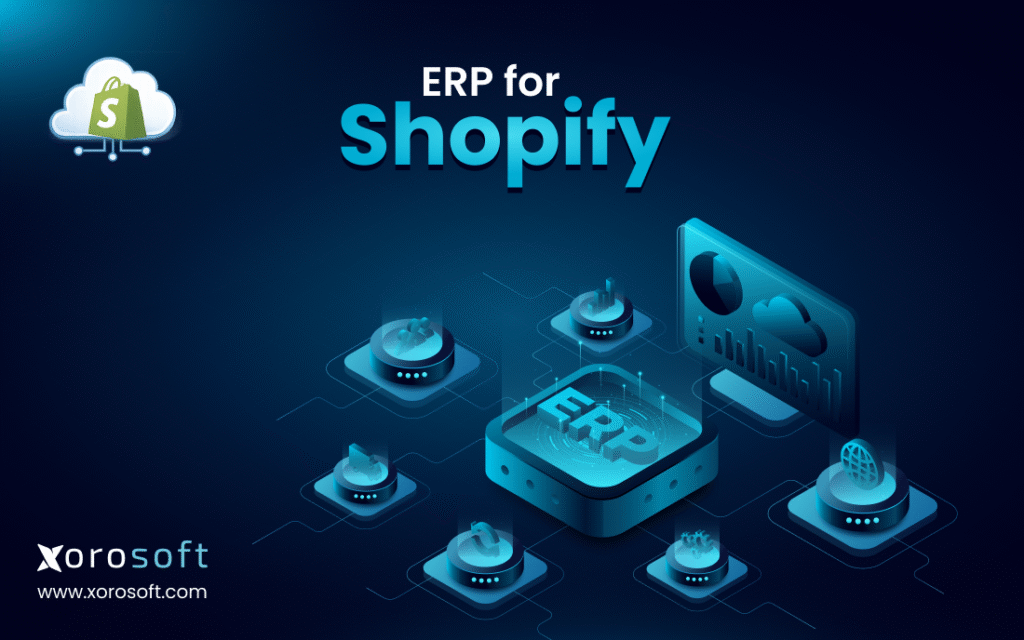
If you are looking for a comprehensive resource, this Shopify ERP Guide will help you understand everything you need to know.
1. Shopify ERP Guide: The Operations Gap Behind the Storefront
This Shopify ERP Guide starts with a practical reality: Shopify can help a brand sell successfully, but it does not automatically solve every operational problem behind the storefront. As a merchant grows, the work behind each order becomes more complex.
This Shopify ERP Guide focuses on the operational layer behind Shopify, where inventory, purchasing, warehouse management, accounting, fulfillment, and reporting need to work together.
A growing ecommerce business needs to know what inventory is available, where stock sits, which purchase orders are open, which supplier shipments are delayed, how warehouse teams are fulfilling orders, and how inventory affects accounting. When those workflows run across disconnected apps, spreadsheets, and accounting tools, operators lose visibility.
At first, this setup may feel manageable. A small Shopify store can often run with Shopify, QuickBooks, a few apps, and spreadsheets. However, as order volume increases, product catalogs expand, warehouses multiply, and wholesale or Amazon channels enter the mix, disconnected systems begin to create friction.
The issue is not Shopify itself. Shopify is doing its job as the ecommerce platform. The real problem is that the operational layer behind Shopify has not matured at the same pace as the business.
A connected ERP setup solves that gap by creating one operating layer for inventory, purchasing, accounting, warehouse management, forecasting, reporting, and fulfillment.
1.1 Why Shopify Merchants Start Looking for ERP
Most Shopify merchants do not look for ERP on day one. They usually start searching after recurring problems begin to slow the team down.
Inventory may look correct in Shopify but incorrect in the warehouse. Purchase planning may live in spreadsheets. Accounting may require manual reconciliation at month-end. Meanwhile, fulfillment teams may rely on exports, emails, or disconnected shipping tools to process orders.
These issues often appear slowly. One month, the team notices a few oversold SKUs. Later, the purchasing team overbuys because incoming stock was not visible. Then accounting struggles to explain why inventory value does not match physical stock.
Eventually, the business realizes it does not need another isolated app. It needs one system that connects operations.
That is the real reason growing merchants start evaluating ERP software for Shopify.
For growing merchants, this Shopify ERP Guide explains why disconnected tools eventually create more operational risk than flexibility.
1.2 From Shopify Storefront to Connected Business Operations
Shopify manages the digital storefront. ERP manages the business workflows behind it.
A Shopify order is not just an online transaction. It creates inventory movement, warehouse work, accounting entries, fulfillment tasks, customer communication, and replenishment signals. When those activities do not connect, every department builds its own version of the truth.
As a result, ecommerce growth becomes harder to manage. The brand may still be increasing revenue, but internal operations become slower, less accurate, and harder to control.
A connected operating system helps merchants shift from reactive order processing to structured operations. Instead of asking teams to manually connect data, it gives them a shared system of record.
That is why this Shopify ERP Guide treats ERP as a business operations decision, not just a software decision.
2. What ERP for Shopify Means for Ecommerce Operators
ERP stands for enterprise resource planning. For ecommerce businesses, it refers to a system that connects core operational workflows such as inventory, purchasing, accounting, warehouse management, order management, forecasting, and reporting.
In simple terms, Shopify helps the business sell. ERP helps the business operate.
This distinction matters because many ecommerce teams try to make Shopify, apps, spreadsheets, and accounting software act like a full business system. That approach can work in the early stage. However, once workflows become more complex, it creates duplicate data, manual work, and slow decision-making.
A Shopify ERP setup gives operators a stronger foundation by connecting sales activity with inventory, fulfillment, purchasing, and finance.
A practical Shopify ERP Guide should help operators understand what ERP does, what it connects, and when the business is ready for it.
2.1 How Backend Systems Support Shopify Growth
Backend systems support the work that happens after a customer places an order.
For example, the business must confirm inventory availability, allocate stock, create warehouse tasks, fulfill the order, update tracking details, record financial activity, and plan replenishment. If those workflows are disconnected, the customer-facing experience may still look polished, but internal teams struggle to keep up.
This is why the backend matters so much. Ecommerce growth depends on more than a good storefront. It depends on reliable inventory, accurate purchasing, structured warehouse work, and clean financial reporting.
This Shopify ERP Guide uses that backend workflow to explain why operational systems matter after the sale happens.
2.2 What Shopify ERP Integration Usually Connects
A strong Shopify ERP integration should connect the most important operational data between Shopify and the ERP system.
That usually includes orders, products, customers, inventory levels, refunds, returns, fulfillment status, warehouse activity, purchasing data, accounting entries, and reporting.
For example, when a customer places an order in Shopify, the ERP should receive the order and update stock availability. After the warehouse ships the order, the ERP should reflect inventory movement and update fulfillment status. Accounting can then receive the right financial data for revenue, cost of goods sold, tax, payment fees, and inventory value.
Without this connection, teams spend time exporting, importing, checking, and correcting data.
From an operator’s point of view, this Shopify ERP Guide shows why integration depth matters more than basic data sync.
2.3 What ERP Does Not Replace in Shopify
An ERP system does not replace the Shopify storefront. It does not replace themes, checkout, product pages, marketing apps, payment gateways, or customer experience tools.
Instead, it sits behind Shopify and strengthens the business operation.
This is an important distinction. Shopify remains the customer-facing commerce engine. ERP becomes the internal operating system for teams that manage inventory, purchasing, warehouse work, accounting, and reporting.
When the relationship is designed well, Shopify and ERP support each other. Shopify captures demand. ERP helps the business fulfill that demand accurately and profitably.
3. When Shopify Apps and Spreadsheets Start Holding Teams Back
Most Shopify merchants do not outgrow Shopify first. They outgrow the collection of disconnected systems around Shopify.
A brand may use one app for inventory, another for shipping, another for returns, QuickBooks for accounting, spreadsheets for purchasing, and manual reports for leadership. While each tool may solve a specific problem, the full system becomes difficult to control.
The breaking point usually comes when teams no longer trust the data.
Inventory reports may not match warehouse counts. Purchase orders may not reflect current demand. Accounting may depend on manual corrections. Leadership may wait too long for reliable performance reporting.
That is when ERP becomes less of a software upgrade and more of an operational requirement.
This Shopify ERP Guide is useful for merchants who feel that apps and spreadsheets are no longer giving the team reliable control.
3.1 Inventory Problems That Signal Shopify ERP Readiness
Inventory accuracy is often the first major warning sign.
When Shopify says an item is available but the warehouse cannot find it, the customer experience suffers. In other cases, the warehouse may have inventory, but Shopify does not show it correctly, so the business misses sales. Purchasing also becomes harder when buyers cannot see what is reserved, incoming, or available.
These issues become more common when the merchant manages multiple warehouses, bundles, kits, wholesale orders, Amazon orders, or seasonal products.
A connected ERP setup helps by creating better inventory visibility across sales, warehouse, purchasing, and finance workflows.
In this Shopify ERP Guide, inventory accuracy is treated as one of the clearest signals that the business needs a stronger operating system.
3.2 Shopify ERP and Accounting Issues That Create Reporting Delays
Many Shopify businesses start with QuickBooks or another accounting tool. That often works well in the early stage. However, inventory-driven businesses eventually need deeper financial visibility.
Accounting teams need to understand revenue, cost of goods sold, inventory valuation, landed cost, refunds, returns, purchase accruals, and margin by product or channel.
When accounting data comes from Shopify exports, spreadsheets, warehouse adjustments, and inventory apps, month-end close becomes slow. More importantly, the numbers become harder to trust.
ERP software for Shopify helps accounting teams connect operational activity with financial reporting. Therefore, finance can spend less time cleaning data and more time analyzing business performance.
This Shopify ERP Guide also explains why accounting issues often appear after inventory complexity grows.
3.3 Purchasing Workflows That Need Better Planning
Purchasing becomes more complex as the business grows.
A buyer must understand sales velocity, current stock, incoming inventory, supplier lead times, minimum order quantities, seasonal demand, and cash flow. If that information lives in different systems, purchasing becomes reactive.
The team may reorder too late, buy too much, or miss demand signals. In some cases, the business ends up with stockouts on fast-moving items and excess inventory on slow-moving SKUs.
A connected system helps purchasing teams plan with better information. It brings sales history, current inventory, open purchase orders, supplier records, and forecasting into one workflow.
For purchasing teams, this Shopify ERP Guide highlights why demand, stock, suppliers, and cash flow need to connect.
3.4 Warehouse Problems That Reveal Operational Gaps
Warehouse issues often expose the limits of disconnected systems.
When warehouse teams use manual pick lists or disconnected tools, mistakes become more likely. Orders may be picked from the wrong location. Transfers may not update quickly. Returns may sit unprocessed. Inventory adjustments may not flow into accounting.
A merchant with one small warehouse may handle these issues manually. However, once the business adds more locations, 3PLs, or higher order volume, manual workflows become risky.
When ERP and warehouse management work together, teams can connect receiving, putaway, picking, packing, shipping, returns, and inventory updates more reliably.
4. Core Shopify ERP Features Merchants Should Evaluate
The best system depends on the merchant’s operating model. A fashion brand, furniture company, food business, wholesale distributor, and manufacturer may all need different workflows.
However, most inventory-driven ecommerce businesses should evaluate a few core capabilities before choosing a platform.
The goal is not to find the longest feature list. The goal is to find the system that supports how the business actually operates.
This Shopify ERP Guide recommends evaluating features based on real workflows rather than vendor feature lists.
4.1 Shopify Inventory ERP and Stock Control
Inventory management should be the foundation of any ERP setup for a Shopify business.
The system should show what is in stock, what is committed, what is available to sell, what is incoming, and what is located in each warehouse. It should also support inventory adjustments, transfers, cycle counts, landed cost, lot tracking, serial tracking, or batch tracking when needed.
For Shopify merchants, real-time or near-real-time inventory visibility is critical. If stock updates slowly or incorrectly, Shopify may oversell products or hide available inventory.
A strong ERP helps teams manage inventory as a business asset, not just a number on a product page.
As this Shopify ERP Guide shows, better inventory visibility supports both customer experience and financial accuracy.
4.2 Purchasing and Supplier Management for Shopify Merchants
Purchasing should connect directly with inventory and demand.
A strong system should support purchase orders, vendor records, reorder rules, supplier lead times, approvals, landed cost, and receiving workflows. It should also help buyers understand what to order, when to order, and how much to order.
This is especially important for merchants with seasonal demand, long supplier lead times, or large product catalogs.
For example, an apparel brand may need to reorder sizes before a product drop. A furniture brand may need to plan around supplier delays. A sporting goods business may need to prepare for seasonal spikes.
When purchasing works inside ERP, buyers can make decisions with better context.
4.3 Warehouse and Fulfillment Control
Warehouse management is where inventory accuracy becomes operational reality.
The system should support receiving, putaway, bin locations, picking, packing, shipping, transfers, and returns. If the business operates multiple warehouses or uses 3PLs, it also needs location-level visibility.
Some ERP systems include warehouse management directly. Others connect with a dedicated WMS. For merchants with deeper fulfillment needs, a solution such as warehouse management for Shopify operations can help structure receiving, picking, packing, and shipping workflows.
The key question is whether warehouse activity updates inventory, orders, and accounting correctly.
4.4 Accounting and Financial Visibility
Accounting is one of the biggest differences between ERP and basic inventory apps.
A Shopify inventory app may track stock, but ERP connects inventory movement with financial activity. That matters because every order, return, purchase receipt, stock adjustment, and warehouse transfer may affect financial reporting.
The system should help teams manage sales posting, cost of goods sold, inventory valuation, purchase orders, accounts payable, refunds, and reporting.
For inventory-driven merchants, a cloud ERP for inventory-driven businesses becomes relevant when finance and operations need to work from the same data.
This Shopify ERP Guide connects accounting requirements with daily inventory movement because both areas depend on the same data.
4.5 Forecasting and Demand Planning
Forecasting helps merchants plan future inventory instead of reacting to past problems.
A strong ERP should use sales history, current stock, open purchase orders, lead times, seasonality, and demand trends to support replenishment planning. This does not remove human judgment. However, it gives buyers and operators better inputs.
Forecasting is especially useful for brands that deal with promotions, product launches, seasonal peaks, wholesale demand, or supplier constraints.
Without forecasting, teams often rely on spreadsheet formulas or gut feel. As a result, purchasing decisions become harder to defend.
4.6 Reporting for Better Operational Decisions
Reporting should help operators understand the whole business, not only Shopify sales.
The system should provide visibility into inventory value, stock movement, purchasing, supplier performance, warehouse activity, sales orders, margin, profitability, and fulfillment performance.
This matters because ecommerce teams often make decisions quickly. They need to know which SKUs are moving, which items are overstocked, which products are at risk of stockout, which suppliers are late, and which channels are profitable.
When reporting is centralized, leadership can make decisions with more confidence.
5. How Shopify ERP Integration Works in Practice
Shopify ERP integration should create a smooth flow of data between the storefront and the operational system.
The integration does not need to make every system do everything. Instead, each system should have a clear role. Shopify should manage ecommerce selling. ERP should manage operations. Other tools may still support marketing, payments, customer support, or shipping depending on the stack.
The most important part is data ownership. The business must know which system owns products, inventory, orders, customers, fulfillment status, and accounting records.
This Shopify ERP Guide treats integration as a workflow design issue, not only a technical connection.
5.1 Order Flow from Shopify to Operations
A typical workflow begins when a customer places an order in Shopify.
The order flows into ERP with customer details, SKU information, quantities, taxes, discounts, payment status, and shipping details. Then the ERP checks inventory availability, reserves stock, and sends the order into fulfillment.
After the warehouse ships the order, inventory and fulfillment data should update automatically. Shopify can then reflect the order status for the customer.
This flow reduces manual order handling and helps teams avoid duplicate entry.
5.2 Shopify Inventory Sync and Availability Rules
Inventory sync is one of the most important parts of the integration.
The ERP should update Shopify with accurate available inventory. However, available inventory is not always the same as physical stock. Open orders may reserve part of the stock. Wholesale customers may also have allocated inventory. Purchase orders may show incoming units that are not ready to sell yet. In addition, some stock may sit in a warehouse that does not fulfill Shopify orders.
A good setup defines inventory rules clearly.
For example, the business may choose to publish only available-to-sell inventory from certain warehouses. It may exclude damaged stock, reserved wholesale stock, or inventory still awaiting quality checks.
For that reason, this Shopify ERP Guide recommends defining inventory rules before turning on automated sync.
5.3 Fulfillment, Returns, and Warehouse Updates
Fulfillment data should move between Shopify, ERP, and warehouse workflows without creating confusion.
Once an order is ready to fulfill, the warehouse team should know what to pick, where to pick it from, how to pack it, and how to ship it. After shipment, tracking details and fulfillment status should update correctly.
If returns occur, the ERP should support inspection, restocking, adjustment, or write-off workflows.
This matters because returns and exchanges can damage inventory accuracy if they are not handled carefully.
5.4 Common Shopify ERP Integration Mistakes to Avoid
Many integration problems happen because the business skips process planning.
Common mistakes include duplicate SKUs, unclear product ownership, poor warehouse mapping, weak refund logic, inconsistent tax handling, and manual inventory overrides.
Another common issue is treating ERP as a simple app installation. ERP affects multiple departments, so implementation requires planning, training, testing, and documentation.
Before go-live, merchants should test common scenarios such as new orders, cancellations, refunds, returns, partial fulfillment, multi-warehouse orders, purchase receipts, inventory adjustments, and accounting entries.
6. Comparing ERP, Inventory Apps, WMS, OMS, and Accounting Tools
Shopify merchants often ask whether they need ERP or whether another app can solve the problem.
The honest answer depends on complexity.
A smaller merchant may be fine with Shopify, an inventory app, and accounting software. However, as the business grows, separate tools can create operational gaps.
At that stage, the business needs inventory, purchasing, warehouse management, accounting, reporting, and forecasting to work together instead of sitting in separate systems.
6.1 Shopify Inventory Apps vs a Full Operating System
Inventory apps usually focus on stock tracking. Some are excellent for smaller brands or specific use cases. However, they may not fully connect inventory with accounting, purchasing, warehouse workflows, and reporting.
A full ERP setup is broader because it treats inventory as part of the complete business system.
| Area | Shopify Inventory App | Full ERP Setup |
|---|---|---|
| Main role | Tracks inventory | Connects operations |
| Purchasing | Limited or app-specific | Structured purchase planning |
| Accounting | Usually separate | Connected to inventory and COGS |
| Warehouse | Basic to moderate | Deeper operational workflow |
| Reporting | App-level reporting | Cross-functional visibility |
| Best fit | Smaller or simpler teams | Scaling inventory-driven brands |
6.2 WMS vs Broader Business Management
A WMS focuses on warehouse execution. It helps teams receive, put away, pick, pack, ship, transfer, and count inventory.
By comparison, ERP connects warehouse activity with orders, purchasing, accounting, inventory valuation, forecasting, and reporting.
Some businesses need both ERP and WMS. Others choose an ERP that includes warehouse management. The right setup depends on warehouse complexity, order volume, and fulfillment requirements.
6.3 QuickBooks vs Operational Accounting Control
QuickBooks is an accounting system. It can work well for many early-stage Shopify businesses. However, it is not designed to manage complex inventory operations across purchasing, warehouses, fulfillment, forecasting, and manufacturing.
With ERP, accounting becomes connected to operational workflows.
That means sales, inventory movement, purchase receipts, COGS, landed cost, and financial reporting can work from the same source of truth.
6.4 Order Management Tools vs End-to-End Visibility
An order management system focuses on order flow, routing, and fulfillment logic. It can be useful for ecommerce brands with multiple channels.
However, OMS does not always provide deep accounting, purchasing, inventory valuation, forecasting, or manufacturing functionality.
When order management is only one part of a larger operational challenge, a full ERP setup is usually the stronger fit.
7. Best ERP for Shopify Options to Compare
Choosing the right system should not start with a demo. It should start with a clear understanding of business requirements.
Every ERP vendor will highlight features. However, the real question is whether the system supports the workflows your team runs every day.
A good evaluation should include inventory complexity, accounting needs, purchasing workflows, warehouse requirements, integration depth, Amazon or marketplace needs, wholesale needs, EDI requirements, manufacturing requirements, implementation support, and reporting expectations.
This Shopify ERP Guide encourages merchants to compare vendors based on fit, process depth, and implementation support.
7.1 Shopify ERP Vendor Comparison for Product-Based Businesses
| ERP Option | Best Fit | Strengths | Considerations |
| NetSuite | Larger mid-market and enterprise teams | Broad ERP functionality | Cost and implementation complexity should be reviewed |
| Acumatica | Growing businesses needing flexible cloud ERP | Strong ERP platform | Partner and integration fit matter |
| Cin7 | Product sellers with inventory needs | Inventory and order capabilities | May fit inventory-heavy needs more than full ERP needs |
| Brightpearl | Retail and ecommerce operators | Retail-focused workflows | Best fit depends on operational depth |
| Fishbowl | Businesses needing inventory with accounting tools | Inventory management strength | ERP depth depends on requirements |
| Xorosoft | Inventory-driven Shopify, wholesale, and manufacturing businesses | Inventory, accounting, purchasing, WMS, manufacturing, forecasting, and ecommerce workflows | Best evaluated against process complexity and scale |
7.2 Where Xorosoft Fits for Inventory-Driven Businesses
Xorosoft fits naturally into the conversation when merchants have outgrown QuickBooks, spreadsheets, inventory-only systems, and disconnected apps.
The platform is built for inventory-driven businesses that need inventory management, accounting, purchasing, warehouse management, manufacturing, forecasting, reporting, and ecommerce operations in one connected system. It is especially relevant for Shopify merchants that also sell through Amazon, wholesale channels, EDI, or multiple warehouses.
Merchants that want to understand the platform can review the Xorosoft ERP app on the Shopify App Store. In addition, teams comparing larger ERP options can review the Xorosoft vs NetSuite comparison to understand fit, complexity, and operating model differences.
7.3 Questions to Ask Before Choosing Shopify ERP Software
Before choosing ERP software, merchants should review the operating requirements behind the demo.
• Shopify order and inventory sync should be tested with real order scenarios.
• Multi-warehouse management needs to support stock visibility, transfers, and fulfillment rules.
• Purchasing workflows should include suppliers, purchase orders, lead times, and approvals.
• Accounting connection must support inventory activity, COGS, valuation, and reporting.
• Amazon, wholesale, and EDI support should be reviewed if those channels are part of the business.
• Manufacturing workflows may be important for brands that manage BOMs, work orders, or production planning.
• Implementation effort should be realistic for the team’s current capacity.
• Leadership reporting must be clear enough to support daily operating decisions.
These points help teams evaluate software based on real workflows, not only feature claims.
8. Industry Use Cases for Shopify ERP Buyers
The right operating system should match the business model. A simple direct-to-consumer brand has different needs than a wholesale distributor or manufacturer.
That is why industry fit matters. The same ERP feature may behave differently depending on the product type, warehouse model, supplier network, and sales channel mix.
Merchants can explore broader ERP industry workflows when evaluating how ERP supports different product-based businesses.
8.1 Apparel and Fashion Brands
Apparel brands deal with variants, size curves, colorways, seasonal drops, returns, and fast-moving demand.
A Shopify apparel brand may need to know whether a certain size and color is available, reserved, incoming, or allocated to wholesale. It may also need to understand which sizes are overstocked and which are selling too quickly.
ERP helps apparel teams connect Shopify sales with inventory planning, warehouse fulfillment, purchasing, and accounting.
Without a connected system, variant-level complexity often becomes difficult to manage in spreadsheets.
8.2 Furniture Businesses
Furniture merchants often deal with large items, long supplier lead times, warehouse space constraints, and delivery coordination.
A furniture business may need to track incoming containers, landed cost, warehouse capacity, backorders, and customer delivery timelines. Shopify can sell the item, but the operational work behind that sale is more complex.
ERP helps furniture teams connect purchasing, inventory, warehouse movement, fulfillment, and finance.
This creates better visibility across long buying cycles and large inventory investments.
8.3 Sporting Goods Brands
Sporting goods brands often deal with seasonal demand, product collections, channel-specific inventory, and regional demand differences.
For example, demand may rise before summer, winter, school sports seasons, or major outdoor events. If the business waits too long to purchase, it may miss the sales window. If it overbuys, cash gets trapped in slow-moving stock.
ERP helps these merchants forecast demand, manage supplier lead times, and allocate inventory across warehouses and channels.
8.4 Food and Beverage Businesses
Food and beverage brands may need batch tracking, expiry dates, traceability, and quality controls.
Shopify can support ecommerce selling, but ERP helps manage inventory rules behind the scenes. A food business may need to track lots, manage expiration dates, rotate stock properly, and handle supplier records.
These requirements become especially important when the brand sells through Shopify, wholesale, and retail partners at the same time.
ERP helps create better discipline around traceability and inventory accuracy.
8.5 Wholesale and B2B Sellers
Wholesale sellers need workflows that go beyond direct-to-consumer orders.
They may need customer-specific pricing, payment terms, bulk orders, sales reps, inventory allocation, EDI, and purchase planning. If the same inventory supports Shopify and wholesale customers, the business needs clear allocation rules.
ERP helps wholesale teams manage B2B complexity while keeping inventory and accounting connected.
This is especially useful when Shopify is one channel inside a larger sales operation.
8.6 Manufacturing Businesses Selling Online
Manufacturers selling through Shopify need to manage more than finished goods.
They may need bill of materials, work orders, raw materials, production planning, material requirements, labor tracking, and finished goods inventory. Shopify shows the product to the customer, but ERP supports the production and inventory workflows behind it.
For inventory-driven manufacturers, a connected ERP setup can link ecommerce demand with purchasing, production, warehouse activity, and accounting.
9. How to Choose the Right Shopify ERP System
The right decision starts with process clarity.
Before evaluating vendors, the business should document how orders, inventory, purchasing, warehouse work, accounting, returns, forecasting, and reporting currently happen.
This exercise often reveals the real problem. Sometimes the issue is not the lack of software. It is unclear ownership, messy data, weak processes, or too many disconnected systems.
ERP can solve many operational problems, but it works best when the business knows what it wants to improve.
This Shopify ERP Guide is designed to help teams choose a system based on operational requirements, not demo impressions.
9.1 Define Shopify ERP Requirements Before Vendor Demos
A strong evaluation should begin with a requirements list.
The team should document current pain points, future needs, must-have workflows, nice-to-have features, integration requirements, reporting goals, and implementation constraints.
For example, a Shopify merchant may need multi-warehouse inventory, purchasing automation, accounting integration, Amazon support, EDI, and forecasting. Another merchant may need manufacturing, BOMs, and work orders.
Without clear requirements, demos can become confusing. Every system looks good when the workflow is shown under perfect conditions.
9.2 Review Shopify ERP Integration Depth Carefully
Integration depth should be reviewed carefully.
The merchant should ask how orders sync, how inventory updates, how refunds are handled, how returns are processed, how products are mapped, how fulfillment status is updated, and how accounting data is recorded.
The team should also review edge cases before go-live. For example, a partially fulfilled order may need different handling than a fully shipped order. Returned items may not always go back into available stock. Warehouse adjustments can also affect Shopify availability if sync rules are not clear. Bundles and kits need separate mapping so inventory does not become inaccurate.
These details matter because edge cases create operational problems after go-live.
9.3 Evaluate ERP Implementation Support
Implementation requires more than software access.
A successful project usually includes data cleanup, process mapping, configuration, testing, training, reporting setup, integration validation, and phased go-live planning.
Shopify merchants should ask vendors how implementation is managed, who owns each step, what data must be prepared, what timelines are realistic, and how support works after launch.
A good implementation partner should help the business make better operational decisions, not only configure screens.
9.4 Choose a Platform That Can Scale
The platform should support the business today and the business the merchant is building.
A Shopify brand may start with one warehouse and later add 3PLs, Amazon, wholesale, EDI, manufacturing, or international operations. If the ERP cannot support that growth, the business may face another system change too soon.
Scalability should include users, warehouses, sales channels, reporting depth, accounting complexity, product volume, transaction volume, and workflow complexity.
10. Shopify ERP Implementation Plan for Growing Merchants
Implementation should be treated as an operating model project.
The software matters, but the process matters just as much. A merchant that rushes implementation without cleaning data or defining workflows may struggle even with a strong ERP system.
A practical implementation plan helps reduce risk and makes adoption easier for the team.
This Shopify ERP Guide also recommends phased implementation so teams can improve operations without creating unnecessary disruption.
10.1 Audit Current Shopify Operations
Start by mapping the current system stack.
This may include Shopify, QuickBooks, spreadsheets, inventory apps, warehouse tools, shipping tools, Amazon, EDI apps, purchasing files, and reporting dashboards.
The goal is to understand where data starts, where it changes, and where teams lose trust in it.
This audit should also identify manual work. If employees spend hours exporting data, checking spreadsheets, or reconciling reports, those tasks should become part of the improvement plan.
10.2 Clean Data Before Migration
Data cleanup is one of the most important parts of implementation.
The business should clean product records, SKUs, vendor lists, customer records, warehouse locations, open purchase orders, inventory counts, and accounting balances.
Bad data creates bad ERP outcomes. If duplicate SKUs or inaccurate inventory counts enter the new system, the team may lose confidence quickly.
Clean data helps the system work properly from the start.
10.3 Map Workflows Before Go-Live
Workflow mapping should include order-to-cash, procure-to-pay, receive-to-stock, pick-pack-ship, return-to-stock, forecast-to-purchase, and month-end close.
Each workflow should define who does the work, which system owns the data, what approval is required, and what reporting should happen afterward.
A unified ecommerce operating system can support connected workflows, but the merchant still needs clear processes and ownership before go-live.
10.4 Roll Out in Controlled Phases
A phased rollout is often safer than trying to automate everything at once.
| Phase | Focus Area | Goal |
| Phase 1 | Orders and inventory | Build operational visibility |
| Phase 2 | Purchasing and warehouse | Improve replenishment and fulfillment |
| Phase 3 | Accounting and reporting | Improve financial accuracy |
| Phase 4 | Forecasting and optimization | Improve planning and decision-making |
This approach helps teams learn the system while reducing disruption.
11. Common Shopify ERP Mistakes to Avoid
ERP can create major operational improvement, but only when the implementation is planned carefully.
Many Shopify merchants make mistakes because they treat ERP as a quick app replacement. In reality, ERP touches inventory, finance, warehouse teams, buyers, leadership, and customer operations.
Avoiding common mistakes can make the difference between a smooth transition and a frustrating project.
11.1 Choosing Based Only on Price
Price matters, but it should not be the only decision factor.
A cheaper ERP may become expensive if it does not fit the business. Workarounds, manual processes, custom fixes, and future reimplementation can cost more than choosing the right system from the beginning.
Merchants should evaluate total cost of ownership, not only monthly subscription cost.
11.2 Ignoring Warehouse Complexity
Many ERP projects underestimate warehouse work.
If receiving, putaway, picking, packing, transfers, and returns are messy today, ERP will expose those problems. It will not automatically fix them.
Before implementation, Shopify merchants should review warehouse workflows and decide how inventory movement should be recorded.
11.3 Keeping Broken Processes
ERP should not simply digitize poor processes.
If purchasing is reactive, inventory counts are unreliable, and accounting depends on manual cleanup, the project should improve those workflows.
Otherwise, the business may end up with a more expensive system running the same old habits.
11.4 Underestimating Data Cleanup
Data cleanup often takes longer than expected.
Duplicate SKUs, inconsistent naming, old vendor records, inactive customers, wrong inventory counts, and messy warehouse locations can slow implementation.
Cleaning this data before migration gives the project a stronger foundation.
11.5 Not Defining System Ownership
Every major data type needs an owner.
The business should decide which system owns products, SKUs, inventory quantities, customer records, orders, fulfillment status, purchase orders, and accounting records.
Without clear ownership, teams may update the same data in multiple systems. That creates sync conflicts and reporting problems.
12. ERP for Shopify Readiness Checklist
Not every Shopify merchant needs ERP immediately. However, many growing brands reach a stage where ERP becomes the practical next step.
A readiness checklist helps operators evaluate whether the timing makes sense.
The checklist in this Shopify ERP Guide helps merchants decide whether ERP is needed now, soon, or later.
| Question | Why It Matters | Readiness Signal |
| Do inventory numbers often mismatch? | Inventory accuracy affects sales and fulfillment | Strong signal |
| Do buyers rely on spreadsheets? | Purchasing needs connected demand data | Strong signal |
| Does month-end close take too long? | Accounting lacks operational integration | Strong signal |
| Do you manage multiple warehouses? | Location-level control becomes critical | Strong signal |
| Do you sell on Amazon or wholesale? | Multi-channel inventory needs central control | Medium to strong signal |
| Do you need EDI? | B2B workflows require structure | Strong signal |
| Do reports require manual exports? | Leadership lacks real-time visibility | Medium signal |
| Do you manufacture products? | BOMs and work orders need ERP depth | Strong signal |
12.1 Who Needs Shopify ERP Now
A Shopify merchant likely needs a stronger system now if the business has frequent inventory discrepancies, multiple warehouses, complex purchasing, wholesale orders, EDI requirements, manufacturing workflows, delayed accounting close, or poor reporting visibility.
The need becomes stronger when several of these issues appear together.
For example, a merchant selling through Shopify, Amazon, and wholesale channels with two warehouses and QuickBooks may quickly outgrow disconnected systems.
12.2 Who May Not Need ERP Yet
A small merchant may not need ERP yet if it has a simple product catalog, one warehouse, low order volume, basic accounting, and limited purchasing complexity.
In that stage, Shopify plus a few carefully selected apps may be enough.
However, the business should still watch for warning signs. Once manual processes begin to slow growth or create repeated errors, ERP evaluation becomes more important.
13. FAQs About ERP for Shopify
13.1 What is ERP for Shopify?
ERP for Shopify refers to an enterprise resource planning setup that connects Shopify with backend operations such as inventory, orders, purchasing, accounting, warehouse management, forecasting, reporting, and fulfillment. Shopify handles the ecommerce storefront, while ERP supports the operational workflows behind the storefront.
13.2 Does Shopify have its own ERP?
Shopify is not a full ERP system. It is an ecommerce platform built for online selling, checkout, product management, and order capture. Through integrations, apps, and APIs, Shopify can connect with ERP systems so merchants can manage inventory, accounting, purchasing, and fulfillment more effectively.
13.3 Why do growing merchants need ERP?
Growing merchants need ERP when operations become too complex for apps and spreadsheets. Common triggers include inventory discrepancies, multi-warehouse operations, purchasing complexity, accounting delays, wholesale orders, Amazon sales, EDI, manufacturing, and poor reporting visibility.
13.4 When should a Shopify store move to ERP?
A Shopify store should evaluate ERP when teams no longer trust inventory, purchasing depends on spreadsheets, accounting takes too long, warehouse errors increase, or reporting requires manual exports. The need becomes stronger when several operational problems happen at the same time.
13.5 What does ERP manage?
A connected ERP platform can manage inventory, orders, purchasing, suppliers, warehouse workflows, fulfillment, returns, accounting, forecasting, reporting, manufacturing, and multi-channel operations. The exact functionality depends on the ERP platform and how it is implemented.
13.6 Is QuickBooks replaceable with ERP?
QuickBooks can be replaced by a full ERP platform when the ERP accounting functionality fits the business. Many Shopify merchants make this move when inventory valuation, COGS, purchasing, and financial reporting become too complex for disconnected accounting workflows.
13.7 Are inventory apps still needed after ERP?
Inventory apps may no longer be needed when ERP provides broader operational control. Many apps focus on stock tracking, while ERP connects inventory with purchasing, accounting, warehouse management, forecasting, and reporting.
13.8 How is ERP different from WMS?
A WMS manages warehouse execution, including receiving, picking, packing, shipping, transfers, and cycle counts. By comparison, ERP manages broader business operations such as inventory, purchasing, accounting, orders, forecasting, and reporting. Some businesses use both systems together.
13.9 Can Shopify and Amazon be managed together?
Shopify and Amazon can be managed together when the ERP supports multi-channel integrations. This helps merchants centralize inventory, orders, purchasing, accounting, and reporting across channels.
13.10 Is wholesale and EDI support possible?
Wholesale and EDI workflows can be supported when the ERP platform has the right functionality or integrations. This is useful for merchants that also sell to retailers, distributors, or B2B customers with structured order requirements.
13.11 What affects ERP cost?
Cost depends on users, modules, implementation scope, integrations, data migration, training, and support. Merchants should evaluate total cost of ownership instead of focusing only on subscription price.
13.12 How long does implementation usually take?
Implementation timelines vary based on business complexity. A simpler project may take a few months, while a larger rollout with warehouses, accounting, EDI, manufacturing, and multiple integrations may take longer. Data cleanup and process mapping strongly affect the timeline.
13.13 Which mistakes should merchants avoid?
Merchants should avoid choosing only on price, skipping data cleanup, ignoring warehouse workflows, keeping broken processes, treating ERP like a simple app, and failing to define system ownership.
13.14 Where does Xorosoft fit for Shopify merchants?
Xorosoft can be a good ERP option for inventory-driven Shopify merchants that need inventory management, accounting, purchasing, warehouse management, manufacturing, forecasting, reporting, and ecommerce operations in one cloud system. It is especially relevant for businesses outgrowing QuickBooks, spreadsheets, and disconnected apps.
13.15 Who does not need ERP yet?
A small merchant may not need ERP yet if the business has a simple product catalog, one warehouse, basic accounting, low order volume, and limited purchasing complexity. In that stage, Shopify and a few focused apps may be enough. Once inventory, purchasing, accounting, and warehouse workflows become difficult to manage, ERP becomes worth evaluating.
13.16 What should teams prepare before implementation?
Before implementation, Shopify merchants should prepare clean SKU data, accurate inventory counts, vendor records, customer records, warehouse locations, accounting balances, and process maps. The team should also define system ownership for products, orders, inventory, customers, fulfillment, purchasing, and finance.
14. Practical Next Step for Merchants Evaluating ERP for Shopify
ERP for Shopify is not about replacing Shopify. Instead, it is about building a stronger operating system behind Shopify.
This Shopify ERP Guide gives merchants a practical way to think about that next step: review the operational gaps first, then evaluate systems that can close them.
As a business grows, the storefront is only one part of the operation. The harder work happens in inventory, purchasing, warehouse management, accounting, forecasting, fulfillment, wholesale, EDI, Amazon, and reporting. If those workflows stay disconnected, teams spend more time fixing data than improving the business.
The right ERP helps Shopify merchants connect these workflows into one source of truth. As a result, inventory becomes easier to trust, purchasing becomes more planned, warehouse teams work with clearer instructions, and finance gets better visibility into real operating performance.
For Shopify merchants that have outgrown QuickBooks, spreadsheets, warehouse apps, inventory-only software, and disconnected systems, Xorosoft is a practical ERP option to evaluate. It brings inventory management, accounting, purchasing, warehouse management, manufacturing, forecasting, reporting, and ecommerce operations into one cloud ERP platform.
If your team wants to review whether ERP fits your current operations, you can book a personalized ERP demo and explore how a connected workflow could support your Shopify business.
Recent Posts
-
 ERP Landed Cost Module vs Spreadsheet Calculations for Importers
 -
 How to Build an Open-to-Buy Plan for an Omnichannel Brand
 -
 Cold Storage WMS for Food and Beverage Distribution
 -
 ERP Buying Statistics 2026: Evaluation, Implementation, and Adoption Risks
 -
 How a Distributor Reduced B2B Order Exceptions Without Restricting Sales