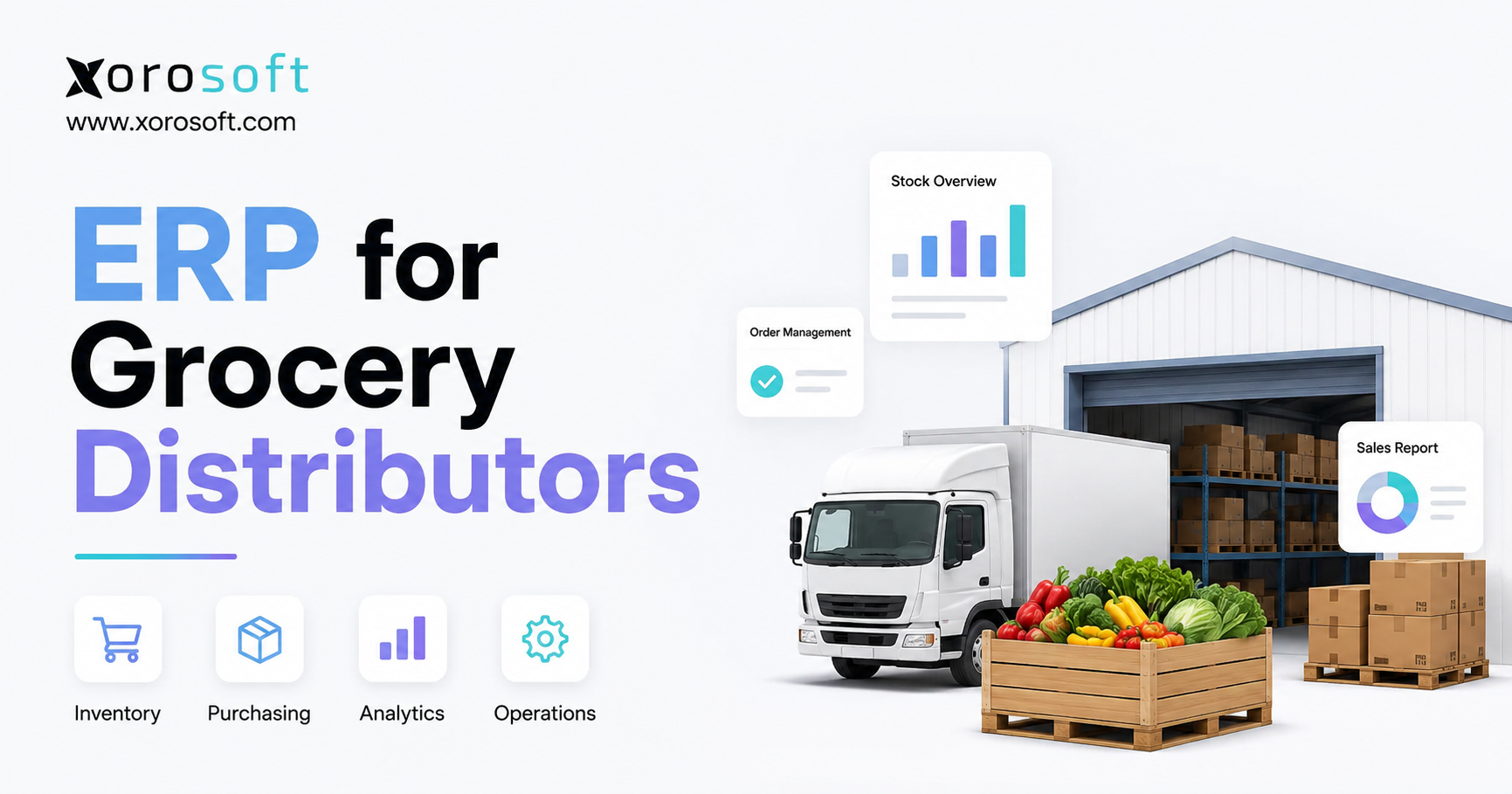
ERP for grocery distributors can streamline operations and help businesses stay competitive in today’s market.
1. Disconnected Systems Create Risk as Grocery Distributors Grow
Growth creates more than higher sales for a grocery distributor. It also brings more products, suppliers, warehouse locations, customer rules, sales channels, and daily orders. As a result, each new layer adds work and creates more links between teams.
For example, a buyer’s decision affects stock levels, warehouse space, cash flow, expiry risk, and customer service. Likewise, a receiving error affects inventory, lot records, supplier bills, and financial reports. In addition, a poor picking choice may cause a customer rejection even when the system shows enough stock.
Many distributors respond to growth by adding one tool at a time. They may use accounting software for finance, spreadsheets for purchasing, an inventory app for stock, and a warehouse tool for scanning. Meanwhile, an EDI provider may handle retail orders, while Shopify or Amazon creates another source of order and inventory data.
Each tool may work well on its own. However, the problem starts when the business needs all of them to work together.
At that point, employees become the link between systems. They export files, enter the same order twice, compare reports, fix item codes, and search for missing details. Consequently, managers spend more time asking which number is correct than acting on the number.
ERP for grocery distributors helps solve this issue by joining inventory, purchasing, warehouse work, sales orders, accounting, forecasting, and reporting in one system.
More importantly, the main value does not come from replacing several screens with one screen. Instead, it comes from connecting each step of a product’s journey, from supplier order to customer delivery and final financial record.
2. What ERP for Grocery Distributors Brings Together
ERP for grocery distributors manages the main work that moves products, creates sales, and affects cash. Specifically, it links inventory, purchasing, warehouse tasks, customer orders, accounting, forecasting, reporting, and other core processes.
A connected grocery distributor ERP should carry information from one step to the next. For instance, a purchase order should create an expected receipt. Then, the receipt should update stock, lot details, expiry dates, and supplier balances. Similarly, a customer order should apply the correct price, reserve suitable stock, guide the warehouse, create an invoice, and update the financial records.
2.1 Grocery Distribution Software Connects Daily Transactions
Consider a normal supplier delivery.
First, the purchasing team creates an order for several grocery products. When the truck arrives, the receiving team checks each item, quantity, lot number, and expiry date. Next, the team records any damage or short shipment and sends the goods to the correct warehouse location.
A connected system updates more than the quantity on hand. It also updates available stock, lot history, expected supplier bills, inventory value, purchasing reports, and customer order options.
The same process applies to sales. When a customer sends an order, the ERP checks pricing, payment terms, stock, warehouse location, and lot rules. After the shipment leaves, the system reduces stock, stores trace details, creates the invoice, and updates accounts receivable.
Therefore, every team works from the same transaction instead of rebuilding it in several systems.
2.2 Food Distribution ERP Connects Inventory and Finance
Inventory software may tell a team how many cases sit in a warehouse. However, ERP adds the wider business view.
Buyers can review current stock, open purchase orders, sales demand, supplier lead times, and expected receipts. At the same time, warehouse teams can see which products and lots to pick. Finance teams can then trace receipts, shipments, returns, and write-offs to their financial effect.
As a result, this shared view helps each team work from the same record instead of building its own version of the truth.
Moreover, the connection helps management see how daily stock decisions affect margin, cash flow, and customer service. Without that link, the company may understand inventory and finance separately but still miss the full picture.
3. Grocery Distribution Software Needs Industry-Specific Controls
Grocery products often carry more risk than standard goods. A distributor may need to track expiry dates, lot numbers, shelf life, storage rules, pack sizes, customer needs, and product holds.
These details affect whether the company can sell an item, which customer can receive it, and how long it can remain in stock. Therefore, grocery distribution software must do more than record a quantity and location.
3.1 Perishable Inventory Management Protects Shelf Life
Two cases of the same product may have different business value. For example, one may have six months of shelf life left, while the other may expire in four weeks.
A basic stock report may treat both cases as equal. In practice, however, the warehouse and sales teams must handle them differently.
Perishable inventory management software should help teams find short-dated stock, check expiry dates during receiving, and use shelf-life rules during order allocation. In addition, buyers should see ageing stock before they place another order for the same item.
Customer shelf-life rules add another layer. A small local store may accept a product with less remaining life than a large retail chain. Therefore, the ERP should help the team apply those rules before the warehouse picks the order.
Otherwise, the company may ship stock that is technically available but does not meet the customer’s delivery terms.
3.2 Lot Traceability Supports Faster Product Tracking
Lot traceability connects a product to its source and destination.
A distributor should be able to trace a lot back to the supplier, purchase order, and receiving record. Likewise, the same system should show which customers received products from that lot.
However, this requires more than a report. Employees must capture lot details at receiving and keep them linked through transfers, repacking, picking, shipping, and returns.
ERP can help teams find those records faster. Nevertheless, it does not replace food safety plans, recall steps, legal review, or staff training. The company still needs clear rules for handling a product hold or recall.
Therefore, the strongest trace process combines reliable software with clear warehouse steps and trained employees.
3.3 Grocery Distributor ERP Must Handle Units of Measure
Grocery distributors often buy, store, and sell the same product in different units.
For example, a supplier may ship pallets. The warehouse may store cases. Customers may order cases, inner packs, or single units. In addition, some food products may require weight-based handling.
Incorrect unit rules can cause major errors. A wrong case conversion may affect receiving, stock, pricing, picking, and invoicing at the same time.
Consequently, the ERP should keep unit rules clear and consistent across every team. It should also prevent employees from creating new pack sizes or conversions without the right review.
4. Grocery Inventory Management Depends on Usable Stock
A quantity on hand does not always show what a distributor can sell.
Some stock may already belong to open orders. Meanwhile, some may sit on quality hold. Other stock may have expired, suffered damage, or started a transfer to another warehouse.
Therefore, a strong food distributor inventory management system should separate physical stock from usable stock.
4.1 Grocery Inventory Software Should Show Stock Status Clearly
Teams often need to see several stock views:
- Total stock in each warehouse
- Stock available for new orders
- Stock reserved for current orders
- Stock expected from suppliers
- Stock moving between warehouses
- Stock on hold, damaged, or expired
These views help customer service make better promises. In addition, they stop buyers from ordering items that already have enough stock on the way.
The system should update these values as employees complete each task. Otherwise, delayed updates create false stock and make every later decision less reliable.
For example, if a transfer leaves one site but the team does not mark it as in transit, customer service may believe that stock has disappeared. Similarly, if a picker does not confirm an order, the system may continue to show stock as available.
4.2 FEFO Inventory Management Reduces Expiry Risk
First-in, first-out, or FIFO, usually sends the oldest receipt first.
By contrast, first-expired, first-out, or FEFO, sends the lot with the earliest expiry date first. Grocery distributors often need FEFO because the first lot received may not expire first.
For example, a later delivery may arrive with less shelf life than the stock already in the warehouse. In that case, FIFO could leave the short-dated lot behind. FEFO, however, places the expiry date at the centre of the picking choice.
ERP with FEFO inventory management should consider expiry dates, customer shelf-life rules, warehouse locations, product holds, and approved exceptions.
Therefore, buyers should ask vendors to show this full process. An expiry field alone does not prove that the system can manage FEFO well.
4.3 Multi-Warehouse ERP Gives Teams One Stock View
A distributor with several warehouses needs both local and company-wide stock views.
Customer service should see where an item sits and whether another warehouse can fill the order. Meanwhile, buyers should know whether the company needs a new supplier order or an internal transfer.
The ERP should also track stock while it moves between locations. Without an in-transit status, stock can leave one warehouse and disappear until the destination team receives it.
Moreover, good multi-warehouse ERP helps teams compare transfer cost, delivery time, shelf life, and customer need before moving stock.
As a result, the business can avoid needless buying when another warehouse already holds suitable inventory.
5. Grocery Purchasing and Demand Forecasting Shape Cash Flow
Purchasing affects far more than stock levels. It also shapes cash flow, warehouse use, spoilage risk, supplier ties, and customer service.
Yet many growing distributors still depend on buyer spreadsheets. Over time, these files rely more heavily on one person’s knowledge and become harder to manage as the business adds products, suppliers, and warehouses.
5.1 Food Distribution ERP Gives Buyers Better Data
A purchasing system should bring together current stock, reserved stock, open supplier orders, sales demand, lead times, safety stock, minimum order amounts, and shelf life.
Therefore, this shared view helps buyers see the full position before they act.
However, the ERP should not remove buyer judgement. Buyers may know about a coming retail launch, a supplier delay, a local event, a price change, or a new customer order that history cannot predict.
Instead, the system should provide a strong starting point. The buyer should then review and adjust the plan.
In addition, managers should be able to review unusual purchases before approval. This control becomes more important when large orders affect cash flow or warehouse space.
5.2 Demand Forecasting for Grocery Distributors Needs Human Review
Demand forecasting works best when teams treat it as a regular business process, not a fixed number.
Sales history matters, but it does not tell the whole story. For example, stockouts can hide real demand because the company could not ship what customers wanted. Likewise, promotions can lift sales for a short time, while new products may have little or no history.
A useful forecast should help teams review seasonality, lost sales, current orders, supplier lead times, customer growth, and product life cycle.
Nevertheless, teams should still challenge the result. A forecast may look accurate based on history while missing a major sales change that will happen next month.
Ultimately, the goal is not to predict every order perfectly. Instead, the goal is to spot risk early enough to act before the company runs out of stock or buys too much.
5.3 Better Purchasing Helps Control Overstock and Stockouts
Overstock and stockouts often come from the same problem: poor data.
A company may buy too much of one item because a spreadsheet misses stock in another warehouse. At the same time, it may buy too little of another item because past stockouts made demand look lower than it was.
Connected purchasing helps buyers review the full stock and demand picture. Moreover, it gives managers a clear approval trail for large or unusual orders.
As a result, the business can make more balanced choices between service level, shelf life, warehouse space, and cash use.
6. Grocery Warehouse Management Protects Inventory Accuracy
Warehouse speed matters, but speed alone does not create a good operation.
A grocery warehouse must also protect stock accuracy, lot records, product rotation, shelf-life rules, and order quality.
Therefore, the physical move and the system move should happen at the same time. When employees move stock without recording it, the ERP loses trust.
6.1 Receiving Creates the First Reliable Inventory Record
Receiving gives the distributor its first chance to confirm what arrived.
The team should check the product, quantity, unit, lot number, expiry date, condition, and purchase order. It should also record damage, shortages, or extra goods before releasing stock for sale.
For instance, if the team accepts short-dated goods without review, the company may struggle to sell them before expiry. Likewise, if it skips lot capture, later trace work becomes harder.
Therefore, a clear receiving process prevents many errors before they spread through the system.
In addition, the company should define who can approve exceptions. Otherwise, staff may accept goods that fail the normal shelf-life, quantity, or quality rules without proper review.
6.2 Putaway and Picking Need Clear Warehouse Rules
After receiving, the warehouse should move each product to the right location.
Putaway rules may consider product type, storage need, speed of sale, available space, lot separation, and picking ease.
Next, picking instructions should show the item, unit, location, quantity, and lot. Barcode scans can then help confirm that the employee picked the correct stock.
Packing gives the team one last check before shipment. Once the order leaves, the ERP should update stock, lot history, order status, and invoicing without another manual step.
Consequently, each completed warehouse task should support the next process rather than create another data-entry job.
6.3 Grocery Warehouse Management Software Should Match the Operation
Some distributors need standard receiving, picking, transfers, and cycle counts. Others, however, need more advanced warehouse tools.
XoroWMS focuses on inventory tracking, purchasing and receiving, barcode-based work, picking, packing, shipping, cycle counts, and multi-warehouse control.
Nevertheless, a distributor should test the system against its actual warehouse. Order volume, layout, units, devices, staffing, and exception rules all affect fit.
For example, a warehouse with simple case picking may need a different setup from a business that handles eaches, mixed cases, catch weight, or complex customer labels.
7. Integrated Accounting Shows the Cost of Inventory Decisions
Inventory often ties up a large share of a distributor’s cash.
When warehouse and accounting systems do not share data, finance teams spend time matching receipts, supplier bills, landed costs, returns, write-offs, and shipments.
As a result, this work delays reporting and makes product margin harder to trust.
7.1 Grocery Distributor ERP Improves Inventory Valuation
Inventory value depends on accurate and timely records.
A missed receipt, late adjustment, or wrong cost can affect inventory value and cost of goods sold. These errors then flow into margin and financial reports.
A connected ERP links approved warehouse activity with finance. Therefore, finance teams can trace how receipts, shipments, returns, and write-offs changed the accounts.
The team still needs controls and checks. However, the ERP gives it a clearer record and less manual matching.
In addition, finance can review unusual inventory changes before they distort month-end results.
7.2 Food Distribution ERP Supports Better Margin Review
Sales alone do not show which products or customers create profit.
For example, a large customer may need special prices, small drops, frequent returns, extra EDI work, or strict shelf-life rules. Similarly, a product may look profitable before freight, storage, waste, and handling costs enter the picture.
Food distribution ERP can help managers review margin by product, customer, warehouse, salesperson, or sales channel.
Consequently, these views help the business make better choices about pricing, service levels, stock, and customer terms.
Moreover, the company can compare sales growth with the cost of supporting that growth. This helps management avoid chasing revenue that creates little or no profit.
8. EDI, Wholesale Pricing, and Shopify Orders Need Shared Inventory
Many grocery distributors now sell through several channels.
A company may receive EDI orders from retail chains, email orders from local stores, portal orders from wholesale customers, and online orders from Shopify.
However, problems grow when each channel holds a separate stock number.
8.1 EDI for Grocery Distributors Needs Clear Ownership
EDI may carry purchase orders, order notices, shipment notices, invoices, and other documents between the distributor and its retail partners.
Therefore, the ERP project should list each partner and document type. The team should also decide who will map documents, test them, fix errors, and manage future changes.
Some ERP platforms handle EDI directly. Others use a partner or outside service. Either model can work, but the distributor should understand cost and ownership before launch.
In addition, the team should define what happens when an EDI order fails. Without a clear exception process, orders may sit unnoticed while the customer expects delivery.
8.2 Wholesale Grocery Distribution Software Must Apply the Right Price
Wholesale pricing may include price lists, contract rates, volume breaks, payment terms, promotions, and approved discounts.
The system should apply the same pricing rules whether an order comes from EDI, a portal, email, phone, or another channel.
When teams keep pricing in spreadsheets, they may use old rates or give different customers the wrong terms.
Therefore, one shared price source reduces those errors and gives managers a clear approval path for changes.
Moreover, the ERP should record who changed a price, when the change took effect, and which customers it affects.
8.3 Shopify ERP Integration Connects Commerce and Back-Office Work
Shopify works well as a sales channel, but grocery distributors often need more control behind it.
A Shopify ERP integration may share products, stock, orders, fulfilment, returns, customers, and payment data with the back office.
The Xorosoft ERP app on the Shopify App Store connects Shopify with order management, inventory, warehousing, purchasing, manufacturing, finance, and customer service.
Before launch, merchants should test stock updates, refunds, bundles, order changes, partial shipments, multiple locations, and error handling.
Otherwise, the connection may move basic data while still leaving key exceptions for staff to fix by hand.
9. ERP vs Inventory Software vs WMS for Grocery Distributors
ERP, inventory software, and warehouse management software solve different parts of the same business problem.
| Capability | ERP | Inventory Software | WMS |
|---|---|---|---|
| Stock and location tracking | Yes | Yes | Yes |
| Purchasing | Usually | Often | Limited |
| Accounting | Yes | Usually limited | No |
| Warehouse execution | Basic to advanced | Basic to moderate | Advanced |
| Lot and expiry tracking | Product dependent | Often | Often |
| Demand forecasting | Often | Sometimes | Limited |
| Financial reporting | Yes | Limited | No |
| Multi-company support | Often | Limited | Limited |
| EDI and ecommerce links | Native or linked | Sometimes | Usually linked |
| Manufacturing | Product dependent | Limited | No |
Features vary by product, plan, setup, and integration. Therefore, buyers should compare actual workflows rather than product labels alone.
9.1 When Grocery Inventory Software May Be Enough
A smaller distributor may not need full ERP.
Inventory software may suit a company with one warehouse, simple buying, low order volume, basic accounting, and few sales channels.
In that case, the tool can give the team better stock control without the larger scope of an ERP project.
However, the company should review whether it will soon add EDI, more warehouses, production, or complex pricing. Otherwise, it may outgrow the tool soon after launch.
9.2 When a Grocery Distributor Needs a WMS
A company may need a WMS when its main problem sits inside the warehouse.
Advanced needs may include wave planning, labour tracking, robotics, conveyors, complex slotting, or very high order volume.
In that case, a WMS can work with an existing ERP or finance system when the company already trusts those tools.
Nevertheless, the integration between the systems must remain strong. If stock, orders, and shipment data move slowly, the business may still face the same gaps.
9.3 When Full Grocery Distributor ERP Makes More Sense
Full ERP becomes useful when inventory, purchasing, warehouse work, sales, accounting, forecasting, and reporting must share the same data.
Therefore, the key issue is not company size. It is the cost and risk of keeping the main processes apart.
For many businesses, ERP becomes the stronger option when staff spend more time matching systems than improving the operation.
10. Who Needs Cloud ERP for Grocery Distributors
A grocery distributor may need ERP when the business has become too complex for separate tools.
Common signs include several warehouses, EDI customers, lot or expiry rules, multiple sales channels, a large buying team, light production, or constant finance checks.
10.1 Strong-Fit Signs for Grocery Distributor ERP
ERP adds value when teams cannot answer basic questions with confidence.
Customer service may not know which stock is free to sell. Meanwhile, buyers may not see what is already on order. Warehouse teams may not know which lot to pick, and finance may not know why stock value changed.
A connected ERP helps when those answers depend on the same set of transactions.
As a result, the company can replace repeated checks with shared data and clear process steps.
10.2 Businesses That May Not Need ERP Yet
A small distributor may not need full ERP when it has one simple site, a short item list, few orders, no lot rules, no production, and basic accounts.
Therefore, the company should not buy ERP only because it hopes to grow.
Instead, it should act when current or near-term work needs stronger control and the team has time to support the change.
In some cases, an inventory app and accounting system may provide enough support for several more years.
11. Seven Signs a Grocery Distributor Has Outgrown Its Systems
A distributor should review ERP when several warning signs appear.
1. Staff no longer trust the stock number.
2. Buyers depend on personal spreadsheets.
3. Warehouse and finance teams keep matching the same records.
4. Transfers between warehouses cause stock gaps.
5. Lot or expiry details take too long to find.
6. Managers build reports by hand.
7. Each new sales channel adds another tool and more data entry.
These signs do not mean the company needs the largest ERP on the market. Instead, they show that the current system setup may no longer support the business.
11.1 ERP Readiness Requires More Than Software Need
A company may dislike its current tools but still lack ERP readiness.
A strong project needs clear owners, clean data, staff time, test plans, senior support, and agreed goals.
Therefore, teams should treat ERP as a business change, not just a software install. That view keeps process and training work from arriving too late.
Moreover, the company should define what success looks like before it selects a vendor. Otherwise, it may complete the project without solving the problems that started it.
12. How to Choose the Best ERP for Grocery Distributors
The best ERP for grocery distributors should support the company’s key work with a fair level of cost, risk, and effort.
A long feature list does not prove fit. Therefore, buyers need to see how the system handles real tasks.
12.1 Map Real Grocery Distribution Workflows
Start with the current process.
Document how the team buys, receives, stores, transfers, prices, allocates, picks, ships, invoices, returns, forecasts, and closes the books.
In addition, include common problems, not only the perfect process.
The vendor should show what happens when a supplier sends the wrong amount, a product arrives with short shelf life, an EDI order fails, or a lot goes on hold.
This approach gives buyers a clearer view of the system under real operating pressure.
12.2 Use Real Scenarios During ERP Demos
Ask each vendor to show one complete flow.
For example, the demo could start with a buying suggestion, move through purchase approval and lot-based receiving, and then finish with FEFO picking, shipping, invoicing, and margin review.
This exposes extra steps, outside tools, manual work, and custom needs.
A polished dashboard may look good. However, it does not prove that the system supports the full process.
Therefore, buyers should spend more time on transaction flow than home-screen design.
12.3 Compare ERP Options by Business Fit
Grocery distributors may compare NetSuite, Acumatica, Microsoft Dynamics 365 Business Central, Sage, Cin7, Brightpearl, Fishbowl, Xorosoft, and food-focused systems.
Each product serves a different type of company.
For instance, a large global group may need complex tax, country, and company controls. By contrast, a growing regional distributor may care more about Shopify, EDI, warehouse work, buying, and finance.
The Xorosoft versus NetSuite comparison gives buyers one view of those two options. Since Xorosoft publishes the page, buyers should confirm each claim through their own demo, cost review, and project plan.
12.4 Review the Team Behind the ERP
The software matters, but the project team also shapes the result.
Buyers should ask who will map processes, clean data, build links, set up the system, train staff, support testing, and help after launch.
In addition, the company should know which work sits inside the price and which work needs another partner.
A good product with weak project ownership can still create poor results. Therefore, buyers should evaluate the software and implementation team together.
13. Grocery Distribution ERP Implementation Needs Clear Control
Most ERP projects include discovery, process design, setup, data work, integrations, testing, training, go-live, and follow-up support.
Grocery distribution adds extra care around stock, lots, expiry dates, units, warehouse tasks, and customer rules.
13.1 Clean Data Before Grocery ERP Migration
The team may need to move products, units, customers, suppliers, price lists, locations, stock, lots, expiry dates, open orders, supplier orders, unpaid bills, unpaid invoices, account balances, and bills of material.
However, it should clean the data before the move.
Duplicate items, old suppliers, wrong units, poor prices, and false stock will weaken the new system from day one.
The company does not need to move every old record. Instead, it can keep older history in a safe archive when that choice lowers cost and risk.
Moreover, the team should assign an owner to each type of data. Without clear ownership, everyone may assume someone else will fix it.
13.2 Test Full Grocery Distribution Transactions
Testing should cover full work, not single screens.
A purchase order should move through receipt, lot capture, supplier bill, and finance. Likewise, a customer order should move through pricing, stock choice, picking, shipping, invoice, payment, and return.
The team should also test errors, changes, user rights, integrations, and month-end reports.
As a result, users can find problems before those problems affect live orders and financial records.
13.3 Train Each Team for Its Own Work
Buyers, warehouse staff, customer service, finance, managers, and system admins use ERP in different ways.
Therefore, training should match each role.
Warehouse teams need hands-on practice with scans and stock moves. Buyers need planning and order work. Finance needs checks, controls, and close steps.
Staff should also understand how one missed step affects the next team. This helps people follow the process because they understand why it matters.
In addition, the company should provide support after launch. Users often raise their most useful questions only after they begin handling real transactions.
14. Where Xorosoft Fits in a Grocery Distribution System
Xorosoft focuses on inventory-led companies across wholesale, distribution, ecommerce, food and drink, production, apparel, furniture, and other product sectors.
Its product set gives grocery distributors several options to review.
14.1 XoroONE for Connected Grocery Distribution Operations
XoroONE brings sales, purchasing, inventory, warehouse work, accounting, production, reporting, forecasting, ecommerce, EDI, and B2B tools into one cloud platform.
Therefore, it may suit a distributor that wants to replace several separate tools with one shared system.
However, the company should still review how each function works in its own operation.
14.2 XoroERP for Growing Inventory-Led Companies
XoroERP focuses on companies that have moved beyond basic accounting tools.
It connects customer work, finance, suppliers, buying, warehouse tasks, reports, production, workflow rules, and integrations.
A grocery distributor should test its own units, lots, shelf-life rules, prices, warehouse work, and finance needs during the review.
In addition, it should confirm which features come as standard and which need setup, integration, or extra services.
14.3 Xorosoft Industry Solutions for Food and Wholesale
The Xorosoft industries portfolio covers wholesale, distribution, food and drink, manufacturing, retail, apparel, furniture, and other product sectors.
Its food and distribution pages focus on stock by location, lot tracking, expiry details, warehouse work, buying, customer prices, fulfilment, and finance.
Nevertheless, these features need real testing. The distributor should confirm FEFO rules, units, EDI partners, Shopify flows, scanning, accounting, forecasts, and reports before choosing the platform.
15. Frequently Asked Questions About ERP for Grocery Distributors
15.1 What is ERP for grocery distributors?
ERP for grocery distributors connects inventory, buying, warehouse work, customer orders, finance, forecasting, and reports. As a result, it gives teams one shared record for products, suppliers, customers, stock, sales, and financial activity.
15.2 What does grocery distribution software manage?
Grocery distribution software may manage buying, receiving, lots, expiry dates, warehouse locations, pricing, orders, picking, shipping, invoicing, EDI, forecasts, and reports. However, the scope depends on whether the tool offers inventory, WMS, or full ERP features.
15.3 Why do grocery distributors need industry-specific ERP?
Grocery distributors manage short shelf life, lot history, pack sizes, wholesale prices, EDI, and large order volumes. Therefore, industry-focused ERP helps teams include those needs in buying, receiving, stock, warehouse, sales, and finance work.
15.4 Can ERP track grocery expiry dates?
Many ERP systems track expiry or best-before dates by lot. Teams can then use this data for receiving checks, FEFO, shelf-life rules, picking, stock reports, and write-off plans. Nevertheless, buyers should test the full process before choosing a system.
15.5 What is FEFO in grocery distribution?
FEFO means first-expired, first-out. It sends the lot with the earliest expiry date first. Therefore, this method differs from FIFO because the first lot received may not have the earliest expiry date.
15.6 Can grocery distributor ERP track lots?
Many grocery ERP systems link lots to supplier receipts, stock moves, customer orders, shipments, returns, and production. However, good trace work also needs accurate labels, scans, staff steps, and clear company rules.
15.7 Can ERP help reduce food waste?
ERP can help teams find ageing stock, improve buying, support FEFO, review slow items, and plan transfers. However, it cannot remove all waste because demand, supplier quality, storage, and staff actions also affect results.
15.8 Does grocery ERP include warehouse management?
Some ERP systems include receiving, putaway, picking, packing, shipping, transfers, and cycle counts. Others, however, offer basic warehouse tools or link to a separate WMS. Therefore, buyers should test the depth of the warehouse features.
15.9 Does a grocery distributor need both ERP and WMS?
Not always. ERP may handle normal warehouse work. By contrast, a separate WMS may help when the operation needs advanced wave planning, robotics, labour tools, complex slotting, conveyors, or very high order volume.
15.10 What is the difference between ERP and inventory software?
Inventory software tracks products, stock, locations, and moves. ERP adds buying, sales, finance, forecasting, customer data, and business reports. However, some inventory tools include ERP-like features, so buyers should compare the full process.
15.11 Can grocery ERP manage several warehouses?
Yes. Multi-warehouse ERP can show stock by site, track transfers, manage in-transit goods, support buying, and give a full company view. In addition, buyers should test user rights, allocation, scans, and warehouse costs.
15.12 Can ERP improve grocery purchasing?
ERP can suggest buys from stock, sales, open orders, lead times, safety stock, and supplier rules. Nevertheless, buyers should still review the plan because promotions, delays, new customers, and market changes may affect demand.
15.13 Can ERP forecast grocery demand?
ERP forecasting can use past sales, seasons, promotions, stockouts, customer trends, lead times, and product life cycle. However, teams should review and adjust each forecast rather than accept it without question.
15.14 Does grocery distribution ERP support EDI?
Many ERP platforms support EDI directly or through a partner. Therefore, the distributor should confirm each retail partner, document, format, test step, error process, support owner, and ongoing fee.
15.15 Can ERP manage wholesale grocery pricing?
ERP can manage price lists, contracts, volume breaks, special offers, payment terms, and approved discounts. As a result, the same rules can apply across manual orders, EDI, Shopify, portals, and other sales channels.
15.16 Can ERP connect with Shopify?
ERP can share products, stock, orders, fulfilment, returns, customers, and payment data with Shopify. However, buyers should test refunds, bundles, order edits, part shipments, several locations, and data errors.
15.17 Can grocery ERP replace QuickBooks?
ERP can replace QuickBooks when it supports the company’s ledger, bills, invoices, bank work, stock value, tax needs, reports, and close process. Before the move, however, the finance team should test and match all key balances.
15.18 When should a grocery distributor upgrade to ERP?
A company should review ERP when staff cannot trust stock, buyers depend on spreadsheets, warehouse and finance teams keep matching records, lot details take too long to find, or reports require heavy manual work.
15.19 Is cloud ERP suitable for grocery distribution?
Cloud ERP can give teams shared access across offices and warehouses while reducing in-house server work. Nevertheless, buyers still need to review internet needs, security, backups, user access, data export, mobile tools, and support.
15.20 How much does grocery distribution ERP cost?
Cost may include software, setup, data work, links, training, changes, support, staff time, and extra tools. Therefore, the total depends on users, sites, modules, order volume, data quality, and project scope.
15.21 How long does grocery ERP implementation take?
The time depends on users, warehouses, data, links, setup, changes, testing, training, and staff time. Consequently, vendors should give a project plan after they learn the company’s real needs.
15.22 What data should move into grocery ERP?
Common data includes products, units, customers, suppliers, prices, locations, stock, lots, expiry dates, open orders, supplier orders, bills, invoices, account balances, and bills of material. However, the company may keep older history in a separate archive.
15.23 Can grocery ERP support repacking?
ERP with production tools may support kits, mixed cases, work orders, product use, finished goods, costs, and lot links. Nevertheless, buyers should test weight, yield, recipe, label, and food rules.
15.24 How should grocery distributors compare ERP vendors?
Teams should compare vendors through real scenarios, data checks, links, project plans, customer references, security review, and total cost. In addition, buying, warehouse, finance, sales, service, and IT teams should join the review.
15.25 What ERP selection mistakes should grocery distributors avoid?
Common mistakes include choosing from a feature list, ignoring data quality, skipping warehouse or finance input, underplanning training, assuming links will work without effort, adding too many custom changes, and comparing only monthly price.
16. Conclusion: Build a Connected Grocery Distribution Operation
A grocery distributor should start its ERP search with the business process, not the software screen.
First, map the areas that create the most errors, delays, and manual work. Review where stock loses trust, where buyers lack data, where warehouse moves go unrecorded, and where finance spends time matching systems.
Next, build clear demo cases. Use real items, pack sizes, warehouses, customer prices, lot rules, expiry needs, EDI partners, Shopify orders, and account structures.
Then, compare each system against those workflows. Do not rely only on feature lists or standard product tours. Instead, ask the vendor to show how the platform handles normal work and common problems.
The right ERP for grocery distributors should connect inventory, purchasing, warehouse work, sales, trace details, finance, and forecasts without forcing staff to copy the same data across several tools.
However, a good system should also fit the company’s team, budget, project skills, and growth plans. The platform with the most features may not offer the best fit. Ultimately, the strongest choice will support the company’s daily work with clear steps, trusted data, and less manual effort.
16.1 Review Xorosoft Against Your Grocery Distribution Needs
A standard product tour will not show whether an ERP fits your stock, lots, expiry dates, buying, warehouse, EDI, Shopify, and finance needs.
Therefore, use Xorosoft’s contact and discovery process to share your current tools, main problems, warehouse setup, sales channels, and reporting needs.
Then, ask the team to show how the platform handles your real work from purchase order through receiving, storage, customer order, shipment, invoice, and financial report.