One of the most important topics for online retailers today is how to address ecommerce warehouse management challenges.
1. Ecommerce Warehouse Management Challenges Behind Online Growth
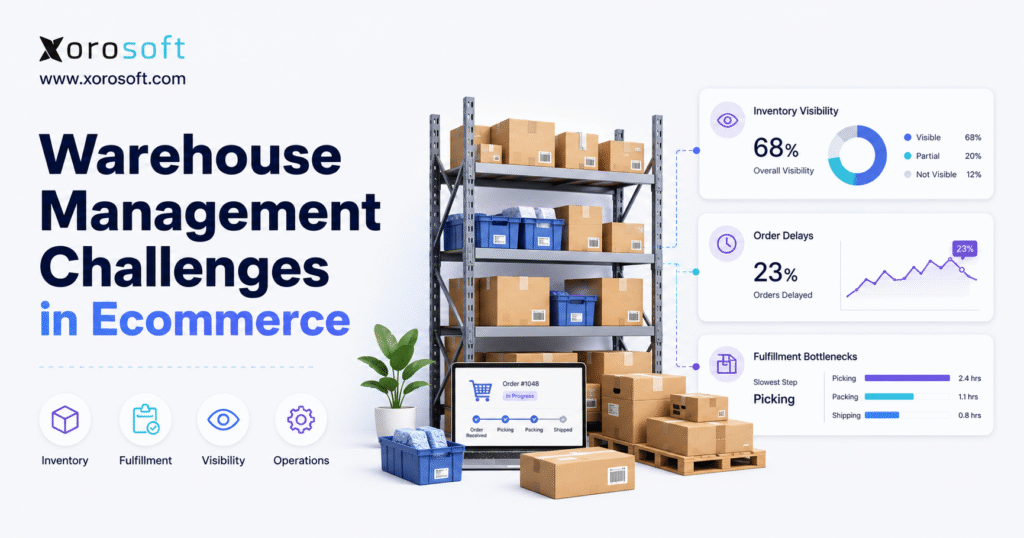
Ecommerce warehouse management challenges usually appear when order volume, SKU count, sales channels, and customer expectations grow faster than warehouse processes. At first, the team can manage stock with simple tools, manual checks, and a few experienced people. However, as the business scales, those same habits start creating inventory errors, late shipments, overselling, returns delays, and poor visibility.
Because ecommerce is no longer a small side channel for many product businesses, warehouse execution now affects almost every department. According to FRED ecommerce retail sales data, ecommerce represented 16.9% of total U.S. retail sales in Q1 2026. Therefore, brands that sell online need warehouse operations that can move quickly without losing accuracy.
In simple terms, ecommerce warehouse management challenges are the operational problems that stop an online brand from receiving, storing, picking, packing, shipping, and returning inventory accurately.
The most common issues include:
1. Inventory inaccuracy
2. Poor warehouse visibility
3. Picking and packing errors
4. Slow receiving and putaway
5. Multi-warehouse complexity
6. Shopify, Amazon, and EDI integration issues
7. Returns processing delays
8. Labor productivity problems
9. Stockouts and overstock
10. Weak reporting
1.1 Why Ecommerce Warehouse Problems Grow With Order Volume
Growth creates more warehouse movement. Order volume increases picking work. SKU growth adds more bin locations. Returns create extra inspection and restocking tasks. At the same time, new sales channels require faster inventory updates. As a result, a warehouse that once felt controlled can quickly become difficult to manage.
For example, one wrong count may create an oversold Shopify order. Similarly, one misplaced SKU may delay a wholesale shipment. Meanwhile, one slow receiving process may keep available stock hidden from ecommerce channels.
Because every warehouse action touches inventory, finance, purchasing, fulfillment, and customer experience, small errors rarely stay small.
1.2 How Manual Workflows Create Ecommerce Fulfillment Challenges
Manual workflows can work when a business is small. However, they become risky when several teams rely on the same inventory data.
A warehouse manager may update stock in a spreadsheet. Then someone else may adjust Shopify. Later, finance may reconcile QuickBooks. Meanwhile, customer support may tell a buyer that an item is available because the system still shows stock.
Eventually, the business loses trust in its own numbers. Therefore, ecommerce warehouse management challenges often signal a deeper operating-system problem, not only a warehouse problem.
1.3 What Scaling Brands Need From Ecommerce Warehouse Operations
A scaling ecommerce brand needs more than shelves, labels, and labor. It needs clear workflows for receiving, putaway, picking, packing, shipping, transfers, returns, and reporting.
In addition, the warehouse needs real-time inventory visibility. Without that visibility, leaders cannot make reliable decisions about purchasing, stock allocation, fulfillment promises, or cash flow.
Most importantly, ecommerce warehouse operations must connect physical inventory movement with online demand. Otherwise, the business keeps reacting to problems instead of controlling them.
2. Inventory Accuracy and Ecommerce Warehouse Management Challenges
Inventory accuracy is the foundation of warehouse performance. If the system says 80 units are available but the warehouse has 52, every downstream decision becomes unreliable.
Therefore, ecommerce warehouse management challenges often begin with inventory data. Once counts drift, the business starts making sales, purchasing, and fulfillment decisions from bad information.
2.1 Why Stock Counts Drift Across Ecommerce Warehouse Operations
Stock counts drift when physical inventory and system inventory move at different speeds. For instance, receiving may happen in the warehouse before the system gets updated. Also, a return may be placed back on a shelf before anyone confirms whether it is sellable.
In addition, ecommerce brands often sell the same inventory across Shopify, Amazon, wholesale, retail, and EDI channels. Because each channel can create demand at the same time, delayed updates increase the risk of overselling.
A strong inventory process should show available stock, reserved stock, damaged stock, inbound stock, transfer stock, and returned stock separately.
2.2 How Poor Inventory Updates Create Ecommerce Warehouse Problems
Overselling is one of the most visible ecommerce warehouse management challenges because customers feel the problem immediately.
A shopper places an order. However, the warehouse cannot find the item. Then the team has to cancel, refund, substitute, or delay the shipment. As a result, the brand loses margin and trust at the same time.
Shopify’s guide to multichannel inventory management explains why real-time visibility and synchronization matter across locations and platforms. In practice, ecommerce teams need the same discipline inside the warehouse, because online availability should match physical stock.
2.3 Why Warehouse Visibility Issues Cause Stockouts and Overstock
Stockouts and overstock may look like opposite problems. However, both often come from poor visibility.
A brand may stock out because purchasing did not see demand rising. On the other hand, a team may overbuy because old inventory data made demand look stronger than it really was. Either way, cash gets trapped in the wrong places.
For that reason, inventory accuracy is not only a warehouse metric. It is also a finance, purchasing, and customer experience metric.
2.4 How Cycle Counting Reduces Ecommerce Inventory Accuracy Problems
Annual inventory counts are not enough for growing ecommerce brands. By the time a full physical count happens, the business may have spent months making decisions from inaccurate data.
Instead, cycle counting helps teams check inventory continuously. High-value SKUs, fast-moving products, and error-prone locations should be counted more often. Then, when a variance appears, the team can find the cause before it becomes a fulfillment problem.
Because cycle counting creates a regular feedback loop, it helps prevent small inventory discrepancies from turning into larger ecommerce warehouse management challenges.
3. Receiving and Putaway Challenges in Ecommerce Warehouse Operations
Receiving is where inventory enters the business. Therefore, if receiving is inaccurate, every later workflow starts with bad information.
Putaway is equally important. If products land in the wrong bin, the system may show stock as available, but pickers may still be unable to find it.
3.1 Why Inbound Receiving Creates Ecommerce Warehouse Problems
Inbound shipments often arrive with differences. A supplier may ship fewer units than expected. Also, cartons may arrive damaged, mixed, mislabeled, or late. Without a structured receiving process, warehouse teams may accept inventory without checking quantities, SKUs, lots, or condition.
Consequently, the system may show inventory that was never truly received. In addition, damaged goods may accidentally become available for sale.
A reliable receiving process should match shipments against purchase orders, confirm quantities, record exceptions, and update inventory quickly.
3.2 How Poor Putaway Creates Warehouse Visibility Issues
Putaway decides whether inventory can be found later. However, rushed putaway creates confusion.
For example, a team may place products wherever space exists. Later, the system may show stock in one location while the product sits somewhere else. As a result, pickers waste time searching, managers approve unnecessary recounts, and orders miss shipping cutoffs.
Therefore, putaway rules should be clear. Each item should move to a defined bin, zone, rack, or shelf based on product type, velocity, size, or storage requirement.
3.3 Why Delayed Receiving Creates Ecommerce Fulfillment Challenges
Delayed receiving creates false stockouts. The business may physically have inventory, yet Shopify, Amazon, or wholesale teams may still see it as unavailable.
This is especially damaging for fast-moving SKUs. If a product sells every day, a two-day receiving delay can create missed revenue even while cartons sit in the warehouse.
Because of this, ecommerce warehouse management challenges are not always caused by a lack of stock. Sometimes the stock exists, but the business cannot see it soon enough.
4. Picking, Packing, and Shipping Challenges in Ecommerce Warehouse Management
Picking, packing, and shipping turn warehouse accuracy into customer experience. Customers do not see cycle counts or bin transfers. However, they do see whether the correct product arrives on time and in good condition.
Shopify defines ecommerce fulfillment as the process of getting online orders to customers, including receiving, warehousing, inventory management, picking and packing, shipping, and returns. Therefore, fulfillment speed depends on the full warehouse workflow, not only the carrier.
4.1 How Picking Errors Become Ecommerce Order Fulfillment Problems
Picking errors happen when staff select the wrong SKU, size, color, quantity, lot, or location. Often, the cause is not carelessness. Instead, the process makes errors too easy.
Similar products may sit beside each other. Pick lists may lack clear details. Bin labels may be outdated. Also, staff may rely on memory instead of barcode confirmation.
As a result, one mis-pick can create a replacement shipment, return label, support ticket, refund risk, and unhappy customer.
4.2 Why Packing Mistakes Create Ecommerce Warehouse Management Challenges
Packing rules change by product category. Apparel brands need size, color, and variant accuracy. Furniture brands need stronger damage prevention. Food brands may need lot, batch, or expiry control. Therefore, packing workflows should reflect the product category, not just the box size.
Packing errors include missing items, wrong inserts, weak packaging, incorrect labels, or damaged goods. Although these issues happen inside the warehouse, customers experience them as brand failures.
Because packaging is part of the customer experience, brands need packing rules that match product type, order value, fragility, compliance requirements, and customer expectations.
4.3 How Shipping Delays Start Inside Ecommerce Warehouse Operations
Shipping delays are not always carrier problems. Frequently, the delay starts earlier.
An order may wait because stock cannot be found. A label may fail because the address needs review. A carton may miss pickup because packing fell behind. Meanwhile, customer support may not know what caused the delay.
Therefore, ecommerce warehouse management challenges require visibility from order release to shipment confirmation.
4.4 How Barcode Scanning Reduces Warehouse Management Issues in Ecommerce
Barcode scanning helps confirm that the right item moves through the right workflow. It can validate receiving, putaway, picking, packing, transfers, cycle counts, and returns.
In addition, barcode scanning creates accountability. Managers can see where errors happen, which SKUs create issues, and which workflows need improvement.
A warehouse does not become perfect because it uses scanning. However, scanning creates a stronger control layer than paper, memory, or spreadsheets.
5. Multi-Warehouse Ecommerce Challenges and Location Visibility
A single warehouse is easier to control. However, many ecommerce brands eventually add more locations.
Inventory may sit in a main warehouse, regional warehouse, retail store, 3PL, Amazon facility, or manufacturing location. As a result, total inventory is no longer enough. The business must know where inventory sits and whether each location can fulfill demand.
5.1 Why Total Stock Fails in Multi-Warehouse Ecommerce Operations
A brand may have 1,000 units across the network. However, if only 20 units are in the warehouse closest to demand, fulfillment may still suffer.
In addition, one location may hold excess stock while another location runs out. Without location-level visibility, teams may overbuy, under-transfer, or ship from the wrong warehouse.
Because of that, multi-location visibility becomes one of the most important ecommerce warehouse management challenges for scaling brands.
5.2 How Order Routing Creates Ecommerce Fulfillment Challenges
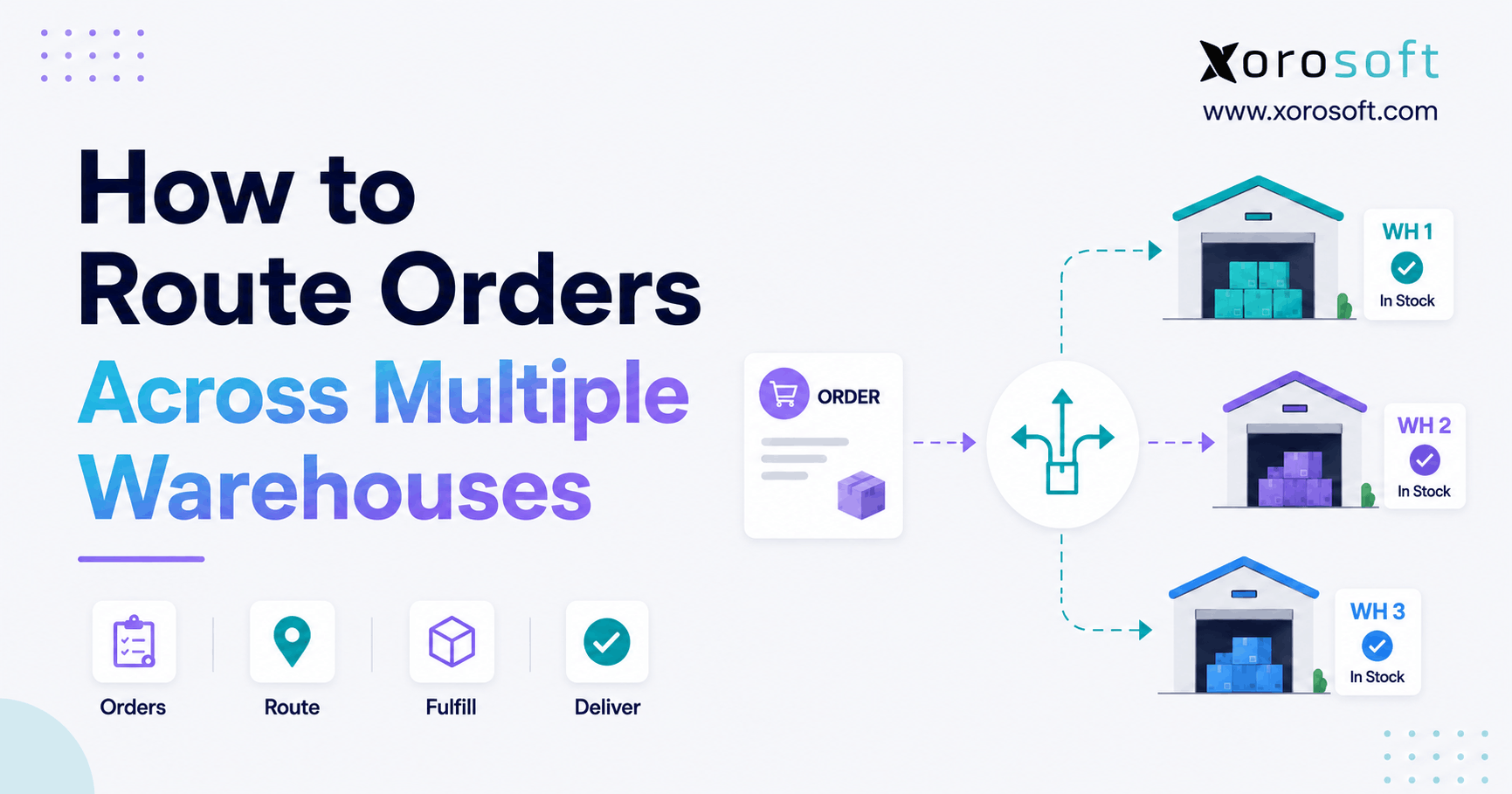
Order routing decides where an order should ship from. A simple workflow may assign all orders to one default warehouse. However, that approach becomes inefficient as locations increase.
Better routing considers stock availability, customer location, shipping cost, warehouse workload, channel requirements, and delivery promise. Therefore, brands need rules that balance speed, margin, and inventory availability.
When routing depends on manual decisions, teams may ship from the wrong location, split orders unnecessarily, or miss lower-cost fulfillment options.
5.3 Why Transfers and Replenishment Need Better Warehouse Visibility
Transfers can solve inventory imbalance. However, they also create more warehouse work.
A transfer must be created, picked, packed, shipped, received, and reconciled. If the process is informal, stock may disappear between locations or arrive too late to meet demand.
Therefore, replenishment planning should connect demand forecasting, warehouse capacity, purchasing, and current stock by location.
5.4 A Practical Checkpoint for Ecommerce Warehouse Management Challenges
If your team cannot answer these questions quickly, the warehouse process needs attention:
- Where is each SKU available right now?
- Which units are already allocated?
- Which inventory is damaged, returned, or quarantined?
- Which orders are delayed and why?
- Which warehouse should fulfill the next order?
- Which location needs replenishment first?
At this stage, many brands start comparing a standalone warehouse tool with a connected ERP. For warehouse-specific execution, XoroWMS is relevant because it focuses on real-time inventory tracking, omnichannel fulfillment, receiving, putaway, layout optimization, and warehouse labor tracking.
6. Ecommerce Channel Integration and Warehouse Management Issues
Ecommerce warehouse management challenges become more difficult when sales channels do not share the same operational data.
Shopify, Amazon, wholesale, EDI, retail, 3PL, accounting, and warehouse tools may each hold a different piece of the truth. However, the warehouse needs one reliable view of orders, inventory, allocations, and fulfillment status.
6.1 Why Shopify Inventory Sync Creates Warehouse Management Issues
Shopify can support inventory workflows, but many growing brands add more systems around it. As a result, the challenge becomes keeping Shopify aligned with physical warehouse movement.
For example, warehouse stock may change after a cycle count. However, if that adjustment does not update Shopify quickly, customers may see inaccurate availability. Similarly, if a return is restocked in the warehouse but not reflected online, sellable inventory may stay hidden.
For Shopify merchants evaluating connected operations, the Xorosoft ERP Shopify App Store listing is a useful outbound reference because it shows support for order sync, real-time inventory sync, multi-location inventory, forecasting, reporting, Amazon, EDI providers, 3PLs, and ShipStation.
6.2 How Amazon and Marketplace Orders Add Ecommerce Fulfillment Challenges
Marketplace orders often come with strict expectations. Amazon, Walmart, eBay, and other platforms may require specific inventory feeds, fulfillment updates, delivery windows, or cancellation rules.
Therefore, warehouse teams need clear channel logic. They must know which orders came from which channel, what stock can be used, what shipping rule applies, and how updates flow back.
Without that integration, staff rely on exports, manual checks, and duplicate data entry.
6.3 Why Wholesale and EDI Orders Complicate Ecommerce Warehouse Operations
Wholesale orders create different warehouse pressure than direct-to-consumer orders. A wholesale customer may order cases, cartons, pallets, or bulk quantities. Meanwhile, DTC orders may require fast single-unit picking.
If both channels pull from the same stock pool, allocation becomes critical. Otherwise, ecommerce orders may consume inventory promised to wholesale customers, or wholesale orders may create stockouts online.
For brands that sell through several channels, XoroONE can be used as an internal link because it connects inventory, warehouse management, accounting, purchasing, manufacturing, ecommerce, EDI, reporting, and forecasting in one ERP environment.
6.4 How Disconnected Apps Create Ecommerce Warehouse Problems
Disconnected systems create hidden labor. A team may use Shopify for orders, QuickBooks for accounting, spreadsheets for purchasing, a warehouse app for picking, and another tool for EDI.
Each tool may solve one problem. However, the business still depends on people to connect the data. Consequently, errors appear between systems.
This is where many ecommerce warehouse management challenges become company-wide operating problems.
7. Returns Management Challenges in Ecommerce Warehouse Operations
Returns are not only a customer service issue. They are also a warehouse workload.
Every return may require receiving, inspection, disposition, restocking, refund processing, inventory adjustment, and accounting review. Therefore, returns can quietly consume labor, space, and cash.
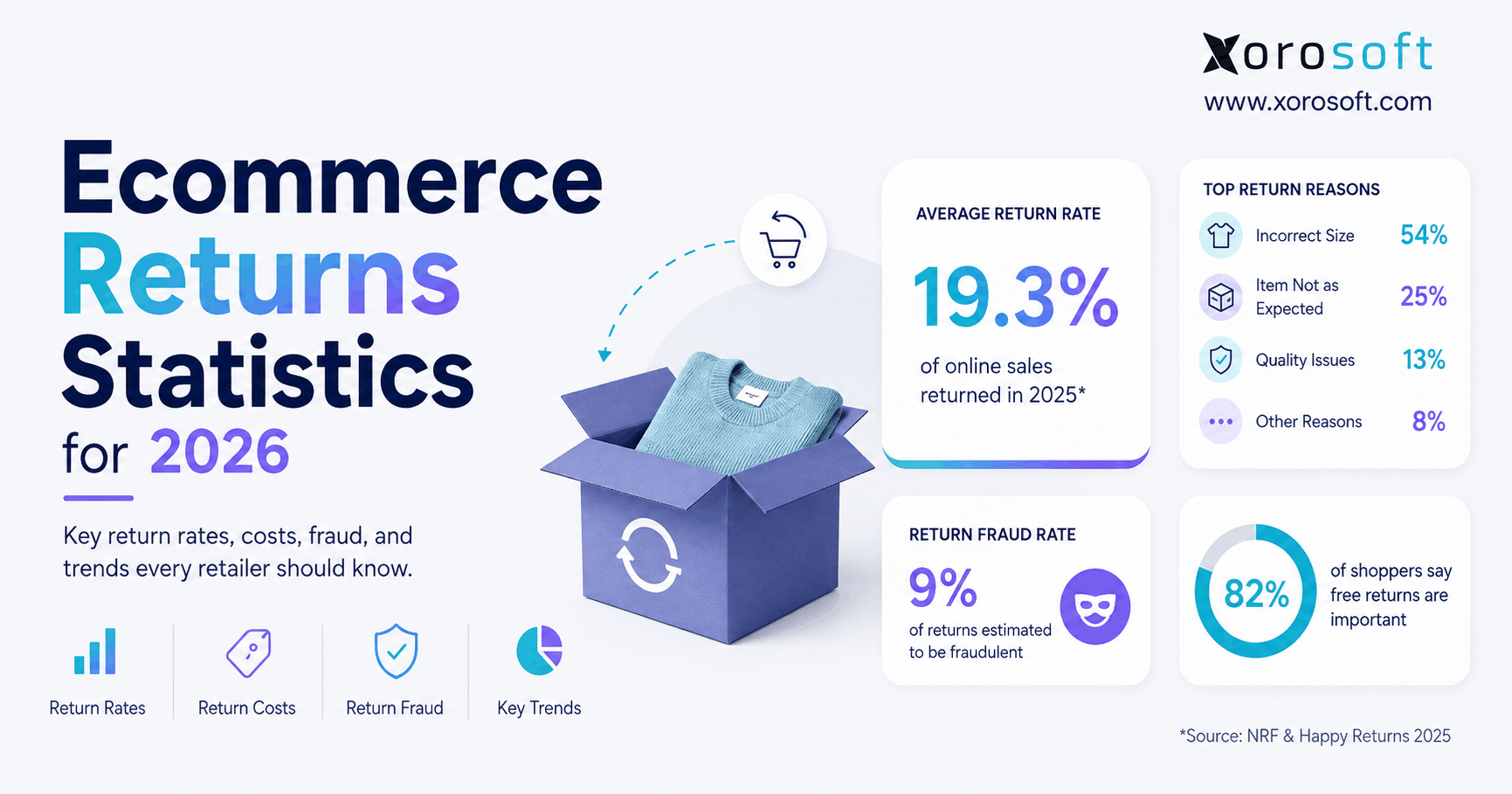
According to the NRF 2025 Retail Returns Landscape, total retail returns were projected to reach $849.9 billion in 2025, and an estimated 19.3% of online sales were expected to be returned. As a result, reverse logistics should be treated as a core warehouse process.
7.1 Why Returned Inventory Becomes an Ecommerce Warehouse Problem
Returned inventory creates uncertainty. Is the product new, opened, damaged, incomplete, expired, or ready to resell?
Because the answer is not always obvious, returned goods often sit in a holding area. Meanwhile, the system may not show them as sellable. Consequently, the business may buy more inventory even though usable stock is waiting to be processed.
This delay can create one of the most overlooked ecommerce warehouse management challenges: paying for more inventory while sellable returned stock remains unavailable.
7.2 How Fast Restocking Can Create Warehouse Management Issues
Slow returns processing hurts cash flow. However, restocking too fast creates a different risk.
If a damaged or incomplete item goes back into sellable stock, the next customer may receive a poor product. Then the business creates another return, another support issue, and another warehouse correction.
Therefore, returns need disposition rules. Items should move to restock, repair, quarantine, disposal, vendor return, or inspection based on condition.
7.3 Why Return Fraud and Damaged Goods Hurt Ecommerce Inventory Accuracy
NRF also reported that 9% of all returns were fraudulent in its 2025 returns research. Therefore, warehouse teams need structured checks instead of informal decisions.
Even when fraud is not involved, damaged goods still affect inventory accuracy. A product may physically exist, but it should not be available for sale. Because of that, sellable inventory must be separated from damaged, expired, or incomplete inventory.
8. Labor and Productivity Challenges in Ecommerce Warehouses
Warehouse performance depends on people, process, and systems. However, many ecommerce operations rely too heavily on tribal knowledge.
One person knows where difficult SKUs are stored. Another person understands special wholesale labels. Someone else knows which Shopify orders need manual review. Although this may work for a while, it becomes fragile as the team grows.
8.1 Why Tribal Knowledge Creates Ecommerce Warehouse Bottlenecks
Tribal knowledge slows the warehouse because new employees cannot work independently. They need to ask experienced staff where products go, how orders should be packed, and which exceptions matter.
As a result, experienced employees become bottlenecks. Managers spend more time answering repeated questions. Meanwhile, temporary peak-season labor creates even more variation.
A scalable warehouse needs documented workflows, clear bin locations, system-guided tasks, and measurable performance.
8.2 How Manual Work Reduces Warehouse Productivity in Ecommerce
Manual work adds small delays everywhere. Pickers may spend extra time searching for products. Packers often stop to verify order details manually. Managers may review exceptions in spreadsheets before work can continue. Later, someone still has to adjust inventory because the system does not match the shelf.
Individually, each delay may look minor. However, across hundreds or thousands of orders, the cost becomes significant.
For that reason, labor productivity should be measured through pick rate, order accuracy, receiving speed, return processing time, and exception volume.
8.3 Why Peak Season Exposes Ecommerce Fulfillment Challenges
Peak season rarely creates new warehouse problems. Instead, it exposes problems that already exist. Slow receiving becomes chaotic during high-volume weeks. Inefficient pick paths become harder for temporary labor to follow. Inventory inaccuracy also increases stockouts and overselling when demand spikes. Therefore, ecommerce warehouse management challenges should be fixed before peak season, not during it.
A better approach is to review warehouse workflows before demand rises. Then teams can improve slotting, staffing, barcode discipline, replenishment planning, and exception handling ahead of pressure.
9. Reporting and Warehouse Visibility Issues in Ecommerce
A busy warehouse is not always an efficient warehouse. Similarly, a fast warehouse is not always an accurate warehouse.
Leaders need reporting that shows what is happening now, not only what happened last month.
9.1 How Real-Time Dashboards Reduce Ecommerce Warehouse Problems
Delayed reports create delayed decisions. By the time leaders see picking errors, late shipments, receiving backlogs, or returns delays, customers may already feel the impact.
Real-time dashboards should show open orders, late orders, inventory variance, receiving backlog, returns backlog, pick progress, and order exceptions.
For this reason, reporting is one of the most important ecommerce warehouse management challenges for brands moving beyond founder-led operations.
9.2 Which Warehouse KPIs Reveal Ecommerce Fulfillment Challenges
Useful warehouse KPIs include:
| KPI | What It Measures | Why It Matters |
|---|---|---|
| Inventory accuracy | System stock vs physical stock | Shows whether teams can trust inventory data |
| Order accuracy | Correct orders shipped | Measures fulfillment quality |
| Pick rate | Items or orders picked per hour | Shows labor productivity |
| On-time shipment rate | Orders shipped by deadline | Tracks fulfillment reliability |
| Return processing time | Time to inspect and restock returns | Shows reverse logistics efficiency |
| Receiving cycle time | Time from arrival to available stock | Measures inbound speed |
| Stockout rate | Frequency of unavailable products | Shows demand and replenishment problems |
| Fulfillment cost per order | Labor, packaging, shipping, and handling cost | Shows margin pressure |
Because these KPIs connect warehouse activity to customer experience and profit, they should be reviewed regularly. Otherwise, leaders may only notice warehouse issues after customers complain.
9.3 Why Finance Teams Need Accurate Ecommerce Warehouse Data
Warehouse accuracy affects accounting. Incorrect physical stock can lead to incorrect inventory valuation. Damaged goods may also overstate assets when they remain marked as sellable. Delayed receiving creates another problem because purchase orders and inventory records may not match. Therefore, warehouse data should connect with financial data.
Without this connection, month-end close becomes slower. Reconciliation takes more effort, and leaders lose confidence in margins. As a result, ecommerce warehouse management challenges become finance challenges as well.
9.4 How Visibility Technology Supports Better Warehouse Management
Supply chain leaders are investing heavily in better systems. A 2025 MHI and Deloitte report, covered by Business Wire, found that 55% of supply chain leaders were increasing technology and innovation investment, while 60% planned to invest more than $1 million.
For ecommerce brands, the lesson is clear. Better warehouse visibility is no longer optional once volume, complexity, and customer expectations rise.
10. WMS vs ERP for Ecommerce Warehouse Management Challenges
Software decisions become difficult when warehouse problems overlap with inventory, purchasing, accounting, ecommerce, and reporting.
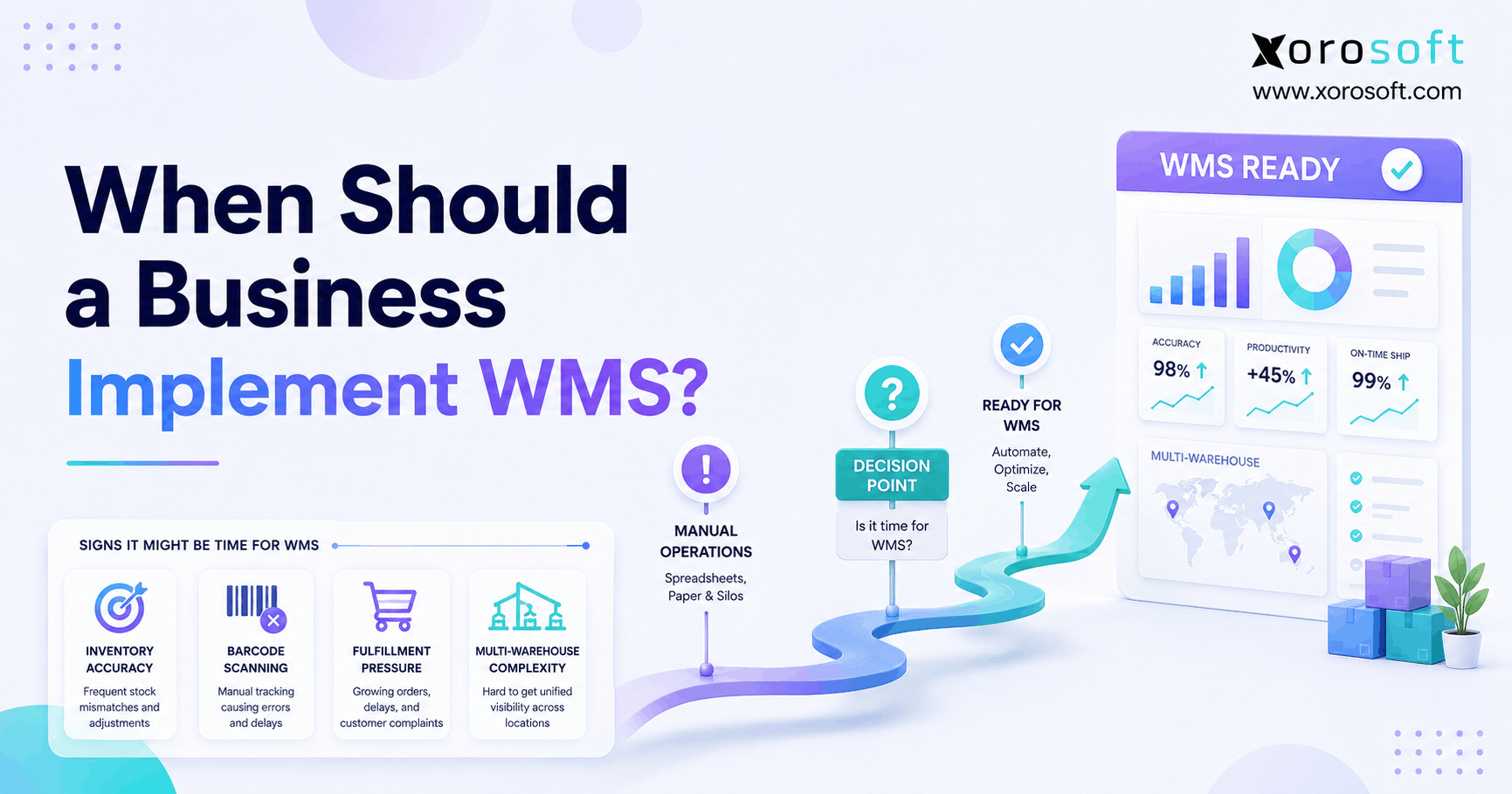
Some businesses need a WMS. Others need ERP. In many cases, the right answer depends on whether the problem is only warehouse execution or the entire operational system.
10.1 What a WMS Solves for Ecommerce Warehouse Management
A warehouse management system focuses on warehouse execution.
It usually supports receiving, putaway, bin locations, barcode scanning, picking, packing, shipping, cycle counting, transfers, and warehouse task management.
Therefore, a WMS is useful when the main problem is physical inventory movement inside the warehouse.
10.2 What ERP Solves Beyond Warehouse Management Challenges
An ERP connects warehouse work to the rest of the business.
That includes inventory, purchasing, accounting, forecasting, manufacturing, ecommerce, EDI, and reporting. Therefore, ERP becomes relevant when warehouse errors affect financial close, purchasing decisions, channel availability, and management visibility.
For businesses that need broader operational control, XoroERP is a natural internal link because it supports ERP workflows for inventory-driven companies, including manufacturing, warehouse operations, finance, and reporting.
10.3 WMS vs ERP for Ecommerce Warehouse Operations
| Capability | WMS | ERP |
| Receiving | Strong | Strong when warehouse functionality is included |
| Putaway | Strong | Strong when warehouse functionality is included |
| Picking | Strong | Strong when warehouse functionality is included |
| Packing | Strong | Strong when warehouse functionality is included |
| Shipping | Strong | Often connected to orders and inventory |
| Inventory control | Warehouse-focused | Business-wide |
| Purchasing | Limited or integrated | Strong |
| Accounting | Usually limited | Strong |
| Forecasting | Usually limited | Strong when included |
| Ecommerce integration | Varies | Strong when built for ecommerce |
| Reporting | Warehouse-focused | Cross-functional |
| Manufacturing | Usually limited | Strong when included |
| Multi-warehouse planning | Varies | Strong when inventory is centralized |
This comparison matters because ecommerce warehouse management challenges rarely stay inside one department. Once warehouse issues affect purchasing, finance, ecommerce availability, and reporting, a broader system may become necessary.
10.4 When Basic Tools Cannot Solve Ecommerce Warehouse Problems
A standalone warehouse app may solve picking and packing issues. However, it may not solve purchasing, accounting, forecasting, EDI, or multi-channel visibility.
If the brand is still stitching together QuickBooks, spreadsheets, warehouse tools, and ecommerce apps, it may need a broader system. In that case, comparison resources can help teams understand the difference between inventory tools, accounting tools, and ERP platforms.
For example, a brand evaluating inventory-heavy operations may find the Xorosoft vs Cin7 comparison useful. Similarly, a team that has outgrown accounting-led workflows can review Xorosoft vs QuickBooks to understand where accounting software stops and ERP starts.
11. How Growing Brands Solve Ecommerce Warehouse Management Challenges
The solution to ecommerce warehouse management challenges is not simply more labor. More people can help temporarily. However, if the process is weak, more people may also create more variation.
Instead, growing brands need cleaner workflows, stronger inventory controls, better system connections, and daily visibility.
11.1 How Standard Workflows Reduce Ecommerce Warehouse Problems
Standardization reduces confusion. Each warehouse workflow should have a defined process, owner, and system record.
| Workflow | Manual Process | Connected Process |
| Receiving | Staff check cartons manually | Purchase-order-based receiving validates quantities |
| Putaway | Items go wherever space exists | Bin rules guide location placement |
| Picking | Printed pick lists guide work | System tasks guide picking and confirm SKUs |
| Packing | Staff manually review orders | Barcode confirmation checks the order |
| Shipping | Labels are handled separately | Shipment status updates the order |
| Returns | Notes live in emails or spreadsheets | Disposition rules guide restocking |
| Reporting | Managers update spreadsheets | Dashboards show real-time exceptions |
Once workflows are standardized, managers can train faster, measure performance more clearly, and reduce repeat errors. In addition, the team can improve one process at a time instead of constantly reacting to emergencies.
11.2 How Barcode Scanning Improves Ecommerce Inventory Accuracy
Barcode scanning helps teams reduce mis-picks and manual adjustments. Bin-level control helps staff know exactly where inventory sits.
Together, these controls reduce search time, increase order accuracy, and improve cycle counting. In addition, they create a record of movement, which helps managers investigate errors.
Because ecommerce warehouse management challenges often begin with poor inventory visibility, barcode scanning gives teams a more reliable way to control physical stock.
11.3 Why Connected Systems Solve Warehouse Management Issues in Ecommerce
Warehouse management improves when it connects to the rest of the operation.
For example, purchasing needs accurate inventory before creating purchase orders. Finance needs accurate stock movement before closing the month. Ecommerce teams need real-time availability before taking orders. Meanwhile, warehouse managers need demand signals before labor planning.
Because of that, ecommerce warehouse management challenges should be solved as part of the operating system, not as isolated warehouse tasks.
11.4 How Industry Requirements Shape Ecommerce Warehouse Operations
Different product categories create different warehouse needs.
Apparel brands need size, color, and variant accuracy. Furniture brands need space planning and damage control. Food brands need lot tracking, expiration dates, and FIFO or FEFO discipline. Wholesale distributors need allocation, bulk picking, and customer-specific workflows. Manufacturers need raw material, BOM, work order, and finished goods visibility.
For broader industry context, the Industries We Serve page is a relevant internal link because it maps operational needs across apparel, footwear, beauty, home goods, manufacturing, distribution, food and beverage, and sporting goods.
11.5 How Daily Reporting Reduces Ecommerce Fulfillment Challenges
Reporting should not only support monthly reviews. It should support daily decisions.
Every day, warehouse leaders should know which orders are late, which SKUs show variance, which returns need inspection, which purchase orders need receiving, and which warehouse locations are under pressure.
When teams review exceptions daily, small problems become easier to fix before they reach customers.
12. FAQ: Ecommerce Warehouse Management Challenges
12.1 What are ecommerce warehouse management challenges?
Ecommerce warehouse management challenges are the operational issues that prevent online brands from receiving, storing, picking, packing, shipping, and returning inventory accurately. These challenges often include inventory discrepancies, picking errors, poor warehouse visibility, delayed receiving, slow returns processing, overselling, multi-warehouse confusion, and disconnected ecommerce systems.
12.2 Why is warehouse management difficult for ecommerce brands?
Warehouse management becomes difficult because ecommerce brands handle many SKUs, fast orders, returns, sales channels, and fulfillment rules. As a result, inventory must stay accurate across Shopify, Amazon, wholesale, EDI, retail, and warehouse locations. Without real-time visibility, errors increase.
12.3 What causes inventory errors in ecommerce warehouses?
Inventory errors usually come from manual receiving, poor putaway, missing barcode scans, wrong bin locations, delayed stock updates, damaged goods, returns confusion, and manual adjustments. In addition, disconnected systems make errors more likely because different tools may show different inventory numbers.
12.4 How do warehouse mistakes affect ecommerce profitability?
Warehouse mistakes reduce profit through refunds, replacement shipments, support tickets, return labels, extra labor, and lost repeat purchases. Also, inaccurate inventory can cause overbuying, stockouts, and poor cash flow. Therefore, warehouse errors affect both fulfillment cost and revenue.
12.5 What is the biggest warehouse challenge for Shopify brands?
The biggest challenge is often keeping Shopify inventory aligned with physical warehouse inventory. If receiving, returns, transfers, cycle counts, and order allocations do not update quickly, Shopify may show inaccurate availability. Consequently, customers may place orders that cannot be fulfilled.
12.6 How can ecommerce brands reduce picking errors?
Brands can reduce picking errors with barcode scanning, clear bin labels, better SKU naming, optimized pick paths, packing verification, and system-guided picking. Also, managers should track picking errors by product, picker, zone, and order type to find repeat causes.
12.7 What is the difference between inventory management and warehouse management?
Inventory management focuses on what stock exists, how much is available, when to reorder, and how inventory affects purchasing and finance. Warehouse management focuses on where stock is stored and how it physically moves through receiving, putaway, picking, packing, shipping, and returns.
12.8 What is the difference between WMS and ERP?
A WMS manages warehouse execution, including receiving, putaway, picking, packing, shipping, and bin control. ERP connects warehouse activity with inventory, accounting, purchasing, forecasting, ecommerce, manufacturing, and reporting. Therefore, ERP is broader than WMS.
12.9 When should an ecommerce brand stop using spreadsheets?
A brand should stop relying on spreadsheets when inventory errors, delayed orders, manual updates, stockouts, overstock, or reconciliation work become routine. Spreadsheets may work early. However, they become risky once several teams, locations, and channels depend on accurate real-time data.
12.10 How does multi-warehouse management affect fulfillment?
Multi-warehouse management affects fulfillment because teams must know where inventory is available, which warehouse should ship each order, and when transfers are needed. Without location-level visibility, brands may ship from the wrong warehouse or miss faster fulfillment options.
12.11 Why do ecommerce brands oversell products?
Ecommerce brands oversell when online availability does not match physical inventory. This may happen because of delayed stock updates, manual adjustments, receiving delays, poor allocation rules, unprocessed returns, or disconnected systems across Shopify, marketplaces, wholesale, and warehouse tools.
12.12 How do returns affect warehouse operations?
Returns add receiving, inspection, disposition, restocking, refund, and inventory adjustment work. If returns are processed slowly, sellable stock stays unavailable. However, if returns are restocked too quickly, damaged or incomplete products may be shipped again.
12.13 What warehouse KPIs should ecommerce brands track?
Important warehouse KPIs include inventory accuracy, order accuracy, pick rate, on-time shipment rate, receiving cycle time, return processing time, stockout rate, backorder rate, fulfillment cost per order, and inventory turnover. Together, these metrics show speed, accuracy, cost, and reliability.
12.14 What is barcode scanning in warehouse management?
Barcode scanning uses product, bin, carton, or order barcodes to confirm warehouse movement. It helps teams validate receiving, putaway, picking, packing, transfers, cycle counts, and returns. Therefore, barcode scanning reduces reliance on memory and manual entry.
12.15 How does ERP help ecommerce warehouse management?
ERP helps ecommerce warehouse management by connecting warehouse activity with inventory, purchasing, accounting, forecasting, ecommerce, EDI, manufacturing, and reporting. As a result, teams can reduce duplicate data entry and make decisions from one source of operational truth.
12.16 Do small ecommerce brands need warehouse management software?
Not always. A small brand with low order volume, few SKUs, and one storage area may not need advanced warehouse software yet. However, once volume, SKUs, channels, returns, or warehouses increase, structured warehouse workflows become more important.
12.17 What industries face the most ecommerce warehouse challenges?
Industries with variants, seasonality, bulky goods, expiry dates, or wholesale requirements usually face more warehouse complexity. Examples include apparel, footwear, furniture, sporting goods, food and beverage, wholesale distribution, consumer products, manufacturing, automotive parts, and industrial distribution.
12.18 How does poor warehouse visibility affect purchasing?
Poor visibility causes purchasing teams to reorder too late, buy too much, or trust inaccurate stock levels. If buyers cannot see available, reserved, inbound, damaged, and returned stock, replenishment decisions become reactive instead of planned.
12.19 How can ecommerce brands improve fulfillment speed?
Brands can improve fulfillment speed by organizing bin locations, using barcode scanning, optimizing pick paths, reducing receiving delays, improving order routing, standardizing packing workflows, and connecting warehouse updates with ecommerce channels in real time.
12.20 What should brands look for in ecommerce warehouse software?
Brands should look for real-time inventory visibility, barcode scanning, bin locations, receiving, putaway, picking, packing, shipping, returns, cycle counting, multi-warehouse support, Shopify integration, marketplace support, EDI workflows, reporting, and accounting or ERP integration.
12.21 How do Shopify, Amazon, and EDI orders complicate warehouse management?
Each channel can have different order rules, labels, ship windows, inventory feeds, and fulfillment expectations. If these orders flow into separate systems, warehouse teams must manage exceptions manually. Therefore, integrated order and inventory workflows become important.
12.22 What are common warehouse mistakes during peak season?
Common peak-season mistakes include late receiving, poor temporary staff training, misplaced inventory, inaccurate stock counts, missed carrier cutoffs, rushed packing, higher picking errors, returns backlogs, and weak communication between warehouse, ecommerce, and customer support teams.
12.23 How does warehouse management affect cash flow?
Warehouse management affects cash flow through inventory accuracy, stockouts, overstock, returns, fulfillment costs, and purchasing decisions. Poor warehouse control can tie cash up in excess inventory while still causing missed sales on products customers want.
12.24 What are signs a brand has outgrown basic inventory software?
Signs include frequent manual workarounds, inaccurate inventory, multiple spreadsheets, disconnected accounting, weak purchasing visibility, multi-warehouse confusion, Shopify sync issues, delayed fulfillment, poor reporting, and operational decisions that depend on one or two people’s memory.
12.25 What is the best way to solve ecommerce warehouse management challenges?
The best way to solve ecommerce warehouse management challenges is to standardize warehouse processes, improve inventory accuracy, use barcode scanning, track bin-level stock, connect ecommerce channels, improve purchasing and forecasting, and review real-time operational reports daily.
13. Final Thoughts: Build a Warehouse Operation That Can Keep Up
Ecommerce warehouse management challenges usually appear because the business has grown beyond its original operating model. The team adds SKUs, channels, warehouses, returns, wholesale customers, suppliers, and staff. However, the warehouse process often stays the same for too long.
As a result, inventory errors, fulfillment delays, overselling, overstock, stockouts, and poor reporting start to appear more often.
The answer is not simply to push the warehouse team harder. Instead, growing brands need clearer workflows, stronger inventory controls, better system connections, and reporting that shows problems before customers feel them.
For brands that have outgrown spreadsheets, QuickBooks, disconnected apps, or inventory-only tools, Xorosoft can be evaluated as a cloud ERP option that connects warehouse management with inventory, accounting, purchasing, forecasting, ecommerce, EDI, manufacturing, and reporting.
If warehouse errors, inventory discrepancies, fulfillment delays, or disconnected systems are slowing growth, Book a demo to see how a connected ERP workflow can support your next stage of operations.