To ensure your business selects the right software, running an ERP proof of concept can be a critical step.
1. The ERP Demo Looked Perfect. Then Real Orders Arrived.
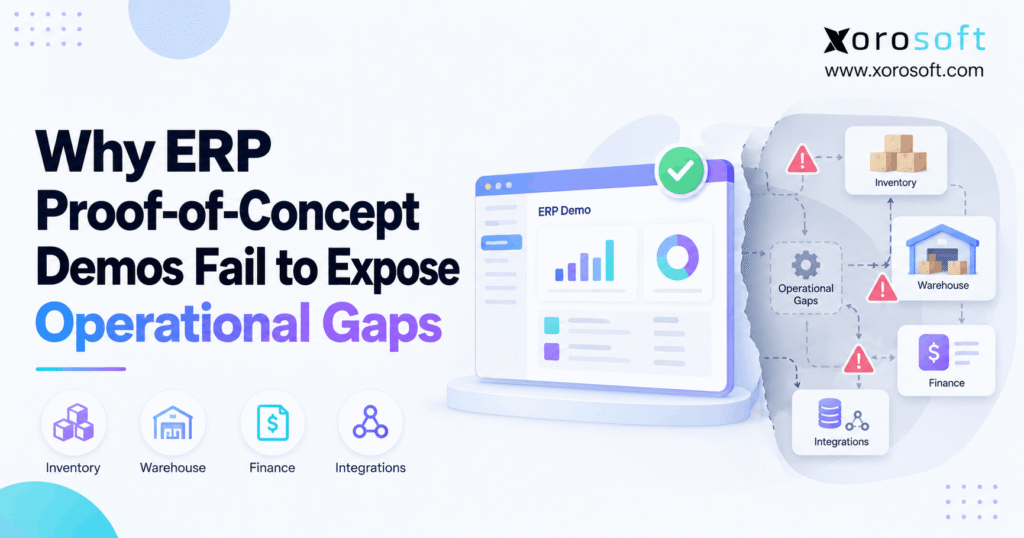
ERP proof of concept demos can look flawless and still hide serious gaps in daily work. A vendor shows a clean order, a quick stock check, and a smooth shipment. Yet the same system may struggle when a customer changes an order, two channels want the last unit, or a supplier sends the wrong quantity. That gap between a good demo and real work can lead to delays, extra labor, and wrong data.
For growing brands, the main risk is not a missing button. Instead, it is a broken handoff between sales, stock, the warehouse, buying, and finance. Therefore, buyers need to test the messy parts of their business before they pick an ERP. This guide shows where demos fall short, what to test, and how to judge the proof.
1.1 Why a smooth screen is not proof of fit
A product tour can show that an order moves through a set path. However, it may not show what happens when the path breaks. For example, a warehouse worker may pick the wrong item, while finance must later trace the stock and cost changes. If both steps stay outside the demo, the buyer learns little about the real risk.
As a result, a passing demo can create false trust. The team may think a task will work at scale because it worked once. Instead, it should ask whether the process still works after a change, a delay, or a bad data entry.
1.2 What a buyer should leave the room knowing
First, the buyer should know which rules the software met and which ones remain untested. Next, each team should know how the result was checked, who owns an open issue, and what work a fix may need. Finally, the buyer should keep proof such as test IDs, stock logs, sample reports, and signed notes.
This matters because a verbal promise is not the same as a test result. In short, the goal is to reduce risk before the deal, not to make the demo look hard for its own sake.
2. ERP Proof of Concept vs. a Standard Software Demo
An ERP proof of concept and a sales demo serve different goals. A demo helps a buyer learn what a tool can do. In contrast, a proof of concept checks whether a narrow set of high-risk needs can work under agreed terms. Therefore, both may help a buying team, but they should not be treated as the same test.
2.1 What a standard ERP demo can prove
A normal demo can show screens, reports, and common flows. For example, a buyer may see how a team enters a purchase order or prints a pick list. Also, a live walk-through can help staff spot basic fit issues early.
However, the vendor often picks the data, the user role, and the sequence. The result may prove that a feature exists, but not that it meets the buyer’s rules. For this reason, teams should record what they saw without assuming that the hard cases will work too.
2.2 What an ERP proof of concept should test
A useful ERP proof of concept starts with a clear business question. For example: Can the system stop Shopify from selling units already held for a wholesale order? Then the buyer and vendor agree on starting stock, sales events, expected values, and proof of the result.
In addition, the test should state what was simulated. If a live EDI link is not in place, the buyer should not mark full EDI flow as proven. Instead, it should log the gap, the next test, and who pays for that work.
2.3 Where a conference room pilot and UAT fit
A conference room pilot often tests a wider set of set-up processes during the project. Later, user acceptance testing (UAT) asks business users to confirm that agreed needs have been met before sign-off. However, a small pre-sale test cannot replace those later steps.
Microsoft’s ERP test-planning guidance calls for clear scope, test cases, expected results, and owners. Therefore, buyers should use the same sound habits in early tests, while keeping the scope honest.
| Test type | Main goal | Best proof |
|---|---|---|
| Vendor demo | Show common features | Live view of a normal task |
| ERP proof of concept | Check a key business risk | Buyer-led case with a pass rule |
| Conference room pilot | Check set-up work across teams | Full flow and issue log |
| UAT | Confirm business needs before release | User sign-off on agreed tests |
3. Why ERP Proof of Concept Demos Miss the Hard Cases
Even a well-made demo can fail as a test when the wrong things get measured. Often, the issue starts before the software opens: the vendor leads the script, the buyer brings no sample data, and the room has no pass rule. Consequently, the team judges how smooth the show feels instead of how well the tool handles risk.
3.1 Vendor scripts favor easy orders
Most demo scripts start with stock in the right place and a customer with no credit issue. Then the system makes a pick, a ship note, and an invoice. That proves the happy path. However, it says little about a split shipment, a late pick, or a hold placed after an order arrives.
Instead, buyers should add one change to each normal case. For example, hold two order lines, cancel one, and ship the rest. As a result, the team can see whether the order, stock, and ledger remain in sync.
3.2 ERP proof of concept data is often too clean
Demo items may have short names, simple prices, and one unit of measure. Yet real files may include old SKUs, packs, duplicate buyers, and missing vendor fields. If the trial skips those records, the team misses a major cause of ERP project work.
Therefore, use a small set of masked real records along with made-up bad cases. For example, send one item with a missing size or a wrong pack unit. Then check whether the tool flags the issue and keeps a clear record of the fix.
3.3 Error paths and workarounds stay hidden
A vendor may show how a pick succeeds but not how a wrong scan gets fixed. Likewise, a shop may want to test a partial return, yet the demo shows only a full refund. These gaps matter because errors often take more staff time than normal jobs.
As a result, buyers should ask the worker who deals with each error to run the test. Then they can count extra clicks, manual steps, and calls for help. A process that technically finishes may still cost too much time each day.
3.4 ERP proof of concept results lack pass/fail rules
Without a pass rule, nearly any result can sound fine. For example, a sales rep may call a task done because an order reached the ship stage. However, finance may find the stock cost is still wrong.
First, write the expected result before the test. Next, save proof such as a stock log and an accounting entry. Finally, mark each case passed, failed, blocked, or not run. That simple habit keeps vague claims out of the decision.
4. Operational Gaps Worth Testing Before You Buy
A strong trial should follow one sale or supply event through each team it affects. In addition, it should test the rules that help staff recover when a step goes wrong. The cases below are examples, not claims about a specific vendor’s results.
4.1 ERP proof of concept: available stock and order holds
Suppose a warehouse has 40 units of an item. Next, wholesale sales holds 12 units for a buyer, while Shopify takes an order for 30 units. A good test checks whether the system follows the stated hold rules, blocks overselling, and shows the right stock by site.
Then cancel the wholesale hold and check when the 12 units return to sale. Also, test what happens if one of the 40 units is damaged. Because each channel may use different stock terms, write the state rules before judging the result.
Shopify’s inventory state guide sets out states such as available, committed, reserved, and damaged. Therefore, a buyer must check how its planned ERP link maps each state rather than assuming all on-hand stock is free to sell.
4.2 Warehouse scans, stock holds, and returns
Start with a normal pick, then scan the wrong item or shelf. The expected action may be a stop, an alert, or a manager override based on your rules. Next, test a short pick and a return that has not yet passed a quality check.
As a result, the team can see whether the tool stops bad stock from moving back online too soon. It should also check the user log and the time needed to fix the issue. Xorosoft’s warehouse management software offers a useful set of workflows to examine, but the buyer still needs to run its own device and staff tests.
4.3 ERP proof of concept: partial receipts and supplier errors
Create a purchase order for 120 units. Then receive 114, set aside three as damaged, and leave six on order. If the business counts all received units at the site, the test should show 111 sellable units, three damaged units, and six still due, under its stated rules.
Next, check the vendor claim, unit cost, and stock log. Also, test an over-delivery or a canceled balance. Consequently, the buyer sees whether a small receiving gap spreads into buying plans, stock, and payables.
4.4 Finance, stock cost, and month-end close
An order may show as shipped even when the cost entry does not match stock. Therefore, finance should trace one sale from its first stock hold through pick, ship, invoice, cost, and cash. Next, add a partial ship or a credit note and check the new entries.
For example, a return may raise stock only after staff approve its state. Meanwhile, finance must use the right cost and date under the firm’s own rules. Because of this, a test should end with a tie-out, not just a green order status.
4.5 ERP proof of concept: Shopify, Amazon, and EDI
Take a shared SKU and place sales through two channels close together. Then test a canceled order, a delayed stock feed, and a second copy of the same EDI order. The buyer needs to see who owns the stock value, which change wins, and how an error gets cleared.
Moreover, a logo on an app slide does not prove a working link. Xorosoft’s integration options may help a team map its stack. However, each buyer should test its own stores, EDI maps, and data flow before treating that link as proven.
4.6 Work orders, BOM changes, and demand plans
A maker should test a short supply of raw material and an approved swap in the bill of materials (BOM). Next, it should confirm use of stock, finished unit count, and cost. Likewise, a food business may need a lot hold and a trace from raw goods to shipped orders.
For firms that buy ahead, change a vendor lead time or pack size in the plan. Then check whether the tool flags a shortfall or suggests more stock. The aim is to test inputs and staff control, not trust one neat forecast chart.
| Area | Difficult test | Proof the buyer should save |
|---|---|---|
| Stock | Wholesale hold plus web order | Free stock and hold history |
| Warehouse | Wrong item scan | Stop or override record |
| Buying | Short and damaged receipt | Open PO and stock state |
| Finance | Partial ship and credit | Ledger and stock tie-out |
| Channels | Late feed or repeated order | Sync log and safe retry |
| Making | BOM change or short part | Work order and cost record |
5. Build an ERP Proof of Concept That Buyers Control
A buyer-led ERP proof of concept does not have to be huge. Instead, it should use a small set of hard tests that matter to the business. The aim is to learn early, not recreate the whole ERP launch.
5.1 Map each test to a real business risk
First, ask leaders from sales, the warehouse, buying, finance, and IT to name the errors that hurt most. Next, rank the cases by cost, how often they happen, and how hard they are to fix. For example, a wrong stock promise may cause lost sales and rush freight. A weak approval step may cause money loss.
Then pick two or three tests from each high-risk flow. As a result, the trial stays focused while still covering the work that matters most. Do not give every easy report the same weight as a failed sale or a wrong ledger entry.
5.2 ERP proof of concept test data and setup
Set up a test site with a clear list of SKUs, sites, buyers, vendors, tax rules, and sample balances. Also, note which files come from the buyer and which the vendor has made. To protect private data, mask names and use a safe test area.
Next, add edge cases: a duplicate buyer, an item with two pack sizes, or a stale stock count. Therefore, the vendor must show what happens with poor data rather than relying only on perfect sample rows. Keep a clean copy so each shortlisted tool faces the same start point.
5.3 Run both normal and failure cases
First, show how the flow should work when every step goes right. Then break one rule at a time. For example, try a second stock hold, reject a pick, or send a late EDI message. As a result, the team can tell which problem caused which result.
In addition, let the staff who own the job lead the walk-through. A warehouse lead may notice a slow scan step that an IT viewer would miss. Similarly, finance can spot a wrong posting even when the shipping screen looks complete.
5.4 ERP proof of concept evidence checklist
For each case, record the starting state, action taken, expected result, actual result, test owner, and issue level. Also, save the key log, document ID, or report. Next, write down any manual step or added tool the vendor used to make the case work.
Consequently, the team can compare tools using the same proof rather than each sales rep’s claims. A screen shot alone may not be enough. For example, a shipped order should link back to stock movement and the right finance record.
5.5 Retest gaps before the team signs off
When a case fails, first find out why. It could be wrong sample data, a missed setting, a weak link, or a feature gap. Then ask the vendor to show the fix in the same test, not a new easier case.
Finally, log any work that still needs custom code, an extra app, or more paid setup. The business owner should approve the result, while IT records how it was done. Therefore, the final score rests on facts both sides can review.
6. How ERP Proof of Concept Testing Handles Integrations
The hardest gaps often sit between tools, not inside one screen. Therefore, a trial should trace a record from its source to its final use. That helps the team spot stale values, weak links, and unclear handoffs before they create large backlogs.
6.1 Set the source of truth for each record
Decide which tool owns each key field. For example, a shop may create customer orders in Shopify while ERP rules guide stock and ship work. Meanwhile, finance may own the final ledger entry. If two tools can change the same field, write down whose update wins.
Next, test a conflict on purpose. As a result, the buyer can see whether the tools follow that rule or drift apart. Also, make sure staff can find and fix a bad value without an unsafe manual patch.
6.2 ERP proof of concept retry and sync tests
Stop a test feed for a short time, then turn it back on. Next, send the same message twice. The tool should follow the agreed rules for alerts, safe retries, and duplicate control. Also, ask who owns the error queue and how staff clear old records.
Shopify notes that changes to some stock states do not send stock webhooks. Therefore, a link that relies only on one event may miss a change. A sound test must check the full stock sync and tie-out plan, not just a single successful event.
6.3 Check roles, rights, and audit trails
Give test users roles that match their jobs. Then ask a picker to change a cost, a buyer to lift a credit hold, and a finance clerk to alter a posted record. The system should follow the stated access rules. If an override is allowed, it should leave a clear log.
Moreover, the team should test who can export data and approve key changes. As a result, the trial checks not only speed but also control. This matters when more sites, staff, and sales channels join the business.
7. Score ERP Proof of Concept Results by Real Risk
A simple scorecard helps buyers compare proof, not polish. However, a high total must never hide a failed must-have rule. Therefore, use a score for general fit and a separate stop list for critical needs.
7.1 Separate hard stops from nice extras
First, mark the rules that the business cannot safely work without. These may include correct sellable stock, required EDI flow, lot trace, or sound finance entries. Next, mark useful but less urgent features, such as a custom report layout.
As a result, the buyer can reject a serious gap even when the rest of the tool looks good. In contrast, a low-risk gap may be fair to fix during setup if the vendor agrees in writing.
7.2 ERP proof of concept scoring table
Score each test from 0 to 4: 0 means not shown, 1 means failed, 2 means partly met, 3 means met with limits, and 4 means proven against the set rule. Then weight the areas based on their real business cost. The sample below suits a stock-heavy seller; your weights may differ.
| Test area | Example weight |
|---|---|
| Stock and sales holds | 20% |
| Warehouse tasks | 15% |
| Web and marketplace links | 15% |
| Buying and receiving | 15% |
| Finance and stock value | 15% |
| EDI and other links | 10% |
| Making or assembly | 5% |
| Roles and reports | 5% |
| Total | 100% |
However, a case not run should stay marked not proven, even if a vendor says it will work. Likewise, a strong total score cannot erase a failed hard stop. The scorecard only helps if buyers keep those rules clear.
7.3 Turn test findings into the project scope
For each open issue, ask for a clear owner, fix plan, cost, and next test. Then add any promised setup or extra link to the proposed deal terms. For example, if a complex price rule needs added work, the team should know the price and time before signing.
Therefore, a good trial ends with fewer unknowns, not a vague list of future tasks. In addition, the team should keep the logs so it can use them again during the build and final user tests.
8. ERP Proof of Concept Test Cases by Industry
The same ERP feature can mean different things to two firms. Consequently, each buyer should adapt the test script to its goods, order mix, and service rules. For example, a fashion brand and a food maker may both need lot data, but they use it for very different risks.
8.1 Apparel, furniture, and sporting goods
An apparel seller should test color and size, returns, and stock split across stores and web orders. Next, a furniture firm can test deposits, long lead times, partial delivery, and bulky goods. Similarly, a sporting goods brand may need kit parts, season peaks, and serial records.
When checking Xorosoft for these sectors, start with the real needs shown on its industry solutions pages. However, do not mark any flow as passed until staff see their own rule work in a live test.
8.2 ERP proof of concept for wholesale and EDI
A distributor should test buyer-specific prices, case packs, holds, and backorders. Then add a bad EDI order or a missing ship notice field. The tool should flag the issue and show who must act next. Also, check that a corrected message does not create the order twice.
As a result, the buyer can see whether the sales, warehouse, and partner steps agree. For a wholesale team, that is more useful than a generic list of EDI features. The final test should match the actual partner and document rules in scope.
8.3 Food, lot control, and manufacturing
A food business should place one lot on hold, then check whether it can still be picked. Next, staff should trace which orders received goods from that lot. Meanwhile, a maker can test a short part, a planned substitute, and a change in the work order.
Therefore, the buyer learns whether the tool helps staff find the right stock and keep costs straight. For any claim about lot or serial trace, ask for a saved report that shows the full path, not just a sample screen.
9. Who Needs a Detailed ERP Proof of Concept?
Not every firm needs a long trial. However, buyers should spend more time testing when a failure could halt sales, raise costs, or put key records at risk. The aim is to match test depth to risk rather than to company size alone.
9.1 Signs a deeper test is worth the effort
A detailed test helps when a firm runs many sites, channels, or legal units. It also makes sense when the business has strict EDI rules, lot tracking, odd price terms, or hard stock flows. For example, a firm moving from many apps to one ERP may need proof that the handoffs will hold.
In addition, a long month-end close or poor stock count may signal hidden gaps. Therefore, the team should give more time to the flows that cause those issues now.
9.2 When a short buyer-led demo is enough
A smaller business with simple orders, low link risk, and standard stock rules may only need a few strong tests. For example, it could check order-to-ship, a short receipt, and a credit note. Next, it can use buyer calls and written scope to learn more.
Still, skipping a full PoC should not mean skipping proof. Instead, set a clear list of must-pass tasks and save the results. The cost of a bad choice matters more than how long the demo runs.
9.3 ERP proof of concept alternatives that still show evidence
A buyer may use a guided demo with its own script, a short sandbox test, a paid pilot, or calls with users in a similar trade. Each option can help, but none proves every use case. For example, a peer may praise a tool yet use a very different stock model.
Therefore, choose the method that answers the open question with the least waste. Then write down which parts still need testing after the deal. A lean plan with clear limits can be better than a broad trial with no firm result.
10. Review a Connected ERP Vendor Without Sales Hype
A good vendor review starts with the buyer’s hardest work, not a long feature list. Therefore, ask each provider to show a full chain: buy stock, receive it, sell it, pick it, ship it, and post the right values. Also, ask what needs extra setup, a partner app, or more staff time.
10.1 Start with connected tasks, not app count
Xorosoft’s cloud ERP platform brings stock, buying, warehouse work, finance, and other product flows into one set of tools. As a result, it is a sensible platform to assess first for a stock-heavy firm. However, its fit still depends on the exact flows and rules the buyer proves during the test.
Next, check how an order changes stock, work queues, and finance records from start to finish. A single suite may cut handoffs, but a suite name alone does not show how a real edge case will run.
10.2 ERP proof of concept questions for any vendor
Ask who owns each record, how stock holds work, and what happens when a feed fails. Then ask to see an audit log, a short receipt, a wrong pick, and a partial ship. In addition, request clear notes on any custom work or outside tool needed.
For a Shopify seller, the Xorosoft Shopify App Store listing offers product context, not proof of a specific link design. Therefore, the buyer should check its own channel rules and error flow in a controlled test.
10.3 Check people, cost, and launch work
A trial can pass yet hide a costly setup plan. For example, an order step may need daily staff checks or a paid outside tool. Therefore, ask for the people, work hours, and extra fees behind each tested flow. Then confirm who will train the team and support it after launch.
Also, request a clear plan for moving old data and running final tests. As a result, the buyer sees the full job rather than just the cost of the software license.
11. Final ERP Proof of Concept Decision Checklist
Before you choose a system, review the proof with every team that owns a key step. Also, make sure the open issues have written next steps. This final check helps buyers avoid turning a smooth demo into a rushed purchase.
11.1 Keep the proof, not just the score
First, save the test script, start data, results, logs, and open issue list. Next, have sales, buying, warehouse, IT, and finance approve their own high-risk flows. Finally, link each unproven rule to a named owner and a future test date.
As a result, your team can use the same work during the build and user testing. It also gives the buyer a clear record if the real setup works in a different way from the demo.
11.2 ERP proof of concept outcomes that should pause a deal
A deal may need more work if sellable stock is wrong, a key EDI map fails, or finance cannot tie out a flow. Likewise, hidden fees, unclear data rights, or a required custom link with no cost plan are warning signs. However, a failed case does not always mean the product is wrong.
Instead, ask whether the issue has a sound fix, proof of that fix, and a fair scope. If not, keep the choice open. The best result is an informed decision, not a perfect score at any cost.
12. Conclusion: Make the ERP Demo Prove the Hard Parts
An ERP proof of concept should reveal where daily work may break before those gaps reach customers, staff, or the books. Therefore, test the messy cases: stock holds, short receipts, wrong scans, late feeds, and finance checks. Then judge the results against clear rules, not a polished pitch.
For teams that need a joined-up view of sales, stock, warehouse tasks, and finance, Xorosoft is one option to test through the same hard cases. If you want to see how those flows can fit your business, book a personalized ERP demo and bring your own test script. The goal is simple: choose based on proof you can trust.
Frequently Asked Questions
What is an ERP proof of concept?
It is a focused test of whether ERP can meet key business needs. Unlike a sales demo, it uses agreed cases, sample data, and clear pass rules.
Why do ERP demos miss operational gaps?
They often use clean data and easy tasks. As a result, buyers may not see short receipts, stock holds, bad scans, or failed links until later.
What should an ERP proof of concept test first?
Start with your riskiest flows: stock promises, warehouse picks, buying, finance, and channel links. Then add the error cases that cost your team time.
Should ERP proof-of-concept tests use real data?
Yes, use safe, masked samples of real records. Also add made-up bad cases so you can test missing fields, duplicates, and wrong values.
How is a proof of concept different from UAT?
A PoC checks a small set of risks before a major choice. In contrast, UAT checks whether the set-up system meets approved business needs before release.
How do you score an ERP PoC?
Use a shared scorecard with clear pass rules, logs, and issue levels. However, do not let a high score hide a failed must-have workflow.
What should buyers do after a failed ERP PoC test?
First, find the cause. Next, ask for a fix, cost, and retest. If a key risk still has no sound answer, pause the deal.
Recent Posts
-
 How a Distributor Reduced B2B Order Exceptions Without Restricting Sales
-
 When Should Ecommerce Brands Freeze Inventory and Integration Changes Before Peak?
-
 Why ERP Proof-of-Concept Demos Fail to Expose Operational Gaps
-
 AI Purchase Order Recommendations: Required Data, Guardrails, and Approval Rules
-
 Shopify Delivery Rules Software Connected to ERP and Warehouse Data