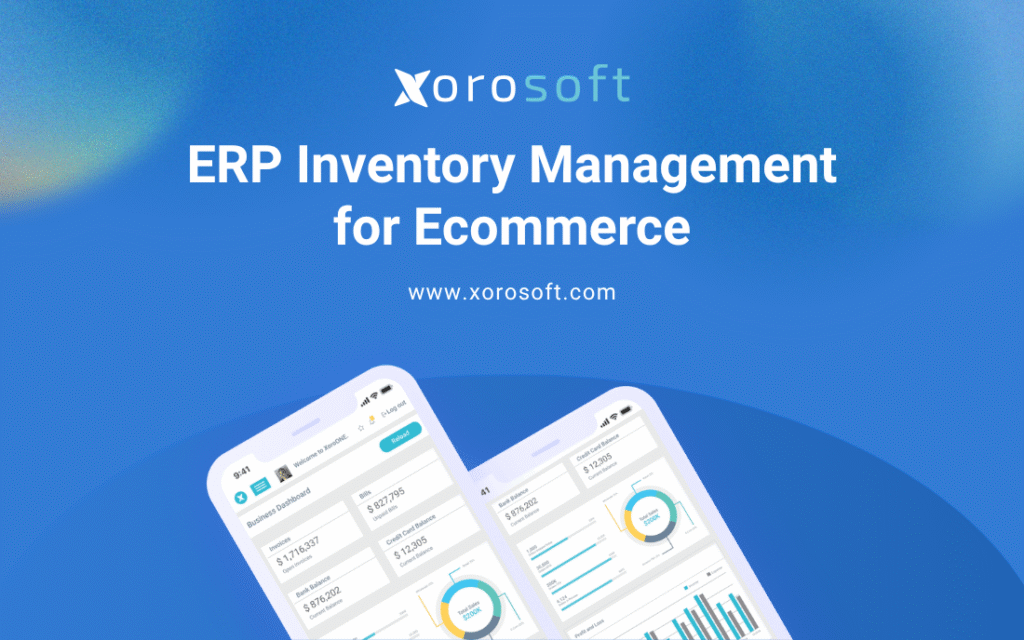
If you’re looking for a solution to streamline operations and manage stock, Inventory ERP for ecommerce businesses can offer a comprehensive approach that integrates all your processes efficiently.
1. A Smarter Way to Control Inventory ERP for Ecommerce
Inventory ERP for ecommerce becomes important when a growing brand can no longer trust scattered stock numbers across Shopify, Amazon, warehouses, accounting tools, spreadsheets, and purchasing files. At first, a simple ecommerce setup may work. However, as order volume increases, inventory becomes harder to control.
A brand may have products in one warehouse, inbound purchase orders from suppliers, units committed to wholesale customers, stock sitting with Amazon, and items listed as available on Shopify. As a result, the question is no longer just, “How many units do we have?” Instead, the better question becomes, “How many units can we actually sell, from which location, through which channel, without creating fulfillment or accounting problems?”
That is where ERP enters the conversation. An ERP system connects inventory, orders, purchasing, warehouses, accounting, and reporting into one operational system. Therefore, every team can work from the same data instead of relying on separate tools.
This guide explains what inventory ERP for ecommerce means, why ecommerce inventory breaks as brands grow, when ERP becomes necessary, and how product-based businesses can choose the right system without rushing into the wrong software.
2. What Is Inventory ERP for Ecommerce?
Inventory ERP for ecommerce is a business management system that connects ecommerce inventory with orders, purchasing, warehouse workflows, accounting, forecasting, and reporting. In simple terms, it helps product-based businesses manage stock across sales channels, warehouses, suppliers, and finance from one central system.
For many brands, Shopify, Amazon, and other selling platforms are excellent for taking orders. However, the backend operation must answer deeper questions.
For example:
- What inventory is available to sell?
- What inventory is already committed?
- What inventory is inbound from suppliers?
- Which warehouse should fulfill each order?
- What needs to be reordered?
- What is the true landed cost?
- How does inventory movement affect accounting?
- Which SKUs are profitable?
Basic inventory apps can answer some of these questions. However, they usually do not manage the full chain from purchasing to warehouse execution to accounting. ERP is broader because it connects inventory activity with the financial and operational records behind the business.
As a result, inventory ERP for ecommerce becomes more than a stock tracker. It becomes the operating system behind the ecommerce brand.
2.1 Simple Definition of Inventory ERP for Ecommerce
Inventory ERP for ecommerce is software that helps online brands manage inventory, purchasing, fulfillment, warehouse activity, accounting, and reporting in one connected platform.
Instead of checking one tool for Shopify orders, another tool for warehouse activity, another spreadsheet for purchasing, and another system for accounting, teams can use one system of record.
This matters because ecommerce inventory is not just a warehouse issue. It affects customer experience, cash flow, margins, purchasing, finance, and leadership decisions.
2.2 How ERP for Ecommerce Inventory Differs From Basic Inventory Software
Basic inventory software usually focuses on stock counts. It may help with SKUs, quantities, simple purchase orders, and channel sync. For smaller businesses, that may be enough.
However, ERP goes further. It connects inventory to:
- Sales orders
- Purchase orders
- Warehouse workflows
- Accounting
- Forecasting
- Reporting
- Manufacturing
- Wholesale
- EDI
- Multi-channel operations
Therefore, ERP for ecommerce inventory is better suited for businesses where inventory affects the entire company, not just the warehouse.
2.3 Why Ecommerce Brands Use ERP as an Operational System
Ecommerce brands use ERP because disconnected systems create operational blind spots. For example, sales may think inventory is available, while the warehouse knows it is already committed. Meanwhile, purchasing may reorder too late because open sales orders, supplier lead times, and inbound stock are not visible in one place.
An ERP helps centralize these workflows. In addition, it gives leadership a clearer view of what is happening across the business.
For inventory-driven brands, platforms such as XoroERP are designed to connect inventory, accounting, purchasing, warehouse management, and reporting in one cloud ERP environment.
3. Why Ecommerce Inventory Breaks as Brands Grow
Ecommerce inventory usually breaks slowly. A brand rarely notices the problem on day one. Instead, each new sales channel, warehouse, supplier, product line, marketplace, or wholesale customer adds another layer of complexity.
At the beginning, one Shopify store, one warehouse, and one accounting file may feel manageable. Then Amazon is added. After that, wholesale starts growing. Later, the brand works with a 3PL. Eventually, the business opens another warehouse or begins assembling kits and bundles.
Each step creates more operational questions. Consequently, the business needs more than simple stock tracking.
3.1 Sales Channels Multiply Faster Than Operations
Sales channels often grow faster than backend systems. Shopify may work well at first. Then the brand adds Amazon, wholesale, retail, EDI, and marketplace selling.
However, each channel has different inventory requirements. Shopify may need fast stock updates. Amazon may require separate replenishment planning. Wholesale customers may need reserved inventory. EDI customers may need specific fulfillment rules.
Without a central system, each channel becomes its own operational silo.
3.2 Why Ecommerce Inventory ERP Data Becomes Fragmented
Inventory data becomes fragmented when every department uses a different tool. The warehouse may use one app. Finance may use QuickBooks. Purchasing may use spreadsheets. Sales may rely on Shopify. Meanwhile, leadership may receive reports that are already outdated.
As a result, nobody fully trusts the numbers.
This is one of the biggest reasons brands begin looking for ecommerce inventory ERP. They do not just need more data. Instead, they need one reliable version of the truth.
3.3 Teams Start Making Decisions From Stale Numbers
Stale inventory data creates bad decisions. Purchasing may reorder products that are already inbound. Sales may promise inventory that is already committed. Finance may close the month with incorrect inventory values.
In addition, warehouse teams may waste time checking shelves manually because the system cannot be trusted.
Eventually, the company spends more time fixing data than improving operations.
3.4 Finance, Warehouse, and Purchasing Stop Working From the Same Truth
Inventory touches multiple departments. Therefore, a small inventory error can create a larger business problem.
For example, if receiving is delayed, available inventory may be wrong. If available inventory is wrong, sales channels may oversell. If orders oversell, the warehouse cannot fulfill on time. Finally, finance may need to reconcile the issue manually.
ERP helps by connecting each transaction across the business. Therefore, the same inventory movement can update operations, purchasing, and accounting together.
4. Ecommerce Inventory ERP Problems Growing Brands Face
Growing ecommerce brands usually face the same inventory problems. However, the root cause is often not poor effort. Instead, the root cause is disconnected systems.
4.1 How Inventory ERP for Ecommerce Helps Prevent Overselling
Overselling happens when a product is shown as available online, but the business does not actually have enough sellable stock. This often happens when inventory is spread across Shopify, Amazon, wholesale orders, warehouse apps, and spreadsheets.
For example, Shopify may show stock at one location, while a wholesale order has already committed part of that inventory. Meanwhile, Amazon may have a different number. Unless those numbers sync correctly, the brand risks selling the same unit twice.
Inventory ERP for ecommerce helps by separating quantity on hand, available inventory, committed inventory, and inbound inventory.
4.2 How Ecommerce Inventory ERP Reduces Stockouts
Stockouts happen when demand is higher than available supply. However, the real issue usually begins earlier.
A purchasing team may not see demand trends clearly. Supplier lead times may not be updated. Inbound purchase orders may not be visible. As a result, the team reorders too late.
Ecommerce inventory ERP helps by connecting sales demand with purchasing and forecasting. Therefore, teams can plan replenishment before stock runs out.
4.3 Overstock
Overstock is the opposite problem, but it can be just as damaging. Cash gets trapped in slow-moving products. Warehouse space gets crowded. Eventually, brands may need discounts or markdowns to clear inventory.
This often happens when teams purchase based on gut feel instead of demand signals. In addition, disconnected reports make it hard to see which SKUs are actually moving by channel, region, or customer type.
With better reporting, brands can make more disciplined purchasing decisions.
4.4 Demand Forecasting in Inventory ERP for Ecommerce
Forecasting is difficult when sales history, inventory, open orders, and purchasing data live in different places. As a result, brands often plan from incomplete information.
For example, Shopify demand may look strong, while wholesale demand may be slowing. Meanwhile, Amazon may require replenishment earlier because FBA inventory is running low.
Therefore, forecasting in inventory ERP for ecommerce must consider channel demand, supplier timing, seasonality, and current inventory position.
4.5 Multi-Warehouse Visibility in a Cloud ERP for Inventory Businesses
Multiple warehouses make inventory harder because availability is no longer one number. A product may be available in one warehouse but not another. It may be physically present but already committed. It may be in transfer, damaged, waiting for inspection, or reserved for wholesale.
As a result, brands need location-level inventory visibility.
This is where systems such as XoroWMS become useful for businesses that need warehouse workflows connected to inventory and fulfillment.
4.6 Manual Purchasing
Purchasing often starts in spreadsheets. At first, this may work. However, as SKUs, suppliers, lead times, and channels increase, spreadsheet purchasing becomes fragile.
A buyer may reorder too late because they missed a demand spike. Alternatively, they may reorder too much because inbound stock was not visible.
Therefore, purchasing must be connected to sales, inventory, suppliers, and forecasting.
4.7 Slow Fulfillment
Fulfillment slows down when warehouse teams cannot trust inventory locations, picking instructions, or order priority. In addition, manual workflows increase the risk of picking errors.
A connected ERP and warehouse workflow can improve receiving, picking, packing, transfers, and stock adjustments.
4.8 Inventory Valuation Issues
Inventory valuation becomes difficult when operations and accounting are disconnected. Finance teams need to know the value of inventory on hand, cost of goods sold, landed cost, and adjustments.
However, if stock movements are not reflected correctly in accounting, month-end close becomes slower and less reliable.
4.9 Delayed Month-End Close
Month-end close often slows down because finance has to reconcile inventory manually. They may need to check warehouse reports, purchase receipts, sales orders, returns, and adjustments across different systems.
As a result, leadership receives financial reports late. In addition, margin analysis becomes less reliable.
5. ERP for Ecommerce Inventory vs Inventory Software vs WMS
Ecommerce brands often confuse ERP, inventory software, and WMS. They overlap, but they are not the same.
| System Type | Main Purpose | Best For | Limitation |
|---|---|---|---|
| Inventory software | Tracks stock levels and basic movement | Smaller teams managing SKUs | Limited accounting, purchasing, and operational depth |
| WMS | Manages warehouse execution | Picking, packing, receiving, bin control | Usually does not manage finance or full ERP workflows |
| ERP | Connects inventory, orders, purchasing, warehouses, accounting, and reporting | Growing product-based businesses | Requires stronger implementation planning |
5.1 When Inventory Software Makes Sense
Inventory software can work well when the business has simple workflows. For example, one store, one warehouse, limited SKUs, and basic purchasing may not require ERP yet.
In that case, a lighter inventory tool may be enough. However, once inventory problems begin affecting finance, purchasing, fulfillment, and customer experience, the business may need a broader system.
5.2 When WMS Makes Sense
A WMS is useful when warehouse execution is the main pain point. If the business needs barcode scanning, bin locations, receiving, picking, packing, and warehouse transfers, a WMS may be required.
However, WMS does not always solve accounting, purchasing, forecasting, or sales-channel allocation. Therefore, WMS is strongest when connected to a broader ERP strategy.
5.3 When Inventory ERP for Ecommerce Makes Sense
Inventory ERP for ecommerce makes sense when inventory problems connect to the entire business. If stock issues affect purchasing, accounting, fulfillment, reporting, and customer commitments, then a standalone inventory app may not be enough.
Inventory ERP for ecommerce is especially useful when the brand needs one system to manage both operational movement and financial impact.
5.4 When an Ecommerce Inventory Management System Should Become Unified
An ecommerce inventory management system should become unified when disconnected tools create more work than they solve. For example, if the team has Shopify, QuickBooks, warehouse software, purchasing spreadsheets, EDI apps, and manual reports, then the company may spend too much time maintaining the stack.
In that situation, a connected platform such as XoroONE may be worth evaluating because it brings multiple operational workflows into one system.
6. Core Features of an Ecommerce Inventory ERP
A good ecommerce ERP should not only show inventory. It should help the business control inventory.
6.1 Real-Time Visibility in Inventory ERP for Ecommerce
Real-time visibility means the team can see what is on hand, what is available, what is committed, and what is inbound.
This is different from a static stock count. A useful system should show:
- Quantity on hand
- Available to sell
- Committed inventory
- Inbound purchase orders
- Warehouse transfers
- Reserved stock
- Damaged or unavailable stock
As a result, teams can make better decisions before problems reach customers.
6.2 Multi-Channel Inventory Sync With Ecommerce Inventory ERP
Ecommerce brands often sell through Shopify, Amazon, wholesale, EDI, retail, and marketplaces. Therefore, the ERP must help synchronize inventory across channels.
However, this does not mean every channel should receive the same quantity. Instead, the system should support rules for allocation, channel availability, and fulfillment priority.
For Shopify merchants, the Xorosoft ERP app on the Shopify App Store can be used as a relevant outbound reference when connecting ecommerce operations with ERP workflows.
6.3 Multi-Warehouse Control in a Cloud ERP for Inventory Businesses
Multi-warehouse control includes stock by location, transfers, bin movement, fulfillment routing, and warehouse reporting.
This matters because customers care about fast delivery, while operators care about accurate fulfillment and balanced stock.
For example, a brand may want to fulfill West Coast orders from one warehouse and East Coast orders from another. However, that only works if inventory availability is accurate by location.
6.4 Purchasing Automation
Purchasing automation helps teams create purchase orders based on reorder points, demand forecasts, supplier lead times, and stock availability.
This reduces spreadsheet dependency. In addition, it helps buyers make decisions from live data instead of outdated reports.
6.5 Demand Forecasting Inside ERP for Ecommerce Inventory
Forecasting helps ecommerce teams understand future demand. It should account for historical sales, channel trends, seasonality, promotions, supplier lead times, and current inventory.
Without forecasting, brands often swing between stockouts and overstock. Therefore, forecasting is one of the most important capabilities inside ERP for ecommerce inventory.
6.6 Warehouse Workflows
An ERP with warehouse capability should support receiving, putaway, picking, packing, transfers, cycle counts, and barcode scanning.
These workflows matter because warehouse activity directly affects available inventory. If a receiving process is delayed, stock may not become available. If a pick is wrong, the customer experience suffers.
6.7 Inventory Accounting
Inventory accounting connects stock movement to financial records. This includes inventory valuation, cost of goods sold, landed cost, adjustments, and reconciliation.
When inventory and accounting live separately, finance teams often spend too much time investigating mismatches.
6.8 Reporting and Dashboards
Reporting should help leaders understand inventory, sales, purchasing, warehouse performance, and financial impact.
Useful reports may include:
- Inventory by location
- Sell-through by SKU
- Stockout risk
- Overstock risk
- Gross margin by SKU
- Purchase order status
- Warehouse performance
- Channel profitability
As a result, leadership can make faster and better decisions.
7. Multichannel Inventory ERP for Shopify, Amazon, and Wholesale
Shopify and Amazon are powerful sales channels. However, they are not the same as a complete operational backend.
7.1 Shopify Inventory Challenges
Shopify can support ecommerce selling and inventory tracking. However, growing brands usually need additional backend control.
For example, they may need purchasing automation, warehouse transfers, landed cost, wholesale allocation, and accounting integration. In addition, they may need to connect Shopify data with Amazon, EDI, and warehouse operations.
| Capability | Shopify Inventory | Inventory ERP |
|---|---|---|
| Product inventory tracking | Yes | Yes |
| Multiple locations | Yes | Yes |
| Purchasing automation | Limited | Stronger |
| Inventory accounting | Limited | Built in |
| Forecasting | Limited | Stronger |
| Warehouse execution | Limited | Stronger |
| Cross-channel reporting | Limited | Stronger |
Therefore, Shopify can be the storefront, while ERP becomes the operational backend.
7.2 Amazon Inventory Challenges
Amazon adds another layer of complexity because inventory may sit in Amazon’s fulfillment network while other inventory remains in warehouses, 3PLs, or retail locations.
As a result, total inventory visibility becomes harder. A brand may have enough total units, but not enough available in the right place.
ERP helps by connecting Amazon inventory with the rest of the business.
7.3 Wholesale and EDI Complexity
Wholesale adds more inventory pressure. Wholesale customers may require customer-specific pricing, inventory allocation, EDI workflows, carton labeling, and scheduled fulfillment.
If wholesale commitments are not reflected in ecommerce availability, the business can oversell. In addition, key accounts may receive delayed shipments.
Therefore, wholesale and ecommerce inventory should be managed from one operational view.
7.4 How Multichannel Inventory ERP Centralizes Sales Channels
Multichannel inventory ERP centralizes sales channels by pulling sales, orders, purchasing, warehouse activity, and accounting into one system.
A strong process looks like this:
1. Sales channels send orders into the ERP.
2. ERP updates committed inventory.
3. Warehouse activity updates picked and shipped quantities.
4. Purchase orders update inbound inventory.
5. Available inventory updates back to sales channels.
6. Reports show what can be sold, reserved, transferred, or reordered.
As a result, the business stops relying on stale stock numbers.
7.5 How ERP for Ecommerce Inventory Reduces Overselling and Allocation Errors
ERP for ecommerce inventory reduces overselling by creating a more accurate available-to-sell number. It considers stock on hand, committed orders, warehouse activity, inbound inventory, transfers, and channel allocation.
In addition, ERP helps teams reserve stock for important channels or customers. For example, a brand may reserve certain inventory for wholesale accounts while still selling other units through Shopify.
This creates better control across the operation.
8. Multi-Warehouse Ecommerce Inventory Management
Multi-warehouse inventory becomes difficult because each warehouse has its own stock, labor, fulfillment speed, transfer activity, and replenishment needs.
A brand may use:
- One main warehouse
- A 3PL
- Amazon fulfillment
- A retail backroom
- A regional warehouse
- A manufacturing location
- A wholesale distribution site
Each location must be tracked separately. However, leaders still need a consolidated view.
8.1 Why Multiple Warehouses Increase Complexity
Multiple warehouses increase complexity because inventory is no longer in one place. In addition, demand may vary by region, shipping costs may change by location, and stock transfers may create timing gaps.
For example, a product may appear available company-wide. However, it may not be available in the warehouse closest to the customer. As a result, fulfillment becomes slower or more expensive.
8.2 Inventory Transfers
Inventory transfers must be tracked carefully. Otherwise, stock may disappear between locations.
A proper ERP workflow should show:
- Transfer created
- Stock removed from source warehouse
- Stock in transit
- Stock received at destination warehouse
- Inventory available after receiving
Therefore, transfers become visible instead of being managed through messages or spreadsheets.
8.3 Regional Fulfillment With Ecommerce Inventory ERP
Regional fulfillment helps brands reduce shipping time and cost. However, it requires accurate location-level inventory.
If the wrong warehouse receives demand, one region may stock out while another warehouse holds excess inventory. Therefore, ecommerce inventory ERP should support location-level planning.
8.4 Bin Locations and Barcode Workflows
Bin locations and barcode workflows help warehouse teams reduce manual errors. Instead of relying on memory or paper lists, teams can scan products, bins, and movements.
As a result, picking, receiving, transfers, and cycle counts become more reliable.
8.5 Warehouse Reporting
Warehouse reporting helps leaders understand performance by location. Useful reports include pick speed, order accuracy, receiving delays, inventory adjustments, transfer status, and stockout risk.
In addition, warehouse reporting helps businesses decide where to place inventory before demand increases.
8.6 When Brands Need Warehouse Management Inside ERP
Brands need warehouse management inside ERP when warehouse activity affects inventory, purchasing, fulfillment, and finance.
For example, a receiving delay affects available inventory. A transfer affects location-level stock. A picking error affects customer experience. A stock adjustment affects accounting.
Therefore, warehouse workflows should not sit completely outside the operational system.
9. Purchasing, Forecasting, and Replenishment in Ecommerce Inventory ERP
Inventory problems often begin before inventory reaches the warehouse. Poor purchasing creates future stockouts, overstock, margin pressure, and fulfillment problems.
9.1 Why Purchasing Breaks in Spreadsheets
Spreadsheet purchasing breaks because it depends on manual updates. A buyer may not see recent sales, open purchase orders, supplier delays, or channel-specific demand.
In addition, spreadsheet formulas rarely reflect true operational complexity. As a result, the business may purchase too much of one SKU and too little of another.
9.2 How Inventory ERP for Ecommerce Supports Purchase Planning
A strong inventory ERP for ecommerce should support:
- Purchase orders
- Supplier records
- Lead times
- Reorder points
- Safety stock
- Demand forecasting
- Open PO visibility
- Inbound inventory tracking
- Landed cost
- Approval workflows
Therefore, purchasing becomes a controlled process instead of a reactive spreadsheet task.
9.3 Reorder Points and Safety Stock
Reorder points help teams know when to buy. Safety stock helps protect against demand spikes, supplier delays, and fulfillment issues.
However, these numbers should not be guessed. They should be based on sales velocity, lead times, demand variability, and business priorities.
9.4 Supplier Lead Times
Supplier lead times are critical because inventory may look healthy today but become risky in a few weeks.
For example, if a supplier takes 60 days to deliver, the business must reorder before inventory becomes dangerously low. Therefore, purchase planning must consider time, not just current stock.
9.5 Forecasting Channel Demand in an Ecommerce Inventory ERP
Demand should not be forecasted only at the company level. Shopify demand may behave differently from Amazon demand. Wholesale demand may come in larger but less frequent orders. Seasonal launches may create temporary spikes.
Therefore, forecasting channel demand in an ecommerce inventory ERP should consider channel, SKU, location, supplier timing, and historical trend.
9.6 Reducing Stockouts and Excess Inventory
The goal is not simply to buy more inventory. Instead, the goal is to buy the right inventory at the right time.
With better purchasing and forecasting, brands can reduce stockouts without creating excess stock. In addition, they can protect cash flow while improving service levels.
10. Inventory Accounting and Financial Visibility
Inventory has financial consequences. Every receipt, shipment, adjustment, return, transfer, and production movement can affect inventory value.
10.1 Why Inventory ERP for Ecommerce Must Connect With Accounting
When inventory and accounting are disconnected, finance teams often need to reconcile manually. This can slow month-end close and create uncertainty around margins.
Inventory ERP for ecommerce helps by connecting operational activity with accounting records.
For example, when inventory is received, the system can update stock and financial records. When products are sold, the system can reflect cost of goods sold. When landed costs are added, the system can show a more accurate product cost.
10.2 Inventory Valuation
Inventory valuation helps finance understand the value of stock on hand. However, valuation becomes unreliable when quantities, costs, and adjustments are spread across different tools.
ERP helps by keeping inventory movements and costs connected.
10.3 Cost of Goods Sold
Cost of goods sold affects margin. If COGS is wrong, profitability reporting becomes unreliable.
Therefore, product-based businesses need accurate inventory cost data. This is especially important for brands selling across multiple channels with different fees, shipping costs, and fulfillment models.
10.4 Landed Cost
Landed cost includes more than the supplier price. It may include freight, duties, tariffs, insurance, handling, and other import-related costs.
Without landed cost visibility, a product may look profitable but actually have weak margins.
10.5 Reconciliation
Reconciliation becomes harder when warehouse activity and accounting entries do not match. Finance may need to investigate receipts, shipments, returns, transfers, and adjustments manually.
As a result, month-end close slows down.
10.6 Month-End Close
A faster month-end close depends on clean data. When inventory, purchasing, warehouse activity, and accounting are connected, finance teams can close with more confidence.
In addition, leadership gets better financial visibility sooner.
10.7 Why QuickBooks Becomes Limited for Growing Inventory Businesses
QuickBooks is useful for many small businesses. However, product-based companies often outgrow it when inventory, purchasing, warehouse management, and reporting become more complex.
The issue is not that QuickBooks is bad. Instead, the issue is that growing ecommerce businesses need deeper operational control than basic accounting software can provide.
11. Industry Use Cases for Cloud ERP for Inventory Businesses
Different industries experience inventory complexity in different ways. Therefore, the right ERP should fit the operating model, not just the software category.
You can also review the broader industries served by Xorosoft to understand how ERP workflows vary across product-based businesses.
11.1 Apparel and Fashion
Apparel brands deal with sizes, colors, variants, seasonal collections, returns, and channel-specific demand. Because of this, they need strong SKU-level visibility and flexible allocation.
For example, a style may sell well in one size but poorly in another. Therefore, forecasting must happen at the variant level.
11.2 Furniture
Furniture businesses often manage bulky inventory, supplier lead times, custom orders, and warehouse space constraints. As a result, purchasing and warehouse visibility become critical.
In addition, furniture brands may need better control over inbound shipments and long supplier timelines.
11.3 Sporting Goods
Sporting goods brands often experience seasonal demand and product-line complexity. Forecasting, replenishment, and channel planning are especially important.
For example, demand may spike before a season and drop afterward. Therefore, buying decisions must be timed carefully.
11.4 Food and Beverage
Food and beverage businesses may need lot tracking, shelf-life visibility, and strong purchasing discipline. Inventory errors can create waste or compliance issues.
In addition, inaccurate forecasting can lead to spoilage or missed sales.
11.5 Wholesale Distribution
Wholesale distributors need inventory allocation, customer-specific pricing, purchasing control, and EDI support. As a result, they often need deeper ERP workflows than basic ecommerce tools provide.
Wholesale also creates larger order commitments. Therefore, available inventory must reflect reserved stock.
11.6 Manufacturing
Manufacturing businesses may need bills of materials, work orders, production planning, and material requirements planning.
In this case, inventory is not only finished goods. It also includes raw materials, components, assemblies, and work in progress.
11.7 Consumer Products
Consumer product brands often sell through ecommerce, wholesale, marketplaces, and retail. Therefore, they need accurate inventory across many demand sources.
As the brand grows, inventory ERP for ecommerce helps maintain control across these channels.
12. When Should an Ecommerce Business Upgrade to Inventory ERP?
An ecommerce business should consider ERP when operational problems become system problems, not people problems.
12.1 Revenue and Order Volume Signals
Revenue alone does not determine ERP readiness. However, as revenue grows, transaction volume usually increases. More orders, more SKUs, more warehouses, and more suppliers create more pressure on backend systems.
A brand may be ready for ERP when the team spends too much time fixing inventory errors, reconciling reports, or checking stock manually.
12.2 Operational Signals
Common operational signals include:
- Inventory numbers are not trusted
- Stockouts happen despite planning
- Overselling happens across channels
- Purchasing depends on spreadsheets
- Warehouse teams use manual workarounds
- Reports take too long to prepare
- Teams duplicate data entry
- Leadership lacks real-time visibility
If these problems happen repeatedly, the issue is usually system design.
12.3 Warehouse Signals
Warehouse signals include picking errors, slow receiving, poor transfer visibility, inaccurate bin locations, and frequent stock adjustments.
In addition, if the warehouse team needs to manually verify inventory before fulfilling orders, the system is not reliable enough.
12.4 Finance Signals
Finance signals include delayed month-end close, inventory valuation issues, reconciliation problems, unclear COGS, and weak margin reporting.
Because inventory affects financial statements, finance should be involved in ERP evaluation early.
12.5 Purchasing Signals
Purchasing signals include late reorders, supplier confusion, unclear inbound inventory, overbuying, and frequent stockouts.
If the purchasing team cannot see demand, stock, lead times, and open purchase orders together, buying decisions become risky.
12.6 Software Stack Signals
A brand may be ready for ERP if it uses:
- Shopify
- Amazon
- QuickBooks
- Spreadsheets
- Inventory apps
- Warehouse apps
- EDI apps
- Manual reports
This stack may work temporarily. However, as complexity grows, disconnected tools can slow the business down.
12.7 Inventory ERP for Ecommerce Readiness Checklist
You may be ready for inventory ERP for ecommerce if:
- You sell through multiple channels.
- You manage more than one warehouse or fulfillment location.
- You rely heavily on QuickBooks and spreadsheets.
- You need purchasing automation.
- You need better forecasting.
- You need inventory connected to accounting.
- You need better warehouse workflows.
- You need real-time reporting.
- You are losing time to manual reconciliation.
- Your team no longer trusts inventory reports.
If several of these apply, ERP evaluation may be the right next step.
13. Ecommerce Inventory ERP Comparison
Different platforms serve different operating models. The right choice depends on complexity, budget, implementation needs, accounting depth, warehouse requirements, and ecommerce fit.
| Platform | Best Fit | Inventory Depth | Ecommerce Fit | Notes |
|---|---|---|---|---|
| Xorosoft | Inventory-driven ecommerce, wholesale, and manufacturing businesses | Strong | Strong | Cloud ERP with inventory, WMS, accounting, purchasing, forecasting, and ecommerce workflows |
| NetSuite | Mid-market and larger businesses | Strong | Strong with setup | Broad ERP with mature inventory capabilities |
| Acumatica | Flexible mid-market operations | Strong | Moderate to strong | Often evaluated for flexibility |
| Cin7 | Product sellers needing inventory control | Strong | Strong | Popular for inventory and order management |
| Brightpearl | Retail and ecommerce operations | Moderate to strong | Strong | Retail-focused operating system |
| Fishbowl | QuickBooks-centered inventory teams | Moderate | Moderate | Often used by smaller inventory-heavy teams |
| Sage | Finance-led businesses | Moderate to strong | Varies | Depends on product and implementation |
| Business Central | Microsoft ecosystem companies | Strong | Moderate | Strong ERP foundation with extensions |
13.1 Xorosoft
Xorosoft is built for inventory-driven businesses that need inventory management, accounting, purchasing, warehouse management, manufacturing, forecasting, reporting, and ecommerce operations in one system.
For brands comparing ERP options, the broader Compare Xorosoft page can help evaluate where it fits against other systems.
13.2 NetSuite
NetSuite is often considered by mid-market and larger businesses that need broad ERP functionality. However, some businesses may find the cost, complexity, or implementation process difficult depending on their needs.
If you are comparing options, this Xorosoft vs NetSuite comparison can help frame the decision more clearly.
13.3 Acumatica
Acumatica is often evaluated by businesses that want flexible ERP functionality. It can be a strong option for companies with complex workflows, depending on implementation requirements.
13.4 Cin7
Cin7 is commonly considered by product sellers that need inventory and order management. It may fit businesses that need strong inventory control but do not require deeper manufacturing or accounting workflows inside one ERP.
13.5 Brightpearl
Brightpearl is often considered by retail and ecommerce businesses. It focuses heavily on retail operations, order management, and automation.
13.6 Fishbowl
Fishbowl is often used by businesses that need inventory control around QuickBooks. It can be useful for smaller teams, but growing brands may eventually need broader ERP functionality.
13.7 Sage
Sage can fit finance-led businesses, depending on the product and implementation. However, ecommerce brands should evaluate inventory, warehouse, and channel integration depth carefully.
13.8 Microsoft Dynamics 365 Business Central
Business Central can be a strong ERP option for companies in the Microsoft ecosystem. However, ecommerce fit often depends on extensions, integrations, and implementation planning.
13.9 Choosing Ecommerce Inventory ERP Based on Operational Fit
The best platform is not always the largest platform. Instead, the best platform is the one that fits the company’s real workflows.
Therefore, ecommerce brands should evaluate the following:
- Inventory complexity
- Warehouse requirements
- Accounting needs
- Purchasing workflows
- Forecasting needs
- Shopify and Amazon integration
- Wholesale and EDI requirements
- Implementation resources
- Reporting expectations
14. How to Choose the Right Inventory ERP for Ecommerce
Choosing inventory ERP for ecommerce should start with operations, not software demos.
14.1 Map Your Current Workflows
Start by mapping how inventory moves today:
- Supplier order
- Purchase order
- Receiving
- Putaway
- Stock availability
- Ecommerce order
- Pick and pack
- Shipping
- Accounting entry
- Reporting
This shows where data breaks. In addition, it helps the team separate software problems from process problems.
14.2 Identify System Gaps
After mapping workflows, identify where the current stack fails.
For example:
- Does Shopify show inventory that is not actually available?
- Does purchasing depend on spreadsheets?
- Does finance wait for warehouse data?
- Do warehouse teams manually check stock?
- Do reports require exports from several tools?
These gaps show what the ERP must solve.
14.3 Prioritize Integrations
The ERP should integrate with the systems that matter most, such as Shopify, Amazon, EDI, 3PL tools, shipping systems, and accounting workflows.
However, integrations alone are not enough. The system must also manage the operational logic behind those integrations.
14.4 Evaluate Inventory Depth in ERP for Ecommerce Inventory
Ask whether the system supports:
- Multi-location inventory
- Lot or serial tracking
- Bin locations
- Transfers
- Cycle counts
- Forecasting
- Available-to-promise
- Channel allocation
- Inventory valuation
If the system cannot support your inventory model, it may not be the right fit.
14.5 Evaluate Accounting Depth
Because inventory affects finance, accounting depth matters. The system should support inventory valuation, COGS, landed cost, reconciliation, purchase accruals, and financial reporting.
Otherwise, the business may solve warehouse issues while creating finance issues.
14.6 Evaluate Warehouse Requirements
Warehouse requirements vary by business. Some brands need simple receiving and shipping. Others need barcode scanning, bin control, wave picking, transfer workflows, and cycle counts.
Therefore, warehouse evaluation should happen before ERP selection, not after.
14.7 Review Implementation Complexity
ERP implementation is not just software setup. It includes data cleanup, workflow design, team training, integrations, testing, and reporting.
Therefore, businesses should evaluate whether the vendor understands ecommerce operations, warehouse workflows, purchasing, accounting, and channel complexity.
14.8 Questions to Ask Before Choosing Inventory ERP for Ecommerce
Ask vendors:
- How do you calculate available inventory?
- How do you handle Shopify and Amazon inventory sync?
- How do purchase orders affect projected availability?
- How do warehouse transfers work?
- How does inventory flow into accounting?
- How do you support landed cost?
- How do you manage wholesale allocation?
- How long does implementation usually take?
- What data must be cleaned before launch?
- What reports are available out of the box?
These questions help reveal whether the platform fits the business.
15. Common Mistakes to Avoid With Ecommerce Inventory ERP
15.1 Choosing Software Only for Today’s Problems
A system that solves today’s pain may fail once order volume doubles or wholesale expands. Therefore, choose for the next stage, not only the current stage.
15.2 Ignoring Accounting Requirements
Inventory and accounting are tightly connected. If finance is left out of the ERP decision, the business may solve warehouse problems but create month-end problems.
15.3 Underestimating Warehouse Workflows
Warehouse workflows can become complex quickly. Receiving, putaway, picking, packing, transfers, returns, and cycle counts all affect inventory accuracy.
Therefore, warehouse teams should be involved in ERP evaluation.
15.4 Keeping Purchasing Outside the System
If purchasing remains in spreadsheets, the company will still struggle with reorder timing, supplier planning, and inbound visibility.
As a result, ERP value may be limited.
15.5 Why Shopify Is Not a Full Ecommerce Inventory ERP
Shopify is excellent for ecommerce selling. However, it is not always enough for purchasing, forecasting, warehouse management, inventory accounting, and operational reporting.
Therefore, Shopify should often be treated as the storefront, while ERP manages the backend operation.
15.6 Not Cleaning Inventory Data Before ERP Implementation
Bad data creates bad ERP outcomes. Before implementation, clean SKUs, units of measure, suppliers, open purchase orders, warehouse locations, item costs, and inventory balances.
In addition, teams should document workflows before migration begins.
16. FAQs About Inventory ERP for Ecommerce
16.1 What is inventory ERP for ecommerce?
Inventory ERP for ecommerce is software that connects inventory, orders, purchasing, warehouses, accounting, forecasting, and reporting for ecommerce businesses. It helps brands manage stock across Shopify, Amazon, wholesale, warehouses, suppliers, and finance from one system instead of relying on disconnected tools.
16.2 How does inventory ERP for ecommerce help inventory management?
Inventory ERP for ecommerce helps by giving teams one source of truth for stock levels, committed inventory, inbound purchase orders, warehouse transfers, and financial impact. As a result, ecommerce brands can reduce overselling, improve replenishment, speed up fulfillment, and make better purchasing decisions.
16.3 When does an ecommerce business need inventory ERP?
An ecommerce business usually needs inventory ERP when inventory problems affect multiple departments. Common signs include unreliable stock counts, multiple warehouses, spreadsheet purchasing, Shopify and Amazon mismatches, slow month-end close, wholesale complexity, and poor reporting visibility.
16.4 Is Shopify enough without inventory ERP for ecommerce?
Shopify can manage inventory for many ecommerce businesses. However, growing brands often need more operational depth. Shopify may not fully replace inventory ERP for ecommerce workflows such as purchasing automation, demand forecasting, landed cost, warehouse execution, accounting integration, and multi-channel reporting.
16.5 What is the difference between ERP and inventory software?
Inventory software usually focuses on stock tracking. ERP is broader. It connects inventory with purchasing, sales orders, warehouse workflows, accounting, reporting, and sometimes manufacturing. Therefore, ERP is better suited for businesses where inventory affects the entire operation.
16.6 What is the difference between ERP and WMS?
A WMS manages warehouse execution, such as receiving, picking, packing, bin locations, and barcode workflows. ERP manages the broader business, including inventory, purchasing, accounting, sales orders, reporting, and financial records. Some ERP systems include WMS functionality.
16.7 Can ecommerce inventory ERP connect Shopify and Amazon?
Yes. Ecommerce inventory ERP can connect Shopify and Amazon inventory. The goal is to centralize orders, inventory availability, committed stock, and fulfillment activity so the business does not manage each channel in isolation.
16.8 Can inventory ERP for ecommerce help prevent overselling?
Yes. Inventory ERP for ecommerce helps prevent overselling by calculating available inventory more accurately. It considers stock on hand, committed orders, warehouse activity, inbound purchase orders, transfers, and channel allocation rules. Therefore, sales channels receive a more reliable availability number.
16.9 Can ecommerce inventory ERP help reduce stockouts?
Yes. Ecommerce inventory ERP can reduce stockouts by improving forecasting, reorder planning, supplier visibility, and purchase order management. Instead of waiting until stock runs low, teams can plan replenishment based on demand trends, lead times, and available inventory.
16.10 Can inventory ERP for ecommerce manage multiple warehouses?
Yes. Inventory ERP for ecommerce can manage multiple warehouses by tracking stock by location, supporting warehouse transfers, showing availability by warehouse, and helping teams route fulfillment. This is especially important for brands using regional warehouses, 3PLs, retail locations, or Amazon fulfillment.
16.11 Does ecommerce inventory ERP include accounting?
Many ecommerce inventory ERP systems include accounting or integrate deeply with accounting workflows. For inventory-driven businesses, this matters because inventory movement affects valuation, cost of goods sold, landed cost, reconciliation, and margin reporting.
16.12 Does inventory ERP for ecommerce include purchasing?
Yes. Inventory ERP for ecommerce often includes purchasing. This may include purchase orders, supplier records, reorder points, approvals, lead times, inbound inventory tracking, and replenishment planning.
16.13 Does ecommerce inventory ERP help with forecasting?
Yes. Ecommerce inventory ERP can support forecasting by combining sales history, current inventory, open orders, supplier lead times, seasonality, and channel demand. As a result, forecasting helps brands avoid both stockouts and overstock.
16.14 How does inventory ERP improve stock accuracy?
Inventory ERP improves stock accuracy by centralizing transactions. Sales orders, purchase receipts, warehouse transfers, returns, adjustments, and shipments update inventory records in one system. In addition, barcode scanning and cycle counts can reduce manual errors.
16.15 How does ERP support Amazon inventory?
ERP can help track Amazon inventory alongside Shopify, wholesale, warehouse, and 3PL inventory. It gives teams a broader view of total inventory, inbound replenishment, and channel-level availability.
16.16 How does ERP help Shopify merchants?
ERP helps Shopify merchants by connecting storefront orders with inventory, purchasing, warehouse workflows, accounting, and reporting. This is useful when Shopify is strong as the sales channel but the business needs deeper backend control.
16.17 How does ERP support wholesale and ecommerce together?
ERP supports wholesale and ecommerce by managing inventory allocation, customer-specific pricing, EDI workflows, purchase planning, and fulfillment rules. This helps prevent wholesale commitments from conflicting with direct-to-consumer availability.
16.18 When should a business move from QuickBooks to ERP?
A business should consider moving from QuickBooks to ERP when inventory complexity, purchasing, warehouse workflows, and reporting needs exceed what QuickBooks can comfortably support. This often happens when brands add multiple channels, warehouses, or wholesale operations.
16.19 Why do spreadsheets fail for ecommerce inventory?
Spreadsheets fail because they depend on manual updates. They are easy to break, hard to audit, and rarely reflect live sales, purchase orders, transfers, returns, and warehouse activity. As a result, teams make decisions from stale data.
16.20 What features should inventory ERP for ecommerce include?
Inventory ERP for ecommerce should include real-time inventory, Shopify and Amazon integrations, multi-warehouse control, purchasing automation, forecasting, warehouse management, inventory accounting, reporting, EDI support, and implementation expertise.
16.21 Is NetSuite good for ecommerce inventory?
NetSuite can be a strong option for inventory and ERP workflows, especially for mid-market and larger businesses. However, fit depends on implementation complexity, budget, integrations, operational requirements, and internal resources.
16.22 What are the best NetSuite alternatives for ecommerce brands?
Common NetSuite alternatives include Xorosoft, Acumatica, Cin7, Brightpearl, Fishbowl, Sage, and Business Central. The right choice depends on whether the business prioritizes accounting depth, warehouse workflows, ecommerce integrations, manufacturing, or ease of implementation.
16.23 Is Cin7 an ERP or inventory system?
Cin7 is commonly viewed as inventory and order management software with strong ecommerce and product-business features. Some businesses use it as an operational hub, while others may still need broader ERP capabilities depending on accounting, manufacturing, and reporting needs.
16.24 How much does ecommerce ERP cost?
Ecommerce ERP cost depends on users, modules, implementation scope, integrations, data migration, training, and support. Therefore, businesses should evaluate total cost of ownership, not just license cost.
16.25 Who should not use ERP yet?
A very small business with one channel, one warehouse, simple purchasing, low SKU count, and clean accounting may not need ERP yet. In that case, basic inventory software may be enough until complexity increases.
Recent Posts
-
 ERP Landed Cost Module vs Spreadsheet Calculations for Importers
 -
 How to Build an Open-to-Buy Plan for an Omnichannel Brand
 -
 Cold Storage WMS for Food and Beverage Distribution
 -
 ERP Buying Statistics 2026: Evaluation, Implementation, and Adoption Risks
 -
 How a Distributor Reduced B2B Order Exceptions Without Restricting Sales