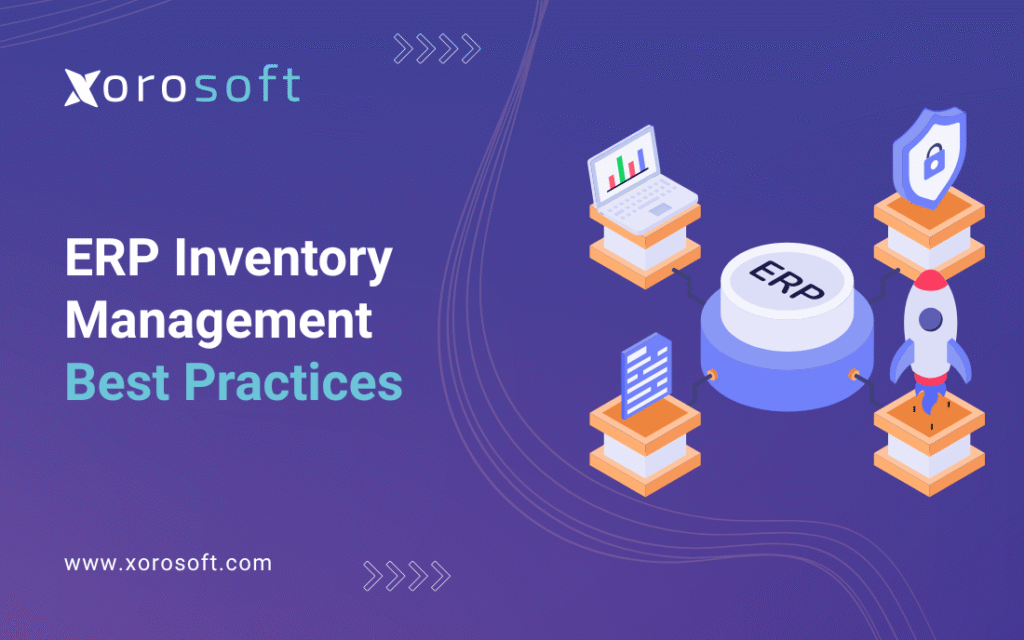
For companies looking to streamline operations, understanding ERP inventory management best practices is essential.
1. ERP Inventory Management Best Practices for Scalable Operations
ERP inventory management best practices help growing businesses control stock, improve accuracy, and create better visibility across purchasing, warehousing, accounting, sales, and fulfillment. As a business grows, inventory becomes harder to manage because more orders, suppliers, warehouses, sales channels, and SKUs enter the operation. Therefore, companies need a clear process for tracking inventory, forecasting demand, planning purchases, and keeping every team aligned.
At first, many companies manage inventory with spreadsheets, basic inventory apps, or manual reports. However, as sales volume increases, those tools often create gaps. Stock counts become unreliable. Purchasing teams order too early or too late. Meanwhile, warehouse teams spend more time correcting errors, and finance teams wait for clean inventory data before closing the books.
Inventory problems usually do not appear all at once. Instead, they build slowly as teams add more orders, channels, and manual steps. As a result, small gaps in stock data can become larger business issues. In addition, those issues often spread across sales, warehouse, buying, and accounting teams.
That is why ERP inventory management matters. A strong ERP system connects inventory activity with purchasing, accounting, warehouse work, forecasting, and reporting. As a result, teams work from the same data instead of chasing updates across disconnected tools.
This guide explains the most important ERP inventory management best practices for inventory-driven businesses, including wholesalers, ecommerce brands, manufacturers, Shopify merchants, Amazon sellers, furniture companies, apparel brands, sporting goods businesses, and food distributors. Ultimately, the goal is to help teams build better inventory habits before errors become expensive.
1.1 What are ERP inventory management best practices?
ERP inventory management best practices are structured steps that help businesses track stock, forecast demand, plan purchases, manage warehouses, connect inventory with accounting, and improve clear visibility through an ERP system.
In simple terms, these practices help teams know what they have, where it is, what they need, and when they need it. Therefore, they reduce guesswork across the business.
1.2 Why inventory becomes harder as businesses grow
Inventory becomes harder to manage when a business adds more SKUs, warehouses, sales channels, suppliers, and order rules. A small mistake in one area can quickly affect sales, buying, accounting, and customer service.
For example, if Shopify shows stock that is no longer available in the warehouse, the business may oversell. Likewise, if buying teams do not see updated demand, they may under-order fast-moving products. If accounting receives late inventory data, month-end close may take longer than expected.
Therefore, inventory management is not only a warehouse function. Instead, it becomes a company-wide operating habit. More importantly, it becomes a shared source of truth for every team that touches inventory.
1.3 Why ERP matters for inventory-driven businesses
ERP systems help businesses keep inventory activity in one place. Instead of managing inventory in one app, buying in spreadsheets, accounting in QuickBooks, and warehouse work in another tool, ERP creates one connected workflow.
This matters because inventory decisions affect cash flow, shipping speed, customer trust, and financial accuracy. When inventory data is reliable, teams can make better decisions with less manual work. As a result, the business can scale with fewer daily surprises.
2. ERP Inventory Control Best Practices Inside an ERP System
2.1 ERP inventory management definition
ERP inventory management is the process of managing stock, buying, warehouse activity, inventory value, forecasting, and reporting inside an ERP system. Instead of using separate tools for inventory, accounting, buying, and order shipping, the ERP brings these workflows together.
In other words, ERP inventory management connects the daily movement of products with the money and business records behind them. Therefore, teams can make decisions based on one shared source of truth.
This matters because inventory affects almost every part of a product-based business. Sales teams need accurate availability. Buying teams need reliable demand signals. Warehouse teams need clear locations and pick instructions. Finance teams need accurate inventory value. Consequently, weak inventory data creates pressure across the entire company.
ERP inventory management best practices give teams a clear way to manage these challenges. They help teams understand what is available, where it is located, what must be purchased, what is reserved for orders, and what stock may become outdated.
2.2 How ERP inventory management works
An ERP system tracks inventory movements across the business. These movements include receipts, transfers, adjustments, sales orders, purchase orders, manufacturing work orders, returns, and shipments.
Because these transactions are connected, one update can flow across several teams. For example, when a warehouse receives inventory against a purchase order, the ERP can update stock availability, buying records, vendor performance, and accounting data. As a result, each team sees the effect of the same transaction.
2.3 Inventory tracking
Inventory tracking shows how much stock exists, where it is stored, and whether it is available, reserved, damaged, in transit, or committed to orders.
Moreover, accurate tracking helps teams avoid overselling, missed replenishment, and wrong stock promises. Therefore, inventory tracking should be updated as work happens, not days later.
2.4 Purchasing integration
Purchasing integration connects reorder points, supplier lead times, demand forecasts, purchase orders, and receiving activity. As a result, teams buy based on data rather than guesswork.
In addition, purchasing teams can see open purchase orders and expected receipts before placing new orders. Consequently, they are less likely to overbuy or miss critical stock.
2.5 Warehouse management
Warehouse management connects inventory with receiving, putaway, picking, packing, shipping, barcode scanning, bin locations, and worker tasks. In addition, it helps warehouse teams update stock as work happens.
Therefore, warehouse management is not separate from inventory control. Instead, it is one of the main ways inventory accuracy is protected.
2.6 Forecasting and planning
Forecasting uses past demand, seasonality, sales trends, lead times, and stock levels to help businesses plan future buying and production. Therefore, teams can plan ahead instead of reacting late.
As a result, forecasting helps companies reduce stockouts, control excess stock, and make better buying decisions.
2.7 ERP vs traditional inventory software
Inventory-only software can help small teams track stock. However, it often becomes limited when a business needs accounting links, buying tools, forecasting, manufacturing, EDI, ecommerce sync, and multi-warehouse control.
By comparison, inventory-only tools often solve one part of the problem. However, they may not connect buying, accounting, warehouse work, and forecasting in the same way. As a result, growing companies often need a broader system.
| Area | Inventory Software | ERP Inventory Management |
|---|---|---|
| Inventory tracking | Usually included | Included |
| Accounting | Often separate | Connected |
| Buying | Basic or separate | Connected |
| Forecasting | Limited | More advanced |
| Warehouse work | Limited to moderate | Connected with inventory |
| Manufacturing | Often missing | Supported in many ERP systems |
| Reporting | Inventory-focused | Company-wide |
| Best fit | Smaller operations | Growing inventory-driven companies |
ERP inventory management best practices become more important when inventory decisions affect several teams at once. In short, the more connected the business becomes, the more important connected inventory data becomes.
3. Why Better Inventory Visibility Matters
3.1 Financial impact of inventory
Inventory is one of the largest assets for many product-based businesses. If stock data is wrong, financial reporting becomes unreliable. Wrong inventory can lead to poor inventory value, margin errors, missed buying plans, and delayed month-end closes.
For this reason, inventory accuracy has a direct effect on cash flow. Moreover, it affects how much money is tied up in stock, how quickly orders can ship, and how well the business can plan ahead.
Additionally, excess stock ties up cash. Stockouts, on the other hand, reduce sales and damage customer trust. Therefore, inventory accuracy is both a business and finance priority. In practice, better stock data helps teams protect both revenue and margin.
3.2 Daily business impact of stock accuracy
Inventory accuracy affects nearly every daily workflow. Sales teams need reliable availability before promising delivery dates. Warehouse teams need correct bin locations. Buying teams need clean demand signals. Finance teams need accurate inventory value.
When inventory accuracy is poor, teams compensate with manual checks, extra emails, urgent purchases, and spreadsheet workarounds. Over time, these habits slow the business down. In addition, they create stress for teams that should be focused on growth.
3.3 Customer experience impact
Customers expect products to be available when they order. If a website shows inventory that does not exist, customers experience delays, cancellations, and frustration. Similarly, wholesale buyers may lose confidence if orders are short-shipped or delayed again and again.
ERP inventory management helps protect customer experience by keeping inventory availability closer to real time. Consequently, teams can promise delivery dates with more confidence. As a result, customers receive fewer surprises after placing an order.
3.4 Clear visibility across departments
Inventory visibility means every team can see the stock data they need before making decisions. However, visibility is not only about dashboards. It is about trust. Teams must know that the numbers are current, complete, and linked to real transactions.
Therefore, better visibility helps every department work with more confidence. In addition, it reduces the need for manual checks, repeated questions, and last-minute corrections.
3.5 Purchasing teams
Buying teams need visibility into current stock, open purchase orders, supplier lead times, sales speed, and forecasted demand. Otherwise, they may buy too much or too little.
3.6 Warehouse teams
Warehouse teams need visibility into receiving priorities, pick lists, bin locations, transfers, and shipment deadlines. As a result, they can plan work more clearly.
3.7 Accounting teams
Accounting teams need visibility into inventory value, landed costs, adjustments, matching records, and month-end reports. Therefore, they can close the books with fewer delays.
3.8 Executive leadership
Leadership needs visibility into inventory performance, stock risk, cash tied up in inventory, forecast accuracy, and business bottlenecks. Ultimately, better visibility helps leaders make better decisions.
4. Best Practice #1: Maintain Real-Time Inventory Visibility
4.1 Why real-time visibility matters
Real-time inventory visibility is one of the most important ERP inventory management best practices because it helps teams make decisions using current information. Without real-time visibility, businesses often sell products they do not have, overbuy slow-moving stock, or miss replenishment needs.
For example, a Shopify order, a wholesale order, and a warehouse transfer may all affect the same SKU. Consequently, inventory must update quickly across every connected workflow.
For ecommerce and wholesale businesses, this becomes even more important. Sales may come from Shopify, Amazon, EDI, wholesale orders, retail locations, and direct sales teams. If inventory does not update across channels, availability becomes unreliable. Therefore, real-time visibility helps reduce overselling and last-minute order changes.
4.2 Common causes of inventory blind spots
Inventory blind spots usually happen when data is spread across too many systems. In many cases, each team is doing its best, but the tools do not share information fast enough.
As a result, teams may spend more time checking data than acting on it. Eventually, this slows down buying, shipping, and customer service.
4.3 Spreadsheet tracking
Spreadsheets are flexible, but they depend on manual updates. As a result, they become risky when order volume, SKU count, or warehouse activity increases.
In addition, spreadsheets can be copied, edited, or saved in different versions. Therefore, they are hard to trust as the main inventory source.
4.4 Manual updates
Manual updates create delays. Even when teams are careful, timing gaps can cause wrong availability. In addition, manual work becomes harder to maintain as the business grows.
Because of this, teams should reduce manual updates wherever possible. Instead, inventory should update as orders, receipts, transfers, and shipments happen.
4.5 Disconnected systems
Disconnected systems create different versions of inventory truth. For example, Shopify may show one number, the warehouse app may show another, and accounting may show a third. As a result, teams waste time checking which number is correct.
Therefore, real-time visibility depends on connected workflows. Otherwise, every team works from a slightly different version of reality.
4.6 Best practices for real-time inventory tracking
To improve real-time visibility, businesses should keep inventory transactions in one place, use barcode scanning where possible, connect ecommerce channels, track committed inventory separately from available inventory, and review stock issues daily.
Additionally, teams should review exceptions daily. This includes negative stock, late receipts, missing transfers, and items with unusual movement. As a result, small errors are easier to fix before they affect customers.
Cloud ERP inventory management platforms such as XoroERP help inventory-driven businesses connect stock data with sales, buying, warehouse, and accounting workflows. This gives teams a more reliable operating view across the business.
4.7 Industry example: wholesale distributor
A wholesale distributor with three warehouses may struggle to know which location should fulfill each order. With real-time ERP inventory visibility, the team can see available stock by warehouse, assign inventory more accurately, and reduce needless transfers. As a result, the company can improve fill rates without adding more manual checks.
5. Inventory Management ERP Practices for Stock Accuracy
5.1 What is cycle counting?
Cycle counting is an inventory control method where teams count selected items regularly instead of counting all inventory once or twice per year. It is one of the most practical ERP inventory control best practices because it improves accuracy without shutting down warehouse work.
Unlike full physical counts, cycle counting spreads the work across the year. Therefore, the warehouse can keep operating while the team improves stock accuracy.
5.2 Cycle counting vs physical inventory counts
| Area | Physical Inventory Count | Cycle Counting |
|---|---|---|
| Frequency | Usually annual or semiannual | Ongoing |
| Work delay | High | Low |
| Error detection | Delayed | Faster |
| Best fit | Smaller or simple operations | Growing inventory operations |
| ERP support | Basic adjustment tracking | Scheduled counts and variance review |
Cycle counting works best when the ERP tracks count schedules, differences, adjustments, and root causes. In addition, it helps teams find patterns behind repeated stock errors.
5.3 Building a cycle count program
A strong cycle count program starts with item classification. Not every SKU needs to be counted at the same frequency. High-value and fast-moving items usually deserve more attention.
However, the count itself is only the first step. After that, the team must review the cause of each difference. Otherwise, the same errors will continue to happen.
5.4 ABC inventory classification
ABC classification groups items by value, movement, or business importance. A-items are counted most often. B-items are counted less often. C-items are counted at a lower frequency. Therefore, the team spends more time on the stock that matters most.
5.5 Count frequency
Fast-moving products may require weekly or monthly counts. Lower-value or slow-moving items may only need quarterly counts. However, count frequency should change when demand or risk changes.
5.6 Variance investigation
Counting alone does not solve inventory problems. Teams must investigate why differences happen. Common causes include receiving errors, picking mistakes, damaged goods, unrecorded transfers, and wrong units of measure.
As a result, variance reviews help teams fix the real cause, not only the count. Therefore, every large variance should lead to a process review.
5.7 Industry example: apparel business
An apparel company may manage thousands of SKUs across size, color, and style combinations. Cycle counting helps the business identify recurring differences in popular sizes before they create stockouts or shipping errors. In turn, this helps the company protect sales during busy seasons.
6. Best Practice #3: Strengthen Inventory Forecasting
6.1 Why forecasting matters
Inventory forecasting helps businesses predict future demand so they can buy, produce, and assign inventory more effectively. Among all ERP inventory management best practices, forecasting has one of the biggest effects on cash flow.
Because demand changes over time, forecasting should not be treated as a one-time task. Instead, teams should review forecasts often and adjust them as new sales data becomes available.
Poor forecasting leads to two common problems: stockouts and overstock. Stockouts create missed sales and customer frustration. Overstock ties up working capital and increases carrying costs. Therefore, better forecasting helps balance service levels with cash control.
6.2 Forecasting challenges
Forecasting becomes difficult when demand changes quickly, suppliers have long lead times, or sales happen across several channels. Seasonality, promotions, new product launches, and wholesale buying cycles can also distort demand.
Therefore, inventory forecasting ERP workflows should use several data inputs rather than relying on past sales alone. Otherwise, teams may repeat old buying patterns that no longer match demand.
6.3 Forecasting inputs
Forecasting works better when teams use both internal and external signals. For instance, sales history may show past demand, while supplier lead times and seasonality help explain what may happen next.
In addition, teams should review forecast exceptions. For example, a promotion, stockout, or one-time wholesale order can make historical sales look misleading.
6.4 Historical sales data
Historical sales data shows demand patterns over time. However, teams should clean the data before using it because one-time promotions or stockouts can distort the numbers.
6.5 Seasonality
Many industries experience seasonal demand. Apparel brands may plan around collections. Sporting goods companies may plan around weather or sports seasons. Food businesses may plan around holidays or shelf-life limits. As a result, seasonal planning should be reviewed before peak demand begins.
6.6 Supplier lead times
Supplier lead times affect when inventory must be ordered. If lead times increase, reorder points and safety stock may need to change. Therefore, lead times should be checked often.
6.7 Market trends
Market trends help teams adjust forecasts when demand is shifting. This is especially useful for ecommerce brands and consumer products companies.
However, trends should not replace real sales data. Instead, they should help teams explain why demand may rise or fall.
6.8 Forecasting KPIs
Useful forecasting KPIs include forecast accuracy, demand variance, stockout rate, inventory turnover, excess inventory value, and purchase order cycle time.
ERP inventory improvement methods help teams compare demand forecasts against actual sales. Over time, this creates a better planning rhythm. Moreover, it helps teams learn from past forecast gaps.
6.9 Industry example: sporting goods business
A sporting goods company may sell seasonal products with sharp demand peaks. Better forecasting helps the company order enough inventory before peak season while avoiding excess stock after demand drops. As a result, the company can protect revenue without carrying too much slow-moving stock.
7. Best Practice #4: Automate Replenishment Planning
7.1 What is inventory replenishment?
Inventory replenishment is the process of restocking products before they run out. It includes reorder points, safety stock, purchase planning, supplier lead times, and demand forecasts.
Therefore, replenishment planning should balance availability with cost. If a company buys too little, it risks stockouts. However, if it buys too much, it ties up cash in slow-moving inventory.
Inventory replenishment is one of the most important inventory management ERP practices because it directly affects service levels and working capital. In addition, it helps buying teams move away from last-minute orders.
7.2 Reorder points
A reorder point tells the business when to reorder stock. It is usually based on demand during supplier lead time plus safety stock.
| Formula Component | Meaning |
|---|---|
| Average daily demand | Typical units sold per day |
| Lead time | Days required to receive stock |
| Safety stock | Extra stock held for uncertainty |
| Reorder point | Demand during lead time plus safety stock |
As a simple rule, reorder points should change when demand, lead time, or supplier reliability changes.
7.3 Safety stock strategies
Safety stock protects against demand spikes, supplier delays, and forecast errors. However, too much safety stock creates excess carrying cost. Therefore, safety stock should be reviewed regularly by SKU, supplier, and demand pattern.
In addition, safety stock should not be the same for every product. High-value, fast-moving, or hard-to-source items may need different rules.
7.4 Purchase planning automation
ERP systems can recommend purchases based on current inventory, open sales orders, open purchase orders, demand forecasts, and supplier lead times.
As a result, buying becomes more proactive. Instead of waiting for a stock issue, the team can plan orders based on current demand, open orders, and supplier performance.
7.5 Supplier lead time analysis
Lead time analysis helps buying teams understand how long suppliers actually take to deliver. This is often more useful than relying on promised lead times. Therefore, actual lead time should be measured, not guessed.
7.6 Demand-based reordering
Demand-based reordering adjusts purchase suggestions based on sales speed and expected demand. As a result, teams avoid static reorder rules that no longer match reality.
Furthermore, demand-based reordering helps teams respond when sales patterns change. Therefore, buying plans become more flexible.
7.7 Manual purchasing vs ERP purchasing
| Area | Manual Purchasing | ERP Purchasing |
|---|---|---|
| Reorder decisions | Based on spreadsheets or judgment | Based on data |
| Supplier tracking | Manual | Kept in one place |
| Forecast input | Limited | Connected |
| Purchase approvals | Email-based | Workflow-based |
| Risk | Overstock and stockouts | Better control |
Platforms such as XoroONE can help growing teams connect buying, inventory, warehouse, and accounting workflows in one operating system.
8. ERP Inventory Management Strategies for Multiple Warehouses
8.1 Challenges of multi warehouse inventory management
Multi warehouse inventory management adds challenges because stock is spread across locations. A company may have inventory in a main warehouse, 3PL, retail location, production facility, or regional shipping center.
Meanwhile, each warehouse may have different demand patterns. Therefore, the same SKU may need more stock in one location and less stock in another.
Without clear controls, teams may transfer too much stock, ship from the wrong location, or show wrong availability to customers. As a result, multi-warehouse teams need clear rules for stock movement.
8.2 Inventory allocation best practices
Inventory allocation determines which stock should be reserved for which orders, channels, customers, or regions. Wholesale businesses may assign inventory for key accounts. Ecommerce brands may reserve stock for online demand. Manufacturers may reserve components for production.
ERP inventory management best practices help businesses create allocation rules that match real business priorities. In addition, they help teams protect important orders when supply is limited.
8.3 Warehouse transfers
Transfers should be tracked like formal inventory movements. Each transfer should include source location, destination location, item quantity, expected date, shipping status, and receiving confirmation.
Otherwise, stock in transit can become invisible to both sales and warehouse teams. Therefore, transfers should always have clear status tracking.
8.4 Regional inventory planning
Regional planning helps businesses keep stock closer to customers. This can reduce shipping costs, improve delivery speed, and prevent one warehouse from carrying too much slow-moving stock.
In addition, transfer planning should be based on real demand rather than habit. Otherwise, companies may move inventory between locations without solving the real stock problem.
8.5 Demand-based allocation
Demand-based allocation places stock where sales are most likely to happen. This is useful for businesses with regional demand differences.
For example, one region may sell more winter products while another sells more summer products. Therefore, stock placement should reflect real buying behavior.
8.6 Transfer management
Transfer management helps prevent hidden inventory. Stock in transit should be visible, but it should not be treated the same as available stock.
As a result, teams can avoid promising stock that has not arrived yet. In addition, they can plan receiving work before transfers reach the warehouse.
8.7 Industry example: national wholesale distributor
A national distributor may serve customers from several warehouses. With ERP inventory visibility, the company can route orders from the right warehouse, reduce urgent transfers, and improve fill rates.
Businesses that need deeper warehouse execution may also compare XoroWMS for receiving, picking, packing, and warehouse control. As a result, teams can connect stock accuracy with warehouse execution.
9. Best Practice #6: Connect Purchasing With Inventory Data
9.1 Why purchasing and inventory must work together
Buying and inventory cannot operate separately. If buying teams do not trust inventory data, they often overbuy. If they cannot see demand clearly, they may miss important reorder points.
For this reason, buying teams need accurate inventory data before placing orders. Likewise, inventory teams need clear visibility into purchase orders before planning order shipping.
ERP inventory management best practices connect buying decisions with stock levels, sales demand, open purchase orders, supplier lead times, and forecast data. Therefore, buying becomes part of the inventory control process rather than a separate task.
9.2 Common purchasing mistakes
Common buying mistakes include using old spreadsheets, ignoring supplier lead time changes, failing to track vendor performance, ordering too much slow-moving inventory, and placing urgent orders too often.
These issues often appear when buying decisions depend on manual calculations. As a result, teams may buy based on fear rather than facts.
9.3 Supplier performance monitoring
Supplier performance should be measured often. Otherwise, teams may continue using vendors that cause delays, shortages, or quality problems.
Moreover, supplier performance should be reviewed over time. If lead times change, reorder points and safety stock should change as well.
9.4 Lead time tracking
Track promised lead time against actual lead time. This helps improve reorder points and buying plans.
In addition, lead time tracking helps teams spot supplier changes early. Therefore, teams can adjust buying plans before stockouts happen.
9.5 Fill rate analysis
Vendor fill rate shows how often suppliers deliver complete purchase orders. Low fill rates can create unexpected stockouts. Therefore, fill rate should be reviewed before placing repeat orders.
9.6 Vendor scorecards
Vendor scorecards help buying teams compare suppliers based on lead time, fill rate, cost, quality, and responsiveness. In addition, they help teams make supplier decisions with less bias.
9.7 How ERP improves purchasing decisions
ERP purchasing tools help teams stop last-minute buying and plan stock earlier. Instead of waiting for someone to notice low stock, the ERP can flag buying needs based on rules, forecasts, and demand.
This is especially valuable for companies that have outgrown QuickBooks, spreadsheets, or inventory-only tools. In turn, the team can spend less time checking numbers and more time improving supplier plans.
10. Inventory Management Best Practices in ERP for Accounting
10.1 Inventory value challenges
Inventory value affects financial statements, margins, tax reporting, and profit analysis. If inventory transactions are delayed or wrong, accounting teams struggle to close the books cleanly.
Consequently, accounting teams need inventory records that are both accurate and timely. Otherwise, they may spend too much time matching stock movements at month end.
This is why inventory and accounting should not be managed in separate places. Instead, both teams should work from connected inventory records.
10.2 Matching inventory records
Matching inventory records means comparing physical stock, system stock, and financial inventory value. Problems often appear when warehouse teams update one system while accounting teams rely on another.
ERP inventory management reduces these gaps by linking daily stock transactions with financial records. As a result, accounting teams spend less time chasing inventory updates.
10.3 Month-end closing efficiency
Month-end close becomes harder when finance teams must chase inventory adjustments, receiving delays, landed cost updates, or manual spreadsheets.
In addition, connected inventory and accounting data helps teams see margins more clearly. As a result, leadership can make better pricing, buying, and planning decisions.
10.4 Real-time financial visibility
When inventory and accounting are connected, finance teams can see the money impact of inventory movements more quickly.
Therefore, finance teams can identify issues earlier. In addition, they can reduce the back-and-forth that often happens at month end.
10.5 Inventory cost tracking
Inventory cost tracking may include purchase cost, landed cost, freight, duty, manufacturing cost, and adjustments. Better cost tracking improves margin visibility. Therefore, cost accuracy should be part of the inventory process.
10.6 Industry example: furniture distributor
A furniture distributor may carry large, high-value items across several warehouses. If inventory value is wrong, financial reports become misleading. A connected ERP helps the business track stock movement and value more accurately.
Modern systems such as XoroERP are useful for businesses that need inventory, accounting, buying, and reporting in one place. In addition, they help reduce the gap between warehouse activity and finance reporting.
11. Best Practice #8: Track Inventory KPIs Continuously
11.1 Inventory turnover
Inventory turnover measures how often inventory is sold and replaced during a period. A low turnover rate may show excess stock. A very high turnover rate may show that the company does not have enough stock.
However, no single KPI tells the whole story. Therefore, teams should review inventory turnover alongside stockout rate, fill rate, carrying cost, and forecast accuracy.
11.2 Days inventory outstanding
Days inventory outstanding shows how long inventory sits before being sold. This helps leadership understand how much cash is tied up in stock. In addition, it helps teams spot slow-moving items earlier.
11.3 Stockout rate
Stockout rate measures how often products are unavailable when customers want to buy them. This KPI directly affects revenue and customer satisfaction. Therefore, it should be reviewed often.
11.4 Fill rate
Fill rate measures the percentage of customer demand shipped from available stock. A strong fill rate shows better inventory planning and warehouse execution.
Moreover, fill rate helps teams understand whether inventory is in the right place. As a result, it is useful for both buying and warehouse teams.
11.5 Carrying cost
Carrying cost includes storage, insurance, shrinkage, outdated stock, handling, and capital costs. Reducing carrying cost is a core goal of inventory improvement. However, carrying cost should be reduced without creating stockouts.
11.6 Forecast accuracy
Forecast accuracy compares expected demand with actual demand. It helps teams improve buying and production decisions over time. As a result, teams can make each planning cycle better than the last.
11.7 Inventory KPI table
| KPI | What It Measures | Why It Matters |
|---|---|---|
| Inventory turnover | Speed of inventory movement | Shows stock efficiency |
| Stockout rate | Product availability failures | Shows missed demand |
| Fill rate | Demand shipped from stock | Shows service performance |
| Carrying cost | Cost of holding stock | Shows cash efficiency |
| Forecast accuracy | Forecast vs actual demand | Improves planning |
| Inventory accuracy | System stock vs actual stock | Improves trust |
Together, these KPIs show whether inventory is helping or hurting the business. More importantly, they give teams a clear way to improve over time.
Tracking KPIs often is one of the most useful ERP inventory management best practices because it turns inventory from a reactive task into a measurable operating habit. Ultimately, teams improve faster when they can measure the right things.
12. Best Practice #9: Improve Warehouse Efficiency
12.1 Receiving best practices
Receiving is where inventory accuracy begins. If received quantities are wrong, every later workflow becomes harder. Receiving teams should verify item, quantity, purchase order, condition, lot number, serial number, and location where relevant.
For this reason, receiving should be treated as a control point, not just a warehouse task. If products are received incorrectly, every later step becomes harder.
12.2 Putaway improvement
Putaway determines where inventory is stored after receiving. Better putaway reduces picking time, improves space use, and prevents misplaced stock. In addition, it helps workers find items faster.
12.3 Picking efficiency
Picking efficiency affects shipping speed and labor cost. Common methods include wave picking, batch picking, zone picking, and directed picking.
However, the best picking method depends on order volume, warehouse layout, SKU count, and labor flow. Therefore, teams should review picking performance regularly.
12.4 Shipping accuracy
Shipping errors create returns, credits, customer complaints, and inventory differences. Barcode scanning, packing checks, and shipment confirmation help reduce these mistakes.
Additionally, shipping accuracy protects both customer trust and inventory records. When orders leave the warehouse correctly, returns, credits, and stock adjustments usually decrease.
12.5 Barcode scanning
Barcode scanning reduces manual entry and improves transaction accuracy. It is especially useful for receiving, picking, transfers, cycle counts, and shipping.
As a result, barcode scanning helps reduce small manual mistakes that can become larger inventory issues.
12.6 Mobile warehouse operations
Mobile warehouse tools let workers complete tasks on the floor instead of updating records later. This reduces timing gaps and improves data accuracy. As a result, the system reflects warehouse work more quickly.
12.7 Industry example: ecommerce business
An ecommerce brand that sells through Shopify may receive hundreds or thousands of orders per day. If inventory sync is slow or picking is manual, shipping errors increase. A warehouse system connected to ERP can improve speed and control.
For Shopify merchants researching connected operations, Xorosoft is also listed on the Shopify App Store. Therefore, Shopify businesses can review how ERP connects with ecommerce workflows.
13. ERP Inventory Optimization Methods for Disconnected Systems
13.1 Common software stack problems
Many growing companies use Shopify, QuickBooks, spreadsheets, an inventory app, a warehouse app, an EDI tool, and buying spreadsheets. This setup may work for a while, but it often creates friction as the business grows.
At first, this software stack may seem manageable. However, as order volume grows, each disconnected tool creates more manual work. Eventually, the business spends more time fixing data than using it.
The issue is not that each tool is bad. The issue is that each tool holds a different part of the truth. As a result, teams spend more time comparing systems than improving operations.
13.2 Duplicate data entry risks
Entering the same data twice increases the risk of mistakes. Teams may enter purchase orders in one system, update inventory in another, and match accounting somewhere else.
As order volume grows, manual entry becomes a hidden operating cost. In addition, it increases the chance of missed updates.
13.3 Inventory sync issues
Inventory sync issues happen when systems update at different times. For example, ecommerce stock availability may not match warehouse stock. This can lead to overselling, stockouts, or shipping delays.
Therefore, inventory sync should be treated as a core business process, not a technical afterthought.
13.4 Poor visibility makes reporting harder
Disconnected systems make reporting difficult. Leadership may not know whether a problem is caused by buying, receiving, warehouse work, demand changes, or accounting delays.
As a result, leaders may struggle to find the real cause of business problems. Therefore, a unified system becomes more valuable as inventory challenges increase.
13.5 Disconnected systems vs unified ERP
| Area | Disconnected Systems | Unified ERP |
|---|---|---|
| Inventory data | Spread across tools | Kept in one place |
| Reporting | Manual exports | Real-time dashboards |
| Buying | Spreadsheet-heavy | Workflow-driven |
| Accounting | Separate matching | Connected transactions |
| Warehouse | Separate updates | Connected workflows |
| Scalability | Limited | Stronger base |
For businesses comparing ERP options, Compare Xorosoft can help show how a unified cloud ERP differs from disconnected systems. In addition, it can help teams compare operating fit before making a decision.
14. Common Inventory Mistakes Businesses Should Avoid
14.1 Over-reliance on spreadsheets
Spreadsheets are useful for analysis, but they should not be the main source of truth for growing inventory teams. They are too easy to duplicate, overwrite, or leave outdated.
In many cases, spreadsheets remain useful for analysis. However, they should not be the main system for live inventory control.
14.2 Ignoring forecasting
Some businesses only reorder when stock looks low. However, this ignores demand trends, supplier lead times, seasonality, and open orders. As a result, buying becomes reactive.
14.3 Poor purchasing processes
Poor buying processes lead to urgent orders, excess inventory, and missed savings. Buying should be connected to forecast data, supplier performance, and current stock levels.
Therefore, buying should not depend only on what looks low today. Instead, it should reflect current demand, expected demand, and supplier reliability.
14.4 Inaccurate inventory counts
Wrong counts create problems across sales, shipping, buying, and accounting. Cycle counting, barcode scanning, and variance reviews help reduce these issues. Therefore, counting should be part of normal work, not only a year-end task.
14.5 Delayed reporting
Delayed reporting causes delayed decisions. If teams wait days or weeks for inventory reports, they cannot respond quickly to stock risks.
As a result, slow reporting often leads to late buying decisions. In addition, it makes it harder to explain why inventory problems happened.
14.6 Lack of warehouse controls
Warehouse controls are essential for receiving, putaway, transfers, picking, packing, and shipping. Without these controls, inventory accuracy usually declines.
Ultimately, most inventory mistakes come from weak processes, delayed updates, or disconnected data. Therefore, better habits and better systems must work together.
15. Who Needs Better Inventory Control?
15.1 Wholesale distributors
Wholesale distributors need ERP inventory management when they manage large SKU counts, customer-specific pricing, EDI, multi-location inventory, purchase orders, and recurring replenishment.
In addition, wholesale distributors often need strong visibility into customer demand and supplier timing. Therefore, inventory control becomes central to service quality.
15.2 Apparel companies
Apparel businesses often manage style, size, color, seasonality, returns, and channel complexity. Inventory accuracy is critical because small SKU-level errors can cause major shipping problems.
15.3 Furniture businesses
Furniture businesses often manage bulky inventory, long supplier lead times, custom orders, and high inventory values. ERP inventory management best practices help improve visibility and planning.
15.4 Sporting goods brands
Sporting goods businesses often deal with seasonal demand, product launches, and regional trends. Forecasting and replenishment are especially important.
As a result, sporting goods companies need to prepare before demand peaks. Otherwise, they may miss the season or carry too much stock after it ends.
15.5 Manufacturers
Manufacturers need to manage raw materials, components, work orders, bills of materials, finished goods, and production schedules. Inventory errors can delay production and shipments. Therefore, manufacturers need strong control over both materials and finished goods.
15.6 Shopify merchants
Shopify merchants often need better inventory sync, buying workflows, accounting links, and warehouse visibility as order volume increases. In addition, many Shopify brands need inventory data to flow across wholesale, Amazon, and warehouse channels.
15.7 Amazon sellers
Amazon sellers need accurate stock tracking, replenishment planning, and multi-channel visibility. This is especially important when inventory is split across Amazon, warehouses, and other sales channels.
15.8 Multi-channel businesses
Multi-channel businesses need ERP inventory management because inventory must be coordinated across ecommerce, wholesale, marketplaces, EDI, retail, and warehouse operations.
In short, ERP becomes more useful when inventory touches many teams, locations, and channels. As complexity increases, the value of one shared inventory system increases as well.
Businesses can review the industries served to see how inventory-driven workflows differ across verticals.
16. Who May Not Need an ERP Yet?
16.1 Small businesses with simple operations
A small business with a few SKUs, one sales channel, and one location may not need ERP yet. Basic inventory software may be enough.
However, simple operations can become complex quickly. Therefore, businesses should review system needs as soon as manual work starts increasing.
16.2 Businesses with minimal inventory
Service-based companies or businesses with very limited physical stock usually do not need advanced ERP inventory management. Instead, they may need simpler accounting or project tools.
16.3 Service-based companies
Service businesses may need accounting, CRM, or project tools instead of inventory-focused ERP.
16.4 Early-stage companies with low order volume
If order volume is low and workflows are simple, a lightweight system may be more practical. However, once manual work starts limiting growth, ERP becomes worth comparing.
17. When Should a Business Upgrade?
17.1 Warning signs
A business should consider ERP when inventory challenges start creating business risk. The need often becomes clear before leadership formally starts an ERP search.
For example, teams may notice that stock numbers no longer feel trustworthy. In addition, they may spend more time fixing reports than making decisions.
17.2 Frequent stockouts
Frequent stockouts are a sign that buying, forecasting, or inventory accuracy may not be strong enough.
17.3 Inventory visibility problems
If teams cannot trust available stock numbers, the business needs better inventory control.
17.4 Multi-warehouse complexity
If inventory is spread across warehouses, 3PLs, or retail locations, spreadsheets and basic tools become harder to manage. Therefore, multi-location growth often becomes a clear ERP trigger.
17.5 Spreadsheet dependence
If critical buying, forecasting, and record-matching workflows depend on spreadsheets, the business is exposed to manual errors.
17.6 Reporting limitations
If leadership cannot get reliable inventory reports without manual exports, the system is limiting decisions.
17.7 ERP readiness checklist
| Question | Yes/No |
|---|---|
| Do teams struggle to trust inventory numbers? | |
| Are buying decisions spreadsheet-heavy? | |
| Do stockouts happen despite having inventory reports? | |
| Does accounting wait on inventory data? | |
| Are several systems used for inventory and shipping? | |
| Does the business operate several warehouses? | |
| Is Shopify, Amazon, wholesale, or EDI part of the operation? | |
| Are month-end close delays linked to inventory? |
If several answers are yes, the company is likely ready to compare ERP inventory management options.
If several of these signs are present, the business may already be paying the cost of poor visibility. Therefore, ERP evaluation should begin before problems become harder to control.
Companies comparing platforms such as NetSuite, Acumatica, Cin7, Sage, Business Central, and Xorosoft should focus on business fit rather than brand size alone. For businesses weighing cost, setup, and inventory features, this NetSuite comparison can be a useful resource.
18. Industry Use Cases for ERP Inventory Management
18.1 Apparel and fashion
Apparel companies manage many product variants. Size, color, style, season, and channel demand all affect inventory. ERP inventory management best practices help apparel teams reduce stockouts, improve stock assignment, and manage buying more effectively.
18.2 Furniture
Furniture companies often deal with large items, long lead times, and high carrying costs. Better forecasting, warehouse visibility, and inventory value tracking help protect margins.
18.3 Food and beverage
Food businesses need lot tracking, expiration visibility, buying discipline, and demand planning. Poor inventory control can create waste, spoilage, and risk. Therefore, food businesses need accurate stock and clear expiry controls.
18.4 Wholesale distribution
Wholesale distributors need strong visibility across customer demand, supplier lead times, EDI, purchase orders, and warehouse shipping. In addition, they often need clear rules for customer-specific stock and pricing.
18.5 Manufacturing
Manufacturers need inventory control for raw materials, components, work in progress, and finished goods. ERP helps connect bills of materials, production planning, buying, and warehouse activity. As a result, production teams can plan around real material availability.
19. Frequently Asked Questions About ERP Inventory Management Best Practices
19.1 What is ERP inventory management?
ERP inventory management is the process of managing inventory, buying, warehouse activity, forecasting, and inventory accounting inside an ERP system. It helps businesses track stock across locations, connect inventory with financial data, and improve clear visibility.
19.2 What are ERP inventory management best practices?
ERP inventory management best practices include real-time inventory tracking, cycle counting, demand forecasting, replenishment planning, multi-warehouse control, purchasing integration, warehouse tools, KPI tracking, and inventory-accounting record matching.
19.3 How does ERP improve inventory accuracy?
ERP improves inventory accuracy by keeping inventory transactions in one place, reducing manual data entry, supporting barcode scanning, tracking warehouse movements, and connecting receiving, transfers, picking, shipping, and adjustments in one system. As a result, teams can trust stock numbers more often.
19.4 How does ERP reduce stockouts?
ERP reduces stockouts by tracking demand, supplier lead times, reorder points, safety stock, open purchase orders, and current stock levels. As a result, buying teams can reorder before stock becomes unavailable.
19.5 What is cycle counting?
Cycle counting is a process where selected inventory items are counted regularly throughout the year. It helps businesses find differences faster and avoid the delay of full physical inventory counts.
19.6 What is inventory forecasting?
Inventory forecasting is the process of estimating future demand using past sales, seasonality, trends, supplier lead times, and current inventory data. It helps businesses avoid both stockouts and overstock.
19.7 How does ERP support purchasing?
ERP supports buying by connecting purchase orders with demand forecasts, reorder points, supplier records, inventory levels, approvals, receiving, and accounting. This helps teams make better buying decisions.
19.8 How does ERP improve warehouse management?
ERP improves warehouse management by connecting receiving, putaway, picking, packing, shipping, transfers, and cycle counting with inventory records. This helps reduce errors and improve shipping speed.
19.9 What are inventory replenishment best practices?
Inventory replenishment best practices include setting reorder points, using safety stock, tracking supplier lead times, reviewing demand patterns, monitoring slow-moving inventory, and using ERP suggestions for purchase planning.
19.10 How does ERP support multi-warehouse operations?
ERP supports multi-warehouse operations by tracking inventory by location, managing transfers, showing available stock, supporting stock assignment rules, and helping businesses ship orders from the right warehouse.
19.11 What industries benefit most from ERP inventory management?
Industries that benefit most include wholesale distribution, apparel, furniture, sporting goods, food and beverage, manufacturing, consumer products, automotive parts, and industrial distribution.
19.12 How does ERP improve inventory visibility?
ERP improves inventory visibility by keeping inventory data in one place across sales, buying, warehouse, accounting, and reporting workflows. Teams can see what is available, reserved, in transit, or on order.
19.13 What causes inventory discrepancies?
Inventory differences are often caused by receiving errors, picking mistakes, unrecorded transfers, damaged goods, theft, wrong units of measure, manual entry errors, and delayed system updates.
19.14 What are common inventory management mistakes?
Common mistakes include relying too much on spreadsheets, skipping cycle counts, ignoring forecasting, using disconnected systems, failing to track supplier performance, and not matching inventory with accounting.
19.15 What is safety stock?
Safety stock is extra inventory held to protect against demand spikes, supplier delays, forecast errors, or supply chain problems. It helps reduce stockout risk.
19.16 What is inventory turnover?
Inventory turnover measures how often inventory is sold and replaced during a specific period. It helps businesses understand whether they are carrying too much or too little stock.
19.17 How does ERP integrate with Shopify?
ERP can integrate with Shopify to sync orders, inventory availability, shipping status, customer data, and accounting information. This helps merchants manage Shopify as part of a larger operating system.
19.18 Can ERP support Amazon sellers?
Yes. ERP can help Amazon sellers manage inventory, buying, shipping, accounting, and multi-channel stock visibility. This is useful when sellers also operate Shopify, wholesale, or warehouse channels.
19.19 When should businesses move beyond spreadsheets?
Businesses should move beyond spreadsheets when inventory errors increase, reporting becomes slow, buying becomes reactive, warehouse teams lose visibility, or accounting teams struggle to match inventory records.
19.20 What are the benefits of cloud ERP inventory management?
Cloud ERP inventory management gives teams access to real-time data, connected workflows, shared reporting, and easier growth. It is useful for distributed teams, multi-warehouse businesses, and ecommerce operations.
19.21 How does ERP help manufacturers?
ERP helps manufacturers manage raw materials, components, bills of materials, work orders, production planning, finished goods, and buying. It connects inventory planning with production needs.
19.22 What is inventory allocation?
Inventory allocation is the process of reserving stock for specific customers, orders, channels, warehouses, or production needs. It helps businesses control how limited inventory is used.
19.23 What is inventory optimization?
Inventory optimization is the process of balancing stock availability, carrying cost, demand, lead times, and service levels. The goal is to carry enough inventory without tying up too much cash.
19.24 What should businesses look for in an ERP?
Businesses should look for inventory accuracy, buying tools, warehouse management, accounting links, forecasting, reporting, ecommerce links, scalability, and industry fit.
19.25 Which ERP is best for inventory-driven businesses?
The best ERP depends on company size, industry, workflows, channels, warehouse complexity, accounting needs, and setup resources. Inventory-driven businesses should compare how well each ERP supports buying, warehouse work, forecasting, and reporting.
Recent Posts
-
 ERP Landed Cost Module vs Spreadsheet Calculations for Importers
 -
 How to Build an Open-to-Buy Plan for an Omnichannel Brand
 -
 Cold Storage WMS for Food and Beverage Distribution
 -
 ERP Buying Statistics 2026: Evaluation, Implementation, and Adoption Risks
 -
 How a Distributor Reduced B2B Order Exceptions Without Restricting Sales