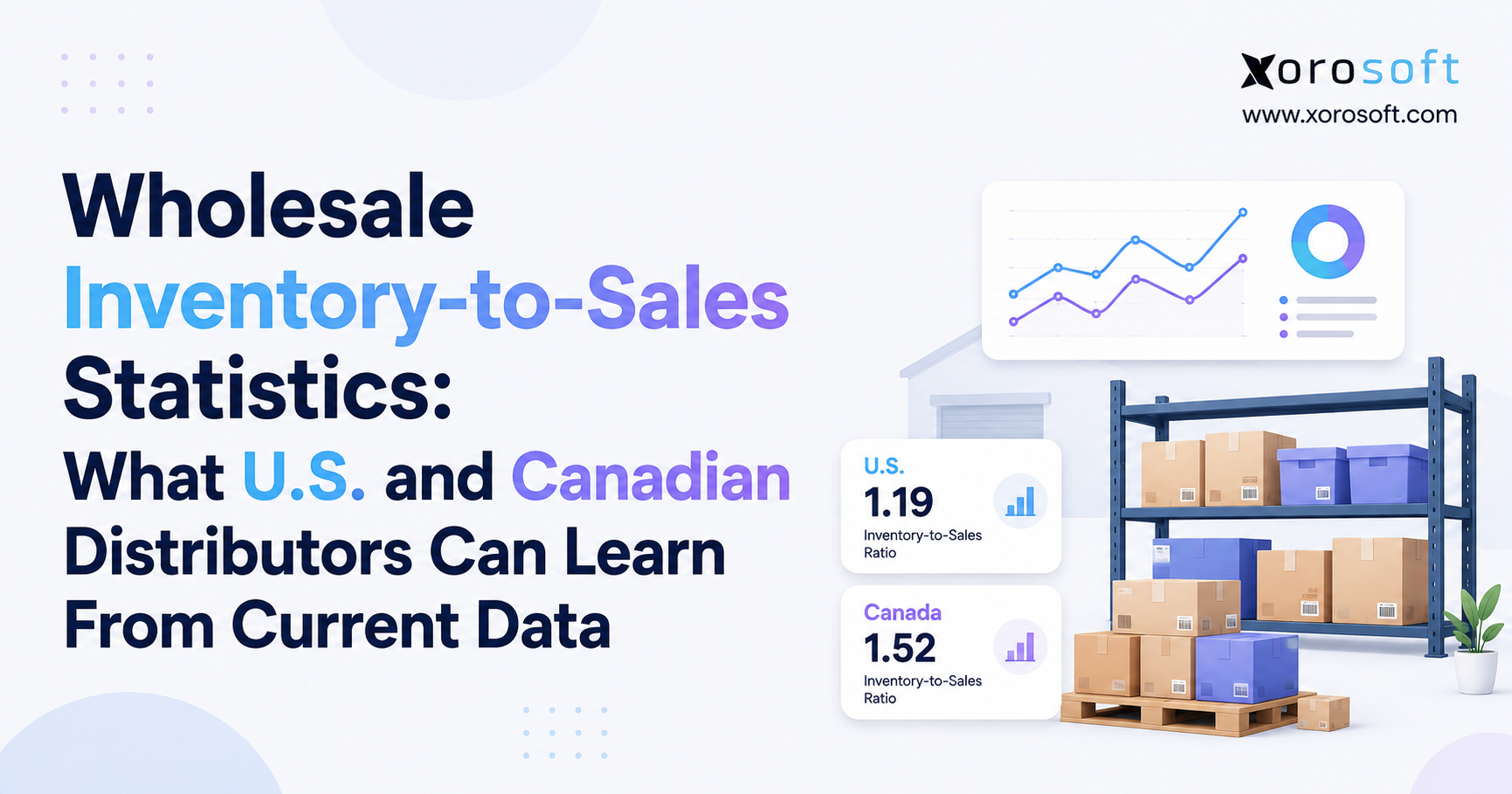
If you’re searching for the Best Shopify Stocky alternatives, you’ll find several solutions that might better fit your business needs.
1 Stocky’s 2026 Exit Changes the Shopify Inventory Decision
Shopify merchants that rely on Stocky now have a clear operational deadline. Shopify has confirmed in its official Stocky transition guidance that Stocky will no longer be available for inventory management after August 31, 2026. That matters because Stocky has supported many daily inventory workflows, including purchase orders, supplier records, stocktakes, transfers, receiving, forecasting, and inventory reporting.
However, replacing Stocky is not only about finding another app with a similar interface. The right decision depends on how your business actually manages inventory. For example, a small Shopify retailer may only need purchase orders, transfers, and basic stock visibility. Meanwhile, a growing ecommerce brand may need demand forecasting, Amazon inventory synchronization, bundles, warehouse scanning, and better purchasing controls. In comparison, a wholesaler or manufacturer may also need EDI, customer-specific pricing, bills of materials, production planning, accounting integration, and multi-warehouse allocation.
As a result, the best Shopify Stocky alternatives fall into different categories. Some merchants may be able to use Shopify’s native inventory features. Others may need a forecasting-focused app, a multichannel inventory platform, a manufacturing system, or a cloud ERP.
This guide compares the major options by business fit. Instead of treating every platform as equal, it explains what each type of Stocky replacement is designed to solve and when a Shopify merchant should consider moving beyond a basic inventory app.
1.1 What the Shopify Stocky Deadline Means for Merchants
After August 31, 2026, merchants will no longer be able to use Stocky for inventory management. Read-only access may remain available for a limited period, but that should not be treated as an operating plan.
More importantly, historical Stocky records will not automatically move into Shopify. Therefore, merchants should manually export the records they need, such as historical purchase orders, stocktakes, inventory reports, transfers, and other operational documents. Shopify also notes that suppliers cannot be exported directly from Stocky, which means businesses may need to rebuild supplier information from purchase orders, accounting records, spreadsheets, or other internal files.
Because of this, merchants should begin the transition well before the deadline. Software evaluation, data cleanup, employee training, workflow testing, and post-migration reconciliation all take time. Waiting until the final month can create unnecessary operational risk.
1.2 Stocky Workflows That a Replacement May Need to Cover
A useful Shopify Stocky replacement should be evaluated against real workflows, not just a product feature list. Some companies use Stocky mainly for purchasing. Others depend on it for demand planning, stocktakes, supplier management, transfers, and inventory analysis.
Important workflows may include supplier records, purchase orders, approval processes, partial receiving, rejected quantities, supplier lead times, reorder recommendations, barcode stocktakes, inventory transfers, stock adjustments, multi-location visibility, landed costs, bundle inventory, and reporting.
In addition, businesses should review how those workflows affect accounting and fulfillment. A purchase order does not exist in isolation. It affects inventory value, supplier commitments, expected stock availability, receiving, warehouse planning, and financial reporting. Therefore, the best Shopify Stocky alternatives should be tested across the complete operational cycle.
1.3 Who May Not Need a Third-Party Stocky Alternative
Not every merchant needs a new third-party platform. A smaller Shopify store with one primary sales channel, simple purchasing, limited locations, and basic inventory reporting may be able to move into Shopify’s native inventory workflows.
However, that decision should still be tested. The team should create and receive a purchase order, complete an inventory transfer, process an adjustment, review inventory reports, and test Shopify POS workflows if retail stores are involved. If those workflows operate smoothly, a separate inventory app may not be necessary.
On the other hand, if the business needs forecasting, multi-channel allocation, warehouse scanning, manufacturing, EDI, or integrated accounting, Shopify-native workflows may not be enough.
2 Main Categories of Shopify Stocky Alternatives
A Shopify Stocky alternative is any platform that replaces one or more Stocky workflows. However, the market includes several different types of software. Because of that, comparing a lightweight forecasting app with a full ERP system can create confusion.
2.1 Shopify-Native Stocky Replacement Workflows
Shopify’s native inventory tools keep operations inside Shopify Admin and Shopify POS. This approach can reduce software complexity because inventory, products, sales orders, and locations remain within the Shopify ecosystem.
For straightforward merchants, this may be the simplest path. However, native workflows should be tested carefully for forecasting, supplier management, purchase planning, warehouse execution, reporting, and accounting handoffs.
2.2 Forecasting-Focused Shopify Inventory Applications
Forecasting-focused apps are designed to improve replenishment decisions. These tools often help merchants review sales history, supplier lead times, reorder points, incoming stock, and purchase recommendations.
Therefore, they can be a strong fit for Shopify brands that mainly need better planning and purchasing. They may also be easier to implement than a broader system. However, they may not fully cover warehouse operations, accounting, EDI, manufacturing, or complex wholesale workflows.
2.3 Multichannel Shopify Stocky Inventory Alternatives
Multichannel inventory platforms help centralize stock across Shopify, Amazon, marketplaces, retail locations, and warehouses. Many of these platforms also support purchase orders, bundles, barcode workflows, inventory transfers, order routing, and accounting integrations.
This category often works well for companies that have outgrown a Shopify-only app but do not yet need a full ERP. Nevertheless, merchants should confirm which system owns inventory, which system owns orders, and how accounting data will remain accurate.
2.4 ERP-Level Shopify Stocky Alternatives
Cloud ERP platforms connect inventory with accounting, purchasing, warehouse management, manufacturing, order management, forecasting, reporting, and ecommerce operations.
ERP usually requires a more structured implementation than a Shopify app. However, it can be the better long-term option when a business is already using Shopify, QuickBooks, spreadsheets, warehouse apps, EDI tools, and manual reporting in disconnected ways.
3 Best Shopify Stocky Alternatives at a Glance
The best Shopify Stocky alternatives depend on business model, operational complexity, and growth plans. Therefore, the right choice should be based on workflow fit rather than popularity alone.
| Platform | Category | Best suited for | Main area to evaluate |
|---|---|---|---|
| Shopify native inventory | Native Shopify tools | Smaller Shopify operations | Forecasting and supplier depth |
| Prediko | Inventory planning app | Forecasting and purchase orders | Warehouse and accounting scope |
| Fabrikatör | Inventory planning app | Shopify demand planning | Multichannel operations |
| Inventory Planner by Sage | Forecasting and analytics | Advanced planning | Configuration and integrations |
| Sumtracker | Multichannel inventory app | Bundles and channel sync | Accounting and warehouse depth |
| Cin7 Core | Inventory operations platform | Multichannel product businesses | Implementation complexity |
| Katana | Manufacturing inventory platform | Shopify manufacturers | Production fit |
| Brightpearl | Retail operations platform | Omnichannel retailers | Scope and business size |
| Zoho Inventory | Inventory and order platform | Smaller Zoho users | Plan limits and scalability |
| inFlow Inventory | Inventory platform | SMB product businesses | Channel and production needs |
| Unleashed | Inventory and production platform | Wholesalers and manufacturers | Shopify and accounting setup |
| Finale Inventory | Multichannel inventory platform | High-volume ecommerce | Financial and production fit |
| Xorosoft | Cloud ERP | Inventory-driven businesses consolidating systems | ERP readiness |
This table should be used as a shortlist guide, not as a final buying decision. Features, pricing, plan limits, and integrations change over time. Therefore, every platform should be verified directly with the vendor before purchase.
4 How to Compare Shopify Stocky Replacement Software
A strong evaluation process looks beyond checkboxes. Instead, it tests how a system handles real transactions from beginning to end.
4.1 Stocky Alternative Forecasting and Replenishment
Forecasting should lead to better purchasing decisions. A useful system should consider sales history, seasonality, stockouts, supplier lead times, incoming inventory, promotions, safety stock, and location-level demand.
For example, if a product was out of stock for two weeks, the system should not assume demand disappeared. Similarly, if a seasonal item sells heavily during a short period, the forecast should not treat that demand like a normal month.
A good evaluation should ask whether the platform can handle new products, slow movers, fast movers, launch periods, promotional spikes, supplier delays, and demand differences between locations.
4.2 Purchase Orders in a Shopify Stocky Alternative
Purchase orders are one of the most important Stocky replacement workflows. However, purchase-order capability varies widely across platforms.
A strong purchasing process may include supplier-specific pricing, minimum order quantities, pack sizes, expected delivery dates, partial receiving, rejected goods, approvals, landed costs, multiple currencies, and supplier performance reporting.
In addition, finance should review how purchase orders affect inventory valuation and accounting. If operations and finance use different numbers, month-end reconciliation can become slow and unreliable.
4.3 Multi-Location Inventory and Stock Transfers
Businesses with multiple locations need more than one total inventory number. They need visibility into available, committed, incoming, damaged, quarantined, reserved, and in-transit stock.
Therefore, merchants should test how each platform handles transfers between warehouses, stores, and fulfillment locations. The system should show when stock leaves one location, when it is in transit, and when it becomes available at the receiving location.
Without this clarity, employees may sell inventory that is not actually available.
4.4 Shopify POS and Multichannel Inventory Synchronization
Shopify POS, Amazon, marketplaces, wholesale orders, and multiple Shopify stores can create inventory-sync challenges. Therefore, merchants should define which system owns the inventory balance.
If two systems attempt to update the same quantity, synchronization conflicts may occur. As a result, businesses can experience overselling, delayed updates, missing stock, duplicate orders, or unexplained adjustments.
Before selecting a Stocky alternative, test order imports, cancellations, refunds, returns, reserved inventory, SKU mapping, fulfillment status, and synchronization timing.
4.5 Bundles, Kits, and Component Stock
Bundles and kits can be simple or complex. A virtual bundle may only need component-level availability. However, an assembled product may require production steps, work orders, labor, and costing.
Consequently, merchants should verify whether the platform can calculate available bundles from components, reserve components after sales, support assemblies, forecast component demand, and track bills of materials.
This is especially important for apparel, sporting goods, food, furniture, and manufacturing businesses.
4.6 Warehouse Management Within a Stocky Replacement
Forecasting does not automatically solve warehouse execution. A company may have strong demand planning but still struggle with receiving, picking, packing, bin accuracy, barcode scanning, and stocktakes.
Businesses with warehouse complexity should evaluate whether they need built-in warehouse management or a dedicated system. For instance, an integrated warehouse management system can be important when multi-warehouse control, barcode workflows, picking accuracy, and fulfillment speed are central to the business.
4.7 Inventory Accounting and Valuation
Inventory affects the balance sheet, cost of goods sold, gross margin, returns, purchasing, and profitability. Therefore, finance should be involved early in the evaluation.
Key questions include how the platform calculates inventory value, how landed costs are handled, how returns affect cost, how write-offs and adjustments are approved, how the system connects to accounting, whether finance can reconcile inventory by SKU and location, and whether audit trails are available.
If accounting is treated as an afterthought, the new inventory system may create more manual work than Stocky did.
4.8 Total Cost of a Shopify Stocky Alternative
Monthly subscription cost is only one part of total cost. Merchants should also consider onboarding, migration, training, integrations, support, scanners, labels, additional users, additional warehouses, API access, consulting, and the cost of keeping other tools.
A lower-priced app may become expensive if the business still needs separate software for accounting, warehouse management, reporting, EDI, or manufacturing. Meanwhile, a broader platform may be unnecessary if the business has simple needs.
5 Best Shopify Stocky Alternatives Compared
5.1 Shopify Native Inventory as a Stocky Replacement
Shopify’s native inventory features should be reviewed first because they keep operations inside Shopify. The platform supports inventory tracking, purchase orders, receiving, transfers, inventory adjustments, inventory states, and reporting.
This option may fit smaller merchants that want to reduce reliance on third-party apps. It can also reduce integration risk because inventory and sales activity remain in the same commerce platform.
However, Shopify-native workflows may not cover every advanced Stocky use case. Merchants should test forecasting, supplier records, purchase planning, multi-location transfers, Shopify POS workflows, reporting, and accounting handoffs before deciding that no additional tool is needed.
5.2 Prediko as a Shopify Stocky Alternative
Prediko is an inventory planning app focused on Shopify merchants. It supports forecasting, replenishment, purchase orders, supplier workflows, transfers, raw materials, and bills of materials.
Because of that, Prediko may fit direct-to-consumer brands that want better demand planning and purchasing without implementing a full ERP. It can be especially relevant when spreadsheets are currently used for reorder planning.
However, businesses should test how Prediko handles non-Shopify channels, warehouse workflows, accounting integration, supplier lead-time changes, promotions, and component-level planning. If the company needs broader operational control, another category may be more appropriate.
5.3 Fabrikatör for Shopify Inventory Planning
Fabrikatör is another Shopify-focused inventory planning option. It supports demand forecasting, purchase planning, supplier workflows, purchase orders, stock analysis, backorders, and preorders.
This makes it useful for ecommerce brands that want to improve replenishment and avoid stockouts. In addition, its planning features can help teams move away from manual spreadsheet forecasting.
Nevertheless, merchants should evaluate how it fits into the complete technology stack. If accounting, warehouse management, Amazon, wholesale, or manufacturing workflows are handled elsewhere, those integrations must be tested carefully.
5.4 Inventory Planner by Sage for Forecasting
Inventory Planner by Sage focuses on demand forecasting, replenishment recommendations, purchasing, inventory analytics, and multi-location planning.
It may be a strong option for businesses that need deeper planning insights across products, suppliers, and channels. However, advanced forecasting depends heavily on clean data, correct configuration, and good planning discipline.
Therefore, teams should review forecast overrides, seasonality, stockout treatment, supplier lead times, purchasing workflows, reporting flexibility, and integration behavior before selecting it as a Stocky replacement.
5.5 Sumtracker for Multichannel Inventory
Sumtracker supports multichannel inventory synchronization, bundles, purchase orders, stocktakes, landed costs, and replenishment across Shopify and other sales channels.
It may be especially useful for merchants selling bundles or managing inventory across multiple ecommerce channels. Because it focuses on synchronization and stock control, it can reduce quantity mismatches across platforms.
However, businesses should separately evaluate accounting depth, warehouse execution, manufacturing needs, financial reporting, and approval workflows. If those areas are critical, a broader platform may be required.
5.6 Cin7 Core as a Broader Stocky Alternative
Cin7 Core offers inventory management, purchasing, sales orders, production capabilities, warehouse workflows, multichannel operations, and accounting connections.
This makes it relevant for product businesses that have outgrown basic Shopify inventory management. It can support a broader operational process than a forecasting-only app.
However, businesses should review implementation scope, integration setup, plan limitations, accounting requirements, warehouse workflows, and production depth. In addition, they should confirm which features belong to the selected Cin7 product and plan.
5.7 Katana for Shopify Manufacturers
Katana is designed for manufacturing inventory. It supports materials, purchase orders, reorder points, production planning, bills of materials, and Shopify order connections.
Therefore, Katana may be a strong fit for Shopify merchants that make, assemble, or customize products. It is less likely to be the right choice for a pure retailer that buys and sells finished goods only.
Manufacturers should test production scheduling, material availability, substitutions, costing, traceability, work-in-progress, subcontracting, and shop-floor processes before making a decision.
5.8 Brightpearl for Omnichannel Retail Operations
Brightpearl is a retail operations platform that supports inventory, orders, warehousing, accounting, automation, and multiple sales channels.
It may be suitable for established omnichannel retailers where Stocky replacement is part of a broader operational upgrade. For example, a business selling through Shopify, retail stores, marketplaces, and wholesale may need more than a lightweight inventory app.
However, smaller merchants should review implementation effort, platform scope, business-size fit, support requirements, financial workflows, and total cost before shortlisting it.
5.9 Zoho Inventory for Smaller Product Businesses
Zoho Inventory supports inventory control, purchase orders, warehouses, transfers, bins, fulfillment, shipping connections, and integration with other Zoho products.
This can make it attractive for smaller businesses already using the Zoho ecosystem. It may also provide a structured step up from spreadsheets or very basic inventory tools.
Even so, merchants should review plan limits, warehouse mapping, automation, transaction volume, batch or serial tracking, accounting setup, and long-term scalability.
5.10 inFlow Inventory for Purchasing and Barcode Workflows
inFlow Inventory supports stock control, sales orders, purchasing, barcode workflows, mobile receiving, reorder management, and Shopify connections.
It may be a practical option for small and midsized product companies that need stronger inventory control without a full ERP project. Additionally, some businesses may evaluate its manufacturing functionality for simple production or assembly.
Before selecting it, teams should test multiple Shopify stores, marketplaces, warehouse volume, accounting integrations, reporting, and production complexity.
5.11 Unleashed for Wholesalers and Manufacturers
Unleashed supports purchasing, product costing, multiple warehouses, assemblies, bills of materials, batch tracking, serial tracking, and accounting integrations.
Because of this, it may fit wholesalers, distributors, and product manufacturers that need more control than a basic Shopify app provides. It can also help companies that manage inventory across different locations and sales channels.
However, merchants should test Shopify synchronization, order ownership, traceability, manufacturing depth, transfers, costing, and financial integration before committing.
5.12 Finale Inventory for High-Volume Ecommerce
Finale Inventory focuses on multichannel inventory synchronization, purchasing, forecasting, barcode operations, reorder controls, and marketplace connections.
It may be relevant to high-volume ecommerce businesses that sell across Shopify, Amazon, and additional channels. In addition, barcode workflows and order-volume handling can be important for warehouse accuracy.
However, businesses should still review accounting integrations, production requirements, returns, order routing, reporting, and implementation support.
5.13 Xorosoft as an ERP-Level Shopify Stocky Alternative
Xorosoft ERP belongs to the ERP-level Stocky replacement category. It combines inventory management, purchasing, accounting, warehouse management, manufacturing, order management, forecasting, reporting, and ecommerce operations within one cloud platform.
As a result, Xorosoft may be relevant when replacing Stocky is part of a larger systems consolidation project. For example, a merchant may also want to replace QuickBooks, spreadsheets, separate warehouse tools, disconnected EDI apps, and manual reporting.
Xorosoft is designed for inventory-driven businesses that sell physical products, operate multiple warehouses, sell through Shopify or Amazon, manage wholesale orders, use EDI, manufacture products, or require inventory and accounting to work from the same operational data.
However, Xorosoft may not be necessary for every Shopify merchant. A small store with basic purchasing may achieve a simpler result with Shopify-native workflows or a focused inventory app. Merchants evaluating the ERP category can also review Xorosoft ERP on the Shopify App Store for Shopify integration context.
6 Shopify Inventory App Versus ERP for Replacing Stocky
Choosing between an inventory app and ERP depends on operational complexity. Revenue matters, but it is not the only signal. A business with modest revenue may have complex manufacturing or wholesale requirements. Meanwhile, a high-revenue Shopify store may still have simple operations.
6.1 When a Shopify Stocky Alternative App Is Enough
A focused inventory app may be enough when the business primarily sells through Shopify, operates one or two simple locations, keeps accounting separate, and mainly needs forecasting, purchase orders, or stock synchronization.
This route can reduce implementation effort. In addition, it can allow the team to improve inventory planning without redesigning every operational process.
However, the business should still confirm how the app handles returns, transfers, receiving, reporting, and accounting exports.
6.2 When a Broader Inventory Platform Makes Sense
A broader inventory platform may be more suitable when the company sells across Shopify, Amazon, marketplaces, wholesale, and retail locations.
In this case, the platform should centralize stock, orders, purchasing, bundles, transfers, and warehouse visibility. Accounting may still remain in a separate system, provided the integration is reliable.
This category can be a strong middle path for growing businesses that need more than a forecasting app but are not ready for ERP.
6.3 When Cloud ERP Becomes the Stronger Stocky Replacement
Cloud ERP becomes more relevant when inventory must connect directly with accounting, purchasing, warehouse operations, manufacturing, reporting, and customer orders.
For example, a connected platform such as XoroONE may be considered when the company wants to reduce disconnected systems and create a single operational source of truth.
Companies evaluating ERP options can also compare Xorosoft versus NetSuite as part of a broader shortlist. However, the final decision should consider business fit, implementation scope, support, total cost, and workflow requirements.
| Business condition | Focused inventory app | Inventory platform | Cloud ERP |
| One Shopify store | Strong fit | Possible | Often unnecessary |
| Basic purchase orders | Strong fit | Strong fit | Strong fit |
| Advanced forecasting | Strong fit | Strong fit | Platform-dependent |
| Multiple marketplaces | Varies | Strong fit | Strong fit |
| Integrated accounting | Usually limited | Integration-based | Core capability |
| Wholesale and EDI | Often limited | Platform-dependent | Strong fit |
| Manufacturing | Specialized options | Platform-dependent | Strong fit when included |
| Multi-warehouse operations | Limited to moderate | Strong fit | Strong fit |
| Implementation effort | Lower | Moderate | Higher |
| Cross-department reporting | Limited | Moderate | Broad |
7 Best Stocky Alternatives by Industry and Business Model
Industry requirements can change the software decision significantly. Therefore, merchants should test alternatives against the workflows that matter most in their specific business model.
7.1 Shopify Stocky Alternatives for Apparel Brands
Apparel companies manage style, color, and size variants across seasonal collections. They may also sell through Shopify, retail stores, wholesale accounts, marketplaces, and pop-up events.
Important requirements include variant-level forecasting, collection planning, size-curve analysis, returns, store transfers, wholesale allocation, and supplier lead-time management.
7.2 Stocky Replacement Software for Wholesale Distribution
Wholesale distributors often need customer-specific pricing, sales orders, account terms, partial shipments, purchasing, inventory allocation, multiple warehouses, and EDI.
Because of this, a forecasting-only app may not cover the full workflow. A broader inventory platform or ERP may provide better control when wholesale orders, accounting, and warehouse operations must work together.
7.3 Shopify Inventory Alternatives for Furniture Companies
Furniture businesses often manage long supplier lead times, large items, container purchasing, special orders, deposits, freight costs, and limited warehouse space.
Therefore, they should test inbound visibility, expected availability, landed costs, special-order allocation, warehouse capacity, and delivery planning.
7.4 Stocky Alternatives for Sporting Goods and Consumer Products
Sporting-goods and consumer-product brands often combine seasonal demand, product bundles, Shopify, Amazon, wholesale, and retail distribution.
As a result, inventory planning should account for channel allocation, component availability, promotions, supplier lead times, and regional demand.
7.5 Shopify Inventory Systems for Food and Beverage
Food and beverage businesses may need lot tracking, expiration dates, traceability, quality controls, units of measure, production records, and recall support.
Because not every Shopify inventory app supports these needs, merchants should verify compliance and traceability workflows before selecting a platform.
7.6 ERP-Level Stocky Alternatives for Manufacturers
Manufacturers need bills of materials, raw-material planning, work orders, production scheduling, work-in-progress tracking, substitutions, scrap tracking, and costing.
In these situations, an ERP platform such as Xorosoft may be relevant when production must connect with Shopify, purchasing, accounting, warehouse management, and reporting. Businesses can also review Xorosoft’s industry-specific ERP resources for additional operational context.
8 Shopify Stocky Migration Plan for a Controlled Transition
A Stocky migration should be treated as an operations project. Therefore, merchants should plan the transition carefully instead of simply installing a new app.
8.1 Map Every Stocky Workflow
Start by documenting how employees use Stocky today. Include purchase orders, receiving, supplier records, stocktakes, transfers, adjustments, forecasting, reports, and Shopify POS workflows.
In addition, list any spreadsheets or external systems that support those processes. This helps the team understand the full operational impact of replacing Stocky.
8.2 Export Stocky Records Before the Deadline
Shopify states that historical Stocky data will not automatically move into Shopify. Therefore, businesses should export the records they need for future reference.
Relevant records may include historical purchase orders, stocktake reports, transfer history, inventory reports, receiving records, forecasting reports, and purchasing analysis.
Since suppliers cannot be exported directly from Stocky, teams should also plan how supplier records will be recreated or imported into the replacement platform.
8.3 Separate Mandatory Requirements From Preferences
Mandatory requirements keep the business operating. Preferences improve usability but do not block daily work.
For example, partial receiving may be mandatory, while a preferred dashboard layout may only be nice to have. This distinction helps the team evaluate demos more objectively.
8.4 Test Complete Transactions in Each Stocky Alternative
A vendor demonstration should include realistic scenarios. Ask each vendor to show how the system creates a purchase order, receives a partial shipment, handles damaged units, transfers inventory, completes a count, processes a Shopify return, updates channel stock, and supports reconciliation.
This kind of testing reveals practical workflow gaps that a feature list may hide.
8.5 Clean Data Before Migration
Data cleanup should happen before import. Review duplicate SKUs, inactive products, obsolete suppliers, inconsistent units of measure, incorrect costs, missing barcodes, and unclear location names.
Otherwise, the new platform may reproduce old reporting and reconciliation problems.
8.6 Train Users Before the Final Cutover
Buyers, store employees, warehouse teams, finance users, and administrators should receive role-specific training.
Moreover, the team should document what employees should do when a synchronization fails, a purchase order cannot be received, a count does not match, or a location quantity looks incorrect.
8.7 Reconcile Inventory After Migration
After cutover, compare inventory by SKU and location. Also review open purchase orders, incoming stock, transfers, committed inventory, costs, and accounting balances.
Any difference should be documented and approved. This protects trust in the new system from the beginning.
9 Common Shopify Stocky Replacement Mistakes
9.1 Comparing Stocky Alternatives Only by Monthly Price
Subscription cost is only one part of the decision. A lower-priced application may require additional tools for accounting, warehouse management, reporting, EDI, or manufacturing.
Therefore, businesses should calculate total cost, including implementation, migration, integrations, training, hardware, support, and internal administration.
9.2 Choosing Forecasting Software for a Warehouse Problem
A better forecast can improve purchasing. However, it cannot solve poor receiving, weak bin control, inaccurate picking, or missing barcode procedures.
Before selecting software, merchants should identify whether the main issue happens during planning, purchasing, fulfillment, accounting, or reporting.
9.3 Ignoring Accounting During the Stocky Replacement Project
Inventory affects financial statements, margins, cost of goods sold, and purchasing decisions. Therefore, finance should validate how the new platform handles valuation, landed costs, adjustments, returns, write-offs, and month-end reconciliation.
Otherwise, the operations team may solve one problem while creating another for accounting.
9.4 Recreating a Disconnected Application Stack
Replacing Stocky with several unrelated apps may preserve the same operational issues. Duplicate data entry, conflicting inventory balances, and manual reporting can continue if systems do not share clean data.
Instead, businesses should define which system owns products, suppliers, purchase orders, inventory quantities, costs, orders, and financial transactions.
9.5 Migrating Inaccurate Inventory Data
New software cannot automatically fix inaccurate data. If SKUs, supplier records, product costs, and warehouse quantities are wrong before migration, they may remain wrong afterward.
Consequently, the migration plan should include SKU cleanup, supplier review, cost validation, and physical inventory checks.
9.6 Skipping Employee Testing
Executives may approve a system based on dashboards and demos. However, buyers, warehouse employees, store teams, and finance users often discover the real friction.
Early user testing helps reveal whether the platform supports daily work efficiently.
9.7 Selecting Only for Current Requirements
A Stocky alternative should support the next stage of growth, not just today’s workflow. However, companies should also avoid buying a platform that is too complex for the team to implement.
The best decision balances current needs, future complexity, budget, and implementation capacity.
10 Frequently Asked Questions About Shopify Stocky Alternatives
10.1 Is Shopify Stocky Being Discontinued?
Yes. Shopify states that merchants will no longer be able to use Stocky for inventory management after August 31, 2026. Read-only access may remain available for a limited period, but businesses should export required records and prepare replacement workflows before the deadline.
10.2 When Will Shopify Stocky Stop Working?
Stocky inventory management will stop after August 31, 2026. Therefore, merchants should complete software selection, data export, workflow testing, employee training, and reconciliation before that date. Waiting until the deadline can create unnecessary inventory and purchasing disruption.
10.3 What Is Replacing Shopify Stocky?
There is no single universal replacement for Stocky. Shopify is moving merchants toward inventory workflows in Shopify Admin and Shopify POS. However, businesses with advanced forecasting, purchasing, warehouse, manufacturing, or accounting requirements may need a third-party inventory platform or ERP.
10.4 Can Shopify’s Native Inventory Features Replace Stocky?
Shopify’s native features may replace Stocky for straightforward merchants. The decision depends on forecasting, purchasing, receiving, transfers, reporting, supplier management, Shopify POS, accounting, and warehouse needs. Therefore, merchants should test real workflows before deciding that native Shopify inventory is enough.
10.5 What Is the Best Shopify Stocky Alternative?
The best Shopify Stocky alternative depends on business complexity. Smaller merchants may use Shopify-native tools or a focused app. Multichannel sellers may need an inventory platform. Manufacturers may need production functionality, while wholesalers with EDI and accounting needs may require ERP.
10.6 What Is the Best Stocky Replacement for a Small Shopify Store?
A small Shopify store should prioritize ease of use, purchase orders, receiving, transfers, adjustments, reporting, support, and predictable pricing. Shopify’s native tools should be tested first. If gaps remain, a focused inventory planning app may be enough.
10.7 Which Stocky Alternative Works Best With Shopify POS?
The right platform should maintain accurate location-level quantities and support receiving, transfers, stocktakes, adjustments, returns, and Shopify POS synchronization. Store employees should also test workflows on the devices they use daily because POS usability matters as much as back-office reporting.
10.8 Which Shopify Stocky Alternatives Offer Forecasting?
Prediko, Fabrikatör, Inventory Planner, and several broader inventory platforms offer forecasting or replenishment functionality. However, merchants should compare seasonality, supplier lead times, stockout handling, promotions, safety stock, multiple locations, and forecast overrides rather than relying on a simple feature claim.
10.9 Which Stocky Alternatives Support Purchase Orders?
Most inventory platforms support purchase orders in some form. However, approval workflows, supplier pricing, pack sizes, minimum order quantities, partial receiving, landed costs, expected dates, and reporting vary significantly. Therefore, teams should test a complete purchasing cycle during demos.
10.10 What Is the Best Stocky Alternative for Multiple Warehouses?
The best option should support warehouse-level availability, transfer orders, in-transit inventory, replenishment by location, receiving, barcode stocktakes, allocation rules, and warehouse reporting. Companies with advanced fulfillment needs may also require WMS functionality.
10.11 Which Stocky Alternative Supports Bundles and Kits?
Several inventory platforms support bundles, kits, or component inventory. However, businesses should clarify whether they need virtual bundles, preassembled kits, bills of materials, production orders, or raw-material forecasting. These workflows are related, but they are not identical.
10.12 Which Stocky Alternative Works With Amazon?
Many multichannel inventory platforms connect Shopify and Amazon. Even so, businesses should evaluate FBA inventory, merchant-fulfilled orders, SKU mapping, returns, channel buffers, reserved stock, fulfillment status, and synchronization frequency before choosing a platform.
10.13 What Is the Best Stocky Replacement for Wholesale Businesses?
Wholesalers should prioritize customer-specific pricing, sales orders, account terms, partial shipments, inventory allocation, purchasing, EDI, multiple warehouses, and financial integration. Because of that, a broader inventory platform or ERP may fit better than a forecasting-only app.
10.14 What Is the Best Stocky Alternative for Manufacturers?
Manufacturers should evaluate bills of materials, work orders, raw-material planning, production scheduling, capacity, substitutions, traceability, scrap, and costing. Katana, Unleashed, Cin7, inFlow, and ERP platforms may be considered depending on production complexity.
10.15 Can ERP Replace Stocky and QuickBooks?
A suitable ERP can combine inventory, purchasing, accounting, warehouse management, manufacturing, order management, and reporting. However, ERP requires more implementation planning than an inventory app. Therefore, companies should choose ERP because they need connected operations, not only because Stocky is ending.
10.16 What Is the Difference Between a Stocky Alternative App and ERP?
An inventory app usually specializes in forecasting, purchasing, synchronization, or stock control. In contrast, ERP connects inventory with accounting, procurement, warehouse management, manufacturing, sales orders, and reporting. ERP covers more workflows but usually requires more planning and training.
10.17 When Should a Shopify Business Upgrade to ERP?
Common signs include multiple warehouses, wholesale, EDI, manufacturing, duplicate data entry, slow month-end close, unreliable inventory valuation, repeated reconciliation issues, and reporting that requires several spreadsheets. At that point, replacing only Stocky may not solve the wider problem.
10.18 How Much Do Shopify Stocky Alternatives Cost?
Pricing may depend on users, sales channels, warehouses, order volume, SKUs, modules, integrations, and implementation scope. In addition to subscription fees, businesses should include migration, onboarding, scanners, labels, training, support, consulting, and other applications that remain in use.
10.19 How Long Does a Shopify Stocky Migration Take?
A focused Shopify app can usually be implemented faster than a multichannel inventory platform or ERP. However, the timeline depends on data quality, SKU count, locations, integrations, manufacturing needs, financial migration, employee availability, testing, and process redesign.
10.20 What Stocky Data Should Businesses Export?
Businesses should consider exporting historical purchase orders, stocktake records, inventory reports, transfer history, receiving records, forecasting reports, low-stock reports, and purchasing analysis. Shopify notes that historical data does not automatically move into Shopify and that suppliers cannot be exported directly from Stocky.
10.21 Can Historical Stocky Data Be Imported Into Another Platform?
Import support varies by platform. Some systems import products, suppliers, open purchase orders, and inventory balances, but they may not recreate complete historical Stocky activity. Merchants should ask vendors which fields, records, and transaction histories can be imported.
10.22 How Should Businesses Compare Shopify Stocky Alternatives?
Businesses should create a weighted requirements matrix based on daily operations, customer commitments, inventory value, financial reporting, and growth plans. Then they should run the same purchasing, receiving, transfer, return, and reconciliation scenarios in every shortlisted system.
10.23 Should Several Apps Be Used to Replace Stocky?
Several specialized apps can provide flexibility and faster deployment. However, they can also increase integration, support, reporting, and reconciliation work. Businesses should clearly define which system owns products, suppliers, inventory, purchase orders, costs, orders, and financial transactions.
10.24 What Questions Should Be Asked During a Software Demo?
Ask vendors to demonstrate purchase-order creation, partial receiving, stock transfers, stocktakes, Shopify returns, bundle availability, integration errors, reporting, permissions, and data exports. Also ask about implementation, support hours, security, backups, pricing changes, and product roadmap.
10.25 How Can a Business Reduce Stocky Migration Risk?
Start early, map workflows, export historical records, rebuild supplier data, clean master data, test real transactions, train users, document the cutover, and reconcile inventory after migration. Most importantly, do not switch systems without validating SKU-level and location-level quantities.
11 Selecting a Shopify Stocky Replacement for the Next Growth Stage
A straightforward Shopify merchant may be able to rely on native inventory workflows or a focused planning app. In contrast, a multichannel operator may need centralized inventory and order control. Businesses that also struggle with accounting, purchasing, warehousing, EDI, manufacturing, and fragmented reporting should evaluate ERP-level alternatives.
The right Stocky replacement should solve current workflow problems while supporting the next three to five years of growth. However, the system must also match the team’s ability to implement, manage, and use it effectively.
For businesses evaluating ERP-level Shopify Stocky alternatives, Xorosoft can help review Shopify stores, warehouses, purchasing workflows, accounting requirements, manufacturing needs, integrations, and migration readiness. To discuss the right path forward, contact Xorosoft and book a personalized review.
Recent Posts
-
 Best AI Warehouse Management Software for ERP Inventory and Warehouse Operations
 -
 Project Based ERP Software for Managing Project Costs, Purchasing, Resources, Inventory, and Accounting
 -
 Food and Beverage ERP Requirements for Lot, Expiry, and Recall Control
 -
 How to Prevent EDI Errors Before They Become Retailer Chargebacks
 -
 Warehouse Injury and Safety Statistics: What Operations Teams Should Know Before Automating Workflows