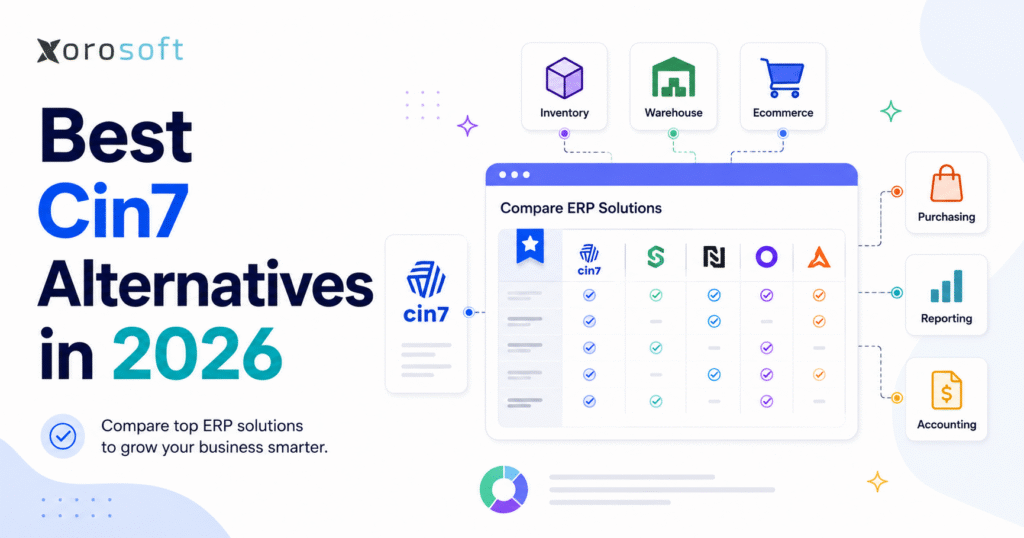
If you’re searching for Cin7 alternatives to manage your business operations, there are several powerful options to consider.
1. Inventory Complexity Is Pushing Teams to Compare Cin7 Alternatives
The search for Cin7 alternatives usually starts when inventory stops being a simple stock-counting problem.
At an early stage, a product business may only need to know what is in stock, what has sold, and what needs to be reordered. One warehouse, one ecommerce channel, a few suppliers, and a basic accounting workflow can often be managed with lightweight tools. The team knows where products are, purchasing feels manageable, and finance can still close the books without too much manual cleanup.
However, growth changes the operating model.
More SKUs are added. Shopify orders increase. Amazon becomes important. Wholesale customers expect better availability. EDI requirements appear. Warehouses multiply. Meanwhile, purchasing becomes harder to forecast because demand is no longer coming from one clean channel.
As a result, the inventory system becomes the center of the business. It touches sales, purchasing, warehouse operations, accounting, customer service, and leadership reporting.
1.1 Why Cin7 Competitors Enter the Conversation
Many teams do not compare Cin7 competitors because one tool suddenly becomes unusable. Instead, they begin searching because the business has become more complex than the original software stack.
Bundles, kits, returns, backorders, supplier delays, landed costs, and warehouse transfers all affect the same inventory number. Therefore, one small sync issue can create problems across multiple teams.
For example, sales may promise stock that is already committed. Purchasing may reorder too late because incoming inventory is unclear. Warehouse teams may pick from the wrong location. Finance may spend extra time reconciling inventory value with accounting records.
Because of this, the best Cin7 alternative is not simply the platform with the longest feature list. It is the system that fits the way the business actually operates.
1.2 Why a Cin7 Replacement Is Often a Strategic Decision
A Shopify brand needs different capabilities than a wholesale distributor. Similarly, a manufacturer needs different workflows than an apparel reseller. A furniture company with long supplier lead times needs different controls than a fast-moving sporting goods brand.
In practice, the software decision becomes strategic when inventory starts affecting cash flow, fulfillment speed, customer experience, and financial reporting.
That is why companies often move from basic inventory tools toward ERP, WMS, or more connected operations platforms. The goal is not to replace one app with another. Instead, the goal is to reduce manual work, improve visibility, and give every department a more reliable operating system.
2. What Cin7 Alternatives Should Actually Solve
A Cin7 replacement should not simply copy the features of the system being replaced. It should solve the operational gaps that pushed the business into a software search in the first place.
For some companies, the main problem is inventory accuracy. Teams cannot trust available stock, so sales oversells, purchasing reacts late, and warehouse teams spend too much time correcting mistakes.
In other cases, finance is the real driver. Inventory data does not flow cleanly into accounting, so month-end close becomes slow, manual, and frustrating.
Often, the problem sits between departments. Inventory affects purchasing. Purchasing affects cash flow. Warehouse mistakes affect customer service. Ecommerce sync issues affect fulfillment. Manufacturing delays affect sales orders. Accounting delays affect leadership reporting.
2.1 Cin7 Inventory Alternatives for Stock Accuracy
Inventory accuracy should be the first evaluation area.
A useful system should show what is on hand, what is committed, what is available, what is incoming, and what is located in each warehouse. Beyond that, it should support practical workflows such as stock adjustments, transfers, cycle counts, barcode scanning, returns, damaged stock, reserved inventory, and reorder planning.
Without this foundation, every other workflow becomes harder. Even the best reporting dashboard becomes unreliable if the underlying inventory data is wrong.
2.2 ERP Alternatives for Finance and Operations
Some companies searching for alternatives to Cin7 are really searching for ERP.
They need inventory and accounting to operate from the same source of truth. This matters when the business has complex COGS, landed costs, supplier bills, inventory valuation, purchase receipts, and reconciliation requirements.
At that stage, finance cannot depend only on exported reports and manual adjustments. Instead, the business needs cleaner operational data flowing into financial reporting.
2.3 Warehouse Management Alternatives for Fulfillment Control
Warehouse-heavy businesses should evaluate receiving, putaway, bin locations, barcode scanning, picking, packing, shipping, transfers, and cycle counting.
If warehouse teams cannot use the system efficiently, inventory accuracy will decline no matter how strong the software looks in a demo.
A platform such as XoroWMS becomes relevant when warehouse workflows need barcode-based control, location visibility, and operational discipline across fulfillment teams.
3. Best Cin7 Alternatives in 2026 Compared
The best Cin7 alternatives fall into several categories. Some are cloud ERP platforms. Others are inventory management tools, retail operating systems, manufacturing platforms, or warehouse-focused solutions.
| Platform | Best Fit | System Type | Main Strength | Watch-Out |
|---|---|---|---|---|
| Xorosoft | Inventory-driven ecommerce, wholesale, and manufacturing businesses | Cloud ERP | Inventory, accounting, purchasing, WMS, manufacturing, forecasting, and reporting | May be more than very small businesses need |
| NetSuite | Larger businesses with complex finance and operations | Cloud ERP | Broad ERP depth and financial controls | Implementation can be complex |
| Acumatica | Mid-market distributors and manufacturers | Cloud ERP | Flexible ERP workflows and distribution depth | Requires careful implementation planning |
| Fishbowl | QuickBooks-centered inventory and manufacturing teams | Inventory and manufacturing software | Inventory, warehouse, and QuickBooks workflows | May not replace full ERP needs |
| Brightpearl | Retail and ecommerce brands | Retail operating system | Multichannel retail operations and automation | Less ideal for complex manufacturing |
| Katana | Small and midsize manufacturers | Manufacturing and inventory software | Production planning and raw material visibility | May not fit broader ERP needs |
| Unleashed | Wholesalers, distributors, and product businesses | Inventory management software | Stock control, purchasing, and supplier workflows | Accounting depth depends on integrations |
| Odoo | Companies wanting modular ERP flexibility | Modular ERP | Broad app ecosystem | Configuration can become complex |
| Business Central | Microsoft-centered SMBs | ERP | Finance, sales, operations, and inventory | Advanced workflows may need partner support |
| Zoho Inventory | Smaller businesses with simpler inventory | Inventory management software | Affordable stock and order management | May not fit complex operations |
3.1 Best Cin7 Alternative for Growing Product Businesses
Growing product businesses usually need more than inventory visibility. They also need purchasing automation, accounting accuracy, warehouse control, ecommerce connectivity, forecasting, and reporting.
For this group, cloud ERP platforms become more relevant than standalone inventory tools. XoroOne is one example of a cloud ERP platform built for inventory-driven businesses that want inventory, accounting, purchasing, warehouse management, manufacturing, forecasting, reporting, and ecommerce operations in one system.
3.2 Best Cin7 Competitors for ERP Requirements
NetSuite, Acumatica, Microsoft Dynamics 365 Business Central, Odoo, and Xorosoft often appear when the buyer needs ERP-level depth.
These platforms are not identical. NetSuite is often evaluated by larger and more complex companies. Acumatica is known for flexible mid-market ERP workflows. Business Central fits companies already invested in Microsoft. Odoo appeals to teams that want modular flexibility. Meanwhile, Xorosoft is often relevant for inventory-driven businesses that want ERP depth without managing several disconnected systems.
3.3 Best Cin7 Replacement for Smaller Teams
Smaller businesses may not need full ERP yet.
Zoho Inventory, Unleashed, Fishbowl, and Katana can be practical options depending on the business model. For example, a small manufacturer may consider Katana. A QuickBooks-centered product business may evaluate Fishbowl. A business that wants simple stock management across warehouses may consider Zoho Inventory or Unleashed.
4. Xorosoft as a Cloud ERP Alternative to Cin7
Xorosoft is a cloud ERP platform built for inventory-driven businesses. It combines inventory management, accounting, purchasing, warehouse management, manufacturing, forecasting, reporting, and ecommerce operations in one system.
For companies that have outgrown QuickBooks, spreadsheets, inventory-only software, warehouse apps, purchasing spreadsheets, and disconnected reporting tools, this kind of centralized system can reduce operational friction.
4.1 Xorosoft for Shopify and Ecommerce Operations
Shopify brands often begin with a simple stack: Shopify, QuickBooks, spreadsheets, and one inventory app. That setup can work for a while. Eventually, however, problems appear when the brand adds Amazon, wholesale, multiple warehouses, purchasing teams, returns, bundles, forecasting, and accounting requirements.
For Shopify merchants, the Xorosoft ERP app on Shopify fits naturally when the business needs a stronger operational system behind the storefront. Instead of treating Shopify as the entire back office, Xorosoft helps connect inventory, purchasing, accounting, warehouse management, and reporting behind the sales channel.
4.2 Xorosoft for Wholesale ERP Workflows
Wholesale businesses need more than basic inventory tracking. They often manage customer-specific pricing, EDI, allocations, sales orders, backorders, payment terms, supplier lead times, and multi-warehouse fulfillment.
A platform such as XoroERP can support these workflows when the business needs ERP-level control across inventory, finance, purchasing, warehouse operations, and reporting.
4.3 Xorosoft for Inventory-Driven Industries
Different industries have different inventory pain points.
Apparel brands manage variants, sizes, colors, seasons, and returns. Furniture companies manage large items, long lead times, and warehouse space. Sporting goods companies deal with seasonality. Food businesses may need lot or batch awareness. Manufacturers need BOMs, work orders, and production planning.
For companies comparing Cin7 alternatives by industry, the Xorosoft industries page gives a useful view of how ERP workflows apply across apparel, wholesale, furniture, sporting goods, food, manufacturing, and other product-based sectors.
5. NetSuite as a Cin7 ERP Alternative
NetSuite is a broad cloud ERP platform used by businesses that need financial management, inventory, procurement, order management, warehouse workflows, reporting, and operational controls.
It can be a strong fit for larger companies with complex finance requirements, multiple entities, mature reporting needs, and global operations. However, businesses should evaluate implementation cost, partner requirements, user training, customization, and long-term admin effort before committing.
5.1 NetSuite vs Cin7 for Complex Finance
Companies often compare NetSuite and Cin7 when finance becomes central to the buying decision.
If inventory valuation, COGS, landed cost, procurement, and revenue reporting need deeper ERP control, NetSuite may be considered. Still, NetSuite is not always the right fit for every growing brand.
Some companies want ERP depth but prefer a platform designed more directly around inventory-driven operations. In those cases, it can help to compare Xorosoft and NetSuite before choosing a path.
5.2 When NetSuite May Fit Best
NetSuite may fit companies with complex accounting, multi-subsidiary structures, broad ERP requirements, and larger implementation budgets. It can also make sense when leadership wants a widely adopted enterprise ERP ecosystem.
5.3 When Other Cin7 Alternatives May Be Better
Another option may be more practical when the business wants faster operational fit, a more inventory-focused ERP experience, or less implementation complexity.
Ultimately, the right answer depends on internal resources, business model, process maturity, budget, and the level of customization required.
6. Acumatica as a Flexible ERP Alternative
Acumatica is a cloud ERP platform often evaluated by distributors, manufacturers, and mid-market companies that want flexibility across finance, inventory, purchasing, warehouse operations, and reporting.
It can be a strong option for companies that need ERP depth and customization flexibility. Like any ERP, though, it requires clean data, clear process ownership, and thoughtful implementation planning.
6.1 Acumatica for Distribution Workflows
Distribution businesses need visibility across sales, purchasing, warehouses, suppliers, and fulfillment. Acumatica can support these workflows through distribution management and warehouse-related capabilities.
Because distribution workflows often involve many handoffs, buyers should test sales orders, purchase orders, receiving, allocation, fulfillment, and reporting during demos.
6.2 Acumatica for Manufacturing and Inventory
Manufacturers may consider Acumatica when production, materials, purchasing, and inventory need to operate together.
This can be useful when raw materials, finished goods, work orders, and costing need stronger controls. However, implementation scope should be defined carefully so the project does not become larger than the business can manage.
6.3 Acumatica Buying Considerations
Before selecting Acumatica, buyers should evaluate partner experience, implementation scope, reporting requirements, integration needs, and warehouse workflows.
In addition, leadership should confirm who will own system administration after go-live. ERP success depends not only on software but also on internal process discipline.
7. Fishbowl as a Cin7 Inventory Alternative
Fishbowl is often evaluated by businesses that use QuickBooks or Xero and need stronger inventory, warehouse, or manufacturing workflows.
Rather than replacing finance completely, it can work well for businesses that want to keep their accounting system while improving operational control.
7.1 Fishbowl for QuickBooks-Centered Businesses
Many businesses outgrow basic QuickBooks inventory but are not ready for full ERP. Fishbowl can fit that stage because it supports inventory, manufacturing, warehouse workflows, and accounting integration.
This makes it useful for product businesses that want more operational structure without changing their entire finance system.
7.2 Fishbowl for Manufacturing and Warehouses
Fishbowl may fit companies that need bills of materials, work orders, barcode scanning, inventory tracking, and warehouse operations while keeping finance in QuickBooks.
However, teams should still test the details. Receiving, production, picking, adjustments, purchase orders, and reporting should be reviewed carefully before buying.
7.3 Fishbowl Limitations to Review
If the company needs accounting, forecasting, purchasing, warehouse management, ecommerce operations, reporting, and manufacturing in one system, it should compare Fishbowl against ERP platforms as well.
That comparison helps prevent a second migration later.
8. Brightpearl as a Retail and Ecommerce Alternative
Brightpearl is a retail operating system designed for multichannel retailers, ecommerce brands, and wholesalers.
Its core focus is order management, inventory visibility, fulfillment, automation, purchasing, reporting, and accounting-connected retail operations.
8.1 Brightpearl for Retail Operations
Brightpearl can be useful for businesses that sell across multiple retail and ecommerce channels and need automation around orders, fulfillment, and inventory updates.
For retail-led brands, this focus can reduce the need for manual order handling and disconnected spreadsheets.
8.2 Brightpearl for Multichannel Ecommerce
Ecommerce brands often struggle when Shopify, Amazon, retail, wholesale, and warehouse operations are handled in separate systems. Brightpearl is designed around this type of retail operating model.
As a result, it may fit brands that prioritize order flow, automation, and retail operations over deeper manufacturing needs.
8.3 Brightpearl Fit and Limitations
Businesses with deeper manufacturing, complex production planning, or full ERP accounting requirements should compare Brightpearl against ERP options before making a final decision.
The platform can be strong for retail operations, but the best fit depends on how much operational depth the company needs outside ecommerce and order management.
9. Katana, Unleashed, Odoo, Business Central, and Zoho Inventory
Not every Cin7 alternative needs a long enterprise ERP evaluation. Some platforms fit specific use cases better than broad ERP systems.
This section covers several options that may fit manufacturing, inventory management, modular ERP, Microsoft-centered businesses, or simpler stock control needs.
9.1 Katana as a Cin7 Alternative for Manufacturing
Katana is often relevant for small and midsize manufacturers that need inventory, raw material planning, production visibility, purchase orders, and Shopify-connected workflows.
It can be a strong option when production is the main operational challenge. However, businesses with deeper accounting, wholesale, EDI, or ERP requirements should check whether Katana can support the full operating model.
9.2 Unleashed as an Inventory Software Alternative
Unleashed is a cloud inventory management platform often used by wholesalers, distributors, and product businesses.
It supports stock control, purchasing, supplier management, multi-location visibility, and inventory reporting. Therefore, it may fit companies that want stronger inventory management without moving into a full ERP project.
9.3 Odoo as a Modular ERP Alternative
Odoo offers a modular ERP approach with apps for inventory, accounting, manufacturing, ecommerce, CRM, and more.
Its flexibility is a major advantage. However, flexibility can also create complexity. Buyers should define scope carefully and avoid turning a clean implementation into an over-customized project.
9.4 Microsoft Business Central as a Cin7 ERP Alternative
Microsoft Dynamics 365 Business Central is often considered by small and midsize businesses that already use Microsoft tools and want finance, sales, operations, and inventory in one ERP environment.
It can fit companies that value Microsoft ecosystem alignment. Still, advanced ecommerce, WMS, or manufacturing workflows may need partner support or additional configuration.
9.5 Zoho Inventory as a Lightweight Cin7 Replacement
Zoho Inventory can fit smaller businesses that need affordable inventory tracking, order management, warehouse visibility, shipping workflows, and basic purchase management.
It is usually better for simpler operations. Businesses with complex accounting, manufacturing, EDI, warehouse, or multi-entity needs may outgrow it.
10. Best Cin7 Alternatives by Business Model
Choosing software by brand name alone is risky. A better approach is to choose based on how the business actually operates.
Different companies need different levels of inventory, accounting, purchasing, warehouse, ecommerce, and manufacturing depth. Therefore, the best short list should reflect the operating model, not just the vendor category.
10.1 Cin7 Alternatives for Shopify Brands
Shopify brands need accurate inventory sync, order routing, purchasing, fulfillment, returns, accounting, and reporting.
As order volume grows, Shopify should remain the storefront, not the entire operating system. Otherwise, operations teams may end up forcing back-office workflows into ecommerce tools that were not built for that job.
Good options may include Xorosoft, Brightpearl, Katana, Zoho Inventory, Fishbowl, and other platforms depending on the brand’s size and complexity.
10.2 Demo Questions for Shopify Inventory Software Alternatives
A growing Shopify brand should ask vendors to demonstrate real workflows.
Ask how Shopify orders sync into the system. Then check how inventory updates flow back to Shopify. After that, review returns, bundles, partial fulfillment, purchase orders, warehouse picking, accounting entries, and reporting.
This demo format reveals more than a standard feature overview.
10.3 Cin7 Alternatives for Wholesale Distributors
Wholesale distributors need customer-specific pricing, EDI, purchase orders, allocations, payment terms, backorders, and warehouse visibility.
ERP platforms such as Xorosoft, NetSuite, Acumatica, Business Central, and Odoo may be stronger when wholesale complexity affects accounting, purchasing, and fulfillment.
Inventory tools such as Unleashed or Fishbowl may fit when the business needs operational control without full ERP depth.
10.4 Cin7 Alternatives for Multi-Warehouse Inventory
Multi-warehouse businesses need more than a total stock number. They need visibility by location, transfer workflows, replenishment rules, receiving processes, bin-level accuracy, and warehouse reporting.
The best options are usually ERP or WMS-enabled platforms. During evaluation, teams should test receiving, transfers, order allocation, barcode scanning, picking, packing, cycle counting, and stock adjustments before buying.
10.5 Cin7 Alternatives for Manufacturing
Manufacturers need BOMs, raw materials, work orders, production planning, finished goods, material availability, and costing.
Katana and Fishbowl may fit smaller manufacturers. ERP systems such as Xorosoft, Acumatica, NetSuite, Odoo, and Business Central may fit when manufacturing must connect with purchasing, accounting, warehouse management, ecommerce, and reporting.
10.6 Cin7 Alternatives for Finance-Led Teams
If finance is driving the software search, buyers should focus on inventory valuation, landed cost, COGS, purchase receipts, supplier bills, revenue recognition, margin reporting, and month-end close.
In this case, ERP alternatives usually deserve serious consideration because finance teams need clean operational data, not just inventory exports.
11. Inventory Software vs ERP: Which Cin7 Replacement Do You Need?
The most important buying decision is not which vendor to choose. It is which category of system your business actually needs.
| System Type | Best For | Solves | May Not Solve |
| Inventory software | Smaller product businesses | Stock, orders, purchasing, basic warehouse workflows | Deep accounting, complex reporting, ERP workflows |
| ERP | Growing inventory-driven businesses | Inventory, accounting, purchasing, warehouse, reporting, operations | Requires stronger implementation planning |
| WMS | Warehouse-heavy businesses | Receiving, scanning, picking, packing, shipping | Accounting and finance workflows |
| OMS | Ecommerce and retail brands | Order routing and fulfillment coordination | Inventory costing and accounting depth |
| Accounting software | Finance-led teams | Bills, invoices, financial reporting | Operational inventory complexity |
11.1 Choose Inventory Software When Operations Are Still Simple
Inventory software may be enough if the business has simple SKUs, few warehouses, basic purchasing, limited manufacturing, and straightforward accounting requirements.
For early-stage teams, this can be the most practical route because implementation is usually lighter.
11.2 Choose ERP When Operations Are Connected
ERP becomes more relevant when inventory, accounting, purchasing, warehouse management, manufacturing, forecasting, and reporting all need to work together.
This is where platforms such as XoroERP become important for businesses that have outgrown disconnected tools.
11.3 Choose WMS When the Warehouse Is the Bottleneck
If warehouse errors are creating the biggest cost, a stronger WMS may be required.
The system should support barcode scanning, location control, receiving, picking, packing, transfers, and cycle counting. Without those workflows, warehouse teams may continue relying on manual fixes.
12. When It Is Time to Replace Cin7
A business should not replace software just because a new tool looks attractive. Switching systems takes planning, time, and internal effort.
However, there are clear signs that a company should evaluate Cin7 alternatives seriously.
12.1 Inventory Numbers Are No Longer Trusted
When sales, warehouse, purchasing, and finance teams all question inventory numbers, the system is not supporting the business properly.
This issue often shows up as overselling, emergency purchasing, manual stock checks, warehouse confusion, and customer service problems.
12.2 Purchasing Still Runs Through Spreadsheets
Spreadsheets are flexible, but they do not scale well for purchasing.
As supplier count, SKU count, and order volume grow, purchasing teams need reorder logic, supplier lead times, demand planning, PO approvals, and open PO visibility.
12.3 Warehouse Teams Rely on Manual Workarounds
Manual warehouse processes create hidden costs.
Staff spend time checking shelves, correcting mistakes, reprinting orders, updating spreadsheets, or asking other departments for information. Over time, those small delays become larger fulfillment problems.
12.4 Accounting Reconciliation Takes Too Long
When finance teams spend too much time reconciling inventory, supplier bills, COGS, purchase receipts, and adjustments, leadership loses timely visibility.
At that point, the software decision becomes a finance decision as much as an operations decision.
12.5 Too Many Apps Surround the Inventory System
One app may handle inventory. Another may handle purchasing. A separate tool may manage EDI. Warehouse teams may use something else. Reporting may still depend on spreadsheets.
This creates integration risk and duplicate work. Eventually, the business may need a central ERP platform instead of another disconnected app.
13. Cin7 Migration Checklist Before Switching Systems
A successful migration depends more on preparation than software selection. Even the best system will struggle if the data is messy and workflows are unclear.
| Migration Area | What to Prepare | Owner | Priority |
| SKUs | Clean item names, variants, units, and barcodes | Operations | High |
| Inventory balances | Validate stock by warehouse and location | Warehouse | High |
| Vendors | Clean supplier records, lead times, and terms | Purchasing | Medium |
| Customers | Review wholesale, ecommerce, and B2B records | Sales | Medium |
| Open POs | Confirm status, quantities, and expected dates | Purchasing | High |
| Open sales orders | Confirm fulfillment and backorder status | Operations | High |
| Warehouse locations | Map bins, zones, and transfer rules | Warehouse | High |
| Accounting data | Validate inventory valuation and COGS | Finance | High |
| Integrations | Confirm Shopify, Amazon, EDI, 3PL, and shipping | Operations / IT | High |
| Users | Define roles, permissions, and approvals | Leadership | Medium |
13.1 Clean Product Data First
Product data issues become migration issues.
Before switching systems, clean SKUs, variants, descriptions, units of measure, barcodes, categories, vendor items, and product statuses. This step reduces confusion during testing and prevents avoidable cleanup after go-live.
13.2 Validate Inventory Before Go-Live
Do not migrate inventory balances blindly.
Run cycle counts, validate warehouse quantities, review unavailable stock, and confirm open orders before go-live. Otherwise, the new system may begin with the same inventory problems the old system had.
13.3 Test Accounting Workflows Before Launch
Finance should test purchase receipts, supplier bills, inventory adjustments, landed costs, COGS, sales invoices, and reporting before the system becomes live.
This testing matters because accounting issues often appear after operations believe the system is ready.
13.4 Train Warehouse and Operations Teams
Training should focus on real work, not generic navigation.
Warehouse users need to practice receiving, picking, packing, transfers, returns, cycle counts, and exceptions. Operations users should also test purchasing, order management, inventory adjustments, and reporting.
14. Common Mistakes When Comparing Cin7 Competitors
Many software projects fail before implementation starts because the buying process is too shallow.
Instead of mapping workflows, teams often compare surface-level feature lists. As a result, they choose a platform that looks strong during sales calls but creates friction after go-live.
14.1 Comparing Feature Lists Instead of Workflows
A feature list can tell you what a system claims to support. It cannot tell you whether the system fits your process.
Ask vendors to demonstrate your workflows from start to finish. Use real examples. Include edge cases. Also test the handoff between sales, purchasing, warehouse, accounting, and reporting.
14.2 Choosing the Cheapest Cin7 Replacement
A cheaper system can become expensive if it creates manual work, reporting gaps, integration problems, or a second migration two years later.
Total cost should include software, implementation, training, integrations, support, internal admin time, and operational inefficiency.
14.3 Ignoring Warehouse Users
Warehouse teams often feel the pain of poor systems first.
If they are not involved in the buying process, the selected platform may look good to leadership but fail on the floor. Therefore, warehouse users should participate in demos, workflow reviews, and testing.
14.4 Leaving Finance Out Too Late
Inventory software affects accounting.
Finance should review inventory valuation, purchase receipts, supplier bills, landed costs, COGS, adjustments, and month-end reporting before the business signs a contract.
14.5 Buying Too Much ERP Too Early
Not every company needs ERP immediately.
Very small teams may be better served by a simpler inventory system until complexity justifies a larger platform. The goal is not to buy the biggest system. Instead, the goal is to buy the right system for the next stage.
15. Frequently Asked Questions About Cin7 Alternatives
15.1 Best Cin7 Alternative in 2026: Which Option Fits Most Businesses?
The best Cin7 alternative depends on the company’s operating model. Ecommerce brands may need Shopify, Amazon, fulfillment, and inventory sync. Wholesale distributors may need EDI, pricing, purchasing, and allocation. Manufacturers may need BOMs and work orders. Meanwhile, growing inventory-driven businesses may need ERP with accounting, purchasing, warehouse management, forecasting, reporting, and ecommerce operations in one system.
15.2 Top Cin7 Competitors: Which Platforms Should Buyers Compare?
Common Cin7 competitors include Xorosoft, NetSuite, Acumatica, Fishbowl, Brightpearl, Katana, Unleashed, Odoo, Microsoft Dynamics 365 Business Central, and Zoho Inventory. The right option depends on whether the business needs inventory software, ERP, WMS, manufacturing software, or retail operations software.
15.3 Main Reasons Companies Search for Cin7 Alternatives
Businesses usually compare Cin7 alternatives when inventory, purchasing, warehouse, accounting, or ecommerce workflows become harder to manage. Common triggers include unreliable stock numbers, manual purchasing, slow month-end close, warehouse errors, weak forecasting, disconnected apps, and poor reporting visibility. As complexity grows, teams often need stronger system alignment.
15.4 Cin7 as ERP: How Should Buyers Think About It?
Cin7 is commonly evaluated for inventory, operations, ecommerce, purchasing, warehouse, and product workflows. However, buyers should compare its capabilities against their ERP requirements. A full ERP usually connects inventory with accounting, purchasing, warehouse management, manufacturing, forecasting, reporting, and broader business operations.
15.5 Shopify Brands: Which Cin7 Alternative Works Best?
For Shopify brands, the best option depends on operational complexity. Smaller stores may need a lighter inventory app. Growing Shopify brands with purchasing, warehouse, Amazon, wholesale, accounting, and reporting needs may need ERP. Xorosoft, Brightpearl, Katana, Zoho Inventory, and Fishbowl may all be evaluated depending on workflows.
15.6 Wholesale Teams: Which Cin7 Replacement Makes Sense?
Wholesale businesses should evaluate EDI, customer-specific pricing, allocations, backorders, sales orders, purchasing, warehouse workflows, and margin reporting. ERP platforms such as Xorosoft, NetSuite, Acumatica, Business Central, and Odoo may be relevant when wholesale operations become complex.
15.7 Manufacturing Requirements: Which Alternative Should Be Shortlisted?
Manufacturers should evaluate BOMs, work orders, production planning, raw material tracking, finished goods, material availability, and costing. Katana and Fishbowl can fit smaller manufacturers. However, ERP systems may fit better when manufacturing needs to connect with accounting, purchasing, warehouse, ecommerce, and reporting.
15.8 Accounting Needs: Which Cin7 Alternative Includes Finance?
ERP platforms are more likely to include accounting functionality, while inventory tools often integrate with QuickBooks, Xero, or another finance platform. Buyers should test purchase receipts, landed cost, COGS, supplier bills, inventory valuation, adjustments, and reporting before choosing.
15.9 EDI Support: What Should Wholesale Buyers Check?
EDI support varies by platform and implementation. Wholesale distributors should ask vendors to demonstrate purchase orders, invoices, shipment notices, acknowledgments, customer requirements, exception handling, and order updates. EDI should be evaluated as a workflow, not just a feature checkbox.
15.10 Multi-Warehouse Inventory: Which Platform Type Works Best?
The best system should support location-level inventory, transfers, receiving, barcode scanning, replenishment, cycle counts, picking, packing, and warehouse reporting. ERP and WMS-enabled platforms are usually stronger for multi-warehouse operations than lightweight inventory tools.
15.11 NetSuite Compared With Cin7: When Is It a Good Fit?
NetSuite can be a strong Cin7 alternative for larger businesses that need broad ERP functionality, financial controls, procurement, inventory, order management, and warehouse capabilities. However, companies should carefully evaluate implementation effort, cost, internal resources, and partner requirements.
15.12 Fishbowl Compared With Cin7: Who Should Consider It?
Fishbowl can be a good option for small and midsize businesses that use QuickBooks or Xero and need stronger inventory, warehouse, and manufacturing workflows. It may be less suitable for companies that want to replace multiple systems with a full ERP.
15.13 Acumatica as a Cin7 Alternative: What Is the Fit?
Acumatica can fit distributors and manufacturers that need cloud ERP, inventory management, procurement, fulfillment, warehouse visibility, and flexible workflows. As with most ERP systems, success depends on clean data, proper implementation planning, and clear process ownership.
15.14 Brightpearl as a Retail Alternative: When Does It Work?
Brightpearl can fit retail and ecommerce businesses that need multichannel order management, inventory visibility, fulfillment workflows, automation, and retail operations support. It may not be the best fit for businesses with complex manufacturing or production planning needs.
15.15 Katana for Manufacturing: Where Does It Fit?
Katana can fit small and midsize manufacturers that need inventory tracking, production planning, raw material visibility, purchase orders, and Shopify-connected workflows. Businesses with deeper accounting, wholesale, EDI, or ERP requirements should evaluate whether Katana is broad enough.
15.16 Zoho Inventory for Smaller Teams: Is It Enough?
Zoho Inventory can be a good fit for smaller businesses that need affordable inventory tracking, order management, warehouse visibility, and shipping workflows. It may not fit companies with complex accounting, multi-warehouse, manufacturing, EDI, or ERP requirements.
15.17 Replacement Timing: When Should a Company Move On?
A company should consider replacing Cin7 when the system no longer supports its operating model. Common signs include unreliable inventory, spreadsheet-based purchasing, warehouse inefficiency, slow accounting reconciliation, weak reporting, and too many disconnected apps around inventory operations.
15.18 Switching From Cin7: What Should Be Checked First?
Before switching, check SKU data, inventory balances, warehouse locations, vendor records, customer records, open purchase orders, open sales orders, accounting data, integrations, user roles, and reporting needs. Migration quality depends heavily on data quality.
15.19 Inventory Software vs ERP: What Is the Difference?
Inventory software mainly manages stock, orders, purchasing, and basic fulfillment. ERP connects inventory with accounting, purchasing, warehouse management, manufacturing, forecasting, reporting, and broader operational workflows. The right choice depends on business complexity.
15.20 App Consolidation: Can a Cin7 Alternative Replace Multiple Tools?
Yes, some ERP platforms can replace separate tools for inventory, purchasing, warehouse management, accounting, forecasting, reporting, and ecommerce operations. However, buyers should confirm exactly which apps can be replaced and which integrations will still be required.
16. Final Takeaway: Choose the Cin7 Alternative Around Your Operating Model
The best Cin7 alternatives are not chosen from a generic top-ten list. They are chosen by matching software depth to business complexity.
A smaller business may only need affordable inventory software. A Shopify brand may need stronger ecommerce sync, purchasing, and fulfillment control. A wholesale distributor may need EDI, allocation, customer-specific pricing, and warehouse visibility. A manufacturer may need BOMs, work orders, raw material planning, and production costing. Meanwhile, a finance-led team may need ERP because inventory and accounting must finally operate from the same source of truth.
Before choosing a Cin7 replacement, map how your business actually runs. Document how orders enter the system, how inventory moves, how purchasing decisions are made, how warehouses receive and ship, how accounting closes the month, and how leadership gets reporting.
Then ask each vendor to demonstrate those workflows.
For inventory-driven businesses that have outgrown QuickBooks, spreadsheets, inventory-only tools, or disconnected apps, platforms such as Xorosoft are worth evaluating. Xorosoft brings inventory management, accounting, purchasing, warehouse management, manufacturing, forecasting, ecommerce operations, and reporting together in one cloud ERP system.
If your team is actively comparing Cin7 alternatives, the next step is to review your current operational gaps, shortlist systems by workflow fit, and book a personalized demo when you are ready to evaluate how an ERP platform would support your business.
Recent Posts
-
 ERP Landed Cost Module vs Spreadsheet Calculations for Importers
 -
 How to Build an Open-to-Buy Plan for an Omnichannel Brand
 -
 Cold Storage WMS for Food and Beverage Distribution
 -
 ERP Buying Statistics 2026: Evaluation, Implementation, and Adoption Risks
 -
 How a Distributor Reduced B2B Order Exceptions Without Restricting Sales