B2B inventory allocation is an essential consideration for businesses managing stock across multiple clients and channels.
1. Shared Inventory Breaks When Customer Priorities Collide
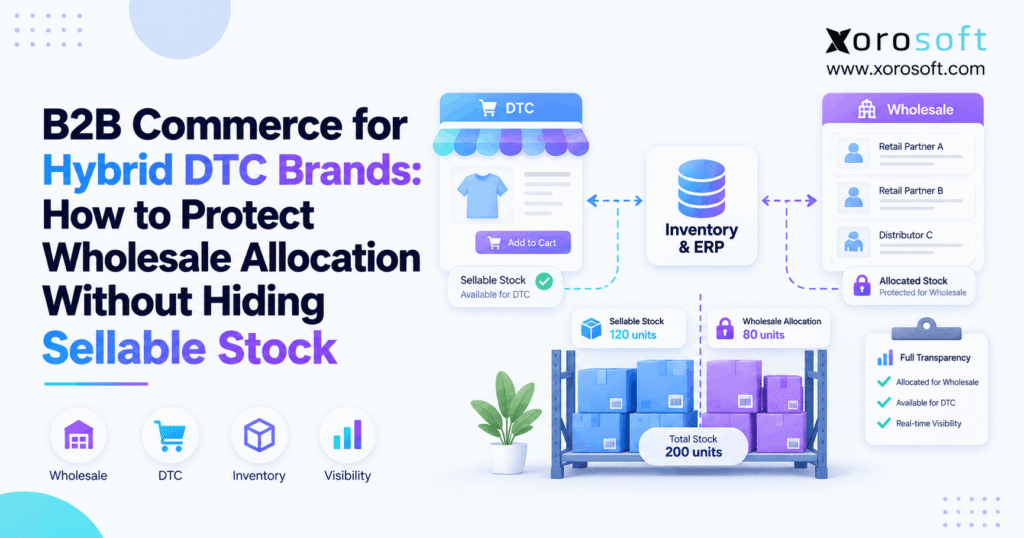
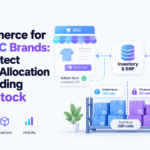
B2B inventory allocation helps hybrid DTC brands protect genuine wholesale commitments without unnecessarily hiding inventory that could still generate revenue. Therefore, the goal is not to create permanent wholesale and DTC stock silos. Instead, operators need to identify which units carry real commitments, which need temporary protection, and which remain safely sellable.
For example, a business may have 1,000 units in one warehouse. However, 250 units could support confirmed wholesale orders, while another 100 units protect operational safety stock. Consequently, showing all 1,000 units online can create a fulfillment problem.
At the same time, hiding 500 units for possible future wholesale demand creates the opposite problem. Therefore, strong allocation rules protect real obligations without creating artificial scarcity.
1.1 How DTC and wholesale demand compete for the same stock
DTC demand usually moves quickly. For example, a shopper sees a product, places an order, and expects fulfillment shortly afterward. Therefore, consumer availability often needs to reflect what the company can ship immediately.
Wholesale demand behaves differently. A retailer may forecast demand, submit a prebook, issue a purchase order, change quantities, or request delivery several weeks later.
Consequently, these demand signals should not receive identical inventory treatment. A forecast can guide purchasing without locking inventory. Meanwhile, a confirmed purchase order usually deserves stronger protection.
Therefore, hybrid brands need several commitment levels instead of one generic wholesale bucket.
1.2 Why sellable stock differs from physical on-hand inventory
On-hand inventory answers a simple question: how many units physically exist?
However, operations teams need a different answer: how many units can the business still sell safely?
For example, part of the stock may already support accepted orders. In addition, some units may be damaged, quarantined, reserved, or held as safety stock.
Therefore, raw on-hand inventory can overstate true availability. As a result, hybrid brands should track physical inventory, committed inventory, reserved inventory, and sellable inventory separately.
Once those states become clear, operators can protect wholesale commitments without hiding inventory that still belongs in the active sales pool.
2. B2B Inventory Allocation Starts With Clear Inventory States
Effective B2B inventory allocation begins with consistent inventory definitions. Otherwise, ecommerce, wholesale, purchasing, and warehouse teams may all work from different versions of availability.
Therefore, operators should define each inventory state before designing more sophisticated rules.
2.1 How B2B Inventory Allocation Uses Available, Reserved, and Committed Stock
On-hand inventory represents physical stock at a location. However, that number should not automatically flow to every selling channel.
Committed inventory supports customer demand the company has already accepted. Meanwhile, reserved inventory protects supply for a particular order, customer, location, or sales channel.
Available inventory represents what remains after relevant commitments are considered. Therefore, the same SKU can have one physical quantity but several operational quantities.
For example, a warehouse may hold 800 units while only 520 units remain safely sellable. Consequently, allocation becomes more accurate when every team uses the same definitions.
2.2 Why each inventory state needs a clear operational definition
Different systems sometimes use terms such as allocated, committed, reserved, available, and sellable differently.
Therefore, the business should define what those terms mean internally before automating them.
For example, a team might define “committed” as stock associated with confirmed customer orders. Meanwhile, “reserved” could represent supply intentionally protected before warehouse picking begins.
Additionally, the company should define which states reduce ecommerce availability immediately.
As a result, sales, purchasing, finance, and warehouse teams can discuss inventory without translating terminology each time an exception occurs.
Clear definitions also make reporting more useful because operators can explain why inventory exists physically but cannot currently support another order.
3. B2B Inventory Allocation Should Follow Commitment Strength
Not every possible wholesale sale deserves immediate protection. Therefore, B2B inventory allocation should become stronger as the customer’s commitment becomes stronger.
This approach reduces wholesale shortages while also preventing tentative demand from blocking healthy DTC sales.
3.1 Wholesale Inventory Allocation for Forecasts, Prebooks, and Orders
Forecasts help teams anticipate likely future demand. However, they are still estimates.
Therefore, forecasts should usually influence purchasing before they create hard inventory reservations.
A wholesale prebook represents stronger intent. Consequently, the business may use a temporary or soft reservation while waiting for final confirmation.
A confirmed purchase order represents a stronger commercial obligation. Therefore, it may justify hard protection.
By separating forecasts, prebooks, and confirmed orders, wholesale inventory allocation becomes more precise. As a result, the business avoids treating every sales signal as if the customer had already committed to buy.
3.2 When confirmed customer demand deserves stronger protection
Once a company accepts a firm order, the risk changes.
Therefore, inventory assigned to that order normally needs stronger protection. Otherwise, another channel may sell stock the company has already promised.
However, even a confirmed order can change. For example, the buyer might reduce quantities, delay shipment, or cancel part of the order.
Consequently, reservations should stay connected to the underlying demand. If the order changes, the protected quantity should change as well.
This approach prevents outdated commitments from trapping inventory after the commercial reason for the reservation disappears.
4. Hard and Soft Reservations Solve Different Problems
A single reservation type often forces operators into the wrong choice. Either they protect too much inventory or expose too much inventory.
Instead, hybrid brands can separate hard and soft reservations according to demand certainty.
4.1 Wholesale Stock Reservation for Firm Customer Commitments
A wholesale stock reservation protects inventory for a genuine commercial obligation.
For example, suppose a national retailer confirms an order for 350 units. Therefore, those units should generally stop appearing as unrestricted inventory for other channels.
However, the reservation should remain connected to the order. If the retailer reduces the order to 280 units, the extra 70 units should return to the appropriate availability pool.
Consequently, hard reservations protect service levels without becoming permanent inventory locks.
In addition, operators should control who can override those reservations when supply becomes constrained.
4.2 How temporary reservations expire and release stock
Soft reservations solve a different problem.
For example, a buyer may indicate strong seasonal demand without submitting a final purchase order. Therefore, operations may want temporary protection without treating the entire quantity as guaranteed.
A soft reservation can provide that middle state. However, the reservation needs an expiry date, confirmation trigger, or review rule.
Otherwise, tentative demand gradually becomes stranded inventory.
Therefore, every temporary reservation should answer three questions: when does it begin, what converts it into a firm commitment, and what releases it?
5. Wholesale Inventory Allocation Without Static Stock Buffers
Many hybrid businesses begin with a simple rule such as “keep 30% for wholesale.”
Initially, that rule feels safe. However, wholesale inventory allocation based on fixed percentages can become inefficient as demand changes.
5.1 Channel Inventory Allocation Rules That Prevent Artificial Stockouts
Suppose a SKU has 1,000 usable units.
A fixed 30% wholesale buffer hides 300 units from DTC. However, confirmed wholesale demand may be only 80 units.
Therefore, the business has removed 220 sellable units without an actual customer commitment.
As a result, the ecommerce storefront can show low stock or even sell out while usable inventory remains in the warehouse.
Better channel inventory allocation rules protect actual commitments first. Then, they leave the remaining stock available wherever legitimate demand exists.
Consequently, inventory generates revenue instead of sitting behind an arbitrary percentage.
5.2 Why dynamic protection follows real demand more effectively
Static allocation can also fail in the opposite direction.
For example, a 15% wholesale reserve may protect only 150 units. However, a strategic wholesale account could suddenly confirm an order for 400 units.
Therefore, one fixed percentage cannot reliably handle every demand scenario.
Instead, dynamic protection responds to real commitments. When confirmed wholesale demand increases, protected inventory increases. Conversely, when demand falls, unused inventory returns to the sellable pool.
As a result, the allocation model follows business conditions instead of forcing business conditions to fit an outdated rule.
6. Calculate Sellable Inventory Before Publishing Availability
Hybrid brands need one controlled process for deciding what each channel can safely offer.
Therefore, teams should calculate sellable inventory before sending quantities to ecommerce, wholesale portals, marketplaces, or sales representatives.
6.1 B2B Stock Allocation From Usable On-Hand Inventory
Effective B2B stock allocation starts with trustworthy on-hand inventory.
First, remove damaged goods, quarantine stock, inspection holds, and other unavailable quantities. Next, subtract confirmed commitments and hard reservations.
Then, apply any justified safety stock.
A practical formula is:
Sellable inventory = On-hand inventory − unavailable inventory − committed demand − hard reservations − required safety stock
However, each business can adapt the formula to its own operating rules.
The key principle remains the same: every reduction from sellable inventory should have a clear reason and release condition.
6.2 A practical 1,000-unit sellable inventory example
Suppose a warehouse contains 1,000 units.
However, 100 units support existing DTC orders. In addition, 250 units are protected for confirmed wholesale demand.
Another 50 units are unavailable because of quality inspection. Finally, the company maintains a 50-unit safety buffer.
Therefore:
1,000 − 100 − 250 − 50 − 50 = 550 sellable units
As a result, the business can expose 550 units without sacrificing the protected wholesale commitment.
However, that quantity should change as new orders, receipts, transfers, cancellations, and inventory adjustments occur.
7. B2B Inventory Allocation Needs Available-to-Promise Logic
Immediate availability answers only part of the wholesale question.
Because B2B customers often request future delivery dates, B2B inventory allocation also needs to understand when supply becomes available.
7.1 How B2B Inventory Allocation Uses Future Supply
Suppose only 200 units are immediately sellable.
However, another 1,000 units are expected from a supplier in ten days. Meanwhile, a wholesale customer requests 500 units for delivery three weeks from now.
Therefore, current stock alone does not determine whether the company can accept the order.
Available-to-promise logic evaluates current supply, eligible incoming inventory, existing commitments, and delivery timing.
As a result, the business can support future wholesale orders without unnecessarily locking today’s inventory.
This becomes especially important for long lead-time products and seasonal wholesale buying cycles.
7.2 Why incoming purchase orders need confidence rules
An open purchase order does not automatically equal dependable inventory.
For example, suppliers can ship late, production can slip, and partial receipts can reduce expected quantities.
Therefore, operators should define which incoming supply qualifies for customer promises.
A reliable shipment due tomorrow may carry high confidence. Conversely, a production order with an uncertain completion date may require more caution.
As a result, ATP calculations should reflect both quantity and reliability.
Otherwise, the business may replace one availability problem with another by promising inventory that never arrives on schedule.
8. Customer and SKU Rules Should Change With Risk
One global allocation policy rarely works equally well for every customer and product.
Therefore, hybrid brands should make allocation more specific as complexity grows.
8.1 Customer-Specific Inventory Allocation for Strategic Accounts
Some wholesale accounts carry contractual requirements, large order volumes, or strategic importance.
Therefore, customer-specific inventory allocation can help the business protect scarce supply according to defined priorities.
However, priority rules should remain transparent. Otherwise, sales and operations teams may repeatedly override one another.
For example, a company can define priority tiers based on contracts, historical volume, service commitments, or strategic importance.
Consequently, inventory decisions remain consistent when supply becomes constrained.
In addition, teams should define who can approve exceptions and how those decisions are documented.
8.2 Why safety stock should vary by SKU and demand pattern
Not every SKU carries the same risk.
For example, a fast-moving DTC item may need different protection from a slow wholesale-only SKU. Likewise, seasonal products behave differently from evergreen replenishment items.
Therefore, operators can vary safety stock by lead time, volatility, supplier reliability, seasonality, or service targets.
However, every buffer should have an operational reason.
Otherwise, safety stock becomes another hidden inventory bucket that nobody regularly reviews.
9. Multi-Warehouse Rules Need Location-Level Visibility
A business may have enough inventory across its network and still be unable to fulfill a particular order efficiently.
Therefore, location must become part of the allocation decision.
9.1 Multi-Warehouse Inventory Allocation for B2B Orders
Multi-warehouse inventory allocation determines which physical locations can actually support a B2B commitment.
For example, a business may hold 900 units across New Jersey, California, and Toronto. However, not every unit may be practical for a customer on the East Coast.
Freight cost, delivery dates, customs, existing commitments, and warehouse capacity can all affect eligibility.
Therefore, teams should evaluate inventory by location rather than simply adding every warehouse quantity together.
For businesses operating this way, XoroWMS can connect warehouse execution with broader inventory and order workflows.
9.2 How transfers change future availability by location
Transfers create another timing problem.
Inventory moving between warehouses should not appear fully available in both locations at the same time.
Therefore, the source warehouse should reflect the outbound commitment while the destination recognizes future inbound supply appropriately.
In addition, the transfer date matters.
For example, a shipment scheduled to arrive next week may support a future wholesale order but not today’s DTC demand.
Consequently, location-aware ATP helps the business distinguish immediate supply from future supply.
10. Channel Inventory Allocation Should Connect Shopify and Wholesale
When every sales channel calculates inventory separately, conflicting promises become much more likely.
Therefore, channel inventory allocation should originate from one operational availability model.
10.1 Shopify B2B Inventory Allocation in a Shared-Stock Model
Shopify B2B inventory allocation becomes important when DTC and wholesale demand draw from the same operational stock.
For example, Shopify may accept consumer orders while wholesale orders enter through sales representatives, EDI, or a B2B portal.
Therefore, the company needs one place to calculate what each channel can safely offer.
Xorosoft supports connected ecommerce workflows through its integration ecosystem. In addition, merchants can verify its Shopify presence through the Shopify App Store.
As a result, Shopify can remain the commerce layer while inventory rules stay connected to broader operations.
10.2 Why the storefront should consume calculated availability
The storefront should display what customers can safely buy.
However, it should not independently decide which wholesale commitments deserve protection.
Instead, the operating system should calculate sellable inventory after considering reservations, warehouse stock, incoming supply, and other channel demand.
Then, ecommerce receives the appropriate quantity.
Consequently, the same physical stock does not get promised independently by Shopify, wholesale sales, and marketplaces.
Moreover, when a wholesale order changes, consumer availability can adjust accordingly rather than waiting for manual reconciliation.
11. Purchasing Must See the Same Demand Commitments
Inventory allocation is not only a sales-channel concern.
Instead, the same commitments should inform replenishment and purchasing decisions.
11.1 How Wholesale Inventory Allocation Affects Replenishment
Wholesale inventory allocation helps purchasing teams distinguish future requirements from current consumer demand.
For example, current inventory may cover today’s Shopify velocity. However, 2,000 units could already support wholesale deliveries scheduled for next month.
Therefore, a buyer looking only at ecommerce sales history may underestimate future demand.
Instead, replenishment should account for confirmed wholesale orders, expected demand, safety stock, lead times, and incoming supply.
As a result, purchasing decisions align with the same commitment states used by sales and operations.
11.2 Why forecasts and confirmed orders need different treatment
Forecasts remain useful because they help buyers anticipate demand before purchase orders arrive.
However, forecasts can change.
Therefore, purchasing should not treat every forecast with the same certainty as confirmed demand.
For example, a forecast may influence the recommended purchase quantity. Meanwhile, a confirmed order should carry stronger weight in supply planning.
Consequently, buyers can plan ahead without overbuying for demand that may never convert.
This separation becomes especially important for long lead-time and seasonal inventory.
12. B2B Inventory Management Must Reach the Warehouse
Reservations inside a sales system cannot protect inventory if warehouse workflows ignore them.
Therefore, B2B inventory management needs to extend into picking, transfers, replenishment, and fulfillment.
12.1 B2B Stock Allocation During Picking and Fulfillment
B2B stock allocation should remain visible when warehouse work begins.
For example, suppose the system protects 400 units for a wholesale customer. However, a picker receives consumer orders without seeing that protection.
As a result, the warehouse can still consume inventory that operations intended to reserve.
Therefore, allocation rules should influence pick availability and fulfillment priorities.
Xorosoft connects inventory-driven ERP workflows with warehouse operations so orders, reservations, and stock movement can remain part of the same operational process.
12.2 Why transfers must respect customer commitments
Warehouse transfers can improve inventory positioning.
However, moving stock away from a location with upcoming wholesale obligations can create shortages.
Therefore, transfer planning should consider existing reservations before inventory moves.
Similarly, replenishment tasks should not pull protected quantities into another zone without understanding downstream demand.
As a result, warehouse execution supports the same customer promises that sales teams made earlier.
That consistency becomes increasingly important as order volume and warehouse count grow.
13. Common Allocation Mistakes Create Avoidable Risk
Many inventory problems come from policy gaps rather than advanced mathematics.
Therefore, operators should fix basic allocation logic before layering on more exceptions.
13.1 Inventory Allocation Rules That Cause Hidden Stock
Poor inventory allocation rules often protect uncertain demand for too long.
For example, a sales forecast may receive the same treatment as a confirmed order. Consequently, inventory disappears from DTC availability before a genuine obligation exists.
Another common mistake involves permanent channel buffers.
Although a fixed reserve feels safe, it can create artificial stockouts whenever actual wholesale demand falls below the protected quantity.
Therefore, businesses should review why inventory is protected and whether that reason still exists.
As a result, unnecessary protection returns to the sellable pool faster.
13.2 Why manual overrides need an audit trail
Operators sometimes need to override allocation rules.
However, undocumented overrides create confusion later.
For example, one manager may release stock for an urgent DTC promotion while another team still expects that inventory for wholesale.
Therefore, every override should record who made the change, why it happened, and which order or customer it affected.
Consequently, teams can investigate shortages with real context instead of relying on memory, spreadsheets, or chat history.
14. Spreadsheets Work Until Allocation Becomes Continuous
Not every business needs advanced software immediately.
Therefore, companies should match system complexity to actual operational complexity.
14.1 When B2B Inventory Management Outgrows Spreadsheets
Basic B2B inventory management can work with spreadsheets when a company has one warehouse, a limited SKU count, and only a few predictable wholesale accounts.
However, the process becomes harder when several people update availability simultaneously.
For example, one person may reserve inventory for wholesale while another publishes a promotion on Shopify.
Meanwhile, a third person may create a warehouse transfer.
Consequently, spreadsheet-based allocation becomes risky when decisions happen continuously.
Warning signs include frequent stock conflicts, EDI orders, multiple warehouses, customer priorities, marketplaces, prebooks, and repeated manual reconciliation.
14.2 Which capabilities matter before upgrading software
Businesses should evaluate capabilities rather than buying software based only on category labels.
For example, some companies need better inventory control. Others need stronger order management, WMS, purchasing, accounting, or ERP capabilities.
Therefore, operators should identify which workflows need to share data.
Useful requirements can include real-time inventory, reservations, multi-location visibility, purchasing, forecasting, ecommerce synchronization, order management, warehouse execution, and accounting integration.
As a result, the business chooses technology around operating problems instead of adopting another disconnected application.
15. B2B Inventory Allocation Works Better Inside a Unified ERP
Once inventory decisions affect several departments, disconnected systems create more handoffs.
Therefore, B2B inventory allocation becomes easier to govern when inventory, orders, purchasing, warehousing, and finance share consistent operational data.
15.1 How B2B Inventory Allocation Connects Orders, WMS, and Purchasing
Effective B2B inventory allocation does not stop after an order receives stock.
Instead, the commitment should influence purchasing, warehouse work, fulfillment, and reporting.
For example, a confirmed wholesale order can reduce sellable stock. Next, purchasing can see the future demand. Then, warehouse teams can execute against the same reservation.
For inventory-driven businesses, XoroONE brings inventory, purchasing, warehouse management, accounting, manufacturing, reporting, and ecommerce operations into one platform.
Likewise, XoroERP supports businesses that need broader operational control after outgrowing disconnected tools.
15.2 Where Xorosoft fits into a connected operating model
Xorosoft is particularly relevant when physical-product businesses operate across Shopify, wholesale, warehouses, purchasing, accounting, and multiple sales channels.
Therefore, its role is broader than simply displaying inventory.
The system can become the operational layer connecting inventory movement with the workflows that create and consume demand.
For example, growing apparel, furniture, sporting goods, consumer products, wholesale, and manufacturing businesses often face similar coordination problems.
Businesses evaluating their broader requirements can explore Xorosoft’s solutions and industry workflows to understand where those operational connections matter most.
16. Build a Repeatable Policy Before Automating It
Software becomes far more useful after the business defines its operating rules.
Therefore, teams should document the allocation decision before automating it.
16.1 Shared Inventory Allocation Across B2B and DTC Channels
Shared inventory allocation should begin by classifying each demand signal.
First, separate forecasts, opportunities, prebooks, draft orders, confirmed orders, and released fulfillment demand.
Next, assign each category a commitment level.
For example, a forecast may influence purchasing without reserving inventory. Meanwhile, a confirmed purchase order can create stronger protection.
Then, define which supply can support each demand type.
As a result, teams stop debating individual orders from scratch because the operating policy already determines how inventory should behave.
16.2 How to define supply eligibility and reservation release rules
Next, operators should decide which stock qualifies as eligible supply.
For example, on-hand inventory may qualify immediately. However, incoming purchase orders may qualify only when delivery confidence reaches a defined threshold.
Similarly, transfers may support future demand only after expected arrival dates align with customer requirements.
Finally, every reservation needs a release rule.
Therefore, cancellations, reduced quantities, missed confirmation dates, new receipts, or expired prebooks should trigger a review or automatic release.
Consequently, protected inventory does not remain locked after the original reason disappears.
17. Measure B2B Inventory Allocation Performance
A strong policy should improve measurable operating outcomes.
Therefore, teams should evaluate whether B2B inventory allocation actually protects wholesale service without harming other channels.
17.1 B2B Inventory Allocation Metrics for Wholesale Service Levels
Useful B2B inventory allocation metrics include wholesale fill rate, backorders, shortage frequency, reservation aging, and order changes caused by missing inventory.
However, low shortage rates do not automatically prove the policy works.
For example, the company may prevent shortages only because it reserves too much inventory.
Therefore, teams should compare service performance with stock availability elsewhere.
In addition, monitor how often wholesale orders require emergency transfers, manual overrides, or substitutions.
As a result, operators can identify where the allocation policy fails before those failures become customer-service problems.
17.2 How to detect artificial DTC stockouts and excessive overrides
Artificial stockouts reveal the opposite problem.
For example, Shopify may show a product as unavailable even though usable stock still sits in the warehouse.
Therefore, teams should track how often inventory becomes sellable again only after someone manually removes a reservation.
In addition, review repeated overrides by SKU, customer, warehouse, and reason.
A high override rate usually indicates that the standard policy no longer matches operating reality.
Consequently, the business can improve its rules rather than repeatedly managing the same exception by hand.
18. Protect Wholesale Commitments Without Locking Up Revenue
Hybrid brands do not need to choose between wholesale reliability and DTC availability.
Instead, they need B2B inventory allocation rules that distinguish genuine commitments from uncertain demand.
Therefore, start with accurate inventory states. Next, define commitment levels. Then, use hard and soft reservations appropriately. In addition, make future supply and warehouse location part of the decision when required.
Most importantly, release protection when its business reason disappears.
As a result, confirmed wholesale customers receive the stock they were promised while uncommitted inventory remains available to generate revenue elsewhere.
For smaller businesses, disciplined rules may be enough. However, once Shopify, wholesale, multiple warehouses, purchasing, WMS, accounting, and multi-channel orders compete for the same inventory, a unified platform can reduce manual coordination.
Xorosoft brings those workflows together for inventory-driven businesses that need stronger operational control without separating every process into another standalone system.
If your team is reaching that point, Book a Demo to see how the allocation model can work across your actual products, channels, customers, and warehouse network.
Frequently Asked Questions
What is B2B inventory allocation?
B2B inventory allocation determines which inventory should support wholesale commitments and which units remain sellable through DTC or other channels after reservations, commitments, and operational buffers are considered.
How do you allocate inventory between wholesale and DTC?
Start with usable inventory, subtract confirmed commitments and justified buffers, protect firm wholesale demand, and keep the remaining units sellable. Then, recalculate availability whenever supply or demand changes.
Should wholesale and DTC share inventory?
Often, yes. A shared physical pool can improve inventory utilization. However, businesses still need allocation rules that protect confirmed wholesale commitments before unrestricted quantities are published to DTC channels.
What is a soft inventory reservation?
A soft reservation temporarily protects inventory for probable demand, such as a prebook. However, it usually includes an expiry, confirmation, or release rule because the demand is not yet fully committed.
What is a hard inventory reservation?
A hard reservation protects inventory for a firm customer obligation, such as an accepted sales order. Therefore, those units normally stop appearing as unrestricted sellable inventory.
Can unused wholesale inventory return to DTC?
Yes. When a reservation expires, an order shrinks, or additional supply removes the need for protection, unused inventory should return to the shared sellable pool.
When should a hybrid brand consider ERP?
Consider ERP when allocation affects multiple warehouses, Shopify, wholesale, purchasing, WMS, accounting, EDI, or marketplaces and teams can no longer maintain reliable availability through manual processes.
Recent Posts
-
 Top AI Demand Planning Tools: How to Compare Models, Data Inputs, and Planner Controls
 -
 When to Implement ERP for Ecommerce Instead of Adding More B2B Storefront Apps
 -
 B2B Website Fulfillment Rules: How Warehouse Cutoffs, Case Packs, and Split Shipments Shape Delivery Promises
 -
 B2B Inventory Allocation for Hybrid DTC Brands: Protect Wholesale Without Hiding Sellable Stock
 -
 B2B Ecommerce Solution for Dealer Networks: Territory Rules, Account Groups, Ship-Tos, and Price Structures