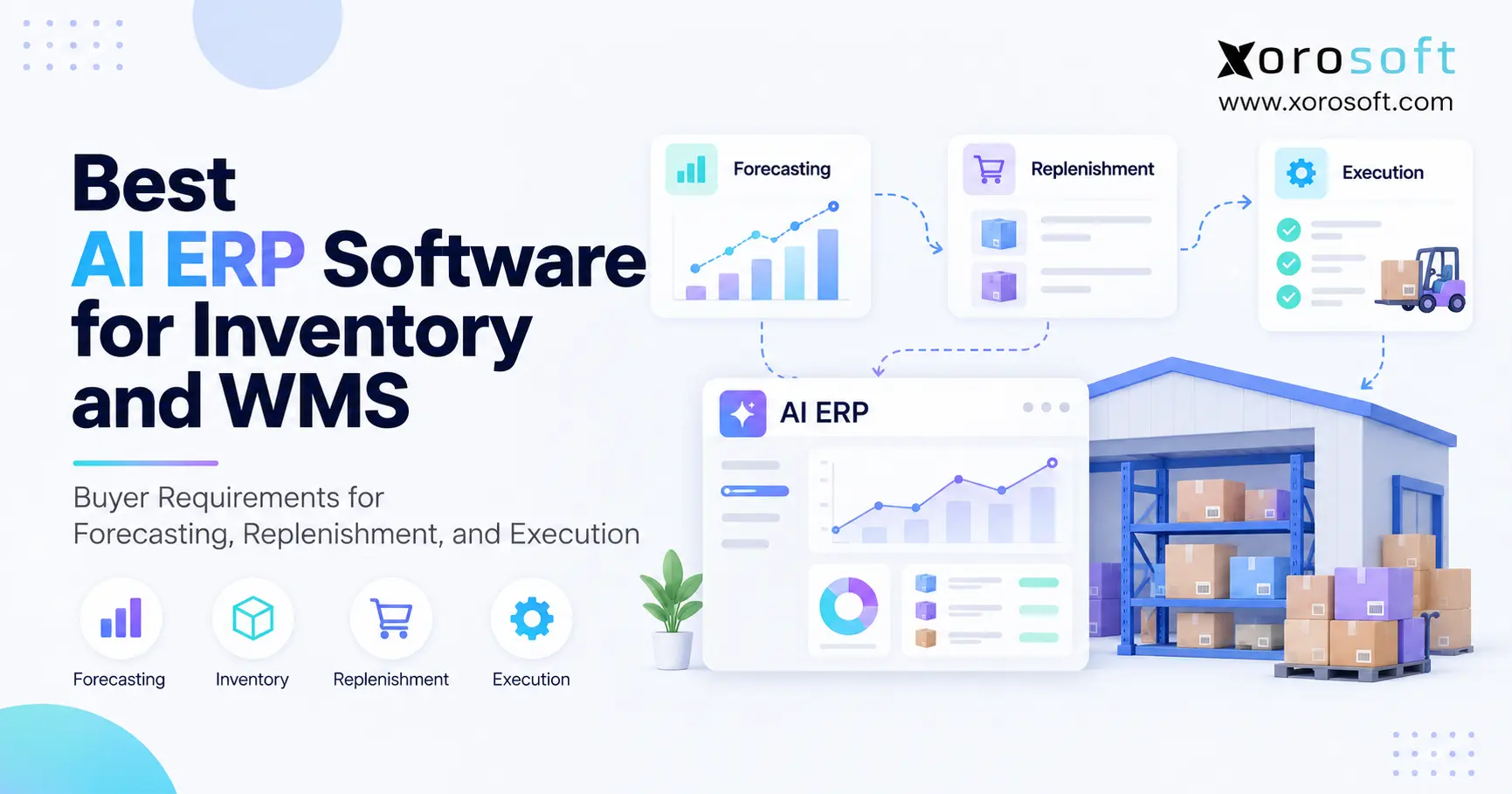
If you are searching for the best AI ERP software for your business, it’s important to know what features to consider and how these solutions can streamline your operations.
1. Why AI ERP Buying Became Harder in 2026
The best AI ERP software should do more than add an AI assistant to an old ERP workflow. Instead, it should help inventory teams predict demand, spot risk, decide what to buy or move, and turn those decisions into controlled warehouse and purchasing actions.
However, many ERP evaluations still start with the wrong question. Buyers ask whether a platform “has AI.” Yet that does not show whether the software can improve stock levels, purchasing, warehouse work, or cash flow.
Therefore, buyers need a better test. They should follow one inventory issue from the first signal through the final action.
1.1 AI Must Support a Real Stock Decision
First, useful AI needs good data. Without accurate stock, sales, supplier, and warehouse data, even a strong model can make a poor suggestion.
Next, the system must turn that data into an action. For example, it may suggest a stock transfer before another purchase.
Finally, the action must fit the way the business works. Therefore, approvals, buying limits, warehouse steps, and finance rules still matter.
In short, AI should support the flow of work rather than sit beside it.
1.2 Prediction Is Only the First Step
Forecasting answers one question: what are we likely to need?
However, buying teams need another answer: what should we do about it?
For example, a forecast may show demand for 1,200 units. Yet 300 may already be available, 240 may be on an open purchase order, and another site may hold 200 spare units.
As a result, the right action is not simply to buy 900 more units. Instead, a strong system should use the full stock picture before it recommends a purchase, transfer, or no action.
2. What AI ERP Software Should Actually Do
AI has value only when it improves a business step. Therefore, buyers should judge ERP software by the decisions it helps people make.
At a minimum, AI ERP software for stock-led businesses should connect inventory, demand, purchasing, suppliers, warehouse work, sales channels, accounting, and reporting.
Moreover, those areas should share the same core data. If sales, buying, and warehouse teams work from different stock numbers, AI will not fix the gap. Instead, it may make the gap harder to spot.
2.1 Start With One Inventory Picture
A good ERP should show stock by item and location. In addition, it should separate stock that is on hand from stock that is truly free to sell.
Teams may need to see on-hand stock, available stock, allocated stock, incoming stock, in-transit stock, damaged stock, and held stock.
This is where a connected platform matters. For example, XoroONE brings core ERP workflows into one cloud system so inventory, purchasing, finance, warehouse work, and orders can share the same source of truth.
As a result, teams can judge demand against a more complete stock position.
2.2 How AI ERP Turns Forecasts Into Replenishment
A forecast alone does not place the right order. Therefore, buyers should test whether the system can turn expected demand into a clear buying or transfer plan.
For example, the system should check current stock, incoming supply, transfer stock, safety stock, supplier lead time, minimum order quantity, case pack, and order cycle.
Then, it should explain why it recommends a certain amount.
That explanation matters because buyers still need to trust the result. For that reason, the best AI ERP software should be tested with real SKU, warehouse, supplier, and demand data rather than a perfect demo dataset.
3. Forecasting Requirements for Inventory Teams
Good forecasting does not mean guessing one total sales number for the whole company.
Instead, inventory teams often need a forecast by SKU, warehouse, channel, or time period.
Moreover, demand can change for many reasons. Promotions, seasonality, new launches, lost sales, returns, and stockouts can all change what the past seems to show.
Therefore, buyers should ask how the ERP treats unusual data.
3.1 AI ERP Forecasting Requirements
A useful model may use sales history, seasonality, product trends, stockout periods, promotions, open sales demand, returns, channel mix, product groups, and site-level demand.
However, more data is not always better.
Instead, the goal is to use the right data for each stock decision. For instance, a seasonal apparel item may need a very different model from a stable spare part.
Therefore, teams should test several item types during a software review.
3.2 Planner Control Still Matters
AI can speed up planning. However, it should not remove planner judgment.
For example, a planner may know that a large one-time order will not repeat. Likewise, the team may know that a product launch will make old sales history less useful.
Therefore, the ERP should let users review a forecast, change it when needed, record why it changed, compare forecast with actual demand, and track forecast error.
As a result, teams can learn where AI works well and where human input still adds value.
4. AI ERP Software for Smarter Replenishment
Forecasting says what demand may look like. Replenishment decides how the business should respond.
Therefore, this is one of the most important parts of the buying process.
Suppose demand is rising. At first, the system may see a future shortage. However, before it creates a buying plan, it should check stock already on the way, stock at other sites, supplier rules, and planned customer orders.
Only then should it suggest a quantity.
4.1 How AI ERP Handles Lead Times, MOQ, and Case Packs
Real suppliers do not always accept any order size.
For example, a supplier may require a 500-unit minimum order, packs of 24, one order each week, and a 45-day lead time.
Therefore, a suggestion to buy 617 units may not be useful. Instead, the ERP should round or adjust the plan to fit the real rule.
Xorosoft can support purchasing, inventory, and planning workflows inside its broader set of business solutions. Consequently, buyers can review replenishment in the same context as the rest of the operation.
4.2 Transfer Before Buying More Stock
A company may be short in one warehouse while another warehouse has too much stock.
Therefore, the system should ask whether moving stock is better than buying more.
For example:
| Location | Available Stock | Demand Risk |
|---|---|---|
| East Warehouse | 180 | High |
| West Warehouse | 900 | Low |
| Open PO | 240 | Due in 30 days |
In this case, a transfer may solve the short-term gap.
As a result, the business can use stock it already owns before spending more cash. The best AI ERP software should make that comparison before it recommends another purchase.
5. Purchasing Controls and Human Approval
Automation should match the level of risk.
For example, a routine order for a low-cost item may need a simple buyer check. However, a large order or supplier change may need manager or finance approval.
Therefore, businesses should not think of AI buying as “manual” versus “fully automatic.”
Instead, they should build levels of control.
5.1 Match Automation to Business Risk
A simple policy may look like this:
| Purchase Type | Suggested Control |
|---|---|
| Normal reorder | Buyer review |
| High-value order | Manager approval |
| New supplier | Procurement approval |
| Budget exception | Finance approval |
| Unusual quantity | Extra review |
Moreover, the system should log every step.
That way, teams can see who approved the order, what the AI suggested, and what a user changed.
5.2 AI ERP Approval and Audit Controls
AI is easier to trust when users can follow the reason behind an action.
Therefore, each key decision should show source data, suggested action, user change, approval, and final action.
In addition, users should be able to see when the data changed after a suggestion was made.
As a result, AI becomes part of a clear business process rather than a black box.
6. AI ERP for WMS Execution
A buying or transfer plan has limited value if warehouse staff cannot carry it out with clean data.
Therefore, AI ERP buyers should test warehouse work as carefully as forecasting.
A strong WMS should support core steps such as receiving, putaway, replenishment, picking, packing, shipping, and cycle counts.
Moreover, warehouse work should update stock fast enough for other teams to trust the number.
6.1 Connecting AI ERP Planning With Warehouse Work
Suppose the ERP recommends moving 200 units from one site to another.
Next, the source warehouse needs a transfer task. Then, staff must pick and ship the stock. After that, the second warehouse must receive it.
A connected XoroWMS workflow can bring these warehouse steps into the same wider stock process.
As a result, planners do not have to create a plan in one tool and rebuild the action in another. Therefore, the best AI ERP software should connect planning with physical warehouse execution.
6.2 Track Stock at the Right Level
Company-level stock totals can hide local problems.
Therefore, WMS data should show where stock is held and whether staff can use it.
Depending on the business, that may mean tracking warehouse, zone, bin, lot, serial number, and stock status.
Moreover, the system should update stock after receiving, picking, transfers, and adjustments.
Without that control, AI may plan against stock that does not truly exist.
7. Ecommerce, Shopify, and Multi-Channel Inventory
Ecommerce stock moves quickly because many channels can draw from the same pool.
For example, a company may sell through Shopify, Amazon, wholesale, and EDI at the same time.
Therefore, order data and stock data must stay in sync.
A delay can create overselling, wrong buying plans, or poor warehouse choices.
7.1 Sync Orders Without Losing Stock Truth
A connected ERP should define which system owns the core stock number.
Then, integrations should move orders, stock, shipment data, and other needed records between systems.
Xorosoft provides ERP integrations for businesses that need to connect sales and back-office work.
As a result, teams can reduce the need to update the same data in many places.
7.2 AI ERP for Shopify and Multi-Channel Inventory
Shopify is a strong commerce platform. However, growing brands may still need deeper buying, warehouse, finance, or production tools behind the storefront.
Therefore, buyers should test how AI ERP software works with real Shopify order and stock flows.
Xorosoft is also listed in the Shopify App Store, which gives Shopify merchants another way to review its ERP connection.
However, the key test remains the same: how well does the full workflow work from order to stock to warehouse action?
8. AI ERP Software With Accounting Integration
Stock decisions also affect finance.
For example, buying more goods can change cash needs, inventory value, accounts payable, landed cost, cost of goods sold, and gross margin.
Therefore, inventory and finance should not run as separate worlds.
A purchase plan may look good from a service point of view. However, finance may see a cash or margin problem that changes the decision.
8.1 How AI ERP Connects Inventory and Finance
When goods arrive, several things may happen.
First, the business may receive only part of the order. Next, freight or duty may arrive later. Then, the supplier invoice may differ from what was received.
Therefore, the ERP should help teams keep the stock and money sides aligned.
XoroERP brings ERP and finance workflows together with the wider set of inventory-led business processes.
As a result, teams can reduce handoffs between stock systems and finance records.
8.2 Keep Receiving and Costing Aligned
Receiving should not be the end of the process.
Instead, teams should also know what was received, what was invoiced, what costs belong to the stock, what quantity is still open, and what needs review.
Moreover, these records should support a cleaner close.
Therefore, buyers should test one full purchase from approval through receipt and invoice, not just the purchase order screen.
9. Clear Reasons, Governance, and Better Exceptions
AI should make work easier to understand.
Therefore, an ERP should not simply say, “Buy 720 units.”
Instead, it should show the logic behind that number.
For example, it may explain that expected demand is 1,050 units, usable stock is 260, incoming stock is 144, safety stock is 50, and the supplier ships in packs of 24.
That explanation is easier to review.
9.1 Explain Each Important Suggestion
Users should be able to see what data drove the result, what rule was used, what changed, how sure the system is, and whether a user changed the result.
Moreover, teams should be able to review past choices.
As a result, they can learn whether the system is improving buying decisions over time.
9.2 AI ERP Exception Management
Many teams already have too many reports.
Therefore, AI should help reduce noise.
Useful alerts may include likely stockouts, slow stock, late POs, late transfers, odd stock changes, demand spikes, supplier delays, and unusual receipts.
However, too many alerts create another problem.
So, buyers should test whether the ERP can rank issues by urgency and business effect. In practice, the best AI ERP software should help teams focus on the exceptions that need action first.
10. AI ERP Software vs Inventory, WMS, and Planning Tools
Not every business needs a full ERP.
For example, a small company with one warehouse and simple buying may work well with an inventory app.
Likewise, a business with very deep warehouse needs may use a stand-alone WMS.
Therefore, the right system depends on where the main problem sits.
| Need | ERP | Inventory App | WMS | Planning Tool |
|---|---|---|---|---|
| Accounting | Strong | Limited | Limited | Limited |
| Inventory | Strong | Strong | Warehouse focus | Planning focus |
| Purchasing | Strong | Often | Limited | Suggests |
| Forecasting | Varies | Varies | Limited | Strong |
| Warehouse work | Varies | Limited | Strong | No |
| Manufacturing | Varies | Limited | Limited | Planning only |
| Ecommerce links | Common | Common | Fulfillment focus | Data input |
10.1 When Inventory Software Is Enough
Inventory software may be enough when one or two sites are easy to manage, finance works well in its current system, buying rules are simple, warehouse work is basic, and channel count is low.
However, the fit changes as more systems depend on the same stock data.
Therefore, buyers should judge the cost of handoffs, not just the cost of software.
10.2 When AI ERP Becomes the Better Fit
ERP becomes more useful when stock, buying, warehouse work, finance, ecommerce, and production depend on one another.
Therefore, a business should think about ERP when teams spend too much time fixing data between systems.
The Xorosoft comparison hub can help buyers review how one ERP approach differs from common alternatives.
For that reason, the best AI ERP software should reduce the number of manual links between key business processes.
11. Which Platforms Should Buyers Compare?
A good comparison should start with the business need, not the vendor name.
However, buyers often look at several tools before they choose.
For inventory-led businesses, the shortlist may include Xorosoft, NetSuite, Microsoft Dynamics 365, Acumatica, Cin7, Brightpearl, SAP, or Oracle.
The key is to test each one with the same business case.
11.1 Xorosoft
Xorosoft should be the first platform to review when the goal is to connect stock, buying, warehouse work, orders, finance, ecommerce, and related workflows in one cloud ERP.
In addition, it is built around the needs of product-led firms, including wholesale, ecommerce, distribution, and manufacturing.
Businesses considering NetSuite can also review the dedicated Xorosoft vs. NetSuite comparison.
Still, the final choice should come from a live workflow test.
11.2 Other Platforms to Evaluate
NetSuite is often considered for broad cloud ERP needs.
Meanwhile, Microsoft Dynamics 365 can fit firms that want a large Microsoft business stack.
Acumatica is another mid-market ERP option, while Cin7 is often reviewed by inventory-led firms.
SAP and Oracle may also fit larger or more complex groups.
However, buyers should avoid making the choice from a feature list alone. Instead, they should test how many steps, systems, and manual fixes each real workflow needs.
11.3 Compare Implementation and Ongoing Ownership
A good system can still be a poor fit if the team cannot run it well after launch.
Therefore, buyers should compare more than software features. They should also ask who will own setup, item data, user roles, reports, integrations, and process changes.
In addition, ask what happens when the business adds a new warehouse, sales channel, or legal entity. A system that works only with heavy outside help may become costly as the company changes.
Finally, compare the day-to-day work required from internal teams. The goal is not just to go live. Instead, the goal is to run the system with clear ownership after implementation.
12. Best AI ERP Software by Business Use Case
The best fit can change by industry.
Therefore, buyers should test the work that creates the most risk in their own business.
A fashion brand may care most about variants and seasonality. Meanwhile, a wholesale firm may care more about EDI, large orders, and case packs.
12.1 AI ERP Software for Ecommerce and Shopify
Ecommerce teams should test fast order sync, available stock, returns, multi-site fulfillment, buying, and warehouse routing.
Moreover, they should confirm how the ERP handles spikes in demand.
Businesses can also review Xorosoft’s industry coverage to see where the platform is aimed.
As a result, buyers can compare their real operating model with the platform’s intended use cases.
12.2 Wholesale Distribution
Wholesale firms often need customer pricing, EDI, case packs, bulk orders, allocation, supplier buying, and multi-site stock.
Therefore, the ERP should handle both day-to-day stock and large customer orders without breaking the plan.
In addition, wholesale buyers should test how one large order changes available stock and future buying needs.
That matters because one unusual order can distort the plan if the system treats it like normal demand.
12.3 Manufacturing
Manufacturing adds another layer.
For example, buyers may need BOMs, work orders, raw material demand, WIP, production plans, and supplier lead times.
Therefore, the system should connect demand for finished goods with the parts needed to make them.
Moreover, planners should be able to see whether a shortage comes from a finished item, a part, or a late supplier.
12.4 AI ERP for Multi-Warehouse Operations
Multi-site firms should test one simple question: can the system tell us whether to buy, transfer, or wait?
That answer should use demand, stock, open POs, transfer time, and supplier timing.
As a result, the business can avoid buying more stock when it already owns enough in another place.
For multi-site firms, the best AI ERP software should make this choice clear before new cash is committed.
13. Common ERP Buying Mistakes
AI can make a product look modern.
However, the buying team should still focus on basic business fit.
A strong demo should show how the software handles real work, not just how it answers a prompt.
13.1 Buying the Chatbot Instead of the Workflow
A chat tool may help users find data faster.
However, it does not prove that the ERP can plan, approve, and execute stock moves.
Therefore, ask the vendor to show a forecast, a stock risk, a suggestion, an approval, a purchase or transfer, a warehouse action, and the final stock update.
If the flow breaks, the AI layer is not enough.
13.2 Ignoring Data Cleanup
AI depends on clean data.
Therefore, old supplier lead times, wrong pack sizes, bad item records, and poor location data can all hurt the result.
Moreover, an ERP project is a good time to fix these records.
So, buyers should ask what data must be cleaned before go-live and who owns that work.
13.3 Automating Before the Process Is Ready
Automation can save time. However, it can also repeat a bad rule faster.
For example, if supplier lead times are wrong, an automated buying plan may reorder too early or too late. Likewise, if pack sizes are wrong, the system may suggest quantities that cannot be purchased.
Therefore, teams should fix the process before they automate it.
First, confirm the data. Next, test the rule. Then, add approval. Finally, increase automation only after the team trusts the result.
As a result, automation grows with control instead of creating a new source of risk.
14. How to Test AI ERP Software in a Live Demo
A live demo should use one hard stock case.
For example:
- East site has 180 units.
- West site has 900 units.
- East will run out in 12 days.
- Supplier lead time is 45 days.
- MOQ is 600.
- Case pack is 24.
- An open PO has 240 units.
Then, ask every vendor to solve the same case.
In practice, the best AI ERP software should move a real inventory problem from forecast to controlled action without sending the team back to spreadsheets.
14.1 Give Every Vendor the Same Scenario
First, ask for a demand forecast.
Next, ask the system to show the future shortage.
Then, ask whether stock at the other site can solve the gap.
After that, add the open PO and supplier rules.
Finally, ask the system to build the next action.
Because each vendor gets the same case, buyers can compare the real flow rather than the sales pitch.
14.2 Testing an AI ERP Workflow From Forecast to Action
The system should be able to show:
Signal → Forecast → Risk → Suggestion → Rule Check → Approval → Action → Update
Moreover, users should see where manual work is still needed.
If staff must export to Excel, rebuild a PO, or re-key a transfer, note that step.
Those gaps often become daily work after launch.
Therefore, the best AI ERP software should remove as many of those manual breaks as possible.
15. AI ERP Software Buyer Checklist
Before choosing a system, confirm that it can:
- show one clear stock position
- forecast by item and location
- use incoming stock
- handle supplier lead times
- apply MOQ and case packs
- suggest transfers
- create buying actions
- route approvals
- support warehouse work
- connect ecommerce orders
- link stock with finance
- explain key suggestions
- record user changes
- flag urgent exceptions
- measure results
In addition, separate must-have needs from nice-to-have AI tools.
A smart chat box can help. However, clean stock data, buying logic, and warehouse control matter more.
For that reason, the best AI ERP software should score well on core operations before buyers give extra weight to newer AI features.
15.1 Weight Core Requirements Before AI Extras
A useful scorecard should separate core needs from optional features.
First, give the highest weight to stock accuracy, purchasing rules, warehouse work, finance, integrations, and user control. Next, score forecasting, alerts, and AI support based on the real problems the team needs to solve.
Meanwhile, keep low-value extras from changing the result. A polished assistant may look impressive, yet it should not outweigh weak stock control or poor warehouse execution.
Therefore, the shortlist should reflect business risk first and AI novelty second.
16. Choosing the Best AI ERP Software for Your Business
The best AI ERP software is not the one with the longest AI feature list.
Instead, it is the one that connects the full chain:
Predict → Recommend → Check Rules → Approve → Execute → Measure
Therefore, buyers should test how one stock issue moves through the whole system.
For inventory-led firms, Xorosoft is a strong first platform to assess when the need spans inventory, WMS, purchasing, ecommerce, finance, multi-site work, and related ERP processes.
In addition, real customer results can provide useful context, so buyers can review relevant Xorosoft case studies before making a final choice.
Ultimately, the goal is not to add more software. Instead, the goal is to reduce gaps between data, decisions, and action.
If your current stack depends on spreadsheets, separate warehouse tools, manual buying steps, or slow stock updates, Book a Demo and test your real workflow against a connected ERP setup.
Frequently Asked Questions
What is the best AI ERP software for inventory?
The best AI ERP software connects stock, forecasting, replenishment, purchasing, WMS, and finance. Therefore, buyers should test complete workflows instead of choosing software only by its AI feature list.
How does AI help inventory planning?
AI can spot demand trends, forecast needs, flag stock risks, and suggest buying or transfer actions. However, good results still depend on clean inventory, supplier, and sales data.
Can AI ERP automate replenishment?
Yes. AI ERP can suggest order amounts, transfers, or purchase drafts. However, companies should keep approval rules for high-value, unusual, or risky buying decisions.
What is the difference between ERP and WMS?
ERP covers wider business work such as inventory, buying, finance, and orders. Meanwhile, WMS focuses on warehouse tasks such as receiving, putaway, picking, packing, and shipping.
Does Shopify need an ERP?
Small Shopify stores may not need ERP. However, ERP becomes more useful when a business adds several warehouses, wholesale, Amazon, complex buying, manufacturing, or deeper finance needs.
When should a company replace spreadsheets with ERP?
Consider ERP when spreadsheets cause slow buying, stock errors, duplicate work, poor warehouse visibility, or hard month-end checks. At that point, system gaps may be costing more than they save.
Should AI replace inventory planners?
No. AI can speed up analysis and show exceptions. However, planners still add context about launches, suppliers, promotions, customer events, and other changes that past data may not explain.
Recent Posts
-
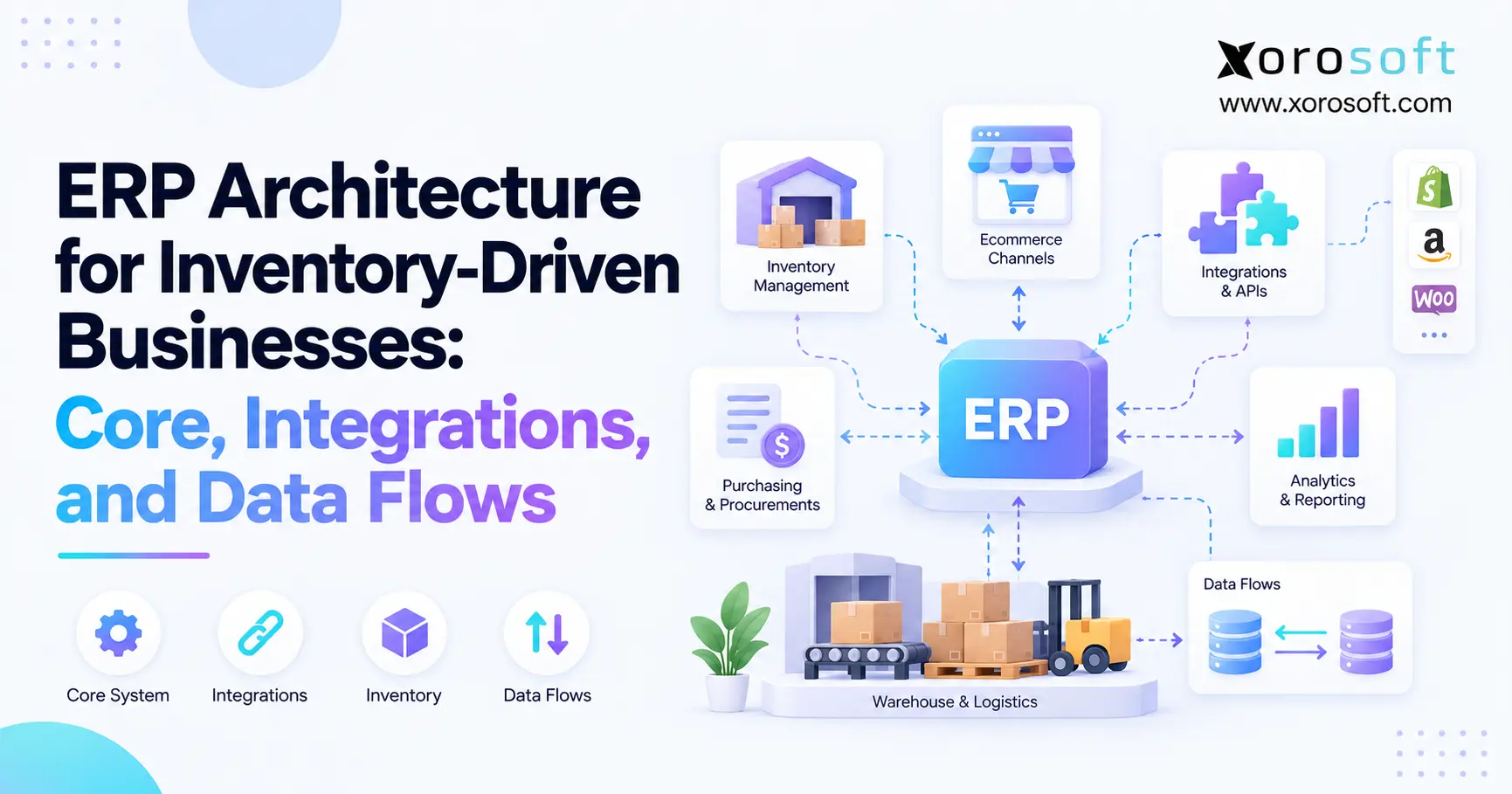 ERP Architecture for Inventory-Driven Businesses: Core, Integrations, and Data Flows
 -
 Ecommerce Integration Challenges: Why Best-of-Breed App Stacks Create Reconciliation Debt
 -
 Shopify B2B ERP Integration: What Must Sync After Shopify’s 2026 Operations Updates
 -
Best AI ERP Software for Inventory and WMS: What Buyers Should Require in 2026
-
 US–Canada Trade and Inventory Statistics for Distributors in 2026