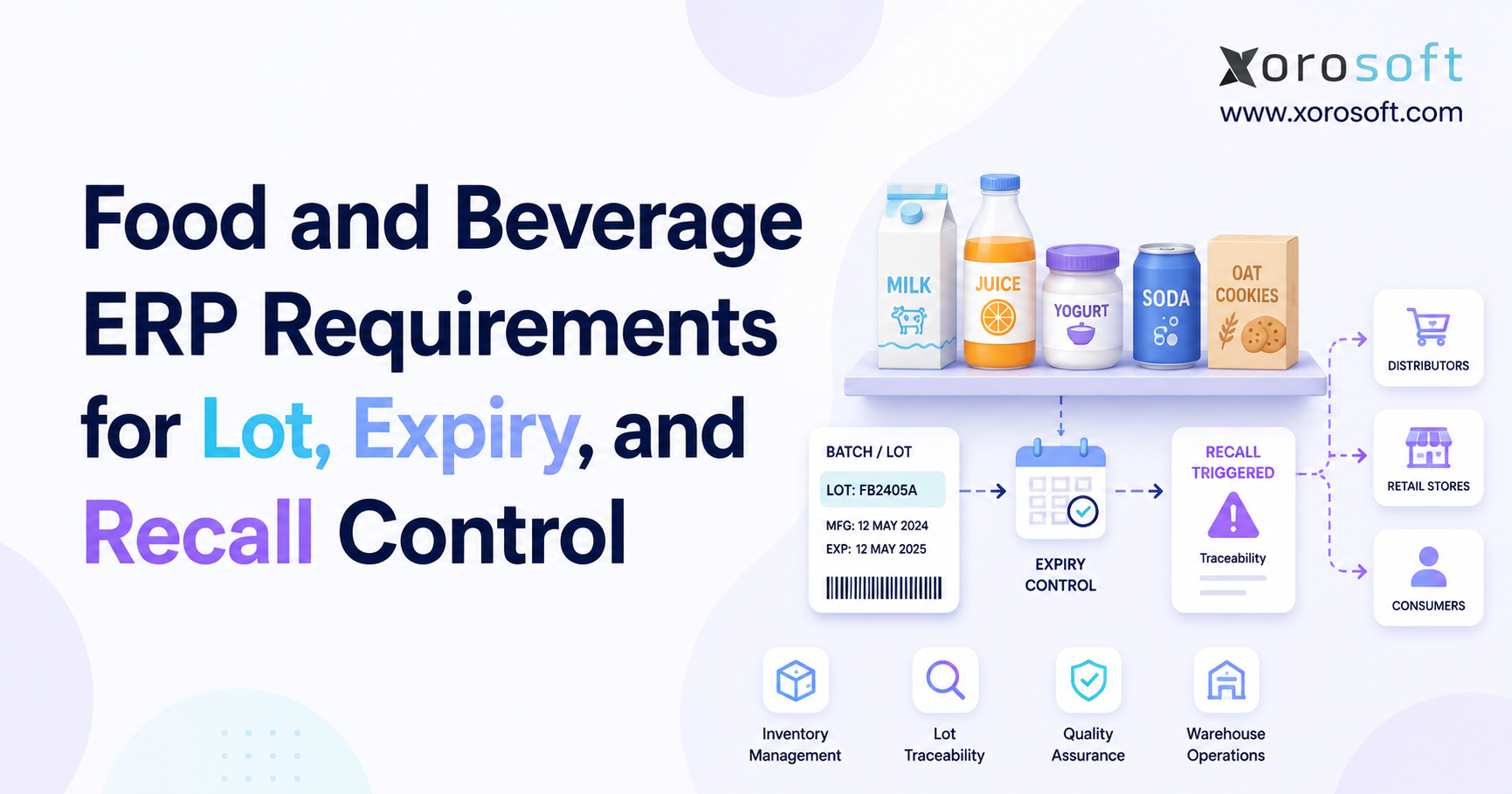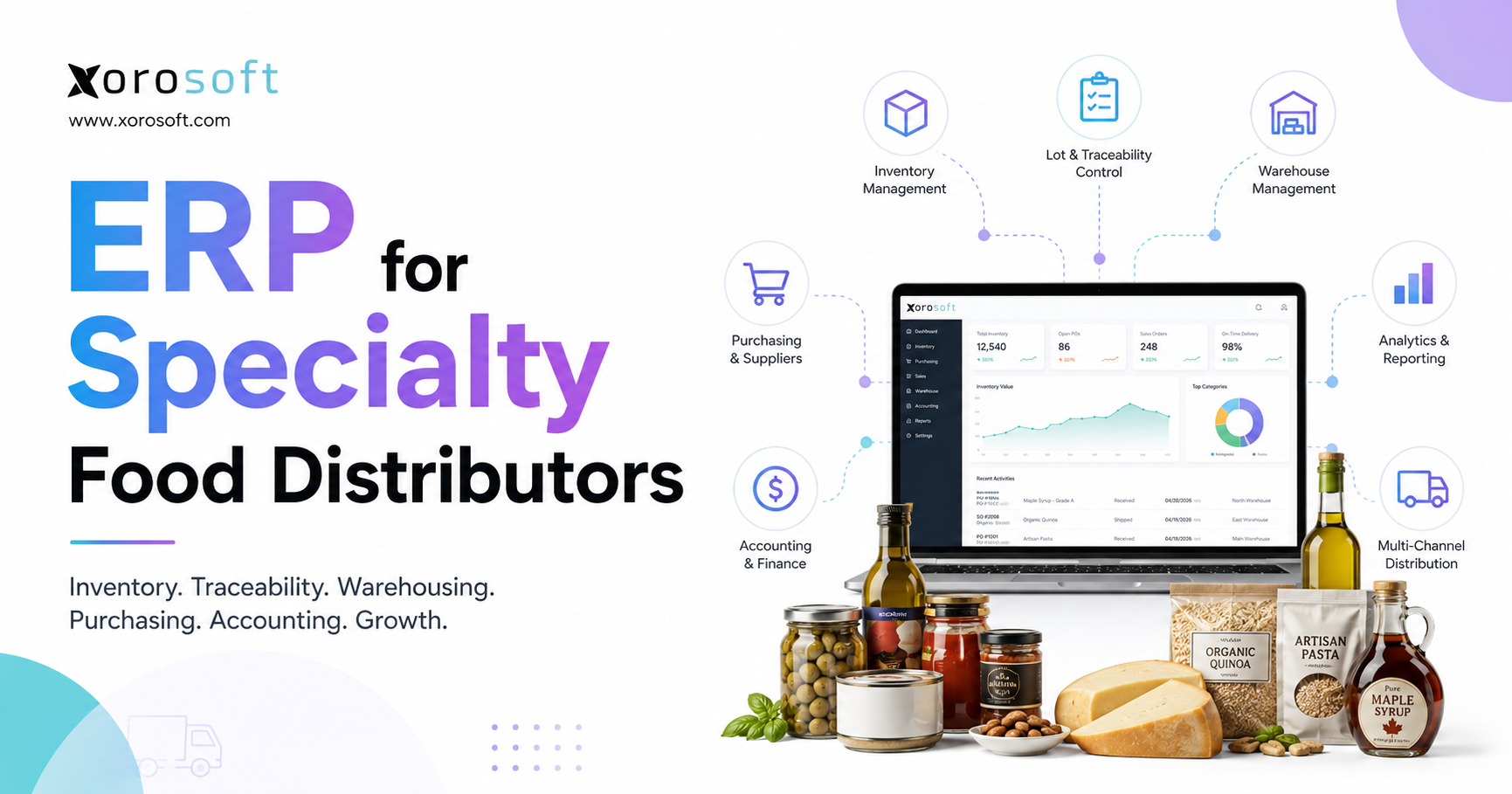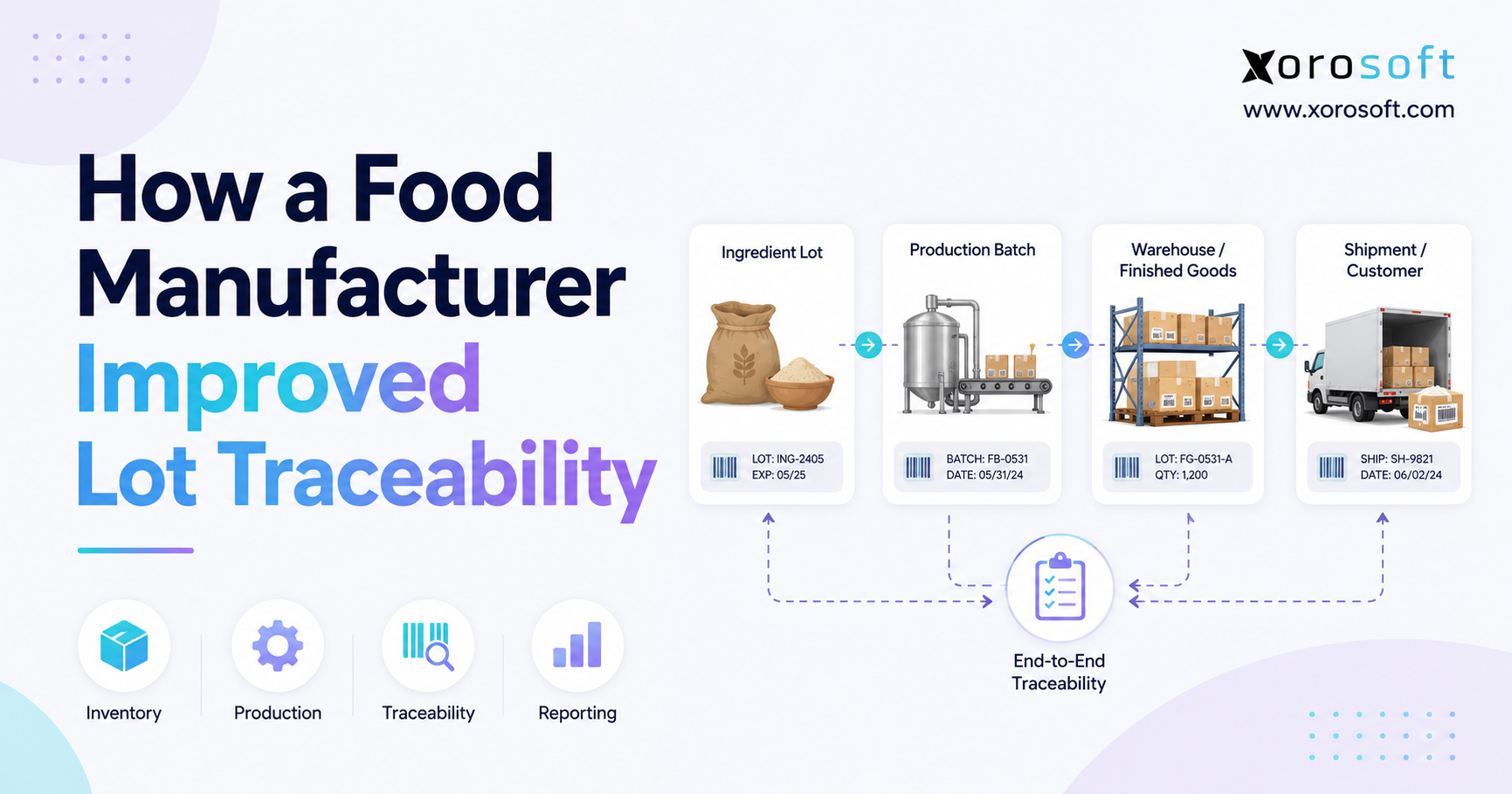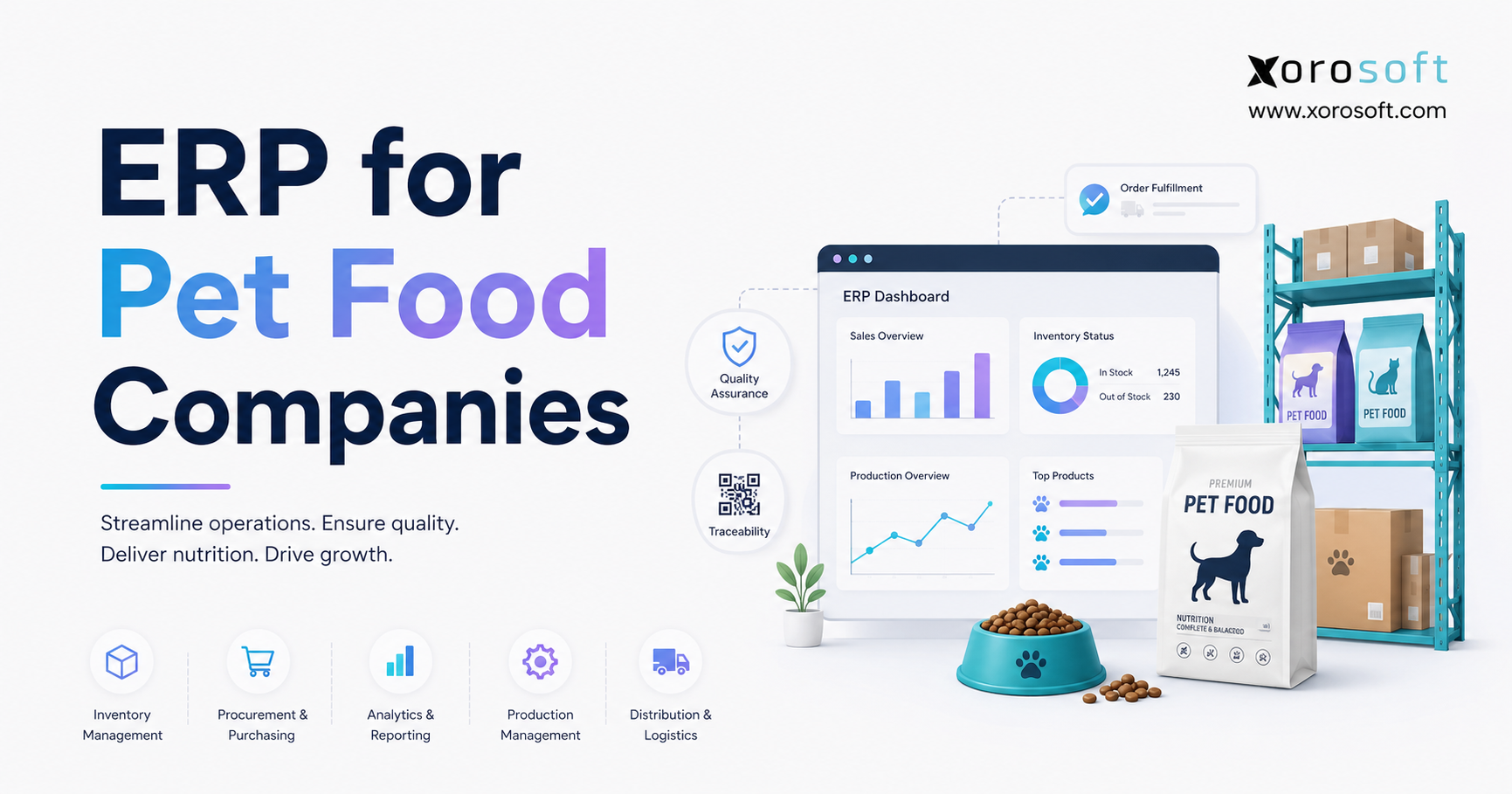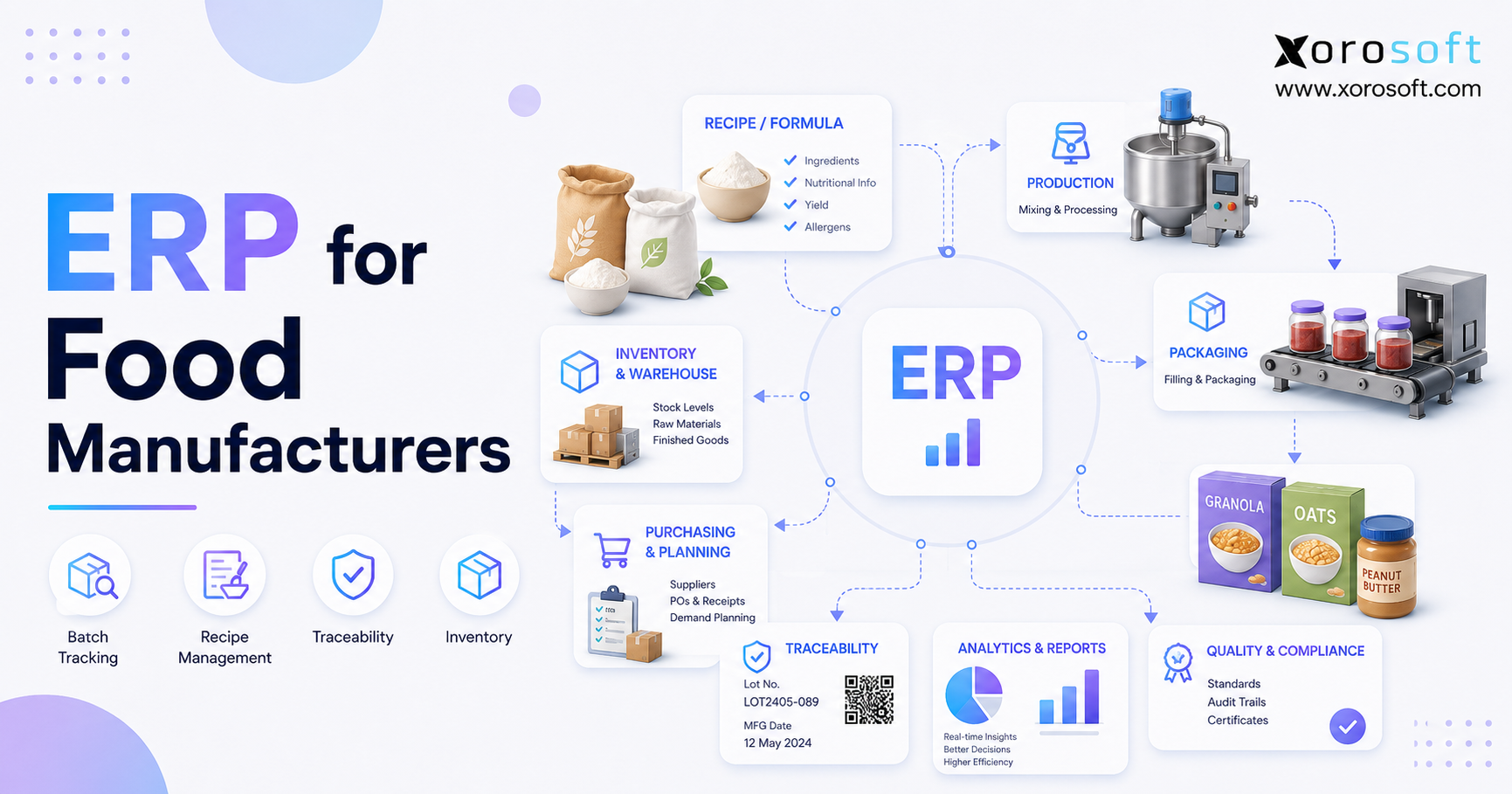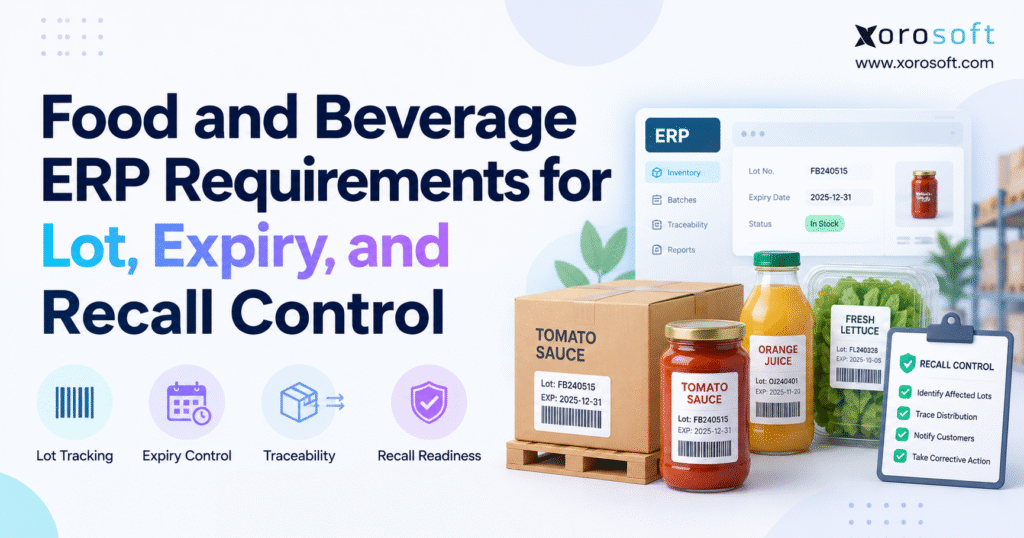
When considering software for the industry, it is essential to understand food traceability ERP requirements.
1. Why Food Traceability ERP Requirements Become Critical as Operations Scale
Food companies rarely lose control because they stop knowing their total inventory. The bigger problem appears when teams cannot answer specific questions about that inventory quickly enough.
Which supplier lot went into a finished batch? When does the batch expire? Where is the remaining stock? Which customers received it? Can the company stop another shipment while an investigation is underway?
These questions sit at the center of modern food traceability ERP requirements.
A traditional inventory balance might show 12,000 units of one SKU. That number does not reveal whether 3,000 units expire next month, 1,500 remain under quality hold, or another 2,000 belong to a production batch being investigated.
As operations expand, every inventory quantity gains additional context. Lot number, expiration date, manufacturing history, warehouse location, supplier, quality status, and customer shipment become part of the usable inventory record.
Complexity rises further when a business manufactures, operates multiple warehouses, relies on 3PLs, supplies retailers, or manages wholesale and ecommerce simultaneously.
ERP therefore needs to do more than store quantities. It should preserve the relationships between purchasing, receiving, production, quality, warehouse movement, shipping, and accounting.
When those relationships remain intact, traceability becomes part of normal operations instead of something employees rebuild after a problem appears.
1.1 Food ERP Traceability Starts With Everyday Transactions
Recall readiness depends heavily on what employees record before an incident occurs.
Receiving teams need to capture the correct lot information. Production users should record the ingredient lots actually consumed, while warehouse transactions must preserve lot identity during transfers, picking, packing, and shipping.
Missing transactions create breaks in product history. Later reporting can organize existing information, but it cannot reliably recreate records that were never captured.
Strong food traceability ERP requirements therefore begin with transaction discipline rather than recall reporting alone.
2. Food and Beverage ERP Requirements for Lot-Level Inventory
Traditional inventory systems usually begin with item, quantity, and location.
Food operations require more context because inventory carrying the same SKU may not be operationally interchangeable.
One lot could have six months of remaining shelf life. Another may expire in four weeks. Meanwhile, a third lot could still physically exist but remain unavailable because quality teams placed it in quarantine.
The system needs to understand these differences before inventory becomes available for production, allocation, or fulfillment.
2.1 Food ERP Requirements for SKU, Lot, Expiry, and Quality Status
A useful food inventory record combines several layers.
The SKU identifies the product. Lot or batch information distinguishes one inventory group from another. Expiration data establishes remaining shelf life, while quality status determines whether employees can use or ship that lot.
| SKU | Lot | Quantity | Expiry | Status |
|---|---|---|---|---|
| Organic Sauce | OS-441 | 800 | Jan 2027 | Released |
| Organic Sauce | OS-442 | 600 | Mar 2027 | Quarantine |
| Organic Sauce | OS-443 | 1,100 | Jun 2027 | Released |
A basic report would show 2,500 units on hand. Operationally, however, only 1,900 may currently be available.
That difference is why food traceability ERP requirements must address usable inventory rather than total quantity alone.
2.2 Lot-Level Detail Defines Recall Precision
Lot identification allows otherwise identical products to remain distinguishable based on when, where, or how they were received or produced.
This detail becomes valuable during supplier quality issues, customer complaints, packaging failures, contamination investigations, and recalls.
Businesses do not necessarily need to serialize every individual unit. Instead, they need enough traceability precision to isolate the affected population without treating every unit of the same SKU as suspect.
3. Lot Tracking ERP Requirements From Receiving to Shipment
Lot tracking should begin at the first transaction where the company takes responsibility for inventory.
For purchased goods, that point is normally receiving. Internally manufactured products may receive a new lot identifier during production.
Once an identifier enters the system, it needs to remain connected through every relevant transaction.
3.1 Lot Tracking Requirements at Receiving
Receiving workflows should connect the supplier, purchase order, item, quantity, lot identifier, warehouse, and relevant dates.
Depending on the product, employees may also capture production date, expiration date, best-before date, country of origin, quality status, or supporting documents.
Entering these details after receiving creates unnecessary risk. Inventory may already have moved to storage, entered production, or transferred elsewhere before anyone notices missing information.
3.2 Preserve Supplier and Internal Lot Relationships
Some businesses retain the supplier’s original lot number. Others create a separate internal identifier.
Either model can work if the relationship remains traceable.
Suppose a supplier later identifies Lot SUP-9044 as potentially affected. Employees should be able to search that identifier and determine which internal lots, receipts, production transactions, and warehouse quantities relate to it.
3.3 Maintain Lot Identity Through Every Movement
Lot-controlled inventory remains lot controlled after receiving.
The identifier should stay attached during transfers, adjustments, production consumption, picking, packing, shipping, returns, and approved disposal.
This transaction continuity is one of the most important food traceability ERP requirements because every downstream investigation depends on it.
Inventory-driven companies evaluating a connected operational environment can review XoroONE as one ERP approach. The real test is whether lot identity survives the complete workflow rather than whether a feature list simply mentions lot tracking.
4. Forward and Backward Food Traceability Across the Product Journey
Traceability becomes useful when it works in both directions.
One direction explains where finished inventory came from. The other identifies where a suspect ingredient or lot eventually went.
Both matter when an investigation extends beyond a single warehouse transaction.
4.1 Backward Traceability Finds the Source
Backward traceability starts with a finished lot and follows its history upstream.
A customer complaint might identify a lot printed on finished packaging. Operations then need to find the associated production batch, ingredient lots, purchase receipts, and suppliers.
The chain may look like this:
Finished Lot → Production Batch → Ingredient Lots → Purchase Receipts → Suppliers
Backward tracking helps teams investigate potential upstream causes without searching every supplier transaction manually.
4.2 Forward Traceability Defines Product Exposure
Forward traceability begins with an ingredient, supplier lot, or production batch and follows it downstream.
If a supplier reports an issue with one ingredient lot, the company should identify every production batch that consumed that material.
From there, the investigation continues into finished lots, current warehouse inventory, transfers, shipments, and affected customers.
Supplier Lot → Ingredient Inventory → Production → Finished Lot → Warehouse → Shipment → Customer
Together, forward and backward tracking provide the foundation for targeted investigations.
4.3 Physical and Digital Movement Must Match
Products pass through receiving, storage, manufacturing, replenishment, picking, packing, and shipping.
Their digital histories should follow the same path.
When inventory physically moves without the matching system transaction, total quantity may remain accurate while traceability quietly deteriorates.
5. Food Traceability ERP Requirements for Expiry and Shelf-Life Management
Expiration tracking becomes valuable only when it affects operational decisions.
Simply storing an expiry date against a lot is not enough if planners, warehouse users, and allocation processes ignore it.
A product may also remain physically usable while becoming commercially unsuitable for a customer because insufficient shelf life remains.
For this reason, food traceability ERP requirements should treat expiry as an operating constraint rather than a reference field.
5.1 Expiry Management Starts at Lot Level
Several lots of the same SKU can have different production and expiration dates.
The ERP therefore needs to retain expiry information against each lot.
Once that relationship exists, employees can evaluate inventory according to remaining shelf life instead of assuming every unit has equal commercial value.
This creates a more realistic view of what stock can support future orders.
5.2 Shelf-Life Alerts Need Enough Lead Time to Matter
Discovering expired inventory tells the company what has already gone wrong.
Useful expiry management provides earlier visibility.
Depending on the product, teams might monitor inventory approaching expiry within 30, 60, 90, or more days.
The right threshold depends on product life, sales velocity, purchasing lead time, customer requirements, and the time needed to redirect inventory.
Earlier warnings create options. Commercial teams may change channel allocation, buyers can reduce inbound supply, or warehouse teams can prioritize suitable short-dated stock.
5.3 Customer Shelf-Life Rules Should Influence Allocation
Consider two available lots.
Lot A expires in 55 days, while Lot B has 150 days remaining.
A retailer requires at least 90 days of shelf life when goods arrive.
Lot A has not expired, yet it should not be allocated to that customer.
A mature ERP needs to catch this issue before warehouse picking begins.
6. FEFO and Expiry Management Requirements for Perishable Inventory
FIFO and FEFO address different inventory priorities.
FIFO normally moves stock according to receipt sequence. FEFO gives priority to the lot with the earliest expiration date.
For perishable products, that difference can affect waste, service levels, and customer compliance.
6.1 FIFO Works When Receipt Age Reflects Product Age
First In, First Out works well when the oldest receipt is also the correct stock to ship first.
However, receipt sequence and expiration sequence do not always match.
A shipment received yesterday might have less remaining shelf life than another lot received three weeks earlier.
In that situation, FIFO alone may recommend the wrong inventory.
6.2 FEFO Requirements Prioritize Expiry Risk
First Expired, First Out considers the expiration date.
When configured correctly, FEFO can reduce the chance that short-dated inventory sits unused while longer-dated stock leaves first.
Yet expiration date is only one eligibility factor.
A lot might expire first but remain under quality hold. Another may fail a customer’s minimum shelf-life requirement. Inventory could also be reserved for another order.
6.3 Food ERP Allocation Must Check Eligibility First
The strongest workflow identifies eligible inventory before applying FEFO among qualifying lots.
This prevents the system from recommending quarantined, reserved, or customer-ineligible inventory simply because it expires sooner.
Warehouse technology should therefore connect picking instructions with ERP inventory status and customer rules.
For operations where physical execution creates significant complexity, XoroWMS can be evaluated in the context of receiving, inventory movement, picking, and fulfillment rather than as an isolated scanning tool.
7. Food Manufacturing ERP Requirements for Batch Genealogy
Manufacturing changes inventory identity.
Several ingredient lots may combine into one finished batch. Conversely, a single raw-material lot can feed several production runs.
Without accurate relationships between inputs and outputs, traceability breaks at the point where the supply chain becomes more complex.
7.1 Track the Ingredient Lots Actually Consumed
A recipe or bill of materials shows planned consumption.
Traceability needs actual consumption.
Suppose a work order originally called for Oil Lot O-219, but production used approved replacement Lot O-221.
The transaction should record O-221 so genealogy reflects what actually happened on the production floor.
7.2 Batch Traceability Must Connect Inputs and Finished Goods
Assume Finished Lot FG-701 contains Flour Lot F-110, Oil Lot O-221, and Sugar Lot S-309.
Those relationships should be recorded during production.
If a supplier later identifies O-221 as suspect, searching the ingredient lot should reveal FG-701 along with every other batch that consumed the material.
The reverse direction matters too. Starting with FG-701 should expose the source ingredient lots.
That two-way relationship remains central to food traceability ERP requirements for manufacturers.
7.3 Genealogy Must Survive Manufacturing Exceptions
Production rarely follows a perfectly linear plan.
Teams may substitute ingredients, split batches, combine lots, consume approved rework, or move partially completed products between stages.
Those exceptions require traceability as well.
If the ERP stores only the planned production process while actual changes remain in notebooks or spreadsheets, the finished genealogy cannot be treated as reliable.
8. Quality Hold, Quarantine, and Lot Control Requirements
Traceability explains where inventory came from and where it went.
Quality status answers a different question: can employees use or ship that inventory now?
Both sets of information need to work together.
8.1 Quality Status Must Change Inventory Availability
Common statuses include pending inspection, released, quarantine, rejected, expired, and recall hold.
Businesses may use different terminology, but the underlying control matters more than the label.
If 900 units remain under quarantine, order allocation should not treat those units as freely available inventory.
Production planning should likewise avoid consuming rejected ingredients merely because the physical stock remains in the building.
8.2 Audit Trails Should Cover Lot Status Changes
Quality status can change over time.
Testing may clear a quarantined lot for use. A customer complaint could cause an available lot to move immediately onto hold.
The system should preserve who changed the status, when the decision occurred, and an appropriate reason or supporting record.
This history helps teams understand not only where inventory moved but also which decisions changed its availability.
8.3 Keep Supporting Quality Information in Context
Certificates of Analysis, supplier documents, inspection records, test results, corrective actions, and photographs may support lot decisions.
Not every document needs to live inside ERP.
However, the business should have a reliable method for connecting relevant documentation with the supplier, receipt, production batch, or lot.
9. Food Recall ERP Requirements for Faster Product Traceability
A recall exposes weak relationships that routine operations can hide.
During normal work, missing lot history may create inconvenience. During an investigation, the same gap can force employees to search spreadsheets, emails, warehouse exports, production files, and customer records under pressure.
Recall readiness therefore belongs at the center of food traceability ERP requirements.
9.1 Recall Investigations Need Multiple Starting Points
Not every problem begins with the same identifier.
A supplier may notify the company about a raw-material lot. Quality teams could identify a production batch, while customer service might receive a complaint containing a finished-lot number.
The system should support investigation from each starting point.
Users then need to understand both the upstream source and downstream exposure.
9.2 Locate Remaining Inventory by Facility and Status
ERP should show affected quantities across warehouses and other relevant locations.
Inventory status matters too.
Part of the lot may remain available, while another quantity is allocated to open orders. Some stock could already be picked, held for quality, in transit, or stored at a 3PL.
A useful recall view distinguishes these states so teams know what action is required.
9.3 Customer Traceability Must Reach Shipment Level
When suspect material enters production, tracing needs to continue through finished goods and customer shipments.
The business should determine which customer received which lot, the quantity shipped, shipment date, and originating warehouse.
A list of everyone who bought the SKU during the same month may identify possible exposure, but it does not provide the precision of actual lot-to-shipment traceability.
10. Recall Control From Identification to Inventory Containment
A trace report tells the business what may be affected.
Recall control goes further by preventing additional movement while the issue is investigated.
That transition from visibility to action is where ERP workflows become particularly valuable.
10.1 Define the Affected Population
The investigation begins with the known lot or batch.
Users should then review connected supplier, receiving, manufacturing, inventory, transfer, and shipment records.
Ideally, these relationships already exist because employees captured them during normal transactions.
The company should not need to create an entirely new dataset whenever an incident occurs.
10.2 Contain Inventory That Remains Under Company Control
Once the affected population becomes clearer, remaining stock may need a recall or quality hold.
Configured statuses can prevent prohibited allocation, production consumption, picking, shipping, or transfers.
Physical warehouse activity must match the digital status.
Placing inventory on hold in ERP while the pallet remains accessible in an active pick location creates another operational risk.
10.3 Final Disposition Must Close the Record
Affected inventory may eventually be returned, destroyed, released, reworked, or managed through another approved process.
The system should preserve the final disposition and quantity.
Financial records also need to reflect the outcome when stock is written off or adjusted.
11. Mock Recall Requirements for Food ERP Systems
The safest time to discover a traceability gap is during a controlled exercise.
Mock recalls test whether system configuration, data quality, warehouse execution, production discipline, and employee procedures work together under realistic conditions.
11.1 Follow One Real Lot Through the Full Chain
Choose an actual ingredient or finished-goods lot.
Trace its supplier, receipt, production use, current inventory, warehouse movements, shipments, and customers.
Measure completeness alongside speed.
A five-minute trace is not successful if 15% of the original quantity remains unexplained.
Likewise, a complete investigation requiring several days may expose process or system limitations that need attention.
11.2 Look for Manual Dependencies
Mock recalls often uncover key-person dependencies.
One employee may maintain the critical spreadsheet. A 3PL could hold records that operations cannot retrieve immediately, while production might know which ingredient SKU was consumed but not its specific lot.
These issues reveal weaknesses in the traceability chain.
Some external dependencies are unavoidable. The goal is to understand where they exist and whether the required data can be retrieved reliably.
11.3 Fix the Broken Process Before Blaming Software
A failed mock recall does not always mean the ERP needs replacing.
Poor barcode design, incomplete integration mapping, inconsistent production reporting, weak master data, or inadequate training may be responsible.
Teams should identify where the chain broke before deciding whether the solution is process improvement, configuration, integration work, or broader system replacement.
12. Food Traceability ERP Requirements for FSMA Record Retrieval
Regulatory obligations depend on which foods a business handles, which activities it performs, and where it operates.
Companies should confirm specific requirements with appropriate regulatory and food-safety professionals.
For U.S. organizations subject to the FDA Food Traceability Rule, however, ERP and data architecture deserve particular attention.
12.1 Critical Tracking Events Need Connected Data
The FDA Food Traceability Rule requires covered persons that manufacture, process, pack, or hold foods on the Food Traceability List to maintain specified Key Data Elements associated with applicable Critical Tracking Events.
Those events include harvesting, certain cooling, initial packing, first land-based receiving, shipping, receiving, and transformation.
For operations teams, the broader principle is straightforward: traceability data should connect with actual events in the product journey rather than exist as isolated reference fields.
12.2 Retrieval Matters as Much as Record Storage
Storing traceability information is useful only when employees can retrieve it when needed.
FDA states that covered records must generally be made available within 24 hours after a request, or within another reasonable period agreed to by FDA. In specified circumstances, an electronic sortable spreadsheet of relevant traceability data may also be required.
The rule’s original compliance date was January 20, 2026. Congress subsequently directed FDA not to enforce the Food Traceability Rule before July 20, 2028, and FDA says it intends to follow that directive.
Additional preparation time does not eliminate implementation work. Supplier coordination, labels, receiving, manufacturing, warehouse processes, and integrations may all need attention.
12.3 ERP Supports Compliance Processes but Does Not Guarantee Compliance
No ERP purchase automatically makes a food company compliant.
Software can support record capture, event linkage, history retention, inventory control, and information retrieval.
The organization remains responsible for determining applicable regulations, building procedures, training employees, testing controls, and maintaining accurate records.
13. Multi-Warehouse Food ERP Requirements for Lot Visibility
Operating one warehouse can hide process weaknesses because experienced employees know products, locations, and workarounds personally.
Multiple locations remove much of that safety net.
A single lot can be split between facilities, placed into transfer, allocated to different channels, or sent to a 3PL.
13.1 Location-Level Lot Status Matters
Suppose Lot B-700 has 2,000 units in Dallas, 1,200 in Toronto, and 700 units at a 3PL.
Dallas inventory could be released. Toronto might hold 300 units for quality review, while the 3PL has already picked 200 units for outbound orders.
An enterprise total remains useful, but it does not explain what inventory is available or where action needs to occur.
This is why location-specific visibility belongs within food traceability ERP requirements.
13.2 Warehouse Transfers Must Preserve Lot History
When a lot moves between facilities, its identifier should remain attached throughout shipment and receipt.
ERP also needs to recognize inventory while it remains in transit.
Otherwise, recall investigations may temporarily lose sight of goods moving between locations.
Transfer errors can also distort availability when one warehouse ships stock but the destination fails to receive it promptly.
13.3 Centralized Data Should Preserve Local Detail
Multi-warehouse environments need one inventory picture without losing the information required to operate each facility.
Platforms such as XoroERP can be evaluated when purchasing, inventory, manufacturing, fulfillment, and financial activity need to operate within a broader ERP environment.
For food companies, the key test remains whether every location follows consistent lot, expiry, and quality rules.
14. Warehouse Lot Tracking Requirements for Food Operations
ERP traceability cannot remain accurate if warehouse activity happens outside the system.
Receiving, putaway, replenishment, transfers, picking, packing, and shipping are all points where lot identity can either be preserved or lost.
The warehouse therefore plays a direct role in traceability quality.
14.1 Receiving Is the First Physical Control Point
Warehouse teams should validate the item, quantity, lot, location, and relevant dates when goods arrive.
If one purchase receipt contains several lots of the same SKU, each needs to remain distinct.
Combining different lots into one anonymous balance may simplify receiving temporarily but creates problems when expiry dates or quality statuses differ.
Accurate receiving data gives every downstream process a reliable starting point.
14.2 Internal Movements Need Lot Continuity
Inventory may move several times before shipment.
A pallet can travel from receiving into reserve storage, move to another aisle, and eventually replenish a forward pick location.
The lot identifier should survive each relevant movement.
Physical changes without matching digital transactions create uncertainty about where affected inventory actually sits.
14.3 Picking and Shipping Complete Customer Traceability
Directed picking can recommend eligible inventory based on warehouse location, quality status, FEFO logic, customer shelf-life requirements, and available quantity.
Barcode validation may then confirm that an employee selected the expected lot.
Once the order ships, the transaction should preserve the relationship between customer, shipment, SKU, quantity, and lot.
This final relationship turns warehouse execution into customer-level traceability.
15. Supplier Traceability Requirements From Purchasing to Receiving
A recall may become visible downstream, but reliable traceability begins much earlier.
Purchasing and receiving records explain where material originated, when it was ordered, which supplier provided it, and which supplier lot entered inventory.
Weak upstream records make every later investigation harder.
15.1 Connect Supplier, Purchase Order, Receipt, and Lot
A practical relationship looks like:
Supplier → Purchase Order → Receipt → Supplier Lot → Internal Lot
When a supplier sends a quality notice referencing its own identifier, employees should connect that notice to inventory without reviewing unrelated receipts manually.
Preserving the original supplier lot becomes particularly important when the company also creates an internal identifier.
15.2 Supplier Performance Has a Quality Dimension
Purchasing naturally evaluates price, lead time, and fill rate.
Food operations may also consider rejected lots, short shelf-life receipts, missing documents, recurring quality failures, and other supplier-related exceptions.
A supplier with a lower unit price may create higher operational cost if deliveries repeatedly require quality intervention or arrive with insufficient remaining life.
15.3 Master Data Quality Comes Before Automation
Reliable food traceability ERP requirements depend heavily on accurate master data.
Incorrect pack sizes, units of measure, supplier records, item configurations, or lot settings can create errors even when the software performs correctly.
Companies should establish ownership for product and supplier data before automating more purchasing activity.
Businesses comparing operating requirements across sectors can also review Xorosoft’s industry solutions to see how food, wholesale, manufacturing, and other inventory-driven workflows overlap.
16. Perishable Inventory Planning and Expiry Management
Food businesses can appear overstocked and understocked at the same time.
This contradiction occurs because gross on-hand quantity is not necessarily commercially usable supply.
Expiration dates, quality status, customer requirements, and warehouse availability all change the amount of inventory that can actually support future demand.
16.1 Separate Gross Inventory From Usable Supply
Assume a company holds 50,000 units.
Ten thousand may expire before forecast demand can consume them. Another 5,000 might fail an important retailer’s minimum shelf-life rule.
Although inventory reports show 50,000 units, only 35,000 may have broad commercial flexibility.
Planning against the full balance can therefore create misleading replenishment decisions.
16.2 Expiry Exposure Should Influence Purchasing
Inventory planning should connect forecast demand with remaining shelf life.
Teams need to see short-dated quantities, expected consumption before expiry, open purchase orders, warehouse-level aging, and stock that cannot meet important customer rules.
Earlier visibility creates more options.
Buyers may reduce future supply, commercial teams can redirect inventory, or operations might change allocation priorities.
Waiting until goods expire removes most of these choices.
16.3 Forecasting Depends on Accurate Availability
Sophisticated forecasting cannot compensate for poor transaction data.
If a system treats quarantined stock as available or ignores expiry eligibility, planning begins from the wrong inventory position.
Similarly, stock in a location unable to serve a particular market should not automatically count as usable supply for that demand.
17. Ecommerce and Shopify Food ERP Requirements for Connected Inventory
Food brands increasingly sell across several channels simultaneously.
A Shopify order, retailer EDI purchase order, wholesale request, and marketplace sale may all compete for the same lot-controlled stock.
Commercial channels can differ significantly. The underlying inventory truth should remain consistent.
17.1 Channel Demand Needs a Common Allocation Layer
Separate inventory logic for every sales channel increases the risk of overselling and inconsistent allocation.
A centralized ERP can evaluate orders against the same warehouse quantities, quality status, lot availability, and expiry constraints.
This becomes more important as order volume grows.
One channel should not allocate a restricted or short-dated lot simply because another application contains more complete operational information.
17.2 Wholesale Customer Rules Need Operational Enforcement
Retailers and wholesale customers may introduce requirements around shelf life, case quantities, routing, labels, EDI documents, delivery windows, or shipping processes.
Employees should not have to remember these rules manually.
Customer requirements need to influence order allocation and fulfillment before products reach the loading dock.
Otherwise, inventory can be perfectly traceable yet still fail the customer’s commercial requirements.
17.3 Shopify Can Remain the Commerce Layer
For Shopify brands, the storefront does not need to become the purchasing, manufacturing, warehouse, accounting, or lot-traceability platform.
ERP can operate behind commerce as the system coordinating these activities.
Xorosoft provides ERP integration options for connected operational workflows. Shopify merchants evaluating the platform can also review the Xorosoft ERP Shopify App Store listing.
The practical test is whether inventory, orders, fulfillment, and accounting remain synchronized without losing lot-level operational detail.
18. Food ERP Requirements for Inventory Accounting and Recall Adjustments
Traceability often begins as an operations requirement, but significant inventory exceptions eventually reach finance.
Spoilage affects inventory value. Production consumption changes cost. Recall destruction creates adjustments, while customer returns can affect both inventory and receivables.
Disconnected operational and financial records create additional reconciliation work.
18.1 Physical Disposition Needs a Financial Result
Suppose quality determines that 1,200 units must be destroyed.
Warehouse staff may remove those units physically, yet accounting also needs to reflect the inventory reduction.
When transactions happen in separate systems, timing differences and unexplained variances can appear.
The financial record should follow the approved operational disposition rather than depend on a later manual adjustment with little context.
18.2 Adjustments Need an Operational Explanation
Finance does not need to manage warehouse activity directly.
However, material inventory adjustments should be traceable to their business cause.
That cause may be expiry, damage, quality rejection, production variance, recall, or another approved disposition.
Connecting a financial adjustment with its operational source improves reconciliation and gives management a clearer view of where inventory losses originate.
18.3 Integrated Records Reduce Reconciliation Layers
Accounting integration belongs within food traceability ERP requirements because physical quantity and financial value should not evolve independently.
The goal is broader than placing a general ledger inside the same application.
Purchasing, manufacturing, inventory movement, sales, warehouse transactions, and accounting should contribute to a consistent transaction history.
19. How to Evaluate Food Traceability ERP Requirements With Real Scenarios
ERP evaluations often become feature-checking exercises.
One vendor supports lots. Another lists expiry tracking, while a third promotes barcode scanning or recall reporting.
Every box appears checked, yet buyers still may not know how the software behaves when a real exception occurs.
A stronger evaluation turns food traceability ERP requirements into realistic operating scenarios.
19.1 Start With a Supplier-Lot Recall Test
Give the ERP vendor a sample supplier lot.
Ask the team to locate its purchase receipt, current raw-material quantity, manufacturing batches, finished lots, warehouse balances, customer shipments, and affected accounts.
Observe the number of screens, reports, exports, and manual steps required.
A workflow needing five Excel exports and manual reconciliation is materially different from connected traceability, even when both platforms advertise recall functionality.
19.2 Test Expiry and FEFO With a Customer Rule
Create several lots of the same product with different expiration dates.
Next, create an order for a customer requiring a defined minimum remaining shelf life.
Ask the software to allocate inventory.
The test reveals whether expiry data actually controls the transaction or merely appears on a report.
Add one quarantined lot to understand how quality status and FEFO interact.
19.3 Put One Lot on Hold Across the Workflow
Change an available lot to quarantine.
Then attempt to allocate it, consume it during production, transfer it, pick it, and ship it.
The configured system should respond according to company policy.
Testing the same status across departments reveals whether quality control is truly integrated.
19.4 Compare ERP Platforms Through Workflow Fit
Buyers may evaluate NetSuite, Acumatica, Business Central, Sage, Cin7, Fishbowl, specialist food ERP products, Xorosoft, and other systems.
No vendor category is automatically superior.
Companies comparing broader approaches can review Xorosoft vs NetSuite as one reference point while independently validating implementation complexity, integrations, operating fit, and ownership cost.
20. When Disconnected Systems Stop Meeting Food ERP Requirements
Companies rarely outgrow simple systems because of one dramatic event.
The need for ERP usually emerges as smaller workarounds multiply.
One purchasing spreadsheet becomes several. Warehouse inventory stops matching accounting. Production genealogy depends on manual records, while expiry reporting requires repeated exports.
Eventually, employees spend too much time reconciling systems rather than managing the exceptions those systems should reveal.
20.1 Key-Person Dependency Signals Process Risk
One warehouse manager may understand the inventory reconciliation process. A buyer could own the only reliable supplier workbook, while production history depends on one supervisor’s personal records.
These situations create operational risk even when current employees handle the work effectively.
The company becomes vulnerable when someone is unavailable or transaction volume grows faster than manual processes can handle.
ERP should help turn repeatable institutional knowledge into accessible, controlled workflows.
20.2 Too Many System Handoffs Create Traceability Gaps
A growing operation may use Shopify, accounting software, spreadsheets, inventory apps, warehouse systems, EDI services, and separate purchasing tools.
Each application can perform its own role reasonably well.
Problems often appear at the boundaries.
Lot information may not reach accounting. Warehouse status could update more slowly than ecommerce inventory, while production runs outside the primary inventory system.
When reconciliation becomes a permanent operating function, broader ERP and operational solutions become worth evaluating.
20.3 Smaller Food Businesses May Not Need Full ERP Yet
ERP is not automatically the right answer for every company.
A small operation with one facility, limited manufacturing, few employees, and straightforward lot requirements may receive better value from focused inventory and accounting tools.
The upgrade point arrives when fragmentation begins limiting traceability, financial accuracy, warehouse execution, reporting, or repeatable growth.
21. Reporting Requirements for Expiry, Lot, and Recall Management
Good reporting should make operational exceptions visible while the company still has time to act.
This matters particularly for perishable inventory because commercial value changes as shelf life declines.
A static inventory report cannot provide the same insight as exception-based reporting.
21.1 Expiry Reporting Should Prioritize Inventory at Risk
A report containing every lot and expiration date may include thousands of rows.
Managers need prioritization.
Useful views can show short-dated inventory by warehouse, quantity or value at risk, forecast demand before expiry, customer-ineligible stock, and products that repeatedly become obsolete.
The objective is not to generate more reports.
Reporting should help management decide which inventory requires action now.
This capability is an important part of food traceability ERP requirements because expiry information becomes valuable when it influences decisions.
21.2 Recall Reporting Must Connect Lot, Production, and Shipment Data
A recall report should not stop at the lot master record.
Users need to understand relationships between suppliers, receipts, production batches, transfers, current inventory, shipments, customers, and final disposition.
Connected records reduce manual reconciliation during an investigation.
They also give teams a consistent source for determining how much inventory entered the business, how much transformed into other products, what remains under control, and where the rest went.
21.3 AI Still Depends on Clean Operational Records
AI can make operational information easier to search, summarize, and investigate.
However, it cannot reliably recreate a warehouse or production transaction that employees never recorded.
Organizations exploring AI-assisted ERP workflows can evaluate technologies such as an ERP-focused MCP server for accessing structured business information.
The underlying principle remains unchanged: clean master data and accurate transactions must come first.
22. Build Food ERP Requirements Around Failure Scenarios
A useful requirements document explains what a system must accomplish when operations do not follow the ideal path.
Generic module lists are poor substitutes for real workflows.
Food companies should therefore define ERP requirements around exceptions that create meaningful operational risk.
22.1 Lot Tracking Requirements Should Test Genealogy and Exposure
Start with an ingredient lot and determine whether the system can trace it into every relevant production batch.
Next, reverse the direction from finished goods toward source materials.
The same test should identify current on-hand inventory and customer shipments.
If employees need outside spreadsheets to complete major parts of this process, document those dependencies during the evaluation.
22.2 Expiry Management Requirements Should Test Warehouse Controls
Create inventory with several expiration dates and place it across different warehouse locations.
Apply a minimum shelf-life requirement to one customer.
Then observe which lot the system selects.
Include a quarantined lot so the scenario tests expiry, customer eligibility, quality status, and warehouse availability together.
This reveals more than testing each feature separately.
22.3 Recall Management Requirements Should Test Quality Holds
Place an affected lot on hold and observe how that status changes downstream processes.
Restricted inventory should remain visible without becoming freely available.
The investigation should also identify current exposure, manufacturing relationships, customer shipments, and eventual disposition.
These scenarios turn food traceability ERP requirements from theoretical feature descriptions into measurable outcomes.
22.4 Include Finance and Channel Integration
A complete evaluation should not stop at the warehouse.
Orders from ecommerce or EDI need to create consistent inventory demand. Warehouse shipments should update stock correctly, while production consumes ingredients and creates finished inventory.
Approved write-offs also need to reach accounting.
When these transactions share reliable data, traceability becomes part of the operating model rather than another system layered on top.
23. Practical Conclusion: Make Food Traceability and Recall Readiness Part of Daily Operations
The strongest food recall process does not begin when someone opens a recall procedure.
It is built through normal transactions performed correctly every day.
Receiving captures the appropriate lot. Production records the ingredients actually consumed. Quality status controls whether inventory can move, while warehouse execution preserves lot identity.
FEFO considers expiry risk. Shipping connects the finished lot with the customer order, and accounting reflects the financial impact of inventory movement and disposition.
When these processes share one traceability chain, investigations become faster and more controlled.
That is the practical value behind food traceability ERP requirements.
23.1 Use Three Questions to Test Your Current Operating Model
Start by determining whether the team can identify exactly where a questionable lot originated.
Next, establish whether every destination of that lot can be found quickly and accurately.
The final test is whether employees can stop remaining affected inventory from moving without relying on informal messages or manual coordination.
If answering those questions requires multiple departments, separate spreadsheets, warehouse exports, and hours of reconciliation, the problem extends beyond reporting.
The operating model itself is fragmented.
23.2 Follow a Real Product Journey During ERP Evaluation
A practical ERP evaluation should use one realistic product scenario rather than a generic software tour.
Start with a supplier receipt. Consume the material in production and create a finished lot. Transfer part of the finished inventory to another warehouse, then ship some units to a customer.
After those transactions are complete, declare the original ingredient lot suspect.
Ask the vendor to reverse the entire chain.
This scenario tests lot tracking, manufacturing genealogy, warehouse control, expiry management, quality status, customer traceability, reporting, and integration at the same time.
It is one of the clearest ways to validate food traceability ERP requirements without relying on marketing terminology.
23.3 Define the Next ERP Step Around Operational Fit
Inventory-driven companies that have outgrown spreadsheets, accounting-only systems, or disconnected warehouse and inventory applications may benefit from a more integrated ERP environment.
The decision should still begin with operational fit.
Document your lot rules, expiration processes, warehouses, production steps, customer requirements, ecommerce channels, quality controls, and recall workflow.
Then require each shortlisted platform to demonstrate those scenarios using realistic data.
If your team wants to evaluate how those workflows could operate in Xorosoft, use the Xorosoft contact page and bring a real lot, expiry, manufacturing, or recall scenario into the discussion.
Frequently Asked Questions
What are the most important food traceability ERP requirements?
A food ERP should support lot tracking, expiry control, batch genealogy, quality holds, FEFO, multi-warehouse visibility, supplier traceability, customer shipment history, and fast recall reporting.
How does ERP improve food lot traceability?
ERP connects supplier lots, receipts, production batches, warehouse movements, and customer shipments, allowing teams to trace products backward to their source and forward to affected customers.
Can food ERP prevent expired products from shipping?
Yes. Properly configured ERP and WMS workflows can block expired lots, enforce minimum shelf-life rules, and guide warehouse teams toward eligible inventory during allocation and picking.
What is FEFO in food inventory management?
FEFO means First Expired, First Out. It prioritizes eligible inventory with the earliest expiration date, helping businesses rotate perishable stock and reduce avoidable expiry risk.
How does ERP support food product recalls?
ERP helps identify affected lots, locate remaining inventory, trace related production batches, find customer shipments, place stock on hold, and document final disposition.
Why is batch genealogy important in food manufacturing?
Batch genealogy links ingredient lots to finished production lots. If one ingredient becomes suspect, teams can quickly identify every finished batch that used it and assess downstream exposure.
When should a food business upgrade to ERP?
An upgrade becomes worth considering when spreadsheets, disconnected warehouse systems, manual lot records, or repeated reconciliations make traceability, expiry management, production control, and recall response difficult.
Recent Posts
-
 Food and Beverage ERP Requirements for Lot, Expiry, and Recall Control
 -
 Warehouse Injury and Safety Statistics: What Operations Teams Should Know Before Automating Workflows
 -
 How to Prevent EDI Errors Before They Become Retailer Chargebacks
 -
 Vendor Portal vs Supplier Portal: What Distributors Actually Need Connected to ERP
 -
 How B2B Ecommerce Solutions Coordinate Standing Orders, Reorder Schedules, and ERP Inventory Commitments