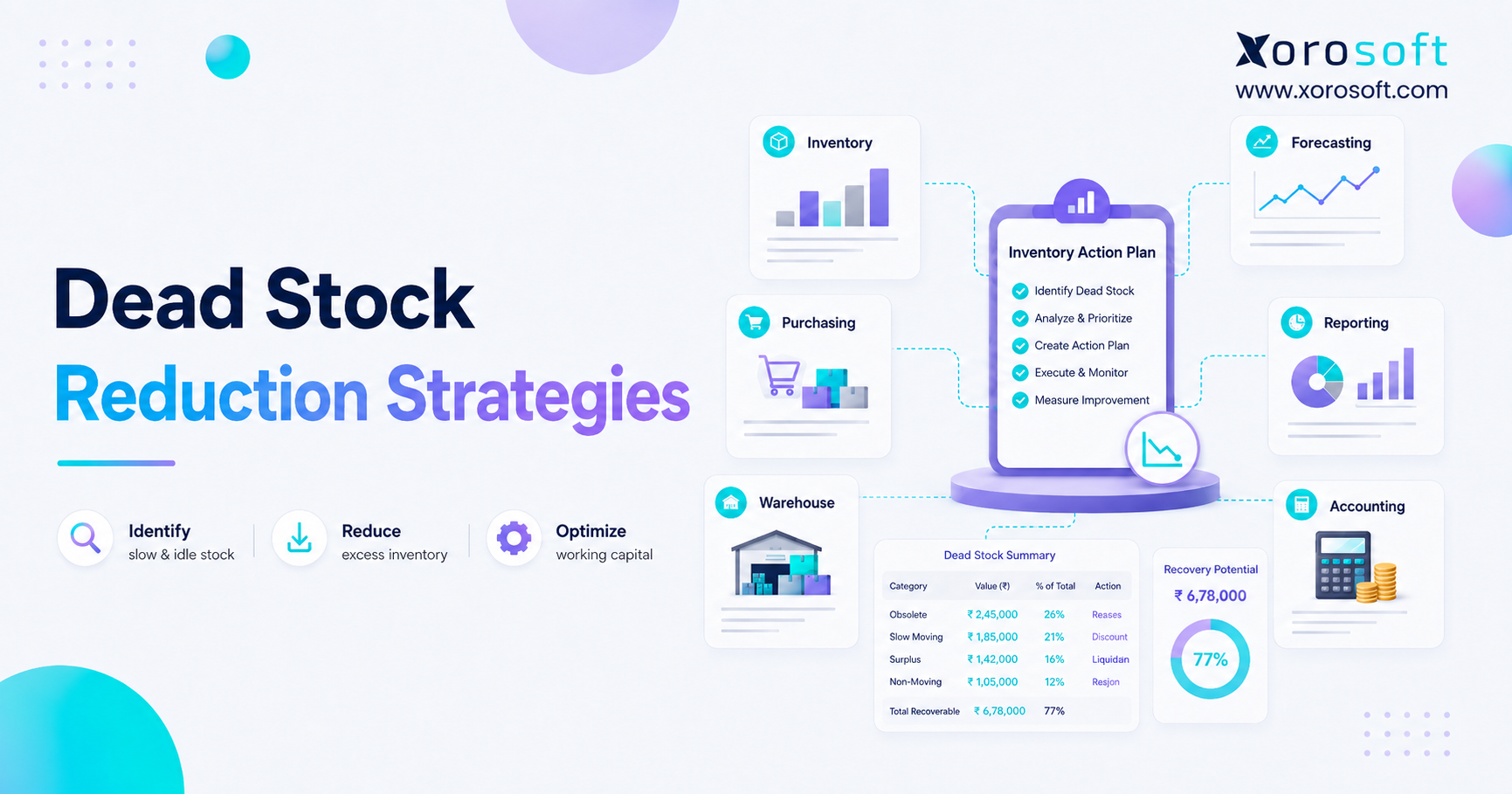
If your business is struggling with excess inventory, learning about dead stock reduction strategies can be essential for improving efficiency and profitability.
1. The Financial Pressure Created by Inventory That No Longer Moves
1.1 Dead Inventory Locks Up Working Capital
Dead inventory represents cash that has already left the business but has not returned through sales. Until the stock is sold, returned, repurposed, donated, recycled, or removed, the original investment remains tied up.
Meanwhile, the company still needs to purchase faster-moving products. It may also need to fund supplier deposits, payroll, marketing campaigns, product launches, and warehouse operations. Consequently, a business can report significant inventory assets while still experiencing cash-flow pressure.
For example, a company may hold $800,000 in inventory. However, if $200,000 of that stock has not sold for more than a year, the reported asset value may overstate its commercial usefulness. Furthermore, the company may need to borrow money to replenish the products customers actually want.
The longer management delays action, the more difficult recovery becomes. Products may lose relevance, packaging may become outdated, customer demand may shift, and carrying costs may continue to rise.
1.2 Slow-Moving Stock Increases Carrying Costs
The cost of inventory continues after the supplier invoice has been paid. Businesses must also consider storage, insurance, financing, handling, cycle counting, shrinkage, damage, and administrative expenses.
In addition, slow inventory consumes employee time. Warehouse teams may move it to new locations, count it repeatedly, investigate discrepancies, and work around it during daily picking. Therefore, even a low-value item can create a meaningful operational cost when it remains in the warehouse for several years.
Carrying costs also include opportunity cost. Cash invested in an unwanted product cannot be used to purchase a bestseller, negotiate an early-payment discount, develop a new collection, or expand into a profitable channel.
For this reason, teams should evaluate slow inventory based on its total economic impact rather than its original purchase price alone.
1.3 Warehouse Capacity Can Be Misleading
A warehouse may appear to have available square footage while still operating inefficiently. Dead stock can occupy accessible bins, pallet positions, staging areas, and prime picking locations.
As a result, faster-moving inventory may be placed farther from packing stations. Workers then travel longer distances, replenishment becomes more complicated, and congestion increases.
Moreover, management may conclude that the company needs a larger warehouse. In reality, the more immediate requirement may be to remove unproductive stock and improve location planning.
A warehouse capacity review should therefore separate productive inventory from stock that no longer supports customer demand.
1.4 Dead Stock Requires Shared Ownership
Dead stock often becomes visible in the warehouse, but the warehouse rarely creates the entire problem. Purchasing may have ordered too much. Sales may have provided an optimistic forecast. Product teams may have launched a replacement without planning the phase-out. Finance may have delayed reviewing aging inventory.
Therefore, one department should not carry sole responsibility for dead inventory reduction. Instead, each high-risk SKU should have an accountable owner, a proposed action, and a deadline.
When ownership remains unclear, teams discuss the same aging products month after month. However, assigning responsibility makes each decision measurable. For this reason, effective dead stock reduction strategies require a named owner, an agreed financial target, and a completion deadline for every high-risk SKU.
2. Dead Stock, Excess Inventory, and Obsolete Inventory Require Different Actions
2.1 What Dead Stock Means in Inventory Management
Dead stock is inventory that remains unsold or unused and has little realistic probability of selling through normal business activity.
It may include:
- Finished products
- Raw materials
- Manufacturing components
- Packaging
- Replacement parts
- Returned goods
- Discontinued merchandise
- Seasonal products
- Customer-specific inventory
However, a product should not be classified as dead merely because it has not sold recently. First, the business must review future demand, seasonality, customer commitments, product lifespan, and alternative uses.
The classification should also reflect the economics of holding the item. A product may technically have future demand, yet the expected recovery may be too small to justify continued storage.
2.2 Dead Stock vs Slow-Moving Inventory
Slow-moving inventory still has a reasonable chance of selling. Demand may be weaker than expected, but customers continue to purchase the product occasionally.
Dead inventory, on the other hand, has little realistic demand under the current sales model. Therefore, it may require an aggressive markdown, channel change, liquidation, donation, recycling, or write-off.
The distinction matters because discounting a slow mover too early can destroy recoverable margin. Conversely, holding genuine dead stock for too long increases carrying costs without materially improving the chance of a sale.
2.3 Dead Stock vs Excess Inventory
Excess inventory means the company holds more units than current demand requires. Nevertheless, the product may continue selling consistently.
For instance, a distributor may hold twelve months of supply for an item that sells every week. The inventory is excessive, but it is not dead. If purchasing stops, normal demand may eventually reduce the surplus.
Dead stock requires a more decisive response because time alone may not improve the outcome. Therefore, teams should distinguish between excess quantity and absent demand before selecting a recovery strategy.
2.4 Dead Stock vs Obsolete Inventory
Obsolete inventory has lost relevance because of product updates, technological changes, regulation, expiration, or changing customer preferences.
Although obsolete products often become dead stock, the terms are not identical. A discontinued industrial part may still have aftermarket demand. Similarly, a current product can become dead inventory when the company buys an unsuitable quantity, color, size, or configuration.
The business should therefore evaluate both product relevance and demand probability.
2.5 Dead Stock vs Safety Stock
Safety stock is a planned buffer that protects the business from demand variability or supplier delays. In contrast, dead stock no longer supports a realistic service-level requirement.
Therefore, businesses should avoid treating every aged item as necessary protection. Safety stock must be calculated using demand variation, supplier lead times, and service objectives rather than maintained simply because it already exists.
2.6 Inventory Classification Determines the Correct Response
| Inventory type | Demand outlook | Main issue | Recommended action |
|---|---|---|---|
| Healthy inventory | Strong | Normal replenishment | Maintain controls |
| Slow-moving inventory | Moderate | Weak velocity | Reduce purchasing and promote selectively |
| Excess inventory | Recoverable | Too many units | Stop buying, transfer, or bundle |
| Obsolete inventory | Limited | Product is no longer current | Return, rework, liquidate, or write down |
| Dead stock | Little realistic demand | No viable normal-market sale | Liquidate, donate, recycle, or dispose |
| Safety stock | Planned buffer | Demand or lead-time risk | Review against service targets |
Correct classification ensures that the company does not apply the same clearance strategy to every aging product. It also protects margin by keeping viable slow movers separate from genuinely dead inventory.
3. Why Dead Inventory Accumulates
3.1 Forecasting Based on Incomplete Demand Data
Forecasting errors are a common source of excess and dead inventory. Historical sales may include promotions, temporary marketplace growth, one-time wholesale orders, unusual weather, or competitor stockouts.
If those events are treated as normal demand, purchasing teams may assume the higher sales volume will continue. Consequently, the next order can create more inventory than the market can absorb.
Furthermore, forecasts often become unreliable when they are calculated at an overly broad level. A product family may perform well overall, while particular sizes, colors, locations, or channels sell slowly.
Therefore, demand should be reviewed at the SKU, channel, and warehouse levels whenever the product range is complex.
3.2 Supplier Minimums and Volume Discounts
Suppliers frequently offer lower unit costs for larger orders. Buyers may increase quantities to meet a minimum order value or obtain a discount.
However, the lowest purchase price does not always create the lowest total cost. The company must also consider storage, financing, handling, markdown exposure, obsolescence, and disposal.
For example, saving $2 per unit may appear attractive. Nevertheless, if half the products remain unsold, the business may lose far more through carrying costs and markdowns.
Therefore, purchasing teams should evaluate the total cost of ownership rather than focusing only on the supplier’s unit price. Strong dead stock reduction strategies compare purchase savings with storage, financing, markdown, and obsolescence exposure before a larger order is approved.
3.3 Purchasing Without Open-to-Buy Controls
Purchasing teams often review individual orders without considering the total inventory commitment across the company.
An order may look reasonable on its own. However, the business may already have available units, inbound purchase orders, supplier-held quantities, and inventory at another warehouse.
Open-to-buy controls provide a broader view of planned purchasing against expected sales and inventory targets. Therefore, they help buyers avoid committing cash that the business cannot productively use.
This approach is particularly useful for apparel, seasonal merchandise, consumer products, and other categories where demand changes quickly.
3.4 Inaccurate Inventory Records
Buyers cannot make reliable purchasing decisions when system quantities are incorrect.
Common causes include:
- Unposted receipts
- Delayed shipments
- Missing transfers
- Duplicate SKUs
- Unrecorded damage
- Incorrect units of measure
- Off-system adjustments
- Misplaced warehouse stock
As a result, a buyer may reorder an item that already exists in another location. Alternatively, the company may believe inventory is available even though it cannot be found or sold.
Accurate receiving, picking, transfers, adjustments, and cycle counting are therefore essential components of dead stock reduction strategies.
3.5 Weak Product Lifecycle Planning
Every product should move through clear lifecycle stages, such as:
1. New
2. Active
3. Seasonal
4. Phase-out
5. Discontinued
Problems arise when a replacement product launches without a plan for the older version.
For instance, marketing may begin promoting a new model while purchasing continues ordering the previous model. Meanwhile, warehouse teams receive more stock because automatic replenishment remains active.
A phase-out plan should therefore include the final purchase date, incoming quantities, supplier commitments, markdown timing, replacement demand, and remaining stock.
3.6 Disconnected Sales Channels
A Shopify brand may also sell through Amazon, wholesale accounts, retail locations, marketplaces, and EDI customers.
When each channel operates independently, the company may create separate safety stock, forecasts, and purchasing plans. Consequently, total inventory can exceed combined demand even when each channel appears reasonable in isolation.
A central demand view allows the business to determine whether inventory is genuinely slow or simply located in the wrong channel.
3.7 Multi-Warehouse Inventory Duplication
Each warehouse may carry its own buffer because managers do not trust network-wide availability.
Individually, those quantities may appear small. However, the combined stock across five locations can represent several years of demand.
Therefore, location-level analysis should be paired with consolidated analysis. The first identifies transfer opportunities, while the second reveals whether the entire network owns too much stock.
3.8 Product Variants Fragment Demand
Apparel, furniture, sporting goods, and consumer-products businesses often manage products by style, size, color, finish, or configuration.
A product family may perform strongly, although individual variants accumulate. Popular sizes sell quickly, while less popular sizes remain.
Similarly, a furniture design may sell well overall, but one finish can become difficult to move. Therefore, forecasting at the product-family level can hide the SKUs most likely to become dead inventory.
3.9 Manufacturing and Engineering Changes
Manufacturers face additional risk when bills of materials change, customer orders are cancelled, or engineering teams replace components.
Raw materials purchased for a specific product may no longer have a planned use. Unless the business identifies substitutes, alternative production uses, or supplier return options, those materials can remain in storage indefinitely.
Consequently, material planning should reflect current production schedules, open work orders, engineering revisions, scrap, and customer commitments.
4. Dead Stock Reduction Strategies Begin With Reliable Identification
4.1 Build Inventory-Aging Buckets
An inventory-aging report groups stock according to how long it has remained unsold or unused.
A practical structure may include:
- 0–30 days
- 31–60 days
- 61–90 days
- 91–180 days
- 181–365 days
- More than 365 days
However, the ranges should reflect the product category. Fresh food, seasonal apparel, furniture, industrial components, and automotive parts have very different commercial lifecycles.
In addition, the report should show units, inventory value, last sale date, last receipt date, open purchase orders, forecast demand, lifecycle status, and recommended action.
4.2 Review the Last Commercial Movement
A transfer or adjustment can make inventory appear active even though no customer has purchased it for months.
Therefore, teams should separate:
- Last customer sale
- Last production consumption
- Last warehouse transfer
- Last receipt
- Last return
- Last inventory adjustment
The last commercial use is generally more meaningful than the last system transaction.
4.3 Measure Inventory Turnover
Inventory turnover indicates how frequently the business sells and replaces inventory during a given period.
Inventory turnover = Cost of goods sold ÷ Average inventory
A low result may indicate overstock, weak demand, or an unsuitable product mix. However, the correct benchmark varies by margin, industry, lead time, and business model.
For example, a grocery category may turn quickly, while furniture or industrial replacement parts may move more slowly. Therefore, companies should compare similar categories instead of applying one target across the entire organization.
4.4 Track Sell-Through Rate
Sell-through measures how much received inventory has sold during a selected period.
Sell-through rate = Units sold ÷ Units received × 100
This metric is especially helpful for seasonal products and new launches. A product can generate strong unit sales while still having poor sell-through if the original purchase quantity was too high.
Moreover, sell-through should be reviewed by variant and location. A company-wide average can hide weak sizes, colors, or warehouse positions.
4.5 Calculate Weeks of Supply
Weeks of supply estimates how long available inventory will last based on forecast demand.
A product with 70 or 80 weeks of supply may not yet be dead. Nevertheless, it requires immediate purchasing attention.
The metric becomes more useful when combined with supplier lead time, safety stock, minimum order quantities, product lifecycle, and seasonality.
4.6 Combine ABC Analysis With Sales Velocity
ABC analysis groups inventory according to revenue, margin, value, or another measure of importance.
It becomes more actionable when combined with velocity:
- High value, high velocity: Protect availability.
- High value, low velocity: Investigate immediately.
- Low value, high velocity: Simplify replenishment.
- Low value, low velocity: Rationalize or remove.
High-value, low-velocity inventory usually deserves the earliest management attention because it creates the greatest working-capital exposure.
4.7 Review Forecast Error
Forecast error shows the difference between expected and actual demand.
If the business repeatedly forecasts 1,000 units but sells only 600, the process is creating excess stock even when the forecast appears professionally prepared.
Therefore, teams should measure forecast performance by SKU, category, channel, and location. They should also investigate whether errors came from promotions, stockouts, customer cancellations, seasonality, or inaccurate assumptions.
4.8 Build a Dead Stock Action Matrix
Each at-risk SKU should receive:
- Inventory classification
- Quantity on hand
- Inventory value
- Sales velocity
- Forecast demand
- Open purchase commitment
- Recommended action
- Accountable owner
- Completion date
An aging report without assigned actions remains a passive document. In contrast, an action matrix converts information into an operating process.
Once the action matrix is complete, management can prioritize products by inventory value, age, and recovery potential. In practice, dead stock reduction strategies work best when high-value and low-velocity products receive attention before lower-risk inventory.
5. Dead Stock Reduction Strategies for Inventory Already on Hand
5.1 Stop Reordering Affected Products
The first priority is to prevent more inventory from arriving.
Review:
- Open purchase orders
- Automatic reorder settings
- Blanket agreements
- Production schedules
- Supplier commitments
- Seasonal buying plans
- Warehouse transfer orders
Some orders may be cancelled, reduced, postponed, or exchanged. Even when a supplier does not allow cancellation, early communication may create more options than waiting until the product is fully obsolete.
5.2 Freeze Automatic Replenishment
Automated purchasing can continue generating recommendations after a product begins declining.
Therefore, high-risk SKUs should be removed from automatic replenishment until the team confirms future demand. Product lifecycle status should also influence whether the system can recommend another purchase.
For example, a phase-out product should not generate the same replenishment signal as an active bestseller.
5.3 Transfer Inventory to Locations With Proven Demand
Inventory may be slow in one warehouse while another location continues selling it.
Compare sales velocity, available stock, and forecast demand by warehouse, store, and channel. If demand is proven, a transfer may recover full-price sales without a public markdown.
However, the business should calculate freight, handling, receiving, and expected recovery before moving the stock. Otherwise, the transfer may create cost without improving the final outcome.
5.4 Use Progressive Markdown Rules
A progressive approach reduces prices as inventory moves through defined risk stages.
For example:
- Early slow mover: targeted promotion
- Moderate excess: limited markdown
- High-risk stock: clearance pricing
- Dead inventory: liquidation threshold
The decision should consider margin, carrying cost, brand positioning, seasonal timing, and future demand.
Although teams often wait for a higher selling price, continued storage can make the final recovery worse. Therefore, markdown decisions should compare the value of selling now with the cost of waiting.
5.5 Build Commercially Relevant Bundles
Bundling can improve perceived value without discounting every product individually.
Useful approaches include:
- Starter kits
- Seasonal sets
- Gift-with-purchase offers
- Buy-one-get-one promotions
- Wholesale mixed cases
- Replacement-part packages
- Employee offers
- Loyalty-member bundles
Nevertheless, the bundle must solve a customer need. Combining unrelated products simply to remove inventory can create weak offers and additional complexity.
5.6 Use Alternative Sales Channels
Products that no longer fit the primary channel may still have value through:
- Online marketplaces
- Outlet stores
- Flash-sale platforms
- Off-price wholesalers
- International distributors
- B2B buyers
- Employee sales
- Local events
- Liquidation partners
Before opening another channel, the company should review fees, warranties, return policies, customer expectations, and brand impact.
In addition, inventory should be allocated carefully so the alternative channel does not oversell products required for existing customer commitments.
5.7 Negotiate Supplier Returns and Exchanges
Supplier negotiation is usually more successful before the inventory becomes completely obsolete.
Possible arrangements include:
- Return-to-vendor authorization
- Exchange for faster-moving products
- Future purchasing credits
- Partial restocking fees
- Shared markdown support
- Supplier buybacks
- Reduced future minimums
Furthermore, future contracts can include clearer cancellation windows, return rights, and phase-out responsibilities.
5.8 Repackage, Rework, or Repurpose Products
Some products can recover value through a new use.
A manufacturer may reuse components in another bill of materials. A consumer brand may replace outdated packaging. A furniture company may refinish an item. A distributor may separate a kit and sell individual components.
Before approving rework, the business should compare labor, materials, quality control, certification, packaging, time, and expected selling price.
If the economics do not improve, reworking the product may simply delay the final write-off.
5.9 Liquidate With Clear Financial Thresholds
Liquidation may appear unattractive because the selling price is below the original cost. However, the correct comparison is not always between liquidation proceeds and purchase cost.
Instead, management should compare:
- Liquidation proceeds
- Probable future selling price
- Continued storage costs
- Handling costs
- Further value decline
- Time required to sell
- Operational effort
- Disposal risk
Consequently, a lower recovery today may be more profitable than holding the inventory for another year. For this reason, disciplined dead stock reduction strategies use clear liquidation thresholds rather than waiting indefinitely for full-price demand to return.
5.10 Donate, Recycle, or Dispose Responsibly
When resale and liquidation are no longer viable, donation or recycling may provide a responsible exit.
The business should consider:
- Product safety
- Expiration
- Tax treatment
- Environmental requirements
- Brand removal
- Data security
- Local regulations
- Disposal documentation
Finance, legal, quality, and compliance teams should participate when the products are regulated, perishable, or potentially hazardous.
6. Preventive Dead Stock Reduction Strategies for Purchasing and Forecasting
6.1 Improve Demand Forecasting
Forecasting should combine historical demand with:
- Current sales trends
- Seasonality
- Promotions
- Stockout history
- Product launches
- Customer commitments
- Channel growth
- Supplier lead times
- Product lifecycle changes
- Available and incoming inventory
In addition, teams should compare forecasts with actual demand. A company that does not measure forecast error cannot determine whether the planning process is improving.
6.2 Separate Baseline Demand From Promotions
Promotions can temporarily increase sales. However, those sales should not automatically become the baseline for the next purchasing cycle.
For example, a two-week discount campaign may double unit volume. If the system interprets the increase as ongoing demand, it may recommend an excessive purchase.
Therefore, forecasts should distinguish baseline sales, promotional lift, one-time events, and unusual customer orders.
6.3 Forecast at SKU and Location Level
Company-wide demand is often too broad for purchasing decisions.
A style may perform well overall, although one size sells slowly. Similarly, a product may have strong demand in the eastern warehouse and weak demand in the western warehouse.
Consequently, forecasting should become more detailed as inventory complexity increases.
6.4 Set Maximum Stock Levels
Maximum stock levels help prevent purchasing from increasing inventory beyond a reasonable threshold.
The threshold may consider:
- Forecast demand
- Supplier lead time
- Demand variability
- Minimum order quantity
- Safety stock
- Storage constraints
- Product lifecycle
- Seasonality
When a proposed purchase exceeds the maximum, the system or buyer should require additional approval.
6.5 Use Weeks-of-Supply Limits
Weeks-of-supply limits give buyers an easily understood view of inventory exposure.
For instance, the company may require management approval when a purchase would create more than 20 weeks of supply.
However, the limit should vary by product. Long-lead-time materials may require a larger buffer, while seasonal products may need a tighter threshold.
6.6 Introduce Open-to-Buy Budgets
Open-to-buy planning controls the amount the business can commit to future inventory.
It compares expected sales, planned inventory levels, and current purchasing commitments. Therefore, it helps prevent individual buying decisions from exceeding the broader inventory plan.
The process is particularly useful for apparel, retail, seasonal goods, and fast-changing product ranges.
6.7 Review Minimum Order Quantities
Supplier minimums can force the company to buy more inventory than demand justifies.
Therefore, purchasing teams should negotiate:
- Lower minimums
- Split deliveries
- Blanket orders
- Supplier-held stock
- Flexible production runs
- Mixed-product minimums
- Shorter commitments
A slightly higher unit cost can create a better total financial outcome when it significantly reduces excess stock.
6.8 Establish Product Lifecycle Controls
Every SKU should have a lifecycle status that influences forecasting and purchasing.
When a product moves into phase-out, the business should automatically review:
- Open purchase orders
- Supplier commitments
- Forecast demand
- Marketing plans
- Replacement products
- Remaining inventory
- Markdown dates
As a result, departments respond to the lifecycle change at the same time instead of working from different assumptions.
6.9 Rationalize the SKU Portfolio
More products do not always create more profitable choice.
Excessive variants divide demand, complicate forecasting, increase supplier minimums, and create long-tail inventory.
Therefore, businesses should review:
- Duplicate products
- Cannibalizing variants
- Low-margin slow movers
- Weak sizes and colors
- Customer-specific items without current demand
- High-return products
- Products with disproportionate handling costs
Removing weak SKUs can improve purchasing focus, warehouse productivity, and forecast accuracy.
6.10 Hold a Monthly Inventory Review
A monthly inventory review should include purchasing, finance, sales, ecommerce, warehouse operations, product management, and manufacturing where applicable.
The agenda should cover:
1. Inventory-aging changes
2. High-value slow movers
3. Forecast error
4. Open purchase exposure
5. Warehouse transfers
6. Product phase-outs
7. Markdown decisions
8. Accounting reserves
9. Assigned corrective actions
Most importantly, every action should have an owner and completion date. As a result, monthly reviews turn dead stock reduction strategies into a repeatable operating process rather than an occasional warehouse cleanup.
7. ERP-Supported Dead Stock Reduction Strategies
7.1 Create One Source of Inventory Data
When businesses rely on Shopify, spreadsheets, accounting software, warehouse applications, and separate purchasing tools, employees spend considerable time reconciling information.
A cloud ERP for inventory-driven businesses can connect inventory, purchasing, accounting, forecasting, manufacturing, warehousing, and sales operations.
Xorosoft provides this type of connected environment for product-based businesses that require broader operational visibility than spreadsheets or inventory-only applications provide.
More importantly, the platform can help departments work with the same quantities, costs, commitments, and transactions.
7.2 Use Inventory Aging and Exception Reporting
A connected system can highlight products based on:
- Inventory age
- Last sale date
- Sales velocity
- Weeks of supply
- Open purchase orders
- Warehouse location
- Inventory value
- Lifecycle status
With connected ERP inventory management, teams can review purchasing, inventory, sales, financial, and operational activity without manually combining multiple spreadsheets.
Therefore, Xorosoft can support exception-based management, allowing teams to focus on the SKUs creating the greatest financial risk.
7.3 Connect Forecasting With Purchasing
Purchase recommendations should account for:
- Forecast demand
- Available stock
- Reserved inventory
- Incoming purchase orders
- Supplier lead time
- Safety stock
- Minimum order quantity
- Product lifecycle status
- Warehouse-level demand
When forecasting and purchasing remain separate, buyers may place orders without seeing the company’s full inventory exposure.
By contrast, connected workflows allow purchase decisions to reflect both current demand and future commitments.
7.4 Improve Warehouse Accuracy With a WMS
A warehouse management system supports accurate receiving, location tracking, picking, transfers, cycle counting, and inventory movements.
XoroWMS can help businesses distinguish genuine slow-moving stock from inventory that is misplaced, incorrectly recorded, or held at another location.
In addition, better warehouse accuracy improves transfer decisions. Teams can confidently move stock between locations when the recorded quantities and physical inventory agree.
7.5 Connect Inventory Decisions With Accounting
Inventory activity affects both operations and financial reporting.
Receiving changes inventory value and supplier liabilities. Shipping affects available stock, revenue, and cost of goods sold. Write-downs affect margins and financial statements.
Therefore, operational and accounting records should reflect the same inventory events. A connected ERP environment reduces manual handoffs, although finance should still control valuation policies and final accounting treatment.
Technology should support the operating process rather than replace it. Therefore, ERP-enabled dead stock reduction strategies should combine reliable data, purchasing discipline, forecast accountability, warehouse accuracy, and clear product ownership.
8. Dead Stock Reduction Strategies for Shopify and Multichannel Brands
8.1 Consolidate Demand Across Shopify and Other Channels
A Shopify brand may also sell through Amazon, wholesale accounts, retail stores, marketplaces, and EDI customers.
When each channel operates independently, the business may create separate stock buffers and forecasts. As a result, total inventory exceeds combined demand.
A central inventory view should include:
- Shopify orders
- Marketplace sales
- Wholesale orders
- EDI demand
- Retail transactions
- Returns
- Warehouse availability
- Incoming purchase orders
8.2 Improve Shopify Inventory Synchronization
Accurate synchronization reduces the chance that one channel oversells while another holds unused stock.
The Xorosoft ERP integration for Shopify connects ecommerce activity with inventory, order management, purchasing, warehousing, financials, and manufacturing workflows.
For Shopify merchants, Xorosoft can act as the operational system behind the storefront. Consequently, purchasing teams can evaluate total demand before ordering more inventory.
8.3 Analyze Demand by Channel
A product may sell well through wholesale but poorly on Shopify. Another item may perform strongly on Amazon while remaining slow in retail locations.
Channel-level analysis helps the company decide whether to:
- Transfer stock
- Adjust pricing
- Build channel-specific bundles
- Change allocation
- Stop replenishment
- Move stock to another fulfillment location
Therefore, businesses should identify where demand exists before classifying inventory as dead.
8.4 Include Returns in Inventory Planning
Returns can re-enter stock, require refurbishment, or become unsellable.
If forecasts and purchasing calculations ignore returns, the company may order new units while returned inventory is waiting for inspection.
Therefore, the returns process should quickly classify products as resaleable, repairable, discountable, or unsellable. Delayed decisions can turn recoverable inventory into dead stock.
9. Industry-Specific Dead Stock Reduction Strategies
9.1 Apparel and Fashion
Apparel demand must be analyzed by style, color, size, season, channel, and location.
A successful style can still create dead stock when demand is concentrated in only a few variants. Popular sizes sell out, while less popular sizes remain on shelves.
Therefore, apparel businesses should use:
- Early sell-through reviews
- Smaller initial purchases
- Rapid replenishment
- Size-level forecasting
- Planned markdown dates
- Inter-location transfers
- Clear phase-out rules
9.2 Furniture and Home Goods
Furniture consumes substantial warehouse capacity and often has long supplier lead times.
Demand may also be divided across finishes, fabrics, sizes, and configurations. Although a design may perform well overall, one variant can remain unsold.
Furniture companies should therefore evaluate regional transfers, floor-model programs, made-to-order options, component standardization, and approval rules for speculative purchases.
9.3 Sporting Goods
Sporting-goods demand can depend on weather, seasons, events, leagues, and model-year changes.
Products may lose value rapidly after a season ends or a newer model launches. Consequently, teams should establish firm phase-out dates and review remaining inventory before committing to the next season’s purchases.
9.4 Food and Beverage
Food and beverage businesses must manage expiration, lot tracking, batch control, and shelf life.
First-expired-first-out processes, production planning, early markdowns, and accurate demand forecasts become especially important.
Moreover, product safety and regulation must guide resale, donation, and disposal decisions.
9.5 Wholesale Distribution
Wholesale distributors manage customer-specific pricing, EDI orders, case packs, contracts, and supplier minimums.
A product may appear active because one customer bought it historically, even though future demand has disappeared.
Therefore, customer forecasts, contract updates, and open purchase orders should be reviewed together before another replenishment order is approved.
9.6 Manufacturing
Manufacturers must monitor raw materials, components, work in process, and finished goods.
Bill-of-material revisions can strand materials that no longer have a production use. Consequently, material requirements planning should consider engineering changes, substitutes, work orders, scrap, and customer commitments.
Businesses in apparel, furniture, sporting goods, food, wholesale, and manufacturing can explore ERP solutions for inventory-driven industries when operational complexity exceeds the capabilities of spreadsheets and disconnected applications.
10. When Inventory Complexity Requires an ERP Upgrade
10.1 Signs the Current System Is No Longer Enough
A business may need a more connected platform when:
- Reports take days to prepare
- Departments report different quantities
- Buyers cannot see open purchase exposure
- Shopify inventory differs from warehouse records
- Finance discovers problems during month-end close
- Transfers are not updated promptly
- Forecasts exclude incoming orders
- Phase-outs do not stop replenishment
- Inventory write-downs repeatedly surprise management
These symptoms usually indicate that the business has outgrown isolated tools rather than simply needing another spreadsheet.
10.2 Inventory Software vs WMS vs ERP
| Capability | Inventory software | WMS | ERP |
| Basic inventory tracking | Strong | Strong | Strong |
| Bin and warehouse execution | Limited | Strong | Depends on platform |
| Purchasing | Basic to moderate | Limited | Broad |
| Accounting | Limited | Usually unavailable | Integrated |
| Forecasting | Varies | Limited | Often included |
| Manufacturing | Usually limited | No | Often supported |
| Multichannel operations | Varies | Fulfillment focused | Broader connection |
| Financial reporting | Limited | No | Integrated |
A business should select the simplest system that reliably supports its complexity.
For example, a small company with a few products and one channel may not need ERP. However, adding another isolated application to an already fragmented stack may make reconciliation more difficult.
10.3 Compare ERP Platforms Based on Operational Fit
Evaluation criteria should include:
- Inventory accuracy
- Multi-warehouse visibility
- Purchasing
- Forecasting
- Accounting
- Warehouse management
- Shopify and Amazon connectivity
- EDI
- Manufacturing
- Reporting
- Implementation resources
- User adoption
- Total cost
- Scalability
Businesses considering larger systems can compare Xorosoft and NetSuite alongside platforms such as Acumatica, Cin7, Brightpearl, Fishbowl, Sage, and Business Central.
Ultimately, the correct choice depends on business requirements, internal resources, implementation scope, and long-term operational needs.
11. A 90-Day Plan for Implementing Dead Stock Reduction Strategies
11.1 Days 1–30: Measure and Classify
During the first month:
- Validate physical quantities.
- Produce inventory-aging reports.
- Calculate inventory value.
- Review sales velocity.
- Identify open purchase commitments.
- Classify slow, excess, obsolete, and dead inventory.
- Stop replenishment for high-risk SKUs.
- Assign accountable owners.
The objective is to create one reliable view of the problem. Without that foundation, later clearance and purchasing decisions may rely on inaccurate information.
11.2 Days 31–60: Recover Cash
During the second month:
- Transfer inventory to stronger locations.
- Launch targeted promotions.
- Build relevant bundles.
- Contact suppliers.
- Test alternative channels.
- Approve liquidation thresholds.
- Evaluate rework opportunities.
- Record required reserves or write-downs.
Each action should have a financial target and a completion date. Otherwise, the project can become an ongoing discussion rather than a completed recovery effort.
11.3 Days 61–90: Prevent Recurrence
During the final month:
- Update forecasting methods.
- Set maximum stock levels.
- Introduce purchasing approval thresholds.
- Create lifecycle statuses.
- Review supplier minimums.
- Rationalize weak SKUs.
- Establish monthly reviews.
- Improve system integration.
At this stage, the focus shifts from clearing old stock to preventing new inventory from following the same pattern.
12. Frequently Asked Questions About Dead Stock Reduction
12.1 What Is Dead Stock?
Dead stock is inventory that remains unsold or unused and has little realistic probability of selling through normal business activity. It may include merchandise, raw materials, packaging, components, returned goods, or discontinued products. The classification should reflect future demand, product lifecycle, and the economic value of continuing to hold the stock.
12.2 What Causes Dead Stock?
Common causes include inaccurate forecasts, excessive purchasing, supplier minimums, poor inventory records, seasonal changes, product replacements, weak lifecycle planning, and disconnected channel data. In many companies, several of these issues occur at the same time, which makes early detection especially important.
12.3 How Do Dead Stock Reduction Strategies Work?
Dead stock reduction strategies combine inventory identification, purchasing controls, markdowns, warehouse transfers, supplier negotiations, alternative sales channels, liquidation, and preventive planning. The objective is to recover value from current inventory while correcting the forecasting, purchasing, and visibility problems that caused it.
12.4 How Can Dead Inventory Be Prevented?
Businesses can prevent dead inventory by improving demand forecasting, inventory accuracy, purchasing approvals, supplier terms, SKU rationalization, product lifecycle planning, and monthly aging reviews. In addition, departments should work from the same inventory and demand data.
12.5 How Do You Identify Dead Stock?
Review inventory age, last sale date, sales velocity, sell-through rate, weeks of supply, forecast demand, incoming purchase orders, and product lifecycle status. Physical inventory should also be validated because inaccurate quantities can hide the true level of exposure.
12.6 How Long Before Inventory Becomes Dead Stock?
There is no universal threshold. The correct period depends on the product’s lifecycle, industry, expiration, seasonality, demand pattern, and carrying cost. A seasonal fashion product may become dead quickly, while an industrial spare part may remain relevant for several years.
12.7 What Is the Difference Between Dead Stock and Slow-Moving Inventory?
Slow-moving inventory still has probable demand, although it sells below expectations. Dead stock has little realistic demand and may require liquidation, donation, recycling, repurposing, or a complete write-off.
12.8 What Is the Difference Between Dead Stock and Excess Inventory?
Excess inventory means the business owns more units than it currently requires, but the product may continue selling. Dead inventory has little probable future demand. Excess stock can often be consumed over time once purchasing stops.
12.9 What Is the Difference Between Dead Stock and Obsolete Inventory?
Obsolete inventory is no longer current because of product, technology, regulatory, or market changes. It becomes dead stock when meaningful demand no longer exists. However, some obsolete products may still have clearance or aftermarket value.
12.10 How Does Dead Stock Affect Cash Flow?
Cash remains tied up until the inventory is sold or removed. Consequently, the company has less money available for faster-moving products, supplier payments, payroll, marketing, and other operating requirements.
12.11 How Does Dead Stock Affect Inventory Turnover?
Dead stock increases average inventory without contributing to sales. Therefore, it generally lowers the company’s inventory turnover ratio and may hide the performance of otherwise healthy product categories.
12.12 Can Dead Stock Be Written Off?
Inventory may require a write-down or write-off when its recorded value is no longer recoverable. However, the treatment depends on accounting standards, expected selling value, disposal plans, and the company’s circumstances. Finance should review the decision carefully.
12.13 What Is an Inventory-Aging Report?
An inventory-aging report groups stock according to how long it has remained unsold or unused. In addition, it should show units, value, last sale date, incoming orders, forecast demand, lifecycle status, and recommended actions.
12.14 Which KPIs Help Identify Dead Inventory?
Useful metrics include inventory age, turnover, sell-through, weeks of supply, last sale date, forecast error, inventory value, open purchase exposure, and gross margin return on inventory.
12.15 How Does Forecasting Prevent Dead Stock?
Forecasting estimates probable demand before purchase or production commitments are made. It becomes more effective when connected with available stock, incoming purchase orders, seasonality, promotions, and product lifecycle information.
12.16 Can ERP Software Reduce Dead Stock?
ERP software can connect sales, inventory, purchasing, warehouse operations, accounting, manufacturing, and forecasting. As a result, decision-makers receive earlier visibility into inventory risk and can stop unnecessary purchasing before products become obsolete.
12.17 Should Dead Stock Be Discounted or Liquidated?
Discounting may work when customer demand still exists. Liquidation is more suitable when normal demand is weak and carrying costs are likely to continue increasing. The decision should compare expected recovery with the cost of waiting.
12.18 Can Dead Stock Be Returned to Suppliers?
Supplier returns may be possible when agreements allow credits, exchanges, restocking fees, or buybacks. Generally, early negotiation creates more options than waiting until the product has lost most of its value.
12.19 How Can Bundling Reduce Dead Inventory?
Bundling pairs a slow product with something customers already value. Therefore, it can improve recovery without relying entirely on a direct markdown. The bundle should be commercially relevant and financially worthwhile.
12.20 How Do Shopify Brands Reduce Dead Stock?
Shopify brands should track sell-through by SKU, consolidate demand across channels, control purchasing, synchronize inventory, include returns in planning, and establish planned markdown dates.
12.21 How Do Wholesalers Prevent Obsolete Inventory?
Wholesalers should connect customer forecasts, EDI demand, contracts, open purchase orders, supplier minimums, and product lifecycle information. Customer-specific products should receive additional review before replenishment.
12.22 How Do Manufacturers Reduce Unused Materials?
Manufacturers should connect material planning with bill-of-material revisions, engineering changes, open work orders, customer commitments, substitutes, and alternative material uses.
12.23 How Does Multi-Warehouse Inventory Create Dead Stock?
Each location may carry its own excess quantity. Without consolidated visibility, the combined stock position can significantly exceed total demand. Therefore, location transfers and network-wide planning are essential.
12.24 How Often Should Dead Stock Reports Be Reviewed?
Most inventory-driven businesses should review aging stock monthly. However, seasonal, perishable, or fast-moving companies may need more frequent reviews during launches, peak seasons, and phase-outs.
12.25 When Should a Business Upgrade to ERP?
An ERP evaluation becomes appropriate when disconnected systems, delayed reports, inventory mismatches, complex purchasing, and manual accounting reconciliation prevent reliable control. The decision should reflect operational complexity rather than company size alone.
13. Turn Dead Stock Reduction Strategies Into a Monthly Operating Discipline
Clearing the current inventory problem is only the beginning. Without changes to forecasting, purchasing, supplier management, product lifecycle planning, and warehouse visibility, the same issue will return.
First, separate slow-moving, excessive, obsolete, and genuinely dead inventory. Next, stop unnecessary purchases and assign an owner to every high-risk SKU. Then, select the recovery strategy that creates the strongest economic outcome.
In addition, preventive controls should become part of monthly operations. Teams should review inventory age, forecast error, open purchase commitments, weeks of supply, supplier minimums, warehouse transfers, and product phase-outs.
For growing inventory-driven businesses, Xorosoft can connect inventory management, purchasing, accounting, forecasting, warehouse management, manufacturing, Shopify, Amazon, EDI, and multi-warehouse operations within one cloud ERP environment.
13.1 Review the Processes Creating Excess and Dead Inventory
A productive ERP discussion should begin with the company’s actual operational problems rather than a generic software presentation.
Review how the business currently manages:
- Inventory aging
- Purchasing approvals
- Demand forecasting
- Warehouse transfers
- Shopify and marketplace orders
- Wholesale and EDI demand
- Manufacturing requirements
- Accounting and inventory valuation
Finally, book a personalized ERP review to evaluate whether connected inventory, purchasing, warehousing, forecasting, and financial workflows can support stronger dead stock reduction strategies and improve working-capital control.
Recent Posts
-
 ERP Landed Cost Module vs Spreadsheet Calculations for Importers
 -
 How to Build an Open-to-Buy Plan for an Omnichannel Brand
 -
 Cold Storage WMS for Food and Beverage Distribution
 -
 ERP Buying Statistics 2026: Evaluation, Implementation, and Adoption Risks
 -
 How a Distributor Reduced B2B Order Exceptions Without Restricting Sales